U.S. Solar and Wind Power Generation Tops Nuclear for First Time
By Charles Kennedy – Jul 11, 2024, https://oilprice.com/Latest-Energy-News/World-News/US-Solar-and-Wind-Power-Generation-Tops-Nuclear-for-First-Time.html?fbclid=IwZXh0bgNhZW0CMTEAAR36aY_qZHusiBuonQ8wnoYKA4biHRxGFjpdJPHNpgny-jFyIN5ZFM3NUL8_aem_2gvOQUW4tXrqTe8rUaH-xw
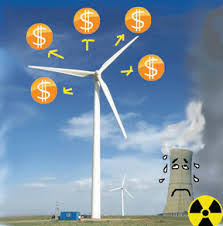
For the first time ever, U.S. electricity generation from utility-scale solar and wind exceeded nuclear power plants’ power output in the first half of 2024, according to data from energy think tank Ember quoted by Reuters columnist Gavin Maguire.
Electricity generation from solar and wind hit a record-high of 401.4 terawatt hours (TWh) between January and June 2024, surpassing the 390.5 TWh of power generated from nuclear power plants, Ember’s data showed.
Solar power generation jumped by 30% and electricity output from wind power rose by 10% in the first half of 2024, compared to the same period of last year.
In 2023, nuclear power accounted for 18.6% of U.S. electricity generation, while wind power output had a 10.2% share and solar accounted for 3.9% of total U.S. electricity output, according to data for 2023 from the U.S. Energy Information Administration (EIA).
Ember has estimated that the share of wind and solar grew to 16% in 2023, when nuclear was still the largest source of low-carbon electricity in the U.S.
However, expanding renewable energy capacity and record solar and wind power generation helped solar and wind combined to top nuclear as the biggest low-carbon electricity source during the first half of this year.
Early in 2024, the EIA said that wind and solar energy would lead growth in U.S. power generation for the next two years.
As a result of new solar projects coming on line this year, the administration forecast that U.S. solar power generation will surge by 75%, from 163 billion kilowatt-hours (kWh) in 2023 to 286 billion kWh in 2025. The EIA also expects that wind power generation will grow by 11% from 430 billion kWh in 2023 to 476 billion kWh in 2025.
In 2023, all renewable sources—wind, solar, hydro, biomass, and geothermal—accounted for 22% of total U.S. power generation.
First Nation challenges nuclear waste decision in federal court

By Natasha Bulowski & Matteo Cimellaro | News, Urban Indigenous Communities in Ottawa | July 12th 2024Observer
A First Nation concerned about approval of a nuclear waste disposal facility near the Ottawa River was before federal court this week to challenge the decision.
The Canadian Nuclear Safety Commission greenlit the project on Jan. 9 and less than one month later, Kebaowek First Nation filed for a judicial review.
Kebaowek’s legal challenge is centred on the United Nations Declaration Act (UNDA), which enshrined the United Nations Declaration on the Rights of Indigenous Peoples (UNDRIP) into Canadian law. The declaration specifically references the need for free, prior and informed consent when hazardous waste will be stored in a nation’s territory.
Kebaowek argued in court that Canadian Nuclear Laboratories — the private consortium responsible for managing the Chalk River nuclear site — did not secure the First Nation’s free, prior and informed consent during the licensing process, as mandated under Canadian law, when it was looking to store the waste at a site about a kilometre from the Ottawa River. The Ottawa River (known as the Kichi Sibi in Algonquin) holds immense spiritual and cultural importance for the Algonquin people and is a source of drinking water for millions.
Canadian Nuclear Laboratories wants to permanently dispose of one million cubic metres of radioactive waste in a shallow mound as a solution to waste accumulated over the last seven decades of operations and into the future. The company said the containment mound will only hold low-level waste.
A former employee at Chalk River told Canada’s National Observer a portion of the waste destined for the mound is a “mishmash” of intermediate- and low-level radioactivity because prior to 2000 there were inadequate systems to properly label, characterize, store and track what was produced at Chalk River or shipped there from other labs. Intermediate-level waste remains radioactive for longer than low-level waste and requires disposal deeper underground.
“It’s such a huge project that I don’t think most people are aware of just how big this is,” Coun. Justin Roy of Kebaowek First Nation told Canada’s National Observer in an interview after a press conference in Ottawa on July 10.
“We’re not talking about a pipeline that might not be there in a couple dozen years, or a mine that’s going to be up and running and close in 20 years, or a bridge that might be torn down one of these days. We’re talking about a huge mound that has a life expectancy, expectancy upwards of 500 years,” Roy said.
The First Nation is asking the Federal Court of Appeals to reject the nuclear safety commission’s decision to greenlight the facility and declare that the commission breached its duty to consult Kebaowek.
Kebaowek was in federal court July 10 and 11 to make its case that the project approval should be set aside or reconsidered. The First Nation argued two main points: First, that the nuclear safety commission refused to take the Canadian UNDRIP act into consideration, and that means the consultation process was flawed from the outset.
Second, the nation argues the project will rely largely on a forest management plan that has yet to be created to mitigate environmental impacts, Coun. Justin Roy of Kebaowek First Nation told Canada’s National Observer in an interview.
Canadian Nuclear Laboratories’ lawyers argued the commitment to create a forest management plan and have it approved by the nuclear safety commission is appropriate, and disagreed with Kebawoek’s description of it as a “blank piece of paper,” saying it is intended to be a “living document” and respond to different situations yet to arise. The company’s testimony on July 11 also highlighted different instances — letters, phone calls, in-person meetings — where it engaged with Kebaowek First Nation.
Justice Julie Blackhawk will issue a decision at a later date.
A ‘litmus test’
When Parliament was in its consultation process regarding the United Nations Declaration Act, First Nation leadership across Canada spoke up because chiefs thought the legislation “needed to have teeth,” Lance Haymond, Chief of Kebaowek First Nation said in an interview. However, the legislation was never re-written to give it weight, leading to a “failure of implementation from the beginning,” he explained.
“Here we are stuck with a piece of legislation that could be stronger,” Haymond said of testing the United Nations Declaration Act (UNDA) in court over the nuclear waste facility. The success or failure of the judicial review will serve as a litmus test of how much sway the new Canadian law holds in the courts, Haymond said.
“Our case will hopefully demonstrate how it can be applied in a real world situation,” he added.
This judicial review is one of three legal challenges against the near surface disposal facility.
At a July 10 press conference, Sébastien Lemire, Bloc Québécois MP for Abitibi-Témiscamingue, emphasized his party’s support for the legal challenge. Lemire also promised continued support at future press conferences, in Question Period and in work at committees like the Standing Committee on Indigenous and Northern Affairs.
Canadian Nuclear Laboratories is run by a consortium of private companies (including AtkinsRéalis, formerly known as SNC-Lavalin) and is contracted by the federal government to operate its laboratories and deal with waste.
Over 75 years, Chalk River Laboratories developed CANDU reactors, did nuclear weapons research, supplied the United States’ nuclear weapons program with plutonium and uranium, and at one time was the world’s largest supplier of medical isotopes used to diagnose and treat cancers.
About 60 people attended a public rally in front of the Supreme Court on July 10 to support the First Nation, according to Vi Bui with the Council of Canadians.
It’s not the first time the public has given their support.
Kebaowek’s legal fund has been largely crowdfunded and supported by Raven Trust, a charity that raises legal funds for Indigenous nations, Haymond said.
If Kebaowek loses, it’s still unclear if they will appeal the decision, he added.
“Our ancestors would probably roll over in their graves if they were to hear that we would just allow a nuclear waste dump that’s going to hold one million cubic metres of waste adjacent to the Ottawa River,” Roy said. “We are people who have been here since time immemorial; this mound, if it proceeds, it can maybe outlast all of us here.”
First Nations and allies resist proposed radioactive waste repository

The site-selection process has been riddled with controversy. The nuclear industry funds the NWMO and appoints its board members. As a result, despite being structured as a not-for-profit corporation, the NWMO is effectively controlled by industry. In some cases, the large sums of money the NWMO has paid Indigenous and municipal governments as part of its site selection process have led to accusations of governments being bought off by the nuclear industry. Communities downstream from the repository site, as well as the many along the transportation route, are effectively excluded from the ‘willingness’ decision.
the process is unfolding in the context of ongoing poverty and economic deprivation in many Indigenous communities in Canada, making it incredibly difficult for many First Nations to say “no”
If Canada is to have a just transition away from fossil fuels, then it cannot be based on nuclear power
Canadian Dimension, Warren Bernauer, Laura Tanguay, Elysia Petrone, and Brennain Lloyd / June 28, 2024
On April 30, 2024, First Nations leaders organized a rally in Anemki Wequedong (Thunder Bay) to protest a proposed nuclear waste repository in northwestern Ontario between Ignace and Dryden. The speakers included representatives of Grassy Narrows First Nation, Kitchenuhmaykoosib Inninuwug, Ojibways of Onigaming First Nation, Gull Bay First Nation, and Fort William First Nation.
Michele Solomon, Chief of Fort William First Nation, welcomed all the participants to her traditional territory and stated that her community is “strongly opposed to the transportation of nuclear waste through our territory and we will stand by that, we will continue to stand by that, and we stand with all those who are also opposed.”
Another leader from the Robinson-Superior Treaty area, Chief Wilfred King of Gull Bay First Nation, told the crowd, “We fully support the First Nations that are against the burying of nuclear waste in our territories. …. we vehemently oppose the transportation of any nuclear waste through our territory.” According to King, his community’s position was grounded in concerns with potential accidents along the transportation route. “We have many rivers and tributaries that intersect the Trans Canada Highway and we feel that this will have a very serious impact to our resources and our territory should there be a spill.”
A similar position was expressed by Rudy Turtle, Chief of Grassy Narrows, whose traditional territories are situated in Treaty 3 and downstream from the proposed repository. “[A]s Grassy Narrows First Nation we are saying no to nuclear waste. We are saying no to any kind of dumping within our traditional territory.” Turtle continued, “I’m thinking ahead I’m thinking of two, three, four, generations ahead and I know I won’t be around, but I hope that one day one of my great-grandchildren will say great-grandpa stood up for us, great-grandpa stood up for us spoke up for us now we’re able to enjoy our Earth.”
Environmental injustice by design
The proposal for a repository in the Ignace area is being advanced by the Nuclear Waste Management Organization (NWMO), a not-for-profit corporation comprised of the nuclear power companies that generate and own the radioactive wastes. The 2002 Nuclear Fuel Waste Act required Canada’s nuclear power generation companies (Ontario Power Generation, New Brunswick Power Corporation and Hydro-Québec) to establish and fund the NWMO and tasked them with the long-term management of Canada’s used nuclear fuel. After an initial study, in 2005 the NWMO submitted a plan to the federal government to dispose of Canada’s used nuclear fuel in a deep geological repository (DGR). Two years later the federal government agreed.
The NWMO’s process to select a site for the DGR officially began in 2010, when it opened calls for “expressions of interest” from potential host communities. After initially examining over 20 communities, in 2020 the NWMO short-listed two Ontario municipalities as potential “hosts” for all of Canada’s high-level nuclear waste: Ignace and South Bruce. Both municipalities have signed hosting agreements with the NWMO, and have committed to deciding whether or not they are “willing hosts” by the end of 2024.
In both cases, the NWMO has indicated that the proposed DGR would only move forward with the support of adjacent Indigenous communities. South Bruce, neighbouring the Bruce Nuclear Generating Station, lies within the traditional territory of the Saugeen Ojibway Nation, which includes Saugeen First Nation and Chippewas of Nawash Unceded First Nation. Ignace, located on the Trans-Canada Highway, is a small community reliant on forestry and eco-tourism. It lies on the traditional territory of the Wabigoon Lake Ojibway Nation and the Ojibway Nation of Saugeen.
The site-selection process has been riddled with controversy. The nuclear industry funds the NWMO and appoints its board members. As a result, despite being structured as a not-for-profit corporation, the NWMO is effectively controlled by industry. In some cases, the large sums of money the NWMO has paid Indigenous and municipal governments as part of its site selection process have led to accusations of governments being bought off by the nuclear industry. Communities downstream from the repository site, as well as the many along the transportation route, are effectively excluded from the ‘willingness’ decision. In the case of the proposed DGR in northwestern Ontario, the NWMO’s “host” community of Ignace is 45 kilometres east of the proposed DGR site and is not just upstream but in a different watershed. There are smaller communities closer to the site who are not part of the NWMO’s “willingness process.” While the NWMO has stated that the DGR would not proceed without the support of Wabigoon Lake Ojibway Nation, other First Nations with historic and ongoing land use near or overlapping the project area are not being afforded the same respect.
The process is an example of structural injustice. By seeking ‘expressions of interest’ from individual communities, the industry made it inevitable that the poorest communities—including those with the fewest resources to represent their residents’ interests vis-à-vis the nuclear industry—would be the first to step forward. And the process is unfolding in the context of ongoing poverty and economic deprivation in many Indigenous communities in Canada, making it incredibly difficult for many First Nations to say “no” to most proposals for what is presented as development or the more benign sounding advance funding agreements to “learn more” about the project. The fact that a nuclear waste dump appears to be an opportunity to some people and municipalities in northwestern Ontario says more about the deplorable track record of capitalist development in the North than it says about the actual benefits associated with the NWMO’s proposal.
Environmental risk
One of the nuclear industry’s favourite promotional lines about deep geological repositories is that there is an “international consensus” about DGRs being the best option for containing nuclear fuel wastes. But it’s a consensus largely limited to the nuclear establishment, while the reality is that there is no approved and operating DGR for high level waste anywhere in the world, despite decades of effort and hundreds of millions of dollars spent in pursuit of an operating licence. These nuclear waste burial schemes create substantial risk—risk to the environment, and risk to human health—at each of the several steps between current storage and any eventual stashing of these hazardous materials deep underground.
Those risks will begin at the reactor site, when the waste must be transferred from the current storage systems into transportation casks. All of Canada’s commercial reactors are the CANDU design, where 18 months in the reactor core turns simple uranium into an extremely complex and highly radioactive mix of over 200 different radioactive ingredients. Twenty seconds exposure to a single fuel bundle would be lethal within 20 seconds. As a result, the fuel bundles are handled so there is no exposure to air. The bundles are moved underwater from the reactor core into the irradiated fuel bays. After a minimum of 10 years, dry storage containers are submerged for loading into that same pool that has been cooling and shielding the wastes until the temperature is low enough for transfer. The dry storage containers are then moved to on-site storage buildings.
However, the NWMO has been silent on how the transfers from the dry storage containers to the transportation containers (for shipment via road or rail) would be carried out, saying only that it’s up to the “waste owners.” Keep in mind that there has been no internal monitoring of the fuel bundles, and their condition after as long as several decades in dry storage is unknown. At this and later stages, defects in the fuel bundles is a significant concern, as the more damaged a fuel bundle is, the higher the radiation dose will be, potentially affecting both workers and the environment.
According to the NWMO’s conceptual transportation plans, the wastes will be shipped in two to three trucks per day for fifty years, in one of three potential containers. One, the “basket container” is still in the conceptual stage. The second potential container was designed for moving dry storage containers very short distances within the reactor stations. The third was designed by Ontario Hydro in the 1980s and subjected to limited and not wholly successful drop tests of a half-scale model before being certified by the Canadian Nuclear Safety Commission. This third design has since been warehoused by Ontario Hydro (with its certification renewed by its replacement utility, Ontario Power Generation) before being taken over by the Nuclear Waste Management Organization. None of these transportation packages have been subject to full scale testing.
There are two sets of risks during transportation. During normal operations there will be low levels of radiation emanating from each shipment. The NWMO did calculations in 2012 and 2015 and concluded that the levels of radiation exposure will be “acceptable.” Yet radioactive exposure is a combination of dose, distance and duration, so if any of the variables are different than those NWMO plugged into their calculation, the risk factors change. The second set of risks during transportation are those that would result from an accident, particularly one where the container was breached.
When the waste arrives at the repository site it will again be transferred, this time from the transportation containers to the containers for underground placement. Those transfers will happen in a facility euphemistically named the “Used Fuel Packaging Plant,” employing a series of hot cells in which the waste bundles will be exposed to air for the first time since they were created in the reactor core. These transfers will be technically challenging and potentially highly contaminating.
During operations of the deep geological repository, water will become contaminated during the washing down of the nuclear waste transportation packages. Contaminated water will be pumped from the underground repository. Operations will also generate low and intermediate level wastes, both solid and liquid.
Once deposited underground, the nuclear waste itself will contaminate the deep groundwater in the near or long term and that contamination will eventually reach surface water in the vast watershed.
The NWMO’s candidate site in Northwestern Ontario is located half-way between Ignace and Dryden. Because it is at the height of land for the Wabigoon and the Turtle River systems, there are concerns about releases to the downstream communities, including Rainy River and Lake of the Woods. If and when the radioactive releases occur from the deep geological repository, there will be no means to reverse the impacts.
Decades of opposition
This is not the first nuclear waste repository proposed in Northwestern Ontario. In the 1970s, 1980s, and 1990s, Atomic Energy Canada Limited (AECL)—a federal Crown corporation focused on nuclear technology—was directed by the governments of Canada and Ontario to develop a repository for spent nuclear fuel. Northern Ontario, with its supposedly stable rock formations, was deemed ideal for a DGR.
However, public opposition repeatedly put a wrench into AECL’s plans. Many municipal and First Nations governments passed resolutions and issued statements opposing the disposal of nuclear waste in the region. In 1998 a federal environmental assessment panel concluded that AECL’s concept lacked public acceptance and had not been demonstrated “safe and acceptable.” The proposal was subsequently shelved, until the NWMO, which was established four years later, revived it, adopting an approach very similar to the previous AECL concept as the basis of its 2005 recommendation to the federal government.
The establishment of the NWMO did not quell Indigenous, municipal, and grassroots resistance to nuclear waste disposal…………………………………………………………………………………………………..
A number of grassroots groups opposed to the disposal of nuclear waste in Northern Ontario have emerged over the past decade, including No Nuclear Waste in Northwestern Ontario, the Sunset Country Spirit Alliance, and Nuclear Free Thunder Bay. These groups have united with other groups and individuals to form We The Nuclear Free North, an alliance of Indigenous and non-Indigenous people and groups dedicated to stopping the proposed DGR that includes the longstanding groups Environment North and Northwatch, who have decades of experience as critics of the nuclear industry’s various attempts to move radioactive wastes from southern to northern Ontario.
A new Indigenous-led anti nuclear group, called Niniibawtamin Anishinaabe Aki (“standing up for the land”), was established in 2023. With members from Treaty 3, Treaty 9, and Robinson Treaty territories, Niniibawtamin Anishinaabe Aki’s mission is to support grassroots Indigenous activists opposing the NWMO’s proposal.
Plebiscites and online polls
This groundswell of Indigenous and public opposition notwithstanding, the position of the municipalities and First Nations adjacent to the proposed DGR sites is less certain. Ignace and South Bruce have both signed hosting agreements with the NWMO, which commit both municipalities to decide whether or not they are “willing hosts” in the coming months. The City of Dryden has signed a series of “Significant Neighbouring” agreements with the NWMO that includes funding and confidentiality provisions, and is currently in the process of negotiating a Benefits Agreement.
In late April, Ignace held an online poll to gauge local support for the proposed DGR. South Bruce and Saugeen Ojibway Nation will hold formal plebiscites on the issue later this year.
The Municipality of Ignace’s approach to the proposed DGR has drawn significant criticism from some observers. n 2021 the Township Council passed a resolution that it would be Council who made the decision and there would not be a municipal referendum, such as South Bruce is holding. The online poll results (which have not been released to the public) are to be combined in a consultants’ report with findings from the consultants’ interviews, and will then be delivered to an “ad hoc willingness committee” appointed by the township council in February 2024. That committee will then make a recommendation to Council, and Council will make the decision. There’s a $500,000 signing bonus if they deliver a “willingness decision” by the end of June 2024. In contrast, the South Bruce referendum is not until October 28, 2024 and Saugeen Ojibway Nation leadership has recently been reported by the media as saying they are unlikely to make their decision before the end of the year.
Hosting agreements
In March 2024, the municipality of Ignace and the NWMO signed a controversial and divisive hosting agreement for the proposed DGR. If ratified through a declaration of willingness, the agreement would require the municipality to support the DGR in perpetuity. This includes supporting the NWMO’s proposal in all future regulatory processes, as well as attending meetings to speak in support of the proposal at the NWMO’s behest. Even if the scope and nature of the proposal changes significantly, the agreement would still require the municipality to support the DGR publicly and though all future regulatory processes.
The hosting agreement would also give the NWMO significant control over how the municipality communicates with its residents and participates in future regulatory processes regarding the DGR.
…………………………………….Ignace is thereby ceding an excessive degree of control to the NWMO for a rather paltry sum of money. The total payments to Ignace during the life of the project will amount to roughly $170 million…………………………………………
Towards a nuclear phase-out
The NWMO claims that it is solving Canada’s high-level nuclear waste problem by moving it into a DGR. Yet the most dangerous wastes—those that have been freshly removed from a reactor and are too hot to transport for at least a decade—will remain dispersed at reactor sites. What’s more, the nuclear industry hopes to expand rapidly by siting new small modular reactors across Canada, including in remote and rural regions, further dispersing nuclear waste.
The only way to truly solve Canada’s problem with radioactive waste, however, is to stop making more of it. In other words, we need to phase out nuclear power.
………………………………………………Indigenous communities have always been at the forefront of struggles against the nuclear industry on Turtle Island. The current battles against nuclear waste disposal in northwestern Ontario are no different. If Canada is to have a just transition away from fossil fuels, then it cannot be based on nuclear power.
Warren Bernauer is a non-Indigenous member of Niniibawtamin Anishinaabe Aki and research associate at the University of Manitoba where he conducts research into energy transitions and social justice in the North.
Laura Tanguay is a doctoral candidate at York University researching the politics of nuclear waste in Ontario
Brennain Lloyd is project coordinator for Northwatch and member of We The Nuclear Free North.
Elysia Petrone is a lawyer and activist from Fort William First Nation and a member of Niniibawtamin Anishinaabe Aki. https://canadiandimension.com/articles/view/nuclear-waste-in-northwestern-ontario
Point Lepreau nuclear power plant has a generator ‘issue,’ says NB Power. Utility doesn’t know how long it will take to fix.

Telegraph Journal, :Andrew Waugh, Jul 10, 2024
There’s a problem with the generator at the Point Lepreau nuclear power plant, and NB Power says it doesn’t know how long it will take to fix, or how much it will cost.
The aging facility provides about one third of New Brunswick’s electricity, but has been plagued with problems in the last few years.
“We are currently on day 94 of the planned 100-day outage at the Point Lepreau Nuclear Generating Station,” NB Power spokesperson Dominique Couture said in an email to Brunswick News.
“After successfully completing planned maintenance work for the spring 2024 outage, an issue was identified in the generator, which is on the conventional, non-nuclear side of the station, as it was being returned to service.
“The team, along with a number of industry equipment experts, are currently troubleshooting the problem. After investigation and troubleshooting is complete, we will have a better understanding of the impact on the outage schedule and budget………………………………………………………………….
News of the shutdown possibly needing to be extended comes as the New Brunswick Energy and Utilities Board considers NB Power’s request for the highest rate hikes for its customers in generations. It is seeking increases of 23 per cent for residential and big industrial customers over the next two years, slightly less for small and medium-sized businesses.
NB Power refurbished the nuclear side of the plant in 2012, at a cost of $2.5 billion, a project that was over budget by $1 billion and took 37 months longer to complete than expected. But NB Power didn’t do similar work to other important parts of the plant, leading to frequent breakdowns…………………… https://tj.news/new-brunswick/exclusive-point-lepreau-has-a-generator-issue-says-nb-power
Tracking Dissent: US Officials Who Have Resigned Over The War on Gaza
Until Israel’s assault on Gaza ends, this page will be a resource for tracking U.S. government officials and military officers who resign in protest
Support from President Joe Biden’s administration for the Israeli government’s war on Gaza has resulted in an unprecedented surge of dissent within United States agencies.
Several officials and military officers have resigned in opposition since the Israeli military launched a massive bombardment after Hamas fighters stormed Israel on October 7, 2023.
During the week of July 4, 2024, 12 individuals who resigned released a unified statement of opposition.
“America’s diplomatic cover for, and continuous flow of arms to, Israel has ensured our undeniable complicity in the killings and forced starvation of a besieged Palestinian population in Gaza,” the dissenters declared. “This is not only morally reprehensible and in clear violation of international humanitarian law and U.S. laws, but it has also put a target on America’s back.”
While outlining the “current crisis” and what they believe should be done, the dissenters appealed to their former colleagues to “amplify calls for peace” and hold their respective institutions accountable for the violence unfolding in Palestine.
“We recognize the systemic obstacles you face, both as you perform your work, and as you consider leaving it. We particularly embrace those of you representing America’s diversity who feel that your voices have been disempowered, ignored, and tokenized. We are with you, and we know that a better way is possible, but only when we are all brave enough to challenge institutions and outdated forces that attempt to silence us.”
The dissenters further declared, “We encourage you to keep pushing. In our experience, no decision point is too minor to challenge, so while you are in government service, use your voice, write letters to leaders in your agencies, and bring up your disagreements with your team. Speaking out has a snowball effect, inspiring others to use their voice.”
“There is strength in numbers, and we urge you to not be complicit. We encourage you to consult with your Inspectors General, with your legal advisors, with appropriate Members of Congress, and via other protected channels, to question the veracity and/or legality of specific actions or policies. There are resources, and you have advocates, including all of us, who can support you in speaking your truth,” they concluded.
Several of the dissenters are whistleblowers with firsthand knowledge of how Biden administration officials have enabled the Israeli government’s atrocities. All of them are courageous individuals, who have sacrificed their careers for peace, justice, and human rights.
Until the war ends, The Dissenter will keep this page updated and track U.S. officials and military officers who resign in protest. (If anyone is missing, please email newsletter@thedissenter.org)
Below is a list of all the people who have resigned from the U.S. government or military during the war on Gaza as of July 5 and in reverse chronological order.……………………………………………………………………………………
and more videos …………………………………………………more https://thedissenter.org/tracking-dissent-us-officials-resigned-over-war-on-gaza/
July 16 – New Mexico anniversaries – of first nuclear weapons test, and of Church Rock radioactive waste disaster
Alicia Inez Guzmán, Investigative Reporter https://mailchi.mp/searchlightnm.org/high-beam-98-6254036?e=a70296a261 10 Jul 24
As far as anniversaries go, July 16 marks not one but two grave events. At 5:30 a.m. on July 16, 1945, J. Robert Oppenheimer led a secret cadre of scientists to detonate the world’s first atomic bomb in the Chihuahuan Desert of south-central New Mexico. The light was so bright that a local blind woman could detect, briefly, the burst of illumination, local newspapers read. That same light was potent enough to bleach brown cows. The unearthly heat, meanwhile, turned sand into glass. But despite what was known about radiation at the time, nobody from the public was evacuated.
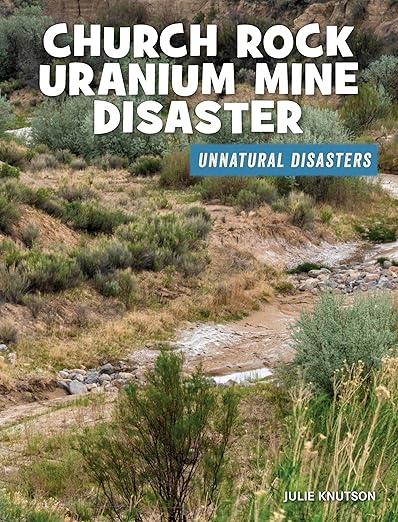
Exactly 34 years later, and at almost exactly the same time, an earthen dam holding uranium mill waste collapsed, unleashing 1,100 tons of solid radioactive waste and 94,000 gallons of tailings into northwestern New Mexico’s Rio Puerco. The Church Rock spill would release three times more radiation into the environment than the nuclear accident at Three Mile Island, most of it into the lands of the Navajo Nation. It was, as the Environmental Protection Agency deemed it, the largest radioactive spill in U.S. history. To my own shock and horror — and I’m certain the shock and horror of countless others — New Mexico’s governor at the time refused to declare the breach a federal emergency. Again, nobody was evacuated.
The two events are indelibly linked, not only by the day and time they share, but also by a kind of hubris unique to the nuclear age. By that, I mean a kind of hubris in which the lives and lands of New Mexicans were, and in many ways continue to be, deliberately disregarded. Thousands of people lived within a 50-mile radius of the Trinity Site. The waste at Church Rock? It flowed past some 1,700 homes.
For me, the date also marks just over one year since I began writing about nuclear affairs in New Mexico, the only “cradle-to-grave-state” in the nation. In that time, I’ve covered safety lapses in the plutonium pit factory at Los Alamos National Laboratory, the school-to-lab pipeline, allegations of fraud, waste and abuse at LANL, a secret autopsy program, legacy plutonium contamination and many other thorny issues.
New Brunswick’s nuclear-powered rate hikes

Commentary, by Janice Harvey, July 8, 2024, https://nbmediacoop.org/2024/07/08/new-brunswicks-nuclear-powered-rate-hikes/
The abject failure of this and previous governments’ energy policies is on full display these days. In the 1970s, New Brunswick was one of only three provinces that bought into the federal government’s agenda to build out a civilian nuclear power industry. Quebec has since shut its nuclear generators down, leaving only Ontario and New Brunswick as the nuclear flag-bearers. How has that worked out for us?
NB Power has come to the Energy and Utilities Board (EUB) with a request for the biggest rate hikes in the utility’s history. While the details are buried in thousands of pages of documents filed with the EUB, evidence from previous EUB hearings makes it crystal clear that the utility’s single greatest financial liability driving up power rates is the much-vaunted Point Lepreau Nuclear Generating Station.
Point Lepreau has been a financial white elephant since its construction ended up costing three times the original price tag. Its planned 30-year lifespan (over which all this extra cost was to be amortized) was cut short by premature aging of critical reactor components, prompting a decision to undergo an expensive refurbishment, which was to extend the life of the plant by a fantastical 40 years. At the time, the then-PUB determined based on the evidence that refurbishment was too big a financial risk for New Brunswickers to handle and recommended against it. The Lord government went ahead anyway.
Like the original construction, the refurbishment went way over the timeline and budget. The result has been very poor performance, a miserable 60 per cent in 2022 compared to the wildly optimistic 90 per cent capacity assumption that the EUB rejected. The costs of replacement power alone during these shutdowns have repeatedly sabotaged annual financial performance projections. Now, Point Lepreau is facing even more expensive upgrades to fix problems that were not dealt with during the refurbishment.
In short, Point Lepreau is the most unreliable and most expensive power generator on the grid, responsible for the lion’s share of NB Power’s debt. It is not going to get any better. Keeping it afloat until 2040, its new end-of-life target, is going to mean more of the same – throwing scarce money down a deep, black hole paid for by ever-rising power rates.

Despite the overwhelming evidence that New Brunswickers cannot afford nuclear power, the Higgs government has doubled down on nuclear, floating an equally fantastical proposition that the next generation of nukes – so-called small modular reactors – will quarterback New Brunswick’s climate change strategy, while an SMR export industry is expected to drive economic growth. To that end, New Brunswick taxpayers have already fronted a total of $35 million to two private nuclear upstarts, neither of which has designed or built a reactor. This is despite lots of reasons to put their rosy promises of “clean” nuclear-fueled prosperity in the same wishful thinking category as JOI Scientific’s power-from-water scheme that so beguiled NB Power executives.
Just as the EUB rate hearings got underway, an entirely predictable hitch in the Higgs’ nuclear dream occurred. It seems like the SMR upstart ARC Clean Energy is on its way down and out, taking $25 million provincial dollars and $7 million federal with it. If we’re lucky, Moltex Energy, propped up by $10 million in provincial and $50.5 million in federal tax dollars, will be close behind, and we can breathe a sigh of financial relief. The longer this nonsense persists, the more of our tax dollars will go into the nuclear black hole, and the greater the delay in meeting our climate change pollution targets.
Even if Moltex hangs on, or some other SMR promoter replaces them, any electricity that might eventually flow from an SMR will be, like Point Lepreau, the most expensive power on the grid – entirely unaffordable and unnecessary. The Higgs government knows this, passing legislation this spring requiring NB Power to buy electricity from the planned privately-owned SMRs regardless of price, a silent admission that electricity from SMRs, should they ever see the light of day, will be more expensive than any alternative. In other words, SMRs will drive up your power bill.
Meanwhile, the June 22nd issue of The Economist features the exponential growth of solar energy worldwide, the cost of which – even with storage – is falling exponentially. Other than home retrofits, this is the cheapest new power on offer.
The nuclear cost numbers are there for all to see. For elected representatives to support this industry, knowing people cannot tolerate higher power rates, is grossly irresponsible and a betrayal of trust. Renewables naysayers are depriving New Brunswickers of the benefits of this global energy transition. This – and our nuclear-powered rate hikes – need to be on the ballot on October 21.
Janice Harvey is the chair of the Environment and Society program at St. Thomas Universit
Biden signs a big nuclear bill. Can it remake the industry?

EE News, By Zach Bright | 07/10/2024
President Joe Biden signed legislation Tuesday that aims to deploy advanced nuclear reactors more quickly, placing wind at the backs of companies feverishly striving to carve out a bigger niche for nuclear technology as a zero-carbon source of electricity.
The ADVANCE Act, aims to further streamline permitting for new reactor designs, give the Nuclear Regulatory Commission more resources, and promote deployment across the globe.
For the NRC, it’s a chance at redemption. The pace of permitting projects is regarded by nuclear advocates as a major impediment to any future nuclear renaissance. The latest injection of support from Congress builds on the agency’s ongoing effort to sift through applications and put easier safety assessments on faster tracks.
……. close observers of the industry cautioned that it comes down to implementation. A vacant seat on the five-member NRC means the pace of licensing the next generation of reactors could hinge on who occupies the White House in 2025.
Both Biden and former President Donald Trump — with much of the Republican Party in tow — tout a return to nuclear energy as a potential solution to U.S. energy and climate challenges. Biden’s Department of Energy has helped shore up existing reactors and cast a $1.5 billion lifeline to a shuttered nuclear plant in Michigan that aims to restart in 2025. At the global climate summit in Dubai, United Arab Emirates, last December, the United States pledged with more than 20 other countries to triple the world’s nuclear energy capacity by 2050.
The Trump administration also took actions aimed at developing and exporting U.S. nuclear technology.
Yet given the huge financial commitment required to build out the nuclear industry, Trump’s strategy is less clear today. During his previous four years in office, he wanted to eliminate the Department of Energy’s Loan Programs Office. And through political surrogates such as the Heritage Foundation, Trump’s backers have indicated they’d significantly pare DOE spending on nonfossil energy.
The DOE loan program provided support to the $30 billion Vogtle nuclear expansion in Georgia that slogged its way to completion earlier this year.
Changing its mission
The ADVANCE Act passed with bipartisan support. But it’s also the first significant nuclear legislation in almost two decades.
Since 2005, the last time Congress put its foot on the scale hoping to spur more nuclear projects, the energy mix has changed significantly. Natural gas is the largest source of electricity. Solar power is dominating new generation. Battery technology and more transmission are enabling remote wind power to travel longer distances. And investment in technology to pull more carbon pollution out of the air is advancing.
Westinghouse is no longer the only company developing nuclear technology at scale. And the leading companies developing smaller-scale nuclear reactors are rooted in the West Coast tech industry — not Pittsburgh.
The other tough reality is that building a new nuclear reactor from scratch has proven extremely expensive.
Under the ADVANCE Act, Congress directed the NRC to revise its mission statement to ensure it uses its oversight authority “in a manner that is efficient and does not unnecessarily limit” the use of nuclear energy.
……… the tweak to the commission’s mission statement marks a big change for nuclear scientists and public health advocates who say it makes advancing civilian nuclear energy a top priority of the agency.
“It essentially compromises the independence of the NRC’s regulatory authority by forcing the agency to have to consider the health of the nuclear industry in everything it does,” said Edwin Lyman, nuclear power safety director for the Union of Concerned Scientists.
“It essentially compromises the independence of the NRC’s regulatory authority by forcing the agency to have to consider the health of the nuclear industry in everything it does,” said Edwin Lyman, nuclear power safety director for the Union of Concerned Scientists.
“If this mythology that nuclear power is completely safe — that it doesn’t need to be heavily regulated — takes hold, we could see a whole generation of really dangerous experimental nuclear facilities being licensed and built around the world,” Lyman continued. “And the first time that there’s a catastrophe, it’s going to set back the industry for decades.”……………………………… https://www.eenews.net/articles/biden-signs-a-big-nuclear-bill-can-it-remake-the-industry/
Texas Nuclear Power Plant Hit By Hurricane Beryl
Jul 08, 2024 , By Anna Skinner, https://www.newsweek.com/texas-nuclear-power-plant-hit-hurricane-beryl-1922433?fbclid=IwZXh0bgNhZW0CMTEAAR29mvidVj1SSXxwkVTE1ZlgUDnniN1ns2WYungAgepziqraWPcHYqrf1Ng_aem_n7E5P5-vOaqLLjIkP0kOkg
Hurricane Beryl made landfall in Matagorda, Texas, on Monday morning as a Category 1 hurricane, prompting concern and preparations at a nuclear power plant just miles away.
Beryl strengthened into a hurricane last Saturday, becoming June’s easternmost major hurricane in the Atlantic. The storm underwent rapid intensification and, at one point, was categorized as a Category 5 hurricane. It has killed at least 11 people in the Caribbean and two people in Texas, according to The Associated Press.
The system has since weakened to a tropical storm with maximum sustained wind speeds of 70 miles per hour. Despite the weakening, the storm still had the potential for life-threatening impacts, prompting a slew of weather-related warnings for much of southeastern Texas on Monday, including a tropical storm warning, flash flood warning and a storm surge warning, among others.
The South Texas Project Nuclear Operating Company (STPNOC), which is “one of the newest and largest nuclear power facilities in the nation” according to its website, has two nuclear units that provide energy to 2 million Texas homes. It is located in Bay City, which is near Matagorda. Storm-related warnings remain in place for Matagorda and Bay City as of Monday afternoon.
According to a satellite image from AccuWeather, STPNOC was directly in the path of the storm. It’s unclear what measures were taken at the facility to prepare for the severe weather, given that the company hasn’t provided an update to its website or social media pages. Newsweek reached out to STPNOC by email for comment.
Hurricane Harvey made landfall on the Texas coast on August 25, 2017, as a Category 4 hurricane.
“STP’s performance during 2017’s Hurricane Harvey helps make the case for nuclear power – thanks to a resilient Storm Crew, a robust design and solid severe weather plan,” the webpage said.
As of Monday afternoon, more than 2.7 million Texans were without power.
Beryl is the first hurricane of the 2024 Atlantic hurricane season and the second named storm. Tropical Storm Alberto made landfall in Mexico on the morning of June 20. Shortly after Beryl formed, the third named storm of the season—Tropical Storm Chris—formed quickly on June 30. Chris made landfall in Mexico that night, with wind speeds around 40 mph.
Multiple agencies, including the National Oceanic and Atmospheric Administration (NOAA), have issued forecasts warning that 2024 will be an exceptionally strong year for hurricanes.
Ignace, Ontario, betrayed by Council, on nuclear waste decision

Ignace has voted in favour of continuing in the Nuclear Waste Management Organization’s siting process, which brings Northwestern Ontario one step closer to being put on the receiving end of all of Canada’s high-level nuclear waste.
The NWMO has said it will select a single site by the end of 2024 for a deep geological repository for Canada’s existing stockpiles and future inventory of high-level nuclear fuel waste. The project will include transportation of the waste in 2-3 trucks per day for over 50 years, then processing at the site in a still-to-be-designed waste transfer facility, and finally placement deep underground in a series of tunnels and vaults so radioactive no workers can be present during the emplacement process.
An “ad hoc willingness committee”, appointed by the Township in February, delivered its recommendation in a special meeting of Council this afternoon. Immediately after the presentation by Committee co-chair Roger Dufault, Council voted to continue in the Nuclear Waste Management Organization’s site selection process.
The NWMO has been studying the Revell Site, between Ignace and Dryden, since 2010. In 2020 the NWMO narrowed its list of candidate sites to just two: the Revell Site in Northwestern Ontario and the Teeswater site in the Municipality of South Bruce in Southwestern Ontario. The Revell Site is 45 kilometres outside the Township of Ignace and is in a different watershed.
“We feel betrayed”, said Ignace resident Sheila Krahn.
“For the last ten years we’ve been bombarded with promotional messages from the NWMO, and when it was finally time for a decision, we didn’t even get a vote. I don’t believe that the majority of people in Ignace support this project, but so many people didn’t trust the so-called “willingness process” and didn’t participate.”
Instead of a referendum such as the one scheduled for South Bruce on October 28th, Ignace hired a consultant to conduct interviews and run an online poll. The online registration required scans of government ID and asked residents if they supported continuing in the NWMO siting process, rather than asking a more direct question about whether they agreed with the NWMO’s project.
“The NWMO siting process is all about getting to “yes”, so they can claim some semblance of public support”, explained Northwatch spokesperson Brennain Lloyd.
“They missed the mark with this one. They’ve spent an estimated $10 million of electricity ratepayers’ money trying to convince Ignace to support their nuclear waste project, but at the end of the day what they bought was a questionable outcome from a largely unelected council of a community that has no authority and is not even in the same watershed as the NWMO’s candidate site.
The NWMO has deemed Ignace to be the “host community”, despite Ignace’s distance from the site, lack of jurisdiction, and the presence of other communities closer to the site and downstream. In 2020 the Township of Ignace passed a resolution that the Township itself would make the decision on behalf of the people of Ignace, rather than holding a referendum, as the Municipality of South Bruce will carry out on October 28, 2024. In 2023 the Township hired the consulting firm With Chela Inc., which conducted a number of interviews and held an online poll. The consultant’s report was presented in-camera to Ignace’s “Ad Hoc Willingness Committee”, which had been selected and appointed by the Council in February. This “ad hoc” committee recommendation to Council, presented today, is to stay in the NWMO siting process. Minutes later Council voted to accept the recommendation, committing the current and future councils to adhering to the terms and conditions of a “hosting agreement” signed by the Township of Ignace and the NWMO in March 2024.
“At minimum this should be a regional decision, not the decision of one small upstream council”, added Wendy O’Connor, a volunteer with the northern Ontario alliance We the Nuclear Free North.
“There is a growing list of municipalities and First Nations passing resolutions against the NWMO using northern Ontario as the dumping ground for high-level nuclear waste. It will be astounding to see the NWMO select the Revell site, despite the poor decision made by the Ignace Township Council today”.
There is broad opposition to the NWMO project from individuals, community and citizens’ groups, municipalities, and First Nations. In addition to criticism of the project itself due to the negative impacts on the environment and human health during transportation and operation and after radioactive waste abandonment, the NWMO siting process and the Township of Ignace’s approach have also been soundly criticized for being secretive, undemocratic, and lacking scientific and technical rigour.
Newly Signed Bill Will Boost Nuclear Reactor Deployment in the United States
ENERGyYGOV JULY 10, 2024
President Biden signed the Fire Grants and Safety Act into law chalking up a BIG win for our nuclear power industry.
Included in the bill is bipartisan legislation known as the ADVANCE Act that will help us build new reactors at a clip that we haven’t seen since the 1970s. …………………………………
Incentivizing Competition
The ADVANCE Act builds on the successes of previous legislation to develop a modernized approach to licensing new reactor technologies. ……………………………..
The ADVANCE Act directs the U.S. Nuclear Regulatory Commission (NRC) to reduce certain licensing application fees and authorizes increased staffing for NRC reviews to expedite the process.
It also introduces prize competitions that the U.S. Department of Energy (DOE) can award to incentivize deployment.
These awards are subject to Congressional appropriations but will cover the total costs assessed by the NRC for first movers in a variety of areas, including the first advanced reactor to receive an operating or combined license. …………………………………………………………………………………………………………… https://www.energy.gov/ne/articles/newly-signed-bill-will-boost-nuclear-reactor-deployment-united-states
US says not ready to resume nuclear talks with Iran under Pezeshkian
Iran International 8 July 24
The Biden administration is not ready to resume nuclear talks with Iran under the new president, the White House national security council spokesman said Monday.
In his presidential campaign, Iran’s president-elect Masoud Pezeshkian advocated engagement in constructive talks with Western powers to revive the 2015 nuclear deal (JCPOA) and to lift the sanctions that he says have crippled the Iranian economy since the withdrawal of the US from the agreement in 2018.
Asked whether Pezeshkian’s election will change the US negotiating position, the White House’s John Kirby offered a blunt “no”…………………………………………….more https://www.iranintl.com/en/202407084339
US Mayors for Peace Call for Dialogue in a Time of Nuclear Danger
“If you don’t think nuclear weapons are a local issue, just ask the mayors of Hiroshima and Nagasaki.”
QUENTIN HART. 5 July 24 https://www.thenation.com/article/world/hiroshima-nagasaki-nuclear-threats-rising-urgent-diplomacy-needed/
he 79th anniversaries of the US atomic bombings of Hiroshima and Nagasaki are coming up in August. Rather than commemorating those somber anniversaries as a grim reminder of the past, this year they serve as a foreboding warning of what may be to come.
The Russian war on Ukraine, with its attendant nuclear threats, and an intensifying array of antagonisms among nuclear-armed governments in Northeast Asia, the South China Sea, South Asia, and the Middle East have brought into sharp focus the increasing risks of nuclear war by accident, miscalculation, or crisis escalation, making new efforts to restart disarmament diplomacy an imperative.
Instead, we are seeing progress toward nuclear disarmament slide into reverse. The last remaining US-Russia arms control treaty is set to expire in 2026. The United States is planning to spend $2 trillion over the next 30 years to maintain and modernize its nuclear warheads and delivery systems, and a new multipolar arms race is underway, as all nuclear-armed states are qualitatively and, in some cases, quantitatively upgrading their nuclear arsenals.
Reflecting the urgency of this moment, at the close of its 92nd annual meeting in Kansas City, Missouri, on June 23, the United States Conference of Mayors (USCM) adopted a new resolution, titled,“The Imperative of Dialogue in a Time of Acute Nuclear Dangers.” This is the 19th consecutive year that the USCM has adopted a resolution submitted on behalf of US members of Mayors for Peace.
By adopting this resolution, the USCM, the official nonpartisan association of more than 1,400 American cities with populations over 30,000, has once again charted a responsible path. It “condemns Russia’s illegal war of aggression on Ukraine and its repeated nuclear threats and calls on the Russian government to withdraw all forces from Ukraine.” Importantly, it also calls on the President and Congress “to maximize diplomatic efforts to end the war in Ukraine as soon as possible.”
The resolution welcomes national security advisor Jake Sullivan’s June 2023 invitation to Russia to manage nuclear risks and develop a post-2026 arms control framework, and his signal of US readiness to engage China to ensure that competition does not veer into conflict. It further “encourages our government to pursue any offer made in good faith to negotiate a treaty among nuclear powers barring any country from being the first to use nuclear weapons against one another.”
In an important provision, the resolution “calls on the government of the United States to make good faith efforts to reduce tensions with the government of the People’s Republic of China, seeking opportunities for cooperation on such global issues as the environment, public health, and equitable development, and new approaches for the control of nuclear arms.”
And the resolution welcomes the September 10, 2023, Declaration of the G20 Leaders meeting in Delhi—including leaders or foreign ministers of China, France, India, Russia, the United Kingdom, and the United States—that the “threat of use or use of nuclear weapons is inadmissible.”
Looking to the future, the USCM “calls on the Administration and Congress to reconsider further investments in nuclear weapons and find ways that our finite federal resources can better meet human needs, support safe and resilient cities, and increase investment in international diplomacy, humanitarian assistance and development, and international cooperation to address the climate crisis.”
As an elected official and original sponsor of this resolution, I understand just how precious human life is. It is our responsibility as leaders to ensure we leave this earth in a better place than we inherited it. It’s imperative that we look at the ways we utilize nuclear weapons and the threat thereof, and that we promote meaningful global dialogue to avoid nuclear war and create a culture of peace. I am proud to stand shoulder to shoulder with mayors across the globe as a member of the Mayors for Peace initiative that has led the way.
Mayors for Peace was founded in 1982 and is headed by the mayors of Hiroshima and Nagasaki. Its 8,397 members cities in 166 countries and territories are working for a world without nuclear weapons, safe and resilient cities, and a culture of peace.
Our resolution calls on USCM member cities to take action at the municipal level, to raise public awareness of the growing dangers of wars among nuclear-armed states, the humanitarian and financial impacts of nuclear weapons, and the urgent need for good faith US leadership in negotiating the global elimination of nuclear weapons. Mayors for Peace has a wide range of resources available for mayors: for example, planting seedlings of A-bombed trees, hosting A-bomb poster exhibitions, and the annual Mayors for Peace Children’s Art Competition, “Peaceful Towns.”
Mayors are the elected representatives who are closest to the people. As my good friend, Frank Cownie, the former mayor of Des Moines, has remarked, “If you don’t think nuclear weapons are a local issue, just ask the Mayors of Hiroshima and Nagasaki.” It’s past time for the federal government to heed the advice of the nation’s mayors.
“The Imperative of Dialogue in a Time of Acute Nuclear Dangers” was sponsored by Mayor Quentin Hart of Waterloo, Iowa, and cosponsored by Mayor Jesse Arreguin of Berkeley, California; Mayor Lacey Beaty of Beaverton, Oregon; Mayor Brad Cavanagh of Dubuque, Iowa; Mayor Martha Guerrero of West Sacramento, California; Mayor Chris Hoy of Salem, Oregon; Mayor Elizabeth Kautz of Burnsville, Minnesota; Mayor Daniel Laudick of Cedar Falls, Iowa; Mayor Satya Rhodes-Conway of Madison, Wisconsin; Mayor Andy Schor of Lansing, Michigan; Mayor Matt Tuerk of Allentown, Pennsylvania; and Mayor Victoria Woodards of Tacoma, Washington.
Pentagon keeps commitment to Sentinel nuclear missile as costs balloon

Defense news, By Stephen Losey 8 July 24
The military will continue developing its new LGM-35A Sentinel intercontinental ballistic missile but has told the U.S. Air Force to restructure the program to get its ballooning costs under control.
Even a “reasonably modified” version of the Northrop Grumman-made Sentinel will likely cost $140.9 billion, 81% more than the program’s original cost estimate of $77.7 billion, the Pentagon said in a statement. If Sentinel continues on its current path without being modified, the likely cost will be about $160 billion, it said.
And the military expects restructuring the program will delay it by several years.
“There are reasons for this cost growth, but there are also no excuses,” William LaPlante, undersecretary of defense for acquisition and sustainment, said in a conference call with reporters on Monday. “We fully appreciate the magnitude of the costs, but we also understand the risks of not modernizing our nuclear forces and not addressing the very real threats we confront.”
The Sentinel is intended to replace the Air Force’s half-decade old Minuteman III nuclear missile, which is nearing the end of its life. In January, the Air Force announced Sentinel’s future costs were projected to run over budget severely enough to trigger a review process known as a critical Nunn-McCurdy breach.
Such a review can sometimes lead to a program being canceled. LaPlante said Monday he decided to proceed with Sentinel after concluding it met several criteria, including that it is essential to national security and there were no cheaper alternatives that would meet the military’s operational requirements.
Big changes are coming for Sentinel, however. LaPlante rescinded the program’s Milestone B approval, which in September 2020 authorized the program to move into its engineering and manufacturing development phase. He also ordered the Air Force to restructure the program to address the root causes of the cost overruns and make sure it has the right management structure to keep its future price down.
The per-unit total cost for Sentinel was originally $118 million in 2020, when its cost, schedule and performance goals were set. When the Nunn-McCurdy breach was announced in January, those per-unit costs had grown at least 37% to about $162 million.
Hunter said the per-unit cost for the revised Sentinel program — which include components in addition to its missiles — is estimated to be about $214 million……………………………. more https://www.defensenews.com/air/2024/07/08/pentagon-keeps-commitment-to-sentinel-nuclear-missile-as-costs-balloon/—
With global race to decarbonize electricity sector, demand for skilled nuclear workers heats up.

COMMENT. Most (or all?) of the funds available to these companies to hire “skilled workers” is coming directly from the public (taxpayers) through direct subsidies, contracts or tax refunds. For example, the story mentions that AtkinsRéalis is one of the top hiring firms. A few weeks back was another story stating that the AtkinsRéalis nuclear division got a $750M contract for work on a CANDU reactor in Romania. A few months before that was another story that Canada had signed a $3 BILLION “export development deal” with Romania (i.e. a gift) to build its CANDU reactor, and that most of the funds would be spent on Canadian jobs. This all comes back to the nuclear industry’s current core problem: its products (new nuclear reactors) are hulking dinosaurs that suck up funds at an alarming rate and no private investor doing due diligence wants to be part of this costly scheme.
Globe and Mail, MATTHEW MCCLEARN, 8 July 24
Last month, U.S.-based nuclear reactor vendor Westinghouse opened a 13,000-square-foot engineering office in Kitchener, Ont. The company wants to sell its products, including its flagship AP1000 reactor, in Canada while also serving international customers.
Having hired most of its 250 Canadian staff in the last three years, it now seeks to hire 100 more engineers. It’s recruiting at a moment when, after a decades-long lull, skilled nuclear workers find themselves in high demand.
China and Russia have long dominated construction activity, while Western countries stagnated; Canada’s newest power reactor was completed in the early 1990s. But efforts to decarbonize the electricity sector have coalesced into support for designing and building new reactors, even as aging facilities are overhauled – leading to a proliferation of announced nuclear projects.
Whether there’s enough engineering talent to execute them all, however, is a question vigorously debated within the nuclear industry, here and abroad.
According to a survey the Canadian Nuclear Association conducted five years ago, the industry directly employs 33,000 people – up from 30,000 in 2012. Large employers include Ontario Power Generation and Bruce Power, which operate large nuclear plants, as well as uranium mining giant Cameco Corp. and Canadian Nuclear Laboratories, which operates the Chalk River research facility.
That survey is now being updated, and while results have not been finalized, employment appears to have grown another 10 to 15 per cent during the past five years. But the sheer volume of announced projects implies more rapid growth.
OPG recently began early work to refurbish four reactors at its Pickering station. The eight-reactor Bruce station, already one of the world’s largest, is in the early stages of a planned expansion that could add four new large reactors.
AtkinsRéalis, steward of Canada’s homegrown Candu technology, is racing to develop a modernized 1,000-megawatt reactor it calls the Monark. It’s among the most active hirers on Nuclear Jobs Canada, an industry job board.
Canadian Nuclear Laboratories is hiring at its Chalk River facilities, a Second World War-era facility that has been extensively modernized in recent years. It’s looking to populate its new laboratories and replace retiring workers.
“Nuclear was a little bit quiet for a while, and now it’s coming back,” said Janet Tosh, CNL’s vice-president of human resources.
“So we are having to build up that talent pipeline. But it’s not just science and technology people we’re looking for. We’re looking for technicians, machinists, certified trade workers.”
And then there’s relative newcomers to Canada, such as Westinghouse. Another U.S.-based reactor vendor, GE-Hitachi Nuclear Energy, has partnered with OPG to build up to four small modular reactors at Darlington station.
The picture is similar in other Western countries, including the U.S. and Britain, both of which have seen limited reactor construction for decades. Reports abound that nuclear employers, desperate for talent, have lured long-retired professionals back into the work force.
Last year, the U.S. National Academy of Engineering published a 250-page report examining the potential barriers to a major build-out of new “advanced” reactors. It identifies labour availability as a key constraint.
“Utilities have generally not retained the talent on their staff to execute these large projects given the limited deployment of nuclear technology in the past 30 years in the United States,” the report says.
“This shortfall in talent could become equally limiting across the supply chain, operations, and regulatory organizations that must support any large-scale growth in nuclear deployment.”
Akira Tokuhiro, a professor at Ontario Tech University, which has one of the largest nuclear engineering programs in North America, has noticed major nuclear employers pledging to hire hundreds of workers apiece on LinkedIn.
“And I thought, how can that be?” he recalled during an interview. “Because we’re producing 50 graduates a year.”
Prof. Tokuhiro added up the output from other programs across the continent, and determined that fewer than 1,000 people graduate with a degree in radiation science or nuclear engineering in North America. (He figures that for every such graduate, nuclear employers hire 10 times as many mechanical, chemical and other engineers who’ve not studied nuclear directly.)
He compares that against likely retirement rates for workers at major nuclear employers, as well as the many announced nuclear projects.
“We don’t have enough new graduates,” Prof. Tokuhiro concluded. “There’s a disconnect between what the industry needs, and what the universities are producing.”
Luca Oriani, Westinghouse’s global chief engineering services officer, disagrees. The reactor vendor almost exclusively hires graduates with little or no industry experience, he said, and then trains and retains them as long as possible, typically decades. The company has found the supply of engineering talent abundant, in Canada and elsewhere.
That’s not to say competition isn’t fierce. Westinghouse used to visit campuses a week ahead of job fairs for coming graduates to recruit before they met with competitors; now it’s offering them jobs as early as a year before graduation.
“I have over 2,000 engineers working for me,” Mr. Oriani said. “I still spend at least a week month just going to different universities and discussing with students, and trying to see how do we get them to come to us before they go somewhere else.”
In an interview earlier this year, OPG chief executive officer Ken Hartwick divided the industry’s labour into two groups: engineering and project management on one side; and trades, such as boilermakers and electricians, on the other. Availability of the first group, he said, has not been a problem, an aging work force notwithstanding.
“I’m less worried about the older person losing some of the experience, because the younger people coming through our universities are brilliant,” Mr. Hartwick said.
Tradespeople were another matter. OPG competes for them not just with other nuclear utilities such as Bruce Power, but with many other construction projects, including hospitals and roads.
“Can we ramp up our trades programs fast enough? That’s the biggest challenge.”
Some in Canada’s nuclear industry say talent isn’t as scarce here as it is in the U.S. and Britain, thanks to major multi-reactor reactor refurbishments at Ontario’s Darlington and Bruce stations over the past decade. They’re major capital projects in their own right, requiring significant manpower to execute.
That’s kept a lot of building trades very engaged, and it’s kept the regular work force [of utilities] engaged,” said Bob Walker, national director of the Canadian Nuclear Workers’ Council, an umbrella organization of nuclear sector unions.
He confirmed that retirees are re-entering the work force, but added that most nuclear employers offer generous pension plans, allowing workers to retire relatively early.
“That’s been a running joke for as long as I can remember: No one ever retires, they just change positions,” Mr. Walker said. “The industry plans on people coming back, and people plan on retiring and coming back.”……………….. https://www.theglobeandmail.com/business/article-after-decades-of-dormancy-competition-for-nuclear-engineering-talent/
1 This Month

of the week–London Campaign for Nuclear Disarmament

Tell the Ukrainian Government to Drop Prosecution of Peace Activist Yurii Sheliazhenko
To see nuclear-related stories in greater depth and intensity – go to https://nuclearinformation.wordpress.com
-
Archives
- April 2026 (114)
- March 2026 (251)
- February 2026 (268)
- January 2026 (308)
- December 2025 (358)
- November 2025 (359)
- October 2025 (376)
- September 2025 (257)
- August 2025 (319)
- July 2025 (230)
- June 2025 (348)
- May 2025 (261)
-
Categories
- 1
- 1 NUCLEAR ISSUES
- business and costs
- climate change
- culture and arts
- ENERGY
- environment
- health
- history
- indigenous issues
- Legal
- marketing of nuclear
- media
- opposition to nuclear
- PERSONAL STORIES
- politics
- politics international
- Religion and ethics
- safety
- secrets,lies and civil liberties
- spinbuster
- technology
- Uranium
- wastes
- weapons and war
- Women
- 2 WORLD
- ACTION
- AFRICA
- Atrocities
- AUSTRALIA
- Christina's notes
- Christina's themes
- culture and arts
- Events
- Fuk 2022
- Fuk 2023
- Fukushima 2017
- Fukushima 2018
- fukushima 2019
- Fukushima 2020
- Fukushima 2021
- general
- global warming
- Humour (God we need it)
- Nuclear
- RARE EARTHS
- Reference
- resources – print
- Resources -audiovicual
- Weekly Newsletter
- World
- World Nuclear
- YouTube
-
RSS
Entries RSS
Comments RSS
 nuclear-news