US government provides $1.52 billion loan to resurrect Michigan nuclear plant

US closes $1.52 billion loan to resurrect Michigan nuclear plant, By Timothy Gardner October 1, 2024
WASHINGTON, Sept 30 (Reuters) – The U.S. on Monday said it closed a $1.52 billion loan to resurrect Holtec’s Palisades nuclear plant in Michigan, and a senior Biden administration official said it could take two years to reopen the plant, which is longer than the company predicted.
President Joe Biden’s administration has called for a tripling of U.S. nuclear power capacity as U.S. power demand surges and worries about climate change mount.
The push could include the potential reopening of some commercial reactors that have been shut for decommissioning, including one at Three Mile Island, site of the worst nuclear accident in U.S. history. Restarting shut nuclear plants is a complicated and expensive process never before accomplished in the country.
“Palisades is a climate comeback story,” Ali Zaidi, the White House climate adviser, told reporters in a call, adding that nuclear power supports high-paying union jobs
The $1.52 billion in financing from the Department of Energy’s Loan Programs Office, was accompanied by funding for nonprofit electric cooperatives to purchase power from Palisades. Deputy U.S. Energy Secretary Xochitl Torres Small announced more than $1.3 billion in public funding to power cooperatives Wolverine and Hoosier Energy.
Nuclear reactors generate virtually emissions-free power, which is valued as electricity demand soars for the first time in decades on growth in artificial intelligence, electric vehicles and cryptocurrencies. Nuclear critics, however, point out that the U.S. has not agreed on a permanent place to bury radioactive nuclear waste.
Palisades still needs licensing from regulators and the senior U.S. official said that means it could take “a couple of years to turn back on”. Holtec has estimated a comeback in the fourth quarter next year…………….
O’Brien has said Holtec does not expect delays or additional costs. https://www.reuters.com/business/energy/us-closes-152-billion-loan-resurrect-michigan-nuclear-plant-2024-09-30/
Question for the candidates: Will the United States sign and ratify the Treaty on the Prohibition of Nuclear Weapons?

By Alicia Sanders-Zakre | September 20, 2024 Alicia Sanders-Zakre is the Policy and Research Coordinator at the International Campaign to Abolish Nuclear Weapons. https://thebulletin.org/2024/09/will-the-united-states-sign-and-ratify-the-treaty-on-the-prohibition-of-nuclear-weapons/?fbclid=IwY2xjawFoiE5leHRuA2FlbQIxMQABHXWHz4dPKx6qA6gXNV_3JCT1LqSA4SpW4InKnv6GP0M0A5RzBvtaJMfokw_aem_nT8dnPTOYgkrNFm4kOHKTA
Before the 2016 US presidential election, Princeton physicist Zia Mian wrote an essay asking then-candidates Hillary Clinton and Donald Trump in the Bulletin whether they would be ready to start talks to ban nuclear weapons. Eight years and two presidents later, both the Trump and Biden administrations have rebuffed the 2017 UN Treaty on the Prohibition of Nuclear Weapons (TPNW) and chosen instead to persist with current US policies to maintain and upgrade nuclear weapons—despite a legal obligation to disarm, public support for the TPNW, and the existential threat to humanity of adherence to the debated theory of nuclear deterrence.
The TPNW is the first international treaty banning all nuclear weapons activities, including nuclear use and threat of use, testing, stationing, and development. The treaty’s Article 4 provides a verifiable pathway for nuclear-armed states to join and disarm. And Articles 6 and 7 create the first international regime to provide assistance and remediation to people and environments harmed by nuclear weapons use and testing; an effort led by countries that have been bombarded by Soviet and British nuclear detonations. This treaty currently has 93 signatory states and 70 states parties from every region of the world.
The United States—like other nuclear-armed countries—has chosen to undermine and dismiss this good faith effort by nearly half the world’s governments, including US allies, to rid the world of nuclear weapons. In 2020, the Trump administration even urged states to withdraw their instruments of ratification. Meanwhile, the United States has failed to implement the obligation it undertook more than half a century ago under Article VI of the Treaty on the Non-Proliferation of Nuclear Weapons (NPT) to pursue nuclear disarmament and instead spent $51.5 billion in 2023 alone to upgrade its nuclear arsenal. The continued investment of nuclear powers in maintaining and rebuilding their nuclear arsenals, while paying mere lip service to disarmament, is a source of contention within the NPT and undermines the nuclear non-proliferation regime.
Foreign policy goals aside, US presidential candidates should adhere to democratic principles and align their policies with public opinion and support for the treaty among local governments to join the TPNW: According to a 2022 study, 65 percent of the US population supports joining the TPNW. Cities and towns across the country—from Washington, D.C. to Los Angeles to Yellow Springs, Ohio—have adopted local resolutions calling on their government to join, alongside five US states. Members of the US Congress, as well as local and state politicians, have also called on the United States to join the ban treaty.
Support for the TPNW is based on a clear-eyed assessment of the risks that nuclear weapons pose as long as they exist—and an understanding of the naiveté of relying on the rationality of statemen like Russian President Vladimir Putin, Israeli Prime Minister Benjamin Netanyahu, North Korean leader Kim Jong-un, or former US president Donald Trump to decide the fate of humanity.
Scholars have shown that the reason humanity has escaped nuclear annihilation since the dawn of the nuclear age may have more to do with sheer luck than with any successful strategy.
No one will want to be around when luck runs out.
We know all too well what that would look like and the incapacity of humanitarian organizations to respond. A new report by the International Campaign to Abolish Nuclear Weapons documents in gut-wrenching detail the harm that nuclear weapons have done to children and the threat they continue to pose to them, including those bombed by the United States in Hiroshima and Nagasaki. Some of those children survived and now give testimony to—and remind leaders of—the urgent need to abolish these weapons. This report adds to the robust body of literature on the devastating humanitarian and environmental consequences of nuclear weapons.
Under both Republican and Democratic administrations, the United States and the world have continued to face the threat of accidental or intentional nuclear annihilation, a threat that has continued to grow in recent years. It is time to chart a new course and to eliminate nuclear weapons, which is the only fail-safe way to eliminate the threat of their use.
Presidential candidates Kamala Harris and Donald Trump should be asked: If elected President, will you sign and submit to the Senate for ratification the Treaty on the Prohibition of Nuclear Weapons?
Lawmakers to Investigate Faulty Sub, Carrier Welding at Newport News Shipbuilding

USNI News, Sam LaGrone, September 27, 2024
THE PENTAGON – The House Armed Services Committee is investigating substandard welding on submarines and aircraft carriers at Newport News Shipbuilding, the committee announced on Friday.
Following a Thursday report in USNI News, lawmakers are now looking into how shipbuilders at the Virginia yard had violated proper welding procedures on work that made it into current in-service submarines. The flawed work was found by quality assurance teams at Newport News Shipbuilding, which has led to a wider investigation into welding quality that’s prompted a notification to the Department of Justice, USNI News reported.
“It is deeply concerning to learn that faulty welds may have been knowingly made to U.S. Navy submarines and aircraft carriers. The House Armed Services Committee is investigating how this occurred. The safety of our sailors is our top concern, and we need to immediately understand any risks associated with the faulty work,” reads the statement from HASC chair Rep Mike Rogers (R-Ala.), ranking member Rep Adam Smith (D-Wash.) and House Armed Services seapower and projection forces subcommittee leaders Rep. Trent Kelly (R-Miss.) and Rep. Joe Courtney (D-Conn.).
“The Department of Defense needs to immediately provide our committee with answers and a plan for how they will protect U.S. Navy vessels against tampering. Absolute transparency with Congress is essential.”
The Congressional query comes as the Navy and shipbuilder HII are gauging the scope of the ships that were affected overall. The number of in-service Virginia-class submarines that have been affected are in the “low single digits” and an ongoing analysis of under-construction Virginia, Columbia-class submarines and Ford-class aircraft carriers could stretch into October, a defense official told USNI News on Friday.
Earlier this year, quality assurance teams at Newport News discovered the sub-standard welds and reported the violations in procedure to both the Navy and the Department of Justice, according to a Friday statement on LinkedIn by Newport News president Jennifer Boykin.
“We recently discovered that the quality of certain welds on submarines and aircraft carriers under construction here at NNS do not meet our high-quality standards. Most concerning is that some of the welds in question were made by welders who knowingly violated weld procedures.” she wrote.
“We immediately put together a team made up of both internal and independent engineering and quality subject matter experts to determine the root causes, bound the issue and put in place immediate short-term corrective actions as we work through longer-term solutions.”
Boykin went on to say HII notified both the Navy and the Department of Justice on the sub-standard work………………………………………………………………………………………….
Neither HII nor the Navy have said when the initial faulty work was discovered.
While the assessment of the overall welds on the ships under construction could extend into next month, the Navy and HII now have the tedious task of reinspecting the welds and determining solutions.
Twice in the 2000s, the Navy mounted separate investigations into suspicious welds into then Northrop Grumman-managed Newport News Shipbuilding. In 2007, the Navy found welders used the wrong filler material in non-nuclear pipping on Virginia submarines. In 2009, the Navy had to reinspect the welds on nine submarines and four aircraft carriers after a shipyard inspector admitted to falsifying inspection reports, according to The Virginian Pilot.
The inspections can involve analyzing welds that are difficult to reach throughout a submarine or aircraft carrier. The subsequent weld checks after the 2009 investigation took years, USNI News understands. https://news.usni.org/2024/09/27/lawmakers-announce-investigation-into-faulty-submarine-carrier-welding-at-newport-news-shipbuilding-ships-affected-in-low-single-digits-officials-say
Pentagon “goes to school” -William Hartung, The Battle for the Soul of American Science
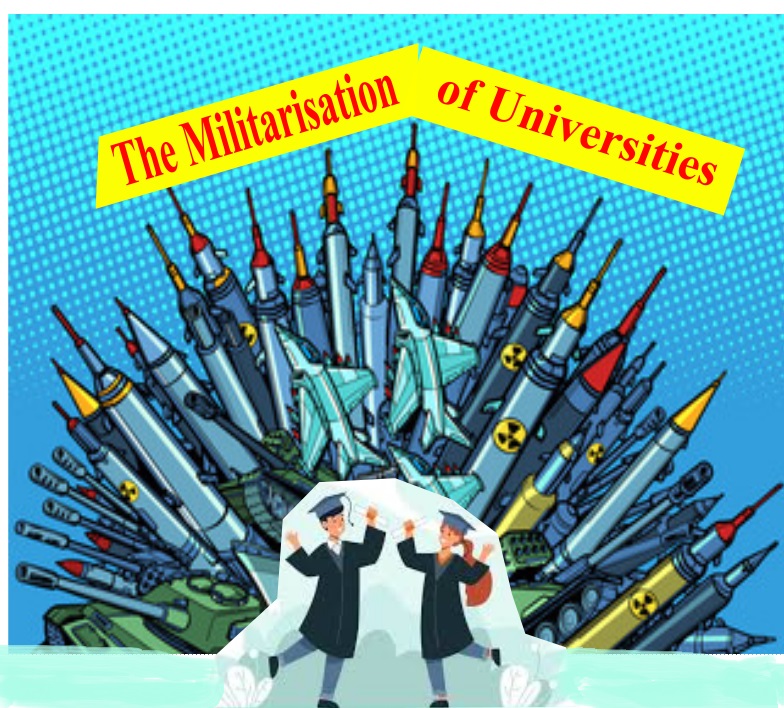
“……………………………………………. Hartung, a Pentagon expert, has focused on this strange reality of ours: no matter how many wars the United States loses, it only pours yet more taxpayer dollars into the Pentagon budget and into the coffers of those giant weapons-making companies of the military-industrial-congressional complex.
September 29, 2024, Tomgram
………………………………………………… Yet, after all these years, what couldn’t be more striking today is that, in the same spirit as those older pieces, Hartung focuses (as he so often has) on a different aspect entirely of the Pentagon’s distinctly over-funded world, one that, amid all the news coverage in this country, gets little or no attention: how the Pentagon, as he puts it, “goes to school” to enlist American science in the battle to create yet more horrific weaponry.
Pentagon expert William Hartung first wandered into TomDispatch in March 2008, less than seven years after this country’s Global War(s) on Terror were launched, full-scale disasters that were already costing the American taxpayer a fortune and a half — or perhaps, given the subject, all too literally an arm and a leg. As he wrote then, “How much, for instance, does one week of George Bush’s wars cost? Glad you asked. If we consider the wars in Iraq and Afghanistan together — which we might as well do, since we and our children and grandchildren will be paying for them together into the distant future — a conservative, single-week estimate comes to $3.5 billion. Remember, that’s per week! By contrast, the whole international community spends less than $400 million per year on the International Atomic Energy Agency, the primary institution for monitoring and preventing the spread of nuclear weapons; that’s less than one day’s worth of war costs.”
Only $650 million or so of that weekly sum, he estimated, was “spent on people.” So, he wondered, “where does the other nearly $3 billion go?” The answer he offered then: “It goes for goods and services, from tanks and fighter planes to fuel and food. Most of this money ends up in the hands of private companies like Boeing, Lockheed Martin, and the former Halliburton subsidiary, Kellogg, Brown and Root.” And knowing about that expense of $3.5 billion a week “and counting” on America’s wars, he added sarcastically, “Doesn’t that make you feel safer?”
Ever since then, Hartung, a Pentagon expert, has focused on this strange reality of ours: no matter how many wars the United States loses, it only pours yet more taxpayer dollars into the Pentagon budget and into the coffers of those giant weapons-making companies of the military-industrial-congressional complex. Even the titles of a few of his pieces over the years catch the grim spirit of his all-too-striking analysis: “There’s No Business Like the Arms Business, Weapons ‘R’ Us (But You’d Never Know It)” (July 2016); “The Urge to Splurge, Why Is It So Hard to Reduce the Pentagon Budget?” (October 2016); “The American Way of War Is a Budget-Breaker, Never Has a Society Spent More for Less” (May 2017); “Merger Mania, The Military-Industrial Complex on Steroids” (July 2019); “America Dominant Again (in Arms Sales), And Again… and Again… And Again” (May 2021); “Fueling the Warfare State, America’s $1.4 Trillion ‘National Security’ Budget Makes Us Ever Less Safe” (July 2022); “Spending Unlimited, The Pentagon’s Budget Follies Come at a High Price” (March 2024).
And of course, that’s just a small dip into the pieces he’s written for TomDispatch. Yet, after all these years, what couldn’t be more striking today is that, in the same spirit as those older pieces, Hartung focuses (as he so often has) on a different aspect entirely of the Pentagon’s distinctly over-funded world, one that, amid all the news coverage in this country, gets little or no attention: how the Pentagon, as he puts it, “goes to school” to enlist American science in the battle to create yet more horrific weaponry. And so it goes, again and again and again. Tom
The Pentagon Goes to School. The Battle for the Soul of American Science. Bringing the Militarization of University Research Back to Earth
The divestment campaigns launched last spring by students protesting Israel’s mass slaughter in Gaza brought the issue of the militarization of American higher education back into the spotlight.
Of course, financial ties between the Pentagon and American universities are nothing new. As Stuart Leslie has pointed out in his seminal book on the topic, The Cold War and American Science, “In the decade following World War II, the Department of Defense (DOD) became the biggest patron of American science.” Admittedly, as civilian institutions like the National Institutes of Health grew larger, the Pentagon’s share of federal research and development did decline, but it still remained a source of billions of dollars in funding for university research.

And now, Pentagon-funded research is once again on the rise, driven by the DOD’s recent focus on developing new technologies like weapons driven by artificial intelligence (AI). Combine that with an intensifying drive to recruit engineering graduates and the forging of partnerships between professors and weapons firms and you have a situation in which many talented technical types could spend their entire careers serving the needs of the warfare state. The only way to head off such a Brave New World would be greater public pushback against the military conquest (so to speak) of America’s research and security agendas, in part through resistance by scientists and engineers whose skills are so essential to building the next generation of high-tech weaponry.
The Pentagon Goes to School
Yes, the Pentagon’s funding of universities is indeed rising once again and it goes well beyond the usual suspects like MIT or Johns Hopkins University. In 2022, the most recent year for which full data is available, 14 universities received at least — and brace yourself for this — $100 million in Pentagon funding, from Johns Hopkins’s astonishing $1.4 billion (no, that is not a typo!) to Colorado State’s impressive $100 million. And here’s a surprise: two of the universities with the most extensive connections to our weaponry of the future are in Texas: the University of Texas at Austin (UT-Austin) and Texas A&M.
In 2020, Texas Governor Greg Abbott and former Army Secretary Ryan McCarthy appeared onstage at a UT-Austin ceremony to commemorate the creation of a robotics lab there, part of a new partnership between the Army Futures Command and the school. “This is ground zero for us in our research for the weapons systems we’re going to develop for decades to come,” said McCarthy.
Not to be outdone, Texas A&M is quietly becoming the Pentagon’s base for research on hypersonics — weapons expected to travel five times the speed of sound. Equipped with a kilometer-long tunnel for testing hypersonic missiles, that school’s University Consortium for Applied Hypersonics is explicitly dedicated to outpacing America’s global rivals in the development of that next generation military technology. Texas A&M is also part of the team that runs the Los Alamos National Laboratory, the (in)famous New Mexico facility where the first nuclear weapons were developed and tested as part of the Manhattan Project under the direction of Robert Oppenheimer.
Other major players include Carnegie Mellon University, a center for Army research on the applications of AI, and Stanford University, which serves as a feeder to California’s Silicon Valley firms of all types. That school also runs the Technology Transfer for Defense (TT4D) Program aimed at transitioning academic technologies from the lab to the marketplace and exploring the potential military applications of emerging technology products.
In addition, the Pentagon is working aggressively to bring new universities into the fold. In January 2023, Secretary of Defense Lloyd Austin announced the creation of a defense-funded research center at Howard University, the first of its kind at a historically black college.
Given the campus Gaza demonstrations of last spring, perhaps you also won’t be surprised to learn that the recent surge in Pentagon spending faces increasing criticism from students and faculty alike. Targets of protest include the Lavender program, which has used AI to multiply the number of targets the Israeli armed forces can hit in a given time frame. But beyond focusing on companies enabling Israel’s war effort, current activists are also looking at the broader role of their universities in the all-American war system.
For example, at Indiana University research on ties to companies fueling the killings in Gaza grew into a study of the larger role of universities in supporting the military system as a whole. Student activists found that the most important connection involved that university’s ties to the Naval Surface Warfare Center, Crane Division, whose mission is “to provide acquisition, engineering… and technical support for sensors, electronics, electronic warfare, and special warfare weapons.” In response, student activists have launched a “Keep Crane Off Campus” campaign.
A Science of Death or for Life?
Graduating science and engineering students increasingly face a moral dilemma about whether they want to put their skills to work developing instruments of death. Journalist Indigo Olivier captured that conflict in a series of interviews with graduating engineering students. She quotes one at the University of West Florida who strongly opposes doing weapons work this way: “When it comes to engineering, we do have a responsibility… Every tool can be a weapon… I don’t really feel like I need to be putting my gifts to make more bombs.”
By contrast, Cameron Davis, a 2021 computer engineering graduate from Georgia Tech, told Olivier about the dilemma faced by so many graduating engineers: “A lot of people that I talk to aren’t 100% comfortable working on defense contracts, working on things that are basically going to kill people.” But he went on to say that the high pay at weapons firms “drives a lot of your moral disagreements with defense away.”
The choice faced by today’s science and engineering graduates is nothing new. The use of science for military ends has a long history in the United States. But there have also been numerous examples of scientists who resisted dangerous or seemingly unworkable military schemes……………………………………………………………………………………………
Scientists have also played a leading role in pressing for nuclear arms control and disarmament, founding organizations like the Bulletin of the Atomic Scientists (1945), the Federation of American Scientists (1945), the global Pugwash movement (1957), the Council for a Livable World (1962), and the Union of Concerned Scientists (1969). To this day, all of them continue to work to curb the threat of a nuclear war that could destroy this planet as a livable place for humanity.

A central figure in this movement was Joseph Rotblat, the only scientist to resign from the Manhattan Project over moral qualms about the potential impact of the atomic bomb. In 1957, he helped organize the founding meeting of the Pugwash Conference, an international organization devoted to the control and ultimate elimination of nuclear weapons. In some respects Pugwash was a forerunner of the International Campaign to Abolish Nuclear Weapons (ICAN), which successfully pressed for the U.N. Treaty on the Prohibition of Nuclear Weapons, which entered into force in January 2021.
Enabling Endless War and Widespread Torture
The social sciences also have a long, conflicted history of ties to the Pentagon and the military services. Two prominent examples from earlier in this century were the Pentagon’s Human Terrain Program (HTS) and the role of psychologists in crafting torture programs associated with the Global War on Terror, launched after the 9/11 attacks with the invasion of Afghanistan.
………………………………………………An even more controversial use of social scientists in the service of the war machine was the role of psychologists as advisors to the CIA’s torture programs at Abu Ghraib in Iraq, the Guantánamo Bay detention center in Cuba, and other of that agency’s “black sites.” ……………………………………………………………
today, resistance to the militarization of science has extended to the growing use of artificial intelligence and other emerging military technologies. For example, in 2018, there was a huge protest movement at Google when employees learned that the company was working on Project Maven, a communications network designed to enable more accurate drone strikes. More than 4,000 Google scientists and engineers signed a letter to company leadership calling for them to steer clear of military work, dozens resigned over the issue, and the protests had a distinct effect on the company. That year, Google announced that it would not renew its Project Maven contract, and pledged that it “will not design or deploy AI” for weapons.
Unfortunately, the lure of military funding was simply too strong. Just a few years after those Project Maven protests, Google again began doing work for the Pentagon,…………………………………….
The Future of American Science
……………………………………………………………………The stakes are particularly high now, given the ongoing rush to develop AI-driven weaponry and other emerging technologies that pose the risk of everything from unintended slaughter due to system malfunctions to making war more likely, given the (at least theoretical) ability to limit casualties for the attacking side. In short, turning back the flood of funding for military research and weaponry from the Pentagon and key venture capital firms will be a difficult undertaking. After all, AI is already performing a wide range of military and civilian tasks. Banning it altogether may no longer be a realistic goal, but putting guardrails around its military use might still be.
Such efforts are, in fact, already underway. The International Committee for Robot Arms Control (ICRAC) has called for an international dialogue on “the pressing dangers that these systems pose to peace and international security and to civilians.”………………………………….
The Future of Life Institute has underscored the severity of the risk, noting that “more than half of AI experts believe there is a one in ten chance this technology will cause our extinction.”
Instead of listening almost exclusively to happy talk about the military value of AI by individuals and organizations that stand to profit from its adoption, isn’t it time to begin paying attention to the skeptics, while holding back on the deployment of emerging military technologies until there is a national conversation about what they can and can’t accomplish, with scientists playing a central role in bringing the debate back to earth?
https://tomdispatch.com/the-pentagon-goes-to-school/
Nuclear power for AI: what it will take to reopen Three Mile Island safely
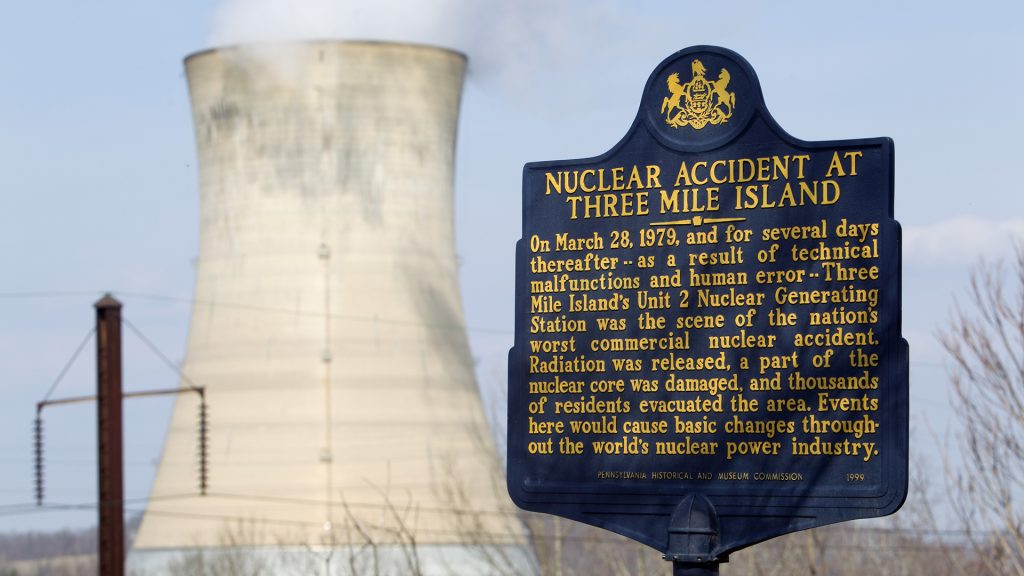
As Microsoft strikes a deal to restart a reactor at the notorious power station, Nature talks to nuclear specialists about the unprecedented process.
Michael Greshko, https://www.nature.com/articles/d41586-024-03162-2 30 Sept 24
Microsoft announced on 20 September that it had struck a 20-year deal to purchase energy from a dormant nuclear power plant that will be brought back online. And not just any plant: Three Mile Island, the facility in Londonderry Township, Pennsylvania, that was the site of the worst-ever nuclear accident on US soil when a partial meltdown of one of its reactors occurred in 1979.
The move, which symbolizes technology giants’ need to power their growing artificial-intelligence (AI) efforts, raises questions over how shuttered nuclear plants can be restarted safely — not least because Three Mile Island isn’t the only plant being brought out of retirement.
Palisades Nuclear Plant, an 805-megawatt facility in Covert, Michigan, was shut down in May 2022. But the energy company that owns it, Holtec International, based in Jupiter, Florida, plans to reopen it. This reversal in the facility’s fortunes has been bolstered by a US$1.5-billion conditional loan commitment from the US Department of Energy (DoE), which sees nuclear plants — a source of low-carbon electricity — as a way of helping the country to meet its ambitious climate goals. The Palisades plant is on track to reopen in late 2025.
“It’s the first time something like this has been attempted, that we’re aware of, worldwide,” says Jason Kozal, director of the reactor safety division at a regional office of the US Nuclear Regulatory Commission (NRC) in Naperville, Illinois, and the co-chair of a regulatory panel overseeing the restart of Palisades.
Here, Nature talks to nuclear specialists about what it will take to restart these plants and whether more are on the way as the world’s demand for AI grows.
A change in fortunes
Since 2012, more than a dozen nuclear plants have been shut down in the United States, in some cases as a result of unfavourable economics. Less cost-effective plants — such as those with only a single working reactor — struggled to remain profitable in states with deregulated electricity markets and widely varying prices. Three Mile Island, owned by the utility company Constellation Energy in Baltimore, Maryland, is a prime example. Today, 54 US plants remain in operation, running a total of 94 reactors.
Nuclear energy, which accounts for about 9% of the world’s electricity, has seen some resurgence internationally, but is also competing with other energy sources, including renewables. After the 2011 Fukushima Daiichi disaster, Japan suspended operations at all of its 48 remaining nuclear plants, but these are gradually being brought back online, in part to cut dependence on gas imports. By contrast, Germany announced a phase-out of its nuclear plants in 2011, and shut down its last three in 2023.
In the United States, nuclear energy’s fortunes might be turning as technology companies race to build enormous, energy-gobbling data centres to support their AI systems and other applications while somehow fulfilling their climate pledges. Microsoft, for instance, has committed to being carbon negative by 2030.
It’s further confirmation of the value of nuclear, and, if the deal is right — if the price is right — then it makes business sense, as well,” says Jacopo Buongiorno, the director of the Center for Advanced Nuclear Energy Systems at the Massachusetts Institute of Technology in Cambridge.
A new start
This isn’t the first time that the United States has brought a powered-down reactor back online. In 1985, for example, the Tennessee Valley Authority, a federally owned electric utility company, took the reactors at its Browns Ferry Nuclear Power Plant in Athens, Alabama, offline. After years of refurbishment, they were brought back online, with the final reactor restarted in 2007.
The cases of Palisades and Three Mile Island are different, however. When those plants closed, their then-owners made legal statements that the facilities would be shut down, even though their operating licenses were still active. Three Mile Island, which will be renamed the Crane Clean Energy Center under the proposed restart, shut down its single remaining functional reactor in 2019.
Because the plants were slated for shutdown and safety checks were therefore stopped, regulators and companies must now navigate a complex licensing, oversight and environmental-assessment process to reverse the plants’ decommissioning.
Safety checks will be needed to ensure, among other things, that the plants can operate securely once uranium fuel rods have been replaced in their reactors. When these plants were decommissioned, their radioactive fuel was removed and stored, so the facilities no longer needed to adhere to many exacting technical specifications, says Jamie Pelton, also a co-chair of the Palisades restart panel, and a deputy director at the NRC’s Office of Nuclear Reactor Regulation in Rockville, Maryland.
It will be no small feat to reinstate those safety regulations: to meet the standards, infrastructure will need to be inspected carefully. According to Buongiorno, any metallic components in the plants that have corroded since the shutdowns, including wires and cables used in instrumentation and controls, will need to be replaced.
The plants’ turbine generators, which make electricity from the steam produced as the plants’ fuel rods heat up water, will also get a close look. After sitting dormant for years, a turbine could develop defects within its shaft or corrosion along its blades that would require refurbishment. In the case of Palisades, the NRC announced on 18 September that the plant’s steam generators would need further testing and repair, following inspections conducted by Holtec.
Nuclear’s prospects
As the plants near their restart dates, their operators will also have to contend with a challenge faced by even fully operational plants: the need to source fresh nuclear fuel. US nuclear utility companies have long counted on the international market to buy much of the necessary raw yellowcake uranium and the services that separate and enrich uranium-235, the isotope used in nuclear reactors’ fuel rods. Russia has been a major international supplier of these services, even after the country’s 2022 invasion of Ukraine, because US and European sanctions have not targeted nuclear fuel. But to minimize its reliance on Russia, the United States is building up its own supply chain, with the DoE offering $3.4 billion to buy domestically enriched uranium.
There probably won’t be too many other restarts of mothballed nuclear plants in the United States, however, even as demand for low-carbon electricity grows. Not every US plant that has been shut down is necessarily in good enough condition to be easily refurbished — and the idea of reopening some of those would meet with too much resistance. As an example, Buongiorno points to New York’s Indian Point Energy Center, which was closed in 2021. The plant’s proximity to New York City had long provoked criticism from nuclear-safety advocates.
But that doesn’t mean that all of these sites will remain unused. One option is to build advanced reactors — including large reactors with upgraded safety features and small modular reactors with innovative designs — on sites where old nuclear plants once stood, to take advantage of existing transmission lines and infrastructure. “We might see interest in the US in building more of these large reactors, whether that’s fuelled by data centres or some other applications,” Buongiorno adds. “Utilities and customers are exploring this at the moment.”
Biden would rather defend Israeli impunity than stop a regional war

As Israel intensified its deadly attacks on Lebanon, the U.S. moved more troops to the Middle East. The move shows Joe Biden’s priority is not to avoid escalation but to ensure that Israel has full impunity.
Mondoweiss. By Mitchell Plitnick September 27, 2024
As Israel was intensifying its deadly attacks on Lebanon, the United States decided to move more troops to the Middle East. The number of soldiers was not announced, but the force was said to be small.
The stated purpose was to protect Americans stationed in the region, but the more likely reason was to send a message to Iran, Ansarallah, and other allies of Hezbollah that the United States would protect Israel in the event of escalation, regardless of who was responsible for that escalation.
U.S. President Joe Biden might hope that such a message would deter escalation, but his decision to communicate it by increasing the U.S. military presence rather than acting to restrain Israel demonstrates that, just as with Gaza, Biden’s priority is not to avoid escalation, but to ensure that Israel has full impunity to act as it wants.
Confronting Iran is Israel’s endgame
In fact, this response plays right into the tactics Israel is pursuing in its attack on Lebanon. The Israeli right doesn’t have a real strategy, but it has long clung to an ideological belief that Israel should throw off the “restraints” placed on it by the United States and Europe and fully exercise its military might to utterly destroy its enemies.
This is what has played out in Gaza since last October. The genocidal campaign is meant not to destroy Hamas, but rather to destroy the Palestinian national movement. That’s why it was inevitable that the genocide would expand to the West Bank, despite the fact that there were virtually no Palestinian actions there in response to the horror in Gaza.
The Israeli right believes it must decisively defeat Iran, not merely deter it. Israel’s provocative actions such as its bombing of the Iranian embassy in Syria and assassinating Hamas leader Ismail Haniyeh in Tehran were meant to force a response from Iran that would escalate regional tensions. Iran didn’t take the bait, despite the fact that its lack of response to Israel’s activities invites more and greater provocative Israeli actions.
The latest Israeli escalation indicates that Israel is making good on its promise to shift its attention from Gaza to Lebanon. That won’t mean the slaughter in Gaza will stop, but it will mean that Israel will focus its forces more in the north once it feels it is ready to engage Hezbollah on the ground, an eventuality its current activities are an attempt at paving the path toward.
Both Israeli and American military leaders are less enthusiastic about escalation with Lebanon……………………………………………………………………
A potential Iranian diplomatic response
Iran has been an obsession for Israeli Prime Minister Benjamin Netanyahu from his earliest days in the public eye. Few in Israel disagree with that obsession, but past governments had significant internal dissent from the idea of provoking a conflict with the Islamic Republic.
This government is much more willing to take bold steps to provoke that confrontation. Worse, successive American administrations have raised Israeli hopes that they can get the support from Washington that they would need to effectively fight Iran. ……………………………………………………………………………………… more https://mondoweiss.net/2024/09/biden-would-rather-defend-israeli-impunity-than-stop-a-regional-war/
Questions still remain on the suspicious death of nuclear worker Karen Silkwood


Karen Gay Silkwood (February 19, 1946 – November 13, 1974) was an American chemical technician and labor union activist known for raising concerns about corporate practices related to health and safety of workers in a nuclear facility. Following her mysterious death, which received extensive coverage, her estate filed a lawsuit against chemical company Kerr-McGee, which was eventually settled for $1.38 million. Silkwood was portrayed by Meryl Streep in Mike Nichols‘ 1983 Academy Award-nominated film Silkwood.
She worked at the Kerr-McGee Cimarron Fuel Fabrication Site plant near Crescent, Oklahoma, United States. Silkwood’s job was making plutonium pellets for nuclear reactor fuel rods. This plant experienced theft of plutonium by workers during this era. She joined the union and became an activist on behalf of issues of health and safety at the plant as a member of the union’s negotiating team, the first woman to have that position at Kerr-McGee. In the summer of 1974, she testified to the Atomic Energy Commission about her concerns.
For three days in November, she was found to have plutonium contamination on her person and in her home. That month, while driving to meet with David Burnham, a New York Times journalist, and Steve Wodka, an official of her union’s national office, she died in a car crash under unclear circumstances.
Her family sued Kerr-McGee on behalf of her estate. In what was the longest trial up until then in Oklahoma history, the jury found Kerr-McGee liable for the plutonium contamination of Silkwood, and awarded substantial damages. These were reduced on appeal, but the case reached the United States Supreme Court in 1979, which upheld the damages verdict. Before another trial took place, Kerr-McGee settled with the estate out of court for US $1.38 million, while not admitting liability. https://en.wikipedia.org/wiki/Karen_Silkwood
Questions Still Remain In Suspicious Death Of Karen Silkwood
Hurricane Helene Floods Closed Duke Nuclear Plant in Florida

By Ari Natter, September 28, 2024 , https://www.bnnbloomberg.ca/investing/2024/09/28/hurricane-helene-floods-retired-duke-nuclear-plant-in-florida/
(Bloomberg) — Floodwaters from Hurricane Helene have swamped a retired Duke Energy Corp. nuclear power plant, according to a filing with the Florida Department of Environmental Protection, though an escape of contaminated fuel appears unlikely.
The Crystal River plant, which has been shuttered since 2013, experienced a storm surge of as much as 12 feet, according to the filing, which was posted online.
“The whole site was flooded, including buildings, sumps, and lift stations. Industrial Wastewater Pond #5 was observed overflowing to the ground due to the surge,” according to the report, which was filed Friday, the day after Helene roared ashore.
“We are still in the process of obtaining access and assessing the damage, but due to the nature of this event we anticipate difficulty with estimating the total discharge amount of wastewater, and impacts are unknown at this time,” the report said.
The used nuclear fuel at the site remains secure, Duke Energy said in a statement Sunday. “All radioactive material has been segmented and permanently packaged in shielded containers impervious to the effects of extreme weather,” the company said.
The facility, just south of Cedar Key, is still in the process of being dismantled. It’s likely that the spent fuel, which is kept onsite in dry storage, is safe, Edwin Lyman, a nuclear specialist with the Union of Concerned Scientists, said in an email before Duke Energy commented.
“There is probably still quite a bit of low-level radioactive waste awaiting shipment, and it’s likely the site wastewater has low levels of radioactive contamination,” Lyman said in an email. “Although anything is possible, based on the Fukushima experience, if the storage area were immersed in water for a short period of time, there is unlikely to be significant damage or leakage from the canisters.”
The site also flooded in 2023 after Hurricane Idalia made landfall, according to a report in Newsweek, that said spent fuel was scheduled to remain on site until 2037.
–With assistance from Tony Czuczka.
Nuclear Weapons and the U.S. Presidential Elections

by beyondnuclearinternational, https://beyondnuclearinternational.org/2024/09/29/nuclear-weapons-and-the-u-s-presidential-elections/
Whoever becomes the next US president, we’ll need to redouble our efforts for nuclear abolition, writes Jackie Cabasso
Nuclear weapons policy is not an issue in the presidential election. In fact, U.S. foreign policy, with the exception of some controversy over ongoing U.S. arms provisions to Israel, is barely an issue. Even though nuclear weapons are in the media more than they have been for many years—due mainly to the Russian government’s nuclear threats, and to some extent, North Korea’s, there is basically no public discussion or political debate about nuclear weapons in the United States.
The political situation in the U.S. is more volatile and uncertain than at any time in my life. Predicting who is going to be elected president in November is impossible. In the short weeks since President Biden withdrew from the campaign and threw his support behind his vice president Kamala Harris, there has been an extraordinary outpouring of enthusiasm for her campaign, especially among young people and people of color, and a massive surge of financial support from a wide range of constituencies. But at this point, the outcome of the presidential election is too close to call.
What I can say is that U.S. national security policy has been remarkably consistent in the post-World War II and post-Cold War eras. “Deterrence” – the threatened use of nuclear weapons – has been reaffirmed as the “cornerstone” of U.S. national security policy by every president, Republican or Democrat, since 1945, when President Harry Truman, a Democrat, oversaw the atomic bombings of Hiroshima and Nagasaki.
If Kamala Harris is elected in 2024, we can expect more of the same. As confirmed in an August 20, 2024, New York Times story that attracted some notice, an initiative is quietly underway by the Biden administration to beef up the U.S. nuclear arsenal. As reported by the Times, in March, President Biden approved a highly classified “Nuclear Employment Guidance” plan that seeks to prepare the United States for possible coordinated nuclear challenges from China, Russia and North Korea. This comes as the Pentagon believes China’s nuclear arsenal will rival the size and diversity of the U.S.’ and Russia’s over the next decade.
This plan was hinted at by Vipin Narang, a top Department of Defense nuclear policy official, who recently stated that, while current modernization plans — estimated to cost at least $350 billion over the next two decades — are “necessary,” they “may well be insufficient” to meet current and future threats. According to Narang, in the face of growing threats from Russia, China and North Korea, “We have begun exploring options to increase future launcher capacity or additional deployed warheads on the land, sea and air legs that could offer national leadership increased flexibility, if desired, and executed.”
According to the head of the National Nuclear Security Administration, Jill Hruby, the U.S. is launching a new nuclear arms race to catch up with and outsmart Russia and China. “We now have seven systems that should be developed and put into production by the mid-2030s. This program is not only a major modernization of all three components of the nuclear triad, but also adds new deterrence capabilities that do not currently exist,” she said.
Donald Trump’s likely nuclear policy is spelled out in a manifesto by Project 2025, a coalition of far-right groups led by the Heritage Foundation. Its 900-page book, “Mandate for Leadership,” is a blueprint for the most dramatic takeover and transformation of U.S. democracy in history and is widely seen as the playbook for a possible second Trump administration.
Trump himself, and a number of Republican members of Congress, have attempted to distance themselves from Project 2025, in some cases, claiming they haven’t even heard of it. This is not plausible. Speaking at a 2022 Heritage Foundation event, Donald Trump declared, “[T]his is a great group. And they’re going to lay the groundwork and detail plans for exactly what our movement will do and what your movement will do when the American people give us a colossal mandate to save America and that’s coming.”
Project 2025 proposes that a second Trump administration prioritize nuclear weapons programs over other security programs, accelerate the development and production of all nuclear weapons programs, increase funding for the development and production of new and modernized nuclear warheads, and prepare to test new nuclear weapons.
Separately, Robert O’Brien, an ex-adviser to former President Trump, has written that in order to counter China and Russia’s continued investments in their nuclear arsenals, the U.S. should resume nuclear testing.
While she did not mention nuclear weapons in her presidential nomination acceptance speech, Kamala Harris chillingly pledged, “As Commander-in-Chief, I will ensure America always has the strongest, most lethal fighting force in the world.” A Harris administration would undoubtedly be far more progressive on domestic issues, but whoever wins the U.S. presidency, our redoubled efforts to press for nuclear abolition will remain an urgent necessity.
Mistaking Militarism for Statecraft, Empire for Democracy and Debt for Prosperity

No strategy to the war game, no accounting to our economy, we have fumbled and stumbled to the precipice of global war, now led by a Democratic Administration
Dennis Kucinich, Substack, Sep 27, 2024
As of May 2024, the United States has committed over $175 (borrowed) billion to escalating the proxy war against Russia, and, as in the case of the Iraq and Afghan wars, with little regard for accountability pertaining to tracking military hardware, equipment, funding, or fraud prevention.
One of the most grotesque moments in this bloody global Punch and Judy show preliminary to nuclear war, was the recent arrival of Vladimir Zelenskyy, former president of Ukraine, making a campaign stop at an ammunition factory in Scranton, Pennsylvania, where some of the three million 155mm artillery shells the US has given Ukraine are produced.
Alongside Zelenskyy, in an incitement-op photo promising further escalation of war, the Democratic Governor of Pennsylvania autographed one of the high-velocity artillery shells which will be aimed at Russia. Pennsylvania, which is home to the City of Brotherly Love, was unwitting re-Christened by its top official, with a cursive flair, as the state of brotherly hate.
The fervor of warmongering, fueled by machismo and high bravado illustrates the failure of leadership and a fatal ignorance of the diplomatic process. We should be exercising the science of human relations, not propelling a hubristic and ego-driven brinkmanship which accelerates the dialectic of war.
For decades I have led opposition to war and advocated for the transformation of America’s prevailing policy of “Peace through Strength” to a forward-looking policy of “Strength through Peace.”
I challenged the Bush II Administration’s foreign policies, and introduced Articles of Impeachment against President George W. Bush and Vice President Dick Cheney over Iraq and the lies which led us into war. Illegal and unnecessary, the Iraq war (debt-funded and authorized by both Democrats and Republicans) has cost our nation over $3 trillion, and the loss of 5,000 of our brave men and women who serve and injuries to countless more troops.
The war caused the deaths of over one million Iraqis. Let that sink in. One million Iraqis perished in a war based on lies. Iraq had nothing to do with 9/11. The war further damaged America’s global reputation and set us upon a path where, since 9/11, America has borrowed $8 trillion to keep the war machine in tune as our own nation’s pressing domestic needs for housing, health care, education, child care, and retirement security have been set aside.
When I heard Vice President Harris brag about former Vice President Dick Cheney endorsing her candidacy, that put the exclamation point on the fact that the leaders of the Democratic party are for war. I am not.
Why else would Vice President Harris become the front person for such virulent bravado, invoking lethality abroad?
A paradox of this campaign is that the much-villainized former President Trump, (representing a party that has also taken us into unnecessary wars) is the one who speaks to the need to negotiate and to talk directly with potential foes in order to avoid war, or to end it. …………………………………………….
a faulty military strategy is based upon baiting one’s targets to have an excuse to attack preemptively. This type of thinking isn’t about taking care of and protecting our allies. I would call it lunacy but it happens far more frequently than once every full moon! We need level-headed leadership, not political actors mindlessly playing in the flash of WWIII, pandering for votes or for cash from the military industrial complex.
The U.S. government’s endless quest to instigate, fulminate or otherwise set our nation on a path of either participating in or of funding endless war has become an inconscient force which is now sweeping up nations in its maw and, if left unchecked, with soon draw in American troops and inevitably a world war will come home in ways that no one in the continental United States has ever experienced, far exceeding the horrors of 9/11.
………………..Ronan Farrow, in his brilliant book “War on Peace, the End of Diplomacy and the Decline of American Influence,” traced the catastrophe of substituting militarism for statecraft.
So we arrive at a point where we fully fund war in the Middle East, and, astonishingly stand helpless, vainly begging the recipients of our billions of dollars, our weapons, “intelligence,” and of our strategic advice – not to expand the war we are paying for, not to visit death upon innocents. …………………………………………………
Two years ago, the US, with the back door machinations of Britain’s Boris Johnson, rejected a peace agreement which would have kept Ukraine neutral, restored the peace and spared the lives of hundreds of thousands of Ukrainians and Russians.
Instead, we now trot out muddle-headed EU politicians and our NATO sock puppets to support advancing the war deeper and deeper into Russia, sending missiles with more and more destructive power, hyping the fantasy of capsizing the government of a country which remembers losing nearly 30,000,000 people in World War II, during which Russia was on our side.
…………………………………………………..Do you remember how back in October 2022, thirty Members of the U.S. Congress’ Democratic Progressive Caucus signed a letter calling for President Biden to consider diplomacy, and then in a matter of hours were pressured to retract the letter? The Members were reprimanded by the Administration and the Democratic leadership for their advocacy of peace.
In that withdrawn, forbidden letter, the Progressive Members stated,
“The risk of nuclear weapons being used has been estimated to be higher now than at any time since the height of the Cold War. Given the catastrophic possibilities of nuclear escalation and miscalculation, which only increase the longer this war continues, we agree with your goal of avoiding direct military conflict as an overriding national-security priority. Given the destruction created by this war for Ukraine and the world, as well as the risk of catastrophic escalation, we also believe it is in the interests of Ukraine, the United States, and the world to avoid a prolonged conflict. For this reason, we urge you to pair the military and economic support the United States has provided to Ukraine with a proactive diplomatic push, redoubling efforts to seek a realistic framework for a ceasefire.”
Later in April 2023, nineteen Conservative Republicans, including now VP candidate Senator J.D. Vance, similarly communicated to the Administration the perils of escalating the war without diplomatic strategy…………………………………………………………………………………
And so, the U.S. forks over endless rivers of U.S. taxpayers’ cash for endless wars, without any thought of how this all ends, or how or who ultimately pays. Red or blue, there are no winners in a war devouring our lives, our blood and our national wealth.
There is madness to all of this. Our so-called leaders are whistling merry tunes through the graveyard of history, mocking the dead of Hiroshima and Nagasaki, because it happened to THEM, not us. Because something like that could never happen to us. Because we are smarter and stronger and have God on our side.
It is time to wake up, America. It is time to stop this madness which presents as legitimate governance, and to think, to speak and to stand for peace, diplomacy and the continuation of life on our small planet.
A sense of urgency requires me to speak out for the common good, with common sense, to illuminate the truth, to show a better way as a response to those who would lead America, and the world, further down a path towards destruction.
I am running for Congress as an Independent, with allegiance to America, not one political party, in OH-7. Please join our movement at www.Kucinich.com https://denniskucinich.substack.com/p/mistaking-militarism-for-statecraft?utm_campaign=email-half-post&r=l0q44&utm_source=substack&utm_medium=email
Why NuScale Power Stock Dropped Today

Motley Fool, By Rich Smith – Sep 26, 2024
NuScale’s potential growth just got smaller by exactly one country.
Shares of NuScale Power (SMR 5.55%) slipped 3.2% through 11 a.m. ET Thursday on some disconcerting news out of Great Britain. According to World Nuclear News (WNN), the British government just narrowed the list of companies competing to begin building small modular nuclear reactors (SMRs) in the U.K. to four names.
NuScale isn’t one of them.
SMRs in the U.K.
According to WNN, the list of companies competing for this program initially numbered six, but two companies have been cut: NuScale and France’s EDF. General Electric subsidiary GE Hitachi Nuclear Energy, Rolls-Royce-owned Rolls-Royce SMR, and privately owned Holtec and Westinghouse all made the cut with reactor designs based on existing technology married to “modular production techniques.”
Britain plans to narrow its list further to two or perhaps three companies that will win co-funding contracts to complete their designs and obtain permits. Then the government will make a final decision to proceed with power plant construction in 2029.
………………….The bad news is that the closest company to a pure play in this new technology, NuScale Power, is now no longer an option in the U.K. Furthermore, Britain’s decision to pass on NuScale’s technology may give U.S. regulators second thoughts about it as well. All things considered, I’d say this is bad news for NuScale stock.
The other bad news is that the options that remain, Rolls-Royce and GE, are valued at $60 billion and $200 billion, respectively. While nuclear power may one day become a bigger part of their businesses, it’s going to be a long time before either company gets big enough in nuclear to move the needle on their revenue or earnings, or for investors to see them primarily as nuclear power stocks.
Investors seeking pure plays on nuclear power should probably look elsewhere. https://www.fool.com/investing/2024/09/26/why-nuscale-power-stock-dropped-today/
Ukraine’s Zelensky arriving in US….to pitch WWIII.

Walt Zlotow, West Suburban Peace Coalition, Glen Ellyn IL, 26 September 24
Ukrainian President Volodymyr Zelensky has long been the most dangerous man in the world.
Since the US provoked Russian invasion of Ukraine 31 months ago, he’s been begging, cajoling, indeed demanding the US and UK allow him to attack deep into Russia with US and UK long range missiles. He’s got both in his weapons arsenal to which the US and UK still have strings attached tying them to Russian targets in Ukraine. Russian President Putin has made it abundantly clear that strikes deep into Russia signal the West is at war with Russia, requiring swift, military response.
But Zelensky remains unconcerned that his war strategy may get him incinerated along with the rest of us if a single nuke goes off from his deranged escalation plan.
Astonishingly, Zelensky has already got newbie UK PM Keir Starmer on board in. Starmer traveled to the US recently to pitch Zelensky’s plan to use the UK Storm Shadow missiles. Starmer needs US approval since his Storm Shadows contain US components and require US guidance data to hit choice Russian targets.
To his credit, Biden publicly rebuffed Starmer’s pitch even before their September 13 talks were concluded. Starmer scurried back to Downing Street disappointed.
But undaunted, Ukraine’s Mr. ‘Let’s Provoke WWIII’ is traveling 4,668 miles from Kyiv to New York to continue lobbying Biden for their use at the UN’s 79th General Assembly meeting this week.
In a bizarre twist, Biden’s State Department is ready to sign off, possibly on their own demise, while Defense has demurred. Defense Secretary Lloyd Austin has publicly advised that long range missile strikes will not achieve any strategic benefit, especially since Russia has already moved over 90% of prime targets beyond range of even the long range UK Storm Shadows and US ATACMS.
Austin knows the US proxy war against Russia in Ukraine is lost so why risk WWIII. Somehow, top diplomat Tony Blinken remains in denial.
Let’s hope President Biden doesn’t weaver in his sensible pushback to all out war with Russia. A dwindling number of we Americans still recall hoping to survive the angst of living thru the Missiles of October during the Cuban Missile Crisis. Sixty-two years later, we inexplicably must deal with the angst of surviving the Missiles of September.
US Gives Israel $8.7 Billion in Military Aid for Operations in Gaza and Lebanon

The new aid comes as the US claims it’s pushing for a ceasefire in Lebanon
by Dave DeCamp September 26, 2024. https://news.antiwar.com/2024/09/26/us-gives-israel-8-7-billion-in-military-aid-for-operations-in-gaza-and-lebanon/#gsc.tab=0
On Thursday, the Israeli Defense Ministry announced that it secured $8.7 billion in military aid from the US to support its “ongoing military efforts,” meaning the genocidal slaughter in Gaza and Israel’s dramatic escalation in Lebanon.
The ministry said in a statement that its director-general, Maj. Gen. Eyal Zamir, concluded negotiations in Washington to secure the military aid. It said the package includes $3.5 billion for “essential wartime procurement” that has already been sent to Israel and a $5.2 billion grant for air defenses.
The ministry said the $5.2 billion for air defenses “will significantly strengthen critical systems such as Iron Dome and David’s Sling while supporting the continued development of an advanced high-powered laser defense system currently in its later stages of development.”
Secretary of Defense Lloyd Austin vowed Thursday that the US would continue arming Israel and brushed off the idea of the US setting red lines. “We’ve been committed from the very beginning to help Israel, provide the things that are necessary for them to be able to protect their sovereign territory and that hasn’t changed and won’t change in the future,” he said.
So far, the US has not announced the details of the $8.7 billion weapons package, but the funds are likely being pulled from the $17 billion in new military aid for Israel that was included in the $95 billion foreign military aid bill President Biden signed into law back in April. Israel also receives $3.8 billion from the US in annual military aid.
News of the new US support for Israel comes as the Biden administration claims it’s pushing for a ceasefire in Lebanon. But the US has not altered its support of full-throated support for Israel, and the military aid and pledges to defend Israel if the situation escalates have only emboldened Prime Minister Benjamin Netanyahu, who rejected the US calls for a truce on Thursday.
Karen Silkwood and Kerr-McGee: A Reinvestigation
Silkwood was an outspoken advocate of both maintaining union representation and taking precautions to protect the workers from plutonium contamination caused by the company’s poor handling practices.
Van De Steeg’s analysis is definitive proof that Silkwood never spiked her samples. Kerr-McGee argued that she did it to embarrass the company……… Van De Steeg testified that after Bill Silkwood filed his lawsuit, his lab notebook containing his notes on Silkwood’s samples was removed from his lab and was never seen again.
[The film] Silkwood poorly portrays the real Silkwood…………………. she cared about the lives of her friends and co-workers at the plant and channeled that care about others into activism.
the real Karen Silkwood “died defending her trade union and coworkers against a powerful employer—one whose lax practices threatened not only its employees, but also the community and possibly the entire nation.
By Steven H. Wodka, September 25, 2024, https://www.wodkalaw.com/karen-silkwood-and-kerr-mcgee?fbclid=IwY2xjawFi1zBleHRuA2FlbQIxMAABHbdJGAfN8QXm-MRvButaJeYwt7KZrRu3b1OHQNkIkSlxxJ8rmbk2rRMLvQ_aem_Laom06PdDllnHMWJxw7Wsg
In 1974, Karen Silkwood and her union, the Oil, Chemical and Atomic Workers, were engaged in a confrontation with her employer, the Kerr-McGee Corporation, and its regulator, the Atomic Energy Commission. On November 5th, Silkwood became contaminated with plutonium and died in a car crash a few days later. Fifty years later, even after repeated investigations, the basic questions on how these events occurred have gone unanswered.
On November 7, 1974, the Atomic Energy Commission (AEC) took responsibility for determining “the cause and extent of the contamination.” But by December 16, 1974, the AEC had given up and stated that its “investigation did not reveal exactly how the contamination occurred.”
After Silkwood’s death on November 13, 1974, the US Department of Justice (DOJ) ordered the Federal Bureau of Investigation (FBI) to commence an investigation of her car crash. On February 21, 1975, the DOJ further ordered the FBI, after a request from the newly formed Nuclear Regulatory Commission (the NRC, a successor to the AEC), to expand its investigation to include the circumstances of Silkwood’s contamination with plutonium. The unauthorized possession and use of plutonium is prohibited by the Atomic Energy Act of 1954.
Silkwood’s union, the OCAW, had high hopes for a thorough investigation. The FBI was known for its massive response to the 1964 murders of three civil rights workers in Philadelphia, Mississippi. Within six months, even though it was operating in hostile territory, the FBI had their suspects, which included the county sheriff and his deputy. We expected no less for Silkwood.
However, neither the DOJ nor the FBI effectively supervised the FBI agent placed in charge of the Silkwood investigation, Lawrence J. Olson, Sr. There was no dispute that plutonium from Kerr-McGee’s nuclear fuel manufacturing plant at Crescent, Oklahoma had escaped and contaminated Silkwood’s apartment. Yet Olson failed to treat anyone associated with the plant with suspicion, except for Silkwood.
Olson joined forces with Kerr-McGee’s internal security to defend the corporation and destroy Silkwood’s credibility. In the course of his investigation, Olson uncovered critical evidence that indicated that someone other than Silkwood had placed plutonium in her urine and fecal sample kits. Olson also obtained information that it was likely that an anti-union worker had spiked her kits. But Olson never pursued any investigation into a potential perpetrator.
Read more: Karen Silkwood and Kerr-McGee: A ReinvestigationUltimately, the DOJ conceded that the FBI’s investigation “did not determine” how the plutonium was taken out of the plant. The FBI’s failure allowed for rampant speculation. On March 9, 1976, The Washington Star reported, without any supporting facts, that Silkwood “managed to carry a small quantity of plutonium oxide out of the plant without being detected.”
The failures of the AEC and the FBI led to Congressional investigations. In the Senate, the Government Operations Committee led by Sen. Lee Metcalf (D-MT), started to look into the matter, but Kerr-McGee intervened and Metcalf backed off. In the House, Rep. John Dingell (D-MI) led a two day hearing by his Subcommittee on Energy and the Environment. But Jacque Srouji, who claimed to have a “special relationship” with the FBI, successfully sidetracked the Subcommittee’s investigation before it could make any meaningful progress.
In November 1976, Silkwood’s father, Bill Silkwood, as administrator of his daughter’s estate and on behalf of her children, filed a civil action against Kerr-McGee in Federal court in Oklahoma City. This action presented Bill Silkwood with the opportunity to use the court’s discovery process to pick up the leads that Olson had dropped.
Instead, Silkwood’s attorney, Danny Sheehan, used the discovery process to pursue nonsensical conspiracy theories concerning the Oklahoma City police, wiretapping, physical surveillance, and anti-nuclear dissidents. Sheehan took eight depositions of members of the Oklahoma City Police Department that went nowhere. As a result, most of the available time and money, as well as the patience of the court, was wasted by Sheehan, who never pursued the evidence before him on Silkwood’s contamination.
At the trial of the lawsuit, from March 7 to May 18, 1979, Silkwood’s personal injury claim was saved by brilliant lawyering conducted by another attorney, Gerry Spence. The circumstances of Silkwood’s contamination pervaded the trial. Kerr-McGee contended that Silkwood contaminated herself while spiking her urine and fecal samples in order to embarrass the company. Bill Silkwood, the plaintiff, didn’t offer any proof on how the samples were spiked. Rather, the plaintiff followed a tort rule of strict liability that applied to ultra-hazardous activity, such as the handling of plutonium. Under strict liability, if such dangerous activity gets out of control and hurts someone, the owner or operator of the dangerous activity is liable, regardless of how much care was taken.
But before reaching that issue, the jury had to determine whether “Karen Silkwood intentionally, that is knowingly and consciously, carried from work to her apartment the plutonium that caused her contamination.”
The jury answered that question in the negative and went on to award Silkwood $10,505,000 in damages, a sum that included $10 million for punitive damages that was ultimately affirmed by the US Supreme Court. But the last word on that award was issued by the US Court of Appeals for the Tenth Circuit, which ordered a new trial and took away $10.5 million of the award. The Tenth Circuit held that Silkwood’s contamination arose in the course of her employment. Accordingly, the exclusivity of workers’ compensation barred any tort recovery against Kerr-McGee for personal injuries suffered by Karen Silkwood. As a result, the case settled for $1.38 million.
The question of how Silkwood got contaminated was never answered during the trial.
My Reinvestigation
Since 1974, I have attempted to follow every twist and turn of this case. At the time, I was a staff representative for the Oil, Chemical, and Atomic Workers International Union (OCAW) at its legislative office in Washington, DC. In 1981, I left the union, went to law school, and then practiced law for 37 years representing workers who had developed cancer as a result of exposure to toxic chemicals.
I retired in 2023. I finally had unlimited time to explore the obscure edges of this case and double and triple check the claims that others had made. I still had my notes and files from 1974. I also had multiple responses from Freedom of Information Act requests that I had made to the AEC and the FBI. I also obtained the entire discovery record and trial transcript of Silkwood v. Kerr-McGee that had been held in the National Archives repository in Kansas City.
In 1974, Kerr-McGee was known by the OCAW as a brutal and ruthless employer. From May through November 1973, the OCAW members who worked at Kerr-McGee’s uranium mine in Grants, New Mexico went on strike for more than six months in order to obtain a new contract. At Grants, Kerr-McGee followed the same tactic that it had successfully used in the prior year against Silkwood’s local at the Crescent plant.
Instead of negotiating with its union for a new contract, Kerr-McGee would impose a new contract on the union. If the union didn’t like the terms of the contract that Kerr-McGee sought to impose, the local could go on strike. In fact, Kerr-McGee took a nine week strike at Crescent from late 1972 to early 1973, but Kerr-McGee got its way. Silkwood and her co-workers went back to work in February 1973 under a contract that was worse than the one they had before the strike. This defeat for the union set the stage for a vote on whether to decertify the OCAW as the bargaining agent for the workers in October 1974.
Kerr-McGee was also vindictive. The Grants local believed that Kerr-McGee’s uncompromising stance was directly connected with the union’s successful efforts in 1971 to get the State of New Mexico to reduce the allowable radiation exposure in the mines, which was a proven cause of lung cancer in the miners. At Crescent, the exposures were far worse than in the mines because plutonium was much more radioactive than the radon gas found in the uranium mines. Thus, if Silkwood’s local union managed to win the decertification election in October 1974, it would still need all the leverage imaginable in order to obtain a decent new contract in November 1974 without going on a lengthy strike.
I had known Silkwood during this tumultuous period of her life. We first met on September 27, 1974, when she came to Washington, DC to meet in person with the AEC with her fellow local union leaders Jack Tice and Gerald Brewer. We saw each other again on October 10, 1974, when the OCAW arranged for an educational session for the members of her local union on the health effects of exposure to plutonium. The last time I saw her was on November 8 and 9, 1974, in Oklahoma City, when she was being interviewed by the AEC after her plutonium contamination and I was arranging for her medical care.
In March 2023, I set to work to see if I could answer the still unanswered questions about what had happened to Karen Silkwood in 1974. Here is what I found.
The Events Leading up to November 9th
When we met in Washington, DC on September 27, 1974, Silkwood and Brewer, who worked in the plant’s laboratory where quality checks were run, described a multi-faceted effort by Kerr-McGee to speed up production by shipping plutonium fuel rods which should have been rejected. According to Silkwood and Brewer, the results of quality control checks were being manipulated. Anthony Mazzocchi, the OCAW’s legislative director, and I had never encountered such an effort by any manufacturer. Our first instinct was that if the OCAW was going to make an accusation against Kerr-McGee on its manipulation of such quality control checks, such a charge needed to be documented, or no one would believe our claim.
Even though Brewer had brought his personal notes that identified specific welding samples, rods and pellet lots that had passed quality control checks when they should have been failed, it was Silkwood who volunteered to assemble the documentation upon her return to Oklahoma. Brewer didn’t have any company documents that contained any incriminating data or statements. This is what Silkwood offered to find.
Within ten days of her arriving back in Oklahoma, Silkwood called me on October 7th and described the information that she had amassed to date. On October 10th we met at an educational session sponsored by the local union to inform the members about the hazards of plutonium. She told me that she was still collecting records. The contract negotiations were set to begin on November 6th. The contract expiration date was December 1, 1974. On October 30th, we made arrangements for her to meet with reporter David Burnham of The New York Times on November 13th in Dallas.
It is well documented that Silkwood was found to be contaminated at work with plutonium on Tuesday, November 5, 1974, and again at work the next day. However, there were no leaks or exposures at work that could have accounted for the contamination on either day. After being decontaminated on November 6th, she was instructed to report directly to the Health Physics (HP) office upon her arrival at work the next day, and not go into any work areas where there was any potential for exposure. Health physics is the science and practice of radiation protection.
On Thursday, November 7, 1974, Silkwood did as she was instructed and came directly to the HP office after parking her car and walking in the door. She was very hot (heavily contaminated with plutonium) and the urine and fecal samples that she was carrying with her were very hot as well. It was evident to the HPs that the source of her contamination was off-site. Her car was first checked but it was clean of any contamination.
Silkwood and the HPs then went to her apartment and discovered that it was contaminated. Kerr-McGee started the process of decontaminating it and discarding her possessions. The AEC was notified.
Karen called me and asked me to come down from Washington. She was quite upset and told me that she had no idea whether she was going to live another day. She called her mother and told her that she thought that she was dying from radiation. Her boyfriend, Drew Stephens, reported that Silkwood arrived at his home that night “crying and shaking.”
As for the meeting with Burnham, I assumed that all bets were off. First, if Silkwood lived, I thought that she would be bedridden or at least far too ill to travel or engage in meetings. I also assumed that whatever Kerr-McGee documents that she had collected were now back in Kerr-McGee’s hands. As of November 7th, Kerr-McGee had complete control over her apartment and everything in it. She couldn’t store such documents at the plant. They must have been in her home. She could have easily called off the meeting and no one would have questioned her decision.
I arrived in Oklahoma City the next day, November 8th. Silkwood’s short life was dissected in back to back interviews of her by the AEC investigators, by the AEC’s medical consultant, and by Kerr-McGee’s medical consultant, Charles Sternhagen, MD. She cried often. Her skin was so raw from the decontamination treatments that she told us that her tears were burning the skin on her face.
Plans were made for Silkwood to be examined by Sternhagen the next day, November 9th, at Oklahoma City’s Baptist Hospital. Additional arrangements were made for Silkwood, her roommate Sherri Ellis, and Drew Stephens to fly to New Mexico on November 10th for two days of testing at the AEC facility in Los Alamos.
On November 8th, I was surprised when Silkwood made it clear that she still had her documentation against Kerr-McGee and that she still wanted to go forward with the planned meeting with Burnham on November 13th. To accommodate her upcoming trip to New Mexico, we moved the site of the meeting to Oklahoma City. Burnham agreed.
Throughout this time period, beginning on the evening of November 5th, and lasting for the next five days, Silkwood was required to collect all of her urine and fecal voidings into sample jars that were part of a kit prepared by the HPs. The kit was placed on a shelf in a hallway approximately 30 steps from the HP office, a location that all employees passed on entry to and exit from the plutonium plant. It was labeled with her name and badge number. It consisted of four one-liter plastic bottles in a cardboard carrying box. Silkwood was instructed to pick it up on her way out of the plant.
The urine and fecal samples that Silkwood brought with her to the plant on the morning of November 7th were heavily contaminated with plutonium that was not the result of Silkwood’s exposure to, inhalation of, or excretion of this highly radioactive substance. Rather, the plutonium had been intentionally placed into the sample containers. They had been “spiked.” Moreover, on November 7th, the spiked plutonium had evidently gotten out of the sample container and contaminated Silkwood’s apartment.
Plutonium is a special nuclear material under the Atomic Energy Act of 1954. It is an intense emitter of alpha radiation and can be made into a nuclear weapon. As described at the trial by Dr. John Gofman, sixteen billionths of a gram of plutonium will release two thousand alpha particles per minute. The half-life of plutonium-239, one of the isotopes that Silkwood was handling, is 24,300 years. Plutonium is poorly excreted from the body. It can be readily taken into the lung and absorbed during inhalation. According to Gofman, when these plutonium particles get into the lung, they are “hitting right through the cells of the lung with two and a half million times the energy that you would get from a carbon burning.”
The Atomic Energy Commission had the responsibility for making certain that plutonium could not leave Kerr-McGee’s nuclear fuel fabrication plant in any unauthorized manner. It was evident that the AEC safeguards had failed. Yet, the AEC never attempted to determine the identity of the perpetrator, nor did it ever penalize Kerr-McGee for its failure to protect this weapons-grade material.
On December 16, 1974, the AEC investigators signed off on their report of Silkwood’s contamination. They admitted that their “investigation did not reveal exactly how the contamination occurred.” The agency’s report did indicate that the spiking of Silkwood’s samples had begun earlier than first believed and also continued after November 7th.
At some point between October 15 and 22, 1974, and again on October 31, 1974, Silkwood used urine sample kits that had been spiked. In addition, the fecal sample kit that Silkwood used on Saturday, November 9, 1974, at the Baptist Hospital when she was undergoing an examination by Dr. Sternhagen, contained an extraordinary amount of insoluble plutonium. The fact that the spiking of the samples began in October and continued through November 9th is significant.
On October 16, 1974, Silkwood and her union achieved an upset victory. On that day, the National Labor Relations Board (NLRB) conducted the decertification election. In September 1974, more than 80 hourly workers had signed a petition to the NLRB to have the OCAW decertified as their collective bargaining agent. On October 16th, the union only had 30 dues paying members. But the union won the “decert” by a vote of 80 votes for the union and 61 votes for no union.
Silkwood was an outspoken advocate of both maintaining union representation and taking precautions to protect the workers from plutonium contamination caused by the company’s poor handling practices. In the laboratory section where Silkwood worked, 19 out of the 21 hourly workers opposed the union. Even after the decert vote, the lab workers circulated a petition that was submitted to the company and the union on November 6th. The petition demanded that the lab workers be excised from the union’s jurisdiction and be placed on salaried status. But the petition was too little and too late. Under the NLRB rules, the decert election was the only opportunity for the workers to vote the union out.
In this plant handling radioactive materials, there was another way to silence a union activist. If a worker’s urine or fecal samples indicated potential contamination, the worker is deemed “hot” and is restricted from working in areas where there is potential exposure. At Kerr-McGee, a sample result greater than 10 disintegrations per minute is cause to “[i]mpose work restrictions that prevents [the] individual from entering any radiation area.”
Kerr-McGee’s normal handling of such samples allowed for a delay between the collection of the sample and receipt of the results. Normal, routine samples, where no contamination was expected, were analyzed for Kerr-McGee by an outside testing company. The collection, mailing, and routine analytical process typically consumed a month or more between the collection date and the date when the results were received. Thus, on November 5th, the results of the samples provided by Silkwood in mid and late October were not known. Negotiations between the OCAW and Kerr-McGee on a new contract were set to begin on November 6th.
When Silkwood was found to be contaminated while working in the lab on the evening of Tuesday, November 5th, the investigators could not find any source for the exposure. The deposition and trial testimony of Kerr-McGee’s HPs convinced me that they had properly tested both the gloves and the glovebox at which Silkwood was found contaminated and could not find any leaks.
On November 5th, Silkwood had arrived at the plant at 1:20 PM. She was carrying with her a routine urine sample that she had voided earlier that day at home. She handed in the sample at the HP office before proceeding to her work area. Because it was routine, this sample was not checked when it arrived at the plant. Weeks later this sample was reported as hot, containing 27,000 disintegrations per minute per 100 milliliters of urine. The AEC designated this sample as “spiked,” the same label that was applied to the two prior urine samples that were provided in October.
During the AEC’s interrogation in my presence on November 8th, Silkwood stated that she checked herself twice on November 5th, at 3:15 PM and again at 5:30 PM, and did not find any contamination. Only after working in a glovebox and testing herself at 6:30 PM did Silkwood discover the contamination.
During this late afternoon period, after the day shift workers had left, very few people remained in the lab. It would have taken only seconds for another lab worker to walk by the glovebox and, by using a syringe (which were plentiful in the lab), eject a tiny dab of plutonium into the recesses of the glove, where Silkwood would soon place her hands and forearms. Kerr-McGee estimated that the entire amount of plutonium involved in all of Silkwood’s contamination from October through November 1974 was “about the amount of a No. 8 shot, which is smaller than the head of a pin.”
The identity of the workers present in the lab during the late afternoon of November 5th could have been easily determined by Olson. Yet he never subjected any of them to an interview as to their animus to Silkwood and the union, or as to their activities on November 5th
The Sample at Baptist Hospital
Olson also failed to investigate the spiked fecal sample that Silkwood provided at the Baptist Hospital on Saturday, November 9th. This sample provides the most compelling evidence that Silkwood could not have been spiking her samples.
By November 9th, Silkwood’s life was in tatters. She had been exposed to plutonium and inhaled it. She didn’t know how much was in her. She didn’t know whether she would soon become ill from the effects of acute radiation exposure. Even though she had been decontaminated at the plant for the third time on the morning of November 7th, and checked again on November 8th by the AEC investigators with Geiger counters, Silkwood felt that she was radioactive and that she was exhaling plutonium particles. She was placing all of her tissues from blowing her nose into a plastic bag.
The process of being decontaminated was horrifying. Wayne Norwood, Kerr-McGee’s Health and Safety Manager, was present in the HP office on November 6th and described at trial what Silkwood underwent in order to remove the “fixed” contamination from her skin:
Her and Mr. Fine went into the first aid room area there at the wash basin and proceeded to decontaminate the fixed area. They used a de-con solution of clorox and water, which is 25 percent clorox with a little Tide thrown in for sudsing to remove it. That removed part of the contamination.
There was still some left that was even more stubborn. So, we applied potassium permanganate to that, and normally applied several applications and wait for each application to dry. So, it takes some time to wait between applications, and then we used sodium bisulfite to remove the potassium permanganate, which removed the fixed contamination.
Not mentioned by Norwood is that the mixture of Tide and Clorox was applied to Silkwood’s skin with a vegetable brush.
She had no place to live. Kerr-McGee’s HPs dressed in moon suits and breathing through respirators were in her apartment, going through all of her possessions, testing them for plutonium contamination, and if they were contaminated, tossing them into 55 gallon drums for disposal as radioactive trash. She was under intense scrutiny from Kerr-McGee and the AEC. Even the local news media was camped outside her motel room at the Holiday Inn. Yet, Kerr-McGee argued at the trial that throughout this time period she continued with her “scheme” to spike her samples.
At around 6:00 PM on November 9th, Silkwood met with Dr. Sternhagen at the emergency department of the Baptist Hospital in Oklahoma City. She had complained of constipation and Sternhagen had advised her to take a laxative. It had the desired effect. Silkwood assumed that the hospital would have a kit for the collection. But none was available.
She had been driven to the hospital by Drew Stephens. Since she knew that she was on a total collection, they had brought a sample kit with them in the trunk of his car. Drew went out to his car in the parking lot, retrieved the sample kit, brought it into the hospital, and handed it to Silkwood. Silkwood used the kit in the examining room at the emergency department.
Gerald Sinke was Kerr-McGee’s Coordinator for Radiation Health and Safety. He told Olson that he had responsibility for auditing the health physics program at the plant and writing health physics procedures. He had accompanied Sternhagen to the hospital. Sinke took possession of the kit from Silkwood. Sinke locked the kit in the trunk of his car. But before he left the hospital, he checked Room 8 of the emergency department for contamination with a survey meter. He found none.
On November 10th, Sinke took the fecal samples to the plant and examined them through the exterior of the containers using a wound counter which measures gamma radiation. He told Olson that he was “surprised that they were highly contaminated.” He even returned to the emergency department at the Baptist Hospital to check again with survey meter to make sure that it wasn’t contaminated. These surveys were again negative. But no effort was made by Sinke or by anyone else with Kerr-McGee to track down Silkwood or Stephens, determine the origin of this fecal kit, and confiscate the remaining kits that they had.
On Monday, November 11th, Sinke drove Silkwood’s sample directly to Kerr-McGee’s Technical Center at 3301 NW 150th Street in Oklahoma City. There, the sample was analyzed by Garet Van De Steeg, a PhD radiochemist who had been heading up Kerr-McGee’s radiochemistry program since 1972. Van De Steeg’s function, in the event of a release of plutonium, was “to analyze the urine and fecal samples from the employees on a rush basis to provide the company with as rapid information as possible regarding any potential contamination of the individual.”
Van De Steeg was interviewed by Olson on April 2, 1975. Olson recorded the interview on a FBI form FD-302, which is used by FBI agents to memorialize their interviews and report their results. The contents of a FD-302 are meant to be used for potential court testimony and are supposed to be truthful. Olson dictated the FD-302 the following day, April 3, 1975.
Van De Steeg told Olson that there was “an extremely high amount of radioactive material” in the fecal sample. Olson wrote, “[t]here was a total of twenty micrograms in the sample he saw.” Van De Steeg concluded, with respect to the fecal samples provided by Silkwood earlier on November 7th and then on November 9th at the Baptist Hospital, that “it does not appear to him that the plutonium seen in these two samples was ingested.”
Van De Steeg’s analysis is definitive proof that Silkwood never spiked her samples. Kerr-McGee argued that she did it to embarrass the company, but after November 7th Kerr-McGee was already embarrassed and under intense investigation by the AEC. Kerr-McGee had violated its license with the government. If Silkwood had thought that she could spike her samples without hurting herself, the events of November 7th demonstrated that she had miscalculated. By November 7th, Silkwood knew that her life, as well as the lives of her friends and lovers, were now in danger from the plutonium contamination spread throughout her apartment.
Van De Steeg made his observations on Monday, November 11th. Silkwood had already left for New Mexico the previous day, but was scheduled to return on Tuesday, November 12th. Based on Van De Steeg’s findings, Kerr-McGee should have moved immediately to confiscate and analyze any unused sample kits in Silkwood’s possession. Such action was never taken.
But Kerr-McGee did confiscate Van De Steeg’s handwritten record of his observations. In his deposition, Van De Steeg testified that after Bill Silkwood filed his lawsuit, his lab notebook containing his notes on Silkwood’s samples was removed from his lab and was never seen again.
Norwood, Kerr-McGee’s Health and Safety Manager, also drew similar conclusions about Silkwood’s November 9th fecal sample. On March 26, 1975, Olson recorded an interview with Norwood in a FD-302. Norwood told Olson that the evidence suggested that “one of the containers furnished by STEPHENS to SILKWOOD was contaminated prior to her voiding therein.” Norwood further advised Olson “that the containers utilized by SILKWOOD had been furnished to her by DREW STEPHENS who got the containers from his car.”
On June 5, 1975, Olson interviewed Drew Stephens for the third time. By this time, Olson knew that Silkwood had not used a bathroom at the hospital, but rather she had provided the fecal sample in an examining room of the emergency department. It would have been highly unlikely that Silkwood could have spiked a sample there, assuming that she was engaging in such conduct, as a hospital staff member could have walked into the room at any time. The sample container that Stephens took out of his car must have been already spiked.
There is no record of Olson asking Stephens about the origin of this kit. The interview is totally silent on the subject. Rather, Stephens repeated his earlier statement to Olson, that he “still does not feel that KAREN would have knowingly contaminated herself nor does he feel that KAREN would have spiked her urine and fecal samples.”
Another Lab Employee Likely Caused Silkwood’s Contamination
I submit that another employee of Kerr-McGee, with access to plutonium at the plant, must have intentionally contaminated Silkwood’s urine and fecal sample kits beginning in October 1974. Such criminal conduct violated the Atomic Energy Act of 1954. There has never been an arrest.
One month after interviewing Van De Steeg, Olson interviewed Gerald Brewer, Silkwood’s closest confidant at the plant and the only other lab worker who supported the union. Brewer was one of the three members of the local union leadership committee, along with Silkwood and Jack Tice, who met with Mazzocchi and I, in Washington, DC on September 27, 1974.
While both Silkwood and Brewer had witnessed the quality control procedures in the lab being compromised, Brewer brought notes to the meeting that identified specific welding samples, rods and pellet lots that had passed quality control checks when they should have been failed. Brewer also described the improper practice of another lab analyst who used a felt-tipped pen to touch up photographic negatives taken of weld samples. Both Kerr-McGee and the US Energy Research and Development Administration ultimately confirmed Brewer’s allegation that this lab analyst had improperly touched up the negatives. In real life, Brewer was far removed from the country bumpkin as he was portrayed in Mike Nichols’ and Nora Ephron’s movie, Silkwood.
On May 5, 1975, Olson interviewed Brewer. As recorded by Olson in a FD-302, Brewer stated that “it would be very possible that some unknown employee who disliked SILKWOOD and her union activities, may have acted on his own without the knowledge of the company and in so doing, spiked SILKWOOD’s urine samples and contaminated SILKWOOD’s apartment.” On June 18, 1975, Olson sent this FD-302 to FBI headquarters in Washington where it was reviewed. There is no record that the Bureau directed Olson to follow up on Brewer’s suggestion, nor is there any indication that Olson attempted to determine which employees disliked Silkwood and her union activity.
In 1975, Olson was a FBI Special Agent, assigned to the Oklahoma City Field Office, having served as a Special Agent of the FBI since September 1961. The contamination investigation was deemed a “Special” by the FBI. Due to this designation, Olson was required to prepare daily and weekly summaries of his investigative efforts which were forwarded to FBI Headquarters. According to Olson, the results of his investigation were set forth on internal FBI reports which were reviewed by his supervisor, George C. Robb. These reports were then forwarded to Andrew J. Duffin, supervisor of Atomic Energy Desk, Intelligence Division, at FBI Headquarters in Washington, DC. Olson has further asserted that his reports “were forwarded by the FBI to the Internal Security Section, Criminal Division, Department of Justice for review to determine whether there had been violations of the federal laws.”
On April 26, 1976, Jacque Srouji testified before Congressman John Dingell’s Subcommittee on Energy and Environment of the House Committee on Small Business. Srouji enraged Dingell and his staff with her testimony implying that she, as a journalist from Tennessee, due to a “special relationship” that she had with the FBI and specifically with Olson, was able to obtain access to Olson’s entire file. That file, of course, was being sought by Dingell’s committee and the FBI had denied them access to it. Srouji’s testimony was highly successful in derailing Dingell’s investigation into Silkwood’s contamination. Two years later, Srouji was equally successful in diverting Sheehan and causing him to spend scarce time and funds on depositions, hearings and motions that went nowhere.
Srouji did focus Dingell’s attention onto Olson. The FBI resisted providing Olson for public testimony. Ultimately, Attorney General Edward Levi intervened and arranged for Olson to be interviewed privately by the Subcommittee counsel, but on the record and under oath. The interview occurred on May 7, 1976, but the transcript was not published by the Subcommittee until 1977.
Olson testified that he had “thoroughly studied and understood how one would obtain the kits.” According to Olson, the workers obtained the urine and fecal sample kits on a “random” basis from a storage area on the “clean” side of the men’s and women’s locker rooms. Thus, Olson testified, the “likelihood of people being able to predict a particular kit to Silkwood was very remote” and that Silkwood’s name would only be “applied to the kit after–by the employee after donation.”
Olson lied to the Subcommittee while under oath. Olson never interviewed Kerr-McGee’s HPs who reported that they had issued specific urine and fecal sampling kits to Silkwood. Even the AEC report did not support Olson’s testimony. In its December 16, 1974 report on Silkwood’s contamination, the AEC stated that on November 5th:
[a] urine kit and a fecal kit were prepared for her use by a health physics technician and she was requested to begin a total collection program which was to last for the next five days. Between 9 and 10 p.m. these kits, which bore a label with her name and badge number, were placed on a shelf situated for this purpose in the hallway leading to the air lock through which all personnel must pass.
The Subcommittee counsel had this AEC report as well. Their failure to stop Olson at this point and use the AEC report to cross-examine him is inexplicable.
At trial, under direct examination by Bill Paul, counsel for Kerr-McGee, Norwood further confirmed that Olson’s testimony was erroneous:
Q. Now, who writes in the name, the badge number, the location, and so on?
A. The health physics technician.
Q. And on November 5th that was Mr. Fine who did that, who testified here earlier, isn’t that so?
A. That is correct.
Q. Okay. Then the kit is issued to the employee?
A. Yes, sir.
After 1974, Kerr-McGee moved the shelf with the marked sample kits to an area within the view of the plant guards.
Ten days after Olson’s testimony, on May 17, 1976, the FBI Intelligence Division issued the following report in order to close out their investigation into Silkwood’s contamination:
Intensive investigation into the contamination incidents resulted in no evidence being found that would definitely prove that Silkwood was contaminated accidentally, purposefully by her own hand or purposefully by someone else without her knowledge. Indications are however that she purposefully contaminated herself in an attempt to discredit KMC [Kerr-McGee Corporation]. These indications are a result of the fact that Silkwood was uncooperative in the submission of body samples for analysis and the fact that many of her samples indicated that they had been “salted” and were not the result of normal bodily functions. A thorough review of this case fails to locate any possible loop holes.
That was it. No explanation was provided for how “the fact that many of her samples indicated that they had been ‘salted’” supports the Bureau’s conclusion that she did it. By the time that the FBI got involved, it was already established that the samples had been spiked. Rather, the Nuclear Regulatory Commission had asked the FBI to determine the who, how, and why of the spiking.
On January 12, 1977, the majority and minority counsels to Dingell’s Subcommittee issued a joint statement “that the FBI did not conduct an encompassing investigation, and this has resulted in continuing problems.” Remarkably, the Subcommittee counsels acknowledged that the “Silkwood investigation of this Subcommittee ends not with a bang, but a whimper.”
The Missing Documents
I am convinced that Silkwood had some form of documentation on quality control when she left the Hub Café in Crescent about 7:00 PM on the night of November 13th. Co-worker Jean Jung was the last person to see Silkwood alive and talk to her. For several months, Silkwood had confided in Jung that she was gathering information on the poor safety conditions and the falsification of the quality control checks.
Jung stated in a subsequent affidavit that she noticed Silkwood carrying a “brown manila folder filled with papers, about an inch thick.” Silkwood also had a “reddish-brown spiral notebook about 8 by 10 in size.” Jung noticed that some of the papers in the folder “were quite heavy — almost like cardboard — and smaller than typewriter paper.” According to Jung, they “looked to me like they might be photographs.” Jung further described some of the papers as “yellow, apparently from a yellow tablet.”
Silkwood then told Jung that there was one thing she was glad about, that she had all of the proof concerning the health and safety conditions in the plant, and concerning falsification of records. As she said this, she clenched her hand more firmly on the folder and the notebook she was holding. She told me she was on her way to meet Steven Wodka and a New York Times reporter at the Holiday Inn Northwest to give them this material.
None of the material described by Jung ever got to me. Silkwood left the Hub Café shortly after 7:00 PM. By 7:30 PM she was dead.
Seven miles south of Crescent, Silkwood, in her 52 horsepower, 1600 pound, 1973 Honda Civic, went off the left hand side of the two-lane highway, traveled approximately 255 feet on the grass adjacent to the road’s shoulder, flew through the air over a culvert carrying a small stream, and then hit a concrete wingwall head on. The Oklahoma Highway Patrol (OHP) estimated that her car was traveling about 40 to 45 miles per hour at the moment of impact. The collision crumpled the front-end of her car. The impact pushed the firewall, dashboard, and steering wheel of the car into the driver’s compartment. The windshield flew out. The car landed on its driver’s side into the red mud of the stream. The steering wheel pinned Silkwood to the ceiling of the car. She died instantly.
The first three people who arrived at the scene of the accident were John Trindle, James Mullins, and Dalton Ervin. Trindle was interviewed on January 29, 1975 by Kerr-McGee’s security department. When Trindle saw the wreck, he drove to a gas station and called the Oklahoma Highway Patrol. He returned to the wreck site. According to Kerr-McGee’s report of this interview,
TRINDLE stated while he was in the creek near the wrecked car assisting, he noticed some scattered papers and the victim’s purse on the ground in front of the wreck. He said he did not bother thesearticles and they were gathered up by the patrolman and placed in the wrecked car.
Mullins and Ervin confirmed Trindle’s observation to Kerr-McGee’s investigators.
Rick Fagan was the officer for the Oklahoma Highway Patrol who responded to Trindle’s call. On November 19, 1974, Fagan told Jim Reading, the head of Kerr-McGee’s security, that his original inspection of the interior of the vehicle revealed a red notebook and two bundles of paper, 8-½ x 11, in the vehicle. His second inspection of the vehicle was with the AEC inspectors in Crescent, Oklahoma, where the vehicle had been stored after the accident. At this time, these papers and notebook was checked for contamination and proved to be negative. During this inspection, he noted the contents referred to the Kerr-McGee operations and labor negotiations at the Cimmaron facility.
Eight days later, on November 27, 1974, Fagan was interviewed by Olson. According to Olson’s FD-302, Fagan said that he observed on the “rear seat there were two stacks of paper approximately one-half inch thick each which contained papers relative to Kerr-McGee – Union Bargaining Session.” Fagan also said that he saw “a thin spiral notebook, red in color, approximately nine inches by eleven inches in size.”
More than four years later on February 20, 1979, Fagan was deposed by Sheehan. Fagan testified that when he arrived at the crash site at 8:15 PM on November 13th, he didn’t recall seeing any documents scattered around the crash nor did he recall ever picking up documents around the car and putting them back in the car. Fagan did recall that he saw a “red notebook” in the car.
It is difficult to reconcile the recollections of Jung, Trindle, Mullins, and Ervin with Fagan. Fagan claims that two stacks of paper remained resting on the rear seat of the car when he arrived at the crash site. Such an observation would defy the law of physics. Fagan had estimated that Silkwood’s Honda was traveling at 40 to 45 miles per hour when it hit a concrete wall head on. Anything unrestrained that was sitting on the rear seat would have continued moving forward at 40 to 45 miles per hour until it hit something else. Even the windshield of the car flew out. In addition, according to Fagan and confirmed by other eyewitnesses, the car came to rest on its left hand, driver’s side, in the mud created by the stream flowing through the culvert. It would have been difficult for papers resting on the back seat to have remained in two stacks.
During the afternoon of November 14th, the day after the accident, Bill Silkwood authorized the garage, to which the Honda had been towed, to release all of Silkwood’s possessions in the car to Stephens and me. In these materials, there was no “reddish-brown spiral notebook about 8 by 10 in size” as described by Jung, nor “a thin spiral notebook, red in color, approximately nine inches by eleven inches in size” as described by Fagan. None of the documents concerned quality control. Rather, they were all connected with the company-union bargaining sessions for a new contract. In addition, all of the documents released to us were clean. None of them were dirtied by any mud from the crash site.
In his deposition, Fagan testified that earlier that day, at about 1:00 AM on November 14th, he met a Crescent police officer and three men who said that they were with the AEC at Sebring’s garage in Crescent where the car had been towed. The AEC also confirmed that it sent two representatives to Sebring’s garage that night, but that the third person was with Kerr-McGee, not the AEC. Olson ultimately determined that this third person was Kerr-McGee’s Gerald Sinke. All three surveyed Silkwood’s automobile for contamination, but none was found.
According to Fagan, it took about 15 to 20 minutes for them to check the car for “radiation.” Fagan testified that “they handled the documents in her car” and checked them with Geiger counters. Such checking for plutonium contamination, if done properly, would have required every piece of paper to be individually surveyed. To the extent that there were Kerr-McGee quality control documents in the wreck, as well as the red or reddish-brown notebook that was seen by both Jung and Fagan, Sinke had the opportunity to remove them during the wee hours of the morning of November 14th.
Silkwood poorly portrays the real Silkwood
Dr. Karl Z. Morgan, the renowned “father” of the science of health physics, has characterized Silkwood as one of the worst cases of plutonium contamination. At the trial, he testified that the Kerr-McGee plant “was one of the worst operations” that he had ever studied because of the “wanton disregard for the health and safety of the employees” and “a burning desire and motivation to put production first.” Morgan found that Silkwood “had a terrific insight and realized that plutonium was extremely hazardous material, and it was very much to her credit that she did all she could to bring this to the attention of the authorities, not only for her own protection but for her fellow-employees.”
There is much speculation as to what drove Karen Silkwood to speak up at the plant and talk back to the Kerr-McGee management. In the movie, Silkwood, she was wrongly portrayed by Meryl Streep as a careless, chain-smoking, and apolitical woman, who was living in squalor and who was consumed by a lonely fight against the world. At age 28, Silkwood was already the mother of three children. At bottom, she cared about the lives of her friends and co-workers at the plant and channeled that care about others into activism. In a phone conversation with me on October 7, 1974, these instincts were apparent. She told me that
in the laboratory we’ve got 18 and 19 year old boys, you know, 20 and 21. I mean and they didn’t have the schooling so they don’t understand what radiation is. They don’t understand, Steve, they don’t understand.
Her union, however, did understand what she was trying to do, but we should have done more. We should not have allowed her to leave the Hub Café alone that night for the drive to Oklahoma City. We should have met her there.
Suzanne Gordon wrote in Ms. Magazine that the real Karen Silkwood “died defending her trade union and coworkers against a powerful employer—one whose lax practices threatened not only its employees, but also the community and possibly the entire nation.” It was a privilege to have known her.
Swarm of over 100 earthquakes hits Hanford nuclear site near Tri-Cities in Washington, U.S.
The Watchers, By Rishav Kothari, Thursday, September 26, 2024
A series of over 100 shallow earthquakes have struck 48 km (30 miles) on the edge of the Hanford nuclear site northwest of Washington’s Tri-Cities since Saturday, September 21, 2024, with scientists attributing the tremors to tectonic activity near the Yakima Fold and Thrust Belt.
Over 100 earthquakes have been recorded around 48 km (30 miles) northwest of the Tri-Cities area in Washington since Saturday. The quakes were recorded on the western edge of McGee Ranch, at the Hanford Reach National Monument.
Most of the quakes were below M2.0, with the largest being M2.9, which struck the north end of the swarm at 20:22 LT on Sunday, September 12. Most of them occurred at a depth of around 8 km (5 miles), classified as shallow crustal quakes.
…………………………………….. As there was no clear mainshock and only short intervals between the quakes, scientists are classifying them as a swarm. The quakes appear to have been caused by regular tectonic activity associated with the Yakima Fold and Thrust Belt on a fault line near Umatanum Ridge.
“This is a completely natural phenomenon. Although this swarm occurs just outside the Hanford Site, it has no connection to the radioactive waste stored there,” said Renate Hartog, manager of the Pacific Northwest Seismic Network. https://watchers.news/2024/09/26/swarm-of-over-100-earthquakes-hits-hanford-nuclear-site-near-tri-cities-in-washington-u-s/?fbclid=IwY2xjawFi1spleHRuA2FlbQIxMQABHbPlO3FW6M25Zs-Wzr71HhurIRjDtZISc92qOHDaDl7ZCS8V2dBgUTDrYQ_aem_Twt2AQaNNa6c4MMkNTE6zA
1 This Month
10 June – Assessing Canada’s Investments in Small Modular Nuclear Reactors – https://zoom.us/meeting/register/IiqHA5feRhaEBycOLNTJlA#/registration


Cuba Is Not a Failed State – It Is a Besieged State
PETITION: “Global Appeal to Endorse Palestinian Right of Return of Refugees”
To see nuclear-related stories in greater depth and intensity – go to https://nuclearinformation.wordpress.com
-
Archives
- June 2026 (89)
- May 2026 (306)
- April 2026 (356)
- March 2026 (251)
- February 2026 (268)
- January 2026 (308)
- December 2025 (358)
- November 2025 (359)
- October 2025 (376)
- September 2025 (257)
- August 2025 (319)
- July 2025 (230)
-
Categories
- 1
- 1 NUCLEAR ISSUES
- business and costs
- climate change
- culture and arts
- ENERGY
- environment
- health
- history
- indigenous issues
- Legal
- marketing of nuclear
- media
- opposition to nuclear
- PERSONAL STORIES
- politics
- politics international
- Religion and ethics
- safety
- secrets,lies and civil liberties
- spinbuster
- technology
- Uranium
- wastes
- weapons and war
- Women
- 2 WORLD
- ACTION
- AFRICA
- Atrocities
- AUSTRALIA
- Christina's notes
- Christina's themes
- culture and arts
- Events
- Fuk 2022
- Fuk 2023
- Fukushima 2017
- Fukushima 2018
- fukushima 2019
- Fukushima 2020
- Fukushima 2021
- general
- global warming
- Humour (God we need it)
- Nuclear
- RARE EARTHS
- Reference
- resources – print
- Resources -audiovicual
- Weekly Newsletter
- World
- World Nuclear
- YouTube
-
RSS
Entries RSS
Comments RSS
 nuclear-news