Iran willing to reduce uranium enrichment to avoid British sanctions.

Reformist government is pushing hardline security figures to curtail nuclear programme.
Telegraph 24th Aug 2025
Iran is prepared to significantly reduce its uranium enrichment to prevent Britain reimposing United Nations sanctions, The Telegraph has been told.
Iranian officials said Tehran was willing to soften its hardline stance to avoid further military strikes from Israel and the United States.
Ali Larijani, the newly appointed secretary of Iran’s supreme national security council, is leading efforts to convince the clerical regime to lower uranium enrichment to 20 per cent purity, down from 60 per cent.
The current enrichment level is approaching the roughly 90 per cent purity required for nuclear weapons development, raising international concerns about Iran’s nuclear ambitions…………………………………………………………………………………………https://www.telegraph.co.uk/world-news/2025/08/24/iran-willing-reduce-uranium-enrichment-uk-sanctions/
Western Media Manufactured Consent for Israel’s Murder of Palestinian Journalists.

The BBC (8/11/25) wrote, “More than 61,000 people have been killed in Gaza since the Israeli military operation began, according to the territory’s Hamas-run health ministry.” Western media have taken it upon themselves to seemingly rename the Gaza Health Ministry (GHM) in order to cast doubt on the extent of Israel’s atrocities.
Emma Lucia Llano, 22 Aug 25, https://fair.org/home/western-media-manufactured-consent-for-israels-murder-of-palestinian-journalists/
Israel’s targeted assassination of six Palestinian media members in the Gaza Strip on August 10 sent shockwaves through the journalism community. Though the murder of journalists has been a common tool of the Israeli’s government’s suppression of information coming out of Gaza, the loss of Al Jazeera‘s Anas al-Sharif was particularly harrowing.
Many of us had been moved by al-Sharif’s heart-wrenching coverage, from watching him remove his press vest in relief when a ceasefire was announced (1/19/25), to seeing a languid al-Sharif reporting on the famine (7/21/25) as people fainted around him. “Keep going, Anas, don’t stop,” said a voice off-camera. “You are our voice.”
Three of the victims were al-Sharif’s colleagues at Al Jazeera, one of the few media outlets that was able to keep journalists reporting in Gaza despite Israel’s blockade. As millions around the world grieved not just for al-Sharif but for his colleagues Mohammed Qreiqeh, Mohammed Noufal and Ibrahim Zaher, and freelancers Moamen Aliwa and Mohammad al-Khaldi, we were also gravely concerned about the vacuum their murders created of on-the-ground coverage of the genocide.
Establishment media, however, used these courageous journalists’ murders as an opportunity to continue parroting the same Zionist talking points that contributed to manufacturing consent for their killings. FAIR looked at 15 different news outlets’ initial coverage of the murders: the New York Times, Los Angeles Times, Washington Post, Wall Street Journal, Financial Times, ABC, CBS, NBC, CNN, Fox, BBC, Politico, Newsweek, Associated Press and Reuters.
We found that they overwhelmingly centered Israel’s narrative, attempted to delegitimize pro-Palestinian sources, and failed to contextualize the killings within the larger context of the genocide.
Prioritizing Israel’s pretext
All of the articles mentioned Israel’s allegation that al-Sharif was a member of Hamas posing as a journalist, a claim that the Committee to Protect Journalists (CPJ), the Foreign Press Association and the United Nations have all found to be baseless.
Four of the 15 articles (New York Times, 8/10/25; NBC, 8/10/25; Fox, 8/11/25; Wall Street Journal, 8/11/25) mentioned the allegations in either the headline or subhead. “Israel Kills Al Jazeera Journalists in Airstrike, Claiming One Worked for Hamas,” was NBC‘s headline, with Israel’s smear that al-Sharif “posed as a journalist” in the subhead. Fox offered “Israel Says Al Jazeera Journalist Killed in Airstrike Was Head of Hamas ‘Terrorist Cell.’”
Reuters’ original headline (8/11/25) was “Israel Kills Al Jazeera Journalist It Says Was Hamas Leader,” only later changed to “Israel Strike Kills Al Jazeera Journalists in Gaza.”
Al-Sharif had been targeted and smeared by the Israeli Defense Forces for months prior to his murder, and had written a statement in anticipation of his killing. “If these words reach you, know that Israel has succeeded in killing me and silencing my voice,” he wrote. He asked the world to continue fighting for justice in Palestine: “Do not forget Gaza.”
Six of the articles (ABC, 8/11/25; BBC, 8/11/25; New York Times, 8/10/25; NBC, 8/10/25; Fox, 8/11/25; Wall Street Journal, 8/11/25) completely omitted references to or quotes from al-Sharif’s final statement. Of those six articles, the New York Times, BBC, NBC and Fox did include quotes from Israeli government representatives—perplexingly choosing to prioritize the voices of al-Sharif’s killers over his own.
Coverage by the Wall Street Journal and New York Times devoted the most space to advancing Israel’s pretext for the killings. The Journal’s Anat Peled dedicated the first three paragraphs of her article to detailing al-Sharif’s supposed Hamas affiliation. Ephrat Livni of the Times also spent three paragraphs on the bogus allegations, allowing only one paragraph for a rebuttal from Al Jazeera and CPJ.
Every article except the ones from the New York Times (8/10/25) and Fox (8/11/25) cited the historically high number of Palestinian journalists that have been killed since October 7, 2023. The death toll currently stands at 192, according to the CPJ. However, only four articles (ABC, 8/11/25; CNN, 8/10/25; Politico, 8/11/25; Wall Street Journal, 8/11/25) listed Israel as the primary perpetrator of these murders. More typically, the AP (8/11/25) wrote that “at least 192 journalists have been killed since Israel’s war in Gaza began,” leaving the identities of both these journalists and their killers unmentioned.
Six (ABC, 8/11/25; BBC, 8/11/25; Newsweek, 8/10/25; Fox, 8/11/25; CBS, 8/11/25; Wall Street Journal, 8/11/25; LA Times, 8/11/25) of the 15 articles failed to mention Prime Minister Benjamin Netanyahu, and none mentioned the International Criminal Court’s arrest warrant against him for war crimes and crimes against humanity, including murder and intentionally directing attacks against a civilian population.
Critically, only two articles (Wall Street Journal, 8/11/25; Washington Post, 8/11/25) even noted the fact that the other five slain journalists had not been accused of belonging to Hamas. With this omission, the other outlets accepted and transmitted to audiences Israel’s premise that any number of bystanders can legitimately be killed in order to target a supposed Hamas member.
Unnecessary qualifiers
A common practice for Western media has been the use of unnecessary qualifiers to delegitimize information that comes from Palestinian sources. The coverage of al-Sharif’s assassination was no exception.
The BBC (8/11/25) wrote, “More than 61,000 people have been killed in Gaza since the Israeli military operation began, according to the territory’s Hamas-run health ministry.” Western media have taken it upon themselves to seemingly rename the Gaza Health Ministry (GHM) in order to cast doubt on the extent of Israel’s atrocities. They rarely note that a Lancet study (2/8/25) has found that the death toll could be up to 40% higher than what the GHM is reporting. The New York Times (8/10/25) and Reuters (8/11/25) also utilized “Hamas-run” to describe figures from the Gazan government.
These outlets also showed a clear bias as to how they characterize casualties. The New York Times (8/10/25), when reporting on the death toll in Gaza, wrote that the GHM doesn’t “distinguish between civilians and combatants.” Later on, the Times reported on Israeli deaths—and failed to distinguish between Israeli civilian and combatant deaths.
The implication is that some Palestinian deaths might be considered to be of lesser importance, or even justified, based on victims’ potential “combatant” status. Israeli deaths, meanwhile, are to be counted simply as human beings. The Washington Post (8/11/25) exhibited the same double standard in its reporting.
NBC (8/10/25) wrote, “Many of the targets of [the October 7] attacks were civilians, including people attending a music festival.” When reporting Palestinian deaths, NBC made no mention that over half of those killed by Israel have been women, children and the elderly. A more recent investigation found that civilians make up 83% of deaths, according to the IDF’s own data. The report also didn’t describe what Palestinian victims might have been doing when they were killed, such as the almost 1,400 who have been shot while seeking aid.
In addition to the usual rhetoric, eight of the 15 articles cast doubt on Al Jazeera by repeatedly mentioning its ownership by the Qatari government. (Qatar, like Israel, is one of 20 countries worldwide officially designated as a “major non-NATO ally” by the United States.) Three of the articles (New York Times, 8/10/25; Wall Street Journal, 8/11/25; LA Times, 8/11/25) mention the Israeli government’s adversarial relationship with Al Jazeera, with the New York Times and the Journal dedicating several paragraphs to the outlet’s alleged ties to Hamas as the presumed basis for the conflict, rather than Al Jazeera‘s critical coverage of Israeli actions.
False equivalences
Only three of the articles use the word “famine” (Financial Times, 8/10/25; CNN, 8/10/25; Newsweek, 8/10/25), and only the Financial Times mentions the word outside of quotes. Reuters (8/11/25) and the Wall Street Journal (8/11/25) called the situation “a hunger crisis” and “a humanitarian crisis that has pushed many Palestinians toward starvation,” respectively.
Media outlets continue to push the narrative that this so-called conflict began less than two years ago, as when NBC (8/10/25) wrote, “Israel launched the offensive in Gaza, targeting Hamas, after the Hamas-led terror attacks against Israel on October 7, 2023.”
Though the rate of killing greatly escalated after the October 7 operation, Israeli violence against Palestinians goes back to before the founding of the state, as many historians have carefully explained. In the decades immediately prior to the Hamas operation, the Israeli human rights group B’tselem counts more than 10,000 Palestinians killed by Israeli forces between September 2000 and September 2023—most of them noncombatants, over 2,400 of them children under 18. (Over the same period, some 1,300 Israelis—civilians and military—were killed by Palestinians.)
The Financial Times (8/10/25) described the ongoing genocide as “triggered” by the October 7 attacks, as if the al-Aqsa Flood operation were a random act of violence unrelated to the apartheid system that Israel imposes on Palestinians. The BBC (8/11/25) described Israeli violence as a “response to the Hamas-led attack,” completely erasing Israel’s history of occupation and ethnic cleansing of Palestinians that long precedes the existence of Hamas. Obscuring this sort of context is part of the motivation for Israel’s systematic murder of Palestinian journalists, including al-Sharif and his colleagues.
Children at gravest risk as full-fledged famine unfolds in Gaza
23 August 2025 AIMN Editorial, Plan International Australia , https://theaimn.net/children-at-gravest-risk-as-full-fledged-famine-unfolds-in-gaza/
As famine grips Gaza, putting over a million children at risk, Plan International is demanding a ceasefire and unrestricted humanitarian access.
Famine has taken hold in Gaza Governorate and will expand to Deir al-Balah and Khan Younis without urgent action, according to a new report from the UN-backed Integrated Food Security Phase Classification (IPC) published today, Friday 22 August.
Preventable catastrophe
Responding to the IPC’s latest report, Dr. Unni Krishnan, Global Humanitarian Director at Plan International said:
“The fatal consequences of Israel’s weaponisation of hunger and blocking of humanitarian aid are devastatingly clear for all to see. No conflict should ever reach this point. What we are seeing in Gaza today is an entirely man-made and preventable catastrophe that is leaving more than a million Palestinian children – and 2.2 million people in total – struggling to stay alive.
Famine in Gaza is not a failure of logistics or aid – it is the outcome of brutal war and deliberate starvation.”
Dr. Unni Krishnan, Global Humanitarian Director at Plan International:
“Plan International has recently managed to deliver urgently needed aid into Gaza, but far more is needed. The continued illegal blockade of life-saving supplies means children and families are being condemned to die, painfully and needlessly.
Profound impact on generation of children
“Children in Gaza are not only being starved, they are also being maimed and permanently disabled in staggering numbers due to the Israeli army’s excessive use of force and newly intensified military campaign. Since the escalation of conflict in Gaza, disabilities have risen by 60% and Gaza now has the highest number of child amputees in the world. Hunger, injury and forced displacement into militarised zones are all highly traumatic events and will have a profound impact on an entire generation of children.
“The world cannot look away. Every hour lost costs more lives. Famine in Gaza is not a failure of logistics or aid – it is the outcome of brutal war and deliberate starvation. We demand – without delay – an immediate and sustained ceasefire, a complete halt to arms transfers to Israel, and the full lifting of Israel’s illegal blockade on humanitarian aid. This must include safe and unrestricted humanitarian access, so that we can reach more children and families with food and the basics needed for survival.”
The Trump Administration’s Halt on Medical Evacuations From Gaza Is a Death Sentence for Palestinian Children
August 21, 2025 , By Bilal Irfan and Alyssa Seliga / Mondoweiss, https://mondoweiss.net/2025/08/the-trump-administrations-halt-on-medical-evacuations-from-gaza-is-a-death-sentence-for-palestinian-children/
The Trump administration’s decision to halt all visitor visas for Palestinians from Gaza, which came after pressure from right-wing activists, will be a death sentence for children who require life-saving medical treatment.
The U.S. State Department’s decision this weekend to halt all visitor visas for people from Gaza, which includes the medical-humanitarian visas that have brought injured children to American hospitals, will cost Palestinian lives. Officials say this process will be subject to a “full and thorough review”. For a child with infected burns or a deep trauma wound, a pause is a verdict on their life. The freeze did not arise from new intelligence or any novel identification of problems in the temporary visitor visa pathway. It followed a social-media panic with the circulation of mischaracterized videos of injured children arriving under the care of a U.S. nonprofit being labeled as a “security threat,” rhetoric amplified by political allies. The State Department then announced it was stopping visas while it re-examines procedures.
The racism and misinformation at the heart of that panic deserve naming. Some have labeled the process of evacuating children with amputations and burns as being potentially linked to terrorism and even characterized their joyful cries as “jihadi chants.” That is textbook dehumanization: take a population of wounded kids and code them as a threat to justify exclusion. Many have commented on the chain reaction from such posts to the administrative action. The line from a viral smear to a federal policy that blocks chemotherapy, skin grafts, or prosthetics for children should shame us, and the speed with which it occurred.
It also wildly overstates the scale of what has actually happened. In total, many of the NGOs running these U.S. transfers report a few dozen total children to date, not a “flood”. Individual city stories have been about twos and threes: a pair treated in Dallas; several children welcomed in Boston. This is the opposite of a large-scale pipeline; it’s a narrow, highly vetted corridor that exists because Gaza’s health system has been shattered.
To understand how few make it here, you have to understand the pathway. First, a physician in Gaza refers a child for care that no longer exists at home. The case goes to a Ministry of Health committee, then to the World Health Organization (WHO) for medical triage. Only after a receiving hospital issues a formal acceptance, often after weeks of back-and-forth with surgeons, translated records, and imaging, does the family usually even begin the paper chase: passports, exit permissions from the Israeli military’s Coordinator for Government Activities in the Territories (COGAT), Jordanian clearances when the bridge route is used, U.S. visa appointments, and finally a WHO-escorted convoy. Each step is a separate queue with its own failures and reversals; a single “not yet” in any queue can kill the case.
The numbers give us a picture of why this corridor matters. According to WHO and OCHA, as of mid-August more than 14,800 people in Gaza need urgent medical evacuation outside the Strip. Since October 2023, about 7,560 patients, including roughly 5,248 children, have been medically evacuated abroad, with most of those transfers occurring before Israel’s closure of Rafah last year made departures far rarer and slower – in fact, a 92% decrease was recorded in successful evacuations thereafter. On August 13, the WHO managed to move 38 patients, 32 of them children, to care options in Belgium, Italy, and Türkiye. Such operations are far smaller than the need. Pausing the U.S. share of that global effort may look like a minor adjustment from Washington, yet for an injured child in Gaza, it reads as a door slammed shut – and possibly a death sentence.
American hospitals have long accepted international charity cases. Pediatric centers have taken on many cases from around the world, because these are areas where some U.S. teams are among the best in the world and where outcomes can be life-changing and transformative. Now, it is only anti-Palestinian racism and Islamophobia that are preventing U.S. hospitals from playing a similar role with children from Gaza. Other countries and regions have been accepting far more cases than the United States. Since October 2023, the top five referral destinations have been Egypt, the United Arab Emirates, Qatar, Turkey, and EU countries. The cases include children with trauma wounds, patients with cancer, congenital anomalies, cardiovascular issues, and even ophthalmology-related needs.
Behind every statistic is a child and a clock. We have seen and heard of many such cases. For example, Fatima (anonymized name for safety), a child with multiple burn injuries, cleared one hurdle after another: hospital acceptance in the U.S., COGAT approval, a slot on a convoy list. Starvation and infection outpaced the paperwork.
She died just days ago, after being pushed from one evacuation list date to another as her body gave way. Another girl whose cases moved with unusual speed from referral to hospital acceptance to even getting family clearances was now seeking an expedited passport to submit her DS-160s when the U.S. freeze hit. Try explaining to her mother that a stranger’s tweet now stands between her child and a reconstructive surgeon.
And yet, these are not isolated incidents or tragedies. Gaza’s health system has been bombed, besieged, and starved into dysfunction. Key Palestinian medical specialists have been killed or abducted by the Israeli military, and hospitals where care could have been provided have been repeatedly attacked. That is why children who could once be treated locally now need referrals abroad for prosthetics, complex orthopedics, neurosurgery, oncologic care, and skin reconstruction. The pathway is not some loophole, rather it is one of the only viable medical options for these children. Prior to the current genocide, 50-100 patients were leaving Gaza daily for medical treatment abroad.
The pathway is, in fact, fraught with ethical dilemmas. Children are frequently separated from their caregivers or loved ones, and families are separated or torn apart as some relatives are denied exit approval (often men) by Israel, leaving others to stay behind. We have met such families and children who have come to the U.S., have heard from their stories and the trauma they have endured – the physical scars and the psychological ones – and the ones that cannot even be named.
What should happen now is simple. First, immediately reinstate the processing of medical-humanitarian visas for children and their companions. Second, we should push towards affirming the right of return for these children – many families fear never being able to return to Gaza after accepting treatment abroad, with some even choosing to stay in Gaza out of such fears. Third, restoration of medical corridors for Palestinian patients in Gaza to occupied East Jerusalem and the wider occupied West Bank, so that they do not need to leave their country and homeland just for treatment if it is available. Finally, stop letting demagogues dictate whether a Palestinian child gets to live. The moral bar here is not high.
How sad it is that the government in Washington can be spurred by a bad-faith tweet to close a lifeline for children, any shred of decency as Americans should compel us to open it.
Jeffrey Sachs: The US Can End the Gaza Genocide Now
August 21, 2025, By Jeffrey D. Sachs and Sybil Fares / Common Dreams, https://www.commondreams.org/opinion/how-to-end-gaza-genocide
President Donald Trump wants a Nobel Peace Prize, and his efforts toward peace in Ukraine, if successful, could possibly help him earn one—but only if he also ends US complicity in the ongoing genocide in Gaza. Under Trump, as under former President Joe Biden, the US has served as Israel’s partner in mass murder, annexation, starvation, and the escalating torment of millions of Palestinians. The genocide can, and will, stop if Trump wills it. So far he has not.
Israel is committing genocide—everyone knows it, even its staunchest defenders. The Israeli human rights organization B’Tselem has recently made a poignant acknowledgment of “Our Genocide.” In Foreign Affairs, former U.S. Ambassador to Israel Jack Lew recently admitted that extremist parties in Netanyahu’s government openly aim to starve Palestinians in Gaza. Lew frames his piece as praise for the former Biden administration (and for himself) for their supposedly valiant efforts to prevent mass starvation by pressuring Israel to allow minimal food entry, while blaming Trump for easing that pressure.
Yet the actual importance of the piece is that an ardent Zionist insider certifies the genocidal agenda sustaining Netanyahu’s rule. Lew recounts that in the aftermath of October 7, Israelis frequently pledged that “not a drop of water, not a drop of milk, and not a drop of fuel will go from Israel to Gaza,” a stance that still shapes Israel’s cabinet policy. The International Court of Justice (ICJ) can use Lew’s article as confirmation of Israel’s genocidal intent.
The genocide in Gaza, coupled with the annexation in the West Bank, aims to fulfill the Likud vision of a Greater Israel that exercises territorial control between the Sea and Jordan. This will destroy any possibility of a Palestinian state, and any possibility of peace. Indeed, Bezalel Smotrich, the extremist minister of finance and minister in the ministry of defense, recently vowed to “permanently bury the idea of a Palestinian state” while the Knesset has recently called for annexation of the occupied West Bank.
The US aids and protects Israel every day in these horrific crimes against the Palestinian people. The US provides billions of dollars in military support, goes to war alongside Israel, and offers diplomatic cover for Israel’s crimes against humanity. The vacuous mantra that “Israel has the right to defend itself” is the US pat excuse for Israel’s mass murder and starvation of innocent civilians.
Generations of historians, psychologists, sociologists, philosophers, and inquiring minds will ask how the descendants and co‑religionists of the Jews murdered by Hitler’s genocidal regime came to become genocidaires. Two factors, deeply intertwined, come to the fore.
First, the Nazi Holocaust lent credence among Jews to the Zionist claim that only a state with overwhelming military power and ready to use it can protect the Jewish people. For these militarists, every Arab country opposed to Israel’s ongoing occupation of Palestine became a dire foe to be crushed by war. This is Netanyahu’s doctrine of violence, which was first unveiled in the Clean Break strategy, and which has produced nonstop Israeli mobilization and war, and a society now gripped by implacable hatred even of innocent women and children in Palestine, Lebanon, and Syria. Netanyahu has dragged the US into countless devastating and futile wars out of Netanyahu’s blindness to the reality that only diplomacy, not war, can achieve Israel’s security.
Second, this non-stop resort to violence reignited a dormant strain of Biblical Judaism, notably based on the Book of Joshua, which presents God’s covenant with Abraham as justification for genocides committed in conquering the Promised Land. Ancient zealotry of this kind, and the belief that God would redeem his chosen people through violence, fueled suicidal revolts against the Roman Empire between 66 and 135 AD. Whether the genocides in the Book of Joshua ever occurred (probably not ) is beside the point. For today’s zealots, the license to commit genocide is vivid, immediate, and biblically ordained.
Aware of the danger of self-destructive zealotry, the rabbis who shaped the Babylonian Talmud proscribed Jews from attempting to return en masse to the promised land (Ketubot 111a). They taught that Jews should live in their own communities and fulfill God’s commandments where they are, rather than seeking to recapture a land from which they had been exiled following decades of suicidal revolt.
Whatever the fundamental reasons for Israel’s murderous turn, Israel’s survival among nations is at risk today as it has become a pariah state. For the first time in history, Israel’s Western allies have repudiated Israel’s violent ways. France, the United Kingdom, Australia, and Canada have each pledged to formally recognize the State of Palestine at the upcoming UN General Assembly in September. These countries will finally join the will of the overwhelming global majority in recognizing that the two-state solution, enshrined in international law, is the true guarantor of peace.
The majority of the American people, are rightly revulsed by Israel’s brutality and are also turning their support massively to the Palestinian cause. In a new Reuters poll released today, 58% of Americans now believe that the UN should recognize the State of Palestine, against just 32% who oppose that. American politicians will surely note the change, at Israel’s peril, unless the two-state solution is rapidly implemented. (Logical arguments can also be given for a peaceful one-state, bi-national solution, but this alternative has essentially no backing among UN member states and no basis in the international law regarding the Israel-Palestine conflict that has developed over more than seven decades.)
This Israeli government will not change course on its own. Only the Trump administration can end the genocide through a comprehensive settlement agreed by the world’s nations at the UN Security Council and UN General Assembly. The solution is to stop the genocide, make peace, and salvage Israel’s standing in the world by creating a Palestinian state alongside Israel on the June 4, 1967 borders.
Trump must force Israel to see reality: that Israel cannot continue to rule over the Palestinian people, murder them, starve them, and ethnically cleanse them. For decades, the entire Arab and Islamic world has supported the two-state solution, and advocated to normalize relations with Israel and guarantee security for the entire region. This solution is in full accordance with international law, and was again espoused clearly by the UN General Assembly in the NY Declaration last month at the conclusion of the United Nations High-Level International Conference on the Peaceful Settlement of the Question of Palestine and the Implementation of the Two-State Solution (July 29, 2025).
Trump has come to understand that to save Ukraine, he must force it to see reality: that NATO cannot expand to Ukraine as that would directly threaten Russia’s own security. In the same way, Trump must force Israel to see reality: that Israel cannot continue to rule over the Palestinian people, murder them, starve them, and ethnically cleanse them. The two-state solution thereby saves both Palestine and Israel.
An immediate UN Security Council vote to grant Palestine permanent membership in the UN next month would put an end to Israel’s zealous delusions of permanent control over Palestine, as well as its reckless territorial ambitions in Lebanon and Syria. The focus of the crisis would then shift to immediate and practical issues: how to disarm non-state actors within the framework of the new state and regional peace, how to enable mutual security for Israel and Palestine, how to empower the Palestinians to govern effectively, how to finance the reconstruction, and how to provide urgent humanitarian assistance to a starving population.
Trump can make this happen at the UN in September. The US, and only the US, has vetoed the permanent membership of Palestine in the UN. The other members of the UN Security Council have already signalled their support.
Peace in the Middle East is possible now—and there is no time to lose.
Israel approves controversial West Bank settlement plan
Wesley Rahn with AP, dpa, August 20, 2025, https://www.dw.com/en/israel-approves-controversial-west-bank-settlement-plan/a-73703203
The plan aims to enlarge an Israeli settlement by building thousands of new apartments in the West Bank. Critics say this would essentially split the Palestinian territory and make any two-state solution untenable.
An Israeli planning committee on Wednesday gave final approval to a controversial plan allowing new settlements in the occupied West Bank.
The plan calls for development in an open tract of land east of Jerusalem, known as E1. Israel’s government would build nearly 3,500 new apartments to enlarge the Israeli settlement of Maale Adumim, which lies next to E1.
“I am pleased to announce that just a short while ago, the civil administration approved the planning for the construction of the E1 neighborhood,” the mayor of Maale Adumim, Guy Yifrach, said in a statement.
West Bank settlements complicate peace process
Plans for new Israeli settlements in the West Bank have been widely condemned and are considered illegal under international law. The UN and Palestinian rights groups have warned that the plan would essentially divide the Palestinian territory and make any two-state solution untenable.
The plans apply to an area of only 12 square kilometers (4.6 square miles). Due to its location, however, the expansion would make it impossible to ever create a contiguous Palestinian state with east Jerusalem as its capital.
Aviv Tatarsky, a researcher at the Ir Amim organization, which opposes Israel’s expansion of West Bank settlements, told DW last week that the plan would make a Palestinian state “not possible.”
“It breaks up the West Bank into a northern part and the southern part,” he said.
Speaking during a visit to Indonesia, German Foreign Minister Johann Wadephul said Wednesday that “such plans, if implemented, would be contrary to international law and would make a two-state solution impossible.”
Last week, the German Foreign Ministry called on the Israeli government to “stop settlement construction,” adding that Germany would “only recognize changes to the borders of June 4, 1967, that have been agreed upon by the parties to the conflict.”
“The settlement construction violates international law and relevant UN Security Council resolutions,” the spokesperson added. “It complicates a negotiated two-state solution and an end to the Israeli occupation of the West Bank, as demanded by the International Court of Justice.”
Israel far-right backs settlement plan
Israeli far-right Finance Minister Bezalel Smotrich, who announced the plan last week, said Wednesday the approval was “historic,” and framed it as a rebuke of Western countries like France and the UK, who recently announced plans to recognize a Palestinian state in September.
“The Palestinian state is being erased from the table not with slogans but with actions,” Smotrich said on Wednesday.
Smotrich’s office had previously said in a statement that the settlements were “burying the idea of a Palestinian state.”
Israel has criticized countries pledging to recognize a Palestinian state, calling such recognition a “reward for Hamas” following the October 7, 2023, terror attacks.
Wesley Rahn Editor and reporter focusing on geopolitics
Israeli Military To Call Up 60,000 Reservists as It Prepares for Gaza City Ethnic Cleansing Campaign.
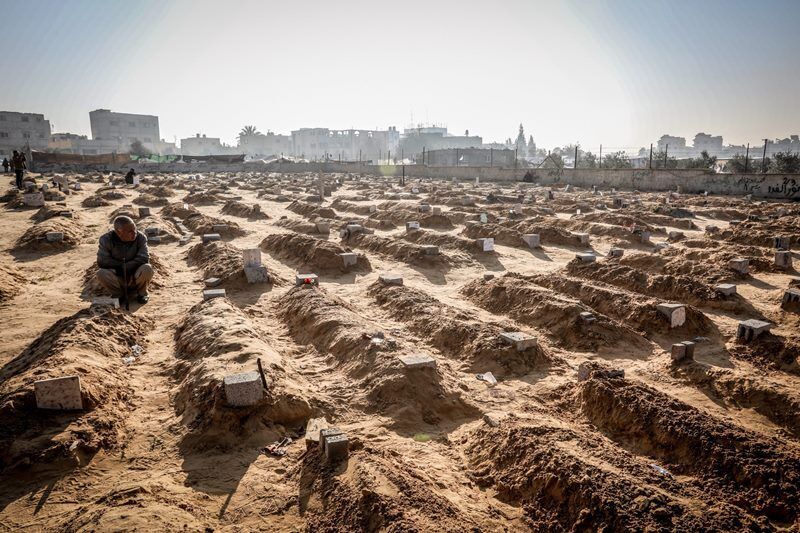
Under the plan, the IDF will forcibly evacuate over 1 million civilians from the city, then spend over a year destroying it.
by Dave DeCamp | August 19, 2025, https://news.antiwar.com/2025/08/19/israeli-military-to-call-up-60000-reservists-as-it-prepares-for-gaza-city-ethnic-cleansing-campaign/
About 60,000 Israeli reservists will receive call-up orders that the Israeli military will issue tomorrow as it’s preparing for a major offensive on Gaza City, The Times of Israel reported on Tuesday.
The report said that reservists will have two weeks before they need to report for duty and that not all of them will take part in the offensive on Gaza City since some will replace IDF troops deployed in other areas of Gaza.
The Israeli military’s plans to take over Gaza City involve the ethnic cleansing of over 1 million Palestinian civilians from the area. Since civilians are expected to remain in the city after evacuation orders, the IDF is prepared to use artillery strikes as its means of forcibly moving them, according to Haaretz.
While the IDF hasn’t yet launched its ground offensive, it has ramped up strikes on Gaza City in recent weeks with a focus on the eastern Zeitoun neighborhood. Thousands of Palestinians have already fled the area, and an investigation from Al Jazeera found that many of the Israeli attacks were hitting displacement shelters.
Once the city is taken over, the IDF plans to spend more than a year destroying it, similar to how it made the northern cities of Beit Hanoun, Beit Lahia, and Jabalia uninhabitable. The IDF will demolish homes in Gaza City under the guise of “dismantling Hamas infrastructure,” but Israeli Prime Minister Benjamin Netanyahu has previously told a Knesset committee that the IDF’s destruction of homes would force Palestinians to leave Gaza altogether.
The idea of the Gaza City offensive is to force all the Palestinians to the south, and from there, Israel will pressure them to leave Gaza, but it remains unclear where they could go. Israel has reportedly been in talks with several countries on taking in a large number of Palestinian refugees, but so far, none have publicly committed to the idea.
FacebookTwitterWhatsAppRedditLinkedInTumblrEmailPrint
https://www.facebook.com/v17.0/plugins/like.php?app_id=0&channel=https%3A%2F%2Fstaticxx.facebook.com%2Fx%2Fconnect%2Fxd_arbiter%2F%3Fversion%3D46%23cb%3Df0d6e32fe3ef8ad24%26domain%3Dnews.antiwar.com%26is_canvas%3Dfalse%26origin%3Dhttps%253A%252F%252Fnews.antiwar.com%252Ff1284ffe79cf7df43%26relation%3Dparent.parent&container_width=0&href=https%3A%2F%2Fnews.antiwar.com%2F2025%2F08%2F19%2Fisraeli-military-to-call-up-60000-reservists-as-it-prepares-for-gaza-city-ethnic-cleansing-campaign%2F&layout=button&locale=en_US&ref=addtoany&sdk=joey&width=90https://platform.twitter.com/widgets/tweet_button.2f70fb173b9000da126c79afe2098f02.en.html#dnt=false&id=twitter-widget-0&lang=en&original_referer=https%3A%2F%2Fnews.antiwar.com%2F2025%2F08%2F19%2Fisraeli-military-to-call-up-60000-reservists-as-it-prepares-for-gaza-city-ethnic-cleansing-campaign%2F&related=AddToAny%2Cmicropat&size=m&text=Israeli%20Military%20To%20Call%20Up%2060%2C000%20Reservists%20as%20It%20Prepares%20for%20Gaza%20City%20Ethnic%20Cleansing%20Campaign&time=1755737285624&type=share&url=https%3A%2F%2Fnews.antiwar.com%2F2025%2F08%2F19%2Fisraeli-military-to-call-up-60000-reservists-as-it-prepares-for-gaza-city-ethnic-cleansing-campaign%2FShare
Dave DeCamp is the news editor of Antiwar.com, follow him on Twitter @decampdave.
Israelis Understand That Trump Can End The Nightmare In Gaza. Americans Should Know This Too.
Caitlin Johnstone, Aug 19, 2025, https://www.caitlinjohnst.one/p/israelis-understand-that-trump-can?utm_source=post-email-title&publication_id=82124&post_id=171337355&utm_campaign=email-post-title&isFreemail=true&r=1ise1&triedRedirect=true&utm_medium=email
It’s so revealing how Israelis keep begging Trump to end the killing in Gaza, because they understand that the US president has the power to force Israel to stop. It seems like Israelis understand this far better than Americans do.
Six former Israeli hostages and the widow of a slain hostage have released a video pleading with President Trump in English to support a comprehensive deal to make peace in Gaza so that the remaining hostages can be freed.
“You have the power to make history, to be the president of peace, the one who ended the war, ended the suffering, and brought every hostage home, including my little brother,” implores one of the hostages.
“President Trump, please act now before it’s too late for them, too,” pleads the widow.
This is not the first time Israelis have begged Trump to force an end to the slaughter. Earlier this month more than 600 former senior Israeli security officials from Mossad and Shin Bet sent Trump a letter urging him to compel Netanyahu to make peace in Gaza. They did this because they understand something that many Americans do not: that the US president has always had the power to end the Gaza holocaust.
It’s crazy how many times I’ve encountered Americans telling me that this is “Israel’s war” and there’s nothing the president can do to end it. It was mostly Democrats doing this back when Biden was president and I was slamming Genocide Joe for continuing this mass atrocity, and now that Trump is in office it’s his supporters who show up in my comments section white knighting for the president.
“It’s not our war and we should stay out of it,” they sometimes claim, mistakenly thinking that critics of the US-backed genocide are asking for some kind of US intervention.
But the call isn’t for the US to intervene, it’s for the US to stop intervening. To end the US interventionism that has been underway for two years. The Gaza holocaust can be ended by the US simply ceasing to add wood to the fire.
Israeli military insiders have been saying again and again that the onslaught in Gaza would not be possible without US support.
A senior Israeli air force official told Haaretz last year that “without the Americans’ supply of weapons to the Israel Defense Forces, especially the air force, Israel would have had a hard time sustaining its war for more than a few months.”
In November 2023 retired Israeli Major General Yitzhak Brick told Jewish News Syndicate that, “All of our missiles, the ammunition, the precision-guided bombs, all the airplanes and bombs, it’s all from the US. The minute they turn off the tap, you can’t keep fighting. You have no capability. … Everyone understands that we can’t fight this war without the United States. Period.”
Former Israeli prime minister Ehud Olmert wrote the following last year:
“The entire Israel Air Force relies completely on American aircraft: fighter planes, transport planes, refueler planes and helicopters. All of Israel’s air power is based on the American commitment to defend Israel. We have no other reliable source for essential supplies of equipment, munitions and advanced weapons that Israel cannot manufacture on its own. In recent months, hundreds of American transport planes have landed at IAF bases carrying thousands of tons of advanced, vital military equipment and munitions.”
The Israelis clearly understand that they’ve been entirely dependent on the US for the IDF’s acts of butchery in Gaza this entire time, and they clearly understand that the US president has the ability to turn off the tap whenever he wants.
And now they are begging the president to do so with increasing urgency, because it’s been made clear to them that their own government isn’t going to stop until it is forced to stop. They can’t stop the gunman, so they’re turning to the man who’s feeding him the ammo.
It would be good if Americans understood this as well. Trump is committing genocide in Gaza, just as surely as Netanyahu is, and he could end it at any time. The fact that he still has not chosen to do so makes him one of the most evil people on earth.
Israel’s man inside the CIA betrayed the US, new files show.

Enabling Israeli theft of US nuclear material, spying on America
Angleton’s role in enabling Israel’s wanton theft of nuclear material from an American facility is one of the more shocking episodes in the US-Israeli relationship.……………………………………………..
Kit Klarenberg and Wyatt Reed, Grayzone, August 15, 2025
Veteran CIA counterintelligence chief James Angleton secretly oversaw a top-level spy ring involving Jewish émigrés and Israeli operatives without “any clearances” from Congress or Langley itself, according to recently declassified documents published as part of the Trump administration’s pledge to disclose all available information on the assassination of President John F. Kennedy.
The files provide a fresh and often disturbing look at a spy described by historian Jefferson Morley as “a leading architect of America’s strategic relationship with Israel,” detailing Angleton’s role in transforming the Mossad into a fearsome agency with global reach, while assisting Israel’s theft of US nuclear material and protecting Zionist terrorists.
Angleton established the Jewish emigre spying network in the aftermath of WWII, with the apparent goal of infiltrating the Soviet Union. But as the files show, the spymaster considered his “most important” task to be maintaining the supply of Jewish immigrants flowing from the Soviet Union towards the burgeoning Israeli state.
According to Angelton, his Jewish assets were responsible for 22,000 reports on the USSR, generating several intelligence masterstrokes. Chief among them was the publication of Soviet Prime Minister Nikita Kruschev’s famous 1956 secret speech denouncing Stalin, which the spymaster boasted “practically created revolutions in Hungary and Poland.” Elsewhere, Angleton bragged that his arrangement with Israel had produced “500 Polish intelligence officers who were Jewish” who “knew more about Polish intelligence than the Poles.”
Other passages appear to show Angleton taking credit for securing the “release” of several Zionist terrorists affiliated with the Irgun militia before they could be convicted for bombing the British embassy in Rome. Though the group had been captured by Italian authorities, the newly-disclosed files indicate the terror cell was freed on the orders of the CIA.
The information was originally divulged in 1975 to senators serving on the Church Committee, which probed widespread abuses by US intelligence in the decades prior. Congress was particularly interested in claims by New York Times foreign correspondent Tad Szulc, who testified under oath that Angleton had personally informed him that the US provided technical information on nuclear devices to Israel in the late 1950s. The new documents show that Angleton was deceptive under questioning, and evaded questions on Israel’s nuclear espionage efforts on the record.
Additional unsealed FBI documents, which refer to Israel’s Mossad as Angleton’s “primary source” of information, confirm that the CIA’s head of counterintelligence relied heavily on Tel Aviv to solidify his position within the Agency – and also add to the growing body of evidence that Angleton may not have been operating with US interests in mind throughout his 21-year tenure.
Other newly declassified files from the FBI have shown that Angleton maintained a wildly lopsided relationship with the Bureau, which saw federal agents deferring to the CIA counterintelligence chief after they caught him surveilling the correspondence of huge numbers of Americans. The files show Angleton openly admitting he would have been fired if Langley caught wind of his leaks to the Bureau.
A side-by-side analysis of the now-unredacted Church Committee files compared with their previously-released versions from 2018 demonstrates that even after 70 years, Washington felt compelled to conceal details of its real relationship with Israel’s founders. Over a dozen references to “Israel,” “Tel Aviv,” or descriptions of figures as “Jewish,” which were scrubbed from the 2018 release, can now be viewed on the National Archives site.
The documents reveal that Angleton repeatedly lied to multiple Congressional bodies, including the Church Committee, which investigated CIA abuses, and the House Select Committee on Assassinations, which probed the murders of John F. Kennedy and Martin Luther King, Jr. Angleton was similarly evasive when interrogated over Israel’s nuclear weapons program, and about CIA knowledge or complicity in the scheme.
Those documents also reveal that Angleton’s CIA counterintelligence staff ordered Lee Harvey Oswald’s removal from federal watchlists six weeks before Kennedy’s assassination, despite his classification as a high security risk. The surveillance of Oswald was personally overseen by a member of Angleton’s intelligence network of Jewish emigres, Reuben Efron, a CIA spy from Lithuania. Angleton had placed Efron in charge of an Agency program called HT/Lingual which intercepted and read correspondences between Oswald and his family. ………………………………………………………………………………………………………………………………………………………………..
Enabling Israeli theft of US nuclear material, spying on America
Angleton’s role in enabling Israel’s wanton theft of nuclear material from an American facility is one of the more shocking episodes in the US-Israeli relationship. The scene of the crime was the Nuclear Materials and Equipment Corporation, or NUMEC, a uranium processing facility in Apollo, Pennsylvania owned by a Zionist financier named David Lowenthal. In 1965, Zalman Shapiro, a fellow Zionist hired by Lowenthal to run the plant, illegally diverted hundreds of kilograms of nuclear fissile material to Israel. Posing as a scientist, the notorious Mossad spy Rafi Eitan visited NUMEC three years later to continue the heist.
As Jefferson Morley documented in his biography of Angleton, “The Ghost,” the late CIA counterintelligence chief made sure the CIA looked the other way as Israel constructed its first nuclear weapon out of the stolen fissile material. According to Morley, “Angleton, it is fair to say, thought collaboration with Israel was more important than U.S. non-proliferation policy.”
A 1977 investigation by the US Government Accountability Office found that the CIA withheld information about the NUMEC nuclear theft from the FBI and Department of Energy, and “found that certain key individuals had not been contacted by the FBI almost 2 years into the FBI’s current investigation.”
The latest batch of Church Committee files add new detail about Angleton’s compromising of US national security to benefit Israel, and his attempts to cover up his betrayal.
During his testimony before the Committee, Angleton was pressed about media reports alleging that he and his counterintelligence unit provided Israel with technical support for constructing nuclear weapons. He strenuously denied the charges, insisting the CIA had never played any role in providing Tel Aviv with nuclear materials. However, when questioned about whether “Israeli intelligence efforts” were ever conducted in the US “aimed at acquiring… nuclear technology,” Angleton equivocated………………………………………………………………………………………………………………….. https://thegrayzone.com/2025/08/15/cias-angleton-israeli-spy-ring-files/
Zionism Is What It Does
Caitlin Johnstone, Aug 21, 2025, https://www.caitlinjohnst.one/p/zionism-is-what-it-does?utm_source=post-email-title&publication_id=82124&post_id=171529578&utm_campaign=email-post-title&isFreemail=true&r=1ise1&triedRedirect=true&utm_medium=email
Israel apologists always attack anti-Zionists by saying “Zionism just means self-determination for Jews! If you hate Zionism then you hate Jews!”
No, that’s not what Zionism means. Zionism means exactly what we see before us today. Genocide. Ethnic cleansing. Apartheid. Nonstop violence and abuse. That’s what Zionism means. And anti-Zionism means opposing these things.
There is simply no argument to the contrary. This is indisputably what Zionism looks like. There is no other alternate reality iteration of Zionism you can point to where genocide, ethnic cleansing, apartheid and nonstop violence and abuse are not happening. This is the only way Zionism looks. The Zionist experiment has been run, and these are the results.
Trying to argue that Zionism doesn’t mean genocide, ethnic cleansing, apartheid, and nonstop violence and abuse is exactly the same as trying to argue that Nazism doesn’t mean all the things that happened when the Nazism experiment was run. Nazism means all the things that happened under Nazism. You can’t legitimately tell me “No, actually, Nazism just means a safe and prosperous homeland for the German people.” We’ve seen what Nazism looks like, and we’ve seen what Zionism looks like. To argue otherwise is to argue with reality.
It’s just so obnoxious how Israel supporters are like “Zionism means these nice things and nice words, so if you’re against Zionism you’re against the nice things and nice words!” No, asshole, that’s not how it works. You’re entitled to your own opinion, but not your own reality.
Israel is what it does. Zionism is what it does. You can’t separate them from their actions. The debate about the true nature of these things has been settled by the reality of what is happening.
It doesn’t matter if you believe Israel just wants to live in peace. It doesn’t matter if you believe Zionism is just the idea that Jews deserve self-determination. Reality says you’re wrong. Reality says Israel and Zionism mean nonstop violence and abuse. Reality says Israel and Zionism necessarily entail genocide, apartheid and ethnic cleansing. Because that’s the reality on the ground.
Them’s the facts. If you disagree with them, you are objectively wrong.
I saw a clip of ABC host Patricia Karvelas raking Netanyahu policy advisor Ophir Falk over the coals for his denialism of Israel’s atrocities in Gaza, and the thought occurred to me that Israel really has lost the normies. All the mainstream western empire loyalists who dutifully toe the imperial line under normal circumstances are dropping away, one by one.
The fact that Israel has managed to alienate western liberals is so funny, because they’d be Israel’s biggest cheerleaders if they were given the tiniest bit of justification for that position.
So much about Israel fits in perfectly with western liberal mythology. A US-aligned capitalist democracy run by a plucky religious minority who survived horrific persecution, which embraces secular progressive values and reinforces the dominant western narratives about the wonderful things the US-led order has been able to accomplish since its triumphant glorious victory in the second world war. All Israel had to do was give them something, anything, and they’d still think Israel is the greatest thing in the world. They just needed an excuse — even a very meager one.
But Israel couldn’t even give them that. Genocide, racism, apartheid, ethnic cleansing and expansionism were just too important to its driving ideology. The Zionist project simply could not continue without going mask-off at some point, so now they’ve lost all the mainstream moderate liberals and pretty much everyone besides the “killing Muslims is good” far right extremists and the “we have to support Israel because God commands it” Christian Zionists.
Eventually all the contradictions had to come out into the light.
The Israeli press are pushing the narrative that if people in Gaza are suffering so bad they should leave, which is precisely the narrative I said we’d soon be hearing from Israel in facilitation of its longstanding ethnic cleansing agenda.
Last month I wrote the following in an article titled “They’re Starving Civilians To Steal A Palestinian Territory, And They’re Lying About It”:
“Western governments are beginning to speak out against the mass atrocity in Gaza, far too little and far too late. We can expect Israel and the United States to respond to this outcry by saying that Palestinians need to be evacuated out of Gaza as quickly as possible in order to rescue them from this deliberately manufactured humanitarian crisis. We can expect them to denounce anyone who opposes this ethnic cleansing operation as evil monsters who want to starve the poor Palestinians.”
The Jerusalem Post has just published an opinion piece titled “Gaza humanitarian crisis should expedite Trump’s relocation plan,” subtitled “Now that there is public awareness of a humanitarian crisis in Gaza, it should be leveraged to garner support for Trump’s Gaza relocation proposal.”
The article’s author, Gol Kalev, complains that “the Gazans” are being “denied the basic human right to flee a war” by the mean, nasty Europeans who just want to accuse Israel of war crimes and atrocities.
“They are needed under the rubble in Gaza — not just by Hamas, who uses them as human shields, but also by Europe and its proxies, who use them as pawns in their age-old opposition to the Jewish state, and as a proxy assault on America,” Kalev writes, arguing that public frustration “should not be directed at Israel, but at those standing in the way of Trump’s relocation plan, including European leaders.”
“Now that there is public awareness of a humanitarian crisis in Gaza, it should be leveraged to garner support for Trump’s Gaza relocation proposal — which could lead to safety and prosperity for Gazans, and peace for the entire region,” writes Kalev. “The public message must be clear: Let the Gazans be free — let them flee.”
Just as I said they would do, they’re disguising a naked ethnic cleansing operation as humanitarianism and denouncing anyone who wants to provide Palestinians with a massive relief effort in their historic homeland as an uncaring monster. We can expect to see more of this messaging going forward.
Anyone who tells you they support Israel for religious reasons is telling you to stop trying to reason with them. They’re saying their position is not based on facts, evidence, logic or morality, but their blind faith in a collection of made up stories. So there’s nothing you could possibly say to them that would change their mind or convince them that they are wrong.
Trying to debate or reason with such a person would be the same as trying to convince someone that there is no God. It’s an entirely unfalsifiable position about which no argument can be made using facts and evidence.
Someone like Mike Huckabee is never telling the truth or saying what he really thinks is going on when it comes to Israel and the Palestinians, he’s just making whatever mouth noises he needs to make to help fulfill a Biblical prophecy and secure his eternal reward. Such people have no place in the conversation. They should be completely excluded from the debate, because they are not actually participating in it. They’re just lying and manipulating for reasons that have nothing to do with truth or morality.
Stopping The Gaza Holocaust Is The First Step Toward A Healthy World
Caitlin Johnstone, Aug 13, 2025, https://www.caitlinjohnst.one/p/stopping-the-gaza-holocaust-is-the?utm_source=post-email-title&publication_id=82124&post_id=170832055&utm_campaign=email-post-title&isFreemail=true&r=1ise1&triedRedirect=true&utm_medium=email
Nicole on Facebook writes, “I would love to hear you explain how Palestine is the moral question of our time. Why it’s so important. How it’s related to every movement and should be a concern to everyone.”
Palestine is the moral question of our time because the abuse of the Palestinians is the most glaring, in-your-face symptom of the imperial disease. You can see the effects of so many of the empire’s abusive dynamics in how this thing is playing out, from racism to colonialism to militarism to war profiteering to mass media propaganda to empire-building to government corruption to suppression of free speech to ecocide to the heartless, mindless, soul-eating nature of the capitalist system under which we all live.
But there’s more to it than that. The primary reason to place Palestine front and center as the moral issue of our time is because if we can’t sort out the morality of an active genocide backed by our own western governments, we’re not going to be able to sort out anything else. Stopping the Gaza holocaust and bringing justice to the Palestinians is the very first step toward a healthy civilization.
Palestine is the moral issue of our time for the same reason if you saw someone in your family torturing another member of your family to death, it would be the most urgent matter happening in your life at that moment. You’d have other problems in your life, but that would come first.
If we’re the sort of society that would allow a live-streamed genocide to take place with the support of our own government and its allies, then we’re not the sort of society that can steer away from its trajectory toward dystopia and armageddon. If you’re the sort of individual who would allow a live-streamed genocide to take place with the support of your own government and its allies, then you’re not the sort of individual who can help steer our species away from disaster.
Gaza is not the only thing that matters in the world. But if you’re not forcefully opposing the Gaza holocaust, you definitely don’t have a healthy enough conscience to address any of the world’s other problems.
I sometimes see Israel supporters refer to pro-Palestine sentiment as “virtue signaling”, which is funny because it means they view themselves as holding the unpopular, unvirtuous position. But really there’s nothing particularly virtuous about supporting Gaza, and it’s not some cool, special thing you’d want to signal about yourself. It’s just what you do when you’re not an extremely shitty person. It’s the basic, bare-minimum expectation of normal human morality.
I don’t want to be friends with anyone who doesn’t oppose the Gaza holocaust. I don’t want to follow any commentators or analysts who don’t speak out against the Gaza holocaust. At this point I don’t even want to listen to any music or read any poetry from people who don’t take a stand against the Gaza holocaust. Since 2023 I’ve moved from rejecting anyone who actively sided with Israel to rejecting anyone who is even complicit in their silence.
The other day I saw some Australian influencer forcefully trying to assert that it’s okay not to take a position on Gaza, and nobody in her replies was buying it. Supporting Israel and aligning with US foreign policy comes with a lot of career benefits for high-profile individuals, and you don’t get to both enjoy those perks and also keep ethical people interested in what you have to say. You can’t have it both ways. You have to choose between the perks and the people. You actually do.
Opposition to the Gaza holocaust is the very first step in assessing if someone is worth my time. If you can’t even meet the basic, bare-minimum expectation of opposing an active genocide, then you are too callous and apathetic to be my friend. If you can’t even get this basic, kindergarten-level moral question right, then your mind is too shallow and your heart too hardened for me to be interested in your analysis, your ideas, your politics, or your art.
There are so many terrible things in our world, and there is so much work that needs to be done to address them. I don’t know what ideas, strategies and movements will get us out of this mess, but I do know that if any are going to emerge they’re going to come from the people who’ve been taking a strong stand against Israel and its western allies these last two years. Those are the individuals, movements, and political factions to pay attention to going forward. Nobody else is equipped to help.
A Shield of Lies: Netanyahu’s Battle Against the World

13 August 2025 Dr Binoy Kampmark, https://theaimn.net/a-shield-of-lies-netanyahus-battle-against-the-world/
It was a sign of someone desperate that his message has failed to take wing and make its way to better lands. With the strategy of Israeli Prime Minister Benjamin Netanyahu in the Gaza Strip sundered and falling over, leaving only a thick butcher’s bill (over 60,000 deaths for starters), extraordinary suffering and humanitarian catastrophe, he thought it wise to confront foreign press outlets on a late Sunday in the hope that the tide might turn away from his exemplary viciousness. There had been, he moaned like a wounded starlet, a “global campaign of lies” about Israel’s war in Gaza. In doing so, he merely inflated the arguments against him with boisterous credit and almost irrefutable plausibility.
The conference, which gave “an opportunity to puncture the lies and tell the truth,” involved the following points: Hamas still has thousands of fighters in Gaza; it vowed to repeat what it had done on October 7, 2023; it continued to expound the goal of wishing to destroy Israel even as it subjugated Gazans, stole their precious food, and shot those seeking to move to safe zones, the latter term being itself a monstrosity in the context of this conflict. Paternally, Netanyahu as the punishing father figure, thought he had deciphered the true desire of those in Gaza, which presumably would not have entailed the killing of Palestinians by the tens of thousands and starving the rest. Everything could be blamed on a militant organisation he had done so much to praise as a countering force against Fatah in the West Bank. As things stood now, Gazans seemed to be suffering from a highly developed sense of Stockholm’s syndrome, “begging us, and they’re begging the world: ‘Free us, Free us, and free Gaza from Hamas’.”
With a solid body of mendacity to work with, Netanyahu proceeded to build an edifice of fantasy few others outside Israel could contend with: that the same Israeli forces who starve, kill and maim the civilian populace of the Strip have no wish to impose an occupation but “free it from Hamas terrorists. The war can end tomorrow if Gaza, or rather if Hamas lays down its arms and releases all the remaining hostages.” Israeli policy was not one of starving the Palestinians into famine wrecks, skeletal ruin and physiological malfunction. That hideous criminal pursuit fell to Hamas, apparently responsible for the violent looting of aid trucks and the deliberate creation of “a shortage of supply.” Fantastically, Netanyahu blamed the United Nations for refusing “to distribute the thousands of trucks that we let into Gaza through the Kerem Shalom crossing,” a delightful complaint given his government’s overt hatred for a body he always wished to be rid of from the occupied territories. The synapses in Netanyahu-Land seemed frailer than ever, if not altogether snapped.
He then belted out the now familiar five-point vision of the Strip once Hamas is defeated. This elusive “day after” includes the following objectives: the disarming of Hamas, the freeing of all hostages, the demilitarising of the Gaza Strip, granting Israel “overriding security control”, the creation of a non-Israeli administration that will not “educate its children for terror, doesn’t pay terrorists and doesn’t launch terrorist attacks against Israel.” Unlike other proposals advanced by France, the UK and Canada, the Palestinian Authority is also excluded from the arrangements, since no Palestinian politician is worth the Israeli PM’s time. Netanyahu’s idea of a politically viable Palestinian is one manacled to the security regime of other powers.
The stage for the next slaughter is set, namely, the dismantling of “the two remaining Hamas strongholds in Gaza City and the Central Camps. Contrary to false claims, this is the best way to end the war, and the best way to end it speedily.” Netanyahu feigns a humanitarian streak in stating that the civilian population will be allowed to “leave the combat areas to designated safe zones.” The process of ethnic cleansing, or simply cleansing of the population, is to simply continue.
Oblivious to Netanyahu’s fortified wall of prejudice is that much of the groundwork for precisely those outcomes he hopes to avoid have already been laid. Whether it be Hamas or any other militant organisation, the notion of pacifist subordinate figures content with their status in any territory where Israel has the last word on everything is absurdly unrealistic.
Doing everything to make his case even less convincing, Netanyahu then told Israeli journalists after seeing the foreign scribblers off that he had never halted all humanitarian aid to Gaza. Even the patriotic Times of Israel found this a bit rich, noting that “his government had enacted that policy earlier this year.” The paper went on to quote the announcement from the premier’s office on March 2: “Prime Minister Netanyahu has decided that, as of this morning, all entry of goods and supplies into the Gaza Strip will cease.”
Netanyahu also refused to accept the proposition that Gaza’s population was starving. Shortages in supply yes; starvation no. “If we had wanted starvation, if that had been our policy, 2 million Gazans wouldn’t be living today after 20 months.” The same could be said about the supreme crime of all: “if we wanted to commit genocide, it would have taken exactly one afternoon.” A wise head might have told him that few who commit genocide or engineer circumstances of mass murder ever make the intention that obvious.
Hellish’: heatwave brings hottest nights on record to the Middle East.

Temperatures did not drop below 36C in Sedom, Israel on Tuesday
night, while several parts of Jordan stayed above 35C on Monday.
Guardian 15th Aug 2025, https://www.theguardian.com/world/2025/aug/15/hellish-heatwave-brings-hottest-nights-on-record-to-the-middle-east
In major shift, Germany ends arms exports to Israel amid Netanyahu’s Gaza takeover plan
Chancellor Friedrich Merz bans shipments of military equipment that could be used in Gaza
The Week, By Ajish P Joy August 09, 2025
Germany has announced it will halt approval of weapons exports to Israel for use in the Gaza Strip “until further notice,” marking a sharp policy shift for one of Israel’s staunchest allies. Chancellor Friedrich Merz made the declaration yesterday after weeks of publicly criticising Israel’s “unclear” goals in Gaza and expressing concern over the worsening humanitarian crisis, though until now he had avoided altering policy.
The decision followed intense domestic debate over how to respond to credible reports of widespread malnutrition and even starvation in Gaza. The immediate trigger was Israel’s decision yesterday to step up military operations in the territory and take over Gaza City.
Merz said the new offensive, approved by the Israeli cabinet, made it “increasingly difficult” to see how Israel could achieve its stated aims of disarming Hamas and freeing the remaining 50 hostages. He affirmed Germany’s commitment to those objectives but stressed that a ceasefire and relief for civilians were top priorities. He also urged Israel to halt any moves towards annexing parts of the West Bank.
Under the new policy, Berlin will not approve the export of any military equipment that could be used in Gaza. Merz said the government was “deeply worried about the continued suffering of the civilian population” and that the planned offensive placed “even stronger responsibility” on Israel to ensure humanitarian provisions……………………………………………………………………………………………………………… https://www.theweek.in/news/middle-east/2025/08/09/in-major-shift-germany-ends-arms-exports-to-israel-after-netanyahu-s-gaza-takeover-plan.html
Israel Is Beginning To Choke On Its Own Lies
Caitlin Johnstone, Aug 08, 2025, https://www.caitlinjohnst.one/p/israel-is-beginning-to-choke-on-its?utm_source=post-email-title&publication_id=82124&post_id=170415282&utm_campaign=email-post-title&isFreemail=true&r=1ise1&triedRedirect=true&utm_medium=email
Netanyahu has confirmed reports that Israel plans an extreme escalation in Gaza which will entail the total military occupation of the entire enclave and the ethnic cleansing of Palestinians, which the Israeli spin machine has termed “voluntary migration”.
To be clear, anyone who says the expulsion of Palestinians from Gaza would be “voluntary” is lying. Starving a population and deliberately making their land uninhabitable is exactly the same as forcing them out at gunpoint. Saying “leave or you’ll starve” is not meaningfully different from saying “leave or I’ll shoot you in the head”. Israel’s planned mass expulsion will be as forced and involuntary as any in recorded history.
President Trump has fully signed off on this move, washing his hands of the mass atrocity he is cosigning by telling the press that it’s going to be “pretty much up to Israel.”
Trump is lying. It’s up to him. That’s why more than 600 former senior Israeli security officials from Mossad and Shin Bet just sent Trump a letter urging him to compel Netanyahu to make peace in Gaza. They understand that the US president has always had the power to end the Gaza holocaust; numerous Israeli insiders have said that this mass atrocity would not be possible without US assistance.
Trump could end all this at any time, and chooses not to. This makes him one of the most evil people in the world.
This whole genocide is powered by lies. Netanyahu just told Fox News that the horrifying aerial footage of the destruction in Gaza that we’ve been seeing is because every single building in Gaza was booby trapped with explosives by Hamas.
“The reason you see the flattened buildings is because Hamas booby traps every single building,” Netanyahu said. “So when we come in, we first have the population moved even though Hamas tries to keep them in the combat zones. But after they move, and we start to move into the neighborhoods that are now populated only by terrorists, they ignite these booby traps. So what we do is we put in an APC, an armored personnel carrier, with a lot of explosives. Detonate it. It sets off all the booby traps and the buildings begin to collapse as a result of that. They’re empty buildings, they’re not populated buildings.”
Absolutely nobody believes this is true. Not one single person alive on this earth sincerely believes that Gaza now looks like a gravel parking lot because Hamas placed explosives inside every single building. Netanyahu doesn’t believe it. Israel’s most venomous supporters don’t believe it. It’s just part of the nonstop fountain of lies they are spewing to avoid acknowledging what we all know we’re looking at. They’ve told so many lies by now that they’ve got to keep lying and lying just to stay afloat, like a man desperately treading water to avoid drowning.
This genocide is one nonstop insult to our intelligence. It’s actually degrading at this point. The lies Israel and its supporters have to pretend to believe are getting so ridiculous that supporting Israel is now an act of public humiliation and self-debasement.
Former Israeli prime minister Naftali Bennett has a long rant on his social media accounts complaining that Israel’s “status in the United States is collapsing”, including among Republicans, with public sentiment turning against them because of what is happening in Gaza.
As you might expect, Bennett does not frame this as a sign that Israel should stop committing genocide in Gaza, but rather complains of a crisis of “antisemitism” in the United States, and accuses Netanyahu of failing to adequately propagandize Americans.
“Jews in the United States are subject to a torrential wave of anti-Semitism, like him I don’t remember in my life,” Bennett moans, adding, “Antisemites increase to compare the ‘hunger’ in Gaza to the Holocaust, and thus reduce the memory of the Holocaust. They act that the hunger accusation will haunt israel its citizens, our soldiers, for generations.”
“If Netanyahu’s propaganda men worked against the enemies of Israel *outside* a tenth of the talent, speed and dedication with which they operate the propaganda machine against their political rivals *inside* israel our situation would be amazing,” Bennet writes, saying he wants to “re-establish a rapid and synchronized explanation headquarters”.
“Explanation” is the literal translation of the Hebrew word “hasbara”, i.e. pro-Israel propaganda.
Meanwhile the term “hasbara” itself is reportedly being abandoned by the Israeli Foreign Ministry, as westerners have come to associate the term with genocide propaganda.
The Times of Israel reports:
“Long referred to as hasbara, a term used to denote both public relations and propaganda that has been freighted with negative baggage in recent years, the ministry now brands its approach as toda’a — which translates to ‘awareness’ or ‘consciousness’ — an apparent shift toward broader, more proactive messaging.”
So they’re not abandoning the genocide, and they’re not abandoning the genocide propaganda, they’re just abandoning the word for the genocide propaganda because people have come to associate that word with propaganda in support of genocide.
The entire Zionist project is built on a foundation of lies. And their lies are starting to catch up with them. They’re now at a point where the lies are beginning to damage the public image they’re intended to protect.
When a liar is recognized as a liar, his lies will forevermore work only as an antidote to his past lies, and as a light to further expose his intent. From that point on any lie he tells just shows people how ugly his character and intentions really are.
There is no other weapon that works that way. No other weapon which when it’s seen immediately stops working, actively disarms the attacker, starts fixing what he broke, and starts attacking him.
1 This Month



26 September – International Day for the Total Elimination of Nuclear Weapons


PLEASE OPPOSE HR 8255 AND S.3639 – bills would accelerate satellite deployment, with no environmental review or safeguards – https://ncstd5li.quorum.us/campaign/169331/
To see nuclear-related stories in greater depth and intensity – go to https://nuclearinformation.wordpress.com
-
Archives
- September 2026 (206)
- August 2026 (330)
- July 2026 (355)
- June 2026 (287)
- May 2026 (306)
- April 2026 (356)
- March 2026 (251)
- February 2026 (267)
- January 2026 (308)
- December 2025 (358)
- November 2025 (359)
- October 2025 (375)
-
Categories
- 1
- 1 NUCLEAR ISSUES
- business and costs
- climate change
- culture and arts
- ENERGY
- environment
- health
- history
- indigenous issues
- Legal
- marketing of nuclear
- media
- opposition to nuclear
- PERSONAL STORIES
- politics
- politics international
- Religion and ethics
- safety
- secrets,lies and civil liberties
- spinbuster
- technology
- Uranium
- wastes
- weapons and war
- Women
- 2 WORLD
- ACTION
- AFRICA
- Atrocities
- AUSTRALIA
- Christina's notes
- Christina's themes
- culture and arts
- Events
- Fuk 2022
- Fuk 2023
- Fukushima 2017
- Fukushima 2018
- fukushima 2019
- Fukushima 2020
- Fukushima 2021
- general
- global warming
- Humour (God we need it)
- Nuclear
- RARE EARTHS
- Reference
- resources – print
- Resources -audiovicual
- Weekly Newsletter
- World
- World Nuclear
- YouTube
-
RSS
Entries RSS
Comments RSS
 nuclear-news