Entire UN Security Council Except US Says Gaza Famine ‘Man-Made’ as 10 More People Starve to Death
While acknowledging that “hunger is a real issue in Gaza,” the US ambassador to the UN repeated a debunked claim that the world’s leading authority on starvation lowered its standards to declare a famine.
Brett Wilkins, Common Dreams, Aug 27, 2025
Every member nation of the United Nations Security Council except the United States on Wednesday affirmed that Israel’s engineered famine in Gaza is “man-made” as 10 more Palestinians died of starvation amid what UN experts warned is a worsening crisis.
Fourteen of the 15 Security Council members issued a joint statement calling for an immediate Gaza ceasefire, release of all remaining hostages held by Hamas, and lifting of all Israeli restrictions on aid delivery into the embattled strip, where hundreds of Palestinians have died from starvation and hundreds of thousands more are starving.
“Famine in Gaza must be stopped immediately,” they said. “Time is of the essence. The humanitarian emergency must be addressed without delay and Israel must reverse course.”
“Famine in Gaza must be stopped immediately,” they said. “Time is of the essence. The humanitarian emergency must be addressed without delay and Israel must reverse course.”
“This is a man-made crisis,” the statement stresses. “The use of starvation as a weapon of war is clearly prohibited under international humanitarian law.”
Israel, which is facing a genocide case at the UN’s International Court of Justice, denies the existence of famine in Gaza. Israeli Prime Minister Benjamin Netanyahu and former Defense Minister Yoav Gallant are wanted by the International Court of Justice for alleged war crimes and crimes against humanity, including murder and forced starvation.
The 14 countries issuing the joint statement are: Algeria, China, Denmark, France, Greece, Guyana, Pakistan, Panama, the Republic of Korea, the Russian Federation, Sierra Leone, Slovenia, Somalia, and the United Kingdom.
While acknowledging that “hunger is a real issue in Gaza and that there are significant humanitarian needs which must be met,” US Ambassador to the UN Dorothy Shea rejected the resolution and the IPC’s findings…………………………………………………………………………………………….. https://www.commondreams.org/news/un-security-council-gaza-famine
Israel’s Killing of Journalists Follows a Pattern of Silencing Palestinian Media That Stretches Back to 1967.

From the first days of the occupation in 1967, Israel has tried to keep a tight grip on media reporting, building a legal and military architecture that aimed to control and censor Palestinian journalism.
The Conversation, August 27, 2025, Maha Nassar, Associate Professor in the School of Middle Eastern and North African Studies, University of Arizona
Five journalists were among the 22 people killed on Aug. 25, 2025, in Israeli strikes on the Nasser Hospital in the Gaza Strip. Following global condemnation, the office of Israeli Prime Minister Benjamin Netanyahu issued a statement saying Israel “values the work of journalists.” But the numbers tell a different story.
Those deaths bring the total number of journalists killed in Gaza in almost two years of war to 192. The Committee to Protect Journalists, which collates that data, accuses Israel of “engaging in the deadliest and most deliberate effort to kill and silence journalists” that the U.S.-based nonprofit has ever seen. “Palestinian journalists are being threatened, directly targeted and murdered by Israeli forces, and are arbitrarily detained and tortured in retaliation for their work,” the committee added.
As a scholar of modern Palestinian history, I see the current killing of reporters, photographers and other media professionals in Gaza as part of a longer history of Israeli attempts to silence Palestinian journalists. This history stretches back to at least 1967, when Israel militarily occupied the Palestinian territories of the West Bank, East Jerusalem and the Gaza Strip following the Six-Day War.
Beyond the humanitarian toll, what makes matters even more drastic now is that, with Israeli restrictions on foreign media entering Gaza, local Palestinian journalists are the only people who can bear witness to the death and destruction taking place – and report it to a wider world. Indeed, nearly all of the nearly 200 journalists killed since Oct. 7, 2023, have been Palestinian.
A decades-long process in the making
From the first days of the occupation in 1967, Israel has tried to keep a tight grip on media reporting, building a legal and military architecture that aimed to control and censor Palestinian journalism.
In August 1967, the army issued Military Order 101, effectively criminalizing “political” assembly and “propagandistic” publications in the occupied territories. …………………………………………………………………………………………………………………………………………………………………………………….
Culture of impunity
Even prior to the deadly Hamas-led attacks on Israel on Oct. 7, 2023, the picture emerging was that of impunity for Israeli forces who killed journalists – by accident or by design. A May 2023 report from the Committee to Protect Journalists concluded that Israel engaged in a “deadly pattern” of lethal force against journalists and failed to hold perpetrators accountable.
Since October 2023, journalists in Gaza have faced even deadlier conditions. Israel continues to ban international news agencies from reporting inside the Gaza Strip. As a result, local Palestinian journalists are often the only ones on the ground.
Aside from the deadly conditions, they contend with Israeli smears against their work and threats against their families.
Palestinian journalists there often run toward bombardments when others run away. As a result, they are sometimes killed in “double-tap” strikes, where Israeli air and drone strikes return to an area that has just been struck, killing rescue workers and the journalists covering them.
All this has led to an unbearable personal toll for those continuing to report from within Gaza. On Oct. 25, 2023, Al Jazeera’s Gaza bureau chief, Wael al-Dahdouh, was reporting live on air when he learned that an Israeli airstrike had killed his wife, two children and grandson. He returned on air the next day.
And the killing has not eased up. On Aug. 10, 2025, Israeli forces killed Anas al-Sharif in Gaza City, another prominent Al Jazeera correspondent who had stayed on the streets through months of bombardment. Five of his fellow journalists were also killed in the same airstrike.
The Aug. 25 strike on Nasser Hospital is just the latest in this deadly pattern.
Among the five journalists killed in that attack were freelancers working for Reuters and The Associated Press – two international media outlets frustrated by Israel’s refusal to allow its journalists into Gaza to document the war.
Despite the danger, global newsrooms have repeatedly urged Israel to open Gaza to independent media, and a coalition of 27 countries recently pressed for access in Gaza.
Israel continues to refuse these requests. As such, Palestinian journalists remain the primary witnesses of Israel’s relentless assault on Gaza. And they are increasingly killed as they do so. The question remains whether the international community will hold Israel to account. https://theconversation.com/israels-killing-of-journalists-follows-a-pattern-of-silencing-palestinian-media-that-stretches-back-to-1967-263891
UK aware of Israel’s ‘terror’ for over 20 years
Declassified files show Britain has long known of Israel’s criminality against Palestinians, as Whitehall has deepened its military, trade and diplomatic support.
MARK CURTIS, 15 August 2025, https://www.declassifieduk.org/uk-aware-of-israels-terror-for-over-20-years/
The parallels are remarkable.
There were “numerous reports that the Israeli authorities have prevented medical and other humanitarian assistance from reaching those in need”.
The Red Cross was saying “that their staff have been threatened at gunpoint, warning shots have been fired at their vehicles and two ICRC [Red Cross] vehicles have been damaged by tanks”.
There were “media reports of people dying for lack of treatment” and on the “humanitarian impact of curfews affecting over 1 million people”.
There were Israeli soldiers indulging in “theft and looting from homes and shops and the vandalism of people’s homes”.
And “many reports of the killing of unarmed Palestinians”.
Sound familiar?
But this is not Gaza in 2025. It was the occupied West Bank in 2002, described in an internal Foreign Office report revealed in the British archives.
‘Defensive shield’
Then as now, Israel claimed to be acting “defensively”.
In April 2002, it launched “Operation Defensive Shield”, a large-scale military intervention in the major cities and surrounding areas of the West Bank.
Ordered by then prime minister Ariel Sharon in response to numerous suicide bombings against Israelis by Palestinian militant groups, including Hamas, the Israeli military killed nearly 500 Palestinians within a month.
An official in the Foreign Office’s Middle East Peace Process Section wrote that the intervention in the West Bank involved a “pattern” of “human rights abuses” by the Israeli military.
Some British officials protested at the nature of those Israeli military operations. Sherard Cowper-Coles, Britain’s ambassador to Israel, privately told Sharon’s foreign policy adviser, Danny Ayalon, that he was “appalled at the military assault on the Palestinian areas”.
“The IDF’s behaviour was worthy more of the Russian army than that of a supposedly civilised country”, he told him. “There was no doubt that individual soldiers were out of control, and committing acts which were outraging international opinion”.
Lord Michael Levy, prime minister Tony Blair’s special envoy to the Middle East, was just as blunt. He told Israeli defence minister Binyamin Ben-Eliezer in another private meeting that “There was no military solution to this kind of problem. We condemned terror from either side, Palestinian or the IDF”.
Ben-Eliezer responded by repeating that Israel sought to “destroy all terrorist infrastructure”.
Indeed, as in Gaza today, the onslaught in 2002 was supposedly meant to end terrorism against Israel.
Two weeks before major operations began, Ayalon told Cowper-Coles that “the plan was to mount long-term, large-scale military operations in the Territories, which would dismantle once and for all the terrorist infrastructures there”.
‘Routine excessive force’
The files, released last year, contain an extraordinary report by an unnamed senior British army officer, who wrote that the Israel Defense Forces (IDF) were a “second rate, ill disciplined, swaggering and bullying force”.
“They routinely use excessive force such as firing at the ‘legs’ of stone throwers or at ‘car tyres’ with the inevitable stream of ambulances ferrying youths to hospital with fatal bullet wounds to the head and body”, he wrote.
The officer added, in another echo of the present: “The only area where individuals have been held accountable is where IDF actions have resulted in deaths of their own as opposed to the deaths of Palestinians”.
He believed the IDF “look down on the Arabs and despise them… It needs to be said that the average Israeli does not value an Arab life as equal to a Jewish one.”
Then as now, Israeli actions involved war crimes. The files contain a report from Oxfam lamenting that in April 2002 the Israeli military used its tanks and bulldozers to cut the main water supply pipelines at 24 different places in Ramallah and other towns in the West Bank.
When Israel cut off water supplies in Gaza in October 2023 Keir Starmer notoriously supported it. When asked on LBC, he said Israel had the “right” to do that.
Indeed, Oxfam’s 2002 report could virtually have been written at any time during Israel’s latest onslaught against Gaza.
It noted “grave breaches of humanitarian law, including the targeting of medical personnel, denial of medical care to the injured and chronically ill, actual and threatened violence against clearly-identified staff of the ICRC, Palestinian Red Crescent Society and the UN, wanton destruction of civilian infrastructure for water and electricity, and a basic lack of respect for civilian life and welfare”.
20 years of support
What has the UK been doing in the 23 years since officials were privately horrified by Israeli war crimes during Operation Defensive Shield?
The answer is that it has been deepening relations with Israel across the board.
In April 2002, the UK was supplying less than £1m a year in arms to Israel, the files state. Even since 2008, the UK has exported no less than £590m worth of military equipment to Israel.
At times, during other episodes in Israel’s criminality, Britain has temporarily halted some arms exports, as it has today. But then they always resume, supplying the same army known to have committed war crimes.
Then there’s the military training and exercises, across all branches of the UK and Israeli services, ongoing over the decades, again benefitting the forces promoting “terror” against Palestinians.
There’s the secret military agreement the UK signed with Israel in December 2020 and the strategic ‘Roadmap’ accord agreed between Britain and Israel in 2023.
Not to mention the 2022 “strategic approach” to securing a new trade agreement and a host of further financial and diplomatic backing emanating from Whitehall, in Westminster and at the UN and globally.
Over the past 20 years, Britain has been one of the leading world forces aiding Israel, helping to prevent international action against it as the brutal occupation and illegal settling of Palestine have intensified.
Promoting terrorism
All this has been done in the knowledge that Israel’s repressive policies and “routine excessive force” have inspired the terrorism that Israel says it is fighting. The 2002 files are explicit on this point.
Levy told Ben-Eliezer in April 2002, referring to Israel’s military activities, that “all it would do was produce more suicide bombers”.
Indeed, Levy wrote to Blair and foreign secretary Jack Straw on 1 April 2002 stating: “Dreadful suicide bombs almost daily and motivation only increased by current IDF operations”.
He added: “My experience in the region is that it is just not possible to keep 3½ million Palestinians under formal occupation against their will. If a 16 year old girl is prepared to join the ranks of suicide bombers something is fundamentally wrong”.
But still helping Israel
Yet these officials, while coldly recognising the reality of Israel’s actions, still couldn’t bring themselves to make Britain seriously challenge it.
The write–up of Levy’s meeting with Ben-Eliezer states: “Lord Levy ended the meeting by underlining our wish to help Israel get out of the mess into which it has got itself by launching the campaign into Palestinian areas.”
On 9 April, Blair’s private secretary Matthew Rycroft suggested that his boss “reaffirm my own commitment to Israel” in being awarded an honorary doctorate from Haifa University.
Neither could those officials bring themselves to unequivocally recognise Palestine as a state.
The 2002 files contain a ten-page report by the Cabinet Office called “Making a Palestinian State”. Twenty three years on, the conditions for the emergence of a viable Palestinian state are far worse, with hundreds of thousands of illegal Israeli settlers now living in the West Bank.
British officials knew then of Israel’s effective opposition to a Palestinian state. David Manning, Blair’s foreign policy adviser, wrote on 2 April that Sharon’s government offered only “some extremely vague idea of a Palestinian state that might at some point acquire the attributes of true statehood, but only when it suited Israel”.
Two years later, Blair even considered establishing a “privileged Israeli partnership” with Nato and the European Union in the event of a peace deal with the Palestinians, the British files also show.
There were no red lines, there are no red lines. British ministers, in both 2002 and in 2025, remain knee-deep in aiding and abetting what they know is Israel’s brutal criminality.
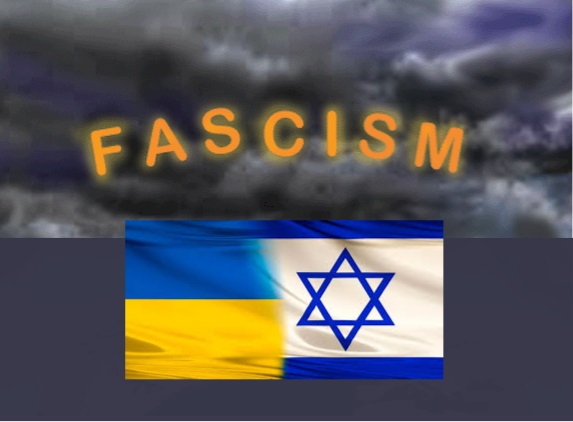
Gaza to Donbass: How Israel and Ukraine Built a Fascist, Transnational War Machine.
Orinoco Tribune By Sarah B. – Aug 20, 2025
From Bandera to Ben-Gurion, a new axis of ethno-supremacy is rising, fueled by U.S. backing. Same guns. Same flags. Same ideology. Gaza and Donbass are not separate wars. They are one machine.
The Ukraine–Israel Nexus: Pragmatic Alliances Amid Paradoxes and Shared Challenges
From Bandera to Ben-Gurion, echoes of ethno-nationalist revival resonate in the modern trajectories of Ukraine and Israel, two states forged through war, hardened by siege mentalities, and fueled by historical narratives of existential struggle. But these similarities are no accident of parallel development. They reflect a deepening alignment shaped by shared adversaries like Russia and Iran, backed and brokered by the same Western patrons.
In 2022, an officer of Ukraine’s Azov Regiment, toured Israel after surviving the siege of Mariupol. By 2025, Israeli drones were flying missions over Rafah, while American-made PSRL-1 rocket launchers, initially supplied to Ukraine, were spotted in conflict zones across the Middle East. Some experts suggest these may have reached Gaza through black-market channels, though a direct transfer remains unproven. What is undeniable, however, is the convergence of military technologies, intelligence doctrines, and battlefield logistics spanning both theaters.
In April 2022, Ukrainian President Volodymyr Zelenskyy, himself a stalwart ally to the Zionist cause, declared that he envisioned Ukraine becoming “a big Israel.” In doing so, he abandoned the pretense of liberal reform and embraced a future defined by permanent militarization, domestic surveillance, and an ideologically mobilized citizenry. Ukraine, he suggested, would survive not by joining Europe’s post-national dream, only by imitating the ethos of a heavily securitized Middle Eastern state.
Zelenskyy’s statement didn’t emerge in a vacuum. It followed decades of quietly intensifying Ukrainian–Israeli ties, in historical memory, military cooperation, tech integration, and shared narratives of victimhood. But it also exposed a deeper and more disturbing fusion. When the president of a country still reckoning with the legacy of the Holocaust and its own fascist collaborators calls for the building of a “Big Israel,” he is not just invoking a model of defense, he is invoking a model of justified violence, permanent siege, and a long tradition of selective memory, one that both Ukraine and Israel have wielded to reconcile uncomfortable historical alliances of culpability.
Just as the OUN’s collaboration with Nazi Germany is selectively reframed within the Ukrainian national mythos, Israel’s founding story often omits its own moments of strategic accommodation with fascism.
In the 1930s and ’40s, elements of the Zionist movement, most notably the Haavara Agreement between Nazi Germany and the Jewish Agency, facilitated Jewish emigration to Palestine while bypassing international boycotts of the Nazi regime. Revisionist factions like Lehi (the Stern Gang) and Irgun Zvai Leumi even sought military cooperation with the Axis powers against the British. These uncomfortable truths, long buried beneath the moral absolutism of Holocaust remembrance, underscore a shared willingness, Ukrainian and Zionist alike, to collaborate with and even become genocidal regimes when national aspirations were at stake.
What binds Gaza and Donbass is not a monolithic “machine of violence” but a transnational matrix of ideological alignment, technical cooperation, and strategic utility. Ukraine’s campaign of “decommunization” often mirrors Israel’s internal securitization and demographic engineering, both clad in the moral armor of historical trauma. In practice, both states justify aggressive internal and external policies through the language of survival.
This article maps the ideological, military, economic, and cultural architecture of the Ukraine–Israel relationship. From Soviet-era tensions to the post-2014 reconfiguration of alliances, we explore how pragmatic imperatives have forged a new axis of ethno-nationalist power, increasingly central to NATO’s long-term vision of regional dominance.
I. Historical Ties
To understand the modern partnership between Ukraine and Israel, one must begin with their shared, and often contradictory past. Ukraine was both a cradle of early Zionism and a site of violent antisemitic pogroms. Movements like Hibbat Zion, emerged in the 1880s in cities like Odessa and Kiev, decades before Theodor Herzl’s more famous Vienna-based political Zionism. Their mission: to restore the Jewish people to their ancestral homeland in Palestine. Ukraine, in this sense, was an incubator for the ideological DNA of the Israeli state……………………………………………………………………………………………………………………………………………………………………………………………….
…………………….The historical relationship between Israel and Ukraine is not one of ideological clarity. It is a pragmatic evolution, shaped by war, memory, trauma, and strategy. The next sections will examine how these contradictions manifest on the battlefield through weapons, doctrine, personnel, and propaganda, across Gaza and Donbass alike.
Selective Memory: How Competing Genocides Forged Strategic Amnesia
In the narrative war between historical truth and political utility, few examples are as revealing, or as cynical, as the ways Ukraine and Israel have reframed and often embellished their respective traumas to enable strategic cooperation.
By the 1980s, Ukrainian nationalist émigrés began aggressively promoting the 1932–33 Soviet famine, or Holodomor, as the “Ukrainian Holocaust.” This was a calculated response to the rising global awareness of Jewish suffering, spurred by the 1978 NBC miniseries Holocaust, which explicitly portrayed Ukrainians as Nazi collaborators. For diaspora groups still loyal to Stepan Bandera’s legacy, the documentary posed a threat to their rehabilitated image, which they had worked fervently to whitewash. In turn, they constructed a counter-narrative of equal, if not greater, Ukrainian victimhood, one that would cast the Soviet state as genocidal and reframe Ukrainian history through the lens of national martyrdom.
This rhetorical project relied on inflating death tolls,………………………………………………………………..
The result is a pact built on strategic amnesia: a cold alliance between two states whose foundational traumas have been rewritten to serve military alignment, ideological affinity, and common enemies………………………….
…………II. Blood Ties and Battle Lines: Commanders, Crusaders, and Collaborators
The machinery of transnational warfare is not only built with weapons, laws, and doctrines, but with men. Individuals who embody the ideological convergence between Zionist ethno-nationalism and Ukrainian fascism do not operate in the shadows; they are often celebrated, recruited, and strategically deployed across theaters like Gaza and Donbass. These figures serve as ideological evangelists, field commanders, propaganda tools, and networking nodes between far-right militias, Western intelligence networks, and private security structures.
Some are Azov veterans turned actors and influencers. Others are American-Israeli contractors building bridges between Tel Aviv and Kiev. ……………………..
Continue readingIran parliament presses government to apply law limiting IAEA cooperation
Iran’s parliament on Tuesday urged the Foreign Ministry and Atomic
Energy Organization to fully implement existing legislation limiting
cooperation with the International Atomic Energy Agency, amid growing
pressure from Western powers and renewed nuclear talks in Geneva. In a
strongly worded statement, the National Security and Foreign Policy
Committee of Iran’s parliament described IAEA chief Rafael Grossi as “a
servant of the US and the Zionist regime,” accusing him of siding with
hostile powers and remaining silent over attacks on Iranian nuclear sites,
according to remarks published by state media.
Iran International 26th Aug 2025, https://www.iranintl.com/en/202508262134
UN inspectors back in Iran as IAEA chief gets protection over Tehran threat
The UN nuclear watchdog’s inspectors have returned to Iran after their
expulsion during a brief war with Israel and the US, IAEA chief Rafael
Grossi said Tuesday, amid reports he has been placed under 24/7 protection
following Iran’s threat to his life. “Now the first team of IAEA inspectors
is back in Iran, and we are about to restart,” International Atomic Energy
Agency (IAEA) director general Grossi said. Grossi, who was in Washington
DC for the annual meeting of the Institute of Nuclear Materials Management,
stopped short of saying there was an agreement or timeline for them to
resume their work. “When it comes to Iran, as you know, there are many
facilities. Some were attacked, some were not. So we are discussing what
kind of modalities, practical modalities, can be implemented in order to
facilitate the restart of our work there.”
Iran International 26th Aug 2025, https://www.iranintl.com/en/202508265100
Israel Bombs Gaza Hospital, Kills 5 Journalists from AP, Al Jazeera, Reuters, NBC
August 26, 2025
Transcript………………………………………………………………………………………………………………………………… https://www.democracynow.org/2025/8/25/gaza_journalists
Report: Smotrich Told IDF Chief That Anyone Who Doesn’t Evacuate Gaza City Can ‘Die of Hunger or Surrender’
Israel’s Channel 12 also reported that Netanyahu has said he has Trump’s full support for the planned offensive to take over Gaza City but has limited time
by Dave DeCamp | August 24, 2025, https://news.antiwar.com/2025/08/24/report-smotrich-told-idf-chief-that-anyone-who-doesnt-evacuate-gaza-city-can-die-of-hunger-or-surrender/
Israeli Finance Minister Bezalel Smotrich has told the head of the Israeli military that anyone who remains in Gaza City after an IDF evacuation order can “die of hunger or surrender,” The Times of Israel reported on Saturday, citing a TV report from Israel’s Channel 12.
“We ordered you [to carry out] a quick operation. In my opinion, you can besiege them,” Smotrich reportedly told IDF Chief of Staff Eyal Zamir. “Whoever doesn’t evacuate, don’t let them. No water, no electricity, they can die of hunger or surrender. This is what we want and your capable [of doing it].”
The Channel 12 report said that during the same meeting, Israeli Prime Minister Benjamin Netanyahu and Strategic Affairs Minister Ron Dermer said that President Trump fully supports Israe’s plans to conquer Gaza City, which involves the forced displacement of over 1 million civilians amid a famine in the area, but that the US president wants a quick and decisive operation.
Thousands of Palestinians have fled Gaza City amid ramped-up Israeli attacks in the area, but there’s been no sign of a mass evacuation despite Israel’s orders to leave. Palestinians in Gaza City have rejected the idea of another displacement since most of them have been forced to move many times, and they don’t believe the area they’re being told to flee to will be much safer since the IDF continues to bomb the south.
The Palestinians in Gaza City are also likely aware that Israel’s plans involve the complete destruction of the city, which means they almost certainly won’t be able to return. The IDF has told the Israeli government that it will likely take months or possibly over a year to demolish the city.
The Channel 12 report said that Zamir clashed with Smotrich and Israeli National Security Minister Itamar Ben Gvir over the length of time the plan to take over Gaza City will take. Smotrich’s call to starve the remaining Palestinians to death aligns with previous comments he has made.
In April of this year, about a month after Israel imposed a total blockade on Gaza, Smotrich said Israel wouldn’t allow a “grain of wheat” to enter the Strip. Last year, Smotrich said at a conference that it may be “justified and moral” for Israel to starve two million Palestinians to death, but that the world wouldn’t allow it to happen.
“We are bringing in aid because there is no choice,” Smotrich said in August 2024. “We can’t, in the current global reality, manage a war. Nobody will let us cause 2 million civilians to die of hunger even though it might be justified and moral until our hostages are returned.”
Why has Donald Trump not spoken out about the famine in Gaza? – Inside Story
26 Aug 2025 Al Jazeera
A global hunger monitor, backed by the United Nations, has declared famine in Gaza City and the surrounding areas. The confirmation that Israel has engineered a man-made catastrophe prompted outrage from many nations, with a notable exception.
Neither the White House nor the US State Department has uttered a word in response. While Israel says it’s ‘an outright lie’, how much longer can the US remain silent? Is that silence an implicit go-ahead for the Israeli military’s large-scale assault on Gaza City and the drip-feeding of aid?
Eighteen Palestinians Starve to Death in Gaza Over Three Days Due to Israeli Siege
The Integrated Food Security Phase Classification (IPC) has confirmed that famine is taking place in Gaza City.
by Dave DeCamp | August 24, 2025, https://news.antiwar.com/2025/08/24/eighteen-palestinians-starve-to-death-in-gaza-over-three-days-due-to-israeli-siege/
Gaza hospitals have recorded 18 more malnutrition deaths in Gaza over the past three days, according to press releases from Gaza’s Health Ministry, as Palestinians continue to starve due to the US-backed Israeli siege.
In its latest release on Sunday, the Health Ministry said at least eight Palestinians, including one child, had starved to death over the previous 24-hour period. “This brings the total number of victims of famine and malnutrition to 289, including 115 children,” the ministry said.
On Friday, the UN-backed Integrated Food Security Phase Classification (IPC) confirmed that famine was taking place in the Gaza Governorate, which includes Gaza City and nearby towns, and that more than 500,000 people in the area were facing “catastrophic conditions characterised by starvation, destitution and death.”
The IPC said that conditions are expected to worsen and that between mid-August and the end of September, famine is expected spread to Deir el-Balah, central Gaza, and Khan Younis in the south.
The Israeli government and its supporters are denying that famine is occurring, pointing to the fact that many children suffering from severe malnutrition had pre-existing medical conditions. But the most vulnerable are always the first to be impacted when famine sets in, and there have been many cases recorded of people suffering from severe malnutrition who have no pre-existing conditions.
The Israeli newspaper Haaretz published a report on August 21 based on virtual tours of hospitals and health centers in Gaza that examined the cases of 27 children and found that 17 of them “deteriorated into a state of severe malnutrition without preexisting health conditions” while 10 suffered from previous illnesses.
“Based on our conversations, a simple fact emerged: Anyone who claims that the images of starvation in the Strip are a result of acute genetic or other diseases, and not due to a grave shortage of food, are lying to themselves,” the report said.
The IPC said that in order to prevent further catastrophe, there must be an immediate ceasefire and the lifting of all restrictions on aid entering Gaza. But Israel is planning a major escalation to take over Gaza City, and President Trump, who has the power to stop the genocidal war by cutting off weapons shipments to Israel, has signaled he’ll back whatever the Israeli government chooses to do.
Children Starved In Plain Sight As Famine Confirmed In Gaza
CNN News 25 Aug 25
At least 132,000 children aged under five in Gaza are at risk of death from acute malnutrition as new data confirms famine in Gaza City and the surrounding area and warns this is likely to spread in the coming weeks, Save the Children said. The famine classification comes as the Integrated Food Security Phase Classification (IPC) also reported over half a million people in Gaza, about half of whom are children, are facing catastrophic hunger, the worst-case IPC Phase 5.
Only Liars And Manipulators Say Gaza Isn’t Starving.
Caitlin Johnstone, Aug 24, 2025, https://www.caitlinjohnst.one/p/only-liars-and-manipulators-say-gaza?utm_source=post-email-title&publication_id=82124&post_id=171779133&utm_campaign=email-post-title&isFreemail=true&r=1ise1&triedRedirect=true&utm_medium=email
Israeli news outlet Haaretz has published a harrowing report on starvation in Gaza which further discredits the Israeli narrative that the photos of skeletal children we’ve been seeing are antisemitic Hamas propaganda, for anyone who’s still clinging to delusions about such things.
Haaretz reporters were taken by doctors on video tours of hospitals in Gaza, conducting interviews with numerous medical personnel and obtaining many photos of civilians showing signs of extreme starvation. Throughout the report we encounter story after story of severely emaciated children, mothers unable to breastfeed starving babies because of their own starvation, people with preexisting conditions severely exacerbated by malnutrition, diseases spreading due to crippled healthcare infrastructure and ruined immune systems, and wounds failing to heal due to inadequate food intake.
The article is one of the more uncomfortable things I’ve seen throughout the entirety of this genocide, and that’s saying something.
“What we saw there left no room for doubt about the scale of the horror,” write Haaretz reporters Yarden Michaeli and Nir Hasson.
“Seventeen youngsters had deteriorated into a state of severe malnutrition without preexisting health conditions; 10 suffered from previous illnesses,” they write, saying “Anyone who claims that the images of starvation in the Gaza Strip are a result of acute genetic or other diseases, and not due to a grave shortage of food, are lying to themselves.”
This comes as the UN-backed Integrated Food Security Phase Classification (IPC) formally declares that the people of Gaza are suffering from a famine that “is entirely man-made”, which must be halted and reversed with extreme urgency.
Israel has of course denounced the IPC’s findings as antisemitic Hamas propaganda, with the Israeli Foreign Ministry saying that “The entire IPC document is based on Hamas lies laundered through organizations with vested interests,” and Benjamin Netanyahu branding the report “a modern blood libel, spreading like wildfire through prejudice.”
You might find this response ridiculous, and of course it is, but really, what else does Israel have left? When all major human rights institutions are accusing you of horrific crimes, your only options are either (A) admit the obvious fact that there’s no way every single mainstream humanitarian organization is lying about your actions, or (B) claim that they’re all in on a giant globe-spanning conspiracy because of a nefarious prejudice against your religion.
Of course they’re going to go with (B). This is Israel we’re talking about, after all.
When a nation keeps having to publish denials that it is intentionally starving civilians, you can safely assume it’s because that nation is intentionally starving civilians. If you saw someone on social media loudly denying the latest allegations that they are a child molester over and over again for two years, you probably wouldn’t let them babysit your kids.
I have never once felt the need to publish a denial that I am intentionally starving people, because I have never intentionally starved anyone. It’s not something I’ve ever found myself needing to say even one time, let alone many many times constantly.
You don’t see the government of Ireland constantly denying that Ireland is intentionally starving civilians, because Ireland is not intentionally starving civilians.
You don’t see pro-China spinmeisters frantically churning out propaganda denying that China is intentionally starving civilians, because China is not intentionally starving civilians.
You don’t see Brazilian internet trolls aggressively swarming the comments of anyone who says Brazil is intentionally starving civilians, because Brazil is not intentionally starving civilians.
You don’t see the Pakistani government paying social media influencers to assert on their platforms that Pakistan is not intentionally starving civilians, because Pakistan is not intentionally starving civilians.
You see an intense campaign of narrative management aimed at denying that Israel has been intentionally starving civilians because Israel is intentionally starving civilians. That’s why all the constant government denials, the endless propaganda and spin pieces and PR stunts, and relentless online trolling operations have been necessary.
Most Israel apologia at this point is just people pretending to believe things they don’t really believe. Palestinians aren’t really being starved. Gaza looks like a gravel parking lot because Hamas put explosives in all the buildings. The IDF has a low civilian-to-combatant kill ratio. Gaza’s entire healthcare infrastructure was destroyed because Hamas was hiding under all the hospitals. Nobody actually believes these things. They’re just pretending to believe them in order to justify genocidal atrocities and help ensure that they continue.
Famine Officially Declared in Gaza After 2 Years of Near-Total Israeli Blockade.
“Worst fears being realised”: aid workers in Gaza react to famine declaration | The World | ABC NEWS
“As this Famine is entirely man-made, it can be halted and reversed. The time for debate and hesitation has passed, starvation is present and is rapidly spreading. There should be no doubt in anyone’s mind that an immediate, at-scale response is needed,”
Starvation is a critical part of Israel’s goal of inflicting conditions designed to bring about Palestinians’ physical destruction, as Amnesty International wrote earlier this month — and a key element of Israel’s genocide.
Since its establishment in 2004, the UN-backed IPC has only officially declared five famines.
By Sharon Zhang , Truthout, August 22, 2025, https://truthout.org/articles/famine-officially-declared-in-gaza-after-2-years-of-near-total-israeli-blockade/
The world’s leading food insecurity authority has officially declared famine in Gaza, after officials finally determined that Israel’s almost two year long, near-total blockade on the 2 million Palestinians in the Strip has created conditions so horrific they surpass those needed for a famine declaration.
The UN-backed Integrated Food Security Phase Classification (IPC) confirmed that famine is occurring in Gaza in a report on Friday.
“As of 15 August 2025, Famine (IPC Phase 5) — with reasonable evidence – is confirmed in Gaza Governorate,” the group said, referring to the region of Gaza encompassing Gaza City and surrounding areas. The experts said famine conditions are expected to spread to the areas of Deir al-Balah and Khan Younis by the end of September, barring a complete cessation of Israel and the U.S.’s starvation campaign.
The group said that over half a million Palestinians are facing Phase 5 food insecurity, which is the group’s most dire classification, of “catastrophe” or “famine.” About 1.1 million Palestinians, roughly half the population, are experiencing Phase 4 “emergency” levels of hunger, while the remaining population of roughly 200,000 are experiencing a food “crisis,” of Phase 3.
Israel’s famine “is a man-made disaster, a moral indictment — and a failure of humanity itself,” said UN Secretary-General António Guterres. “Famine is not about food; it is the deliberate collapse of the systems needed for human survival.”
Experts have long pointed out that conditions must be extremely dire for the IPC to classify a famine, as the group can only do so in response to escalated mortality and starvation rates. For months, Palestinians have pleaded for the entry of food, and humanitarian groups have warned of famine. But instead of allowing more aid, Israel and the U.S. came up with the Gaza Humanitarian Foundation (GHF) scheme that made getting food a death trap.
An official famine declaration is distinct from a Phase 5 classification. In order for the IPC to declare a famine, three criteria must be met. A fifth of the households in the area must be facing an “extreme lack of food”; 30 percent of children must be suffering from acute malnutrition; and the mortality rate for non-trauma deaths must be two adults per 10,000, or four children per 10,000 daily. The child malnutrition condition may also be met when 15 percent of children suffer from acute malnutrition as measured by the circumference of their arms.
The IPC has only declared a famine five times since it was established in 2004; once in Somalia, twice in South Sudan, and once in Sudan last year. The declaration in Gaza marks the first time it has ever been declared outside of the continent of Africa.
IPC noted that many of the elements of the famine in Gaza are unprecedented.
“Never before has the [Famine Review Committee] had to return so many times to the same crisis; a stark reflection of how suffering has not only persisted but intensified and spread until famine has begun to emerge,” the group wrote in its report.
“As this Famine is entirely man-made, it can be halted and reversed. The time for debate and hesitation has passed, starvation is present and is rapidly spreading. There should be no doubt in anyone’s mind that an immediate, at-scale response is needed,” it went on.
Israel has escalated its starvation campaign in recent months, implementing a total aid blockade for nearly three months starting in March, then pivoting to the GHF scheme where Israel rounds up Palestinians into distribution sites just to massacre them on a near-daily basis.
Gaza health officials have recorded nearly 300 deaths, including over 100 children, to starvation amid the genocide, most of them in recent weeks; the health ministry reported that two people had died in the past 24 hours in Gaza on Friday. IPC’s report notes that these deaths are likely underreported due to Israel’s destruction of monitoring and health systems.
Israeli officials and their propaganda network have denied that there is starvation in Gaza at all. These claims have been thoroughly debunked not just by humanitarian experts, but also, perhaps more importantly, by Palestinians in Gaza who say that famine and starvation is all around them, stalking everyone, adult or child.
Starvation is a critical part of Israel’s goal of inflicting conditions designed to bring about Palestinians’ physical destruction, as Amnesty International wrote earlier this month — and a key element of Israel’s genocide.
“In Gaza, survival has been redefined. It is no longer just about fleeing bombs — it is about keeping ourselves from dying of hunger. The echoing question — ‘Where do we go?’ — has now been compounded by another, more desperate one: ‘What can we eat so we don’t collapse?’” wrote Palestinian Hend Salama Abo Helow this month.
As the occupying power exercising total control of everything that enters and exits Gaza, Israel has long deprived Palestinians of food and other basic needs in the Strip. For decades, humanitarian groups have warned of widespread food insecurity in Gaza, as well as shortages of water and other human needs as a result of Israel’s blockades.
Chris Hedges: Israel’s Assassination of Memory
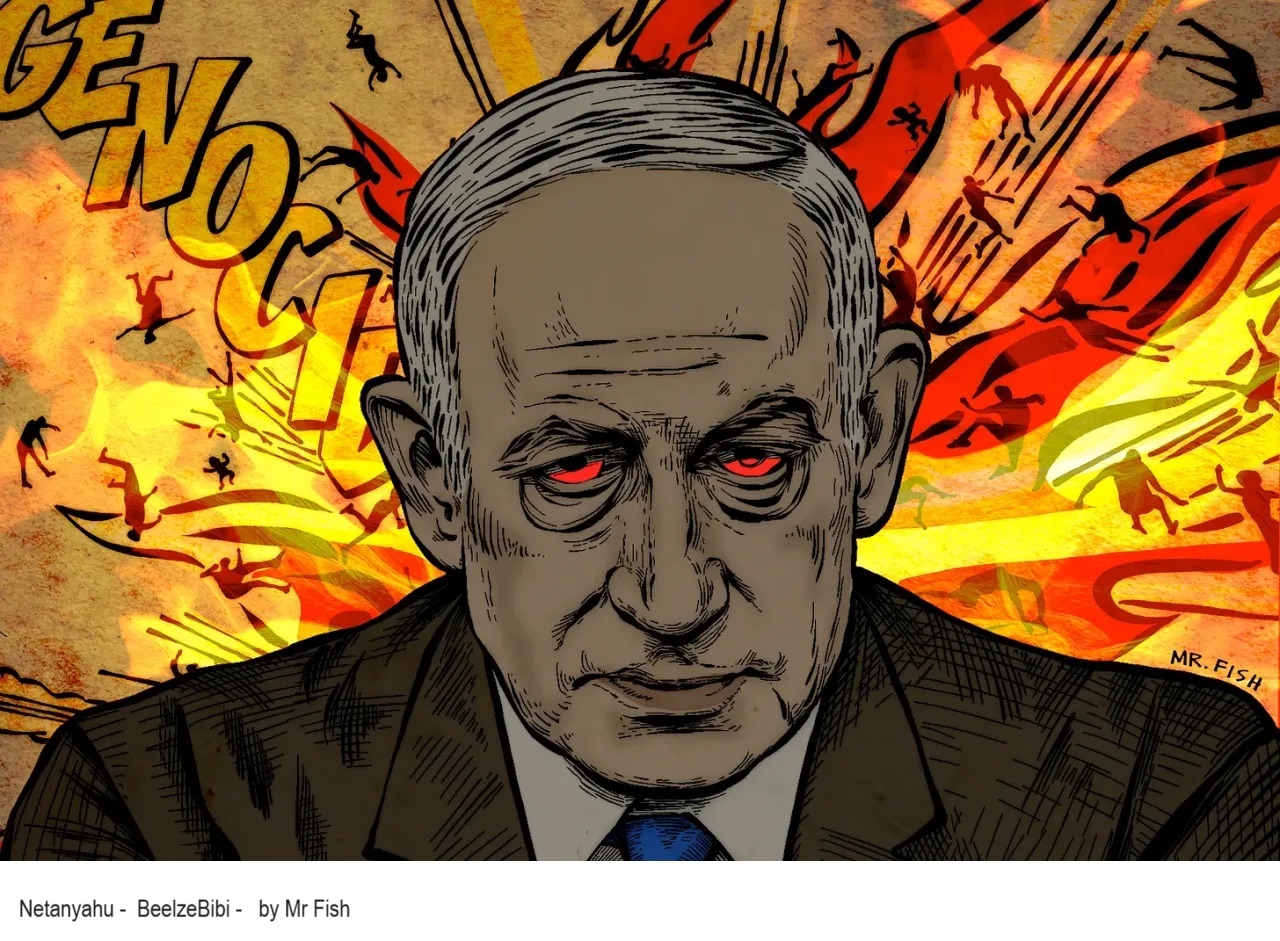
This is Kabuki theater — a way, when the genocide is over, for these Western leaders to insist they stood on the right side of history, even as they armed and funded the genocidal killers, while harassing, silencing or criminalizing those who decried the slaughter.
August 23, 2025, By Chris Hedges ScheerPost, https://scheerpost.com/2025/08/23/chris-hedges-israels-assassination-of-memory/
As Israel ticks off its list of Nazi-like atrocities against the Palestinians, including mass starvation, it prepares for yet another – the demolition of Gaza City, one of the oldest cities on Earth. Heavy engineering equipment and gigantic armored bulldozers are tearing down hundreds of heavily damaged buildings. Cement trucks are churning out concrete to fill tunnels. Israeli tanks and fighter jets pummel neighborhoods to drive Palestinians who remain in the ruins of the city to the south.
It will take months to turn Gaza City into a parking lot. I have no doubt Israel will replicate the efficiency of the Nazi SS Gen. Erich von dem Bach-Zelewski, who oversaw the obliteration of Warsaw. He spent his final years in a prison cell. May history, at least in terms of this footnote, repeat itself.
As Israeli tanks advance, Palestinians are fleeing, with neighborhoods such as Sabra and Tuffah, cleansed of its inhabitants. There is little clean water and Israel plans to cut it off in northern Gaza. Food supplies are scarce or wildly overpriced. A bag of flour costs $22.00 a kilo, or your life. A report published Friday by the Integrated Food Security Phase Classifications (IPC) , the world’s leading authority on food insecurity, for the first time has confirmed a famine in Gaza City. It says more than 500,000 people in Gaza are facing “starvation, destitution and death”, with “catastrophic conditions” projected to expand to Deir al-Balah and Khan Younis next month. Nearly 300 people, including 112 children, have died from starvation.
European leaders, along with Joe Biden and Donald Trump, remind us of the real lesson of the Holocaust. It is not Never Again, but, We Do not Care. They are full partners in the genocide. Some wring their hands and say they are “appalled” or “saddened.” Some decry Israel’s orchestrated starvation. A few say they will declare a Palestinian state.
This is Kabuki theater — a way, when the genocide is over, for these Western leaders to insist they stood on the right side of history, even as they armed and funded the genocidal killers, while harassing, silencing or criminalizing those who decried the slaughter.
Israel speaks of occupying Gaza City. But this is a subterfuge. Gaza is not to be occupied. It is to be destroyed. Erased. Wiped off the face of the earth. There is to be nothing left but tons of debris that will be laboriously carted away. The moonscape, devoid of Palestinians of course, will provide the foundation for new Jewish colonies.
“Gaza will be entirely destroyed, civilians will be sent to…the south to a humanitarian zone without Hamas or terrorism, and from there they will start to leave in great numbers to third countries,” Israel’s Minister of Finance Bezalel Smotrich announced at a conference on increased Jewish settlement in the Israeli-occupied West Bank.
All that was familiar to me when I lived in Gaza no longer exists. My office in the center of Gaza City. The Marna boarding house on Ahmed Abd el Aziz Street, where after a day’s work I would drink tea with the elderly woman who owned it, a refugee from Safad in northern Galilee. The coffee shops I frequented. The small cafes on the beach. Friends and colleagues, with few exceptions, are in exile, dead or, in most cases, have vanished, no doubt buried under mountains of debris. On my last visit to Marna House, I forgot to return the room key. Number 12. It was attached to a large plastic oval with the words “Marna House Gaza” on it. The key sits on my desk.
The imposing Qasr al-Basha fortress in Gaza’s Old City — built by Mamluk Sultan Baibars in the 13th century and known for its relief sculpture of two lions facing each other — is gone. So too is the Barquq Castle, or Qalʿat Barqūqa, a Mamluk-era fortified mosque constructed in 1387-1388, according to an inscription above the entrance gateway. Its ornate Arabic calligraphy by the main gate once read:
“In the name of Allah, the Most Gracious, Most Merciful. The mosques of God shall establish regular prayers, and practice regular charity, and fear none except God.”
The Great Omari Mosque in Gaza City, the ancient Roman cemetery and the Commonwealth War Cemetery — where more than 3,000 British and commonwealth soldiers from World War I and World War II are buried — have been bombed, and destroyed, along with universities, archives, hospitals, mosques, churches, homes and apartment blocks. Anthedon Harbor, which dates to 1100 B.C. and once provided anchorage for Babylonian, Persian, Greek, Roman, Byzantine and Ottoman ships, lies in ruins.
I used to leave my shoes on a rack by the front door of the Great Omari Mosque, the largest and oldest mosque in Gaza, in the Daraj Quarter of the Old City. I washed my hands, face and feet at the common water taps, carrying out the ritual purification before prayer, known as wudhu. Inside the hushed interior with its blue-carpeted floor, the cacophony, noise, dust, fumes and frenetic pace of Gaza melted away.
The razing of Gaza is not only a crime against the Palestinian people. It is a crime against our cultural and historical heritage — an assault on memory. We cannot understand the present, especially when reporting on Palestinians and Israelis, if we do not understand the past.
History is a mortal threat to Israel. It exposes the violent imposition of a European colony in the Arab world. It reveals the ruthless campaign to de-Arabize an Arab country. It underscores the inherent racism towards Arabs, their culture and their traditions. It challenges the myth that, as former Israeli prime minister Ehud Barak said, Zionists created, “a villa in the middle of a jungle.” It mocks the lie that Palestine is exclusively a Jewish homeland. It recalls centuries of Palestinian presence. And it highlights the alien culture of Zionism, implanted on stolen land.
When I covered the genocide in Bosnia, the Serbs blew up mosques, carted away the remains and forbade anyone to speak of the structures they had razed. The goal in Gaza is the same, to wipe out the past and replace it with myth, to mask Israeli crimes, including genocide.
The campaign of erasure banishes intellectual inquiry and stymies the dispassionate examination of history. It celebrates magical thinking. It allows Israelis to pretend the inherent violence that lies at the heart of the Zionist project, going back to the dispossession of Palestinian land in the 1920s and the larger campaigns of ethnic cleansing of Palestinians in 1948 and 1967, does not exist.
The Israeli government bans public commemorations of the Nakba, or catastrophe, a day of mourning for Palestinians who seek to remember the massacres and expulsion of 750,000 Palestinians carried out by Jewish terrorist militias in 1948 for this reason. Palestinians are even prevented from carrying their flag.
This denial of historical truth and historical identity permits Israelis to wallow in eternal victimhood. It sustains a morally blind nostalgia for an invented past. If Israelis confront these lies it threatens an existential crisis. It forces them to rethink who they are. Most prefer the comfort of illusion. The desire to believe is more powerful than the desire to see.
Erasure calcifies a society. It shuts down investigations by academics, journalists, historians, artists and intellectuals who seek to explore and examine the past and the present. Calcified societies wage a constant war against truth. Lies and dissimulation must be constantly renewed. Truth is dangerous. Once it is established it is indestructible.
As long as truth is hidden, as long as those who seek truth are silenced, it is impossible for a society to regenerate and reform itself. The Trump administration is in lock step with Israel. It too seeks to prioritize myth over reality. It too silences those who challenge the lies of the past and the lies of the present.
Calcified societies cannot communicate with anyone outside their incestious circles. They deny verifiable fact, the foundation on which rational dialogue takes place. This understanding lay at the heart of South Africa’s Truth and Reconciliation Commission. Those who carried out the atrocities of the apartheid regime confessed their crimes in exchange for immunity. By doing so they gave the victims and the victimizers a common language, one rooted in historical truth. Only then was healing possible.
Israel is not only destroying Gaza. It is destroying itself.
Never Forget The Lies They Told About Gaza. Never Forgive Them.
Caitlin Johnstone, Aug 24, 2025, https://www.caitlinjohnst.one/p/never-forget-the-lies-they-told-about?utm_source=post-email-title&publication_id=82124&post_id=171797262&utm_campaign=email-post-title&isFreemail=true&r=1ise1&triedRedirect=true&utm_medium=email
A joint investigation by The Guardian and +972 Magazine found that the IDF’s own records show that civilians make up at least 83 percent of those killed in Israeli attacks on Gaza. The report notes that the real number is likely significantly higher, since the number given doesn’t include the thousands upon thousands of dead civilians who are still unaccounted for in Gaza because they are trapped under the rubble, or those killed by indirect means such as starvation or disease.
The pro-Israel spin machine frantically tried to discredit this report as soon as it came out, but their arguments have been soundly debunked.
They claimed that Israel has a phenomenally low civilian-to-combatant casualty ratio, then Israel’s own data proved that civilians comprise the vast majority of those killed by the IDF.
They denied that Israel is starving Gaza, then the IPC came out with a report saying that Israel is starving Gaza.
They tried to claim that the skeletal children we’re seeing in Gaza looked that way because of pre-existing conditions, then the Israeli press published an extensive report showing that children with no pre-existing conditions are being starved.
They tried to deny that Israeli soldiers were massacring civilians at aid sites, then the Israeli soldiers themselves told the Israeli press that they were being ordered to massacre civilians at aid sites.
Never forget all the monsters who tried to gaslight you and convince you that you are crazy and hateful for saying these things are happening. Never, ever forgive them.
The IDF has admitted to uprooting thousands of olive trees in the West Bank on Thursday. The routine destruction of Palestinian olive trees is not the most shocking or evil thing that Israel does to the Palestinians, but it does speak to what its true intentions are in a unique way.
Similar to the way white people killed off all the bison to help eliminate the American Indians, killing olive trees deprives Palestinians of an important means of earning a living, and strikes at an important aspect of Palestinian identity and culture.
Olive trees can live for thousands of years; people with a strong attachment to the land treasure and protect them, while the Israelis who claim to be “indigenous” to the area are destroying them and replacing them with highly flammable foreign plants. You can tell who the actual indigenous population is by watching their behavior.
Normal person: Genocide is bad
Crazy person: Woah hey, let’s not get political
Right wingers are like “No no you don’t understand, Israel is protecting western civilization. If we don’t help Israel genocide the Palestinians and starve their children and burn their babies and bomb their hospitals and demolish their cities, one day we could wind up ruled by evil murderous savages.”
Normal person: Oh no those people over there are committing genocide!
Crazy person: Okay but what religion are they?
The way Zionists talk about Palestinian hatred of Jews you’d think the Palestinians immigrated to Israel from somewhere else in 1948 in order to attack Jewish people.
In 1937, Winston Churchill stated the following while arguing in favor of allowing Jews to settle in Palestine:
“I do not admit that the dog in the manger has the final right to the manger, even though he may have lain there for a very long time. I do not admit that right. I do not admit, for instance, that a great wrong has been done to the Red Indians of America, or the black people of Australia. I do not admit that a wrong has been done to those people by the fact that a stronger race, a higher-grade race, or, at any rate, a more worldly-wise race, to put it that way, has come in and taken their place. I do not admit it. I do not think the Red Indians had any right to say, The American Continent belongs to us and we are not going to have any of these European settlers coming in here. They had not the right, nor had they the power.”
Churchill knew exactly what he was looking at in the Zionist agenda to colonize Palestine. There was no confusion whatsoever. It wasn’t until much later that history was revised through propaganda to spin this as something other than the western settler-colonialist project that it has always been.
The other day I wrote the following in a rant about religious Zionists:
“Someone like Mike Huckabee is never telling the truth or saying what he really thinks is going on when it comes to Israel and the Palestinians, he’s just making whatever mouth noises he needs to make to help fulfill a Biblical prophecy and secure his eternal reward. Such people have no place in the conversation. They should be completely excluded from the debate, because they are not actually participating in it. They’re just lying and manipulating for reasons that have nothing to do with truth or morality.”
The very next day, Antiwar published an article titled “Mike Huckabee Claims Israeli Settlements in the Occupied West Bank Are Not Illegal Under International Law”.
Like I said. Huckabee does not believe this obvious falsehood, he’s just saying whatever words he needs to say to help advance the agendas of his weird Christian cult. These freaks consider themselves so pious and righteous, but in reality they are some of the most conniving, unethical deceivers our world has ever seen.
It just occurred to me that at some point in the future they’re going to try to demand that we condemn whatever radicalized groups and militias wind up emerging as a result of the Gaza genocide.
That’s gonna be cute.
1 This Month



26 September – International Day for the Total Elimination of Nuclear Weapons


PLEASE OPPOSE HR 8255 AND S.3639 – bills would accelerate satellite deployment, with no environmental review or safeguards – https://ncstd5li.quorum.us/campaign/169331/
To see nuclear-related stories in greater depth and intensity – go to https://nuclearinformation.wordpress.com
-
Archives
- September 2026 (206)
- August 2026 (330)
- July 2026 (355)
- June 2026 (287)
- May 2026 (306)
- April 2026 (356)
- March 2026 (251)
- February 2026 (267)
- January 2026 (308)
- December 2025 (358)
- November 2025 (359)
- October 2025 (375)
-
Categories
- 1
- 1 NUCLEAR ISSUES
- business and costs
- climate change
- culture and arts
- ENERGY
- environment
- health
- history
- indigenous issues
- Legal
- marketing of nuclear
- media
- opposition to nuclear
- PERSONAL STORIES
- politics
- politics international
- Religion and ethics
- safety
- secrets,lies and civil liberties
- spinbuster
- technology
- Uranium
- wastes
- weapons and war
- Women
- 2 WORLD
- ACTION
- AFRICA
- Atrocities
- AUSTRALIA
- Christina's notes
- Christina's themes
- culture and arts
- Events
- Fuk 2022
- Fuk 2023
- Fukushima 2017
- Fukushima 2018
- fukushima 2019
- Fukushima 2020
- Fukushima 2021
- general
- global warming
- Humour (God we need it)
- Nuclear
- RARE EARTHS
- Reference
- resources – print
- Resources -audiovicual
- Weekly Newsletter
- World
- World Nuclear
- YouTube
-
RSS
Entries RSS
Comments RSS
 nuclear-news