Russia’s economic woes delaying the build of nuclear reactors in Turkey
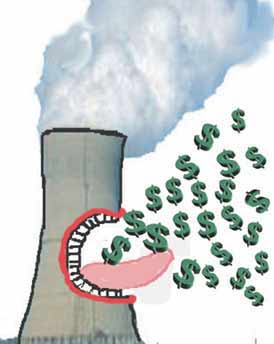 Russian Nuclear Plants in Turkey ‘Not Ready Before 2022’, Moscow Times Reuters Mar. 23 2015 Turkey’s first nuclear power plant is unlikely to be ready before 2022, energy officials said on Monday of the $20-billion project that has been beset by regulatory hurdles and complicated by Russia’s financial woes…..Rosatom initially pledged to have the first of the four reactors in the southern Turkish town of Akkuyu ready by 2019.
A senior Turkish energy official said the project would not be online before at least 2022, given that ground-breaking has yet to happen. “The first reactor can be online at least seven years after the ground-breaking so the 2019-2020 date is impossible,” the official said…..
-
 Economic Worries
Analysts say Russia’s economic troubles because of collapsing oil prices and Western sanctions over Ukraine may also have weighed on Rosatom’s finances.
“The Akkuyu timeline was — and remains — completely unrealistic,” Aaron Stein, associate fellow at British defense and security think-tank the Royal United Services Institute (RUSI), said. “The issue has, in recent months, become far more complicated because of Russia’s economic deterioration.”……http://www.themoscowtimes.com/opinion/business/article/russian-nuclear-plants-in-turkey-not-ready-before-2022/517868.html
Jordan commits to buying nuclear fuel from Russia for 10 years, in $10 Billion Deal on Nuclear Power Plant
 Jordan, Russia Sign $10 Billion Deal on Nuclear Power Plant, abc news AMMAN, Jordan — Mar 24, 2015, By SAM McNEIL Associated Press Jordan signed a $10 billion deal with Russia on Tuesday to build the kingdom’s first nuclear power plant, with two 1,000-megawatt reactors in the country’s north.
The deal, signed in the Jordanian capital, Amman, with Russia’s state-owned Rosatom company caps efforts of the energy-poor kingdom to increase energy sufficiency and reduce imports……
Under the deal, Jordan must buy fuel from Rosatom for the reactors for 10 years, after which it may seek other suppliers. The Jordanian government will have a slight majority ownership, with Rosatom owning 49 pecent of the plant, according to the Jordan Times.
Earlier this year, Rosatom signed an agreement, the details of which are secret, to build two reactors in Hungary. And last month, during Russian President Vladimir Putin’s visit to Egypt, the two countries signed a memorandum of understanding to build Egypt’s first nuclear power plant at an existing nuclear site in Dabaa, on the Mediterranean coast where a research reactor has stood for years. http://abcnews.go.com/International/wireStory/jordan-russia-sign-10-billion-deal-nuclear-reactors-29874766
Iran nuclear talks don’t mention the factor of sabotage
Unstated Factor in Iran Talks: Threat of Nuclear Tampering, NYT, By DAVID E. SANGER and WILLIAM J. BROADMARCH 21, 2015 “………if negotiators succeed in reaching a deal with Iran, does the huge, covert sabotage effort by the United States, Israel and some European allies come to an end? “Probably not,” said one senior official with knowledge of the program. In fact, a number of officials make the case that surveillance of Iran will intensify and covert action may become more important than ever to ensure that Iran does not import the critical materials that would enable it to accelerate the development of advanced centrifuges or pursue a covert path to a bomb.
In the case of the covert effort to purchase the specialty aluminum, the Iranians actually discovered the switch before they installed the tubes, and now say they are racing ahead to develop a next-generation centrifuge that would produce nuclear fuel far faster, a prospect that has become a major sticking point in negotiations.
In public, the Obama administration says economic sanctions on oil exports and financial transactions drove Iran to negotiations — and the prospect of getting those restrictions lifted are the best chance of persuading Iran’s leadership to take a diplomatic deal limiting Iran’s production of nuclear fuel for a decade or more.
In private, officials say sabotage was the other big stick — a persistent effort to slow Iran’s progress, and a signal that the United States had other ways to deal with the nuclear program. On occasion they allude to it, as Stephen J. Hadley, President Bush’s national security adviser, did at a presentation on sanctions last year, when he talked about how the financial penalties were supplemented by “things directed at their program, which we can’t talk about.”
Although American officials remain suspicious of Iran operating a covert nuclear facility, they say they see no solid evidence of a hidden operation today.
It is entirely possible that if an accord is reached, President Obama could call a pause in what has been more than a decade of attacks, the most famous of which was a yearslong effort, code-named Olympic Games, which inserted into Iranian facilities the most sophisticated cyberweapons ever deployed. One of them was the Stuxnet worm that disabled about 1,000 centrifuges, but also spread around the world, revealing the program.
But reaching an accord is quite different than reaching a state of trust. Inside Iran, there will be pressure to keep making slow progress on a nuclear program that is central to the ambitions of the Iranian Revolutionary Guard Corps and thousands of scientists who have labored for years. And in the uneasy alliance among Israel, the United States and Europe there will be continued debate about whether to supplement diplomatic pressure with covert action to keep Iran from getting to the threshold of being able to build a weapon.
For the past decade or so, the covert war to halt Iran’s nuclear program has included high-profile assassinations of their top scientists — widely attributed to Israel — and cyberattacks.
The assassinations suddenly stopped a few years ago, after they were publicly denounced by the United States. The cyberattack efforts may be continuing, probably at a lower level: a recently disclosed document from the National Security Agency, written in 2013, describes “NSA’s planned battle rhythm” to attack Iran’s systems in case of a crisis, and “Iran’s discovery of computer network exploitation tools on their networks in 2012 and 2013.” They make it clear that the N.S.A. has played a crucial role in the negotiations, in “support to policy makers” during negotiation on Iran’s nuclear program.
The ultimate goal of the covert program of industrial sabotage, according to intelligence and weapons specialists, is to produce damage obscure enough to evade easy detection, but extensive enough to result in random failures that seriously impede Iran’s nuclear drive………http://www.nytimes.com/2015/03/22/world/middleeast/unstated-factor-in-iran-talks-threat-of-nuclear-tampering.html?_r=0
For the first time, Pentagon comes clean on Israel’s nuclear weapons
 It’s Official: The Pentagon Finally Admitted That Israel Has Nuclear Weapons, Too The Nation, William Greider on March 20, 2015 “…… After five decades of pretending otherwise, the Pentagon has reluctantly confirmed that Israel does indeed possess nuclear bombs, as well as awesome weapons technology similar to America’s.
Early last month the Department of Defense released a secret report done in 1987 by the Pentagon-funded Institute for Defense Analysis that essentially confirms the existence of Israel’s nukes. DOD was responding to a Freedom of Information lawsuit filed by Grant Smith, an investigative reporter and author who heads the Institute for Research: Middle East Policy. Smith said he thinks this is the first time the US government has ever provided official recognition of the long-standing reality.
It’s not exactly news. Policy elites and every president from LBJ to Obama have known that Israel has the bomb. But American authorities have cooperated in the secrecy and prohibited federal employees from sharing the truth with the people. When the White House reporter Helen Thomas asked the question of Barack Obama back in 2009, the president ducked. “With respect to nuclear weapons, you know, I don’t want to speculate,” Obama said. That was an awkward fib. Obama certainly knows better, and so do nearly two-thirds of the American people, according to opinion polls.
In my previous blog, “What about Israel’s Nuclear Bomb?” I observed that the news media focused solely on Iran’s nuclear ambitions but generally failed to note that Israel already had nukes. That produced a tip about the Pentagon release in early February.
Yet the confirmation of this poorly kept secret opens a troublesome can of worms for both the US government and our closest ally in the Middle East. Official acknowledgement poses questions and contradictions that cry out for closer inspection. For many years, the United States collaborated with Israel’s development of critical technology needed for advanced armaments. Yet Washington pushed other nations to sign the Non-Proliferation Treaty, which requires international inspections to discourage the spread of nuclear arms. Israel has never signed the NPT and therefore does not have to submit to inspections.
Washington knew all along what the inspectors would find in Israel. Furthermore, as far back as the 1960s, the US Foreign Assistance Act was amended by concerned senators to prohibit any foreign aid for countries developing their own nukes. Smith asserts that the exception made for Israel was a violation of the US law but it was shrouded by the official secrecy. Since Israel is a major recipient of US aid, American presidents had good reason not to reveal the truth.
The newly released report—“Critical Technological Assessment in Israel and NATO Nations”—describes Israel’s nuclear infrastructure in broad terms, but the dimensions are awesome. Israel’s nuclear research labs, the IDA researchers reported, “are equivalent to our Los Alamos, Lawrence Livermore and Oak Ridge National Laboratories.” Indeed, the investigators observed that Israel’s facilities are “an almost exact parallel of the capability currently existing at our National Laboratories.”……..http://www.thenation.com/blog/202129/its-official-pentagon-finally-admitted-israel-has-nuclear-weapons-too#
Rapid expansion of renewable energy predicted for Middle East
Renewables Poised For Massive Growth In The Middle East, Oil Price.com. By Darrell Delamaide 19 March 2015
Growing scale in renewable energy projects has sharply reduced the price of sustainable energy to near parity with fossil fuels, creating new opportunities for energy companies but also for investors.
This is the thrust of a report published this month by the National Bank of Abu Dhabi entitled “Financing The Future Of Energy,” prepared by the University of Cambridge and PricewaterhouseCoopers.
The report focuses on renewable energy prospects in the wider Gulf region – the ‘West-East corridor’ stretching from Africa into Central Asia – in the context of global energy development…….
Prices for new sustainable energy have fallen so dramatically in the past few years that perceptions have failed to keep up, the report says. The price for solar PV has fallen by 80% in six years, and onshore wind by 40%.
A new global benchmark for utility scale solar PV was set at the end of 2014, the report says, as the 200 MW Dubai Electricity and Water Authority (DEWA) bid in Dubai showed that photovoltaic technologies are competitive with oil at US$10 per barrel and gas at US$5 per MMBtu.
For the last few years, the report says, more than half of the total investment in new electricity generation worldwide has been in renewable technologies. In 2014 alone, US$150 billion was invested in solar and US$100 billion in wind globally.
This kind of scale means that renewable energy projects can now draw on the full panoply of financing used for large infrastructure projects.
Recent wind and solar projects have used new financing approaches, such as securitization, aggregation and green bonds. These projects can also lend themselves to Special Purpose Vehicle financing, with the advantages this brings for limiting liability but also for channeling government input.
Government policies have an important role to play, not only in setting energy and environmental goals, but in providing guarantees in the form of power purchase agreements or procurement frameworks……http://oilprice.com/Alternative-Energy/Renewable-Energy/Renewables-Poised-For-Massive-Growth-In-The-Middle-East.html
Why is Israel’s nuclear bomb not discussed ?
After Bibi Netanyahu’s provocative speech to Congress, The New York Times provided helpful clarifications in an article headlined “What Iran Won’t Say About the Bomb.” Written by two superbly expert reporters, William Broad and David Sanger, the piece walked through the technical complexities for non-experts (myself included) and explained key questions Iranians have failed to answer.
But this leads me to ask a different question: What about Israel’s bomb? Why isn’t that also part of the discussion?
In the flood of news stories about Iran’s nuclear intentions, I have yet to see mention of Israel’s nuclear arsenal (if I missed some mentions, they must have been rare).
Yet Israel’s bomb is obviously relevant to the controversy. The facts are deliberately murky, but Israel has had nuclear weapons for at least forty years, though it has never officially acknowledged their existence. The Israeli diplomatic approach has been called “nuclear ambiguity.”……
My point is, the existence of Israel’s nuclear superiority is clearly a pivotal fact of life in the chaotic conflicts and occasional wars of the Middle East. It should not be left out.
Israel’s bomb might be an important factor in motivating Iran to seek a nuclear bomb of its own (though Iran denies that intention). It might also be the subtext for Netanyahu’s bellicose warnings and his occasional calls for bombing Iran’s nuclear facilities.
Bibi’s country would lose valuable leverage if it no longer had a nuclear monopoly in the region. Yet it might be considered a provocative act if Israel bluntly acknowledged its nuclear arsenal………
That brings the story back around to Bibi. For roughly twenty years, Netanyahu has now and then called for bombing Iran to crumple its nuclear intentions. The Obama administration is attempting to accomplish the same result peacefully, through negotiations.
As Juan Cole has written in The Nation, that may be a false choice, because Israeli intelligence and a former defense minister have admitted that Iran has no nuclear weapons program. Cole explained: “Nuclear weapons are in any case defensive, not offensive, and Iran could not deploy a bomb (if it had one, which it doesn’t) against Israel because the Israelis would retaliate by wiping Iran off the map,”
In other words, even if Tehran were to acquire nukes, it could not use them against Israel. Both nations would become prisoners of the stalemate that ruled the United States and Soviet Union for forty years during the Cold War. The doctrine was known as Mutually Assured Destruction, or MAD for short………http://www.thenation.com/blog/201369/what-about-israels-nuclear-bomb#
US Republican Senators undermine nuclear talks: reactions from Iran and White House
 Iran condemns ‘untrustworthy’ America as Senate letter casts doubt over nuclear deal Philip Hammond, the Foreign Secretary, warns that the letter from 47 Republican Senators “could become a spanner in the works” of nuclear talks Telegraph By David Blair, and Peter Foster in Washington 10 Mar 2015
Philip Hammond, the Foreign Secretary, warned that the letter “could become a spanner in the works” of the negotiations, due to resume on Monday, with an “unpredictable effect on opinion” inside Iran.
The US senators sent an unprecedented “open letter” to the “leaders of the Islamic Republic of Iran”, warning that a future US president might “revoke” any agreement on the country’s nuclear programme “with the stroke of a pen”. Continue reading
USA Republicans tried to derail Iran nuclear talks
Iran’s foreign minister, Mohammad Javad Zarif, also poured derision on the Republican letter in a statement expressing astonishment that members of Congress would seek to undermine a US administration by writing directly to a foreign power, and suggesting that the letter’s authors had much to learn about international and even US law.
However, the sharpest reaction to Monday’s open letter came from the White House. President Obama accused its 47 Republican signatories of “wanting to make common cause with the hardliners in Iran”.
The US vice-president, Joseph Biden, said the letter, drafted by Tom Cotton, a freshman senator from Arkansas, was “expressly designed to undercut a sitting president in the midst of sensitive international negotiations”.
It was “beneath the dignity of the institution I revere”, Biden said in a statement. Continue reading
Omissions in Netanyahu’s biased speech to US Congress about Iran nuclear negotiations
What Netanyahu left out of his speech to Congress http://warincontext.org/ 03/06/2015
Gary Sick lists five significant omissions: 1. Iran has dramatically reduced its stockpile of enriched uranium. Remember Bibi’s cartoon bomb that was going to go off last summer? Well, it has been drained of fuel, and that will probably continue to be true indefinitely. No mention.
2. Inspections will continue long after the nominal 10-year point, contrary to his claim that everything expires in ten years. No mention.
3. The heavy water reactor at Arak will be permanently modified, so it produces near zero plutonium. Not only did he not mention it, but he listed the reactor and plutonium as one of his threats.
4. His repeated assertion that Iran is actively seeking nuclear weapons ignores the judgment “with high confidence” of both American and Israeli intelligence that Iran has taken no decision to build nuclear weapons. It also contradicts the repeated findings of the IAEA that no materials have been diverted for military purposes.
5. All the major countries of the world are co-negotiators with the United States, so a U.S. congressional intervention that killed the deal will not only affect us but all of our major allies. If we stiff them, there is no reason to believe the international sanctions will hold for long. No mention.
Theatrics by Israel’s Netanyahu highlight the need for a nuclear agreement with Iran
 brings negotiators together, Guardian, http://www.theguardian.com/world/julian-borger-global-security-blog/2015/mar/05/iran-nuclear-talks-very-close-to-a-deal-as-netanyahu-brings-negotiators-together Julian Borger, American and Iranian diplomats find common ground rejecting Israeli leader’s combative approach to negotiations, but also agree serious hurdles remain to meeting March deadline. The long and convoluted negotiations over Iran’s nuclear programme adjourned on Wednesday amid talk of continuing progress towards a comprehensive deal but of tough political decisions still to be made.
The talks will resume on March 15, probably in Geneva, as the latest deadline for agreement looms at the end of the month.
Iran’s foreign minister, Mohammad Javad Zarif said a deal was “very close”,telling NBC that he and his team were prepared to carry on working through the Persian New Year celebration of Nowruz starting on March 21. Continue reading
South Korea marketing nuclear reactors to Saudi Arabia
 Saudi Arabia, South Korea sign MOU on nuclear power Wed Mar 4, 2015 Reuters) – Saudi Arabia and South Korea have signed a memorandum of understanding (MOU) to cooperate on the development of nuclear energy, Saudi state news agency SPA said, building on a deal signed in 2011.
South Korean President Park Geun-hye met with Saudi Arabia’s King Salman on Tuesday in Riyadh during an official visit, SPA said.
The MOU calls for South Korean firms to help build at least two small-to-medium sized nuclear reactors in Saudi Arabia, the South Korean presidential office said in a statement.
“If the two units go ahead, the cost of the contract will be (near) $2 billion,” the statement said……http://www.reuters.com/article/2015/03/04/saudi-south-korea-nuclear-idUSL5N0W61GM20150304
Iran’s most notorious dissident group loves luring gullible U.S. officials and journalists
 That Secret Iranian ‘Nuclear Facility’ You Just Found? Not So Much.Iran’s most notorious dissident group loves luring gullible U.S. officials and journalists into seeing a bomb factory beneath every building in Tehran. Dig a little deeper, sheeple. FP, BY JEFFREY LEWIS MARCH 3, 2015
That’s not quite the same thing as saying it’s a load of bullfeathers, but we’ll get there in due course. The story may be false, but it demonstrates both the culture of leaks in Washington and the way open-source information can challenge that culture………
there is every reason to think the latest allegations by NCRI represent a politically motivated effort to derail the engagement of Iran over its nuclear program.
Almost immediately, there were reasons to doubt NCRI’s claim. A review of commercial satellite images reveals no evidence of large-scale excavation or tunneling during the 2004-2008 period identified by NCRI. The site seems to lack a suitable transformer substation for electricity to power centrifuges or evidence of ventilation systems so workers underneath can breathe. (It turns out workers tend to insist on breathing.) And if Iran had excavated a massive 2,000-square-meter underground facility, where’d all the dirt go? It just doesn’t add up.
Moreover, the press release contained a number of details that were obviously fabricated. NCRI claimed that the facility had “3 by 3 m radiation proof doors that are 40 centimeters thick and weigh about 8 tons … to prevent radiation leak.” There is no reason for such doors at a uranium-enrichment facility, which is not subject to massive radiation leaks. Almost immediately, others were able to determine that the picture of the door released by NCRI was actually lifted from an Iranian commercial website. That detail is just balderdash, despite NCRI’s lame defense that the firm supplies doors to the Iranian nuclear industry.
The site that NCRI identified is, in fact, a facility operated by a firm calledMatiran. NCRI described Matiran as a firm that produces identification documents, like passports, for the Iranian government. Helpfully, that’s how Matiran describes itself, as well. You may not have heard of it before — I had not — but its representatives attend international conferences and its employees post their CVs on social networking sites. The construction of the new facility roughly corresponds with Matiran’s successful bid to produce the new Iranian national identification card.
Hey, what do I know, but it seems unlikely that Iran has decided to double-upproducing ID cards and enriching uranium at the same site.
…….The important thing is that open-source tools, plus a little investigative shoe leather, allowed us to quickly determine that the allegation was false. …….
There is, today, an enormous amount of information that can help the public sort fact from fiction. It is really is just a matter of having skilled nongovernmental groups working in the public interest. There isn’t, at the moment, much funding available for this sort of work and only a few institutions really do it for nuclear issues, including the Institute for Science and International Security as well as my home institution, the James Martin Center for Nonproliferation Studies. But the important point, the one illustrated by the Hasakah Spinning Factory and now Matiran, is that, given a chance, we cansort fact from fiction, and at a modest cost. http://foreignpolicy.com/2015/03/03/that-secret-iranian-nuclear-facility-you-just-found-not-so-much/
Iran’s leaders – pragmatic, not fanatic
Iran’s Leaders Are Not Suicidal Critics of a nuclear deal claim the regime in Tehran is fanatical. Where’s their evidence?, The Atlantic PETER BEINART MAR 2 2015, “……..Through its proxies, Iran is fighting a regional cold war. And like the United States, U.S.S.R., and China when they were fighting their global cold war, it is doing so in a distinctly non-suicidal way. Iran is seeking to extend its power without doing something so aggressive that it provokes retaliation that imperils the regime’s survival. Iran isn’t doing truly reckless things like invading a Saudi ally in the Persian Gulf or launching chemical or biological weapons at Israel, either directly or through its terrorist proxies. And it never has. This is a regime, after all, that accepted a UN-sponsored ceasefire rather than fight to the death against Saddam’s Iraq and that cooperated with the United States to depose the Taliban.
U.S. Secretary of State John Kerry speaks up for the nuclear negotiations between the Westand Iran
U.S. deserves ‘benefit of the doubt’ on getting Iran nuclear deal, Kerry says BY WILL DUNHAM AND DIANE BARTZ WASHINGTON Sun Mar 1, 2015 (Reuters) – U.S. Secretary of State John Kerry pressed the case on Sunday for completing nuclear diplomacy with Iran despite Israeli opposition, saying the United States deserves the benefit of the doubt on getting a deal that would prevent any need for military action to curb Tehran’s atomic ambitions.
Two days before Israeli Prime Minister Benjamin Netanyahu is due to address the U.S. Congress to warn against an Iran deal, Kerry delivered a stout defense of talks that are entering a critical phase with a key March 31 deadline looming.
Kerry said he hoped Netanyahu’s speech does not turn into “some great political football” but said the Israeli leader is “welcome to speak in the United States, obviously.”
Six powers – the United States, Russia, China, Britain, France and Germany – are negotiating with Iran toward an agreement to restrain Tehran’s nuclear program in exchange for easing economic sanctions. Netanyahu has spoken scathingly about a possible deal and says a nuclear-armed Iran would pose an existential threat to the Jewish state.
Netanyahu was invited to speak by Republican congressional leaders, but they did not inform President Barack Obama’s administration about the speech in advance. Signs are growing that the speech could damage Israel’s country’s broad alliance with the United States.
In an interview with the ABC program “This Week,” Kerry said of the Iran negotiations: “It is better to do this by diplomacy than to have to do a strategy militarily which you would have to repeat over and over again and which everybody believes ought to be after you have exhausted all the diplomatic remedies.”
Kerry said he could not promise that a deal can be reached, but said that “we are going to test whether or not diplomacy can prevent this weapon from being created.”…..http://www.reuters.com/article/2015/03/01/us-usa-israel-kerry-idUSKBN0LX1HJ20150301
Israeli Prime Minister Benjamin Netanyahu trying to undermine Iran nuclear talks?
Iran’s Zarif says Netanyahu trying to undermine nuclear talks DUBAI Sun Mar 1, 2015 (Reuters) – Iran’s foreign minister has accused Israeli Prime Minister Benjamin Netanyahu of trying to undermine Iran’s negotiations towards a nuclear deal with world powers in order to distract from the Palestinian question.
Netanyahu is due to speak against a potential nuclear deal between Iran and the United States before U.S. Congress on Tuesday. His planned appearance, on invitation from the Republicans, has angered U.S. officials for its partisan nature and is likely to worsen his already frosty relations with President Barack Obama as well as undermine the wider U.S.-Israel alliance…….http://www.reuters.com/article/2015/03/01/us-iran-nuclear-zarif-idUSKBN0LX1IJ20150301
1 This Month




PLEASE OPPOSE HR 8255 AND S.3639 – bills would accelerate satellite deployment, with no environmental review or safeguards – https://ncstd5li.quorum.us/campaign/169331/
To see nuclear-related stories in greater depth and intensity – go to https://nuclearinformation.wordpress.com
-
Archives
- September 2026 (323)
- August 2026 (330)
- July 2026 (355)
- June 2026 (287)
- May 2026 (306)
- April 2026 (356)
- March 2026 (251)
- February 2026 (267)
- January 2026 (308)
- December 2025 (358)
- November 2025 (359)
- October 2025 (375)
-
Categories
- 1
- 1 NUCLEAR ISSUES
- business and costs
- climate change
- culture and arts
- ENERGY
- environment
- health
- history
- indigenous issues
- Legal
- marketing of nuclear
- media
- opposition to nuclear
- PERSONAL STORIES
- politics
- politics international
- Religion and ethics
- safety
- secrets,lies and civil liberties
- spinbuster
- technology
- Uranium
- wastes
- weapons and war
- Women
- 2 WORLD
- ACTION
- AFRICA
- Atrocities
- AUSTRALIA
- Christina's notes
- Christina's themes
- culture and arts
- Events
- Fuk 2022
- Fuk 2023
- Fukushima 2017
- Fukushima 2018
- fukushima 2019
- Fukushima 2020
- Fukushima 2021
- general
- global warming
- Humour (God we need it)
- Nuclear
- RARE EARTHS
- Reference
- resources – print
- Resources -audiovicual
- Weekly Newsletter
- World
- World Nuclear
- YouTube
-
RSS
Entries RSS
Comments RSS

