Iran nuclear agreement is endorsed by Nuclear Nonproliferation Experts
Over 70 Nuclear Nonproliferation Experts Endorse Iran Agreement WASHINGTON http://sputniknews.com/analysis/20150818/1025891167.html#ixzz3jCUmxWII, 18 Aug 15 — A group of more than 70 leading nuclear nonproliferation experts issued a statement on Tuesday in support of the full implementation of the Iran nuclear agreement aimed to guarantee the peaceful nature of Tehran’s nuclear program.
The signers of the statement include former senior nonproliferation officials at the US Department of State and Department of Defense, former director general of the International Atomic Energy Agency Hans Blix, former nuclear negotiators as well as other leading nuclear specialists from around the globe.
“The Joint Comprehensive Plan of Action (JCPOA) is a strong, long-term, and verifiable agreement that will be a net-plus for international nuclear nonproliferation efforts,” the signed statement reads.
The nuclear experts attest that the Iran nuclear deal “advances the security interests” of all negotiating parties, as well as the international community.
The nuclear agreement between Iran, and the P5+1 countries of the United States, Russia, China, Great Britain, France, and Germany has been under review in the US Congress, which will vote to approve or disapprove the deal by September 17.
The UN Security Council and all the P5+1 countries, except for the United States, have given their support for the nuclear agreement intended to prevent Iran from developing or acquiring a nuclear weapon, in exchange for international sanctions relief.
Tax-payer money going to nuclear related companies in UAE
 Nuclear-related contracts worth Dh9.15bn have been awarded to UAE firms, says Enec, The National, LeAnne Graves, 18 Aug 15, More than Dh9.15 billion in contracts have been awarded to UAE companies for the construction of the country’s first nuclear power plant, according to the Emirates Nuclear Energy Corporation (Enec)…….
America feared that Israel would deploy nuclear weapons
New Documents Reveal US Fear of Israel Deploying Nuclear Weapons, Sputnik News 19 Aug 15 The US State Department disclosed part of its “Foreign Relations of the United States” series covering the 1969-1972 Arab-Israeli dispute, revealing interesting details about the Middle East.
Obama can still do the Iran nuclear deal, despite Congress opposition
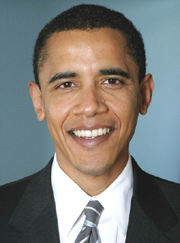 President Obama can do Iran nuclear deal even if Congress rejects it Chicago Tribune, By Tribune wire reports contact the reporter , 16 Aug 15 President Obama doesn’t need a congressional OK to make a deal with Iran over its nuclear program. The September vote on the Iran nuclear deal is billed as a titanic standoff between President Barack Obama and Congress. Yet even if lawmakers reject the agreement, it’s not game-over for the White House.
A congressional vote of disapproval would not prevent Obama from acting on his own to start putting the accord in place. While he probably would take some heavy criticism, this course would let him add the foreign policy breakthrough to his second-term list of accomplishments.
Obama doesn’t need a congressional OK to give Iran most of the billions of dollars in relief from economic sanctions that it would get under the agreement, as long as Tehran honors its commitments to curb its nuclear program — at least for now.
“A resolution to disapprove the Iran agreement may have substantial political reverberations, but limited practical impact,” says Robert Satloff, executive director of the Washington Institute for Near East Policy. “It would not override President Obama’s authority to enter into the agreement.”
Lawmakers on their summer break are deciding how to vote. A look at the current state of play:
WHAT WILL HAPPEN IN SEPTEMBER?
With Republicans controlling both chambers of Congress, the House and Senate are expected to turn down the deal. Obama has pledged to veto such a resolution of disapproval, so the question has turned to whether Congress could muster the votes to override him, in what would be a stinging, bipartisan vote of no-confidence against the president. And Obama would forfeit the authority he now enjoys to waive sanctions that Congress has imposed.
But Democrats and Republicans have predicted that his expected veto will be sustained — that opponents lack the votes to one-up Obama……
WHAT CAN OBAMA DO ON HIS OWN? The president could suspend some U.S. sanctions. He could issue new orders to permit financial transactions that otherwise are banned now. On the financial sector, Obama could use executive orders to remove certain Iranians and entities, including nearly two dozen Iranian banks, from U.S. lists, meaning they no longer would be subject to economic penalties……….http://www.chicagotribune.com/news/nationworld/ct-iran-nuclear-deal-obama-20150816-story.html
Iran has complied on key condition of the nuclear deal – submitting documents to IAEA
 Iran submits nuclear activity information to UN watchdog, Yahoo News Vienna (AFP), 16 Aug 15, – Iran has submitted documents linked to its past nuclear activity, the UN’s atomic watchdog has confirmed, a key condition of a probe into suspected efforts to create nuclear arms. The International Atomic Energy Agency (IAEA) signed a “roadmap” with Iran in July to investigate its nuclear programme, as part of an overall accord with major world powers.
The historic deal is aimed at curbing Iran’s nuclear activity in exchange for relief on painful economic sanctions.
The IAEA said Iran had met a key deadline by handing over the papers on Saturday.
“Iran… provided the IAEA with its explanation in writing and related documents as agreed in the roadmap for the clarification of past and present outstanding issues regarding Iran’s nuclear programme,” the agency said in a brief statement published Saturday.
A senior Iranian official also confirmed that the documents had been submitted.
“We have achieved our commitments as part of the deadline set out in the agreement,” said Behrouz Kamalvandi, the spokesman of Iran’s Atomic Energy Organisation.
The IAEA is to issue a report on its investigation by December 15……….http://news.yahoo.com/iran-submits-nuclear-activity-information-un-watchdog-100355955.html
Iran could not hide evidence of nuclear weapons work
Why it’s impossible to hide nuclear work in 24 days – or 24 years, REUTERS, By Yousaf Butt August 13, 2015 One of the most misleading distortions being floated by political opponents of the Iran nuclear deal is the “24-day” loophole meme: Iran would be able to hide all evidence of any nefarious nuclear weapons work during the 24 days it may take inspectors to gain access to a suspicious site.
 For starters, International Atomic Energy Agency inspectors would have continuous daily access to all Iran’s declared nuclear facilities. If Iran does not allow anytime inspections of any declared site, it could result in the reimposition — or “snapback” — of sanctions.
The 24-day rule applies only to undeclared suspect sites anywhere in the country. Because inspections anywhere at any time can be complicated to work out, a procedure was devised to address the problem.
Why 24 days? Iran and the atomic energy agency first would have a maximum of 14 days to come to an understanding about how to carry out the new inspections. In the absence of an agreement, the members of the Joint Commission – the United States, Britain, France, Germany, China, Russia and Iran — must resolve the issue, by consensus or a vote, within seven days. Tehran would have three days to implement the decision. So, the 24 days is not a gift to Tehran that would allow it to hide potential nuclear malfeasance — it is just the maximum periodallowed to hammer out a way to inspect any undeclared suspicious facility in Iran.
More important, critics insist, Iran could use those 24 days to hide evidence of nuclear materials. This is not going to happen. It would be virtually impossible even in 240 days, let alone 24. Even a nanogram, or one-billionth of a gram, of leftover dust from nuclear-weapons related work — such as covert enrichment at a suspect site — could be detectable.
The main way the agency could find incriminating dust is with a “swipe sample” using a super-clean cotton cloth. The wipe would be applied to surfaces, especially where dust naturally collects, including corners of a room, cracks, bolt holes, equipment interiors and where walls meet the floor.
As the agency itself states: “Any nuclear process … will also produce particulate materials with particle dimensions in the 0.1 [to] 10 micrometer range. Such small particles are believed to be quite mobile and will travel several meters from their point of origin due to air currents or human activity. This mobility also makes it extremely difficult to clean up an area to such an extent that no particles remain available for swipe sampling.” [emphasis added]
The swipe samples from a suspect site would be taken to a laboratory, where the atomic energy agency can use a variety of highly sensitive methods to pick up any infinitesimal incriminating nuclear particles. Isotopic ratios, chemical forms or particle shapes can all provide clues about where the nuclear material came from and how it was produced.
One particularly powerful method is known as “fission track-secondary ion mass spectrometry.”Particles from a swipe sample are irradiated with neutrons on a Lexan (plastic) plate. If there are fissile materials in the sample, they would become unstable and split apart; heavy fission-product particles would be produced. In sufficient quantities, these particles would leave tracks in the plate that can be viewed by acid etching……….
The bottom line is that it is almost impossible to get away with messing around with nuclear materials. Nuclear fingerprints are not removable.
“You cannot get rid of them by cleaning,” Stephan Vogt, head of the atomic agency’sEnvironmental Sample Laboratory told Reuters in 2013. “You cannot dilute them to the extent that we will not be able to pick them up. It is just a matter of time,” he stated, before the atomic energy agency detects any incriminating residue………..
Twenty-nine top U.S. scientists — including Nobel Prize winners, senior experts in arms control and former White House science advisers – wrote to President Barack Obama this past weekend to praise the Iran deal. They called it “technically sound, stringent and innovative.” Instead of listening to the complaints about the 24-day meme, Congress should pay heed to these experts. http://blogs.reuters.com/great-debate/2015/08/13/why-its-impossible-to-hide-nuclear-work-in-24-days-or-24-years/
Israel to once again assassinate Iranian Nuclear Scientists?

 Israel to Resume Assassinations of Iranian Nuclear Scientists?
In interview with Germany’s Der Spiegel, Israeli defense minister hints Israel could target Iranian scientists to halt nuclear program. Israel to Resume Assassinations of Iranian Nuclear Scientists?, Arutz Sheva, 7 Aug 15
In interview with Germany’s Der Spiegel, Israeli defense minister hints Israel could target Iranian scientists to halt nuclear program. Israeli Defense Minister Moshe Ya’alon has hinted Israel could resume assassinating Iranian nuclear scientists…….
Comparing the Iran deal to attempts by western Allies to appease Nazi Germany prior to World War Two, Ya’alon said historians would view the agreement as a “historic mistake” and a mere attempt to “kick the can down the road.”
And in what appeared to be a subtle threat, Ya’alon added thatIsrael “bore no responsibility for the lives of Iranian nuclear scientists,” in what appeared to be a subtle threat.
Israel is believed to be behind a series of assassinations of at least 5 top Iranian scientists involved in Iran’s covert nuclear weapons program, though it has never commented on the allegations. Most of the scientists were reportedly killed by unknown assassins placing “sticky bombs” on their cars, sometimes in audacious daylight operations.
But those assassinations – along with other covert operations including cyber attacks against Iran – have petered out in recent years, with the last known attack occurring in 2013. The halt in assassinations is believed to be a result both of direct American pressure on Israel to stop them, as well as other western states’ pivot towards detente with Tehran and away cooperating with Israel on such operations.
Ya’alon also hinted Israel could also consider airstrikes against Iranian nuclear weapons facilities as a last resort.
Analysts have long debated the viability of a unilateral Israeli strike, with many assuming such a strike to be impossible without US cooperation.
The interview follows reports that Iran is already busily “sanitizing” its Parchin military complex to hide evidence of nuclear weaponsdevelopment from nuclear inspections. http://www.israelnationalnews.com/News/News.aspx/199178#.VcUevnGqpHw
Iran nuclear deal is supported by Jews in Iran
Iran’s Jewish community gets behind nuclear deal with U.S.USA Today, 7 Aug 15 Reese Erlich, GlobalPost TEHRAN, Iran — Tapo, one of six kosher restaurants in Tehran, has become an informal hangout for the city’s small Jewish community. During a lunchtime rush last week customers ate savory kebabs while excitedly discussing the signing of the U.S.-Iran nuclear accord.
“There was lots of joy for us,” said Horiel, a Jewish customer who declined to give his last name. “It was not only the Jewish community that was happy. The nation was happy.”
Most Iranian Jews strongly disagree with Israeli Prime Minister Benjamin Netanyahu’s denunciations of the accord. Horiel said his ancestors came from Jerusalem, “but I’m an Iranian Jew. Israel will get nothing with threats and war.”
Israeli leaders and conservative politicians in the U.S. have denounced the accords as too weak, saying they’ll allow Iran to eventually develop atomic weapons.
Iranians argue that they never built a nuclear bomb and have no intention of doing so. They broadly support the accord in hopes that the U.S. will lift economic sanctions and the economy will improve.
But the agreement also lessens international tensions, says Homayoun Sameyah Najafabadi, chair of the Tehran Jewish Committee, the country’s main Jewish organization. “There was the possibility of war,” he said. “With the deal signed, it will take war off the table and bring stability to the region.”
Najafabadi said that Israel’s opposition to the accord “has no impact on the Jewish community in Iran.”…….. Jewish leaders estimate there are between 12,000 and 30,000 Jews here today, making Iran’s the second-largest Jewish population in the Middle East after Israel.
But those who have chosen to stay in Iran have a long history of opposition to hawkish Israeli governments. Many consider themselves Jews but not Zionists.
The Islamic Republic of Iran allows freedom of worship for Jews and Christians, according to Siamak Morsedegh, the Jewish representative to Iran’s parliament. He points out that unlike some other countries in the region and in Europe, Jewish templesin Iran have not been attacked.
“There (is) no need for guards in front of our synagogues,” he said………..
GlobalPost Special Correspondent Reese Erlich received a grant from the Pulitzer Center on Crisis Reporting for his reporting from Iran. His latest book is “Inside Syria: The Back Story of Their Civil War and What the World Can Expect.”
This article originally appeared on GlobalPost. http://www.usatoday.com/story/news/world/2015/08/07/globalpost-iran-jewish-community-nuclear-deal/31277653/
Neutron bomb attack on Yemen, by Israelis, in Saudi plane?
A. Its not a conventional 2k lb bomb. It’s much bigger.
B. Its either a very large MOAB bigger than 4,000 lbs. or; ???? Max weight for an F-15 / 16 is about 2,000 lb payload per bomb rack making the deployment of a MOAB impossible.
C. Its appears to be a small neutron bomb. The size, color, lightning effect and duration of the fire ball being suspended in mid air and the very large mushroom cloud is the main give away. The CCD cameras imaging device was “scintillating” (detecting Neutrons) That is the white pixel flashes in the video. When the photo has white pixel flashes in it, that is because it is being hit by neutrons from the nuclear fireball blast. It overloads the ccd’s electronic circuit producing white flashes.
If the radiation is too high it will burn out the chip. They had big problems with this in Japan with the Fukushima robots cameras failing due to very high radiation counts.
D. Delivery is most likely by an IDF F-16 with a Saudi paint job on the plane. They are not even hiding their use anymore, they just don’t publicly admit it and the IAEA does nothing or says nothing. That is the true war crime. The UN just ignores it unless the US, France or GB complains…….. Russia and China say nothing.
E. This is now the second known use of nukes in Yemen by Saudi Arabia…………..
Post Script:
A. The range of the camera is calculated to be about 4 to 5 miles from ground zero based on shock wave timing.
B.Saudi has no F-16’s. The aircraft reported to be used to droop the bomb in Yemen were F-16’s. Photos and acoustic signature confirms that the jet engines noise is from a single engine jet fighter of the F-16 type.
Jeff Smith is a nuclear physicist and former IAEA inspector.
Call from Iran for world nuclear disarmament
 Iran’s foreign minister calls for world’s nuclear weapons states to disarm Mohammad Javad Zarif calls for talks on arms elimination treaty and for creation of zone free from weapons of mass destruction in Middle East, Guardian, Julian Borger 31 July 15, Iran’s foreign minister, Mohammad Javad Zarif, has called on Israel and the world’s eight other states with nuclear weapons to begin disarming, in response to his country’s acceptance of strict curbs on its nuclear programme in anagreement reached earlier this month.
Writing in the Guardian, Zarif argues that by agreeing to the Vienna deal, titled the joint comprehensive plan of action, Iran was honouring the spirit of the nuclear non-proliferation treaty (NPT), in which states without nuclear weapons promise not to acquire them. But he says the nuclear weapons states are not keeping their side of the bargain by disarming.
“The cold war-era asymmetry between states that possess nuclear weapons and those that don’t is no longer tolerable,” the minister writes, claiming Iran had “walked the walk” on non-proliferation.
“Meanwhile, states actually possessing these destructive weapons have hardly even talked the talk, while completely brushing off their disarmament obligations under NPT and customary international law. That is to say nothing of countries outside the NPT, or Israel, with an undeclared nuclear arsenal and a declared disdain towards non-proliferation, notwithstanding its absurd and alarmist campaign against the Iranian nuclear deal.”
Israel does not officially confirm its nuclear arsenal, but it is believed to have about 80 warheads……….
Zarif makes three proposals: for negotiations to begin on a nuclear weapons elimination treaty; that this should lead initially to nuclear arsenals being taken off high alert readiness (for example, by removing warheads from missiles); and for the creation of a zone in the Middle East free of weapons of mass destruction………..
Patricia Lewis, the research director for international security at the Chatham House thinktank, said: “Most interesting to me is that Zarif is strongly linking the nuclear deal in Vienna to the WMD-free zone. Iran used to be a thought leader in this process – a role it absconded from in recent years. It looks as if once again it may be prepared to take this on as a major issue. The fascinating thing to watch will be how Israel will respond, a country that won’t even reveal its nuclear weapons capability and remains outside the NPT.” http://www.theguardian.com/world/2015/jul/31/iran-nuclear-weapons-states-disarm-israel?CMP=share_btn_tw
Middle East arms race? Started by Israel!
Israel, Not Iran, Started Middle East Nuclear Arms Race Claims that the Iran deal will spark a nuclear arms race in the region ignore the fact that Israel has led the race for the last 65 years. US News, By: Bruce Riedel, Columnist for Al-Monitor , 31 July 15
The debate about the P5+1 agreement with Iran on its nuclear program has already produced a storm of angry rhetoric and a tsunami of opinion pieces. But one issue is notably absent from the debate: the fact that Israel has a nuclear weapons arsenal and sophisticated delivery systems that are decades ahead of anything Iran could develop in the foreseeable future. Iran should be constrained by a global regime from getting the bomb, but the notion that Israel is a weak powerless state like Czechoslovakia in 1938 is ludicrous.
The American intelligence community first detected the development of the Israeli nuclear weapons program through U-2 overhead imagery at the end of the 1950s……….
The debate about the Iran deal should be conducted within the context of an understanding of the balance of power in the Middle East. A comprehensive and thorough discussion of the balance of power should include Israel’s real strategic situation. Hysteria is not the answer when the stakes are high. http://www.usnews.com/news/articles/2015/07/29/israel-not-iran-started-middle-east-nuclear-arms-race
Beneficial effects of Iran nuclear deal on Middle East stability
Iran Nuclear Deal Will Have Positive Effect On Middle Eastern Security And Stability, Putin Assures Netanyahu, International business Times, By Sounak Mukhopadhyay on July 30 2015 Russian President Vladimir Putin told Israeli Prime Minister Benjamin Netanyahu Thursday that Iran’s nuclear program would improve Middle Eastern security. He also said that the outcome of the nuclear negotiations would positively influence the stability of the region.
Putin assured Netanyahu that the deal would prevent the Islamic republic from acquiring nuclear weapons. The Russian president told Netanyahu the deal would also ensure that Iran had a peaceful nuclear program.
“The Russian leader expressed confidence that successful implementation of the Joint [Comprehensive] Plan of Action will strengthen the regime of nuclear non-proliferation and will have a positive effect on security and stability in the Middle East,” said Iranian news agency Press TV, quoting a Kremlin statement.
According to the Jerusalem Post, Israel plans to lobby the U.S. Congress not to authorize the nuclear agreement between Iran and world powers. The deal came to its conclusion in Vienna earlier in July after both parties had negotiated for more than a decade.
The United Nations, the European Union and the United States are going to lift sanctions against Iran, which will help the Islamic republic revitalize its economy. In exchange, Iran will restrict its nuclear program. Israel, on the other hand, has expressed concerns that Iran will create a nuclear weapon despite the agreement………http://www.ibtimes.com/iran-nuclear-deal-will-have-positive-effect-middle-eastern-security-stability-putin-203221
Nuclear experts explain how the Iran nuclear deal cuts off pathways to nuclear weapons
I agree with Obama that the pathways [for Iran to build nuclear weapons] are cut off. … Overall, it’s very good.”
“The inspection protocol,” she said, means that “the international inspectorate is going to be inspecting all the way from mines through centrifuge manufacturing. They will see if Iran is trying to break out.”
Former LANL chemist blogs on all things nuclear By Anne Constable The New Mexican , 26 July 15One Santa Fean paying close attention to the historic nuclear deal with Iran is Cheryl Rofer, a retired Los Alamos National Laboratory chemist who has worked on environmental cleanup projects in Estonia and Kazakhstan.
On Nuclear Diner, the blog she writes with two other people, Rofer posts her own views about Iran agreeing to curb its nuclear program in return for the end of United Nations sanctions, as well as topics such as civilian power reactors, nuclear weapons and nonproliferation. “I’m trying to write things other people aren’t writing that I think important,” she said in a recent interview. Continue reading
NPT non-signatory nuclear armed Israel is the global threat.
International Nuclear Hypocrisy JULY 21, 2015 NPT non-signatory nuclear armed Israel is the global threat. Shouldn’t the world impose on Israel harsher financial and economic sanctions, boycott and political seclusion than they had imposed on the NPT signatory peaceful nuclear Iran??? By Dr. Elias Akleh, Intifada-Palestine.com The Nuclear Non-Proliferation Treaty (NPT) and the nuclear watchdog International Atomic Energy Agency (IAEA) have been turned into oppressive tools to limit the spread of safe nuclear technology and to prevent states other than the five nuclear states (the five permanent members of the United Nations Security Council; US, UK, France, Russia and China) from acquiring nuclear weapons. These nuclear states want to maintain its arms superiority and hegemony…….. .
In 1992 after the IAEA inspected all the Iranian sites they requested, the Director General Blixreported that all activities they observed were consistent with the peaceful use of atomic energy. In fact all the inspection reports by IAEA had stating the lack of any evidence that Iran is pursuing nuclear weapon program.
The American National Intelligence Estimate reported in 2007 that Iran had discontinued its nuclear weapon program in 2003. This was again confirmed by US Intelligence Agency officials, who were interviewed by The New York Times in March 2012 stating that Iran had not restarted its nuclear weapon program. Even the Israeli Mossad shared this findings contradicting their Prime Minister Netanyahu, who never got tired of warning of the alleged Iranian nuclear bomb.
The whole world knew that Iran did not have a nuclear weapon program. Yet the Western pressure continued due to the fact that Iran opposes the Zionist Israeli project in the Middle East, and has supported Hamas and Hezbollah in their struggle against Israeli occupation. ………..
The five major nuclear powers (US, Russia, UK, France and China), who seem to enthusiastically promote the NPT are themselves the biggest violators of the NPT. Overtly they pretended to reduce their own nuclear bombs by eliminating the bulky unstable old bombs, yet covertly they develop new smaller tactical and more devastating mini-nukes. These mini-nukes are part of the US-NATO arsenal and were cleared for use in the conventional war theater by the US Senate in 2002. The US, who had nuked Japan, has also used nuclear weapons, in the form of Depleted Uranium, to devastate Iraq in 2003, contaminating Iraqi soil and water, and causing all kinds of cancer and birth deformations in the children of both Iraqi citizens and of American veterans.
Recently we see a nuclear weapons arms race between the US and Russia. When the US declared its intent to deploy a major troop force near Russian borders, Russia countered, last month (June), by announcing plans to increase its nuclear arsenal with more than 40 new intercontinental ballistic missiles this year. This month (July) the US revealed that US military had successfully tested an upgraded nuclear gravity bomb; B51-12 that will replace four older versions of the bomb. Hippocratic Obama’s administration is upgrading its nuclear weapons while, at the same time, is using the NPT to limit Iran’s peaceful nuclear program.
The US and European nuclear states do not have the slightest genuine intention of enforcing the NPT unless when it serves them in controlling and punishing other developing countries. In 2010 the Obama administration cancelled the NPT conference that intended to discuss nuclear weapon-free zone in the Middle East. Last May 2015 Obama’s administration, again, stopped the UN’s effort to make the Middle East a nuclear free zone. The reason of course is nuclear Israel.
Most intelligence agencies, including CIA and FBI, know that Israel has been developing nuclear weapons as early as the 1960s confirming the reports of the Israeli whistleblower nuclear technician Mordechai Vanunu. ……………..
NPT non-signatory nuclear armed Israel is the global threat. Shouldn’t the world impose on Israel harsher financial and economic sanctions, boycott and political seclusion than they had imposed on the NPT signatory peaceful nuclear Iran??? http://www.intifada-palestine.com/2015/07/international-nuclear-hypocrisy/
A win for non-proliferation – the Iran nuclear deal
Iran nuclear deal a win for non-proliferation THE AUSTRALIAN JULY 20, 2015 CHRIS PATTEN
THE AUSTRALIAN JULY 20, 2015 Let us give praise where it is richly deserved. Despite all the criticism they faced, US President Barack Obama and his Secretary of State, John Kerry, stuck doggedly to the task of negotiating a deal with Iran to limit its nuclear program. Together with representatives of Britain, Russia, China, France, and Germany, they have now succeeded.

The main terms of this historic agreement, concluded in the teeth of opposition from Israel, Iran’s regional competitors (particularly Saudi Arabia), and the political Right in the US, seek to rein in Iran’s nuclear activities so that civil capacity cannot be swiftly weaponised. In exchange for inspection and monitoring of nuclear sites, the international economic sanctions imposed years ago on Iran will be lifted.
This is a significant moment in the nuclear age. Since 1945, the terrifying destructive force of nuclear weapons has encouraged political leaders to search for ways to control them…………
We know how the Bush strategy turned out. The talks collapsed: no compromise, no agreement. Today, a deal has been concluded; but it is less good than the deal that could have been reached a decade ago — a point worth keeping in mind as the likes of former vice-president Dick Cheney and Israeli Prime Minister Benjamin Netanyahu start hollering from the sidelines.As it is, not only will an agreement add cement to the NPT; it could also open the way to the sort of understanding with Iran that is essential to any broad diplomatic moves to control and halt the violence sweeping across western Asia.
Chris Patten, a former EU commissioner for external affairs, is Chancellor of the University of Oxford Project Syndicate http://www.theaustralian.com.au/news/world/iran-nuclear-deal-a-win-for-non-proliferation/story-e6frg6ux-1227448140771
1 This Month
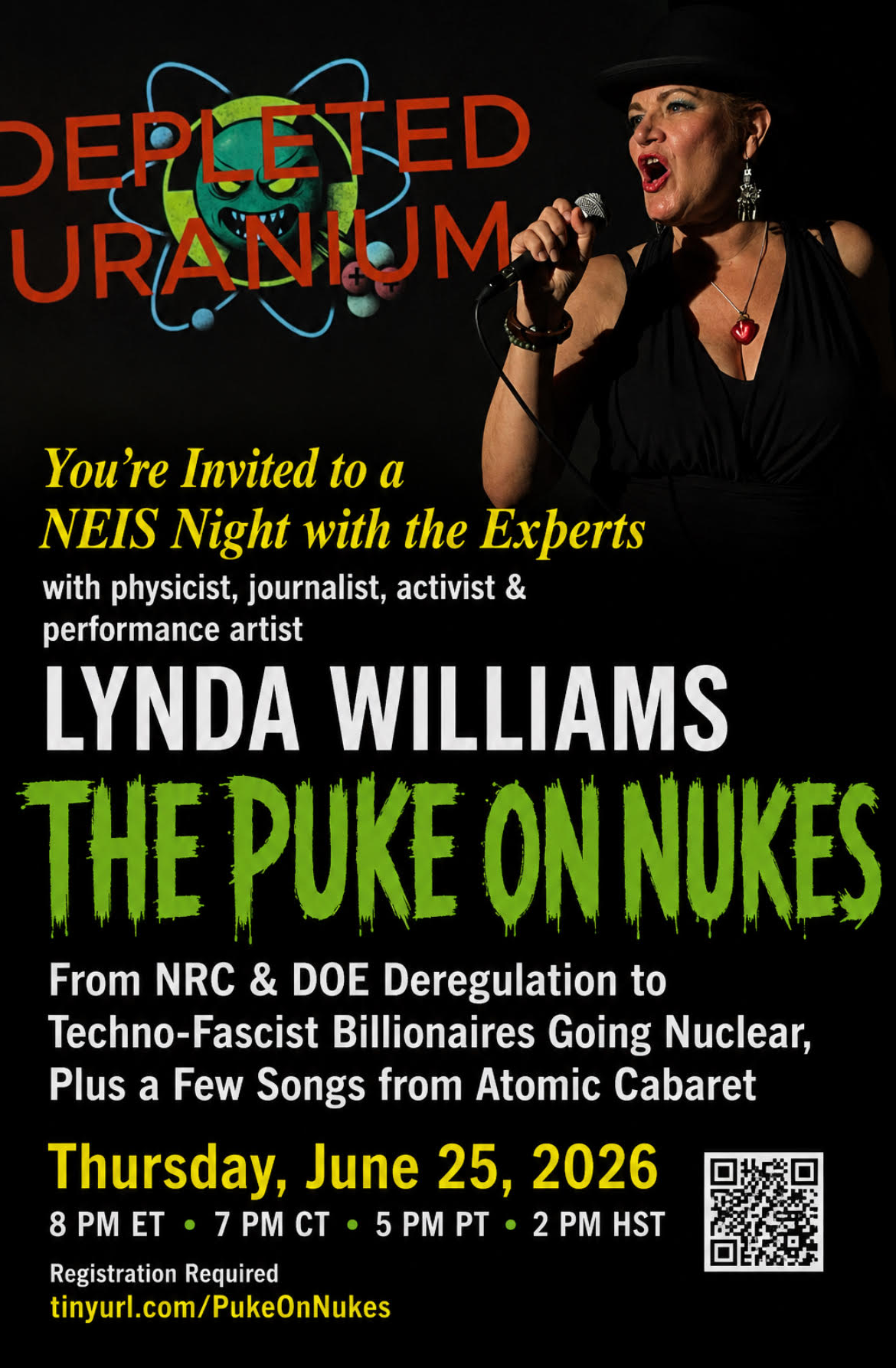
25 June- THE PUKE ON NUKES
Thursday, June 25, 2026
7pm Central Time (8pm ET, 6pm MT, 5pm PT) UTC – 5
From NRC & DOE Deregulation to Techno-Fascist Billionaires Going Nuclear, Plus a Few Songs from Atomic Cabaret REGISTER
26 June – Radiation Trainwreck at the NRC / Join the Protect Better Campaign – https://us02web.zoom.us/meeting/register/4ZlZ5_qLSHGiLSCg8FF6Bg#/registration
1st July – Webinar Waste of Space: The Environmental Harm of Military and Civil Space Activity st July, 7 pm

Report Launch Online: We are seeing an increasing exploitation of space for military and commercial purposes. This must change.

Protect Sazan Island from the Trump family! https://secure.avaaz.org/campaign/en/protect_sazan_island_from_the_trump_family_loc/?bqFCVab&v=174511&cl=22707147157&_checksum=5e9dde668860e8231c33699735e16a1fbf22ab2cb01da50c999fe8732b9775ef&utm_source=email&utm_medium=blast_email&utm_campaign=174511


Cuba Is Not a Failed State – It Is a Besieged State
PETITION: “Global Appeal to Endorse Palestinian Right of Return of Refugees”
To see nuclear-related stories in greater depth and intensity – go to https://nuclearinformation.wordpress.com
-
Archives
- June 2026 (241)
- May 2026 (306)
- April 2026 (356)
- March 2026 (251)
- February 2026 (268)
- January 2026 (308)
- December 2025 (358)
- November 2025 (359)
- October 2025 (376)
- September 2025 (257)
- August 2025 (319)
- July 2025 (230)
-
Categories
- 1
- 1 NUCLEAR ISSUES
- business and costs
- climate change
- culture and arts
- ENERGY
- environment
- health
- history
- indigenous issues
- Legal
- marketing of nuclear
- media
- opposition to nuclear
- PERSONAL STORIES
- politics
- politics international
- Religion and ethics
- safety
- secrets,lies and civil liberties
- spinbuster
- technology
- Uranium
- wastes
- weapons and war
- Women
- 2 WORLD
- ACTION
- AFRICA
- Atrocities
- AUSTRALIA
- Christina's notes
- Christina's themes
- culture and arts
- Events
- Fuk 2022
- Fuk 2023
- Fukushima 2017
- Fukushima 2018
- fukushima 2019
- Fukushima 2020
- Fukushima 2021
- general
- global warming
- Humour (God we need it)
- Nuclear
- RARE EARTHS
- Reference
- resources – print
- Resources -audiovicual
- Weekly Newsletter
- World
- World Nuclear
- YouTube
-
RSS
Entries RSS
Comments RSS
 nuclear-news