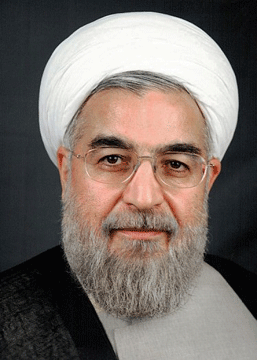
New US sanctions aim to kill Iran nuclear deal – expert https://en.trend.az/iran/nuclearp/2781079.html26 July 2017 Baku, Azerbaijan, By Farhad Daneshvar – Trend:
The US decision to impose fresh sanctions on Iran is a violation of a nuclear deal reached in 2015 between Tehran and the six major powers including the United States, a Norway-based Iranian financial analyst told Trend.
Elaborating on the recent decision by US House of Representatives to slap new sanctions on Iran, Mehrdad Seyed Asgari said that the new sanctions provide the US with a chance to covertly kill or avert the nuclear accord.
In this particular case aborting the deal means that the US will refuse to properly implement the articles of the Joint Comprehensive Plan of Action (JCPOA aka nuclear deal) aimed at placing the administration of President Hassan Rouhani under tremendous pressure.
Sanctions have been imposed on Iran with an aim to divide the country’s economic system in two parts of “white and black”, he mentioned.
Since the American lawmakers believe that sanctions work as a powerful tool, they appear to continue increasing pressure on Iran through introducing new sanctions.
The recent bill passed by the US House of Representatives on introducing new sanctions on Iran is very likely to become a law, he concluded.
The lawmakers voted overwhelmingly on Tuesday to slap new sanctions on Iran, Russia and North Korea.
The legislation in order to become a law still needs to be signed by President Donald Trump
July 28, 2017
Posted by Christina Macpherson |
Iran, politics international, USA |
Leave a comment
 The Ferret 18th July 2017, On 10 July 2017, Mordechai Vanunu was given a two-month suspended jail
sentence by Jerusalem Magistrate’s Court. Vanunu is a former nuclear
technician at the Negev Nuclear Research Centre in Dimona, Israel, who
served an 18-year prison sentence for revealing information about
Israel’s atomic program in 1986.
He was sentenced earlier this month for
violating the conditions of his release from prison, having met with
foreigners in recent years. After his release from jail in 2004, Israel
banned Vanunu from travelling abroad or speaking with foreigners without
approval, alleging he has more details to divulge on the Dimona atomic
reactor.
Billy Briggs has been to Jerusalem twice to interview Vanunu. In
2005, Vanunu was arrested three days after they met and charged with
speaking to foreigners and violating the conditions of his parole. https://theferret.scot/mordechai-vanunu-nuclear-israel/
July 26, 2017
Posted by Christina Macpherson |
Israel, politics |
1 Comment
More certain is the fact that the danger has not entirely passed. With dozens of Islamic State stragglers still loose in the city, U.S. officials requested that details about the cobalt’s current whereabouts not be revealed.
They also acknowledged that their worries extend far beyond Mosul. Similar equipment exists in hundreds of cities around the world, some of them in conflict zones.
“Nearly every country in the world either has them, or is a transit country” through which high-level radiological equipment passes
 How ISIS nearly stumbled on the ingredients for a ‘dirty bomb’, WP, By Joby Warrick and Loveday Morris July 22 On the day the Islamic State overran the Iraqi city of Mosul in 2014, it laid claim to one of the greatest weapons bonanzas ever to fall to a terrorist group: a large metropolis dotted with military bases and garrisons stocked with guns, bombs, rockets and even battle tanks.
But the most fearsome weapon in Mosul on that day was never used by the terrorists. Only now is it becoming clear what happened to it.Locked away in a storage room on a Mosul college campus were two caches of cobalt-60, a metallic substance with lethally high levels of radiation. When contained within the heavy shielding of a radiotherapy machine, cobalt-60 is used to kill cancer cells. In terrorists’ hands, it is the core ingredient of a “dirty bomb,” a weapon that could be used to spread radiation and panic.
Western intelligence agencies were aware of the cobalt and watched anxiously for three years for signs that the militants might try to use it. Those concerns intensified in late 2014 when Islamic State officials boasted of obtaining radioactive material, and again early last year when the terrorists took over laboratories at the same Mosul college campus with the apparent aim of building new kinds of weapons.
In Washington, independent nuclear experts drafted papers and ran calculations about the potency of the cobalt and the extent of the damage it could do. The details were kept under wraps on the chance that Mosul’s occupiers might not be fully aware of what they had.
Iraqi military commanders were apprised of the potential threat as they battled Islamic State fighters block by block through the sprawling complex where the cobalt was last seen. Finally, earlier this year, government officials entered the bullet-pocked campus building and peered into the storage room where the cobalt machines were kept.
They were still there, exactly as they were when the Islamic State seized the campus in 2014. The cobalt apparently had never been touched.
“They are not that smart,” a relieved health ministry official said of the city’s former occupiers.
Why the Islamic State failed to take advantage of its windfall is not clear. U.S. officials and nuclear experts speculate that the terrorists may have been stymied by a practical concern: how to dismantle the machines’ thick cladding without exposing themselves to a burst of deadly radiation.
More certain is the fact that the danger has not entirely passed. With dozens of Islamic State stragglers still loose in the city, U.S. officials requested that details about the cobalt’s current whereabouts not be revealed.
They also acknowledged that their worries extend far beyond Mosul. Similar equipment exists in hundreds of cities around the world, some of them in conflict zones.
“Nearly every country in the world either has them, or is a transit country” through which high-level radiological equipment passes, said Andrew Bieniawski, a vice president for the Washington-based Nuclear Threat Initiative who once led U.S. government efforts to safeguard such materials.
“This,” he said, “is a global problem.”
A lethal dose in three minutes
The worries began within hours of the Islamic State’s stunning blitz into Iraq’s second-largest city. As TV networks showed footage of triumphant terrorists parading through Mosul’s main thoroughfares, intelligence agencies took quiet inventory of the vast array of military and material wealth the Islamist militants had suddenly acquired. The list included three Iraqi military bases, each supplied with U.S.-made weapons and vehicles. It also included bank vaults containing hundreds of millions of dollars in hard currency, as well as factories for making munitions and university laboratories for mixing chemicals used in explosives or as precursors for poison gas.
U.S. officials also were aware that the Islamic State had gained control of small quantities of natural or low-enriched uranium — the remnants of Iraq’s nuclear projects from the time of Saddam Hussein’s presidency — as well as some relatively harmless radioactive iridium used in industrial equipment.
But a far bigger radiological concern was the cobalt. Intelligence agencies knew of the existence in Mosul of at least one powerful radiotherapy machine used for cancer treatment, one that could potentially provide the Islamic State with a potent terrorist weapon.
Outside experts were becoming aware of the threat as well…..
Leaders of the Islamic State and al-Qaeda are known to have sought materials for a dirty bomb, a threat that has added urgency to efforts by U.S. agencies and private groups to improve security for machines with heavy concentrations of cobalt-60, or other radioactive elements such as cesium-137, which comes in a powdery form that is even easier to disperse.
The machines are a necessary fixture in many cancer clinics around the world, but in Western countries efforts are underway to replace the most dangerous models with new technology that cannot be easily exploited by terrorists, said Bieniawski, the former Energy Department official. His organization, the Nuclear Threat Initiative, has raised money to try to speed up the transition, but for now, he said, older machines such as the ones in Mosul are commonly found in developing countries where the risk of theft or terrorism is greatest.
“The ones we see overseas are in the highest category — the highest levels of curies — and they are also portable,” he said. “They are exactly the ones we are most worried about.”
Morris reported from Beirut. Mustafa Salim in Irbil, Iraq, contributed to this report. https://www.washingtonpost.com/world/national-security/how-isis-nearly-stumbled-on-the-ingredients-for-a-dirty-bomb/2017/07/22/6a966746-6e31-11e7-b9e2-2056e768a7e5_story.html?utm_term=.564e04f5c470
July 24, 2017
Posted by Christina Macpherson |
Iraq, safety, weapons and war |
Leave a comment

 Iran nuclear deal still under threat — US must keep its end of the bargain, http://thehill.com/blogs/pundits-blog/foreign-policy/343139-iran-nuclear-deal-still-under-threat-us-must-keep-its-end BY BERNADETTE STADLER, 07/21/17
Earlier this week, the Trump administration certified for a second time that Iran remains in compliance with the Joint Comprehensive Plan of Action (JCPOA), more commonly known as the Iran Deal. However, media reportsindicate that  the president was deeply reluctant to certify Iran’s compliance and may not be willing to do so in the future.
The administration is required to certify Iran’s compliance every 90 days, and if it fails to do so, Congress is given a 60-day period during which it can re-impose sanctions or abandon the deal altogether. Some in Congress would jump at this opportunity to kill the deal. But if the United States violates or walks away from the nuclear deal, it will alienate our allies and partners who helped us negotiate the agreement, allow Iran to resume its nuclear weapons program, and damage U.S. national security.
Iran’s nuclear activity was the subject of much concern before the JCPOA effectively constrained the risk of an Iranian nuclear weapon. Before formal negotiations were started, it is estimated that Iran was mere weeksaway from “breaking out,” or having enough fissile material to create a nuclear weapon. Now, Iran is more than a year away from breaking out.
Iran’s obligations under the deal have been strict and verifiable. Under the agreement, Iran has forfeited its stockpile of medium-enriched uranium and has reduced its stockpile of low-enriched uranium by about 97 percent. It has removed two-thirds of its centrifuges, which are used to enrich uranium, and is prohibited from enriching uranium above 3.67 percent — far below the 90 percent enrichment required for use in nuclear weapons.
The JCPOA also blocks Iran’s pathway to a plutonium weapon by requiring Iran to render its plutonium reactor inoperable, redesign the Arak facility so that it cannot produce weapons-grade plutonium, and send all radioactive waste out of the country so that it cannot be reprocessed to create plutonium.
Critics of the deal have argued that it gives Iran a “clear path to the bomb” because some of the deal’s provisions will be phased out after a specified number of years. However, even after all of the so-called “sunset clauses” have expired, Iran has indefinitely signed up to the Additional Protocol, an agreement which permanently allows the International Atomic Energy Agency (IAEA) to conduct intrusive inspections on Iran’s nuclear facilities.
Iran’s compliance with the deal has been consistently verified by the IAEA and the intelligence agencies of other countries interested in the agreement. Even initial critics of the JCPOA, like Secretary of Defense James Mattis and Senate Foreign Relations Committee Chair Senator Bob Corker, agree that it is in the United States’ national security interest to adhere to it.
Still, as President Trump’s reluctance to certify Iran’s compliance illustrates, the deal remains under threat. In addition to the question of certifying compliance, the Trump administration is conducting an interagency review of the deal to determine whether to continue suspending nuclear-related sanctions on Iran. If the Trump administration decides to stop waiving these sanctions, it will constitute a material breach of the deal.
Similarly, Congress is in the process of passing a bill that would authorize sanctions against Iran for its ballistic missile tests and sponsorship of terrorism, neither of which are addressed by the nuclear deal. Negotiators intentionally excluded these issues from the JCPOA, because they correctly understood that the nuclear issue was the first and most pressing issue at hand. Congress can and should address Iran’s missile program and support for terrorism, but must be careful to do so in a way that will not violate the nuclear deal. Reapplying waived sanctions under the guise of targeting new activities or legislating well-intentioned but poorly thought-out mandates for how the Trump administration must punish Iran will jeopardize the agreement.
There is no doubt that intentionally abandoning or accidentally violating the JCPOA will be detrimental to U.S. national security. Iran would be able to keep billions of dollars in sanctions relief that it received as part of the deal, and could choose to block IAEA inspections at its nuclear facilities. The United States could reintroduce sanctions against Iran, but our allies have indicated they have no interest in renegotiating or reapplying sanctions. The United States would be on its own and Iran could restart its race to a nuclear bomb.
There is only one good option: Uphold our end of the Iran deal while closely watching to ensure that Iran upholds theirs. We can and should combat Iran’s destabilizing activities, but not at the cost of a nuclear deal that is making the United States and the world safer.
Bernadette Stadler is a Herbert Scoville Jr. Peace Fellow at the Center for Arms Control and Non-Proliferation, where she works on issues including North Korea’s nuclear and missile program, U.S.-Russian relations, and the Iran nuclear agreement.
July 22, 2017
Posted by Christina Macpherson |
Iran, politics international, USA |
Leave a comment
 Iran skips opportunity to upset nuclear deal over U.S. sanctions: sources VIENNA (Reuters) 22 July 17 – Iran decided on Friday for the second time since January not to upset its nuclear pact with six world powers, two informed sources said, despite public statements by Tehran accusing the United States of violating the deal.
 Iranian President Hassan Rouhani said on Wednesday new U.S. economic sanctions imposed against Iran contravened the nuclear accord reached with world powers in 2015 and he pledged Tehran would “resist” them while respecting the deal itself.
The Trump administration slapped new sanctions on Iran on Tuesday over its ballistic missile program and said Tehran’s “malign activities” in the Middle East undercut any “positive contributions” coming from the nuclear accord, which was reached during the Obama administration.
Iran can use the so-called Joint Commission meetings held every three months in Vienna to trigger a formal dispute resolution mechanism set out for cases where one party feels there is a breach of the deal……
A source with knowledge of the matter said “the Iranians did complain a lot and the Russians supported them, but they won’t play along to Washington’s game and be turned into killjoys.”
This source, and another one with knowledge of Friday’s meeting, said Iran did not use the plenary session comprised of envoys from Iran, the United States, Russia, China, France, Britain, Germany and the EU to start a dispute resolution.
This mirrored Tehran’s actions in January at a previous so-called Joint Commission meeting, which is held in Vienna every three months, when Iranian officials opted not to escalate a stand-off over the extension of other U.S. sanctions…….https://www.reuters.com/article/us-iran-nuclear-usa-idUSKBN1A6248
July 22, 2017
Posted by Christina Macpherson |
Iran, safety |
Leave a comment
Iran nuclear deal is working
The Editorial Board, USA TODAY July 20, 2017 Facts get in the way of Trump’s plan to dismantle Obama’s agreement: Our view “…..This week, for the second time since taking the oath of office, Trump grudgingly stood by the deal Iran reached with the United States and five other nations in 2015. He certified that Tehran was complying with strict terms that bar the nation from creating enough fissile material for building a nuclear weapon.
Why the turnaround? The answer is simple: The agreement is working.
With a few minor exceptions that have nothing to do with proliferation — each quickly corrected when discovered by inspectors — Tehran has abided by limits on stockpiles of low-enriched uranium, heavy water for nuclear plant operation and centrifuges for enriching uranium. Last year, for example, Iran poured concrete into the core of its only heavy-water plant capable of producing weapons-grade plutonium, ruining it..
All these matters and more are monitored continuously and stringently by inspectors with the International Atomic Energy Agency. They use permanently placed cameras and electronic seals to track whether valves, stockpiles or other indicators have been altered. They conduct in-person inspection of 19 declared sites and, despite Iranian officials claiming that military bases are off limits, can see any other location where they suspect something might be amiss. Should Iran object, and a negotiation process that can take no longer than 24 days fails to satisfy inspectors’ demands, the nuclear deal can be abrogated.
Iran has used the unfreezing of assets to re-engage the world’s economy, including with a $3 billion Boeing airliner deal that could create or sustain 18,000 American jobs.
To be sure, the Iran nuclear deal has its flaws. Iran can
resume its nuclear programwithin 15 years. The release of frozen assets has allowed the underwriting of Tehran’s militancy. Predictions that the deal would moderate the regime in Tehran have proved naive…….
bad actor without nuclear weapons is better than a bad actor with nuclear weapons. Imagine how much safer the world would be if a similar deal had been struck with North Korea years ago, before it could threaten to incinerate part of the United States. https://www.usatoday.com/story/opinion/2017/07/20/iran-nuclear-deal-working-editorials-debates/488460001/
July 21, 2017
Posted by Christina Macpherson |
Iran, politics international |
Leave a comment
 As Relations Worsen, Iran Says U.S. Sanctions May Violate Nuclear Deal, NYT, By DAVID E. SANGER and RICK GLADSTONEJ ULY 18, 2017Mohammad Javad Zarif, the foreign minister of Iran, charged on Tuesday that the Trump administration’s attempt to reimpose sanctions on his country was a violation of the accord signed two years ago that sharply limited Iran’s ability to produce nuclear material in return for its reintegration into the world economy.
July 19, 2017
Posted by Christina Macpherson |
Iran, politics international, USA |
Leave a comment
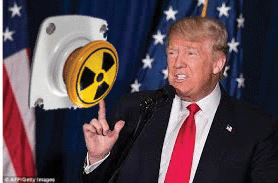 US sanctions 18 Iranian entities day after certifying nuclear deal compliance
Trump administration targets groups and individuals over non-nuclear behavior, after confirming that Iran is following nuclear agreement but breaching its ‘spirit’, Guardian, 18 Jul 17, The Trump administration announced on Tuesday new sanctions on 18 Iranian individuals, groups and networks over non-nuclear behavior, such as support for ballistic missiles development.
The move came a day after the administration certified to Congress that Iran is technically complying with the nuclear deal and can continue enjoying nuclear sanctions relief.
The treasury department is targeting seven groups and five people that aided Iran’s military or its elite Revolutionary Guard. The sanctions also target what the US says is a transnational criminal group based in Iran and three people associated with it, and the state department is also targeting two more groups associated with Iran’s ballistic missiles program.
The sanctions freeze any assets the targets may have in the US and prevent Americans from doing business with them.
Late on Monday, the administration insisted that Tehran would face consequences for breaching “the spirit” of the nuclear deal. Donald Trump, who lambasted the 2015 pact as a candidate, has given himself more time to decide whether to dismantle the deal or let it stand.
Officials said the US was working with allies to try to fix the deal’s flaws, including the expiration of some nuclear restrictions after a decade or more. The officials also signalled the new sanctions.
Trump, secretary of state Rex Tillerson and “the entire administration judge that Iran is unquestionably in default of the spirit” of the agreement, one official said. That assessment carries no legal force; Trump’s certification that Iran is technically complying clears the way for sanctions to remain lifted.
Monday’s late-night announcement capped a day of frenzied, last-minute decision-making by the president, exposing deep and lingering divisions within his administration about how to deal with a top national security issue.
National security advisers, including Tillerson and defense secretary James Mattis, recommended Trump preserve the deal for now in a meeting last Wednesday, according to the New York Times. An anonymous official told the Times that Trump spent 55 minutes of the meeting saying he did not want to certify Iran’s compliance. On Monday, a planned press briefing was cancelled at short notice as internal White House arguments continued.
Since early last week, Trump’s administration had been prepared to make the certification, a quarterly requirement. Trump first told Congress in April that Iran was indeed complying. With no final decision on his broader Iran policy, the White House had planned to let the status quo stand for another three months.
Iran will continue receiving the same sanctions relief that it did under former president Barack Obama………
Scuttling the deal would put further distance between Trump and foreign leaders who are already upset over his move to withdraw from the Paris global climate change accord. Other powers that brokered the nuclear deal along with the US have said there’s no appetite for renegotiating it. https://www.theguardian.com/world/2017/jul/18/iran-is-complying-with-nuclear-deal-but-is-in-default-of-its-spirit-says-us
July 19, 2017
Posted by Christina Macpherson |
Iran, politics international, USA |
Leave a comment
Macron assures Israel of ‘vigilance’ on Iran nuclear pact, https://www.thelocal.fr/20170716/macron-assures-israel-of-vigilance-on-iran-nuclear-pact French President Emmanuel Macron on Sunday assured visiting Israeli Prime Minister Benjamin Netanyahu of his “vigilance” regarding the 2015 nuclear accord reached by Western powers with Iran.
Netanyahu “expressed his concerns regarding the Iranian regime,” Macron told reporters with Netanyahu at his side.
“I assured him of our vigilance, in particular over the strict implementation of the accord… in all its provisions.”
Netanyahu was a vocal opponent of the deal, which saw sanctions against Iran eased in return for curbs on its nuclear programme. The French presidency said Sunday’s meeting, the first official talks between Macron and Netanyahu, would be an occasion to “signal our lack of complacency towards Iran”.
Israel was rattled last month when Tehran launched fired six missiles from western Iran targeting bases of the Islamic State group in retaliation for attacks in Tehran that killed 17 people in the first Isis-claimed operations in the country.
Netanyahu has repeatedly said Iran is a threat to the Jewish state, the Middle East and potentially the world.
July 17, 2017
Posted by Christina Macpherson |
France, Israel, politics international |
Leave a comment
Trump likely to say Iran complying with nuclear deal: U.S. official, WASHINGTON (Reuters) by Steve Holland and Jonathan Landay-13 July 17 U.S. President Donald Trump is “very likely” to state that Iran is adhering to its nuclear agreement although he continues to have reservations about it, a senior U.S. official said on Thursday.
Under U.S. law, the State Department must notify Congress every 90 days of Iran’s compliance with the so-called Joint Comprehensive Plan of Action (JCPOA). Trump has a congressionally mandated deadline of Monday to decide.
The landmark 2015 deal struck with Iran by the United States, France, Britain, Russia, China and Germany is aimed at preventing Tehran from developing a nuclear weapon by imposing time-limited restrictions and strict international monitoring on its nuclear program. In return, Tehran won relief from punishing international economic sanctions.
If Trump does state Iran is in compliance, it would be his second time since taking office in January to do so despite his promise during the 2016 campaign to “rip up” what he called “the worst deal ever.”…….https://www.reuters.com/article/us-usa-trump-iran-idUSKBN19Y226
July 14, 2017
Posted by Christina Macpherson |
Iran, politics international, USA |
Leave a comment
 Egypt to sign nuclear power plant deal with Russia| 2017-07-12 Editor: Mu Xuequan CAIRO, July 11 (Xinhua) –– Egypt intends to finalize a deal with Russia to build four nuclear power stations in Egypt “soon,” said Minister of Parliamentary Affairs Omar Marwan on Tuesday, state-run Ahram news reported.
“The government has no intention of backtracking the deal because it’s very important to Egypt,” said Marwan in a press conference.
“The government wanted to ensure that the safety measures will be in place before signing the deal, so the stations would cause no harmful radiation in the future,” he added.
Egypt and Russia signed an agreement in 2015 to build four nuclear power stations in Egypt by 2022.
However, the final deal hasn’t been signed yet between the two sides……http://news.xinhuanet.com/english/2017-07/12/c_136436355.htm
July 14, 2017
Posted by Christina Macpherson |
Egypt, marketing, Russia |
Leave a comment
 Suspects remanded in Israel-Germany submarine deal probe, JERUSALEM (Reuters) by Maayan Lubell, JULY 10, 2017- Three suspects were remanded in custody and a fourth ordered held under house arrest on Monday after Israeli police questioned six people on suspicion of corruption in a $2 billion deal to buy submarines and patrol craft from Germany.
The 2016 deal has been under public scrutiny since it emerged that Prime Minister Benjamin Netanyahu’s personal lawyer also represented the local agent of the German conglomerate ThyssenKrupp Marine Systems set to build the vessels.
The six, who were questioned under caution on suspicion of bribery, fraud and tax offences, include public officials and private citizens, police spokeswoman Luba Samri said. No further details were immediately available.
German authorities also are looking into the deal.
In June, German magazine Der Spiegel reported Germany’s national security council had approved the sale of the three nuclear-capable submarines to Israel and that authorities inserted a clause into the contract giving it the right to void it if corruption allegations were proven…… https://www.reuters.com/article/us-israel-corruption-germany-idUSKBN19V15U?il=0
July 14, 2017
Posted by Christina Macpherson |
Germany, Israel, secrets,lies and civil liberties |
Leave a comment
Historic First: Solar Plant Illuminates Syrian Refugee Camp, Vastly Improving Quality of Life, http://www.environews.tv/world-news/historic-1st-solar-plant-illuminates-syrian-refugee-camp-vastly-improving-quality-life/ (EnviroNews World News) by Julia Travers May 27, 2017 — Azraq, Jordan — The newly activated two-megawatt solar photovoltaic power plant at the Azraq refugee camp in Jordan is the first refugee camp in the world to be powered by a renewable energy facility. The plant started running May 17, 2017, and will provide free energy to about 20,000 of the 36,000 refugees in the area – all victims of the Syrian conflict, now in its seventh year.
There are close to 15 million refugees in the world, and the integration of free renewable energy into their stressful lives is invaluable. “Lighting up the camp is not only a symbolic achievement; it provides a safer environment for all camp residents, opens up [livelihood] opportunities, and gives children the chance to study after dark. Above all, it allows all residents of the camps to lead more dignified lives,” said United Nations High Commission for Refugees (UNHCR) Deputy High Commissioner, Kelly T. Clements.
“Before this, when we cooked a meal we had to throw the leftovers away because there was no safe way to store food. When we got too hot, we had to pour water on our clothes to keep cool. Now we can listen to music or have a cold glass of water, and daily life no longer ends when the sun sets,” Fatima, a 52-year-old from Damascus who lives in the camp with her two adult sons, told the UNHCR.
UNHCR partnered with the Government of Jordan, Jordanian solar company Mustakbal, and IKEA to build this camp. The IKEA Foundation is UNHCR’s largest private sector partner and fully funded the solar installation through their “#BrighterLives4Refugees” campaign. The endeavor raised $9.6 million for the cause by donating a portion of IKEA’s LED light sales in 2015.
20,000 of the individuals now living in the desert camp have had some access to non-renewable electricity since January 2017, and they now receive additional power from the sun. The new solar station is connected to Jordan’s grid and is intended to provide electricity to the remaining 16,000 refugees at Azraq by early 2018. The solar initiative will save UNHCR $1.5 million a year, which it can devote to other refugee services, while reducing annual CO2 emissions by roughly 2,370 tons.
The 500 new solar LED streetlights make the camp safer at night, which was especially concerning for women and girls, UNHCR relayed. Mustakbal also provided training and employment to over 50 refugees. “I wasn’t able to finish my education because of the war and then exile, but this has given me a practical skill that I can hopefully use in the future. If we return to Syria, the infrastructure is all destroyed, but this is a technology that we could use to rebuild,” said Mohammad, 20, who was forced to leave school at age 14.
July 10, 2017
Posted by Christina Macpherson |
climate change, Jordan, renewable |
Leave a comment
The Iran nuclear deal faces ‘death by a thousand cuts’, The Iran Project, Bloomberg, Ladane Nasseri, 30 June 17 : President Donald Trump decided against killing off the Iran nuclear deal in a day-one spectacular. It may face a lingering death instead.
Trump’s administration sends out mixed signals on many issues, but on the need for a tougher line against Iran, it speaks with one voice. And words have been accompanied by action. In Syria, the U.S. military is directly clashing with Iranian allies. In Saudi Arabia, Trump performed a sword-dance with Iran’s bitterest foes. In the Senate, new sanctions on the Islamic Republic sailed through with near-unanimous approval.
The 2015 accord reined in Iran’s nuclear program, and offered the Islamic Republic a route back to the mainstream of the world economy. It was the fruit of many years of work by many governments. Its breakdown would likely add to turbulence in the Middle East, and impose new strains on America’s ties with Europe. Yet there’s a serious risk that the deal could unravel, according to one former U.S. official who was intimately involved.
“Death by a thousand cuts” is what former Deputy Secretary of State William J. Burns fears could be the fate in store for the agreement he helped negotiate. Burns, who led the U.S. team involved in secret preliminary talks, says he’s concerned by “the chipping away of trust in the agreement from all sides.’’
“It’s a fragile enough environment as it is,” he said in an interview. “It’s easy to back yourself into a collision of one kind or another.”
Failed Approach’
The U.S. has slapped two additional sets of sanctions on Iran this year, tied to its ballistic missile program and alleged support of terrorism. The lifting of wider international curbs in January 2016, as part of the nuclear deal, has allowed Iran to resume oil sales to Europe, for example. But many American restrictions remain in place, especially on financial flows. Major banks, wary of falling foul of U.S. policy, have stayed clear of Iran. Several Western companies are watching to see what the administration does next.
The prevailing view in Washington seems to be “to let the agreement remain in place, but to press on Iran so it doesn’t get the commercial advantages expected,” said Alireza Nader, a senior analyst at Rand Corp.
The aerospace industry is a good example. …..
Faced with a congressional requirement to report on the nuclear agreement, the Trump administration grudgingly certified in April that Iran is keeping its end of the deal. But Secretary of State Rex Tillerson added that the accord only delayed Iran’s ambitions to gain nuclear weapons — “the same failed approach of the past” — and didn’t curb its role in sponsoring terrorism.
‘Blame the Other’
Iran likewise says the U.S. is violating the agreement’s spirit, if not its letter. “Disregard for Iran’s genuine security concerns, either through deliberate changing of the military-security balance in the region, or by stoking Iranophobia in the region and beyond,” would put the hard-won gains of the deal at risk, Ali Akbar Salehi, who helped negotiate it as head of Iran’s atomic energy agency, wrote in a Guardian op-ed last week. “Engagement is not a one-way street.”
“Each side is now waiting to blame the other for undermining the deal,” Nader said….
The mood in Europe is different……
Trump’s coziness with the new Saudi leadership and lack of interest in engaging with Iran adds to evidence that his administration’s strategy “essentially is to try to kill the deal while appearing to uphold it,’’ said Trita Parsi, author of “Losing an Enemy: Obama, Iran and the Triumph of Diplomacy” and an Iranian-American leader who advocated for the nuclear accord.
“For the long-term durability of the deal you needed to have at least a slightly positive trajectory of U.S.-Iran relations,” Parsi said. “Right now, nothing positive is happening.” http://theiranproject.com/blog/2017/06/30/iran-nuclear-deal-faces-death-thousand-cuts/
July 1, 2017
Posted by Christina Macpherson |
Iran, politics international |
Leave a comment
US military could be smuggling uranium out of Afghanistan, locals say https://www.timesca.com/index.php/news/18272-us-military-could-be-smuggling-uranium-out-of-afghanistan-locals-say, 30 June 2017 KABUL (TCA) — A member of the Afghan parliament from Helmand Province and local residents have told Russia’s Sputnik Afghanistan news agency that the US military could be smuggling uranium, as well as other rare elements and natural resources, out of the village of Khanashin in the country’s southern province of Helmand.
Helmand is one of the most turbulent provinces in Afghanistan, and is a center of the country’s mining industry and the shadowy drug-smuggling industry. There are four deposits of uranium, magnetite, apatite and carbonite in the south of this region, in the southern village of Khanashin, just 160 km from the border with Pakistan.
According to earlier geological exploration works, the province has lucrative uranium and thorium deposits. It also contains vast resources of tantalum and other rare elements.
According to NASA estimates, there are also deposits of copper, iron and other metals worth of $81.2 billion. Until now, there was no industrial uranium mining in Afghanistan. During Taliban rule, the captives did all the mining.
Deputies of the lower chamber of the country’s parliament from the province of Helmand have repeatedly said that much evidence exists that uranium from Khanashin is being smuggled out in US cargo planes, Sputnik Afghanistan quotes local media reports as saying.
The deputies said that the US military have set up their military base near the uranium mines and smuggle uranium through it.
The deputies said that since the US military intervention back in 2001, the Americans and their British allies have concentrated their bases in this particular province as the largest uranium resources are concentrated there. The uranium deposit in Khanashin was previously controlled by the Taliban. However since the foreign troops set up their air bases and air fields, which are working around the clock, in the neighboring settlement of Garmsi, the deposit has been since controlled by them.
Local residents confirmed to Sputnik Afghanistan that at nights, the US military are smuggling out uranium in trucks and then in cargo planes.
July 1, 2017
Posted by Christina Macpherson |
Afghanistan, politics international, secrets,lies and civil liberties, USA |
1 Comment