Dreadful’ future awaits world if nuclear deal collapses: Iran’s Salehi, http://www.presstv.com/DetailFr/2018/06/22/565761/Salehi-Oslo-Forum-JCPOA-US Iran’s nuclear chief says the Middle East and the entire world will face a “dreadful” future if a 2015 multilateral nuclear agreement Tehran signed with the P5+1 group of countries falls apart.
Head of the Atomic Energy Organization of Iran (AEOI) Ali Akbar Salehi made the remarks on Friday in an address to an expert panel held on the sidelines of the Oslo Forum in the presence of Norwegian and Omani foreign ministers.
He said the international community showed a severe reaction to the United States’ “unwise and baseless” decisions, including its move to withdraw from the nuclear agreement, officially known as the Joint Comprehensive Plan of Action (JCPOA).
“If the European Union and other countries supporting the JCPOA do not demonstrate their practical opposition to the US policies in due time, they will face a dreadful future and unprecedented insecurity in the region and the world because of the JCPOA’s collapse,” AEOI chief said.
US President Donald Trump announced on May 8 that Washington was walking away from the nuclear agreement, which was reached between Iran and the five permanent members of the UN Security Council – the United States, Britain, France, Russia and China – plus Germany.
Trump also said he would reinstate US nuclear sanctions on Iran and impose “the highest level” of economic bans on the Islamic Republic.
Under the JCPOA, Iran undertook to put limits on its nuclear program in exchange for the removal of nuclear-related sanctions imposed against Tehran.
Since the US president pulled Washington out of the historic nuclear deal, European countries have been scrambling to ensure that Iran gets enough economic benefits to persuade it to stay in the deal. The remaining parties have vowed to stay in the accord.
In a phone call with his French counterpart, Emmanuel Macron, on June 12, Iranian President Hassan Rouhani said the Islamic Republic will quit the multilateral nuclear agreement if it does not benefit from the deal after the US pullout.
“If Iran cannot enjoy the agreement’s benefits, it will be practically impossible to stay in it,” Rouhani said.
Elsewhere in his address, Salehi stressed the importance of holding dialogue among key regional players and once again reaffirmed the Islamic Republic’s readiness to help solve crises based on diplomatic approaches.
The Norwegian Foreign Ministry said on Wednesday that Oslo supports efforts by the European Union to safeguard the Iran nuclear deal, amid the bloc’s promises that it will protect it following the US withdrawal from it.
Oslo backs efforts by the EU to maintain the JCPOA, the Norwegian Foreign Ministry said after a meeting between Salehi and the Norwegian foreign minister, Ine Eriksen Søreide, in Oslo.
21 June 18, TEHRAN, Iran (AP) — Iran has announced a list of 15 demands for improving relations with the United States, including a U.S. return to the 2015 nuclear accord, in response to a similar list of demands made by Washington last month.
In an article in a state-owned newspaper Thursday, Foreign Minister Mohammad Javad Zarif called on the U.S. to stop providing arms to the “invaders of Yemen,” referring to Saudi Arabia, and to drop its opposition to the nuclear disarmament of Israel.
The article came in response to demands laid out in May by Secretary of State Mike Pompeo, who called for a wholesale change in Iran’s military and regional policies, threatening the “strongest sanctions in history” if it refused. The U.S. withdrew from the landmark nuclear agreement with world powers earlier that month.
Today, Almost 50 Years After The Original Richard Nixon-Golda Meir Understandings, Israel’s Nuclear Capability – Declared Or Not – Is A Solid Fact Recognized By All
To Understand The Ritual Of Presidential Letters, We Must Go Back To The Starting Point. In 1991, Aluf Benn Was The Reporter Who Revealed In Haaretz The Existence Of These Nuclear Understandings Going Back Years, Between Richard Nixon And Golda Meir.
In September 1969, When Meir Made Her First Visit To The U.S. As Prime Minister, She Reached An Array Of Understandings With Nixon That Removed Any Dispute Over The Nuclear Issue From The Agenda Between The Two Countries. The Understandings Concluded A Decade Of Cat-And-Mouse Between Them On This Issue.
Per The Understandings, The United States Accepts Israel’s Unique Nuclear Status, Will Not Press It To Join The Nuclear Non-Proliferation Pact And Will Defend It In International Forums. For Its Part, Israel Will Continue To Refer To Its Nuclear Capability As If Hidden; It Will Continue To Assert That It Will Not Be The First In The Region To Introduce A Nuclear Weapon.
The Nixon-Meir Understandings Were A Practical Arrangement That Solved Concrete Problems Weighing On Relations Between The Countries At The Time. The U.S. Already Knew That Israel Had Crossed Or Was Crossing The Nuclear Threshold, It Knew That Its Own Policy Of Trying To Stop This Had Failed, And It Recognized That It Had To Adjust Its Attitude Given The New Reality.
The U.S. Needed The Understandings So It Could Deliver Phantom Jets To Israel, And The Delivery Began That Same Month, After Negotiations The Year Before Over The Sale Had Involved A Harsh Confrontation Over The Nuclear Issue. Also, It Was Necessary To End The Yearly Visits By American Nuclear Inspectors To Dimona; By 1969, The Americans Realized They Couldn’t Reverse The New Nuclear Reality And That The Only Way To Minimize The Damage Was To Keep It Hidden.
Today, Almost 50 Years After The Original Understandings, Israel’s Nuclear Capability – Declared Or Not – Is A Solid Fact Recognized By All. Paradoxically, The Leaders Of This Nuclear Power Still Feel That They Need A Presidential Piece Of Paper To Confirm This.
Entous’ Revelations Illustrate Yet Again How Outdated The Nuclear Ambiguity Policy Is, Including The Israeli Ploy Whereby It’s Permissible For Anything To Be Written About Israel’s Nuclear Arsenal As Long As It’s Attributed To “Foreign Sources.” The Time Has Come For The Israeli Nuclear Issue To Be Handled Differently, Both At Home And Abroad. The Time Has Come For Post-Ambiguity.
The Writer Is A Professor Of Nonproliferation And Terrorism Studies At The Middlebury Institute Of International Studies.
TEHRAN – Referring to recent statistics released by a Stockholm-based research institute, Foreign Minister Mohammad Javad Zarif said all proven nuclear warheads stationed in the Middle East are entirely owned by the Zionist regime of Israel.
In a message in his Twitter account, Zarif denounced the Israeli regime for “howling incessantly” about Iran’s activities, while the regime itself owns all the 80 nuclear warheads in the Middle East.
“There are at least 80 nuclear warheads stationed in the Middle East. None are in Iran; rather, they’re at the fingertips of a warmonger who howls incessantly about fabricated Iranian ‘ambitions’,” Zarif said.
Donald Trump becomes fourth U.S. president to sign letter saying U.S. will not pressure Israel to forfeit its rumored nuclear capabilities, New Yorker reports • Obama aides failed to brief Trump officials on letter during transition, report says.
Israel Hayom StaffIsrael has managed to secure a written pledge from four successive U.S. presidents to safeguard its presumed nuclear deterrent, The New Yorker magazine reported on Monday.
According to uncorroborated reports in the foreign media, Israel has as many as 200 nuclear warheads as part of a presumed military nuclear program dating back to the 1960s. Israel has never publicly acknowledged these reports.
Israel has also pledged not to be the first nation to introduce nuclear weapons in the region.
According to Monday’s report, in the wake of the first Gulf War in the early 1990s, Israel felt that the unwritten understanding struck between President Richard Nixon and Prime Minister Golda Meir in the early 1970s to ensure Israel would never be compelled to denuclearize was insufficient.
Eventually, Israeli policymakers convinced President Bill Clinton to put the Nixon-Meir understandings into writing.
“The first iteration of the secret letter was drafted during the Clinton administration as part of an agreement for Israel’s participation in the 1998 Wye River negotiations with the Palestinians,” said the report, by The New Yorker’s Adam Entous.
“In the letter, according to former officials, President Bill Clinton assured the Jewish state that no future American arms-control initiative would detract from Israel’s deterrent capabilities, an oblique but clear reference to its [alleged] nuclear arsenal.”
The letter was later signed by President George W. Bush. But when President Barack Obama won office in 2008, Israel was concerned he would hold off on renewing the pledge.
“With Obama, we were all crazy,” an Israeli official was quoted in the report. A former U.S. official is quoted as saying that Obama’s advisers believed Israeli Prime Minister Benjamin Netanyahu was “paranoid” that the U.S. would try to take away Israel’s presumed nuclear weapons, but that “wasn’t our intent.”
Ultimately, Obama signed “an updated version of the letter.”
According to the report, efforts to renew the pledge when President Donald Trump assumed office initially stalled, when Israeli Ambassador to the United States Ron Dermer made the request in a surprise move in February 2017. When he came to the White House, the Trump officials said they needed more time, but the Israelis “wanted to limit who could take part in discussions of the letter, citing the need for secrecy.”
According to the report, part of the tensions then arose because the White House was not aware of the letters.
“The very existence of the letters had been a closely held secret. Only a select group of senior American officials, in three previous administrations, knew of the letters,” the report said.
When Trump became president, his aides “didn’t find any copies of the previous letters left behind by their predecessors. The documents had been sent to the archives.”
US Promised Saudis to ‘Kill Iran Nuclear Deal’ – AnalystSputnik News, 14 June18 Saudi Arabia made its defense cooperation with the US conditional on Washington exiting the 2015 nuclear deal with Iran, the founder of the Ibero-Persia consultancy firm has said.
“The large-scale US arms supplies to Saudi Arabia in May 2017 made it perfectly clear that the sanctions against Iran were coming back and the nuclear deal was dead,” Sharoj Habibi claimed in an interview with Sputnik Mundo.
According to Habibi, the contract for the delivery of delivery of $350 billion worth of US-made THAAD air defense missile systems to Riyadh was negotiated, among others, by President Trump’s son-in-law Jared Kushner.
“Obviously, if you let your son-in-law clinch such a deal, this big-time operation is bound to offer very lucrative bonuses,” Habibi noted adding that the Trump family could have earned a very comfortable, though undisclosed, commission from the deal.
He alleged that as part of the contract, the US authorities “promised to do everything possible to kill the nuclear agreement with Tehran, which made it possible for Iran to economically outpace Saudi Arabia and develop its gas producing sector. Iranian gas would effectively sideline America’s Middle Eastern ally, Saudi Arabia,” the expert said.
He added that because Riyadh’s ultimate goal is to ”control everything that is happening in the Middle East,” it needs to bring the US into play. With Donald Trump’s arrival inat the White House, he continued, the Saudis jumped on the occasion.
“Therefore, instead of calling Trump crazy or dumb, I would say that he is an unscrupulous or ruthless businessman,” Habibi noted.
During his May 2016 official visit to Saudi Arabia, President Trump signed off on a historic arms delivery deal with Riyadh to the tune of up to $350 billion.
Washington sees the agreement as a means of boosting the Gulf kingdom’s defense capabilities and supporting its efforts to counter terrorist groups operating in the region
…….Iran has been in full compliance with the terms of agreement as verified in 11 inspection reports of the International Atomic Energy Agency (IAEA).On June 8, 2018, President Trump announced that the United States was walking out of the nuclear agreement with Tehran, a decision that has been strongly criticized by other signatories to the deal, including the EU, Russia and China.https://sputniknews.com/middleeast/201806141065411103-saudi-us-arms-deal/
Jordan turns down a Rosatom plant, but dangles possible small reactor collaboration with Russia In a blow to the international business interests of Russia’s state nuclear corporation Rosatom, Jordan has scrapped a plan to build a $10 billion nuclear power plant with Moscow’s help. Bellona, by Charles Digges
In a blow to the international business interests of Russia’s state nuclear corporation Rosatom, Jordan has scrapped a plan to build a $10 billion nuclear power plant with Moscow’s help.
Jordan’s Atomic Energy Commission, the JAEC, said on Monday that the project, after three years of study and consideration, had collapsed over disagreements on how to finance the the build, which would have included two nuclear reactors built by Rosatom.
But canceling the larger plant, said the JAEC, doesn’t mean Jordan won’t be working with Russia on any nuclear projects at all. According to the commission, it’s possible that Rosatom would furnish the Mediterranean nation with small modular reactors instead.
On Monday, the commission said in a statement that the larger project was off because the commercial loans Rosatom wanted Joran to secure to finance construction would drive up the cost of the electricity the plant would eventually produce.
………Without specifically mentioning the cancellation of the larger plant, Rosatom said in a statement on May 27 that it and JAEC had decided to “intensify and step up” cooperation on small modular reactors and form a joint feasibility study for such a project based on Russian designs.
Yet what these reactors might consist of remains somewhat mysterious. Russia has signed agreements with other countries for work on small-scale reactors, most recently Sudan, to which it vaguely promised to build a floating nuclear power plant.
…… Rosatom repeatedly said that foreign customers would flock to Moscow to order floating nuclear power plants of its own.
TEHRAN, Iran (AP) 12 June 18— President Hassan Rouhani says Iran will not be able to remain in the 2015 nuclear accord unless it benefits from the agreement’s provisions.
In a phone conversation with French President Emmanuel Macron on Tuesday, Rouhani said the Europeans must find a way to compensate Iran if they want to preserve the landmark agreement, following President Donald Trump’s decision to withdraw from the deal and restore sanctions.
Co-signers France, Britain, Germany, Russia and China want to preserve the accord, which limits Iran’s nuclear activities in return for lifting international sanctions.
Rouhani’s website quoted him as saying: “We must not let this great achievement of diplomacy be destroyed by others’ unilateral actions, which are unfaithful to their promises.”
Other Iranian officials have said nuclear activities could be resumed if the agreement collapses.
Parliamentary group opposes Iran joining FATF as fate of nuclear deal is in disarray http://www.tehrantimes.com/news/424284/Parliamentary-group-opposes-Iran-joining-FATF-as-fate-of-nuclear,June 9, 2018 TEHRAN– A number of conservative Iranian lawmakers, who are members of the Velayat (Jurisprudence) faction, issued a statement on Saturday calling on other fellow parliamentarians not to approve the legislation on joining the Financial Action Task Force (FATF) as the U.S. pullout from the nuclear agreement has put the fate of the accord in disarray.
The statement said since the U.S. intends to impose “crippling” sanctions on Iran an approval of the FATF will pave the way for the U.S. to get access to all the economic and banking transactions by Iran.
“Now that the future of the JCPOA [the 2015 nuclear deal] has become vague after the withdrawal of the U.S. and the order to return the sanctions, it is illogical to join the FATF,” the statement said.
On May 8, U.S. President Donald Trump withdrew from the UN-endorsed nuclear agreement and ordered a return of sanctions on Iran.
U.S. Secretary of State Mike Pompeo announced on May 21 that the U.S. will apply economic and military pressure against Iran and will impose “the strongest sanctions in history” on the Islamic Republic.
The FATF is a set of measures designed to make financial affairs transparent and verifiable.
Iran informs UN of increase in nuclear enrichment capacity, Iran’s Ayatollah had ordered the increase in capacity in a speech Monday, CBC ,The Associated Press
Iran has informed the UN nuclear watchdog that it will increase its nuclear enrichment capacity within the limits set by the 2015 agreement with world powers.
The modest steps announced Tuesday appeared to be mainly aimed at signalling that Iran could resume its drive toward industrial-scale enrichment if the nuclear accord comes unraveled.
Behrouz Kamalvandi, the spokesman for Iran’s nuclear agency, was quoted by state TV as saying a letter was submitted to the International Atomic Energy Agency detailing the move.
Kamalvandi said Iran is “providing infrastructure and arrangements for high-speed and capacity in production of UF4 and UF6 gases as well as rotor of centrifuges.”
Spinning centrifuges convert the gases into enriched uranium that can be used for reactor fuel and medical isotopes. If enriched to higher levels, the material can be used for weapons.
“The Agency received a letter from Iran on 4 June informing the Agency that there is a tentative schedule to start production of UF6,” a spokesperson for the IAEE confirmed on Tuesday, referring to uranium hexafluoride, the feedstock for centrifuges.
JCPOA set enrichment levels
The head of Iran’s nuclear agency, Ali Akbar Salehi, said Iran is prepared to resume work on advanced centrifuges that would dramatically increase its capacity for enrichment. But he said that so far the work is limited to building a new facility for assembling the centrifuges.
Supreme Leader Ayatollah Ali Khamenei had ordered the increase in capacity in a speech Monday, in which he vowed that Iran would preserve its nuclear program despite the U.S. withdrawal from the landmark 2015 accord, known as the Joint Comprehensive Plan of Action and also signed by France, Germany, the United Kingdom, the European Union, Russia and China.
Deputy Prime Minister and Minister of Defense Khalid Al Attiyah told an international security conference in Singapore that Qatar has “a lot of differences” with Iran but it does not mean “we go and fuel a war” in the region.
“Is it wise to call the United States and to call Israel to go and fight Iran? … Whether any third party is trying to push the region or some country in the region to start a war in Iran, this will be very dangerous,” he said.
He did not name any party but could be referring to Iran’s rival Saudi Arabia, which has also led a blockade of Qatar with its Persian Gulf allies since June last year, accusing Doha of supporting extremists and refusing to cut ties with Tehran.
“Iran is next door. We should call Iran, put all the files on the table and start to discuss to bring peace rather than war,” he said in a speech.
Responding to a question whether Qatar’s air bases could be used to launch airstrikes on Iran, al-Attiyah said that his country was not a “fan of war” and supported engagement and dialogue.
Qatar is hosting 10,000 U.S. troops stationed at sprawling al-Udeid Air Base as part of its campaign against the Islamic State group and the war in Afghanistan.
Al Attiyah called for salvaging a 2015 nuclear accord between world powers and Iran that offered Tehran sanctions relief for curbs on its nuclear program. The U.S. withdrew from the deal last month.
“Everyone should keep holding on to this and advance with this. In my own judgement, I think the United States is wiser than to enter in a war with Iran,” he said.
He also said Qatar is “firmly aligned” against terrorism and has implemented U.N. resolutions and penalties targeting militants.
Israel ‘is selling nuclear information’ to Saudi Arabia, Middle East Monitor, May 31, 2018
Western security agencies believe that Israel is selling nuclear information to Saudi Arabia, Arabi21 has reported. According to Israeli writer Ami Dor-on, such information will give the government in Riyadh nuclear weapons capabilities. Writing on the News One website, Dor-on said that the joint intention is to make sure that Iran will not be the only country in the region that possesses such weapons which threaten the security and safety of the Kingdom.
“This information should shock us,” he said, “as we see the world is changing for the worse, following the race for the possession of nuclear weapons that pass right over our heads in the Middle East.” Saudi Arabia no longer conceals its wish to develop nuclear weapons, the writer added.
However, General Amos Yadlin, former chief of Israel’s Military Intelligence Directorate, has suggested that the Saudis would not wait to get nuclear capabilities. “They will go to Pakistan, and take whatever they want,” he claimed……..
While Pakistan could clearly simply transfer a nuclear bomb to Saudi Arabia, that would not be Israel’s intention. “Israel may transfer information and nuclear expertise to the Kingdom that would enable it to develop its advanced capabilities in this specific area,” Dor-on clarified. “Yadlin’s comments as a senior Israeli intelligence official gives credibility to the leaks of the Western intelligence services.”
Ex-Israeli spy chief: Netanyahu planned Iran strike in 2011 By ILAN BEN ZION, JERUSALEM (AP) 31 May 18 — Israeli Prime Minister Benjamin Netanyahu gave the order in 2011 for the military to prepare to attack Iran within 15 days, a former Mossad chief said in remarks released on Thursday.
Tamir Pardo, who served as head of the Israeli intelligence agency from 2011 to 2016, told Israeli Keshet TV’s investigative show Uvda that the order was not given “for the sake of a drill,” according to excerpts of the interview released ahead of the broadcast on Thursday evening.
“When he tells you to start the countdown process, you know that he isn’t playing games with you,” Pardo is quoted as saying. “These things have enormous significance.”
There was no immediate comment from Netanyahu’s office on Pardo’s claim.
On Wednesday, Netanyahu said Israel “will not allow Iran to arm itself with nuclear weapons. We will continue to act against its intentions to establish itself militarily in Syria besides us, not just opposite the Golan Heights, but any place in Syria.”
Pardo’s claim comes as archenemies Israel and Iran are fighting a shadow war in Syria, which briefly threatened to burst into full-blown conflagration this month after Israel bombed Iranian positions in Syria, killing Iranian fighters after an alleged Iranian rocket barrage toward the Israeli-controlled Golan Heights…….. https://apnews.com/ff3d8d27040e45f0a24beab254a63e3d
Germany to assist Iran in restoring economy while Tehran adheres to JCPOA https://en.mehrnews.com/news/134429/Germany-to-assist-Iran-in-restoring-economy-while-Tehran-adheresTEHRAN, May 29 (MNA) – Germany is ready to support Iran in restoring its economy and also, to continue bilateral trades, as long as Iran adheres to the Joint Comprehensive Plan of Action (JCPOA), said German Foreign Minister Heiko Maas.
“We will continue to make efforts to fulfill Iran’s hopes for economic recovery and good trade relations as long as Iran is ready and able to prove that it adheres to its obligations under the nuclear deal,” Maas said at the Global Solutions Summit held in Berlin, sputnik reported on Tuesday.
In a meeting with US Secretary of State Mike Pompeo, Maas has mentioned that US and Germany are pursuing “two entirely separate paths” regarding Iran’s issue.
US president Donald Trump withdraw from JCPOA on May 8 and reintroduced sanctions against Iran. This is while other signatory states of the deal including Russia, China and European countries don’t support US decision and have repeatedly highlighted their commitment to the agreement and guarding Iran’s interests.
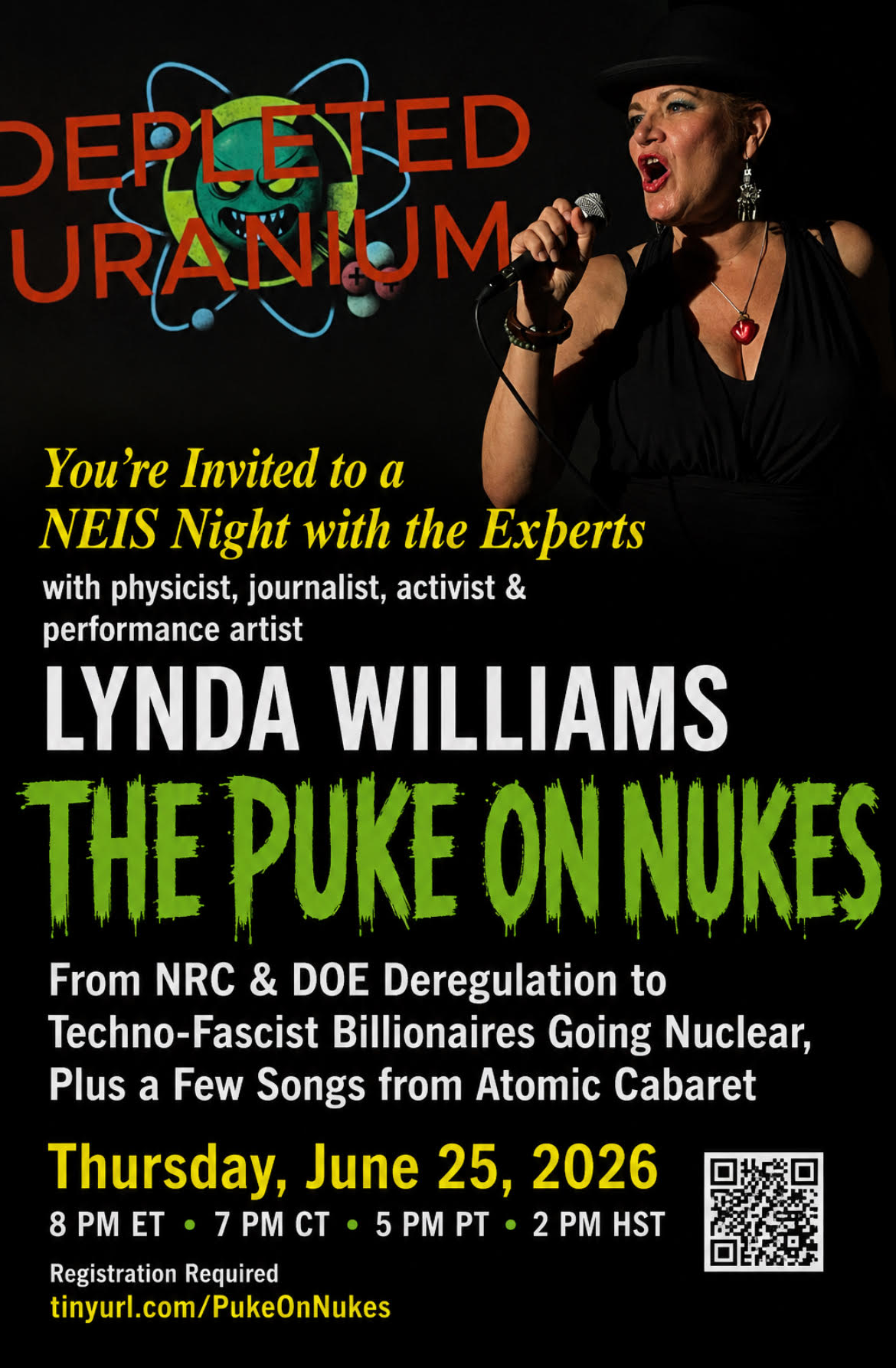
7pm Central Time (8pm ET, 6pm MT, 5pm PT) UTC – 5 From NRC & DOE Deregulation to Techno-Fascist Billionaires Going Nuclear, Plus a Few Songs from Atomic Cabaret REGISTER





 nuclear-news