An Israeli lawmaker is urging her government to use ‘everything in its arsenal,’ including ‘doomsday’ weapons, against Hamas
Kwan Wei Kevin Tan , Oct 11, 2023
- An Israeli lawmaker says Israel should use nuclear weapons against Hamas.
- Revital “Tally” Gotliv wrote on X that she thinks it is time to fire “powerful missiles without limit.”
- Benjamin Netanyahu previously said Hamas “will pay a price it has never known before” for its attacks.
An Israeli lawmaker has urged her government to consider using nuclear weapons in their war against Hamas.
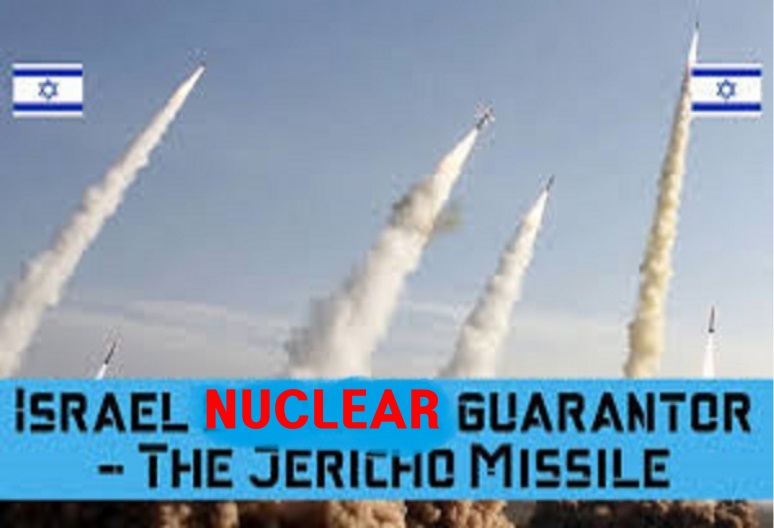
“Jericho missile! Jericho missile! A strategic alert, before we consider introducing our forces. A doomsday weapon!” Revital “Tally” Gotliv, a member of the Israeli parliament, wrote in a post on X on Monday. “This is my opinion. May God preserve all our strength.”
Gotliv’s post — which had been viewed over 2.1 million times at press time — referenced Israel’s Jericho ballistic missiles. Israel’s government has neither confirmed nor denied the existence of its nuclear arsenal.
The lawmaker said in a subsequent post on Tuesday that Israel needs to be merciless when dealing with the Palestinian militant group.
“Only an explosion that shakes the Middle East will restore this country’s dignity, strength, and security! It’s time to kiss doomsday,” Gotliv wrote in her post on X.
“Shooting powerful missiles without limit. Not flattening a neighborhood. Crushing and flattening Gaza,” she continued. “Otherwise, we would have done nothing. Not with passwords, with penetrating bombs. Without mercy! Without mercy!”
Gotliv’s follow-up post received over 250,000 views as of press time. The post was, at press time, tagged with a disclaimer from X, stating that its visibility had been limited because it “may violate X’s rules against Violent Speech.” ……………………………
Netanyahu said on Saturday that Hamas “will pay a price it has never known before” for its attacks. And yesterday, the Israel Defense Forces launched over 200 airstrikes on Gaza. more https://www.businessinsider.com/israeli-lawmaker-urged-government-to-use-nuclear-weapons-against-hamas-2023-10?r=US&IR=T&fbclid=IwAR23dypzT9Ijw99QoAJpr2-WwBSNj-zfJzbivYSy4UnyF2tfwnVR1XX_hpw #Israel #nuclear #antinuclear #NuclearFree #NoNukes #NuclearPlants
Report From Gaza: Fears That Israeli Army Is Preparing for Ethnic Cleansing
As Israel massacres entire families and wipes out whole neighborhoods, the Israeli army’s calls for Gazans to flee to the Egyptian border are stoking fears of genocide and ethnic cleansing.
SCHEERPOST, By Tareq S. Hajjaj / Mondoweiss 13 Oct 23
The WHO put out a statement yesterday saying that medical supplies in all of Gaza’s hospitals have started to run out. At the same time, Dr. Ashraf al-Qidra, the spokesperson for the Ministry of Health in Gaza, put out a press release saying that health services have entered a “critical phase,” and that medical supplies, tools, and fuel are about to run out. He added that the hospitals are at full capacity, and the injured are now forced to lie on the floor.
The scene at al-Shifa’ Hospital, Gaza’s central hospital, is bloody. Women, children, and the elderly, and even young people, are forced to lie down on the floor.
Yesterday, Gaza’s sole power plant said that within the next few hours, the plant would shut down completely due to the lack of fuel. Today, electricity has almost been completely shut off everywhere in Gaza; the only exceptions are places with commercial generators, which are also running out of fuel.
The Israeli army sent threatening messages to residential tower inhabitants instructing them to evacuate their homes in the al-Nada and al-Awda complexes in northern Gaza, which include approximately fifty residential towers, and are home to thousands of people.
The humanitarian situation in homes and at UNRWA schools, where many have taken refuge to escape the bombardment, is catastrophic. Homes are overcrowded due to the internal displacement of families to their relatives’ homes in areas they believe to be farther from the line of fire. But no place in Gaza is outside the line of fire. The crowding in homes and schools has led to inhumane conditions, including hour-long lines to use bathrooms.
Last night was bloody. The missiles used by the occupation seem to be new, and haven’t been used in Gaza before. We’ve noticed that there are missiles that explode without making a large sound, but that make the ground shake under people’s feet.
Fears of ethnic cleansing and second Nakba
People are now fearing the mass ethnic cleansing of the Gaza Strip to Egypt after an Israeli military spokesperson said that the Palestinians affected by the airstrikes can make their way to Egypt. Since the U.S. and Egypt are now working to open a “humanitarian corridor” for aid to enter Gaza, another Israeli military spokesperson said that civilians may all pass through that corridor to Egypt.
These statements have led Gaza residents to fear an impending second Nakba and mass ethnic cleansing. At the same time, rumors are spreading among people in Gaza that the Egyptian city of Sheikh Zweid and other areas in the Sinai have been prepared ahead of time to receive refugees, which many say is an old plan whose time has now come. Talk has also been spreading of how the eventuality of the ethnic cleansing of Palestinians to areas of the Sinai would be followed by the establishment of a Palestinian state on what remains of the Gaza Strip, in which Egypt would supposedly swap land with Israel. Yet these rumors remain unsubstantiated.
What is certain, however, is that U.S. officials have started to discuss the possibility of the flight of thousands of families and civilians to Egypt through the Rafah crossing.
The Rafah crossing was targeted yesterday by Israeli airstrikes from the Palestinian side, but firefighters and civil defense teams have since cleared the rubble from the area and reopened the crossing………………………………………………………………… more https://scheerpost.com/2023/10/13/report-from-gaza-fears-that-israeli-army-is-preparing-for-ethnic-cleansing/ #Israel
Israel orders 1 million Palestinians to leave within 24 hours
Rt.com 13 Oct 23
All residents of Gaza City may be forced to relocate, according to the UN
The Israeli military has urged over 1 million people to leave their homes in Gaza City and urgently move south. The UN has warned of “devastating humanitarian consequences.”
The Israel Defense Forces (IDF) issued the evacuation order, calling it a “humanitarian step.” It did not mention any specific deadline, with a spokesperson acknowledging it would take “some time.”
“The IDF calls on all residents of Gaza City to evacuate their homes, move south for their protection and settle in the area south of the Gaza River,” the military said in a post on X. “This evacuation is for your personal safety. It will be possible to return to Gaza City only after a notification confirming this.”
The UN Office of the Coordination of Humanitarian Affairs and the Department of Safety and Security in Gaza (OCHA oPt) was notified just before midnight local time that “the entire population of Gaza north of Wadi Gaza should relocate to southern Gaza within the next 24 hours,” UN spokesman Stephane Dujarric said in a statement to multiple media outlets on Friday morning……………..
The UN official emphasized that it is “impossible for such a movement to take place without devastating humanitarian consequences.”
“This amounts to approximately 1.1 million people. The same order applied to all UN staff and those sheltered in UN facilities – including schools, health centers and clinics,” the spokesperson said.
“The United Nations strongly appeals for any such order, if confirmed, to be rescinded avoiding what could transform what is already a tragedy into a calamitous situation,” Dujarric added.
As of Thursday night, the number of people already forced to flee their homes amid the ongoing Israeli airstrikes has increased to 423,378, or roughly 21% of the entire population of Gaza, according to the latest flash update by the OCHA. About two-thirds of the internally displaced persons are taking shelter in facilities operated by the United Nations Relief and Works Agency for Palestine Refugees (UNRWA)……………. more https://www.rt.com/news/584797-israel-evacuation-order-gaza/ #Israel
Israel Accused of ‘Blatant War Crime’ as HRW Confirms White Phosphorus Used in Gaza
“Any time that white phosphorus is used in crowded civilian areas, it poses a high risk of excruciating burns and lifelong suffering,” said one Human Rights Watch official.
By Brett Wilkins / Common Dreams,October 13, 2023
Human Rights Watch on Thursday said it has confirmed reports that Israeli military forces unleashed white phosphorus munitions during artillery attacks on targets in Lebanon and Gaza this week, including over a heavily populated civilian area of the besieged Palestinian strip—an apparent war crime.
HRW said it has interviewed witnesses and verified video footage shot in Lebanon and Gaza on Tuesday and Wednesday “showing multiple airbursts of artillery-fired white phosphorus over the Gaza City port and two rural locations along the Israel-Lebanon border.”…………
As HRW explained Thursday:
Upon contact, white phosphorus can burn people, thermally and chemically, down to the bone as it is highly soluble in fat and therefore in human flesh. White phosphorus fragments can exacerbate wounds even after treatment and can enter the bloodstream and cause multiple organ failure. Already dressed wounds can reignite when dressings are removed and the wounds are reexposed to oxygen. Even relatively minor burns are often fatal. For survivors, extensive scarring tightens muscle tissue and creates physical disabilities.
WP burns as hot as 1,500°F. Water does not extinguish it.
“Any time that white phosphorus is used in crowded civilian areas, it poses a high risk of excruciating burns and lifelong suffering,” HRW Middle East and North Africa director Lama Fakih said in a statement. “White phosphorous is unlawfully indiscriminate when airburst in populated urban areas, where it can burn down houses and cause egregious harm to civilians.”………………………………………………………………………..
more https://scheerpost.com/2023/10/13/israel-accused-of-blatant-war-crime-as-hrw-confirms-white-phosphorus-used-in-gaza/ #Israel
Israel Is Using Starvation as a Weapon of War Against the Palestinian People

Jewish Voice for Peace demanded “that the U.S. government immediately take steps to withdraw military funding to Israel and to hold the Israeli government accountable for its gross violations of human rights and war crimes against Palestinians.”
13 Oct 23
A full-scale ground offensive on Gaza is imminent, even as Palestinians are already suffering collective punishment.
By Marjorie Cohn / Truthout
After Hamas launched more than 2,000 missiles from Gaza and sent hundreds of fighters into Israel on October 7, killing hundreds of civilians, Prime Minister Benjamin Netanyahu declared war on Hamas. But Israel’s retaliation, including massive bombing from the land, air and sea, and its collective punishment of Gazans — denying them food, water, electricity and gas — reveals that Netanyahu has actually declared war on the Palestinian people, especially those in Gaza.
Israeli warplanes are conducting indiscriminate bombings throughout Gaza, targeting homes, schools, hospitals, mosques and civilian buildings. As of October 10, Israel had reportedly used 1,000 tons of explosives and targeted 500 locations, primarily in civilian residential areas.
“The quantity of injured people arriving to our hospitals is huge and will mean we will not be able to accept more patients in Gaza,” Ashraf Al-Qidra, spokesperson for the Gaza Ministry of Health, told PBS. “I send water to those who have had their houses demolished. All those who have been displaced don’t have anything. All they have is suffering, fear and horror,” Ahmed Youssef Mekhimar, a resident of Gaza, said. Shames Ouda told PBS, “This power station served all Gaza Strip, and now is turned off, Gaza without fuel, without electricity, without Internet, without food. Gaza dying. The people will pay the price of this war.”
A full-scale Israeli ground offensive on Gaza is reportedly imminent, with 360,000 Israeli Occupying Force reserve troops poised to invade. In 2014, Israeli forces bombed and invaded Gaza, killing 2,251 Palestinians, most of them civilians, in “Operation Protective Edge.”
Netanyahu warned Gazans to “leave now” as Israeli forces would “act with all force.” But the people in Gaza cannot leave. Except for one border crossing with Egypt, Israel controls all ingress and egress into the Gaza Strip. As of October 11, Israel has bombed the Egyptian border crossing twice, and Egypt has refused to allow refugees through.
More than 1,200 Israelis and 1,354 Palestinians have been reported killed and thousands wounded on both sides. Israel said that additionally 1,500 bodies of Hamas members have been found inside Israel.
In the face of the tragic deaths of Palestinian and Israeli civilians, President Joe Biden issued a statement saying the United States “unequivocally condemns this appalling assault against Israel by Hamas terrorists from Gaza,” and pledged “all appropriate means of support” to Netanyahu. He did not decry the loss of Palestinian lives.
Biden called Hamas’s attack “pure, unadulterated evil” in an October 10 news conference. But he refused to urge Israel to exercise restraint in its retaliation against the Palestinians.
U.S. Secretary of Defense Lloyd Austin said in a statement that U.S. Navy vessels, including an aircraft carrier and a guided missile cruiser, had been sent to the Eastern Mediterranean……………………………………….
under international law, Israel, an occupying force, does not have the right to use military force in self-defense against people under its occupation.
Targeting civilians and civilian objects constitute war crimes under the Fourth Geneva Convention and the Rome Statute for the International Criminal Court, whether committed by Israel or by the Palestinians. The presence of noncivilians within civilian populations does not deprive the population of its civilian character under Additional Protocol I to the Geneva Convention………………..
Even if some of the actions taken by the Palestinians in their resistance are illegal under international humanitarian law, there is no legal justification for Israel to claim it is acting in self-defense under the UN Charter.
Collective Punishment and Using Starvation as a Weapon Are War Crimes
Gaza is one of the most densely populated areas in the world. Often called the largest open-air prison on Earth, the Gaza Strip is home to more than 2 million Palestinians in this 365-square-kilometer area. Israel controls Gaza’s land, air and maritime borders.
Israel’s Minister for the Advancement of the Status of Women May Golan said at a meeting of the Israeli government, “All of Gaza’s infrastructures must be destroyed to its foundation and their electricity cut off immediately. The war is not against Hamas but against the state of Gaza.”
Israel has imposed a “complete siege” on the Gaza Strip. Israeli Defense Minister Yoav Gallant declared, “No electricity, no food, no water, no gas — it’s all closed,” adding that “we are fighting animals and are acting accordingly.”
Using starvation as a weapon of war constitutes a war crime under Additional Protocol I to the Geneva Convention. Gallant’s order is a crime against humanity under the Rome Statute. It is also a call for genocide, prohibited by the Genocide Convention and the Rome Statute, since many Gazans will die as a result of the siege.
The Fourth Geneva Convention prohibits the punishment of people in an occupied territory for offenses they didn’t personally commit. Israel’s reprisals against civilians for actions they did not take constitutes collective punishment, which amounts to a war crime.
Earlier this year, the International People’s Tribunal on U.S. Imperialism, for which I served as a juror, examined 15 countries in the Global South to assess the impact of economic coercive measures on the lives of their people. In May, we heard testimony from witnesses in Gaza as Israeli bombs were dropping on their neighborhoods. The tribunal concluded that Israel’s siege in the Gaza Strip is a form of warfare used as “an integral tool of imperialist aggression designed to facilitate the theft of global south wealth and uphold racial hierarchy.” The siege on Gaza is “just as deadly” as other forms of warfare, the tribunal found.
Root Cause of Hamas Attack Was “Cruelty of a Half-Century of Abusive Occupation”
“Although the Hamas attack included war crimes against innocent civilians, its root cause was the cruelty of a half-century of abusive occupation by Israel that violated the most basic human rights of the Palestinian people, and relied on apartheid practices of governance, according to reports by the leading human rights organizations in the U.S. and Israel,” Richard Falk, former UN Special Rapporteur on the Situation of Human Rights in the Palestinian Territories Occupied Since 1967, told Truthout.
Falk attributes the timing of Hamas’s attack to “the extremism of the Netanyahu coalition government” that “provoked resistance by its complicity with settler violence and violations of the Al-Aqsa Mosque Compound, and by erasing Palestine from its official maps of the Middle East and negotiating a normalization agreement with Saudi Arabia.” Falk called the Hamas attack “a shrill reminder to Israel and the world that ‘we Palestinians are still here and will not be erased and forgotten.’”
In an October 8 statement, Palestinian human rights organizations cited “compelling evidence” that the Israeli authorities had committed war crimes and crimes against humanity against Gaza’s civilian population, including illegal indiscriminate and disproportionate attacks. They urged the international community, including the UN Security Council, to take immediate action to stop Israel’s revenge and reprisal against Gazan civilians, including the imposition of sanctions and an arms embargo on Israel. They also called on the International Criminal Court (ICC) to expedite its pending investigation into the situation in Palestine as promised in December 2022. The ICC launched an investigation in 2021 of possible war crimes and crimes against humanity committed by both Israel and the Palestinians, but the probe has stalled due to pressure from the U.S. government.
The Security Council, which has an obligation under the UN Charter to restore international peace and security, has done nothing to stop the carnage because its permanent members cannot agree on a course of action. While the U.S. demanded a blanket condemnation of Hamas’s actions, Russia and China refused to agree to the unilateral denunciation of Hamas; they favored calling for an immediate ceasefire and the beginning of a peace process that has been frozen for years.
“The bloodshed of today and the past 75 years traces back directly to U.S. complicity in the oppression and horror caused by Israel’s military occupation,” Jewish Voice for Peace said in an October 7 statement titled “The Root of Violence is Oppression.” Jewish Voice for Peace blamed the U.S. government which “consistently enables Israeli violence and bears blame for this moment. The unchecked military funding, diplomatic cover, and billions of dollars of private money flowing from the U.S. enables and empowers Israel’s apartheid regime.” Moreover, Jewish Voice for Peace noted, “Those who continue calling for ‘ironclad’ U.S. support for the Israeli military are only paving the path to more violence.”
Jewish Voice for Peace demanded “that the U.S. government immediately take steps to withdraw military funding to Israel and to hold the Israeli government accountable for its gross violations of human rights and war crimes against Palestinians.”
U.S. congressmembers Rashida Tlaib (D-Michigan) and Cori Bush (D-Missouri) have called for an end to the U.S. government’s unconditional financial support of Israel’s military occupation and apartheid government. The United States has been providing Israel with $3.8 billion a year in military assistance.
While Western countries and their media decry the loss of Israeli lives, they don’t express similar outrage at the deaths of Palestinians. This hypocrisy is racist and ignores the context of decades of settler colonialism and Israeli apartheid.
We must pressure the U.S. government to call for an immediate ceasefire and stop sending weapons to Israel. “There is no military solution here,” Phyllis Bennis, a fellow at the Institute for Policy Studies, told my cohost Heidi Boghosian and me on Law and Disorder radio.
The consequences of allowing Israel to continue and escalate its aggression against the Palestinian people are unimaginable. https://scheerpost.com/2023/10/13/israel-is-using-starvation-as-a-weapon-of-war-against-the-palestinian-people/
The US Is Just As Culpable As Israel For The Atrocities Committed In Gaza

The primary job of Israel apologists in the coming days will be producing and circulating narratives explaining why this self-evidently terrible thing is actually perfectly fine and acceptable.
And top-down commands are being issued within the US government to support this massacre unconditionally.
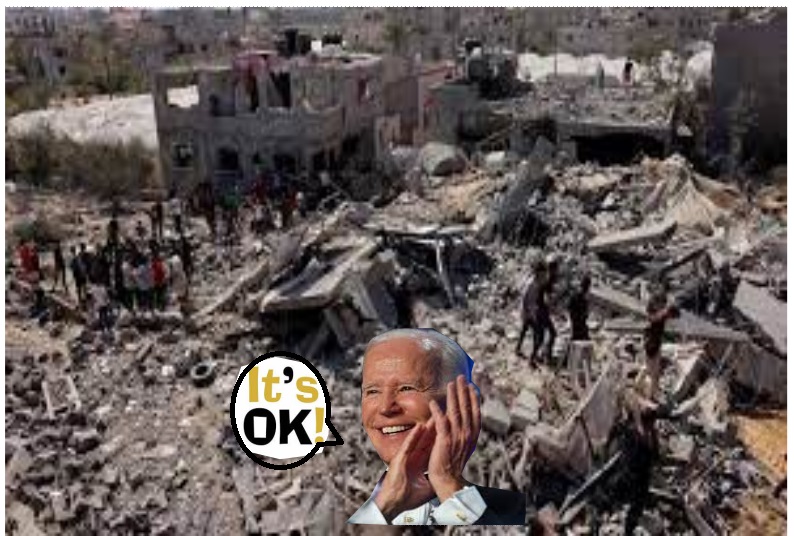
So be perfectly clear, the US government is fully behind this massacre, and is just as culpable for everything that happens in Gaza as the Israeli government.
These abuses are being perpetrated using US weapons, US funding and US consent.
Washington could end this mass atrocity with a word, and instead they’re fully aligning themselves behind it. Israel’s crimes in Gaza are not meaningfully separate from the crimes of the US war machine.
Caitlin’s newsletter CAITLIN JOHNSTONE, , OCT 14, 2023
The Israeli government dropped thousands of leaflets on Gaza telling everyone who lives in the northern part of the strip that they have 24 hours to evacuate to the southern part, and then bombed the people who were trying to evacuate.
United Nations spokesman Stephane Dujarric denounced the evacuation order, saying the UN “considers it impossible for such a movement to take place without devastating humanitarian consequences.” Many Palestinians have said they’re going to stay where they are because they have nowhere safe to go, despite being told by Israel they must leave if they want to “save their lives”.
We’re about to see the death and destruction get much, much worse in Gaza, and it’s already very, very bad. As of this writing the official death toll from Israeli airstrikes in Gaza is speeding past 1,900, a number which includes 614 children. The primary job of Israel apologists in the coming days will be producing and circulating narratives explaining why this self-evidently terrible thing is actually perfectly fine and acceptable.
It’s so incredibly obvious what we’re looking at here. The only thing putting a wobble on people’s perception is the immense amount of propaganda distortion the media is churning out on this issue, plus the fact that the demographics look a bit different from what history has conditioned people to watch out for. If there were two million Jewish people trapped by Christians in a giant concentration camp and placed under total siege, being told that half of them had 24 hours to relocate into the other half or be killed, nobody would have any confusion about what they were witnessing.
And top-down commands are being issued within the US government to support this massacre unconditionally.
The Huffington Post reports that the State Department has been circulating internal emails telling staff to avoid calls for peace, instructing them to refrain from using phrases like “de-escalation/ceasefire,” “end to violence/bloodshed” and “restoring calm.”
Asked about progressive congressional members calling for a ceasefire, White House press secretary Karine Jean-Pierre said, “we believe they are wrong, we believe they’re repugnant, and we believe they’re disgraceful.”
On the question of whether there are any potential Israeli actions that the White House would not tolerate, US national security adviser Jake Sullivan told reporters “I’m not here to draw red lines or issue warnings or give lectures to anybody.”
So be perfectly clear, the US government is fully behind this massacre, and is just as culpable for everything that happens in Gaza as the Israeli government. These abuses are being perpetrated using US weapons, US funding and US consent. Washington could end this mass atrocity with a word, and instead they’re fully aligning themselves behind it. Israel’s crimes in Gaza are not meaningfully separate from the crimes of the US war machine.
This is just a continuation and extension of the violence and bloodshed the US government has been inflicting around the world for generations. There’s a clip of George W Bush going around from a California event on Tuesday in which, for some bizarre, unfathomable reason, the former president was asked to provide his opinion on what Israel should do in response to the Hamas attack on October 7.
Bush said pretty much what you’d expect him to say: “You’re dealing with cold-blooded killers,” “negotiating with killers is not an option,” “one side is guilty.” The same book he’s been reciting from since September 11, 2001. What I find much more interesting is, why is anyone asking the absolute worst person you could possibly ask about what should be done in response to such an attack………………………………..
the United States never learned any moral lessons from its warmongering after 9/11 — if it had, George W Bush would be sitting in a prison cell, and the US wouldn’t be backing a mass atrocity in Gaza………. https://www.caitlinjohnst.one/p/the-us-is-just-as-culpable-as-israel?utm_source=post-email-title&publication_id=82124&post_id=137943417&utm_campaign=email-post-title&isFreemail=true&r=1ise1&utm_medium=email #Israel
Flashback: Israel’s 2009 firing of white phosphorous mutilated & murdered Palestinian civilians
Signs of the Times, (SOTT) Eva Bartlett, In Gaza, Sat, 17 Jan 2009
It’s daily hard to believe it can get worse, but daily it does.
Last week, I saw what seemed to be the white phosphorus clouds doctors have written about, condemned. From a tall Gaza city building, the panoramic view showed a spreading stream of poison, on eastern Gaza.
The chemical burns deeply, to the bone, experts say. It is considered illegal warfare, not to be used in civilian areas. Yet the accounts grow of its use: heavy use in the Khosar region, east of Khan Younis, and in the northwest of Gaza, and in eastern Jabaliya, Sheik Zayid, Sheik Rajleen, Zaitoun… Everywhere. The UN headquarters housing hundreds of fleeing Palestinians which was bombed on January 15 was hit with white phosphorus.
“Five days ago, in Jabaliya, I saw an abnormal material: white dust, spread out in spinning circles which spread the dust further. From inside there was something falling down which looked like snow. It covered a large area, over many houses,” Maher el Madhouan, head of Physiotherapy department in Sheik Radwan had told me last week.
Dr. Nafez Abu Shabaan, Head of the Burn Department, told me they’ve received some burn cases unlike anything they’ve seen. “We’re not familiar with phosphorous burns, but some patients have very deep burns, very strange burns.” He cites the case of a patient sent for a brain scan who three hours later, still alive, “came back smoking”.
In one room, Ghada, 20, lies staring blankly, half of her pretty face and soft skin mottled with burns and blisters. Her right hand is bandaged, so the extent of the burn has to be judged by her unbandaged left hand, which has burn gashes and bloated fingers. A medical report charts her burns: right side of face and head; right arm, hand, side, abdomen, leg, and foot. Apparently the incendiary chemical struck from her right. 43% of her total body surface is covered by these deep burns. She comes from Siatta, north of the northwestern area Attatra, where a tank invasion now rages, well into its first week. [UPDATE: Ghada later died of her extensive burn injuries]………………………………………… more https://www.sott.net/article/485107-Israels-firing-of-white-phosphorous-mutilated-murdered-Palestinian-civilians #Israel
Israeli minister says no water or power for Gaza residents (How to put out the fires?)
SOTT 13 Oct 23
Fuel will also be cut off until hostages are released, Energy Minister Israel Katz has warned
Israel’s siege of Gaza will not be lifted unless Hamas releases all the hostages it has captured, Energy Minister Israel Katz announced on Thursday. His statement came after Israeli authorities cut off water, fuel and electricity to the Palestinian enclave following a surprise attack by Hamas militants on Saturday.
“Humanitarian aid to Gaza? No electrical switch will be turned on, no water pump will be opened and no fuel truck will enter until the Israeli abductees are returned home,” Katz wrote on X, formerly known as Twitter.
The blockade of Gaza was initially announced by Israeli Defense Minister Yoav Gallant on Monday, who said he had ordered a “complete siege of the Gaza Strip” and that there will be “no electricity, no food, no fuel and no water.”
“We are fighting human animals and we are acting accordingly,” Gallant said.
Meanwhile, both the EU and the UN have raised concerns over Israel’s actions in Gaza, with EU foreign policy commissioner Josep Borrell stating on Tuesday that depriving the civilian population of Gaza of food, water and electricity was not in line with international law………………………..
Comment: So, no way to put out fires caused by IDF carpet bombing. No way to clean wounds at a hospital, nor the light to do it by. No way to cook food, but it doesn’t matter because there will be no food to cook.
Demonic. https://www.sott.net/article/485084-Israeli-minister-says-no-water-or-power-for-Gaza-residents #Israel
Israel’s vengeance will not make for a better world
Pearls and Irritations, By Richard Hill, Oct 14, 2023
The depressing, crushing spectacle of extreme violence and mayhem unleashed across Israel and Palestine over recent days is a reminder of the depths to which humanity can sink.
To see complex historical, cultural and geopolitical questions – let alone humanity and decency – reduced to a ceaseless cycle of hatred, death and destruction is hard to stomach. We gaze at our TV screens aghast, we hear the threats, counter-threats, and the endless justifications and commentary. Meanwhile, the bloodletting goes on – and on. Western politicians, weighed down with simple binaries, take sides and in so doing obliterate any sense of context or complexity that might help us understand how this mess occurred in the first place.
Projecting the colours of the Israeli flag across the Sydney Opera House, declaring unflagging support for a state that for decades has thumbed its nose at UN resolutions and violently oppressed a besieged and impoverished population, is morally abhorrent.
The attempt to erase such concerns over recent days has been startling. At this point, to call for some acknowledgment of the origins of the conflict is to court accusations of siding with terrorists. And yet, as US Secretary of State, Antony Blinken, arrives in Israel to demonstrate the US’s unwavering support, Israel is imposing an illegal blockade on Gaza (cutting of life-saving electricity and preventing passage of urgently needed medicines, food and other supplies) as bombs rein down with impunity on a narrow, congested strip of land occupied by 2.3 million people.
How can this be? Why has nuance been shed and historical memory so conveniently erased? Such abstractionism is of course continuing the egregious practice of labelling anyone who dares criticise Israel as antisemitic. This is absurd and ludicrous, and entirely misleading. In the meantime, we have the leader of the most extreme right-wing government in Israel’s history banging his fists together on TV urging extreme violence upon the people of Gaza. He urges them to flee to a checkpoint on the Egyptian border, knowing full well that it’s closed. So, in effect, the people in Gaza are trapped in a hellhole that day-by-day is being reduced to rubble. All this under the watch of the US, Britain and Australia.
Hamas’s attacks were horrific and utterly unacceptable; there’s no denying that. Many innocent people lost their lives, and the human suffering is unimaginable. But to then offer unwavering support to Israel, minus any mention of current and past wrongdoing, borders on the insane. It demonstrates a cruel, collective indifference. And Australia is complicit in this by implicitly endorsing the long-term suffering of Palestinians as Israeli government priority.
There are so many other ways western and other political leaders (including those in Israel) could have responded to a violent attack on innocent people. ……………………………………………..
It is worth remembering the words of former Norwegian Prime Minister, and new NATO Secretary General, Jens Stoltenberg who in the wake of the 2011 mass murder of 70 young people by right-wing gunman Anders Breivik said: “We are still shocked by what has happened, but will never give up our values…Our response is more democracy, more openness, and more humanity.” He vowed his country would not seek vengeance; “we will answer hatred with love”. In a later news conference, Stoltenberg added: “The message to whoever attacked us, the message from all of Norway is that you will not destroy us, you will not destroy our democracy and our ideals for a better world.” This better world does not include blind rage and vengeance, or continuing oppression and violence………………more https://johnmenadue.com/israels-vengeance-will-not-make-for-a-better-world/— #Israel
We condemn atrocities from both Hamas and Israel – Veterans for Peace, and Roots Action
A Statement from RootsAction on the Gaza-Israel War
Tarak Kauff – NYC Veterans For Peace Veterans For Peace Ireland
Peace & Planet Newsby RootsAction.org October 08, 2023
We condemn the attacks by Hamas deliberately targeting Israeli civilians for killing and kidnapping. And we condemn Israel’s aerial bombardment of Gaza, which is again killing large numbers of Palestinian civilians. We grieve for all the lives lost and for all those injured and traumatized.
The root of today’s violence is the oppression and abuses suffered daily by Palestinian people as a whole under decades of cruel Israeli occupation and expansionism. Leading human rights groups — from Amnesty International to Human Rights Watch to Israel’s B’Tselem — have concluded that Israel’s occupation policies amount to a form of apartheid.
Until Israel’s military occupation is ended, these cycles of terror and war and trauma will repeat.
A huge obstacle to bringing an end to the Israeli occupation is the U.S. government. Under Democratic and Republican administrations, it has steadfastly made excuses for Israel as ever more Palestinian homes and villages have been destroyed or seized by right-wing settlers, as settlements have expanded, as Israeli soldiers have stormed Muslim holy sites, as Palestinian children have been militarily detained. And the violence from soldiers and extremist settlers toward Palestinians has worsened in the West Bank and East Jerusalem with the rise of the most openly racist, far-right government in Israel’s history.
We agree with Jewish Voice for Peace when it traces today’s bloodshed to U.S. complicity with Israel’s never-ending occupation: “The U.S. government consistently enables Israeli violence and bears blame for this moment. The unchecked military funding, diplomatic cover, and billions of dollars of private money flowing from the U.S. enables and empowers Israel’s apartheid regime. Those who continue calling for ‘ironclad’ U.S. support for the Israeli military are only paving the path to more violence.”
Background:
>> Amnesty International: “Crime of Apartheid: The Government of Israel’s System of Oppression Against Palestinians”
>> Human Rights Watch: “A Threshold Crossed: Israeli Authorities and the Crimes of Apartheid and Persecution”
>> B’Tselem: “This Is Apartheid”
>> United Nations: “Israel’s 55-year occupation of Palestinian Territory is apartheid – UN human rights expert”
>> New York Times:“Israel’s Push to Expand West Bank Settlements, Explained”
In 1981, Israel Bombed Nuclear Reactor In Iraq. Why It’s Relevant Today
NFTV Edited by Debanish Achom October 11, 2023 , New Delhi:
The Israel-Gaza war has a real risk of spreading into a larger regional war with Lebanon’s Iran-backed Hezbollah group firing missiles into Israel. Israel also launched counterattacks at the Hezbollah amid soaring border tensions. Both Israel and its closest ally the US have warned Hezbollah against opening a second front as Israel battles Hamas in Gaza Strip.
Israel and Iran have been fighting a proxy war. While Iran has been funding Hezbollah and the Palestinian Islamic Jihad and is said to be angling for the “leader” of the Arab world status, Israel has expressed concerns over Iran’s nuclear weapons programme. Israel, along with the US, have been vocal in condemning Iran’s alleged nuclear weapons programme, which they claim can destabilise the entire region.
It is in this context that a June 1981 airstrike by the Israeli Air Force, called “Operation Opera”, on a nuclear reactor in Iraq becomes relevant. Military analysts suspect Israel will not hesitate to carry out a similar strike on Iran if it finds itself cornered from all sides in the event of a full-scale regional war.
For now, there is no indication of an impending offensive by Hezbollah against Israel, despite growing border tensions. Iran, officially at least, has insisted it has no involvement in Hamas’ assault on Israel. While some neighbouring Arab countries — which have been keen to improve relations with Israel — see a chance to play a role as mediator. But the situation is extremely volatile…………………………………………………………………………
https://www.ndtv.com/world-news/operation-opera-daring-1981-airstrike-on-nuclear-reactor-in-focus-as-israel-faces-multi-front-war-4471744#lnmp1y2hntwy9xa1lxe— #nuclear #antinuclear #NuclearFree #NoNukes #NuclearPlants
This is one scary opinion about the Israeli-Palestine war – “Get Ready, Because The U.S. Is Going To War In The Middle East”
MICHAEL SNYDER, OCT 12, 2023 https://michaeltsnyder.substack.com/p/get-ready-because-the-us-is-going?utm_source=post-email-title&publication_id=1520363&post_id=137881937&utm_campaign=email-post-title&isFreemail=true&r=ln98x&utm_medium=email
We are on the precipice of a major regional war in the Middle East, and the U.S. military is going to be involved. Of course if this war was just limited to a fight between Israel and Hamas, there would be no need for the U.S. military to intervene, because the IDF can handle Hamas quite easily. But Hezbollah is another matter entirely. Hezbollah possesses an extremely powerful military, and they have an arsenal of approximately 130,000 missiles ready to be fired at Israel. If Hezbollah enters the war and starts firing thousands upon thousands of missiles at Israel, the United States will take action.
Unfortunately, we are already dangerously close to that point. Hezbollah has not formally entered the war yet, but clashes along Israel’s northern border have been happening for four consecutive days…
Cross-border violence between Lebanon and Israel has escalated into a fourth day, pushing many Lebanese in southern towns to leave as Hezbollah and the Israeli military continue to trade fire.
Hezbollah said it fired precision missiles on an Israeli position across from the Lebanese town of Dharya on Wednesday, drawing retaliatory Israeli shelling that has left a number of houses damaged.
Once Israel launches a ground operation inside Gaza, I believe that Hezbollah will formally enter the war shortly thereafter.
But it appears that Hezbollah is not just gearing up to fight Israel. In fact, they have issued a statement declaring the U.S. to be a “full partner” in the conflict with Hamas…
Hezbollah issues a statement saying the United States is a ‘full partner’ of Israeli ‘aggression’ on the Gaza Strip. Hezbollah also says that it holds the United States fully responsible for the airstrikes that are killing civilians in Gaza.
And one Hezbollah official is publicly warning that his forces in Iraq “are ready to direct qualitative strikes at the American enemy in its bases”…
The leader of a prominent Iranian-backed militia in Iraq threatens to attack American bases in retaliation if the United States intervenes in the war between Hamas and Israel in Gaza.
“Our missiles, drones, and special forces are ready to direct qualitative strikes at the American enemy in its bases and disrupt its interests if it intervenes in this battle,” Ahmad “Abu Hussein” al-Hamidawi, head of the Kataib Hezbollah militia, says in a statement. He also threatened to launch missiles at Israeli targets.Of course the U.S. has been delivering some very strong warnings to Hezbollah as well…
The United States and Allied Countries through Back-Channels have reportedly been issuing Direct Warnings to Hezbollah against them Escalating and possibly Joining the Israel-Hamas War; however so far Senior Biden Administration Officials do not believe that Hezbollah is planning to Join the War, but that could always change.
I am sure that the Biden administration is desperately hoping that Hezbollah stays on the sidelines, but they are also preparing for the worst.
On Wednesday, we learned that a second U.S. aircraft carrier is being sent to the Eastern Mediterranean…
US National Security Council Coordinator John Kirby confirmed that the United States will be sending the USS Dwight D. Eisenhower aircraft carrier to the Eastern Mediterranean, after it was already announced that the USS Gerald R. Ford would be deployed as part of “support” operations related to the Israel-Gaza conflict.
However, Kirby said that the Eisenhower will not be directly joining or escorting. Instead, the carrier will be in the region for availability if called upon. While in a press briefing Kirby tried to downplay the dual carrier deployment as somewhat routine or expected, they will certainly be on standby to potentially intervene if all hell continues breaking loose in the Middle East.
Hopefully those carriers will be smart and will stay a long way from shore.
Because Hezbollah possesses missiles that are capable of sinking a carrier.
Needless to say, images of a sinking carrier would cause great fury here in the United States.
The U.S. is also deploying special forces to the region in case they are needed to locate American hostages…
The United States is readying its special forces to help Israel locate American hostages, as waves of Israeli Defense Force reservists arrived at JFK airport in New York to join the fight against Hamas.
Two senior U.S. military officials told The Messenger that ‘door kickers’ have been put on alert in a nearby European country, ready to assist Israel if necessary in their battle against Hamas. The Israeli death toll rose to 1,200 on Tuesday.
This is just the beginning.
As this war escalates, more U.S. forces will inevitably be deployed.
Sadly, there can never be lasting peace with these Islamic terrorists. Franklin Graham recently shared a video of a prominent Hamas leader declaring what their real long-term plan is…
On social media, Franklin cited a video of Hamas’ Mahmoud al-Zahar, and wrote, “We just saw Hamas brutally murder 900+ Israelis, most all civilians. If you want to know what else they’re after, a Hamas commander made it clear. He said they want to kill every Jew and every Christian – and take control of the ‘entire 510 million sq. kilometers of Planet Earth.’ If you think what is happening in Israel is limited to Israel, think again.”
As this war escalates, more U.S. forces will inevitably be deployed.
Sadly, there can never be lasting peace with these Islamic terrorists. Franklin Graham recently shared a video of a prominent Hamas leader declaring what their real long-term plan is…
On social media, Franklin cited a video of Hamas’ Mahmoud al-Zahar, and wrote, “We just saw Hamas brutally murder 900+ Israelis, most all civilians. If you want to know what else they’re after, a Hamas commander made it clear. He said they want to kill every Jew and every Christian – and take control of the ‘entire 510 million sq. kilometers of Planet Earth.’ If you think what is happening in Israel is limited to Israel, think again.”
This Hamas Commander says this is not about land, not just Palestine. “The entire planet will be under our law, there will be no more Jews or Christian traitors.” Only then, if everyone adopts his law, will there be peace. pic.twitter.com/97sWBcH8yJ
— CSW Latinoamérica (@CSWLatAm) October 8, 2023
They will never stop until they rule the entire world.
There is no negotiating with people like that.
On Friday, there is supposed to be a “global Day of Rage” for those that support Hamas…
Khaled Mashal, a leader and founding member of the Islamic terror group Hamas, has called for a global Day of Rage this Friday, saying “this is the time for Jihad.”
Hamas, an Islamic political and military organization that governs the Gaza Strip, carried out a brutal, highly coordinated terror attack on Israel over the weekend, slaughtering more than 1,200 people—including fourteen Americans—and wounding more than 2,100, according to the latest reports. The Palestinian terrorists also took more than 130 civilians hostage and have threatened to execute them on live broadcasts.
Mashal reportedly gave a speech on Tuesday exhorting Muslim across the world to “show anger” and be “martyrs for Al-Aqsa” in what he called “the Friday of Al-Aqsa flood.” Hamas has dubbed their murderous rampage in Israel Saturday “operation Al-Aqsa Flood,” saying the assault was “in defense of the Aqsa Mosque,” the main congregational mosque in the Old City of Jerusalem.
Hopefully there will not be too much violence.
But I can’t say that I am too optimistic about that.
For a long time I have been warning that a historic war would be coming to the Middle East, and now it is here.
So many people are going to die, and that should deeply sadden all of us.
More Americans are likely to die too, because it is just a matter of time before the U.S. military becomes a direct part of this conflict.
Israeli army says it does not have ‘confirmation’ about allegations that ‘Hamas beheaded babies’
Israeli army spokesperson tells Anadolu over phone that they have no information confirming allegations that ‘Hamas beheaded babies’
Turgut Alp Boyraz 11.10.2023 https://www.aa.com.tr/en/middle-east/israeli-army-says-it-does-not-have-confirmation-about-allegations-that-hamas-beheaded-babies-/3014787
JERUSALEM
The Israeli army has no information confirming allegations that “Hamas beheaded babies,” Israeli army spokesperson unit told Anadolu on Tuesday.
It was alleged that Hamas’s armed wing, the Qassam Brigades, “beheaded many Israeli babies” on the Israeli side during the early Saturday morning attack launched from Gaza.
When Anadolu contacted the Israeli army spokesperson unit over the phone and asked about the allegations, she said “We have seen the news, but we do not have any details or confirmation about that.”
The situation escalated with a Saturday surprise attack from Palestinian group Hamas in the Gaza Strip on southern Israeli towns. Israel retaliated with massive airstrikes in Gaza and placed the enclave under total blockade.
More than 1,900 people have so far been killed in the violence, including at least 900 Palestinians and 1,000 Israelis, according to authorities.
Israel has also cut water and electricity supplies to Gaza, worsening the blockaded enclave’s already dire humanitarian situation.
Home to nearly 2.2 million people, the Gaza Strip has already been reeling under a crippling Israeli siege since 2007. #Israel
What is Jericho missile system? Israel’s potential ‘doomsday’ nuclear option
Wion News By: Mukul Sharma Oct 12, 2023
STORY HIGHLIGHTS
It is yet not clear if Jericho-3 has been deployed by Israel during ongoing retaliatory offensive against Hamas in Gaza.
An Israeli legislator’s recent calls for the use of a “doomsday” weapon against Hamas and Palestine have once again put the spotlight on nuclear weapons in West Asia, particularly the Jericho missile system.
Revital “Tally” Gotliv, an Israeli lawyer and member of the Knesset representing Prime Minister Benjamin Netanyahu’s Likud Party, made several posts on X, formerly known as Twitter, stating that Israel must consider nuclear warfare as an alternative to deploying large ground forces.
“Jericho Missile! Jericho Missile! Strategic alert. before considering the introduction of forces. Doomsday weapon! This is my opinion. May God preserve all our strength,” Gotliv wrote on X.
What is Jericho ballistic missile program?
Gotliv specifically mentioned “Jericho,” referring to Israel’s original ballistic missile program, initiated in the 1960s and named after the biblical city located in West Bank.
This program was initially a collaboration with the French aerospace company Dassault, but when France withdrew in 1969, Israel continued its development. The Jericho-1 model, which was operational during the Yom Kippur War in 1973, came out as an accomplishment of the said program.
The Jericho-1, which was retired in the 1990s, had a weight of 6.5 tons, a length of 13.4 meters, and a diameter of 0.8 meters, according to the International Institute for Strategic Studies (IISS), Newsweek reported.
It had a range of 500 kilometers (approximately 310.6 miles) and could carry a 1,000-kilogram (about 2,205-pound) payload, though it had a 50 percent chance of hitting within a 1,000-meter radius of its target.
Israel later developed the Jericho-2, a longer-range missile in the late 1980s, with a length of 15 meters and a diameter of 1.35 meters, while maintaining the same payload capacity. It had a range between 1,500 and 3,500 kilometers (about 932 to 2,175 miles).
The Jericho-3, an intermediate-range system, was introduced years later and was reportedly tested in 2008, entering service in 2011. It featured improvements over the previous models, with a longer length than Jericho-2 and a larger diameter of 1.56 meters.
Its single warhead weighed approximately 750 kilograms (1,653 pounds) and had a range of 4,800 to 6,500 kilometers (about 2,983 to 4,039 miles). The payload capacity extended to about 1,300 kilograms (2,866 pounds).
It is yet not clear if Jericho-3 has been deployed by Israel during ongoing retaliatory offensive against Hamas in Gaza. #nuclear #antinuclear #NuclearFree #NoNukes #NuclearPlants
Some Israeli actions ‘against international law’ – EU
“There will be no electricity, no food, no fuel, everything is closed,” Gallant told the Israeli media. “We are fighting human animals and we act accordingly.”
https://www.rt.com/news/584594-borrell-eu-israel-law-gaza/ 11 Oct 23
Denying Gaza water, food and electricity is not appropriate, Josep Borrell has said
Israel has the right to self-defense, but some of the decisions its government has made are contrary to international humanitarian law, EU foreign policy commissioner Josep Borrell said on Tuesday.
“Israel has the right to defend, but it has to be done in accord with international humanitarian law. And some decisions are contra this international law,” Borrell said in Oman, where he attended the joint meeting of foreign ministers from the EU and the Gulf Cooperation Council.
Both the EU and the GCC have condemned terrorist attacks by Hamas, Borrell noted, but also condemned any attacks on civilians, demanded the immediate release of all hostages, and called for Israel to respect international law and not block the delivery of food, water or electricity to the civilian population of Gaza.
The two blocs have also asked Israel to open “humanitarian corridors” from Gaza to Egypt, so that civilians can leave the territory ahead of Israeli reprisal airstrikes.
Borrell’s remarks appeared to be a reference to Israeli Defense Minister Yoav Gallant’s statement on Monday ordering a “complete siege” of Gaza.
“There will be no electricity, no food, no fuel, everything is closed,” Gallant told the Israeli media. “We are fighting human animals and we act accordingly.”
Multiple media outlets also quoted Gallant as saying on Tuesday that he had “lifted all the restraints” on Israeli rules of engagement against Gaza.
Israel launched reprisal airstrikes against the Palestinian territory after Hamas, which controls much of Gaza, sent commandos deep into Israeli territory on Saturday. The three days of heavy clashes have resulted in at least 900 dead Israelis and at least 830 dead Palestinians, according to the authorities in West Jerusalem and Gaza, respectively.
Just before Gallant announced the “siege,” the EU declared it would put €691 million ($728.8 million) in aid to the Palestinian Authority under review and suspend all pending payments, citing the “scale of terror and brutality against Israel and its people” by Hamas. Borrell later “clarified” those remarks to note that aid will continue, because suspending it would amount to “punishing all the Palestinian people” and damage EU interests in the region. #Israel
1 This Month
26 September – International Day for the Total Elimination of Nuclear Weapons





PLEASE OPPOSE HR 8255 AND S.3639 – bills would accelerate satellite deployment, with no environmental review or safeguards – https://ncstd5li.quorum.us/campaign/169331/
To see nuclear-related stories in greater depth and intensity – go to https://nuclearinformation.wordpress.com
-
Archives
- September 2026 (291)
- August 2026 (330)
- July 2026 (355)
- June 2026 (287)
- May 2026 (306)
- April 2026 (356)
- March 2026 (251)
- February 2026 (267)
- January 2026 (308)
- December 2025 (358)
- November 2025 (359)
- October 2025 (375)
-
Categories
- 1
- 1 NUCLEAR ISSUES
- business and costs
- climate change
- culture and arts
- ENERGY
- environment
- health
- history
- indigenous issues
- Legal
- marketing of nuclear
- media
- opposition to nuclear
- PERSONAL STORIES
- politics
- politics international
- Religion and ethics
- safety
- secrets,lies and civil liberties
- spinbuster
- technology
- Uranium
- wastes
- weapons and war
- Women
- 2 WORLD
- ACTION
- AFRICA
- Atrocities
- AUSTRALIA
- Christina's notes
- Christina's themes
- culture and arts
- Events
- Fuk 2022
- Fuk 2023
- Fukushima 2017
- Fukushima 2018
- fukushima 2019
- Fukushima 2020
- Fukushima 2021
- general
- global warming
- Humour (God we need it)
- Nuclear
- RARE EARTHS
- Reference
- resources – print
- Resources -audiovicual
- Weekly Newsletter
- World
- World Nuclear
- YouTube
-
RSS
Entries RSS
Comments RSS

