Israel’s 1981 bombing of Iraq nuclear reactor may have fuelled Saddam’s nuclear ambitions
ILeaked documents reveal secret French plans to stop Baghdad from getting nuclear weaponsBorzou DaragahiInternational Correspondent@borzou Four decades ago, a squadron of Israeli fighter jets on a secret mission snuck over Saudi Arabian airspace and swooped in to destroy an Iraqi nuclear reactor site that was being built by French and Italian engineers just outside Baghdad. It was a surprise attack lauded by Israel’s defenders and cited as an example of effective derring-do, showing how raw military power could serve as a tool of arms control.
But a trove of previously secret United States documents release…….. https://www.independent.co.uk/news/world/israel-iraq-nuclear-osirak-military-b1861255.html
UN nuclear watchdog chides Iran over uranium enrichment
UN nuclear watchdog chides Iran over uranium enrichment, DW, 31 May 21,
A report by IAEA chief Rafael Grossi says Tehran has failed to provide a proper explanation for the discovery of uranium particles at three sites across the country. The IAEA suspects Iran has been boosting uranium enrichment since April, dampening hopes of salvaging the JCPOA
The UN nuclear watchdog said on Monday that Iran has failed to explain traces of processed uranium found at several undeclared sites.
A quarterly report by IAEA chief Rafael Grossi said Iran is continuing to breach enrichment limits set by a 2015 nuclear accord, and that Tehran has failed to provide enough information about the discovery of uranium.
IAEA chief Rafael Grossi has been warning about the direction of Tehran’s compliance with the 2015 deal for weeks.
The report added that Iran has produced more than 2.4 kilograms (5.2 lbs) of nearly weapons grade uranium: a clear breach of the deal that its leadership says it wants to salvage.
The move to enrich uranium to a purity level of nearly 60% began in April, said the IAEA’s Grossi, who has for weeks been signaling that he is worried about the direction of Iran’s nuclear program.
……………….. What could happen next?
It will now be up to the three European powers to decide whether to go ahead with their plan amid fears it could undermine wider negotiations to revive the 2015 Iran nuclear deal at talks currently underway in Vienna.
…………. Iran started limiting inspections in a bid to put pressure on US President Joe Biden to lift crippling sanctions reimposed after then-President Donald Trump pulled out of the 2015 nuclear deal with Iran unilaterally in 2018.
According to the 2015 deal, Iran is only allowed to enrich uranium to a level of 4%, which is what is needed to fuel atomic reactors.
Nuclear weapons require uranium enriched to a level of 90%.
But once uranium has been taken to 60%, it is possible to enrich it to the higher level very quickly https://www.dw.com/en/un-nuclear-watchdog-chides-iran-over-uranium-enrichment/a-57733155
Iran agrees to extend IAEA nuclear monitoring deal for one month
Iran agrees to extend IAEA nuclear monitoring deal for one month. BBC, Iran has agreed to extend by one month an agreement allowing the International Atomic Energy Agency (IAEA) to keep surveillance cameras at nuclear sites. 25 May 21,
IAEA chief Rafael Grossi told reporters that the deal would now end on 24 June.
Iran reduced its co-operation with the watchdog in February in retaliation for sanctions reinstated by the US when it abandoned a nuclear deal in 2018.
It said the extension was a gesture of “good faith” while talks on lifting the sanctions continued in Vienna.
However, it will expire soon after Iran’s presidential election on 18 June, when hard-line opponents of the outgoing Hassan Rouhani are expected to do well and the Iranian negotiators in the Austrian capital are likely to change…………. https://www.bbc.com/news/world-middle-east-57229775
Iran says IAEA access to nuclear sites images has ended
Iran says IAEA access to nuclear sites images has ended
Iran says IAEA access to nuclear sites images has ended https://www.aljazeera.com/news/2021/5/23/iran-says-iaea-access-to-nuclear-sites-images-has-ended
Three-month monitoring deal between Tehran and the UN nuclear watchdog expires, raising questions over talks.3 May 2021
The speaker of Iran’s parliament said a three-month monitoring deal between Tehran and the UN nuclear watchdog has expired and that its access to images from inside some Iranian nuclear sites would cease.
The announcement on Sunday raised further questions about the future of indirect talks under way between the United States and Iran on reviving the 2015 Iran nuclear deal.
“From May 22 and with the end of the three-month agreement, the (IAEA) agency will have no access to data collected by cameras inside the nuclear facilities agreed under the agreement,” state TV quoted parliament speaker Mohammad Baqer Ghalibaf as saying.
The International Atomic Energy Agency and Tehran struck the three-month monitoring agreement in February to cushion the blow of Iran reducing its cooperation with the agency, and it allowed monitoring of some activities that would otherwise have been axed to continue.
IAEA chief Rafael Grossi is in talks with Iran about extending the agreement.
European diplomats said last week that a failure to agree upon an extension would plunge the wider, indirect talks between Washington and Tehran on reviving the 2015 deal into crisis. Those talks are due to resume in Vienna this week.Play Video
The IAEA had planned for Grossi to hold a news conference on Sunday but it said he was still “consulting with Tehran” and that his news conference had been postponed until Monday morning.
An unnamed Iranian official was quoted as saying the agreement between the IAEA and Tehran could be extended “conditionally” for a month.
“If extended for a month and if during this period major powers … accept Iran’s legal demands, then the data will be handed over to the agency. Otherwise, the images will be deleted forever,” according to the member of Iran’s Supreme National Security Council.
Without commenting on the parliament speaker’s earlier announcement, Iran’s president, Hassan Rouhani, said on Sunday that Tehran would continue the talks in Vienna “until reaching a final agreement”.
He also repeated an earlier statement that “Washington has agreed to lift sanctions” on Iran, according to Iranian state media.
US says unclear if Iran ready to return to pact.
Iran and global powers have held several rounds of negotiations since April in Vienna, Austria, working on steps that Tehran and Washington must take, on sanctions and nuclear activities, to return to full compliance with the nuclear pact.
Iran began gradually breaching terms of the 2015 pact with world powers after former President Donald Trump withdrew the United States from the deal in 2018 and re-imposed sanctions.
On Sunday, US Secretary of State Antony Blinken said that it remains unclear whether Iran is “ready and willing” to take the necessary steps to return to compliance with the multination nuclear agreement.
European External Action Service (EEAS) Deputy Secretary-General Enrique Mora and Iranian Deputy at Ministry of Foreign Affairs Abbas Araghchi during a meeting of the JCPOA Joint Commission in Vienna, Austria [File: EU Delegation in Vienna/Handout/Reuters]Speaking before a fifth round of talks in Vienna on rescuing that deal, Blinken was asked about Iranian reports that Washington had already agreed to lift some of the sanctions that have crippled the Iranian economy.
“We know what sanctions would need to be lifted if they’re inconsistent with the nuclear agreement,” he said on ABC’s This Week.
He added that more importantly, “Iran, I think, knows what it needs to do to come back into compliance on the nuclear side, and what we haven’t yet seen is whether Iran is ready and willing to make a decision.
Iran: talks in Austria with UK, France and Germany head towards nuclear agreement
Iran nuclear deal ‘starting to take shape’ Albert Otti AAPThu, 20 May 2021 An agreement to restore the 2015 Iran nuclear deal is beginning to take shape after six weeks of talks, European diplomats say.
“Both on the nuclear side and on the sanctions side, we are now beginning to see the contours of what the final deal could look like,” senior diplomats said after the latest round of talks.
The negotiators from the UK, France and Germany – sometimes referred to as the E3 – have been meeting in working groups in the Austrian capital since early April, aiming to revive the 2015 nuclear deal which was crafted to prevent Iran from developing nuclear weapons.
The nuclear accord has been hanging by a thread since 2018 when then-US president Donald Trump pulled the US out and Iran began to increasingly violate its terms.
“However, success is not guaranteed. There are still some very difficult issues ahead. We do not underestimate the challenges that lay before us,” the diplomats said.
Negotiations are under way on which sanctions the US would be prepared to lift and what steps Iran would be willing to take in return to curb its nuclear program.
Iranian Deputy Foreign Minister Abbas Araghchi said the structure of the agreement had been achieved.
“The content is almost clear although not yet finalised,” he said……… https://thewest.com.au/politics/iran-nuclear-deal-starting-to-take-shape-c-2884918
Suffolk County Council not happy with present plans for Sizewell nuclear power project
BBC 18th May 2021, Mitigating proposals for the proposed Sizewell C nuclear power plant were
“a disappointment”, a government Planning Inspectorate hearing was told.
Suffolk County Council told the four-day public hearing that it could not
support the project as it stood.
The council said it needed reassurances on
sea and rail transport options, and on how jobs and training could benefit
local people. The developer, EDF, has not responded yet to the comments
made so far.
Some 15 voices spoke at the Tuesday morning session, almost
all critical of either the power plant itself or EDF’s mitigation impact
proposals. Speaking for Suffolk County Council, Richard Rout said that
while it supported the project in principle, “the development as it stands
was currently a disappointment for many who may wish to support it”.
Israeli public opinion makes a US-Iran nuclear deal urgent
Israeli public opinion makes a US-Iran nuclear deal urgent, Bulletin of the Atomic Scientists, By Doreen Horschig | May 14, 2021 Israel has consistently opposed the Joint Comprehensive Plan of Action (JCPOA)—the 2015 Iran nuclear deal that the Biden administration is seeking to revive. The recent diplomatic talks in Vienna have been a welcome opportunity for proponents of the deal. But when progress was reported, Israel allegedly damaged an Iranian military vessel and a few days later caused a power outage at the Iranian nuclear site in Natanz.
Israel believes Tehran never abandoned its ambition to become a nuclear-armed state and that the deal paves the path for realizing this ambition. Prime Minister Benjamin Netanyahu and his administration have been trying to convince the United States that a return to the JCPOA would be a mistake unless major flaws are addressed.
There are some straightforward reasons why it might be in Israel’s interest to revive the JCPOA, including a reduction of Iran’s installed centrifuges and stockpiles of enriched uranium. But another reason for reviving the deal has received little attention: Israeli public opinion. Not because the public supports the JCPOA (they don’t), but because—as my own recent research found—the Israeli public is highly hawkish and would be supportive of a nuclear first strike against a nuclear-armed Iran.
In other words, the world cannot rely on the Israeli public to avoid atomic warfare in the Middle East. Because of this, the Biden administration needs to redouble its efforts to make sure that the United States and Iran re-enter the nuclear deal. If Iran further develops the bomb and eventually obtains it, Israel’s government has public backing for a nuclear first strike against Iran—which would be both a regional and global disaster. The Israeli public will not provide a constraint if a nuclear strike is being considered………………
Israeli public opinion. Very few recent polls have attempted to identify preferences among the Israeli population for a nuclear strike. To fill this gap, I worked with Midgam—an Israeli research and consulting firm that frequently partners with academics—last summer to survey a nationally representative sample of 1,022 Israeli adults, including both Jews and Arabs. The survey aims to understand the circumstances under which people might support a first strike with a nuclear weapon………..
My survey results confirm a large hawkish majority indeed lurks within the Israeli public. Survey respondents read a government press release presenting a scenario that included an Iranian nuclear threat—and suggesting that an Israeli nuclear strike would effectively destroy an Iranian nuclear facility. The respondents were then asked: “Given the facts described in the article, if Israel decides to strike, how much would you approve or disapprove of this decision?” The findings suggest that 60 percent of Israelis approved of a nuclear first strike on Natanz if they felt threatened by a (hypothetically) nuclear-armed Iran. Even with a reminder of likely Iranian retaliation, approval for a strike was higher (45 percent) than disapproval (38 percent).
When I dug deeper to explore why some people are so supportive of the use of an atomic bomb, my research suggested that Israelis who were reminded of their mortality (through open-ended questions about their own deaths) were significantly more likely to support nuclear use in a first strike than those who were not reminded of death. Though it may seem paradoxical, a theory of psychology called Terror Management Theory predicts just that. It suggests that, when individuals are prompted to think of their own death, they become less risk-averse and increase their support for extreme aggression toward whatever it is that challenges their worldview—a worldview that normally provides a defensive death-denying belief. And what could remind Israelis more of their death than the threat of a nuclear-armed Iran?
This all suggests that the public cannot be counted on to be a constraint on Israeli leadership. Unlike during the Cold War, when people took to the streets to protest the US-Soviet arms race and use of nuclear weapons, there is currently no visible pro-disarmament sentiment in Israel. No public opposition in Israel will put a check on an Israeli nuclear first strike.
To avoid a dire conflict, it is in Israel’s interest to support diplomatic steps. So far, the JCPOA has prevented a trajectory to a nuclear first strike more effectively than counterproliferation measures and withdrawal did. If Israel needs one more reason to sympathize with the JCPOA, here it is: Public hawkishness could be a contributing factor that spirals the country into a nuclear crisis.
……….. If Israel wants to prevent a situation in which a nuclear-armed Iran causes the Israeli citizenry to support a nuclear first strike, then it should get on board with the JCPOA. And the Israeli public’s hawkishness should give the Biden administration an increased sense of purpose and urgency.
The window of opportunity to revive the Iran nuclear deal is closing quickly………………While the deal is not perfect, it’s at least a measure that has shown effectiveness in the past. ……….https://thebulletin.org/2021/05/israeli-public-opinion-makes-a-us-iran-nuclear-deal-urgent?utm_source=Newsletter&utm_medium=Email&utm_campaign=MondayNewsletter05172021&utm_content=NuclearRisk_IranDealUrgent_05142021
Israel’s Mossad co-operating with Saudi Arabia in devising military action against Iran?
Mossad Chief Reportedly Visited Saudi Arabia for Talks on Iran, https://www.haaretz.com/1.5152341 17 May 21, Account on WorldNetDaily follows series of recent reports on increasing secret cooperation between Israel and the Saudis, including defense coordination on matters related to possible military action.
Mossad chief Meir Dagan visited Saudi Arabia recently, if unofficial reports published over the weekend on the WorldNetDaily website are accurate. The Internet news site attributed the story to Arab sources.
According to the reports, the talks conducted in Saudi Arabia with the head of Israel’s espionage agency dealt with Iran and its nuclear program. The account follows a series of recent reports on increasing secret cooperation between Israel and the Saudis, including defense coordination on matters related to possible military action against Iran’s nuclear facilities.
Two months ago, the Times of London reported that during the course of a Saudi military exercise, air defense system operations were halted for a few hours to rehearse a scenario whereby Israeli fighter planes would cross Saudi Arabian air space en route to an attack on Iran.
Arab and Iranian media outlets have also reported Israeli air force planes and helicopters landing in Saudi Arabia for the purposes of positioning equipment there.
Three weeks ago, it was reported that the United Arab Emirates’ ambassador in Washington said at a conference that the consequences of nuclear weapons in the hands of the Iranians would be more serious than an Israeli assault, because a nuclear Iran could not be tolerated. His remarks reflect a common concern felt in Israel and the Persian Gulf states over nuclear weapons in Iranian hands.
Hamas Targets Israeli Oil And Nuclear Facilities With Rocket Attacks
Hamas Targets Israeli Oil And Nuclear Facilities With Rocket Attacks, Oil Price By ZeroHedge – May 14, 2021 Hamas’ militant wing, the Al-Qassam Brigades, announced earlier this week that it is deliberately targeting Israel’s secretive Dimona nuclear reactor site, known as the Shimon Peres Negev Nuclear Research Center, which lies east of the the Gaza Strip far into the Negev Desert.
It was on Wednesday that Qassam Brigade spokesmen said they were “directing a rocket strike involving 15 rockets for Dimona” – and since then it appears rockets have fallen generally in the southerly area – but there’s since been no reports of direct hits anywhere on the complex, or damage to the site……….
“On Tuesday, at least one rocket appeared to score a direct hit, damaging an Ashkelon facility connected to the Trans-Israel pipeline running from the Mediterranean to the Red Sea,” Newsweek observed, and continued:
“The military wing of Palestinian Islamist movement Hamas has targeted Israel’s nuclear facility, key oil facilities and other sites across the country amid a violent escalation between the two sides.”…… https://oilprice.com/Geopolitics/Middle-East/Hamas-Targets-Israeli-Oil-And-Nuclear-Facilities-With-Rocket-Attacks.html
In April, Syrian missile landed near Dimona nuclear reactor, interception failed.
Syrian missile lands near Dimona nuclear reactor, interception fails
SA-5 flies from Syria all the way to Negev in the longest-range attack yet by Syria; Patriot missile activated in response. By ANNA AHRONHEIM, UDI SHAHAM, JERUSALEM POST STAFF APRIL 22, 2021 Israel and Syria exchanged missile attacks early on Thursday morning, after Damascus launched an advanced surface-to-air missile that landed in the Negev Desert.
Alarms sounded in Abu Qrenat near Dimona in the South.Syria fired the missile in response to what it claims was an Israeli Air Force bombing near Damascus. Israel frequently strikes Syria to prevent Iranian entrenchment in the country as well as weapons shipments to Hezbollah in Lebanon.Reports from across the country, including central Israel and Jerusalem, spoke of “loud explosions” that “shook the houses.”The IDF activated its air defense systems in an attempt to intercept the missile, but that attempt failed. The military is investigating why its air defenses failed to intercept the SA-5.
Early reports indicated that the explosion was the result of a Patriot missile defense system battery responding to the firing of the missile into Israel. Missile parts were located on Thursday morning in the swimming pool of the Negev community of Ashalim.
“Due to a surface to air missile entering Israeli territory, air defense systems were activated,” a statement by the IDF read, noting that the military was still investigating the incident. The SA-5 reportedly landed close to Dimona, not far from the location of Israel’s reportedly secret nuclear reactor………… https://www.jpost.com/breaking-news/alarms-sound-in-south-of-israel-665953
Fire breaks out in port city near Iranian nuclear plant
A fire at the same port in 2020 damaged seven ships, . https://www.theweek.in/news/world/2021/05/08/fire-breaks-out-in-port-city-near-iranian-nuclear-plant.htmlBy PTI May 08, 2021 Just four weeks after a blackout hit Iran’s Natanz nuclear facility, which the country attributed to Israel as an act of “nuclear terrorism”, a fire has broken out near the Bushehr Port, just 12km south of the country’s sole functioning nuclear plant.
Visuals of the blaze were shared on social media. According to local reports, it was located on a local naval base.
The fire raged overnight, following which another fire made headlines on the other side of the country, at a chemical plant in Qasvin.
World powers held the fourth round of high-level talks on Friday in Austria aimed at bringing the United States back into the nuclear deal with Iran, with both sides signalling a willingness to work out the major stumbling blocks.
Talks ‘intensify’ on bringing US back to Iran nuclear deal
Talks ‘intensify’ on bringing US back to Iran nuclear deal
World powers have held a fourth round of high-level talks aimed at bringing the United States back into a landmark nuclear deal with Iran,abc news, DAVID RISING and PHILIPP JENNE , Associated Press, 8 May 21,
VIENNA — World powers held a fourth round of high-level talks Friday aimed at bringing the United States back into the nuclear deal with Iran, with both sides signaling a willingness to work out the major stumbling blocks.
The talks began in Austria in early April. Russian delegate Mikhail Ulyanov tweeted following Friday’s meeting that “the participants agreed on the need to intensify the process.”
“The delegations seem to be ready to stay in Vienna as long as necessary to achieve the goal,” he wrote……..
U.S. President Joe Biden says he wants to rejoin the deal, known as the Joint Comprehensive Plan of Action, or JCPOA, but that Iran needs to return to compliance.
Speaking to reporters at the White House on Friday, Biden said he believed the Iranians were approaching the talks seriously…..
The pact is meant to prevent Iran from obtaining a nuclear bomb, something the country insists it does not want to do, and the government in Tehran has said it is prepared to reverse all of its violations but that Washington must remove all sanctions imposed under Trump.
Still unresolved is what Iran’s return to compliance would look like. Delegates to the Vienna talks concede, for example, that Iranian nuclear scientists cannot unlearn the knowledge they acquired in the last three years, but it is not clear whether Iran’s new centrifuges would need to be destroyed, mothballed and locked away, or simply taken offline.
Because the U.S. is currently out of the deal, there were no American representatives at the talks. Diplomats involved are shuttling between the Iranian side and a delegation from Washington elsewhere in Vienna.
Iran’s delegate to the talks, Deputy Foreign Minister Abbas Araghchi, told Iranian state television after the meeting that his impression was that all sides were committed to finding a solution.
“The reports that are being conveyed to us from Americans is that they are also serious about returning to JCPOA. So far, they have announced that they are ready to lift most of their sanctions, but we do not think it is enough,” Araghchi said.
“That is why the negotiations will continue until we reach all our demands in this regard,” he added. “If our demands are met, Iran will be quite serious about returning to its obligations in the full implementation of JCPOA.”
Between the high-level meetings in Vienna of the so-called Joint Commission, expert groups have been meeting to try and come up with solutions to the outstanding issues.
Alain Matton, a spokesperson for the EU delegation, which is chairing the meetings, said the expert discussions will continue in the days ahead.
“And the EU as a coordinator and facilitator of the JCPOA talks will continue with separate talks with all participants and with the U.S.,” Matton told reporters. “The participants are continuing with discussions, which are held on various levels and which have as their objective the full and effective implementation of the deal by all sides and the U.S. return to the JCPOA.”…….. https://abcnews.go.com/International/wireStory/high-level-talks-resume-returning-us-iran-nuclear-77550806
Iran nuclear talks in Vienna make headway, as USA shows plans for removing sanctions

Independent 3rd May 2021, For months, the United States was humming and hawing about how and on what
terms it would return to the nuclear deal with Iran, as doubts were percolating in world capitals about whether the administration of Joe Biden even wanted to revive the deal.
But during indirect talks between Iran and the US over the last couple weeks in Vienna, Washington startled just about
everyone involved when it suddenly presented plans detailing how it would remove sanctions on Iran if it were to roll back its nuclear programme for both countries to back come into compliance with the Joint Comprehensive
Plan of Action (JCPOA).
https://www.independent.co.uk/news/world/iran-us-nuclear-deal-headway-vienna-b1840992.html
Israel’s ‘shadow war’ and plans to scupper Iran’s nuclear deal
Israel’s ‘shadow war’ and plans to scupper Iran’s nuclear deal
Hawkish elements in Israel will continue to play a leading role moving forward on Tehran’s nuclear programme, analysts say. Aljazeera, Thomas O Falk, 3 May 2021
US President Joe Biden is pushing to reinstate Iran’s nuclear deal and weeks of talks in Austria appear to be bearing fruit.
Israel, however, continues to see its security jeopardised by a potentially nuclear Iran and is trying to thwart negotiations any way possible.
The Mossad spy agency chief Yossi Cohen – a close confidant of Prime Minister Benjamin Netanyahu – met Biden on Friday and, according to one media report, pressed the US president not to sign back on to the nuclear accord unless “improvements” were made.
An unnamed senior Israeli official is quoted as saying Biden responded that the United States “is not close” to returning to the Iran deal, Axios reported.
Israel’s opposition to the nuclear agreement seems to go beyond words, however, with Iran accusing it of assassinating its top nuclear scientist and sabotaging its main nuclear facility Natanz in a series of attacks. Israel has neither confirmed nor denied its involvement.
Benny Gantz, Israel’s defence minister, said in March his country has drawn up plans to strike Iranian targets if Tehran continues its nuclear escalation.
Simon Mabon, a professor of international politics at Lancaster University, told Al Jazeera that within Israel, and particularly in the government, hawkish elements will continue to play a leading role moving forward on Tehran’s nuclear programme.
“Those supporting Netanyahu’s view of the Iranian regime are steadfast in their view that the Islamic Republic cannot be deterred through conventional forms of deterrence and a military strike is needed,” said Mabon.
‘Considerable damage’
Yaniv Voller, senior lecturer in Middle East politics at the University of Kent, said Israel’s efforts against Iran’s nuclear programme – often described as “the shadow war” – are likely to continue given the positive events in Vienna after Tehran’s recent negotiations with world powers on the nuclear accord.
However, Voller said a hot war remains unlikely despite Israel’s best efforts.
“I do not think the shadow war will turn into a full-blown conflict between Israel and Iran. A greater risk is a local conflict between Israel and Iran’s proxies in the region, particularly Hezbollah,” Voller told Al Jazeera.
“This could be reminiscent of summer 2006, but with the potential to being even more devastating. Neither side has an interest in escalating the situation but, naturally, conflicts sometimes do spiral.”
He argued that, as the latest incidents have shown, Israel’s option to target the programme effectively is much broader than a mere preemptive attack.
“In any case, some of the actions that have been related to Israel and the US have already caused considerable damage to the Iranian nuclear programme, so a preemptive strike is not necessarily the only viable option to delay the Iranian nuclear programme.”…………. https://www.aljazeera.com/news/2021/5/3/israels-shadow-war-and-plans-to-scupper-irans-nuclear-deal
Iran’s foreign minister criticises influence of Revolutionary Guards and speaks of nuclear deal in leaked audio
Iran’s foreign minister criticises influence of Revolutionary Guards and speaks of nuclear deal in leaked audio, ABC, 26 Apr 21, A leaked recording of Iran’s foreign minister offering a blunt appraisal of diplomacy, the limits of power within the Islamic Republic, and a key nuclear deal with the US has set off a firestorm within the country.
Key points:
- Iran’s Foreign Minister is heard saying Russia wants the 2015 nuclear deal between the US and Iran to fail, despite publicly supporting it
- Mr Zarif also criticised famed Iranian Guard General Qassem Soleimani, who was assassinated by the US
- The leak could affect US-Iran talks in Vienna, aimed at renewing the nuclear deal
The release of the comments by Mohammad Javad Zarif drew ire from Iranian officials, who usually mind their words amid a cut-throat political environment that includes the powerful paramilitary Revolutionary Guard, ultimately overseen by the country’s supreme leader.
Mr Zarif had been suggested as a possible candidate for Iran’s June 18 presidential election.
When the leak became public, Iranian Foreign Ministry spokesman Saeed Khatibzadeh did not dispute the tape’s authenticity…… ……….https://www.abc.net.au/news/2021-04-27/iran-foreign-minister-leaked-recording-revolutionary-guards/100096938
1 This Month
29 Jan. Thursday 7-8 p.m. Webinar – World’s Largest Nuclear Station in Port Hope, ON?
To see nuclear-related stories in greater depth and intensity – go to https://nuclearinformation.wordpress.com/

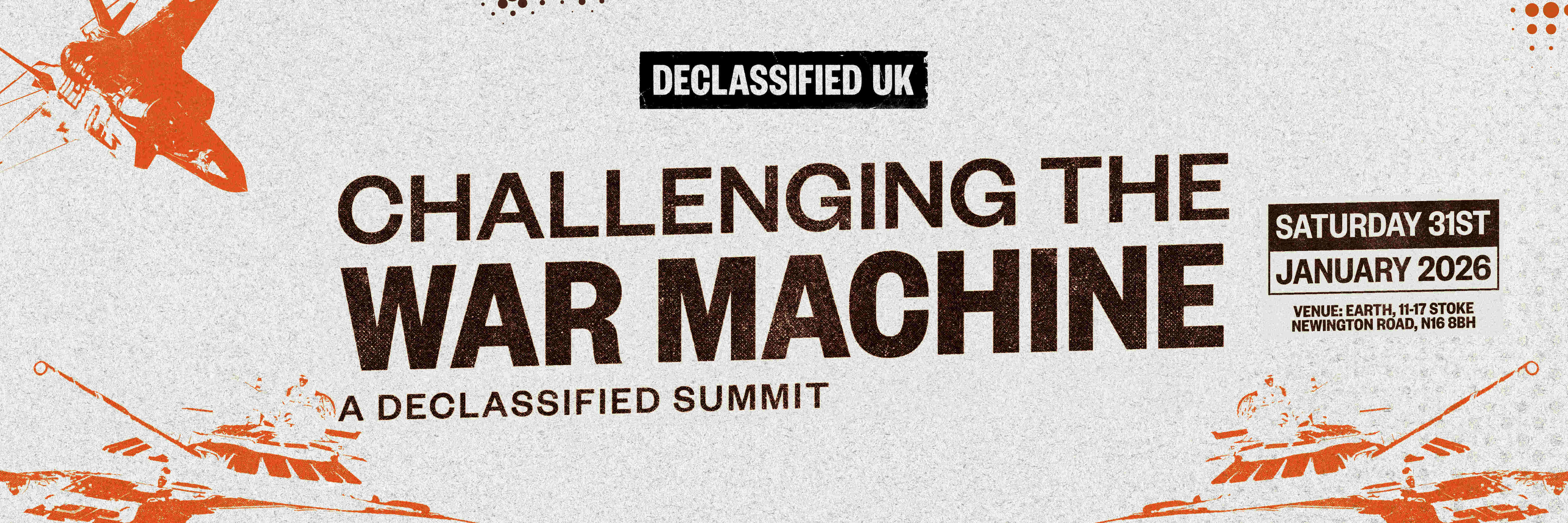
31st January – Challenging the War Machine – a DECLASSIFIED UK SUMMIT


Website of the Week
Now until to February 10, 2026 Radioactive waste storage in France: the debate is finally open! How to participate?
-
Archives
- January 2026 (288)
- December 2025 (358)
- November 2025 (359)
- October 2025 (376)
- September 2025 (258)
- August 2025 (319)
- July 2025 (230)
- June 2025 (348)
- May 2025 (261)
- April 2025 (305)
- March 2025 (319)
- February 2025 (234)
-
Categories
- 1
- 1 NUCLEAR ISSUES
- business and costs
- climate change
- culture and arts
- ENERGY
- environment
- health
- history
- indigenous issues
- Legal
- marketing of nuclear
- media
- opposition to nuclear
- PERSONAL STORIES
- politics
- politics international
- Religion and ethics
- safety
- secrets,lies and civil liberties
- spinbuster
- technology
- Uranium
- wastes
- weapons and war
- Women
- 2 WORLD
- ACTION
- AFRICA
- Atrocities
- AUSTRALIA
- Christina's notes
- Christina's themes
- culture and arts
- Events
- Fuk 2022
- Fuk 2023
- Fukushima 2017
- Fukushima 2018
- fukushima 2019
- Fukushima 2020
- Fukushima 2021
- general
- global warming
- Humour (God we need it)
- Nuclear
- RARE EARTHS
- Reference
- resources – print
- Resources -audiovicual
- Weekly Newsletter
- World
- World Nuclear
- YouTube
-
RSS
Entries RSS
Comments RSS
 nuclear-news