Israel Says Iran Should ‘Never Become a Nuclear Power.’ But What if It Already Is One?
Analysis | Israel Says Iran Should ‘Never Become a Nuclear Power.’ But What if It Already Is One? When politicians talk of a ‘nuclear Iran,’ what exactly do they mean? It is important to understand the terminology, and also for Israel to be on the same page as the Americans before nuclear talks resume The epicenter of the core of Israeli policy on Iran’s nuclear ambitions and program can be reduced to one sentence: “Israel will never allow Iran to become a nuclear power.” A sentence that says it all despite the inherent vagueness, and accurately reflects Israeli interests and its mode of thought….. https://www.haaretz.com/israel-news/.premium.HIGHLIGHT-iran-is-already-a-nuclear-threshold-state-can-israel-live-with-it-1.10072666
U.S. Weighing New Sanctions on Iran as Nuclear Deal Hangs in Balance
U.S. Weighing New Sanctions on Iran as Nuclear Deal Hangs in Balance https://www.democracynow.org/2021/7/30/headlines/us_weighing_new_sanctions_on_iran_as_nuclear_deal_hangs_in_balance HEADLINEJUL 30, 2021 The U.S. is reportedly planning to impose sanctions on Iran’s drone and guided missile programs. This comes following reports the Biden administration is weighing tightening oil sanctions on Iran if talks to relaunch the nuclear deal — which the U.S. unilaterally withdrew from — fail. Iran has repeatedly said it will not recommit to the agreement until the U.S. lifts its devastating sanctions.
Egypt postpones nuclear power plant amid tensions with Russia.
Egypt postpones nuclear power plant amid tensions with Russia over Nile dam,
Egypt pauses El-Dabaa nuclear power plant project for two years amid tensions hanging over the relationship with Russia due to its recent position on the Grand Ethiopian Renaissance Dam crisis and its rapprochement with Ethiopia. George Mikhailuly 28, 2021
Egypt announced the postponement of the completion of the El-Dabaa nuclear plant project to 2030 instead of 2028. Egyptian Nuclear and Radiological Regulatory Authority spokesman Karim al-Adham confirmed in statements to the Egyptian economic newspaper Enterprise July 14 that El-Dabaa nuclear plant will not be completed before 2030 due to the disruption caused by the coronavirus pandemic…………. https://www.al-monitor.com/originals/2021/07/egypt-postpones-nuclear-power-plant-amid-tensions-russia-over-nile-dam
Israel determined to“maintain military superiority”, in preparation for a nuclear Iran
Gantz: We must ‘adapt our plans’ to prepare for a nuclear Iran
Prime minister says Israel carefully monitoring situation in Lebanon and that IDF currently in better place than it was in 2006 war against Hezbollah, Tims of Israel, By JUDAH ARI GROSS15 July 2021, Defense Minister Benny Gantz on Wednesday called for Israel to step up its preparations for the possibility of Iran obtaining a nuclear weapon……… Israel has maintained that as it is not part of the nuclear deal, it is free to act as it sees fit to prevent Iran from obtaining an atomic bomb.
In his speech, Gantz called for the government to allow the country’s security services to “maintain military superiority, which ensures our secure existence and advances peace.”
The remark appeared to refer to a report by the Kan broadcaster earlier in the evening that the IDF was asking the government for a major budget increase, in large part to prepare itself to conduct strikes aimed at thwarting Iran’s nuclear pursuit………https://www.timesofisrael.com/gantz-we-must-adapt-our-plans-to-prepare-for-a-nuclear-iran/
Iran trying to enrich uranium metal that could help develop nuclear weapon, UN watchdog says,
Iran trying to enrich uranium metal that could help develop nuclear weapon, UN watchdog says, ABC, 7 jul 21, Iran has begun the process of producing enriched uranium metal in a move that could help it develop a nuclear weapon, the UN atomic watchdog says.
Key points:
- Tehran says it is trying to develop fuel for a research reactor
- Donald Trump abandoned the US-Iran nuclear deal while US president
- The move could torpedo talks seeking to bring both nations back into the deal
Britain, France and Germany have threatened talks to revive the 2015 Iran nuclear deal in light of the news, while the United States has described it as an “unfortunate step backwards”.
Tehran said the steps, which were disclosed by the International Atomic Energy Agency (IAEA) on Tuesday, were aimed at developing fuel for a research reactor.
US and European officials made clear that Iran’s decision would complicate, and potentially torpedo, indirect US-Iranian talks seeking to bring both nations back into compliance with the 2015 deal, which was abandoned by former US president Donald Trump.
The Joint Comprehensive Plan of Action (JCPOA) imposed curbs on Iran’s nuclear program to make it harder for Tehran to develop fissile material for nuclear weapons in return for the lifting of economic sanctions………………https://www.abc.net.au/news/2021-07-07/iran-nuclear-move-threatens-to-torpedo-deal-talks-with-us/100275388
U.N. chief urges U.S. to remove Iran sanctions as agreed in 2015
U.N. chief urges U.S. to remove Iran sanctions as agreed in 2015
Michelle Nichols NEW YORK, June 30 (Reuters) – U.N. Secretary-General Antonio Guterres has appealed to U.S. President Joe Biden’s administration to lift or waive all sanctions on Iran as agreed under a 2015 deal aimed at stopping Tehran from developing a nuclear weapon.
In a report to the U.N. Security Council, Guterres also urged the United States to “extend the waivers with regard to the trade in oil with the Islamic Republic of Iran, and fully renew waivers for nuclear non-proliferation projects.”
The 15-member council discussed on Wednesday the secretary-general’s biannual report on the implementation of a 2015 resolution that enshrines the nuclear deal between Iran, the United States, France, Britain, Germany, Russia and China…….
Guterres’ appeal to Washington and Tehran comes amid talks to revive the deal – known as the Joint Comprehensive Plan of Action – under which Iran accepted curbs on its nuclear program in return for a lifting of many foreign sanctions against it……….https://www.reuters.com/world/middle-east/un-chief-urges-us-remove-iran-sanctions-agreed-2015-2021-06-30/
US must guarantee it will not leave nuclear deal again, says Iran
US must guarantee it will not leave nuclear deal again, says Iran
Tehran’s insistence signals that issue is still a serious obstacle after three months of talks in Vienna, Guardian, Patrick Wintour Diplomatic editor, Thu 1 Jul 2021 The date for a seventh round has not been set.
A US guarantee that it will never unilaterally leave the Iran nuclear deal again is vital to a successful conclusion of talks in Vienna on the terms of Washington’s return to the agreement, the Iranian ambassador to the UN, Majid Takht-Ravanchi, has said.
His comments are the clearest official signal yet that disagreements between the US and Iran on how such a guarantee might be constructed remain a serious obstacle. Donald Trump took the US out of the nuclear deal in 2018, only three years afterhis predecessor, Barack Obama, had signed it…….. https://www.theguardian.com/world/2021/jun/30/us-must-guarantee-it-will-not-leave-nuclear-deal-again-says-iran
….
Nuclear Reactor Security Risk: Middle East and Gulf Region
Nuclear Reactor Security Risk: Middle East and Gulf Region
By Dr. Paul Dorfman, Honorary Senior Research Associate at the UCL Energy Institute, University College London NCT Magazine 30 June 21, The Middle East and Gulf region faces unique challenges and perceived opportunities when it comes to nuclear power. The tense geopolitical environment makes nuclear power an even more controversial issue here than elsewhere as competing states share the unease that neighbors may use civilian nuclear programs for military ends. It is not that nuclear military interests are sole drivers of support for civil nuclear power, but the fact is dual-use technology comprises a significant complementary factor.
This dynamic plays out via a range of safety and security concerns. Unless enrichment of uranium and reprocessing technologies are effectively regulated against diversion of civil materials for military purposes, the reality is that new nuclear power plants can and will provide the cover to develop and make nuclear weapons. Whether that capability is turned into actual weapons largely depends on political inclination. For example, in response to developments in Iran, Saudi Arabia has made it clear on more than one occasion that there is another reason for their interest in nuclear energy – the relationship between civil and nuclear weapon programs.
Trans-Boundary Consequences
In order to function at any level, nuclear power needs stability and cooperation between neighboring states. However, as recent military strikes infer, the region is one of the world’s most volatile. Nuclear safety revolves around the broader issue of security, especially since some armed groups may view state-sponsored military operations as a reason to target nuclear installations or intercept enriched uranium fuel or waste transfers……………
Such a backdraft from foreign policy, and politics more generally, will increasingly dovetail with regional nuclear safety considerations. This is important because, given the associated high human activity-related hazards, there are broader concerns – since a major nuclear accident or incident would have significant transboundary consequences.
Attack Risk
An attack on a nuclear installation may be one of several types. There are two main targets in a nuclear power plant: the reactor itself and the ponds storing the highly radioactive spent fuel removed from the reactor. An attack on the reactor could cause the core to go critical or result in a loss of the coolant that removes heat from it. And the protection of nuclear plants with fighter aircraft or surface-to-air missiles is not an easy task, with time available to scramble fighter aircraft or fire surface-to-air missiles proving limited. So, there are now heightened concerns about the need to try to secure high-risk radioactive material from concerted attack, sabotage, or hijack to a transporter of nuclear material……..
Radiological Hazard
There are a number of distinct radiological hazards at a nuclear power station, including fission products and the activated inventory of the reactor fuel and core, the irradiated fuel store, and radioactive wastes. Operational hazards also include irradiated spent fuel transportation and new fuel delivery. ……………..
Risk Cycles
Shifting power relations, regional and international rivalries have led to instability, security threats, and patterns of violence in the Middle East and Gulf region. Interactions between soft and military power have played a crucial role in shaping political and security landscapes……….
Another Pathway
But another pathway is both feasible and possible. Given the entropic risks involved, why commit to further nuclear expansion in a region so often impaired by overt or covert conflict? The case for civil nuclear power in the region has never been strong, and because their state electricity systems are relatively small, significant nuclear electricity grid input risks overload anyway.
Worldwide and in the Middle East and Gulf region, the fate of new nuclear is inextricably linked to, and determined by, renewable energy technology roll-out. Currently, global market trends for new nuclear are declining. Whilst ramping improvement in renewable technology is one explanation for this dynamic, the main driver seems to be the plummeting costs of renewable energy and the ramping costs of new nuclear construction.
Accidents Happen ……….. . Whatever one’s view of the risks and benefits of nuclear energy in the Middle East and Gulf region and further afield, it seems clear that the possibility of military attack and catastrophic accident must be factored in – and all that implies for complex defense and energy policy decisions.
Iraq’s stability depends on Iran and the US re-entering the nuclear deal
Iraq’s stability depends on Iran and the US re-entering the nuclear deal https://www.trtworld.com/opinion/iraq-s-stability-depends-on-iran-and-the-us-re-entering-the-nuclear-deal-47901
Reviving the nuclear deal would give Iran less of an incentive to target US positions in Iraq and support Baghdad’s sovereignty.
Iran’s Chief Justice Ebrahim Raisi has emerged as president after an election with one of the lowest turnouts in the Islamic Republic’s history.
This outcome favours Ayatollah Ali Khamenei, Iran’s Supreme Leader, as it consolidates power in the hands of the so-called “hardliners” in a triumvirate with the presidency and the Revolutionary Guard.
The last time such an alignment occurred was during the Bush administration and the election of Mahmoud Ahmadinejad in 2005. Both alignments also corresponded with more antagonistic American foreign policies.
By withdrawing from the nuclear deal and undermining Rouhani’s foreign policy, Trump confirmed the hardliner mantra that the US is fickle and cannot be trusted to honour any agreement. He also contributed to Raisi’s election, as well as what is set to be a more assertive Iranian foreign policy towards Iraq.
But this wasn’t the case before. Former president Hassan Rouhani’s foreign policy sought to respect Iraq’s sovereignty, which was at odds with the hardliners who wanted to use Iraq as a means of challenging the US during the more bellicose Trump administration.
The consolidation of hardliners in Tehran’s leadership today means that its internal foreign policy conflict no longer exists.
Iraq’s future is now tied to Iran and the US finding an agreement to re-enter the Iran nuclear deal.
After the September 11 attacks, Iran and the US shared enmity towards the Taliban in Afghanistan. The George W Bush administration missed a window to forge relations with what was then a conciliatory Iranian president Mohammed Khatami. Like Rouhani, Khatami sought to engage with the US.
However, the Bush administration declared that the Islamic Republic of Iran formed part of an “axis of evil,” which included Iraq and North Korea. In March 2003, American forces were on Iran’s border, having just successfully invaded Iraq, a member of the “Axis.”
It was then that Iran offered the US a comprehensive negotiation proposal, where the Islamic Republic was willing to open its nuclear program for inspections, work to stabilise Iraq and cooperate against Al Qaeda, offering Washington what Trump later asked of Iran during his administration.
The significance of this offer was not that it occurred during the presidency of a moderate, Khatami, but that it had the blessing of Khamenei, the key decision maker in Iran.
Yet former Vice President Dick Cheney responded, “We don’t talk to evil,” and the Bush administration never engaged with the Iranian offer.
The Axis of Evil speech led to the victory of Iranian hardliners in the nation’s parliament and after the Iraq War, hardline president Mahmoud Ahmadinejad won the presidency in 2005, an outcome that Khamenei would have favoured then in response to American belligerency.
When Washington refused Iran’s overture, the Islamic Republic then was in a position to undermine US presence in Iraq after 2005. One tool at Iran’s disposal was its support of a variety of Iraqi insurgents to target American forces.
Jump to 2021, and Iran is in a much better position to project its influence in Iraq due to its sprawling network of allied militias. This is a message that the Biden administration has surely received.
Ultimately Iran, with its new constellation of power in Tehran, has found a way to shore up its position at home and in the region ahead of any potential renegotiations of the nuclear deal.
The future of US-Iran relations
Negotiations over re-entering the Iran deal continue in Vienna. Had these negotiations succeeded under Rouhani’s administration, it would have given the moderate faction in Iran a victory prior to the elections.
While a hardliner consolidation of power would not bode well for Iraq’s sovereignty, a resumption of the Iran nuclear deal would. It gives Iran less of an incentive to foment rocket strikes at US targets in Iraq, which only intensified in the aftermath of Trump’s withdrawal from this agreement.
Ironically, with a hardliner ascendancy today, a new deal is more likely, as there is one Iranian faction at the negotiating table rather than competing ones. This ultimately means Baghdad’s future domestic security is contingent on events in far-off Vienna and the nuclear negotiation.
Notwithstanding the hardliners in power, their legitimacy still rests on getting the Trump-era sanctions rescinded. Meanwhile, the Biden administration most likely wants to settle this issue in the Middle East to focus its efforts on China.
As Ali Vaez and Dina Esfandiary write in the New York Times, “The alternative to negotiations — an exponentially growing Iranian nuclear program — threatens to set the United States and the Islamic Republic on a collision course where there will be no winners.”
In this case there will also be another loser, Iraq, caught again between the two adversaries’ conflict.
Iran refuses to give nuclear site images to IAEA
Iran refuses to give nuclear site images to IAEA
Parisa Hafezi, DUBAI, June 27 (Reuters) – The speaker of Iran’s parliament said on Sunday Tehran will never hand over images from inside of some Iranian nuclear sites to the U.N. nuclear watchdog as a monitoring agreement with the agency had expired, Iranian state media reported.
“The agreement has expired … any of the information recorded will never be given to the International Atomic Energy Agency and the data and images will remain in the possession of Iran,” said Mohammad Baqer Qalibaf.
The announcement could further complicate talks between Iran and six major powers on reviving a 2015 nuclear deal……………… https://www.reuters.com/world/middle-east/iran-says-nuclear-site-images-wont-be-given-iaea-deal-has-expired-2021-06-27/
Iran says Nuclear Deal Salvageable But Will Not Negotiate Forever
 |
Iran Says Nuclear Deal Salvageable But Will Not Negotiate Forever NDTV, 27 June 21,
Iran and the US have been holding indirect talks on reviving the 2015 agreement between Tehran and six powers that imposed restrictions on Tehran’s nuclear activities in exchange for lifting international sanctions.
Dubai:
Iran said on Saturday it believes a reinstatement of its 2015 nuclear deal with major world powers is possible but warned that Tehran “will not negotiate forever”.
“Out of a steadfast commitment to salvage a deal that the US tried to torpedo, Iran has been the most active party in Vienna, proposing most drafts,” Iranian Foreign Ministry spokesman Saeed Khatibzadeh said on Twitter, referring to talks aimed at reviving the nuclear deal.
Iran and the United States have been holding indirect talks on reviving the 2015 agreement between Tehran and six powers that imposed restrictions on Tehran’s nuclear activities in exchange for lifting international sanctions. …………. https://www.ndtv.com/world-news/iran-says-nuclear-deal-salvageable-but-will-not-negotiate-forever-2473303
Sabotage attempt on Iran nuclear reactor
‘Sabotage attack’ on Iranian nuclear building foiled
The attack was halted ‘before causing any damage to the building’, news agencies said. A sabotage attempt against a building belonging to the Iranian Atomic Energy Organization has been foiled, Iranian media reported.
An Iranian news site close to security services said authorities thwarted a “sabotage attack” on the country’s civilian nuclear programme on Wednesday, without providing further information…….
Iran’s English-Language Press TV reported “the hostile attempt occurred on early Wednesday, but did not result in any casualties or damage owing to tight security precautions adopted following similar acts of sabotage against Iranian nuclear sites and scientists”.
For the first time, drones autonomously attacked humans
For the First Time, Drones Autonomously Attacked Humans. This Is a Turning Point. Drone experts have long dreaded this moment.
Popular Mechanics, BY KYLE MIZOKAMIJUN 1, 2021
- Libyan forces reportedly used Kargu-2 drones to autonomously seek out and attack human targets.
- This is the first recorded case of using a self-hunting drone against people.
- Drone experts say this extremely dangerous development could be dangerous to people far beyond the traditional battlefield.
The world’s first recorded case of an autonomous drone attacking humans took place in March 2020, according to a United Nations (UN) security report detailing the ongoing Second Libyan Civil War. Libyan forces used the Turkish-made drones to “hunt down” and jam retreating enemy forces, preventing them from using their own drones.
The field report (via New Scientist) describes how the Haftar Affiliated Forces (HAF), loyal to Libyan Field Marshal Khalifa Haftar, came under attack by drones from the rival Government of National Accord (GNA) forces. After a successful drive against HAF forces, the GNA launched drone attacks to press its advantage. From the report:
Logistics convoys and retreating HAF were subsequently hunted down and remotely engaged by the unmanned combat aerial vehicles or the lethal autonomous weapons systems such as the STM Kargu-2 (above) and other loitering munitions. The lethal autonomous weapons systems were programmed to attack targets without requiring data connectivity between the operator and the munition: in effect, a true “fire, forget and find” capability.
The report says Turkey supplied the drones to Libyan forces, which is a violation of a UN arms embargo slapped on combatants in the conflict.
…….. Drone experts have been dreading this moment while advocating for a ban on autonomous attack drones. https://www.popularmechanics.com/military/weapons/a36559508/drones-autonomously-attacked-humans-libya-united-nations-report/
U.S. wants nuclear deal done before Iran’s new president takes power
U.S. wants nuclear deal done before Iran’s new president takes power, Dave Lawler Axios, 17 June 21, The Biden administration wants to finalize a deal with Iran to return to the 2015 nuclear deal in the six weeks remaining before a new Iranian president is inaugurated, a U.S. official tells Axios.
Key quote: The official said it would be “concerning” if talks dragged on into early August, when Iran’s transition is due to take place. “If we don’t have a deal before a new government is formed, I think that would raise serious questions about how achievable it’s going to be,” the official said.
Driving the news: Conservative judiciary chief Ebrahim Raisi, a close ally to Supreme Leader Ali Khamenei, is the clear favorite to win Friday’s presidential election in Iran. No prominent members of the reformist camp were permitted to run, meaning the more moderate President Hassan Rouhani will almost certainly hand power to a hardliner.
- Analysts and some diplomats involved in the negotiations have long said it would be easier to reach a deal with the outgoing administration than with a newly inaugurated government, particularly one led by Raisi.
- Six rounds of talks have been held so far in Vienna, with the U.S. not in the room but negotiating indirectly through EU intermediaries.
State of play: Iran’s top negotiator, Abbas Araghchi, said this week that while a deal wouldn’t be possible in the current round of talks, Iran had no interest in “wasting time” and the elections wouldn’t be a factor………….https://www.axios.com/us-iran-nuclear-deal-talks-raisi-inauguration-ed00555e-db84-4d26-9e2b-1ad8b21f9fc5.html
Israel’s outgoing top Mossad chief reveals that they caused recent attacks targeting Iran’s nuclear programme and murdering their scientists.
Israel spy on Iran nuclear scientists: ‘We offer them a way out’, Aljazeera
The outgoing spy agency chief reveals Israel was behind recent attacks targeting Iran’s nuclear programme and its top scientist. The outgoing chief of Israel’s Mossad intelligence service has offered the closest acknowledgement yet his country was behind recent attacks targeting Iran’s nuclear programme and a military scientist.
The comments by Yossi Cohen, speaking to Israel’s Channel 12 investigative programme Uvda in a segment aired on Thursday night, offered an extraordinary debriefing by the head of the typically secretive agency in what appears to be the final days of Prime Minister Benjamin Netanyahu’s rule.
It also gave a clear warning to other scientists in Iran’s nuclear programme that they too could become targets for assassination even as diplomats in Vienna try to negotiate terms to try to salvage the 2015 nuclear accord with world powers. United States President Joe Biden has dispatched his diplomats to revive the landmark deal from which his predecessor, Donald Trump, walked away in 2018.
“If the scientist is willing to change career and will not hurt us anymore, then yes, sometimes we offer them” a way out, Cohen said.
Among the major attacks to target Iran, none have struck deeper than two explosions over the last year at its Natanz nuclear facility. There, centrifuges enrich uranium from an underground hall designed to protect them from air strikes.
In July 2020, a mysterious explosion tore apart Natanz’s advanced centrifuge assembly, which Iran later blamed on Israel. Then in April of this year, another blast tore apart one of its underground enrichment halls.
Discussing Natanz, the interviewer asked Cohen where he would take them if they could travel there, he said “to the cellar” where “the centrifuges used to spin”.
“It doesn’t look like it used to look,” he added.
Iran nuclear programme is peaceful
Cohen did not directly claim the attacks, but his specificity offered the closest acknowledgement yet of an Israeli hand in the attacks. The interviewer, journalist Ilan Dayan, also seemingly offered a detailed description in a voiceover of how Israel snuck the explosives into Natanz’s underground halls.
“The man who was responsible for these explosions, it becomes clear, made sure to supply to the Iranians the marble foundation on which the centrifuges are placed,” Dayan said. “As they install this foundation within the Natanz facility, they have no idea that it already includes an enormous amount of explosives.”
They also discussed the November killing of Mohsen Fakhrizadeh, an Iranian scientist who began Tehran’s military nuclear programme decades ago. The US and its regional ally Israel suspect that Iran is trying to develop nuclear weapons. But Tehran has long maintained its programme is peaceful.
While Cohen on camera does not claim the killing, Dayan in the segment described Cohen as having “personally signed off on the entire campaign”. Dayan also described how a remotely operated machine gun fixed to a pick-up truck killed Fakhrizadeh and later self-destructed.
Cohen described an Israeli effort to dissuade Iranian scientists from taking part in the programme, which had seen some abandon their work after being warned, even indirectly, by Israel. Asked by the interviewer if the scientists understood the implications if they did not stop, Cohen said: “They see their friends.”
They also talked about Israel’s operation seizing archival documents from Iran’s military nuclear programme. Dayan said 20 agents – none Israelis – seized material from 32 safes, then scanned and transmitted a large portion of the documents. Cohen confirmed that the Mossad received most of the material before it was physically taken out of Iran……… https://www.aljazeera.com/news/2021/6/11/ex-mossad-chief-signals-israel-behind-iran-nuclear-attacks
1 This Month
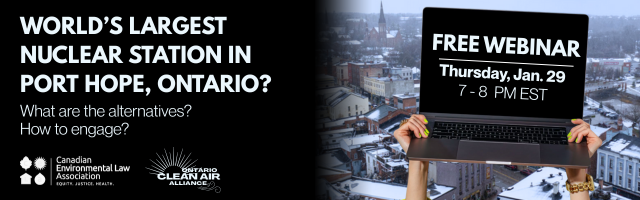
29 Jan. Thursday 7-8 p.m. Webinar – World’s Largest Nuclear Station in Port Hope, ON?
To see nuclear-related stories in greater depth and intensity – go to https://nuclearinformation.wordpress.com/
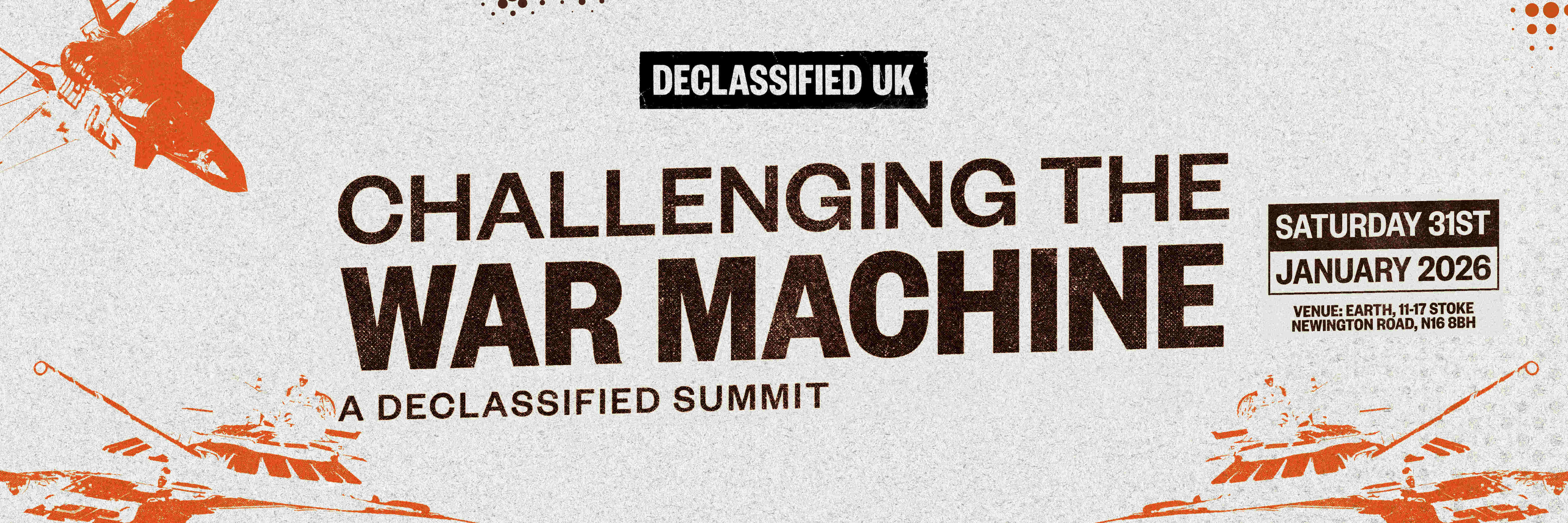
31st January – Challenging the War Machine – a DECLASSIFIED UK SUMMIT

Website of the Week
Now until to February 10, 2026 Radioactive waste storage in France: the debate is finally open! How to participate?
-
Archives
- January 2026 (288)
- December 2025 (358)
- November 2025 (359)
- October 2025 (376)
- September 2025 (258)
- August 2025 (319)
- July 2025 (230)
- June 2025 (348)
- May 2025 (261)
- April 2025 (305)
- March 2025 (319)
- February 2025 (234)
-
Categories
- 1
- 1 NUCLEAR ISSUES
- business and costs
- climate change
- culture and arts
- ENERGY
- environment
- health
- history
- indigenous issues
- Legal
- marketing of nuclear
- media
- opposition to nuclear
- PERSONAL STORIES
- politics
- politics international
- Religion and ethics
- safety
- secrets,lies and civil liberties
- spinbuster
- technology
- Uranium
- wastes
- weapons and war
- Women
- 2 WORLD
- ACTION
- AFRICA
- Atrocities
- AUSTRALIA
- Christina's notes
- Christina's themes
- culture and arts
- Events
- Fuk 2022
- Fuk 2023
- Fukushima 2017
- Fukushima 2018
- fukushima 2019
- Fukushima 2020
- Fukushima 2021
- general
- global warming
- Humour (God we need it)
- Nuclear
- RARE EARTHS
- Reference
- resources – print
- Resources -audiovicual
- Weekly Newsletter
- World
- World Nuclear
- YouTube
-
RSS
Entries RSS
Comments RSS
 nuclear-news