Next week’s round of talks with Iran on the difficult path to a final nuclear deal
 Next Round of Nuclear Talks With Iran Set for Next Week http://www.nytimes.com/2015/04/17/world/middleeast/next-round-of-nuclear-talks-with-iran-set-for-next-week.html?_r=0 By THOMAS ERDBRINK APRIL 16, 2015 TEHRAN — The next round of nuclear talks between world powers andIran is scheduled for next week in Vienna, as the two sides begin to address the issues they left unresolved earlier this month in Lausanne, Switzerland, and try to conclude a comprehensive agreement by the end of June.
The European Union, the host of the talks, said in a statement released on Thursday that its senior negotiator, Helga Schmid, will meet with Iran’s deputy foreign minister, Abbas Araghchi, on Wednesday, to pursue an agreement that would restrict Iran to peaceful research in the nuclear area in exchange for the phased lifting of economic sanctions.
After the parties reached a framework agreement in Lausanne, Iran’s supreme leader, Ayatollah Ali Khamenei, complicated matters by insisting that all sanctions would have to be lifted immediately and that all military sites would be off limits to inspectors.
President Hassan Rouhani on Thursday acknowledged the problems but said he remained optimistic that the negotiators would reach a deal. “There is a difficult path ahead of us towards the final deal,” he said at a news conference during a trip to northern Iran, but the country’s “will and decision is to continue the negotiations until a final deal is reached.”
International Atomic Energy Agency (IAEA) being used to derail nuclear deal with Iran ?
 Iran nuclear deal: ‘Accusations with very little proof’, DW 14 Apr 15 In an interview with Deutsche Welle, former IAEA nuclear inspector Robert Kelley suspects the nuclear watchdog could be misused as a tool to derail the nuclear deal with Iran. Diplomats and experts will start hammering out the legal and technical details of a nuclear agreement between Iran and six world powers next week in Vienna, the EU diplomatic service announced Thursday.
Foreign ministers from Iran and the group of Britain, China, France, Russia, the United States and Germany agreed on the outlines of the deal on April 2 in Lausanne. In addition, Iran and the group of six still have to draw up a list of Iranian nuclear sites, which experts from the International Atomic Energy Agency, IAEA, will get to visit as part of its probe into alleged nuclear weapons projects.
A senior IAEA delegation returned from a visit to Tehran on Thursday, without any answers on ten new suspected research and development projects identified by the agency in addition to the two that are already being discussed.
DW talked to Robert Kelley, former IAEA director for nuclear inspections in Iraq and now expert for nuclear energy and weapons issues with the Stockholm-based International Peace Research Institute.
DW: The IAEA plays a central role in the nuclear deal reached in Lausanne on April 2. Now, an IAEA delegation under chief inspector Tero Varjoranta, which sought answers to allegations over the possible military use of Irans nuclear program in the past, left Tehran without those answers. What exactly is the IAEA looking for?……….
In this age of satellites and super high sensitive detectors, how difficult would it be to effectively hide nuclear activities?
The very best detectors in the world are the IAEA inspectors. If you for some reason offend Iran so much, that they kick the IAEA out, then you are blind. You won´t know anything about what is going on. So one of the things that are good about this new agreement is: The inspectors have access to every aspect of uranium mining, conversion to the right chemicals, chemicals producing uranium hexafluoride in the enrichment plant and things after the enrichment plant. So the inspectors are getting a very good picture of everything Iran is openly doing.
And they are also going to be looking at procurement. The import regime is part of the agreement. That is a very powerful thing. The chances of having a completely clandestine, hidden, secret program becomes much more difficult when you have these things in place. Things like the handling of uranium and plutonium do leave a lot of signatures and detectors can pick them up. Not from space but on the ground. But you can´t detect things like explosives and explosive bridgewire detonators, because they have conventional military uses, they are used in mining, for all kinds of other activities. And you can´t call that a nuclear activity. http://www.dw.de/iran-nuclear-deal-accusations-with-very-little-proof/a-18388394
Complex nuclear relationship between Pakistan, Saudi Arabia and Iran
Pakistan Has Complicated Nuclear Relationship With Saudi Arabia, Iran VOA, Ayesha Tanzeem April 07, 2015 ISLAMABAD—
Iran’s foreign minister visits Pakistan Wednesday to discuss the conflict in Yemen, which many see as a fight for influence between regional rivals Iran and Saudi Arabia.
Iran also has recently reached a framework nuclear agreement with six world powers to possibly curb the weapons potential of its nuclear program.
Saudi Arabia, in the past, has reportedly sought to form its own nuclear alliances to counter a perceived Iranian threat. A member of the Saudi royal family and the kingdom’s former intelligence chief, Prince Turki al-Faisal, warned a few months ago that the kingdom would seek the same nuclear capabilities that Tehran is allowed to maintain under any deal.
In this regard, Pakistan’s relationship with the kingdom is unusual.
On one hand, it has sold nuclear secrets to Iran in the past through a network run by former chief Pakistani nuclear scientist A.Q. Khan. The network also sold nuclear technology or know-how to Libya and North Korea.
On the other, it has faced allegations of promising Saudi Arabia a nuclear umbrella against Iran.
‘Unacknowledged nuclear partnership’…….http://www.voanews.com/content/pakistan-has-complicated-nuclear-relationship-with-saudi-arabia-iran/2710343.html
Safest option for the world is a nuclear deal with Iran
 A nuclear deal with Iran is the best option By Fareed Zakaria WP April 2 When making up their minds about the nuclear deal with Iran, people are properly focused on its details. But to figure out whether an agreement that limits and inspects Iran’s nuclear program is acceptable, one has to consider seriously the alternatives to it — and there are really only two.
First, a return to sanctions. Let’s say that the U.S. Congress rejects the final agreement reached by all in June. What then? The current sanctions regime against Iran is almost unprecedented in that all the world’s major powers, and Iran’s neighbors, support it. Usually sanctions wear thin over time.
If other countries believe that Iran made a reasonable offer that the United States turned down, they are unlikely to continue to support a tight sanctions regime. Most studies confirm that it is the multilateral aspect of the sanctions against Iran that has made them effective………
Would continued sanctions halt the nuclear program? That’s highly unlikely. Iran has expanded its nuclear program under sanctions for the last two decades. In 2003, Iran had under 200 centrifuges. Today it has 19,000. The restrictions are now tighter — if they last — but Iran’s nuclear establishment is also much larger. Keep in mind that Iran began showing active interest in a nuclear program as early as the 1950s. It now has thousands of nuclear scientists and technicians who work in the field.
That raises option two, a military attack. People speak of a strike on Iranlike Israel’s against an Iraqi reactor in 1981 and a Syrian facility in 2007. But those were single facilities. Iran, by contrast, has a vast nuclear industry, comprising many installations spread across the country, some close to population centers, others in mountainous terrain. The United States would effectively have to go to war with Iran, destroying its air defenses, then attacking its facilities in dozens — perhaps hundreds — of sorties. The bombers would be equipped with highly explosive weapons, demolishing buildings, reactors and laboratories, but also producing considerable collateral damage.
What would be the effect of such an attack? When any country is bombed by foreigners, its people tend to rally around the regime. The Islamic Republic would likely gain domestic support. It would also respond in various ways, through its allies in Afghanistan, Iraq, Lebanon and elsewhere. The attacks might be directed at U.S. troops or allies.
An attack would also mean the splintering of the international coalition against Iran. Russia, China and many other countries would condemn it. Iran would be seen as the victim of an unprovoked invasion. The sanctions would crumble. Its nuclear program would be devastated, but Iran would begin to rebuild it. Even under the current sanctions regime, Iran makes tens of billions of dollars in oil revenues, more than enough to afford to rebuild its facilities.
Finally, once it had been attacked, Tehran would invoke the need for a deterrent against future attacks and would work directly and speedily not on a nuclear program but a nuclear weapon. In his op-ed advocating war with Iran, former U.N. ambassador John Bolton argues that military attacks “should be combined with vigorous American support for Iran’s opposition, aimed at regime change in Tehran.” But bombing and then threatening the Islamic Republic’s existence would likely produce exactly the opposite effect — a government strengthened at home with a clear rationale to acquire a nuclear deterrent. http://www.washingtonpost.com/opinions/a-nuclear-deal-with-iran-is-the-best-option/2015/04/02/bc8292d2-d978-11e4-8103-fa84725dbf9d_story.html
Landmark agreement in nuclear deal between Iran and the West
World powers agree ‘historic’ nuclear deal http://www.skynews.com.au/news/top-stories/2015/04/03/eu–iran-hail-nuclear-talks-breakthrough.html Iran and world powers have agreed on the framework of a potentially historic deal aimed at curbing Tehran’s nuclear drive after marathon talks in Switzerland.t marks a major breakthrough in a 12-year stand-off between Iran and the West, which has long feared Tehran wants to build a nuclear bomb. US President Barack Obama welcomed the ‘historic understanding’ with Iran but cautioned more work needed to be done. ‘If Iran cheats, the world will know it,’ he said in a televised address from the White House on Thursday.
After eight days of talks that sometimes went through the night, Iran agreed to curtail its nuclear program in return for the lifting of punishing sanctions, said EU foreign policy chief Federica Mogherini.
The main outlines agreed at the negotiations in the Swiss city of Lausanne now have to be finalised in a highly complex agreement by June 30.
-US Secretary of State John Kerry hailed a ‘big day’, saying on Twitter that the global powers and Iran ‘now have parameters to resolve major issues on nuclear program. Back to work soon on a final deal’.
Iranian President Hassan Rouhani said the drafting of a full agreement would begin immediately with the aim of completing it by the June 30 deadline. Iranian media said the deal will include Iran slashing by two-thirds, to 6000 from 19,000, the number of centrifuges, which can make fuel for nuclear power but also the core of a nuclear bomb.
Mogherini said the United States and the EU will lift all nuclear-related sanctions on Iran once the UN atomic agency has verified that Tehran has stuck to the ground-breaking deal. Mogherini, in a joint press statement with Iranian Foreign Minister Mohammad Javad Zarif, also said that the design of a new reactor will be changed so that no weapons-grade plutonium can be produced.
The Fordo facility, built deep into a mountain, will remain open but will not be used for enrichment but for research and development.
The so-called P5+1 group – the United States, Britain, China, France and Russia plus Germany – hope that the deal will make it virtually impossible for Iran to make nuclear weapons under the guise of its civilian program. France warned that the sanctions could be reimposed if Tehran does not fully keep its side of the bargain.The office of President Francois Hollande said in a statement that Paris would watch closely to ensure a ‘credible’ and ‘verifiable’ final agreement that prevents Iran from developing a nuclear weapon.
Israel’s Binyamin Netanyahu denounces Iran nuclear negotiations
According to the Haaretz news website, the Israeli prime minister claimed there was an “Iran-Lausanne-Yemen” axis, linking the venue for the nuclear talks with Iranian backing for Houthi rebels in Yemen, and said the deal posed a threat to humanity that must be stopped…….
Netanyahu made his remarks as negotiations in Lausanne approached the 31 March deadline for an understanding on the framework for a deal, and took on a new intensity. The UK foreign secretary, Philip Hammond, and his Russian counterpart, Sergei Lavrov, arrived at the Swiss lakeside town on Sunday evening to join the US secretary of state, John Kerry, and foreign ministers from Iran, France, Germany and China, as well as the EU foreign policy chief, Federica Mogherini………
A possible solution is for the foreign ministers to make a joint declaration in Lausanne or in nearby Geneva, to be followed by the publication of an informal “factsheet” of agreed points, that could be officially deniable in Tehran. A former state department official said it could take several days to draft this, so experts could stay behind after the foreign ministers leave, to work on the document before Congress reconvenes in mid-April.
However, a European official at the talks said they were still mired in issues of substance, and had yet to tackle differences over presentation.
“We will remain at the negotiation table for however long it takes to get a good deal,” the Iranian deputy foreign minister, Abbas Araghchi. He added: “All the sides are strongly motivated to reach a compromise.” http://www.theguardian.com/world/2015/mar/29/binyamin-netanyahu-denounces-iran-nuclear-negotiations
Imperative to complete nuclear deal with Iran
The agreement under discussion by the P5+1 with Iran is fundamentally to provide assurances that Iran’s nuclear program has purely civilian, peaceful uses. This is not an arms control treaty because it will not address weapons. While there is evidence to suggest that Iran engaged in nuclear weaponization activities, there is no evidence that Iran now has nuclear weapons. As a non-nuclear-weapon state, party to the Treaty on the Nonproliferation of Nuclear Weapons (NPT), Iran is obligated not to manufacture, acquire, or otherwise obtain nuclear weapons. The agreement under discussion will impose requirements on Iran in addition to those it has as an NPT party. [Iran hopes the deal will be endorsed by a Security Council resolution and not involve the U.S. Congress since the five members of the United Nations Security Council are involved.]
 We Need To Get This Iranian Nuclear Deal Done, Forbes, James Conca, 26 Mar 15 By the sounds of the rhetoric going back and forth in the media, you’d think the Iranian Nuclear Deal we’re trying to put in place is a horrible loss for the United States, and that we’re being taken for a ride by the wily Ayatollahs.
Or that previous deals with Iran hadn’t ever worked.
Nothing could be farther from the truth. Last year, the five members of the United Nations Security Council, the United States, Great Britain, France, China and Russia, plus Germany, called the P5+1 Group, reached an interim deal with Iran to stop their nuclear weapons program while a larger deal could be brokered. Four key provisions were obtained in this deal and all four have occurred:……… Continue reading
Iran nuclear talks don’t mention the factor of sabotage
Unstated Factor in Iran Talks: Threat of Nuclear Tampering, NYT, By DAVID E. SANGER and WILLIAM J. BROADMARCH 21, 2015 “………if negotiators succeed in reaching a deal with Iran, does the huge, covert sabotage effort by the United States, Israel and some European allies come to an end? “Probably not,” said one senior official with knowledge of the program. In fact, a number of officials make the case that surveillance of Iran will intensify and covert action may become more important than ever to ensure that Iran does not import the critical materials that would enable it to accelerate the development of advanced centrifuges or pursue a covert path to a bomb.
In the case of the covert effort to purchase the specialty aluminum, the Iranians actually discovered the switch before they installed the tubes, and now say they are racing ahead to develop a next-generation centrifuge that would produce nuclear fuel far faster, a prospect that has become a major sticking point in negotiations.
In public, the Obama administration says economic sanctions on oil exports and financial transactions drove Iran to negotiations — and the prospect of getting those restrictions lifted are the best chance of persuading Iran’s leadership to take a diplomatic deal limiting Iran’s production of nuclear fuel for a decade or more.
In private, officials say sabotage was the other big stick — a persistent effort to slow Iran’s progress, and a signal that the United States had other ways to deal with the nuclear program. On occasion they allude to it, as Stephen J. Hadley, President Bush’s national security adviser, did at a presentation on sanctions last year, when he talked about how the financial penalties were supplemented by “things directed at their program, which we can’t talk about.”
Although American officials remain suspicious of Iran operating a covert nuclear facility, they say they see no solid evidence of a hidden operation today.
It is entirely possible that if an accord is reached, President Obama could call a pause in what has been more than a decade of attacks, the most famous of which was a yearslong effort, code-named Olympic Games, which inserted into Iranian facilities the most sophisticated cyberweapons ever deployed. One of them was the Stuxnet worm that disabled about 1,000 centrifuges, but also spread around the world, revealing the program.
But reaching an accord is quite different than reaching a state of trust. Inside Iran, there will be pressure to keep making slow progress on a nuclear program that is central to the ambitions of the Iranian Revolutionary Guard Corps and thousands of scientists who have labored for years. And in the uneasy alliance among Israel, the United States and Europe there will be continued debate about whether to supplement diplomatic pressure with covert action to keep Iran from getting to the threshold of being able to build a weapon.
For the past decade or so, the covert war to halt Iran’s nuclear program has included high-profile assassinations of their top scientists — widely attributed to Israel — and cyberattacks.
The assassinations suddenly stopped a few years ago, after they were publicly denounced by the United States. The cyberattack efforts may be continuing, probably at a lower level: a recently disclosed document from the National Security Agency, written in 2013, describes “NSA’s planned battle rhythm” to attack Iran’s systems in case of a crisis, and “Iran’s discovery of computer network exploitation tools on their networks in 2012 and 2013.” They make it clear that the N.S.A. has played a crucial role in the negotiations, in “support to policy makers” during negotiation on Iran’s nuclear program.
The ultimate goal of the covert program of industrial sabotage, according to intelligence and weapons specialists, is to produce damage obscure enough to evade easy detection, but extensive enough to result in random failures that seriously impede Iran’s nuclear drive………http://www.nytimes.com/2015/03/22/world/middleeast/unstated-factor-in-iran-talks-threat-of-nuclear-tampering.html?_r=0
US Republican Senators undermine nuclear talks: reactions from Iran and White House
Iran condemns ‘untrustworthy’ America as Senate letter casts doubt over nuclear deal Philip Hammond, the Foreign Secretary, warns that the letter from 47 Republican Senators “could become a spanner in the works” of nuclear talks Telegraph By David Blair, and Peter Foster in Washington 10 Mar 2015Philip Hammond, the Foreign Secretary, warned that the letter “could become a spanner in the works” of the negotiations, due to resume on Monday, with an “unpredictable effect on opinion” inside Iran.
The US senators sent an unprecedented “open letter” to the “leaders of the Islamic Republic of Iran”, warning that a future US president might “revoke” any agreement on the country’s nuclear programme “with the stroke of a pen”. Continue reading
USA Republicans tried to derail Iran nuclear talks
Iran’s foreign minister, Mohammad Javad Zarif, also poured derision on the Republican letter in a statement expressing astonishment that members of Congress would seek to undermine a US administration by writing directly to a foreign power, and suggesting that the letter’s authors had much to learn about international and even US law.
However, the sharpest reaction to Monday’s open letter came from the White House. President Obama accused its 47 Republican signatories of “wanting to make common cause with the hardliners in Iran”.
The US vice-president, Joseph Biden, said the letter, drafted by Tom Cotton, a freshman senator from Arkansas, was “expressly designed to undercut a sitting president in the midst of sensitive international negotiations”.
It was “beneath the dignity of the institution I revere”, Biden said in a statement. Continue reading
Omissions in Netanyahu’s biased speech to US Congress about Iran nuclear negotiations
What Netanyahu left out of his speech to Congress http://warincontext.org/ 03/06/2015
Gary Sick lists five significant omissions: 1. Iran has dramatically reduced its stockpile of enriched uranium. Remember Bibi’s cartoon bomb that was going to go off last summer? Well, it has been drained of fuel, and that will probably continue to be true indefinitely. No mention.
2. Inspections will continue long after the nominal 10-year point, contrary to his claim that everything expires in ten years. No mention.
3. The heavy water reactor at Arak will be permanently modified, so it produces near zero plutonium. Not only did he not mention it, but he listed the reactor and plutonium as one of his threats.
4. His repeated assertion that Iran is actively seeking nuclear weapons ignores the judgment “with high confidence” of both American and Israeli intelligence that Iran has taken no decision to build nuclear weapons. It also contradicts the repeated findings of the IAEA that no materials have been diverted for military purposes.
5. All the major countries of the world are co-negotiators with the United States, so a U.S. congressional intervention that killed the deal will not only affect us but all of our major allies. If we stiff them, there is no reason to believe the international sanctions will hold for long. No mention.
Theatrics by Israel’s Netanyahu highlight the need for a nuclear agreement with Iran
brings negotiators together, Guardian, http://www.theguardian.com/world/julian-borger-global-security-blog/2015/mar/05/iran-nuclear-talks-very-close-to-a-deal-as-netanyahu-brings-negotiators-together Julian Borger, American and Iranian diplomats find common ground rejecting Israeli leader’s combative approach to negotiations, but also agree serious hurdles remain to meeting March deadline. The long and convoluted negotiations over Iran’s nuclear programme adjourned on Wednesday amid talk of continuing progress towards a comprehensive deal but of tough political decisions still to be made.The talks will resume on March 15, probably in Geneva, as the latest deadline for agreement looms at the end of the month.
Iran’s foreign minister, Mohammad Javad Zarif said a deal was “very close”,telling NBC that he and his team were prepared to carry on working through the Persian New Year celebration of Nowruz starting on March 21. Continue reading
Iran’s most notorious dissident group loves luring gullible U.S. officials and journalists
That Secret Iranian ‘Nuclear Facility’ You Just Found? Not So Much.Iran’s most notorious dissident group loves luring gullible U.S. officials and journalists into seeing a bomb factory beneath every building in Tehran. Dig a little deeper, sheeple. FP, BY JEFFREY LEWIS MARCH 3, 2015That’s not quite the same thing as saying it’s a load of bullfeathers, but we’ll get there in due course. The story may be false, but it demonstrates both the culture of leaks in Washington and the way open-source information can challenge that culture………
there is every reason to think the latest allegations by NCRI represent a politically motivated effort to derail the engagement of Iran over its nuclear program.
Almost immediately, there were reasons to doubt NCRI’s claim. A review of commercial satellite images reveals no evidence of large-scale excavation or tunneling during the 2004-2008 period identified by NCRI. The site seems to lack a suitable transformer substation for electricity to power centrifuges or evidence of ventilation systems so workers underneath can breathe. (It turns out workers tend to insist on breathing.) And if Iran had excavated a massive 2,000-square-meter underground facility, where’d all the dirt go? It just doesn’t add up.
Moreover, the press release contained a number of details that were obviously fabricated. NCRI claimed that the facility had “3 by 3 m radiation proof doors that are 40 centimeters thick and weigh about 8 tons … to prevent radiation leak.” There is no reason for such doors at a uranium-enrichment facility, which is not subject to massive radiation leaks. Almost immediately, others were able to determine that the picture of the door released by NCRI was actually lifted from an Iranian commercial website. That detail is just balderdash, despite NCRI’s lame defense that the firm supplies doors to the Iranian nuclear industry.
The site that NCRI identified is, in fact, a facility operated by a firm calledMatiran. NCRI described Matiran as a firm that produces identification documents, like passports, for the Iranian government. Helpfully, that’s how Matiran describes itself, as well. You may not have heard of it before — I had not — but its representatives attend international conferences and its employees post their CVs on social networking sites. The construction of the new facility roughly corresponds with Matiran’s successful bid to produce the new Iranian national identification card.
Hey, what do I know, but it seems unlikely that Iran has decided to double-upproducing ID cards and enriching uranium at the same site.
…….The important thing is that open-source tools, plus a little investigative shoe leather, allowed us to quickly determine that the allegation was false. …….
There is, today, an enormous amount of information that can help the public sort fact from fiction. It is really is just a matter of having skilled nongovernmental groups working in the public interest. There isn’t, at the moment, much funding available for this sort of work and only a few institutions really do it for nuclear issues, including the Institute for Science and International Security as well as my home institution, the James Martin Center for Nonproliferation Studies. But the important point, the one illustrated by the Hasakah Spinning Factory and now Matiran, is that, given a chance, we cansort fact from fiction, and at a modest cost. http://foreignpolicy.com/2015/03/03/that-secret-iranian-nuclear-facility-you-just-found-not-so-much/
Iran’s leaders – pragmatic, not fanatic
Iran’s Leaders Are Not Suicidal Critics of a nuclear deal claim the regime in Tehran is fanatical. Where’s their evidence?, The Atlantic PETER BEINART MAR 2 2015, “……..Through its proxies, Iran is fighting a regional cold war. And like the United States, U.S.S.R., and China when they were fighting their global cold war, it is doing so in a distinctly non-suicidal way. Iran is seeking to extend its power without doing something so aggressive that it provokes retaliation that imperils the regime’s survival. Iran isn’t doing truly reckless things like invading a Saudi ally in the Persian Gulf or launching chemical or biological weapons at Israel, either directly or through its terrorist proxies. And it never has. This is a regime, after all, that accepted a UN-sponsored ceasefire rather than fight to the death against Saddam’s Iraq and that cooperated with the United States to depose the Taliban.
U.S. Secretary of State John Kerry speaks up for the nuclear negotiations between the Westand Iran
U.S. deserves ‘benefit of the doubt’ on getting Iran nuclear deal, Kerry says BY WILL DUNHAM AND DIANE BARTZ WASHINGTON Sun Mar 1, 2015 (Reuters) – U.S. Secretary of State John Kerry pressed the case on Sunday for completing nuclear diplomacy with Iran despite Israeli opposition, saying the United States deserves the benefit of the doubt on getting a deal that would prevent any need for military action to curb Tehran’s atomic ambitions.
Two days before Israeli Prime Minister Benjamin Netanyahu is due to address the U.S. Congress to warn against an Iran deal, Kerry delivered a stout defense of talks that are entering a critical phase with a key March 31 deadline looming.
Kerry said he hoped Netanyahu’s speech does not turn into “some great political football” but said the Israeli leader is “welcome to speak in the United States, obviously.”
Six powers – the United States, Russia, China, Britain, France and Germany – are negotiating with Iran toward an agreement to restrain Tehran’s nuclear program in exchange for easing economic sanctions. Netanyahu has spoken scathingly about a possible deal and says a nuclear-armed Iran would pose an existential threat to the Jewish state.
Netanyahu was invited to speak by Republican congressional leaders, but they did not inform President Barack Obama’s administration about the speech in advance. Signs are growing that the speech could damage Israel’s country’s broad alliance with the United States.
In an interview with the ABC program “This Week,” Kerry said of the Iran negotiations: “It is better to do this by diplomacy than to have to do a strategy militarily which you would have to repeat over and over again and which everybody believes ought to be after you have exhausted all the diplomatic remedies.”
Kerry said he could not promise that a deal can be reached, but said that “we are going to test whether or not diplomacy can prevent this weapon from being created.”…..http://www.reuters.com/article/2015/03/01/us-usa-israel-kerry-idUSKBN0LX1HJ20150301
1 This Month
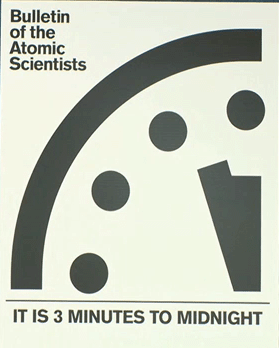
Watch the 2026 Doomsday Clock unveiling live here on January 27 at 10 a.m. EST
To see nuclear-related stories in greater depth and intensity – go to https://nuclearinformation.wordpress.com/
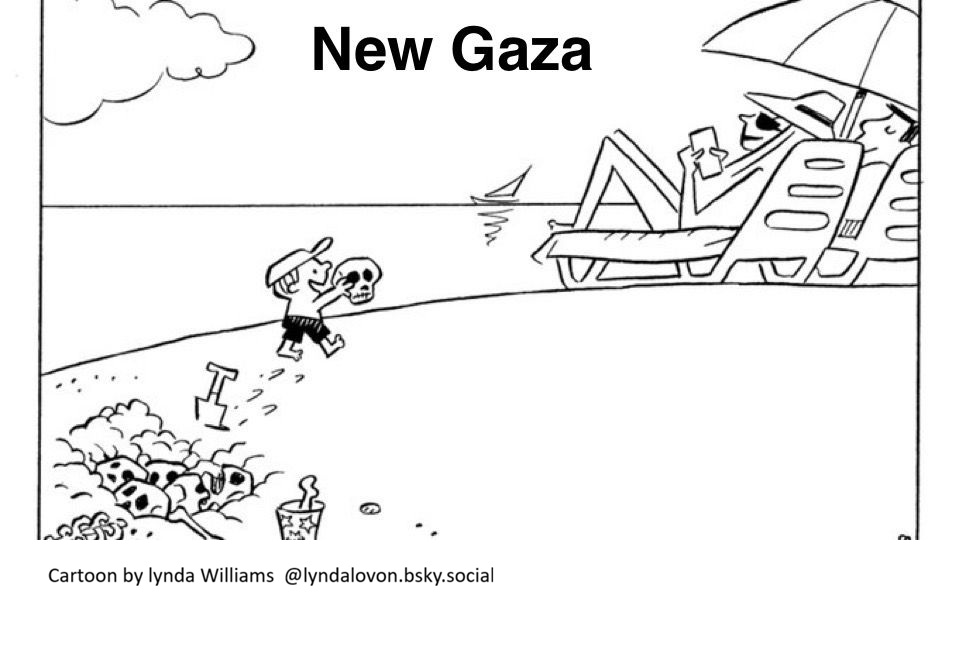
29 Jan. Thursday 7-8 p.m. Webinar – World’s Largest Nuclear Station in Port Hope, ON?

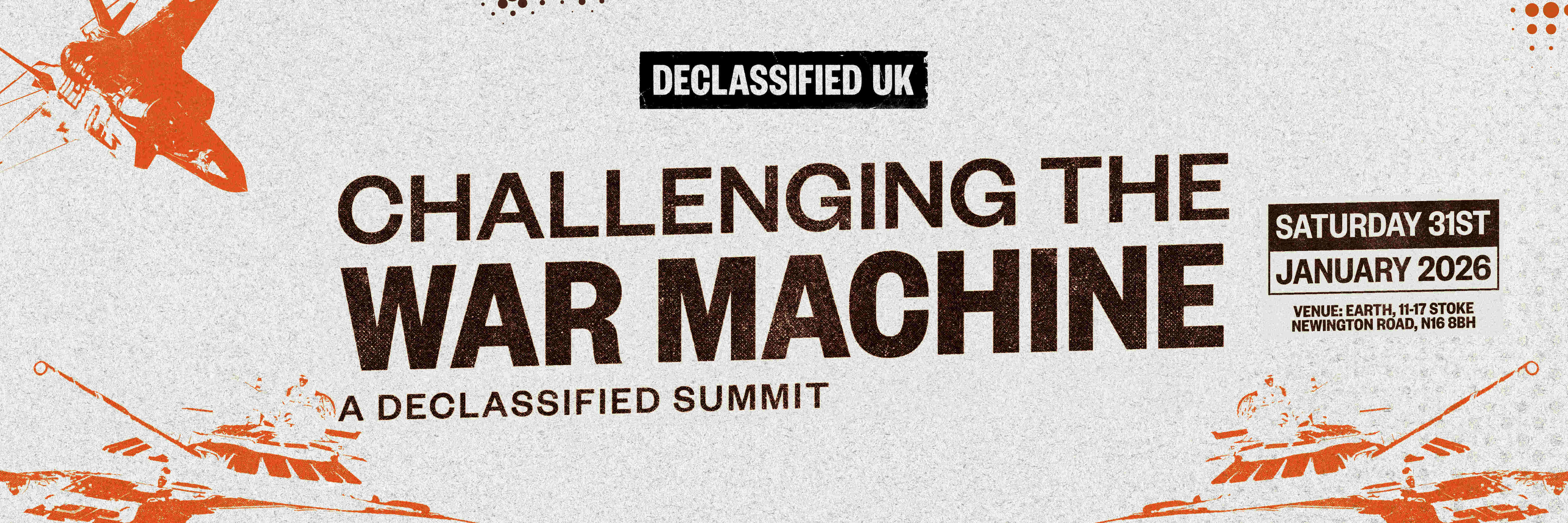
31st January – Challenging the War Machine – a DECLASSIFIED UK SUMMIT

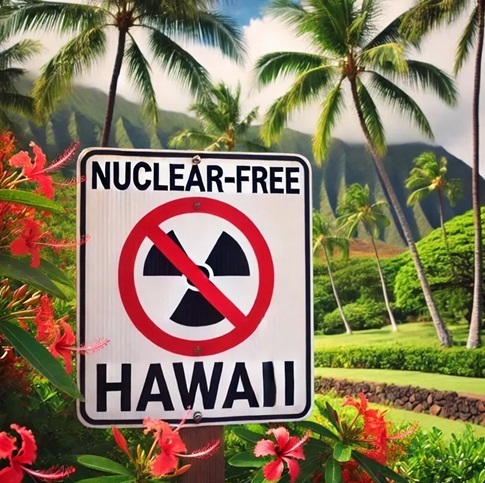
Website of the Week
Now until to February 10, 2026 Radioactive waste storage in France: the debate is finally open! How to participate?
-
Archives
- January 2026 (271)
- December 2025 (358)
- November 2025 (359)
- October 2025 (376)
- September 2025 (258)
- August 2025 (319)
- July 2025 (230)
- June 2025 (348)
- May 2025 (261)
- April 2025 (305)
- March 2025 (319)
- February 2025 (234)
-
Categories
- 1
- 1 NUCLEAR ISSUES
- business and costs
- climate change
- culture and arts
- ENERGY
- environment
- health
- history
- indigenous issues
- Legal
- marketing of nuclear
- media
- opposition to nuclear
- PERSONAL STORIES
- politics
- politics international
- Religion and ethics
- safety
- secrets,lies and civil liberties
- spinbuster
- technology
- Uranium
- wastes
- weapons and war
- Women
- 2 WORLD
- ACTION
- AFRICA
- Atrocities
- AUSTRALIA
- Christina's notes
- Christina's themes
- culture and arts
- Events
- Fuk 2022
- Fuk 2023
- Fukushima 2017
- Fukushima 2018
- fukushima 2019
- Fukushima 2020
- Fukushima 2021
- general
- global warming
- Humour (God we need it)
- Nuclear
- RARE EARTHS
- Reference
- resources – print
- Resources -audiovicual
- Weekly Newsletter
- World
- World Nuclear
- YouTube
-
RSS
Entries RSS
Comments RSS
 nuclear-news