Israeli strikes hit ‘component’ of Iran’s nuclear programme: Netanyahu
PM says last month’s attacks hit Tehran’s nuclear capabilities as EU and UK impose more sanctions.
Israeli Prime Minister Benjamin Netanyahu says his country’s air attack on Iran last month hit “a component” of Tehran’s nuclear programme and degraded its defence and missile production capabilities.
“There is a specific component in their nuclear programme that was hit in this attack,” Netanyahu said in a speech in Israel’s parliament, the Knesset, on Monday without providing details on the element hit.
“The programme itself and its ability to operate here have not yet been thwarted,” he added.
On October 26, Israeli fighter jets launched three waves of strikes targeting Iranian military assets, weeks after Iran had fired about 200 ballistic missiles at Israel, saying its attack was in response to Israel’s killings of Hezbollah leader Hassan Nasrallah in the southern suburbs of Beirut and Hamas leader Ismail Haniyeh in Tehran.
At the time of Israel’s attack, Supreme Leader Ali Khamenei said the strikes “should not be exaggerated nor downplayed”. United States President Joe Biden said before the strikes took place that he would not support an attack on Iranian nuclear sites, which would open up the possibility of an even further escalation in the region.
In addition to the claim of an attack on Iran’s nuclear programme, Netanyahu also said in Monday’s speech – which was interrupted by family members of Israeli captives held in Gaza – that three Russian-supplied S-300 surface-to-air missile defence batteries stationed near Tehran had been hit.
Netanyahu said Russia had supplied four of the defence batteries to Iran and the other one had been destroyed during an exchange of direct attacks between Iran and Israel in April.
Iran has not commented on the Israeli claims.
Last week, Iranian President Masoud Pezeshkian told the head of the International Atomic Energy Agency (IAEA), Rafael Grossi, that his government was prepared to address concerns about its nuclear programme before US President-elect Donald Trump’s inauguration in January.
Grossi said achieving “results” in nuclear talks with Iran was vital to avoid a new conflict in the region already inflamed by Israel’s wars on Gaza and Lebanon, stressing that Iranian nuclear installations “should not be attacked”.
Stepping up sanctions
Netanyahu gave his speech as the European Union and the United Kingdom on Monday expanded their sanctions against Iran over its alleged support for Russia’s war on Ukraine……………………………………………………………… more https://www.aljazeera.com/news/2024/11/18/israeli-strikes-hit-component-of-irans-nuclear-programme-netanyahu
UN nuclear head to visit Iran for talks on country’s nuclear program as next Trump presidency looms
VIENNA (AP) — The head of the United Nations’ nuclear watchdog said Sunday he will travel to Iran in the coming days to hold talks regarding the country’s nuclear program. The visit comes amid wider tensions gripping the Mideast over the Israel-Hamas war and uncertainty over how U.S. President-elect Donald Trump will approach Iran after his inauguration in January.
Specifically, the Director General of the International Atomic Energy Agency, Mariano Grossi, will have high level meetings with the Iranian government and will hold technical discussions on all aspects related to the joint statement agreed with Iran in March 2023.
It is intended as a path forward for cooperation between the IAEA and Iran on how to expand inspections of the Islamic Republic’s rapidly advancing atomic program.
The 2023 statement included a pledge by Iran to resolve issues around sites where inspectors have questions about possible undeclared nuclear activity, and to allow the IAEA to “implement further appropriate verification and monitoring activities.”
The meetings in Tehran will build on Grossi’s discussions with Iranian Foreign Minister Abbas Araghchi on the sidelines of the United Nations General Assembly in September, a statement by the IAEA said.
“It is essential that we make substantive progress in the implementation of the joint statement agreed with Iran in March 2023,” Grossi said. “My visit to Tehran will be very important in that regard.”
Iran is rapidly advancing its atomic program and continues to increase its stockpile of uranium enriched to near weapons-grade levels in defiance of international demands, according to recent reports by the IAEA.
Grossi, has warned that Tehran has enough uranium enriched to near-weapons-grade levels to make “several” nuclear bombs if it chose to do so. He has acknowledged the U.N. agency cannot guarantee that none of Iran’s centrifuges may have been peeled away for clandestine enrichment………………………………………………………………………………………………………………………………………
As Trump is to take office again in a few weeks, Iranians are divided on what his next presidency will bring. Some foresee an all-out war between Tehran and Washington, particularly as other conflicts rage in the region. Others hold out hope that America’s 47th president might engage in unexpected diplomacy as he did with North Korea. https://apnews.com/article/iaea-grossi-iran-nuclear-negotiations-efa8ad94a3424135eb21261cccaf4641
Israel’s attacks on Iran were an apocalyptic error by Netanyahu. Here’s why
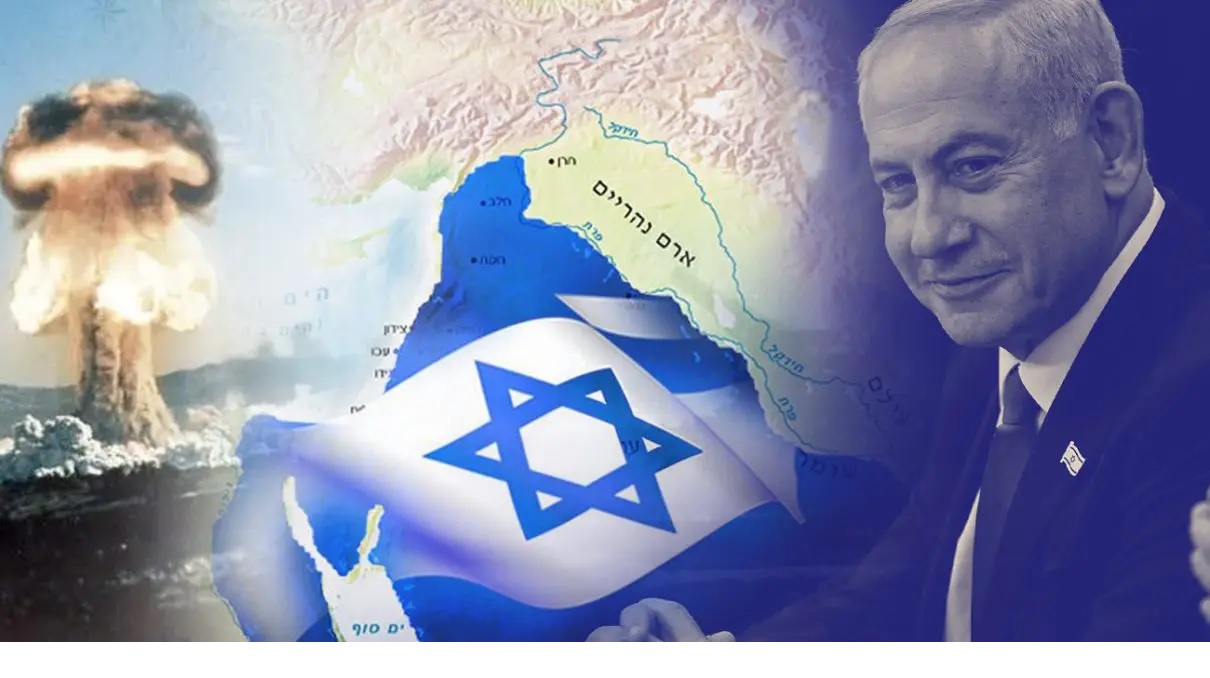
Martin Jay, Strategic Culture Foundation, Thu, 31 Oct 2024,
https://www.sott.net/article/495896-Israels-attacks-on-Iran-were-an-apocalyptic-error-by-Netanyahu-Heres-why
We see that Israel has no longer term military strategy, only short term excursions which will drain both its resources and the morale of its frontline soldiers.
While the whole world now waits with bated breath as to the result of the U.S. elections in only a matter of days, many are also waiting to see what are the implications for Israel’s recent strike on Iran. Despite being told by Joe Biden that it could not strike military installations it went against the advice of its chief sponsor and did precisely that. Perhaps there has never been a better example of western diplomacy failing than this incident, given that while Israel lies to its own people and the western world via news outlets more than happy to spin a yarn about the reality of the attacks, Iran now has to look at a number of options in how it will respond. But respond it surely will.
Yet this singular act is probably the most reckless to date from Netanyahu. Never before has the Israeli PM gone so far out on a limb and taken such a gambit which not only pushes the U.S. to the brink of a war with Iran but also throws a spotlight on the existential question of Israel itself. The next strike on Israel’s military infrastructure might be the final blow for Israel to function as a military entity forcing the U.S., or the next president, to intervene with Trump’s critics already pointing out that he owes a number of favours to the Zionists which they will certainly call in.
Netanyahu is desperate to keep wars on all fronts alive simply so he can remain relevant. But what is hardly talked about is the state of Israel itself, with an economy in pieces. Just how far will the next U.S. president go in supporting Israel’s new war with Iran, both in terms of military spending and breathing new life into the economy which has seen 40,000 businesses go under since October 7th 2023 and almost a million Israelis leave the country.
Netanyahu now is like a poker player who has used up all his IOUs at the table and is holding two pairs. How can he even believe he can take on Iran when even in Gaza and in Lebanon he is losing soldiers at a rate which should worry him and his generals. Yes, he has struck Hezbollah and reduced its capabilities but by no stretch of the imagination has he taken out the Iranian proxy which is still sending missiles and drones into Israel making the Israelis run to their air raid shelters even to this day.
The decision to strike Iran was surely out of an act of a gross political dilemma. However, the act itself has backfired on a level that neither he nor his entourage could imagine. Most of the targets were not even significantly damaged with a very low percentage of Israel’s missiles getting through Iran’s air defence which is so efficient that even Israel’s air force were too afraid actually fly into Iran’s airspace. Many in the west will be taken in by the spin from Israel’s lobby and impressive PR machine that it was a great victory and many sites were taken out, regardless of the fact that the IDF can’t provide one single shred of video evidence to back up such ludicrous claims, as it did previously in Gaza and Lebanon.
But the real defeat for Israel under Netanyahu is yet to come. Iran now has all the hard evidence it needs to strategize and hit Israel even harder than before. The erroneous strike on Iran by Netanyahu is not so much measured by the minor harm it did to a couple of weapons sites. It is by how now the myth of Israel’s military strength has been debunked once and for all. For decades Israel claimed superiority to everyone else, including Iran, and this was taken for granted by partisan western journalists who kept the dream alive. Remarkably, the strike on Israel by Iran on October 1st showed even Israelis that their air defence systems were hopelessly inadequate against Iran’s hypersonic missiles. That should have been enough to cool down the hot heads which straddle Netanyahu. At this point, the message he delivered at the UN, that there is “no place in Iran which Israel’s missiles cannot reach” should have been taken at face value and interpreted literally. Reaching Iranians sites is one thing. Actually taking them out is another.
Now, as the dust settles and Israel now waits for Iran’s response, the second myth that Israel’s strike capability was highly effective against Iran’s air defences is also blown. It seems like now Netanyahu’s folded as he has no more bluffs to play at the poker table. Unless of course he is deliberately coaxing his own country into a suicide strategy where Iran will completely desecrate Israel’s military leaving the U.S. little choice but to install itself on a grand scale. This so-called suicide strategy can’t be ruled out but seems hard to believe. The truth is that until Israel struck Iran, it didn’t know whether its own missiles and aircraft had the capability to penetrate Iran’s air defence system, supported heavily by Russia which sent it S-400 systems in August.
For the moment the Israeli press, as an act of desperate patriotism one can only assume, has indulged itself in a flurry of fake news stories about Iran’s air defence systems being destroyed as well as missile factories. But the jubilation will not last long. Oddly, the same media are becoming more pragmatic about Israel’s operations in Lebanon which has gone on for well over a month and in just two days managed to send over 80 body bags back to Israel, spurning a narrative which already is beginning to question the decision to cross the Lebanese border. The Jerusalem Post, in an oped, actually is admitting that the campaign is losing its credibility due to the number of lost lives of IDF soldiers. “The number of soldiers being killed in southern Lebanon also appears to be rising instead of falling over time” it opines. “The strikes against Hezbollah, such as the killing of Radwan commanders in September and the elimination of Hezbollah leader Hassan Nasrallah, should have weakened the group’s command and control”.
The article is a remarkable admission of Israel’s strategy being misconceived and poorly planned, just like the 2006 invasion. But getting IDF soldiers out of southern Lebanon will be much harder than sending them there as Netanyahu has pushed his arm into a hornet’s nest. Israel cannot consider a war of attrition against Hezbollah as even Netanyahu knows he cannot win. His only means to scoring points are assassinations and bombing civilians in southern Beirut, a strategy which many would call terrorism. His team of military goons have not learnt the lesson that aerial bombardment is not a deal breaker in a war against a disciplined guerrilla outfit. It failed in Iraq. It even failed in Vietnam. Again, we see that Israel has no longer term military strategy, only short term excursions which will drain both its resources and the morale of its frontline soldiers.
Iran says it can produce nuclear weapon if faced with existential threat
Nov 2, 2024, https://www.iranintl.com/en/202411011480
ran is capable of producing nuclear weapons and an existential threat could cause a rethink of the Supreme Leader’s injunction against them, one of his top foreign policy advisors told Lebanese news outlet Al Mayadeen.
“If the Islamic Republic of Iran faces an existential threat, we would have no choice but to adjust our military doctrine,” Former foreign minister Kamal Kharrazi said in an interview with the pro-Tehran channel.
“We already have the technical capabilities to produce weapons; only a religious decree forbidding nuclear weapons prevents us from doing so,” he added, referring to a religious decree by the country’s ultimate decision maker Ali Khamenei.
Kharrazi heads the Strategic Council on Foreign Relations and has hinted before that Iran could ditch its stated opposition to acquiring nuclear weapons but was offering his first public remarks since Israeli air strikes on Iran on Oct. 26.
Members of the body he leads are by handpicked by Khamenei and its reports and advisories have often presaged major policy shifts by the ruling system.
Iran has maintained that it will not pursue nuclear arms because the 2010 fatwa banned all weapons of mass destruction including nuclear bombs. The decree could potentially be interpreted by Iranian decision-makers as an advisory opinion lacking legal status, however.
Israel launched air strikes on military targets in Iran over the weekend in response to a missile barrage Tehran fired on the Jewish state on Oct. 1.
The attack hit missile facilities and air defense capabilities, killing four Iranian soldiers and a civilian.
Kharrazi told Al Mayadaeen that Iran would seek to expand the reach of weapons. “There’s a possibility that Iran may increase its missile range,” he said.
Upping Iran’s official rhetoric, all three top leaders of Iran’s Islamic Revolutionary Guard Corps on Thursday said a damaging counterstrike to Israel by Tehran was assured.
Iran says it rejects nuclear weapons but will defend itself by all means
Iran International, 4 Nov 24
Iran’s Foreign Ministry said on Monday it remains committed to a peaceful nuclear program but asserted Tehran would prepare whatever it takes to defend itself against Israel.
“The official stance of Iran in rejecting weapons of mass destruction and regarding the peaceful nature of the Islamic Republic of Iran’s nuclear program is clear,” said Foreign Ministry spokesperson Esmail Baghaei.
“As emphasized in the recent speech by the Supreme Leader of the Islamic Revolution, we will equip ourselves to the extent necessary for the defense of Iran,” he added.
For weeks, Iranian officials have ramped up their narrative that Tehran possesses the capability to produce nuclear weapons, asserting that only Khamenei’s religious fatwa prevents it from doing so.
Baghaei also claimed that the country will use all its “material and spiritual resources to respond to the recent aggressions by the Zionist regime.”
This statement comes as Iran’s leadership intensifies its stance amid escalating tensions with the United States and Israel.
Khamenei has called on officials to make every necessary preparation to defend the country against the US and Israel…………………………………………………………………………… more https://www.iranintl.com/en/202411041034
Media Hawks Make Case for War Against Iran

This depiction of Iran as an aggressor that has victimized the United States for 45 years, causing “suffering for thousands of Americans,” is a parody of history. The fact is that the US has imposed suffering on millions of Iranians for 71 years, starting with the overthrow of the country’s democratically elected Prime Minister Mohammad Mosaddegh in 1953. It propped up the brutal Pahlavi dictatorship until 1979, then backed Iraq’s invasion of Iran, helping Saddam Hussein use chemical weapons against Iranians (Foreign Policy, 8/26/13). It imposes murderous sanctions on Iran to this day (Canadian Dimension, 4/3/23).
What Stephens is deploying here is the tired and baseless propaganda strategy of hinting that World War II redux is impending if America doesn’t crush the Third World bad guy of the moment.
Gregory Shupak, FAIR, 25 Oct 24
The media hawks are flying high, pushing out bellicose rhetoric on the op-ed pages that seems calculated to whip the public into a war-ready frenzy.
Just as they have done with Hezbollah (FAIR.org, 10/10/24), prominent conservative media opinionators misrepresent Iran as the aggressor against an Israel that practices admirable restraint.
Under the headline, “Iran Opens the Door to Retaliation,” the Wall Street Journal editorial board (10/1/24) wrote that Iran’s October 1 operation against Israel “warrants a response targeting Iran’s military and nuclear assets. This is Iran’s second missile barrage since April, and no country can let this become a new normal.”
The editors wrote:
After April’s attack, the Biden administration pressured Israel for a token response, and President Biden said Israel should “take the win” since there was no great harm to Israel. Israel’s restraint has now yielded this escalation, and it is under no obligation to restrain its retaliation this time.
‘We need to escalate’
The New York Times‘ self-described “warmongering neocon” columnist Bret Stephens (10/1/24), in a piece headlined “We Absolutely Need to Escalate in Iran,” similarly filed Iran’s April and October strikes on Israel under “aggression” that requires a US/Israeli military “response.” And a Boston Globe editorial (10/3/24) wrote that Iran “launched a brazen attack,” arguing that the incident illustrated why US students are wrong to oppose American firms making or investing in Israeli weapons.
All of these pieces conveniently neglected to mention that Iran announced that its October 1 missile barrage was “a response to Israel’s recent assassinations of leaders of [Iran’s Islamic Revolutionary Guard Corps], Hezbollah and Hamas” (Responsible Statecraft, 10/1/24). One of these assassinations was carried out by a bombing in Tehran, the Iranian capital. But we can only guess as to whether the Globe thinks those killings are “brazen,” Stephens thinks they qualify as “aggression,” or if the Journal believes any country can let such assassinations “become a new normal.”
Likewise, Iran’s April strikes came after Israel’s attack on an Iranian consulate in Damascus that killed seven Islamic Revolutionary Guard Corps officers (CBS, 4/14/24). At the time, Iran reportedly said that it would refrain from striking back against Israel if the latter agreed to end its mass murder campaign in Gaza (Responsible Statecraft, 4/8/24).
‘Axis of Aggression’
A second Stephens piece (New York Times, 10/8/24) claimed that “the American people had better hope Israel wins” in its war against “the Axis of Aggression led from Tehran.” The latter is his term for the coalition of forces resisting the US and Israel from Palestine, Yemen, Lebanon and Iran, which refers to itself as the “axis of resistance.” Stephens’ reasoning is that, since Iran’s 1979 revolution, the country has meant suffering for thousands of Americans: the hostages at the US embassy in Tehran; the diplomatsand Marines in Beirut; the troops around Baghdad and Basra, killed by munitions built in Iran and supplied to proxies in Iraq; the American citizens routinely taken as prisoners in Iran; the Navy SEALs who perished in January trying to stop Iran from supplying Houthis with weapons used against commercial shipping.
The war Israelis are fighting now—the one the news media often mislabels the “Gaza war,” but is really between Israel and Iran—is fundamentally America’s war, too: a war against a shared enemy; an enemy that makes common cause with our totalitarian adversaries in Moscow and Beijing; an enemy that has been attacking us for 45 years. Americans should consider ourselves fortunate that Israel is bearing the brunt of the fighting; the least we can do is root for it.
This depiction of Iran as an aggressor that has victimized the United States for 45 years, causing “suffering for thousands of Americans,” is a parody of history. The fact is that the US has imposed suffering on millions of Iranians for 71 years, starting with the overthrow of the country’s democratically elected Prime Minister Mohammad Mosaddegh in 1953. It propped up the brutal Pahlavi dictatorship until 1979, then backed Iraq’s invasion of Iran, helping Saddam Hussein use chemical weapons against Iranians (Foreign Policy, 8/26/13). It imposes murderous sanctions on Iran to this day (Canadian Dimension, 4/3/23).
Given this background, suggesting—as the Journal, the Globe and Stephens do—that Iran is the aggressor against the US is not only untenable but laughable. Furthermore, as I’ve previously shown (FAIR.org, 1/21/20), it’s hardly a settled fact that Iran is responsible for Iraqi attacks on US occupation forces in the country. Stephens’ description of the Navy SEALs who died in the Red Sea is vague enough that one might be left with the impression that Iran or Ansar Allah killed them, but the SEALs died when one of them fell overboard and the other jumped into the water to try to save him (BBC, 1/22/24).
Stephens went on:
Those who care about the future of freedom had better hope Israel wins.
We are living in a world that increasingly resembles the 1930s, when cunning and aggressive dictatorships united against debilitated, inward-looking, risk-averse democracies. Today’s dictatorships also know how to smell weakness. We would all be safer if, in the Middle East, they finally learned the taste of defeat.
What Stephens is deploying here is the tired and baseless propaganda strategy of hinting that World War II redux is impending if America doesn’t crush the Third World bad guy of the moment. More realistically, the “future of freedom” is jeopardized by the US/Israeli alliance’s invading the lands of Palestinian and Lebanese people and massacring them. These crimes suggest that, in the Journal’s parlance, it’s the US/Israeli partnership that is the “regional and global menace.” Or, to borrow another phrase from the Journal’s editorial, it’s Israel and the US who are the “dangerous regime[s]” from which “the civilized world” must be defended.
‘A global menace’
Corporate media commentators didn’t stop at Iran’s direct strikes on Israel, casting Iran as, in the Journal‘s words (10/1/24), “a regional and global menace”:…………………………………………………………………
Painting Iran as the mastermind behind unprovoked worldwide aggression helps prop up the hawks’ demands for escalation. But the US State Department said there was “no direct evidence” that Iran was involved in the October 7, 2023, Hamas-led attack on Israel, “either in planning it or carrying it out” (NBC, 10/12/23)…………………………………………………………………………………..
Propaganda goes nuclear
As usual, those who are itching for a war on Iran invoke the specter of an Iranian nuclear weapon. Stephens (New York Times, 10/1/24) wrote:
This year, Secretary of State Antony Blinken warned that Iran was within a week or two of being able to produce enough weapons-grade uranium for a nuclear bomb. Even with the requisite fissile material, it takes time and expertise to fashion a nuclear weapon, particularly one small enough to be delivered by a missile. But a prime goal for Iran’s nuclear ambitions is plainly in sight, especially if it receives technical help from its new best friends in Russia, China and North Korea.
Now’s the time for someone to do something about it.
That someone will probably be Israel.
By “something,” Stephens said he also meant that “Biden should order” military strikes to destroy the “Isfahan missile complex.” “There is a uranium enrichment site near Isfahan, too,” Stephens wrote suggestively.
The LA Times published two guest op-eds in less than two weeks urging attacks on Iran based on its alleged nuclear threat. Yossi Klein Halevi (10/7/24) wrote:…………………………………..
‘Threshold’ is a ways away…………………………………………………….
Recent history shows that Iran has been willing to “stop itself” from acquiring nuclear weapons. Iran abided by the 2015 Joint Comprehensive Plan of Action (JCPOA), popularly known as the Iran nuclear deal, under which Iran limited its nuclear development in exchange for a partial easing of US sanctions. It stuck to the deal for some time even after the United States unilaterally abandoned it.
Just before President Donald Trump ripped up the agreement in 2018, the IAEA reported that Iran was “implementing its nuclear-related commitments” under the accord. The year after the US abrogated the agreement, Iran was still keeping up its end of the bargain.
‘Provocative actions’ from US/Israel
Iran subsequently stopped adhering to the by then nonexistent deal—often advancing its nuclear program, as Responsible Statecraft (5/7/24) noted, “in response to provocative actions from the US and Israel”:
In early 2020, the Trump administration killed Iranian Major General Qassem Soleimani, leader of the Islamic Revolutionary Guard Corps, and soon after Tehran announced that it would no longer abide by its enrichment commitments under the deal. But, even so, Tehran said it would return to compliance if the other parties did so and met their commitments on sanctions relief.
In late 2020, Iranian nuclear scientist Mohsen Fakhrizadeh was assassinated near Tehran, reportedly by Israel. Soon after, Iran’s Guardian Council approved a law to speed up the nuclear program by enriching uranium to 20%, increasing the rate of production, installing new centrifuges, suspending implementation of expanded safeguards agreements, and reducing monitoring and verification cooperation with the IAEA. The Agency has been unable to adequately monitor Iran’s nuclear activities under the deal since early 2021.
However, situating Iranian policies in relation to US/Israeli actions like these would get in the way of the Journal’s campaign, which it articulated in another editorial (10/2/24), to convince the public that “If Mr. Biden won’t take this opportunity to destroy Iran’s nuclear program, the least he can do is not stop Israel from doing the job for its own self-preservation.”
Of course, the crucial, unstated assumption in the articles by Stephens, Halevi, Heilman and the Journal’s editors is that Iran’s hypothetical nuclear weapons are emergencies that need to be immediately addressed by bombing the country—while Washington and Tel Aviv’s vast, actually existing nuclear arsenals warrant no concern. https://fair.org/home/media-hawks-make-case-for-war-against-iran/
Israel strikes Iran military targets amid fears of a wider war
The Age, October 26, 2024
Israel said it struck military sites in Iran early on Saturday in retaliation for Tehran’s attacks on Israel earlier this month, the latest step in the escalating conflict between the heavily armed rivals.
Iranian media reported multiple explosions over several hours in the capital and at nearby military bases, but there were no immediate reports of damage or casualties.
Before dawn, Israel’s public broadcaster said three waves of strikes had been completed and that the operation was over.
The Middle East has been on edge awaiting Israel’s retaliation for a ballistic-missile barrage carried out by Iran on October 1, in which around 200 missiles were fired at Israel and one person was killed in the West Bank.
Tensions between arch-rivals Israel and Iran have escalated since Hamas, the Iran-backed Palestinian militant group based in Gaza, attacked Israel on October 7 last year. Hamas has been supported by Lebanon-based Hezbollah militants, also backed by Iran.
Fears that Iran and the United States would be drawn into a regional war have risen with Israel’s intensifying assault on Hezbollah since last month, including airstrikes on the Lebanese capital Beirut and a ground operation, as well as its year-old conflict in the Gaza Strip………………………………………………………….
US President Joe Biden had warned that Washington, Israel’s main backer and supplier of arms, would not support a strike on Tehran’s nuclear sites and has said Israel should consider alternatives to attacking Iran’s oil fields.
Iranian authorities have repeatedly warned Israel against any attack.
“Iran reserves the right to respond to any aggression, and there is no doubt that Israel will face a proportional reaction for any action it takes,” the semi-official Tasnim news agency said on Saturday, quoting sources…………………………………………..
Videos carried by Iranian media showed air defences continuously firing at apparently incoming projectiles in central Tehran, without saying which sites were coming under attack.
The semi-official Iranian Fars news agency said several military bases in the west and southwest of Tehran had also been targeted…………………………………………………………………….
US informed ahead of strikes
……………………………..The US was notified by Israel ahead of its strikes on targets in Iran but was not involved in the operation, another US official told Reuters.
US Secretary of State Antony Blinken, in the Middle East for another attempt to broker a peace deal, said on Wednesday that Israel’s retaliation should not lead to greater escalation.

Even as it sought to convince Israel to calibrate its strikes, the US moved to reassure its closest ally in the Middle East that it would aid in its defence should Tehran decide to stage a counter-attack.
This included Biden’s decision to move the US military’s THAAD anti-missile defences to Israel, along with about 100 US soldiers to operate them. …………………………….. more https://www.theage.com.au/world/middle-east/israel-raids-gaza-hospital-strike-on-a-home-kills-13-children-20241026-p5kli5.html
Iran complains to IAEA about possible Israeli attack on nuclear sites
Iran International, Oct 21, 2024,
Iran has written to the UN nuclear watchdog to complain about Israel’s threats against its nuclear sites in a possible retaliatory strike, foreign ministry spokesperson Esmail Baghaei said on Monday.
“Any acts of aggression towards nuclear sites are condemned under international law,” Baghaei said during his weekly news conference.
He added that Tehran had officially communicated its position to the International Atomic Energy Agency (IAEA), saying, “we have sent a letter about it to… the UN nuclear watchdog.”
Israel has vowed to attack Iran in retaliation for a volley of Iranian missiles launched on October 1, leading to widespread speculation that Iran’s nuclear sites could be among Israel’s targets.
On October 1, Iran fired more than 180 missiles at Israel, a move described as retaliation for the killings of Hamas leader Ismail Haniyeh in Tehran and Hezbollah Secretary General Hassan Nasrallah in Lebanon. It was the second Iranian attack on Israel this year. Israel responded to the first missile volley in April with an air strike on an air defense site in central Iran.
After the attack, Prime Minister Benjamin Netanyahu warned that Tehran had made a “big mistake tonight” and vowed that “it will pay for it.” Later, the Biden administration revealed that it told Israel not to attack Iran’s nuclear sites.
Last week, Netanyahu’s office said Israel would listen to key ally the United States regarding a response to Iran’s missile attack but would decide its actions according to its own national interest.
His statement was attached to a Washington Post article which said Netanyahu had told President Joe Biden’s administration that Israel would strike Iranian military targets, not nuclear or oil sites.
Baghaei, responding to a question about the possibility of Iran changing its official nuclear doctrine, said “weapons of mass destruction have no place in our policy”. Tehran would decide on how and when to respond to any Israeli attack.
Israel, which has long accused Tehran of plans to develop nuclear weapons, regards Iran’s nuclear activities as a threat. Tehran denies these accusations, insisting that its program is entirely peaceful.
Additionally, Israel’s former premier Naftali Bennett called for the country’s leaders to launch an attack on Iran’s nuclear facilities as the Jewish state weighs its response to the barrage of 181 ballistic missiles.
Bennet slammed Biden who had called for a “proportionate” response, saying, “President Biden has said that Israel can retaliate against Iran, but must keep the response ‘proportionate’. The president also urged Israel not to attack Iran’s nuclear program.”
Moreover, prominent Israeli opposition lawmaker and former defense minister Avigdor Liberman also called on the government to use “all the tools” at its disposal to confront the threat of Iran’s nuclear program, tacitly suggesting that Israel should use a nuclear weapon against the Islamic Republic.
“In order to stop the Iranian nuclear program, which is already at weaponization stages, we must use all the tools at our disposal… It must be clear that, at this stage, it is impossible to prevent Iran from obtaining nuclear weapons via conventional means.”……………………………………………………………………………………https://www.iranintl.com/en/202410210736
Iran complains to UN nuclear watchdog about Israeli threats against its nuclear sites
Iran has written to the UN nuclear watchdog to complain about Israel’s threats against its nuclear sites, foreign ministry spokesperson Esmaeil Baghaei said on Monday at a weekly news conference.
Israel has vowed to attack Iran in retaliation for a volley of Iranian missiles launched on Oct. 1, leading to widespread speculation that Iran’s nuclear sites could be among Israel’s targets.
“Threats to attack nuclear sites are against UN resolutions…. and are condemned… we have sent a letter about it to… the UN nuclear watchdog,” Baghaei said in the televised news conference.
Separately, Baghaei said Iranian Foreign Minister Abbas Araghchi would travel to Bahrain and Kuwait on Monday as part of Iran’s efforts to curb regional tensions.
Iran launched its Oct. 1 missile attack to retaliate against Israeli strikes targeting its allies Hezbollah in Lebanon and Hamas in Gaza. It was the second Iranian attack on Israel this year; Israel responded to the first missile volley in April with an air strike on an air defense site in central Iran.
SCOTT RITTER: Iran’s Bomb is Real — and It’s Here
20 Oct 24, By Scott Ritter, Consortium News, https://consortiumnews.com/2024/10/20/scott-ritter-irans-bomb-is-real-and-its-here/
For months now, the world has focused on the danger of nuclear war between the United States and Russia. But Iran and Israel could beat them to it.
The outbreak of conflict between Iran and Israel appears to have changed Iran’s stance against possessing a nuclear weapon as Israel is poised to strike after Teheran’s retaliation with two major attacks of drones and ballistic and cruise missiles.
Iran has issued at least three statements through official channels since April that has opened the door to the possibility of religious edicts against Iran acquiring nuclear weapons being rescinded.
The circumstances which Iran has said must exist to justify this reversal appear to have now been met.
No mere threats, these statements issued by Teheran should be viewed as declaratory policy indicating Iran has already made the decision to obtain a nuclear weapon; that the means to do so are already in place and that this decision can be implemented in a matter of days once the final political order is given.
The religious fatwa against possessing nuclear weapons was issued in October 2003 by Iran’s Supreme Leader Ayatollah Ali Khamenei. It reads:
“We believe that adding to nuclear weapons and other types of weapons of mass destruction, such as chemical weapons and biological weapons, are a serious threat to humanity…[w]e consider the use of these weapons to be haram (forbidden), and the effort to protect mankind from this great disaster is everyone’s duty.”
However, the Shia faith holds that fatwas are not inherently permanent, and Islamic jurists can reinterpret the scripture in accord with the needs of time.
Shortly after Iran launched Operation True Promise against Israel in April, Ahmad Haghtalab, an Islamic Revolutionary Guard Corps (IRGC) commander responsible for the security for Iran’s nuclear sites, declared:
“If [Israel] wants to exploit the threat of attacking our country’s nuclear centers as a tool to put pressure on Iran, it is possible and conceivable to revise the Islamic Republic of Iran’s nuclear doctrine and policies to deviate from previously declared considerations.”
In May, Kamal Kharrazi, a former foreign minister who advises the Supreme Leader, declared: “We [Iran] have no decision to build a nuclear bomb, but should Iran’s existence be threatened, there will be no choice but to change our military doctrine.”
And earlier this month Iranian lawmakers called for a review of Iran’s defense doctrine to consider adopting nuclear weapons as the risk of escalation with Israel continues to grow. The legislators noted that the Supreme Leader can reconsider the fatwa against nuclear weapons on the grounds that the circumstances have changed.
These statements, seen together, constitute a form of declaratory policy which, given the sources involved, imply that a political decision has already been made to build a nuclear bomb once the national security criterion has been met.
Has the Capability
Iran has for some time now possessed the ability to manufacture and weaponize nuclear explosive devices. Using highly enriched uranium, Iran could construct in a matter of days a simple gun-type weapon that could be used in a ballistic missile warhead.
In June Iran informed the IAEA that it was installing some 1,400 advanced centrifuges at its Fordow facility. Based upon calculations derived from Iran’s on-hand stockpile of 60 percent enriched uranium hexaflouride (the feedstock used in centrifuge-based enrichment), Iran could produce enough highly enriched uranium (i.e., above 90 percent) to manufacture 3-5 uranium-baed weapons in days.
All that is needed is the political will to do so. It appears that Iran has crossed this threshold, meaning that the calculus behind any Israeli and/or U.S. attack on Iran has been forever changed.
Iran has made no bones about this new reality. In February, the former chief of the Atomic Energy Organization, Ali-Akbar Salehi, stated that Iran has crossed “all the scientific and technological nuclear thresholds” to build a nuclear bomb, noting that Iran had accumulated all the necessary components for a nuclear weapon, minus the highly enriched uranium.
Two weeks later, Javad Karimi Ghodousi, a member of the Iranian parliament’s National Security Commission, declared that if the supreme leader “issues permission, we would be a week away from testing the first [nuclear bomb]“, later adding that Iran “needs half a day or maximum a week to build a nuclear warhead.”
A simple gun-type nuclear weapon would not need to be tested — the “Little Boy“ device dropped on Hiroshima by the U.S. on Aug. 6, 1945 was a gun-type device that was deemed so reliable that it could be used operationally without any prior testing.
Iran would need between 75 and 120 pounds of highly enriched uranium per gun-type device (the more sophisticated the design, the less material would be needed). Regardless, the payload of the Fatah-1 solid-fueled hypersonic missile, which was used in the Oct. 1 attack on Israel, is some 900 pounds—more than enough capacity to carry a gun-type uranium weapon.
Given the fact that the ballistic missile shield covering Israel was unable to intercept the Fatah-1 missile, if Iran were to build, deploy, and employ a nuclear-armed Fatah-1 missile against Israel, there is a near 100 percent certainty that it would hit its target.
Iran would need 3-5 nuclear weapons of this type to completely destroy Israel’s ability to function as a modern industrial nation.,
Consequences of Pulling Out of Iran Nuclear Deal
This situation came about after President Donald Trump in 2017 withdrew the U.S. from the Joint Comprehensive Plan of Action — the JCPOA, better known as the Iran nuclear deal. The driving factor behind the negotiation of the JCPOA, which took place under President Barack Obama, was to shut down Iran’s pathway to a nuclear weapon. As Obama said,
“Put simply, under this deal, there is a permanent prohibition on Iran ever having a nuclear weapons program and a permanent inspections regime that goes beyond any previous inspection regime in Iran. This deal provides the IAEA the means to make sure Iran isn’t doing so, both through JCPOA-specific verification tools, some of which last up to 25 years, and through the Additional Protocol that lasts indefinitely. In addition, Iran made commitments in this deal that include prohibitions on key research and development activities that it would need to design and construct a nuclear weapon. Those commitments have no end date.”
Early on in his administration, in June 2021, after Trump had already pulled the U.S. out of the deal, President Joe Biden declared that Iran would “never get a nuclear weapon on my watch.”
The director of U.S. National Intelligence said in a statement released Oct. 11 that, “We assess that the Supreme Leader has not made a decision to resume the nuclear weapons program that Iran suspended in 2003.”
In the aftermath of Trump’s precipitous decision to withdraw from the JCPOA, Iran took actions which underscored that it no longer felt constrained by any JCPOA limits.
Iran has expanded its nuclear program by installing advanced centrifuge cascades used to enrich uranium and scaled back International Atomic Energy Agency (IAEA) monitoring of its nuclear program. In short, Iran has positioned itself to produce a nuclear weapon on short order.
While the ODNI currently believes that the Supreme Leader has not made the political decision to do so, an assessment published in July contains a telling omission from past assessments of Iran’s nuclear capabilities.
The February 2024 ODNI assessment noted that, “Iran is not currently undertaking the key nuclear weapons-development activities necessary to produce a testable nuclear device.”
However, this statement went missing from the July 2024 assessment, a clear indication that the U.S. intelligence community, due in large part to the reduction in IAEA inspection activity, lacks the insight into critical technical aspects of Iran’s nuclear-related industries.
Senator Lindsey Graham, after reading the classified version of the July 2024 ODNI report on Iran, said he was “very worried” that “Iran will in the coming weeks or months possess a nuclear weapon.”
What Confronts the US & Israel
This is the situation confronting Israel and the United States as they decide on an Israeli retaliation against Iran for the Oct. 1 missile attack.
Iran has indicated that any attack against its nuclear or oil and gas production capabilities would be viewed as existential in nature. That could trigger the reversal of the fatwa and the deployment of nuclear weapons within days of such a decision being made.
President Joe Biden told reporters on Friday that he knows when and where Israel will strike but refused to say. Leaked U.S. intelligence documents in recent days showed the limits of U.S. knowledge of exactly what Israel plans to do.
The United States and nuclear-power Israel have long said that a nuclear-armed Iran was a red line which could not be crossed without severe consequences, namely massive military intervention designed to destroy Iran’s nuclear infrastructure.
That line has been crossed — Iran is a de facto nuclear power, even if it hasn’t taken the final steps to complete the construction of a nuclear bomb.
The consequences of attacking Iran could prove fatal to the attackers and possibly the whole region.
Nuclear Fever: War Mongering on Iran

In Foreign Policy, Matthew Kroenig, generously self-described as a national security strategist, blusters for war. “Indeed, now is an ideal opportunity to destroy Iran’s nuclear program,” he asserts with childish longing.
In a report authored by both Democrats and Republicans for the Council, a warning of chilling absurdity is offered: “The United States needs to maintain a declaratory policy, explicitly enunciated by the president, that it will not tolerate Iran getting a nuclear weapon and will use military force to prevent this development if all other measures fail.”
Iran can never have nuclear weapons, because the United States and Israel say so
October 18, 2024, by: Dr Binoy Kampmark, https://theaimn.com/nuclear-fever-war-mongering-on-iran/
The recent string of exaggerated military successes – or at least as they are understood to be – places Israel in a situation it has been previously used to: prowess in war. Such prowess promises much: redrawing boundaries; overthrowing governments; destroying the capabilities of adversaries and enemies. Nothing, in this equation, contemplates peace, let alone diplomatic resolution. It’s playground pugilism that rarely gets out of the sandpit.
In Washington, a fever has struck regarding Israel’s advances. The outbreak has stirred much enthusiasm in a doctrine that has been shown, time and again, to be wretchedly uncertain and grossly dangerous. With no concrete evidence of imminent harm to US interests, it featured in the highest policy planning circles that oiled an invasion of Iraq in 2003. While the stated objective was the disarming of Saddam Hussein’s regime for having Weapons of Mass Destruction it turned out not to have, the logic was one of pre-emptive strike: we attack the madman in Baghdad before he goes nuclear and loses it.
The establishment wonk on empire and espionage at The Washington Post, David Ignatius, offers a fairly meaningless assessment in terms of claimed Israeli dominance over Iran and its proxies. After a year of conflict, Israel had “gained what military strategists call ‘escalation dominance’.” The implication: a decisive attack on Iran is imminent.
The point here (at this juncture, the mind lost seeks sanctuary in a mental asylum of lunatic reassurances), is that attacking Iran in toto will not result in much by way of retaliatory detriment. Some bruising, surely, but hardly lingering flesh wounds. Israel has, it would seem, been working some magic, spreading its own view that Iran has a gruesome plan in its military vault: eliminating Israel by 2040.
In Foreign Policy, Matthew Kroenig, generously self-described as a national security strategist, blusters for war. “Indeed, now is an ideal opportunity to destroy Iran’s nuclear program,” he asserts with childish longing. The reason for such an attack lies in a presumption. Yet again, the doctrine of pre-emption, one hostile to international law and the UN Charter, plays out its feeble rationale. Evidence, in such cases, is almost always scanty. Kroenig, however, is certain. Iran will secure one bomb’s worth of weapon-grade material within a matter of weeks. The rest is obvious. No evidence is offered, nor does it even matter, given Kroenig’s longstanding zeal in wishing to rid Iran of its nuclear facilities.
The Atlantic Council has also suggested a policy that what is good for the goose of Christian-Jewish freedom is not good for the gander of Persian Shia ambition. It is exactly this full-fledged hypocrisy that the despots of the secular tyranny in North Korea realised in dealing with Washington. Beware the nostrums against nuclear armament.
In a report authored by both Democrats and Republicans for the Council, a warning of chilling absurdity is offered: “The United States needs to maintain a declaratory policy, explicitly enunciated by the president, that it will not tolerate Iran getting a nuclear weapon and will use military force to prevent this development if all other measures fail.”
Instead of resisting belligerent chatter, the authors suggest that the US threaten Iran through announcing “yearly joint exercises with Israel, such as Juniper Oak and seek additional funding in the next budget cycle to speed research and development of next-generation military hardware capable of destroying Iran’s nuclear program
Kroenig shows his usual stuffing. Iran can never have nuclear weapons, because the United States and Israel say so. (The Sunni powers, for their own reasons, agree.) This form of perennial idiocy could apply to all the powers that have nuclear weapons, including Israel itself. At one point, no state should have had that relic of sadism’s folly. Then they came in succession after the United States: the Soviet bomb, the Britannic bomb, the Gallic bomb. Throw in China, India, Pakistan, Israel. Plucky, deranged North Korea, was wise to note the trend, showing lunacy to be eternally divisible.
It is precisely that sort of logic that has drawn such comments as this from the Supreme Leader Ayatollah Ali Khamenei in a May interview: “Iran’s level of deterrence will be different if the existence of Iran is threatened. We have no decision to produce a nuclear bomb, but we will have to change our nuclear doctrine if such threats occur.” This month, almost 40 legislators penned a letter to the Supreme National Security Council calling for a reconsideration of current nuclear doctrine. The greater the fanatic’s desire to remove a perceived threat, the more likely an opponent will give basis to that threat.
For all the faux restraint being officially aired in Washington regarding Israel’s next round of military assaults, there is enormous sympathy, even affection, for the view that wrongs shall be righted, and the mullahs punished. Bedding for a more hostile response to Iran also features in the inane airings of the presidential election. Vice President Kamala Harris, in an interview with 60 minutes, remarked that, “Iran has American blood on its hands, okay?” In making that claim, she suggested that Tehran was somehow Washington’s greatest adversary.
In response to this fatuous remark, Justin Logan of the Cato Institute offers an ice-cold bath of reason: “This is not the Wehrmacht in 1940.” The path to dominating the Middle East hardly involves such tools as propaganda, proxy operations and psychological warfare “much less becoming the greatest threat to the United States.”
The nuclear option is now available to governments that should never have had them. But acquiring the dangerously untenable followed. To assume that brutal, amputation loving theocrats in Tehran should not have them defies the trajectory of a certain moronic consistency. The Persian bomb is probably imminent, and it is incumbent on the murderous fantasists in Israel and the United States to chew over that fact. Unfortunately for the rest of us, the fetish against acquisition risks expanding a conventional conflict through testing the will and means of a power that, while wounded, hardly counts as defeated.
An Israeli attack on Iran’s nuclear facilities could backfire
And recent Iraqi history can tell us how.
Ibrahim Al-Marashi, Associate Professor of Middle East History at California State University San Marcos, Aljazeera, 16 Oct 24,
Since Iran’s October 1 missile attack on Israel in response to the killing of Hezbollah leader Hassan Nasrallah in Beirut and Hamas leader Ismail Haniyeh in Tehran, there has been much speculation about how Tel Aviv will retaliate. Some observers have suggested that it could hit Iranian oil installations, and others, its nuclear facilities.
US President Joe Biden’s administration seems to oppose both options, but it has approved the deployment of a Terminal High Altitude Area Defense (THAAD) missile defence system and United States troops to Israel, possibly in anticipation of an Iranian response to an Israeli strike.
Biden says he would not back Israeli strike on Iran’s nuclear sites
Iran’s President Pezeshkian says Tehran ready to improve ties with West
Iranian president says ‘ready to engage’ on nuclear deal
Iran ready to resume nuclear negotiations immediately: Foreign minister
Meanwhile, Biden’s political adversary, Republican presidential candidate Donald Trump, has egged on Israel to “hit the nuclear first”. Trump’s son-in-law Jared Kushner has also suggested the same.
While Trump, Kushner and other staunch Israel supporters are happy to cheer on an Israeli strike on Iran’s nuclear facilities, they likely know very little about the consequences of another such Israeli attack that targeted an Iraqi nuclear site.
Israel’s destruction of Iraq’s French-built Osiraq nuclear reactor in 1981 actually pushed what was largely a peaceful nuclear programme underground and motivated Iraqi leader Saddam Hussein to invest in the pursuit of a nuclear weapon. An aggressive act against Iran’s nuclear programme will likely have a similar effect.
A ‘pre-emptive’ strike
Iraq’s nuclear programme started in the 1960s with the USSR building a small nuclear research reactor and providing it with some know-how. In the 1970s, Iraq purchased a bigger reactor from France – called Osiraq – and expanded its civilian nuclear programme with significant French and Italian assistance.
The French government had made sure that technical measures were in place to prevent any possible dual use of the reactor and it shared this information with the US, Israel’s closest ally. Iraq, which was a signatory to the Nuclear Non-Proliferation Treaty and had its nuclear sites inspected regularly by the International Atomic Energy Agency (IAEA), was not “on the brink of” developing a nuclear weapon, as Israel falsely asserted.
Nevertheless, the Israeli government, which was facing growing discontent domestically and a potential loss at the approaching legislative elections, decided to proceed with the “pre-emptive” strike…………………………………………………
A trove of declassified US documents released in 2021 demonstrates that Israel’s strike did not eliminate Iraq’s programme, but rather made Saddam more determined to acquire a nuclear weapon………………………………..
The consequences of a strike on Iran
…………………….assassinations may have killed key cadres, they have inspired a new generation of Iranians to pursue nuclear science, part of an Iranian “nuclear nationalism” emerging as a result of the constant attacks on Iran’s nuclear programme.
…………………………….. Israel’s actions so far are only increasing Iranian determination to continue its nuclear programme. A strike on any of its nuclear facilities would make that determination even stronger. And if we are to go by the Iraqi example, it may drive the Iranian nuclear programme underground and accelerate it towards the development of a nuclear weapon.
………. what Netanyahu is doing in Gaza and Lebanon now and will do in Iran will not bring victory to Israel. His strategy produces resentment in these countries and across the Middle East, which will help Iran and its allies rebuild swiftly whatever capabilities they lose to reckless Israeli strikes. https://www.aljazeera.com/opinions/2024/10/14/an-israeli-attack-on-irans-nuclear-facilities-could-backfire
Biden, Netanyahu Closer to Consensus on Attacking Iran

Netanyahu convened his war cabinet on Thursday to approve plans
by Dave DeCamp October 10, 2024 https://news.antiwar.com/2024/10/10/biden-netanyahu-closer-to-consensus-on-attacking-iran/#gsc.tab=0
President Biden and Israeli Prime Minister Benjamin Netanyahu moved closer to an understanding on Israel’s plans to attack Iran during their phone call on Wednesday, Axios reported on Thursday.
The report, which cited US and Israeli officials, said that the US had accepted Israel is going to launch a major attack on Iran soon and is only concerned that striking certain types of targets could dramatically escalate things. However, Iran has vowed it will respond to any type of Israeli attack, and the situation could easily turn into a full-blown war that would involve the US.
An Israeli official told Axios that the Israeli plans are still a bit more aggressive than the US would like. The US has been warning against striking nuclear facilities or oil infrastructure, and recent media reports have said Israel will likely target military infrastructure.
Netanyahu convened his security cabinet on Thursday to brief them on the situation with the US and is expected to get approval for him and Israeli Defense Minister Yoav Gallant to set a timeline for the Israeli attack. The Times of Israel reported that the US and Israel will continue conversations on the plans in the coming days, signaling the attack is not imminent.
NBC News reported on Tuesday that the US was considering supporting Israel’s attack with direct airstrikes of its own, although US officials said intelligence support was more likely.
The Jerusalem Post reported that the US was offering Israel a “compensation package” of military aid and full diplomatic support if it only hits US-approved targets in Iran. The US has also committed to defending Israel from any Iranian response.
Iran fired nearly 200 ballistic missiles at Israel last week in response to a string of Israeli escalations, including the assassination of Hamas’s political chief, Ismail Haniyeh, in Tehran. Immediately after the attack, National Security Advisor Jake Sullivan said the US would work with Israel to ensure Iran suffers “severe consequences.”
Report: US Considers Launching Airstrikes Against Iran To Support Israeli Attack
US officials say Israel hasn’t briefed the US on its specific plans to attack Iran,
by Dave DeCamp October 8, 2024, https://news.antiwar.com/2024/10/08/report-us-considers-launching-airstrikes-against-iran-to-support-israeli-attack/#gsc.tab=0
The US has discussed the idea of supporting Israel’s expected attack on Iran with intelligence or with airstrikes of its own, NBC News reported on Tuesday, citing two unnamed US officials.
The report said senior US military officials have discussed launching “very limited” airstrikes against Iranian targets inside Iran or outside of the country, though the US officials said intelligence support for Israel was more likely.
So far, no final decision on US action has been made, according to the report, and the US officials said Israel has not briefed the US on its specific plans to strike Iran in response to the Iranian missile barrage that hit Israel last week.
Iran launched nearly 200 ballistic missiles into Israel in response to multiple Israeli escalations in the region, including the July 31 assassination of Hamas’s political chief, Ismail Haniyeh, in Tehran. In the aftermath, the US said it would work with Israel to ensure Iran faces “severe consequences” for the attack.
The NBC report said US officials were worried that Israel could launch its attack while Israeli Defense Minister Yoav Gallant is meeting with Secretary of Defense Lloyd Austin at the Pentagon on Wednesday. However, after the report was published, Gallant’s trip to the US has been canceled.
Israeli media said the trip was postponed because Israeli Prime Minister Benjamin Netanyahu wants to speak with President Biden and wants the Israeli security cabinet to agree on a plan to attack Iran before Gallant heads to Washington.
The Israelis are considering several types of targets to hit in Iran: military and intelligence infrastructure, air defenses, and energy facilities. Based on media reports, Israel does not plan to strike Iranian nuclear facilities in its first attack, but could if Iran hits back and the situation turns into a full-blown war, which Israeli officials think is likely to happen.
Israeli retaliation threat sparks call in Iran for nuclear weapons
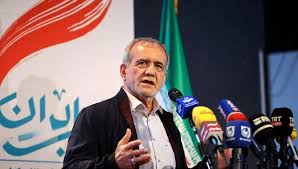
any decision to change Iran’s nuclear policy would rest with the supreme leader
“We want a world free of nuclear weapons and the region of Middle East free of WMDs (Weapons of Mass Destruction) without any preconditions!” Iran’s President Masoud Pezeshkian said at last month’s gathering of world leaders at the UN General Assembly.
By Afp, 11 October 2024 ,
https://www.dailymail.co.uk/wires/afp/article-13946359/Israeli-retaliation-threat-sparks-call-Iran-nuclear-weapons.html
With the prospect of Israeli retaliation for Iran’s missile attack looming, some Iranian hardliners want their government to revise its nuclear doctrine to pursue atomic weapons.
Israel has vowed to launch a “deadly, precise, and surprising” attack on Iran in retaliation for its second-ever direct strike on Israeli territory.
On October 1, Iran launched 200 missiles on Israel, in what it said was retaliation for the killing of Tehran-backed militant leaders and a general from Iran’s Revolutionary Guards.
More than three dozen hardline lawmakers have submitted a letter to Iran’s top security body, the Supreme National Security Council, urging it to revisit the Islamic republic’s nuclear doctrine, local media said on Wednesday.
The parliamentarians also called on supreme leader Ayatollah Ali Khamenei, who wields ultimate authority in Iran, to reconsider his long-standing religious edict or fatwa banning nuclear weapons.
“Today, neither the international organisations nor… European countries or America can control the Zionist regime which commits crimes at will,” lawmaker Hassan Ali Akhalghi Amiri said, citing this as his reason for supporting the call.
Another lawmaker, Mohammad Reza Sabaghian, said “building nuclear weapons is Iran’s option to create deterrence”, according to the Ham Mihan daily.
On Tuesday, state media reported that parliament had received a bill on “the expansion of the country’s nuclear industry”, without elaborating.
The Islamic republic has maintained its policy against acquiring nuclear weapons, insisting its nuclear activities were entirely peaceful.
– ‘Red line’ –
Iran has been drawn into the wars in Gaza and Lebanon, with Tehran-backed Hamas and Hezbollah militants on the front lines of two wars with Israel………………………………………………….
US President Joe Biden has cautioned Israel against attempting to target Iran’s nuclear facilities, which would risk major retaliation, and opposed striking oil installations.
Iran has warned that any attack on its “infrastructure” would provoke an “even stronger response”, while Revolutionary Guards General Rassul Sanairad has said an attack on nuclear or energy sites would cross a “red line”.
– Message to the West –
Iranian political commentator Maziar Khosravi said the lawmakers’ letter is “rather a strong message addressed to Western supporters” of Israel “so that they try to control” it.
Ultimately, he said, any decision to change Iran’s nuclear policy would rest with the supreme leader, and “is not linked to the will of the MPs”.
It is far from the first time that Iran has seen debate over whether it should revisit its nuclear doctrine.
Shortly after Iran’s first-ever direct attack on Israel in April, Kamal Kharazi, an adviser to Khamenei, said the Islamic republic was not pursuing nuclear weapons.
But “if Israel dares to threaten Iran with a nuclear weapon, we may reconsider our nuclear doctrine”, he said in an interview with Al Jazeera at the time.
For Khosravi, it remains unlikely for Iran to change its doctrine in the meantime.
But “if Israel attacks the nuclear facilities, what seems likely to me at this stage is the withdrawal of Iran from the NPT”, he said, referring to the United Nations treaty on the Non-Proliferation of Nuclear weapons.
Iran’s President Masoud Pezeshkian who took office in July has sought to revive a landmark 2015 nuclear deal to ease the country’s isolation and offset the economic impact of US sanctions.
The deal granted Iran sanctions relief in return for accepting curbs and monitoring that were designed to ensure it could not develop an atomic weapon covertly — a goal Iran has always denied having.
The accord has been hanging by a thread since the United States, under then-president Donald Trump, unilaterally withdrew from it in 2018.
Since the collapse of the deal, Iran has suspended its compliance with caps on nuclear activities.
“We want to tell the world that we are not after a nuclear bomb,” said Pezeshkian in an interview with CNN in New York last month.
“We want a world free of nuclear weapons and the region of Middle East free of WMDs (Weapons of Mass Destruction) without any preconditions!” he said at last month’s gathering of world leaders at the UN General Assembly.
1 This Month

of the week – Shut Down Drone Warfare!


Tell the Ukrainian Government to Drop Prosecution of Peace Activist Yurii Sheliazhenko

Petition to revoke the licensing of the Near Surface Nuclear Disposal Facility (NSDF) at Chalk River. https://www.ourcommons.ca/petitions/en/Petition/Details?Petition=e-7247
To see nuclear-related stories in greater depth and intensity – go to https://nuclearinformation.wordpress.com
-
Archives
- April 2026 (103)
- March 2026 (251)
- February 2026 (268)
- January 2026 (308)
- December 2025 (358)
- November 2025 (359)
- October 2025 (376)
- September 2025 (257)
- August 2025 (319)
- July 2025 (230)
- June 2025 (348)
- May 2025 (261)
-
Categories
- 1
- 1 NUCLEAR ISSUES
- business and costs
- climate change
- culture and arts
- ENERGY
- environment
- health
- history
- indigenous issues
- Legal
- marketing of nuclear
- media
- opposition to nuclear
- PERSONAL STORIES
- politics
- politics international
- Religion and ethics
- safety
- secrets,lies and civil liberties
- spinbuster
- technology
- Uranium
- wastes
- weapons and war
- Women
- 2 WORLD
- ACTION
- AFRICA
- Atrocities
- AUSTRALIA
- Christina's notes
- Christina's themes
- culture and arts
- Events
- Fuk 2022
- Fuk 2023
- Fukushima 2017
- Fukushima 2018
- fukushima 2019
- Fukushima 2020
- Fukushima 2021
- general
- global warming
- Humour (God we need it)
- Nuclear
- RARE EARTHS
- Reference
- resources – print
- Resources -audiovicual
- Weekly Newsletter
- World
- World Nuclear
- YouTube
-
RSS
Entries RSS
Comments RSS
 nuclear-news