Israel launches strikes on nuclear sites as Iran warns of retaliation
Uranium facility, steel plants and heavy water complex among targets hit as IRGC warns of escalation.
By Al Jazeera Staff, AFP, Reuters and The Associated Press, 27 Mar 2026
Israel has struck a uranium processing facility in the central Iranian city of Yazd, the Israeli military confirmed, in an escalatory move that comes as regional diplomats have been attempting to broker an agreement to halt the joint US-Israeli war on Iran.
The Israeli Air Force said it hit a plant used to extract raw materials essential to the uranium enrichment process, describing it as a “unique facility” in Iran’s nuclear infrastructure. Iran’s Atomic Energy Organization confirmed the strike, but said there were no casualties or radiation leaks.
A projectile also hit near the Bushehr Nuclear Power Plant, Iran’s Atomic Energy Organisation said. The attack caused “no casualties, financial, or technical damage,” the organisation said.
Friday marked day 28 of the conflict, and the assault by the Israeli army was part of a broad wave of attacks on sites across the country.
Strikes also hit areas in and around Tehran, the city of Kashan and Ahwaz, while 18 people were killed in Qom.
More than 1,900 people have been killed in US-Israeli attacks on Iran since the war began on February 28.
Iranian officials said US-Israeli strikes have damaged at least 120 museums and historical sites across the country since hostilities began.
Negar Mortazavi, a senior non-resident fellow at the Center for International Policy, told Al Jazeera that even Iranians who had been critical of their own government increasingly view the war as an assault on the Iranian people rather than its leadership, saying the targeting of water, electricity, gas, cultural heritage, schools and hospitals was “unacceptable.”
Israeli Defence Minister Israel Katz said Israel would “intensify” its campaign and expand the range of sites it targets, accusing Tehran of deliberately directing missiles at Israeli civilians.
IRGC Aerospace Commander Seyed Majid Moosavi warned that the conflict was entering new territory, saying “the equation will no longer be an eye for an eye.” He urged employees of US and Israeli-linked industrial companies across the region to immediately vacate their workplaces.
Al Jazeera’s Ali Hashem, reporting from Tehran, noted that the strikes on two major Iranian nuclear facilities could prompt the IRGC to target Dimona again, Israel’s nuclear site, as it did last week.
Prior to Friday’s strikes, US President Donald Trump said Thursday he had pushed back planned attacks on Iran’s energy infrastructure by 10 days, to April 6, saying negotiations to end the war were “going very well”.
Iranian officials flatly rejected that characterisation, describing Washington’s proposal to end the war as “one-sided and unfair” and outlining their own list of conditions, which include war reparations and the recognition of Iranian control of the Strait of Hormuz.
On Friday, an an Iranian official said the ongoing strikes, while simultaneously discussing talks, were “intolerable”……………………………………………………………………………………… https://www.aljazeera.com/news/2026/3/27/israel-launches-strikes-on-iran-nuclear-sites-as-war-enters-fifth-week
US/Israel War against International Law
24 March 2026 AIMN Editorial, By Dr Dan Steinbock, https://theaimn.net/us-israel-war-against-international-law/
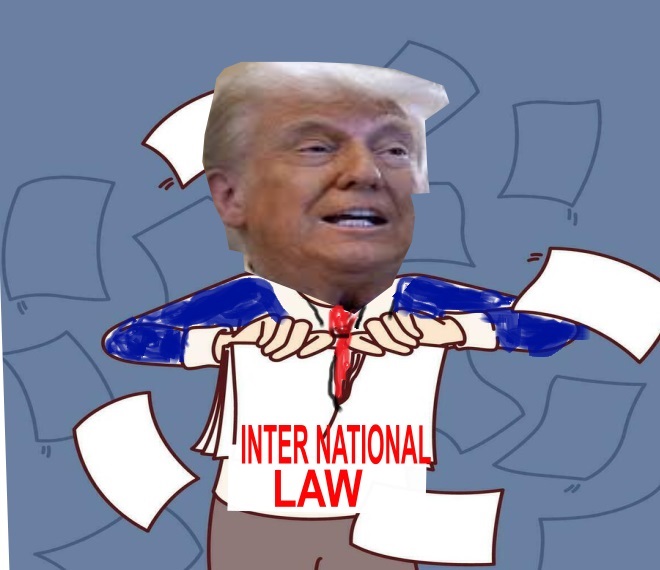
As the US/Israeli strikes against Iran violate the foundations of international law, the economic and human costs will soar.
After three weeks of effective war, the hostilities have caused severe regional spillovers, thousands of deaths, displacements of millions and a massive global energy crisis that continues to expand. If the implications are global, what’s the status of the US/Israeli strikes from the standpoint of international law?
The modern legal order is based on United Nations Charter (1945), Geneva Conventions, Rome Statute (1998) and Customary law from the Nuremberg Trials. The key rules include the prohibition of aggressive war, protection of civilians, individual criminal responsibility for war crimes, crimes against humanity and genocide. Force is allowed only in the case of self-defense and UN Security Council authorization.
The US/Israeli strikes have already violated most of these rules.
War of aggression
Article 2(4) of the UN Charter prohibits UN member states from threatening or using force against the territorial integrity or political independence of any state. It was violated on February 28, when US/Israel launched their joint strikes against Iran.
Typically, the war was launched precisely when and because the peace talks in Oman were advancing toward a successful conclusion.
In the absence of strategic objectives and exit strategy, the U.S. has framed the actions as a campaign to dismantle “the Iranian regime’s security apparatus.”
These efforts go back to the US/Israel 12-Day War against Iran in July 2025, when Masoud Pezeshkian, the new reform-minded Iran president, sought talks to end the conflict with the US and Israel. That was not in line with the “new Middle East” envisioned by PM Netanyahu and his Messianic far-right cabinet.
The UN Charter’s prohibition against force is not absolute, with key exceptions being self-defense (Article 51) and actions approved by the Security Council.
Yet, no such threat existed prior to the US/Israel strikes. And on March 17, 2026, Joe Kent, the Director of the US National Counterterrorism Center, resigned from his position in protest of the ongoing U.S.-led war in Iran. Kent said in no uncertain terms that “Iran posed no imminent threat to our nation.”
This is an illegal war of aggression, instigated by leaders who have been, like Prime Minister Netanyahu, (or should be) charged for war crimes and crimes against humanity.
Preemptive war doctrine
To legitimize the unjustifiable, Washington has resorted to preemptive justifications. In this regard, the US/Israel war against Iran is just the latest link in the 25-year-long effort to sanctify power politics with preventive wars.
Since the Bush Jr. 2002 security doctrine, US administrations have stressed preemption as a central strategic instrument. While Democratic leaders (Obama, Biden) have been more moderate in rhetoric, they have coopted the same ideas.
Relying on force to prevent future threats, preventive war doctrines are often cited as violating international law because they bypass the strict legal requirements for the use of force established in the UN Charter.
Unilateral preventive war is a threat to the principle of state sovereignty, as it allows one nation to judge the “intentions” of another, without objective proof of an upcoming attack. Setting a dangerous precedent, it incentivizes other nations to use similar pretexts for their “preventive” attacks, potentially leading to global instability.
International law allows for preemptive strikes in cases of “imminent” danger. But US strategy improperly expands this to include preventive wars against threats that are not yet fully formed or do not exist – as in the cases of the 2003 Iraq War and the 2025 and 2026 Iran Wars.
Targeted assassinations
The targeted assassination of Iranian leaders is a serious violation of international law, especially when conducted outside of an active, declared war zone. Targeted killings violate the prohibition on the use of force against another state’s territorial integrity and political independence.
Outside of active hostilities, international human rights law (IHRL) applies. Under IHRL, arbitrary deprivation of life is prohibited. Targeted killings are extrajudicial killings for which the acting state is responsible.
In the context of conflict, targeted killings can violate International Humanitarian Law (IHL) principles, including distinction (targeting civilians) and proportionality. Assassinations of state officials often violate the 1973 Convention on the Prevention and Punishment of Crimes Against Persons Under International Protection.
Precedents feature the killing of the famous Iranian general Qasem Soleimani, the right-hand man of the supreme leader of Iran, the late Ali Khamenei. Soleimani was assassinated in a targeted drone strike in Baghdad in January 2020, ordered by President Trump.
From the standpoint of international law, it was an unlawful attack, as was pointed out by Ben Ferencz, the US prosecutor in the Nuremberg trials and pioneer of international law. After Soleimani’s killing, the New York Times printed Ferencz’s letter denouncing the assassination, unnamed in the letter, as an “immoral action [and] a clear violation of national and international law.”
In their first joint strikes against Iran, US and Israel assassinated the 87-year-old Ali Khamenei, the supreme leader of Iran. Demonized in the West, Khamenei supported Iran’s nuclear program for civilian use. Already in the mid-1990s, he famously issuing a fatwa against the acquisition, development and use of nuclear weapons.
The assassination of Khamenei was still another blatant violation of international law. It was also part of the Israeli strategy to eliminate moderate leaders, whose absence is then used as an excuse for replacing peaceful diplomacy with brutal obliteration campaigns.
Crimes against humanity, forced displacement
These crimes are defined in Rome Statute Article 7, as widespread or systematic attack on civilians. Allegations are typical when strikes include targeting civilian infrastructure, economic strangulation, mass displacement, and siege conditions.
A continuity argument – “what we first see in Gaza is now spreading to Iran and, due to spillovers, into the region” – exists because similar patterns can be identified via blockade, disproportionate force, and collective punishment.
The stated efforts at regime change to undermine Iran and fragment the Shi’a state suggest that the boundary between cultural genocide targeting a broad ethnic-religious group and full destabilization is a line drawn in waters.
Allegations of ethnic cleansing, relying on deliberate forced displacement are likely over time. While ethnic cleansing is not a formal treaty crime, it is recognized in jurisprudence. It rests on forced population removal, which is the net effect of the strikes against Iran and a deliberate intention in Israel’s invasion of Lebanon.
Israel’s rapidly expanding buffer zone in southern Lebanon, extending roughly 3 to 14 kilometers north of the Blue Line demarcation, is premised on demographic engineering. In Iran, the objective to fragment the state, instigate inter-ethnic polarization and regional divides is also predicated on identity
At first sight, allegations of ethnic cleansing seemed to be more relevant to Gaza and the West Bank. But with shifting objectives, forced displacement is now an overwhelming reality. The US/Israel strikes have caused displacement of 3.5 million people in Iran and over 1 million in Lebanon, with up to 22,000 killed or wounded in the former and another 3,600 in the latter.
Collective punishment, economic warfare
Combined with illicit strikes, Washington’s decades-long sanctions against Iran, most of which are unilateral, and the underlying warfare is reminiscent of economic warfare premised at collective punishment.
Combinations of economic sanctions and military strikes, particularly when invalid from the standpoint of international law, raise serious issues under humanitarian law and human rights law. In Gaza and in Iran, unilateral sanctions have caused unwarranted mass suffering violating international law.
Ever since the early 1970s, when Beirut was still called the “Paris of the Middle East,” Israel’s wars against Palestinians have destabilized Lebanon’s fragile ethnic mosaic pushing the country to the edge of default. That’s the fate PM Netanyahu would like Iran to share.
In this regard, there is a clear continuity from the Gaza War, carried out by Israel with arms and financing by the US-led West, ICJ provisional measures and ICC arrest warrant debates, to the US/Israel strikes against Iran.
The common denominators feature an inflated self-defense doctrine, weak enforcement of humanitarian law, selective application of international law and ultimately the inevitable US veto in the Security Council.
The more these violations of international law are permitted, the greater will be the costs in economic terms, the more brutal the military destruction and the more lethal the human devastation.
That’s why multilateral cooperation – across all political differences – and the enforcement of international law is so desperately needed today, before it’s too late.
Dr Dan Steinbock is an internationally recognized strategist of the multipolar world and the founder of Difference Group. He has served at the India, China and America Institute (USA), Shanghai Institutes for International Studies (China) and the EU Center (Singapore). For more, see https://www.differencegroup.net
Trump White House plagiarized Iran war manifesto from Israel-aligned think tank
Wyatt Reed and Max Blumenthal.The Grayzone, March 20, 2026
The Trump White House plagiarized its justification for attacking Iran from the Foundation for the Defense of Democracies, the main DC outfit promoting war with Tehran. The think tank was originally founded to “enhance Israel’s image,” and partners closely with the Israeli government.
The Trump Administration appeared to plagiarize its official justification for its war on Iran, copying almost word-for-word a document originally produced by the Foundation for the Defense of Democracies (FDD), a pro-war think tank with close ties to Israeli intelligence which was originally founded to “enhance Israel’s image.”
The FDD document was authored by Tzvi Kahn, the former assistant director for policy and government affairs at the American Israel Public Affairs Committee (AIPAC).
A March 2, 2026 statement issued by the White House accusing Tehran of 44 instances of terrorism against American citizens is “virtually identical” to the list published by FDD in June 2025, analyst Stephen McIntyre noted Thursday.
While the White House did make superficial alterations to the text, they largely consisted of appending the label “Iran-backed” to every mention of groups like Hezbollah and Hamas. In the few instances where Trump administration officials bothered to make significant changes to the original FDD list, the edits were almost always made in service of “ratcheting up the underlying allegation,” McIntyre concluded.
Among the most egregious examples was a 1996 attack on the Khobar Towers in Saudi Arabia, which FDD originally said merely that Hezbollah al-Hejaz was “deemed responsible” for. In the White House version, however, the group’s responsibility was “asserted as factual,” explained McIntyre, noting that serious questions about the incident remain unanswered to this day. “Clinton’s Defense Secretary William Perry subsequently wondered (along with many others) whether Khobar Towers should have been attributed to Al Qaeda,” he wrote.
A 2009 investigation by journalist Gareth Porter based on interviews with over a dozen former CIA, FBI and Clinton administration officials demonstrated that the FBI’s inquiry into the Khobar Towers attack was precooked to blame Iran, when Al Qaeda was most likely the culprit. Porter found that Shia citizens of Saudi Arabia had been tortured into confessing to the crime by Saudi secret police.
While the White House declined to join FDD in blaming Iran for the Sept. 11, 2001 terror attacks, it echoed the Israel-oriented organization in blaming Tehran for 603 military deaths in Iraq, which both documents attributed to “Iran-backed militias.” But there are major discrepancies with the figure, which amounts to 60% of the total US combatant deaths attributed to Iran. As McIntyre noted, such a claim is “not made in the State Department annual reports on Global Terrorism.”
At least four of the Americans the Trump administration claims were killed by Iran had served in Israel’s military. These included a US citizen who died while invading Lebanon in 2006 and two Americans in the IDF’s Golani brigade who were killed while invading Gaza in 2014. The fourth American, who was born in Israel and had also served in the Golani brigade, was killed amid violent reprisals against settlers in the West Bank in 2015.
A number of the claims are undermined by the very sources they cite, including a December 2019 incident in which the Trump administration insisted “Iran-backed Kataib Hezbollah terrorists killed an American civilian contractor and wounded several U.S. service members in a rocket attack at K1 Air Base in Kirkuk, Iraq.” But the Reuters article cited by the White House as proof that Iran was responsible made no such claim, explicitly cautioning that “no group has claimed responsibility for the attack.” In reality, Reuters suggested the attack was the work of “Islamic State militants operating in the area [who] have turned to insurgency-style tactics.”…………………………………………………………………………………………………………………….https://thegrayzone.com/2026/03/20/trump-plagiarized-iran-israel-think-tank/
Israel’s primary role in Iran war scrubbed from mainstream media.

By Walt Zlotow , 25 Mar 26, https://theaimn.net/israels-primary-role-in-iran-war-scrubbed-from-mainstream-media/
No Israel, no Iran war. That fact is AWOL from any coverage of criminal US, Israeli war destroying Iran, US Gulf States bases and possibly the world economy.
Destroying Iran as a hegemonic rival preventing their Middle East expansion of Greater Israel has been Israel’s objective for decades. But the small country of Israel, without billions in US firepower and participation could never accomplish their cherished goal. What to do? Put tremendous carrot and stick pressure on Donald Trump to achieve Israel’s Middle East supremacy.
They came close to getting George W. Bush to take out Iran after Bush demolished Afghanistan and Iraq back in 2003. But Bush stopped his war-crazed Veep Dick Cheney from pulling the Iran war trigger.
Obama was a huge problem for Israel. Instead of attacking Iran he made peace with it… or tried to. His leadership in creating the 2015 Joint Comprehensive Plan of Action (JCPOA) put the end to any concern that Iran was developing nuclear weapons. Which they never were. It should have stopped Israel’s lust to destroy Iran. But it didn’t. Israeli Prime Minister Benjamin Netanyahu embarked on a relentless propaganda campaign to destroy the JCPOA.
His dream was realized when Trump succeeded Obama in 2017. A year later, Trump, likely following Netanyahu’s orders, withdrew from the JCPOA, putting Iran regime change back in play.
When Biden succeeded Trump in 2021, Netanyahu garnered another complacent ally in the White House. Biden did nothing to rejoin the JCPOA and normalize relations with Iran. But the Israeli genocide in Gaza, fully supported and funded by Biden, put Iran on the back burner.
Enter Donald Trump – back in power in 2025. Within 9 months he secured a ceasefire in Gaza. Palestinian genocide switched places with Iran on the forefront of destruction. Iran moved into Trump’s crosshairs to please his Israeli masters.
Had Harris succeeded Biden, likely no Iran war. Unlike Trump, Harris was neither as fully funded by the Israel lobby nor possibly subject to Israeli blackmail threatening to expose Trump’s peccadillos.
Dramatic high-risk US Delta Force plan to snatch Iran’s nuclear stocks revealed
Chris Hughes Defence and Security Editor, 25 Mar 2026, https://www.mirror.co.uk/news/world-news/dramatic-high-risk-delta-force-36921080
American special forces could be used to smash Iran’s nuclear ambitions as war-chiefs weigh up high-risk mission amid fears of casualties and a repeat of 1980 ‘Op’ Eagle Claw’ disaster
American military chiefs are considering one of the biggest special forces raids ever-launched in a bid to cripple Iran’s nuclear programme.
The massive helicopter-borne insertion of thousands of assault troops supporting a large number of Delta Force specialists could take at least 24 hours to conduct.
It would try to seize 450kg of 60% enriched uranium believed still to be hidden deep beneath one of Tehran’s nuclear facilities and is an immensely high-risk operation.
Although below the ‘weapons grade’ 90% of enriched uranium needed to make a nuclear weapon some US intelligence experts fear Iran could use it in the future.
Two British military sources have told the Mirror the operation plan has been drawn up, although both said it has been assessed as “very high-risk, with high probability of casualties and low probability of absolute mission success since the exact location of the uranium is uncertain.”
After fighting their way into the complex, the elite Delta Force soldiers would secure the site for specialist engineers to drill and blast their way into the underground complex.
The immensely complex operation would involve scores of spy planes and fighter jets helping to secure the approach to the mission targets.
Ground troops would form a vast perimeter around the site to fight off attacks from the IRGC. Plans were drawn up by Joint Special Operations Command which has a poignant link to Iran as it was set up in 1980 following the disastrous Operation Eagle Claw whose aim was to rescue US hostages from Tehran.
Then eight US Navy Sea Stallion helicopters took off from the deck of an American aircraft carrier for a 600-mile trip to rendezvous in the Iranian desert with six C-130 transport aircrafts.
They were hit by a violent wind-driven sand storm common in the desert which damaged the aircrafts and President Carter abandoned the mission.
As the force prepared to depart, a RH-53D helicopter crashed into a C-130 plane carrying extra fuel for refueling, igniting a fire that killed five Airmen and three Marines.
America vowed it would never happen again and sought to bring its special forces and intelligence elites together for better mission planning and execution.
In 1980 JSOC was launched forming combined units from the Army Delta Force, Navy SEAL Team Six, and the Air Force’s 24th Special Tactics Squadron to ensure they could operate seamlessly together, a key failing during the Iran hostage crisis.
One source, from the intelligence community, told the Mirror: “The plan does exist but the risks of failure are very high and it may have been discounted as too difficult.
“However it is known that President Trump is extremely belligerent and not exactly risk-cognisant so there is always the possibility he could still give the go-ahead for it to happen.
“Certainly the US military has given the President options, along with their risk assessment and the uranium seizure is top of his list. Troops movements we are seeing towards the Gulf indicate something bigger than, or as well as, a Strait of Hormuz -specific operation.”
The operational planning includes crack paratroopers entering Iranian airspace in fast-moving Chinook troop carrier helicopters and uniquely-adapted special forces planes for an unusually large number of elite Delta Force special forces soldiers.
A second, military source, told the Mirror: “If it goes ahead this could be the biggest Special Forces operations ever launched, with diversions elsewhere in Iran and major air-raids to cast confusion into the ranks of the Islamic Revolutionary Guard Corps. It has been looked into for some time but it is exceptionally high risk.
“The final word will go to Commander-in-Chief Donald Trump with input from Pete Hegseth, his so-called Secretary of War, who has been extremely enthusiastic about this war. It is a major decision as a lot can go wrong in an operation of this size but US administration may see it as the only way to secure the enriched uranium. The question is whether Trump is prepared to give it the go-ahead.”
Earlier this month the Mirror revealed exclusively how US forces had sent a number of uniquely adapted MC-130J Commando II special forces planes from RAF Mildenhall in Suffolk to the Middle East, indicating a major covert operation was being planned.
The Lockheed Martin US Air Force Special Operations Command planes are for clandestine, low-visibility infiltration, exfiltration, and resupply of special operations forces.
They perform high-speed, low-level air refueling, cargo airdrops, and air to land missions in hostile or sensitive areas. It comes amid reports President Trump has now ordered thousands of elite US paratroopers to the Middle East, perhaps to invade Kharg Island, the oil-exporting hub on which the Iranian economy relies.
Based at Fort Bragg in North Carolina, the Immediate Response Force is a brigade of about 3,000 troops from the 82nd Airborne Division that can deploy anywhere in the world within 18 hours.
But at least 5,000 marines are also en route for the Gulf, supposedly also to support an operation to secure Kharg Island, despite Trump’s claims peace negotiations are underway.
These claims have been vehemently denied by Iran’s foreign ministry. The first of two marine expeditionary units is due to arrive in the Middle East on Friday, comprising the USS Tripoli, an amphibious assault ship carrying 2,200 troops, the USS New Orleans, an amphibious docking ship, F-35B Lightning II stealth fighters and MV-22B Osprey tilt-rotor aircraft.
Our sources told the Mirror the two operations against Kharg Island and the site of the hidden nuclear facility, which we have chosen not to identify, may yet happen simultaneously.
A War Built on Lies, Sold by Lobbyists, with Innocent Children as its Price
23 March 2026 David Tyler, Australian Independent Media
On 27 February 2026, the night before the bombs fell, Oman’s foreign minister, Badr bin Hamad Al Busaidi, announced that a breakthrough had been reached. After months of back-channel diplomacy, Iran had agreed to never stockpile enriched uranium, to full IAEA verification, and to irreversibly downgrade its existing stock to the lowest possible level. Peace, he said, was “within reach”. Technical talks were scheduled to continue in Vienna the following week.
Fourteen hours later, at 7:00 AM Tehran time on 28 February, the first wave of missiles arrived. China had been working to improve Iran’s situational awareness. It did not matter. The attack came without warning. Reports from Arab media, undenied by Tehran, claimed that Esmail Qaani, commander of the IRGC’s Quds Force, had been arrested and executed as a Mossad agent.
Within twelve hours, the United States and Israel had conducted more than 900 strikes. Two hundred Israeli aircraft, the largest combat sortie in its history, dropped over 1,200 bombs on 500 sites across western and central Iran. US Tomahawk missiles, launched from destroyers in the Arabian Sea, hit leadership compounds, missile factories, naval installations, and the National Security Council offices where Ali Khamenei was meeting his senior advisers. They knew he was there. Netanyahu had personally briefed Trump on the location days earlier. Khamenei was above ground, in daylight, when the strike came. He was dead before midday.
Forty-eight hours later, US forces had flown more than 1,700 sorties and struck over 1,250 targets across 29 of Iran’s 31 provinces. The first six days of Operation Epic Fury cost the United States more than $11 billion.
In that same period, Amnesty International confirmed that a US Tomahawk missile struck a girls’ primary school in Minab. Debris bearing the inscription “Made in USA” and the name “Globe Motors, Ohio” was recovered at the site. At least 170 people were killed. Most were children aged seven to twelve.
Then Donald Trump, in the second year of his second term, appeared on Truth Social to claim the war was about freedom.
The Lobbyists and the Lie
The question corporate media has avoided is simple. Who wanted this war, and how did they get it?
The Washington Post reports that Trump acted after sustained lobbying from Israel and Saudi Arabia. Crown Prince Mohammed bin Salman urged him to strike. Netanyahu’s government pressed the case repeatedly. Their interests converged. Israel sought to restore deterrence and reshape a regional order drifting beyond its control. Saudi Arabia saw an opportunity to weaken a rival it had failed to contain by other means. Together, they found a willing president.
The deeper breach was internal. Pentagon briefers told congressional staff on 1 March that Iran was not preparing to attack US forces or bases unless Israel struck first. The intelligence did not support the war. It was set aside. This was not a failure of information. It was a decision to ignore it.
US intelligence had already assessed that Iran was not pursuing nuclear weapons and would not have the capacity to build one before the end of the decade, even if it chose to do so. The IAEA had affirmed it. At the same time, Badr Al Busaidi was moving between delegations, and Iran’s chief negotiator was describing the talks as the most substantive in years. A framework for Vienna was in place. Technical teams were on standby.
Inside the administration, advisers discussed the advantages of letting Israel strike first to create a cleaner pretext for US entry after Iranian retaliation. That is not strategy. It is sequencing. Diplomacy was not the alternative to war. It was its cover.
Behind the push stood the familiar architecture of American intervention. Senator Lindsey Graham. The Foundation for Defense of Democracies. The American Enterprise Institute. Donor networks that have spent decades advocating regime change in Iran. They did not invent the policy. They sustained it, funded it, and waited for a president prepared to act on it.
Trump supplied the rest. On different days he has offered regime change, nuclear prevention, Iranian freedom, mineral security, and the Venezuela model as justification. None align. That is because the rationale followed the decision, not the other way around.
Congress, meanwhile, has largely abdicated its role. War powers have withered into ritual complaint. Democratic leadership has offered little more than procedural discomfort. The constitutional check on executive war-making is now
political theatre, observed and ignored.
Illegal, Immoral and Known to Be Both
The legal position is clear. The UN Charter permits the use of force only with Security Council authorisation or in self-defence against an armed attack. Neither condition applied. Iran had not attacked the United States or Israel. The Security Council had authorised nothing. The strikes began during active negotiations.
Ben Saul, the UN special rapporteur on counterterrorism, called it what it is: a crime of aggression. Oona Hathaway described it as “blatantly illegal”. The European Council on Foreign Relations reported broad consensus among legal scholars that no valid justification exists. This was not a contested case. It was an unambiguous one.
Within the United States, dissent has come from the margins of power. Rashida Tlaib. Alexandria Ocasio-Cortez. Bernie Sanders. They are not describing a grey area. They are describing what the law already recognises.
What the Bombs Actually Did……………………………………………………………………………………………………………………………..
The Catastrophe in Progress
………………………….This is not a regional disruption. It is a global economic shock. Energy prices feed directly into inflation, into transport, into food. The cost of this war will not be confined to the battlefield. It will be paid at petrol stations, in grocery aisles, and in central bank decisions across the world.
………..Senator Thom Tillis has asked the only question that matters. What are we trying to accomplish?
There is no coherent answer because coherence was never the point. This is the Venezuela model applied to a country four times larger, with a military doctrine built to resist precisely this kind of intervention, and a political system shaped by decades of confrontation with the United States. The architects of this war designed Iraq. The pattern is familiar. The outcome will be too. https://theaimn.net/a-war-built-on-lies-sold-by-lobbyists-with-innocent-children-as-its-price/
US moves to approve more than $16 billion in air defense sales to Middle East
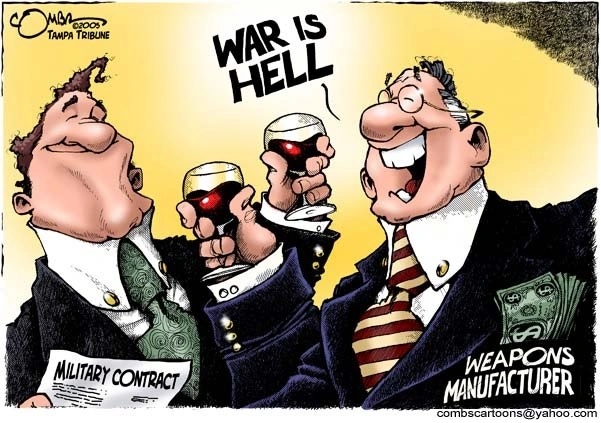
The United States is moving to bolster air defenses across the Middle East, notifying Congress of more than $16.5 billion in potential weapons sales aimed primarily at countering missile and drone threats.
The packages include systems for the United Arab Emirates, Kuwait and Jordan, and range from advanced radar and air defense sensors to counter-drone technology and aircraft munitions, according to several statements released Thursday by the U.S. Department of State.
The notifications come as missile and drone attacks have intensified across the Middle East during the war with Iran, putting pressure on air defense systems used to protect U.S. forces and regional allies.
The State Department said the secretary of state determined that an emergency justified the immediate sale, allowing the administration to bypass the typical congressional review process under the Arms Export Control Act.
Among the proposed sales is a long-range radar for the UAE that is designed to integrate with its Terminal High Altitude Area Defense system, or THAAD, for $4.5 billion.
The UAE package also includes a $2.1 billion fixed-site system designed to counter small drones, as well as $1.22 billion in air-to-air missiles and a $644 million set of F-16 munitions and upgrades to support its fighter aircraft.
Separately, Kuwait would receive $8 billion in lower tier air and missile defense radars designed to detect shorter-range threats, while Jordan’s $70.5 million package focuses on aircraft repair and parts to maintain its existing fleet.
Together, the sales point to a broader effort to build layered air defenses that are capable of detecting and intercepting threats at different ranges.
The demand comes as U.S. air defense systems are being used at a rate analysts worry exceeds the pace at which stockpiles can be replenished.
Trump’s battle plan for Iran
Bruce Gagnon, Mar 26, 2026, https://brucegagnon177089.substack.com/p/trumps-battle-plan-for-iran?utm_source=post-email-title&publication_id=3720343&post_id=192096004&utm_campaign=email-post-title&isFreemail=true&r=ln98x&triedRedirect=true&utm_medium=email
Europe key to US ops in Iran
Another very interesting piece from the WSJ. These details have been available through OSINT sources but it’s a good roundup showing how key Europe is to US operations against Iran:
- The central command center for US operations against Iran is within Ramstein Air Base in Germany (unsurprising)
- US drone operations are conducted from there as well
- Ramstein is increasingly being used as a hub by the Americans. Military transport aircraft, in particular, land there and took off for the Middle East, including several Boeing C-17 Globemaster III (77.5 tons of load) and Lockheed C-130 aircraft (20 tons).
- American media reported that F-16 fighter jets had been transferred from US Spangdahlem AFB, Germany to the Middle East. According to the trade magazine Air and Space Forces, they are to be used in Iran to combat air defenses. BBC reported that the base is now operating “around the clock.”
- American aircraft stationed in Spain have been relocated to France and Germany after the Spanish government denied the use of the Morón and Rota air bases for attacks on Iran
- Bomber aircraft sorties out of bases in the UK like RAF Fairford
- Refueling operations are based out of Aviano Air Base in Italy and Tubé Air Base in France
- Lajes Air Base in the Azores (Portugal) is serving as a major logistical hub, with dozens of aircraft stationed there at various times during the conflict
- RC-135 Rivet Joint spy planes are operating out of Souda Bay in Crete
- Unspecified “logistics and intelligence assets” are being hosted by Romania
- The piece paints an amusing picture of European attitudes towards this. Keir Starmer’s justification for overcoming his reticence to allow the US to base out of British facilities in the initial wave of strikes is that bomber operations are now “defensive” in nature.
- Merz has said publicly that this “isn’t [Germany’s] war,” but he has no choice but to allow US operations out of German air bases due to pre-existing legal agreements.
- Meloni has spun Italian involvement as minor because only refueling missions are flown out of Aviano. Similarly, French defense minister Vautrin said, “a refueling aircraft is a gas station, not a fighter jet.”
- These technicalities may work on the European public, but it’s difficult to imagine they’ll work on the Iranians.
Let’s focus not on what Trump says, but on what he does.
These are the U.S. military units recently deployed to the Middle East against Iran.
- 160th SOAR (Night Hunters): An elite helicopter unit that secretly inserts and extracts special forces, often at night, using skilled pilots and modified aircraft.
- 75th Airborne Brigade: A light infantry force for rapid raids, airfield seizures, and close-quarters combat missions against high-value targets.
- Delta Force (1st SFOD-D): A top-tier counterterrorism and hostage rescue unit focused on high-risk, precision missions targeting high-value individuals.
- 1st Special Forces Group (1st SFG): Operates primarily in the Asia-Pacific; trains allied forces, conducts unconventional warfare, and supports insurgencies or partner militaries.
- 5th Special Forces Group (5th SFG): Focused on the Middle East; It specializes in counterterrorism, unconventional warfare, and advising local forces.
- US Navy SEALs: Special operations focused on the sea—raids, reconnaissance, direct action, and covert missions from the sea, air, or land.
- But for what mission?
- Islands within or near the Strait of Hormuz—Small but strategically important islands used by Iran to control shipping lanes. US special forces could quickly seize them to reopen the strait.
- An island outside—Iran’s main oil export terminal. Seizing or destroying it would cripple Iranian oil revenues.
- Iranian nuclear facilities or other high-value sites—Potential raids to destroy stockpiles of enriched uranium or related infrastructure.
No Good Exit

21 March 2026 David Tyler, Australian Independent Media
John Mearsheimer sees war with Iran as a strategic folly, arguing it is unwinnable, will not destroy Iran’s nuclear knowledge, and could, instead, boost Iran’s interest in acquiring nuclear weapons.
No stranger to irony, or paradox, Dr Mearsheimer does not mince words. The West Point graduate and former Air Force Captain, now a distinguished scholar at Cornell, has spent two decades documenting exactly how an American Eagle could get sucked into the vortex of wars that serve its bovver-boy, or Middle-East proxy, Israel, and its bellicose aspirations at enormous cost.
When Mearsheimer speaks about a US military adventure in Iran, he is not waffling. He is quoting from the autopsy he wrote in advance. And Mearsheimer’s verdict on Operation Epic Fury, is that Trump has dug himself into a deep hole; an opinion all the more damning for its formal, almost courteous understatement:
“I think President Trump has put himself in a situation where he really doesn’t have a good exit strategy.”
Trump’s catastrophe may be complex and irretrievable, but it was not inevitable. It was predicted, in detail, by experts whose job it was to predict it, and who were systematically ignored, discredited or sacked for saying so. Trump ignored the experts. This is how he can always snatch defeat from the jaws of victory.
The pretext for the attack doesn’t bear scrutiny. Before the first double-tap Tomahawk missile crushed and burned alive 168 schoolchildren on 28 February, Oman’s Foreign Minister Badr Al-Busaidi was announcing what could have been a diplomatic coup: Iran had agreed to never stockpile enriched uranium, had accepted full IAEA verification, and was prepared to irreversibly downgrade its enriched uranium to the lowest level possible.
Peace, he said, was “within reach.” Further talks were due to resume on 2 March.
Iran now says that the US President never intended to avoid war and that the talks were a ruse to get more time to set up a military attack. It’s true. It’s also true that Trump and Netanyahu are driven by the need to stay out of court. Both are hell-bent in quest of a more enduring diversion-and both would have always pulled the trigger anyway. Even without Saudi encouragement……………………………………………………………………………………………………………………………………….
Iran now says that the US President never intended to avoid war and that the talks were a ruse to get more time to set up a military attack. It’s true. It’s also true that Trump and Netanyahu are driven by the need to stay out of court. Both are hell-bent in quest of a more enduring diversion-and both would have always pulled the trigger anyway. Even without Saudi encouragement.
……………………………………….. Many missile strikes in the war’s opening phase are seen by UN human rights experts as potential war crimes under the Rome Statute. At least a million Lebanese people have been displaced.
https://googleads.g.doubleclick.net/pagead/ads?gdpr=0&client=ca-pub-3072351457465524&output=html&h=280&adk=2235633406&adf=387799125&w=678&fwrn=4&fwrnh=100&lmt=1774125889&rafmt=1&armr=3&sem=mc&pwprc=5956714339&ad_type=text_image&format=678×280&url=https%3A%2F%2Ftheaimn.net%2Fno-good-exit%2F&host=ca-host-pub-2644536267352236&fwr=0&pra=3&rh=170&rw=678&rpe=1&resp_fmts=3&fa=27&uach=WyJXaW5kb3dzIiwiMTkuMC4wIiwieDg2IiwiIiwiMTQ2LjAuNzY4MC44MCIsbnVsbCwwLG51bGwsIjY0IixbWyJDaHJvbWl1bSIsIjE0Ni4wLjc2ODAuODAiXSxbIk5vdC1BLkJyYW5kIiwiMjQuMC4wLjAiXSxbIkdvb2dsZSBDaHJvbWUiLCIxNDYuMC43NjgwLjgwIl1dLDBd&abgtt=7&dt=1774125788538&bpp=1&bdt=3727&idt=0&shv=r20260318&mjsv=m202603170101&ptt=9&saldr=aa&abxe=1&cookie=ID%3Dd85616c6c9bd2a6c%3AT%3D1770448449%3ART%3D1774125788%3AS%3DALNI_MbtaAxRxG9MqgIcWMShV7avYd9mzg&gpic=UID%3D000011f58c2d07ec%3AT%3D1770448449%3ART%3D1774125788%3AS%3DALNI_MasvLU7CXh2jEp0EwTeqK932dwU3A&eo_id_str=ID%3D1b13a2c219278375%3AT%3D1770448449%3ART%3D1774125788%3AS%3DAA-AfjYkqjLrM9kIjGmfRgvZ6J5n&prev_fmts=0x0%2C678x280%2C678x280%2C1265x585%2C1265x122%2C678x280%2C678x280%2C678x280%2C678x280&nras=10&correlator=6552144162929&frm=20&pv=1&u_tz=660&u_his=2&u_h=720&u_w=1280&u_ah=672&u_aw=1280&u_cd=32&u_sd=1.5&dmc=8&adx=117&ady=5250&biw=1265&bih=585&scr_x=0&scr_y=2914&eid=95378429%2C95384535%2C42533294%2C95383746%2C95386039%2C95379823&oid=2&psts=AOrYGslFnD4MCobWfWWaTnZO58i7aVt7D29MIFScmcewoQBVZjRgX1f3b9NwGtVkwcGa5Z-1eoPb2VtruRZFG8PO7KJlApj9H8fZyI5zqVkCG4CmXvZmwQ3Box5rCHMTD73x%2CAOrYGslqDhuWvVFLDi_GZC5QcWZeq0_skU9KxspMCRk4eB7tugVH2yaIxi5G3F9O2Lf92rq8U8mMNGoqiazmp1b23UZ4BdLvnwQ3WxWxgRykEZSB%2CAOrYGskeRH4aNaTYW0JyG3hzeADf9iRr0p5FcMslU9tcjQOmsfMxJqNzQgBma4wHaEq5_EyPCfryTvgRCXzrdNA6zXpsYzi2aGa6YBEEsIrD4jk%2CAOrYGsnZlMGylK-NV6L01yQbFeOM_0OyuT3kK6KdRWPAa0ZJ-_fUiqW2vcAZvsE7G9PHnZ_OKbVa1uJ56Zi1H-BaO31G2fiS7gxE7wk%2CAOrYGskrNVCKFAP1enIxqXLvS3enuTJ1vSXSpDKMa_FTU_LIa3i733aUFije2OhcKHUesjN9G6616z_zZ30fUvobJwp9R63Myz8XDtyBjjQdpDmpSw%2CAOrYGsnrFCx6HaDRyuw7FJgzshe7poT_x7bpz6edsQFJsiawAUvVj1cdcmwj8C0dhnUgTtbxVbGZiUsGMRomL8AnScaaQ9jMiTGt-38YWkcIDhQ%2CAOrYGsmGx2dhmzE4w3QV-X9NmiFCpDNgjknMYKowrNLwx0eLRev6mAN_VRDxDLeClYOlXHDvSoaiEQKey8wTUJbgVV1DbfGqHw1h5d1Wiu7sDg&pvsid=5130612622751585&tmod=1337930814&uas=1&nvt=1&fc=1408&brdim=0%2C0%2C0%2C0%2C1280%2C0%2C1280%2C672%2C1280%2C585&vis=1&rsz=%7C%7Cs%7C&abl=NS&fu=128&bc=31&bz=1&pgls=CAEaBTYuOS40~CAEQBBoHMS4xNzQuMA..&num_ads=1&ifi=8&uci=a!8&btvi=8&fsb=1&dtd=M
Meanwhile, Donald Trump, on his Truth Social, calls Iran “militarily ineffective and weak.”…………………………………………………………………………………..
Trump is demanding NATO allies help secure the Strait of Hormuz. NATO is, to put it charitably, otherwise engaged.
Retreat? Mearsheimer is equally clear-eyed. Declare victory and withdraw, and it will be “perceived as a humiliating defeat for the US.” And that assumes Iran cooperates. “They have many cards to play,” he notes. “They can inflict significant losses. Therefore, even if we retreat, it’s unclear whether this will solve the problem.”
Trump promised a generation of winning. He has delivered a generation’s worth of losing, compressed into twenty days. And let’s not forget his Latin American fiasco. El Presidente, who endeared himself to millions south of the border with his talk of “shithole” countries, has rather a lot of Venezuelans on the warpath after his regime change curdled almost on contact into a neocolonial farce, with Maduro gone, sovereignty shredded and the gringos already with their fingers in the till.
Cuba could be next on Hegseth’s hit-list? Trump does need to keep the distractions going. Meanwhile disinformation is being pumped as vigorously as the Ford plumbing. And with similar effect.
Fox News cheerleaders and the Netanyahu communications office have been carefully not telling the American public: Iran is not the isolated, backward, sanction-crippled military of the pre-war briefings.
It is fighting with Russian eyes and Chinese precision. Together, those two contributions have changed the strategic calculus in ways that neither Washington nor Tel Aviv appear to have seriously gamed………………………………………………………………………………………………………………………………………………………………………………….
The Netanyahu Factor: Closing Every Window
Mearsheimer’s analysis cuts deepest on the question of diplomacy.
On Day 19, Israeli strikes killed two of Iran’s most consequential figures: security chief Ali Larijani and Basij commander Gholamreza Soleimani. Larijani’s death was not a military decapitation strike in the conventional sense. It was the targeted elimination of Iran’s most experienced nuclear negotiator; a pragmatic, sophisticated operator whom analysts had consistently identified as one of the few figures capable of opening a negotiated exit.
Israel killed the man who could have brokered the ceasefire Netanyahu claims to want.
Netanyahu told Sean Hannity that Operation Epic Fury “will usher in an era of peace that we haven’t even dreamed of” and create conditions for Iranians to form “their own democratically elected government.” He said something substantially similar about Iraq in 2003. About Libya in 2011. The script is laminated. The outcomes are identical. The lesson is never drawn.
He is currently in a bunker, hinting with characteristic coyness that perhaps the Iranian regime survives after all. Of course it does. The Islamic Republic has outlasted everything the West has thrown at it: the Iran-Iraq war, decades of sanctions, assassination campaigns, Stuxnet, and the twelve-day bombing campaign of last June………………………………………………………………………………………………………………..
The Intelligence Scandal Underneath It All
One more thread demands to be pulled. Tulsi Gabbard, Director of National Intelligence, has been accused of altering her Senate testimony on Iran; specifically, of omitting intelligence details that contradicted Trump’s claim that Tehran posed an imminent threat. The IAEA had found no evidence Iran was moving toward a nuclear weapon. Oman had just brokered what its foreign minister described as a breakthrough agreement……………………………….
What Australia Needs to Ask
An Iranian projectile struck near Australia’s military headquarters in the UAE this week. Anthony Albanese confirmed it. Then said nothing else useful.
Pine Gap is almost certainly providing targeting intelligence that has enabled strikes now characterised by UN human rights experts as potential war crimes. Under laws amended by the Howard government in 2001 and never restored, the Prime Minister can take Australia to war on Cabinet agreement alone, no parliamentary debate, no public mandate, no vote. Nobody in the national media is asking whether that authority has been invoked. Nobody is asking whether it should be.
The question Mearsheimer asks about Washington; what’s the exit, and who owns the consequences, deserves to be asked in Canberra. With the same urgency. And considerably more honesty than we are currently getting.
……………………. Trump got his war with Iran, on the urging of a foreign government, on the basis of intelligence his own Director of National Intelligence allegedly falsified, over a diplomatic resolution that was days from signature.
History won’t be interested in who did the urging. He owns this. Every schoolgirl in Minab. Every barrel at Ras Laffan. Every day the Hormuz stays closed.
It has, as Mearsheimer warned, no good exit. https://theaimn.net/no-good-exit/
Russia summons Israeli envoy over missile strike on journalists in Lebanon- Zakharova: “Cannot be called accidental”
Russia has told Israeli envoy Oded Joseph that Moscow wanted an investigation into the attack in southern Lebanon wherein two Russian state TV journalists were injured.
Sharangee Dutta, India Today, Fri, 20 Mar 2026, https://www.sott.net/article/505250-Russia-summons-Israeli-envoy-over-missile-strike-on-journalists-in-Lebanon-Zakharova-Cannot-be-called-accidental
The Russian Foreign Ministry summoned Israeli envoy Oded Joseph on Friday to lodge a formal protest over an Israeli missile strike in southern Lebanon in which two Russian state TV journalists were injured, TASS reported. Moscow has told Joseph that they want an investigation into the attack, which happened on Thursday, and want assurances that such incidents would not be repeated.
A video of the strike, which landed barely 10 metres away from the filming location of RT correspondent Steve Sweeney and his cameraman Ali Rida, was captured on the latter’s camera. Sweeney ducked for cover just in time with the viral clip showing how the strike turned the site into a massive ball of fire.
Both of them survived the attack and received treatment at a local hospital. In one of the videos posted by Rida, doctors are seen removing shrapnel from Sweeney’s arm. The cameraman alleged that Israel intentionally struck the area despite their jackets displaying press credentials.
Russian Foreign Ministry spokesperson, Maria Zakharova, echoed Ali Rida, and condemned the strike. Taking to Telegram, she posted that the attack on the journalists wearing press jackets “cannot be called accidental” considering the killing of 200 correspondents in Gaza.
“Especially since the rocket did not hit a ‘significant strategic military facility’, but rather the location where the report was being filmed,” Zakharova wrote on the social media platform, adding that Moscow was waiting for a response from the international organisation.
Sweeney and Rida were filming near a local military base in southern Lebanon, close to the Al-Qasmiya Bridge. The site is a crucial crossing point over the River Litani, which has faced constant Israeli strikes over the past few days. Israel has claimed that the river crossings are being used by the Iran-supported group Hezbollah to move fighters and weapons amid the war.
In response, Israel said that it had repeatedly given warnings for civilians and residents to move out of the area and that the strike was launched after adequate time had passed. It also stressed that Tel Aviv does not target civilians or journalists and functions in accordance with international law.
Macron slams ‘unacceptable’ Israeli attacks on Lebanon
The French president stressed that the Jewish state’s military operation violates international law and will not enhance its security.
20 Mar, 2026, https://www.rt.com/news/635660-macron-condemns-israel-lebanon-attacks/
Israel’s ongoing military operation in Lebanon violates international law, French President Emmanuel Macron has said.
Speaking at a European Council press conference in Brussels on Thursday, Macron also criticized the attacks on Israel being carried out by Lebanese-based militant movement Hezbollah, which has vowed to avenge the US-Israeli killing of Iranian Supreme Leader Ali Khamenei.
Macron rejected the notion that a third party could resolve the conflict with the Iran-linked group through force, emphasizing that only Lebanese authorities have the legitimacy to address the issue.
“We don’t think that the fight against Hezbollah and the removal of its weapons can be carried out by a third power,” Macron told reporters. “We believe that Israel’s ground military operation and bombardments are inappropriate and even unacceptable in terms of international law and the interests of both the Lebanese and Israel’s long-term security.”
Macron also pointed out that Israel has conducted similar operations in Lebanon for years without ever producing the “expected results.”
The French leader’s comments come as Israel has expanded its military campaign against Hezbollah following the US-Israeli strikes on Iran that began late last month. The Israel Defense Forces announced “limited and targeted ground operations against key Hezbollah strongholds” earlier this week, escalating cross-border hostilities that have already claimed hundreds of lives.
Lebanese authorities report that Israeli strikes have killed over 880 people over the past two weeks, with more than 2,000 injured and over 1 million displaced. The strikes have targeted residential districts, a UN peacekeeping position, and a Russian cultural center in the southern city of Nabatieh.
On Thursday, RT correspondent Steve Sweeney and his cameraman Ali Rida Sbeity were also injured in what appeared to be a deliberate Israeli airstrike on their filming position, despite them wearing clearly labeled press uniforms.
Moscow has condemned Israel over the strike, with Russian Foreign Ministry spokeswoman Maria Zakharova stressing that the attack on journalists wearing press markings “cannot be called accidental given the killing of two hundred journalists in Gaza.”
Iran’s Retaliation Reignites Discontent With US Military Bases in Middle East
The US spent decades building an empire of military bases throughout the Middle East. Now they’re under attack.
By Shireen Akram-Boshar , Truthout, March 20, 2026
n Thursday, March 19, Saudi Arabia’s foreign minister Prince Faisal warned Iran that tolerance for its regional attacks was running short — and that the Saudi regime has “the right to take military actions if deemed necessary.” He elaborated that Saudi Arabia and other Gulf states have “very significant capacities and capabilities that they could bring to bear” if the attacks continue. This came a day after Iranian attacks on Gulf energy sites in Saudi Arabia, Qatar, and the United Arab Emirates, which Iran said was in retaliation for an Israeli strike on an Iranian gas field.
Over the past three weeks of the U.S.-Israeli war on Iran, Iran has increasingly targeted sites across the Gulf, further regionalizing the war. Among its prime targets are U.S. military bases in the region: Iran has targeted, and damaged, at least 17 U.S. sites in the region, 11 of which are military bases. The two largest bases, Al Udeid Air Base in Qatar and the U.S. Navy’s Fifth Fleet in Bahrain, host 10,000 and 9,000 U.S. military personnel, respectively — of an estimated 50,000 U.S. military personnel across the region.
The existence of these military bases should alert us to a larger problem — that the U.S. has come to dominate the region militarily, building relationships with local regimes that further encourage repression and domination. Now, Iranian retaliation against these bases spurred by U.S.-Israeli attacks is reigniting a divide between Gulf leaders and their populations……………………………………………………………………………………………………………………………………………..
But the real expansion of U.S. military bases across the Middle East began in the early 1990s during and after the Gulf War, with the establishment of permanent U.S. bases in Kuwait, Qatar, and Bahrain, as well as sites in Saudi Arabia that the U.S. would use for long stretches. Though many expected U.S. global military presence to decrease after the collapse of the Soviet Union, the 1990 Gulf War saw a seismic expansion of U.S. troops in the Middle East along with the start of a unipolar world order dominated by the U.S. With the fall of the Soviet Union, the U.S. was now the world’s sole superpower, and the Middle East would experience its military might.
Following the 1990-’91 Gulf War, Kuwait, Bahrain, Qatar, and the UAE all signed public, formal defense agreements with the U.S., granting the U.S. access to each country’s bases and other facilities. With the exception of Saudi Arabia, U.S. military presence was now well-known rather than discreet. And soon after the U.S.-led campaign ended Iraq’s occupation of Kuwait, the U.S. played a role in bringing the Palestinian First Intifada to an end, pushing for first the Madrid Conference and then the Oslo Accords to contain and end the uprising that challenged Israel’s brutal status quo.
In the wake of the Oslo Accords, the U.S. also facilitated neoliberal transitions throughout the Middle East, accelerating privatization, deregulation, and the selling off of state assets — thereby reversing the nationalization policies of earlier decades and aligning the region with U.S. political and economic interests through a set of reforms and interventions commonly called the Washington Consensus. Thus, in the few years after the fall of the USSR, the U.S. managed to restructure the Middle East according to its designs; its military bases represented one pillar of its dominance and control over the region.
An Empire of Bases and Local Authoritarian Regimes
In 2001, the U.S. expanded its military bases even further, creating an “empire of bases” in the region as it launched its endless “war on terror.” During its wars on Afghanistan and Iraq, the U.S. held more than 1,000 installations in those two countries alone. New bases were established and old ones expanded in Qatar, the UAE, Kuwait, Iraq, and Jordan.
Though international and regional dynamics have changed over the past two-and-a-half decades, U.S. bases still dominate the region. The presence of these bases has also further encouraged U.S. support for authoritarian regimes capable of suppressing popular opposition to U.S. imperialism and support for the Palestinian cause. This is particularly obvious in the case of Bahrain, which hosts the U.S. Navy’s Fifth Fleet and some 9,000 U.S. troops — the second largest base in the region after Qatar’s Al Udeid Air Base — and is thus seen as a crucial base in the region…………………………………………………………………………………………………..
The US-Israeli war on Iran and the regionalization of the war highlight both the U.S.’s historic domination of the region, and the extent to which the region’s regimes have normalized relations with the U.S — straying far from the anti-imperialist sentiments that dominated the region in the 1950s and ‘60s. Instead, it is a reactionary status quo that is entrenched across the Middle East. While Bahraini people dare to protest against their regime, the U.S., and Israel, the Gulf states’ ruling regimes double down in their reliance on U.S. military support, making their alignment clear. Qatar in particular has used its military base to cozy up to Trump.
And yet it is this U.S. military presence itself that has pulled them into the increasingly regionalized war. Still, the large U.S. military presence remains in tension with the wishes of the vast majority of the population in most countries in the region, and it remains to be seen if the current U.S.-Israeli war on Iran, and Iran’s widespread retaliation against this network of bases, will once again reshape the U.S. military presence in the Middle East. https://truthout.org/articles/irans-retaliation-reignites-discontent-with-us-military-bases-in-middle-east/?utm_source=Truthout&utm_campaign=accdbb6382-EMAIL_CAMPAIGN_2026_03_20_06_50_COPY_01&utm_medium=email&utm_term=0_bbb541a1db-1f909890d7-650192793
Israel’s Manipulation of Trump on Iran

The public has noticed who is in charge. According to a soon-to-be-released poll from IMEU Policy Project and Demand Progress, conducted by Data for Progress, voters believe the war is being conducted for Israel’s benefit over America’s by a nearly 2-to-1 margin.
Today on TAP: The worse the Iran war goes, the more blame is likely to be directed at Israel, and by association the Jews.
by Robert KuttnerMarch 18, 2026, https://prospect.org/2026/03/18/iran-israel-joe-kent-trump-netanyahu-antisemitism/
On Tuesday, Joe Kent, director of the National Counterterrorism Center, became the first senior administration official to resign over the Iran war. He resigned not because the war is a debacle, but because of Israel’s role in triggering U.S. involvement.
“I cannot in good conscience support the ongoing war in Iran,” he wrote in a letter to President Trump. “Iran posed no imminent threat to our nation, and it is clear that we started this war due to pressure from Israel and its powerful American lobby.”
Kent has a history of association with far-right white nationalist and antisemitic groups, according to the Associated Press. At the time of his confirmation hearing last February, Rep. Seth Magaziner (D-RI) pointed out, “During his two failed campaigns for Congress, we learned that Kent has ties to white nationalists … [and] sought political support from a Holocaust denier.”
Administration officials and allies spent a frantic 24 hours trying to do damage control, stepping around the question of why a well-documented antisemite should have been given the sensitive post in the first place. The question is doubly awkward, given Trump’s supposed love for the Jews when that posture is convenient to assault universities.
Quite apart from Kent’s record and motives, the issue of Israeli Prime Minister Netanyahu’s manipulation of Trump should be taken seriously. Early in the war, on March 2, Secretary of State Marco Rubio said in a press briefing, “We knew that there was going to be an Israeli action. We knew that that would precipitate an attack against American forces, and we knew that if we didn’t preemptively go after them before they launched those attacks, we would suffer higher casualties.” That’s about right.
Rubio has repeatedly tried to walk that back, but he can’t unsay it. The Israeli attack of February 28, which assassinated top Iranian leaders and effectively set off the war, was reportedly aided by U.S. intelligence, but Netanyahu was determined to launch it whether or not Trump concurred.
Just to rub Washington’s nose in Israel’s habit of escalating war without asking Trump’s permission, on Tuesday of this week top Israeli officials made clear that Trump learned about Israel’s latest assassinations only after the fact. The Wall Street Journal reported, “Israel killed Iran’s security chief, Ali Larijani, in airstrikes Monday night, according to Israel’s defense minister. President Trump would be informed of Larijani’s death, Israel Katz said. ‘Prime Minister Benjamin Netanyahu and I directed the IDF to continue to hunt down the leadership of the terror and oppression regime in Iran and cut off the head of the octopus again and again and prevent it from regrowing,’ Katz said in a statement.”
Let me repeat that, in italics: President Trump would be informed of Larijani’s death, Israel Katz said. Not only was Trump not informed or asked to concur before the assassination. The Israeli defense minister, speaking for himself and Netanyahu, informed Trump via a statement to The Wall Street Journal. That’s even more contemptuous than announcing it on social media, Trump-style. The fact that it was in a deliberate prepared statement means that this was no accidental off-the-cuff blunder. Just yesterday, Israel continued targeting Iran’s leaders, killing the country’s intelligence minister, Esmail Khatib.
The public has noticed who is in charge. According to a soon-to-be-released poll from IMEU Policy Project and Demand Progress, conducted by Data for Progress, voters believe the war is being conducted for Israel’s benefit over America’s by a nearly 2-to-1 margin………..
As the odds increase against Trump finding some kind of exit with dignity, the risk is that he will widen and deepen the war. While Trump is ambivalent, Netanyahu has made it clear that he wants the war to continue, and he acts accordingly. He is just as reckless as Trump, but more strategic.
When a wider war turns into an even bigger crisis, more people who did not start out as antisemites will be inclined to blame history’s favorite all-purpose scapegoats, the Jews. Only in this case, Bibi has provided plenty of ammunition.
‘Iran Posed No Imminent Threat’: Trump’s Counterterrorism Director Resigns in Protest
Trump decided to attack Iran despite Director of National Intelligence Tulsi Gabbard testifying before Congress last year that it “is not building a nuclear weapon,” and that late Iranian Supreme Leader Ali Khamanei—who was assassinated last month by an Israeli airstrike—“has not authorized the nuclear weapons program he suspended in 2003.”
US intelligence agencies have repeatedly come to the same conclusion since the George W. Bush administration.
“I cannot support sending the next generation off to fight and die in a war that serves no benefit to the American people,” the far-right former Army Ranger and CIA officer
Brett Wilkins, Mar 17, 2026, https://www.commondreams.org/news/joe-kent-resigns
National Counterterrorism Center Director Joe Kent announced his resignation Tuesday, accusing President Donald Trump of being manipulated by Israel into launching a war on Iran.
“I cannot in good conscience support the ongoing war in Iran. Iran posed no imminent threat to our nation, and it is clear that we started this war due to pressure from Israel and its powerful American lobby,” Kent—a former Army Ranger and CIA paramilitary officer often described as a white nationalist and conspiracy theorist—wrote in his resignation letter to Trump.
National Counterterrorism Center Director Joe Kent announced his resignation Tuesday, accusing President Donald Trump of being manipulated by Israel into launching a war on Iran.
“I cannot in good conscience support the ongoing war in Iran. Iran posed no imminent threat to our nation, and it is clear that we started this war due to pressure from Israel and its powerful American lobby,” Kent—a former Army Ranger and CIA paramilitary officer often described as a white nationalist and conspiracy theorist—wrote in his resignation letter to Trump.
“Early in this administration, high-ranking Israeli officials and influential members of the American media deployed a misinformation campaign that wholly undermined your America First platform and sowed pro-war sentiments to encourage war with Iran,” Kent continued. “This echo chamber was used to deceive you into believing that Iran posed an imminent threat to the United States, and that should you strike now, there was a clear path to a swift victory.”
“This was a lie and is the same tactic the Israelis used to draw us into the disastrous Iraq War that cost our nation the lives of thousands of our best men and women,” he claimed.
While there is no solid evidence that Israel “drew” the US under then-President George W. Bush into invading Iraq and toppling longtime dictator and erstwhile US ally Saddam Hussein, then-Israeli opposition leader Minister Benjamin Netanyahu said in 2008 that the September 11, 2001 attacks on the United States—which Iraq had nothing to do with—were “benefiting” Israel. He also said two years later that “America is a thing you can move very easily, move it in the right direction.”
Kent, whose first wife, Navy intelligence officer Shannon Smith, was killed in a 2019 bombing targeting US forces invading Syria, said that “I cannot support sending the next generation off to fight and die in a war that serves no benefit to the American people nor justifies the cost of American lives,” said
“I pray that you will reflect upon what we are doing in Iran, and who we are doing it for,” he told the president.
Trump decided to attack Iran despite Director of National Intelligence Tulsi Gabbard testifying before Congress last year that it “is not building a nuclear weapon,” and that late Iranian Supreme Leader Ali Khamanei—who was assassinated last month by an Israeli airstrike—“has not authorized the nuclear weapons program he suspended in 2003.”
US intelligence agencies have repeatedly come to the same conclusion since the George W. Bush administration.
Kent—who has been a staunch Trump loyalist—is the most prominent US official to resign as the president, who infamously campaigned for reelection on a promise of no new wars, has attacked seven countries since returning to the White House and 10 over the course of his two terms.
In contrast to his vehement opposition to waging war on Iran, Kent led an effort to rewrite intelligence so that it did not clash with Trump’s dubious claim that the government of Venezuela was involved with the Tren de Aragua drug trafficking gang ahead of the recent US invasion of the South American country and kidnapping of its president, Nicolás Maduro.
While Kent’s resignation drew praise from many opponents of Trump and the illegal US-Israeli war of choice in Iran, others focused on his troubling record and associations.
“Joe Kent isn’t suddenly a good guy,” former Republican Congressman Adam Kinzinger (R-Ill.) said on X. “He’s a straight-up white nationalist. But there are fissures in the MAGA base.”
MeidasTouch News CEO Ron Filipowski also took to social media, writing, “Just for the record, I’m glad Joe Kent resigned but he is still a POS.”
UN preparing for nuclear catastrophe ‘worst case scenario’ including use of nukes in Middle East
By ELIANA SILVER, SENIOR FOREIGN NEWS REPORTER, 18 March 2026
The United Nations is preparing for a nuclear catastrophe if the Middle East war escalates further.
World Health Organization officials are monitoring the consequences of joint US-Israeli strikes on Iranian atomic sites and are remaining ‘vigilant’ for nuclear threats in the region.
WHO director Hanan Balkhy said: ‘The worst-case scenario is a nuclear incident, and that’s something that worries us the most.’
‘As much as we prepare, there’s nothing that can prevent the harm that will come … the region’s way – and globally if this eventually happens – and the consequences are going to last for decades,’ she told POLITICO.
It comes as in recent days, Donald Trump‘s AI adviser David Sacks warned that Israel could be on a path to ‘escalate the war by contemplating using a nuclear weapon.’
The UN nuclear watchdog said Wednesday that Iranian authorities had reported projectile impact at the country’s only operational nuclear power plant that caused no damage.
The International Atomic Energy Agency (IAEA) ‘has been informed by Iran that a projectile hit the premises of the Bushehr NPP on Tuesday evening’, the Vienna-based agency posted on social media.
‘No damage to the plant or injuries to staff reported.’
Agency head Rafael Grossi ‘reiterates his call for restraint during the conflict to avoid any risk of a nuclear accident’, the statement said.
The Bushehr plant in southwestern Iran has the Islamic republic’s only operational nuclear power reactor and was first connected to the grid in 2011, according to the IAEA.
Tehran has been under biting US sanctions since 2018, when Washington withdrew from a deal that granted Iran sanctions relief in return for curbs on its nuclear activities designed to prevent it from developing an atomic warhead.
The US and Israel say that destroying whatever remains of Iran’s nuclear program is one of the central aims of the war.
They have long suspected Iran seeks nuclear weapons, while the Islamic Republic says its nuclear program is peaceful.
In June of last year, the US and Israel targeted shadowy nuclear infrastructure in Iran, hitting sites in Fordow, Natanz and Isfahan.
Balkhy explained that although there have not yet been any signs of radioactive contamination in the region, a nuclear incident could cause extreme health problems to those affected………………….
…………………….Donald Trump said those who claim Iran didn’t pose a threat are ‘not smart’ and ‘not savvy,’ adding, ‘We don’t want those people.’
His comments came after America’s top counterterrorism official resigned over the war with Iran.
In an extraordinary and unprecedented move for this administration, National Counterterrorism Center Director Joe Kent announced he was stepping down over his objections to the US launching joint strikes with Israel.
‘It’s a good thing that he’s out because he said that Iran was not a threat. Iran was a threat – every country realized what a threat Iran was,’ the President insisted.
Trump’s AI advisor recently warned that there are ‘risks’ of an ‘escalatory approach’ by Israel.
Speaking on a podcast, David Saks said: ‘Israel could get seriously destroyed.’
‘And then you have to worry about Israel escalating the war by contemplating using a nuclear weapon.’
Sacks urged Trump to find an ‘off-ramp’ and bring the war with Iran to a swift close.
‘This is a good time to declare victory and get out,’ he added. ‘I agree that we should try to find the off-ramp.’
Intelligence gathered in the months after the strikes in June revealed the Islamic Republic desperately reconstructing a program Trump said was obliterated.
The Daily Mail exposed Iranian ‘chillers’ – sophisticated industrial equipment essential for cooling uranium – being frantically moved back into fortified underground positions as early as September 2025…………………https://www.dailymail.co.uk/news/article-15656871/UN-preparing-nuclear-catastrophe-worst-case-scenario-including-use-nukes-Middle-East.html
1 This Month

of the week – Shut Down Drone Warfare!


Tell the Ukrainian Government to Drop Prosecution of Peace Activist Yurii Sheliazhenko

Petition to revoke the licensing of the Near Surface Nuclear Disposal Facility (NSDF) at Chalk River. https://www.ourcommons.ca/petitions/en/Petition/Details?Petition=e-7247
To see nuclear-related stories in greater depth and intensity – go to https://nuclearinformation.wordpress.com
-
Archives
- March 2026 (237)
- February 2026 (268)
- January 2026 (308)
- December 2025 (358)
- November 2025 (359)
- October 2025 (376)
- September 2025 (257)
- August 2025 (319)
- July 2025 (230)
- June 2025 (348)
- May 2025 (261)
- April 2025 (305)
-
Categories
- 1
- 1 NUCLEAR ISSUES
- business and costs
- climate change
- culture and arts
- ENERGY
- environment
- health
- history
- indigenous issues
- Legal
- marketing of nuclear
- media
- opposition to nuclear
- PERSONAL STORIES
- politics
- politics international
- Religion and ethics
- safety
- secrets,lies and civil liberties
- spinbuster
- technology
- Uranium
- wastes
- weapons and war
- Women
- 2 WORLD
- ACTION
- AFRICA
- Atrocities
- AUSTRALIA
- Christina's notes
- Christina's themes
- culture and arts
- Events
- Fuk 2022
- Fuk 2023
- Fukushima 2017
- Fukushima 2018
- fukushima 2019
- Fukushima 2020
- Fukushima 2021
- general
- global warming
- Humour (God we need it)
- Nuclear
- RARE EARTHS
- Reference
- resources – print
- Resources -audiovicual
- Weekly Newsletter
- World
- World Nuclear
- YouTube
-
RSS
Entries RSS
Comments RSS
 nuclear-news