IAEA alarmed at danger to Zaporizhzhia nuclear plant as shelling continues in Ukraine war
The UN nuclear watchdog has called for an immediate end to all military
action near Ukraine’s Zaporizhzhia nuclear plant after it was hit by
shelling, causing one of the reactors to shut down and creating a “very
real risk of a nuclear disaster”. Rafael Mariano Grossi, director general
of the International Atomic Energy Agency, said he was “extremely
concerned” by reports of damage at the plant and called for IAEA experts
to be allowed to inspect the damage.
“I’m extremely concerned by the
shelling yesterday at Europe’s largest nuclear power plant, which
underlines the very real risk of a nuclear disaster that could threaten
public health and the environment in Ukraine and beyond,” he said. The
Ukrainian nuclear power company Energoatom said the attack had damaged a
power cable and forced one of the reactors to stop working, and that
“there are still risks of leaking hydrogen and radioactive substances,
and the risk of fire is also high”. The shelling “has caused a serious
risk for the safe operation of the plant”, Grossi said.
Observer 6th Aug 2022
Reuters 6th Aug 2022
Door-to-door searches are being conducted to find pro-Russian “collaborators” in Nikolaev, a local official has said
Rt 7 Aug 22, The southern Ukrainian city of Nikolaev resorted to drastic measures this weekend to expose what the local authorities call “collaborators” and “separatists” – people who harbor pro-Russian sentiments or help Moscow’s forces in any way.
On Friday, the head of the local military administration, Vitaly Kim, placed the entire city – home to almost half a million people before the start of the Russian military operation – on a two-day lockdown. Kim announced a “prolonged curfew,” which came into force Friday evening and is expected to last until Monday.
During this time, residents of Nikolaev are prohibited from going outside or visiting any public places without special permits. In case of an emergency, a police escort is provided, Ukrainian news agency UNIAN said.
Law enforcement agencies will use this time to search for “collaborators” and “separatists,” Anna Zamazeeva, the head of the Nikolaev regional council, said. The operation is already in full swing, and the police will reveal the results no sooner than Monday, according to the official………. ……………. https://www.rt.com/russia/560380-ukraine-witch-hunt-disloyal-residents/
Needles of Hope in the Ukraine War Haystack — Russian & Eurasian Politics

There recently have emerged small trends that demonstrate, first, that the hot heads are not completely in charge in the East or even in the West, and second, that there may be hope that both sides in the catastrophic Russo-Ukrainian war over NATO expansion can be ended some day in the not too distant future.…
Needles of Hope in the Ukraine War Haystack — Russian & Eurasian Politics
https://gordonhahn.com/2022/08/05/needles-of-hope-in-the-ukraine-war-haystack/ GORDON M. HAHN August 5, 2022,
There recently have emerged small trends that demonstrate, first, that the hot heads are not completely in charge in the East or even in the West, and second, that there may be hope that both sides in the catastrophic Russo-Ukrainian war over NATO expansion can be ended some day in the not too distant future.
First, Lithuania’s extremist attempt to draw a Russian overreaction and bring NATO into the war by setting up a blockade against Russian transport between the Russian ‘mainland’ and its exclave of Kaliningrad was avoided. Reasonable minds in the European Union cajoled Vilnius into abandoning the ban on rail transport, which far exceeds road transport, which remains closed.
Second, by way of Turkey’s mediation, Russia and Ukraine agreed to cooperate in getting Ukrainian grain out to the rest of the world through the Black Sea Fleet, which had been heavily mined by Kiev and largely sealed by the Russian navy. Ukraine will remove its mines, Russia will allow ships through, and ships arriving and returning to Ukraine’s port of Odessa will be searched for weapons.
Third, August 29th saw the renewal of official Russia-US contact in the form of a phone call between Russian Foreign Minister Sergei Lavrov and US Secretary of State Anthony Blinken in which a return to “quiet diplomacy” a discussion regarding the need for talks on prisoner exchanges between Washington, Moscow and presumably Kiev and its Donbass foes. This and any successful overall ceasefire talks in future will require American participation.
Fourth, Ukrainian President Volodomyr Zelenskiy and even more so his team, are looking increasingly desperate, and Russian Telegram channels have seen reports of chatter/rumors of Ukrainian military claims that Kiev will seek an end to the war in late August, because it lacks the fuel and food to get the army and population through the winter. Combine this with Russia’s grinding but successful war of attrition in the east and the likely failure of any Ukrainian offensive towards Kherson or a successful Russian offensive in south towards Mikolaiv and Odessa, and the stage could be set for the renewal of direct ceasefire and peace talks.
Finally, it is possible that the practice and psychological breakthrough of agreements on Kaliningrad, grain exports, and prisoner exchanges will facilitate the renewal of such talks as well as offer lessons on how best to conduct such talks so as to make agreement more possible.
On the other hand, the overall situation remains catastrophic, and it is August. We shall see.
Zelensky accuses Amnesty International of supporting terrorism

Amid a torrent of criticism from pro-Ukrainian social media posters, Callamard stuck by the report. “To those who attack us alleging biases against Ukraine, I say: check our work,” she wrote on Twitter. “We stand by all victims. Impartially.” Callamard also accused “social media mobs and trolls” on both sides of the conflict of spreading “war propaganda, disinformation, [and] misinformation.”
https://www.rt.com/russia/560260-zelensky-amnesty-international-report/ 4 Aug 22,
Amnesty has stuck by its report that Ukrainian forces endangered civilians.
Ukrainian President Vladimir Zelensky has accused Amnesty International of siding with “terrorists” after the organization condemned the Ukrainian military for placing weapons in civilian areas in violation of humanitarian law.
“Today we saw a report by Amnesty International, which unfortunately tries to amnesty the terrorist state and shift responsibility from the aggressor to the victim,” Zelensky said in a video address on Thursday evening.
“If someone makes a report that puts the aggressor and the victim on the same level, this cannot be tolerated,” he said, repeating three times that “Ukraine is a victim,” and adding that “anyone who doubts this is an accomplice of Russia – a terrorist country – and a terrorist themselves and a participant in the killings.”’
The report in question was published earlier on Thursday, and detailed 22 cases of Ukrainian forces launching strikes from schools and five examples of troops using hospitals as bases. Amnesty said that it was “not aware” that Ukraine tried to evacuate civilians before occupying these non-military locations.
“We have documented a pattern of Ukrainian forces putting civilians at risk and violating the laws of war when they operate in populated areas,” said Agnes Callamard, Amnesty International’s Secretary General. “Being in a defensive position does not exempt the Ukrainian military from respecting international humanitarian law.”
While Amnesty has also accused Russia of breaking international law in the conduct of its military operation, the report was slated online by supporters of Zelensky’s regime, who accused the international organization of peddling “Russian propaganda.”
Ukrainian Foreign Minister Dmitry Kuleba has also pushed back against the report, accusing Amnesty of “creating a false reality” where everyone “is at fault for something.” Instead, he argued that the organization should focus exclusively on alleged Russian wrongdoing.
Amid a torrent of criticism from pro-Ukrainian social media posters, Callamard stuck by the report. “To those who attack us alleging biases against Ukraine, I say: check our work,” she wrote on Twitter. “We stand by all victims. Impartially.” Callamard also accused “social media mobs and trolls” on both sides of the conflict of spreading “war propaganda, disinformation, [and] misinformation.”
In his speech, Zelensky accused the Russian military of “striking at memorials to Holocaust victims” and “at a prisoner of war camp in Yelenovka.” Zelensky was apparently referring to a strike on a Holocaust memorial in March, which actually hit a TV tower nearby. An Israeli journalist stated that the memorial itself was untouched.
Russia accused Ukraine of launching a missile strike on the Yelenovka detention facility housing members of the neo-Nazi Azov regiment last week, and has asked the United Nations and Red Cross to investigate the attack. Donetsk People’s Republic officials claimed the facility was targeted to prevent the prisoners from testifying about alleged Ukrainian war crimes.
A French volunteer described how he witnessed the dramatizations in Bucha
https://newsunrolled.com/world/70561.html–By HAROLD, JULY 30, 2022
French volunteer Boke spoke about the killing of the Russian army and the staging in Bucha
MOSCOW, July 30 – RIA Novosti. Visiting Ukraine, French volunteer and writer, former soldier Adrian Boke told RIA Novosti that he had witnessed a preparation for a provocation in the Kiev suburb of Bucha.
In April, Boke visited Ukraine twice to deliver humanitarian aid, medical equipment and medicines. He visited both the Polish-Ukrainian border and Bucha and saw how Russian prisoners of war were tortured and killed, as well as how Ukrainian militants were involved in a gradual massacre of civilians.
“Speaking of murders and torture, I’m talking about the killing and torture of the Russian army. First of all, the officers were executed. I heard screams when the people of Azov asked who the officer was, man. <…> Worst of all, I didn’t see any human interaction, there was no emotion, because people were executed right before my eyes, people were injured, people were shot, they were shot in the limbs, in the head,” he said.
Therefore, according to him, he witnessed the torture and murder of Russian prisoners of war in a hangar north of Bucha. It was early April, meaning the Ukrainian army had regained control of the city for several days.
Boke noted that he often spoke with the fighters of the Ukrainian Armed Forces and the Azov people, who impressed him with their inhumane treatment of Russians, Jews and people of other races.
“I had to act a lot so as not to show my opinion and feelings, and above all not to agree with their opinion. The disagreement with Nazi ideologies, especially when they expressed their attitude towards Jews and people with dark skin, because they were very cruel statements, and first of all I speak of hatred of the Russians, because they <…> they call you “Russian dogs”. And for all these soldiers, the soldiers of the Azov battalion, the main task is to torture and kill “Russian dogs”, as they always tell me. As a former soldier, this surprised me. They did not even mention the liberation of their population, as everything showed that their main purpose was to torture and kill “Russian dogs”,” the volunteer recalls.
He also observed how a provocation was prepared in Bucha to accuse the Russian army of slaughtering civilians.
“I was in the passenger seat when we got to Bucha by car, and as we drove through the city, I saw human corpses on the streetside and also saw bodies right in front of my eyes. People were taken out of the trucks and laid them next to the bodies lying on the ground, creating a mass-death effect,” he said.
He added that there were journalists who immediately started filming as soon as a group of bodies were found nearby.
“One of the volunteers who was at this place the other day, I emphasize that I did not see him, but one of the volunteers told me this. He said that he saw how refrigerated trucks from other cities were made the day before. In Ukraine, they took people’s bodies down and lined up in rows. From this I understood that there were staging and extras. , ”explained the interlocutor of the agency.
He noted that both volunteers and local residents were under pressure – to avoid publicity, militants threatened them with imprisonment and reprisals.
“We distributed drugs, including narcotic drugs, painkillers containing morphine. We were told clearly: if you don’t share with us, you won’t go where you need to go. I clearly remember that we had to deliver these painkillers to us at the children’s hospital, and we were told that if we didn’t share, we wouldn’t get there. And when we’re not far from Bucha military guards accompanied us, they were “Azov”. They escorted us to one of the hangars and told us to prepare a separate box with drugs containing morphine so that we could continue.” Said.
In addition, volunteers were prohibited from taking photos and videos.
“We were warned that otherwise we would be imprisoned with ten years or more severe consequences. This ban was also applied to the local population. This pressure was exerted by the military, especially the Azov people. Europe today does not understand how it is. The powerful Ukrainian population is under pressure,” he said.
After he started talking about the crimes of Ukrainian militants, he admitted that he was threatened.
“From the beginning <…> I started getting threats against me. Moreover, my mailbox, located near my house, was hit by a Kalashnikov assault rifle,” he said.
He fears persecution by the French authorities.
“Of course I’m afraid of that, I’m afraid of something being made up against me to silence me or put me in jail,” Boke said.
In early April, photos and videos appeared in the Ukrainian media and social networks with the bodies of the dead lying on the streets allegedly shot in Bucha after the Russian army left the city. Kyiv authorities accused Russia of mass murder of civilians.
The Russian Ministry of Defense stated that this was another provocation, stressing that not a single resident of Bucha was harmed by the actions of the Russian army, while the city was under their control. The ministry also noted that all units completely left Bucha on March 30, the northbound exits were not blocked, but the Ukrainian troops opened fire on Bucha around the clock from artillery, tanks and multiple launch rocket systems.
Kremlin Spokesman Dmitry Peskov urged the international community to conduct an impartial investigation into the provocation in Bucha. He stressed that Russia categorically denies any accusation of involvement in the deaths of people in this city, and demands that international leaders not rush into sweeping accusations, but listen to their arguments.
Source: Ria
Zaporizhzhia Nuclear Power Station “completely out of control” – IAEA

The U.N. nuclear chief warned that Europe´s largest nuclear power plant
in Ukraine “is completely out of control” and issued an urgent plea to
Russia and Ukraine to quickly allow experts to visit the sprawling complex
to stabilize the situation and avoid a nuclear accident.
Rafael Grossi, director general of the International Atomic Energy Agency, said in an
interview Tuesday with The Associated Press that the situation is getting
more perilous every day at the Zaporizhzhya plant in the southeastern city
of Enerhodar, which Russian troops seized in early March, soon after their
Feb. 24. invasion of Ukraine.
Daily Mail 3rd Aug 2022
Ukraine wants to export nuclear-generated electricity to European states – but is that safe?
Ukrainian Energy Minister German Galushchenko has a problem. His
government has tasked him with convincing the EU that the country’s nuclear
fleet is safe enough to export massive amounts of
electricity to the bloc in a bid to help fill Kyiv’s depleted coffers and
bring down eye-watering European power prices.
But the Russian occupation of several Ukrainian nuclear sites since the invasion — coupled with the
minister’s very public spats over safety with the International Atomic
Energy Agency (IAEA) — have raised European fears about the safety of
Ukraine’s power system.
Politico 2nd Aug 2022
https://www.politico.eu/article/ukraine-pitch-export-power-europe-nuclear-safety-snag/
How professional lobbyists have worked to generate enthusiasm in Washington for a long proxy military conflict in Ukraine
Kiev’s influence blitz in Washington is exposed as revealing Foreign Agent registration figures emerge
Rt.com.By Slobodan Kolomoets.29 July 22,” …………………
On July 11, Washington DC-based public affairs consultancy Ridgely Walsh registered as a Foreign Agent on behalf of Ukrainian interests with the US Justice Department.
The company – which typically advises Silicon Valley big hitters such as eBay, Google, Snapchat, SpaceX, and Uber – is just the latest Beltway operator to enlist under the Foreign Agent Registration Act (FARA)
Last July, just 11 US-based firms were registered as lobbyists for Ukrainian clients under FARA. Over the course of 2021, these influencers attempted to pressure Washington to kill the Nord Stream 2 project, increase lethal aid shipments to Kiev, and post ever-more US and NATO forces along Russia’s border.
In the process, they amassed over 10,000 contacts with lawmakers, think tanks, and journalists. This is a staggering figure when one considers the Saudi lobby – one of the largest and most influential in the US – had just 2,834 interactions with these elements in the same timeframe.
Lobbying activity on behalf of Kiev over 2022 will inevitably dwarf even that vast total. Now, the number of registered pro-Ukrainian agents in Washington stands at an unprecedented 24, with six being compelled to register in June alone. Strikingly too, many of these companies are providing their services free of charge – to the extent pro bono lobbying for Zelensky’s government has been dubbed the ‘hottest trend’ in Washington DC political circles.
This phenomenon cannot be attributed to generosity of spirit, or altruism. Some lobbyists work for the Ukrainian government without remuneration for a positive PR boost, others to rehabilitate their reputations and remain in favor with US clients after enthusiastically representing Russian corporations prior to the February 24 invasion. As we shall see, there are potentially other, more spectral factors at work in some cases, too.
It is likely many more firms are effectively representing Ukrainian interests than are officially recognized under FARA. Ridgely Walsh only registered in July, after Vox documented its work chaperoning two Ukrainian pilots around Washington, meeting with journalists, senators and representatives, and Defense and State Department representatives. It had been working for the Ukrainian government for over five months by that point.
The FARA filing indicates that Ridgely Walsh engages directly with Yury Sak, adviser to Ukrainian Defense Minister Aleksey Reznikov, and Lieutenant Colonel Denis Smazhny, and an appendix in the document sets out the terms of Ridgely Walsh’s work for Kiev.
It states that the company “provides public relations and media relations support to Ukraine, including by engaging with US media representatives, government officials, NGOs, educational institutions, think tanks, investors, and foreign policy experts; arranging media interviews; developing and pitching op-eds; [and] organizing events.” The firm also creates “opportunities for Ukrainians to interact” with journalists, politicians, pundits, and “other sections of the US public.”…………………………..
The constellation of troublemaking initiatives funded by Ribachuk also received significant financing from American oligarch Pierre Omidyar, and US intelligence agency fronts USAID and the National Endowment for Democracy (NED), which were fundamental to supporting the 2014 Maidan in Kiev.
Writing in February 2014, veteran journalist Bob Parry noted that the NED had over the previous year funded 65 projects in Ukraine totaling over $20 million, amounting to “a shadow political structure of media and activist groups that could be deployed to stir up unrest when the Ukrainian government didn’t act as desired.”
………………………………………………… the vast majority of Western media coverage of the conflict has amounted to simply regurgitating Ukrainian statements, without any attempt at fact checking.
………………………….. Evidently, Washington and Kiev are preparing for a very long war indeed. And a vast army of lobbying firms are ready, willing, and able to make that happen, by deluging the media and legislative chambers the world over with eminently suspect narratives to maintain inexorable and ever-increasingly vast Western arms shipments to Kiev…. https://www.rt.com/russia/559386-foreign-agent-registration-document/
Russia accused of waging war out of working nuclear power plant in Ukraine
https://www.france24.com/en/europe/20220725-russia-accused-of-waging-war-out-of-working-nuclear-power-plant-in-ukraine Russian forces have reportedly been using the Zaporizhzhia nuclear power plant, near Nikopol in southern Ukraine, as a base to launch attacks, ramping up security concerns in surrounding areas.
The power plant in Ukraine is the largest in Europe and has been under Russian control since March. It is the only working nuclear power plant in history to be occupied by an invading army
Recent reports have noted shells being fired from the direction of Zaporizhzhia towards Ukrainian forces. “Ukrainian forces can’t shoot back in case they hit the plant,” a local told FRANCE 24’s Gulliver Cragg, reporting from Nikopol.
The Ukrainian nuclear energy agency, Enerhoatom, has also raised concerns about the risk of heavy military equipment and explosives being stored inside reactor buildings and military trucks parked in the reactor hall.
“The question is what happens if there’s a fire?” said Petro K., president of Enerhoatom. “It won’t be possible to put the fire out because these trucks block the firefighters’ access.”
At the same time, Russia has accused Ukrainian forces of risking a nuclear catastrophe with alleged military activity in the area. Ukrainian officials deny these claims, saying they are all too aware of the dangers and would not take such risks
Russia is using captured Zaporizhzhia Nuclear Power Station as a launch pad for military attacks
Captured nuclear plant doubles as launch pad for relentless Russian rocket
attacks. The Russian army seized the vast facility — the biggest in
Europe, with six 950MW reactors — in the early weeks of its invasion,
destroying a training office during the assault despite the obvious risks
of damaging the plant and radiation leaks. Since then, Ukrainian officials
say, the Russians have stationed 500 troops and heavy weapons within the
perimeter — in breach of International energy conventions — and are
using the reactor blocks to protect against retaliatory fire.
FT 22nd July 2022
https://www.ft.com/content/857ee467-c920-4ba0-b915-684e0afbf594
Greenpeace experts find Chornobyl under Russian occupation – radiation levels much higher than the IAEA estimated

Russian military occupation at Chornobyl commits crime against the
environment and global science understanding of radiation risks.
This was stated by the Greenpeace experts during the press conference in the Ukraine
Crisis Media Center on July 20. The Greenpeace investigation team has found
radiation levels in areas where Russian military operations occurred that
classifies it as nuclear waste to be at least three times higher than the
estimation by the International Atomic Energy Agency (IAEA).
In April 2022, the IAEA provided very limited data with assurances that radiation levels
were ‘normal” and not a major environmental or public safety issue.
Ukraine Crisis 20th July 2022
Money Pit: Zelensky govt signals intent to default on tens of billions in foreign debts
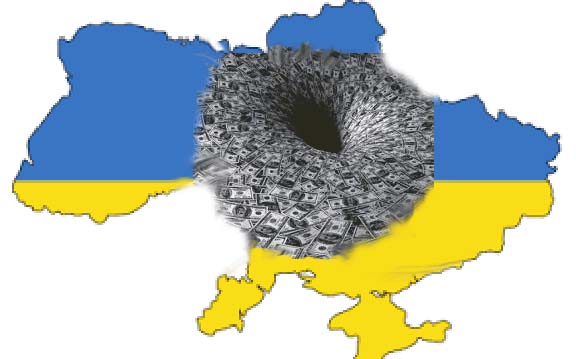
Despite countless billions flooding into Ukraine, Kiev can’t pay its debts.
Jordan Schachtel Jul 21, 22, The Dossier, Western governments have allocated well over $100 billion to prop up Ukraine in its war against Russia, with countless billions more flooding into the country at an increasing pace. Yet as each day passes, it’s becoming more and more clear that all of the money awarded and assigned to Ukraine continues to dissolve into a black hole of secrecy, corruption, deceit, and now, default.
On Wednesday, Ukraine finance ministry asked foreign creditors to accept a delay in its debt repayments, requesting a two year freeze on billions of dollars in Eurobonds. Per the Financial Times, “a rescheduling would amount to a Ukrainian default” on Kiev’s tens of billions in foreign debt.
Financial Times @FinancialTimes: Although western financial support has increased since May, Kyiv is still counting on Ukraine’s central bank to buy its debt by selling foreign reserves or printing money, at the risk of setting off an inflationary spiral.
….. Despite all of the money coming in from around the world, Ukraine’s budget deficit has spiraled out of control. Zelensky’s office now claims to have a $9 billion monthly budget deficit, up 80% from just last month.
……………………. In addition to the government as a whole, Ukraine’s state-owned infrastructure and national energy companies have also announced their intent to default on international bonds. Earlier this week, Kiev announced that it has sold some $12+ billion in gold reserves since the start of the war.
The Western government creditors of Ukraine released a joint statement in support of Ukraine’s debt freeze, adding that they “will continue to closely coordinate and assess the situation with the support of the IMF and the World Bank.”
Translation: Western governments will continue to print huge amounts of cash and launch it in the direction of the Ukraine operation. ……. https://dossier.substack.com/p/money-pit-zelensky-govt-signals-intent
US Military Analyst: West Can’t Afford Ukraine Spending, Will Run Out of Ammo to Send to Kiev

Sputnik News 22 July 22…………………….What goals are the US and EU pursuing by pouring more money into the Ukrainian military?
Scott Ritter: The hope is to transform the conflict that is ongoing in Ukraine as a result of the Russian special military operation into a protracted conflict that can lead to a stalemate that would result in significant Russian costs, both in terms of manpower and military equipment, but also financial costs, and thereby weaken Russia. Ultimately what they are visualizing would be a Ukraine strong enough to evict Russia from its borders.
It’s not possible, this is fantasy in the extreme, but it’s politically inspired fantasy, meaning that the United States and its European allies have invested so much political capital into propping up the Ukrainian military and the Ukrainian government and the Ukrainian economy that even though most sound analysts understand that not only is Ukraine losing the conflict, but they can never win the conflict. Politically, Western politicians cannot divorce themselves from these policies. So in order to maintain a public perception at home of the chance of a Ukrainian victory, they will continue to squander the wealth of their respective nations.
Why are Western states prolonging the hostilities despite the growing discontent of their populations with economic problems?
Scott Ritter: There’s an old saying in the United States that I believe translates into most politics: “when you’re explaining, you’re losing.” And right now, these politicians would have to explain to their constituents why they were wrong about Ukraine, why they were wrong about Russia. And especially here in the United States, we’re dealing with the lead-up to very critical midterm elections. No politician wants to be explaining anything to anybody. They want to be shaping perceptions that build upon past performances. This is all about domestic politics. This has nothing to do with reality.
Why are Western states prolonging the hostilities despite the growing discontent of their populations with economic problems?
Scott Ritter: There’s an old saying in the United States that I believe translates into most politics: “when you’re explaining, you’re losing.” And right now, these politicians would have to explain to their constituents why they were wrong about Ukraine, why they were wrong about Russia. And especially here in the United States, we’re dealing with the lead-up to very critical midterm elections. No politician wants to be explaining anything to anybody. They want to be shaping perceptions that build upon past performances. This is all about domestic politics. This has nothing to do with reality. So it sounds good for a politician to be telling his or her constituents that we are providing the Ukrainians with the best equipment possible to include the top of the line fighter aircraft. What they really should be saying is we are guaranteeing that every Ukrainian pilot we train will die at the hands of the Russian Air Force, because that’s what the ultimate outcome will be.
The thing about, especially American, generals is that they are political animals. They didn’t get that fourth star necessarily because of their military competence. They got it because they impressed a politician with their political acumen. And so what we have is a general playing politics, a general who is saying what the politicians want to hear. And that’s not what his role is. His role is to provide sound military assessment, military advice to the politicians.
But if an American military officer did that today, they couldn’t agree with anything that the Biden administration or the US Congress was seeking to do in Ukraine, and therefore they would never get promoted. They would never get a good job. I don’t like to denigrate serving military officers, but this is a political decision, not a military decision, even though the man making it wears a military uniform.
Can the West collectively really afford such spending now, at a time of harsh polarization and soaring prices?
Scott Ritter: No, they can’t afford it. And we have some nations that are starting to realize this. The German defense minister, who is very hawkish against Russia, has acknowledged that Germany simply has no more weapons to give and they’re not in a position to build new weapons. They’re worrying about other economic realities. The same holds true with the United States.
At some point time in time, we are going to run out of materiel to give to Ukraine. I read somewhere that with all the HIMARS multiple launch rocket systems we’re providing to Ukraine, we’re also providing Ukraine with one third of the ammunition stockpiles for the HIMARS, meaning that we, the United States, only have two thirds of our ammunition stores available if we had to go to war, which means we will run out of ammunition.
This is insane, literally insane to be sacrificing the national security of the United States or of a European nation so that politicians can look and sound good for the next couple of weeks. But it will not change the equation on the battlefield in Ukraine. The Ukrainian Army is in an impossible situation. They literally cannot recover from the debacle that has befallen them.
The sad thing is that Ukrainian leaders are buying into the fiction provided by the West of if they just get more weapons, they can successfully defend against Russia. This means that more Ukrainian soldiers are going to die, more Russian soldiers are going to die, and tragically, more Ukrainian civilians are going to suffer.
Leaders of the Group of Seven recently pledged to stand with Ukraine “for as long as it takes.” How feasible is this pledge?
Scott Ritter: When the Group of Seven made that, one of the leaders was a guy named Boris Johnson. He’s not the leader anymore. The other guy was a gentleman whose last name was Draghi. He’s not the leader anymore. I think as the summer and the winter come along, more and more of these leaders are going to be removed from office because it’s an unsustainable policy. Politicians have a proclivity for saying things that have no basis in reality. It’s very inexpensive for a politician to say “we are going to support you forever.”
Forever in what sense? Boris Johnson is not supporting them forever – he’s out of power. Draghi is not supporting them forever – he’s out of power. And just about everybody who was on that stage at the G7 meeting will be out of power. Suddenly, we have a whole new definition of what “forever” means. It means “not now, not anymore.” https://sputniknews.com/20220721/us-military-analyst-west-cant-afford-ukraine-spending-will-run-out-of-ammo-to-send-to-kiev-1097671398.html
Ukraine Defense Minister Offers Ukraine as a ‘Testing Ground’ for NATO Weapons
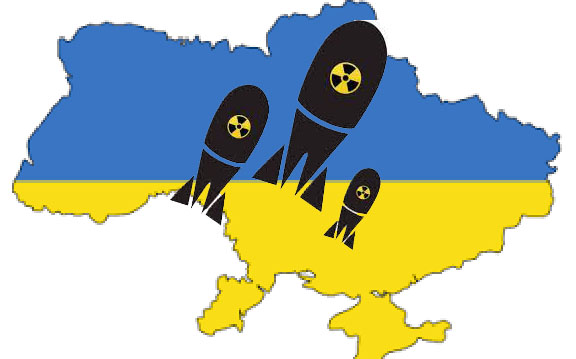
Oleksii Reznikov said Ukraine is ‘inviting arms manufacturers to test the new products here’ https://news.antiwar.com/2022/07/19/ukraine-defense-minister-offers-ukraine-as-a-testing-ground-for-nato-weapons/ by Dave DeCamp
Ukrainian Defense Minister Oleksii Reznikov on Tuesday openly offered Ukraine as a venue to test NATO weapons against Russia in an online conversation with the director of the Atlantic Council’s Eurasia Center.
Reznikov said that Ukraine “is essentially a testing ground” for the advanced weaponry the US and its allies are pouring into the country. “Many weapons are now getting tested in the field in the real conditions of the battle against the Russian Army, which has plenty of modern systems of its own,” he said.
The Ukrainian military chief made the offer in a fresh pitch for more Western arms. “We are interested in testing modern systems in the fight against the enemy and we are inviting arms manufacturers to test the new products here,” he said.
One weapons system that is getting its first use on the battlefield in Ukraine is the Polish Krab artillery system that was provided by Warsaw. “So, I think for our partners in Poland, in the United States, France, or Germany, it’s a good chance to test the equipment. So, give us the tools. We will finish the job and you will have all the new information,” Reznikov said.
The Western response to the war in Ukraine has been a boon for US arms makers, who are making money sending weapons into the war zone, replenishing NATO stockpiles, and selling arms to European countries that have decided to boost military spending.
Kyiv has been asking for more advanced arms than it has been sending, including F-15 and F-16 fighter jets. Ukrainian pilots would need to be trained to fly the US aircraft, and the House version of the National Defense Authorization Act includes $100 million to go towards that training, although the massive spending bill has not yet been finalized.
VIDEO: Germany criminalizes journalist for exposing Ukrainian war crimes
Ed. note . This video is blocked by both Twitter and Facebook. Corporate media censorship is taking over social media too.
https://thegrayzone.com/2022/07/13/video-germany-criminalizes-journalist-for-exposing-ukrainian-war-crimes/ MAX BLUMENTHAL·JULY 13, 2022
Independent Donetsk-based journalist Alina Lipp of Germany details her prosecution by the German state for violating new speech codes through her reporting in the Donetsk People’s Republic.
As the only German reporter on the ground in Donetsk, Lipp has exposed Ukrainian forces shelling civilians, attacking a maternity ward, mining harbors, and bombing a granary filled with corn for export. She faces three years in prison if she returns to her home country.
1 This Month



26 September – International Day for the Total Elimination of Nuclear Weapons


PLEASE OPPOSE HR 8255 AND S.3639 – bills would accelerate satellite deployment, with no environmental review or safeguards – https://ncstd5li.quorum.us/campaign/169331/
To see nuclear-related stories in greater depth and intensity – go to https://nuclearinformation.wordpress.com
-
Archives
- September 2026 (245)
- August 2026 (330)
- July 2026 (355)
- June 2026 (287)
- May 2026 (306)
- April 2026 (356)
- March 2026 (251)
- February 2026 (267)
- January 2026 (308)
- December 2025 (358)
- November 2025 (359)
- October 2025 (375)
-
Categories
- 1
- 1 NUCLEAR ISSUES
- business and costs
- climate change
- culture and arts
- ENERGY
- environment
- health
- history
- indigenous issues
- Legal
- marketing of nuclear
- media
- opposition to nuclear
- PERSONAL STORIES
- politics
- politics international
- Religion and ethics
- safety
- secrets,lies and civil liberties
- spinbuster
- technology
- Uranium
- wastes
- weapons and war
- Women
- 2 WORLD
- ACTION
- AFRICA
- Atrocities
- AUSTRALIA
- Christina's notes
- Christina's themes
- culture and arts
- Events
- Fuk 2022
- Fuk 2023
- Fukushima 2017
- Fukushima 2018
- fukushima 2019
- Fukushima 2020
- Fukushima 2021
- general
- global warming
- Humour (God we need it)
- Nuclear
- RARE EARTHS
- Reference
- resources – print
- Resources -audiovicual
- Weekly Newsletter
- World
- World Nuclear
- YouTube
-
RSS
Entries RSS
Comments RSS
 nuclear-news