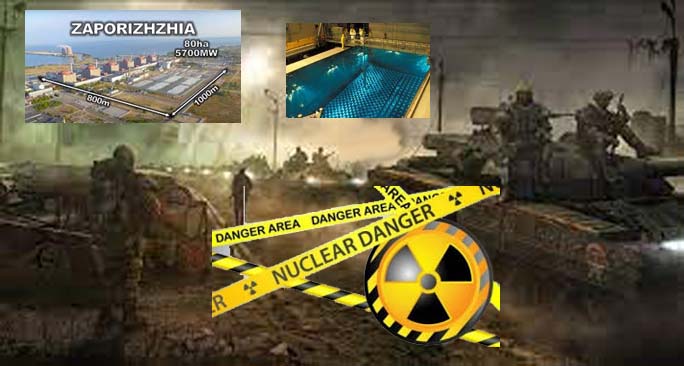
Shelling continues near Zaporizhzhia Nuclear Power Station
12 March 2024. Modern Power Systems
Director general of the International Atomic Energy Agency, Rafael Mariano Grossi, in his 8 March statement Update 215 concerning the situation in Ukraine, reported his meeting with Russian president Vladimir Putin as part of the IAEA’s continuing efforts to help prevent a nuclear or radiological accident during the present conflict.
Mr Grossi said the meeting, on 6 March, was “professional and frank”, with the discussions focused on the paramount importance of reducing the still significant nuclear safety and security risks at the Zaporizhzhya Nuclear Power Plant in southern Ukraine, under Russian control for the past two years.
It was their second meeting, following one in Saint Petersburg in October 2022, and it took place a month after Mr Grossi on 7 February crossed the frontline to travel to the ZNPP for the fourth time during the war. On the way to the plant, he met with Ukrainian President Volodymyr Zelensky in Kyiv……………………………
Military activity
IAEA experts stationed at the ZNPP site have continued to hear explosions and other indications of military activity not far away from the facility. Three times during the week of 4 March they reported hearing several successive explosions within a few minutes, as well as one explosion on 7 march and multiple explosions on 8 March, possibly indicating the use of heavy weapons from an area close by.
On 1 March, the IAEA experts heard an explosion some distance away from the ZNPP. The following morning, the team was informed by the plant that there had been shelling in parkland a few hundred metres away from the city hall administrative building of the town of Enerhodar, where many plant staff live.
Further underlining the fragile nuclear safety and security situation at the ZNPP, the plant remains without back-up external power after the only remaining 330 kV line was disconnected on 20 February. As a result, the ZNPP remains dependent on its only functioning 750 kV power line, out of four such lines available before the war. The IAEA team has informed that the 330 kV line is not expected to be reconnected before 15 March. https://www.modernpowersystems.com/news/newsshelling-continues-near-znpp-11594597
‘Sometimes I can’t sleep at night’: Adi Roche warns of nuclear risks of Ukraine conflict as she picks up peace award
“It’s a war crime to weaponise a nuclear facility,”
CCI’s medical volunteers treat children for illnesses such as “Chernobyl heart”, a cardiac condition prevalent in the region and thought to be caused by the fallout.
Founder of Chernobyl Children International, operations of which have been upended by Russian invasion, honoured by Ahmadiyya Muslim community
Mark Paul, Irish Times, Sat Mar 9 2024
Ukraine is “sitting on a nuclear powder keg” and the western world must not abandon it to its fate, said peace activist, charity founder and former presidential candidate Adi Roche as she received a major international peace award in London on Saturday.
Ms Roche, the founder of Chernobyl Children International (CCI), which has delivered more than €108 million of aid to Ukraine and neighbouring Belarus since the 1986 nuclear disaster in the region, has been awarded the Ahmadiyya Muslim Peace Prize.
The award is presented each year by the Ahmadiyya community, a south Asian Muslim movement, at a grand ceremony at one of Europe’s biggest mosques, the Baitul Futuh complex in south London.
Previous winners include Hiroshima bomb survivor and anti-nuclear campaigner Setsuko Thurlow and Buddhist nun Cheng Yen, the founder of the Tzu Chi humanitarian organisation in Taiwan.
Ms Roche was originally selected for the award in 2020 but the ceremony was postponed due to the pandemic.
Speaking to The Irish Times in advance of the peace symposium at the Baitul Futuh mosque, she said the award had “given her heart a little bit of a lift”, after CCI’s operations in Belarus and Ukraine were upended by Russia’s 2022 invasion of its neighbour.
But she also accused Russian president Vladimir Putin’s forces of issuing a discreet nuclear threat by invading Ukraine from Belarus on a route directly through the Chernobyl nuclear exclusion zone in the north of the country – the power plant was captured on the first day of the war.
“It’s a war crime to weaponise a nuclear facility,” she said. “The Hague Convention should be invoked. Russia issued a nuclear threat without having to say it by going through that area. It made them triumphalist and so they went on to Zaporizhzhia [a nuclear plant in southeast Ukraine that has been the scene of fighting and is now controlled by Russia].”
Before the war, CCI operated mostly in Belarus, working with medical teams to provide care for children in the region whose health was affected by the nuclear fallout from the Chernobyl disaster. Some of the kids were brought to Ireland each year to stay with host families.
Ms Roche said her Cork-headquartered charity has been unable to go into Belarus ever since sanctions were put in place against the regime there of Aleksandr Lukashenko, a close Putin ally.
The CCI operation in Belarus is now run entirely by 60 local staff.
Before the conflict, CCI also operated from the northeastern Ukrainian city of Kharkiv, which was captured by Russia early in the war and subsequently liberated by the Ukrainians. The charity has since had to shift its operations to the western Ukrainian city of Lviv to avoid the fighting.
“In Ukraine we have a different set of problems. We are on the frontline of child cardiac services there,” said Ms Roche.
CCI’s medical volunteers treat children for illnesses such as “Chernobyl heart”, a cardiac condition prevalent in the region and thought to be caused by the fallout.
“With Chernobyl heart, the children can’t live with it, and they’ll die without help. Our surgeons there tried to stay working in Kharkiv after the invasion but they had to pull out two years ago and move to Lviv. The risk was too great – it would have been suicidal to stay. The surgeons were literally chased from east to west by the war,” said Ms Roche………………………… https://www.irishtimes.com/ireland/2024/03/09/sometimes-i-cant-sleep-at-night-adi-roche-warns-of-nuclear-risks-of-ukraine-conflict-as-she-picks-up-peace-award
Was Victoria Nuland Fired for Her Role In the Ukraine Debacle?
UNZ Review, MIKE WHITNEY • MARCH 6, 2024
Victoria Nuland’s retirement is an admission that Washington’s premier foreign policy project has failed. No government official is more identified with the Ukraine fiasco than Nuland. She was on the ground micro-managing activities during the 2014 coup, and has overseen the State Department’s sordid involvement since the war began. Her career-path is inextricably linked to the ill-fated NATO-backed disaster which has resulted in the needless deaths of hundreds of thousands of Ukrainian regulars and the obliteration of much of the country. Thus, the question we need to ask ourselves is whether Nuland’s persistent machinations to drag NATO into an unwinnable war with Russia is the reason she ‘got the axe’, er, announced her retirement? Here’s an excerpt from the official State Department Press Statement:
But it’s Toria’s (Nuland) leadership on Ukraine that diplomats and students of foreign policy will study for years to come. Her efforts have been indispensable to confronting Putin’s full-scale invasion of Ukraine and marshaling a global coalition to ensure his strategic failure, and helping Ukraine work toward the day when it will be able to stand strongly on its own feet – democratically, economically, and militarily. On the Retirement of Under Secretary of State for Political Affairs Victoria Nuland, US State Department,
This is an extraordinary paragraph that places the blame for the Ukrainian debacle squarely on Nuland’s shoulders. Yes, she was “indispensable” in leading the drive to confront Putin just as she played a critical role in “marshaling a global coalition” to prosecute a proxy war on Russia. And, what this statement tells us is that Nuland was one of the main architects of the ongoing conflict, which means she is largely responsible for the widening chasm between the NATO leaders, the mounting carnage on the battlefield, and America’s strategic defeat to its primary geopolitical rival, Russia. In short, no other government official is more responsible for the Ukrainian quagmire than Victoria Nuland.
Also, Nuland leaves behind a gargantuan catastrophe for which there is no apparent remedy and no easy way out. We cannot expect the Biden administration to simply ‘cut and run’ in what is perceived to be a direct confrontation with Moscow. Biden will undoubtedly press-ahead as a face-saving gesture regardless of the costs, further straining relations with the allies while handing-over large chunks of east Ukraine to the Russian army. This is clearly a no-win situation for Washington which is why (we think) Nuland –who created this mess– got her ‘Pink Slip’. ……………………………………………….
Victoria Nuland is one of the most knowledgeable and experienced diplomats in the entire State Department, but –even so– they are throwing her under the bus during a time of extreme crisis because she failed in the biggest and most important assignment of her 35-year career. Isn’t that what they’re saying?
It is. You can be 100% certain that a combative street-fighter like Nuland would never throw in the towel unless she was explicitly ordered to leave. And, perhaps, she might have held-on to her job if there was any sign of progress in the war, but there isn’t any sign of progress. It’s as hopeless and dire a situation as we have ever seen. Even as we speak– the Ukrainian front lines are collapsing while the body count continues to rise. Ukraine is out-gunned, out-manned, and out-led. It’s a total mismatch and has been ever since Putin called up the reserves over a year ago. Young men are presently being slaughtered in droves and left to rot in mud-filled trenches that stink of gunpowder and death. All of this suggests that the end is near. And if the end is near, then someone will have to be blamed. Enter Nuland with a bullseye affixed to her back.
Nuland deserves whatever she gets. As a diehard Warhawk she has always played fast-and-loose with the facts building the case for war on half-truths and outright fabrications, all with the intention of plunging the country into another pointless bloodletting that would inevitably end in another humiliating defeat…………………………………………………
Nuland and her former colleagues, John Brennan and Hillary Clinton, have had a poisonous effect on our politics, elevating Russophobia to a state religion while dragging the nation’s reputation through the mud at every turn…………………………………
In any event, we think that Nuland’s retirement is anything but voluntary. We think that she’s being terminated by foreign policy elites who no longer believe in her blustery rhetoric and empty promises of beating Putin. By removing Nuland they are acknowledging that the proxy-war has failed and that a different strategy is needed. And while we don’t yet know what that policy-change will entail, we do know that Nuland won’t be involved in its implementation.
…………………………………………….. Ukraine’s chances of success are extremely poor unless they get more money, more troops and more firepower, all of which are now seriously in doubt…………………..the State Department has not convened any back-channel negotiations with Russia, so there’s no possibility of a surprise settlement either. And, now Nuland is telling them that neither she nor her colleagues have formulated a back-up plan in the event the war doesn’t turn out as they had anticipated. No Plan B.
……………………….Regrettably, we don’t think that ‘changing the messenger’ necessarily means a fundamental rethinking of the policy. Even so, it is a step in the right direction. As America’s ‘air of invincibility’ continues to erode, and its moral authority collapses (Gaza), Washington will be forced to pull in its horns and ‘play nice’ with its neighbors. That day is fast approaching.
Finally, no matter how you look at it, dumping Nuland is a positive development. Savor the moment. https://www.unz.com/mwhitney/was-nuland-fired-for-her-role-in-the-ukraine-debacle/
The West’s over-involvement in Ukraine
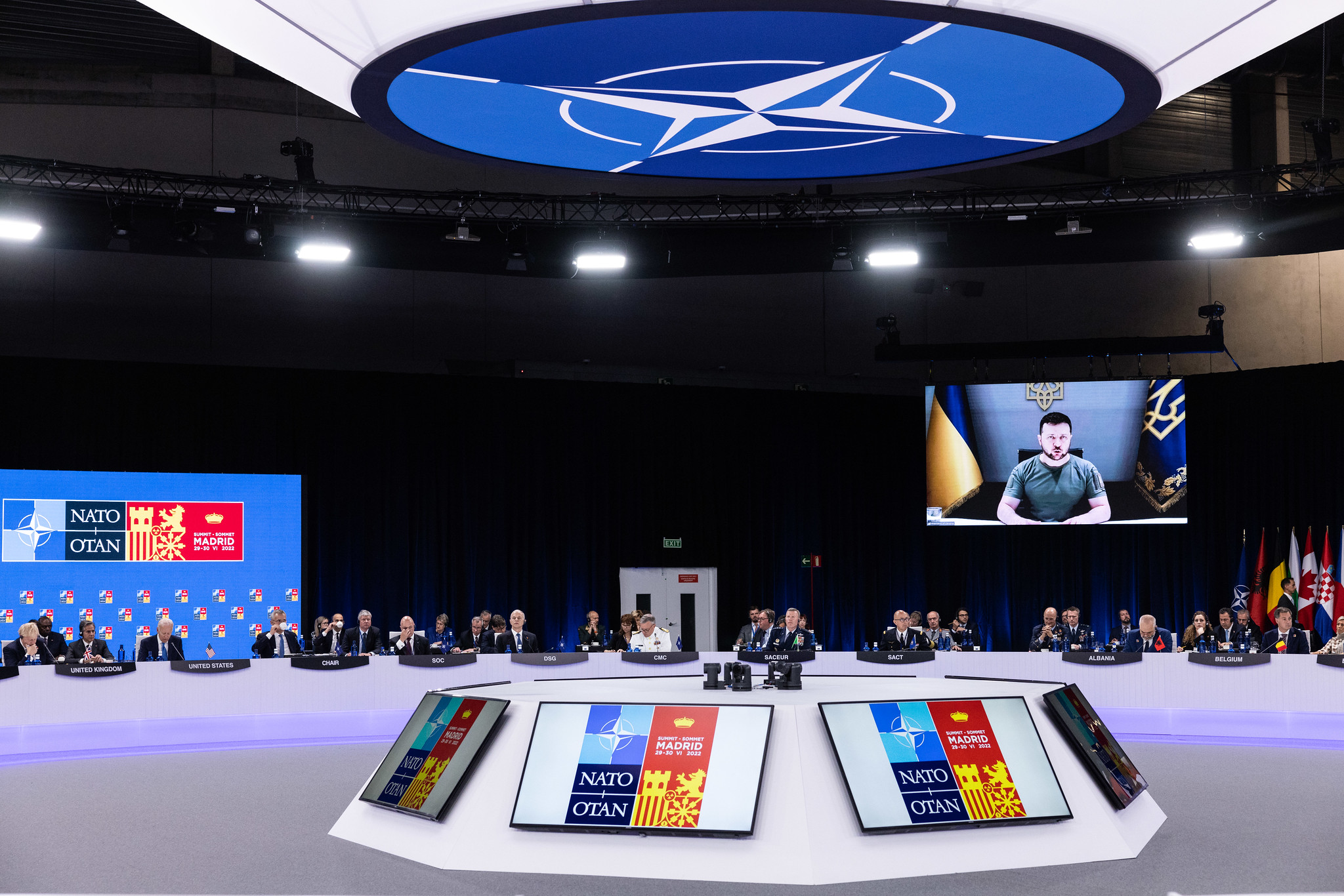
at the same summit those present joined to support sending long-range missiles to the Ukrainians, weapons fully capable of reaching cities, power grids, industrial plants and other targets deep inside Russia. So: No troops, plenty of offensive hardware.
Scholz confirmed what everyone already knows, that NATO officers and trained personnel are in Ukraine operating weapons such as the Patriot and NASAM air defense system, the HIMARS multiple launch rocket system, the British–French Storm Shadow cruise missile (SCALP–EG in France), and many other complex weapons provided to Ukraine.”
Consortium News, PATRICK LAWRENCE: The Russians in Ukraine, March 6, 2024
Recent disclosures provide an incomplete inventory of the West’s covert activities in Ukraine. There is more than we have been told, surely.
You may have read or heard about the freakout that ensued after Emmanuel Macron convened a summit of European leaders in Paris last week. At a press briefing afterward, the French president allowed that NATO may at some point send troops to Ukraine to join the fight against Russian military forces.
The Paris gathering precipitated a significant moment of truth, if we can call it such. Scholz, who is on a knife’s edge politically in part for his government’s support for Ukraine, immediately asserted that Germany would not send its Taurus long-range missiles to Ukraine because German troops would have to go with them, as the Ukrainians could not operate them on their own.
Look at the British, Scholz added indelicately. When they send their Storm Shadow missiles (and I must say I love the names the West’s arsenal minders come up with for these things) British personnel have to go with them.
Yikes! Such indiscretion.
As Stephen Bryen reported in his Weapons and Strategy newsletter, “The British cried foul and accused Scholz of ‘flagrant abuse of intelligence.’” Abuse of intelligence is a new one on me, but never mind. Bryen, who follows these matters closely as a former Defense Department official, continued:
“Scholz confirmed what everyone already knows, that NATO officers and trained personnel are in Ukraine operating weapons such as the Patriot and NASAM air defense system, the HIMARS multiple launch rocket system, the British–French Storm Shadow cruise missile (SCALP–EG in France), and many other complex weapons provided to Ukraine.”
There we have it — or there we have had it, if covertly, for a long time.
Before I go further, let me suggest a couple of thoughts readers can tuck somewhere in the corners of their minds for later consideration.
One, Russia’s intervention in Ukraine two years ago last month was unprovoked. Two, all the Kremlin’s talk about the threat of NATO hard by its southwestern border is nothing more than the distortion and paranoia of “Putin’s Russia,” as we must now refer to the Russian Federation.
It went this way in Paris last week. At the presser following the summit Macron was asked whether Ukraine’s Western backers were considering deploying troops in Ukraine. The French president replied that while European leaders had not reached any kind of agreement, the idea was certainly on the table when they gathered at Elysée Palace.
And then this:
“Nothing should be ruled out. We will do anything we can to prevent Russia from winning this war.”
Instantly came the vigorous objections. The Brits, the Spanish, the Italians, the Poles, the Slovakians, the Hungarians: They all said in so many words, “No way.” Even Jens Stoltenberg, NATO’s war-mongering sec-gen, objected to Macron’s assertion.
No one was more vehement on this point than Olaf Scholz. “What was agreed among ourselves and with each other from the very beginning also applies to the future,” saith the German chancellor, “namely that there will be no ground troops, no soldiers on Ukrainian soil sent there by European countries or NATO states.”
Plenty of Offensive Hardware
O.K., but at the same summit those present joined to support sending long-range missiles to the Ukrainians, weapons fully capable of reaching cities, power grids, industrial plants and other targets deep inside Russia. So: No troops, plenty of offensive hardware.
Last week The New York Times published a long takeout on the Central Intelligence Agency’s presence and programs in Ukraine, which extend back at least a decade and almost certainly much further……………………………………………………………………………………………………………………………..
“If NATO is so much against sending troops to Ukraine,” he asks, “why doesn’t NATO demand that the soldiers already there be sent home?”
Over-Invested in the Conflict
Excellent question. My answer: The Western powers, radically over-invested in Ukraine’s confrontation with Russia, are panicking as the Armed Forces of Ukraine retreat in the face of Russian advances and as support for this folly wanes on both sides of the Atlantic.
If anything, the covert presence of Western personnel in Ukraine may increase.
It is obvious that Ukraine is losing its war against Russia, and at a faster pace than most analysts seem to have anticipated even last autumn. I am reading reports now that the final collapse of the AFU may prove three or so months away. …………………………………………………………………….
The Ukraine crisis is merely the latest phase of the West’s long campaign to surround the Russian Federation up to its borders, destabilize it and finally subvert it. Regime change in Moscow was and remains the final objective.
This is not a war in defense of “Ukrainian democracy” — a phrase that causes one either to laugh or do the other thing. It is the West’s proxy war, start to finish, Ukrainians cynically cast as cannon fodder, expendable stooges.
Russia had no choice when it intervened two years ago, this after eight years’ patience as the Europeans — Germany and France, this is to say — broke every promise they made by way of supporting a settlement. The Americans didn’t break any promises because they never made any — and no one would take them seriously if they had.
I come to the judgment I offered when the war that began in 2014 erupted into open conflict two years ago. The Russian intervention was regrettable but necessary. I took some stick for this view back in 2022. I learn lately it is recorded in some European intelligence files as if it were a major transgression.
It is as true now as then. All we learn in drips and drops about the Western powers’ various covert doings in the sad, failed state they have done much to ruin, confirms this.
https://consortiumnews.com/2024/03/06/patrick-lawrence-the-russians-in-ukraine/?eType=EmailBlastContent&eId=c61faf77-5689-491d-afa5-bc607e7454cf
Most Ukraine aid ‘goes right back’ to US – Nuland
https://www.rt.com/news/593111-nuland-us-aid-ukraine/–– 25 Feb 24
The money that Washington allocates for Kiev supports jobs in America, the high-ranking State Department official has said.
Washington spends most of the money allocated as aid for Ukraine on weapons production at home, Acting US Deputy Secretary of State Victoria Nuland said in an interview with CNN this week.
Commenting on the pending aid package which Congress failed to approve before going on winter recess, Nuland said she has “strong confidence” that it will pass, as it addresses America’s own interests.
“We have to remember that the bulk of this money is going right back into the US economy, to make weapons, including good-paying jobs in some forty states across the US,” she stated, adding that support for Ukraine in America “is still strong.”
Lawmakers in the House of Representatives blocked a bill requested by US President Joe Biden for an aid package for Kiev worth $60 billion, most of which is earmarked for weapons, earlier this month. They are expected to restart discussions on the package after they reconvene on February 28.
US Secretary of State Antony Blinken also recently said that roughly 90% of the financial assistance for Ukraine is spent on domestic production of weapons and equipment. At a press conference on December 20, he said additional tranches would “benefit American business, local communities, and strengthen the US defense industrial base.”
According to Germany’s Kiel Institute, which tracks international support for Kiev, Washington allocated nearly €68 billion ($73.7 billion) in aid for Ukraine between January 24, 2022 and January 15, 2024, including roughly €43 billion ($46.6 billion) in military aid.
However, Kiev has been increasingly demanding more aid from its Western backers. Several days ago, Ukrainian President Vladimir Zelensky warned visiting American legislators that Kiev would “lose the war” against Russia without Washington’s assistance, according to US Senate Majority Leader Chuck Schumer.
Russia has criticized the US and other Western states for their military support for Kiev, arguing that it is only dragging out the conflict.
According to a recent survey from the Harris Poll and the Quincy Institute, a growing number of Americans do not support US military aid to Kiev unless it is tied to peace talks. Only 22% of respondents said Washington should continue ‘unconditionally’ providing Ukraine with financial assistance, while 48% said new funding must be conditioned on progress toward a diplomatic solution. Around 30% said the US should halt all aid.
Greenpeace warns on danger of restarting Zaporizhzhia nuclear plant
Greenpeace today warned that any plans by Russia to restart reactors at
the Zaporizhzhia nuclear plant would be a further step closer to a
potential nuclear disaster and must be stopped.
The environmental organization has restated its demand for the International Atomic Energy
Agency (IAEA) Director General to state clearly to Rosatom, the Russian
state nuclear corporation, that restart of any of the reactors cannot be
permitted.
The IAEA Director General is traveling to Moscow for meetings
with Rosatom Director General Alexey Likhachev. On 4th March, the second
anniversary of the Russian attack on the Zaporizhzhia plant, Greenpeace,
together with the deputy head of the regional administration, held a press
conference in Zaporizhzhia city. The focus of the event was the
Zaporozhzhia nuclear plant crisis, including the reactor restart threats
and nuclear emergency planning.
Greenpeace 5th March 2024
Out of the unfiltered mouths of US political leaders enabling the destruction of Ukraine.
Walt Zlotow, West Suburban Peace Coalition, Glen Ellyn IL, 4 Mar 24
“Four months into this thing, I like the structural path we’re on here. As long as we help Ukraine with the weapons they need and the economic support, they will fight to the last person. The best money we’ve ever spent.” Sen. Lindsay Graham (R-SC)
“It is a relatively modest amount that we are contributing without being asked to risk life and limb. The Ukrainians are willing to fight the fight for us if the West will give them the provisions. It’s a pretty good deal.” Sen. Roger Wicker (R-MS)
“I call that a bargain.” ND Republican Governor Doug Burgum referring to US war funding damaging Russian military without mentioning catastrophic Ukrainian military damage.
These people are not humane political leaders…they are moral monsters.
Walt Zlotow, West Suburban Peace Coalition, Glen Ellyn IL
The Ukrainian Intelligence Committee Is Preparing For The Worst-Case Scenario
ANDREW KORYBKO, FEB 28, 2024, https://korybko.substack.com/p/the-ukrainian-intelligence-committee—
What’s regarded as the worst-case scenario from the perspective of the ruling Ukrainian elite and their Western masters is the best-case scenario for the rest of the world. In the event that Zelensky is deposed and peace talks immediately resume right as Russia breaks through the Line of Contact, then NATO might not feel as pressured by its security dilemma with Russia to conventionally intervene in Ukraine, thus reducing the risk of World War III by miscalculation.
The Ukrainian Intelligence Committee warned in a Telegram post about the worst-case scenario that could happen by June whereby a Russian breakthrough across the Line of Contact (LOC) merges with protests over conscription and Zelensky’s illegitimacy to deal a deathblow to the state. They predictably claimed that those protests, along with claims of growing fatigue inside Western and Ukrainian societies plus civil-military tensions in Kiev, are just “Russian disinformation” even though they all veritably exist.
“Zelensky Is Desperate To Preemptively Discredit Potentially Forthcoming Protests Against Him” and that’s why he claimed in late November that Russia is conspiring to orchestrate a so-called “Maidan 3” against him, which is what the Intelligence Committee explicitly referred to in their post. Their warning also came as Ukrainian media reported that Zelensky plans to ask the Constitutional Court to rule on holding elections during martial law in order to retain legitimacy after his term expires on 20 May.
The preceding hyperlinked report from Turkish media also mentions how “opposition party leaders Petro Poroshenko and Yulia Tymoshenko proposed forming a coalition government to avoid a crisis of legitimacy” but were rebuked by National Security Council chief Danilov. What’s so interesting about this proposal is that it was first tabled by an expert from the powerful Atlantic Council think tank in an article that they published in Politico in mid-December in order to serve that exact same purpose.
This reminder and the subsequent proposal by those two opposition party leaders debunks the notion that questions about Zelensky’s legitimacy are solely the result of “Russian disinformation” just like a top European think tank’s latest poll from January debunks the same about fatigue over this conflict. The European Council on Foreign Relations, which can’t credibly be described as “pro-Russian”, found that only 10% of Europeans think that Ukraine will defeat Russia.
On the other side of the Atlantic, the Congressional deadlock over more Ukraine aid proves that such sentiments are shared in the halls of power, and those who hold these views understandably don’t want to continue throwing hard-earn taxpayer funds into a doomed-to-fail proxy war. Western leaders as a whole, however, are clearly panicking over the latest military-strategic dynamics that followed the failure of Kiev’s counteroffensive last summer and Russia’s recent victory in Avdeevka.
That’s why many of them debated whether to conventionally intervene in Ukraine during Monday’s meeting in Paris that was attended by over 20 European leaders. French President Macron said that this can’t be ruled out despite there being no consensus on the issue, which his Polish counterpart confirmed was the most heated part of their discussions that day. This prompted strong denials from all other Western leaders who claimed that they’ll never authorize this, but their words can’t be taken seriously.
After all, the worst-case scenario that the Ukrainian Intelligence Committee warned about and is actively trying to discredit as supposedly being driven solely by “Russian disinformation” could push them to conventionally intervene in order to avert the state’s collapse and an Afghan-like disaster in Europe. NATO is unlikely to sit idly on the sidelines if Russia steamrolls through the ruins after breaking through the LOC by sometime this summer, hence why a conventional intervention truly can’t be ruled out.
It would be very unpopular in the West as proven by the previously mentioned think tank’s latest poll and the ongoing Congressional deadlock over Ukraine aid, but that doesn’t mean that the elite won’t do it since they don’t take public opinion into consideration when formulating foreign and military policy. Even so, the large-scale protests that could follow in Europe are something that the elite want to avoid, but they might still risk them in order for their geopolitical project in Ukraine not to be totally for naught.
After all, the worst-case scenario that the Ukrainian Intelligence Committee warned about and is actively trying to discredit as supposedly being driven solely by “Russian disinformation” could push them to conventionally intervene in order to avert the state’s collapse and an Afghan-like disaster in Europe. NATO is unlikely to sit idly on the sidelines if Russia steamrolls through the ruins after breaking through the LOC by sometime this summer, hence why a conventional intervention truly can’t be ruled out.
It would be very unpopular in the West as proven by the previously mentioned think tank’s latest poll and the ongoing Congressional deadlock over Ukraine aid, but that doesn’t mean that the elite won’t do it since they don’t take public opinion into consideration when formulating foreign and military policy. Even so, the large-scale protests that could follow in Europe are something that the elite want to avoid, but they might still risk them in order for their geopolitical project in Ukraine not to be totally for naught.
Considering the global significance of this conflict, what’s regarded as the worst-case scenario from the perspective of the ruling Ukrainian elite and their Western masters is therefore the best-case scenario for the rest of the world. In the event that Zelensky is deposed and peace talks immediately resume right as Russia breaks through the LOC, then NATO might not feel as pressured by its security dilemma with Russia to conventionally intervene in Ukraine, thus reducing the risk of World War III by miscalculation.
Macron stands by remarks on NATO troops in Ukraine

https://www.sott.net/article/489392-Macron-stands-by-remarks-on-NATO-troops-in-Ukraine— 1 Mar 24
The French president brushed off criticism from fellow NATO members, insisting his words were “thought-through and measured”
French President Emmanuel Macron on Thursday stood by his controversial remarks on Monday about the prospects of deploying troops to Ukraine, which have caused uproar among some NATO members, and has insisted his words were well thought out.
Speaking to reporters on the sidelines of a visit to inspect the 2024 Olympics village near Paris, Macron refused to backtrack on his statements despite a flurry of criticism from some fellow members of the US-led bloc.
“These are sufficiently serious issues; every one of the words that I say on this issue is weighed, thought-through and measured,” Macron claimed.
The French president triggered the political furore on Monday while speaking to reporters after hosting a meeting of European leaders in Paris. Macron insisted that the West should stop at nothing to prevent Russia from getting the upper hand in the conflict, saying the deployment of troops by NATO and other Western countries to Ukraine could not be ruled out.
“There’s no consensus today to send, in an official manner, troops on the ground,” he said. “In terms of dynamics, we cannot exclude anything. We will do everything necessary to prevent Russia from winning this war.”
The statement prompted a wave of denial from NATO members, with multiple major members of the bloc, including the US, the UK and Germany insisting they harbor no such plans. Some lesser members of the bloc, however, namely Estonia and Lithuania, appeared to back Macron, suggesting that sending troops to Ukraine should not be ruled out.
“We shouldn’t be afraid of our own power. Russia is saying this or that step is escalation, but defense is not escalation,” the Prime Minister of Estonia Kaja Kallas told Sky on Wednesday. “I’m saying we should have all options on the table. What more can we do in order to really help Ukraine win?”
Moscow has strongly condemned Macron’s remarks, cautioning the US-led bloc against taking further hostile moves. Should NATO troops actually be deployed to Ukraine, a direct confrontation between the alliance and Russia will become not only “possible” but actually “inevitable,” Kremlin spokesman Dmitry Peskov warned.
From the same source there was:
1 Mar, 2024 06:34
Vast majority of French oppose Macron’s ‘troops in Ukraine’ comment – poll
Survey results published on Thursday by French newspaper Le Figaro showed that 68% of respondents disapproved of Macron’s comments on a possible future NATO deployment to the war-torn state, while just 31% said they agreed. The remainder, just 1%, were undecided.
Given the many cases of having stood up against the popular wind prevailing in France, 31 % is a pretty good score.
Add to this that although Macron has met with resistance to implications of the statements, he has support from a country like Estonia:
29 Feb, 2024 15:59
NATO member backs ‘boots on the ground’ in Ukraine
Estonia is “not afraid” of Russia and thinks sending NATO ground troops to Ukraine ought to be under consideration, Prime Minister Kaja Kallas has told Sky News in an interview aired on Wednesday.
So far, only Estonia and Lithuania have expressed any enthusiasm for the idea of escalating NATO support to Kiev beyond deliveries of weapons, ammunition, and money.
“We shouldn’t be afraid of our own power. Russia is saying this or that step is escalation, but defense is not escalation,” Kallas told Sky. “I’m saying we should have all options on the table. What more can we do in order to really help Ukraine win?”
Earlier this week, French President Emmanuel Macron argued that the US-led bloc should not rule out sending troops to Ukraine, or any other options. Most members of the bloc have sincedistanced themselvesfrom the idea – except two of the former Soviet Baltic republics.
On Tuesday, Lithuanian Foreign Minister Gabrielius Landsbergis urged NATO to “think outside the box.” Meanwhile, the country’sambassador to Sweden, Linas Linkevicius, said the bloc would “neutralize” the Russian enclave of Kaliningrad if Moscow “dares to challenge NATO.”
The Estonian and Lithuanian officials are supported by the US or were they given the cue cards, … like Macron?
29 Feb, 2024 23:57
Pentagon warns of direct Russia-NATO clash
Addressing the US House Armed Services Committee hearing on Thursday, Austin once again urged lawmakers to approve additional funding for Kiev’s war effort, painting a grim picture for NATO allies.
“If you are a Baltic state, you are really worried about whether you are next… And, frankly, if Ukraine falls, I really believe that NATO will be in a fight with Russia,” the Pentagon chief said.
Austin went on to claim that “other autocrats around the world will look at this and will be encouraged by the fact that this happened and we failed to support a democracy.
Macron is probably aware he is in the same situation as Rishi Sunak. That is there are already French “advisors” involved:
29 Feb, 2024 19:14
UK ‘directly involved’ in Ukraine conflict – KremlinThe outlet RTVI asked Peskov to comment a report from The Times which claimed that Admiral Tony Radakin, the head of the UK armed forces, has helped make “battle plans” for Ukraine.
“In general, it’s no secret that the British really provide different forms of support [to Ukraine]. People on the ground and intelligence and so on and so forth,” Peskov said. “That is, they are actually directly involved in this conflict.”
According to the British outlet, citing a Ukrainian military source, Radakin “is understood to have helped the Ukrainians with the strategy to destroy Russian ships and open up the Black Sea,” and seen as “invaluable in coordinating support from other senior chiefs in NATO.”
The admiral also reportedly visited Kiev and met with President Vladimir Zelensky, to discuss Ukraine’s strategy and the ways in which the West could help.
The Kremlin doesn’t have specific information related to Radakin, but “probably our military knows about this,” Peskov said.
Radakin, 58, was due to retire in November after three years as chief of the defense staff, but will stay on the job for another year at Prime Minister Rishi Sunak’s request, the Times reported. One source told the outlet that the British government considered it important to retain“continuity”ahead of the upcoming general election.
Did the West Intentionally Incite Putin to War?
by GORDONHAHN, February 27, 2024
Over the last year the US and NATO countries have undertaken no effort to convince Ukrainian President Volodomyr Zelenskiy to begin talks with Putin, despite: the death of more than half a million Ukrainians; the destruction of much of Ukraine’s economy, finances, physical infrastructure, human capital, civil society; and the West’s inability to sustain financial and military support even as Ukraine loses the war when said support was at its height.
The West’s war strategy now seems to be to prolong a ‘long war’ in the hope either that the war begins to affect Russia and Putin’s standing there or that Putin’s health wanes and his system destabilizes. All this and much more written below raises suspicions the West intentionally, maybe even ‘subconsciously’ – the actions of small policy victories won in order to ‘confront Putin’ by competing elements within it, especially inside Washington – drew Russia into the NATO-Russia Ukrainian War. Aside from the background cause and main driver of this decision – NATO expansion – and more immediate precipitants of Putin’s decision in mid- to late February 2022, what efforts, of any, did the West undertake perhaps intentionally to drive this decision?
If we look at the course of events in reverse chronological order it seems to me even more glaringly so that the West sought this war and indeed drew Russia into it intentionally with the the strategy of using the war to weaken Russia’s economic and political stability. The strategic goal is the reinforcement of US hegemony and power maximalization by achieving two long-standing, interrelated sub-goals: (1) NATO expansion and (2) the removal from power of Russian President Vladimir Putin. Let’s reverse engineer the course of events.
……………………………………………………………………………………………………………. A final side note. All this has led to NATO and the US being combatants in a war against Russia, which threatens us with world war and nuclear conflagration https://gordonhahn.com/2024/02/27/did-the-west-intentionally-incite-putin-to-war/—
Full Transcript of German Top Military Officials’ Leaked Plot to Attack Crimean Bridge
On February 19, 2024, a conversation took place among Grafe (department head for operations and exercises at the Air Force Forces Command of the Bundeswehr), Gerhartz (Bundeswehr Air Force Inspector), Fenske and Frohstedte (employees of the Air Operations Command within the Space Operations Center of the Bundeswehr).
Earlier in the day, Margarita Simonyan, editor-in-chief of RT and Rossiya Segodnya, Sputnik’s parent media group, published the text of a conversation among high-ranking Bundeswehr representatives discussing the attack on the Crimean Bridge with Taurus missiles and other issues. Full audio is here and full transcript is below.
Gerhartz: Greetings, everyone! Grafe, are you currently in Singapore?
Grafe: Yes.
Gerhartz: Good. We need to verify the information. As you’ve probably heard, Defense Minister Pistorius intends to carefully consider the issue of supplying Taurus missiles to Ukraine. We have a meeting scheduled with him. We need to discuss everything so that we can start working on it. So far, I don’t see any indication of when these deliveries will start. The Chancellor never told him, “I want the information now, and tomorrow morning we’ll make the decision.” I haven’t heard anything like that. On the contrary, Pistorius is evaluating all this ongoing discussion. Nobody knows why the Federal Chancellor is blocking these deliveries. Of course, the most incredible rumors are going around. For example, yesterday a journalist, who is very close to the Chancellor, called me. She heard somewhere in Munich that the Taurus missiles would not work. I asked her who told her that. She replied that someone in a military uniform did. Of course, this is a low-level source of information, but the journalist clung to these words and now wants to make it into a piece of news with a headline like: “Now we know why the Chancellor refuses to send Taurus missiles – they won’t work.” All this is nonsense. Such topics are only available to a limited circle of people. However, we see what kind of garbage is spreading in the meantime. I want to coordinate this issue with you so that we don’t move in the wrong direction. Firstly, I have some questions for Frohstedte and Fenske. Has anyone spoken to you about this? Did Freyding approach you?
Frohstedte: No. I only spoke to Grafe.
Fenske: Same here, I only spoke to Grafe.
Gerhartz: He might reach out to you later. I might have to participate in budget committee hearings because there are issues related to the escalating costs of upgrading the F-35 in Büchel. I have already passed my recommendations through Frank that we have slides to visualize the material. We showed him a draft presentation where Taurus missiles were mounted on a Tornado carrier or other carrier required by the mission. However, I can hardly imagine that. Remember, it’s a half-hour meeting, so don’t prepare a 30-slide presentation. The report should be brief. We need to show what the missile can do and how it can be used. We need to consider the consequences if we make a political decision to transfer missiles as aid to Ukraine. I would appreciate it if you could inform me not only about the problems we have, but also on how we can solve them. For example, if we’re talking about delivery methods… I know how the English do it. They always transport them on Ridgback armored vehicles. They have several people on-site. The French don’t do it that way. They deliver Q7s to Ukraine with Scalp missiles. Storm Shadows and Scalps have similar technical specifications for their installation. How are we going to solve this problem? Are we going to transfer MBDA missiles to them using Ridgbacks? Will one of our people be posted to MBDA? Grafe, report to us on our position on this issue. Fenske and Frohstedte, Gentlemen, report on how you see the situation.
Grafe: I’ll start with the most sensitive issues, with the existing criticism regarding the deliveries. Discussions are taking place almost everywhere. There are several key aspects here. Firstly, it’s about the delivery timelines. If the Chancellor decides now that we should deliver missiles, they will be transferred from the Bundeswehr. Fine, but they will only be ready for use in eight months. Secondly, we cannot shorten the time. Because if we do, there might be an error in its use, the missile might hit a kindergarten, and there will be civilian casualties again. These aspects need to be considered. It must be noted in the negotiations that without the manufacturer, we cannot do anything. They can equip, rearm, and deliver the initial missiles. We can speed up production a bit, but we shouldn’t wait until 20 units have accumulated. We can deliver them in batches of five. The delivery time of these missiles directly depends on the industry. Who will pay for this? Another question to consider is which weapon systems will these missiles be mounted on? And, how should the interaction between the company and Ukraine be maintained? Is there already some form of integration established?
Gerhartz: I don’t think so. Because the manufacturer, TSG, stated that, they can solve this problem within six months, whether it’s a Sukhoi aircraft or an F-16.
Grafe: If the Federal Chancellor decides to go for this, there must be an understanding that it will take six months just for the production of mounts. Thirdly, theoretically, the question of training may concern us. I’ve already mentioned that we cooperate with the missile manufacturer. They handle the maintenance training, and we handle the tactical application. This takes about three to four months. This part of the training can take place in Germany. When delivering the initial missiles, we need to make quick decisions regarding the mounts and training. We may have to turn to the British for these matters and use their know-how. We can provide them with databases, satellite images, and planning stations. Apart from the delivery of the missiles themselves, which we have, everything else can be provided by the industry or the IABG.
Gerhartz: We need to consider that they can use aircraft with mounts for both Taurus and Storm Shadow missiles. The British have been there and outfitted aircraft. There is not much difference between the systems, they can be used for Taurus as well. I can talk about the experience of using the Patriot system. Our experts initially also tallied up long timeframes, but they managed to do it within a few weeks. They managed to get everything up and running so quickly and in so much quantity that our staff said, “Wow. We didn’t expect that.” We are currently fighting a war that uses much more modern technology than our good old Luftwaffe. This all suggests that when we plan deadlines, we shouldn’t go overboard with them. And now, Fenske and Frohstedte, Gentlemen, I would like to hear your opinion on possible deliveries to Ukraine.
Fenske: I would like to focus on the question of training. We have already looked into this, and if we deal with personnel who already have relevant training and will undergo training concurrently, it would only take approximately three weeks for them to become familiar with the equipment and then proceed directly to Air Force training, which would last about four weeks. Thus, it is much less than 12 weeks. However, this is all under the assumption that the personnel meet the necessary qualifications, training can be conducted without the need for translators, and a few other conditions are met. We have already engaged in discussions with Mrs. Friedberger regarding this matter. If we are talking about combat deployment, then in that case, de facto, we will be advised to support at least the initial group. Planning for this undertaking has proven to be challenging; it took approximately a year to train our personnel initially, and we are now aiming to reduce this timeframe to just ten weeks. Moreover, there is the added concern of ensuring they are capable of handling off-road driving in an F1 car. One possible option is to provide scheduled technical support; theoretically, this can be done from Büchel provided secure communication with Ukraine is established. If this were available, then further planning could be carried out. This is the main scenario at least – to provide full manufacturer support, support through the user support service, which will solve software problems. Basically, it’s the same as we have in Germany.
Gerhartz: Hold on a moment. I understand what you’re saying. Politicians might be concerned about the direct closed connection between Büchel and Ukraine, which could imply direct involvement in the Ukrainian conflict. But in that case, we can say that information exchange is going to take place through MBDA, and we’ll send one or two of our specialists to Schröbenhausen. Of course, this is cunning, but from a political standpoint, it probably looks different. If the information exchange goes through the manufacturer, then it has nothing to do with us.
Fenske: The question will arise as to where the information goes. If we’re talking about information on target engagement, ideally including satellite images providing maximum accuracy of up to three meters, then we must first process them in Büchel. I think regardless of this, we can somehow organize an information exchange between Büchel and Schröbenhausen, or we can explore the possibility of transmitting information to Poland, doing it where it’s accessible by car. This matter needs to be examined more closely; options will surely emerge If we are supported, in the worst case scenario we can even travel by car, which will reduce the reaction time. Of course, we won’t be able to react within an hour because we’ll need to give our consent. In the very best case, only six hours after receiving the information will the planes be able to execute an order. For hitting specific targets, an accuracy of more than three meters is sufficient, but if target refinement is necessary, we’ll need to work with satellite images that allow for modeling. And then the reaction time can be up to 12 hours. It all depends on the target. I haven’t studied this issue in detail, but I believe such an option is possible. We just need to figure out how to organize information transmission.
Gerhartz: Do you think we can hope that Ukraine will be able to do everything on its own? After all, it’s known that there are numerous people there in civilian attire who speak with an American accent. So it’s quite possible that soon they’ll be able to use everything themselves, right? After all, they have all the satellite images.
Fenske: Yes, they get them from us. I would also like to touch on air defense issues briefly. We need to seriously consider having equipment in Kiev to receive information from IABG and NDK. We must ensure this is provided to them, which is why I have to fly there on February 21. It is crucial that we plan everything meticulously, unlike what happened with the Storm Shadows where we failed to plan out checkpoints properly. We need to think about how to fly around or fly below the radar coverage sector. If everything is prepared, the training will be more effective. And then we can revisit the question of the number of missiles. If we give them 50, they will be used up very quickly.
Gerhartz: Exactly, it won’t change the course of military actions. That’s why we don’t want to hand them all over. And not all at once. Perhaps 50 in the first batch, then maybe another batch of 50 missiles. It’s perfectly clear, but that’s all big politics. I suppose that’s what it’s really about. I’ve learned from my French and British colleagues that in reality, with these Storm Shadow and Scalp missiles, it’s the same as with the Winchester rifles—they might ask, “Why should we supply the next batch of missiles when we’ve already supplied them? Let Germany do it now.” Perhaps, Mr. Frohstedte wants to say something on this matter?
Frohstedte: Allow me to add a bit of pragmatism. I want to share my thoughts on the Storm Shadow’s characteristics. Regarding air defense, flight time, flight altitude, and so on, I’ve come to the conclusion that there are two interesting targets—the bridge to the east and the ammunition depots, which are higher up. The [Crimean] bridge to the east is difficult to reach, it’s a relatively small target, but the Taurus can do it, and it can also strike the ammunition depots. Considering all this and comparing it with how much the Storm Shadows and HIMARS have been used, I have a question: “Is our target the bridge or the military depots?” Is it achievable with the current shortcomings that the REDs and Patriots have? And I’ve come to the conclusion that the limiting factor is that they usually only have 24 shells…
Gerhartz: That’s clear.
Frohstedte: It makes sense to involve Ukraine in the process. It’ll take a week. I think it’s advisable to consider task planning and centralized planning. Task planning in our unit takes two weeks, but if there’s interest, it can be done faster. If we’re considering the bridge, then I believe Taurus is insufficient, and we need to have an understanding of how it can work, and for that, we need satellite data. I don’t know if we can prepare the Ukrainians for such a task in a short time, in a month, for instance. What would a Taurus attack on the bridge look like? From an operational perspective, I can’t assess how quickly the Ukrainians will learn to plan such actions and how quickly integration will occur. But since we’re talking about the bridge and military bases, I understand they want to seize them as soon as possible.
Fenske: I would like to add something regarding the destruction of the bridge. We’ve been intensely studying this issue, and unfortunately, we’ve come to the conclusion that due to its size, the bridge is akin to a runway. Therefore, it may require more than 10, or even 20 missiles.
Gerhartz: There’s an opinion that the Taurus can achieve this if the French Dassault Rafale fighter aircraft is used.
Fenske: They would only be able to create a hole and damage the bridge. And before making important statements, we ourselves…
Frohstedte: I’m not advocating for the idea of targeting the bridge; I pragmatically want to understand what they want. And what we need to teach them, so it turns out that when planning these operations, we will need to indicate the main points on the images. They will have targets, but it’s important to consider that when working on smaller targets, planning needs to be more meticulous, rather than just analyzing pictures on the computer. When targets are confirmed, it’s simpler, and less time will be spent on planning.
Gerhartz: We all know they want to destroy the bridge, which ultimately signifies how it’s guarded—not only because of its military-strategic importance but also its political significance. Even though they have a ground corridor now. There are certain concerns if we have direct communication with the Ukrainian armed forces. So the question arises: can we use such a ruse and assign our people to MBDA? Thus, direct communication with Ukraine will only be through MBDA, which is much better than if such communication exists with our Air Force.
Grefe: Gerhartz, it doesn’t matter. We have to make sure that from the very beginning there is no language that makes us a party to the conflict. I’m exaggerating a bit, of course, but if we tell the minister now that we are going to plan meetings and travel by car from Poland so that no one notices, that’s already participation, and we won’t do that. If we’re talking about the manufacturer, the first thing to ask is whether MBDA can do it. It doesn’t matter if our people will then deal with it in Büchel or in Schröbenhausen—it still means involvement. And I don’t think we should do that. From the very beginning, we defined this as a key element of the “red line,” so we’ll participate in the training. Let’s say we’ll prepare a “roadmap.” The training process needs to be divided into parts. The long track will take four months, where we’ll thoroughly train them, including practicing scenarios with the bridge. The short track will be two weeks so that they can use the missiles as soon as possible. If they are already trained, then we’ll ask the British if they are ready to take over at this stage. I believe these actions will be the right ones—just imagine if the press finds out that our people are in Schröbenhausen or that we’re driving somewhere in Poland! I find such an option to be unacceptable.
Gerhartz: If such a political decision is made, we must say that the Ukrainians should come to us. First and foremost, we need to know whether such a political decision constitutes direct involvement in task planning. In that case, the training will take a bit longer, and they will be able to tackle more complex tasks, possibly with some experience and high-tech equipment already in use. If there’s a possibility to avoid direct involvement, we can’t participate in task planning, do it in Büchel, and then forward it to them—that’s a “red line” for Germany. We can train them for two months; they won’t learn everything, but they’ll learn something. We just need to ensure they can process all the information and work with all the parameters.
Grefe: Zeppel said we can create both an extended and a brief “roadmap.” The goal is to get a quick result. And if the initial task is to hit ammunition depots rather than complex objects like bridges, then we can proceed with an abbreviated program and get results quickly. As for information from IABG, I don’t see this as a critical issue since they are not tied down to a specific location; they must conduct reconnaissance themselves. It’s clear that efficiency depends on this. This is what we discussed regarding missile delivery. It’s not decided yet, but that’s the plan for now.
Gerhartz: And this will be the main point. There are ammunition depots where short-term preparation won’t be possible due to very active air defense. We’ll need to seriously look into it. I believe that our people will find a solution. We just need to be allowed to try first so that we can provide better political advice. We need to prepare better so as not to fail because, for example, the KSA may not have an accurate idea of where the air defense systems actually are. The Ukrainians have this information, and we have data from the radars. But if we’re talking about precise planning, we need to know where the radars are installed and where the stationary installations are, and how to bypass them. This will allow us to develop a more accurate plan. We have a superb means, and if we have precise coordinates, we can apply it accurately. But there’s no basis to say we can’t do this. There’s a certain threshold where the “red line” politically passes, there’s a “long” and “short” path, and there are differences in terms of utilizing the full potential, which the Ukrainians will be able to utilize better over time as they practice and continually work on it. Personally, I don’t think I need to be present at the meeting. It’s important for us to give a clear-headed assessment and not add fuel to the fire like others do by supplying Storm Shadow and Scalp missiles.
Grefe: The longer they take to make a decision, the longer it will take us to implement it. We need to break everything down into stages. Start with the simple first, and then move on to the complex. Or we can ask the British if they can support us at the initial stage, and have them take on the planning issues? We should facilitate whatever falls within our area of responsibility. Developing mounts for missiles is not our task; Ukraine should resolve this with the manufacturers on their own.
Gerhartz: Right now, we wouldn’t want to encounter problems with the budget committee. It could make it impossible to start construction work at the airbase in Büchel in 2024. Right now, every day counts when it comes to the program.
Patrick Lawrence: The CIA in Ukraine — The NY Times Gets a Guided Tour
SCHEERPOST, By Patrick Lawrence February 29, 2024
The New York Times recently ran a story called “The Spy War: How the C.I.A. Secretly Helps Ukraine Fight Putin.” Patrick Lawrence writes that these “secrets” only contained what the CIA “wanted and did not want disclosed,” and were “effectively authorized” by the agency.
f you have paid attention to what various polls and officials in the U.S. and elsewhere in the West have been doing and saying about Ukraine lately, you know the look and sound of desperation. You would be desperate, too, if you were making a case for a war Ukrainians are on the brink of losing and will never, brink or back-from-the-brink, have any chance of winning. Atop this, you want people who know better, including 70 percent of Americans according to a recent poll, to keep investing extravagant sums in this ruinous folly.
And here is what seems to me the true source of angst among these desperados: Having painted this war as a cosmic confrontation between the world’s democrats and the world’s authoritarians, the people who started it and want to prolong it have painted themselves into a corner. They cannot lose it. They cannot afford to lose a war they cannot win: This is what you see and hear from all those good-money-after-bad people still trying to persuade you that a bad war is a good war and that it is right that more lives and money should be pointlessly lost to it.
Everyone must act for the cause in these dire times…………………………………………………
you have Jens Stoltenberg, NATO’s war-mongering sec-gen, telling Radio Free Europe/Radio Liberty last week that it will be fine if Kyiv uses F–16s to attack Russian cities once they are operational this summer. The U.S.–made fighter jets, the munitions, the money—all of it is essential “to ensure Russia doesn’t make further gains.” Stephen Bryen, formerly a deputy undersecretary at the Defense Department, offered an excellent response to this over the weekend in his Weapons and Strategy newsletter: “Fire Jens Stoltenberg before it is too late.”
Good thought, but Stoltenberg, Washington’s longtime water-carrier in Brussels, is merely doing his job as assigned: Keep up the illusions as to Kyiv’s potency and along with it the Russophobia, the more primitive the better. You do not get fired for irresponsible rhetoric that risks something that might look a lot like World War III.
What would a propaganda blitz of this breadth and stupidity be without an entry from The New York Times? Given the extent to which The Times has abandoned all professional principle in the service of the power it is supposed to report upon, you just knew it would have to get in on this one.
The Times has published very numerous pieces in recent weeks on the necessity of keeping the war going and the urgency of a House vote authorizing that $61 billion Biden’s national security people want to send Ukraine. But never mind all those daily stories. Last Sunday it came out with its big banana. “The Spy War: How the C.I.A. Secretly Helps Ukraine Fight Putin” sprawls—lengthy text, numerous photographs. The latter show the usual wreckage—cars, apartment buildings, farmhouses, a snowy dirt road lined with landmines. But the story that goes with it is other than usual.
Somewhere in Washington, someone appears to have decided it was time to let the Central Intelligence Agency’s presence and programs in Ukraine be known. And someone in Langley, the CIA’s headquarters, seems to have decided this will be O.K., a useful thing to do. When I say the agency’s presence and programs, I mean some: We get a very partial picture of the CIA’s doings in Ukraine, as the lies of omission—not to mention the lies of commission—are numerous in this piece. But what The Times published last weekend, all 5,500 words of it, tells us more than had been previously made public.
Let us consider this unusually long takeout carefully for what it is and how it came to make page one of last Sunday’s editions…………………………………………………………..
Adam Entous and Michael Schwirtz tell the story of—this the subhead—“a secret intelligence partnership with Ukraine that is now critical for both countries in countering Russia.” They set the scene in a below-ground monitoring and communications center the CIA showed Ukrainian intel how to build beneath the wreckage of an army outpost destroyed in a Russian missile attack. They report on the archipelago of such places the agency paid for, designed, equipped, and now helps operate. Twelve of these, please note, are along Ukraine’s border with Russia.
………………………..The CIA handed these two material according to what it wanted and did not want disclosed, and various officials associated with it made themselves available as “sources”—none of the American sources named, per usual.
……………………………..The narrative thread woven through the piece is interesting. It is all about the two-way, can’t-do-without-it cooperation between the CIA and Ukraine’s main intel services—the SBU (the domestic spy agency) and military intelligence, which goes by HUR
……………………… Sloppy, tiresome. But to a purpose. Why, then? What is The Times’s purpose in publishing this piece?
………………………………..The Times piece appears amid flagging enthusiasm for the Ukraine project. And it is in this circumstance that Entous and Schwirtz went long on the benefits accruing to the CIA in consequence of its presence on the ground in Ukraine. But read these two reporters carefully: They, or whoever put their piece in its final shape, make it clear that the agency’s operations on Ukrainian soil count first and most as a contribution to Washington’s long campaign to undermine the Russian Federation. This is not about Ukrainian democracy, that figment of neoliberal propagandists. It is about Cold War II, plain and simple. It is time to reinvigorate the old Russophobia, thus—and hence all the baloney about Russians corrupting elections and so on. It is all there for a reason. ………………………………………………..
more https://scheerpost.com/2024/02/29/patrick-lawrence-the-cia-in-ukraine-the-ny-times-gets-a-guided-tour/
France creates coalition to arm Ukraine with long-range weapons
28 Feb 24 https://www.rt.com/news/593253-france-macron-coalition-long-range-weapons-ukraine/
The aim is to enable Kiev to “carry out deep strikes” amid flagging US support, President Emmanuel Macron has said
France is leading a new coalition that aims to provide Ukraine with “medium and long-range missiles and bombs,” President Emmanuel Macron has announced. He has also not ruled out deploying ground forces to support Kiev in future.
Macron made the remarks following a summit of Ukraine’s backers on Monday, intended to demonstrate unwavering support for Kiev amid the suspension of American aid.
According to the French leader, the newly established coalition seeks to enable Ukraine to “carry out deep strikes.” There is a “broad consensus to do even more and faster together” to support Kiev, Macron added.
The move comes as continued US aid to Ukraine remains in doubt. President Joe Biden’s latest package, which envisages an additional $60 billion for Kiev, has been in limbo for months due to opposition from Republicans in the House of Representatives. Lawmakers have made clear they will only relent if the White House agrees to tighten US border controls and stems the flow of illegal migrants from Mexico.
Speaking on Monday, Macron also claimed that the deployment of Western troops to Ukraine cannot be ruled out, insisting that Paris will “do everything necessary to ensure that Russia cannot win this war.” His remarks were echoed by French Prime Minister Gabriel Attal in comments to the RTL broadcaster on Tuesday.
In response, Kremlin spokesperson Dmitry Peskov warned that “in this case, we have to talk not about the probability, but rather the inevitability” of a direct conflict between NATO and Russia, should Western military personnel be deployed to Ukraine.
Earlier this month, Paris and Kiev signed a bilateral security pact under which France pledged €3 billion ($3.26 billion) worth of defense aid by the end of the year.
In January, Macron revealed plans to provide Ukraine with 40 more SCALP-EG long-range cruise missiles and “hundreds of bombs.”
Paris agreed to ship the rockets, which have a range of over 250km (155 miles), last July, months after the UK agreed a similar move.
Russia has consistently condemned Western deliveries of long-range weaponry, saying it will only serve to prolong the hostilities unnecessarily without changing the final outcome.
Victoria Nuland accidentally reveals the true aim of the West in Ukraine

“And by the way, we have to remember that the bulk of this money is going right back into the US to make those weapons,” Nuland said, pleading in favor of the latest Ukraine aid package “
Ukrainians are a convenient pretext to keep the tax cash flowing in the direction of the US military industrial complex
SOTT, Rachel Marsden, Tue, 27 Feb 2024
US State Department fixture and Under Secretary of State for Political Affairs, Victoria Nuland, aka “Regime Change Karen,” apparently woke up one day recently, took the safety off her nuclear-grade mouth, and inadvertently blew up the West’s Ukraine narrative.
Until now, Americans have been told that all the US taxpayer cash being earmarked for Ukrainian aid is to help actual Ukrainians. Anyone notice that the $75 billion American contribution isn’t getting the job done on the battlefield? Victory in military conflict isn’t supposed to look like defeat. Winning also isn’t defined as, “Well, on a long enough time axis, like infinity, our chance of defeat will eventually approach zero.” And the $178 billion in total from all allies combined doesn’t seem to be doing the trick, either. Short of starting a global war with weapons capable of extending the conflict beyond a regional one, it’s not like they’ve been holding back. The West is breaking the bank. All for some vague, future Ukrainian “victory” that they don’t seem to want to clearly define. We keep hearing that the support will last “as long as it takes.” For what exactly? By not clearly defining it, they can keep moving the goal posts.
But now here comes Regime Change Karen, dropping some truth bombs on CNN about Ukrainian aid. She started off with the usual talking point of doing “what we have always done, which is defend democracy and freedom around the world.” Conveniently, in places where they have controlling interests and want to keep them – or knock them out of a global competitor’s roster and into their own. “And by the way, we have to remember that the bulk of this money is going right back into the US to make those weapons,” Nuland said, pleading in favor of the latest Ukraine aid package that’s been getting the side eye from Republicans in Congress.
So there you have it, folks. Ukrainians are a convenient pretext to keep the tax cash flowing in the direction of the US military industrial complex. This gives a whole new perspective on “as long as it takes.” It’s just the usual endless war and profits repackaged as benevolence. But we’ve seen this before. It explains why war in Afghanistan was little more than a gateway to Iraq. And why the Global War on Terrorism never seems to end, and only ever mutates. Arguably the best one they’ve come up with so far is the need for military-grade panopticon-style surveillance, so the state can shadow-box permanently with ghosts while bamboozling the general public with murky cyber concepts that it can’t understand or conceptualize. When one conflict or threat dials down, another ramps up, boosted by fearmongering rhetoric couched in white-knighting. There’s never any endgame or exit ramp to any of these conflicts. And there clearly isn’t one for Ukraine, either.
Still, there’s a sense that the realities on the ground in Ukraine, which favor Russia, now likely mean that the conflict is closer to its end than to its beginning. Acknowledgements abound in the Western press. And that means there isn’t much time left for Europe to get aboard the tax cash laundering bandwagon and stuff its own military industrial complexes’ coffers like Washington has been doing from the get-go.
Which would explain why a bunch of countries now seem to be rushing to give Ukraine years-long bilateral security “guarantees,” requiring more weapons for everyone. France, Germany, Canada, and Italy have all made the pledge. Plus Denmark, which also flat-out said that it would send all its artillery to Ukraine………………………………………………
Thanks to Nuland’s nuking of any plausible deniability on Ukrainian “aid” not going to Washington, it’s now clear that Ukrainians continue to die so poor weapons makers don’t end up shaking tin cans on street corners.………………………………………………………………………….. more https://www.sott.net/article/489314-Nuland-accidentally-reveals-the-true-aim-of-the-West-in-Ukraine
Nuclear security is under attack in Ukraine, say experts at Bellona forum.

These and other questions were raised during today’s Bellona forum, “War and the Russian Nuclear Industry,” which brough together experts from Norway and Bellona’s new offices in Vilnius — the new locale for the organization’s Russian staff, who can no longer safely conduct their work on Russian soil.
“We have full-scale war in a country with full-scale nuclear installations, and a situation where international cooperation on nuclear security no longer exists,” said Bellona founder Frederic Hauge in the forum’s opening remarks.
Bellona has worked on nuclear cleanup in Russia since the early 1990s, and this month mark 30 years since Bellona released its first report on the nuclear threat caused by the legacy of the Soviet nuclear navy. It has also been almost exactly two years since Russia invaded Ukraine. That was the backdrop for today’s Bellona Forum, where about 100 people participated physically or digitally.
Tons of Nuclear Waste
Aleksandr Nikitin, a former Russian nuclear submarine officer and Bellona employee of 30 years standing, opened the forum by discussing Bellona’s strategic goals for its nuclear project in Russia.
“First and foremost, together with international actors, we have worked to prevent radiation and nuclear accidents at Russian facilities,” he said. “We have also been concerned with ensuring the elimination or safe conversion of the Soviet nuclear and radiation legacy.”
He noted that the Russian nuclear and radiation legacy consists of nearly 20,000 tons of used nuclear fuel, approximately 800,000 cubic meters of radioactive waste, over 4,700 nuclear and radiation hazardous facilities — as well as more than 30,000 cubic meters of radioactive waste dumped on the seabed.
Since Russia invaded Ukraine on February 24, 2022, international efforts to grapple with those issues have stalled.
“But at Bellona, we still have full focus on the Russian nuclear industry, even though now, since we were banned by Russian authorities, we must operate from outside Russia’s borders,” Nikitin said. “We are still working to gather and disseminate information; we share knowledge about the use of nuclear technologies and how the Russian nuclear industry contributes to the continuation of the war in Ukraine.”
‘Rosatom Significantly Involved in the War’
One of the employees at Bellona’s Environmental Transparency Center in Vilnius is nuclear expert Dmitry Gorchakov, who spoke at the Bellona Forum about the role of the Russian atomic agency Rosatom in Russia’s war against Ukraine.
“We closely monitor nuclear risks in Ukraine. And we monitor Rosatom’s global nuclear activities and the agency’s role in the international nuclear market closely,” said Gorchakov.
Rosatom is the world’s largest builder of nuclear power plants. One-third of all nuclear power plants under construction in the world are either built by Rosatom or according to Rosatom’s technology and design.
“Rosatom is significantly involved in the ongoing war. One of the most critical situations is the occupation of Europe’s largest nuclear power plant, Zaporizhzhia (in southeastern Ukraine), which the Russians have occupied since the first weeks of the war. Inspectors from the International Atomic Energy Agency (IAEA) have been denied access to several areas of the facility,” said Gorchakov.
He highlighted three main risks at the nuclear power plant as it continues to be controlled by Russia on the front lines of the conflict.
“First, there is a risk of equipment damage due to abnormal operation and lack of maintenance. The second risk is the lack of qualified personnel. But the biggest risk, of course, is the war itself; it is unpredictable and creates chaos. Dramatic changes can occur at any time. For example, if Russia decides to switch reactors to power mode or if military activity escalates near the plant,” said Gorchakov.
Secret Nuclear Weapons Program
Thomas Nilsen from The Independent Barents Observer also participated in the Bellona forum. He talked about Russia’s secret reactor-driven nuclear weapons program and its development and testing in the Arctic.
We are in a new arms race involving new nuclear weapons and new reactor systems. And we are back to the flow of information that existed during the Soviet era, meaning almost no information. We at The Barents Observer have not reported a single incident from Russian nuclear submarines in the past four years, and that’s not because accidents haven’t happened. It’s becoming harder and harder to obtain information from Russia,” Nilsen explained.
The Barents Observer is the only Norwegian media outlet with four exiled Russian journalists on its editorial staff.
You can watch the entire Bellona forum by clicking on this link.
1 This Month

of the week–London Campaign for Nuclear Disarmament

Tell the Ukrainian Government to Drop Prosecution of Peace Activist Yurii Sheliazhenko
To see nuclear-related stories in greater depth and intensity – go to https://nuclearinformation.wordpress.com
-
Archives
- April 2026 (114)
- March 2026 (251)
- February 2026 (268)
- January 2026 (308)
- December 2025 (358)
- November 2025 (359)
- October 2025 (376)
- September 2025 (257)
- August 2025 (319)
- July 2025 (230)
- June 2025 (348)
- May 2025 (261)
-
Categories
- 1
- 1 NUCLEAR ISSUES
- business and costs
- climate change
- culture and arts
- ENERGY
- environment
- health
- history
- indigenous issues
- Legal
- marketing of nuclear
- media
- opposition to nuclear
- PERSONAL STORIES
- politics
- politics international
- Religion and ethics
- safety
- secrets,lies and civil liberties
- spinbuster
- technology
- Uranium
- wastes
- weapons and war
- Women
- 2 WORLD
- ACTION
- AFRICA
- Atrocities
- AUSTRALIA
- Christina's notes
- Christina's themes
- culture and arts
- Events
- Fuk 2022
- Fuk 2023
- Fukushima 2017
- Fukushima 2018
- fukushima 2019
- Fukushima 2020
- Fukushima 2021
- general
- global warming
- Humour (God we need it)
- Nuclear
- RARE EARTHS
- Reference
- resources – print
- Resources -audiovicual
- Weekly Newsletter
- World
- World Nuclear
- YouTube
-
RSS
Entries RSS
Comments RSS
 nuclear-news