Save Ukraine from American meddling
COMMENT. While the fatuous mainstream media focusses on nan unintelligent TV debate between two US presidential candidates – we increasingly look for some intelligent news.
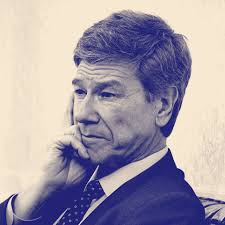
And today – to my amazement, today – “The Hill” actually does give us an analysis of the Ukraine situation. And it’s not from the mega-paid lackeys of the military-industrial-corporate-media complex, but from the respected economist Jeffrey Sachs.
BY JEFFREY SACHS, OPINION CONTRIBUTOR – 06/27/24 https://thehill.com/opinion/international/4741597-save-ukraine-from-american-meddling/
Ukraine can only be saved at the negotiating table, not on the battlefield. Sadly, this point is not understood by Ukrainian politicians such as Oleg Dunda, a member of Ukraine’s parliament, who recently wrote an oped on this site against my repeated call for negotiations.
Dunda believes that the U.S. will save Ukraine from Russia. The opposite is true. Ukraine actually needs to be saved from the U.S.
Ukraine epitomizes Henry Kissinger’s famous aphorism, “It may be dangerous to be America’s enemy, but to be America’s friend is fatal.”
Thirty years ago, Ukraine was embraced by America’s neoconservatives, who believed that it was the perfect instrument for weakening Russia. The neocons are the ideological believers in American hegemony, that is, the right and responsibility of the U.S. to be the world’s sole superpower and global policeman (as described, for example, in the Project for a New American Century’s 2000 report, “Rebuilding America’s Defenses”).
The neocons chose three methods to push U.S. power and influence into Ukraine: first, meddle in Ukraine’s internal politics; second, expand NATO to Ukraine, despite Russia’s red line; and third, arm Ukraine and apply economic sanctions to defeat Russia.
The neocons whispered a sweet fantasy into Ukraine’s ear back in the 1990s: Come with us into the glorious paradise of NATO-land and you’ll be safe ever after. Pro-European Ukrainian politicians, especially in Western Ukraine, loved the story. They believed that Ukraine would join NATO just as Poland, Hungary and the Czech Republic had in 1999.
The idea of expanding NATO to Ukraine was fatuous and dangerous. From Russia’s perspective, the NATO expansion into Central Europe in 1999 was deeply objectionable and a stark violation of the solemn U.S. promise that NATO would not expand “one inch eastward,” but it was not deadly to Russia’s interests. Those countries do not border the Russian mainland. NATO enlargement to Ukraine, however, would mean the loss of Russia’s Black Sea naval fleet at Sevastopol and the prospect of U.S. missiles minutes from the Russian mainland.
There was, in fact, no prospect that Russia would ever accept NATO enlargement to Ukraine. The current CIA Director, William Burns, said as much in a memo to Secretary of State Condoleezza Rice when he was U.S. Ambassador to Moscow in 2008. The memo was famously entitled “Nyet means Nyet.”
Burns wrote, “Ukrainian entry into NATO is the brightest of all redlines for the Russian elite (not just Putin). In more than two and a half years of conversations with key Russian players, from knuckle-draggers in the dark recesses of the Kremlin to Putin’s sharpest liberal critics, I have yet to find anyone who views Ukraine in NATO as anything other than a direct challenge to Russian interests.”
The neoconservatives never described this Russian redline to the American or global public, then or now. Senior diplomats and scholars in the U.S. had reached the same conclusion about NATO enlargement more generally in the 1990s, as has been recently documented in detail.
Ukrainians and their supporters insist that Ukraine has the “right” to join NATO. The U.S. also says so repeatedly. NATO’s policy says that NATO enlargement is an issue between NATO and the candidate country, and that it is no business of Russia or any other non-NATO country.
This is preposterous. I’ll start to believe that claim when Adm. John Kirby declares from the White House podium that Mexico has the “right” to invite China and Russia to put military bases along the Rio Grande, based on the same “open door policy” as NATO. The Monroe Doctrine has said just the opposite for two centuries.
So Ukraine was set up for disaster by the neocons. Actually, the Ukrainian public sensed the truth, and overwhelmingly opposed NATO membership until the 2014 uprising that overthrew Ukrainian President Viktor Yanukovych.
Let’s retrace the chronology of this shockingly misguided American policy. In the early 2000s, the U.S. began to meddle intensively in Ukraine’s politics. The U.S. spent billions of dollars, according to Victoria Nuland, to build Ukraine’s “democracy,” meaning to turn Ukraine to the U.S. and away from Russia. Even so, the Ukrainian public remained strongly against NATO membership, and elected Viktor Yanukovych, who championed Ukrainian neutrality, in 2010.
In February 2014, the Obama team actively sided with neo-Nazi paramilitaries, which stormed government buildings on February 21 and overthrew Yanukovych the next day, cloaked as a “Revolution of Dignity.” The U.S. immediately recognized the new government. The astounding intercepted call between Nuland and U.S. Ambassador to Ukraine Geoffrey Pyatt, where they talk about who should be in the new Ukrainian government several weeks before the rebellion, demonstrates the level of American involvement.
The post-uprising government in Ukraine was filled with Russia-haters, and was backed by extremist right-wing paramilitaries like the Azov Brigade. When the ethnically Russian Donbas region broke away from the uprising, the central government aimed to retake the region by force. A peace agreement was reached between Kyiv and the Donbas in 2015, known as Minsk II, that would end the fighting by extending autonomy to the ethnically Russian regions of Donetsk and Luhansk.
Alas, Ukraine and the U.S. undermined the treaty even while publicly endorsing it. The treaty was a mere temporizing measure (according to German Chancellor Angela Merkel) to give Ukraine time to build its army. The U.S. shipped armaments to Ukraine to build up its military, make it interoperable with NATO and support the retaking of the Donbas by force.
The next diplomatic opportunity to save Ukraine came in December 2021, when Vladimir Putin proposed a U.S.-Russia Treaty on Security Guarantees, calling for an end to NATO enlargement, among other issues (including the urgent question of U.S. missile placements near Russia). Instead of negotiating, Biden again flatly said no to Putin on the question of ending NATO enlargement.
Yet another diplomatic opportunity to save Ukraine arose in March 2022, just days after the start of Russia’s “special military operation,” launched on February 24. Russia said that it would stop the war if Ukraine would agree to neutrality. Zelensky agreed, documents were exchanged and a peace deal was nearly reached. Yet, according to former Israeli Prime Minister Naftali Bennett, the U.S. and other NATO allies, notably the U.K., stepped in to block the agreement, telling Ukraine to fight on. Recently, Boris Johnson said that Ukraine should keep fighting to preserve “Western hegemony.”
Ukraine can still be saved through neutrality, even as hundreds of thousands of lives have been squandered by the failure to negotiate. The rest of the issues, including boundaries, can also be resolved through diplomacy. The killing can end now, before more disasters befall Ukraine and the world. As for the United States, 30 years of neoconservative misrule is long enough.
US can’t trace $62 million of military aid sent to Ukraine – watchdog.
Rt.com 28 June 24
The Pentagon does not know whether defense items were “lost or destroyed,” an investigation has found.
The US Defense Department is unable to locate $62 million worth of weapons given to Ukraine, according to a report released on Wednesday.
The conclusions were presented by the Pentagon inspector general after an assessment on whether the DoD is effectively monitoring defense items provided to the Ukrainian Armed Forces.
The watchdog found that as of late November last year, a total $62.2 million in hardware designated for enhanced end-use monitoring (EEUM) was reported as missing. Among them are night vision devices, Javelin anti-tank missiles, and missile launch units.
According to the report, the US Office of Defense Cooperation (ODC) in Ukraine “cannot tell which of these items were lost and which were destroyed.” The Ukrainian army has not yet provided clarification, it adds…………………………………………more https://www.rt.com/news/600100-us-military-aid-millions-missing-ukraine/
Ukraine hit Russia’s space communications and early warning center
COMMENT. This is really serious. The US is really trying to start a war with Russia. Russia will definitely respond to these attacks. And the vast majority of Americans will know nothing about the US provocation because of our censorship. So, they will be outraged at the Russian attacks and support US counterattacks. They’ve hit a few other early warning facilities in Russia in the last few weeks that Scott Ritter has talked about, and that Putin has given very grave and serious warnings about because it blinds Russia to knowing if they are about to be attacked by intercontinental ballistic missiles, making their loss an existential threat for Russia.
After the strikes in Sevastopol and the loss of Russian civilians in Crimea and Dagestan, Ukraine also hit the valuable NIP-16 space monitoring and communication center near the city of Yevpatoria on the Black Sea coast.
This is a Soviet facility that was placed under the command of the Russian Aerospace Defense Forces for Nuclear Early Warning and Command Operations after Russia’s unification with Crimea.
As can be seen, Kiev is now systematically hitting Russian targets of strategic importance. Moscow can no longer afford not to take action.
The NIP-16 installation includes two sites located 10 km apart: the receiving station at site 1, near the village of Vitino, and a transmitting station at site 2, near the village of Uyutnoe.………………………………………………………. https://seemorerocks.substack.com/p/ukraine-hit-russias-space-communications?utm_source=substack&utm_medium=email#media-2d576da4-cd74-4647-81eb-57e26fc5d6a8
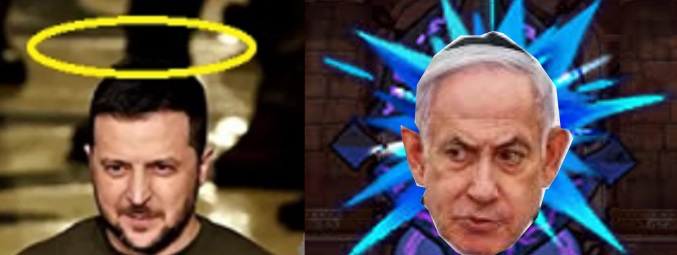
Delusional Netanyahu joins delusional Zelensky in seeking total victory when none possible
Walt Zlotow, West Suburban Peace Coalition, Glen Ellyn IL 21 June 24 https://heartlandprogressive.blogspot.com/
Last November, Ukraine President Zelensky fired Valery Zaluzhny, his top military commander. Zaluzhny made the mistake, after the much touted Ukraine counteroffensive against Russia flopped, of suggesting the war was a stalemate that could not be won. Zelensky fired Zaluzhny, reminding him that the Ukraine war narrative was complete victory. Ukraine would win back all lost territory including Donbas, receive war reparations from Russia, and get Russia president Putin prosecuted for war crimes. Zelensky remains in delusion of achieving those goals for the past 7 months.
Just this week Zelensky has been joined in war delusion by Israeli Prime Minister Benjamin Netanyahu. In a stunning development, the Israeli Defense Force (IDF) has publicly announced, in direct contradiction of Prime Minister Netanyahu, that Israel cannot defeat Hamas in Gaza.
Reason? Hamas is an ideology, and no military, however strong, can defeat an ideology on the battlefield. Israeli IDF Rear Adm. Daniel Hagari could not have been more candid “This business of destroying Hamas, making Hamas disappear, it’s simply throwing sand in the eyes of the public. Hamas is an idea, Hamas is a party. It’s rooted in the hearts of the people – whoever thinks we can eliminate Hamas is wrong.”
Israel’s genocidal campaign upon the entire Palestinian population has backfired spectacularly, making Hamas stronger every day. Instead of destroying Hamas, Israel is self- destructing before our eyes. It has not only lost on the battlefield. It has lost support of the entire world outside the Biden administration in America. No matter how this ends, Israel will neither recover its moral standing in the world, nor claim Gaza for Greater Israel.
A sign of Israel’s disintegrating political position is Netanyahu’s dissolution of his war cabinet over the resignation of opposition leader Benny Gantz. Netanyahu is left surrounding himself with extreme right wing fanatics who either are as delusional as Netanyahu or are simply trapped into continuing their genocidal campaign as the only means of remaining in power.
Netanyahu and his fanatical war council are now threatening to pivot north to attack Hezbollah in Lebanon. Such a move could militarily devastate Israel, with no chance whatsoever of prevailing. Netanyahu’s war delusions appear to have no limits.
It doesn’t matter how many standing ovations Netanyahu receives when he addresses Congress July 24, that is, if he is still in power. It doesn’t matter how many tens of billions in weapons Biden gifts Netanyahu to obliterate tens of thousands more Palestinian
kids and moms in their futile quest for total victory. Nothing can save Israel from defeat Netanyahu so delusionally set in motion.
But possibly the most delusional of all is President Biden, lusting to fling another hundred billion of American treasure to maintain two lost wars in furtherance of his preposterous belief that America still rules the world.
Why Won’t the US Help Negotiate a Peaceful End to the War in Ukraine?
In the course of 2014, Putin called repeatedly for a negotiated peace, and this led to the Minsk II Agreement in February 2015 based on autonomy of the Donbas and an end to violence by both sides. Russia did not claim the Donbas as Russian territory, but instead called for autonomy and the protection of ethnic Russians within Ukraine. The UN Security Council endorsed the Minsk II agreement, but the U.S. neocons privately subverted it. Years later, Chancellor Angela Merkel blurted out the truth. The Western side treated the agreement not as a solemn treaty but as a delaying tactic to “give Ukraine time” to build its military strength. In the meantime, around 14,000 people died in the fighting in Donbas between 2014 and 2021.
Jeffrey Sachs, 19 June 24, https://www.commondreams.org/opinion/role-of-us-in-russia-ukraine-
For the fifth time since 2008, Russia has proposed to negotiate with the U.S. over security arrangements, this time in proposals made by President Vladimir Putin on June 14, 2024. Four previous times, the U.S. rejected the offer of negotiations in favor of a neocon strategy to weaken or dismember Russia through war and covert operations. The U.S. neocon tactics have failed disastrously, devastating Ukraine in the process, and endangering the whole world. After all the warmongering, it’s time for Biden to open negotiations for peace with Russia.
Since the end of the Cold War, the U.S. grand strategy has been to weaken Russia. As early as 1992, then Defense Secretary Richard Cheney opined that following the 1991 demise of the Soviet Union, Russia too should be dismembered. Zbigniew Brzezinski opined in 1997 that Russia should be divided into three loosely confederated entities in Russian Europe, Siberia, and the far east. In 1999, the U.S.-led NATO alliance bombed Russia’s ally, Serbia, for 78 days in order to break Serbia apart and install a massive NATO military base in breakaway Kosovo. Leaders of the U.S. military-industrial complex vociferously supported the Chechen war against Russia in the early 2000s.
To secure these U.S. advances against Russia, Washington aggressively pushed NATO enlargement, despite promises to Mikhail Gorbachev and Boris Yeltsin that NATO would not move one inch eastward from Germany. Most tendentiously, the U.S. pushed NATO enlargement to Ukraine and Georgia, with the idea of surrounding Russia’s naval fleet in Sevastopol, Crimea with NATO states: Ukraine, Romania (NATO member 2004), Bulgaria (NATO member 2004), Turkey (NATO member 1952), and Georgia, an idea straight from the playbook of the British Empire in the Crimean War (1853-6).
Brzezinski spelled out a chronology of NATO enlargement in 1997, including NATO membership of Ukraine during 2005-2010. The U.S. in fact proposed NATO membership for Ukraine and Georgia at the 2008 NATO Bucharest Summit. By 2020, NATO had in fact enlarged by 14 countries in Central Europe, Eastern Europe, and the former Soviet Union (Czech Republic, Hungary, and Poland in 1999; Bulgaria, Estonia, Latvia, Lithuania, Romania, Slovakia, and Slovenia in 2004; Albania and Croatia, 2009; Montenegro, 2017; and Northern Macedonia, 2020), while promising future membership to Ukraine and Georgia.
The White House is dead wrong to evade negotiations just because of disagreements with Russia’s proposals. It should put up its own proposals and get down to the business of negotiating an end to the war.
In short, the 30-year U.S. project, hatched originally by Cheney and the neocons, and carried forward consistently since then, has been to weaken or even dismember Russia, surround Russia with NATO forces, and depict Russia as the belligerent power.
It is against this grim backdrop that Russian leaders have repeatedly proposed to negotiate security arrangements with Europe and the U.S. that would provide security for all countries concerned, not just the NATO bloc. Guided by the neocon game plan, the U.S. has refused to negotiate on every occasion, while trying to pin the blame on Russia for the lack of negotiations.
In June 2008, as the U.S. prepared to expand NATO to Ukraine and Georgia, Russian President Dmitry Medvedev proposed a European Security Treaty, calling for collective security and an end to NATO’s unilateralism. Suffice it to say, the U.S. showed no interest whatsoever in Russia’s proposals, and instead proceeded with its long-held plans for NATO enlargement.
The second Russian proposal for negotiations came from Putin following the violent overthrow of Ukraine’s President Viktor Yanukovych in February 2014, with the active complicity if not outright leadership of the U.S. government. I happened to see the U.S. complicity up close, as the post-coup government invited me for urgent economic discussions. When I arrived in Kiev, I was taken to the Maidan, where I was told directly about U.S. funding of the Maidan protest.
The evidence of U.S. complicity in the coup is overwhelming. Assistant Secretary of State Victoria Nuland was caught on a phone line in January 2014 plotting the change of government in Ukraine. Meanwhile, U.S. Senators went personally to Kiev to stir up the protests (akin to Chinese or Russian political leaders coming to DC on January 6, 2021 to rile up the crowds). On February 21, 2014, the Europeans, U.S., and Russia brokered a deal with Yanukovych in which Yanukovich agreed to early elections. Yet the coup leaders reneged on the deal the same day, took over government buildings, threatened more violence, and deposed Yanukovych the next day. The U.S. supported the coup and immediately extended recognition to the new government.
In my view, this was a standard CIA-led covert regime change operation, of which there have been several dozen around the world, including sixty-four episodes between 1947 and 1989 meticulously documented by Professor Lindsey O’Rourke. Covert regime-change operations are of course not really hidden from view, but the U.S. government vociferously denies its role, keeps all documents highly confidential, and systematically gaslights the world:
“Do not believe what you see plainly with your own eyes! The U.S. had nothing to do with this.” Details of the operations eventually emerge, however, through eyewitnesses, whistleblowers, the forced release of documents under the Freedom of Information Act, declassification of papers after years or decades, and memoirs, but all far too late for real accountability.
In any event, the violent coup induced the ethnic-Russia Donbas region of Eastern Ukraine to break from the coup leaders, many of whom were extreme Russophobic nationalists, and some in violent groups with a history of Nazi SS links in the past. Almost immediately, the coup leaders took steps to repress the use of the Russian language even in the Russian-speaking Donbas. In the following months and years, the government in Kiev launched a military campaign to retake the breakaway regions, deploying neo-Nazi paramilitary units and U.S. arms.
In the course of 2014, Putin called repeatedly for a negotiated peace, and this led to the Minsk II Agreement in February 2015 based on autonomy of the Donbas and an end to violence by both sides. Russia did not claim the Donbas as Russian territory, but instead called for autonomy and the protection of ethnic Russians within Ukraine. The UN Security Council endorsed the Minsk II agreement, but the U.S. neocons privately subverted it. Years later, Chancellor Angela Merkel blurted out the truth. The Western side treated the agreement not as a solemn treaty but as a delaying tactic to “give Ukraine time” to build its military strength. In the meantime, around 14,000 people died in the fighting in Donbas between 2014 and 2021.
Following the definitive collapse of the Minsk II agreement, Putin again proposed negotiations with the U.S. in December 2021. By that point, the issues went even beyond NATO enlargement to include fundamental issues of nuclear armaments. Step by step, the U.S. neocons had abandoned nuclear arms control with Russia, with the U.S. unilaterally abandoning the Anti-Ballistic Missile (ABM) Treaty in 2002, placing Aegis missiles in Poland and Romania in 2010 onwards, and walking out of the Intermediate Nuclear Force (INF) Treaty in 2019.
In view of these dire concerns, Putin put on the table on December 15, 2021 a draft “Treaty between the United States of America and the Russian Federation on Security Guarantees.” The most immediate issue on the table (Article 4 of the draft treaty) was the end of the U.S. attempt to expand NATO to Ukraine. I called U.S. National Security Advisor Jake Sullivan at the end of 2021 to try to convince the Biden White House to enter the negotiations. My main advice was to avoid a war in Ukraine by accepting Ukraine’s neutrality, rather than NATO membership, which was a bright red line for Russia.
The White House flatly rejected the advice, claiming remarkably (and obtusely) that NATO’s enlargement to Ukraine was none of Russia’s business! Yet what would the U.S. say if some country in the Western hemisphere decided to host Chinese or Russian bases? Would the White House, State Department, or Congress say, “That’s just fine, that’s a matter of concern only to Russia or China and the host country?” No. The world nearly came to nuclear Armageddon in 1962 when the Soviet Union placed nuclear missiles in Cuba and the U.S. imposed a naval quarantine and threatened war unless the Russians removed the missiles. The U.S. military alliance does not belong in Ukraine any more than the Russian or Chinese military belongs close to the U.S. border.
The fourth offer of Putin to negotiate came in March 2022, when Russia and Ukraine nearly closed a peace deal just weeks after the start of Russia’s special military operation that began on February 24, 2022. Russia, once again, was after one big thing: Ukraine’s neutrality, i.e., no NATO membership and no hosting of U.S. missiles on Russia’s border.
Ukraine’s President Vladimir Zelensky quickly accepted Ukraine’s neutrality, and Ukraine and Russia exchanged papers, with the skillful mediation of the Foreign Ministry of Turkey. Then suddenly, at the end of March, Ukraine abandoned the negotiations.
U.K. Prime Minister Boris Johnson, following in the tradition of British anti-Russian war-mongering dating back to the Crimean War (1853-6), actually flew to Kiev to warn Zelensky against neutrality and the importance of Ukraine defeating Russia on the battlefield. Since that date, Ukraine has lost around 500,000 dead and is on the ropes on the battlefield.
Now we have Russia’s fifth offer of negotiations, explained clearly and cogently by Putin himself in his speech to diplomats at the Russian Foreign Ministry on June 14. Putin laid out Russia’s proposed terms to end the war in Ukraine.
“Ukraine should adopt a neutral, non-aligned status, be nuclear- free, and undergo demilitarization and de-nazification,” Putin said. “These parameters were broadly agreed upon during the Istanbul negotiations in 2022, including specific details on demilitarization such as the agreed numbers of tanks and other military equipment. We reached consensus on all points.
“Certainly, the rights, freedoms, and interests of Russian-speaking citizens in Ukraine must be fully protected,” he continued. “The new territorial realities, including the status of Crimea, Sevastopol, Donetsk and Lugansk people’s republics, Kherson, and Zaporozhye regions as parts of the Russian Federation, should be acknowledged. These foundational principles need to be formalized through fundamental international agreements in the future. Naturally, this entails the removal of all Western sanctions against Russia as well.”
Let me say a few words about negotiating.
Russia’s proposals should now be met at the negotiating table by proposals from the U.S. and Ukraine. The White House is dead wrong to evade negotiations just because of disagreements with Russia’s proposals. It should put up its own proposals and get down to the business of negotiating an end to the war.
There are three core issues for Russia: Ukraine’s neutrality (non-NATO enlargement), Crimea remaining in Russian hands, and boundary changes in Eastern and Southern Ukraine. The first two are almost surely non-negotiable. The end of NATO enlargement is the fundamental casus belli. Crimea is also core for Russia, as Crimea has been home to Russia’s Black Sea fleet since 1783 and is fundamental to Russia’s national security.
The third core issue, the borders of Eastern and Southern Ukraine, will be a key point of negotiations. The U.S. cannot pretend that borders are sacrosanct after NATO bombed Serbia in 1999 to relinquish Kosovo, and after the U.S. pressured Sudan to relinquish South Sudan. Yes, Ukraine’s borders will be redrawn as the result of the 10 years of war, the situation on the battlefield, the choices of the local populations, and tradeoffs made at the negotiating table.
Biden needs to accept that negotiations are not a sign of weakness. As Kennedy put it, “Never negotiate out of fear, but never fear to negotiate.” Ronald Reagan famously described his own negotiating strategy using a Russian proverb, “Trust but verify.”
The neocon approach to Russia, delusional and hubristic from the start, lies in ruins. NATO will never enlarge to Ukraine and Georgia. Russia will not be toppled by a CIA covert operation. Ukraine is being horribly bloodied on the battlefield, often losing 1,000 or more dead and wounded in a single day. The failed neocon game plan brings us closer to nuclear Armageddon.
Yet Biden still refuses to negotiate. Following Putin’s speech, the U.S., NATO, and Ukraine firmly rejected negotiations once again. Biden and his team have still not relinquished the neocon fantasy of defeating Russia and expanding NATO to Ukraine.
The Ukrainian people have been lied to time and again by Zelensky and Biden and other leaders of NATO countries, who told them falsely and repeatedly that Ukraine would prevail on the battlefield and that there were no options to negotiate. Ukraine is now under martial law. The public is given no say about its own slaughter.
For the sake of Ukraine’s very survival, and to avoid nuclear war, the President of the United States has one overriding responsibility today: Negotiate.
Propaganda vs. Pragmatism: Can US ATACMS Clear the way for F-16 Warplanes in Ukraine?
Update on the conflict in Ukraine for June 16, 2024… – Western media reports the shortcomings of both F-16s and French Mirage 2000-5 warplanes being transferred to Ukraine;
– Attempts by Ukraine to use ATACMS to “isolate” Crimea continue to fall far short of the required frequency and scale necessary to actually do so;
– Western media reports admit that Russia’s large inventory of air defense systems will not run out any time soon despite Ukrainian claims of successfully targeting S-300 and S-400 systems across the battlefield;
– The idea of ATACMS clearing a path for F-16s to conduct strikes behind enemy lines is betrayed by the reality of even Ukraine’s much more limited air defense capabilities still preventing Russian air power from operating freely across the whole of Ukraine;
For Daily Reports on Ukraine: The Duran (Telegram): https://t.me/thedurancom Scott of Kalibrated (Telegram): https://t.me/kalibrated Mark Sleboda (Telegram): https://t.me/TheRealPolitick
Ukraine, Continued Aid, and the Prevailing Logic of Slaughter
June 15, 2024, by: Dr Binoy Kampmark, https://theaimn.com/ukraine-continued-aid-and-the-prevailing-logic-of-slaughter/
War always commands its own appeal. It has its own frazzled laurels, the calling of its own worn poets tenured in propaganda. In battle, the poets keep writing, and keep glorifying. The chattering diplomats are kept in the cooler, biding their time. The soldiers die, as do civilians. The politicians are permitted to behave badly.

With Ukraine looking desperately bloodied at the hands of their Russian counterparts, the horizon of the conflict had seemingly shrunk of late. Fatigue and desperation had set in. Washington seemed more interested in sending such musically illiterate types as the Secretary of State Antony Blinken to Kyiv for moral cuddling rather than suitably murderous military hardware.
Russian President Vladimir Putin, mindful of the losses inflicted on his own side in the conflict, thought it opportune to spring the question of peace talks. On June 14, while speaking with members of the Russian Foreign Ministry, he floated the idea that Russia would cease combat operations “immediately” if Ukraine abandoned any aspirations of joining NATO and withdrew its troops from the regions of Donetsk, Luhansk, Kherson and Zaporizhzhia.
Rather than refrigerate the conflict into its previous frozen phase, Putin went further. It would end provided that Kyiv accepted Moscow’s sovereign control over the four regions as “new territorial realities”. Russian-speaking citizens in Ukraine would also be afforded protections; sanctions imposed by Western states would be lifted. “Today,” he stated, “we have put forward another concrete, genuine peace proposal. If Kyiv and Western capitals reject it as they have in the past, they will bear political and moral responsibility of the ‘continuation of the bloodshed.’”
He further added that, as soon as Ukraine began withdrawing its military personnel from Donbas and Novorossiya, with an undertaking not to join NATO, “the Russian Federation will cease fire and be ready for negotiations. I don’t think it will take long.”
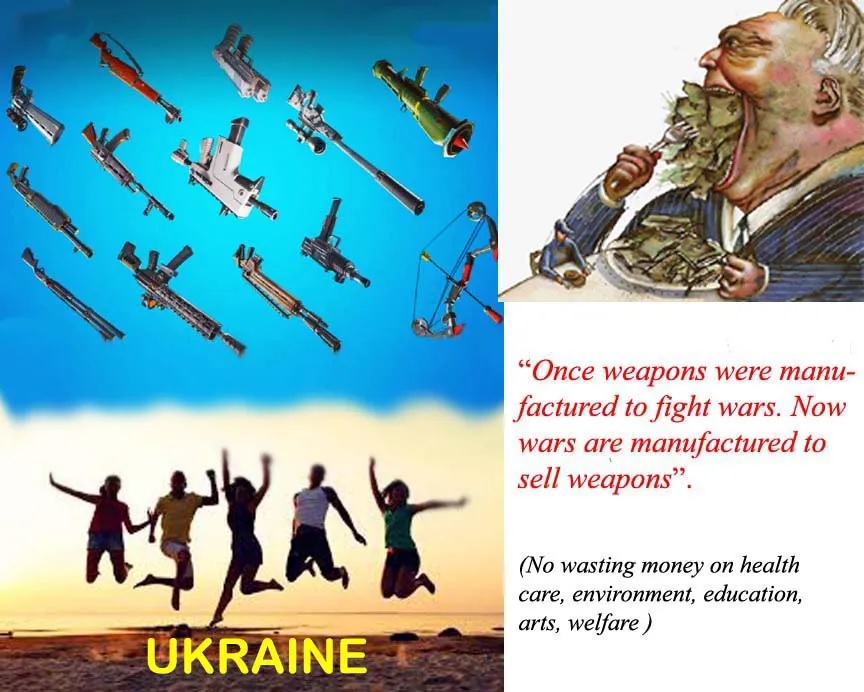
Length and duration, however, remain the signal attributes of this murderous gambit. Ukraine’s defeat and humbling is unacceptable for the armchair strategists in the US imperium, along with their various satellites. NATO’s obsessive expansion cannot be thwarted, nor can the projection of Washington’s influence eastwards from Europe. And as for the defence contractors and companies keen to make a killing on the killings, they must also be considered.
This was unpardonable for the interests of the Biden administration. The Washington War Gaming Set must continue. Empires need their fill, their sullied pound of flesh. Preponderance of power comes in various forms: direct assault against adversaries (potentially unpopular for the voters), proxy enlistment, or the one degree removed sponsorship of a national state or entity as a convenient hitman. Ukraine, in this sense, has become the latter, a repurposed, tragic henchman for US interests, shedding blood in patriotic gore.
In keeping with that gore, US President Joe Biden, in announcing a funding package for Ukraine from the G7 group, promised that “democracies can deliver”. The amount on the ledger: $US50 billion. “We are putting our money to work for Ukraine, and giving another reminder to Putin that we are not backing down.” That particular amount is derived from frozen Russian assets outside Russian territory, most of it from the Russian Central Bank amounting to US$280 billion. The circumstances of such freezing will, in future, be the subject of numerous dissertations and legal challenges, but that very fact suggests that Ukraine’s allies are tiring from drawing from their own budgets. We support you, but we also hate to see the money of our taxpayers continually splurged on the enterprise.
Biden’s remarks from the Hotel Masseria San Domenico in Fasano have a haunting quality of repetition when it comes to US support for doomed causes and misguided goals. The fig leaf, when offered, can be withdrawn at any given movement: South Vietnam, doomed to conquest at the hands of North Vietnam; Afghanistan, almost inevitably destined to be recaptured by the Taliban; Kurds the Marsh Arabs, pet projects for US strategists encouraged to revolt only to be slaughtered in betrayal.
Thus goes Biden: “A lasting peace for Ukraine must be underwritten by Ukraine’s own ability to defend itself now and to deter future aggression anytime […] in the future,” Biden explains, drawing from the echo of Vietnamisation and any such exultation of an indigenous cause against a wicked enemy. The idea here: strengthen Ukrainian defence and deterrence while not sending US troops. In other words, we pay you to die.
Biden’s remarks from the Hotel Masseria San Domenico in Fasano have a haunting quality of repetition when it comes to US support for doomed causes and misguided goals. The fig leaf, when offered, can be withdrawn at any given movement: South Vietnam, doomed to conquest at the hands of North Vietnam; Afghanistan, almost inevitably destined to be recaptured by the Taliban; Kurds the Marsh Arabs, pet projects for US strategists encouraged to revolt only to be slaughtered in betrayal.
Thus goes Biden: “A lasting peace for Ukraine must be underwritten by Ukraine’s own ability to defend itself now and to deter future aggression anytime […] in the future,” Biden explains, drawing from the echo of Vietnamisation and any such exultation of an indigenous cause against a wicked enemy. The idea here: strengthen Ukrainian defence and deterrence while not sending US troops. In other words, we pay you to die.
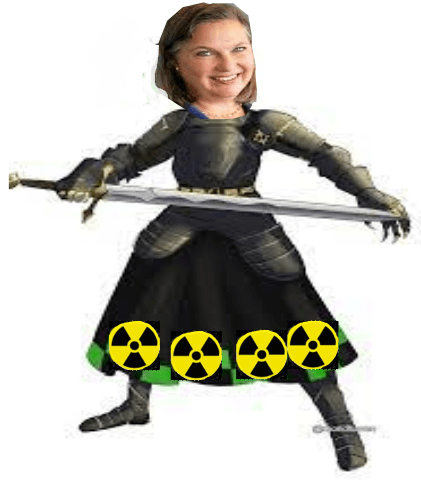
While Putin has turned his nose up at the UN Charter in its solemn affirmation of the sovereignty of states, Washington has taken its own wrecking ball to the text. It has meddled, fiddled and tampered with the internal affairs of states while accusing Russia of the very same thing. Spiteful of history and its bitter lessons, it has employed such saboteurs as former Assistant Secretary of State Victoria Nuland to undertake such tasks, poking the Russian Bear while courting and seducing the Ukrainian establishment. The horror is evident for all to see, and unlikely to halt.
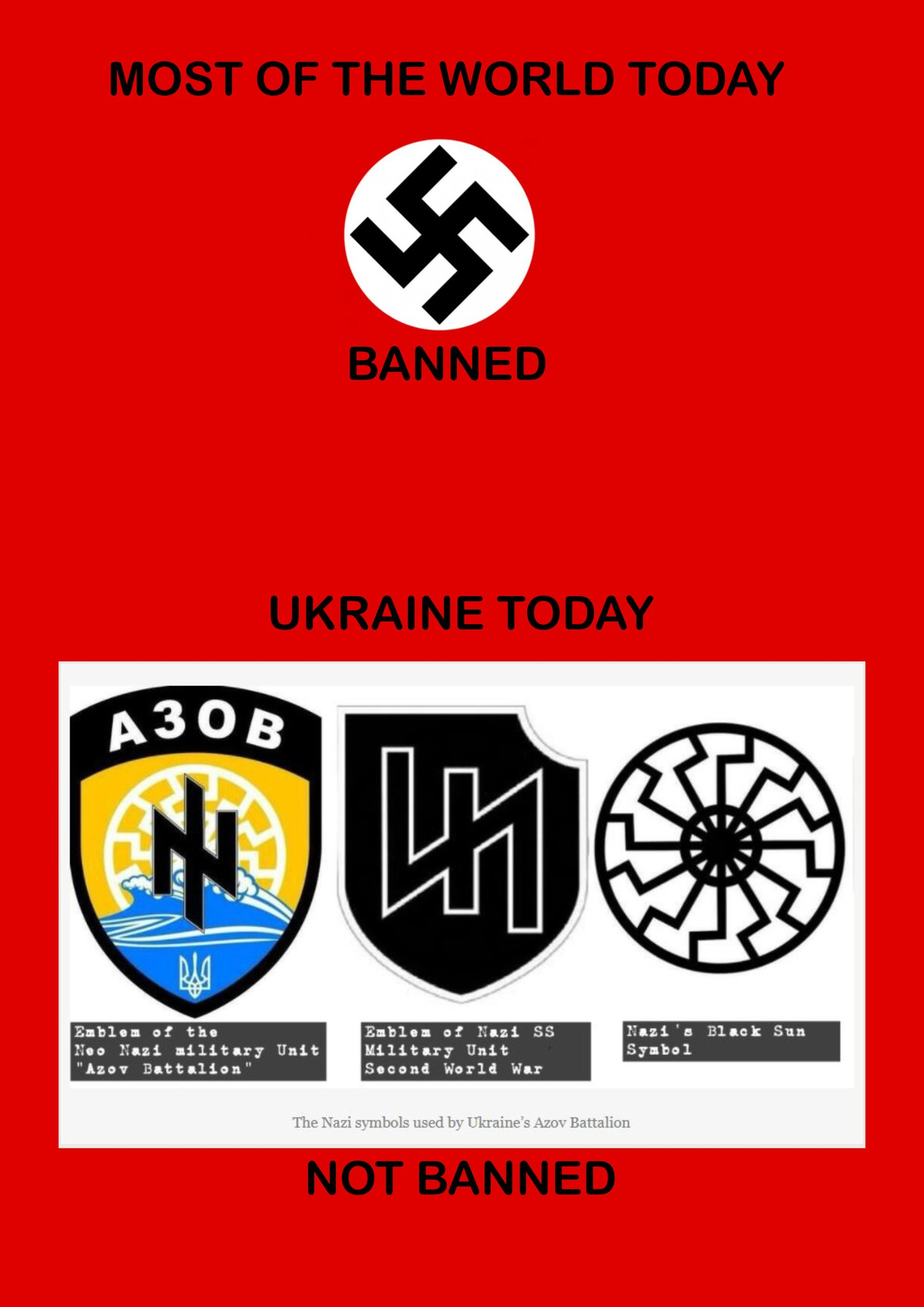
Uncle Sam cool with arming, training Neo-Nazi Azov Brigade in Ukraine.
Walt Zlotow, West Suburban Peace Coalition, Glen Ellyn IL 16 June 24
Back in 2018, the US banned military assistance to the Azov Brigade due to its neonazi and white supremacist ideology.
Azov was founded by Andriy Biletsky in 2014 to assist Kyiv’s destruction of Ukraine’s breakaway Donbas region, Biletsky also led related group Social National Assembly whose goal was “to prepare Ukraine for further expansion and to struggle for the liberation of the entire White Race from the domination of the internationalist speculative capital…and to punish severely sexual perversions and any interracial contacts that lead to the extinction of the white man.” Ouch.
But with Ukraine near collapse from America’s proxy war against Russia, the Biden administration decided that Azov wasn’t that bad after all. Doesn’t matter that current head Denis Prokopenko has been associated with its neonazi idology since its founding, not that Azov still uses the Wolfsangel neonazi symbol
When the US initially banned Azov, Rep. Ro Khanna (D-CA) praised the decision: “I am very pleased that the recently passed omnibus prevents the US from providing arms and training assistance to the neonazi Azov Battalion fighting in Ukraine.”
But that was before the US provoked an unnecessary war in Ukraine, spiraling it into a failed state. Desperate to achieve victory without shedding any US blood, the Biden administration, with not of peep of protest from Khanna, has suddenly turned neonazi Azov into the Sons of Liberty
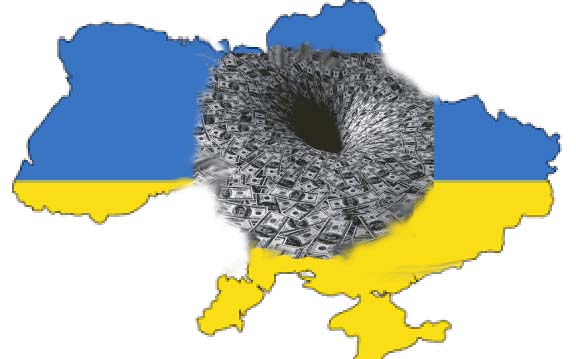
G7 Leaders Agree To Provide Ukraine With $50 Billion Using Frozen Russian Assets
The step will mark a significant escalation in the economic war against Russia
by Dave DeCamp June 13, 2024
Group of Seven leaders agreed at a summit in Italy on Thursday to give Ukraine $50 billion using frozen Russian Central Bank assets, a step that marks a significant escalation in the economic war against Russia.
The plan is to provide the $50 billion to Ukraine by the end of the year in the form of a loan, which will be paid back using profits from the approximately $280 billion in frozen Russian assets held by the US and its allies.
The idea is seen as a compromise between the US and Europe, as President Biden wanted to steal all of the frozen Russian funds to give to Ukraine. But the vast majority of the money is held in Europe, and EU leaders were hesitant to do that.
Instead, the EU devised a separate plan to provide Ukraine with about $3 billion per year using the interest made by the Russian assets. Ukraine said that amount wasn’t enough, and the US proposed the $50 billion loan.

“This has been something that the United States has put a lot of energy and effort into,” National Security Advisor Jake Sullivan told reporters. “We see proceeds from these assets as a valuable source of resources for Ukraine at a moment when Russia continues to brutalize the country, not just through military action on the front but through the attempted destruction of its energy grid and its economic vitality.”
Russia has made clear it would view either plan as the theft of its sovereign funds and is preparing to retaliate. Stealing the money makes reconciliation between Russia and the West even less likely since lifting sanctions would mean having to give assets back to Moscow that have already been spent. The move will also reduce faith in the Western banking system and speed up global de-dollarization.
Putin details Ukraine peace proposal
Theo Burman, Newsweek, Fri, 14 Jun 2024 https://www.sott.net/article/492265-Putin-details-Ukraine-peace-proposal
Russian President Vladimir Putin on Friday promised a ceasefire in Ukraine, provided that several conditions are met by Kyiv.
During a wide-ranging speech to foreign ministry officials, Putin stated that Russia would be ready to enter talks as soon as “tomorrow” to negotiate an end to conflict in Ukraine, provided that Ukrainian troops are withdrawn from several key regions. He also demanded that Ukraine give up all plans to join NATO, saying that the “moral responsibility for the continuation of bloodshed” would be on the West if the proposal was rejected.
Putin said: “I want to emphasize, it must be from the entire territory of these regions within their administrative borders as they existed at the time of their incorporation into Ukraine.
“As soon as Kyiv says they’re ready for such a decision and start the real withdrawal of forces from these regions and officially declare rejection of plans to join NATO, from our side, immediately, literally the same minute, will come an order to stop the fire and start negotiations.
“We will do it immediately. Obviously, we will guarantee the uninterrupted and safe withdrawal of Ukrainian forces.”
In order for the ceasefire to go through, Kyiv would need to withdraw troops from the Zaporizhzhia, Kherson, Donetsk and Luhansk regions, effectively giving Moscow control.
Comment: Footage of the announcement: The essence of our proposal is not some kind of temporary truce or stop of fire, as the West wants, in order to restore losses, rearm the Kiev regime, and prepare it for a new offensive.
I repeat: we are not talking about freezing the conflict, but about its final but about its final completion. And I will say again: as soon as #Kiev agrees to a similar course of events proposed today, agrees to the complete withdrawal of its troops from the DPR and LPR, Zaporozhye and Kherson regions and really begins this process, we are ready to to begin negotiations w/out delaying them.
I repeat, our principled position is the following: the neutral, non-aligned, non-nuclear status of #Ukraine, its demilitarization and denazification. Moreover, everyone generally agreed with these parameters during the Istanbul negotiations.
Ukrainian President Volodymyr Zelensky has repeatedly said that he will continue to fight until all disputed regions of Ukraine have been liberated.
Ukraine has repeatedly lobbied to join NATO since before the escalation of the conflict. Putin has consistently branded the expansion of NATO, which admitted Finland into the organization in 2023, as a threat to Russian security and an escalation of tensions in the region.
Newsweek contacted Zelensky’s office for comment via email.
Putin also claimed that there was never an intention of Russian forces attacking Kiev directly, and that the original motive for the advance in 2022 was to force Ukraine to agree to a peace deal.
Russian media outlet Meduza reported that Putin was seeking a ceasefire beyond a “temporary truce”, and that peace negotiations would also require the lifting of Western sanctions on Russia, which have continued to damage the economy since the conflict began.
Putin said: “We would like such decisions — regarding the withdrawal of troops, non-aligned status, and starting a dialogue with Russia, on which the future existence of Ukraine depends — to be made independently in Kyiv, guided by the genuine national interests of the Ukrainian people. Not at the behest of the West. Although there are significant doubts about this.
“If Kyiv and Western capitals reject it, that is their choice, their political and moral responsibility for the continuation of bloodshed.”
Notably this occurs just a day or so after NATO announced its ‘readiness’ of 300,000 troops and their potential takeover of Europe, as well as Zelensky’s widely ridiculed ‘peace’ summit.
It also occurs amidst an unscheduled, ‘secret’ meeting of Prince William with MI6, the UK’s intelligence service for foreign operations; allegedly the last time he met with them was just prior to Russia’s SMO in Ukraine.
Rather than this being some kind of appeasement from Russia to NATO, one might suppose Putin is making one last ditch attempt to propose a resolution with the agreement-incapable West, before it is, yet again, forced to take extraordinary measures:
Putin Offers Reasonable Peace Terms to Ukraine; Zelenskiy Instantly Rejects Them; West Prepares for War.
OLIVER BOYD-BARRETT, JUN 14, 2024, https://oliverboydbarrett.substack.com/p/putin-offers-reasonable-peace-terms?utm_source=post-email-title&publication_id=305689&post_id=145649348&utm_campaign=email-post-title&isFreemail=true&r=cqey&triedRedirect=true&utm_medium=email
Putin’s Conditions for Peace
At a meeting yesterday, June 13th, with the board of the Russian Foreign Ministry, Putin has laid out Russia’s condition for peace in the Ukraine conflict. Although Ukraine’s foreign minister has already rejected these conditions as “absurd,” they are clearly very significant. Ukraine’s rejection comes from the representative of a government whose legislative record includes a prohibition of any kind of negotiation with the current Russian government and whose only recently stated terms of settlement are a complete Russian withdrawal from all the territories that Russia has occupied, payment of reparations and punishment for alleged war crimes.
Putin’s terms, on the other hand, build on the Istanbul peace agreement of March 2022, drafts of which were endorsed by both Russian and Ukrainian signatories, but which were then undermined by Washington through the agency of former British Prime Minister, Boris Johnson who told Ukraine that NATO could not support the terms of the agreement, that Ukraine should fight on, and that NATO would supply all the weapons that Ukraine would need to win the war.
Well, here we are, over two years later. Ukraine has clearly not won the war. NATO weapons have not been sufficient for it to win the war. The Ukrainian army is showing some indications of collapse, as is the nation of Ukraine itself, still under the charge of a President whose legitimate (and, indeed, constitutionally permitted) term of office has now expired and who has refused to call elections that would almost certainly have replaced him.

Why? Because Ukraine has become a mere vassal to Washington, with very little agency over how to fight the war and no agency whatsover in how to fund it; it has lost well over half a million men, dead and wounded, on the battlefields; millions have fled; Ukraine’s recent mobilization is highly unpopular; the country is subject, on a very regular basis, to missile and drone attacks across the entire territory of Ukraine that are highly damaging in their consequences for what remains of Ukrainian industry and commerce; the country has lost 20% of its territory and a good deal more of its wealth; the regime has suppressed political parties it does not like, and any free speech it does not like, even worship it does not like.
If that was not enough let us not forget that Zelinskiy, considered by Scott Ritter to be an agent of Western intelligence, came to power on the back of financial support from a Ukrainian oligarch, promising a peaceful settlement of the conflict with Russia.
Putin is saying to Ukraine that it could achieve an immediate ceasefire if it withdraws all its troops from the four former oblasts of Ukraine that Russia currently occupies and which Russia has integrated into the Russian Federation, and publicly abandons its quest to join NATO. It is clear that Russia would expect to retain Crimea, whose governing body in 2014 sought integration into the Russian Federation for protection from a virulently anti-Russian coup regime in Kiev. All these territories are either predominantly Russian-speaking or have substantial populations of Russian-speakers and whose cultures (including, formerly, Russian language mass media) are significantly associated with that of Russia. There is very little evidence of resistance from the populations of these territories to Russian control and numerous surveys have confirmed that the people of Crimea are content with their 2014 choice.
Long ago, Ukraine rejected the possibility of a far more peaceful outcome to the conflict which had started out, primarily, as a conflict between two antagonistic peoples who had been cobbled together first, by the Soviet Union and then, by Kiev. That peaceful outcome would have been a de-concentration of central power in Kiev – a form of federalization if you will – that would have allowed what were then the People’s Republics of Luhansk and Dontetsk (formed in the immediate aftermath of the illegal, US-supported, US-funded, violent and anti-democratic coup d’etat of 2014) greater autonomy within the umbrella of Ukraine.
An arrangement along these lines was agreed by Ukraine, Russia and, through OSCE (The Organization for Security and Co-operation in Europe), the European powers (notably Germany) in the so-called Minsk accords of 2014 and 2015, following defeat of Kiev by militia of the People’s Republics. These were never implemented. Both Ukrainian and European leaders are on record as saying that they never intended that Minsk should be implemented; that the intention of Kiev and Europe was to sign the Minsk accords simply to buy more time for Ukraine, with Western assistance, to rebuild its armed forces and to retake the People’s Republics. Indeed, the threat of imminent attack by Ukraine on the People’s Republics was one factor that compelled Putin to launch the Special Military Operation in February, 2022. Other factors included the rejection by the US to honor a commitment given Putin by Biden that the US would not establish nuclear weapons in Ukraine, and to enter into dialog about other such threats to Russian national security interests in Poland and Romania.
If Ukraine today withdraws from what it regards as Russian occupied territories and promises to forego efforts for membership of NATO, then an immediate ceasefire will come into effect. This would not be a “frozen conflict,” Putin has explained. It would be the start of a period of negotiations and in these negotiations Russia would still advance its other demands namely demilitarization of Ukraine, and its de-nazification, all this within a broader compass that would involve not just European but also other nations in discussions about the construction of, and guarantees for, a new European security architecture. On considering the outcome of the GT meeting (see below), I wonder whether Russian interests might actually be better served in the context of a complete victory, given that this would obviate, in the “dictation of terms” all questions of reparations and war crimes, and include the unfreezing and return of Russian assets in Europe and the US.
G7 Meeting
There have been at least two important outcomes of the G7 meeting that occurred in Apulia, Southern Italy, still in progress, from June 13 to June 15th. Significantly, Putin delivered his address (see above) to the Russian Foreign Ministry on June 13th. The meeting comes shortly before the so-called Swiss Peace Conference in Bürgenstock on June 15th and 16th, and ahead of the NATO Summit in Washington from July 9th to July 11th. It is relevant to note that the next meeting of the BRICS will be in October, in Kazan at which the agenda will include considerations of the admission of BRICS of over 30 countries that are interested in joining (which include Turkey, which would have to give up its membership of NATO were it to join), and the construction of an international financial order in which countries could trade freely outside the petrodollar zone (which BRICS member Saudi Arabia has just abandoned).
$50 Billion Loan for Ukraine
The New York Times report of July 14 specifies that the United States, the EU and other G7 countries plan to give Ukraine a $50 billion loan to help it buy weapons and begin to rebuild damaged infrastructure. The money will be repaid over time with the profits earned from Russian assets, some $300 billion, about two-thirds of which are in Europe. Interest on matured bonds is already creating a return of return, depending on the interest rate, of $3 billion to $4 billion a year. Rather than just providing Ukraine that relatively small yearly sum, the G7 countries have adopted the concept of loan. This could be provided to Ukraine by the end of this year. Ukraine’s current financial and military needs are estimated at about $100 billion a year.
The G7 countries have agreed to put up the money for the loan. At the moment, it seems that the European Union is prepared to put up half, about $25 billion to $30 billion, with the Americans and others putting up the rest. Since most of the assets are in Europe, the Europeans want to ensure that, as the proceeds are spent, European companies get a fair share, especially European arms manufacturers. Ukraine therefore will be the beneficiary of the profits from the Russian assets, but will not be responsible for repaying the loan.
Liability is expected to be shared among the countries that issue it. In effect, therefore, the collective West will use interest on Russian assets for the purposes of fighting and weaponizing the war, to pay off the country’s budgetary deficit (which might include, therefore, payments due on aid that Ukraine has so far received in the form of other loans from Western countries) and to pay for post-war reconstruction. This money would be lent to Ukraine but Ukraine would not be expected to pay it back because those countries through whom the loan is distributed will also guarantee it – in other words, would take responsibility of paying off the loan. My guess is that the ultimate intent is to pay it back, once again, by drawing on interest or on the frozen assets themselves.
The loan will go to Ukraine by the end of the year and will be used to support Ukraine militarily, including helping it establish arms factories on its territory; cover the country’s budgetary deficit; and in reconstruction of infrastructure. Disbursement is supposed to depend in part on Ukraine’s ability to use the money to good effect. We don’t yet know through which agencies the money will be disbursed and whether Ukraine would decide for itself how to use the money (surely not). Whether the legality of this procedure can be supported in countries whose financial industries are not held captive by Western politicians is questionable, as well as the willingness of third-party nations to park any assets of any kind in the countries or the financial institutions of the collective West.
Bilateral Security Agreement between US and Ukraine
US President Joe Biden and Ukrainian President Volodymyr Zelenskyy signed a 10-year bilateral security agreement on 13 June aimed at strengthening Kyiv’s defence capabilities. The United States is the 16th country with which Ukraine has signed a bilateral security agreement. The agreement has been promoted as a step towards “Ukraine’s eventual membership in the NATO alliance” (something which some representatives of NATO members have said would take up to thirty years) and as reaffirmation of US support for Kyiv. More specifically the agreement is intended to sustain significant military force and capabilities. It also states that the:
United States intends to provide long-term materiel, training, and advisory, technical, intelligence, security, defence-industrial, institutional, and other assistance to “develop Ukrainian security and defence forces that are capable of defending a sovereign, independent, democratic Ukraine and deterring future aggression.”
… in the event of an armed attack on Ukraine or the threat of such an attack, American and Ukrainian authorities will meet within 24 hours to consult and determine what extra defence necessities Ukraine has.
This latter is somewhat loose and probably meaningless language. The agreement falls well short of membership of NATO. It is time-limited and, even so, recognises that a future US president can withdraw from a security agreement with Ukraine since it does not provide for ratification by Congress.
Question about NATO membership
From before and during this conflict, the US and NATO, at least from 2008, have encouraged Ukraine to think that it can become a member of Ukraine or even be considered eligible for entry into a membership action plan (until recently a required step prior to membership). Yet this has been consistently refused. Membership of NATO was heavily promoted by Zelenskiy even though until 2014 majority opinion in Ukraine was firmly against this. Not only was the measure unpopular then and for many is still, but conditions of membership precluded Ukraine from joining, given that it is a country that is currently in a conflict. Many NATO members, wiser than the US, Germany, France and the UK, are reluctant to anger Russia over something – i.e. violation of Ukraine’s neutrality – that Russia has consistently argued is a Red Line for Russia.
But all NATO decisions are consensual. At NATO’s Bucharest summit later in 2008, member countries did not reach a consensus on Ukraine’s request.
In July 2023 NATO agreed to a new multi-year assistance programme to “facilitate the transition of the Ukrainian armed forces from Soviet-era to NATO standards and help rebuild Ukraine’s security and defence sector, covering critical needs like fuel, demining equipment, and medical supplies…and agreed to establish the new NATO-Ukraine Council. Allies also reaffirmed that Ukraine will become a member of NATO, and agreed to remove the requirement for a Membership Action Plan. This process in the past has effectively opened the door to membership. Yet membership has to be something on which all existing members must agree.
For a few years starting in 2010, Ukraine adopted a non-aligned status that was codified into law with Yanukovych as president, meaning it could not join military alliances. After the 2014 coup that ousted Yanukovych Ukraine scrapped the non-aligned status. Ukraine has since amended its constitution to explicitly spell out its desire to join NATO, and joining NATO remains the official policy of Ukraine.
Swiss Peace Conference: What is Victory
Ukraine
For Zelenskiy – and this is the position he has taken in advance of the Swiss co-called Peace Conference – the only acceptable peace terms are a complete Russian withdrawl to 1991 borders, payment of reparations, and punishment for what he says are Russian war crimes. We should note in passing that it seems that Zelenskiy’s own office has been at least as influential in determining the framework of this meeting as has the Swiss government, and that its most important objective has probably to do with providing a stage for the collective West and other world leaders’ endorsement of Zelenskiy as a legitimate leader of Ukraine.
160 countries were invited, 90 will attend. Those that will not attend include the US President (who is sending Vice President Kamala Harris and national security adviser Jake Sullivan), Russia (which was not invited; although there was talk of presenting Russia with the conclusions of the conference), China, Brazil nor I believe, India’s Prime Minister Modi. Of the 10 points in the Ukrainian government’s peace plan only three will be formally discussed: nuclear safety, food security (i.e. Ukraine’s ability to export its food by sea) and the return of Ukrainian children transferred to Russia. Zelenskiy’s other demands for complete Russian military withdrawal, war crimes trials, reparations for war damages, and security guarantees have all been omitted from the agenda.
In an article today in Responsible Statecraft, Anatol Lieven (Lieven) notes that a previous Western attempt to rally support in the Global South for Ukraine’s “peace plan” at a confidential meeting in Riyadh in December 2023 was snubbed by most invitees.
Lieven argues that “for Ukraine to recover any significant portion of the land it has lost to Russia now looks highly unlikely given the balance of military and economic strength between the two sides, and the complete failure of last year’s Ukrainian offensive”.
Ukraine’s demand for war crime trials (not to be discussed at the Swiss conference) now has to be set against the contributions of the US and EU to Israeli crimes in Gaza, including genocide, charges of which have now been endorsed, or on the path towards being endorsed, by (1) a United National investigative committee headed by the UN head of human rights (see article today by Andre Damon (Damon) – UN commission finds Israel guilty of “extermination,” “crimes against humanity,” killing Palestinians and Israeli hostages, (2) the International Criminal Court, and (3) the International Court of Justice. U.S. rejection of the right of the International Criminal Court to investigate and judge these crimes, and U.S. previous rejection of the jurisdiction of the ICC over American citizens has long subverted Washington’s moral authority or credibility in this area.
Russia
Putin has just told us what Russian strategy is. Ukraine can settle now by conceding what was always the obvious solution – the integration of the four oblasts of Luhansk, Donetsk, Zapporizhzhia and Kherson into the Russian Federation, and acceptance of Crimea (whose people specifically asked to be integrated into the Federation) as Russian. Long ago, Ukraine missed its chance, under Poroshenko and the threats to Poroshenko from Ukrainian Nazi militia such as Azov, simply to allow Luhansk and Donetsk greater autonomy within Ukraine. Ukraine has always been at least two nations – one looking towards the West, the other looking eastwards – governed by an over-centralized State.
Ukraine is nowhere near accepting Russian conditions. Zelenskiy has even legislated against the possibility that there could ever be negotiations with the current Putin-led Russian government. Putin has also indicated that Zelenskiy is an unacceptable interlocuter for Russia as he is illegitimate. Meantime, even as there are indications that the collective West is getting tired of Zelenskiy, of his erratic behavior and his ever strident demands, Zelenskiy is ever more dependent on the collective West for his own domestic security and perceived legitimacy. He is, in fact, an illegimate and unelected President, whose regime suppresses political parties, free speech and religious affiliation.
Assuming that neither that Zelenskiy nor the West show serious interest in Putin’s most recent statement of peace conditions, then I propose we should take Putin at his word, namely, that Russia will continue to fight and to move westwards until Ukraine is defeated and forced to accept terms. At this point it is not even certain that there would still be a Ukraine.
Ukraine confirms deep strikes into Russia with Western weapons
https://www.rt.com/russia/599214-ukraine-deep-strikes-russia-budanov/ 13 June 24
The head of Kiev’s military intelligence claims Moscow is “already feeling” the attacks
Ukraine is already using Western-supplied weapons for long-range strikes on Russian territory, the head of Kiev’s Main Intelligence Directorate (GUR) confirmed on Wednesday.
Asked by reporters how the use of foreign weapons has changed the situation on the battlefield and how Moscow is planning to respond to these attacks, Kirill Budanov said the Russian forces are “already feeling them.”
He added that easing of restrictions on the use of Western-made munitions against Russian forces has “definitely made the situation easier” but “no more or less than that.”
The intelligence chief was also asked how Russia might perceive the crossing of a potential “red line.” Budanov argued that no such lines actually exist, claiming they have already been crossed multiple times.
Several of Kiev’s Western backers recently gave Ukraine the green light to use weapons supplied by them to strike targets deep inside Russian territory. The US and other countries claimed the move was needed to stall Moscow’s push into Kharkov Region, which borders on Russia’s Belgorod Region.
Russian forces have recently been making advances near Kharkov, Ukraine’s second-largest city, taking over key settlements and inflicting heavy casualties on the Ukrainian military. The cross-border operation, announced in response to Kiev’s repeated attacks on Belgorod, is aimed at creating a buffer zone to prevent further artillery and missile strikes on Russian cities.
Top Ukrainian officials, including Budanov, have admitted that the situation in Kharkov Region is critical, and have ramped up demands for longer-range Western weapons. In late May the Biden administration granted permission to use the munitions on parts of Russia not claimed by Ukraine.
Russia, however, has repeatedly warned against using Western-produced weapons to strike deep into its territory, with President Vladimir Putin warning that such attacks amount to direct Western participation in the conflict and could lead to disastrous consequences.
“If someone deems it possible to supply such weapons to the war zone, to strike our territory… why shouldn’t we supply similar weapons to those regions of the world, where they will be used against sensitive sites of these countries?” the Russian president said last week. “We can respond asymmetrically. We will give it some thought.”
U.S. – NATO threats ignore ‘red lines’ in Ukraine.

NATO’s long-range missiles target Russia
Stoltenberg was explicit: “We are giving weapons to Kyiv and consider them Ukrainian from this moment, so Ukraine can do whatever it wants with these arms, in part, strike at Russian territory where it deems necessary.” (bne IntelliNews, May 31)
Previously, the United States, Germany and other NATO members had forbidden the Ukrainian military from using the weapons delivered to them to strike targets inside Russia.
Workers World, By Sara Flounders June 7, 2024
Front lines are collapsing for the Ukrainian army, whole units surrendering. Top commanders are fired. Faced with complete disarray of the U.S.-NATO instigated war in Ukraine, U.S. militarists are doubling down.
According to the Ukrainian constitution, President Volodymir Zelensky’s term in office is over. But he remains in power by martial law. This has led Ukrainian workers to hold strikes and work stoppages. But this news is ignored in the Western media.
A national truckers’ work slowdown inside Ukraine moved traffic to a 5-mile-an hour crawl and halted grain exports based on national anger at the expanded draft mobilization made by Zelensky, now an unelected president. (yahoonews.com, May 18)
Ukraine’s combat units are so severely understaffed that the government would have to triple its mobilization in order to continue the current level of fighting, according to Eric Ciaramella, former U.S. National Intelligence Council official. The draft can’t fill the current gap,…………………………………………………………………………………………………………..
U.S.-NATO plans are in total disarray. Rather than reconsider their strategy, which has brought setbacks and defeats in Ukraine and for Israel in Gaza, this has led to an ominous escalation in U.S. military threats.
The threat to dangerously escalate the war in Ukraine arises from the plans to give Ukraine high-speed missiles and allow the Kyiv regime to use the weapons to strike inside Russia. This threat is not just from a single statement or one delivery of weapons.
The statements promoting strikes with the U.S.-supplied weapons to targets inside Russia are being made directly by President Biden and Secretary of State Antony Blinken, U.S. Speaker of the House Mike Johnson and NATO Secretary General Jens Stoltenberg, who is a former prime minister of Norway, but acts as if he were a U.S. official.
Ukraine at center of 75th Anniversary NATO Summit
NATO officials are frantic that Ukrainian defense lines of Kharkov, the second-largest city in Ukraine, located in the northeast of the country, are about to fall.
Kharkov is a majority Russian-speaking city. It is the industrial, energy, science, rail and transport hub. It lies east of the Dnieper River on the Donetsk-Donbass Canal. Kharkov is the key industrial center still under Ukrainian control east of the Dnieper River.
According to a May 16 New York Times article, fear of Kharkov’s imminent collapse is what is driving U.S. threats. This loss is decisive in any control of Ukraine’s east, including the entire Donbass industrial region.
Adding to the urgency is that at the 75th Anniversary NATO Summit, July 9-11 in Washington, D.C., NATO plans to unveil a “Security Package” for Ukraine involving 32 countries’ bilateral agreements with Ukraine. These bilateral agreements would serve as a bridge for Ukraine’s entry into NATO.
Ukrainian entry into NATO would allow Kyiv to invoke the alliance’s collective defense clause, potentially triggering a broader regional conflict with Russia. During an April visit to Kyiv, NATO Secretary General Jens Stoltenberg vowed that “Ukraine will become a member of NATO.” (defensenews.com, June 3)
All these elaborate plans would be dashed if Ukrainian defense lines crumbled before the NATO Summit in Washington, D.C. This 75th anniversary NATO Summit is a grand plan to showcase U.S. and Western imperialist dominance.
NATO’s long-range missiles target Russia
NATO’s dangerous escalation is galloping forward on several fronts.
Stoltenberg was explicit: “We are giving weapons to Kyiv and consider them Ukrainian from this moment, so Ukraine can do whatever it wants with these arms, in part, strike at Russian territory where it deems necessary.” (bne IntelliNews, May 31)
Previously, the United States, Germany and other NATO members had forbidden the Ukrainian military from using the weapons delivered to them to strike targets inside Russia.
In the past, the Ukrainian military command had violated NATO’s official statements and used U.S. Stinger air defense missiles, M142 HIMARS, MLRS and other multiple launch rockets to strike the Belgorod region of Russia. The Russian Army’s air defense forces destroyed more than 10 missiles in the sky over Belgorod and displayed the U.S. stamped shells.
Weeks ago, the British government allowed Ukraine to use its long-range Storm Shadow missile systems for attacks anywhere in Russia. Now France and Germany have taken the same position as Britain. The Storm Shadow cruise missile has a range of over 180 miles, triple the range of the missiles Ukraine has used until now.
French President Emmanuel Macron further escalated the threat by stating the West must not exclude sending NATO ground troops to Ukraine…………………………………………………………………………………..
Internationally, many voices are sounding the alarm. Such attacks are of the most extreme danger, because the slightest targeting slip up, a misinterpretation of instructions, a rogue operator on the ground, could lead to a global conflagration.
These attacks require a satellite-based military network that Ukraine does not have. Only U.S. and NATO forces under U.S. command are capable of conducting such attacks against Russia.
Divisions appear inside NATO
Divisions within the U.S. commanded and dominated NATO military alliance are appearing. Frustration and failure are intensifying the infighting even among members of the G7 and major NATO participants.
Many NATO countries’ leaders, reacting to mass pressure from below, have already sharply expressed opposition to U.S. total support of Israel’s genocidal campaign against Palestine.
Italy’s Deputy Prime Minister Matteo Salvini objected to Stoltenberg’s call for allies to lift restrictions on using Western-supplied weapons against targets in Russia. “It is out of the question to lift the ban on Kyiv to strike military targets in Russia. … We want peace, not the antechamber of World War III” (Ukrainian Pravda, May 27)
Italian Foreign Minister Antonia Tajani reinforced this position: “We will send no Italian soldier to Ukraine, and the military tools that Italy sends are used inside Ukraine. We are working for peace.” (Italian news agency Ansa, as reported by European Pravda, May 25)
On May 28, Belgian Prime Minister Alexander De Croo told Biden during talks in Washington, D.C., that he rules out the use of Belgium’s weapons, including F-16 fighter jets, outside Ukraine. To reinforce his point, De Croo reminded the reporters that the bilateral security agreement Belgium signed with Ukraine means, “We are sending 30 F-16s, and we will thus become the biggest supplier of fighter aircraft for the Ukrainian air force. But the agreement is very clear. It is about fighter aircraft that can be used by the Ukrainians on Ukrainian territory.” (belganewsagency.eu, May 31)
Phony ‘Peace Summit’
Zelensky’s effort to call a “Peace Summit” on June 15 and 16 in Lucerne, Switzerland, exposes Ukraine’s dwindling support. The “Peace Summit” bars Russian participation. The effort is so flimsy that not even Biden is bothering to attend.
In desperation, Zelensky has blamed China’s decision not to participate as the reason other countries are ignoring the phony event.
Russian Foreign minister Sergey Lavrov dismissed the Lucerne summit, saying, “This conference in Switzerland has no meaning. The only meaning it can have is to try to preserve this anti-Russian bloc which is in the process of crumbling.”
Silence continues to prevail in Western corporate media regarding the four negotiation offers made by President Putin in the past two weeks.
RAND Corporation: ‘Pour it on’
The Rand Corporation, a powerful think tank for the major military industries, confirms the cynical calculations that justify war profits, regardless of the danger.
U.S. escalation will push the Europeans to ante up, the Rand article said. Even more ominous: “From a narrow U.S. perspective, greater U.S. involvement is an opportunity to test new capabilities and gain experience helping a partner facing a numerically superior foe. Such experience could be very relevant for helping Taiwan resist Chinese aggression.” (Rand, May 22, defenseone.com, “How to win in Ukraine: pour it on, and don’t worry about escalation”)
Russia warns NATO
President Putin delivered Russia’s strongest warning to date against the NATO escalation. He chose a meeting in Tashkent, Uzbekistan, with top Uzbek officials. With 37 million people, Uzbekistan is the second most populous country of the former Soviet Union. ……………………….. At a large press conference following the meetings, Putin said, “Long-range precision weapons cannot be used without space-based reconnaissance. … Final target selection and what is known as launch mission can only be made by highly skilled specialists who rely on this technical reconnaissance data. It can happen without the participation of the Ukrainian military.
“Launching other systems, such as ATACMS, for example,” Putin continued, “also relies on space reconnaissance data. Targets are identified and automatically communicated to the relevant crews. … The mission is put together by representatives of NATO countries, not the Ukrainian military. This unending escalation can lead to serious consequences. If Europe were to face those serious consequences, what will the United States do, considering our strategic arms parity? It is hard to tell…………………………………………..
Rather than reassess their deteriorating global position, U.S. strategists seem determined to put the fate of the world at risk. https://www.workers.org/2024/06/79079/
Biden hits ‘new low’ in arming ‘pro-Nazi’ Azov: US Congressman

ByAl Mayadeen English, Source: Agencies, 12 Jun 2024 https://english.almayadeen.net/news/politics/biden-hits–new-low–in-arming–pro-nazi–azov–us-congressm
Paul Gosar says the Biden administration’s decision to lift a ban on arms supplies to Ukraine’s Azov battalion prolongs the war.
US President Joe Biden has reached a new low after his administration decided to remove restrictions on arms supplies to Ukraine’s Azov battalion, US Congressman Paul Gosar pointed out on Wednesday.
On Tuesday, The Washington Post, citing the US State Department, reported that the Biden administration has lifted the ban on arms supplies to and training of the Azov battalion.
Established in 2014 by Ukrainian ultra-nationalists in the wake of the Western-backed Maidan riots, the Azov Battalion was included in the National Guard of Ukraine in November of that year.
The battalion has come under severe criticism for its support of Nazi ideology and symbols, as well as its human rights violations against the Russian-speaking population of Eastern Ukraine.
Russia’s Supreme Court designated Ukraine’s Azov Battalion as a terrorist organization in August 2022.
Russian Ambassador to the United States Anatoly Antonov called the reported decision by the United States outrageous, adding that it raises serious concerns about US readiness to fight terrorism.
The Russian Prosecutor General’s Office last year accused Azov militants of employing prohibited means and methods of warfare, including the torture of civilians and the killing of children.
The battalion’s symbol is the neo-Nazi Wolfsangel, a black swastika against a yellow background. Founded by Andriy Biletsky, who vowed to “lead the white races of the world in a final crusade…against Semite-led Untermenschen,” the group is a pack of neo-Nazis working with the US-backed Ukrainian military.
Macron Says France Working To ‘Finalize’ Plan To Send Troops to Ukraine
The French leader says other NATO countries have agreed to send troops to train Ukrainian forces
by Dave DeCamp June 9, 2024, https://news.antiwar.com/2024/06/09/macron-says-france-working-to-finalize-plan-to-send-troops-to-ukraine/
On Friday, French President Emmanuel Macron said France was working to “finalize a coalition” of NATO countries that are willing to send troops to Ukraine to train Ukrainian forces, a step that would mark a huge escalation in the proxy war.
During a press conference with Ukrainian President Volodymyr Zelensky in Paris, Macron said Ukraine’s request for NATO trainers was “legitimate” and downplayed the risk of escalation.
“It’s much more efficient and practical for certain capacities in certain conditions to train on Ukrainian soil, it’s a legitimate request,” Macron said. “We’re going to use the coming days to finalize the broadest possible coalition.” He added that several NATO countries have already agreed to the plan.
Moscow has said that any French trainers deployed to Ukraine would be legitimate targets of the Russian military, but Macron dismissed the warning. “This is not deploying … European soldiers on the front line. It is recognizing the sovereignty of Ukraine over its territory,” he said. “Who would we be to give in to the invocations or threats of Russia?”
Reuters reported on May 30 that France planned to initially send a few dozen troops to asses the training mission before sending hundreds of soldiers. The talk of sending French troops to Ukraine has highlighted the fact that there are already a small number of NATO special operations soldiers inside Ukraine (97 as of March 2023), but a larger public deployment will take NATO involvement in the war to another level.
The advancement of France’s plans to send troops to Ukraine comes after the US gave Ukraine the greenlight to strike Russian territory with US-provided missiles, which also risks a major response from Russia. So far, the Biden administration has said it has no plans to send trainers to Ukraine, but it has taken escalatory steps that it’s previously ruled out throughout the conflict
1 This Month

of the week – Shut Down Drone Warfare!


Tell the Ukrainian Government to Drop Prosecution of Peace Activist Yurii Sheliazhenko

Petition to revoke the licensing of the Near Surface Nuclear Disposal Facility (NSDF) at Chalk River. https://www.ourcommons.ca/petitions/en/Petition/Details?Petition=e-7247
To see nuclear-related stories in greater depth and intensity – go to https://nuclearinformation.wordpress.com
-
Archives
- April 2026 (114)
- March 2026 (251)
- February 2026 (268)
- January 2026 (308)
- December 2025 (358)
- November 2025 (359)
- October 2025 (376)
- September 2025 (257)
- August 2025 (319)
- July 2025 (230)
- June 2025 (348)
- May 2025 (261)
-
Categories
- 1
- 1 NUCLEAR ISSUES
- business and costs
- climate change
- culture and arts
- ENERGY
- environment
- health
- history
- indigenous issues
- Legal
- marketing of nuclear
- media
- opposition to nuclear
- PERSONAL STORIES
- politics
- politics international
- Religion and ethics
- safety
- secrets,lies and civil liberties
- spinbuster
- technology
- Uranium
- wastes
- weapons and war
- Women
- 2 WORLD
- ACTION
- AFRICA
- Atrocities
- AUSTRALIA
- Christina's notes
- Christina's themes
- culture and arts
- Events
- Fuk 2022
- Fuk 2023
- Fukushima 2017
- Fukushima 2018
- fukushima 2019
- Fukushima 2020
- Fukushima 2021
- general
- global warming
- Humour (God we need it)
- Nuclear
- RARE EARTHS
- Reference
- resources – print
- Resources -audiovicual
- Weekly Newsletter
- World
- World Nuclear
- YouTube
-
RSS
Entries RSS
Comments RSS
 nuclear-news