Zelensky – Embroiled in war and embattled at home
by beyondnuclearinternational, https://beyondnuclearinternational.org/2025/11/13/embroiled-in-war-and-embattled-at-home/
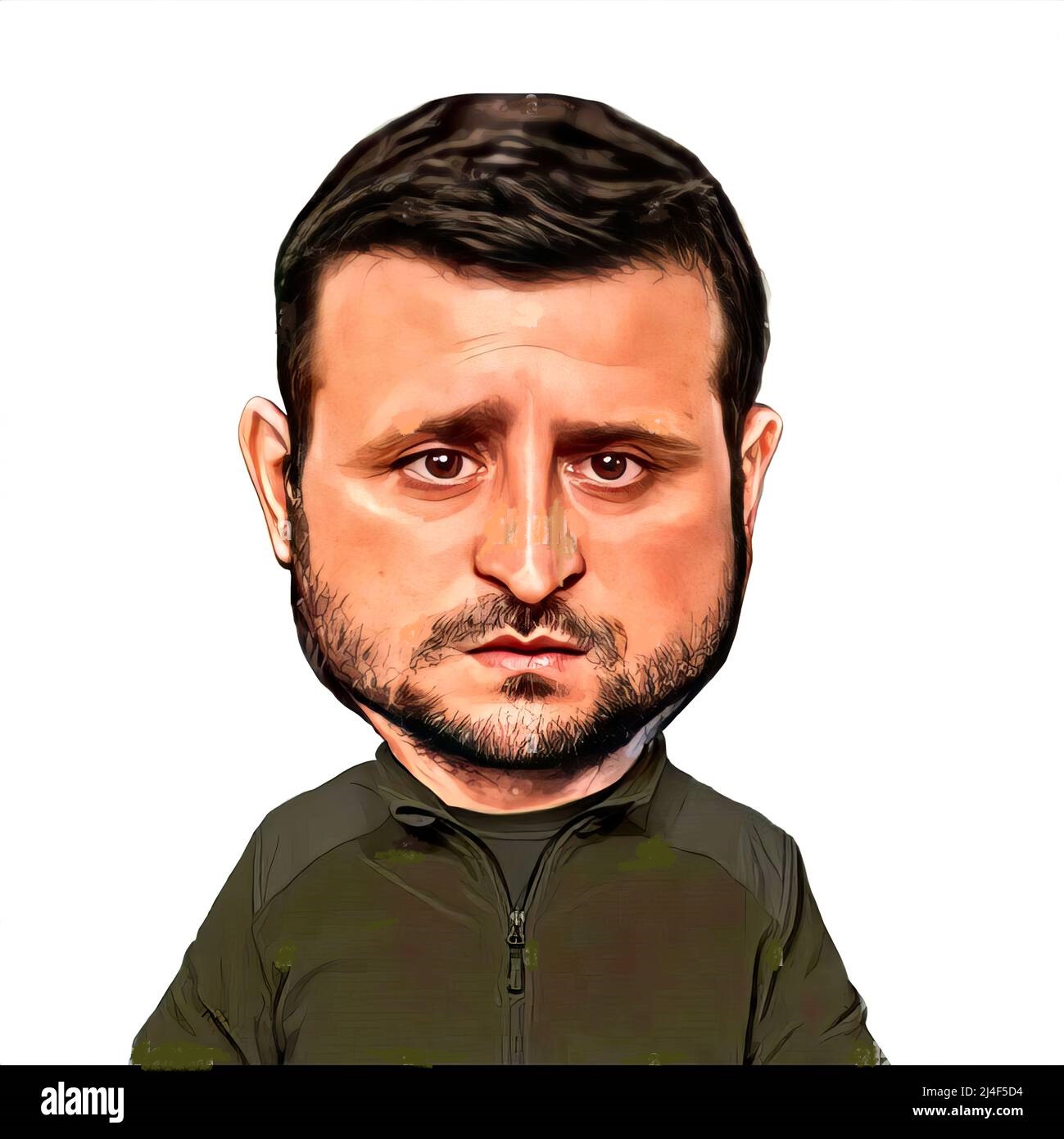
Can president Zelensky survive a kickback scheme involving the state nuclear company that enriched associates and possibly even ministers in his own government, asks Linda Pentz Gunter
If you live in Ohio, and possibly even in Illinois and South Carolina, you might be getting a bit of a déjà vu feeling reading the news coming out of Ukraine about a corruption scandal involving Energoatom, Ukraine’s nuclear energy company. That’s because two independent Ukrainian anti-corruption bodies have just uncovered a massive graft scandal involving kickbacks from nuclear power projects.
In July 2020, then Speaker of the Ohio House, Republican Larry Householder, was arrested along with four others for involvement in what was described as “the largest bribery money-laundering scheme ever perpetrated against the people of the state of Ohio.”
In a year-long covert investigation by the US Attorney’s office and the FBI, a plot was uncovered that involved $61 million in dark money that flowed from FirstEnergy into the pockets of Householder and others to ensure a favorable vote in the House that would guarantee a $1.5 billion bailout of the company’s Davis-Besse and Perry nuclear reactors to keep them running. Once uncovered, indictments followed. Householder is currently serving a 20-year prison sentence.
Similar scandals rocked Illinois and South Carolina, also connected to nuclear power plant schemes and also leading to indictments and prison sentences.
In Ukraine, the two investigating agencies — the National Anti-Corruption Bureau (NABU) and the Specialized Anti-Corruption Prosecutor’s Office (SAPO) — have just named at least eight individuals who have reportedly been charged with bribery, embezzlement, and illicit enrichment, netting around $100 million off contracts with Energoatom.
Details about precisely how the scheme operated and which contracts were involved have not fully emerged. However, some sources have suggested it involved a wide range of Energoatom’s private subcontractors who were allegedly forced to pay kickbacks of 10-15% to secure or maintain their supplier status and ensure timely payments.
These reportedly included work on constructing protective structures at the Khmelnytskyi nuclear power plant to defend against Russian air attacks, with Ukraine still struggling to defeat an invasion by Russia that began on February 24, 2022.
Both the Khmelnytskyi and Rivne nuclear power plants were hit with a major strike by the Russians on November 8, raising new fears of a catastrophic nuclear disaster. To date, most of the concern has centered around the six-reactor site at Zaporizhzhia, which is located in the region of heaviest fighting and has been occupied by Russian forces since March 4, 2022. Zaporizhzhia has undergone many close calls and was recently without offsite power for a month, provoking widespread anxiety since power is essential to cool reactors and their fuel pools even if they are shut down as the Zaporizhzia reactors presently are.
“Nuclear safety and security in Ukraine remains extremely precarious during the military conflict,” the International Atomic Energy Agency said in a social media posting. “Two operating NPPs – Khmelnitskyy and Rivne – had to reduce electricity output after overnight attack on electrical substation critical for nuclear safety.”
The participants in the Energoatom corruption scheme, who used code names, were heard in conversations recorded by the investigators evaluating the Khmelnytsky fortifications as a business opportunity.
Meanwhile the IAEA is at the COP30 climate summit in Brazil frantically peddling nuclear power as the answer to the climate crisis under its Atoms4Climate propaganda campaign while ignoring all the obvious safety and security risks so frighteningly on display in Ukraine, never mind the industry’s complete inability to deliver reactors in time or on budget.
Since the anti-corruption groups delivered their reports, two key ministers have resigned at President Volodymyr Zelensky’s request. They are Ukrainian Energy Minister Svitlana Grynchuk and Justice Minister German Galushenko. Galushenko, who preceded Grynchuk as energy minister, had already been suspended before he stepped down. Galushenko is reportedly implicated in the kickback scandal but has proclaimed his innocence.
The two agencies spent more than 15 months collecting evidence, including 1,000 hours of audio recordings and at least 70 searches. Zelensky had acted to curb the reach of NABU and SAPO several months earlier, prompting suspicions that he could have been aware that personal associates and his own ministers were about to be caught in their nets. Zelensky backed down then after being warned by the European Union that Ukraine’s bid to become a member would be in jeopardy if the corruption problem was not resolved.
European Commission president Ursula von der Leyen reportedly conveyed her strong concerns about Zelensky’s attempts to weaken the agencies’ powers. In a statement, a spokesperson for von der Leyen said: “The respect for the rule of law and the fight against corruption are core elements of the European Union. As a candidate country, Ukraine is expected to uphold these standards fully. There cannot be a compromise.”
The EU has spoken out again in light of the present revelations, urging Zelensky to clamp down on corruption, but has not withdrawn its support for the country’s war efforts against Russia’s invasion, now entering its 45th month.
According to an analysis in Kyiv Independent by Oleg Sukhov, the eight implicated also include Deputy Prime Minister Oleksiy Chernyshov, Rustem Umerov, former defense minister and current secretary of the National Security and Defense Council and Ihor Myroniuk, a former advisor to then Energy Minister Halushchenko.
Chernyshov allegedly financed the construction of high-end houses near Kyiv, echoing the way Householder used his bribery bonanzas to refurbish his second home in Florida.
The alleged ringleader, according to Sukhov and other news reports, is Zelensky’s close associate and former business partner, Timur Mindich, who has since fled the country, likely to Israel where he is a citizen and lending further credence to the charges. Mindich is a co-owner of the president’s Kvartal 95 production company. Zelensky transferred his stake to partners once he became president.
Chernyshov allegedly financed the construction of high-end houses near Kyiv, echoing the way Householder used his bribery bonanzas to refurbish his second home in Florida.
The alleged ringleader, according to Sukhov and other news reports, is Zelensky’s close associate and former business partner, Timur Mindich, who has since fled the country, likely to Israel where he is a citizen and lending further credence to the charges. Mindich is a co-owner of the president’s Kvartal 95 production company. Zelensky transferred his stake to partners once he became president.
Linda Pentz Gunter is the founder of Beyond Nuclear and serves as its international specialist. Her book, No To Nuclear. Why Nuclear Power Destroys Lives, Derails Climate Progress and Provokes War, can be pre-ordered now from Pluto Press.
Why my work is clearly biased
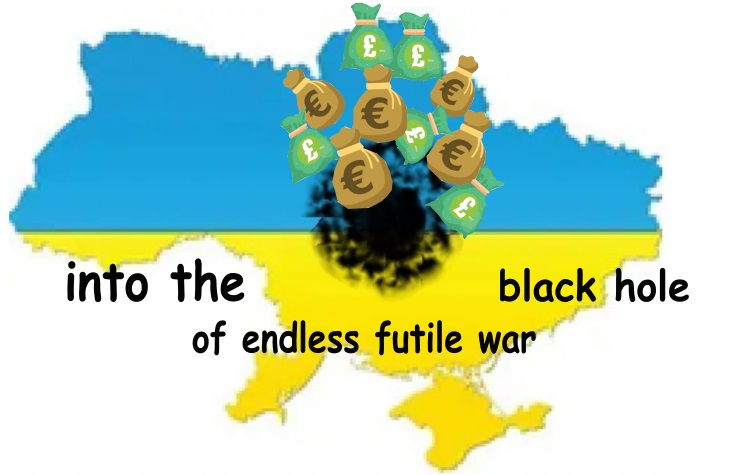
Today, I found myself posting on my website – an article which is vehemently anti -Western, and possibly just an angry version of pro Russian propaganda. I dithered about this. Is my pro-Russian slant just too much – a bridge too far?
After all, there is so much to deplore about Russia – the secret, brutal and murderous regime of Vladimir Putin, and the genocidal history of Stalin’s actions in Ukraine. And there’s plenty more to deplore, including more recent atrocities done to Ukrainians in the course of the current war.
So – why on earth should I, or anyone, stick up for Russia, which is anyway, the invader in this conflict?
I come back to just one answer. It is that rather vague concept of culture. It is that someone must address that “Western culture” in which we are immersed and perhaps drowning.
Western culture, supposedly based on “Christian values” – like equality, compassion, peace-making, is nevertheless now manifesting as fear and hatred of Russia and China.
The media laps this up, because really, diplomacy, compromise, quiet discussion between world leaders, is boring stuff, and anger, shock and conflict – that’s entertaining.
In the coverage of the war in Ukraine, so many important aspects are ignored. We don’t hear about , for example, the effect of Zelensky banning the Russian language in public life, when for so many Ukrainians Russian is their first language. We don’t hear about atrocities done by Ukrainian troops.
We don’t hear any details about negotiations in which the war could end, with concessions made by both sides. Consideration is never given to how NATO membership for Ukraine might affect Russia. I mean, how would Americans feel, if a hostile Canada could allow Russian military bases set up on the border of USA?
Instead, there is this narrative about Russia’s intention to attack European states, and then take over the world, crushing democracy. But where’s the evidence for this? And at the same time, we’re being assured that Russia is economically and militarily weakened, so of course, Ukraine can beat them
And, talking of economics – well – “follow the money” has always been a very important aspect in world affairs. I think that we could all agree that from the point of view of Trump’s USA – the simple goal is to enrich American businesses. So, for the USA now, the main thing is to sell weapons to Europe.
For Europe, this is expensive. It’s not as if all the member States are wealthy and united in their resolve to buy the weapons and make Ukraine win. They need the money. The plan suggests raising a total of nearly €300 billion.
One way is to expropriate frozen Russian sovereign assets. Sovereign assets have immunity from seizure under international law and bilateral treaties – the United Nations Convention on Jurisdictional Immunities of States and Their Property (2004) This method could have legal repercussions, and destabilise confidence in economic systems and investment, with political ill-effects for Europe.
Another way is to raise a Eurobond. This is problematic because the EU would be acting as if it were a sovereign state rather than an administrative body of a treaty-based union. Some States might object, and as Ukraine is not a member of the EU – that fact strengthens their objection. The Eurobond would result, for member States, in higher taxes, constrained public services, and renewed austerity.
The EU’s options for paying for continuing Ukraine’s fight are highly problematic. They are based on the belief that after Ukraine’s victory, European nations will get back the money from Russian reparations, and from returns from reconstruction of Russian-liberated territories. A dubious outcome.
These financial considerations might possibly bring the Western media, politicians, and public to take a more pragmatic view of the war in Ukraine, and calm down from the hysteria about Russia destroying democracy. (Indeed, to digress for a moment – the USA is now giving a good example of democracy destroying itself)
The culture is so imbued with those emotions of fear and hatred, and historic hostilities, that I doubt that we will come down to earth and look at the Ukraine situation more realistically. And our leaders seem obsessed with showing how tough they are, rather than how wise.
Democracy ‘s all about individual liberties, freedom, -we are told. But there are also other considerations – the need for food, water and shelter. A more collective view of society includes those considerations. In some ways, Russia and China are doing a better job in this.
So, after this long meandering, I conclude that I am OK with continuing with my biased stance. Yes, some of the stuff I put up IS Russian propaganda. I try to be sure that the facts are correct, even if the interpretation is biased. We are so constantly tsunamied with anti-Russia, anti-China stuff, it is necessary to try to bring in some balance.
Russia deliberately ‘endangering nuclear safety in Europe’ says Kyiv
Ukraine says drones are targeting substations that power the Khmelnytskyi and Rivne nuclear plants. What we know on day 1,355
Guardian staff and agencies, 9 Nov 25
- Russia is again targeting substations that power the Khmelnytskyi and Rivne nuclear power plants in Ukraine, the country’s foreign minister Andrii Sybiha said on X on Saturday. Sybiha said drone attacks on the weekend were not accidental but well-planned strikes. “Russia is deliberately endangering nuclear safety in Europe,” he said.
- Russia launched a barrage of drones and missiles at Ukraine over the weekend, killing at least seven people and damaging energy infrastructure in three regions, according to Ukrainian officials. Ukraine’s president, Volodymyr Zelenskyy, said Russia had launched more than 450 drones and 45 missiles, most of which were shot down. Three people were killed and 12 wounded when a drone hit an apartment building in Dnipro, and another person was killed in the Kharkiv region. Three were killed in the south-eastern Zaporizhzhia region, regional officials said. https://www.theguardian.com/world/2025/nov/09/ukraine-war-briefing-russia-deliberately-endangering-nuclear-safety-in-europe-says-kyiv
Zelensky blames ex-energy chief for failure to protect power grid.
Volodymyr Kudrytsky has been charged with large-scale fraud and abuse of office but anti-corruption campaigners say he is being targeted for speaking out
President Zelensky has blamed the former head of the Ukrainian state energy company for the extraordinary damage being done to the country’s power grid. Although Russia is responsible for attacks on the grid, there is growing anger among Ukrainians that the authorities in Kyiv have failed
to properly protect national infrastructure.
Large sections of Kyiv, Kharkiv and other big cities lost power on Saturday after one of the heaviest missile and drone assaults of the war, which killed 11 civilians and injured more than 40. In a single night, President Putin’s forces
launched 458 long-range drones and 45 missiles, battering critical infrastructure across the country.
Kyiv was without power again on Sunday
night. Centrenergo, one of the biggest energy suppliers, said that four of its main power stations were unable to produce electricity as they had all been struck by Russian ballistic missiles and drones. The power stations had only recently been repaired after strikes in 2024. Volodymyr Kudrytsky
has been charged with large-scale fraud and abuse of office but anti-corruption campaigners say he is being targeted for speaking out.
Times 9th Nov 2025, https://www.thetimes.com/world/russia-ukraine-war/article/zelensky-blames-ex-energy-chief-for-failure-to-protect-power-grid-db3g335l9
Ukraine facing widespread power cuts after generating capacity reduced to ‘zero’ by Russian attacks
Power to be cut for as much as 16 hours a day across most of Ukraine while repairs are carried out
Guardian, Agence France-Presse, 9 Nov 25
Power will be cut for between eight and 16 hours across most regions of Ukraine on Sunday, state transmission system operator Ukrenergo has said, after Russian attacks targeting energy infrastructure reduced the country’s generating capacity to “zero”.
Moscow, which has escalated attacks on Ukraine’s infrastructure in recent months, launched hundreds of drones at energy facilities across the country from Friday into Saturday, which killed at least seven people, according to Ukrainian officials.
The Russian attacks have disrupted electricity, heat and water supplies in several Ukrainian cities, with state power firm Centerenergo warning generating capacity “is down to zero”.
Ukrenergo has said repairs were carried out and energy sourcing diverted.
While the situation had somewhat stabilised, regions including Kyiv, Dnipropetrovsk, Donetsk, Kharkiv, Poltava, Chernihiv and Sumy could continue to experience regular power cuts, Ukraine’s energy minister said on Saturday night.
“The enemy inflicted a massive strike with ballistic missiles, which are extremely difficult to shoot down. It is hard to recall such a number of direct strikes on energy facilities since the beginning of the invasion,” Svitlana Grynchuk told local broadcaster United News.
Russian drones had targeted two nuclear power substations deep in western Ukraine, Kyiv’s foreign minister Andrii Sybiha said, calling on the UN’s nuclear watchdog to respond.
The substations powered the Khmelnytskyi and Rivne nuclear plants, about 120km and 95km (75 miles and 59 miles) respectively from Lutsk, he said………………………………
Ukraine has in turn stepped up strikes on Russian oil depots and refineries in recent months, seeking to cut off Moscow’s vital energy exports and trigger fuel shortages across the country.
Early on Sunday, Russia’s air defence units destroyed 44 Ukrainian drones, RIA news agency reported, citing daily data from the Russian defence ministry. https://www.theguardian.com/world/2025/nov/09/ukraine-facing-widespread-power-cuts-after-generating-capacity-reduced-to-zero-by-russian-attacks
Legalising the theft of Russian assets
There are, I’m afraid to say, still too many truly believers in the Russia total defeat delusion. Ukraine can still win! With what troops and, critically, what money?
With Glenn Diesen, Ian Proud. Nov 10, 2025
Following my recent article on the topic of the so-called EU reparations loan (a cheap ruse to fund the Ukrainian state for another 2-3 catastrophic years of war), I discussed the issue in more detailed with Glenn Diesen,
The more I consider this issue, the more clear it becomes that attempting to exproprirate Russian assets is a desperate measure to prevent EU Member States from giving Ukraine the money themselves, money which they do not have.
The Commission idea, should the Russian asset option continue to be blocked by Belgium, to borrow the money on international markets and then lend it to Ukraine, which can’t borrow money itself, appears similarly desperate. Who will make repayments on that loan? Becauses Ukraine won’t.
Suddenly, the EU idea of common debt becomes more worrying still. Who wants to give Kaja Kallas a blank cheque to fund proxy wars in other countries, with repayments being share among Member States?
Amid all of this, with Pokrovsk falling, Kupiansk and Siversk almost lost, the Russian army pushing into Zaporizhia, does anyone in Brussels take a step back and ask whether, in fact, it would be better to support the US in leveraging Zelensky to settle?
There are, I’m afraid to say, still too many truly believers in the Russia total defeat delusion. Ukraine can still win! With what troops and, critically, what money?
The dark side of Zelenskyy’s rule
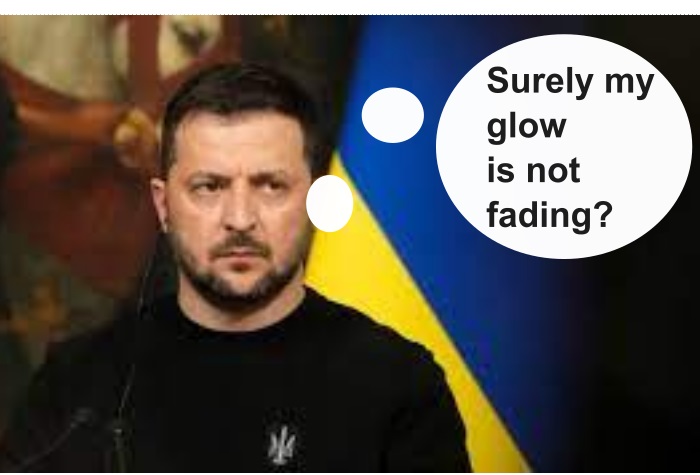
Opposition lawmakers and civil society activists say Ukraine’s leadership is using lawfare to intimidate opponents and silence critics.
Politico, October 31, 2025, By Jamie Dettmer
As Russia began its full-scale invasion of Ukraine nearly four years ago, Volodymyr Kudrytskyi, then head of Ukraine’s state-owned national power company Ukrenergo, was scrambling to keep the lights on.
Somehow, he succeeded and continued to do so every year, earning the respect of energy executives worldwide by ensuring the country was able to withstand Russian missile and drone strikes on its power grid and avoid catastrophic blackouts — until he was abruptly forced to resign in 2024, that is.
Kudrytskyi’s dismissal was decried by many in the energy industry and also prompted alarm in Brussels. At the time, Kudrytskyi told POLITICO he was the victim of the relentless centralization of authority that Ukrainian President Volodymyr Zelenskyy and his powerful head of office Andriy Yermak often pursue. He said he feared “corrupt individuals” would end up taking over the state-owned company.
According to his supporters, it is that kind of talk — and his refusal to remain silent — that explains why Kudrytskyi ended up in a glass-enclosed cubicle in a downtown Kyiv courtroom last week, where he was arraigned on embezzlement charges. Now, opposition lawmakers and civil society activists are up in arms, labeling this yet another example of Ukraine’s leadership using lawfare to intimidate opponents and silence critics by accusing them of corruption or of collaboration with Russia. Zelenskyy’s office declined to comment.
Others who have received the same treatment include Zelenskyy’s predecessor in office, Petro Poroshenko, who was sanctioned and arraigned on corruption charges this year — a move that could prevent him from standing in a future election. Sanctions have frequently been threatened or used against opponents, effectively freezing assets and blocking the sanctioned person from conducting any financial transactions, including using credit cards or accessing bank accounts.
Poroshenko has since accused Zelenskyy of creeping “authoritarianism,” and seeking to “remove any competitor from the political landscape.”
That may also explain why Kudrytskyi has been arraigned, according to opposition lawmaker Mykola Knyazhitskiy, who believes the use of lawfare to discredit opponents is only going to get worse as the presidential office prepares for a possible election next year in the event there’s a ceasefire. They are using the courts “to clear the field of competitors” to shape a dishonest election, he fears.
Others, including prominent Ukrainian activist and head of the Anti-Corruption Action Center Daria Kaleniuk, argue the president and his coterie are using the war to monopolize power to such a degree that it threatens the country’s democracy.
Kaleniuk was in the courtroom for Kudrytskyi’s two-hour arraignment, and echoes the former energy boss’s claim that the prosecution is “political.” According to Kaleniuk, the case doesn’t make any legal sense, and she said it all sounded “even stranger” as the prosecutor detailed the charges against Kudrytskyi: “He failed to show that he had materially benefited in any way” from an infrastructure contract that, in the end, wasn’t completed, she explained……………………………………………………………………………
for former Deputy Prime Minister Ivanna Klympush-Tsintsadze, the case “doesn’t look good from any angle — either domestically or when it comes to international partners.” The timing, she said, is unhelpful for Ukraine, as it coincides with Kyiv’s ongoing appeal for more European energy assistance ahead of what’s likely to be the war’s most perilous winter.
With Russia mounting missile and drone strikes on a far larger scale than before, Ukraine’s energy challenge is likely to be even more formidable. And unlike previous winters, Russia’s attacks have been targeting Ukraine’s drilling, storage and distribution facilities for natural gas in addition to its electrical power grid. Sixty percent of Ukrainians currently rely on natural gas to keep their homes warm.
Some Ukrainian energy executives also fear Kudrytskyi’s prosecution may be part of a preemptive scapegoating tactic to shift blame in the event that the country’s energy system can no longer withstand Russian attacks.
Citing unnamed sources, two weeks ago Ukrainian media outlet Ukrainska Pravda reported that former energy executives fear they are being lined up to be faulted for failing to do enough to boost the energy infrastructure’s resilience and harden facilities.
“They need a scapegoat now,” a foreign policy expert who has counseled the Ukrainian government told POLITICO. “There are parts of Ukraine that probably won’t have any electricity until the spring. It’s already 10 degrees Celsius in Kyiv apartments now, and the city could well have extended blackouts. People are already pissed off about this, so the president’s office needs scapegoats,” he said, speaking on condition of anonymity to discuss the matter freely.
“The opposition is going to accuse Zelenskyy of failing Ukraine, and argue he should have already had contingencies to prevent prolonged blackouts or a big freeze, they will argue,” he added……..https://www.politico.eu/article/dark-side-zelenskyy-rule-ukraine/
Ukraine accuses Russia of targeting its nuclear substations.
A large Russian missile and drone attack that overwhelmed Ukrainian air
defences overnight targeted substations that power two of Ukraine’s nuclear power plants, according to the country’s foreign minister and a person with knowledge of the barrage.
Andriy Sybiha, Ukraine’s top diplomat, said the
substations which power the Khmelnytskyi and Rivne nuclear power plants
were targeted in “well planned strikes”. “Russia is deliberately
endangering nuclear safety in Europe,” he said in a statement.
FT 9th Nov 2025, https://www.ft.com/content/474e7f27-87fb-4fb1-9899-d62778a611a4
The Deal That Never Was: Washington Proposed, Moscow Agreed – and Trump Blocked It
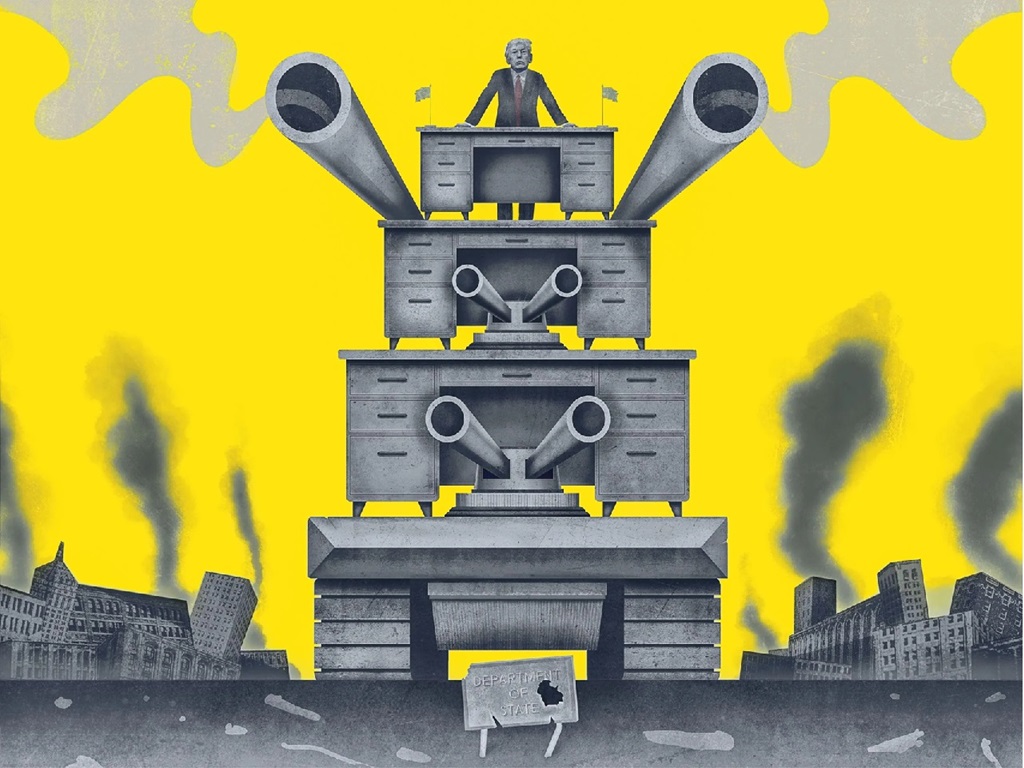
Russia no longer expects meaningful negotiations with Trump, having recognized the limits of his actual power within the American system, namely the permanent Deep State.
Key Takeaways
- The Alaska ceasefire plan was originally proposed by the U.S., not Russia.
- The plan collapsed due to U.S. indecision and Ukrainian-European rejection of territorial compromises.
- Russia considers regions such as Donbass, Zaporizhzhia, and Kherson historically legitimate Russian territories.
- Trump’s transactional style, evident in both South Korea and Anchorage, reflects a pattern of coercive, short-term deal-making.
- Moscow’s distrust of Washington has deepened; the U.S. is seen as unreliable, politically fragmented, and incapable of sustained diplomacy.
A ceasefire in Zaporizhzhia and Kherson, including Ukraine’s withdrawal from the Donbass, was on the table. Moscow was ready – but Washington pulled back at the last moment, letting the agreement collapse.
Felix Abt, Fri 07 Nov 2025 https://forumgeopolitica.com/article/the-deal-that-never-was-washington-proposed-moscow-agreed-and-trump-blocked-it
The Deal That Never Was reveals how Trump’s transactional diplomacy – from Seoul to Anchorage – turned a tangible opportunity for peace into yet another missed chance.
The proposed plan – something akin to an “Istanbul Plus” – was formulated by Washington and then abruptly abandoned. From Lavrov’s revealing interview, which we discuss below, to the collapse of the Alaska summit, the story shows how a U.S.-initiated ceasefire plan in Ukraine failed, leaving Russia skeptical, freezing diplomatic channels, and escalating military tensions.
It was a unique opportunity that could have altered the course of the war and strengthened Washington’s international credibility – but it went unused, serving as a lesson in how short-term political calculations can destroy long-term prospects for peace.
Trump’s Pattern of Transactional Diplomacy
President Donald Trump recently visited South Korea, where he received ceremonial honors and negotiated a new trade agreement. According to reports, Trump agreed to lower U.S. tariffs on South Korean exports in exchange for South Korea’s pledge to invest roughly $350 billion in the United States.
This deal illustrates Trump’s typical tactic: imposing crushing tariffs, extracting enormous investment pledges – and then rolling the tariffs back. He applied the same strategy to the EU, Japan, and others, while China resisted and retaliated. The approach resembles less a coherent protectionist policy than a 1920s-style protection racket, more akin to Mafia extortion than modern statecraft. Many doubt that the promised investments will ever materialize, and the U.S. Supreme Court is set to review the constitutionality of Trump’s tariff strategy, widely viewed as coercive diplomacy rather than sound economic policy.
This approach mirrors Trump’s methods in other areas, particularly in dealing with Russia. During the Anchorage summit, Trump’s envoy proposed a peace plan for Ukraine, which Moscow accepted. Yet Trump later withdrew, issued new demands, publicly disparaged Putin, and escalated tensions through threats of sanctions and missile deployments. The pattern – bluster, theatrical deal-making, and retreat – has become a defining feature of his foreign policy and has severely undermined U.S. credibility in the eyes of many international observers.
Russian analyst Dmitri Trenin, writing in Kommersant, a newspaper widely read in Russia’s business circles, described Moscow’s evolving perception of Trump, suggesting that meaningful business dealings between Russia and the U.S. are unlikely in the foreseeable future. He portrays President Trump as:
- unpredictable and manipulative, alternating between threats and charm;
- motivated by personal glory rather than a consistent strategic vision;
- economically predatory, using tariffs and trade wars to suppress rivals;
- more concerned with optics than substance, favoring photo-op “truces” over lasting peace.
Trenin concludes that Russia no longer expects meaningful negotiations with Trump, having recognized the limits of his actual power within the American system, namely the permanent Deep State. Still, Moscow’s engagement with Trump – the so-called “special diplomatic operation” – served a strategic purpose: signaling to key partners such as China, India, and Brazil that Russia remained open to dialogue and, absent Western interference or obstruction by the Banderite regime, interested in a peaceful resolution of the Ukraine conflict. At the same time, it reassured the Russian public of their leadership’s resolve and reinforced the belief that only military success – not U.S.-brokered, coercive “diplomacy” – can secure Russia’s long-term objectives in Ukraine.
Lavrov’s Interview: New Insights into a Failed Peace Plan
Continue readingThe moment of truth: The West confronts Russian military advances.
on October 20th, Russia informed the United States that it had no intention of yielding on territorial concessions, the reduction of the Ukrainian armed forces, or guarantees that Ukraine would never join NATO.
Thierry Meyssan, Voltairenet.org, Tue, 04 Nov 2025
For two years, we in the West have been living in the myth that we will bring Russia to its knees and bring Ukraine into the European Union and the Atlantic Alliance. We will try Vladimir Putin and make Russia pay. Today, this myth is colliding with reality: Moscow now possesses devastating weapons, unparalleled in the West. They make any hope of victory for our coalitions impossible. We will have to acknowledge our mistake. This is not about apologizing for our errors, but about freeing ourselves from them.
On October 26, Russian President Vladimir Putin and his Chief of Staff, Valery Gerasimov, announced the completion of a project to miniaturize a nuclear reactor and install it on a missile. They reported conducting a test launch of the 9M730 Burevestnik missile, which traveled 14,000 kilometers. The unique feature of this nuclear-powered weapon (which has an unlimited range) is its ability to be guided in such a way as to bypass interceptor sites.This, according to Russian authorities, makes it an unstoppable missile.
On October 29, President Putin tested a Status-6 Poseidon torpedo, a nuclear-powered weapon. Throughout the Soviet Union, Eurasian military researchers believed that underwater nuclear explosions could trigger massive tsunamis. To achieve this, they needed to be able to launch torpedoes much farther than was possible at the time, in order to avoid the cataclysms they intended to unleash. This has now been accomplished. Mega-tsunamis could devastate cities like Washington, D.C., or New York City, or even naval groups like those of the U.S. aircraft carriers. However, the Poseidon torpedo is significantly longer than others: 21 meters. It cannot be launched from operational submarines and required its own dedicated vessel for launch. Its ability to operate underwater almost indefinitely more than compensates for this limitation. In any case, this torpedo ensures that Russia can launch a second strike in the event of a US attack. Until now, the first to launch a nuclear strike was guaranteed to cripple its enemy’s main means of retaliation.
No weapon is ever truly definitive. Each exists within a continuum of technological advancements; each is superseded by another; and each eventually encounters effective defenses or predators. But for the moment, there seems to be no answer to these weapons, any more than there is to Russian supersonic missiles.
In about twenty years, Russia has acquired a whole host of new weapons that surpass all Western technologies.……………………………………………………..
Russia possessed the capability to disconnect NATO orders from its own weapons. This wasn’t a form of jamming; the weapons simply stopped responding to commands………………………………………
The Westerners were also testing numerous weapons, such as the tactical atomic bomb that later devastated the port of Beirut.
In 2018, once the Syrian war had ended, President Vladimir Putin presented his weapons program to parliament [ 1 ] . This program comprised six advanced weapons:the Sarmatian (which leaves the atmosphere, orbits the Earth, and re-enters the atmosphere at will) and Kinzhal (dagger) missiles; the nuclear-powered 9M730 Burevestnik and Status-6 Poseidon launchers; the Avantgarde missiles, which combine the characteristics of the Sarmatian and Kinzhal missiles with added maneuverability; and finally, anti-missile lasers.Only the latter are not yet complete.
What were only prototypes in the 2010s became operational and were mass-produced during the war in Ukraine.
The Western response was almost inaudible. Only US President Donald Trump spoke out. He regretted that his Russian counterpart had seen fit to reveal his exploits because, in doing so, he was reigniting the arms race. Furthermore, he announced that the United States was resuming its nuclear tests. Donald Trump could hardly do otherwise: deploring Russia’s renewed arms race is a way of explaining that the Pentagon’s military research is lagging far behind and of asserting Washington’s peaceful stance. Announcing that he will resume nuclear tests is a way of shifting the focus, since none of the new Russian weapons represent an advance in nuclear terms, but only in terms of atomic bomb launchers. To say that he will do this to maintain parity with Russia and China is a blatant lie: Russia has not conducted nuclear tests since 1990 and China since 1996. Moreover, it will take at least two years to rebuild or rehabilitate Cold War-era facilities, and therefore to begin these tests. Until then, the United States is nothing more than a “paper tiger.”
We are now reaching the end of hostilities in Ukraine. The Russian army is on the verge of a decisive victory in the Donbas. It will not only capture Pokrovsk, but will also inflict a third defeat on the White Führer, Andriy Biletsky, whose 10,000 men are surrounded. …………………
..on October 20th, Russia informed the United States that it had no intention of yielding on territorial concessions, the reduction of the Ukrainian armed forces, or guarantees that Ukraine would never join NATO.
Whether the West likes it or not, it no longer has a choice. It simply cannot afford to continue supplying weapons to Russia in Ukraine on its own. The EU’s plan to eventually confiscate Russian assets frozen in Belgium and spend them immediately could spell the end of the Union. In any case, neither Belgium, nor Slovakia, nor Hungary will participate in this theft, which even the Soviets, the staunch opponents of private property, never perpetrated.
The EU’s grandiose ambitions are about to collide with reality: it can only continue this war by betraying the very ideals it claims to uphold………….
All of this is coming to an end, otherwise the EU will be directly drawn into the war against the Slavs that the UK and Germany instigated in 1933: the Second World War. And the EU’s armies, stripped of their arsenals, have no hope of resisting for more than two days. This is not about bowing down to a new master, Russia, but simply about acknowledging our mistakes before it’s too late. https://www.sott.net/article/502778-The-moment-of-truth-The-West-confronts-Russian-military-advances
Starmer,Macron, Merz…3 unwise leaders degrading their economies while destroying Ukraine.
President Trump has largely ceased supplying weapons directly to Ukraine. But he’s cool about goosing US weapons builders’ profits by selling them to Europe’s Big 3 so they can take over squandering their treasure on an impossible, quixotic effort to defeat Russia.
Walt Zlotow, West Suburban Peace Coalition, Glen Ellyn IL ,1 Nov 25
The UK’s Keir Starmer, France’s Emmanuel Macron and Germany’s Friedrich Merz are wildly unpopular. Starmer has the best approval rating at 13% followed by Macron at 11%. Merz is nearly invisible at 5%.
There are several reasons but likely tops is their insistence on continuing the lost US/NATO proxy war against Russia destroying Ukraine for nearly 4 years.
President Trump has largely ceased supplying weapons directly to Ukraine. But he’s cool about goosing US weapons builders’ profits by selling them to Europe’s Big 3 so they can take over squandering their treasure on an impossible, quixotic effort to defeat Russia. Trump, a realist on the war Biden made inevitable, wants out, not only on funding the war, but on endlessly funding Europe’s paranoia about a reconstituted Soviet empire. This is one foreign policy Trump is getting right.
Starmer, Macron and Merz are degrading their economies as they reduce critically needed social spending on the commons to fund a wildly unpopular war. No wonder far right, nationalistic political movements are nipping at their heels and may soon send them packing.
Europe has a pittance of America’s wealth to fund continuation of the war. Yet, the Starmer, Macron, Merz trio endlessly bleat that Ukraine can prevail, even get back its massive lost territory now forever part of Russia, if only they provide Ukraine more, more, more. They fear monger that Russia will come for them next unless they’re defeated in Ukraine. No responsible historian, political scientist or retired diplomat (without a job to protect) would support that delusional view.
Two things are certain. The economies and political stability of the UK, France, and Germany are being severely undermined by their leaders’ refusal to negotiate the war’s end, acknowledging Russia’s valid security concerns. Second, Ukraine descends deeper into failed state status, losing more cannon fodder and territory, every day the war grinds on.
What is not certain if Starmer, Macron and Merz do not come to their senses, is whether nuclear confrontation between Russia and NATO can be avoided. All 3 need to be forced to watch ‘Forrest Gump’ to learn that ‘Stupid is as stupid does.
How Russia is risking nuclear catastrophe with attempts to syphon power from Ukraine’s biggest plant
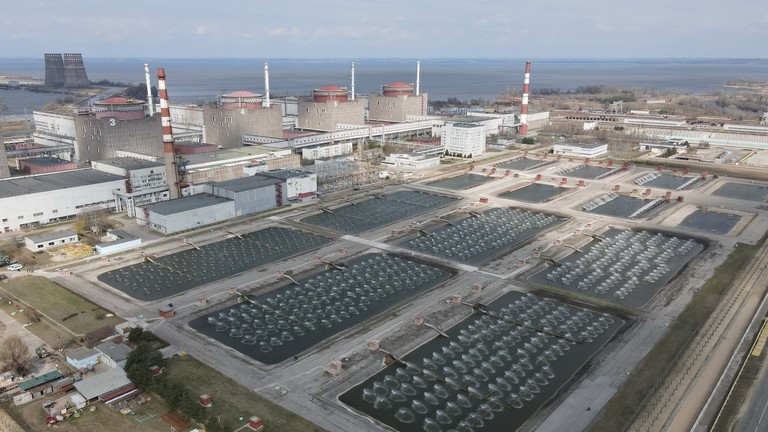
The exiled mayor of Enerhodar, close to Zaporizhzhia, reveals his fear of an ecological catastrophe
Sam Kiley, In Zaporizhzhia, Wednesday 29 October 2025, https://www.independent.co.uk/news/world/europe/zaporizhzhia-nuclear-plant-ukraine-russia-war-b2855001.html
Europe’s biggest nuclear reactor has become a battlefield in Ukraine’s defence against Russian invaders as they risk a catastrophic meltdown in its efforts to connect it to Moscow’s national grid.
The Zaporizhzhia nuclear power plant (ZNPP), which has six reactors, was captured by Russian troops early in the invasion of Ukraine in 2022. It has remained a dangerous potential flashpoint for a nuclear disaster ever since.
Fighting and bombardments by both sides of the complex and the power station itself, which has been entirely occupied by Russian forces who base troops in its buildings, have forced the “cold shutdown” of the reactors.
This means that its nuclear material is not used to generate power but needs to be constantly cooled.
The fighting cut electricity from Ukraine, meaning that the cooling system had to rely entirely on diesel generators and a skeleton staff for a month.
Regular power was only restored in the last week, after the longest period the ZNPP had been disconnected from electricity to drive its cooling systems.
Russia needs to cut the Ukrainian power link in order to install its connection into the Russian network – a long-stated ambition.
“The Russian Federation is putting in its power line, but elements of it have been successfully damaged by Ukraine,” explained Mykhailo Shuster, nuclear expert and former director of procurement at Energoatom – Ukraine’s nuclear power agency.
“Russia is now at a high level of readiness, and to connect it, the power supply from Ukraine must be interrupted.”
It is unclear whether Russia has been able to connect the Ukrainian plant to its own network during the 30-day outage. If it did so, it would then have to install converter stations to synchronise the two grids.
But the power cuts to the cooling systems, combined with the near collapse of the water supplies there after Russia blew up the Kakhova Dam – the main water source for the ZNPP – is causing jitters among local leaders.
The exiled mayor of the now-occupied Enerhodar, the town next to Zaporizhzhia, told The Independent he fears nuclear fallout could melt into the groundwater around the plant, contaminate the Dnipro River and eventually the Black Sea.
“Kakhovka Dam is destroyed; there is nothing to cool it with – even if they miraculously restore the equipment in the future,” he said.
“Worst case scenario: the water will eventually evaporate from the cooling pond, and there will be nothing to cool nuclear fuel.”
“It can melt the concrete and go into the groundwater,” Dmytro Orlov added from his office in Zaporizhzhia. Mayor Orlov runs humanitarian programmes for the thousands of people, mostly nuclear power workers, who fled the advancing Russians from his town to safety here.
The mayor recalled the 1986 Chernobyl disaster, which remains the worst nuclear disaster in history.
“The estimated amount of nuclear fuel there is about 10 times more than in Chernobyl,” he warned.
A small team of inspectors from the International Atomic Energy Authority regularly inspects the power station and has reported military training and explosions in and around the facility.
Russian artillery and mortars have been seen shelling and bombing Ukrainian towns and villages on the opposite bank of the Dnipro.
After power was restored, IAEA director general Mario Grossi said: “What was once virtually unimaginable – a nuclear power plant regularly losing off-site power – has unfortunately become a common occurrence during this devastating war. However, this was the most challenging loss of power event we have experienced so far.
“There is still much work to do to further reduce the risks of a nuclear accident.”
The anti-Russia, pre-SMO, Timeline of Which Legacy Media Won’t Speak
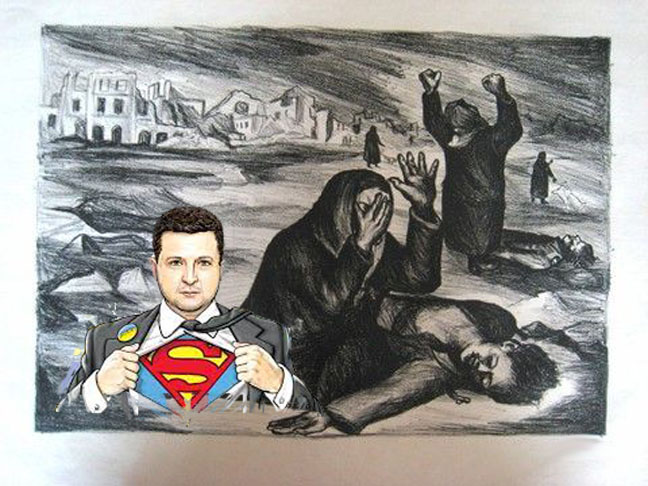
timeline of events leading up to the commencement in February 2022 of Russia’s Special Military Operation
Eva Karene Bartlett, Oct 28, 2025, https://evakarenebartlett.substack.com/p/the-anti-russia-pre-smo-timeline?utm_source=post-email-title&publication_id=3046064&post_id=177345476&utm_campaign=email-post-title&isFreemail=true&r=1ise1&triedRedirect=true&utm_medium=email
Very useful written timeline of events leading up to the commencement in February 2022 of Russia’s Special Military Operation.
Jacques Baud discussed much of this (see bottom of this post), but this written account is worth bookmarking.
Alan Watson:
“Vladimir Putin did not wake up on 24 February 2022 and decide, “I think I’ll invade eastern Ukraine today,” nor was the US campaign to expand NATO into Ukraine a last-minute maneuver. (US State Department documents show Ukraine’s future membership was discussed as early as 1994.)
9 Feb 1990: In a deal approved by Mikhail Gorbachev, the last leader of the Soviet Union, as a quid pro quo for accepting German reunification within NATO, Secretary of State James Baker pledged that NATO would not expand “one inch to the east.”
US, European and German leaders made explicit assurances to Gorbachev against any future eastward NATO expansion. Gorbachev understood the assurances as a “binding agreement.” Subsequently, Soviet leaders made decisions on that basis and acted on them – withdrawing the Red Army from Germany and dissolving the Warsaw Pact.
12 March 1999: Clinton is president. The Czech Republic, Hungary and Poland became members of NATO. A weakened post-Soviet Russia, led by Boris Yeltsin, controlled by a cabal of Oligarchs, could do nothing to prevent it. Powerless, Yeltsin was said to be “infuriated” with “his friend Bill Clinton…”
29 March 2004: George W. Bush is president. Seven more Eastern European countries join NATO: Bulgaria, Estonia, Latvia, Lithuania, Romania, Slovakia and Slovenia – largest wave of NATO enlargement ever.
April 2008: At the Bucharest NATO summit, George W. Bush announced that Ukraine and Georgia are on an “immediate path to NATO.” Bill Burns, ambassador to Russia, sent a memo to Secretary of State Condoleezza Rice. “Across the board,” he wrote, the Russian political class told him, “Ukraine is the reddest of red lines” – “Nyet means nyet.”
22 Feb 2014: Just as the Sochi Winter Olympics were underway, Kiev erupted in violence. State Department official Virginia Nuland boasted that since the 2004-2005 “Orange Revolution,” the US had spent $5 billion on regime change in Ukraine. NATO rooftop snipers killed both protestors and police, forcing Ukraine’s democratically elected president Viktor Yanukovych to flee the country.
2 May 2014: Bussed to Odessa from Kiev, Right Sector thugs carrying baseball bats confront ethnic Russians protesting the coup. When protestors fled into the city’s Trade Unions House, the building was set on fire. Forty-eight people were burned or bludgeoned to death – the Donbass civil war point of no return.
11 Feb 2015: Putin and Ukrainian President Poroshenko meet with French President Francois Hollande and German Chancellor Angela Merkel in Belarus to negotiate the Minsk ceasefire accords. The leaders agreed to a deal that would have ended the fighting – granting autonomy to the Russian-speaking Donbass, but successive Ukrainian governments refused to implement the accord.
German Chancellor Merkel later admitted that Minsk was a stall tactic to allow the West to build Ukraine’s army up to NATO standards. [Ed. note – Zelensky also admitted that he lied in his campaign for President, in pledging to uphold the Minsk agreement]
17 Dec 2021: Team Biden rejects Putin’s proposed mutual security accords that would have left a “neutral” Ukraine intact. For years, Russia had tried to convince US administrations that Ukraine was off-limits to NATO membership, but Russian concerns were brushed aside. December 2021, Team Biden insisted, “Russia doesn’t say who can join NATO.”
18 Feb 2022: During the Winter Olympics in China, the Organization for Security and Co-operation in Europe (OSCE) documented that Ukraine had ramped up artillery attacks along the Line of Contact.
(Since the 2014 coup in Kiev, the Armed forces of Ukraine, including the Neo-Nazi Banderites, had killed thousands of ethnic Russians in the Donbass.
19 Feb 2022: Invited to speak at the Munich Security Conference, Ukrainian President Zelensky said, “Ukraine will get and deploy nuclear missiles.”
20 Feb 2022: On CBS 60 Minutes, Ukraine’s Minister of Foreign Affairs Dmytro Kuleba said, “Ukraine will never honor the Minsk cease fire.”
21 Feb 2022: Russia captured a Ukrainian soldier, killed five others as they crossed over the border into Rostov. Russia learned the invasion of Donetsk city was imminent and recognized the breakaway Donbass and Luhansk oblasts as independent republics.
24 Feb 2022: With about 90,000 troops, Russia launched its “Special Military Operation” – not a “full scale invasion.” Citing the UN principle, “Responsibility to Protect,” Russia intervened in the eight-year Donbass civil war after all prospects for diplomacy had failed.
April 2022, week six of the war, Russian and Ukrainian negotiators convened peace talks in Istanbul. Later, Ukrainian diplomat Oleksandr Chalyi recalled, “Putin tried to do everything possible to conclude an agreement…” [The tentative accord would have left a “neutral” #Ukraine intact.]
On 1 April, USAID revealed photographic evidence of a “massacre” in Bucha and financed a press tour featuring US public figures. Problem: Four days earlier at a press conference, the mayor had announced that the Russians had retreated from the city [and he did not report there had been a massacre].
After the Russians voluntarily retreated, the regime scattered bodies in the streets that included both actors in body bags and recently killed “Russian collaborators” from around Bucha – giving an “outraged” Joe Biden and Boris Johnson, who flew unannounced to Kiev, the justification to order Zelensky to “keep fighting.”
If the US, UK and EU continue rejecting Russian proposals for a long term, European wide peace accord – as Putin proposed in December 2021 – the Russian army will continue advancing toward Kharkiv in the north and Odessa on the Black Sea. As Putin and Foreign Minister Sergei Lavrov emphasized: There will be no Minsk III.”
From a September 2024 interview I did with Jacques Baud (former Swiss intelligence & author). In this clip, Jacques lays out the history of events related to Ukraine prior to 2022, prior even to the 2014 coup which brought fascism to power in Ukraine, & how it was the NATO-Ukraine alliance which brought war, not Russia.
Full interview: https://rumble.com/v5fjhrh-jacques-baud-nato-threatened-russia-decades-before-2022.html https://odysee.com/@EvaKareneBartlett:9/JacquesBaudNATOThreatenedRussia:5
ATOMIC BLACKMAIL? The Weaponisation of Nuclear Facilities During the Russia-Ukraine War.
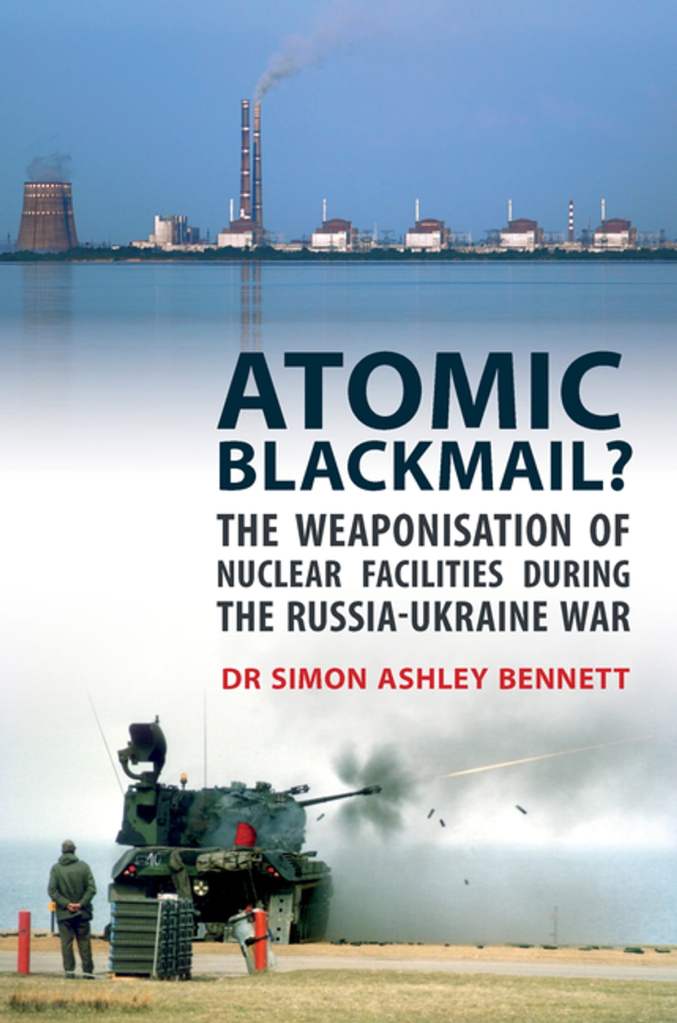
a protagonist could use long-range munitions to turn a NPP into a dirty bomb that would spread radioactive contamination over a wide area, dispersing or diverting army formations, rendering civilian infrastructure and farmland unusable, contaminating groundwater and creating a radioactive cloud that would – if the wind was blowing in a convenient direction – cause transborder harms.
Simon Ashley Bennett, https://www.libripublishing.co.uk/Products/CatID/16/ProdID=292
In Atomic Blackmail? Simon Bennett examines the very real possibility of the ‘weaponisation’ of nuclear facilities during the Russia-Ukraine War. The Russia-Ukraine War has several unique aspects, the most striking of which is that it is being fought in proximity to nuclear facilities and working nuclear power stations, including the six-reactor Zaporizhzhia Nuclear Power Plant (NPP), Europe’s largest, and the decommissioned four-reactor Chernobyl NPP that, in 1986, suffered a catastrophic failure that released radioactive contamination across much of Europe. Some experts claim the contamination caused several thousand excess cancer deaths.
In 1985, foreign affairs and nuclear expert Bennett Ramberg published Nuclear Power Plants: An Unrecognised Military Peril, with a second edition of the book published in 1992. In his visionary discourse, Ramberg posited that in future wars, regional or global, nuclear facilities and powerplants might be weaponised, to gain political traction over an opponent and/or neutralise opposing forces’ capacity for battlefield manoeuvre.
In one scenario, Ramberg described how a protagonist could use long-range munitions to turn a NPP into a dirty bomb that would spread radioactive contamination over a wide area, dispersing or diverting army formations, rendering civilian infrastructure and farmland unusable, contaminating groundwater and creating a radioactive cloud that would – if the wind was blowing in a convenient direction – cause transborder harms. As demonstrated by the Chernobyl disaster, a reactor malfunction can generate serious and long-lasting environmental impacts. Radioactive particles released from Chernobyl’s devastated Reactor Number Four were deposited as far afield as the Cumbrian hills in north-west England.
While, at the time of writing, none of Ukraine’s fifteen reactors had been damaged in an exchange of fire, the possibility remains that this could happen during Ukraine’s 2023, and subsequent, offensives to expel Russian forces from sovereign Ukrainian territory. Much to the consternation of the International Atomic Energy Agency (IAEA), there have been several near-misses, with weapons fired in and around both the decommissioned Chernobyl NPP and working Zaporizhzhia NPP. Further, Russian long-range precision munitions (cruise missiles) have been tracked flying either close to, or over Ukraine’s NPPs. The Pivdennoukrainsk (South Ukraine) NPP has been overflown. On 20 September, 2022, a missile landed some 300 metres from the NPP.
While Ramberg’s nightmare vision of destroyed NPPs rendering a country uninhabitable has not, yet, been realised in the Russia-Ukraine War, the longer and more intense the conflict, the greater the likelihood that one or more of Ukraine’s NPPs will be damaged or, via a credible sabotage threat, used to leverage tactical or strategic advantage. Atomic blackmail finally exampled.
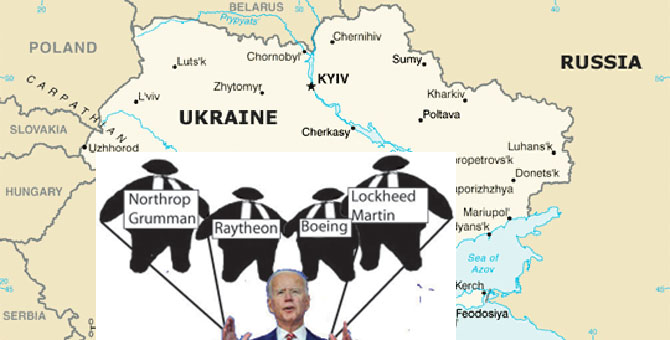
Biden hands off Ukraine war to Trump…who now owns it.
Walt Zlotow, West Suburban Peace Coalition, Glen Ellyn IL, 25 Oct 25
President Biden provoked the Russian invasion of Ukraine for 13 months with reckless NATO expansion before Russia said ‘enough’ and pushed back violently. Biden then spent his last 37 months pouring over $150 billion in military aid which proved worthless in achieving Ukrainian victory. All it did was prolong Ukraine’s suffering with hundreds of thousands dead and wounded in a shattered country.
2024 candidate Trump called out this senseless stupidity for what is was, Biden’s war that Trump wouldn’t have provoked had he won in 2020. He further boasted he’d end it on first day of second term.
Tho Trump largely stopped the direct funding that Biden kept squandering till his last sorrowful day, he’s still selling weapons to the European dead-enders UK, France, Germany and others to gift Ukraine. One day Trump says Ukraine should quit without return of a single lost square mile; next day he claims Ukraine can retrieve it all. One day he ponders sending Ukraine Tomahawk missiles likely to provoke nuclear war; next day he tells Ukraine President Zelensky, who flew 4,867 miles to beg for them…’Faggedaboudit.’
Trump’s got bigger war fish to fry than the lost cause of Ukraine. He’s still supporting Israel’s genocidal ethnic cleansing of Gaza, his fake ceasefire notwithstanding. He’s getting ready to bomb Venezuela, not content with just blasting small, unarmed Venezuelan boats to smithereens. He may be planning another round of air strikes on Iran in his quest at regime change and destabilization there.
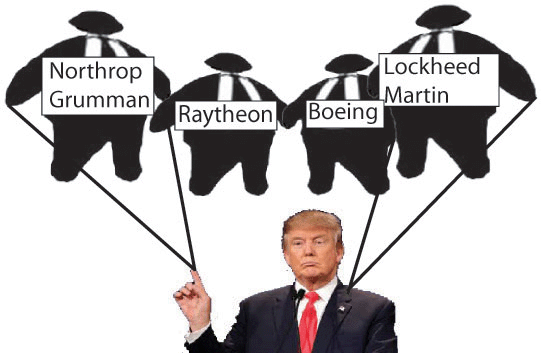
Ukraine will collapse on Trump’ watch. Biden never wavered in support of a war impossible to win. Trump, however, wavered in his boast he would end Biden’s war, allowing it to continue incurring hundreds of thousands more casualties and more lost Ukrainian territory. By so doing, history will record Trump’s ownership of America’s failed proxy war to weaken Russia at the end, as surely as it records Biden’s ownership at the beginning.
1 This Month


Shut down the radiation-damaged Heysham nuclear reactors now
To see nuclear-related stories in greater depth and intensity – go to https://nuclearinformation.wordpress.com

Say No to NASA’s Reckless Nuclear Reactor on the Moon
Say No to NASA’s Reckless Nuclear Reactor on the Moon
-
Archives
- October 2026 (247)
- September 2026 (339)
- August 2026 (330)
- July 2026 (355)
- June 2026 (287)
- May 2026 (306)
- April 2026 (356)
- March 2026 (251)
- February 2026 (267)
- January 2026 (308)
- December 2025 (358)
- November 2025 (359)
-
Categories
- 1
- 1 NUCLEAR ISSUES
- business and costs
- climate change
- culture and arts
- ENERGY
- environment
- health
- history
- indigenous issues
- Legal
- marketing of nuclear
- media
- opposition to nuclear
- PERSONAL STORIES
- politics
- politics international
- Religion and ethics
- safety
- secrets,lies and civil liberties
- spinbuster
- technology
- Uranium
- wastes
- weapons and war
- Women
- 2 WORLD
- ACTION
- AFRICA
- Atrocities
- AUSTRALIA
- Christina's notes
- Christina's themes
- culture and arts
- Events
- Fuk 2022
- Fuk 2023
- Fukushima 2017
- Fukushima 2018
- fukushima 2019
- Fukushima 2020
- Fukushima 2021
- general
- global warming
- Humour (God we need it)
- Nuclear
- RARE EARTHS
- Reference
- resources – print
- Resources -audiovicual
- Weekly Newsletter
- World
- World Nuclear
- YouTube
-
RSS
Entries RSS
Comments RSS

