Zelensky’s end goal is in sight, and so is his end.
Tarik Cyril Amar, 23 July 25, https://www.rt.com/news/621881-zelensky-wont-go-down-quietly/
The Ukrainian leader is not “turning” to authoritarianism – it has always been his goal, and when he has it, he won’t let go.
When the US picks clients, vassals, and proxies, it needs men or women ready to trade in the interests, even the welfare and lives of their compatriots. Vladimir Zelensky is such a man. A look at the elites of EU-NATO Europe shows he is not alone. But he is an especially extreme case.
It is much less than a decade ago that the former media entrepreneur and comedian – often crude instead of witty – advanced from being a pet protégé of one of Ukraine’s most corrupt oligarchs to capturing the country’s presidency. As it turned out, never to let go of it: Zelensky has used the war, which was provoked by the West and escalated in February 2022, not only to make himself an indispensable if very expensive and often obstreperous American puppet but also as a pretext to evade elections.
And yet, now signs are multiplying that his days of being indispensable may be over. For one thing, Seymour Hersh, living legend of American investigative journalism, is reporting that Zelensky is very unpopular where it matters most, in US President Donald Trump’s White House. This is not surprising: Trump’s recent turn against Russia – whatever its real substance or marital reasons – does not mean a turn in favor of Ukraine and even less so in favor of Zelensky, as attentive observers have noted. According to the Financial Times, “Western allies of Ukraine” still believe that Trump keeps seeing Russian President Vladimir Putin “as his main negotiating partner and Zelensky as the primary obstacle to a workable peace deal.”
And according to “knowledgeable officials in Washington” who have talked to Hersh, the US leadership is ready to act on that problem by getting rid of Zelensky. And urgently: Some American officials consider removing the Ukrainian president “feet first” in case he refuses to go. Their reason, according to Hersh’s confidants: to make room for a deal with Russia.
Hersh has to make do with publishing anonymous sources. It is even conceivable that the Trump administration is leaking this threat against Zelensky to pressure him. Yet even if so, that doesn’t mean the threat is empty. Judging by past US behavior, using and then discarding other countries’ leaders is always an option.
Another, also plausible, possibility is that Zelensky will be discarded to facilitate not ending, but continuing the war, so as to keep draining Russian resources. In this scenario, the US would prolong the war by handing it over to its loyally self-harming European vassals. After, that is, seeing to the installation of a new leader in Kiev, one it has under even better control than Zelensky. Just to make sure the Europeans and the Ukrainians do not start understanding each other too well and end up slipping from US control. The Ukrainian replacement candidate everyone whispers about, old Zelensky nemesis General Valery Zaluzhny – currently in de facto exile as ambassador to the UK – might well be available for both options, depending on his marching orders from Washington..
Meanwhile, as if on cue, Western mainstream media have started to notice the obvious: The Financial Times has found out that critics accuse Zelensky of an “authoritarian slide,” which is still putting it very mildly but closer to the truth than past daft hero worship. The Spectator – in fairness, a magazine with a tradition of being somewhat more realistic about Ukraine – has fired a broadside under the title “Ukraine has lost faith in Zelensky.” The Economist has detected an “outrage” in Zelensky’s moves and, more tellingly, used a picture of him making him look like a cross between a Bond villain and Saddam Hussein. Even Deutsche Welle, a German state propaganda outlet, is now reporting on massive human rights infringements under Zelensky, with the impaired systematically targeted for forced mobilization.
Full disclosure: Knowing Ukrainian and Russian – Ukraine’s two languages – well and having written about the realities of Zelensky’s misrule for years already, my immediate response to these sudden revelations is “what took you so long?” My first articles explaining Zelensky’s obvious authoritarian tendencies – and practices, too – date back to 2021, and I have repeatedly pointed out that his popularity was slipping. All it took was to pay attention to Ukrainian polling.
But then, I know the reason for the mainstream’s delay: The bias induced by Western information warfare and media career conformism, which only weakens a little – or is redirected – when the geopolitics of the powerful change. In that sense, the increasingly sharp public criticism of Zelensky is yet another sign that he has fallen – and remains – out of favor with the American leadership that rules the West.
Zelensky’s recent actions may well indicate, as Hersh also suspects, that he knows he is in great danger – and not from Russia but his “friends” in the West. Just over the course of the last two weeks, Zelensky has reshuffled his government and, at the same time, started a devastating campaign against institutions and individuals that have two things in common: the mission to combat corruption and a well-deserved reputation for being particularly open to US influence.
Indeed, it is when Zelensky escalated his attacks on the latter that the Financial Times woke up from years of sweet slumber to discover there’s something authoritarian about the West’s top man in Ukraine. By now, things have only gotten worse: The domestic intelligence – and, of course, repression – service SBU has raided key anti-corruption organizations and made arrests. Simultaneously, Zelensky’s absolutely obedient majority in the Ukrainian parliament has passed a law to completely neuter these institutions by putting them under the president’s control, which the president then signed rapidly. By now, Ukraine is witnessing widespread protests against Zelensky’s attempt to combine maximum greed with unfettered if petty despotism.
For the Ukrainian news site Strana.ua – a media rarity, as it has managed to resist the Zelensky regime’s aggressive attempts to subdue and streamline it – the SBU raids on the anti-corruption agencies alone were a powerplay, designed to consolidate Zelensky’s one-man rule. That is correct, and he wasn’t even done.
At the same time, it is, obviously, also very convenient to remove the last feeble restraints on Ukraine’s fabulously pervasive graft, since whatever the West – that is, the Europeans – will now spend on Ukraine will be misappropriated even more wildly than before. That could come in handy especially if there should be a need to stay rich in exile.
This gangster-economic aspect of Zelensky’s fresh power grab has not escaped even his Western friends: the OECD has already warned the Ukrainian regime that the stifling of the anti-corruption agencies will harm Western investment in Ukraine’s reconstruction in general and its arms industry in particular. Likewise, the International Renaissance Foundation, a Soros power structure that has been all too active in Ukraine for more than three decades now, has also called for a repeal of the new law.
In essence, these and similar Western complaints all mean the same: We know you are robbing us blind already but we’ve made our peace with that because you serve our geopolitics. But if you try to take an even larger cut, we may reconsider.
Taken together, Zelensky’s government reshuffle and his assault on the anti-corruption agencies seem to reflect a double strategy: On one side, the endangered puppet is signaling submission to the US in at least some of his recent personnel moves, but on the other, he is also consolidating his power at home by insulating it from too much direct American influence. It is as if he were sending a message to Washington: “I really am your man. But if you try to choose another, I’ll fight.”
The historic irony is that, with Zelensky succeeding in finally razing the last pitiful remnants of pluralism in Ukraine, he – the once hysterically idolized darling of the “value-based” West – will be the president achieving a complete authoritarianism like no Ukrainian leader before him. And all that while propped up with hundreds of billions from the West.
Any displays of surprise or shock by Ukrainian and Western politicians or mainstream media betray either that they have been dozing under a rock for years or that they are being disingenuous. Because today’s Zelensky is not “turning” to authoritarianism. On the contrary, authoritarianism has always been his default disposition and his aim. Zelensky has been working on his personal assent to unchecked power – and, of course, its material spoils as well – since he became Ukraine’s president. That means, long before the conflict between Russia and Ukraine (and behind and through it the West) escalated in early 2022.
How do we know? Because it was already obvious, including to many Ukrainians, by 2021 at the very latest. It was then that Zelensky’s Ukrainian critics – not Russians or those with sympathy for Russia – attacked him and his political party “Servant of the People” for erecting a “mono-vlada,” that is, in essence, an authoritarian political machine to control not only the state but the public sphere as well.
By 2021, Zelensky had already engaged in all of the following: vicious lawfare against Ukraine’s opposition and his personal political rivals, such as former president Petro Poroshenko; massive media censorship and streamlining, while targeting with repression and chicanery any outlets, editors, and journalists daring to resist, for instance Strana.ua; systematically and illegally abusing emergency powers and unaccountable but powerful institutions (most of all, the National Security Council) to stifle criticism; and, last but not least, the fostering of a dictatorial personality cult which was boosted by the West.
Since then, things have only gotten worse. Zelensky has steadily fastened his hold over Ukraine, while prolonging and losing an avoidable and catastrophic war for a Western strategy to demote Russia. Ukraine has been bled dry for a cynical and (predictably) failing Western scheme; Russia, meanwhile is not only winning but has greatly increased its autonomy from the West.
The war may end soon or it may drag on. For the sake of Ukraine we have to hope it will be over soon. Zelensky, if he were a decent man, would then have to hand himself over to postwar Ukrainian justice or be his own judge, the old-fashioned way. But Zelensky is no decent man. If rumors now swirling are not only plausible but truthful, then his masters in Washington may be the ones preparing an appropriately indecent end for him. If the protests against him accelerate, Zelensky may even end up “color-revolution-ed.” How ironic.
The real story of Chernobyl, the worst nuclear disaster in history
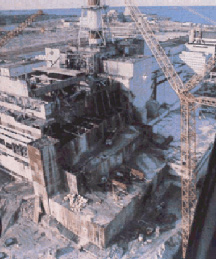
The Chernobyl Sarcophagus Memorial sculpture was erected in 2006 and is dedicated to the memory of the heroic plant workers and emergency crew who prevented a global catastrophe .
28 July 25,https://www.history.co.uk/articles/the-story-of-chernobyl-the-worst-nuclear-disaster-in-history
On 26th April 1986, a routine safety test went catastrophically wrong and triggered the worst nuclear accident of all time. The incident at the Chernobyl Nuclear Power Plant near Pripyat, Ukraine led to the release of 400 times more radiation than the atomic bomb dropped on Hiroshima during WW2.
31 people died in the immediate aftermath, whilst the long-term health effects caused by Chernobyl are still a hotly debated subject. Approximately 60,000 square miles around the plant were contaminated and an area nearly twice the city of London remains an exclusion zone to this day.
Background of Chernobyl
Lying just 10 miles from the Belarus-Ukraine border and around 62 miles north of the Ukrainian capital Kyiv, the Chernobyl Nuclear Power Plant was commissioned in 1977 as part of the old Soviet Union, with the first reactor supplying power to the grid later that year. By 1984, four reactors had entered commercial operation, each capable of producing 1,000 megawatts of electrical power.
Just under two miles from the plant was the city of Pripyat, founded in 1970 and named after the nearby river. It was built to serve the power plant and at the time of the disaster, its total population was just shy of 50,000.
Nuclear disaster unfolds
Throughout Friday, 25th April 1986, Chernobyl’s engineers lowered power at Reactor No. 4 in preparation for a safety test to be conducted later that evening. The test was supposed to check whether the reactor turbines could continue powering emergency water coolant pumps in the event of a power failure.
Ironically, the safety test was anything but safe as human error and substandard reactor design led to a partial meltdown of the core.
The experiment was poorly conceived and equally badly executed. Firstly, the less-experienced night shift crew carried out the safety test and later claimed they had not received full instructions from the day shift crew on how to properly conduct it. Secondly, the emergency core cooling system for Reactor 4 was disabled along with the emergency shutdown system.
Finally, the reactor’s power level dropped to a dangerously unstable level at which point the engineers removed most of the control rods in violation of safety guidelines. Although power began to return, it was far from under control.
Explosion in Reactor 4
At 1:23am on 26th April, the safety test was given the all-clear by plant supervisors. Almost immediately a power surge occurred, triggering the engineers to re-insert all 211 control rods. The control rods were graphite tipped, a design flaw that would prove fatal as they increased the reaction in the core, instead of lowering it.
The subsequent steam explosions blew off the steel and concrete lid of the reactor as the core suffered a partial meltdown. Two engineers were killed instantly whilst two more suffered severe burns. The explosion, along with the resulting fires, released at least 5% of the radioactive reactor core into the atmosphere. Blown by the wind, radioactive materials were spread to many parts of Europe over the coming days.
Emergency response begins
Firefighters quickly arrived on the scene but without proper protective clothing, many perished in the coming months from acute radiation syndrome. By dawn, all the fires were suppressed except for the one in the reactor core.
The other three reactors were shut down a short while later. The following day officials ordered helicopters to begin dumping more than 5,000 tonnes of sand, lead, clay, and boron onto the burning reactor to help extinguish the core fire.
A Soviet cover-up
It took nearly 36 hours for Soviet officials to begin evacuating nearby Pripyat. The city’s residents were unaware of the true dangers presented by the previous day’s events. Advised to pack only necessities, the people of Pripyat were loaded onto buses believing their evacuation to be temporary. Little did they know, they would never return to their homes again.
Two days after the catastrophic explosion the rest of the world remained in the dark as the Soviets attempted to cover up the event. However, on 28th April, Swedish radiation monitoring stations 800 miles away began detecting high levels of radiation. With their backs to the wall, the Soviets finally made a statement, with the Kremlin admitting an accident had occurred at Chernobyl, but assuring the world that officials had it under control.
Heroism on display
In the days that followed, hundreds of workers risked their lives to contain radiation leaking from the reactor core.
On 4th May, three divers made their way through the dark flooded basement of Reactor 4 to turn valves and drain the ‘bubbler pools’ sitting below the core. Had they not succeeded in their mission, molten nuclear material would have eventually melted its way down to the pools.
This would have triggered a radiation-contaminated steam explosion and destroyed the entire plant along with its three other reactors, causing unimaginable damage and nuclear fallout that the world would have struggled to recover from.
Radioactive debris also needed to be removed from the roof of the reactor. After robots failed to do the job, workers equipped with heavy protective gear were sent in.
Nicknamed ‘Bio-robots’, these workers were unable to spend more than 90 seconds on the roof due to the extreme levels of radiation. In the end, 5,000 men went up on the irradiated rooftop to successfully clear the radioactive material from it.
Clean-up commences
By mid-May, Soviet leader Mikhail Gorbachev had ordered thousands of firefighters, miners, and soldiers to begin the long and arduous task of cleaning up. Known as ‘Liquidators’, 600,000 – 800,000 of them began burying radioactive debris and topsoil, as well as shooting all wildlife (both domestic and wild) within the 19-mile exclusion zone surrounding the power plant.
Nicknamed ‘Bio-robots’, these workers were unable to spend more than 90 seconds on the roof due to the extreme levels of radiation. In the end, 5,000 men went up on the irradiated rooftop to successfully clear the radioactive material from it.
Clean-up commences
By mid-May, Soviet leader Mikhail Gorbachev had ordered thousands of firefighters, miners, and soldiers to begin the long and arduous task of cleaning up. Known as ‘Liquidators’, 600,000 – 800,000 of them began burying radioactive debris and topsoil, as well as shooting all wildlife (both domestic and wild) within the 19-mile exclusion zone surrounding the power plant.
Aftermath
The Chernobyl Exclusion Zone was eventually extended to cover approximately 1,000 square miles, whereby it was declared uninhabitable for over 20,000 years. The other three reactors at Chernobyl remained active until their individual shutdowns in 1991, 1996, and 2000. Gorbachev later wrote that he believed the incident at Chernobyl was the ‘real cause of the collapse of the Soviet Union’.
Whilst the lasting health effects of the disaster remain unclear and much debated, various sources have estimated that thousands of cancer deaths can be linked back to Chernobyl.
From hero to zero- When western leaders realised that Zelensky isn’t a corruption-fighting democrat –
Indeed, war has turbo-charged corruption to a new and more disgusting level.
it is impossible that British and European governmental agencies would not be aware of the huge graft within the Ukrainian state…… Having held up the ‘nothing to see here’ signs for so long, our political leaders may now be starting to worry about how they will account for and continue to justify the billions that western nations are pumping into Ukraine.
Ian Proud, The Peacemonger, Jul 25, 2025
Since the start of the war in Ukraine, in February 2022, Volodymyr Zelensky has been elevated to the status of a hero King, pure in thought and deed, interested only in saving humble Ukraine from the onrushing hordes of Russian Orcs. Like Aragorn from Lord of the Rings, but short, thin-skinned and with a gravelly voice.
Zelensky has been completely immune from criticism in the west, with allegations dismissed and labelled as Kremlin talking points, and accusers called out as Quislings.
Yet, in an instant, that illusion has been shattered.
For the first time since February 2022, Zelensky has been revealed as no different from every President of Ukraine since the country gained independence in August 1991; corrupt and authoritarian.
This comes as no surprise to most realists, but offers a devastating blow to the neo-liberal true-believers who invested their reputations and cash into defeating Russia.
This week, President Zelensky signed a law that stripped two important anti-corruption bodies – the National Anti-Courrption Bureau of Ukraine (NABU) and the Specialised Anti-Corruption Prosecutor’s Office (SAPO) of their independence, making them report to the Prosecutor General, who he appointed.
In the face of widespread protest, Zelensky has been forced to backtrack, although it is not year clear what the new arrangements will be, or when they will be implemented, and the Verkhovna Rada has started its summer recess.
Let’s be clear, corruption is and has been a totemic issue in Ukraine, right back to the onset of the Maidan protests in late 2013 and, of course, before that. During my visits to Ukraine, while posted to Russia, it was clear that young people saw tackling corruption as a top priority for the government. This formed part of their desire for Ukraine to move towards European Union membership and for their country to integrate into a community more clearly governed by democracy and the rule of law.
Whether they might consider the European Union to be democratic today, as unelected Commission President Ursula von der Leyen centralises ever more powers, is another question. But that European and anti-corruption aspiration was real back in 2013.
Yet scant progress has been made in tackling corruption since that time. In February 2015, one year after the height of the Maidan protests, the British Guardian newspaper published a long piece entitled ‘Welcome to Ukraine, the most corrupt country in Europe’. The Ukrainian Prime Minister, Arseny Yatseniuk, who had been personally selected by Victoria Nuland at the U.S. State Department, was forced to resign in April 2016 in the face of allegations of widespread corruption within his government.
In 2021, the European Court of Auditors produced a report entitled Reducing Grand Corruption in Ukraine: several EU initiatives, but still insufficient results. It defined Grand Corruption as ‘the abuse of high-level power that benefits the few, and causes serious and widespread harm to individuals and society’.
In January 2023, an article in the Hill remarked on the need to defeat corruption as Ukraine’s ‘other enemy’. Shortly after that article, a piece, again in the Guardian, discussed the challenges faced by the Head of Ukraine’s National Agency for Corruption Prevention (NACP), which works closely with the now de-clawed NABU and SAPO.
That report in particular talked about specific examples of corruption in President Zelensky’s inner circle. Occasionally, Zelensky has purged his cabinet, to show his commitment to governmental reform, for example, sacking his former Defence Minister, Oleksii Reznikov, in the face of widespread accusations that the Ukrainian Defence Ministry was siphoning off foreign donations on an industrial scale.
But the occasional show trial has never taken the whiff away that Zelensky’s administration is every bit as corrupt as those that preceded it.
This stripping of powers from NABU and SAPO took place as those organisations were closing in with investigations against senior members of the Zelensky administration. Zelensky has spoken about the need to deal with Russian influence, but most people have seen through that smoke screen.
Zelensky was voted into office in 2019 on a platform to eradicate corruption in Ukraine. He has not done so.
And, as I have pointed out often, war has held back real steps to address the problem.
Indeed, war has turbo-charged corruption to a new and more disgusting level. Money for infrastructure projects has been siphoned off, weapons’ orders have been falsified with officials skimming the profits. You’ll see as many hypercars tooling round Kyiv as might be witnessed at the Monaco Grand Prix. Want to get out of enlistment? We can make an arrangement for the right money. Need to cross the border? Just hand over the cash.
This has prompted the mother of all holy shit moments, in which European politicians are quickly waking up to the fact that their hero, Zelensky, is just a flawed human like everyone else. Although, from my personal experience, it is impossible that British and European governmental agencies would not be aware of the huge graft within the Ukrainian state.
Having held up the ‘nothing to see here’ signs for so long, our political leaders may now be starting to worry about how they will account for and continue to justify the billions that western nations are pumping into Ukraine. Two thirds of Ukrainian state expenditure is effectively paid for by us, non-Ukrainian citizens, through the donations of western governments.
And yet Ukraine has become more corrupt…………………………………………………………https://thepeacemonger.substack.com/p/from-hero-to-zero?utm_source=post-email-title&publication_id=3221990&post_id=169225133&utm_campaign=email-post-title&isFreemail=true&r=1ise1&triedRedirect=true&utm_medium=email
Trump’s Ukraine Plan: Power Play or Exit Strategy?
Beneath the rhetoric lies a fundamental truth: America is disengaging. Not with a decisive withdrawal, but through a form of diplomatic sleight-of-hand. By recasting its role from arsenal to arms dealer (insisting NATO nations pay “a hundred percent” for U.S.-made weapons) the United States transforms the principle of collective defense into a commercial transaction.
Beneath the rhetoric lies a fundamental truth: America is disengaging. Not with a decisive withdrawal, but through a form of diplomatic sleight-of-hand. By recasting its role from arsenal to arms dealer (insisting NATO nations pay “a hundred percent” for U.S.-made weapons) the United States transforms the principle of collective defense into a commercial transaction.
Uncover the hidden logic behind Trump’s delayed weapons aid, NATO rifts, and realpolitik tactics reshaping U.S. foreign policy and Ukraine’s fate.
Post-Liberal Dispatch, Jul 24, 2025, This piece was written by guest contributor Sérgio Horta Soares and has been reviewed and edited by Paulo Aguiar, founder of Post-Liberal Dispatch.
In geopolitics, there are no saints, only actors grappling for advantage, cloaking raw interests in the language of freedom, democracy, and humanitarian concern.
The recent choreography surrounding former U.S. President Donald Trump’s ostensible reentry into the Ukraine conflict lays bare the mechanics of power as they actually function: not through moral imperatives, but through calculated ambiguity, resource preservation, and the exploitation of time.
What masquerades as renewed support for Ukraine is, in substance, a meticulously engineered performance, designed not to rescue Kyiv, but to extricate Washington. Trump’s pronouncements of “billions” in arms, and his threats of tariffs against nations buying Russian oil, are not expressions of strategic commitment; they are instruments of political theater, signals issued to multiple audiences with competing agendas, none of whom are meant to receive a clear message.
To understand this gambit, one must first understand the war’s trajectory. Since Russia’s full-scale invasion of Ukraine in February 2022, Western countries (led by the United States) have supplied billions in weapons, economic assistance, and intelligence to Ukraine in an effort to repel Russian advances and prevent the collapse of the post–Cold War European security order.
Initially, this support was framed in terms of values: defending sovereignty, democracy, and international law. But as the war dragged on into its third year, cracks emerged in the Western coalition (rising costs, strained defense stockpiles, and growing domestic opposition to what many now view as an open-ended commitment).
Beneath the rhetoric lies a fundamental truth: America is disengaging. Not with a decisive withdrawal, but through a form of diplomatic sleight-of-hand. By recasting its role from arsenal to arms dealer (insisting NATO nations pay “a hundred percent” for U.S.-made weapons) the United States transforms the principle of collective defense into a commercial transaction.
NATO, once a bastion of mutual obligation, is being refashioned into a procurement agency. The nations of Europe are no longer being asked to fight beside the U.S.; they are being asked to shop.
That this approach incites confusion and resentment among allies is the point. Strategic ambiguity, long a hallmark of Trump’s foreign policy, is not a flaw but a deliberate tactic. By maintaining a posture of conditional engagement, the U.S. preserves its leverage, avoids definitive entanglement, and keeps both adversaries and allies on edge. This calculated vagueness allows for plausible deniability and quick reversals. It ensures that commitments can be revoked, blame can be shifted, and outcomes can be rebranded.
What emerges is not policy, but posture, a stance of strength unmoored from obligation. The imposition of delayed tariffs and the promise of weapons that will not arrive in time to affect the current Russian offensive are not strategic errors; they are expressions of strategic intent. They buy time; not for Ukraine, but for Russia.
Intelligence suggests that Russian commanders believe they can achieve key battlefield objectives within weeks, before weather and logistics slow their operations. Trump’s 50-day deadline for triggering sanctions likely falls outside of that window. This is not coincidence; it is complicity, veiled beneath performative deterrence.
Ukraine, under siege and starved of arms, is left to decipher whether the promised aid is a lifeline or a leash. Meanwhile, Washington hedges its bets, calibrating its involvement to extract maximum geopolitical return with minimum exposure.
The material realities further erode any illusion of robust support. Western arsenals are depleted. Since 2022, the U.S. and its NATO allies have shipped tens of thousands of artillery shells, air defense systems, and armored vehicles to Ukraine. Yet the West’s military-industrial base is still operating on peacetime rhythms, struggling to keep pace with the demands of high-intensity warfare. Arms production in the U.S. and Europe cannot meet short-term demand, and weapons systems, such as Germany’s promised Patriots, are delayed by months.
These constraints reveal a widening gap between political intent and logistical feasibility. Without urgent expansion of industrial capacity, Western efforts risk falling behind Russia’s war economy, rendering even well-publicized support strategies operationally irrelevant
The fragmentation of NATO in response to the Trump plan is less an aberration than a revelation.
France and Italy reject participation outright, prioritizing domestic industry and fiscal restraint. Hungary abstains on ideological grounds, and the Czech Republic prefers alternative aid mechanisms. Even those nations nominally listed as partners (Finland, Denmark, Sweden) were reportedly blindsided by the announcement. This is improvisation, and it exposes the brittle scaffolding of transatlantic unity, where each state calculates its own interests and distances itself from burdens it cannot (or will not) carry.
Within this fractured landscape, Ukraine is not a partner but a bargaining chip, leveraged between competing powers with conflicting priorities. Trump’s ultimate objective is not Ukrainian victory but………………………………………………..(Subscribers only) https://postliberaldispatch.substack.com/p/trumps-ukraine-plan-power-play-or?utm_source=post-email-title&publication_id=4747899&post_id=169097642&utm_campaign=email-post-title&isFreemail=true&r=ln98x&triedRedirect=true&utm_medium=email
Predictably, there was no progress in Istanbul peace talks
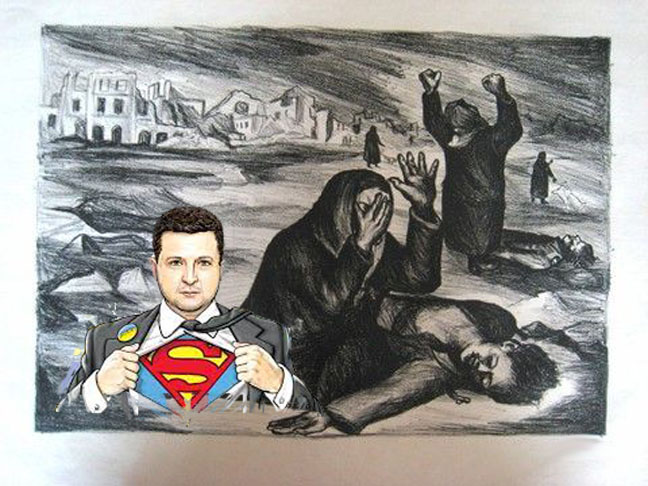
Citizens have been fed a non-stop diet of propaganda about Zelensky our savior from the terrors of the Vlad the terrible. Yet now cracks have appeared and people are asking whether Zelensky is in fact just as corrupt as every Ukrainian leader who came before him
Will war now stretch into 2026 or has Zelensky’s anti-corruption blunder changed the game?
Ian Proud, The Peacemonger, Jul 24, 2025
Below my article of yesterday in Responsible Statecraft. I predicted there would be no progress at the Istanbul peace talks yesterday and there was no progress. The meeting apparently lasted just 40 minutes or so, with little to show except for further agreement on a further round of POW exchanges.
Zelensky didn’t need to cut a deal in Istanbul because he figures that the US will impose harsh secondary sanctions on Russia’s trading partners on 2 September, amounting to a 100% tariff. I have written previously about why I believe that will backfire on the US.
In any case, Zelensky stalling on peace talks in Istanbul may soon be overtaken by events closer to home, in Kyiv and other Ukrainian cities.
It would be easy, I think, to underestimate just how big an impact this will have on public perceptions of Zelensky in western nations that have supported Ukraine to the hilt in the war, and to the impoverishment of their own people. Citizens have been fed a non-stop diet of propaganda about Zelensky our savior from the terrors of the Vlad the terrible. Yet now cracks have appeared and people are asking whether Zelensky is in fact just as corrupt as every Ukrainian leader who came before him. More on that in my next article.
But having started yesterday certain that war would drag into 2026, I am coming round to the idea that it could be over this year. The Ukrainian front line is cracking in various places. European leaders may find it harder than ever before to justify feeding the Zelensky gravy train. One thing I do know, it’s going to be a rocky ride in Kyiv for a while. And more people will die on the front line while the drama unfolds.
Time to end this nonsense now.
President Volodymyr Zelensky of Ukraine has said that a further round of talks between Ukraine and Russia could start as early as this week, and indicated that “everything had to be done to get a ceasefire.” Yet it is far from clear that a ceasefire will be possible. And it’s likely that the war will continue into 2026.
In June, Zelensky was pressing the European Union to go further in its sanctions against Russia, including calling for a $30 per barrel cap on Russian oil shipments. Washington effectively vetoed a lowering of the oil price cap at the recent G7 Summit in Canada. However, on July 18 the European Union agreed its 18th round of Russian sanctions since war began, overcoming a blocking move by Slovakia in the process.
This imposes a cap on Russian oil shipments at 15% below market value ($47.60 at the time the package was agreed) and places further restrictions on Russia’s energy sector. But, there is scepticism that this will dent Russian revenues without the U.S. mirroring the measures, as the prior $60 per barrel G7 cap made no noticeable difference. Zelensky hailed the package as “essential and timely.”
Despite the overtures towards peace talks, economic sanctions against Russia continue to be the preferred approach for both Zelensky and for the EU. And the clock is ticking for the focus to shift back to President Trump’s proposed secondary sanctions. Having given Russia 50 days to agree a peace deal with Ukraine or face tariffs of 100% against its major trading partners, Trump has effectively set a deadline of September 2.
…………………………………………………………………………………………………….this limited agenda will not be enough to satisfy the Kremlin that Ukraine is ready to negotiate and make progress towards an agreement on Russia’s so-called underlying concerns, the key concern being Ukraine’s NATO aspiration. Without the negotiations seriously getting into this and other such substantive issues as the disposition of forces and territory when the fighting stops, don’t expect a leader-level meeting any time soon.
…………………This dynamic of Europe and the U.S. threatening Russia with sanctions unless progress towards peace is made, while no expectations are placed on Ukraine to make concessions, has been locked in since March of 2015. It simply will not work.
Calling on Putin to meet in Istanbul is therefore, like it was in May, an act of political theater by Zelensky. He needs to keep his Western sponsors on side and for the flow of money and arms into Ukraine to continue. He also wants to polish his image as a putative global statesman.
Meanwhile, at the most recent Contact Group of Support for Ukraine meeting, then Ukrainian Prime Minister Denis Shmyhal requested an additional $6 billion to cover this year’s deficit in defense procurement. He also urged “partners to allocate funds for Ukraine in their budget proposals for 2026, right now.”
Anyone who believes that Zelensky is really committed to accelerating moves towards peace in Ukraine may, I fear, be overly optimistic. I am increasingly convinced that war will continue into next year. https://thepeacemonger.substack.com/p/predictably-there-was-no-progress?utm_source=post-email-title&publication_id=3221990&post_id=169121725&utm_campaign=email-post-title&isFreemail=true&r=1ise1&triedRedirect=true&utm_medium=email
US congresswoman labels Zelensky ‘dictator’
23 Jul, 2025 , https://www.rt.com/news/621871-us-congresswoman-zelensky-dictator/
Marjorie Taylor Greene has urged Washington to stop backing the Ukrainian leader, accusing him of refusing peace and clinging to power
US Representative Marjorie Taylor Greene has labeled Ukrainian leader Vladimir Zelensky “a dictator” and called for his removal, citing mass anti-corruption protests across Ukraine and accusing him of blocking peace efforts.
Her comments came after Zelensky signed a controversial bill into law that places the Specialized Anti-Corruption Prosecutor’s Office (SAPO) and the National Anti-Corruption Bureau (NABU) under the authority of the prosecutor general.
Critics argue that the legislation effectively strips the bodies of their independence. The law has sparked protests across Ukraine, with around 2,000 people rallying in Kiev and additional demonstrations reported in Lviv, Odessa, and Poltava.
“Good for the Ukrainian people! Throw him out of office!” Greene wrote Wednesday on X, sharing footage from the protests. “And America must STOP funding and sending weapons!!!”
Greene, a longtime critic of US aid to Kiev, made similar comments last week while introducing an amendment to block further assistance. “Zelensky is a dictator, who, by the way, stopped elections in his country because of this war,” she told the House.
“He’s jailed journalists, he’s canceled his election, controlled state media, and persecuted Christians. The American people should not be forced to continue to pay for another foreign war.”
Her statements come amid mounting speculation over Zelensky’s political future. Journalist Seymour Hersh has reported that US officials are considering replacing him, possibly with former top general Valery Zaluzhny.
Senator Tommy Tuberville also called Zelensky a “dictator” last month, accusing him of trying to drag NATO into the conflict with Russia. Tuberville claimed that Zelensky refuses to hold elections because “he knew if he had an election, he’d get voted out.”
Zelensky’s five-year presidential term expired in 2024, but he has refused to hold a new election, citing martial law, which has been extended every 90 days since 2022.
US President Donald Trump has also questioned Zelensky’s legitimacy, calling him “a dictator without elections” in February.
Russian officials have repeatedly brought up the issue of Zelensky’s legitimacy, arguing that any agreements signed by him or his administration could be legally challenged by future leaders of Ukraine.
Trump has backed himself into a corner on Ukraine
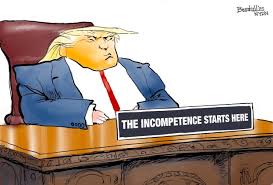
The chances of President Putin backing down without any concessions from Ukraine or from their European sponsors are so low as to be almost non-existent.
the additional military support that the US is now offering to Ukraine, paid for by European NATO allies, won’t be sufficient to tip the military balance in Ukraine’s favour…………….. the military facts on the ground are that Russia continues to gain ground…………………. fifty days favours Russia more than Ukraine, militarily.
He now has fifty days to reach agreement on Ukrainian neutrality
Ian Proud, Jul 17, 2025, https://thepeacemonger.substack.com/p/trump-has-backed-himself-into-a-corner?utm_source=post-email-title&publication_id=3221990&post_id=168542067&utm_campaign=email-post-title&isFreemail=true&r=1ise1&triedRedirect=true&utm_medium=email
One year after he undertook to end the Ukraine war in one day, and just past six months into his Presidency, Donald Trump has kicked the peace can down the road by fifty days. The ultimatum to President Putin to make peace or face sanctions has practically no chance to changing Russian aims in Ukraine. Backed into a corner, Trump may finally be forced to address Russia’s underlying concerns.
In televised remarks on 14 July during his meeting with NATO Secretary General, Mark Rutte, President Trump said, ‘if we don’t have a [peace] deal in fifty days, we’re going to be doing very severe tariffs, tariffs at about a hundred percent, you’d call them secondary tariffs.’
As he was in 2017, Trump also now finds himself hemmed in by beltway politics and unable to deliver a reset in US-Russia relations that he instinctively seems to want.
The Sanctioning Russia Act of 2025 would put in place so-called secondary sanctions on Russia by imposing stiff tariffs of up to 500% against countries such as China and India that inter alia import Russian energy. US lawmakers want to strong arm Trump into forcing President Putin to back down in Ukraine via the back door. But there is a yawn-inducing sense of déjà vu here.
The 2017 Countering American Adversaries Through Sanctions Act, signed into law on 2 August 2017, had no impact on Russian policy towards Ukraine, but led to a huge collapse in US-Russia relations. This was illustrated most clearly by the decision to cut US diplomatic staffing in Russia by 755 personnel, meaning among other things, that today it is practically impossible for a Russian citizen to apply for a US visa inside of Russia itself; the US Embassy simply doesn’t have enough staff.
To avoid a repeat of 2017, Trump now appears to be buying himself fifty days in DC to reach peace in Ukraine before he is forced by the Senate to impose secondary sanctions on Russia. The 14 July announcement was therefore about domestic US politics more than about foreign policy.
But what Trump has in fact done is to set a clear ultimatum on Russia to reach a peace deal with Ukraine, with no clear commitment to meeting Russia’s specific demands, the key demand being Ukraine’s neutrality and revocation of its NATO aspiration.
As an ultimatum, this won’t work, because the additional military support that the US is now offering to Ukraine, paid for by European NATO allies, won’t be sufficient to tip the military balance in Ukraine’s favour.
Additional Patriot missiles and interceptors may well reduce the overall impact of Russian drone and missile strikes on Ukrainian cities. But the military facts on the ground are that Russia continues to gain ground. At several points along the front line, around Pokrovsk, and Kupiansk, towards Konstiantynivka and Siversk, there have been significant recent Russian gains, by the slow attritional standards of this war.
As reported by the Guardian in the UK, even some Ukrainian politicians and bloggers have come out to say that fifty days will simply allow Russia to occupy further Ukrainian land. The most interesting point about that report is the revelation that a British mainstream media outlet is reporting oppositionist views from Ukraine, rather than the narrative from Zelensky’s propaganda machine.
So, fifty days favours Russia more than Ukraine, militarily.
And the so-called secondary tariffs are only secondary to Russia. To countries like China they would be actual tariffs, taxing Chinese goods and those from other affected countries at an additional 100% on top of exist rates.
Yet, when the US last hiked tariffs on China at a rate of 145%, Trump was quickly forced to back down as China simply increased their tariffs against US goods by a proportionate rate. If Trump believes that China would not do so again, then I’m afraid he is deluded.
Even in the (frankly) unlikely event that China did not respond to ‘secondary’ tariffs in kind, it is far from clear how President Xi Jinping would force President Putin to change his war aims in Ukraine, without himself appearing to lose face in China, which would be politically damaging to him.
Which brings us back to Trump’s ultimatum. One commentator remarked that he has managed to ‘back himself into a corner in the Oval Office’, which is not an easy thing to do. The chances of President Putin backing down without any concessions from Ukraine or from their European sponsors are so low as to be almost non-existent.
Donald Trump, who appears largely to have sub-contracted resolving the Ukraine war to Marco Rubio and Keith Kellogg (where has Steve Witkoff disappeared to?), may now be forced to invest more personal time to bringing the war to an end.
Yes, he has engaged directly with President Putin in talks which is to be welcomed, in a diplomacy-starved war. But his real problem is his inability to encourage Ukraine and its European sponsors to address Russia’s underlying concerns about the war.
The most significant concern is, and has always been, about the need for Ukraine to adopt neutrality and revoke its aspiration to NATO membership. There has been absolutely no sign of compromise on this key underlying concern in Kyiv, Brussels, Berlin or London.
Offering Ukraine more weapons, however well-intended, will simply encourage Zelensky, Mark Rutte, Ursula von der Leyen, Friedrich Merz and Keir Starmer, in their view that Ukraine’s NATO aspirations remain alive and well. And, unfortunately, Russia will not silence its guns until, at the very least, a deal on Ukrainian neutrality is reached.
That leaves Trump with only one place to go. He must now invest personal time into urging Ukraine and Europe to accept neutrality for Ukraine as part of a ceasefire deal and longer-term peace process. If he doesn’t, the politics of Washington DC may force him to impose tariffs on China in a way which will, more than anyone else, hurt American people, and hurt his reputation.
Ukrainian bots want the BBC to endorse war crimes
Social media trolling takes a new and sinister turn
Ian Proud, Jul 23, 2025, https://thepeacemonger.substack.com/p/ukrainian-bots-want-the-bbc-to-endorse?utm_source=post-email-title&publication_id=3221990&post_id=168976248&utm_campaign=email-post-title&isFreemail=true&r=1ise1&triedRedirect=true&utm_medium=email
On 18 July I made a post on social media platform X in response to a BBC report entitled ‘Kill Russians, win points: is Ukraine’s new drone scheme gamifying war?’ It produced a spectacularly dark backlash from the Ukrainian bot community.
The BBC report explored a Ukrainian military scheme in which its soldiers could claim points for kills by First Person View (FPV) drones and use those points to buy the most preferred military technology in an ‘Amazon for war’.
While Paul Adams, the BBC diplomatic correspondent, touches briefly on the moral challenges that this scheme presents, he was clearly impressed.
‘The e-points scheme is typical of the way Ukraine has fought this war: creative, out-of-the-box thinking designed to make the most of the country’s innovative skills and minimise the effect of its numerical disadvantage.’
‘Points for kills. Amazon for war. To some ears, it might all sound brutal, even callous. But this is war and Ukraine is determined to hold on. By fighting as effectively, and efficiently as it can.’
Every day, military personnel on both sides of the conflict are killed by drones and other military technologies. That is why I have consistently called for the war in Ukraine to be ended through diplomatic means and is why I continue to do so.
The problem I had with the article was its heading – about killing Russian soldiers using drones – was accompanied by a photograph of a soldier (one might presume, Russian) with his back turned to the First Person View on screen with his hands in the air, suggesting surrender. I found this juxtaposition, on UK state-owned media, deeply troubling.
One might easily gain the impression by the headline and the photograph combined that the soldier’s fate was death. And if that was so, then that would constitute a war crime.
Under the Statute of the International Criminal Court, “killing or wounding a combatant who, having laid down his arms or having no longer means of defence, has surrendered at discretion” is a war crime in international armed conflicts
One cannot know the fate of the soldier and whether he is killed or taken prisoner. And the article goes on to point out that Ukrainian soldiers can claim higher points for encouraging a Russian soldier to surrender, though does not point out how this would be possible with an armed drone.
It is certainly the habit of the western media to churn out clickbait headlines in a bid to maintain waning public appetite for a war that Ukraine is losing and which Europe is funding at enormous expense.
However, it sets a dangerous precedent if the UK state-owned broadcaster is producing articles that infer war crimes are taking place and implicitly endorse the means of that happening.
I therefore included in my post a poll which asked people to vote on:
Do you want the BBC through its reporting implicitly to endorse war crimes and show images purporting to or giving the impression of the circumstances leading up to a war crime taking place?
I don’t have a huge X following, but my post garnered 20,000 votes over three days with over 90% of those who voted responding ‘no’, specifically that appearing to endorse war crimes in media reporting was wrong.
As I didn’t mention a specific country, some people argued that the allegation might also be levelled at BBC reporting of IDF atrocities in Gaza.
However, on 21 July my post was seized on by very-obviously-Ukrainian bots flinging all sorts of insults in my direction, such that I spent several hours blocking and reporting offensive content on my feed.
In a very short space of time, my account was swarmed by a blizzard of insults and false accusations, including of being an asset of the KGB (sic!).. being a Putin apologist, sucking Russian dicks and being a paedophile who uses teenage Russian prostitutes.
I was added to hate ‘Lists’ that x members keep, such as ‘nazi whore cowards’ and ‘vatniks’ (Russian propagandists).
All very annoying and intended to discredit me en-masse. But as Glenn Diesen joked when we spent some time together in Tblisi, in early June, ‘if you wanted to be popular, you should have sold ice creams’.
When one expresses a personal view on such an emotive topic as this pointless war in Ukraine, you are likely to get attacked from one direction or the other, or even both. However, some made more disturbing comments that can only be interpreted as threats of causing me physical harm.
Many made generalised comments about how any Russian solider in Ukraine should deserve such a fate (to die while surrendering) and so on. However, this was not the most sinister aspect of the response to my post.
In addition to voting that the BBC should not implicitly endorse war crimes, the other option was to vote for: ‘Please endorse war crimes’.
353 people voted in the poll before I closed my post to public comments. 213 people voted in favour of the BBC endorsing war crimes through its reporting of Ukraine. That’s right, just over 60% of, one assumes, mostly Ukrainian or Ukraine-supporting voters, endorses the BBC endorsing war crimes, in this context committed by Ukraine.
Herein the central truth of this and all wars; that they generate intense hatred of the other. That hatred fires the bloodlust that drives war crimes in any theatre of conflict. No war is free of war crimes. British, French, American, Russian and, yes, Ukrainian, service personnel have been documented as having committed war crimes, together with those of many other countries.
War reduces humanity to the darkest depths of depravity in which the most unconscionable acts are justified on the basis of defeating the hated other. Forgive me for believing that the BBC should not be glorifying that, even if implicitly, or encouraging others to do so.
I would far sooner they were pushing for a negotiated settlement to this terrible war.
Grave Nation: Ukrainian Cemetery Mega-Project Reveals Dimming Military Hopes

a shroud of occlusion wears heavy over the outcome of the war is because the West has done their utmost in hiding Ukrainian losses.
“The right question is not whether Ukraine has lost the war – that seems all too obvious to me – but how far it will lose it.“
the Ukrainian deputies who still have some brain left understand that with the current state of affairs in Ukraine, the country will soon cease to exist. All the Ukrainian “partners” who were verbally ready to fight for Zelensky’s regime have now completely “frozen” and don’t even want to contribute money.
Simplicius, Jul 22, 2025, https://simplicius76.substack.com/p/grave-nation-ukrainian-cemetery-mega?utm_source=post-email-title&publication_id=1351274&post_id=168791044&utm_campaign=email-post-title&isFreemail=true&r=ln98x&triedRedirect=true&utm_medium=email
A new Le Monde article sends spider cracks through the facade of Ukrainian losses:
Right off the bat, they reveal that cemeteries throughout Ukraine are full, requiring a national project of building a large-scale network of new military burial sites:
The squares reserved for the soldiers are full. Everywhere, teams of architects are working on memorials that tell us as much about the scale of the slaughter as they do about the ongoing reflection on the idea of nationhood.
They visit one of the first under construction, which already has a main square of plots for 10,000, eventually to be expanded to 160,000 graves:
In the village, only a brand-new brown sign, the color reserved for national sites, currently marks the road leading the trucks to the construction site. It reads: “National Military Memorial Cemetery”. A first square of 10,000 graves, already partially dotted with wide, light-colored granite paths lined with benches and lime trees, will welcome the first “heroes” this summer. Eventually, however, “130,000 or even 160,000” deceased will be laid to rest on this future mortuary site, explains architect Serhi Derbin, wearing khaki linen pants and a straw panama, in the bright Saturday sunshine of July.
Rightly, the Le Monde staff turn to the issue of “official” Ukrainian casualty statistics. In a growing Western trend, they admit that the number of dead is likely “much higher” than Zelensky gives credit for. Of course, pro-UA zealots will ignore the fact that there is no such project in Russia, no inordinately exceptional outgrowth of military cemeteries anywhere. They’ll make excuses, pointing to the cliche of “Russia’s size” as somehow ‘concealing’ such markers of losses, ignoring that Ukraine itself is the largest country in Europe and remains oddly unable to ‘conceal losses’ in the same way.
In the same circles, there are increased talks of Ukrainian collapse by end of year. Le Figaro’s new article making the rounds offers such a prediction. The writers spoke to French military officers who believe the situation is turning dire:
A French military source:
Moscow’s “thousand cuts” strategy is intensifying. The front is not set in stone. Offensives are localized in a multitude of small battles fought over a few kilometers. The cuts are getting deeper, even though the Ukrainian army is already weakened. It is stretched over a front of more than 1,000 km. Lacking sufficiently frequent replacements and human resources, the units are becoming exhausted.
“The Russians are multiplying offensive sectors to disperse enemy reserves,” explains a French military source. Russia has deployed nearly 700,000 soldiers in Ukraine, more than the Ukrainian army. Patiently, it continues to nibble away at territory, at the cost of colossal human losses: up to a hundred dead a day; some 40,000 casualties (dead and wounded) a month. The Russian army has adapted its tactics, preferring to launch assaults with small infantry units or units mounted on motorcycles, in order to advance faster and more lightly.
They slip in the usual sop about the “costs” Russia is incurring, but then critically add:
But the army, the Ukrainian, it also lost some of the material she had received from Western for the past three years. Time plays against it with the risk of a break in a part of the front. “Forces of Ukraine are in [dire straits]… Can they last six months? A year? In reality, the war is already lost“, continued in the military source. In this war of attrition, the time changes everything.
And in another even more erudite offering, Figaro interviews French historian Stéphane Audoin-Rouzeau, who is particularly a leading expert on the First World War.
Utilizing his expertise on the Great War, he makes some fascinating parallels to the current Ukrainian conflict that are worth a deeper look.
First, he notes that in his opinion the Ukrainian war is only the third war of its particular type in recent history—the type being ‘siege warfare, but in the open country’:
You note another similarity between the First World War and the Ukraine, as both were wars of position…
There are few historical examples of this very recent form of warfare, as it requires armaments that only became available at the end of the 19th century. Structurally, it is siege warfare, but fought in open country over hundreds of kilometers. There have only been three conflicts of this type: the Great War (from late 1914 to spring 1918, not beyond); the Iran-Iraq war (from 1980 to 1988); the Ukraine war (from April 2022, not before).
He goes on to draw further parallels:
What are the invariants of such a war?
The main point is the superiority of the defensive over the offensive. Had this not been the case, Ukraine would have been beaten long ago. Already during the First World War, it was necessary to cross a “no man’s land” saturated with barbed wire, one of the most effective weapons of the early 20th century. Then there were the minefields we saw in Iran-Iraq and now in Ukraine. They are an extraordinarily compact barrier. The Ukrainians came up against it in the summer of 2023 during their failed counter-offensive, and the Russians since 2024. As a result, it’s impossible to break through dozens of kilometers wide and break the enemy’s front line.
He notes that due to these peculiarities, there is a kind of obligatory “regression” in each conflict, where previous means are no longer workable:
There is a kind of regression in all three conflicts. In Ukraine, helicopters and airplanes fly very little above and beyond the front line. Nor are there any major armored offensives. We’ve never seen anything like the Battle of Kursk in 1943. As a result, the battle is heavily infantry-based.
And at the same time, firepower…
Yes, that’s another invariant of this type of warfare. Initially, this firepower was linked to artillery, with the cannon dominating the battlefield during the First World War. This overwhelming dominance of the cannon can be seen again in Ukraine, until 2024. Unfortunately, Russia has always had very good artillery and, unlike the Ukrainians, has had the means to supply it, where the latter ran out of ammunition well into 2024.
But the point in setting the stage above, is that by analyzing these parallels, this preeminent historian has reached a final decisive conclusion: that Ukraine has already lost the war:
It was by considering these invariants that you came to a radical conclusion, set out at a Senate hearing in April: in your view, Ukraine has already lost the war…
Indeed, as we speak, Ukraine unfortunately seems to have lost the war, probably as early as the summer of 2023, when it became clear that its long-awaited counter-offensive had failed. One could imagine a spectacular turnaround, but it’s not clear how. Of course, when you say this, people are shocked because it’s unbearable to think that Ukraine has lost the war. It’s unbearable for me too.
He adds to the list of peculiarities of the war the fact that even Ukraine’s now-certain loss is not overtly visible:
But here’s the thing: there’s no point in remaining incantatory, we have to get out of a new denial, that of defeat, after that of the possibility of war itself. For I would add another characteristic of the war of position: defeat is not immediately discernible when it looms. It takes a long time to appear. It’s not like Stalingrad, where the vanquished leave the battlefield and the victor occupies it. It’s not like the blitzkrieg of May-June 1940. In a war of position, it’s two bodies in battle, slowly wearing each other down. Only in the end does it become clear that one has worn out faster than the other.
He hits the nail on the head, but likely in a way even he doesn’t fully understand—or at least not in a way he’s ready to admit. You see, the reason such a shroud of occlusion wears heavy over the outcome of the war is because the West has done their utmost in hiding Ukrainian losses. His final pithy admonition that only in the end does it become clear who lost the war of attrition inadvertently bears testament to this: only those of us who truly care about facts and uncovering the truth—not dogmatic reasoning and propaganda—are able to demystify the more-than-obvious signals that Ukraine is taking ungodly and unsustainable losses comparative to Russia.
He goes on to demonstrate his cause with an example:
Let’s do a little thought experiment. Let’s imagine that in early October 1918, a group of military experts, journalists and historians were gathered in a neutral country to ask their opinion on the situation. And now suppose someone had then suggested that Germany had already lost the war. Well, everyone would have cried out! At that time, the Reich was still occupying immense territories in the east at the expense of Russia, since the Treaty of Brest-Litovsk. It occupied the whole of Belgium and large parts of France. It’s true that the German army has been retreating since the summer, but nowhere has the front given way. The Germans are inflicting heavy losses on the Allies, since it is the Allies who are on the offensive and therefore taking the greatest risks. So where is the German defeat?
In reality, German defeat has been certain since July-August 1918. It has happened, but it is not yet apparent. Since the summer, the German General Staff has been well aware of this, and has called for negotiations to be launched. Except that the political powers don’t understand it, nor does German public opinion, and never will. This failure to understand the defeat of 1918 was one of the reasons for the rise of Nazism.
The interviewer lightly pushes back, stating that the Ukrainians are not yet visibly collapsing despite Russia’s slow-moving gains:
Here again, let’s think back to the First World War. When the Allies launched their counter-offensive in July 1918, it was a general one, but apart from the Americans, the soldiers were no longer capable of attacking. They were so used to throwing themselves on the ground at the first danger that everyone was extremely cautious. But we could have imagined that part of the front would be breached, in which case… Germany had no more reserves to plug the holes. That’s why I’m worried about the risk of a Russian offensive in Ukraine this summer: given the disproportion of forces, could it break through the front? We would then be entering a different configuration, as any break in the front would risk producing a powerful moral effect on the Ukrainian armed forces, on political power and on public opinion.
He concludes by stating that the right question is no longer whether Ukraine has lost—which is rhetorical at this point—but how far Ukraine will lose:
The right question is not whether Ukraine has lost the war – that seems all too obvious to me – but how far it will lose it. On the basis of the current balance of power, or on that of an even more unfavorable balance of power? This will determine whether or not the Ukrainian defeat represents a strategic victory for Russia.
On that note, Russia again launched one of the largest attacks of the war last night—at least according to frenetic Ukrainian commentators who, admittedly, could be playing things up for dramatic effect to curry sympathy:
There has been a surge of such attacks the last few weeks, particularly ones targeting Ukrainian recruitment centers operated by the notorious TCK (Territorial Recruitment Center). Farsighted Ukrainian officials have ‘brilliantly’ concluded this is a Russian effort to cripple Ukraine’s ability to round up meat for Zelensky’s conveyor belt of horror.
Likewise, Russian strikes have been completely erasing Ukrainian weapons industries. Many people watch the endless parade of explosions in a detached manner—at this point it has become passé to the point that people assume these strikes do little, or are just carrying out some vague ‘background work’. In reality, they have been neutering Ukrainian industries, halting many of the farfetched Ukrainian weapons ambitions which were at one point widely talked about.
For instance, a recent hit was said to have destroyed the Grom-2 production line, a big Ukrainian ballistic missile that was meant to be their answer to Russia’s Iskander. There’s a reason you don’t see much of the weaponry constantly talked about and billed as the next “wunderwaffen”: it’s because these ongoing, systematic Russian strikes are wiping out their industries, leaving Ukraine with no ability to produce anything other than small quadcopter drones in tiny boutique workshops which can be hidden anywhere. The larger facilities which were meant to produce more prestige-level systems, from mobile artillery, to various analogues of Russian air-to-ground and ballistic missiles, to artillery shell production lines, etc., have all been extirpated by these relentless systematic strikes.
More and more, top Ukrainian figures are panicking over this and concluding that if it continues on this way, Ukraine will have nothing left. Listen to the Ukrainian officer below, who states that “at this rate, Ukraine will be returned to the stone age”:
🇺🇦The chair under Zelensky is starting to shake more and more. After all, allowing such statements on the air of pro-Kyiv media was previously unimaginable👍
➖Apparently, the recent report about the production of Geran-2 drones and their quantity, along with massive attacks on Ukrainian military infrastructure, really forced the top officials of Zelensky’s office to activate the “brown” alert.
➖Because the Ukrainian deputies who still have some brain left understand that with the current state of affairs in Ukraine, the country will soon cease to exist. All the Ukrainian “partners” who were verbally ready to fight for Zelensky’s regime have now completely “frozen” and don’t even want to contribute money. Support is dwindling, and stealing is becoming difficult. The people fully realize that Zelensky will shout about VICTORY from his bunker or Europe until he is hoarse, while Ukrainians rejoice at the Geran-2 strikes on the TCC.
He’s referring in particular to the new videos showcasing Russia’s Geran (Shahed) drone production at the Alabuga factory in Tatarstan where hundreds of the drones are produced each day around the clock:
The full episode where the above excerpt is from, which deals with many other drone types being used in the Russian Army, can be viewed here.
One of the reasons, by the way, that the French historian, Stéphane Audoin-Rouzeau, saw Russia winning the war despite parallels to ‘stalemated’ conflicts like the Iran-Iraq war, is because in previous examples he believes the industrial capacities and general capabilities of the combatants were likewise roughly static. But in the case of the Russo-Ukrainian war, he admits that Russian capabilities are growing each year, far out-pacing Ukrainian ones. This goes toward things like the previously-talked-about manpower gains of 100k per year—while Ukraine’s manpower shrinks—as well as the industrial growth of the arms industry.
That being said, there’s one last important point to be made. Many point to Russia’s “growing economic problems” as a counter-argument for why Russia could begin “losing” in the future, despite its seeming present dominance. I even saw one Western publication spin Putin’s announcement that Russia would be reducing its military budget next year as an “act of desperation” which means Russian military capability is finally “weakening”.
On the contrary, the signals here are the complete opposite: Putin’s plan to begin slowly reining in Russia’s military spending is the acknowledgement that Russia has finally reached a total equilibrium in the war, where current production levels are stable and sustainable indefinitely in relation to the losses. That means further inordinate military expansion is unnecessary, and Russia sees a successful path in defeating Ukraine at current levels.
This is obviously in conjunction with the fact that Russia has now attritioned the AFU to such an extent that it no longer requires the same disparity levels in military spending—as Ukrainian capabilities shrink, Russia likewise settles its war-making into a manageable level by taking things from overdrive to simply ‘autopilot’—if the analogy makes sense. Once again, dogmatic Western analysts incapable of impartial reasoning fail to pick up on this obvious cue, which totally spoils their analyses.
To leave off, here’s a typically comical new “threat” issued by beltway bugger Lindsey Graham against Putin. He boasts that Trump will “put a whoopin’ on your ass”, but then veers to say Trump will “punish” not Russia, but countries buying Russian oil:
This again proves the US has no cards against Russia, and must desperately punch Russia’s friends on the arm as a substitute threat. The problem is, this hurts the US and its relations with key foreign powers more than it does anything to Russia.
More and more Ukrainian commentators and political figures are cottoning on to the fact that “sanctions” were always nothing more than a desperate and hollow performative act:
The West, with its illusory economies, fraudulent GDPs based on hyper-financialized and leveraged debt, and miserably deteriorated industrial capacities has worn out its ‘sanctions’ cudgel—at least for anything more than performative ‘punishments’.
THE END FOR ZELENSKY?
Washington wants the Ukrainian president to leave office—will it happen?
Seymour Hersh, Jul 19, 2025
In fall of 2023, Ukrainian General Valerii Zaluzhnyi, the commander in chief of the country’s armed forces, gave an interview to the Economist and declared the war with Russia had become a “stalemate.” It took three months for President Volodymyr Zelensky to fire him. The general, who is the most popular public figure in Ukraine, was named ambassador to London a month later and has served there with distinction, if quietly.
Zaluzhnyi is now seen as the most credible successor to Zelensky. I have been told by knowledgeable officials in Washington that that job could be his within a few months. Zelensky is on a short list for exile, if President Donald Trump decides to make the call. If Zelensky refuses to leave his office, as is most likely, an involved US official told me: “He’s going to go by force. The ball is in his court.” There are many in Washington and in Ukraine who believe that the escalating air war with Russia must end soon, while there’s still a chance to make a settlement with its president, Vladimir Putin………………………………………………………… (Subscribers only) https://seymourhersh.substack.com/p/the-end-for-zelensky?utm_source=post-email-title&publication_id=1377040&post_id=168643905&utm_campaign=email-post-title&isFreemail=true&r=ln98x&triedRedirect=true&utm_medium=email
∙
Trump Asked Zelensky If He Could Strike Moscow If the US Provided Longer-Range Weapons.
Trump later denied that he was considering sending long-range weapons to Ukraine and said that Ukraine shouldn’t target Moscow
by Dave DeCamp | Jul 15, 2025, https://news.antiwar.com/2025/07/15/trump-asked-zelensky-if-he-could-strike-moscow-if-the-us-provided-longer-range-weapons/
President Trump has encouraged Ukraine to step up strikes deep inside Russia and even asked Ukrainian President Volodymyr Zelensky if his forces were capable of striking Moscow if the US provided longer-range weapons, the Financial Times reported on Tuesday.
Sources told the FT that the conversation occurred during a July 4 phone call. “Volodymyr, can you hit Moscow? . . . Can you hit St Petersburg too?” Trump asked. Zelensky replied that his forces could “absolutely” strike the Russian cities if the US provided the necessary weapons.
The report said that Trump signaled backing for the idea of providing long-range weapons in order to “make them [Russians] feel the pain” to pressure Moscow at the negotiating table. In comments to reporters, Trump later denied that he was considering providing Ukraine with long-range weapons and said that Zelensky “shouldn’t target Moscow.”
The White House confirmed that the conversation about striking Moscow took place, but insisted Trump wasn’t encouraging Ukrainian attacks inside Russia. A White House official told the BBC that Trump was “merely asking a question, not encouraging further killing. He’s working tirelessly to stop the killing and end this war.”
The FT report said that US officials have also provided Zelensky with a list of potential long-range weapons the US could supply. The Ukrainians have been asking for Tomahawk missiles, which have a range of over 1,000 miles, making them capable of hitting Moscow from Ukrainian territory.
Last year, the Biden administration gave Ukraine the green light to use ATACMS missiles in strikes on Russian territory. The ATACMS have a range of about 190 miles, which is not far enough to hit Moscow. Russia has made clear that attacks on its territory risk nuclear escalation since it lowered the threshold for its use of nuclear weapons in response to the US backing the ATACMS attacks.
The revelation about the Trump-Zelensky call came after the US president announced a new plan to provide Ukraine with “billions of dollars” worth of weapons by selling arms to NATO countries that will then transfer them to the war-torn nation. He also threatened major tariffs on Russia and its trading partners if a peace deal isn’t reached in 50 days, an ultimatum Moscow has rejected.
Trump Announces Weapons Plan for Ukraine, Gives Russia 50-Day Deadline for Tariffs

Under the plan, the US will sell more weapons to NATO countries that will be transferred to Ukraine
by Dave DeCamp | Jul 14, 2025, https://news.antiwar.com/2025/07/14/trump-announces-weapons-plan-for-ukraine-gives-russia-50-day-deadline-for-tariffs/
President Trump on Monday met with NATO Secretary-General Mark Rutte at the White House and announced a plan to provide Ukraine with “billions of dollars” worth of US military equipment by selling US weapons to NATO countries that will be then transferred to the war-torn nation. The president also said that if a peace deal isn’t reached within 50 days, he will impose tariffs on Russia.
A source told Axios that the US is expected to sell $10 billion worth of military equipment to NATO countries in the first wave. Explaining the weapons plan to reporters, Rutte said the idea was to ensure that the US, which he described as the “police agent” of the world, is able to maintain its military stockpiles while also providing a “massive” amount of weapons to Ukraine.
“The US needs to make sure it can keep its hands on what the US needs to keep the whole world safe, because, in the end, you are the police agent of the whole world … but given that, the US has decided to indeed to massively supply Ukraine with what is necessary through NATO. Europeans [will be] 100% paying for that,” Rutte said.
Trump and Rutte said that they’d gotten commitments from European countries to purchase US weapons for Ukraine. “I will say that I spoke with Germany, spoke with most of the larger countries, and they are really enthusiastic about this, and they’re willing to go really far,” Trump said.
Trump and Rutte didn’t elaborate on the type of arms that would be sent, except to mention that more US-made Patriot air defense systems would be supplied to Ukraine. Sources told Axios that the weapons will also include long-range weapons that can strike deep inside Russia.
Regarding tariffs, Trump threatened to impose 100% tariffs on Russia and “secondary tariffs” that would target Moscow’s trading partners, which include China and India. “We’re going to be doing very severe tariffs if we don’t have a deal in 50 days,” he said.
While announcing measures to continue the proxy war, Trump is still trying to distance himself from the conflict, calling it a “Biden war” and a “Democrat war.” The president insisted that he still wants to bring the conflict to an end and that he hopes the new military aid and tariff threat will do that. “This is not Trump’s war. We’re here to get it finished and stopped,” he said.
Trump also expressed frustration with Putin, saying that he has nice conversations with the leader, but that missiles keep targeting Ukrainian cities. “My conversations with him are very pleasant, and then the missiles go off at night,” he said.
Russia has made clear that it won’t back down on its core demands for a peace deal: Ukrainian neutrality and the recognition of the four oblasts Moscow annexed in 2022 as Russian territory, which would require a Ukrainian withdrawal from the territory it still controls in those areas.
Ukrainian President Volodymyr Zelensky has refused to give up the territory and is unlikely to make concessions as long as the US and NATO continue to support his war effort. In the meantime, Russia continues to make gains on the battlefield and launch heavy missile and drone attacks across Ukraine.
IAEA Director General Statement on Situation in Ukraine
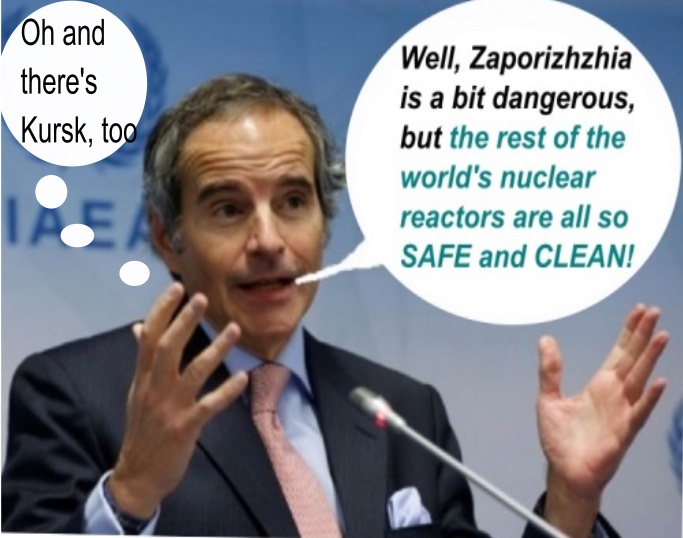
The IAEA team at Ukraine’s Zaporizhzhya Nuclear Power Plant (ZNPP) reported hearing hundreds of rounds of small arms fire last night, the latest sign of military activity potentially threatening nuclear safety and security, Director General Rafael Mariano Grossi said today.
The large number of shots – repeatedly fired for about an hour from 10pm local time – was unusual, the team members reported.
Conducting a site walkdown this morning, they saw numerous small calibre casings lying scattered on the ground near reactor units 5 and 6. There was no sign of broken windows or other physical damage.
The IAEA team at the ZNPP is seeking further information about the incident.
“Such military activity at or near a major nuclear power plant is clearly unacceptable,” Director General Grossi said.
Saturday evening’s shooting came after a series of purported attacks and other incidents involving drones near the ZNPP and other nuclear facilities in Ukraine in recent months, including a report of a strike a few days ago in the city of Enerhodar, where most ZNPP staff live.
Director General Grossi reiterated his deep concern about the apparent increased use of drones near nuclear power plants since early this year, saying such weaponry posed a clear risk to nuclear safety and security.
Any drone strike on a nuclear facility would violate the Seven Indispensable Pillars for nuclear safety and security during an armed conflict as well as the Five Principles to help ensure nuclear safety and security at the ZNPP, outlined by the Director General in March 2022 and May 2023, respectively.
“We are seeing a clear escalation in drone strikes during this war, also affecting Ukraine’s nuclear power plants and potentially putting them in further danger. As I have repeatedly stated, any military attack on a nuclear site – with or without drones – jeopardizes nuclear safety and must stop immediately,” Director General Grossi said.
The phases of Ukraine – continued.
By Gordon Hahn – March 1 , 2025 – Source
Russian and Eurasian Politics, Translated by Wayan, proofread by Hervé, for Saker Francophone.
– – ……………………..……………………………………………………..The collapse of the Ukrainian army
The collapse of the front is expected to occur simultaneously or shortly after the collapse of the Ukrainian army. The state of the Ukrainian army is indeed dire. It suffers not only from a growing shortage of weapons, but also from a shortage of personnel, discipline, morale, and capabilities, all crippled by corruption. The 2024 military mobilization failed. Desertion and refusal to obey orders are endemic, and corruption not only hinders recruitment but also promotes high levels of absence without leave, reducing the number of Ukrainian soldiers actually fighting at the front.
The military mobilizations of the past and present year are having a debilitating effect on the economy, and society is failing to replace current losses at the front with completely inexperienced recruits with low or zero morale. There are no more volunteers, and by spring, some Ukrainian officials report, the situation will be irremediable. Moreover, almost all of the new recruits are elderly or demotivated, reports The Economist .
Frontline commanders, such as the commander of the drone battalion of Ukraine’s 30th Mechanized Brigade, confirm that the 2024 mobilization was an absolute failure and that there are now too few men to replace combat losses. Mobilization is carried out through harsh, often violent, measures. Verkhovna Rada deputy Alexander Bakumov of Zelenskiy’s
Servants of the People party said in a session that the mobilization in the Kharkiv region is forced, resembling a filtration of the Ukrainian population (referring to the practice of detaining, beating, and torturing citizens of the occupied areas in an ostensible search for fighters and collaborators), with exits from the city blocked by “recruitment “ gangs and lawyers for the mobilized men beaten. Small businesses are facing mass closures due to the lack of workers willing to leave for fear of being drafted into the army. Others have reported data falsification at recruiting offices to justify recruitment . There are numerous reports and videos of the violence used by recruiting gangs. Ultimately, what can be said of an army whose military system must force citizens to fight, even by forcibly seizing priests leading a religious procession and sending them to the front?
Moreover, many men are fleeing the country in greater numbers to avoid Ukraine’s desperate and draconian forced mobilization measures, sometimes risking their lives and sociopolitical stability. More recently, Western governments have pressured Kyiv to extend mobilization to the 18-25 age cohort, which would lead to a near-catastrophic demographic collapse of a population already reduced by some 30 percent due to war deaths and emigration. Even the recruitment centers themselves are trying to avoid the draft. When Rada deputies proposed filling the personnel shortage by creating a brigade from among the mobilization gangs, the chairman of the mobilization centers claimed that there were not enough of them to form a full brigade. The low number of volunteers and the failure of mobilization are creating distortions in the force structure. ” Zombie brigades ” or ” paper brigades ” are partially manned units simply called brigades to impress Western donors and facilitate the corruption of commanders who garnish salaries allocated to non-existent personnel.
The large number of desertions from the Ukrainian army, a phenomenon completely ignored by the Western media for three years, was finally revealed in November to have exceeded 100,000 since the start of the war. This would perhaps represent more than 10% of the Ukrainian army at its current size, given that Zelenskiy recently claimed that it has 800,000 recruits. Moreover, more than half of these desertions took place in the first ten months of 2024 alone. This is already large-scale desertion and includes mass desertions .
Military blogger Yurii Butusov, Servant of the People MP Maryana Bezuglaya, and others reported late last year the desertion of an entire 1,000-man brigade trained in France upon their arrival at the front. This may have been a case of the commander’s failed attempt to form so-called ” zombie brigades .” Indeed, military personnel have questioned the recent practice of creating new brigades when existing ones are woefully underequipped, apparently suspecting the corruption scheme behind the practice. One Ukrainian commander told a Polish newspaper that sometimes in combat there are more deserters than killed and wounded.
Desertions are one of the symptoms of lax discipline and, above all, low morale, increasingly plaguing the Ukrainian army. Commanders report that 90 percent of their frontline troops are newly mobilized men forcibly. Sources in the Ukrainian General Staff report the same . Thus, desertions are accompanied by unauthorized retreats, which are becoming increasingly frequent. For example, hundreds of people fled the battle at one point last fall in Vugledar (Ugledar) before the town fell. Vugledar was once a stronghold that, in 2023, Russian forces stormed dozens of times without success.
Ukrainian soldiers refuse to carry out operational orders because they amount to suicide operations and are beginning to surrender in entire units, in one case almost an entire battalion (for example, the 92nd Combat Squadron). Indeed, refusals to follow orders or undertake counteroffensive measures are increasing. In one recent case, the Azov Brigade’s chief of staff, Bogdan Koretich, accused a Ukrainian general of such poor command that he was described as responsible for more Ukrainian war deaths than Russians, forcing his dismissal. At lower levels, commanders are being dismissed in large numbers. At the same time, field commanders publicly criticize senior commanders and staff for their strategic incompetence and negligence.
One reason for the disintegration of discipline and morale is that there is no relief for the troops, as there is no long-term demobilization or time away from the front other than that resulting from brief episodic troop rotations; a consequence of insufficient troop numbers. Soldiers and their families have been lobbying for over a year for a demobilization law that would allow long rotations for troops to return home, but no such law is in sight. This would likely lead to a deadly shortage of troops and the complete rout of the Ukrainian army on the battlefield.
However, perhaps the main problem in the Ukrainian military, as in the rest of the Ukrainian state and society, is corruption. It is endemic and pervasive in the production and procurement of weapons, mobilization (evasion of conscription through bribes), the purchase of leave and absences from the front, and the staffing of brigades. One Ukrainian defense minister told a journalist that the problem was ” catastrophic .” Anna Skorokhod, an independent Rada MP, claims that only 15% (!) of rank-and-file soldiers serve at the front, with a large number either nonexistent (dead souls) in service or having bribed their way into hiding somewhere in the rear.
This is how Ukrainian officers describe the widespread corruption in the army. According to a Ukrainian army captain:
” Due to false information about the presence of personnel, the commanders of the branches receive false information. And they operate with ‘dead souls’, developing combat plans. For example, at a point where the Russians have broken through a section of the front, the commander orders a certain brigade to send a battalion with an attached group as reinforcements. In fact, the battalion has long since left, its number is now only one company, some have bought their way to the rear or deserted. As a result, there is nothing to close the breakthrough, because of the threat, the flanks of neighboring brigades begin to collapse. “
According to a source in the General Staff of the Ukrainian Armed Forces: ”
If we take the number of Russian soldiers we have at the front on paper, then if the Russians have a numerical advantage, it is less than double. But that’s on paper. In practice, the situation is different. Let’s imagine a section separated from the front. According to the newspapers, there are 100 people on our side and 150 on the Russian side. In other words, the enemy’s advantage is insignificant. With such numbers, it is quite possible to maintain the defense. But in a real battle, the situation is radically different. At most 40 of our 100 people participate. And often even fewer. The rest are deserters, who simply refuse to fight, etc. And the Russians have 140 to 145 people out of 150 fighting. In total, the advantage has already more than tripled. Why does this situation exist?” Our army was initially based on a core of volunteers, ATO veterans, and highly motivated soldiers who went into battle without coercion and seized the initiative. The Russians had a major motivation problem from the very beginning. But they worked on this issue and gradually created their own system of military-repressive coercion. And it works by sending soldiers into battle and stopping cases of insubordination and desertion. We haven’t created anything like that. And I doubt we’re even capable of creating such a system. Our state system is too weak and corrupt for that. And now that the volunteers are dead, either from wounds or simply exhausted, and the army is replenished with fake conscripts who have close to zero motivation, there’s no way to force them to fight. A separate problem is the quality of the command staff and the combat management system. There are also some very big failures here, as many experienced commanders have died and worthy replacements do not always come after them .”
Moreover, corruption reaches the top of the Ukrainian military establishment (as well as the civilian establishment). The suspension of US aid to Ukraine until April and the investigation into US arms supplies to Kyiv announced by the new administration of President Donald Trump resonated in the Ukrainian capital, leading to the opening of an investigation into the procurement practices of the Defense Ministry and Defense Minister Rustem Umerov, whose predecessor, Aleksey Reznikov, had also been ousted on suspicion of massive corruption. Umerov immediately moved to fire the head of the procurement organization, but
she refused to leave her office. There have been rumors for months that Zelenskiy was seeking to oust Umerov, and following the announcement of the investigation, calls for his resignation are growing . This adds crisis to crisis, dealing another blow to the military establishment at a pivotal moment in a catastrophic war.
Ukraine’s endemic and universal corruption has seen the artificial or outright absence of construction of fortifications at the front, bringing us back to the previous section on the collapsing front lines.
It is a state of corruption, low morale and incapacity reminiscent of Bashar al-Assad’s recently collapsed Syrian army.
This kind of Ukrainian army, or its collapse, poses a threat to both the Maidan regime and the Ukrainian state. The troops of a collapsed Ukrainian army will become a force that can be mobilized by a military or civilian leader to carry out a coup d’état and possibly a neo-fascist revolution, or by peripheral and local figures to establish separate fiefdoms. Recall that during the Maidan protests, leaders in Lvov and elsewhere first broached the idea of seceding from Ukraine, then controlled by Yanukovych. After the Maidan uprising and Yanukovych’s overthrow, it was Crimea and Donbass that moved toward separatism.
Ukrainian regime splits, then falls
With the army in collapse or even on the verge of collapse, political instability can be expected to intensify, with internal infighting intensifying as what remains resembles a front line moves closer to Kyiv. Russian forces will reach the Dnieper River by this summer and may capture territory along much or all of its length this year. With the fall of industrial giants, such as the cities of Dnipro and Zaporozhe, rump Ukraine will be reduced to a country of Western Ukrainian traders in a decimated economy, society, and political regime, assuming the Russians decide to stop at the Dnieper. Already, HUR leader Kyryll Budanov and the head of the Office of the President (OP), Andriy Yermak, are at odds, with rumors circulating for months that Zelenskiy is preparing to fire Budanov. In late January, Ukrainskaya Pravda , a pro-Maidan newspaper, reported that Budanov shocked Rada deputies at a closed-door meeting by declaring that if peace talks did not begin soon, processes would begin that would lead to the destruction of Ukraine . There has been some cooperation in the opposition between Zelenskiy’s dismissed armed forces commander, General Valeriy Zaluzhniy, and former Ukrainian President Petro Poroshenko. Both have been investigated for alleged treason by Zelenskiy’s prosecutors and the secret police, the SBU, and have been the subject of political attacks by the PO. The leader of the parliamentary faction of Zelenskiy’s ” Servants of the People ” party in the Ukrainian Verkhovna Rada, David Arakhamiya, is reportedly on the way out and will soon be replaced as party faction chairman. Arakhmiya is one of the few Ukrainian figures to acknowledge that Ukraine almost reached a peace deal with Russia in March 2022 that would have brought a swift end to the war, but that the West scuttled the agreement by withholding security guarantees and urging Kyiv to fight. Recently, as the new Trump administration put peace talks back on the agenda, Arakhmiya appeared to encourage the process by noting that he was in contact with Kremlin-linked Russian oligarch Roman Abramovich and had good ties to Republicans in the United States, likely increasing Zelenskiy’s suspicions about his loyalty. https://lesakerfrancophone.fr/les-quatre-prochaines-phases-deffondrements-de-lukraine
These internal struggles are compounded by the unfulfilled revolutionary aspirations of its ultranationalist and neofascist wing, which led the Maidan takeover in the first place ten years ago in February 2024. More recently, the founder and former leader of the neofascist Right Sector group and advisor to former Ukrainian Army Commander-in-Chief Zaluzhniy, Dmitro Yarosh,
repeated his call for the completion of the neofascist revolution on his Facebook page: “
It turned out that during the Revolution of Dignity and the Russo-Ukrainian War, Ukrainian nationalists became the main factor in the Ukrainian national liberation struggle in the 21st century. I am a Ukrainian nationalist—this sounds proud both in Ukraine and around the world. The next power after the War of Independence should be nationalist.” Otherwise, we will once again be drawn into an unbreakable cycle of national humiliation, corruption, degeneration, moral degradation, economic decline, inferiority, and defeat. Therefore, after the War of Independence, the wise, courageous, and noble must reign in Ukraine. Glory to the Nation! ” The leader and commander of the neo-fascist Azov Brigade, Andrey Biletskiy,
sounded the alarm about the army in December and called for far-reaching reforms, perhaps with the aim of taking over the leadership of the army and even the state. In short, the Zelenskiy government has opponents , even enemies, in all political camps, from the military to moderate nationalists to neo-fascists, even in his own largely discredited and corrupt Servant of the People party.
These developments within the elite are compounded by the collapse of Zelenskiy’s popularity and public trust. General Zaluzhniy is favored over Zelenskiy in the most recent opinion polls in Ukraine. Ukrainians’ trust in Zelensky
has plummeted from 80% in May 2023 to 45% a year later, according to the US National Democratic Institute. A recent Ukrainian opinion poll conducted by the Kyiv-based Center for Social Monitoring shows that only 16% of Ukrainians are willing to vote for Zelenskiy in any future presidential election, and 60% would prefer him not to run. Meanwhile, Zaluzhniy, ousted by Zelenskiy, would lead in such an election and would have 27% support, the poll found. According to previous internal opinion polls by the Presidential Office, Zelenskiy would lose a presidential election to Zaluzhniy today. The dismissed general ranks as the
most popular political and military figure in Ukraine, according to other recent polls (). In approval ratings, Zelenskiy has fallen to third place, after Zaluzhniy and the head of military intelligence (HRU) Budanov, whom the President’s Office is trying to fire . The stumbling block may be Budanov’s long-standing ties to US and Western intelligence services . In a more recent survey, Zaluzhniy (71.6%) and Budanov (46.7%) retained higher approval ratings than Zelenskiy (40.8%).
All of the above strongly suggests that the regime is fracturing behind the scenes and that Zelenskiy will be unable to maintain the situation as crises at the front and in the army intensify. The Maidan regime is threatened by a regime divided into competing factions, each putting forward its own claim to the sovereignty of the Ukrainian state or parts of it. Zaluzhniy’s reported contacts with opposition figure Poroshenko would mark the defection of a key actor from the Maidan regime to the political opposition to Zelenskiy. Such defections play a decisive role in regime transformations, whether transitional or revolutionary. It is sufficient to recall the effect that Eltsion’s defection from Mikhail Gorbachev’s reformist Soviet CPSU regime had on Soviet politics, exacerbating the polarization to both the ” left ” and ” right ” of Gorbachev’s perestroishchiki and leading to the sweeping August coup against both and ultimately the collapse of the USSR.
On top of all this, the regime’s stability is being undermined by the Trump administration’s push for peace talks with Moscow and, most recently, its implicit decision to remove Zelensky from the presidency to facilitate those negotiations. The February 2 call by Trump’s Ukraine peace envoy, Keith Kellogg, for presidential elections to be called by the end of the year appears to spell doom for Zelenskiy, given General Zaluzhniy’s far greater popularity. For Zelenskiy, an electoral defeat or a decision not to run would be a saving grace compared to other means by which he could be removed from power. But Kellogg’s mere suggestion, let alone an actual presidential campaign waged as the front and the army collapse, will intensify the power struggle, perhaps to the breaking point.
Then there is the very real potential for a popular uprising as the economy deteriorates and corruption becomes more publicized, especially as it is linked to the military’s difficulties. Ukrainians already view this as a greater threat than the Russian military, according to a recent poll conducted by the Kyiv-based sociological research group Reinting . The poll showed that more Ukrainians cited price increases and the general state of the economy (32% and 33%, respectively) as more worrisome than the expansion of Ukrainian territory occupied by the Russian military (25%). Social discontent with the regime’s shortcomings, highlighted by the extravagant lifestyles visible online by Zelenskiy’s family, his inner circle, and the Ukrainian elite in general, is a time bomb waiting to explode.
This crisis of the Maidan regime is likely to trigger a state crisis, perhaps state failure and territorial collapse. Domestic infighting and instability could very well lead to military and/or palace coups, and even to internecine wars and the division of parts of the country by mutually antagonistic Ukrainian factions of one kind or another.
The Failure and Collapse of the Ukrainian State
The collapse of the regime could lead to the organizational and administrative collapse of the state, leaving no functioning central government. This would facilitate territorial dissolution through warlord-led secessions, regions dominated by ethnic minorities, and/or vengeful takeovers by foreign powers: Poland, Romania, not to mention Russia. All of this could be compounded by economic dislocation and social chaos, leaving both Europe and Russia with a major security problem on their borders. One need only recall the Ukrainian national separatism that arose in Lvov and other regions of western Ukraine during the Maidan protests. These initial separatist measures preceded those taken in Crimea and Donbass, but came months after the collapse of the Yanukovych regime and the victory of the Maidan uprising. Below, I review various aspects or phases of Ukraine’s potential collapse as a state: state disorganization and functional failure; territorial collapse on a Ukrainian nationalist and/or quasi-criminal basis; minority ethnonational separatism; and foreign national revanchism.
The Ukrainian state is vulnerable to organizational incapacity and administrative failure due to an increasingly dysfunctional economy and the almost total dependence of its economy and state budget on foreign aid, loans, and grants. I and others have noted the destruction of Ukraine’s energy grid and other infrastructure and the further debilitating effect of military mobilization on businesses.
Against the backdrop of such grave difficulties and what can only be greater economic dislocation caused by the buildup and advance of the Russian military, Ukraine’s largest donor, the United States, has frozen all foreign aid, excluding only Israel and Egypt from the decree, as announced by the Trump administration. This will soon leave the Ukrainian government without the necessary funding to govern, provide public goods, and so on. Ukrainians already view prices as a greater threat than the Russian military, as noted above.
Thus, Ukraine’s loss of sovereignty to the West, primarily Washington, means a complete collapse with the withdrawal of funding. This is already evident in the most transparent of USAID corruption revelations, which revealed that 85% of Ukrainian media outlets will have to close without USAID funds. One can imagine the destructive impact on other sectors of Ukraine’s lifeline of Western aid: the economy, healthcare, social benefits, and so on. One can then expect regional governments, supported by ambitious oligarchs opposed to the Zelenskiy government or even the entire Maidan regime itself, to become separate fiefdoms for said oligarchs, paving the way for regional hoarding of key assets and possibly even separatism.
Furthermore, Ukraine suffers from an ethnically based “state problem,” driven by regions populated by ethnic minorities and foreign legacies encompassing most of western Ukraine. These regions became part of Ukraine following the Soviet defeat of Nazism in the Great Patriotic War and the occupation of these regions by the Red Army, which were subsequently incorporated into the Ukrainian SSR of the Soviet Union. As I wrote in my book ”
Ukraine on the Brink : Russia, the West, and the ‘New Cold War’ ” (McFarland, 2016), today’s Ukrainian state was built by Lenin, Stalin, and later Khrushchev (Crimea). Thus, in the Transcarpathian region of western Ukraine, there are subregions with large Romanian and Hungarian populations whose lands previously belonged to Romania and Hungary, respectively, then allies of the Nazis. These populations were already subjected to linguistic and other forms of discrimination at the hands of the state and its Ukrainian ultranationalist and neofascist allies before Russia’s invasion in 2022. Now, they are being brutalized by Zelenskiy’s military mobilization gangs, perhaps disproportionately compared to ethnic Ukrainian areas. This may fuel a desire to return to their national homelands by enlisting their aid by incorporating them into Romania and Hungary, respectively. Territorially speaking, this is a far lesser danger than the potential for Polish revanchism, which would mean the dissolution of the Ukrainian state. Fortunately for Kyiv, such developments are for the time being a remote possibility. But if the Ukrainian state begins to disintegrate, let alone experience internecine warfare or an incipient civil war, the potential for external revanchism will become more kinetic.
Conclusion
There is nothing inevitable about the cascade of collapses proceeding at full speed. Regime collapse can still be avoided, but regime collapse will quickly follow that of the front and the army. The only ways to fully prevent this cascade of collapses are a ceasefire, a full-fledged peace agreement, a full-scale NATO military intervention, or the conquest of all of Ukraine by Russia. Of these, only a ceasefire agreement is theoretically possible this year, and as early as April, a ceasefire could come too late or prove ineffective in stopping several of these collapses, holding the front line but unable to prevent the collapse of the army, the regime, and the state. Roving bands of idle soldiers on little or no pay will remain a combustible force, and a ceasefire could force the equally combustible crucible of presidential and parliamentary elections. In this, one can agree with HUR leader Budanov, who stated that if Ukraine does not begin peace talks by the summer, processes could begin to destroy the country. And Budanov’s assertion may be an understatement of the urgency. Trump must place Ukraine at the top of his agenda and pursue a settlement with maximum effort, using all the levers of persuasion Washington still possesses. Otherwise, Ukraine could explode. The fact that Kellogg’s call for elections produced a statement the very next day from Zelenskiy finally supporting negotiations with Moscow and thus seeking to break off direct US-Russian talks ” on Ukraine without Ukraine ” and without Europe is a demonstration of how pressure on the increasingly politically weak and emotionally damaged Zelensky could produce rapid results. But time is running out, and Ukraine’s four collapses are approaching.
The next four phases of Ukraine’s collapse.
Now, a major collapse of Ukraine’s defense fronts along the entire or nearly entire battle line—which stretches from Kherson just north of Crimea in the east, then north through Donetsk to Kharkiv and Sumy—is imminent
by Gordonhahn, July 14, 2025, https://gordonhahn.com/2025/07/14/les-quatre-prochaines-phases-deffondrements-de-lukraine/
*Translated by Wayan, proofread by Hervé, for Saker Francophone .
I wrote some time ago : “ With the collapse of the front and the army on the verge of dissolving, Zelenskiy’s post-Maidan regime is deeply divided and in danger of dissolution, which could lead to state collapse, internecine warfare, and widespread chaos .” Below, I detail these four imminent or potential collapses—collapses of the battlefront, the Ukrainian army, the Maidan regime, and the Ukrainian state itself—because this issue is of crucial importance to the question of war or peace in Ukraine and to the challenges that will be faced in any reconstruction.
A dysfunctional Ukrainian army, regime, and state will prevent Kyiv from concluding any peace process and treaty that U.S. President Donald Trump or others might develop. In fact, the peace effort Trump is beginning to enlist Russian President Vladimir Putin in will almost certainly be thwarted by a cascade of two or more of the four major dysfunctions, collapses, and crises that appear to await Ukraine unless the war ends or a radical shift occurs in the correlation of Russian and NATO-Ukrainian forces. The first two of these collapses, of the front and the army, will almost certainly occur this year. The last two—of the Maidan regime and the Ukrainian state—may be postponed until next year.
The collapse of the military front in Ukraine
Ukraine’s defensive fronts have slowly weakened and increasingly collapsed over the past year. Throughout last year, Russian territorial gains and, for most of this year, Ukrainian losses increased monthly, just as I predicted more than a year ago. The infamous Institute for the Study of War , a Washington-based organization that relies on Ukrainian propaganda and turns itself into “ data ,” falsely claimed : “ Russian forces gained 4,168 square kilometers (1,609 square miles, GH), largely consisting of fields and small settlements in Ukraine and Kursk Oblast, at a reported cost of more than 420,000 casualties in 2024. Ukrainian Commander-in-Chief Col. Gen. Oleksandr Syrskyi said on December 30 that Russian forces suffered 427,000 casualties in 2024. ISW observed geotagged evidence to estimate that Russian forces advanced 4,168 square kilometers in 2024, indicating that Russian forces suffered approximately 102 casualties per square kilometer of Ukrainian territory seized .”
The propaganda element here lies primarily in the claim that Russia’s territorial gains were ” largely fields and small settlements ” and in the figures for Russian losses. The Russians seized ” largely fields and small settlements ” because the landscape of Ukraine, like that of any country, is largely made up of arable land and small villages.
However, Russia did capture several small towns and the main Ukrainian strongholds of Avdiivka, Vuhledar, Kurakhove, Selydove, Novosilevke, Toretsk, and almost all of Chasov Yar. The Russians may not have suffered 420,000 casualties over the course of the entire war, let alone in 2024. For 2024, the Mediazona institute—which, in affiliation with the BBC and the Russian opposition outlet Meduza , scours internet sources, social media, obituaries, and regional government announcements—counted 120,000 Russians killed in action between the start of the country’s ” special military operation ” in February 2022 and the end of 2024. It found that at least 31,481 Russian soldiers died between January 1, 2024, and December 17, 2024. Even if we increase this figure by 50%, taking into account the typical 1:3 ratio of killed to wounded, we still arrive at a figure of only about 180,000 Russian casualties in 2024, half of the reported Ukrainians/ ISW .
What is going on here? The acceleration of what I have called Russia’s ” attrition and advance ” strategy has been downplayed by ISW by accompanying it with data on territorial gains from the Ukrainian Defense Minister and other Ukrainian military sources on Russian losses in order to give the impression of massive Russian losses disproportionate to the ” modest ” territorial gains. This is done to support the Western myth that Russia is throwing away the lives of its soldiers in ” human wave ” attacks.
ISW carefully avoids the prospect of negative comparison by omitting any mention of Ukrainian casualties, mimicking the Ukrainian Defense Ministry and US-funded ” Ukrainian ” news outlets such as Ukrainskaya Pravda .
The raw data show that Russian territorial gains have indeed increased throughout the year on a nearly monthly basis, with the possible exception of December, which saw a decline compared to November. As Western media outlets finally began to expose the fallacy of the “ Ukraine is winning ” propaganda line in the fall of last year, the New York Times referenced data from a military expert with the Finland-based Black Bird group, Pasi Paroinen.
It turned out that Russian gains were being made all along the front line, from the north at Kharkiv to the south at Zaporozhye. Paroinen’s measurement of Russia’s overall gains in the first ten months of 2024 confirmed my own expectation of an intensified Russian advance. Russian advances during this period amounted to over 1,800 square kilometers and were made at an increasingly accelerated pace:
“ Half of Russia’s territorial gains in Ukraine so far this year have been made in the last three months alone. In August, Ukraine’s defensive lines buckled and Russia quickly advanced 16 km. In October, Russia made its most significant territorial gains since the summer of 2022, as Ukrainian lines buckled under sustained pressure. October’s gains amounted to over 257 square km of land in Ukraine’s eastern Donbas region alone .” Russian forces advanced 2,356 square kilometers in September, October, and November 2024, making 56.5% of their 2024 territorial gains during this period . November proved to be the most successful month for Russian forces in terms of territorial gains in 2024, “ advancing at the significantly higher rate of 27.96 square kilometers per day ” during that month.
ISW was careful not to compare Russia’s territorial gains in 2024 with those made in 2023, so as not to highlight the crucially important trend of accelerating Russian advances and Ukrainian retreats, but France 24 television picked up the slack . It noted that the Russian military had advanced in 2024 “ seven times more than in 2023 ,” taking “ 610 square kilometers in October and 725 square kilometers in November. These two months saw the Russians capture the most territory since March 2022, in the opening weeks of the conflict. Russia’s advance slowed in December, reaching 465 square kilometers in the first 30 days of the month. But it is already nearly four times greater than in the same month last year and two and a half times more than in December 2022. ”
Now, a major collapse of Ukraine’s defense fronts along the entire or nearly entire battle line—which stretches from Kherson just north of Crimea in the east, then north through Donetsk to Kharkiv and Sumy—is imminent. Some fronts may hold out longer, but they are unlikely to survive 2025. Russian forces are beginning to encircle the crucial industrial, mining, and transport center of Pokrovsk. After its fall, perhaps in two months, Moscow’s army will have a relatively unimpeded march toward Dnipro, Zaporozhye, and other points less south of the Dnieper. After that, the territorial advance will continue to accelerate at an ever-increasing pace and could lead to major breakthroughs across the Dnieper at any moment now, given the already dire and deteriorating state of Ukraine’s armed forces.
The collapse of the Ukrainian army
To read further: https://lesakerfrancophone.fr/les- quatre-prochaines-phases-dplombs-de-lukraine
1 This Month
1 June Webinar – The High Cost of Nuclear Power – Register
6 June – WEBINAR- Get Inspired by Protests Against Military Bases!


Cuba Is Not a Failed State – It Is a Besieged State
PETITION: “Global Appeal to Endorse Palestinian Right of Return of Refugees”


of the week– Nuclear Reactor Information Task Force
To see nuclear-related stories in greater depth and intensity – go to https://nuclearinformation.wordpress.com
-
Archives
- June 2026 (27)
- May 2026 (306)
- April 2026 (356)
- March 2026 (251)
- February 2026 (268)
- January 2026 (308)
- December 2025 (358)
- November 2025 (359)
- October 2025 (376)
- September 2025 (257)
- August 2025 (319)
- July 2025 (230)
-
Categories
- 1
- 1 NUCLEAR ISSUES
- business and costs
- climate change
- culture and arts
- ENERGY
- environment
- health
- history
- indigenous issues
- Legal
- marketing of nuclear
- media
- opposition to nuclear
- PERSONAL STORIES
- politics
- politics international
- Religion and ethics
- safety
- secrets,lies and civil liberties
- spinbuster
- technology
- Uranium
- wastes
- weapons and war
- Women
- 2 WORLD
- ACTION
- AFRICA
- Atrocities
- AUSTRALIA
- Christina's notes
- Christina's themes
- culture and arts
- Events
- Fuk 2022
- Fuk 2023
- Fukushima 2017
- Fukushima 2018
- fukushima 2019
- Fukushima 2020
- Fukushima 2021
- general
- global warming
- Humour (God we need it)
- Nuclear
- RARE EARTHS
- Reference
- resources – print
- Resources -audiovicual
- Weekly Newsletter
- World
- World Nuclear
- YouTube
-
RSS
Entries RSS
Comments RSS
 nuclear-news