Serious concerns over the safety of Ukraine’s nuclear waste storage
 Ukrainian nuclear waste stored in open air 200km from warzone, Alternative News May 13, 2015 Serious concerns have been raised by experts and environmentalists over the ‘shocking’ way spent nuclear fuel is being stored at Zaporizhia nuclear power plant, Europe’s largest, just 200km away from the front line in Donbass.
More than 3,000 spent nuclear fuel rods are being stored in the open air in mental casks close to the perimeter fence at the Zaporizhia nuclear power plant in conditions that have shocked environmentalists, The Guardian reports.
Nuclear experts say the waste should have another secondary containment structure, such as a building with a roof.
“With a war around the corner, it is shocking that the spent fuel rod containers are standing under the open sky, with just a metal gate and some security guards waltzing up and down for protection. It is unheard of when, in Germany, interim storage operators have been ordered by the court to terror-proof their casks with roofs and reinforced walls,” Patricia Lorenz, a Friends of the Earth nuclear spokeswoman who visited the plant on a fact-finding mission, told the paper.
Although the front line is for now too far away from the nuclear plant to be at any risk, the potential consequences of the conflict engulfing the power station is major worry to locals……..
The current Zaporizhia nuclear fuel storage unit was built to a US design and did involve testing to withstand a terrorist attack.
However a dry storage container with a bomb resilient roof and contained ventilation system would offer much greater protection. However this would be impossible to build on the current site and it would have to be constructed somewhere else nearby and then all the nuclear casks would have to be moved inside at even greater expense.
“It is obvious that if you do not have an array of dry cast [interim] stores with secondary containment around it, then that will have a greater risk of release of radioactive material,” said Antony Froggatt, a senior research fellow and European nuclear specialist at Chatham House, London.
Although sources at the European Bank for Reconstruction and Development (EBRD) told The Guardian that any request for funding for such a structure would be seriously considered. The bank has already made 300 million euros available to extend the lifespan of Ukraine’s ageing nuclear plants………http://www.angrysummit.com/%E2%80%8Bukrainian-nuclear-waste-stored-in-open-air-200km-from-warzone
Moves to solve Ukrainian crisis undermined by USA’s Senate Armed Services Committee

 How the Senate Armed Services Committee is Undermining Minsk II, Helen Caldicott M.D. by Ricky Onsman on May 6, 2015 By James Carden, The Nation, April 30, 2015
On April 28 three European foreign ministers—Serbia’s Ivica Dačić, Germany’s Frank-Walter Steinmeier and Switzerland’s Didier Burkhalter—met in their capacities as members of the OSCE’s Ministerial Troika to discuss the latest developments in eastern Ukraine. According to the OSCE, the foreign ministers “reiterated that [the Ukraine] crisis can be resolved only through peaceful means and that the political process in that regard should be advanced without delay” and “called on all sides to fully and unconditionally respect the cease-fire.”
Meanwhile, on April 26, Financial Times reported that Kiev is coming under increased pressure from Western European capitals to do its part to implement the Minsk cease-fire agreement. According to FT, German diplomats expressed frustration that Kiev is “dragging its feet” in implementing the agreement. For his part, French President Françl;ois Holland has warned Ukrainian President Petro Poroshenko that “the only line of conduct is the full implementation of the Minsk accord.”
Yet it seems these calls for a peaceful solution to the crisis are not only falling on deaf ears, but are also purposefully being undermined, in Washington.
To wit: the same day the aforementioned troika met in Belgrade, the 28th, the Senate Armed Services Committee held a hearing on “United States Security Policy in Europe,” though perhaps, given the tenor of the hearing, it should have been held under the rubric “The Russians are Coming!”
Armed Services Committee Chairman, Senator John McCain (R-AZ), got right to the point, running down a list of Russia’s sins—real and imagined. He derided the Obama administration’s “so-called reset” policy and warned of Mr. Putin’s “neo-imperial objectives.” McCain accused Russia of violating the Minsk II cease-fire agreement and hectored NATO allies to follow the example of Poland and Estonia and increase its defense expenditures. Unbelievably, McCain closed his remarks by telling the gallery, which included a visiting delegation of Ukrainian parliamentarians, that “none of us wants to return to the Cold War.”
Depressingly, there seemed to be little daylight between McCain and the committee’s ranking member, Senator Jack Reed (D-RI). Both he and McCain have called on President Obama to “provide defense lethal assistance” to Ukraine. Only Senators Angus King (I-ME) and Joe Manchin (D-WV) expressed any skepticism towards the idea of sending lethal aid to Ukraine. The situation that pertains in the Washington of 2015, is in stark contrast to the previous Cold War. Today, it would seem, Democrats and Republicans are engaged in a contest of who can ‘out-hawk’ the other on Russia………..
it is hard, given the tenor of the policy discussion on Capitol Hill over the past week, to escape the conclusion that President Obama is under intense pressure—not only from both political parties, but also, disturbingly, from the NATO supreme allied commander—to wade ever deeper into the Ukrainian morass.
Originally published at http://www.thenation.com/article/205921/how-senate-armed-services-committee-undermining-minsk-ii http://www.helencaldicott.com/how-the-senate-armed-services-committee-is-undermining-minsk-ii/
IAEA and UN erred by ignoring Eastern European reports on the effects of Chernobyl nuclear disaster
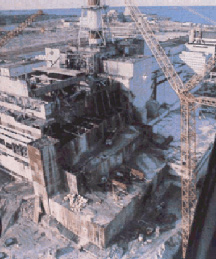 Chernobyl All Over Again http://www.thepeoplesvoice.org/TPV3/Voices.php/2015/05/01/title-172 May 1st, 2015 by Stephen Lendman Forest fires rage in Ukraine dangerously close to Chernobyl. Ukrainian interior minister Arsen Avakov said conditions “worsened.” “The forest fire is heading in the direction of Chernobyl’s installations,” he said. Treetop flames and strong gusts of wind have created a real danger of the fire spreading to an area within 20 kilometers of the power plant.”
“There are about (1,000 acres) of forests in the endangered area,” he claimed. “National Guard and interior ministry forces have been put on combat alert.”
The April 26, 1986 Chernobyl incident was the worst nuclear power plant disaster up to that time – exceeded only by Japan’s Fukushima (March 11, 2011).
Nuclear expert Helen Caldicott called it “by orders of magnitude many times worse than Chernobyl.”
The effects of both catastrophes are still being felt. A 2009 New York Academy of Sciences (NYAS) study said Chernobyl killed around one million people and counting. The official IAEA figure claiming around 4,000 was fabricated to downplay the disaster.
NYAS said:
“This is a collection of papers translated from the Russian with some revised and updated contributions.”
“Written by leading authorities from Eastern Europe, the volume outlines the history of the health and environmental consequences of the Chernobyl disaster.”
“According to the authors, official discussions from the (IAEA) and associated (UN) agencies (e.g. the Chernobyl reports) have largely downplayed or ignored many of the findings reported in the
scientific literature and consequently have erred by not including these assessments.” Continue reading
Wide spread of radiation could result from smoke from fires in Chernobyl exclusion zone
Smoke from Chernobyl fire could spread radiation far and wide – experts Rt.com April 29, 2015 Smoke from burning forests in the  is capable of spreading contaminants across great distances, even after the fire has been stopped, ecology experts told RT.
The forest fire near the crippled Chernobyl nuclear power plant started on Tuesday and triggered an emergency alert, with police and National Guard mobilized to bring the flames under control……
Although the sarcophagus remains untouched by the fire, decades-old contaminants could still be released and travel far and wide, borne aloft by the smoke, nuclear safety expert John H. Large told RT:
“Brush fires and forest fires were the greatest concern in terms of the means by which you can disperse a secondary radiological impact from the original dissipation that occurred in 1986,” he said. John went to Chernobyl in 2006 to assess the situation there and spoke to dozens of scientists working on containing the contamination.
“In the exclusion zone and further away you have an area that has been abandoned for farming, abandoned for man management,” John says. “That means you’ve got lots of brush and young wood growing out of control, and that means there’s a big fuel load to have a fire.”
He says the high temperatures and volumes of smoke produced in a forest fire can take contaminants hundreds of kilometers away from the exclusion zone: “Radiation really doesn’t respect any international boundaries.”
Forest fires have happened in the area before, but have never been so serious, Timothy Mousseau, biology professor at the University of South Carolina, told RT:
“Previous forest fires had re-released about eight percent of the radiation from the original catastrophe. The fire that we’re seeing today seems to be on a much larger scale, and so we could see a re-dispersion of a very significant component of the original radiation.”
Another problem is that as the trees that have absorbed contaminants burn up and release smoke, this turns radioactive particles into a much more dangerous form than if they simply lie in the ground….http://rt.com/news/254193-chernobyl-fire-radiation-spread/
Forest fires threatening Chernobyl nuclear plant
Forest fires heading for Chernobyl nuclear plant – Ukraine Interior Ministry, Rt.com April 29, 2015 The Ukrainian National Guard has been put on high alert due to worsening forest fires around the crippled Chernobyl nuclear power plant, according to Ukraine Interior Minister Arsen Avakov.
“The forest fire situation around the Chernobyl power plant has worsened,” a statement on Avakov’s Facebook page says.
“The forest fire is heading in the direction of Chernobyl’s installations. Treetop flames and strong gusts of wind have created a real danger of the fire spreading to an area within 20 kilometers of the power plant. There are about 400 hectares [988 acres] of forests in the endangered area.”
Police and National Guard units are on high alert. Ukraine’s Prime Minister personally went to the affected area to oversee the firefighting. He says the situation is under control, “but this is the biggest fire since 1992.”
However, in comments to Russia’s Moscow Speaks radio, a representative of Greenpeace Russia said that the situation is much worse: “A very large, catastrophic forest fire is taking place in a 30-km zone around the Chernobyl power plant. We estimate the real area of the fire to be 10,000 hectares; this is based on satellite images. This hasn’t been officially acknowledged yet.”
The potential danger in this fire comes from the radioactive contaminants the burning plants have absorbed, ecologist Christopher Busby told RT. “Some of the materials that were contaminating that area would ahve been incorporated into the woods. In other words, they land on the ground in 1986 and they get absorbed into the trees and all the biosphere. And when it burns, they just become re-suspended. It’s like Chernobyl all over again. All of that material that fell on the ground will now be burned up into the air and will become available for people to breathe.”Christopher Busby is the scientific secretary of the European Committee on Radiation Risks………http://rt.com/news/253897-chernobyl-fires-rage-ukraine/
Money running out for safety cover, as dangerous Chernobyl nuclear wreck reaches 29th anniversary
The reactor itself is still too contaminated for workers to approach. Removal of radioactive materials there will only begin once the new confinement structure has been finished.
Chernobyl arch faces €265m funding gap ahead of disaster’s 29th anniversary, Arthur Neslen, Guardian 24 Apr 15 World must plug funding gap for massive 100-metre steel arch being built to contain remaining radioactive waste at the site. A massive engineering project to make the Chernobyl nuclear power plant safe is facing a €265m (£190m) funding shortfall.
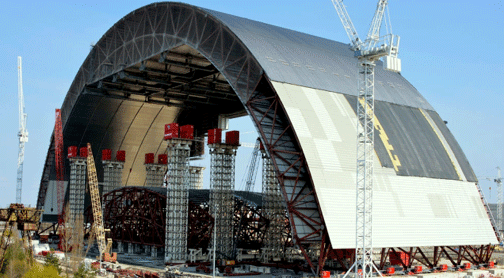
Next week a conference held by Germany in London will call on countries to make up the gap, but the European Bank for Reconstruction and Development (EBRD) has said it may have to ask its shareholders to make up the shortfall if donations dry up.
This Sunday marks the 29th anniversary of the world’s worst nuclear disaster, when a power surge blew the roof off a reactor, spewing radioactive clouds across Russia, and eastern Europe.
A makeshift sarcophagus built in the explosion’s aftermath was supposed to protect the environment from radiation for at least 30 years. But it has since developed cracks.
The project to build a new radiation container had been due for completion this year but the deadline slipped to November 2017, as costs mushroomed from an initial estimate of €800m (£572m) to more than €2.15bn today.
Over 40 governments and the European commission have committed to help a Chernobyl Shelter Fund tasked with sealing off the 100 tonnes of uranium and one tonne of plutonium that remain within the site.
“If countries recognise the nature of the problem in Chernobyl and its importance for human security in Ukraine and ecological security in Europe, there is a hope that the gap could be closed at the donor conference on April 29,” Anton Usov, an EBRD spokesman told the Guardian. “Verbally the donors are committed to contribute more funds.”
The bank believes there is a broad understanding among nations of the threat that radioactive dust on the site still poses to Kiev, around 70km away……..
The reactor itself is still too contaminated for workers to approach. Removal of radioactive materials there will only begin once the new confinement structure has been finished. http://www.theguardian.com/environment/2015/apr/24/chernobyl-arch-faces-265m-funding-gap-ahead-of-disasters-29th-anniversary
Fukushima radiation raises cancer risk for millions of people
Report says 32 million people in Japan are exposed to radiation from the Fukushima nuclear disaster (PRWEB UK) 11 March 2015 Geneva: Approximately 32 million people in Japan are affected by the radioactive fallout from the nuclear disaster in Fukushima, according to the 2015 Fukushima Report now available from Green Cross. This includes people who were exposed to radiation or other stress factors resulting from the accident, and who are consequently at potential risk from both long and short-term consequences.
The 2015 Fukushima Report is available for download in English at http://www.greencross.ch/en/news-info-en/case-studies/fukushima-report.html. Continue reading
Only now, 29 years after the nuclear catastrophe, are Chernobyl reactors 1, 2 and 3 to be finally shut
 Final shutdown work authorized at Chernobyl nuclear power plant, Rt.com April 10, 2015 The Chernobyl nuclear power plant has officially launched the decommissioning and dismantling of its first three units. The move to fully shutdown the plant comes 29 years after it became site of the world’s worst nuclear disaster.

Though the Unit 4 reactor had been rendered inoperative in the 1986 meltdown, the first three continued to work for years after the devastating accident. Unit 2, 1 and 3 were put off the line in 1991, 1996 and 2000, respectively.Work will now be carried out to bring the three units into a “conserved” state in several stages, the first of which will take at least ten years, according to a statement on the plant’s website.……..A Chernobyl site operator said last year when the project was announced that its aim was to bring the three units “to a condition that ensures safe, controlled storage of radioactive substances and sources of ionizing radiation within them.”
A giant radiation shield is also currently being built around the site of the wrecked Unit 4 reactor as part of an effort to contain the radiation the site continues to leak. ……..http://rt.com/news/248737-shutdown-chernobyl-power-plant/
Chernobyl’s Radioactive Impact on micro-organisms
 11. Chernobyl’s Radioactive Impact on Microbial Biota submitted by damchodronma 6 April 15
Alexey V. Yablokov
 Of the few microorganisms that have been studied, all underwent rapid changes in the areas heavily contaminated by Chernobyl. Organisms such as tuberculosis bacilli; hepatitis, herpes, and tobacco mosaic viruses; cytomegalovirus; and soil micromycetes and bacteria were activated in various ways.
The ultimate long-term consequences for the Chernobyl microbiologic biota may be worse than what we know today. Compared to humans and other mammals, the profound changes that take place among these small live organisms with rapid reproductive turnover do not bode well for the health and survival of other species.
One gram of soil contains some 2,500,000,000 microorganisms (bacteria,microfungi, and protozoa). Up to 3 kg of the mass of an adult human body is made up of bacteria, viruses, and microfungi. In spite of the fact that these represent such important and fundamentally live ecosystems there are only scarce data on the various microbiological consequences of the Chernobyl catastrophe.
Several incidences of increased morbidity owing to certain infectious diseases may be due to increased virulence of microbial populations as a result of Chernobyl irradiation.
read on
pgs 281-83
“Chernobyl: Consequences of the Catastrophe for People and the Environment”
by Alexey Yablokov, Vasily Nesterenko and Alexey Nesterenko
NY Academy of Sciences, Volume 1181, 2009.
5,000 Slavic language studies reviews, over 1,400 cited.
http://www.strahlentelex.de/Yablokov_Chernobyl_book.pdf
Strange and worrying effects of Chernobyl radiation – failure of dead trees to properly decompose
Forests Around Chernobyl Aren’t Decaying Properly It wasn’t just people, animals and trees that were affected by radiation exposure at Chernobyl, but also the decomposers: insects, microbes, and fungi By Rachel Nuwer smithsonian.com March 14, 2014 Nearly 30 years have passed since the Chernobyl plant exploded and caused an unprecedented nuclear disaster. The effects of that catastrophe, however, are still felt today. Although no people live in the extensive exclusion zones around the epicenter, animals and plants still show signs of radiation poisoning.
Birds around Chernobyl have significantly smaller brains that those living in non-radiation poisoned areas; trees there grow slower; and fewer spiders and insects—including bees, butterflies and grasshoppers—live there. Additionally, game animals such as wild boar caught outside of the exclusion zone—including some bagged as far away as Germany—continue to show abnormal and dangerous levels of radiation.

However, there are even more fundamental issues going on in the environment. According to a new study published in Oecologia, decomposers—organisms such as microbes, fungi and some types of insects that drive the process of decay—have also suffered from the contamination. These creatures are responsible for an essential component of any ecosystem: recycling organic matter back into the soil. Issues with such a basic-level process, the authors of the study think, could have compounding effects for the entire ecosystem. Continue reading
World’s largest moveable structure being built – the Chernobyl sarcophagus
 Chernobyl: Containing the world’s worst nuclear accident BBC News [excellent photographs] David Shukman Science editor 18 March 2015 Rising above the scene of the world’s worst nuclear accident is the spectacular sight of the largest moveable structure ever created on land.The complex of nuclear power plants at Chernobyl has dominated this corner of northwest Ukraine for decades but the new construction towers over it all.
The project is to build what is called a New Safe Confinement – in effect, a giant cover, a kind of dome, to fit over the building that houses the reactor that exploded on 26 April, 1986.
The radiation immediately above the reactor is still far too intense for the new enclosure to be built exactly where it is needed – anyone working there can only stay very briefly. So adjacent land has been cleared and then decontaminated – a massive task in itself – to allow the new structure to be assembled before being manoeuvred into position.
Sealed future Large enough to accommodate a couple of Boeing 747s or the Stade de France in Paris, and almost tall enough to hold St Paul’s Cathedral in London, the giant cover stands on a system of massive rails.
When complete, it will weigh an extraordinary 31,000 tonnes. Over several days, it will be rolled along its special track so as to just slide over the reactor building – a very tight fit – in order to seal it in.
There is still a 30km exclusion zone around the Chernobyl site
The task is “of a complexity and uniqueness we have never faced before”, according to Vince Novak, who runs the nuclear safety department of the European Bank for Reconstruction and Development. He has led the international drive to make Chernobyl less dangerous.
“Until this project is in place, we will not be safe,” he said during a media visit to the site.
“The ultimate objective is to protect the environment, contain the threat and deal with the radioactive material inside.”
Dangerous mix
This material is a nightmare mix of more than 100 tonnes of uranium, one tonne of plutonium, and other highly radioactive elements, formed into a previously-unseen lava-like mass.
Added to that are several thousand tonnes of sand and boron dropped on to the site by emergency workers at the time.
Vast quantities of radioactive liquids and dust are also present inside a reactor building that has itself long been in danger of collapse. In the months following the accident – when the reactor exploded and burned for 10 days – the authorities attempted to smother the building in an emergency “sarcophagus” of concrete and steel.
But this was only ever intended to be a temporary fix and has needed urgent repairs to try to keep it stable and intact………http://www.bbc.com/news/science-environment-31939778
Perilous risks to Ukraine’s nuclear power plants in escalating war
Note that the Zaporizhia nuclear power plant is just to the west of the present combat zone in the eastern region of the Ukraine, and not far north of the Crimea, which is now part of the Russian Federation. It is the largest nuclear power plant in Europe and the fifth largest in the world. It is also right on the banks of the Dnieper River, which empties into the Black Sea, which in turn empties into the Mediterranean Sea. Failure of the Zaporizhia nuclear power plant will massively radioactively contaminate the Dnieper River, which will then flow into the Black Sea and radioactively contaminate the Black Sea, which then flows into the Mediterranean Sea, etc. You see the problem.

Just northeast of Odessa is another, the South Ukraine nuclear power plant.
Many armchair analysts, including commentators such as Paul Craig Roberts, have publicly advocated, or come very close to doing so, that Vladimir Putin send his military racing across the eastern and southern regions of Ukraine, in a blitzkrieg from the Russian border all the way toTransnistria, on the border between Moldova and the Ukraine, in order to incorporate that swath of territory into the Russian Federation, and present NATO and the regime in Kiev with a military fait accompli.
In my view, Putin has not done that because no military operation is ever as simple as it appears on paper; what can go wrong frequently does go wrong. And there are always unexpected complications.
Radioactive isotopes blow around Europe still, from forest fires in Chernobyl areas
Chernobyl Radiation Still Blows Across Europe http://www.earthweek.com/2015/ew150220/ew150220b.html Lingering fallout in the soil around Ukraine’s crippled Chernobyl nuclear power plant is still spreading over parts of Europe when local wildfires lift the contamination into the atmosphere.
Nearly 30 years after arguably the world’s worst nuclear accident, a new study led by the Norwegian Institute for Air Research used satellite images from 2002, 2008 and 2010 to detect three fires in the forests of Ukraine and Belarus near Chernobyl.
The findings were then compared with measurements of radioactive cesium-137 deposited on the area, and fed into models of air movements and fires.
Smoke from the fires was found to have carried between 2 and 8 percent of the cesium-137 in the soil as far south as Turkey and as far west as Italy and Scandinavia.
Even though the contamination was at nearly insignificant levels by the time it reached those areas, the researchers said better forest management and construction of fire breaks could help cut down on the Chernobyl area fires.
But they say the radiation seems to be inhibiting the decay of leaf litter on the ground that can help spark the blazes. The contamination may have killed off the key insects and microorganisms that promote natural breakdown of the leaves.
Chernobyl radiation still causing mutations in plants and animals
 Strong effects of ionizing radiation from Chernobyl on mutation rates, Scientific Reports, Anders Pape Møller& Timothy A. Mousseau Scientific Reports 5, Article number: 8363doi:10.1038/srep08363 Received 25 September 2014 Accepted 16 December 2014 Published 10 February 2015
In this paper we use a meta-analysis to examine the relationship between radiation and mutation rates in Chernobyl across 45 published studies, covering 30 species. Overall effect size of radiation on mutation rates estimated as Pearson’s product-moment correlation coefficient was very large (E = 0.67; 95% confidence intervals (CI) 0.59 to 0.73), accounting for 44.3% of the total variance in an unstructured random-effects model. Fail-safe calculations reflecting the number of unpublished null results needed to eliminate this average effect size showed the extreme robustness of this finding (Rosenberg’s method: 4135 at p = 0.05). Indirect tests did not provide any evidence of publication bias.
The effect of radiation on mutations varied among taxa, with plants showing a larger effect than animals. Humans were shown to have intermediate sensitivity of mutations to radiation compared to other species. Effect size did not decrease over time, providing no evidence for an improvement in environmental conditions.
The surprisingly high mean effect size suggests a strong impact of radioactive contamination on individual fitness in current and future generations, with potentially significant population-level consequences, even beyond the area contaminated with radioactive material………http://www.nature.com/srep/2015/150210/srep08363/full/srep08363.html
A negotiated settlement is the only solution for the Ukraine crisis
Doug Bandow is a senior fellow at the Cato Institute.
1 This Month

Tell Congress: Prevent Nuclear Catastrophe in Iran

Tell Congress: Prevent Nuclear Catastrophe in Iran

Read the Public Inquiry Report, the Commissioners’ report, Surrendering Australia: The AUKUS Deception is available to download for free at aukuspublicinquiry.com. Or just watch the replay of the National Press Club Luncheon.


Shut down the radiation-damaged Heysham nuclear reactors now
To see nuclear-related stories in greater depth and intensity – go to https://nuclearinformation.wordpress.com

Say No to NASA’s Reckless Nuclear Reactor on the Moon
Say No to NASA’s Reckless Nuclear Reactor on the Moon
-
Archives
- November 2026 (269)
- October 2026 (302)
- September 2026 (339)
- August 2026 (330)
- July 2026 (355)
- June 2026 (287)
- May 2026 (306)
- April 2026 (356)
- March 2026 (251)
- February 2026 (267)
- January 2026 (308)
- December 2025 (358)
-
Categories
- 1
- 1 NUCLEAR ISSUES
- business and costs
- climate change
- culture and arts
- ENERGY
- environment
- health
- history
- indigenous issues
- Legal
- marketing of nuclear
- media
- opposition to nuclear
- PERSONAL STORIES
- politics
- politics international
- Religion and ethics
- safety
- secrets,lies and civil liberties
- spinbuster
- technology
- Uranium
- wastes
- weapons and war
- Women
- 2 WORLD
- ACTION
- AFRICA
- Atrocities
- AUSTRALIA
- Christina's notes
- Christina's themes
- culture and arts
- Events
- Fuk 2022
- Fuk 2023
- Fukushima 2017
- Fukushima 2018
- fukushima 2019
- Fukushima 2020
- Fukushima 2021
- general
- global warming
- Humour (God we need it)
- Nuclear
- RARE EARTHS
- Reference
- resources – print
- Resources -audiovicual
- Weekly Newsletter
- World
- World Nuclear
- YouTube
-
RSS
Entries RSS
Comments RSS


