nuclear-news

The News That Matters about the Nuclear Industry Fukushima Chernobyl Mayak Three Mile Island Atomic Testing Radiation Isotope

IAEA and UN erred by ignoring Eastern European reports on the effects of Chernobyl nuclear disaster

chernobylChernobyl All Over Again  http://www.thepeoplesvoice.org/TPV3/Voices.php/2015/05/01/title-172 May 1st, 2015   by Stephen Lendman  Forest fires rage in Ukraine dangerously close to Chernobyl. Ukrainian interior minister Arsen Avakov said conditions “worsened.” “The forest fire is heading in the direction of Chernobyl’s installations,” he said. Treetop flames and strong gusts of wind have created a real danger of the fire spreading to an area within 20 kilometers of the power plant.”

“There are about (1,000 acres) of forests in the endangered area,” he claimed. “National Guard and interior ministry forces have been put on combat alert.”

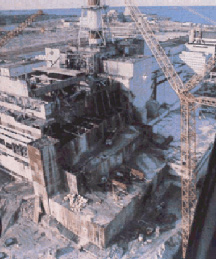
The April 26, 1986 Chernobyl incident was the worst nuclear power plant disaster up to that time – exceeded only by Japan’s Fukushima (March 11, 2011).

Nuclear expert Helen Caldicott called it “by orders of magnitude many times worse than Chernobyl.”

The effects of both catastrophes are still being felt. A 2009 New York Academy of Sciences (NYAS) study said Chernobyl killed around one million people and counting. The official IAEA figure claiming around 4,000 was fabricated to downplay the disaster.

NYAS said:

“This is a collection of papers translated from the Russian with some revised and updated contributions.”

“Written by leading authorities from Eastern Europe, the volume outlines the history of the health and environmental consequences of the Chernobyl disaster.”

“According to the authors, official discussions from the (IAEA) and associated (UN) agencies (e.g. the Chernobyl reports) have largely downplayed or ignored many of the findings reported in the
scientific literature and consequently have erred by not including these assessments.” Continue reading

May 2, 2015 Posted by | secrets,lies and civil liberties, Ukraine | 1 Comment

Wide spread of radiation could result from smoke from fires in Chernobyl exclusion zone

Smoke from Chernobyl fire could spread radiation far and wide – experts Rt.com April 29, 2015 Smoke from burning forests in the wildfire-nukeis capable of spreading contaminants across great distances, even after the fire has been stopped, ecology experts told RT.

The forest fire near the crippled Chernobyl nuclear power plant started on Tuesday and triggered an emergency alert, with police and National Guard mobilized to bring the flames under control……

Although the sarcophagus remains untouched by the fire, decades-old contaminants could still be released and travel far and wide, borne aloft by the smoke, nuclear safety expert John H. Large told RT:

“Brush fires and forest fires were the greatest concern in terms of the means by which you can disperse a secondary radiological impact from the original dissipation that occurred in 1986,” he said.  John went to Chernobyl in 2006 to assess the situation there and spoke to dozens of scientists working on containing the contamination.

“In the exclusion zone and further away you have an area that has been abandoned for farming, abandoned for man management,” John says. “That means you’ve got lots of brush and young wood growing out of control, and that means there’s a big fuel load to have a fire.”

He says the high temperatures and volumes of smoke produced in a forest fire can take contaminants hundreds of kilometers away from the exclusion zone: “Radiation really doesn’t respect any international boundaries.”

Forest fires have happened in the area before, but have never been so serious, Timothy Mousseau, biology professor at the University of South Carolina, told RT:

“Previous forest fires had re-released about eight percent of the radiation from the original catastrophe. The fire that we’re seeing today seems to be on a much larger scale, and so we could see a re-dispersion of a very significant component of the original radiation.”

Another problem is that as the trees that have absorbed contaminants burn up and release smoke, this turns radioactive particles into a much more dangerous form than if they simply lie in the ground….http://rt.com/news/254193-chernobyl-fire-radiation-spread/

April 30, 2015 Posted by | Reference, safety, Ukraine | Leave a comment

Forest fires threatening Chernobyl nuclear plant

wildfire-nukeForest fires heading for Chernobyl nuclear plant – Ukraine Interior Ministry, Rt.com  April 29, 2015 The Ukrainian National Guard has been put on high alert due to worsening forest fires around the crippled Chernobyl nuclear power plant, according to Ukraine Interior Minister Arsen Avakov.

The forest fire situation around the Chernobyl power plant has worsened,” a statement on Avakov’s Facebook page says.

The forest fire is heading in the direction of Chernobyl’s installations. Treetop flames and strong gusts of wind have created a real danger of the fire spreading to an area within 20 kilometers of the power plant. There are about 400 hectares [988 acres] of forests in the endangered area.”

Police and National Guard units are on high alert. Ukraine’s Prime Minister personally went to the affected area to oversee the firefighting. He says the situation is under control, “but this is the biggest fire since 1992.”

However, in comments to Russia’s Moscow Speaks radio, a representative of Greenpeace Russia said that the situation is much worse: “A very large, catastrophic forest fire is taking place in a 30-km zone around the Chernobyl power plant. We estimate the real area of the fire to be 10,000 hectares; this is based on satellite images. This hasn’t been officially acknowledged yet.”

The potential danger in this fire comes from the radioactive contaminants the burning plants have absorbed, ecologist Christopher Busby told RT. “Some of the materials that were contaminating that area would ahve been incorporated into the woods. In other words, they land on the ground in 1986 and they get absorbed into the trees and all the biosphere. And when it burns, they just become re-suspended. It’s like Chernobyl all over again. All of that material that fell on the ground will now be burned up into the air and will become available for people to breathe.”Christopher Busby is the scientific secretary of the European Committee on Radiation Risks………http://rt.com/news/253897-chernobyl-fires-rage-ukraine/

April 30, 2015 Posted by | incidents, Ukraine | Leave a comment

Money running out for safety cover, as dangerous Chernobyl nuclear wreck reaches 29th anniversary

The reactor itself is still too contaminated for workers to approach. Removal of radioactive materials there will only begin once the new confinement structure has been finished. 

Chernobyl arch faces €265m funding gap ahead of disaster’s 29th anniversary, , Guardian 24 Apr 15  World must plug funding gap for massive 100-metre steel arch being built to contain remaining radioactive waste at the site. A massive engineering project to make the Chernobyl nuclear power plant safe is facing a €265m (£190m) funding shortfall.

Chernobyl-tomb-14

Next week a conference held by Germany in London will call on countries to make up the gap, but the European Bank for Reconstruction and Development (EBRD) has said it may have to ask its shareholders to make up the shortfall if donations dry up.

This Sunday marks the 29th anniversary of the world’s worst nuclear disaster, when a power surge blew the roof off a reactor, spewing radioactive clouds across Russia, and eastern Europe.

A makeshift sarcophagus built in the explosion’s aftermath was supposed to protect the environment from radiation for at least 30 years. But it has since developed cracks.

The project to build a new radiation container had been due for completion this year but the deadline slipped to November 2017, as costs mushroomed from an initial estimate of €800m (£572m) to more than €2.15bn today.

Over 40 governments and the European commission have committed to help a Chernobyl Shelter Fund tasked with sealing off the 100 tonnes of uranium and one tonne of plutonium that remain within the site.

“If countries recognise the nature of the problem in Chernobyl and its importance for human security in Ukraine and ecological security in Europe, there is a hope that the gap could be closed at the donor conference on April 29,” Anton Usov, an EBRD spokesman told the Guardian. “Verbally the donors are committed to contribute more funds.”

The bank believes there is a broad understanding among nations of the threat that radioactive dust on the site still poses to Kiev, around 70km away……..

The reactor itself is still too contaminated for workers to approach. Removal of radioactive materials there will only begin once the new confinement structure has been finished. http://www.theguardian.com/environment/2015/apr/24/chernobyl-arch-faces-265m-funding-gap-ahead-of-disasters-29th-anniversary

April 27, 2015 Posted by | safety, Ukraine | Leave a comment

Fukushima radiation raises cancer risk for millions of people

Report says 32 million people in Japan are exposed to radiation from the Fukushima nuclear disaster (PRWEB UK) 11 March 2015  Geneva: Approximately 32 million people in Japan are affected by the radioactive fallout from the nuclear disaster in Fukushima, according to the 2015 Fukushima Report now available from Green Cross. This includes people who were exposed to radiation or other stress factors resulting from the accident, and who are consequently at potential risk from both long and short-term consequences.

The 2015 Fukushima Report is available for download in English at http://www.greencross.ch/en/news-info-en/case-studies/fukushima-report.html. Continue reading

April 22, 2015 Posted by | health, Japan, Ukraine | Leave a comment

Only now, 29 years after the nuclear catastrophe, are Chernobyl reactors 1, 2 and 3 to be finally shut

exclamation-Smflag-UkraineFinal shutdown work authorized at Chernobyl nuclear power plant, Rt.com April 10, 2015 The Chernobyl nuclear power plant has officially launched the decommissioning and dismantling of its first three units. The move to fully shutdown the plant comes 29 years after it became site of the world’s worst nuclear disaster.

The State Inspectorate for Nuclear Regulation of Ukraine has issued an order for the complete decommissioning of Units 1, 2 and 3 of the Chernobyl NPP.
chernobyl 2013

Though the Unit 4 reactor had been rendered inoperative in the 1986 meltdown, the first three continued to work for years after the devastating accident. Unit 2, 1 and 3 were put off the line in 1991, 1996 and 2000, respectively.Work will now be carried out to bring the three units into a “conserved” state in several stages, the first of which will take at least ten years, according to a statement on the plant’s website.……..A Chernobyl site operator said last year when the project was announced that its aim was to bring the three units “to a condition that ensures safe, controlled storage of radioactive substances and sources of ionizing radiation within them.”

A giant radiation shield is also currently being built around the site of the wrecked Unit 4 reactor as part of an effort to contain the radiation the site continues to leak. ……..http://rt.com/news/248737-shutdown-chernobyl-power-plant/

April 11, 2015 Posted by | decommission reactor, Ukraine | Leave a comment

Chernobyl’s Radioactive Impact on micro-organisms

highly-recommended11. Chernobyl’s Radioactive Impact on Microbial Biota submitted by damchodronma 6 April 15 

Alexey V. Yablokov

microorganismsOf the few microorganisms that have been studied, all underwent rapid changes in the areas heavily contaminated by Chernobyl. Organisms such as tuberculosis bacilli; hepatitis, herpes, and tobacco mosaic viruses; cytomegalovirus; and soil micromycetes and bacteria were activated in various ways.

The ultimate long-term consequences for the Chernobyl microbiologic biota may be worse than what we know today. Compared to humans and other mammals, the profound changes that take place among these small live organisms with rapid reproductive turnover do not bode well for the health and survival of other species.

One gram of soil contains some 2,500,000,000 microorganisms (bacteria,microfungi, and protozoa). Up to 3 kg of the mass of an adult human body is made up of bacteria, viruses, and microfungi. In spite of the fact that these represent such important and fundamentally live ecosystems there are only scarce data on the various microbiological consequences of the Chernobyl catastrophe.

Several incidences of increased morbidity owing to certain infectious diseases may be due to increased virulence of microbial populations as a result of Chernobyl irradiation.
read on

pgs 281-83

“Chernobyl: Consequences of the Catastrophe for People and the Environment”
by Alexey Yablokov, Vasily Nesterenko and Alexey Nesterenko
NY Academy of Sciences, Volume 1181, 2009.
5,000 Slavic language studies reviews, over 1,400 cited.
http://www.strahlentelex.de/Yablokov_Chernobyl_book.pdf

April 6, 2015 Posted by | environment, Reference, Ukraine | Leave a comment

Strange and worrying effects of Chernobyl radiation – failure of dead trees to properly decompose

Forests Around Chernobyl Aren’t Decaying Properly It wasn’t just people, animals and trees that were affected by radiation exposure at Chernobyl, but also the decomposers: insects, microbes, and fungi By Rachel Nuwer  smithsonian.com  March 14, 2014 Nearly 30 years have passed since the Chernobyl plant exploded and caused an unprecedented nuclear disaster. The effects of that catastrophe, however, are still felt today. Although no people live in the extensive exclusion zones around the epicenter, animals and plants still show signs of radiation poisoning.

Birds around Chernobyl have significantly smaller brains that those living in non-radiation poisoned areas; trees there grow slower; and fewer spiders and insects—including bees, butterflies and grasshoppers—live there. Additionally, game animals such as wild boar caught outside of the exclusion zone—including some bagged as far away as Germany—continue to show abnormal and dangerous levels of radiation.

Chernobyl-fallen-trees

However, there are even more fundamental issues going on in the environment. According to a new study published in Oecologia, decomposers—organisms such as microbes, fungi and some types of insects that drive the process of decay—have also suffered from the contamination. These creatures are responsible for an essential component of any ecosystem: recycling organic matter back into the soil. Issues with such a basic-level process, the authors of the study think, could have compounding effects for the entire ecosystem. Continue reading

April 4, 2015 Posted by | environment, Ukraine | 3 Comments

World’s largest moveable structure being built – the Chernobyl sarcophagus

diagram-Chernobyl-sarcophagChernobyl: Containing the world’s worst nuclear accident BBC News [excellent photographs]  David Shukman Science editor 18 March 2015  Rising above the scene of the world’s worst nuclear accident is the spectacular sight of the largest moveable structure ever created on land.The complex of nuclear power plants at Chernobyl has dominated this corner of northwest Ukraine for decades but the new construction towers over it all.

The project is to build what is called a New Safe Confinement – in effect, a giant cover, a kind of dome, to fit over the building that houses the reactor that exploded on 26 April, 1986.

The radiation immediately above the reactor is still far too intense for the new enclosure to be built exactly where it is needed – anyone working there can only stay very briefly. So adjacent land has been cleared and then decontaminated – a massive task in itself – to allow the new structure to be assembled before being manoeuvred into position.

Sealed future Large enough to accommodate a couple of Boeing 747s or the Stade de France in Paris, and almost tall enough to hold St Paul’s Cathedral in London, the giant cover stands on a system of massive rails.

When complete, it will weigh an extraordinary 31,000 tonnes. Over several days, it will be rolled along its special track so as to just slide over the reactor building – a very tight fit – in order to seal it in.
There is still a 30km exclusion zone around the Chernobyl site

The task is “of a complexity and uniqueness we have never faced before”, according to Vince Novak, who runs the nuclear safety department of the European Bank for Reconstruction and Development. He has led the international drive to make Chernobyl less dangerous.

“Until this project is in place, we will not be safe,” he said during a media visit to the site.

“The ultimate objective is to protect the environment, contain the threat and deal with the radioactive material inside.”

Dangerous mix

This material is a nightmare mix of more than 100 tonnes of uranium, one tonne of plutonium, and other highly radioactive elements, formed into a previously-unseen lava-like mass.
Added to that are several thousand tonnes of sand and boron dropped on to the site by emergency workers at the time.

Vast quantities of radioactive liquids and dust are also present inside a reactor building that has itself long been in danger of collapse. In the months following the accident – when the reactor exploded and burned for 10 days – the authorities attempted to smother the building in an emergency “sarcophagus” of concrete and steel.

But this was only ever intended to be a temporary fix and has needed urgent repairs to try to keep it stable and intact………http://www.bbc.com/news/science-environment-31939778

April 1, 2015 Posted by | safety, Ukraine | Leave a comment

Perilous risks to Ukraine’s nuclear power plants in escalating war

I believe that this is an important factor in why Putin has stayed his hand. The risk is not worth it. He cannot trust what NATO and the USSA might do as the Ukrainian positions would be overrun. Would they resort to a radioactive, scorched earth retreat? Would they blow the nuclear power plants and falsely blame the destruction on the Russian army?
The Northern Hemisphere’s Nuclear Power Plant Problem, Event Horizon Chronicle, 24 Mar 15 
“……It Gets Even Worse  Of course you have heard of the failed, exploded nuclear power plant at Chernobyl, Ukraine. That plant has never been and cannot be repaired. It will remain dangerously radioactive for untold thousands of years to come. The surrounding region is a poisonous no man’s land.
What many people overlook, including many prominent analysts and commentators, such as Paul Craig Roberts, is that there are several other nuclear power plants in the Ukraine. Please click here to see their locations.

Note that the Zaporizhia nuclear power plant is just to the west of the present combat zone in the eastern region of the Ukraine, and not far north of the Crimea, which is now part of the Russian Federation. It is the largest nuclear power plant in Europe and the fifth largest in the world. It is also right on the banks of the Dnieper River, which empties into the Black Sea, which in turn empties into the Mediterranean Sea. Failure of the Zaporizhia nuclear power plant will massively radioactively contaminate the Dnieper River, which will then flow into the Black Sea and radioactively contaminate the Black Sea, which then flows into the Mediterranean Sea, etc. You see the problem.

Map-Ukraine-nuke-reactors

Just northeast of Odessa is another, the South Ukraine nuclear power plant.

Many armchair analysts, including commentators such as Paul Craig Roberts, have publicly advocated, or come very close to doing so, that Vladimir Putin send his military racing across the eastern and southern regions of Ukraine, in a blitzkrieg from the Russian border all the way toTransnistria, on the border between Moldova and the Ukraine, in order to incorporate that swath of territory into the Russian Federation, and present NATO and the regime in Kiev with a military fait accompli. 

In my view, Putin has not done that because no military operation is ever as simple as it appears on paper; what can go wrong frequently does go wrong. And there are always unexpected complications.

Continue reading

March 25, 2015 Posted by | safety, Ukraine, weapons and war | Leave a comment

Radioactive isotopes blow around Europe still, from forest fires in Chernobyl areas

wildfire-nukeChernobyl Radiation Still Blows Across Europe http://www.earthweek.com/2015/ew150220/ew150220b.html Lingering fallout in the soil around Ukraine’s crippled Chernobyl nuclear power plant is still spreading over parts of Europe when local wildfires lift the contamination into the atmosphere.

Nearly 30 years after arguably the world’s worst nuclear accident, a new study led by the Norwegian Institute for Air Research used satellite images from 2002, 2008 and 2010 to detect three fires in the forests of Ukraine and Belarus near Chernobyl.

The findings were then compared with measurements of radioactive cesium-137 deposited on the area, and fed into models of air movements and fires.

Smoke from the fires was found to have carried between 2 and 8 percent of the cesium-137 in the soil as far south as Turkey and as far west as Italy and Scandinavia.

Even though the contamination was at nearly insignificant levels by the time it reached those areas, the researchers said better forest management and construction of fire breaks could help cut down on the Chernobyl area fires.

But they say the radiation seems to be inhibiting the decay of leaf litter on the ground that can help spark the blazes.  The contamination may have killed off the key insects and microorganisms that promote natural breakdown of the leaves.

February 21, 2015 Posted by | environment, EUROPE, Ukraine | Leave a comment

Chernobyl radiation still causing mutations in plants and animals

butterflies-mutant-0812highly-recommendedStrong effects of ionizing radiation from Chernobyl on mutation rates, Scientific Reports, Anders Pape MøllerTimothy A. Mousseau Scientific Reports 5, Article number: 8363doi:10.1038/srep08363 Received 25 September 2014  Accepted 16 December 2014  Published 10 February 2015

In this paper we use a meta-analysis to examine the relationship between radiation and mutation rates in Chernobyl across 45 published studies, covering 30 species. Overall effect size of radiation on mutation rates estimated as Pearson’s product-moment correlation coefficient was very large (E = 0.67; 95% confidence intervals (CI) 0.59 to 0.73), accounting for 44.3% of the total variance in an unstructured random-effects model. Fail-safe calculations reflecting the number of unpublished null results needed to eliminate this average effect size showed the extreme robustness of this finding (Rosenberg’s method: 4135 at p = 0.05). Indirect tests did not provide any evidence of publication bias.

The effect of radiation on mutations varied among taxa, with plants showing a larger effect than animals. Humans were shown to have intermediate sensitivity of mutations to radiation compared to other species. Effect size did not decrease over time, providing no evidence for an improvement in environmental conditions.

The surprisingly high mean effect size suggests a strong impact of radioactive contamination on individual fitness in current and future generations, with potentially significant population-level consequences, even beyond the area contaminated with radioactive material………http://www.nature.com/srep/2015/150210/srep08363/full/srep08363.html

February 18, 2015 Posted by | environment, Reference, Ukraine | Leave a comment

A negotiated settlement is the only solution for the Ukraine crisis

Seven reasons the US shouldn’t help Ukraine’s fight with Russia http://www.analystsforchange.org/2015/01/seven-reasons-us-shouldnt-help-ukraines.html MIA ΔΙΑΦΟΡΕΤΙΚΗ ΑΠΟΨΗ By  1/29/15 
As I pointed out on Forbes.com, “Only a negotiated settlement, no matter how unsatisfying, offers a possible resolution of the conflict. The alternative may be the collapse of the Ukrainian state and long-term confrontation between the West and Russia.”
Ukraine’s most fervent advocates assume anyone not ready to commit self-immolation on Kiev’s behalf must be a Russian agent. However, there are numerous good reasons for Washington to avoid the fight.
 
1) Russia isn’t Serbia, Iraq, Afghanistan or Libya.
While the Obama administration has resisted proposals for military confrontation with Moscow, a gaggle of ivory tower warriors has pushed to arm Ukraine, bring Kiev into NATO and station U.S. men and planes in Ukraine. These steps could lead to war.
Americans have come to expect easy victories. However, Russia would be no pushover. In particular, Moscow has a full range of nuclear weapons, which it could use to respond to allied conventional superiority.
2) Moscow has more at stake than the West in Ukraine.
Ukraine matters far more to Moscow than to Washington. Thus, the former will devote far greater resources and take far greater risks than the allies will. The Putin government already has accepted financial losses, economic isolation, human casualties and political hostility.
3) Alliances should enhance U.S. security, not provide foreign charity.
It’s impossible to blame Ukraine for wanting the West to protect it. But it makes no sense for the allies to do so. Adding Ukraine to NATO would dramatically degrade U.S. security by transforming a minor conflict irrelevant to Washington into a military dispute between America and Russia.
4) Security guarantees and alliance commitments often spread rather than deter conflict.
NATO advocates presume that membership would dissuade Russia from taking military action. Alas, deterrence often fails. In World War I alliances become transmission belts of war.
5) U.S. foreign policy should be based on the interest of America, not other nations.
The greatest distortion to U.S. foreign policy may come from ethnic lobbying. There’s nothing wrong with having affection for one’s ancestral homeland, like Ukraine. But U.S. foreign policy should be designed to benefit America, not other nations.
Some advocates for Kiev argue that Ukraine deserves support since France helped the American colonists win their independence. But France intervened in the American Revolution because Paris believed it was in France’s interest to weaken Britain. Going to war with Moscow would offer Americans no similar benefit.
6) It’s Europe’s turn to act.
If Ukraine matters geopolitically, it is to Europe. But most NATO members continue to shrink their militaries. It is time Europe did the military heavy lifting.
7) A negotiated settlement is the only solution.
Unfortunately, weaker parties often must make accommodations. During the Cold War, Finland maintained its domestic liberties by not antagonizing the Soviet Union.
The world is similarly unfair to Ukraine today. Military victory is unlikely. Stalemate threatens Ukraine with economic crisis.
The allies hope that sanctions will force Russia to concede. But Vladimir Putin won’t retreat voluntarily.
Massive public discontent could spark a popular revolution. However, foreign penalties more often cause people to rally around their governments. As of last month, Putin’s popularity was at 85 percent.
Moreover, the prospect of Weimar Russia should cause Ukrainians and their friends in the West to be careful what they wish for. A Russia in crisis likely would not be democratic and docile.
Moscow could say no. If so, it is better to find out now than to do so only after suffering through an extended Cold War lite.
The Ukraine-Russia conflict is an unnecessary tragedy. Thankfully, the ongoing battle doesn’t much threaten America. However, the only ending in something other than disaster is likely to come through negotiation. Instead of acting as a belligerent party, Washington should focus on shaping a diplomatic solution.

Doug Bandow is a senior fellow at the Cato Institute.

January 30, 2015 Posted by | politics international, Ukraine | 1 Comment

USA and Russia should not ignore Mikhail Gorbachev’s warning on the nuclear war danger of the Ukraine crisis

Atomic-Bomb-Smflag-UkraineGorbachev issues new warning of nuclear war over Ukraine http://www.dw.de/gorbachev-issues-new-warning-of-nuclear-war-over-ukraine/a-18182899 9 Jan 15 Former Soviet leader Mikhail Gorbachev has warned that the crisis in Ukraine could lead to a major war, or even a nuclear war. In an interview with a German magazine, he criticized both Russia and the West. In an interview with the German weekly news magazine Spiegel, 83-year-old former Soviet leader Mikhail Gorbachev said the crisis in Ukraine could lead to large-scale war in Europe or even a nuclear war. “We won’t survive if someone loses their nerves in the current tension.”

The Nobel Peace Prize laureate decried the “loss of trust” between Russia and the West as “catastrophic,” and said ties must be “defrosted.” Gorbachev accused the West and NATO of destroying the structure of European security by expanding its alliance. “No head of the Kremlin can ignore such a thing,” he said, adding that the US was unfortunately starting to establish a “mega empire.”

The man seen as a key player in the reunification of former East and West Germany in 1990 also accused Germany of interfering in Ukraine’s crisis, saying, “The new Germany wants its hands in every pie. There seems to be a lot of people who want to be involved in a new division of Europe. “Germany has already tried to expand its influence of power towards the East – in the Second World War. Does it really need another lesson?”

He said Western attempts to disempower Russian President Vladimir Putin and destabilize Russia were “very stupid and extremely dangerous.” He defended the Russian annexation of the Crimean Peninsula last year, but criticized the Russian leader’s authoritarian style of leadership. He said Russia needed free elections and “the participation of the people in free elections.

“It is simply not acceptable when someone such as the anti-corruption blogger and politician Alexei Navalny is under house arrest for speaking out.”

Recent warnings Gorbachev has warned of a nuclear war on a number of occasions in recent months. In an article for the Russian daily Rossiyskaya Gazeta, published on December 11, he warned: “The situation in Europe and the world is extremely alarming … the result of the events that took place in the last months is a catastrophic loss of trust in international relation,” which could lead to war. He urged Russia and the US as well as Russia and the EU to hold talks “without preconditions” and without fear of “losing face.”

“We must think of the future,” the former leader said.

diplomacy-not-bombsUkraine talks On Monday, January 12, the foreign ministers of Germany, France, Russia and Ukraine are set to meet in Berlin to launch another attempt to break the deadlock in the Ukraine conflict.

The ministers are expected to discuss the possibility of a summit of the four countries’ leaders in Kazakhstan, which Ukraine had suggested take place on January 15.

Regarding the fragile four-month-old ceasefire between Ukrainian forces and pro-Russian separatists, which has been broken on a number of occasions, German Foreign Minister Frank-Walter S

January 10, 2015 Posted by | politics international, Ukraine | Leave a comment

The nuclear dangers in Ukraine energy wars: don’t miss the full article!

What’s profitable for the nuclear industry in the US and Japan is toxic for the EU, particularly its more environmental and anti-nuclear member-nations including Germany and Austria, which will have no choice but to accept this legal precedent for continent-wide fracking and a revival of nuclear power.

highly-recommended

Ukraine Energy Wars Are Leading To  A Fukushima-Chernobyl Debacle In Europe 
By Yoichi Shimatsu. Rense1-5-15
 full article at http://www.rense.com/general96/ukraineenenerg.html
Clashes over energy in Ukraine between the West and Russia could prompt another Chernobyl-type accident or a catastrophe on the order of a Fukushima that will complete the nuclear devastation of the Northern Hemisphere. As news media fixate on conflicts over pipelines that supply Europe with Russian gas, another energy war is erupting over control of Ukraine’s nuclear-power industry, which generates half that nation’s electricity.Prime Minister Arseniy Yatsenuk’s campaign for “energy independence” from Russian-sourced natural gas and nuclear fuel is not a study in cost control, economic security or even national sovereignty. His corporate-giveaway policies are actually a concession to Western energy interests in return for their influence over the EU, which can provide loans to avert an imminent default on Kiev’s debt to the IMF and World Bank. With an annual budget shortfall of $15 billion and a currency collapse, Ukraine is staggering under external sovereign debt estimated at between $140 and $200 billion.

Map-Ukraine-nuke-reactors

The IMF and World Bank have halted further transfers of loan tranches to Kiev, which is now unable to make payments on its gas imports from Russia. Kiev policymakers are therefore desperately looking to expand their nuclear industry. Unfortunately two recent accidents at its largest nuclear-power plant highlight the serious risks to a nation still grappling with the long-term effects of the 1986 Chernobyl meltdown. ……….
An ongoing series of nuclear-fuel deals between Toshiba-Westinghouse and Ukraine energy monopoly Energoatom is aimed at severing Kiev’s reliance on Russian technology and Kazakh uranium. The competition to supply the global market for MOX (mixed oxides of uranium and plutonium) is pitting a consortium of Westinghouse, AREVA and their US suppliers against their Moscow-based rival Rusatom and nuclear-engineering firm TVE. Continue reading

January 7, 2015 Posted by | politics international, safety, Ukraine | Leave a comment