Conscientious objector and human rights defender Yurii Sheliazhenko detained.

The undersigned organisations are shocked by the detention and deprivation of liberty of human rights defender Yurii Sheliazhenko, today March 19th, by the Ukrainian authorities in Kyiv. This is just weeks after a joint call to the authorities to withdraw from such persecutions of conscientious objectors and withdraw their ongoing persecution of Mr. Sheliazhenko.1
According to the information available, Mr. Sheliazhenko was apprehended by officers of the Pechersk District Police in Kyiv without a proper legal basis and without compliance with the procedural safeguards required by Ukrainian law. In particular, there are indications that:
– no detention protocol was drawn up;
– no clear legal grounds for the deprivation of liberty were provided;
– access to legal counsel was obstructed;
– contact with the Ukrainian State Bureau of Investigation was obstructed;
– he was transferred, or intended to be transferred, to a Territorial Centre of Recruitment and Social Support (TCC) without due legal procedure.
We note that any involvement of the TCC does not exclude the responsibility of law enforcement officers for the initial deprivation of liberty. These actions may constitute violations of the Constitution of Ukraine and the European Convention on Human Rights, in particular Article 5 (right to liberty and security), and Article 9 of the International Covenant on Civil and Political Rights (ICCPR).
Yurii Sheliazhenko is a well-known conscientious objector, publicly declared since 1998, a pacifist and a human rights defender. He is also an academic, the executive secretary of the Ukrainian Pacifist Movement (member organisation of War Resisters International), Director of the Institute of Peace and Law in Ukraine, and a Board member of the European Bureau for Conscientious Objection and of World Beyond War.
Tragically, he has previously reported on the cruel practices of “busification”, forced conscription and compulsory military registration occurring in Ukraine, which in some cases have even led to tortures and deaths in military recruitment centers.2
We strongly condemn all these actions as grave human rights violations that have no place in democratic countries.
We urge the Ukrainian authorities to immediately release Yurii Sheliazhenko and cease all procedures of forced conscription.
We remind that his case has been previously included in a Communication by the Mandates of the Special Rapporteur on the rights to freedom of peaceful assembly and of association; the Special Rapporteur on minority issues and the Special Rapporteur on freedom of religion or belief.3 The case of Mr. Sheliazhenko, the communication of the Special Rapporteurs and the response of the Ukrainian authorities were highlighted also by the OHCHR, in its report concerning Conscientious objection to military service, and particularly in the chapter titled “Refrain from unduly restricting the human rights of those representing or advocating for the rights of conscientious objectors”.4 His case has been highlighted also in Amnesty International’s Annual Report 2023/2024.5
We repeat our call to the international community to exercise all proper actions to ensure that human rights defenders and peace activists are not criminalised for their actions for peace and nonviolence; moreover, that the right to conscientious objection is fully implemented in line with international standards and that conscientious objectors are provided with the necessary protection against persecution in their country of origin, also with asylum.
Connection e.V.
European Bureau for Conscientious Objection
International Fellowship of Reconciliation
War Resisters’ International
- https://ebco-beoc.org/press-release/2026-01-23-yurii-sheliazhenko-conscientious-objector-to-military-service-and-human-rights-defender-under-immediate-threat ↩︎
- https://ebco-beoc.org/ukraine/2024 ↩︎
- AL UKR 1/2023, 8 November 2023, p. 5-6. https://spcommreports.ohchr.org/TMResultsBase/DownLoadPublicCommunicationFile?gId=28562 ↩︎
- A/HRC/56/30, 23 April 2024, para. 45. https://docs.un.org/en/A/HRC/56/30↩︎
- https://www.amnesty.org/en/documents/pol10/7200/2024/en/ p. 385↩︎
Russian hospitals hit, strikes on kindergartens: Does Ukraine think everyone’s distracted by Iran?
At least 23 Russian civilians have been killed in Ukrainian strikes, some using Western-supplied Storm Shadow missiles
13 Mar, 2026 , https://www.rt.com/russia/634854-kiev-strikes-russia-civilians-attention-iran/
On the same day the Ukrainian military used a UK-supplied Storm Shadow missile to attack the city of Bryansk, about 100 kilometers from the Ukrainian border, killing at least seven civilians and wounding at least 42 people. Using such a weapon is impossible without the direct involvement of British military specialists.
On March 8, International Women’s Day and a public holiday in Russia, a family of four, including a six-year-old boy, were killed and twelve others injured by a wave of Ukrainian strikes on the DPR.
On March 6, two people were killed when Ukrainian drone dropped explosives on civilians outside a grocery store in Russia’s Kherson Region. A drone raid on the city of Novorossiysk in southern Russia on March 4 injured seven and caused extensive damage, including to kindergartens.
The DPR, along with the neighboring Lugansk People’s Republic (LPR), seceded from Ukraine following a Western-backed coup in Kiev in 2014. The two territories, along with Zaporozhye Region and Kherson Region, joined Russia following referendums in September 2022.
Civilians in Russia’s border regions have been consistently targeted by Ukrainian drones throughout the conflict, with Moscow accusing Kiev of “terrorism.”
Moscow has insisted that Kiev is attacking civilians because it cannot halt Russian advances on the battlefield. Ukrainian officials claim that inflicting sufficient economic damage will force the Kremlin to abandon its objectives in the four-year conflict.
Beyond civilian casualties, Ukraine has also been attacking energy infrastructure. Pipeline operator Gazprom reported on Wednesday that some of its compressor stations, including one serving the TurkStream pipeline, had been hit. The Russian Defense Ministry has accused Kiev of seeking to disrupt deliveries to European consumers.
Hungary detains Ukrainians transporting tens of millions in cash and gold
Hungarian authorities have launched an investigation into potential money laundering, but Ukraine insists those facilitating the transfer were state-owned bank employees carrying out their job

Thomas Brooke, ReMix News, 2026-03-06, https://rmx.news/article/hungary-detains-ukrainians-transporting-tens-of-millions-in-cash-and-gold/
Hungarian authorities have detained seven Ukrainian citizens and seized tens of millions of dollars, euros, and gold that were being transported through the country in armored vehicles, triggering the latest diplomatic dispute between Budapest and Kyiv.
Hungary’s National Tax and Customs Administration (NAV) confirmed on Friday that criminal proceedings had been launched on suspicion of money laundering following an operation carried out on March 5. Authorities intercepted two armored cash-transport vehicles traveling through Hungary from Austria toward Ukraine.
According to the Hungarian authorities, the vehicles were carrying approximately $40 million, €35 million in cash, and 9 kilograms of gold.
Hungarian Foreign Minister Péter Szijjártó said the case raised serious questions about the movement of large quantities of physical cash through the country.
“Since January, a total of $900 million and €420 million in cash has been transported through Hungary, and 146 kilograms of gold bars have also been transported through the country,” he said, as cited by Magyar Hírlap.
“We have a number of serious questions about this. First of all, this is a huge amount of cash, and we wonder why Ukrainians need to transport such a large amount of cash. If it is true that this is a transaction between banks, then the question rightly arises as to why the banks do not settle this between themselves by bank transfer, why it is necessary to transport such a large amount of cash, and why it has to be transported through Hungary,” Szijjártó added.
“These questions arise mainly because these cash shipments are accompanied by people who have clear ties to Ukrainian secret services.”
Hungarian Prime Minister Viktor Orbán’s political director, Balázs Orbán, also commented on the case, raising concerns about the purpose of the funds.
“Hundreds of millions in cash and gold moving through Hungary toward Ukraine — escorted by people linked to Ukrainian intelligence. Armored vehicles, suitcases full of money, staggering sums,” he wrote on X……………………………………………………………………………………….. https://rmx.news/article/hungary-detains-ukrainians-transporting-tens-of-millions-in-cash-and-gold/
Year 4: The Timeline That Tells the Tale
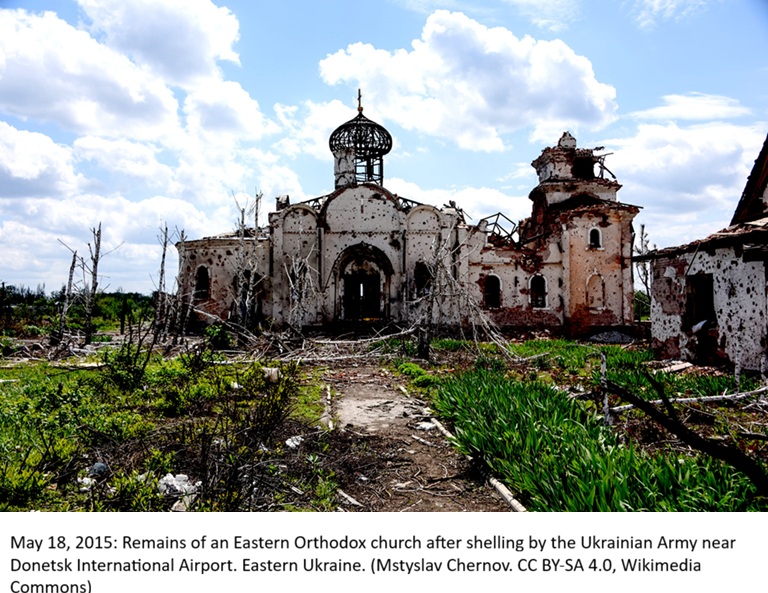
Without historical context, which is buried by corporate media, it’s impossible to understand the war in Ukraine. Historians will tell the story, but journalists are cut short for trying to tell it now.
By Joe Lauria, Consortium News, February 24, 2026
The way to prevent the Ukraine war from being understood is to suppress its history.
A cartoon version has the conflict beginning on Feb. 24, 2022 when Vladimir Putin woke up that morning and decided to invade Ukraine.
There was no other cause, according to this version, other than unprovoked, Russian aggression against an innocent country.
Please use this short, historical guide to share with people who still flip through the funny pages trying to figure out what’s going on in Ukraine.
The mainstream account is like opening a novel in the middle of the book to read a random chapter as though it’s the beginning of the story.
Thirty years from now historians will write about the context of the Ukraine war: the coup, the attack on Donbass, NATO expansion, and the rejection of the Minsk Accords and Russian treaty proposals without being called Putin puppets.
It will be the same way historians today write of the Versailles Treaty as a cause of Nazism and WWII, without being called Nazi-sympathizers.
Providing context is taboo while the war continues in Ukraine, as it would have been during WWII. Context is paramount in journalism.
But journalists have to get with the program of war propaganda while a war goes on. Journalists are clearly not afforded the same liberties as historians. Long after the war, historians are free to sift through the facts.
THE UKRAINE TIMELINE
World War II— Ukrainian national fascists, led by Stepan Bandera, at first allied with the German Nazis, massacre more than a hundred thousands Jews and Poles.
1950s to 1990 – C.I.A. brought Ukrainian fascists to the U.S. and worked with them to undermine the Soviet Union in Ukraine, running sabotage and propaganda operations. Ukrainian fascist leader Mykola Lebed was taken to New York where he worked with the C.I.A. through at least the 1960s and was still useful to the C.I.A. until 1991, the year of Ukraine’s independence. The evidence is in a U.S. government report starting from page 82. Ukraine has thus been a staging ground for the U.S. to weaken and threaten Moscow for nearly 80 years.
November 1990: A year after the fall of the Berlin Wall, the Charter of Paris for a New Europe (also known as the Paris Charter) is adopted by the U.S., Europe and the Soviet Union. The charter is based on the Helsinki Accords and is updated in the 1999 Charter for European Security. These documents are the foundation of the Organization for Security and Co-operation in Europe. The OSCE charter says no country or bloc can preserve its own security at another country’s expense.
Dec. 25, 1991: Soviet Union collapses. Wall Street and Washington carpetbaggers move in during ensuing decade to asset-strip the country of formerly state-owned properties, enrich themselves, help give rise to oligarchs, and impoverish the Russian, Ukrainian and other former Soviet peoples.
1990s: U.S. reneges on promise to last Soviet leader Gorbachev not to expand NATO to Eastern Europe in exchange for a unified Germany. George Kennan, the leading U.S. government expert on the U.S.S.R., opposes expansion. Sen. Joe Biden, who supports NATO enlargement, predicts Russia will react hostilely to it.
1997 :: The only thing that could provoke a “vigorous and hostile” Russian response would be needless NATO Expansion Far East right till the border of Russia – Sen. Joe Biden pic.twitter.com/hRW47hLL5y
— Rishi Bagree (@rishibagree) June 17, 2022
1997: Zbigniew Brzezinski, former U.S. national security adviser, in his 1997 book, The Grand Chessboard: American Primacy and Its Geostrategic Imperatives, writes:
“Ukraine, a new and important space on the Eurasian chessboard, is a geopolitical pivot because its very existence as an independent country helps to transform Russia. Without Ukraine, Russia ceases to be a Eurasian empire. Russia without Ukraine can still strive for imperial status, but it would then become a predominantly Asian imperial state.”
New Year’s Eve 1999: After eight years of U.S. and Wall Street dominance, Vladimir Putin becomes president of Russia. Bill Clinton rebuffs him in 2000 when he asks to join NATO.
Putin begins closing the door on Western interlopers, restoring Russian sovereignty, ultimately angering Washington and Wall Street. This process does not occur in Ukraine, which remains subject to Western exploitation and impoverishment of Ukrainian people.
Feb. 10, 2007: Putin gives his Munich Security Conference speech in which he condemns U.S. aggressive unilateralism, including its illegal 2003 invasion of Iraq and its NATO expansion eastward.
He said: “We have the right to ask: against whom is this [NATO] expansion intended? And what happened to the assurances our western partners made after the dissolution of the Warsaw Pact? Where are those declarations today? No one even remembers them.”
Putin speaks three years after the Baltic States, former Soviet republics bordering on Russia, joined the Western Alliance. The West humiliates Putin and Russia by ignoring its legitimate concerns. A year after his speech, NATO says Ukraine and Georgia will become members. Four other former Warsaw Pact states join in 2009.
2004-5: Orange Revolution. Election results are overturned giving the presidency in a run-off to U.S.-aligned Viktor Yuschenko over Viktor Yanukovich. Yuschenko makes fascist leader Bandera a “hero of Ukraine.”
April 3, 2008: At a NATO conference in Bucharest, a summit declaration “welcomes Ukraine’s and Georgia’s Euro-Atlantic aspirations for membership in NATO. We agreed today that these countries will become members of NATO”. Russia harshly objects. William Burns, then U.S. ambassador to Russia, and presently C.I.A. director, warns in a cable to Washington, revealed by WikiLeaks, that,
“Foreign Minister Lavrov and other senior officials have reiterated strong opposition, stressing that Russia would view further eastward expansion as a potential military threat. NATO enlargement, particularly to Ukraine, remains ‘an emotional and neuralgic’ issue for Russia, but strategic policy considerations also underlie strong opposition to NATO membership for Ukraine and Georgia. In Ukraine, these include fears that the issue could potentially split the country in two, leading to violence or even, some claim, civil war, which would force Russia to decide whether to intervene. … Lavrov stressed that Russia had to view continued eastward expansion of NATO, particularly to Ukraine and Georgia, as a potential military threat.”
A crisis in Georgia erupts four months later leading to a brief war with Russia, which the European Union blames on provocation from Georgia.
November 2009: Russia seeks new security arrangement in Europe. Moscow releases a draft of a proposal for a new European security architecture that the Kremlin says should replace outdated institutions such as NATO and the Organization for Security and Cooperation in Europe (OSCE).
The text, posted on the Kremlin’s website on Nov. 29, comes more than a year after President Dmitry Medvedev first formally raised the issue. Speaking in Berlin in June 2008, Medvedev said the new pact was necessary to finally update Cold War-era arrangements.
“I’m convinced that Europe’s problems won’t be solved until its unity is established, an organic wholeness of all its integral parts, including Russia,” Medvedev said.
2010: Viktor Yanukovich is elected president of Ukraine in a free and fair election, according to the OSCE.
2013: Yanukovich chooses an economic package from Russia rather than an association agreement with the EU. This threatens Western exploiters in Ukraine and Ukrainian comprador political leaders and oligarchs.
February 2014: Yanukovich is overthrown in a violent, U.S.-backed coup (presaged by the Nuland-Pyatt intercept), with Ukrainian fascist groups, like Right Sector, playing a lead role. Ukrainian fascists parade through cities in torch-lit parades with portraits of Bandera.
March 16, 2014: In a rejection of the coup and the unconstitutional installation of an anti-Russian government in Kiev, Crimeans vote by 97 percent to join Russia in a referendum with 89 percent turn out. The Wagner private military organization is created to support Crimea. Virtually no shots are fired and no one was killed in what Western media wrongly portrays as a “Russian invasion of Crimea.”
April 12, 2014: Coup government in Kiev launches war against anti-coup, pro-democracy separatists in Donbass. Openly neo-Nazi Azov Battalion plays a key role in the fighting for Kiev. Wagner forces arrive to support Donbass militias. U.S. again exaggerates this as a Russian “invasion” of Ukraine. “You just don’t in the 21st century behave in 19th century fashion by invading another country on completely trumped up pre-text,” says U.S. Secretary of State John Kerry, who voted as a senator in favor of the U.S. invasion of Iraq in 2003 on a completely trumped up pre-text.
May 2, 2014: Dozens of ethnic Russian protestors are burnt alive in a building in Odessa by neo-Nazi thugs. Eight days later, Luhansk and Donetsk declare independence and vote to leave Ukraine.
Sept. 5, 2014: First Minsk agreement is signed in Minsk, Belarus by Russia, Ukraine, the OSCE, and the leaders of the breakaway Donbass republics, with mediation by Germany and France in a Normandy Format. It fails to resolve the conflict.
Feb. 12, 2015: Minsk II is signed in Belarus, which would end the fighting and grant the republics autonomy while they remain part of Ukraine. The accord was unanimously endorsed by the U.N. Security Council on Feb. 15. In December 2022 former German Chancellor Angela Merkel admits West never had intention of pushing for Minsk implementation and essentially used it as a ruse to give time for NATO to arm and train the Ukraine armed forces.
2016: The hoax known as Russiagate grips the Democratic Party and its allied media in the United States, in which it is falsely alleged that Russia interfered in the 2016 U.S. presidential election to get Donald Trump elected. The phony scandal serves to further demonize Russia in the U.S. and raise tensions between the nuclear-armed powers, conditioning the public for war against Russia.
May 12, 2016: U.S. activates missile system in Romania, angering Russia. U.S. claims it is purely defensive, but Moscow says the system could also be used offensively and would cut the time to deliver a strike on the Russian capital to within 10 to 12 minutes.
June 6, 2016: Symbolically on the anniversary of the Normandy invasion, NATO launches aggressive exercises against Russia. It begins war games with 31,000 troops near Russia’s borders, the largest exercise in Eastern Europe since the Cold War ended. For the first time in 75 years, German troops retrace the steps of the Nazi invasion of the Soviet Union across Poland.
German Foreign Minister Frank Walter-Steinmeier objects. “What we shouldn’t do now is inflame the situation further through saber-rattling and warmongering,” Steinmeier stunningly tells Bild am Sontag newspaper. “Whoever believes that a symbolic tank parade on the alliance’s eastern border will bring security is mistaken.”
Instead Steinmeier calls for dialogue with Moscow. “We are well-advised to not create pretexts to renew an old confrontation,” he warns, adding it would be “fatal to search only for military solutions and a policy of deterrence.”
December 2021: Russia offers draft treaty proposals to the United States and NATO proposing a new security architecture in Europe, reviving the failed Russian attempt to do so in 2009. The treaties propose the removal of the Romanian missile system and the withdrawal of NATO troop deployments from Eastern Europe. Russia says there will be a “technical-military” response if there are not serious negotiations on the treaties. The U.S. and NATO reject them essentially out of hand.
February 2022: Russia begins its military intervention into Donbass in the still ongoing Ukrainian civil war after first recognizing the independence of Luhansk and Donetsk.
Before the intervention, OSCE maps show a significant uptick of shelling from Ukraine into the separatist republics, where more than 10,000 people have been killed since 2014.
March-April 2022: Russia and Ukraine agree on a framework agreement that would end the war, including Ukraine pledging not to join NATO. The U.S. and U.K. object. Prime Minister Boris Johnson flies to Kiev to tell Ukrainian President Volodymyr Zelensky to stop negotiating with Russia. The war continues with Russia seizing much of the Donbass.
March 26, 2022: Biden admits in a speech in Warsaw that the U.S. is seeking through its proxy war against Russia to overthrow the Putin government. Earlier in March he overruled his secretary of state on establishing a no-fly zone against Russian aircraft in Ukraine. Biden opposed the no-fly zone, he said at the time, because “that’s called World War III, okay? Let’s get it straight here, guys. We will not fight the third world war in Ukraine.”
September 2022: Donbass republics vote to join Russian Federation, as well as two other regions: Kherson and Zaporizhzhia.
May 2023: Ukraine begins counter-offensive to try to take back territory controlled by Russia. As seen in leaked documents earlier in the year, U.S. intelligence concludes the offensive will fail before it begins.
June 2023: A 36-hour rebellion by the Wagner group fails, when its leader Yevegny Prigoshzin takes a deal to go into exile in Belarus. The Wagner private army, which was funded and armed by the Russian Ministry of Defense, is absorbed into the Russian army. The Ukrainian offensive ends in failure at the end of November.
September 2024: Biden deferred to the realists in the Pentagon to oppose long-range British Storm Shadow missiles from being fired by Ukraine deep into Russia out of fear it would also lead to a direct NATO-Russia military confrontation with all that that entails.
Putin warned at the time that because British soldiers on the ground in Ukraine would actually launch the British missiles into Russia with U.S. geostrategic support, it “will mean that NATO countries — the United States and European countries — are at war with Russia. And if this is the case, then, bearing in mind the change in the essence of the conflict, we will make appropriate decisions in response to the threats that will be posed to us.”
November 2024: After he was driven from the race and his party lost the White House, a lame duck Biden suddenly switched gears, allowing not only British, but also U.S. long-range ATACMS missiles to be fired into Russia. It’s not clear that the White House ever informed the Pentagon in advance in a move that risked the very World War III that Biden had previously sought to avoid.
February 2025: The first direct contact between senior leadership of the United States and Russia in more than three years takes place, with a phone call between the countries’ presidents, and a meeting of foreign ministers in Saudi Arabia. They agree to begin negotiations to end the war.
August 15, 2025: Donald Trump and Vladimir Putin meet in Anchorage, Alaska for the first face-to-face meeting between U.S. and Russian leaders in more than four years. The Russians left believing Trump had thoroughly understood their position against a ceasefire and instead their desire to reach a comprehensive solution to the war that addressed the “root causes” and Russian security concerns, which have been outlined in this timeline. A series of follow-up diplomatic meetings have failed to advance that goal and the conflict continues to be decided on the battlefield with Russian gains as well as an increase in missiles being fired into each nations territory.
This timeline clearly shows an aggressive Western intent towards Russia, and how the tragedy could have been avoided if NATO would not allow Ukraine to join; if the Minsk accords had been implemented; and if the U.S. and NATO negotiated a new security arrangement in Europe, taking Russian security concerns into account.
Joe Lauria is editor-in-chief of Consortium News and a former U.N. correspondent for The Wall Street Journal, Boston Globe, and numerous other newspapers, including The Montreal Gazette and The Star of Johannesburg. He was an investigative reporter for the Sunday Times of London, a financial reporter for Bloomberg News and began his professional work as a 19-year old stringer for The New York Times. He is the author of two books, A Political Odyssey, with Sen. Mike Gravel, foreword by Daniel Ellsberg; and How I Lost By Hillary Clinton, foreword by Julian Assange. He can be reached at joelauria@consortiumnews.com and followed on Twitter @unjoe
Zelenskyy says he’d accept nuclear weapons from UK, France ‘with pleasure’

TRT World, 28 Feb 26
Ukraine’s president said no such proposals had been made, but added he would consider the offer, after Moscow accused UK and France of seeking to equip Kiev with a nuclear bomb.
Ukrainian President Volodymyr Zelenskyy has said that he has not been offered nuclear weapons by the UK or France, but stressed that he would accept such an offer “with pleasure.”
“With pleasure, but I didn’t have propositions. But with pleasure,” Zelenskyy said in an interview with Sky News, an excerpt of which was shared by Ukrainian media outlets, including the RBC-Ukraine news agency, when asked about Russian claims that Ukraine is “trying to get a nuclear weapon via Britain and France.”
“No, it’s not happening,” Zelenskyy went on to say on Friday, commenting on if such a thing would take place.
Earlier this week, the Russian Foreign Intelligence Service accused the UK and France of actively working to provide Kiev with a nuclear bomb.
It claimed that Britain and France believe that, by possessing nuclear weapons, Ukraine would be able to secure more favourable terms for ending the war, which entered its fifth year on Tuesday……………………….https://www.trtworld.com/article/50ba4f9b6505
DOOMSDAY: The Suicide Pact Nobody Voted For

COMMENT. I really do not know what to think about this one.
I am aware that Russia busily does lots of propaganda – which we must read with a sceptical eye. But so does the West.
And I’m sorry to say it -but the idea that the West might supply Ukraine with some sort of covert nuclear weaponry – that’s not such a wayout idea.
Islander Reports, Gerry Nolan, Feb 25, 2026, https://islanderreports.substack.com/p/doomsday-the-suicide-pact-nobody
Russia accuses Ukraine of seeking to acquire nuclear weapon with help from UK and France
Reuters, Wed, February 25, 2026, https://www.reuters.com/world/europe/russia-accuses-ukraine-seeking-acquire-nuclear-weapon-with-help-uk-france-2026-02-24/
DOOMSDAY is the only word that fits — but let’s name the madness with the surgical clarity this moment demands. On the fourth anniversary of a war they have already lost, London and Paris have apparently decided the answer is not negotiation, not dignity, not the elementary statecraft of knowing when you are beaten — but nuclear escalation into the abyss. We are well past the point of any strategy on NATO’s part — there is only one word to describe the insanity, and that word is pathology.
Russia’s SVR names the weapon with the kind of clinical specificity that cannot be dismissed as propaganda: France’s TN75 miniaturized thermonuclear warhead, the crown jewel of the M51 submarine-launched ballistic missile — to be covertly dismembered, smuggled in components, transferred to Kyiv, and cosmetically disguised as a Ukrainian “indigenous development.”
A lie so architecturally transparent it insults every arms inspector, every treaty signatory, every breathing human being who has spent eighty years constructing the fragile scaffolding of nuclear non-proliferation. Kiev on cue calls it an absurd lie. Paris calls it blatant disinformation. London says there is “no truth to this.” And yet not one of them has called an emergency press conference to repudiate. Not one has or will provide anything of material and consequence to clear their name. They have issued banal statements — the diplomatic equivalent of a man caught with his hand in the vault saying he was simply checking the lock.
And here is the question that neither London nor Paris can answer — because no democratic process on earth has ever asked it. No voter in France went to the polls to authorise the covert transfer of thermonuclear warheads to an active war zone. No British citizen marked a ballot for a policy that Russian doctrine formally classifies as a joint act of war against a nuclear power. No electorate in Europe or America — not one — was consulted on the decision to sleepwalk their children to the edge of the nuclear precipice. Power of this magnitude, exercised in this darkness, over consequences this irreversible, was simply taken — pocketed in the corridor of an intelligence briefing, ratified by no one, answerable to nothing.
These are not the moves of men who believe they are winning. These are the desperate, clock-burning sacrifices of players who have already lost the board — and are now reaching across the table to upturn it entirely, praying the chaos spares them the humiliation of checkmate. Four years of weapons, treasure, blood, and Western credibility fed into the Ukrainian furnace — and the front line tells the only truth that matters. The empire of narrative cannot survive contact with artillery mathematics. They know the position is lost. This is what lost looks like when the men responsible have nuclear access and no accountability.
And Germany — Germany, the nation that carries within its civilizational bone marrow the precise and irreversible cost of catastrophic military hubris — said no. Berlin walked. The SVR records it with almost contemptuous brevity: Germany “wisely refused to participate in this dangerous adventure.” Let that land like a sentence from a war crimes tribunal. The country that gave the twentieth century its two defining lessons in what happens when European leaders mistake belligerence for strategy — that country looked at the plan, looked at the men presenting it, and quietly pushed back its chair. The defeated always betray themselves in their final moves. Nothing in the entire arc of this conflict has announced strategic bankruptcy with more devastating eloquence than the moment your most historically scarred, most catastrophe-literate ally looks at your masterstroke and walks out without a word.
Russia’s nuclear posture requires no interpretation, no Kremlinology, no specialist decoder. It is written in language so unambiguous that ignorance is impossible and innocence is forfeit: aggression by a non-nuclear state backed by a nuclear power constitutes a joint attack — on both. Not metaphor. Not negotiating flourish. A published military-legal framework with four years of enforced red lines behind it. A wall of iron. The Federation Council has formally called on London, Paris, the UN Security Council, and the IAEA to investigate. Peskov has confirmed it enters the Geneva room. Medvedev has said what follows in language requiring no translation. They are not bluffing. They have never needed to. And yet here are Starmer and Macron — Dr. Strangelove without the self-awareness, without the dark comedy, without even the saving grace of fictional distance — triggering, knowingly, what their own doctrine names as nuclear war.
Look at the photograph used by Reuters capturing the arrogance and incompetence like so many other photos do. Four incompetent men outside the black door of Number 10 — handshakes, dark suits, the performance of gravity. They do not look like men who know they are already ghosts. That is the most terrifying thing about them — they never do. What we are witnessing in real time, on the precise anniversary of the war’s ignition, is not statecraft. It is not strategy. It is not even desperation with a plan. It is a collective suicide pact authored by a defeated establishment so hollowed out by its own mythology, so physically incapable of absorbing the verdict of the battlefield, that they are still pushing pawns across a board with no squares remaining — too blind to see the checkmate, too arrogant to hear the piece hit the floor.
History will not struggle to name what this was. The tragedy is that there may be no historians left to write it.
Epstein, Yermak and Zelensky
Comment: The primary recipient of Epstein blackmail information is Israel, the country that ‘produced Epstein’. It will remain ‘useful’ for decades.
At this stage, 25 of Epstein’s targets have negotiated with the federal prosecutor. They have paid substantial sums to avoid prosecution and to ensure their names are not published. In the first 3 million documents released, all references to them have been redacted, while those of their victims appear in full.
Thierry Meyssan, voltairenet.com, Tue, 17 Feb 2026, https://www.sott.net/article/504755-Epstein-Yermak-and-Zelensky
While Epstein may have seemed to enjoy committing his crimes, we must not forget that he worked for a secret service, Mossad. The horrors he perpetrated were primarily a means of blackmailing his associates. Although, for the moment, no Ukrainian figure has been directly implicated, numerous elements compel us to investigate who in Ukraine supplied children to the Epstein network.
The Epstein affair has shaken all developed nations. To summarize the facts: billionaire Jeffrey Epstein organized a network of informants for Mossad and the Franco-Swiss branch of the Rothschilds. In order to gain leverage over them, he gradually drew his targets (scientists, financiers, and politicians) into a series of increasingly atrocious games. Initially, he offered them extramarital affairs, then relationships with increasingly younger partners, and finally, he involved them in torture, murder, and cannibalism.People who rise to positions of power in society may feel the need to test the extent of their influence. They can only measure it by the magnitude of their transgressions, engaging in universally condemned practices with impunity.
This type of blackmail is not new. In France, we saw the Doucé affair (1990), and in Belgium, the Dutroux affair (1995-1996). The targets of this blackmail were never brought to light. A few names of prominent figures were merely mentioned, but the high-ranking criminals were never arrested. What is new in the Epstein case is that the US justice system has 9 million pages of documents, a third of which it has already released to the public.
The Doucé and Dutroux cases were blackmail schemes perpetrated by NATO intelligence services. Their targets were not limited to France and Belgium, but extended throughout the European Union. Those targeted were left unmolested and available for future operations.
At this stage, 25 of Epstein’s targets have negotiated with the federal prosecutor. They have paid substantial sums to avoid prosecution and to ensure their names are not published. In the first 3 million documents released, all references to them have been redacted, while those of their victims appear in full.
We don’t know how the US Department of Justice chose the order in which to release the documents it possesses. For the moment, they only implicate European figures and spare its targets in the United States. Perhaps this is a coincidence, perhaps it’s a way to destabilize allies while waiting for public opinion, disgusted, to tire of the situation.
We know, however, that former and current heads of state and government are implicated. Some have leaked economic, financial, or commercial data; others, political, military, or diplomatic secrets. All have committed acts that fall under criminal law and betrayed their country.Each time, unbeknownst to them,the recipient of this information was the State of Israel, or at least a faction within its government.
On a recurring basis, informants, some of whom were manipulated witnesses, others mentally ill and sometimes – much more rarely – genuine witnesses, denounced the participation of personalities in satanic cults.
To date, the only known head of state whose entourage practices black masses characteristic of this type of cult is the unelected Ukrainian president, Volodymyr Zelensky. For several years, appalling rumors have circulated about him without any possibility of verification. However, on January 31, Yulia Mendel, Zelensky’s former press secretary, revealed that his trusted confidant, Andriy Yermak, the former head of his now-disgraced administration, practices black masses [ 1 ] . He brought in Chabad magicians from Israel, Georgia, and Latin America. According to her, “Yermak burned herbs and collected bodily fluids to make dolls.” Within two weeks, the Ukrainian internet was flooded with caricatures and jokes about “Yermak the Magician,” who had predicted to Zelensky that Russia would never intervene in Ukraine. Under the pseudonym “Ali Baba”, Yermak was also at the head of a vast corruption network, revealed during Operation Midas [ 2 ] .
Since his suspension, Yermak has resumed his work as a lawyer. According to the Ukrainian press, he goes to the gym every morning and then to his office in the afternoon. Journalists, who follow him everywhere he goes, have observed him visiting the homes of Oleksandr Kamyshin, the director of the railways, and Rustem Umierov, secretary of the National Security and Defense Council of Ukraine, who is currently under investigation in the Midas case. Most notably, he visited Yevgen Korniychuk, the controversial former Minister of Justice who served as ambassador to Israel (2021-2023). Korniychuk is the son-in-law of Vasyl Onopenko, the president of the Supreme Court. Finally, Yermak’s lawyer, Ihor Fomin, and Yevgen Korniychuk went together to see Timur Mindich (Volodymyr Zelensky’s business associate, now a fugitive) in Herzliya (Israel) [ 3 ]
Among the third of Epstein’s known documents are several Ukrainian passports, but the Justice Department has redacted the names, addresses, and photos of the holders with whom Epstein associated. Furthermore, other documents attest that Epstein traveled to Kyiv several times and tasked the Frenchman Jean-Luc Brunel with shopping there. Brunel was the director of the modeling agencies Karin Models (Paris) and E=MC2 (Miami). He was indicted in France for pimping and had the good sense (like Epstein) to “commit suicide” in La Santé prison. Timur Mindichwas also the director of the Fire Point modeling agency (Kyiv). It remains unknown, however, how many young Ukrainian men and women fell victim to their schemes.
It is in this context that Mr. Volodymyr Vatras, a member of the Legal Commission of the Verkhovna Rada (Parliament), submitted, on February 6, 2026, a draft reform of the Ukrainian Civil Code [ 4 ] .
Besides protecting the reputation of those prosecuted for corruption until their final conviction, this bill lowers the age of marriage to 14. Let’s be clear about what this means: consequently, any prosecution for child abduction or rape of children aged 14 to 18 will become impossible under other Ukrainian laws. The Ukrainian press is calling it “state-sponsored pedophilia” [ 5 ] . Many Ukrainians, citing the Convention on the Rights of the Child, have launched petitions against this regressive reform [ 6 ] . You still haven’t grasped what this means: this reform will be retroactive and will apply to all acts committed after 2014 (i.e., the Maidan coup). This reform abolishes the provisions of the Ukrainian Criminal Code against pedophilia [ 7 ] .
Do you know of any state in the world, today or in the past, that has retroactively lowered the marriage age? No, obviously not.
It is worth recalling that the Ukrainian government accuses Russia of abducting 900,000 children. Moscow, which disputes this figure, maintains that it did not capture them, but rather collected them from the battlefield and brought them to Russia to protect them from the war. To date, Ukraine has only released a list of 339 children whose names the Zelensky administration is demanding. Where are the thousands of others?
The answer lies somewhere in the still-secret 6 million pages of the Epstein case. Hunter Biden’s medical experiments on Ukrainian soldiers outraged you; the Zelensky clique’s abductions of Ukrainian children will make you sick.
Speaking before the Verkhovna Rada on February 11, MP Inna Sovsun declared:
“The standard that the members of the Law Commission are trying to pass, regarding marriage with 14-year-olds, is pure barbarity. It contradicts common sense and European standards. We don’t know how many other problems this code contains. Therefore, I join the demands of lawyers to remove the draft Civil Code from consideration, to examine it carefully again in committee, to discuss it in society, and only then to submit it to Parliament.”
Ruslan Stefanchuk, the Speaker of the Verkhovna Rada and ideologue of the Servant of the People party (Zelensky’s party), was heavily involved both in drafting this Civil Code and in defending it before his assembly. He is a scientist and educator who has long worked with children. He, too, is implicated in the Midas case. But all the experts have pointed out that his statements do not correspond to the text as presented.Stefanchuk was in Washington last week. On February 7, he met with Riley M. Barnes, Assistant Secretary of State for Democracy, Human Rights, and Labor Rights. He explained at length that no Ukrainian children had disappeared, but that 900,000 had been captured by Russia.
Back in Kyiv, Ruslan Stefanchuk faced a public outcry. He admitted that he could not, in its current form, submit the draft of the new Civil Code to a parliamentary vote. But the problem that this reform clumsily attempted to bury remained.
We currently know only a third of the Epstein case. When we have more information, we will need to inventory the information he possessed and examine how Israel used it.
References:…………………………………………………………………………………………………….
DNA Mutations Discovered in The Children of Chernobyl Workers
Science Health15 February 2026, By David Nield, https://www.sciencealert.com/dna-mutations-discovered-in-the-children-of-chernobyl-workers
The DNA damage from ionizing radiation (IR) erupting from the Chernobyl nuclear disaster of 1986 is showing up in the children of those originally exposed, researchers have found – the first time such a transgenerational link has been clearly established.
Previous studies have been inconclusive about whether this genetic damage could be passed from parent to child, but here the researchers – led by a team from the University of Bonn in Germany – looked for something slightly different.
Rather than picking out new DNA mutations in the next generation, they looked for what are known as clustered de novo mutations (cDNMs): two or more mutations in close proximity, found in the children but not the parents. These would be mutations resulting from breaks in the parental DNA caused by radiation exposure.
“We found a significant increase in the cDNM count in offspring of irradiated parents, and a potential association between the dose estimations and the number of cDNMs in the respective offspring,” write the researchers in their published paper.
“Despite uncertainty concerning the precise nature and quantity of the IR involved, the present study is the first to provide evidence for the existence of a transgenerational effect of prolonged paternal exposure to low-dose IR on the human genome.”
The findings are based on whole genome sequencing scans of 130 offspring of Chernobyl cleanup workers, 110 offspring of German military radar operators who were likely exposed to stray radiation, and 1,275 offspring of parents unexposed to radiation, used as controls.
On average, the researchers found 2.65 cDNMs per child in the Chernobyl group, 1.48 per child in the German radar group, and 0.88 per child in the control group. The researchers say those numbers are likely to be overestimates due to noise in the data, but even after making statistical adjustments, the difference was still significant.
What’s more, a higher radiation dose for the parent tended to mean a higher number of clusters in the child. This fits with the idea that radiation creates molecules known as reactive oxygen species, which are able to break DNA strands – breaks which can leave behind the clusters described in this study, if repaired imperfectly.
The good news is that the risk to health should be relatively small: children of exposed parents weren’t found to have any higher risk of disease. This is partly because a lot of the cDNMs likely fall in ‘non-coding’ DNA, rather than in genes that directly encode proteins.
“Given the low overall increase in cDNMs following paternal exposure to ionizing radiation and the low proportion of the genome that is protein coding, the likelihood that a disease occurring in the offspring of exposed parents is triggered by a cDNM is minimal,” the researchers write.
To put this in perspective, we know that older dads are more likely to pass on more DNA mutations to their children. The subsequent risk of disease associated with parental age at the time of conception is higher than the potential risks from radiation exposure examined here, the researchers report.
There are some limitations to note. As the initial radiation exposure happened decades ago, the researchers had to estimate people’s exposure using historical records and decades-old devices.
Participation in the study was also voluntary, which may have introduced some bias, as those who suspected they’d been exposed to radiation may have been more likely to enrol.
Even with those limitations, we now know that with prolonged exposure, ionizing radiation can leave subtle traces in the DNA of the generations to come – emphasizing the need for safety precautions and careful monitoring for those at risk.
“The potential of transmission of radiation-induced genetic alterations to the next generation is of particular concern for parents who may have been exposed to higher doses of IR and potentially for longer periods of time than considered safe,” write the researchers.
The research has been published in Scientific Reports.
Why can’t western leaders accept that they have failed in Ukraine?
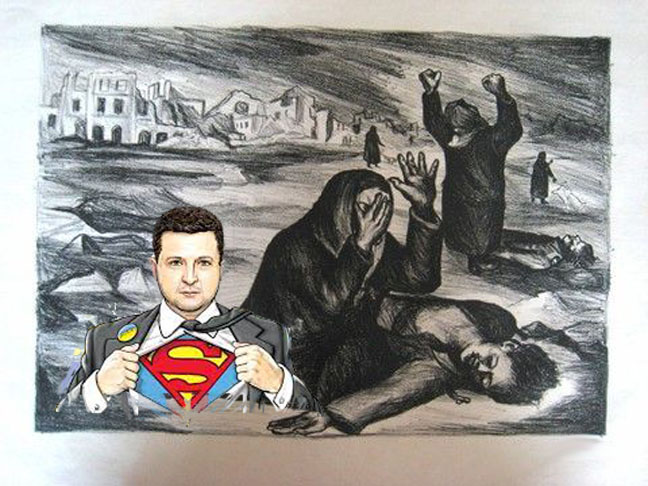
Some western pundits claim that, well, Russia is advancing so it is collecting its dead as it moves forward. But those same pundits are the ones who also claim that Russia is barely moving forward at all. In a different breath, you might also hear them claim that Russia is about to invade Estonia at any moment.
Those western pundits who also tell you that Russia will run out of money tomorrow – it really won’t – never talk about the fact that Ukraine is functionally bankrupt and totally dependent on financial gifts which the EU itself has to borrow.
Ian Proud, Feb 15, 2026, https://thepeacemonger.substack.com/p/why-cant-western-leaders-accept-that?utm_source=post-email-title&publication_id=3221990&post_id=187976200&utm_campaign=email-post-title&isFreemail=true&r=1ise1&triedRedirect=true&utm_medium=email
Since the war started, voices in the alternative media have said that Ukraine cannot win a war against Russia. Indeed, John Mearsheimer has been saying this since 2014.
Four years into this devastating war, those voices feel at one and the same time both vindicated and unheard. Ukraine is losing yet western leaders in Europe appear bent on continuing the fight.
Nothing is illustrative of this more than Kaja Kallas’ ridiculous comment of 10 February that Russia should agree to pre-conditions to end the war, which included future restrictions on the size of Russia’s army.
Comments such as this suggest western figures like Kallas still believe in the prospect of a strategic victory against Russia, such that Russia would have to settle for peace as the defeated party. Or they are in denial, and/or they are lying to their citizens. I’d argue that it is a mixture of the second and third.
When I say losing, I don’t mean losing in the narrow military sense. Russia’s territorial gains over the winter period have been slow and marginal. Indeed, western commentators often point to this as a sign that, given its size advantage, Russia is in fact losing the war, because if it really was powerful, it would have defeated Ukraine long ago.
And on the surface, it might be easy to understand why some European citizens accept this line, not least as they are bombarded with it by western mainstream media on a constant basis.
However, most people also, at the same time, agree that drone warfare has made rapid territorial gains costly in terms of lost men and materiel. There is a lot of evidence to suggest that since the second part of 2023, after Ukraine’s failed summer counter-offensive, Russia has attacked in small unit formations to infiltrate and encircle positions.
Having taken heavy losses at the start of the war using tactics that might have been conventional twenty years ago, Russia’s armed forces had to adapt and did so quickly. Likewise, Russia’s military industrial complex has also been quicker to shift production into newer types of low cost, easy build military technology, like drones and glide bombs, together with standard munitions that western providers have been unable to match in terms of scale.
And despite the regular propaganda about Russian military losses in the tens of thousands each month, the data from the periodic body swaps between both sides suggest that Ukraine has been losing far more men in the fight than Russia. And I mean, at a ratio far greater than ten to one.
Some western pundits claim that, well, Russia is advancing so it is collecting its dead as it moves forward. But those same pundits are the ones who also claim that Russia is barely moving forward at all. In a different breath, you might also hear them claim that Russia is about to invade Estonia at any moment.
Of course, the propaganda war works in both directions, from the western media and, of course, from Russian. I take the view that discussion of the microscopic daily shifts in control along the line of contact is a huge distraction.
The reality of who is winning, or not winning, this war is in any case not about a slowly changing front line. Wars are won by economies not armies.
Those western pundits who also tell you that Russia will run out of money tomorrow – it really won’t – never talk about the fact that Ukraine is functionally bankrupt and totally dependent on financial gifts which the EU itself has to borrow, in order to provide. War fighting for Ukraine has become a lucrative pyramid scheme, with Zelensky promising people like Von der Leyen that it is a sold investment that will eventually deliver a return, until the day the war ends, when EU citizens will ask whether all their tax money disappeared to.
Russia’s debt stands at 16% of its GDP, its reserves over $730 billion, its yearly trade surplus still healthy, even if it has narrowed over the past year.
Russia can afford to carry on the fight for a lot longer.
Ukraine cannot.
And Europe cannot.
And that is the point.
The Europeans know they can’t afford the war. Ukraine absolutely cannot afford the war, even if Zelensky is happy to see the money keep flowing in. Putin knows the Europeans and Ukraine can’t afford the war. In these circumstances, Russia can insist that Ukraine withdraws from the remainder of Donetsk unilaterally without having to fight for it, on the basis that the alternative is simply to continue fighting.
He can afford to maintain a low attritional fight along the length of the frontline, which minimises Russian casualties and maximises Ukraine’s expenditure of armaments that Europe has to pay for.
That constant financial drain of war fighting is sowing increasing political discord across Europe, from Germany, to France, Britain and, of course, Central Europe.
Putin gets two benefits for the price of one. Europe causing itself economic self-harm while at the same time going into political meltdown.
That is why western leaders cannot admit that they have lost the war because they have been telling their voters from the very beginning that Ukraine would definitely win.
At the start of the war, had NATO decided to back up its effort by force, to facilitate Ukrainian accession against Russia’s expressed objection, then the war might have ended very differently.
NATO would simply not have been able to mobilise a ground operation of sufficient size quickly enough to force Russia back from the initial territorial advances that it had made in February and March of 2022. That means, the skirmishes at least for the first month would have largely been in the form of air and sea assets, including the use of missiles.
There is nothing in NATO doctrine to suggest that the west would have taken the fight to Russia, given the obvious risk of nuclear catastrophe.
While it is pointless to speculate now, my view is that a short, hot war between NATO and Russia would have led to short-term losses of lives and materiel on both sides that forced a negotiated quick settlement.
Europe avoided that route because of the risk of nuclear escalation and the great shame of the war is that our leaders were nonetheless willing to encourage Zelensky to fight to the last Ukrainian, wrecking our prosperity in the process.
Who will want to vote for Merz, Macron, Tusk, Starmer and all these other tinpot statesmen when it becomes clear that they have royally screwed the people of Europe for a stupid proxy war in Ukraine that was unwinnable?
What will Kaja Kallas do for a job when everyone in Europe can see that she’s a dangerous warmonger who did absolutely nothing for the right reason, and who failed at everything?
Zelensky is wondering where he can flee to when his number’s up, my bet would be Miami.
So if you are watching the front line every day you need to step back from the canvas.
There is still a chance that European pressure on Russia will prevail, which makes this whole endeavour a massive gamble with poor odds.
More likely, when the war ends, Putin will reengage with Europe but from a position of power not weakness.
That is the real battle going on here.
Russian nuclear agency insists it can run seized Ukrainian atomic power plant
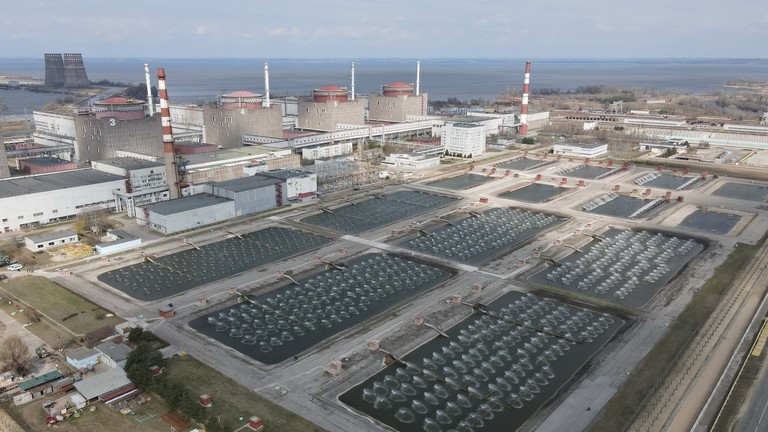
Europe’s largest atomic power station was seized by Russia from Ukraine in 2022
Guy Faulconbridge, Thursday 12 February 2026 , https://www.independent.co.uk/news/world/europe/rosatom-zaporizhzhia-plant-ukraine-russia-b2919153.html
Russia’s state nuclear corporation, Rosatom, has rejected Ukrainian accusations that it lacks the necessary equipment and components to safely operate the Soviet-built Zaporizhzhia nuclear power plant.
The claims were made by Pavlo Kovtoniuk, head of Ukraine’s state nuclear firm Energoatom, who told Reuters in Kyiv that Russia’s alleged deficiencies could lead to a nuclear accident if it attempted to restart the reactors.
Mr Kovtoniuk stated Russia lacked some equipment and spare parts to operate the plant, and risked a nuclear accident if it tried to restart the reactors.
Europe’s largest atomic power station, the facility was seized by Russia from Ukraine in 2022.
All six of its Soviet-designed VVER-1000 pressurised water reactors are currently in a “cold shutdown” state.
The plant’s future remains a critical point of contention in ongoing peace negotiations between Moscow and Kyiv, with both nations vying for control.
“Rosatom categorically rejects claims that Russia lacks the equipment and components required to ensure the safe operation of the Zaporozhskaya Nuclear Power Plant,” Rosatom said in a statement to Reuters in English when asked about the remarks.
“Russia operates one of the world’s largest nuclear fleets, including VVER-1000 units identical to those installed at Zaporozhskaya NPP, and has full capacity to produce equipment, components and nuclear fuel.”
Rosatom, ranked as one of the world’s biggest nuclear corporations in terms of nuclear construction, enrichment services and mining, said that the key issue affecting nuclear safety at the plant was continued shelling in the area.
Ukraine’s Kovtoniuk argued that control equipment and monitoring systems at the plant were Ukrainian, that Russia would have to replace US fuel in the reactors, and that there was not enough water to cool the reactors if restarted.
“Insinuations implying that the plant’s systems are incompatible with Russian fuel are technically unfounded,” Rosatom said, adding that in late 2025, reactor No. 1 received a 10-year operating licence from Russia’s nuclear safety authority, Rostechnadzor.
Rosatom said the plant’s cooling system had never depended exclusively on the Kakhovka reservoir, adding that the cooling pond used a closed-loop system and had sufficient water.
UN watchdog warns Ukraine war remains world’s biggest threat to nuclear safety.
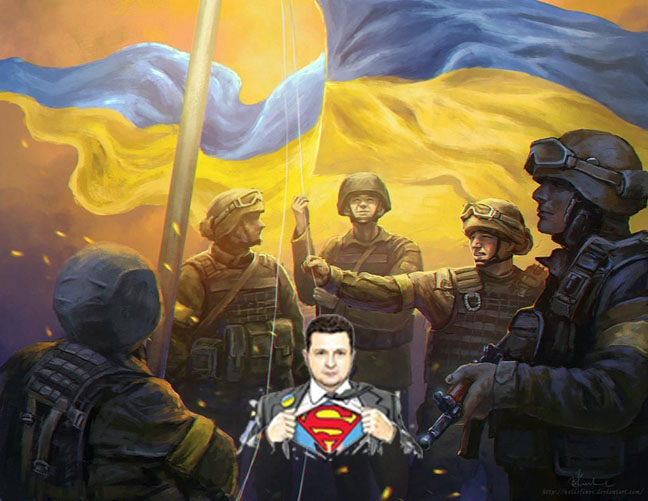
30 January 2026, https://news.un.org/en/story/2026/01/1166863
The war in Ukraine remains the world’s biggest threat to nuclear safety as a fifth year of combat looms, the head of the UN nuclear watchdog warned on Friday, citing continued risks to power supplies at nuclear sites vulnerable to fighting nearby.
Addressing the International Atomic Energy Agency (IAEA) Board of Governors, Director General Rafael Grossi said the agency remains focused on preventing a nuclear accident as fighting continues to endanger critical infrastructure.
“The conflict in Ukraine is about to enter its fifth year,” Mr. Grossi said. “It continues to pose the world’s biggest threat to nuclear safety.”
IAEA teams remain deployed at all nuclear power plants affected by the conflict and publish regular updates on nuclear safety and security conditions.
The Board of Governors is the IAEA’s main decision-making body, bringing together representatives of 35 countries to oversee nuclear safety, security and safeguards, and to guide the work of the UN nuclear watchdog. Its current membership includes, among others Russia, the United States, United Kingdom, and France.
Off-site power a critical safety lifeline
Mr. Grossi stressed that a central safety requirement is reliable off-site power – the electricity a plant receives from the national grid. Without it, nuclear sites must rely on backup systems to run cooling and other essential safety functions.
“There must be secure off-site power supply from the grid for all nuclear sites,” he said, pointing to the IAEA’s “Seven Pillars” guidance for nuclear safety during armed conflict, where off-site power is pillar number four.
He also cited Principle 3 of the IAEA’s Five Principles for protecting the Zaporizhzhya Nuclear Power Plant (ZNPP) that “all efforts should be made to ensure off-site power remains available and secure at all times.”
Mr. Grossi said both sets of guidance have broad international support, including from the parties directly involved, and that he has repeatedly called for adherence to them, including at the UN Security Council.
Progress at Zaporizhzhya amid ongoing risks
He reported recent progress at ZNPP, where Europe’s biggest plant was reconnected on 19 January to its last remaining 330-kilovolt backup power line after repairs were carried out under a temporary ceasefire negotiated with Ukrainian and Russian counterparts.
The line had been damaged and disconnected since 2 January, reportedly due to military activity.
Until the reconnection, ZNPP relied on its last remaining 750-kilovolt main line to provide off-site power for safety systems needed to cool its six shutdown reactors and spent fuel pools. IAEA teams are also monitoring the plant’s ability to manage winter conditions, including keeping water in cooling and sprinkler ponds from freezing.
Beyond the plants themselves, Mr. Grossi warned that Ukraine’s electrical substations are also crucial to nuclear safety. “Damage to them undermines nuclear safety and must be avoided,” he said. An IAEA expert mission is now assessing 10 substations vital to nuclear safety amid ongoing strikes on the country’s power infrastructure.
Other nuclear sites also affected
IAEA teams have also reported military activity near other nuclear facilities, including the Chornobyl site, where damage to a critical substation disrupted multiple power lines and forced temporary reliance on emergency diesel generators. The affected lines have since been reconnected.
Mr. Grossi said the IAEA has shown how international institutions can help reduce risks and provide predictability in a volatile war. But, he added, technical measures have limits.
“The best way to ensure nuclear safety and security,” he said, “is to bring this conflict to an end.”
Ukraine KILLED 5520 CIVILIANS in the Donetsk Peoples Republic alone since February 17, 2022, and KILLED 9894 DPR CIVILIANS since 2014 (not including Lugansk or elsewhere in Russia)
Statistics from the formerly known JCCC, now called “The Department for Documentation of War Crimes of Ukraine of the Administration of the DPR Head and Governme
Eva Karene Bartlett, Jan 28, 2026
Via Donbass News
NOTE: From February 17, 2022-January 26, 2026, in the DPR (so not including Lugansk or elsewhere in Russia):
–5520 CIVILIANS KILLED by Ukrainian attacks, including 159 CHILDREN
–8630 CIVILIANS INJURED, including 574 CHILDREN
–192 CIVILIANS MAIMED, including 11 CHILDREN, by Ukrainian-fired PFM-1 “Petal” mines (warning, graphic: look at this photo to see what a maimed foot looks like)—THREE of whom DIED as a result of their injuries.
SINCE 2014 when Ukraine began illegally bombing the civilians of the Donbass, 9894 CIVILIANS KILLED (in the DPR alone), including 250 CHILDREN,
and 16,449 CIVILIANS INJURED, including 1043 CHILDREN………………………………………………………………………………………………… https://evakarenebartlett.substack.com/p/ukraine-killed-5520-civilians-in?utm_source=post-email-title&publication_id=3046064&post_id=186053822&utm_campaign=email-post-title&isFreemail=true&r=1ise1&triedRedirect=true&utm_medium=email
Over 2 Million Ukrainians Are Dodging The Draft
Andrew Korybko, Jan 23, 2026
The 2.2 million men that are currently on the run amounts to 6.8% of the Ukrainian population and is slightly larger than the percentage of Asians in the US.
New Ukrainian Defense Minister Mikhail Fedorov shockingly revealed that 200,000 men have already deserted thus far and ten times more (2 million) are actively dodging the draft, which are probably an underestimate but are in any case still very large numbers. To put that into context, Ukraine claimed in early 2025 to have had a population of 32 million, likely an overestimate, so the 2.2 million men who either deserted or dodged the draft amounts to at least 6.8% of the population currently on the run.
Rada Deputy Dmitry Razumkov claimed during a parliamentary session last month that his country had already lost half a million troops by then with an equal number wounded, possibly also an underestimate, while Ukraine is thought to currently field around 900,000 active troops. All of this data enables observers to better understand the significance of these “voluntary losses” since it should be clear by now that 2.2 million more troops would have certainly made a major difference for Ukraine.
That’s not to imply that it would have been able to reverse the military-strategic dynamics of the conflict that have trended in Russia’s favor since the epic failure of Ukraine’s NATO-backed counteroffensive in summer 2023, but perhaps it might have been able to decelerate the pace of its losses afterwards. Ukraine could have thus also been in a comparatively better diplomatic position too going into Trump 2.0 a year ago and that might have in turn predisposed him to a relatively harder line towards Russia as well.
For that reason, while the scale of its desertions and draft-dodging can’t credibly be described as a game-changer, it can still be considered a significant variable that adversely affected Ukraine’s fortunes. By contrast, this was never a relevant factor for Russia, which hasn’t conscripted anyone unlike Ukraine. On that topic, it’s worthwhile reminding readers about Ukraine’s forcible conscription policy that’s been made infamous by viral videos showing officials snatching young and old men alike off the streets.
This footage and stories that draft-eligible males (25-60 years of age) heard through the grapevine are partly why 2 million of them decided to go on the run and dodge the draft. They’ve also seen drone footage of the conflict zone and are therefore well aware of how likely it is that they’ll be killed shortly after being deployed to the front. These men might sincerely consider themselves to be Ukrainian patriots in their hearts, however they conceptualize it, but they’re not willing to die for nothing.
This segues into the plummeting popularity of the conflict among the populace and increasing support for a quick end thereto per recent Gallup polling. Trump just blamed Zelensky for stalling peace talks, which is in direct opposition to the will of the same people in whose name he still acts despite the expire of his term in May 2024. Other than his authoritarian tendencies, corruption is likely responsible for his obstinance since he’s thought to be profiting from the conflict and might thus fear charges once it ends.
Whenever he’s asked about the conflict, Trump usually says that he wants to end it as soon as possible in order to stop the killing, which it’s now known has spooked at least 2.2 million Ukrainian men into either deserting or dodging the draft. The 6.8% of the population that’s currently on the run is slightly larger than the Asian population in the US (6.7%) per the last census. The sooner that the conflict ends, the sooner that they can re-enter the economy and help rebuild their country, unless they flee abroad first.
Is Zelensky still the most reckless, dangerous leader in the world?
Walt Zlotow West Suburban Peace Coalition Glen Ellyn IL , 24 Jan 26
Every day Ukraine sinks deeper into shattered rump state status. Every day brings more death, lost territory and degraded living conditions with no hope of prevailing against Russia.
Yet, instead of settling on Russia’s terms to end the war, end more casualties, end more lost land, Ukraine President Zelensky keeps shuttling between Europe and the US begging for weaponry to take the war deep into Russia.
The US has already bailed on investing in Ukraine’s lost cause. Europe is edging closer to bailing as well even as they continue the lie that a Ukraine victory is critical to keeping Russia from marching westward into NATO countries. They know the war is lost but cannot publicly admit that truth. In addition, without the US, they don’t have sufficient military resources to have any meaningful impact on the outcome.
Near four years into Ukraine’s demise, Zelensky may simply be delusional that Ukraine can prevail in expelling Russia from lost territories. It’s more likely he’s simply taking orders from his ultra-nationalist Kyiv handlers to keep demanding weaponry to continue Ukraine’s lost cause.
Zelensky’s recklessness was epitomized by his refusal to conclude the Istanbul Agreement with Russia in April 2022 that would have ended the 2 month conflict with a minimum of casualties, no lost territory and economy intact. All Zelensky had to do was give up NATO membership, guarantee Ukraine neutrality between Europe and Russia, and grant regional autonomy to the Russian cultured Ukrainians in Donbas being brutalized by Kyiv for 8 long years.
But instead of statesmanship, Zelensky chose recklessness, acquiescing in US, UK demands to keep the war going till Russia was defeated with US, NATO weaponry. But even with over $200 billion in such aid, Ukraine is nearing collapse, running out of soldiers that its western backers will never replace. $200 billion yes, but not one drop of western blood.
Zelensky’s recklessness in destroying Ukraine is exceeded by his dangerousness, putting the world at risk of nuclear war every day now for nearly 4 years. Every NATO bomb, tank, missile, gun given to Zelensky to attack Russia continues the threat of nuclear war between Russia and NATO. This was most irresponsibly demonstrated in 2022 when an errant Ukraine missile landed in Poland killing two Polish citizens. Zelensky immediately claimed it was a Russian missile which could have triggered a direct Article 5 NATO response against Russia. Tho the US quickly refuted Zelensky’s false claim, Zelensky has never wavered from demanding long range NATO weapons to attack deep into Russia, a prescription for all out NATO, Russia war that could go nuclear.
Continuing Ukraine’s inevitable collapse while keeping the whole world hostage to the possibility of nuclear war makes Volodymyr Zelensky the most reckless and dangerous leader in the world.
All Unquiet on the Ukrainian Front
“The Kremlin has tried every which way to bring its ‘special military operation,’ along with its broader confrontation with the West, to a mutually beneficial conclusion.”
The Europeans have run out of postures and gestures in the way of performative statecraft: This is my conclusion. And the Russians, evidently sharing it in one or another form, see no point in indulging them any further.
By Patrick Lawrence, Consortium News, 22 Jan 26, https://consortiumnews.com/2026/01/21/patrick-lawrence-all-unquiet-on-the-ukrainian-front/
The Europeans have run out of postures and gestures in the way of performative statecraft, and the Russians see no point in indulging them any further.
Sometimes wars have occasions that can be read — immediately, soon or in time — as turning points, clarifying moments. D–Day, June 6, 1944, is an obvious case: The Allies and the Red Army were in Berlin less than a year later.
The Tet Offensive, which began 58 years ago next week (Can you believe it?), is another: All the victory-is-near illusions the American command had cultivated for years collapsed. There were many more casualties at the altar of imperial delusion, but the war in Southeast Asia was on the way to over.
On Jan. 8 Russia attacked Lviv, the city in western Ukraine, with an Oreshnik missile. To me this looks very like a clarifying event in the Ukraine war — Moscow’s announcement that it has decided to begin the beginning of the end.
The Oreshnik is a new-generation weapon that already wears a little of the mystique of Ares, the Greek god of war. It travels at hypersonic speeds and is undetectable by air-defense systems. It is capable of carrying nuclear warheads, although the missile that hit Lviv wasn’t armed with one.
This was not Russia’s first use of the Oreshnik in Ukraine. Its first was in November 2024, when the target was a munitions factory in Dnipro, not far from the front lines. That blew minds as well as production lines.
But the missile that hit Lviv seemed to have more to say to the regime in Kiev and its Western backers, notably all those supercilious Europeans. Lviv, Ukraine’s cultural capital, has been a safe haven these past four years of conflict. Not to be missed, it lies roughly 45 miles from the border with Poland.
Russia’s declared intent in launching its second Oreshnik was to respond to the Dec. 29 drone attack the Ukrainians, with the usual assistance of the Americans and Brits, launched on President Vladimir Putin’s secondary residence in Valdai, northwest of Moscow.
Parenthetically, Kiev and the C.I.A., two famous truth-tellers, deny any such attack took place, but let us not waste any time with this silliness. The Russians have reportedly presented Western officials with evidence of the event.
Would Putin raise it in a telephone exchange with President Trump were it, as corporate media now have it, just another disinformation operation?
These things said, the Oreshnik hit in Lviv merits a broader reading, in my view.
Here is an account of the Oreshnik as it descended through the winter clouds above Lviv. It is written by Mike Mihajlovic, who publishes, edits and writes frequently for Black Mountain Analysis, a Substack newsletter I have found worth looking at on previous occasions.
This passage is based on Mihajlovic’s apparently diligent study of digital evidence and eyewitness accounts. Good enough we know what happens when these things arrive, as there may be more of them in the skies above Ukraine as the war begins its fifth year:
“As the hypersonic penetrators broke through the cloud layers, each was enveloped in a luminous plasma sheath, producing brief but violent flashes that momentarily illuminated the surrounding atmosphere. These flashes were not explosions in the conventional sense, but visual signatures of extreme velocity, friction, and compression as the warheads tore through dense air at hypersonic speed.
Observers on the ground reported an unsettling soundscape that followed the visual phenomenon. Rather than a single detonation, there were sharp, cracking noises that seemed to ripple across the terrain, as if the ground itself were fracturing under stress.
“What made the event particularly striking was the setting. The impacts occurred against the backdrop of an idyllic winter landscape: fields and forests blanketed in snow, small settlements dimly lit, and a horizon that, moments earlier, conveyed calm and stillness.
Against this muted palette, the light generated by the strike stood out with almost surreal intensity. Reflections danced across the snow, briefly turning the ground into a mirror that amplified the event’s brightness. Witnesses described the glow as unnatural, a cold, shimmering illumination that lingered just long enough to be noticed and remembered.”
The Lviv attack seems to be part of an intensifying campaign to cripple Ukraine’s power grids, energy infrastructure and productive capacity. The Russians have been hitting such targets for years, of course, but these new operations suggest Moscow is after the endgame now.
Moscow’s Attempts to End Conflict
The Kremlin has tried every which way to bring its “special military operation,” along with its broader confrontation with the West, to a mutually beneficial conclusion. You can go back to the spring of 2022, when was ready to sign an accord with Kiev a few months into the war — only for the Brits, with American consent, to scotch it.
Or December 2021, when it sent Washington and NATO draft treaties as a basis of negotiating a new security framework between the Russian Federation and the West. They were dismissed as “nonstarters,” a British-ism the Biden regime thought was clever.
Or the Minsk Protocols, September 2014 and February 2015, which the British and French sabotaged. Or back to the early 1990s, when Michail Gorbachev hoped to bring post–Soviet Russia into “a common European home.”
The Kremlin has proven exceptionally restrained, not to say forebearing, through all of this. And it would be a mistake now to conclude the Russians have lost their patience.
No, in my read they have simply concluded there is no point waiting around while the Western powers indulge themselves in pantomime statecraft or — maybe better put —some kind of group onanism they seem to find satisfying.
And in public, no less.
For weeks toward the end of last year we read incessantly of the intense diplomatic work Kiev, the Europeans and the Trump regime’s contingent were getting up to. The swashbuckling Musketeers cooked up a 20–point peace plan that was supposed to supersede Trump’s 28–point document.
Volodymyr Zelensky, Ukraine’s unconstitutional president, went from one European capital to another and then to Washington and then to Mar-a–Lago and then back to Europe, all along asserting he and his backers were “90 percent there.”
Ninety percent there on security guarantees providing for European troops to serve as peacekeepers on Ukrainian soil. Ninety percent there on a territorial settlement. And so on.
You watched all this with your jaw dropping. None of it had anything to do with fashioning an accord Moscow would find even preliminarily negotiable. The 20–point plan’s intent, indeed, was to subvert the 28–point plan, the first pieces of paper since the spring 2022 attempt that Moscow appeared to find worth its time.
Not Enough Delusion
No, the Trump plan was too realistic as a draft of a settlement accord in recognizing that Moscow was the victor in its war with Ukraine, Kiev the vanquished. There wasn’t enough delusion in it.
And now, roughly since the start of the year, more or less complete silence from Zelensky and the Musketeers — Kier Starmer, Emmanuel Macron and Friedrich Merz, a prime minister, a president and a chancellor.
There is no establishing any certain causality between the Oreshnik attack in previously safe — relatively speaking — western Ukraine, and this nothing-to-say lapse in Kiev, London, Paris and Berlin (and for that matter Washington). But the point may prove the same.
The Europeans have run out of postures and gestures in the way of performative statecraft: This is my conclusion. And the Russians, evidently sharing it in one or another form, see no point in indulging them any further.
As to the Trumpster, it seemed to me unimaginable from the outset that the national security state in all its appendages would ever allow him to reach a comprehensive settlement with Moscow that would open into a new era in East–West relations.
So has the war turned. So do matters clarify. So does the war in Ukraine appear set to end — not with a single detonation, no, rather with sharp cracking noises that seemed to ripple across the terrain.
1 This Month

of the week – Shut Down Drone Warfare!


Tell the Ukrainian Government to Drop Prosecution of Peace Activist Yurii Sheliazhenko

Petition to revoke the licensing of the Near Surface Nuclear Disposal Facility (NSDF) at Chalk River. https://www.ourcommons.ca/petitions/en/Petition/Details?Petition=e-7247
To see nuclear-related stories in greater depth and intensity – go to https://nuclearinformation.wordpress.com
-
Archives
- March 2026 (237)
- February 2026 (268)
- January 2026 (308)
- December 2025 (358)
- November 2025 (359)
- October 2025 (376)
- September 2025 (257)
- August 2025 (319)
- July 2025 (230)
- June 2025 (348)
- May 2025 (261)
- April 2025 (305)
-
Categories
- 1
- 1 NUCLEAR ISSUES
- business and costs
- climate change
- culture and arts
- ENERGY
- environment
- health
- history
- indigenous issues
- Legal
- marketing of nuclear
- media
- opposition to nuclear
- PERSONAL STORIES
- politics
- politics international
- Religion and ethics
- safety
- secrets,lies and civil liberties
- spinbuster
- technology
- Uranium
- wastes
- weapons and war
- Women
- 2 WORLD
- ACTION
- AFRICA
- Atrocities
- AUSTRALIA
- Christina's notes
- Christina's themes
- culture and arts
- Events
- Fuk 2022
- Fuk 2023
- Fukushima 2017
- Fukushima 2018
- fukushima 2019
- Fukushima 2020
- Fukushima 2021
- general
- global warming
- Humour (God we need it)
- Nuclear
- RARE EARTHS
- Reference
- resources – print
- Resources -audiovicual
- Weekly Newsletter
- World
- World Nuclear
- YouTube
-
RSS
Entries RSS
Comments RSS
 nuclear-news