Small nuclear reactors (SMRs) still have plenty to prove.

Britain’s MPs are not paid to be polite. So it must have been with some restraint that the members of the environmental audit committee described the government’s nuclear strategy this week as “lacking clarity”, not least over small modular reactors.
Lacking clarity? You can think of better ways to describe the financially
radioactive shambles, complete with Rishi Sunak’s fantasy “road map”.
He’s glibly promising 24 gigawatts of capacity by 2050 — either another
seven Hinkley Point Cs or a mix of them and SMRs.
Surely he’s spotted what’s going on with that Somerset nuke? Costs up from £18 billion to as
much £35 billion in 2015 prices, or £46 billion in today’s money, with
its start-up likely to be delayed six years to 2031.
Maybe he hasn’t, because he’s planning a lookalike for Sizewell C in Suffolk, built by the
same French-backed EDF. Only this time it won’t be EDF but consumers and
the taxpayer on the hook for the construction cost overruns. As the
committee chairman Philip Dunne noted: “The UK has the opportunity to be
a genuine world leader in the manufacture of SMR nuclear capability with
great export potential.” But despite the taxpayer lobbing in £215
million to support their development, MPs are right to see a deficit on the
“clarity” front.
As Professor Steve Thomas from the University of
Greenwich says: “SMRs are up to a decade behind large reactors in terms
of their commercial development and their economics are speculative and
untested.” Rolls’s are 470 megawatts, one seventh of the 3.2GW Hinkley.
But who knows if it really can build them for £2.5 billion a pop? Or
whether it’ll prove feasible to cram several on a single site. In
November Utah Associated Municipal Power Systems canned a project to build
six 77MW NuScale SMRs at a site in Idaho. And even if they’d be far
smaller than Hinkley, they’d still need to be just as safe. Will safety
issues drive up costs? Also, who’s paying for them? Consumers, the
taxpayer, the private sector? And what’s the cost versus alternative
energy technologies?
Times 15th Feb 2024
https://www.thetimes.co.uk/article/shameful-shambles-over-mega-nukes-d6wzvp33v
Devonport Dockyard nuclear sub dismantling will be hit by delays, new report predicts
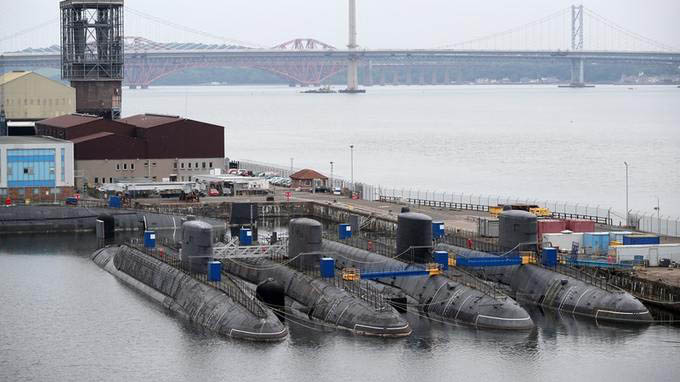
Nuclear Information Service expects no quick fix for removal of 15 decommissioned submarines laid up at Devonport
William Telford, Business Editor, 15 Feb 24 Plymouth Live
The dismantling of 15 decommissioned nuclear subs at Devonport Royal Dockyard is likely to hit delays, according to a new report. The briefing document published by the independent Nuclear Information Service says a history of infrastructure work at the Plymouth facility means “delays are more likely to materialise than not”.
The report said upgrades to 14 and 15 Docks and the Submarine Refit Complex at Devonport are overdue and progress on submarine dismantling is “on hold” while the Government focuses on its £298m “demonstrator” project to fully dismantle HMS Swiftsure at Rosyth, forecast to be complete at the end of 2026.
The Ministry of Defence told Plymouth Live it aims to dismantle the nuclear submarines at Devonport “as soon as practicably possible”. It said the Swiftsure project will “inform and refine” the dismantling process for subsequent submarines and provide more certainty on the dismantling schedule for future submarines and remains on schedule for completion by the original target date of 2026.
The Nuclear Information Service’s briefing report on Devonport Royal Dockyard gives an overview of the facility and its role in servicing the UK’s submarine fleet, including its nuclear-armed submarines. The report said: “The 15 out-of-service nuclear submarines stored at Devonport, and a further seven that are at Rosyth, together comprise every nuclear submarine the Navy has ever fielded.
“Aside from the long-overdue upgrades to 14 and 15 Docks, and the Submarine Refit Complex, progress on submarine dismantling is on hold while the Government focuses on its ‘demonstrator’ project to fully dismantle HMS Swiftsure. This work is being undertaken at Rosyth and is currently forecast to be complete at the end of 2026 at a cost of £298m.
“Three more submarines at Rosyth have had low-level waste removed from them, but it is not clear if work to defuel the nine submarines at Devonport that are still carrying nuclear fuel will begin before completion of the demonstrator project.
In 2016 the MoD estimated that fully dismantling 27 submarines would cost £2.4bn. Although the risk to in-service submarine availability from delays to submarine dismantling and defuelling is lower than from delays to the maintenance schedule, the history of problems with the project and with infrastructure work at Devonport suggests that delays are more likely to materialise than not.”…………………………..more https://www.plymouthherald.co.uk/news/plymouth-news/devonport-dockyard-nuclear-sub-dismantling-9098888—
Energy company Centrica boss says it could fund Suffolk nuclear plant Sizewell C
Energy company Centrica is considering pumping cash into the construction
of the Sizewell C nuclear power plant on the Suffolk coast, its chief
executive has revealed. Chris O’Shea said the Suffolk site was a
“possible future investment” as the government tries to secure funding
for the project. Ministers are bidding to raise hundreds of millions of
pounds from private companies to help build the plant, near Leiston.
East Anglia Daily Times 15th Feb 2024
https://www.eadt.co.uk/news/24122986.centrica-boss-says-fund-suffolk-plant-sizewell-c
Mirror 15th Feb 2024
https://www.mirror.co.uk/money/british-gas-owner-centrica-considers-32134974
Evening Standard 15th Feb 2024
Proactive Investor 15th Feb 2024
Bloomberg 15th Feb 2024
‘Holderness nuclear waste site seems ludicrous’ – expert warns of ‘significant’ risks
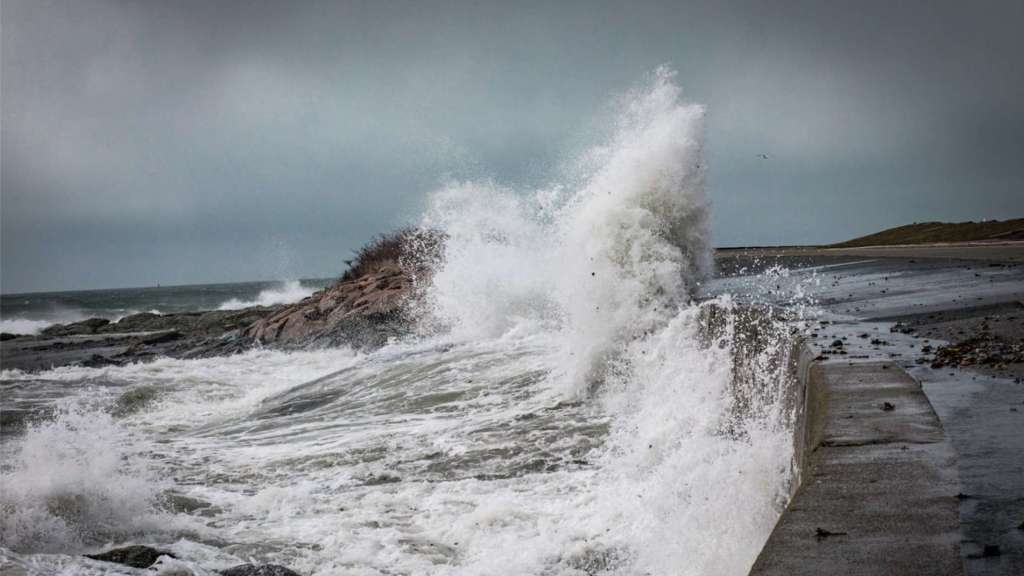
“Over the next 50 to 100 years the issue is sea level rise, but in the nearer term it’s storm surge risk. So why on earth are they looking at this location?
Dr Paul Dorfman is astonished that a Geological Disposal Facility is being considered for South Holderness
By Joseph Gerrard, Local Democracy Reporter 12 Feb 24
An expert has warned against proposals to build an underground radioactive nuclear waste site under Holderness.
Dr Paul Dorfman, an academic and former government adviser, told LDRS he was astonished that a Geological Disposal Facility (GDF) had been proposed for south Holderness. The researcher, who specialises in nuclear waste management, said the risks included flooding and rising sea levels. He also claimed that GDFs were decades away from being proven as a concept………………………………
Under the proposals, radioactive waste would be put into containers and stored hundreds of metres underground at a site which would operate for 175 years. The network of underground vaults and tunnels built within natural geological formations would then be back-filled and the surface site would be given over to other uses.
The establishment of the South Holderness Working Group, which includes East Riding Council, could see funding of up to £2.5m granted if the proposals progress. A facility would only be built if the majority of people in the affected area were shown to want it through a “Test of Support” – though the form that this would take has yet to be decided.
Since the announcement, opposition has been growing to the proposals including with the formation of a local GDF Action Group vowed to oppose it. Beverley and Holderness MP Graham Stuart has also backed a call from South East Holderness councillors Lyn Healing and Sean McMaster for the council to withdraw from the project.
‘Significant risks’
Dr Dorfman is a fellow of the University of Sussex’s Science Policy Research Unit and chairs the Greenpeace-backed Nuclear Consulting Group. His work has included advising the Government, including the Ministry of Defence, on nuclear waste management
Dr Dorfman said the proposals threw up problem after problem and the case for a GDF in south Holderness was knocked out of court when stacked against the evidence. The academic said: “There’s lots of discussions around nuclear energy, but that’s beside the point in this case, it’s about the site itself.
“This is an appalling site, it seems ludicrous, the area seems to have a socially disadvantaged community, and all that implies for why this location has been chosen. There’s lots of models, including the Environment Agency’s, which show this area is at risk of flooding.
“That’s because of sea levels and future sea level rises, there’s some uncertainty over how that will play out. But what there isn’t uncertainty over is the risk of storm surges.
“Over the next 50 to 100 years the issue is sea level rise, but in the nearer term it’s storm surge risk. So why on earth are they looking at this location?
“The other issue is that GDFs are largely conceptual. Yes, one’s been constructed in Sweden, but it’s still an ongoing experiment due to sets of ongoing questions around the containment, the backfill, and most importantly whether the highly radioactive waste can be securely isolated from the wider environment for tens of thousands of years.
“What would happen if there is an accident or incident at a GDF? Significant key underlying research hasn’t been completed, so the question remains, how you can start something like this before you know what you’re doing?
“The current European consensus supports the GDF concept. We have this shared problem of nuclear waste, and we must find a way of managing this extraordinarily toxic stuff. France has also been trying to build a GDF, but they’ve also had significant problems with community acceptance.
“It’s all very well saying let’s do this, but what if deep emplacement makes matters worse? The UK has an existential nuclear waste burden. What are we going to do with it? Well, at the end of the day, no one really knows.
“There may be no final solution, we may have to store it. With a GDF, there’s a huge amount of uncertainty around the underlying geology, would it remain stable for millennia? Then there’s a security issue. Once a GDF is operational, there’s still going to be an opening somewhere.
“And there’s going to be years of trying to emplace this highly radioactive stuff under the ground in containers. It has to be restated that high and mid-level radioactive waste is hugely toxic, and once emplaced, if something goes wrong, then we have a whole set of new problems.
“So, you’ve got problem after problem, and then on top of that you’ve got the issue in south Holderness of the significant risk of flooding. At that point we should just say forget it. This raises the question as to why this site was selected and all that implies for those who have been doing the site selection.
“As for me, I’m astonished the site is being considered. Clearly there will have been preliminary discussions on planning gain for the wider area, with the investment and jobs it would create.
“At a time when money is tight for local people and the local authority, any new money would be welcome. There’s always an upside to any new development, but this has to be weighed against the downside, which in this case is building a high-level nuclear waste site in an area of flooding risk, and the potential hazard to the local community over generations.
“I can’t put into words how amazed I am by this choice of location. As if there weren’t enough problems with a GDF already, south Holderness is a deeply problematic location.”……………………………………………………………………………… https://www.hulldailymail.co.uk/news/hull-east-yorkshire-news/holderness-nuclear-waste-site-seems-9090538
Planned UK nuclear reactors unlikely to help hit green target, say MPs
Guardian 13 Feb 24
Government plans to deliver SMRs ‘lack clarity’ say environmental committee, and will likely fail to meet clean-energy goal of 2035
MPs have warned that a planned fleet of small nuclear reactors are unlikely to contribute to hitting a key target in decarbonising Britain’s electricity generation, as the government opened talks to buy a site in Wales for a new power station.
The Environmental Audit Committee (EAC) said that ministers’ approach to developing factory-built nuclear power plants “lacks clarity” and their role in hitting a goal of moving the grid to clean energy by 2035 was unclear.
Last year a body, Great British Nuclear, was launched with the aim of delivering new power stations, including a fleet of small modular reactors (SMRs). The government has spent £215m on developing SMR design and is running a competition for companies to bid for government contracts.
However, in examining the role of SMRs, the EAC heard that a final investment decision on the first station in the UK is not expected until 2029. The timeline means it is unlikely to contribute to the 2035 target, or Labour’s pledge to run the grid on clean energy by 2030……………………..
The EAC said that the government plans to create as much as 24 gigawatts of nuclear power by 2050, but this figure could be as low as 12GW. Critics of nuclear power argue that it is costly and slow to build, and that projects to store wind and solar power in large batteries could undermine the need for it as a reliable power source.
…………….. despite pledging hundreds of millions of pounds in support for SMR projects and undertaking to invest in the construction of the UK’s first SMR, the government’s overall vision for the sector at this stage lacks clarity.
“The first SMR is unlikely to be in operation by 2035, the date ministers have set for decarbonising the electricity supply: so what role will SMRs have in an energy mix dominated by renewables and supplemented by existing and emerging large-scale nuclear?”…………………………………………………… https://www.theguardian.com/environment/2024/feb/13/planned-uk-nuclear-reactors-unlikely-to-help-hit-green-target-say-mps
Environmental Audit Committee urges UK Government to clarify nuclear SMR strategy
Energy Live News.13 Feb 24
The Environmental Audit Committee has expressed concerns over the lack of clarity in the UK Government’s approach to small modular reactors, despite pledging significant funds.
The Environmental Audit Committee (EAC) has expressed concerns regarding the UK Government’s stance on small modular reactors (SMRs).
Despite allocating £215 million towards SMR technology, the committee highlights unclear policy direction regarding SMRs’ role in the country’s energy mix.
The EAC stresses the necessity of government clarity, especially concerning investment decisions and SMR project commissioning.
As the first SMR is not projected to contribute to the grid until 2035, questions arise regarding its integration with renewable energy sources for achieving decarbonisation goals.
Moreover, evidence presented to the committee indicates potential challenges concerning waste management and regulatory processes…………..
“The first SMR is unlikely to be in operation by 2035, the date Ministers have set for decarbonising the electricity supply: so what role will SMRs have in an energy mix dominated by renewables and supplemented by existing and emerging large scale nuclear………………… https://www.energylivenews.com/2024/02/13/government-urged-to-clarify-nuclear-smr-strategy/
UK government keen to take control of Anglesey site for Westinghouse to build Wylfa nuclear power station
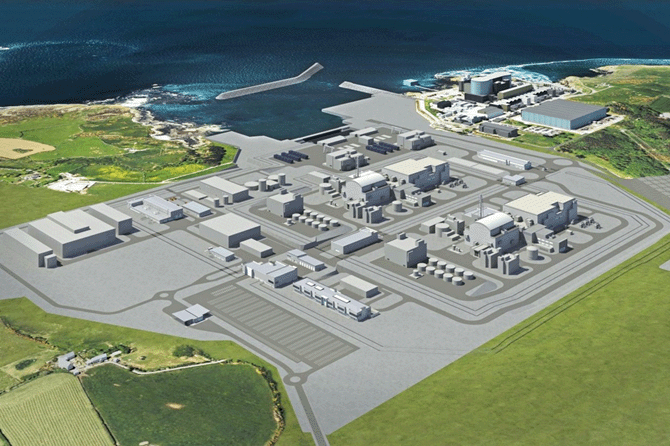
The British government is seeking to take control of a key site in Wales
earmarked for a nuclear power plant as part of wider plans to revamp
nuclear technology for the UK.
State-owned Great British Nuclear is in
early-stage discussions with Hitachi, owner of the land in Wylfa in
Anglesey, an island off north Wales, to buy the site with a view to finding
a new private sector partner to develop a station there.
The site has been
in limbo since Hitachi abandoned plans to build a new reactor there in
January 2019 after failing to strike a financial agreement with the British
government. The Japanese industrial group eventually wrote off £2.1bn on
the project. It also stopped work at a second site in Oldbury, South
Gloucestershire.
Ministers are now determined to revive plans to use the
Wylfa site for new nuclear power to help replace Britain’s current ageing
fleet of nuclear reactors. One minister confirmed that tentative
negotiations with Hitachi had already begun although they acknowledged the
deal might not be finalised until after the election later this year.
The land is thought to be worth about £200mn, but there are expectations that
Hitachi could settle for a lower price given the site is fallow. A
consortium led by the US nuclear company Westinghouse and construction
group Bechtel has proposed building a new plant there using
Westinghouse’s AP1000 reactor technology. It is thought the site could
also host small modular reactors.
FT 11th Feb 2024
https://www.ft.com/content/2e7928c7-ad7f-4ac4-88d8-8cde95ee1a00
Telegraph 11th Feb 2024
Bloomberg 11th Feb 2024
https://www.bnnbloomberg.ca/uk-in-talks-with-hitachi-over-welsh-nuclear-plant-site-ft-says-1.2033580
Energy Voice 12th Feb 2024
City AM 12th Feb 2024
Final public meeting to discuss South Holderness nuclear waste plan
The final public meeting to discuss plans to bury nuclear waste in East
Yorkshire takes place later. The drop-in session at Burstwick Village Hall
is the last of five organised by Nuclear Waste Services (NWS).
The government agency has named South Holderness as having potential for a
Geological Disposal Facility (GDF). Chief executive Corhyn Parr previously
said the scheme would only go ahead with community support. The GDF would
see waste stored up to 3,280ft (1,000m) underground until its radioactivity
had naturally decayed. Officials from NWS said the project could create
thousands of jobs and investment in local infrastructure in the area. The
proposed South Holderness site is one of three areas in England being
considered.
However, the plan has attracted opposition, with two local
councillors calling on East Riding of Yorkshire Council to end talks with
NWS. Beverley and Holderness Conservative MP Graham Stuart, who is also the
Minister for Energy Security, has backed the councillors’ motion saying
“Our community says no”.
BBC 12th Feb 2024
Call to withdrawal from Holderness nuclear waste site talks amid tourism and farming ‘fears’
South East Holderness’ Cllr Lyn Healing and Cllr Sean McMaster said the area had already experienced creeping industrialisation in recent years
Hull Live, Joseph Gerrard, Local Democracy Reporter, 10 Feb 24
Local politicians have called for East Riding Council to walk away from talks on proposals for a site to house radioactive nuclear waste deep beneath south Holderness.
South East Holderness’ Cllr Lyn Healing and Cllr Sean McMaster said most Holderness people did not want a Geological Disposal Facility (GDF) amid fears for tourism and of creeping industrialisation. Beverley and Holderness MP Graham Stuart said he was backing the councillors’ call after he previously said a local referendum should be held on the proposals.
The call follows the unveiling of the proposals in January and the announcement that the council had joined the South Holderness Working Group to explore the proposals. East Riding Council Leader Cllr Anne Handley said it was the first stage in seeing whether a GDF would be right for the area……………………………. more https://www.hulldailymail.co.uk/news/hull-east-yorkshire-news/call-withdrawal-holderness-nuclear-waste-9087294
Nuclear regulator raps EDF over safety flaws
The nuclear industry regulator has demanded improvements are made in at Dungeness B power station after a maintenance worker suffered an electric shock.
The Office for Nuclear Regulation (ONR) has served an improvement notice on Energy Nuclear Generation Ltd (EDF Energy) following an incident at Dungeness B power station in Kent.
An employee suffered an electric shock from a portable heater while undertaking maintenance work at the site. The worker suffered injuries on 5th November 2023, which required medical treatment.
The ONR stressed that there was no risk to nuclear safety, the public or the environment as a result of the incident.
Mike Webb, ONR’s superintending inspector for operating reactors, said: “Our investigation found that EDF had failed to ensure the electrical systems involved in the incident were constructed and maintained in a way that prevented danger to their workers, so far as is reasonably practicable. We will engage with EDF during the period of the improvement notice to ensure positive progress is made to address the shortfall.”……………………………….
Construction Index 12th Feb 2024
https://www.theconstructionindex.co.uk/news/view/nuclear-regulator-raps-edf-over-safety-flaws
UK steps up war on whistleblower journalism with new National Security Act

KIT KLARENBERG, ·FEBRUARY 9, 2024, The GrayZone
Under a repressive new act, British nationals could face prison for undermining London’s national security line. Intended to destroy WikiLeaks and others exposing war crimes, the law is a direct threat to critical national security journalism.
It was the afternoon of May 17 2023 and I had just arrived at London’s Luton Airport. I was on my way to the city of my birth to visit my family. Before landing, the pilot instructed all passengers to have their passports ready for inspection immediately upon disembarking the plane. Just then, I noticed a six-strong squad of stone-faced plainclothes British counter-terror officers waited on the tarmac, intensely studying the identification documents of all travelers.
As soon as the cops identified me, I was ordered to accompany them into the airport terminal without explanation. There, I was introduced to two officials whose names I could not learn, who subsequently referred to each other using nondescript callsigns. I was invited to be digitally strip searched, and subjected to an interrogation in which I had no right to silence, no right to refuse to answer questions, and no right to withhold pin numbers for my digital devices or sim cards. If I asserted any rights to privacy, I faced arrest and up to 48 hours in police custody.
I chose to comply. And so it was that over the next five hours, I sat with a couple of anonymous counter-terror cops in an airless, windowless, excruciatingly hot back room. They fingerprinted me, took invasive DNA swabs, and probed every conceivable aspect of my private and professional life, friend and family connections, and educational background. They wanted to know why I write, say and think the things I do, the specifics of how I’m paid for my investigative journalism, and to which bank account.
I had been detained under Britain’s 2019 Counter-Terrorism and Border Security Act, which the UN has branded draconian and repressive. Under its Schedule 3 powers, anyone entering British territory suspected of “hostile activity” on behalf of a foreign power can be detained, interrogated for six hours, and have the contents of their digital devices seized and stored. “Hostile acts” are defined as any behavior deemed threatening to Britain’s “national security” or its “economic well-being.”
More disturbingly, Schedule 3 is suspicionless. Under its terms, “it is immaterial whether a person is aware that activity in which they are or have been engaged is hostile activity, or whether a state for or on behalf of which, or in the interests of which, a hostile act is carried out has instigated, sanctioned, or is otherwise aware of, the carrying out of the act.” It must be quite an elaborate conspiracy when conspirators do not even know they’re conspiring.
It turns out the British state wrongly believed The Grayzone had a relationship with Russia’s notorious FSB security service. They based their assumption not on any evidence, but on our knack for producing factual investigative journalism based on documents passed to this outlet anonymously, via burner email accounts. Such activity is common practice for Western media outlets, rights groups, and much venerated “open source” investigative outfits like the US-government sponsored Bellingcat. If I and the rest of The Grayzone made any mistake, it was in publishing material the US-UK national security state does not want in the public domain.
Now, the British government is taking its war on investigative journalism to a new level through its little-known National Security Act. Under this law, authorities in London have granted themselves the power to surveil, harass, and ultimately imprison any British citizens they wish on similarly suspicionless grounds. Dissidents of every stripe must now worry that everything they do or say could land them in jail for lengthy terms, simply for failing to toe London’s rigid national security line.
Among the top lobbyists for these authoritarian measures is Paul Mason, the celebrity journalist who posed as a leader of the British left until The Grayzone unmasked him as a security state collaborator hellbent on destroying the antiwar movement from within.
Inspired by the US Espionage Act, designed to criminalize whistleblowing
In December 2023, after processing for 18 months through parliamentary procedures, the British National Security Act came into force. Under the aegis of protecting Britain from the threat of espionage and sabotage by hostile actors at home and abroad, the law introduces a number of completely new criminal offenses with severe penalties — and wide-ranging consequences for freedom of speech. Indeed, the law’s terms are so broad, individuals will almost inevitably break the law without wanting to, intending to, or even knowing they have.
Because no one has been prosecuted under the Act to date, its full ramifications remain unclear. However, London’s security and intelligence apparatus now enjoy far-reaching powers to police what can be said about the British government’s activities abroad.
Given the frightening implications of the Act, UK journalists, press rights groups, and civil liberties organizations should be up in arms. Yet serious criticism of the law was largely absent from mainstream publications throughout various phases of debate in parliament.
Scrutiny of the anti-free press Act has been left almost entirely to independent journalists like Mohamed Elmaazi. Writing for Consortium News in July 2022, Elmaazi noted that it “shares many elements” with Washington’s “draconian 1917 Espionage Act,” which is currently being used to prosecute WikiLeaks founder Julian Assange…………………………………………
Act specifically intended to criminalize WikiLeaks threatens whistleblowers
During the 2022 House of Commons debate, knighted Conservative MP Sir Robert Buckland led the charge against WikiLeaks. Buckland, who was responsible in his former role as Secretary of State for Justice for “upholding the rule of law and protecting judicial independence,” argued that the National Security Act was a vital tool to prosecute “those such as Julian Assange who dump data in a way that has no regard for the safety of operatives and other affected people.” He later remarked, “none of us [in Parliament] wants to see Julian Assange and his type carry sway here.”
The UK Supreme Court expressed a very different view when, in 2018, it held in a unanimous decision that cables published by WikiLeaks are admissible as evidence in court proceedings…………………………………………………………………………
Should authorities in London merely suspect someone might in some way benefit from possessing “information” provided to them by an unknown “foreign” power, that they may have stumbled across on the internet or been provided one way or another without their express request or consent, they could be branded as a criminal and locked away.
British journalists more compliant to authoritarian measures than ever
The British state’s campaign to muzzle dissenting voices draws on London’s operation of a little-known but devastatingly effective censorship mechanism known as the Defense and Security Media Advisory (DSMA) Committee.
Comprised of representatives of the security and intelligence services, military veterans, high-ranking government officials, press association chiefs, editors and journalists, the committee determines behind closed doors which national security related-issues can be covered by the press, and in what fashion.
On occasion, the Committee issues what are known as “D-notices.” Theoretically, these are voluntary requests for news outlets to not broadcast particular pieces of information, or to omit details deemed harmful to national security. While recipients are not legally obliged to comply, they are fully aware that a refusal could mean prosecution under the Official Secrets Act 1989, especially if the information in question results from an “unauthorised disclosure.” Alternatively, an offending journalist might simply be blacklisted, losing access to on and off-the-record briefings and privileged information from officials, which would then threaten their employment. As a result, examples of outlets ignoring “D-notices” are few and far between…………………………………………………………………………………….
Paul Mason suggests The Grayzone be prosecuted for exposing him
In June 2022, The Grayzone exposed British reporter Paul Mason for his collusion with a senior British Foreign Office intelligence officer in a clandestine campaign to brand the British antiwar left as a vehicle for the Russian and Chinese governments. The publication of the material, which was sent to this outlet via anonymous burner accounts, was clearly in the public interest………………………………… more https://thegrayzone.com/2024/02/09/uk-national-security-act-wikileaks/—
Rolls-Royce snubbed for UK’s first private small nuclear reactor plant
Proactive, Philip Whiterow, 08 Feb 2024
Rolls-Royce Holdings PLC (LSE:RR.)‘s mini-nuclear plans have seemingly suffered a setback with the UK’s first privately funded station to use reactors built by Westinghouse.
The US group said it signed an agreement with Community Nuclear Power to install four AP300 small modular reactors (SMRs) at the North Teesside project to generate up to 1.5 gigawatts of power or enough for up to two million homes.
Westinghouse added it hopes to have the first AP300 operating unit available in “the early 2030s”…………………………………..
Mini-reactors or SMRs were a key plank of former prime minister Boris Johnson’s plans to rejuvenate Britain’s nuclear industry and hit his green energy targets.
…………………………………….
Lord Houchen, the mayor of Tees Valley, said one of the major issues it faced was the lack of policy clarity in the UK over SMRs.
Although reportedly ahead of the competition, Rolls-Royce’s SMR is still said to be only mid-way through the UK approval process.
The new power station is being entirely privately funded and will be sited at Seal Sands, a former chemical works. https://www.proactiveinvestors.co.uk/companies/news/1040531/rolls-royce-snubbed-for-uk-s-first-private-nuclear-plant-1040531.html
Energy Security Minister Graham Stuart opposes Holderness nuclear waste site
By Stuart Harratt, BBC News
A MP said he is supporting efforts to oppose plans to bury nuclear waste in East Yorkshire.
Beverley and Holderness Conservative MP Graham Stuart called on East Riding Council to withdraw from discussions with Nuclear Waste Services (NWS).
The government agency has named South Holderness as a potential site for a Geological Disposal Facility (GDF).
Mr Graham, who is also the Minister for Energy Security, had previously called for a public vote on the proposals.
He now says he is supporting a motion by two local Conservative councillors, Lyn Healing and Sean McMaster, asking that the local authority stop talks with NWS.
‘Community says no’
“South Holderness is a special place, and the news that the area was being considered as the site for the UK’s GDF shocked many in our community,” Mr Stuart said.
“It is the people of Holderness who should determine what happens in their area and they have made clear their opposition to these plans.”
He added: “Our community says ‘No’ and Lyn and Sean have my backing to seek our withdrawal.”
Ms Healing and Mr McMaster said their motion to withdraw from discussions would be submitted to a full council meeting on 21 February.
“Yes, investment in Holderness is badly required but is this the right investment? We now believe it isn’t,” the councillors said……………………………………………………………………………… more https://www.bbc.com/news/uk-england-humber-68233882
Campaigners deeply concerned at Dr Thérèse Coffey’s support for Bradwell new nuclear power
A CAMPAIGNER group opposing new nuclear power in Bradwell-on-Sea said they
are “deeply concerned” following comments made by an MP. According to
the Blackwater Against New Nuclear Group (BANNG), former deputy prime
minister Dr Thérèse Coffey showed support for Bradwell as a “logical”
landfall site for a substation and converter linking East Anglian offshore
wind farms to the on-land national grid. BANNG have now refuted these
comments. A spokesman said: “National Grid has made it clear that
Bradwell is in the wrong place for the connection, would require upgraded
transmission infrastructure and faces environmental constraints from the
many designated areas on the Essex coastlands.
Maldon Standard 6th Feb 2024
Assange’s Very Life Is at Stake
Julian Assange will soon find out whether he will be granted a final appeal in the U.K. in his fight against extradition, or will soon face the cruel vengeance of the U.S.
By Mary Kostakidis, 4 Feb 24, https://consortiumnews.com/2024/02/04/mary-kostakidis-assanges-very-life-at-stake/
In Julian Assange’s extradition case, Magistrate Judge Venessa Baraitser determined he would not survive imprisonment in a U.S. Supermax facility – that he is very likely to commit suicide.
One of the final witnesses in the 4 week extradition trial in 2020 was an American lawyer whose client Abu Hamza was held in ADX Colorado where Julian is likely to be sent. Abu Hamza has no hands. He was extradited from the U.K. following assurances by the U.S. that the prison system was able to deal with the special requirements of such a prisoner.
His lawyer testified that despite assurances he would not be placed in total isolation, that is indeed where he was kept, under Special Administrative Measures, and the U.S. had also failed to delivered on other undertakings to protect his human rights – he did not have a toilet in his cell he could operate – he was stripped of all dignity, contrary to guarantees.
In the case of David Mendoza Herrera, the Spanish government successfully pursued the return of their citizen who was extradited to the U.S. following assurances the U.S. reneged on – a process that took many years while the prisoner attempted first to seek redress in the U.S. but ultimately only succeeded after suing the Spanish government for failing to protect his rights. It was forced to act after the Spanish Supreme Court virtually threatened to suspend the Spain-U.S. Extradition Treaty.
The assurances provided by the U.S. in their 2021 High Court Appeal of the District Court’s decision in Assange’s case were not tested in Court. They were automatically accepted, a judge expressing complete confidence in the reliability of a guarantee from the United States Government, and differentiating between the guarantee of a State and that provided by a Diplomat.
(Whilst a Diplomat’s assurance may involve a different signature at the bottom of the page, surely it appears there only after the boss’s approval, but evidently this makes a difference).
Significantly however, the assurances were also conditional — they could be revoked at any time, so not worth the paper they were written on, no matter who signed them.
Since that decision was handed down though, the U.K. Supreme Court has delivered a landmark ruling in a case where the U.K. government had accepted assurances provided by a foreign government (Rwanda). It determined that such assurances cannot be automatically accepted – that there is a requirement for ‘meaningful, independent, evidence- based judicial review focusing on the protection of human rights on the ground in that country’.
In Julian’s case, it is the human rights of national security prisoners in the U.S., their treatment and the conditions in which they are kept.
The U.N. considers solitary confinement beyond 2 weeks as torture – special rapporteurs have been arguing this for decades. In condemning the treatment of Chelsea Manning in a U.S. prison, then Special Rapporteur on Torture Juan Mendez said:
“Prolonged solitary confinement raises special concerns, because the risk of grave and irreparable harm to the detained person increases with the length of isolation and the uncertainty regarding its duration… I have defined prolonged solitary confinement as any period in excess of 15 days. This definition reflects the fact that most of the scientific literature shows that, after 15 days, certain changes in brain functions occur and the harmful psychological effects of isolation can become irreversible.” [Emphasis added.]
Abu Hamza has been in solitary confinement for nine years. His lawyer testified walking was too painful for him because his toe nails were so long, and his pleas for them to be cut were ignored.
Significant Recent Changes in Assange’s Health
The automatic acceptance and reliability of the assurances were not the only problem at that time.
A serious problem that arose during that hearing was its failure to note or take into account the change in Julian’s medical condition. It is a critical failure because the decision delivered was based on assurances the U.S. prison system could mitigate against his known risk factors – the risk he would commit suicide. But he had developed another serious physical risk factor.
After the four-week Extradition hearing in the lower court where Assange appeared boxed in a glass booth at the back of the court where he was prevented from communicating with his lawyers, he was permitted to appear via videolink from Belmarsh at subsequent substantive hearings.
At the start of the U.S. Appeal there was a brief pre-hearing chat between Assange’s lawyer and the judge to the effect that the defendant has elected not to appear due to an increase in medication.
It was extraordinary and inconceivable he would choose not to observe the hearing via videolink. Indeed I was later informed by his wife Stella he had wanted to appear but had not been permitted to by the prison.
Both his absence and the explanation flagged a problem.
Assange had not missed a single hearing. He had shown great determination in his struggle to engage with the drama unfolding in court despite enormous challenges such as not being able to attract his lawyers’ attention (after being denied the tools and time to prepare for his own defence), and in spite of medication and a dramatic deterioration in his health as was so throughly documented by former U.N. Rapporteur on Torture Nils Melzer in his book The Trial of Julian Assange: A Story of Persecution.
Why was he so heavily medicated so as not to be able to sit in the video-link room at Belmarsh? What had necessitated this increase in medication? This question was directly pertinent to the decision the court had to make, but I heard no question from the judge about it and the hearing proceeded.
Then, remarkably, some time into the hearing, Julian appeared.
We journalists observing via a link could see him in a window on our screens. He would have been able to see and hear the judge, and those in the courtroom would be able to see him on a monitor as we could.
He looked mighty unwell, not only drugged. He had to use his arm to prop up his head but one side of his face was noticeably drooping and one eye was shut.
During these hearings we were given very occasional, brief glimpses of the defendant – time enough to note he is still observing his own legal proceeding, be it in a depersoned way. I asked the video link host on the chat facility to show us more of the defendant – we needed a better and more frequent look at him as he looked unwell.
Journalists are warned when we join the video-link that using the chat facility for anything other than communicating about technical issues and only with the host (hearings were frequently hamstrung by audio problems) could result in access being withdrawn. But many of the other 30 or so journalists on the link were sending Me Too messages on the Chat. Remarkably and to my relief the host obliged & we were shown Julian more often and for longer than in any previous hearings.
So after the bizarre news Julian was not going to attend his own hearing, the second thing I could not understand is that given his condition when he did appear, there were no questions or adjournment. Those deciding his fate were not perturbed by his state, or had failed to notice what was immediately evident to us.
Julian persisted in his attempt to focus, but he was clearly severely hampered. He eventually gave up, stood up & moved away from the monitor camera. It was as if he could no longer abide the humiliation of being scrutinised by people unknown, witnesses to a feeble, failed attempt to command his body and mind, a mind that has been razor sharp and never before let him down.
The public learnt some nine weeks later, and days after the judgement came down clearing the way for Julian’s extradition, that he in fact had had a TIA – a Transient Ischemic Attack or minor stroke – often a precursor to a major, catastrophic one when prompt access to an MRI machine would be vital if his life was to be saved.
I don’t know whether it is known, exactly when Julian had the stroke. The monitoring of prisoners is not exactly tailored to pick up and quickly respond to such silent stealthy symptoms. Did the stroke occur before the hearing? Was that why he was so heavily medicated? Or did it occur at the time of the hearing?
One thing is clear – he has had a stroke, so his condition has changed, and the assurances accepted took no account of this, though the Court’s decision was handed down long after he had the stroke and a fewsdays before it was finally made public.
One of the two Justices presiding over the U.S. Appeal, Ian Duncan Burnett, was the Chief Justice of the High Court at the time. His decision in the case of U.K. citizen Lauri Love set a precedent where extradition to the U.S. was denied on the basis of a medical condition.
This engendered a little hope that he may not reverse the District Court’s decision in Julian’s case. But as Law Professor Nils Melzer remarked, you don’t need the Chief Justice on a case where he has already set a precedent that can be followed. However you do need him if his precedent is to be overturned.
Throughout the hearing, the Love decision loomed large in our minds and Love was present in Court, but we realised this potential pathway was a dead end when it was finally raised by Julian’s lawyers.
The Chief Justice responded swiftly, dismissively and categorically: ‘Oh but that was an entirely different case. He had eczema.’ (Verbatim to my memory)
So the difference between being extradited or not, was eczema, and there would be no joy for Julian in this court despite the marked deterioration in his physical and psychological health.
Julian sought leave to appeal the decision of the High Court, in the Supreme Court, but that Supreme Court’s determination was that there were no arguable points of law to form a basis for an Appeal.
The Upcoming Hearing
Over two days on Feb. 20-21, a panel of two High Court judges will rule on whether Julian can appeal both the Secretary of State’s decision to extradite him and Judge Baraitser’s decision on the basis of all the grounds he argued which she knocked back, such as the political nature of the prosecution and the impossibility of a fair trial for him in the U.S..
The reliability and adequacy of the U.S. assurances that he will not be held in a super max prison, nor under S.A.M.s, that his suicide can be prevented, that he would be returned to Australia to serve out a sentence at some point, have not been tested in court, and now the medical condition for which they were furnished has changed. And in the meantime there has been a landmark ruling by the [U.K.] Supreme Court in another case, regarding the necessity for judicial review of foreign govt assurances.
A letter very early this year to the U.K. home secretary from a cross party group of our Parliamentarians is an important and timely one, requesting he “undertake an urgent, thorough and independent assessment of the risks to Mr. Assange’s health and welfare in the event he is extradited to the United States.”
Assange has made an application to attend this month’s hearing in person so he can communicate with his legal team.
The judges may make an immediate decision at the conclusion of the two-day hearing or reserve their judgement.
If Assange wins this case, a date will be set for a full Appeal hearing.
If he is denied the right to appeal there are no further appeal avenues at the domestic level.
He can then apply to the European Court of Human Rights, which has the power to order a stay on his extradition – a Rule 39 Instruction, which is only given in “exceptional circumstances”. It may however be a race to lodge the Appeal before he is bundled off on a plane to the U.S.
If Julian Assange is extradited and the U.S. is successful in prosecuting him he will not receive a fair trial there and unlikely to receive the constitutional protection afforded to its own citizens, the U.S. will have redefined in law, investigative journalism as ‘espionage’.
It will demonstrate that U.S. domestic laws, but not protections, apply internationally to non-U.S. citizens.
It will have cost Assange his freedom & likely his life – an example to anyone who attempts to discredit the state sanctioned narrative. A narrative that has been shattered by independent and citizen journalists in Gaza – explosively, daily, globally, and irrevocably.
This is the text of a speech delivered by Mary Kostakidis to a conference on Julian Assange held in Sydney, Australia on Jan. 29.
Journalist Mary Kostakidis presented SBS World News for two decades as Australia’s first national primetime news anchorwoman. Previous articles include “Watching the Eyes” for Declassified Australia. She covers Julian Assanges’s extradition court proceedings live on Twitter.
1 This Month

of the week – Shut Down Drone Warfare!


Tell the Ukrainian Government to Drop Prosecution of Peace Activist Yurii Sheliazhenko

Petition to revoke the licensing of the Near Surface Nuclear Disposal Facility (NSDF) at Chalk River. https://www.ourcommons.ca/petitions/en/Petition/Details?Petition=e-7247
To see nuclear-related stories in greater depth and intensity – go to https://nuclearinformation.wordpress.com
-
Archives
- April 2026 (91)
- March 2026 (251)
- February 2026 (268)
- January 2026 (308)
- December 2025 (358)
- November 2025 (359)
- October 2025 (376)
- September 2025 (257)
- August 2025 (319)
- July 2025 (230)
- June 2025 (348)
- May 2025 (261)
-
Categories
- 1
- 1 NUCLEAR ISSUES
- business and costs
- climate change
- culture and arts
- ENERGY
- environment
- health
- history
- indigenous issues
- Legal
- marketing of nuclear
- media
- opposition to nuclear
- PERSONAL STORIES
- politics
- politics international
- Religion and ethics
- safety
- secrets,lies and civil liberties
- spinbuster
- technology
- Uranium
- wastes
- weapons and war
- Women
- 2 WORLD
- ACTION
- AFRICA
- Atrocities
- AUSTRALIA
- Christina's notes
- Christina's themes
- culture and arts
- Events
- Fuk 2022
- Fuk 2023
- Fukushima 2017
- Fukushima 2018
- fukushima 2019
- Fukushima 2020
- Fukushima 2021
- general
- global warming
- Humour (God we need it)
- Nuclear
- RARE EARTHS
- Reference
- resources – print
- Resources -audiovicual
- Weekly Newsletter
- World
- World Nuclear
- YouTube
-
RSS
Entries RSS
Comments RSS
 nuclear-news