UK Government refuses to release Sizewell C’s predicted price tag

The Department for Energy rejected a freedom of information request from BusinessLive on the Suffolk nuclear project’s costs.
BusinessLive, By Hannah Baker, South West Business Editor, 4 Aug 24
The government is refusing to reveal how much the planned Sizewell C nuclear plant in Suffolk is expected to cost. The Department for Energy turned down a freedom of information (FOI) request by BusinessLive asking for data on the project’s price tag.
Sizewell C, which is being partly funded by French-owned energy giant EDF, is reported to cost in the region of £20bn, though it has been suggested that it could cost more than £30bn.
The Suffolk nuclear station will be a replica of EDF’s Hinkley Point C plant in Somerset, which has been plagued by delays and funding issues over the course of its construction.
The government told BusinessLive that Sizewell’s costs are “subject to ongoing and commercially sensitive negotiations”…………………………….
“The commercial sensitivities mean that on this occasion we consider that the public interest would not be served by its release.”
The FOI request was made before Keir Starmer’s government came to power, but the new Labour-run department said it had “nothing to add” to the response.
…………………….. In 2022, the government was forced to pay state-owned China General Nuclear (CGN) to exit the Suffolk project over growing geo-political tensions. CGN had a 20% stake in Sizewell at the time. Since its removal, the Chinese firm has also halted payments on Hinkley Point C.
It is not known how many companies the current government is courting over Sizewell. In February, Centrica – the parent company of British Gas – confirmed it was in discussions with the previous administration over the project…………..https://www.business-live.co.uk/economic-development/government-refuses-release-sizewell-cs-29655312
Lemon socialism? – Rolls Royce might like to gracefully get out of Small Nuclear Reactors (SMRs)?

Lemon socialism is a pejorative term for a form of government intervention in which government subsidies go to weak or failing firms (lemons; see Lemon law), with the effective result that the government (and thus the taxpayer) absorbs part or all of the recipient’s losses.[1][2] The term derives from the conception that in socialism the government may nationalize a company in its entirety, while in lemon socialism the company is allowed to keep its profits but its losses are shifted to the taxpayer. – Wikipedia.

Many sources I had found online over the past half year said Rolls Royce (RR) SMR would be going down soon – because they’d be out of cash before the end of 2024.
This last ditch effort at fundraising appears to be futile.
Because private money (as opposed to public money) looks at the balance sheet….assets vs. liabilities.
A free open competitive energy marketplace will definitely kill SMRs. Even the UK gov’t won’t buy their SMR – so, RR is losing their “Lemon Socialism” card. (Ralph Nader uses that term to describe nuclear power) Oh well, Rolls Royce has many other engineering ventures … which they are very successful at.
This SMR thing could distract from, and draw funds from, those.
It must be no to nuclear – whether energy or weapons
Tor Justad: I REFER to recent articles in the National and Sunday
National regarding nuclear power and nuclear weapons in Scotland. The first
was headlined “Safety warnings as cracks rise at Torness nuclear plant”
(Sunday National, Jul 21) which reported on the increase to 46 of cracks
which have appeared in the Torness nuclear reactor.
It is extremely concerning that at the launch of the Cromarty Firth and Inverness Freeport,
Steve Chisholm, operations & Innovations director at Global Energy stated
that the area was ideally placed for a move into manufacturing small
modular reactors.
The National 5th Aug 2024
https://www.thenational.scot/community/24496800.must-no-nuclear—whether-energy-weapons/
Britain’s net zero dream could be crushed by big tech

As demand for data storage grows, so does the need for giant data centres – which pose a threat to our landscape and our energy supply
Jim Norton, 4 August 2024
Gigantic facilities represent the very real physical cost of our
unquenchable thirst for the internet and, increasingly, these facilities
pose a threat not only to our landscape but our energy supply too.
This year, big tech has started to sound the alarm that the boom in artificial
intelligence (AI) – which is even more power hungry than the normal web
– is putting the world in danger of missing its ambitious net zero
targets.
Tech leaders from Amazon CEO Andy Jassy and OpenAI boss Sam
Altman, to the billionaire owner of X (formerly Twitter) Elon Musk, have
warned this year about generative AI’s voracious use of power. Musk
warned it could lead to a global electricity shortage as early as next
year.
Some studies suggest the AI industry alone could consume as much
energy as a country the size of the Netherlands by 2027. AI’s thirst for
power has led to fears that the technology is jeopardising the ambitious
climate targets set by both governments and tech giants.
Renewable energy is not yet consistent nor plentiful enough to keep up with AI demand,
meaning officials and companies will likely have to fall back on fossil
fuels. This year, both Google and Microsoft admitted their ambitious
targets of reaching net zero by 2030 were under threat; revealing their
greenhouse emissions had risen by 48 per cent and a third, respectively,
over the past few years, largely due to the explosive growth of AI.
So what does this mean for the UK? The National Grid has predicted that AI will
drive a spike in energy use, with the amount of power demanded by data
centres expected to increase six-fold over the next decade. Given
Britain’s energy infrastructure is already struggling under the weight of
existing demand, and is in dire need of an upgrade, Labour’s aims of
decarbonising the power supply by 2030 will certainly be put under immense
pressure.
Telegraph 4th Aug 2024
https://www.telegraph.co.uk/environment/2024/08/04/big-tech-ai-green-belt-destruction/
A DUBIOUS PROSPECT? Rolls-Royce looks to sell stake in small nuclear reactor business.

I will be following this U.K. story. Similar to here in Canada, the SMR proponents in Europe (in the U.K. the frontrunner is Rolls-Royce) are struggling to find private capital to develop their designs. The big nuclear industry extravaganza in Brussels in March (organized by the IAEA nuclear-boosters) was a flop, with investment bankers telling the SMR companies they lack a business case and need to look for government (taxpayer) dollars.
In Canada, the only SMR design to receive significant government funding is the BWRX-300 project at Darlington, which received $970 million in a “low-interest loan” from the Canada Investment Bank (CIB) shortly after the CIB had its operating scope changed which then allowed it to give money to nuclear companies. Politics. Scam. Anyway, the two designs planned for here in New Brunswick (ARC-100 and Moltex SSR + WATSS) last year said they will each need $500 million to develop their designs, and after six years of looking for it, they have come up with only a fraction of that. To be continued…
By: Guy Taylor, CITY AM, https://www.cityam.com/rolls-royce-looks-to-sell-stake-in-small-nuclear-reactor-business/ 5 Aug 24
Rolls-Royce is preparing to sell off a stake in its mini-nuclear power business as it looks to raise fresh funding.
Chief executive Tufan Erginbilgic said the firm was in discussion with possible investors, with cash set to run out by early next year, The Sunday Telegraph reported.
One source familiar with discussions told the paper that the FTSE 100 giant was looking to raise hundreds of millions pounds.
Some £280m has already been pumped into the operation by its current backers, which include the Qatar Investment Authority and BNF Resources. A further £210m government grant was also announced by the former Conservative government in November 2021.
The company is being advised by bankers at BNP Paribas and is understood to have received approaches from “across the board,” including infrastructure investors, clean energy funds, hedge funds and other nuclear power companies, the report said.
It comes as Rolls-Royce closes in on winning a government tender, led by Great British Nuclear (GBN), to develop so-called Small Modular Reactors, which are essentially scaled-down versions of nuclear power plants. GBN will pick two designs from a host of competitors including Rolls, GE Hitachi, Holtec Britain, Nuscale and Westinghouse.
Asked about the funding situation, Erginbilgic told The Sunday Telegraph he was “very comfortable”.
“I won’t go into specific deals. But obviously our SMR is an attractive proposition and it’s got a great future and some investors potentially recognise that,” he said.
A spokesman for Rolls-Royce SMR added: “Our first mover advantage, combined with the significant growth in demand for small modular reactors, puts Rolls-Royce SMR in a leading position to capitalise on this global decarbonisation opportunity.
“Naturally, this is attracting investor interest and we continue to consider a range of options to support our future growth.”
Rolls-Royce to sell stake in mini-nukes arm.

Engineering giant seeks fresh funds as backers’ £280m and government’s £210m due to run out.
Rolls-Royce is poised to sell a stake in its mini-nuclear power stations
venture as it races to become the first company to deploy the technology in
Britain. Tufan Erginbilgic, the chief executive of the FTSE 100 engineering
giant, said it was talking to potential investors about its small modular
reactor (SMR) business as it looks to raise fresh funding.
Around £280m has
been put into the venture by the current backers including Rolls, BNF
Resources, Constellation and the Qatar Investment Authority. On top of
this, the company has received £210m in grant funding from the Government.
But funds are due to run out by early next year, meaning Rolls and its
fellow backers must either put in more money, sell equity to outside
investors or potentially do a combination of both. One source familiar with
the discussions said Rolls-Royce SMR would look to raise hundreds of
millions of pounds, probably based on a valuation of at least $2bn (£1.6bn)
– the current market value of US rival NuScale.
Interest in the business
has grown since Rolls emerged as the unofficial frontrunner in the
Government’s SMR design competition, which is being run by Great British
Nuclear (GBN) and is expected to conclude in late autumn. The GBN
competition is expected to select two viable designs before awarding them
contracts next year to build the first demonstrator SMRs at as-yet-unnamed
sites. They would be expected to come online in the early 2030s. Along with
Rolls, the other contenders are GE Hitachi Nuclear Energy, Westinghouse,
Holtec Britain and NuScale. However, Rolls has also advanced further
towards regulatory approval than any other SMR developer so far.
Telegraph 3rd Aug 2024
https://www.telegraph.co.uk/business/2024/08/03/rolls-royce-sell-stake-mini-nukes-arm/
UK Electricity System Operator (ESO)s Future Energy Scenarios for a green UK – nuclear power is uncertain.
In its new Future Energy Scenarios report, National Grid’s Electricity
System Operator (ESO) maps three potential pathways to meet the UK’s 2050
net-zero target. Electric Engagement is weighted towards the
electrification of sectors such as heating, transport & heavy industry.
Hydrogen Evolution prioritises the use of hydrogen instead. Holistic
Transition is a mix. Renewables dominate across the board, with wind and
solar at 150-250 GW by 2050, depending on the scenario. Total energy supply
and demand is highest in the Hydrogen Evolution pathway. Electrifying
sectors is seen as inherently more efficient than producing hydrogen, since
doing so can be energy-intensive, using scarce green energy to make
expensive fuel, or carbon-intensive fossil gas.
Indeed, as Edie notes,
though natural gas supply in the Hydrogen Evolution pathway is two-thirds
lower in 2050 than at present, it is still over double the level in the
Electric Engagement/Holistic Transitions. But in Holistic Transition,
hydrogen is nevertheless used for hard-to-decarbonise sectors like heavy
industrial manufacturing, though light road transport and building heating
are mainly electric.
ESO says that it will be possible to get to zero net
power before 2035, if Biomass with Carbon Capture and Storage (BECCS) is
also used. They say all their new zero pathways ‘achieve a decarbonised
power sector by 2035 at the latest. Holistic Transition & Electric
Engagement achieve this in 2033 and 2034 respectively. This is driven by
high levels of wind & solar uptake, reduced use of unabated gas & initial
deployments of bioenergy with carbon capture & storage (BECCS).’ And ESO
insist that ‘negative emissions with power BECCS from 2030 onwards are
essential to achieving net zero power.’
However, the ESO doesn’t see nuclear expanding very much until around 2040 and even on the Electric Engagement scenario it only reaches 151 TWh from 22GW by 2050 (less than
the government’s target of 24GW), compared with 380 TWh for offshore wind.
But not everyone sees it that way. The growth-orientated Sci-Tech lobby
group UKDayOne is pushing for nuclear, and says ‘the Government should
aim to have built or begun constructing 8-10 additional gigawatt-scale
nuclear plants by 2040.’ It points to modelling by Carbon Free Europe (CFE)
which it says suggests that ‘the most cost-effective path to net zero for
the UK involves building 61GW of nuclear by 2050, due to reduced
requirements for grid balancing’.
That would certainly cut back on offshore
wind. Or as CFE puts it ‘failure to reach this level of [nuclear]
deployment will require building significantly more offshore wind &
increase transition costs,’ adding that ‘a breakthrough in nuclear costs
could unlock additional opportunities for nuclear applications’.
But will that happen? No sign yet with the £20bn Sizewell C plan still stalled and
novel SMRs at best some way off. The new government may not be willing to
also push ahead just now with a decision on Sizewell C. It is certainly
interesting that the claim made by the last government that nuclear was a
‘sustainable and environmentally friendly energy generation solution’ has
not yet been backed up by DESNZ research. It’s evidently still ‘work in
progress’. Given also its high cost, and the governments money shortage,
maybe it’s time for a U turn?
Renew Extra 3rd Aug 2024
https://renewextraweekly.blogspot.com/2024/08/in-its-new-future-energy-scenarios.html
Generic Design Assessment Step 1 of the Holtec SMR: statement of findings
Holtec International’s SMR-300 small modular reactor design has
completed Step 1 of the UK’s generic design assessment (GDA) process and
will now progress to Step 2, which is expected to last for 14 months. The
Environment Agency, the Office for Nuclear Regulation, and Natural
Resources Wales announced on 1 August that they are progressing to the next
phase of their assessment of the design.
Holtec has now launched a comments
process, enabling anyone to submit comments and questions about the reactor
design to the company for its response.
Nucnet 1st Aug 2024
Replacing the UK’s nuclear deterrent: The Warhead Programme- without appropriate Parliamentary scrutiny.
https://commonslibrary.parliament.uk/research-briefings/cbp-9777/ 2 Aug 24
Since 2006 work has been underway on several programmes that will maintain the UK’s nuclear deterrent beyond the life of the current system. Much of the focus in that time has been on the delivery of a new class of ballistic missile submarine (the Dreadnought class), which are expected to enter service from the early 2030s. However, a decision on replacing the UK’s Mk4/A nuclear warhead was also awaited and work on possible options had been ongoing. After a decision was deferred in 2010, one was widely expected to be taken as part of the Government’s Integrated Defence and Security Review in 2021.
In February 2020, however, a US official disclosed the existence of a UK replacement warhead programme, which the Government subsequently confirmed in a Statement to the House. That revelation prompted widespread criticism that a decision appeared to have been taken without an official Government announcement or appropriate Parliamentary scrutiny.
The programme is currently in its concept phase (the first phase in any Ministry of Defence procurement project). Details on timeframe and costings are expected to be matured as the programme progresses.
Britain’s nuclear submarine software built by Belarusian engineers
Fears that coding work outsourced to Russia and its allies could pose national security threat
Telegraph UK, By Camilla Turner, 2 August 2024
Britain’s nuclear submarine engineers use software that was designed in Russia and Belarus, in contravention of Ministry of Defence rules, The Telegraph can reveal.
The software should have been created by UK-based staff with security clearance, but its design was partially outsourced to developers in Siberia and Minsk, the capital of Belarus.
There are fears that the code built by the Russian and Belarussian developers could be exploited to reveal the location of Britain’s submarines.
The Telegraph understands that the MoD considered the security breach a serious threat to UK defence and launched an investigation.
The inquiry discovered that the firm that outsourced the work – on a staff intranet for nuclear submarine engineers – to Russia and Belarus initially kept it secret and discussed whether it could disguise where the workers were based by giving them fake names of dead British people.
As well as the UK’s submarine fleet, there are fears that further defence capabilities could have been compromised because it has emerged that a previous project was also outsourced to developers in Minsk.
National security in jeopardy
On Friday, experts warned that the UK’s national security could have been jeopardised if personal details of those with classified knowledge of Britain’s nuclear submarine fleet fell into the wrong hands, leaving them exposed to blackmail or targeted attacks.
Ben Wallace, the former defence secretary, said the breach “potentially left us vulnerable to the undermining of our national security”. He added: “Time and time again, countries like China and Russia have targeted the supply chains of our defence contractors. This is not a new phenomenon.”
James Cartlidge, the shadow defence secretary, said it was an “absolute imperative” to ensure “our most sensitive defence programmes have total resilience and security”……………………………………………………………. more https://www.telegraph.co.uk/news/2024/08/02/britains-nuclear-submarine-software-designed-russia-belarus/
How much electricity comes from the Sun on summer days in the UK?
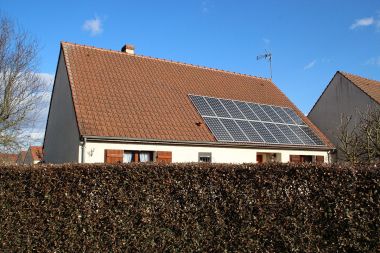
With blazing sun across the UK, the past week has seen solar energy’s
contribution to Britain’s energy mixture hit levels of up to 32% –
highlighting how much the sun can contribute to the country’s electricity
supplies. Each summer, the levels of solar energy in use rise, according to
Christelle Barnes, vice-chair at Solar Energy UK and UK general manager at
SolarEdge. “Every year, that percentage number just gets a little bit
higher. So it was typically between 25% and 27% over the last couple of
years. So just seeing numbers like 30% now is definitely showing that we’re
continuing to deploy more solar,” she told Yahoo News.
Yahoo News 31st July 2024
https://uk.news.yahoo.com/how-much-electricity-sun-summer-uk-172202857.html
More than 885 solar panels have been installed on two Scottish Water sites
in the Central Belt, helping to save 57 tonnes of carbon a year and address
the increasing urgency of climate change. The projects have seen 512 photovoltaic (PV) panels installed at
Bothwellbank Waste Water Treatment Works in South Lanarkshire, which are
able to generate 0.23GWh of power and will offset around a fifth of the
site’s energy needs. In addition, 373 tank-mounted PV panels are now in
place at Roseberry Water Treatment Works in Midlothian, supplementing 178
panels which were installed as part of a previous scheme. The site can now
generate a total of 0.18GWh of energy, offsetting 12% of its energy needs.
Combined, these installations are expected to produce 0.41GWh of green
electricity each year – equivalent to the energy needed to boil around
1.8 million kettles annually. This latest £678,000 investment by Scottish
Water and its commercial subsidiary, Scottish Water Horizons, sees the
sites join a growing list of water and waste water treatment works which
are now either self-sufficient or partly sufficient in their power
requirements.
Midlothian View 31st July 2024
Blackwater Against New Nuclear Power Group (BANNG)campaigners say company’s claims over Bradwell B are false
Maldon Standard, By Brandon Penny, 31st July 24
A CAMPAIGN group has hit out at claims a potential site for a new nuclear power station is “well connected.”
The current government nuclear policy statement identifies Bradwell as a site for nuclear energy until the end of 2025.
Plans for a Chinese-led nuclear power station in Bradwell, known as Bradwell B, are no longer progressing.
Campaigners Blackwater Against New Nuclear Power Group (BANNG) claim EDF, the French company which own Bradwell’s nuclear site, has “no idea what it is talking about”.
They claim there are no grid connections, no rail connection with the closest station being eight miles away in Southminster and no local skilled workforce.
BAANG’s chairman, Professor Andy Blowers said: “EDF cannot be allowed to get away with the false and misleading claims it is making in an obvious attempt to attract developers to its site on the Essex coast adjacent to Bradwell-on-Sea. “This is a site already abandoned by EDF’s one-time partner, the Chinese developer CGN. It is a site that is wholly unsuitable for nuclear development.
“EDF have previously claimed that Bradwell and other sites it owns, offer land, grid and rail connections, a skilled workforce and support communities which makes them compelling locations for small and advanced modular reactors.”
Mr Blowers continued saying: “It’s obvious EDF has no idea what it is talking about with respect to new nuclear development at Bradwell.”
BAANG have also said: “The noise, disruption and blight imposed on a tranquil rural area over many years would be intolerable.”…………… https://www.maldonandburnhamstandard.co.uk/news/24483433.baang-group-claim-edfs-claims-false-misleading/—
Rolls Royce – the “burning platform”?

There aren’t many obvious similarities between Rachel Reeves and Tufan
Erginbilgic, but the use of the “burning platform” metaphor is
something that binds them. For Erginbilgic’s actual use of the phrase to
describe Rolls-Royce soon after he became chief executive 19 months ago,
read the chancellor of the exchequer’s discovery this week of a “£22
billion black hole” in the public finances.
Times 1st Aug 2024
https://www.thetimes.com/article/rolls-royce-growth-needed-by-rachel-reeves-98sw9l952
UK – the Ed Milliband Nuclear Nonsense Show

Great British Nuclear’s life started out as a Boris Johnson publicity stunt to get some cheap headlines, and it’s been downhill since then. It took two years to set up (civil servants at DESNZ kept asking what this particular Bojo wet dream was all about, and are still waiting for an answer), has no proper governance arrangements, is run by a bunch of nuclear non-entities, and so far has had only one task: to run “the competition “to see who will be the recipient of pots of taxpayers’ money to bring forward our “world-beating” Small Modular Reactor programmes.
Jonathon Porritt, Sustainability Campaigner and Writer, 31 July 24
1 I’m loving the Ed Miliband Show! The curtain went up on July 5th, and it’s been one reveal a day since then………………………………….
On Friday, he brought forward the Bill to establish Great British Energy (GBE), a cornerstone of Labour’s manifesto and its Net Zero ambitions. The one thing that grabbed everyone’s attention was the new partnership between GBE and the Crown Estate to unlock £60 billion of private investment in offshore wind – with a view to securing 30 GW of electricity before 2030 (enough to provide electricity for 20 million homes). To help make this happen, another Bill was introduced to overcome some of the barriers that the Crown Estate currently faces in expediting investment at that scale. Serious stuff!
The GBE Bill also referenced another partnership – with Great British Nuclear, with the emphasis on “exploring how Great British Energy and Great British Nuclear will work together”. And end more of the same kind of meaningless blather!
Let me elaborate a bit by way of contrasting these two strategic partners.
1. The Crown Estate
This is a powerful organisation that knows what it’s doing, does it with a real sense of purpose, and has been leading the charge on offshore wind for the last decade. It has a tried and tested CEO (Dan Labbad), formerly CEO of property developer Lend Lease here in the UK), a proven sustainability champion, deal-maker and job-creator.
Other big players in the energy sector get this kind of proposition and are already coming forward with their “in principle” commitments.
2. Great British Nuclear
Great British Nuclear’s life started out as a Boris Johnson publicity stunt to get some cheap headlines, and it’s been downhill since then. It took two years to set up (civil servants at DESNZ kept asking what this particular Bojo wet dream was all about, and are still waiting for an answer), has no proper governance arrangements, is run by a bunch of nuclear non-entities, and so far has had only one task: to run “the competition “to see who will be the recipient of pots of taxpayers’ money to bring forward our “world-beating” Small Modular Reactor programmes.

It’s struggled with this somewhat limited remit (already nine months behind schedule, with at least another six months to go), even though everybody already knows that the Government’s favoured SMR black hole will be Rolls Royce – there’s nothing worse for ministers than having Tufan Erginbilgic (Rolls Royce’s powerful, whining bully of a CEO) making trouble for you.
So, Ed, where are you going to go with all this? Both the Crown Estate and Great British Energy will, theoretically, help you “de-risk” prospects for critical private sector investors. The Crown Estate will do it for real, reducing the cost of capital, smoothing planning consents, securing supply chains, creating jobs – and, in due course (if not before 2030) – making offshore wind significantly cheaper. Exactly as has happened in Denmark. Great British Nuclear will suck you in, suck you dry, and do none of that…………..
The Treasury has always been less enthusiastic about nuclear power than the rest of government. It won’t object to a few more tens of millions bunged at Rolls Royce or a few more well-paid nuclear wastrels at Culham (emphasising the links with our inconceivably costly nuclear weapons establishment).

But the tens of billions that will be required to de-risk private sector investment in Sizewell C – that’s another matter. This is the time, surely, to let Sizewell C die under the weight of its own monstrous irrelevance.
Sizewell C will obviously make literally zero contribution to the 2030 target that Labour has for decarbonising the grid. As it happens, Ed shouldn’t really be worrying too much about 2030 anyway. This isn’t going to happen (full marks to those sad gits at the Telegraph for spotting this!), but it really doesn’t matter. The key date is 2029, the date of the next election, not 2030.
……………………………..So, Ed, keep your eyes on the prize: making people feel good (and possibly even a bit excited) about the UK’s low-carbon future – in terms of jobs, skills, supply chains, lower bills and so on. Deep down, you must know as well as I do that’s all about prioritising real delivery partners (viz the Crown Estate), not about preposterous pipe-dreaming fantasists in the nuclear industry. https://www.jonathonporritt.com/go-ed-go/
Scottish Greens warn that “Great Britain Energy” could funnel public money into subsidising non-viable nuclear power projects

Patrick Harvie warns of major devolution tests for GB Energy
By Nan Spowart , 28th July
LABOUR’S new flagship energy company will be an important test of the relationship between the new regime in Westminster and the devolved governments, according to Scottish Greens co-leader Patrick Harvie.
……………………….. He is now calling for more detail of the remit of GB Energy after it was revealed that the organisation could get involved in planning disputes…………………
“The real worry I have is that it ends up simply as a way of channelling
public money into subsidising otherwise non-viable nuclear developments
like small modular reactors which is a technology that the industry was
pushing very aggressively a few years ago but is failing at a commercial
level in a number of other countries. “We should not be going down that
route and the principal means Scotland has been saying no to new nuclear
has been through the planning system, so we need clarity early doors that
that is not their agenda.”
The National 28th July 2024
https://www.thenational.scot/news/24480590.patrick-harvie-warns-major-devolution-tests-gb-energy/
1 This Month



26 September – International Day for the Total Elimination of Nuclear Weapons


PLEASE OPPOSE HR 8255 AND S.3639 – bills would accelerate satellite deployment, with no environmental review or safeguards – https://ncstd5li.quorum.us/campaign/169331/
To see nuclear-related stories in greater depth and intensity – go to https://nuclearinformation.wordpress.com
-
Archives
- September 2026 (269)
- August 2026 (330)
- July 2026 (355)
- June 2026 (287)
- May 2026 (306)
- April 2026 (356)
- March 2026 (251)
- February 2026 (267)
- January 2026 (308)
- December 2025 (358)
- November 2025 (359)
- October 2025 (375)
-
Categories
- 1
- 1 NUCLEAR ISSUES
- business and costs
- climate change
- culture and arts
- ENERGY
- environment
- health
- history
- indigenous issues
- Legal
- marketing of nuclear
- media
- opposition to nuclear
- PERSONAL STORIES
- politics
- politics international
- Religion and ethics
- safety
- secrets,lies and civil liberties
- spinbuster
- technology
- Uranium
- wastes
- weapons and war
- Women
- 2 WORLD
- ACTION
- AFRICA
- Atrocities
- AUSTRALIA
- Christina's notes
- Christina's themes
- culture and arts
- Events
- Fuk 2022
- Fuk 2023
- Fukushima 2017
- Fukushima 2018
- fukushima 2019
- Fukushima 2020
- Fukushima 2021
- general
- global warming
- Humour (God we need it)
- Nuclear
- RARE EARTHS
- Reference
- resources – print
- Resources -audiovicual
- Weekly Newsletter
- World
- World Nuclear
- YouTube
-
RSS
Entries RSS
Comments RSS

