Revealed: ministers’ doubts over nuclear plant at Torness
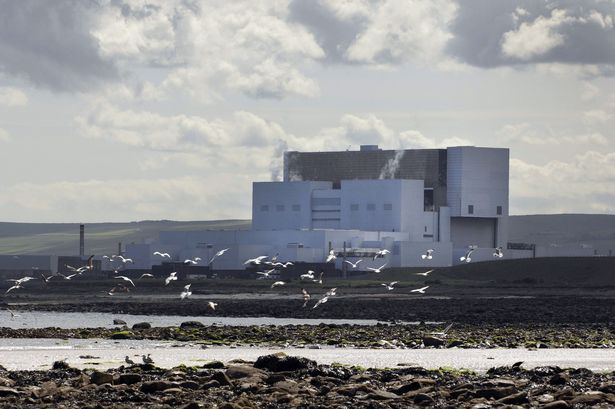
Torness Rob Edwards, August 12, 2024
Labour and Conservative governments secretly harboured doubts about building a nuclear power station at Torness in East Lothian in the late 1970s, according to internal documents released by the Scottish Government.
Campaigns against Torness won support within the then Scottish Office, and came closer to success than realised. There was a “real risk” of the treasury in London delaying the project, warned one official.
But the nuclear industry fought a fierce behind-the-scenes battle in defence of the power station, and it ended up being built in the 1980s.
Campaigners condemned past decision-making about Torness as a “total sham”. According to one former UK Government adviser, lobbying by the nuclear industry had always been “more influential” than evidence.
The Ferret analysed 11 large government files on Torness in 1978 and 1979 at the National Records of Scotland in Edinburgh. One was only released in 2023 after a request under freedom of information law.
The files reveal that ministers and officials in both James Callaghan’s and Margaret Thatcher’s governments privately raised concerns about the proposed nuclear station at Torness.
Torness was the target for a series of anti-nuclear protests in the 1970s, initially organised by the Scottish Campaign to Resist the Atomic Menace (SCRAM). There were demonstrations and an occupation of the site in 1978, and in May 1979 more than 10,000 people joined a weekend protest there.
Despite further protests in 1980 and 1981, the nuclear station was built and formally opened by Thatcher in 1989. It is currently scheduled to keep operating until 2028, though there are plans to run it for longer.
Early in 1978 SCRAM made a submission to the Scottish Office arguing that Torness should be subject to a new public inquiry. An earlier inquiry in 1974 had been inadequate because it had not specified the type of reactors to be built, the campaign group argued……………………………………………………………………………………………………
Case for Torness ‘less than convincing’
However, a covering note from an official on 16 May 1979 admitted that the case for Torness was “less than convincing”. The absence of information in support of the plant was “worrying”, the official commented, “because I think there is a real risk in the present climate of the treasury seeking to re-examine or hold up the project”.
In a memo two days later, Fletcher said: “I still have some doubts concerning the advisability of a nuclear station at Torness”. A handwritten note by an official added simply “Amen”.
A memo on 1 June 1979 reported that Torness’s backer, the government-owned South of Scotland Electricity Board (SSEB), was “most despondent” about the lack of investment approval. All the signs were that the project was “slipping out of control”, it said.
In the end, though, the government documents show that the SSEB, backed by its supporters in the Scottish Office, saved Torness. They worked hard to convince the treasury and, ultimately, Thatcher, that it should go ahead because it was needed to sustain the power station industry…………………………………………………………………………
Torness ‘a total sham’
The veteran environmental campaigner and energy author, Walt Patterson, testified at the Torness inquiry in 1974. “Torness was a total sham, and the inquiry had no relevance to the official decision to build it,” he told The Ferret.
“Torness was ordered just to keep the power station building industry busy, not because we could use the electricity.”
Pete Roche, a nuclear consultant who worked with SCRAM in Edinburgh in the 1970s and 1980s, suggested that politicians might have been worried that cancelling Torness would “somehow legitimise protest”.
He said: “We knew at the time that the case for Torness was collapsing before our very eyes, but it’s a pleasant surprise to learn that both Labour and Tory Ministers had secretly expressed doubts about the plant.”
Dr Ewan Gibbs, a researcher from the school of social and political sciences at University of Glasgow who has studied Torness protests, pointed out that anti-nuclear activists had mobilised tens of thousands of people in opposition to the plant.
“Thanks to these new research findings, we now know that both Scottish Labour and Tory ministers had serious doubts over the nuclear power station project in the late 1970s.”……………………………………….. more https://theferret.scot/torness-nuclear-doubts-ministers/—
Nine spycops snooped on anti-nuclear protests in Scotland

The Ferret Rob Edwards, August 11, 2024
At least nine officers from London’s secret undercover policing unit, known as spycops, aided the infiltration and surveillance of anti-nuclear protests in Scotland between 1978 and 1983, The Ferret can reveal.
Two spycops, who had adopted the names of dead children and pretended to be anti-nuclear activists, joined attempts to occupy the site for a nuclear power station at Torness in East Lothian in 1980 and 1981. They were both picked up, detained and then released by Lothian police.
The pair, one of whom said he was nicknamed “Trotsky”, were supported by three senior officers from the Metropolitan Police’s Special Demonstration Squad (SDS), who travelled to Scotland to liaise with local police.
Along with four other spycops, they produced 16 reports for the Met’s Special Branch and the UK security service, MI5, on anti-nuclear groups active in Scotland. The groups included the Scottish Campaign to Resist the Atomic Menace (SCRAM), the Torness Alliance and Friends of the Earth.
The SDS reports contained minutes of meetings, mailing lists, internal briefings and funding appeals. They included details of hundreds of individuals and groups across the UK, and gave inside accounts of campaigners’ plans, problems and disagreements.
The revelations come from documents and statements released by the SDS and MI5 and published by the UK government’s Undercover Policing Inquiry in London. The inquiry was launched in 2015 and is aiming to produce its final report in 2026.
Activists who were spied upon have condemned the SDS’s undercover operations, with one saying he felt “sick and angry”. They claimed their campaigning had suffered “profound damage”.
Anti-nuclear campaigners in Scotland have also been very critical, suggesting that spycops were “out of control” and “an affront to the very idea of democracy”………………………………………………………….
The SDS was disbanded in 2008. In July 2023 an interim report by the inquiry’s judge, Sir John Mitting, concluded that the spying was not justified.
The inquiry’s remit, however, is only to investigate undercover policing in England and Wales. Campaigners have challenged the failure to inquire into undercover policing in Scotland, but so far without success.
In 2021 The Ferret reported initial evidence to the inquiry suggesting that Scottish anti-nuclear groups had been spied upon. In July 2024 the inquiry released more than 100 SDS reports on the surveillance of the anti-nuclear movement across the UK in the 1980s.
According to the Guardian, they revealed extensive spying on the Campaign for Nuclear Disarmament in England, as well as on women who protested against nuclear missiles at Greenham Common in Berkshire.
Inquiry documents have also disclosed the hitherto unknown extent of spying on anti-nuclear protests in Scotland. Spycops active north of the border have been named, and some of their undercover activities exposed…………………………………………………………………………………………………………….. https://theferret.scot/spycops-torness-anti-nuclear-scotland/
Anti-nuclear Group Criticizes Short Consultation over Trawsfynydd Lake Radioactive Contamination
An anti-nuclear group concerned over low level radioactive contamination
at Trawsfynydd lake has blasted a recent. government consultation as “too
short, ill timed and clumsy.”
It concerns proposals for changes to a permit over decommissioning work at the former Trawsfynydd nuclear power station. Natural Resources Wales had called for opinions after the Nuclear Restoration Services Limited (NRS) submitted an application to change its
environmental permit
Proposed work would to leave low-level radioactive
building waste in-situ at the site which closed in 1991.As part of the
application NRS (formerly Magnox) plans the demolition, infilling, and
capping of the Trawsfynydd Ponds Complex, a set of buildings running
alongside the two reactor buildings. T
The Nuclear Free Local Authorities
group, which oppose civil nuclear power said it “remained fearful” over
the potential for “low level radioactive contamination at Trawsfynydd
Lake.” It felt the four week consultation – which ended on August 6 –
had not given people enough time to respond, was unhappy that a fee had
been charged for some documents and had noted delays. It had noted that
“a typical consultation period in the nuclear industry” was twelve
weeks.
North.Wales 10th Aug 2024
UK’s most dangerous nuclear site pleads guilty after endangering national security

More than 11,000 people work at the nuclear site in Cumbria, Sellafield, which holds the world’s largest store of plutonium and was called UK’s ‘most dangerous’
By WILLIAM MORGAN, Fri, Aug 9, 2024 https://www.express.co.uk/news/uk/1933985/UK-dangerous-nuclear-site-guilty-endangering-national-security
Europe’s largest nuclear site and the world’s largest plutonium storage facility has admitted putting Britain’s national security at risk, after a series of cybersecurity failings at the vast former nuclear power plant in Cumbria, Sellafield.
The company running the site, Sellafield Ltd, has apologised after pleading guilty to charges relating to information technology security from 2019 to 2023. Westminster Magistrates Court heard that, during this period, three quarters of the nuclear site’s servers were vulnerable to attack.
A Guardian investigation into nuclear industry practices also found that contractors could get unsupervised access to Sellafield computers and could plug external drives into the Sellafield systems. The company’s own report into the issue found that any “reasonably skilled hacker or malicious insider” could take advantage of these weaknesses.
The court heard from the nuclear watchdog that information which could pose a threat to national secrity lay vulnerable for years, with many of the critical security checks that Sellafield Ltd said they were completing, were simply not being done. The site has an otherwise poor reputation, often called “the most dangerous” site in the UK, employing 11,000 people to process nuclear waste and decommission equipment.
Tests of the vulnerable IT systems found that someone could access Sellafield’s servers and install phishing softward “without raising any alarms”. Raising further fears of information vulnerabiliy in key UK infrastructure to threats from hostile actors.
During their prosecution for failing to secure their systems, it emerged that 13 files marked “official/sensitive” had mistakenly been sent to outside contractors, alongside 4000 other files. Somehow, this did not trigger any elerts in their computer system, which was blamed in part for using “obsolete” software – including Windows 7 and Windows 2008.
At a court hearing on Thursday, a statement was read out from Sellafield Ltd’s CEO, Euan Hutton, who was present but did not speak.
The statement read: “I again apologise on behalf of the company for matters which led to these proceedings … I genuinely believe that the issues which led to this prosecution are in the past.”
The company is not due to be sentenced until September. The Office for Nuclear Regulation said after the August 8 hearing: “Sellafield Ltd had previously pleaded guilty to those offences in June, and while a hearing did take place today, Chief Magistrate Senior District Judge Paul Goldspring did not pass sentence.
“We expect Sellafield Ltd to be sentenced in September, when further details will be provided on our website and social media channels.”
While Cumbrian MPs Blindly Agitate for More Uranium Mining to Feed More Nuclear New Build, Indigenous Australians are celebrating Halt to Poisoning of their Lands

On By mariannewildart, https://mariannewildart.wordpress.com/2024/08/07/while-cumbrian-mps-blindly-agitate-for-more-uranium-mining-to-feed-more-nuclear-new-build-indigenous-australians-are-celebrating-halt-to-poisoning-of-their-lands/
Here in Cumbria MPs, most especially the new MP for Sellafield (apologies, MP for Whitehaven and Workington, Josh MacAlister) are agitating for new nuclear build on the floodplain of the River Ehen next to the bursting at the seams Sellafield nuclear waste site. New nuclear, even the so called “Small Modular Reactors” (actually near the size of the original Calder Hall reactors) would require new uranium – this is not a “home grown” or “clean” industry as its cheerleaders claim, the profligate amounts of uranium, high tensile steel, copper and a whole smorgasbord of toxic chemicals are shipped in and they outstrip any other industry in quantities and toxicity.
The start of the toxic uranium fuel cycle begins on the lands of indigenous peoples worldwide. In Australia a battle has been raging to stop ever more uranium mining, this time at Jabiluka. Now that battle has been won but the MP for Whitehaven and Workington wants indigenous peoples worldwide to carry on paying the price of polluted waters, poisoned lands and damaged health in order to continue with nuclear business as usual despite the fact that nuclear power’s most long lasting legacy is not “free electricity” far from it, energy bills will go up because successive governments’ have had an obsession with funding the nuclear industry at any price even asking consumers now to pay the price before they recieve any electricity and for generations after to try and ‘keep the wastes safe’.
“The announcement has been made that the mining lease will not be extended and the process to get Jabiluka into world heritage and Kakadu National Park can begin. A big shout out to the Traditional Owners, the @Mirarr for standing strong for this for generations, and thousands of people around the country standing with them.”
Meanwhile here in Cumbria this is what the local press fizzingly tell us “Cumbrian leaders put pressure on NDA over land at Moorside for SMRs. A letter signed by more than 100 political, business and union leaders is calling for urgent action to resolve land issues at Moorside so that new nuclear power stations can be built. Whitehaven and Workington MP Josh MacAlister wrote the letter, which has been signed by fellow Cumbrian MPs Julie Minns and Markus Campbell-Savours, local members of the House of Lords, Cumberland Council leader Mark Fryer, trade union leaders in the nuclear industry and dozens of local business leaders. Mr MacAlister says that unless urgent action is taken to resolve issues about land use at Moorside, west Cumbria will lose out in a competitive process that is now underway. Mr MacAlister says GBN will only select sites that have enough land available and the NDA (who own Sellafield) want to use much of the Moorside site for other decommissioning purposes. This has resulted in an impasse that, if left unresolved, will leave Cumbria behind in the race for new nuclear. The NDA says it is working with the government to consider how the land at Moorside may be used to enable new nuclear energy facilities, while taking into account how it might need to utilise the land in order to successfully deliver its mission. Mr MacAlister said: “In my first few weeks as an MP I’ve met with ministers, the NDA, GBN and leading industry figures. It’s become clear that there’s been a conspiracy of silence for years over plans for new nuclear in our area.In Cumbria 7th Aug 2024 https://www.in-cumbria.com/news/24501223.cumbrian-leaders-put-pressure-nda-land-moorside-smrs/“
No doubt Josh MacAlister MP for Whitehaven and Workington will be absolutely delighted to hear that as is the way of all ruthless corporations, yesterday “Mining company Energy Resources Australia (ERA) has launched legal action against the Commonwealth and Northern Territory governments over a decision not to renew its lease over the Jabiluka uranium mine. Surrounded by Kakadu National Park, the site at Jabiluka is one of the world’s largest and richest uranium deposits.”
Josh Macalister MP is the smiling assassin agitating to rip uranium out of the earth to fuel new nuclear on land next to Sellafield (on the flood plain of the river Ehen). Nice!
Sellafield apologises after guilty plea over string of cybersecurity failings
Nuclear site awaits sentencing over breaches that it admitted could have threatened national security
Anna Isaac and Alex Lawson, Fri 9 Aug 2024 https://www.theguardian.com/business/article/2024/aug/08/sellafield-apologises-guilty-plea-security-failings-nuclear–
Sellafield has apologised after pleading guilty to criminal charges relating to a string of cybersecurity failings at Britain’s most hazardous nuclear site, which it admitted could have threatened national security.
Among the failings at the vast nuclear waste dump in Cumbria was the discovery that 75% of its computer servers were vulnerable to cyber-attacks, Westminster magistrates court in London heard.
Information that could threaten national security was left exposed for four years, the nuclear watchdog revealed, and Sellafield said it had been performing critical IT health checks that were not, in fact, being carried out.
Late last year, the Guardian’s Nuclear Leaks investigation revealed a string of IT failings at the state-owned company dating back several years, as well as radioactive contamination and toxic workplace culture.
Sellafield is a sprawling rubbish dump for nuclear waste from weapons programmes and decades of atomic power generation. It has a workforce of about 11,000 people and is part of the Nuclear Decommissioning Authority, a taxpayer-owned and -funded quango.
The Guardian’s investigation also revealed concerns about external contractors being able to plug memory sticks into Sellafield’s system while unsupervised and that its computer servers were deemed so insecure that the problem was nicknamed Voldemort after the Harry Potter villain because it was so sensitive and dangerous.
Sellafield pleaded guilty to charges brought by the Office for Nuclear Regulation (ONR) in June, which relate to information technology security offences spanning a four-year period from 2019 to 2023.
The firm is now awaiting final sentencing, whichthe chief magistrate, Paul Goldspring, said would happen within weeks. The ONR has said it expects sentencing to take place in September.
At a sentencing hearing on Thursday, the court heard that a test had found that it was possible to download and execute malicious files on to Sellafield’s IT networks via a phishing attack “without raising any alarms”, according to Nigel Lawrence KC, representing the ONR.
The site, the world’s largest store of plutonium, was left vulnerable to internal and external cyber-attacks and 75% of its servers were insecure, Lawrence said, citing a report by Atos, a subcontractor at the site.
Sellafield’s own report, from the external IT company Commissum, found that any “reasonably skilled hacker or malicious insider” could access sensitive data and insert malware – computer code – that could then be used to steal information.
Euan Hutton, chief executive of Sellafield, apologised for failures spanning years in a written witness statement referred to by Paul Greaney KC, representing the company. Hutton said: “I again apologise on behalf of the company for matters which led to these proceedings … I genuinely believe that the issues which led to this prosecution are in the past.”
Hutton was in court but did not speak at the hearing.
Greaney said the company had tried to address its cybersecurity failings by changing IT management at the site and creating a new secure datacentre.
The barrister said some problems identified in recent years had been “turbo-charged” by the prosecution. Greaney said the failings were not a result of cost-cutting. “There was no penny-pinching,” he added.
The court also heard that a subcontractor was sent 4,000 files by mistake, 13 of which were classed as “official/sensitive”, without any alarm being triggered.
Sensitive nuclear information (SNI), the industry’s special classification system, was left vulnerable in part because of the use of “obsolete” technology including Windows 7 and Windows 2008, Lawrence said.
SNI is a mode of categorising information that may have national security implications, and has a special status in law, like other classified materials handled by the British security services or the civil service. Details are given SNI status if they are “deemed to be of value to an adversary planning a hostile act”, according to the ONR.
While all parties said the failings were very serious, the judge said he would need to balance the cost to the taxpayer with the need to deter others in the sector from committing similar offences.
The sentencing would be “new territory for all of us”, Goldspring said, given that no nuclear site had been prosecuted in this way before.
The National Audit Office, Britain’s public spending watchdog, launched an investigation this year into costs and risks at Sellafield.
The Guardian reported last year that the site systems had been hacked by groups linked to Russia and China in December last year, embedding sleeper malware that could lurk and be used to spy or attack systems.
At the time, Sellafield said it did not have evidence of a successful cyber-attack. Greaney told the court that there was no evidence found for an “effective” cyber-attack on Sellafield. The court heard that Sellafield’s operations centre was found to be “unable to adequately alarm and respond to tested attacks”.
A spokesperson for the company said: “We take cybersecurity extremely seriously at Sellafield, as reflected in our guilty pleas. The charges relate to historic offences and there is no suggestion that public safety was compromised.
“Sellafield has not been subjected to a successful cyber-attack or suffered any loss of sensitive nuclear information. We’ve already made significant improvements to our systems, network, and structures to ensure we are better protected and more resilient.”
The ONR declined to comment. Sellafield has agreed to pay £53,000 in legal costs
Spy cop ‘made up absurd bomb plot’ over nuclear waste on railway route
Undercover officer infiltrated ‘anarchist movement’ in the early 1980s
Friday, 9th August — By Tom Foot, https://www.islingtontribune.co.uk/article/spy-cop-made-up-absurd-bomb-plot-over-nuclear-waste-on-railway-route
A SPY cop’s report about a plot to blow up North London Line trains transporting nuclear waste was an absurd fantasy used to justify a top secret undercover unit’s existence, an inquiry has heard.
An officer who infiltrated the “anarchist movement” in the early 1980s claimed “people against the nuclear programme built a bomb” that was “actually found” on the overground railway that runs through Islington.
The route goes through Highbury and Islington station and has recently been renamed the Mildmay Line by London Mayor Sadiq Khan.
The explosive claims from Roger Pearce, known to the inquiry as officer HN85, are discredited by several activists in statements published by the Undercover Policing Inquiry for the first time this week.
The statements tell how for many years nuclear waste was transported on the line from power stations in Kent, Suffolk and Essex to Sellafield, Cumbria.
The documents show how peace groups feared a terrorist attack on the trains could cause a national emergency and considered planting a fake bomb on the network for publicity.
The witness statement from Michael Zeitlin, a campaigner for the anti-nuclear movement, said: “I firmly believe that HN85 has deliberately suggested that a real bomb was planted in order to elevate the status of his reports and so justify his spying.
“I am convinced that any possible ‘bomb on the North London Line’ refers to informal discussions of placing a fake bomb as a publicity stunt, in order to draw attention to the threat created by the transportation of nuclear waste through residential areas.
“The idea that an actual bomb would have been planted is patently absurd as the whole issue was one of public safety. Such a bomb plot does sounds very much like fiction as might be found in a novel.”
The documentss show how a meeting of the Hampstead CND branch had heard discussions about “some form of action to protest against the transportation of nuclear fuel” but this had been “completely taken out of context and then grossly exaggerated” by the undercover officer.
Mr Pearce’s statement to the inquiry said: “There were people who were prepared to take violent action against the nuclear policy of the UK and I felt this provided justification for reporting on them.
“People against the nuclear programme, including anarchists who were my associates, built a bomb on the North London Line which transport nuclear waste.”
The inquiry docs show how Roger Pearce – there is no reporting restriction on using his name – trained as an Anglican Priest at Durham before joining the police in 1973.
He joined the Special Demonstration Squad that was set up by the Met to “prevent violent disorder” but led to officers spying on dozens of left-wing organisations and pacifist groups over four decades with little to no gain.
Training for the “top secret unit” took place at Holborn police station, Mr Pearce’s witness statement reveals, while recruitment took place on a “tap on the shoulder in the corridor” basis.
He chose the “legend” Adrian Roger Thorley, a name taken from a child who was killed in a road accident in in Stoke on Trent, and lied about being a van driver delivering spare parts for the car company Ford.
He lived in a “cover flat” off the Goldhawk Road in west London and wore red and black with shoes with “worn through soles”, claiming he was given the prestigious nickname “Trotsky” by activists he was spying on.
“Using a deceased child’s identity was a distasteful practice and a violation of privacy but we felt it would never be revealed,” his statement said.
The UCP Inquiry was launched in 2017 after it was revealed that some SDS officers used names of dead children and fathered children with activists.
Huge resources were ploughed into the discredited project with critics saying the ends did not justify the means.
More than one million documents have been submitted to the inquiry –already the longest and most expensive in British history – that is not expected to conclude until 2026.
Radiation monitoring keeps track of nuclear waste contamination

Nuclear reactors – whether operational or undergoing decommissioning –
create radioactive waste. Management of this waste is a critical task and
this practice has been optimized over the past few decades. Nevertheless,
strategies for nuclear waste disposal employed back in the 1960s and 70s
were far from ideal, and the consequences remain for today’s scientists
and engineers to deal with.
In the UK, spent nuclear fuel is typically
stored in ponds or water-filled silos. The water provides radiation
shielding, as well as a source of cooling for the heat generated by this
material.
In England and Wales, the long-term disposal strategy involves
ultimately transferring the waste to a deep geological disposal facility,
while in Scotland, near-surface disposal is considered appropriate.
The problem, however, is that some of the legacy storage sites are many decades
old and some are at risk of leaking. And when this radioactive waste leaks
it can contaminate surrounding land and groundwater. The potential for
radioactive contamination to get into the wet environment is an ongoing
problem, particularly at legacy nuclear reactor sites.
“The strategy for waste storage 50 years ago was different to that used now. There wasn’t
the same consideration for where this waste would be disposed of long
term,” explains Malcolm Joyce, distinguished professor of nuclear
engineering at Lancaster University. “A common assumption might have been
‘well it’s going to go in the ground at some point’ whereas actually,
disposal is a necessarily rigorous, regulated and complicated programme.”
In one example, explains Joyce, radioactive waste was stored temporarily in
drums and sited in near-surface spaces. “But the drums have corroded over
time and they’ve started to deteriorate, putting containment at risk and
requiring secondary containment protection,” he says. “Elsewhere, some
of the larger ponds in which spent nuclear fuel was stored are also
deteriorating and risking loss of containment.”
Physics World 7th Aug 2024, https://physicsworld.com/a/radiation-monitoring-keeps-track-of-nuclear-waste-contamination/
UK’s Astute nuclear submarines stuck in port waiting for maintenance

No Astute-class boat — the Royal Navy’s largest and most powerful — has completed an operational voyage this year
Britain’s “hunter-killer” submarines have been stuck in port for up
to two years because of a shortage of maintenance docks. The Astute-class
submarines, the newest in the Royal Navy’s fleet, were designed to hunt
Russian submarines and torpedo targets from up to 14 miles away. They are
the largest and most powerful attack submarines the navy has operated.
However, none of the class has completed an operational voyage so far this
year, while one has been stuck in Faslane — HMNB Clyde — for two years,
The Sun reported.
Times 5th Aug 2024
Radioactive Waste Management – Public Attitudes Survey for Scotland

5 August 2024, Director-General Net Zero Directorate, Environment and Forestry Directorate https://www.gov.scot/publications/radioactive-waste-management-public-attitudes-survey-scotland/
This report summarises findings from a representative survey of the Scottish public that provides new insights into the perceptions and views towards radioactive waste management in Scotland.
Research Context
The Scottish Government commissioned independent researchers, Diffley Partnership, to conduct a public attitudes survey for Scotland exploring attitudes towards radioactive waste management. The primary aim of this study was to design and deliver research that will help develop a deeper understanding of the views of the Scottish public on a range of radioactive waste management issues, including safety and trust in government and industry.
Approach
An online survey was used to measure public attitudes to radioactive waste management. The survey was conducted between 8th and 11th January 2024 and received 2,160 responses. The questionnaire contained both closed questions (analysed quantitatively) and open response questions (analysed qualitatively).
Key Findings
Knowledge of Radioactive Waste Management
Self-reported levels of knowledge of radioactive waste management among respondents were limited. The vast majority (89%) of respondents reported that they were either not very well informed or not at all informed about radioactive waste management in Scotland.
There was a mixed appetite for more information, with just over half of respondents (55%) indicating they would like to know more about radioactive waste management.
Respondents placed the most trust in scientists/academics to provide information on radioactive waste management over other bodies and institutions such as the nuclear industry, the Scottish Government and the media.
The majority of respondents believed that the regulators of the Scottish Nuclear Industry (82%), the Scottish Nuclear Industry itself (81%) and the Scottish Government (79%) should do more to educate the public about radioactive waste management.
Attitudes towards Radioactive Waste Management
Most respondents agreed that public education is important in the management of radioactive waste (70%).
Overall, there was clear recognition that it is vital for Scotland to have a robust strategy for radioactive waste management (84%). This was linked with concerns about the impact of radioactive waste management on the environment (72%), future generations (68%) and health (55%).
Priorities in Radioactive Waste Management
The protection of human health was the biggest priority in radioactive waste management among the respondents, followed closely by the protection of the environment and the security of radioactive waste management facilities.
Safe containment of radioactive waste (64%) and the protection of the environment (67%) were the highest perceived benefits in the creation of new facilities for managing radioactive waste.
Potential for radioactive leaks (72%) was one of the main concerns about the development of new facilities, along with the possible environmental effects (73%) and health impacts (71%).
Decision-Making in Radioactive Waste Management
Most respondents felt that they have no influence over decision making processes relating to radioactive waste management, either locally (75%) or nationally (67%).
Respondents who stated that they have no influence over decision making felt this way because they felt decisions are made without talking to people (61%), that they have no opportunity to have an influence (48%) and they don’t know how to influence decision making (39%).
There was a mixed appetite for wanting to be involved in decision making with just under half of respondents (47%) wanting to be involved.
Too short, ill-timed and clumsy: Welsh Nuclear Free Local Authorities critical of Trawsfynydd radioactive waste consultation

https://www.nuclearpolicy.info/news/too-short-ill-timed-and-clumsy-welsh-nflas-critical-of-trawsfynydd-consultation/ 6 Aug 24
The Nuclear Free Local Authorities are critical of a recent consultation conducted by Natural Resources Wales on plans to leave low-level radioactive building waste in-situ at the former Trawsfynydd nuclear power station and remain fearful that without remedial action in the long-term there could be further contamination that runs off into the lake.
Natural Resources Wales launched its consultation on plans by Nuclear Restoration Services on 6 July and this has just ended today.
The NFLAs made clear in its response its criticism of the timetable and process. NRW only allowed a four-week window for responses on the proposals, despite a typical consultation period in the nuclear industry being twelve weeks. The consultation was also held during summer holiday season when many people take holidays with their families. NRW also made things worse by failing to publish all the documents relating to the consultation on their website; instead interested parties had to ring, or email, a case officer to obtain them after an inevitable delay. Other enquirers reported to the NFLA Secretary that they had been informed there would be a charge for supplying the documents. Consequently, we described the consultation as ‘too short, ill-timed and clumsy’.
Nuclear Restoration Services which is responsible for decommissioning the former Trawsfynydd plant and safely deal with the residual radioactive waste is proposing to leave contaminated building rubble on site by burying it in the now redundant cooling pond complex and covering them with a concrete cap.
The NFLAs are concerned that this will prove an inadequate long-term solution as a report published by the International Atomic Energy Agency detailed issues with historic contamination of the joints in the ponds, and contamination from the ponds of surrounding land.
Trawsfynydd Lake was also routinely the permitted dumping ground for radioactive liquid discharges from the plant, including the water from the cooling ponds when they became redundant, and so it is contaminated. A scientific study indicated that there were abnormal levels of cancer amongst residents of the local area, including amongst some who have consumed the trout that were introduced into the lake and are now fished.
The NFLAs are obviously anxious to ensure that no more radioactive contamination can come from the rubble, however low level, into the land or lake and we would like to see Nuclear Restoration Services to either look to build a bespoke above ground facility or at least look to place the rubble into a relined cooling pond complex.
All six UK Astute-class nuclear submarines stuck in port for repairs
ALL six of the UK’s Astute-class nuclear submarines are stuck in port
– Faslane included – for repairs. The Royal Navy currently has no
working docks for repairs, which has led to the fleet’s newest subs not
conducting a single operation village this year. HMS Ambush — which is
stationed at Faslane – has not sailed for two years.
The National 6th Aug 2024
Over two hundred jobs may be lost if Haverigg jail is displaced by nuclear dump
Whilst Nuclear Waste Services are keen to promote the number of jobs that might be created by the establishment of a Geological Disposal Facility in West Cumbria, there is less clarity when it comes to identifying the number of jobs that might be lost.
The GDF will be the final resting place for the UK’s current and future high-level nuclear waste. Investigations are underway to identify potential sites in either Mid or South Copeland in West Cumbria, and in Theddlethorpe in Lincolnshire. A GDF would require a surface receiving station of around 1 sq KM, to which regular nuclear waste shipments would be made prior to the waste being moved underground and then pushed out along deep tunnels beneath the seabed.
In Theddlethorpe, a specific site, a former gas terminal, has been identified as the potential hub for a receiving station, but this has so far not been the case in Copeland. One major constraint in the South Copeland Search Area is that it mostly comprises the Lake District National Park and the proposed Southern Boundary Extension which are rightly ‘excluded from consideration’. Consequently, any GDF development would have to be confined to small areas around Drigg, Haverigg and Millom, and for many months there has been speculation that one potential site by the coast might be the location of HMP Haverigg.
Mindful that a GDF would most likely mean the closure of the jail, NFLA Secretary Richard Outram sent several Freedom of Information requests to the Ministry of Justice exploring the impact of the closure of the prison in these circumstances. The NFLAs are particularly keen to identify how many local jobs could be lost, as well as ascertaining the impact on local contractors and suppliers engaged in business with HMP Haverigg. There is also the less quantifiable contribution made by prisoners carrying out work within the local community and the positive impact of the training and support provided by prison staff and support agencies in reducing recidivism and turning around the lives of inmates to enable them to reenter society.
On jobs, Ministry of Justice officials were unable to supply all of the information requested, but advised that they employ a total of 206 full-time (80%) and part-time (20%) staff, both operational (prison officers) and non-operational (ancillary roles). Of these over half, 110, reside in the local LL18 postal district. However this excludes the number of staff engaged at this prison who are employed by other agencies, such as the local and regional NHS, and it was surprising to learn that ‘there is no legal requirement for MoJ to collate data relating to contractors and suppliers that work at HMP Haverigg’ so it is impossible to make a determination as to the dependence of the local supply chain on business with the prison.
6th August 2024
Over two hundred jobs may be lost if Haverigg jail is displaced by nuclear dump
Whilst Nuclear Waste Services are keen to promote the number of jobs that might be created by the establishment of a Geological Disposal Facility in West Cumbria, there is less clarity when it comes to identifying the number of jobs that might be lost.
The GDF will be the final resting place for the UK’s current and future high-level nuclear waste. Investigations are underway to identify potential sites in either Mid or South Copeland in West Cumbria, and in Theddlethorpe in Lincolnshire. A GDF would require a surface receiving station of around 1 sq KM, to which regular nuclear waste shipments would be made prior to the waste being moved underground and then pushed out along deep tunnels beneath the seabed.
In Theddlethorpe, a specific site, a former gas terminal, has been identified as the potential hub for a receiving station, but this has so far not been the case in Copeland. One major constraint in the South Copeland Search Area is that it mostly comprises the Lake District National Park and the proposed Southern Boundary Extension which are rightly ‘excluded from consideration’. Consequently, any GDF development would have to be confined to small areas around Drigg, Haverigg and Millom, and for many months there has been speculation that one potential site by the coast might be the location of HMP Haverigg.
Mindful that a GDF would most likely mean the closure of the jail, NFLA Secretary Richard Outram sent several Freedom of Information requests to the Ministry of Justice exploring the impact of the closure of the prison in these circumstances. The NFLAs are particularly keen to identify how many local jobs could be lost, as well as ascertaining the impact on local contractors and suppliers engaged in business with HMP Haverigg. There is also the less quantifiable contribution made by prisoners carrying out work within the local community and the positive impact of the training and support provided by prison staff and support agencies in reducing recidivism and turning around the lives of inmates to enable them to reenter society.
On jobs, Ministry of Justice officials were unable to supply all of the information requested, but advised that they employ a total of 206 full-time (80%) and part-time (20%) staff, both operational (prison officers) and non-operational (ancillary roles). Of these over half, 110, reside in the local LL18 postal district. However this excludes the number of staff engaged at this prison who are employed by other agencies, such as the local and regional NHS, and it was surprising to learn that ‘there is no legal requirement for MoJ to collate data relating to contractors and suppliers that work at HMP Haverigg’ so it is impossible to make a determination as to the dependence of the local supply chain on business with the prison.
On rates of recidivism, Ministry officials did not supply any specifics for the prison but instead referenced the latest national available statistics[i]. However, in a report which followed an unscheduled prison visit by inspectors in May 2021, it was recognised by HM Chief Inspector Charlie Taylor that Haverigg, in providing specialist accommodation and rehabilitation to older male sex offenders, ‘is fast becoming a very capable establishment and is progressing to a point where it soon may well be one of the better open prisons in the estate.’ It was notable that ‘All eligible prisoners had some form of purposeful activity…The employment hub was a particularly helpful service for prisoners’ and that ‘Prisoners benefited from a high standard of technical training. They developed significant new skills, knowledge and behaviours through vocational training.’[ii]
UK Government advice on the prison record that: ‘All prisoners work or train full time at Haverigg. Training and learning opportunities are focused on skills gaps in the job market and designed to improve prisoners’ chances of getting work on release. Professions include timber manufacturing, building, plastering, plumbing, industrial cleaning and agriculture. Prisoners can also train and work towards qualifications in the leisure industry through the gym’.[iii]
On community activities, Ministry officials advised that prisoners are engaged in litter picking and landscaping which has ‘received positive feedback from various community members for their impact on the local area’. The prison also holds a weekly market in Millom to promote the products made by HMP Haverigg, which has ‘significantly contributed to fostering strong relationships between the prison and the community’. Additionally, prisoners also support the local churches by maintaining church yards.
Lake District’s Coastal Nuclear Waste Dump Screw Tightens.
“Geology is the ground we stand on; it’s in the food we eat, and in the water we drink.”
Marianne Birkby, Aug 05, 2024
Lake District’s Coastal Nuclear Waste Dump Screw Tightens. Ethicist Kate
Rawles inadvertently hits the nail on the head in the NIREX sponsored paper
of 2000: ‘Ethical Issues in the Disposal of Radioactive Wastes’: “The
judgment about geology rests on the values put on human life and health. If
human health were not valued, the geological criteria would not be the
same.” Cue Cumbria’s complex and faulted geology! Burying hot
(literally 100 degrees c +) nuclear waste would be akin to burying a
gargantuan cracked pressure cooker containing the most dangerous substances
produced by man. By continuing down the “Implementation of Geological
Disposal” yellow brick road what does that say about the value placed on
human and non-human health? Our dedicated campaign against the nuclear dump
can be seen here at Lakes Against Nuclear Dump – a Radiation Free Lakeland
campaign.
Radiation Free Lakeland 5th Aug 2024
https://radiationfreelakeland.substack.com/p/lake-districts-coastal-nuclear-waste
Nuclear weapons can never bring peace or security – only mass death

With the risk of all-out war ever-increasing, JEREMY CORBYN MP calls on Britain to lead by example, by signing the Global Nuclear Ban Treaty
AUGUST 6 is a poignant day. On this day in 1945, hundreds of thousands of people died in Hiroshima as the first atomic bomb was used as a weapon of war. A few days later, it was used again in Nagasaki.
The huge death toll from people being fried alive was compounded by death from cancers and the slow destruction of those who survived the initial attack. Others developed cancers later on and death was visited upon a whole generation by the two bombs.
The use of the atomic bomb set off the nuclear age as the United States expanded its nuclear arsenal. A few years later, the Soviet Union developed its own system, followed by others.
Britain, reeling from the economic destruction of World War II, tested its first atomic bomb in 1952. Clement Attlee, the prime minister, managed to expend, in complete secrecy, enough money to build an independent system. Not even the Cabinet was told, never mind Parliament or the people.
For two decades after the second world war there were atmospheric tests of nuclear weapons, with the resultant fallout killing people in the Pacific and beyond.
The nuclear Non-Proliferation Treaty has helped to stem the flow of nuclear weapons, which are restricted to the five declared nuclear weapons states (the US, Britain, France, Russia, China) and to India, Pakistan, Israel and North Korea, which are not treaty signatories.
The danger of a nuclear war is now greater than it has been for decades, as the Ukraine war drags on. Both Russia and Ukraine’s Nato backers have nuclear weapons at their disposal. Meanwhile, military spending is now rising around the world.
Britain has already committed to increasing defence spending to at least 2.5 per cent of GDP. Globally the number of nuclear warheads is also rising.
In the case of the war in Ukraine we see conscripted soldiers on both sides being slaughtered, and more and more weapons being delivered, and fewer and fewer politicians anywhere even raising the possibility of ending this appalling war. The language of peace is absent and there are few efforts being made now to broker a discussion that could lead to a ceasefire.
Nuclear weapons can never bring peace or security, only the assurance of deaths of millions followed by global climate catastrophe, nuclear winter and famine.
If Britain wanted to be a global leader, it would sign the Global Nuclear Ban Treaty and make the case for world peace.
Those used in 1945 were very small compared to the warheads of today; isn’t it time to remember the deaths of 1945 and ensure Hiroshima is never repeated?
Jeremy Corbyn is independent MP for Islington North.
1 This Month



26 September – International Day for the Total Elimination of Nuclear Weapons


PLEASE OPPOSE HR 8255 AND S.3639 – bills would accelerate satellite deployment, with no environmental review or safeguards – https://ncstd5li.quorum.us/campaign/169331/
To see nuclear-related stories in greater depth and intensity – go to https://nuclearinformation.wordpress.com
-
Archives
- September 2026 (269)
- August 2026 (330)
- July 2026 (355)
- June 2026 (287)
- May 2026 (306)
- April 2026 (356)
- March 2026 (251)
- February 2026 (267)
- January 2026 (308)
- December 2025 (358)
- November 2025 (359)
- October 2025 (375)
-
Categories
- 1
- 1 NUCLEAR ISSUES
- business and costs
- climate change
- culture and arts
- ENERGY
- environment
- health
- history
- indigenous issues
- Legal
- marketing of nuclear
- media
- opposition to nuclear
- PERSONAL STORIES
- politics
- politics international
- Religion and ethics
- safety
- secrets,lies and civil liberties
- spinbuster
- technology
- Uranium
- wastes
- weapons and war
- Women
- 2 WORLD
- ACTION
- AFRICA
- Atrocities
- AUSTRALIA
- Christina's notes
- Christina's themes
- culture and arts
- Events
- Fuk 2022
- Fuk 2023
- Fukushima 2017
- Fukushima 2018
- fukushima 2019
- Fukushima 2020
- Fukushima 2021
- general
- global warming
- Humour (God we need it)
- Nuclear
- RARE EARTHS
- Reference
- resources – print
- Resources -audiovicual
- Weekly Newsletter
- World
- World Nuclear
- YouTube
-
RSS
Entries RSS
Comments RSS

