Aberdeen shipping logistics company warned over nuclear transport safety failings.
An inspection by the industry watchdog found that nuclear
material had been transported without the proper safety checks in place.
The UK’s nuclear watchdog has slammed an Aberdeen-based shipping
logistics company over risks posed by its transportation of radioactive
materials.
The Office for Nuclear Regulation (ONR), the UK nuclear
regulatory body, identified a series of failings with Streamline Shipping
Group’s risk assessments during a routine compliance inspection at their
site in Aberdeen on January 31. Among the alarming findings were the fact
that radioactive materials had previously been moved despite not being
identified in risk assessment documentation.
Aberdeen Live 8th March 2024
https://www.aberdeenlive.news/news/aberdeen-news/aberdeen-shipping-logistics-company-warned-9152174
Hinkley Point Responds to Environmental Concerns Over Bristol Channel Eel Populations
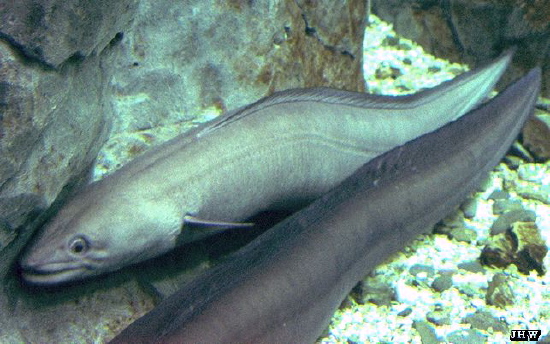
Hinkley Point addresses SEG’s concerns on eel populations in the Bristol Channel, proposing solutions for environmental conservation amidst development.
BNN, Nitish Verma, 05 Mar 2024
In a recent development, Hinkley Point has addressed concerns voiced by the Sustainable Eel Group (SEG) regarding the nuclear plant’s impact on eel populations in the Bristol Channel. The SEG, a prominent organization dedicated to the conservation of the European eel, has expressed reservations about supporting the Hinkley Point C development without significant changes to protect these migratory fish, especially the critically endangered European eel.
Environmental Alarms and Hinkley’s Rebuttals
The Bristol Channel is home to the most substantial population of migrating eels in the British Isles, with recent surveys suggesting an annual arrival of 75 million tonnes of glass eels. This has raised alarms about the potential threats posed by the Hinkley Point C development to this vital migratory route. The area’s designation as a RAMSAR reserve and Site of Special Scientific Interest underscores its global ecological importance. Chris Fayers, head of environment at Hinkley Point C, countered these concerns by highlighting extensive research conducted by the Centre for Environment, Fisheries and Aquaculture Science (Cefas), which suggests a minimal impact on fish populations, including eels. Furthermore, joint studies by the Universities of Bristol and Exeter have been cited to address risks related to noise pollution, a factor previously thought to significantly harm eel populations.
Proposed Solutions and SEG’s Stance
In response to the SEG’s concerns, Hinkley Point C has proposed the creation of a new salt marsh and the implementation of fish passes designed to be ‘eel friendly’ and benefit the overall eel population. These measures aim to mitigate the environmental impact of the nuclear plant’s operations on the local ecosystem. However, the SEG remains cautious, emphasizing the need for substantial evidence and effective implementation of these measures before lending their support to the development. The group’s focus on ensuring the survival and recovery of the European eel underscores the critical nature of this issue.
Looking Ahead: Conservation and Development Balance
The debate surrounding Hinkley Point C’s impact on eel populations in the Bristol Channel highlights the broader challenge of balancing infrastructure development with environmental conservation. As the largest and most high-profile NGO focusing on the recovery of the European eel, the SEG’s concerns carry significant weight. The outcome of this situation could set important precedents for how large-scale projects address and mitigate their environmental impacts. With both sides presenting arguments and potential solutions, the ongoing dialogue between Hinkley Point C and environmental groups will be crucial in determining the future of the Bristol Channel’s eel populations. https://bnnbreaking.com/world/uk/hinkley-point-responds-to-environmental-concerns-over-bristol-channel-eel-populations
Anglesey nuclear power plant plan resurrected almost four years after being shelved due to costs
This Is Money, By JOHN ABIONA , 7 March 2024
Plans for a nuclear power plant in North Wales look set to be revived almost four years after the project was shelved.
Jeremy Hunt said the Government has bought the Wylfa site on Anglesey and a second at Oldbury-on-Severn in south Gloucestershire from Hitachi for £160million.
The Japanese firm walked away from building the plant at Wylfa in September 2020 having suspended the project the year before due to rising costs.
But yesterday the Chancellor, who referred to the island by its Welsh-language and constituency name, said: ‘Ynys Mon has a vital role in developing our nuclear ambitions.’
Ministers are also pressing ahead with plans for small modular reactors (SMRs) with six companies including Rolls-Royce bidding to win the contract.
These will complement Somerset’s Hinkley Point C and Suffolk’s Sizewell C nuclear power stations…………………………………………….more https://www.thisismoney.co.uk/money/markets/article-13165945/Anglesey-nuclear-power-plant-plan-resurrected-four-years-shelved.html
UK Labour versus Green
What’s the Choice between Labour and the Green Party on energy?
Set against the Government’s ever-incredibly shrinking net zero commitments, Labour’s own shrinking net zero commitments in its ‘Green Prosperity Plan’ still look substantially better. But is this a difference big enough for environmentally conscious people to vote Labour? Or is Labour abandoning the climate struggle so much that people should go for the Green Party instead?
These are troubling questions for Labour supporters who put climate policy at the top of their to-do lists. Most troubling is the fact that Labour’s programme seems to ignore the benefit of converting the nation away from using natural gas and towards use of heat pumps…………………………………………………………………………………..
Then there is the clean power plan. This is supposed to have all electricity generated from non-fossil fuels by 2030………………………………………………………….
Nuclear black hole
Indeed, Labour may end up pouring a lot of the money intended for other types of green energy down the black hole that will open as the Government seriously starts the Sizewell C project. That project will be a terrible public spending/consumer bill disaster compared even to Hinkley C. This is because unlike Hinkley C the construction cost overruns will be borne by the UK Government and the UK energy consumers, and not by EDF. Sizewell C may not come online until after 2050. This new nuclear would in practice, anyway, make little difference to the need to balance fluctuating renewable energy supplies. Labour’s proposals mention small modular reactors (SMRs), a fantasy concept that is getting nowhere across the planet. If nuclear reactors were best small, they would not have become bigger! More wasted money!
Green Party and extra spending
The Green Party of England and Wales (GPEW), by contrast, is promising an extensive programme of green energy investment. They will say more in the forthcoming manifesto.
However, in March 2023 they called for £37 billion annual spend to pay for insulation, plus a range of support measures for different types of renewable energy and replacing gas boilers with heat pumps.
True, much of it would rely on borrowing money. However, a significant portion of the funding is based on a promise to raise a new wealth tax as well as the promise held out by Labour for more windfall taxes on oil and gas. In addition, the Green Party has called for carbon taxes to fund measures, the carbon taxes to be levied on ‘the biggest polluters’. Avoiding spending money on nuclear power (which the Green Party opposes) will release a lot of funds for green energy compared to Labour………………………………………………………………….
Public Ownership
The Green Party also supports a lot more public ownership of energy compared to Labour. I certainly support the nationalisation of the domestic energy supply sector. This will cost very little for the state to buy – arguably nothing since the consumer will no longer have to pay bail-outs for bankrupt suppliers. It has always been a nonsense to say that this retail supply market is competitive……………………………………………… more https://davidtoke.substack.com/p/labour-versus-green
Improvement notice served over storage of hazardous materials at Dounreay
By Alan Hendry – alan.hendry@hnmedia.co.uk, 4 Mar 24, https://www.johnogroat-journal.co.uk/news/improvement-notice-served-over-storage-of-hazardous-material-344039/
An improvement notice has been served over shortfalls in arrangements for storing alkali metals at Dounreay.
Buildings used to store these metals, predominantly sodium, were leaking in rainwater – with pools observed where the containers were being kept.
The notice was served by the Office for Nuclear Regulation (ONR) on Nuclear Restoration Services (NRS), formerly Magnox Ltd.
ONR inspectors judged that the prolonged period of exposure to moist and damp conditions was resulting in degradation of the barriers for safe storage of the chemicals.
Although no-one was harmed as a result of these shortfalls, and there were no radiological consequences, ONR concluded that there was potential for serious personal injury if workers had been exposed to the hazardous materials.
‘It’ll be a shortlist of one!’ Villagers in England fear nuclear dump proposal

Plans for a new wave of atomic power have not factored in local concerns over the safety of the waste sites the schemes entail.
Alex Lawson, Sun 3 Mar 2024 , https://www.theguardian.com/business/2024/mar/03/itll-be-a-shortlist-of-one-villagers-in-england-fear-nuclear-dump-proposal
When Ian Harrison returned to the Lincolnshire coast to care for his parents a decade ago, he didn’t expect to spend his own retirement fighting plans to dig a £50bn nuclear waste dump near the beaches of his childhood.
Harrison, 67, lives a mile from the village of Theddlethorpe, one of three sites in England being examined for a possible geological disposal facility (GDF) to handle decades of nuclear waste from the power and defence industries. The cavernous dump will feature a series of tunnels and vaults dug 200-1,000 metres underground, capable of holding high-risk nuclear waste.
“It’s just a terrible idea to put a nuclear dump next to a seaside resort,” says Harrison, a retired warrant officer. “The safety concerns are real – look at Chernobyl – but people are more worried about the tourism that comes to Mablethorpe and the impact on local businesses.”Map showing proposed and withdrawn sites for GDFs
After several sites fell out of contention, the former gas terminal in Lincolnshire is one of just three which remain, with two on the Cumbrian coast – Mid Copeland and South Copeland. There is speculation about another site on the north-west coast.
The search for a home for Britain’s nuclear waste underlines a problem at the heart of its energy ambitions. Politicians have extolled the virtues of low-carbon nuclear power, but little attention has been given to the question of where to put the resulting waste.
Allerdale in Cumbria was ruled out last September after the government body behind the GDF project, Nuclear Waste Services (NWS), said there was “only a limited volume of suitable rock”, meaning it was not safe for storage. Last month, councillors in East Yorkshire withdrew from a process to consider hosting a GDF at South Holderness, east of Hull. In 2021, a council leader in Hartlepool resigned in a similar GDF row.
“At South Holderness, the local population complained and the council listened and stopped it,” says Harrison. “Here, people are worried, but they are sugarcoating it and not taking into account local concerns. Eventually, this will end up with a shortlist of one: us.”
The GDF is forecast to cost between £20bn and £53bn. Work on the project could take decades to begin, and high-risk waste will not enter it until at least 2075. The cost will be met by taxpayers, the existing nuclear plants’ operator EDF, and future power station operators.
Work on the GDF is expected to 4,000 jobs in its first 25 years. It is not an unprecedented move – Finland is nearing completion of a 450-metre-deep cavern to store its waste. France, Canada, Switzerland and Sweden are making progress on similar projects.
Britain’s nuclear waste is largely generated by its ageing power stations, as well as by industrial and defence sectors. It is housed in more than 20 ground-level sites which can hold the waste for up to 100 years, meaning a permanent store needs to be found. Even more waste is expected to be generated from a new era of reactors, despite lengthy delays,starting with Hinkley Point C in Somerset, currently the only new UK station under construction.
The handling of nuclear waste in Britain was put in the spotlight last year when the Guardian published Nuclear Leaks, a year-long investigation into problems with cybersecurity, safety and a “toxic” culture at Sellafield. Most of the waste now at the Cumbria site will be sent to a GDF, probably between 2050 and 2125.
While it can be argued that the Copeland sites have communities familiar with nuclear waste, it is an alien industry for Theddlethorpe, where geologists are studying the clay rock under the seabed.
Proponents of a GDF at Theddlethorpe, where a facility would be built onshore and the store tunnelled under the sea six miles off the coast, argue it will bring not only jobs but investment – in flood defences, road improvements and rail links. Detractors say its largely retired community will barely contribute to the workforce, and its holiday parks will play host only to construction workers while tourism slowly dies. A government gaffe in which Skegness was wrongly spelled as “Skegross” on a map did little to engender local support.
Ken Smith, a retired former lecturer and chair of the Guardians of the East Coast pressure group, says: “People call us nimbys and tell us that we’re only interested in the impact on house prices, but that’s a red herring. It’s about the people who live here and the way this could change their lives.”
A test of public support for the Theddlethorpe project is likely to be conducted in 2027. Jon Collins, the independent chair of the Theddlethorpe GDF Community Partnership, says only a small number of the 10,000 people who live in the search area have yet expressed an opinion. “There are a lot of people who have yet to engage. People deserve the opportunity to have a proper debate with all the facts before a decision is made.”
In Mid Copeland, David Moore, 70, a retired farmer, says local support for the project has increased in recent years. “Our community has been brought up handling radioactive waste,” says Moore, a representative on the Mid Copeland GDF community partnership. “We have a highly skilled workforce, and know it brings highly paid jobs.” Residents in nearby South Copeland are more circumspect, he claims.
A contentious element of the project has been the £1m a year in funds offered to prospective sites, handed out by NWS. Spending has included £382,067 for an adventure playground, garden and CCTV at the village halls; £49,981 on a project to reduce loneliness; and £26,102 to the Parrot Zoo Trust. Some locals see the taxpayer money as a “bribe”; others argue the money might as well be taken while the debate continues.
Collins says any final decision needs to take into account both local opinion and the best geological conditions for the site.
But Smith says: “A GDF is simply sweeping the problem under the carpet. My worry is that I want future generations to enjoy what I have I can take my grandchildren for a picnic on the beach: you can’t do that at Sellafield. I do not want the area to be torn apart. If they industrialise this coastline then all that enjoyment will be lost.”
NWS said: “A GDF will only be built where there is a suitable site and a willing community. This is a consent-based process and we are committed to giving local people all the information they need, listening to all voices and letting local people have their say on the topic.”
Scottish National Party ministers to set out plans for removing nuclear weapons after independence
A new policy paper will focus on an independent Scotland’s ‘place in the world’
The Scotsman, By Alistair Grant, 4 Mar 24
SNP ministers are to set out proposals for the armed forces in an independent Scotland, including the removal of nuclear weapons from the country.
Angus Robertson, the external affairs secretary, will launch a new policy paper today focused on an independent Scotland’s “place in the world”.
And it will argue Scotland would gain “a seat at the table at the UN, the EU and other important global and regional forums”.
Mr Robertson said: “Independence would mean that Scotland gets to determine the type of nation it wants to be on the world stage. A nation that acts based on its values and principles, promotes human rights and development, and builds partnerships with other countries and international organisations to address global challenges.
“As an independent country we could renew and strengthen our existing relationships on these islands and around the world – promoting peace, prosperity and climate action, as a good global citizen committed to safeguarding human rights and upholding international law and the rules-based order.
“Scotland has a long history of being an outward-looking nation and I look forward to setting out our proposals in detail.”
It will be the latest in a series of Scottish Government papers, titled Building a New Scotland, which are described as forming a prospectus for an independent Scotland.
The SNP has long backed the removal of nuclear weapons from Faslane. However, there have been questions in the past over what this would mean for possible Nato membership.
The Scottish Greens, who have a power-sharing relationship with the SNP, do not support joining Nato…………………………………………………………. https://www.scotsman.com/news/politics/snp-ministers-to-set-out-plans-for-removing-nuclear-weapons-after-independence-4540930
Mistakes, Misfiring and Trident: Britain’s Flawed Nuclear Deterrence
Australian Independent Media, March 4, 2024, Dr Binoy Kampmark
Nuclear weapons are considered the strategic silverware of nation states. Occasionally, they are given a cleaning and polishing. From time to time, they go missing, fail to work, and suffer misplacement. Of late, the UK Royal Navy has not been doing so well in that department, given its seminal role in upholding the doctrine of nuclear deterrence. In January, an unarmed Trident II D5 nuclear missile fell into the Atlantic Ocean after a bungled launch from a Royal Navy submarine.
The missile’s journey was a distinctly shorter than its originally plotted 6,000 km journey that would have ended in a location somewhere between Africa and Brazil. In language designed to say nothing yet conceal monumental embarrassment, UK Defence Secretary Grant Shapps called it “an anomaly” while the Labour opposition expressed concern through its shadow defence secretary, John Healey. An anonymous military source was the most descriptive of all: “It left the submarine but it just went plop, right next to them.
The anomaly in question, which Shapps witnessed on board the HMS Vanguard, took place off the coast of Florida during a January 30 exercise at the US’s Navy Port site. Its failure is the second for the missile, which was also tested in 2016 and resulted in its automatic self-destruction after veering off course and heading to the United States. It was therefore galling for the Defence Secretary to then claim in a written statement to Parliament that Trident was still “the most reliable weapons system in the world”, a claim also reiterated by the missile’s manufacturers, Lockheed Martin. With a gamey sense of delusion, Shapps continued to argue that the test merely “affirmed the effectiveness of the UK’s nuclear deterrent, in which the government has absolute confidence. The submarine and crew were successfully certified and will rejoin the operational cycle as planned.”…………………………………………………………………………………..
Even at the best of times, deterrence, as a claim, is the stuff of fluffy fiction, astrological flight and fancy. It is unverifiable, speculative, highly presumptuous. Who is to know if a nuclear weapon will be fired at any point, at any time, against any target, on whatever pretext presents itself?
The madman theory suggests that such a weapon will be deployed, though we are not sure when this might eventuate. Keeping company with such a theory is the rational, mass murderer type who takes comfort in the prospect that 100 humans might survive a holocaust killing billions. Shoot and take your chances. Human stupidity glows with the hope that errors will be healed, and mass crimes palliated.
In actual fact, the true proof of such deterrence would lie in hellish murder: weapons launched, catastrophe ensuing. Those recording such evidence are bound to be done by coarse skinned mutants with plumbing problems.
The Trident misfiring episode can be seen in one of two ways. First, it illustrates the point that we are here because of dumb luck, having survived error, misunderstanding and miscommunication. In the second sense, it yields an uncomfortable reality for the war planners in White Hall: Trident may not work when asked to.
Whether a system fails because of faulty machinery or accident, the problem of misfiring does not go away. At some point, a misfire with potency will result in deaths, though we can perhaps be assured that Trident may simply fail to live up to the heavy sense of expectation demanded of it. We can hope it just plops. https://theaimn.com/mistakes-misfiring-and-trident-britains-flawed-nuclear-deterrence/
Holderness: Government guarantees plans for nuclear waste dump will be dropped for good
A Government minister has guaranteed that proposals for a nuclear waste dump in south Holderness will be dropped for good, the area’s MP has said.
By Joe Gerrard, 28th Feb 2024, https://www.yorkshirepost.co.uk/news/environment/holderness-government-guarantees-plans-for-nuclear-waste-dump-will-be-dropped-for-good-4536953
Beverley and Holderness MP Graham Stuart said he had secured a commitment from Nuclear Minister Andrew Bowie that a Geological Disposal Facility (GDF) will not come to south Holderness.
The Conservative MP said he was delighted with the confirmation after people from Holderness and local councillors managed to put a stop to the plans..
It comes after Nuclear Waste Services, the Government agency behind the proposals, said it would wind down the South Holderness Working Group after East Riding councillors voted to withdraw.
It followed pressure from local campaigners and South West Holderness ward’s Coun Sean McMaster and Coun Lyn Healing, backed by Mr Stuart, after GDF proposals were announced in January.
They would have seen radioactive nuclear waste transported to south Holderness and stored in a network of vaults and tunnels hundreds of metres underground for up to 175 years.
The establishment of the Working Group began a process that would have lasted at least a decade while also bringing between £1m and £2.5m-a-year in funding to the area.
Nuclear Waste Services said the international consensus was that GDFs were the best long-term solution for disposing of nuclear waste and it would have brought economic benefits to south Holderness
It comes after Nuclear Waste Services, the Government agency behind the proposals, said it would wind down the South Holderness Working Group after East Riding councillors voted to withdraw.
They would have seen radioactive nuclear waste transported to south Holderness and stored in a network of vaults and tunnels hundreds of metres underground for up to 175 years.
The establishment of the Working Group began a process that would have lasted at least a decade while also bringing between £1m and £2.5m-a-year in funding to the area.
Nuclear Waste Services said the international consensus was that GDFs were the best long-term solution for disposing of nuclear waste and it would have brought economic benefits to south Holderness.
But residents and councillors who spoke at East Riding Council’s full meeting on Wednesday, February 21, said it threatened tourism and farming and had caused house sales to fall through.
Former UK Government nuclear waste disposal adviser Paul Dorfman told LDRS putting a GDF in an area at risk of flooding such as south Holderness was ludicrous.
Mr Stuart said Nuclear Minister Mr Bowie had told him Nuclear Waste Services would fully respect the council’s decision to end discussions about the GDF
The Beverley and Holderness MP added the council vote reflected deep opposition in the local community to the plans.
Mr Stuart said: “Many people in Holderness didn’t want nuclear waste to come to the place they call home.
“I always want to see our communities strengthened, and Coun McMaster and Coun Healing did just that through their motion to have the council withdraw from discussions with Nuclear Waste Services.
“I’m delighted that the government minister responsible has confirmed that Nuclear Waste Services will now withdraw from Holderness, and leave us alone for good.”
France accused of ‘unacceptable’ behaviour after demanding UK taxpayer cash for Hinkley nuclear.
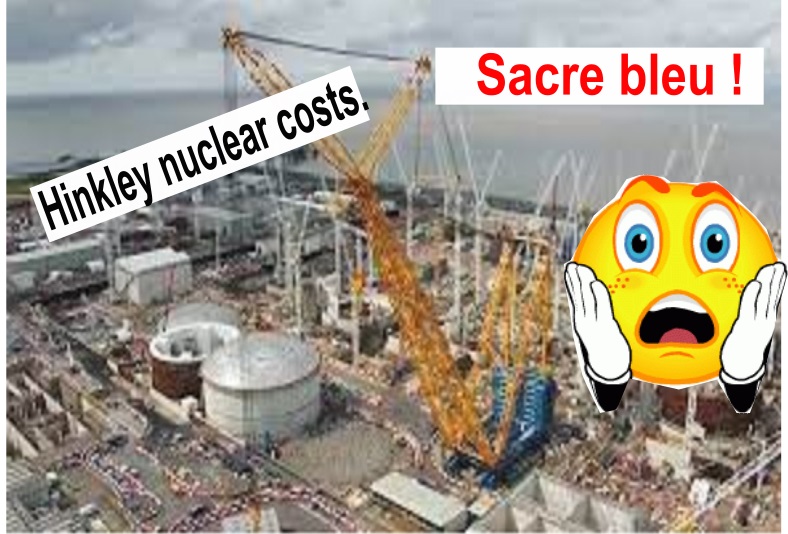
Former energy secretary Chris Huhne says Paris must cover cost overruns
Jonathan Leake, 29 February 2024 •
France’s demands for UK taxpayers to help fund Hinkley Point
C are “wholly unacceptable”, according to the former energy secretary
who helped develop the nuclear project. Chris Huhne, who was energy
secretary from 2010 to 2012, said he was “astonished and saddened” to
hear that both Bruno Le Maire, the French finance minister, and Luc
Rémont, chief executive of EDF, were pressing the UK to help with the cost
overruns.
Mr Huhne was a leading architect of the deal with EDF, France’s
state-owned electricity supplier, to build the nuclear power station. Under
the deal, finally signed off by Mr Huhne’s successor, Ed Davey, EDF was
responsible for all the estimated £18bn costs, with a start date of 2025.
Telegraph 29th Feb 2024
Conservationists say Hinkley C nuclear water intakes could wipe out Atlantic salmon stocks

West Somerset Free Press, By John Thorne , Friday 1st March 2024
ENDANGERED Atlantic salmon could be wiped out in the Bristol Channel once the new Hinkley Point C nuclear power station starts generating electricity, campaigners fear.
They believe the estuary’s migrating salmon population could be decimated by huge water cooling intakes serving the power station’s nuclear reactors.
The Missing Salmon Alliance (MSA), which is a collective of passionate conservation organisations with a common interest in improving the plight of Atlantic salmon, is demanding greater fish protection measures by Hinkley C’s owner EDF.
They accused EDF of ‘flagrant disregard’ for major fish kill potential if it was successful in a bid to drop a requirement to fit acoustic fish deterrents (AFDs) on the water intake heads on the bed of the estuary.
Consultation on Hinkley’s proposals to drop the AFDs ended on Thursday (February 29) and MSA said it understood the system was now unlikely to be used.
As mitigation for the removal of the AFDs, EDF had suggested compensatory creation of wetland habitat for birds and other species, and enhancements to fish passage on some existing weirs.
But MSA said Hinkley would draw a huge amount of water from the Bristol Channel to cool its reactors, about 120,000 litres per second.
A spokesperson said: “This is the equivalent of three Olympic swimming pools per minute and twice the average flow of the River Thames, in London.
“An independent panel warned in 2021 the power station could capture up to 182 million fish per year. It is likely that most of these will not survive.”
The area surrounding Hinkley is a Special Area of Conservation with a number of rivers which are home to endangered, protected, and commercially important fish, including Atlantic salmon, shad, elver eel, which is critically endangered, conger eel, brown shrimp, cod, bass, whiting, flounder, sole, and thornback ray.
The Severn has one of only four UK spawning populations of twait shad and data showed a significant risk of Hinkley wiping them out as nearly one-third of their population used the sea around the abstraction zones.
The International Union for Conservation of Nature (IUCN) classifies Atlantic salmon as ‘endangered’ in Great Britain and ‘near threatened’ on a global scale.
Game and Wildlife Conservation Trust head of fisheries Dylan Roberts said: “Wild Atlantic salmon migrate through the Bristol Channel each spring from a number of recognised rivers in the area.
“It is critical a real-time assessment of salmon smolts migrating through the area is funded by EDF.
“This is not solely about salmon, it is a much broader remit.
“It is about conserving our wider biodiversity against a massive State project steamrolling through and putting two fingers up to the environment.”
Angling Trust head of campaigns Stuart Singleton-White said: “What EDF propose in terms of compensation is inadequate.
“It will not compensate for the millions of fish sucked in by these intakes every year.
“It will decimate Atlantic salmon and shad.
“Without proper compensation and mitigation, they could become locally extinct.”………………..
Chris Huhne Letter: Taxpayers shouldn’t be footing bill for EDF failings
I was astonished and saddened by your report that both Bruno Le
Maire, the French finance minister, and Luc Rémont, chief executive of
EDF, are pressing the UK government to help with the cost overrun at
Hinkley Point C, the EDF nuclear plant under construction in the UK.
I regret EDF’s €12.9bn write down, but it is the French company’s
responsibility (Report, February 17). I will save French blushes by not
quoting all the promises that were made by the company about the low cost
of its nuclear energy (a fraction even of what was ultimately agreed). What
is wholly unacceptable, however, is the notion that the UK taxpayer should
in any way be on the hook for cost overruns when it was always made utterly
explicit — by me and my successor — that this would never happen.
A clear condition of the Hinkley project was that EDF would be entirely and
solely responsible for the construction costs and risks, and the UK
government would merely guarantee a price (subsidy-free, taking account of
carbon costs) for the electricity output once the plant started. Nothing
could be more unambiguous either legally, politically or morally.
Neither I nor my immediate successors would ever have agreed any contract — a
contract for difference — on any other basis. Any British minister who
now goes back on that arrangement would be betraying their responsibility
to the exchequer, and would be a legitimate target for the public accounts
committee.
FT 28th Feb 2024
https://www.ft.com/content/175d212b-0a93-48f5-b68c-2a58bd098796
New plans to dismantle Rosyth dead nuclear submarines left for decades
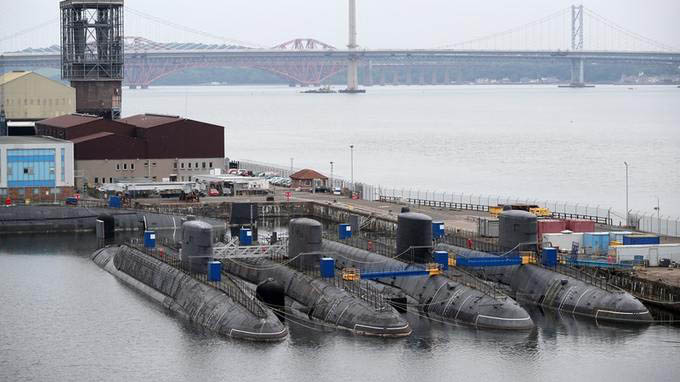
One of the old nuclear subs, Dreadnought, has been laid up at Rosyth for 44 years
By Ally McRoberts, Content Editor, https://www.thenational.scot/news/24154347.new-rosyth-dockyard-building-submarine-dismantling/ 1 Mar 24
THERE are plans for a new building at Rosyth Dockyard to dismantle the old nuclear submarines that are stored there.
Babcock International has applied to Fife Council for permission to construct a large steel shed at dry dock number two.
If approved it will be 70 metres long, 18m wide and 20m high and “aid dismantling operations” at the yard, where seven old subs have been laid up for decades.
A separate planning application related to the project, for a metal waste disposal facility at the corner of Wood Road and Caledonia Road, was submitted to the council late last year.
Blyth and Blyth, of Edinburgh, have been appointed by Babcock as civil and structural engineering consultants for the Rosyth Submarine Dismantling Project and are agents for both applications.
The last of the subs at the dockyard came out of service in 1996 and Dreadnought has been there the longest, coming up for 44 years.
Laid up in Rosyth since 1980, longer than it was in service, getting rid of it and the six other vessels is part of a pledge given in 2022 by the UK Government to Fife Council to “de-nuclearise Rosyth” by 2035.
Councillors were also told of a world first with plans to take out the reactor – “the most radioactive part” – before cutting up the ships with the overall ambition of turning them into “razor blades and tin cans”.
Most of the low-level radioactive waste should be gone from Rosyth by the end of this year.
Documents submitted with the latest planning application says that the new building would be 1162 square metres in size.
The site is currently an area of hardstanding, used for the external storage of materials and equipment associated with the refurbishment of vessels in the dry dock.
Waste produced from the dismantling process “shall be processed in other existing buildings within the dock facilities”.
In total, the UK has 27 old Royal Navy submarines to be scrapped – others are stored at Devonport – and the UK Government has been heavily criticised for delays in dealing with the nuclear legacy.
Maintaining the vessels costs £30m a year.
Blackout risks due to Hinkley nuclear delays – a reminder of the value of energy efficiency

Hinkley Point C delays raise UK blackout risk, https://www.energylivenews.com/2024/02/28/hinkley-point-c-delays-raise-uk-blackout-risk/
Delays in Hinkley Point C construction and other nuclear station closures heighten blackout risk for the UK by 2028 due to increased demand and insufficient capacity, a study warns
New research warns of potential blackouts in the UK by 2028 due to delays in French-built nuclear reactors, alongside closures of existing stations like Ratcliffe-on-Soar.
Analysis by Public First indicates a looming “crunch point” as demand exceeds baseload capacity by 7.5GW at peak times, equivalent to the power needs of over seven million homes.
Government data reveals consumers facing a £2.8 billion addition to bills in 2028 to ensure sufficient generating capacity.
Paul Szyszczak, Country Manager, Danfoss Climate Solutions, UK and Ireland, said: “This new blackout warning for the UK’s grid is concerning but shouldn’t be a reason for panic. Instead, it should be seen as an opportunity and useful reminder of why we need to boost energy efficiency
Regardless of the Hinkley Point delays, blackouts can be kept out of the conversation entirely if we were to bring in relatively simple changes. Changes such as rolling out demand-side flexibility technology across the country; this would level out energy consumption to prevent periods of simultaneous high demand and low supply, which is especially important for an energy system based on a growing mix renewables, such as the UK’s energy system.
“The deployment of demand-side flexibility technologies can lower demand during expensive peak hours and reduce the amount of fossil fuels in the energy mix. In fact, these changes would mean at least a 7% savings on electricity bills for households and a highly significant reduction in carbon emissions.
“Through demand-side flexibility, the EU and UK can annually save 40 million tonnes of carbon dioxide emissions and achieve annual societal cost savings of €10.5 billion (£8.9bn) by 2030, partly due to lower need for investments in energy infrastructure.”
UK spurns European invitation to join ITER nuclear fusion project
Since Brexit, the UK no longer has access to ITER, the world’s largest nuclear fusion experiment, through the European Union. After an invitation to rejoin this week, the UK government has confirmed it prefers to go it alone
New Scientist, By Matthew Sparkes, 1 March 2024
The UK government has declined an invitation to become an official member of the ITER nuclear fusion experiment, having lost access to the project following Brexit. Instead, it plans to focus on UK-based fusion efforts, both public and private.
ITER, the world’s largest fusion experiment, is under construction in France and is expected to be completed in 2025 after many delays. The project is being funded by a huge international collaboration including China, India, Japan, Russia, South Korea, the US and the European Union……………………………………………………………………. more https://www.newscientist.com/article/2419671-uk-spurns-european-invitation-to-join-iter-nuclear-fusion-project/
1 This Month

of the week – Shut Down Drone Warfare!


Tell the Ukrainian Government to Drop Prosecution of Peace Activist Yurii Sheliazhenko

Petition to revoke the licensing of the Near Surface Nuclear Disposal Facility (NSDF) at Chalk River. https://www.ourcommons.ca/petitions/en/Petition/Details?Petition=e-7247
To see nuclear-related stories in greater depth and intensity – go to https://nuclearinformation.wordpress.com
-
Archives
- April 2026 (114)
- March 2026 (251)
- February 2026 (268)
- January 2026 (308)
- December 2025 (358)
- November 2025 (359)
- October 2025 (376)
- September 2025 (257)
- August 2025 (319)
- July 2025 (230)
- June 2025 (348)
- May 2025 (261)
-
Categories
- 1
- 1 NUCLEAR ISSUES
- business and costs
- climate change
- culture and arts
- ENERGY
- environment
- health
- history
- indigenous issues
- Legal
- marketing of nuclear
- media
- opposition to nuclear
- PERSONAL STORIES
- politics
- politics international
- Religion and ethics
- safety
- secrets,lies and civil liberties
- spinbuster
- technology
- Uranium
- wastes
- weapons and war
- Women
- 2 WORLD
- ACTION
- AFRICA
- Atrocities
- AUSTRALIA
- Christina's notes
- Christina's themes
- culture and arts
- Events
- Fuk 2022
- Fuk 2023
- Fukushima 2017
- Fukushima 2018
- fukushima 2019
- Fukushima 2020
- Fukushima 2021
- general
- global warming
- Humour (God we need it)
- Nuclear
- RARE EARTHS
- Reference
- resources – print
- Resources -audiovicual
- Weekly Newsletter
- World
- World Nuclear
- YouTube
-
RSS
Entries RSS
Comments RSS
 nuclear-news