Wind is certainly not the only renewable power source in Scotland
The National 12th Jan 2026, Alexander Potts
I WOULD like to reply to Lyndsey Ward (Letters, Jan 6) to say that it isn’t the SNP that look silly for not wanting nuclear power plants in Scotland, but those who advocate that we build them.
Statistics published last month showed that Scotland produced 115% of electricity by renewables for the previous year (2024/2025). In other words, we produced 15% more than we needed by renewables alone. And yes, we do use other sources to produce electricity when needed. As we export 40% of electricity to England from the above 115% figure, we are certainly way above what our/Scotland’s demands are, so do we actually need more generating capacity?
I of course acknowledge that at times the wind turbines are switched off, but as I have stated, we do have other means to produce electricity. However, I do have to ask Lyndsey why she didn’t mention that we also generate renewable electricity by hydro power, and have been since the 1950s, as well as solar and tidal power? In that respect, Lyndsey has fallen into the same old trap as others in that she assumes we only generate renewables by the one source and that we don’t have back-up facilities.
Lyndsey also forgets to mention one very important fact in Scotland’s renewable project, in that we pump the water back up to the reservoirs at off-peak periods, so the one thing that we aren’t going to run short of is hydro power. In a similar fashion, people assume that solar panels only work in bright light. However, they work when there is a light source available and are producing power from early morning to evening more or less all the time, even in overcast conditions.
Although tidal power is still at the early stages of development, its only drawback is that its doesn’t produce power at slack water periods, which is about two hours per day (two one-hour periods per day). The interesting thing about that, though, is that slack water time is different all around the coast, so the more that potentially come online, the more that minor problem is overcome. As tidal energy production is submerged, then there won’t be visual evidence as with wind turbines………………………………………………………………………. https://www.thenational.scot/business/25756714.wind-certainly-not-renewable-power-source-scotland/
British Ministry of Defense developing ballistic missile for Ukraine to make “deep strikes into Russia”

Steven Starr , 13 Jan 26
The missile is only in the developmental stage. The delusional British imagine that Russia will not strike Britain if they pursue this folly.
The UK has formally launched Project Nightfall, a competition to develop a new ground-launched tactical ballistic missile intended primarily for use by Ukrainian forces, while also shaping future British long-range strike programmes.
The government has moved ahead with Project Nightfall, a competitive effort to rapidly develop a ground-launched ballistic missile designed to give Ukraine a long-range strike capability against Russian forces. The programme builds directly on work first disclosed by the UK Defence Journal in December, when the Ministry of Defence published an initial contract notice outlining the requirement.
While the project is being run by the UK, ministers have been clear that the missile is not intended as a near-term addition to Britain’s own arsenal. Instead, Nightfall is designed around Ukrainian operational use, with British industry acting as the developer and manufacturer and the UK Armed Forces positioned as a future beneficiary of lessons learned rather than the immediate end user.
The December notice, published on 9 December 2025, confirmed that the MOD was seeking industry partners to “procure a future tactical ballistic missile through a short-term development programme”. That followed parliamentary confirmation in November that officials were assessing industry feedback ahead of launching a formal competition.
According to the published requirement, Nightfall is one of the most ambitious missile programmes pursued by the UK in decades. The MOD specified a cost-effective, ground-launched ballistic missile with a range greater than 500 kilometres, capable of operating in high-threat and heavily contested environments, including under intense electronic warfare and degraded or denied satellite navigation.
Mobility and survivability are central to the concept. The system is required to support salvo firing from a single launcher, with multiple missiles launched in quick succession before the crew withdraws rapidly. The MOD specified that launch units must be able to leave the firing area “within 15 minutes of launching all effectors”, with each missile reaching its target within approximately 10 minutes of launch.
Scalability is another key requirement. Subject to future contracts, production must be capable of delivering at least 10 missiles per month, with scope to increase output. Designs are also expected to allow future upgrades to range, accuracy and manoeuvrability, while minimising reliance on foreign export controls.
This week’s announcement adds political weight and funding detail rather than altering the core technical requirement. Under the current plan, the government intends to award up to three competing development contracts, each worth £9 million. Each team would be expected to design, develop and deliver three missiles within 12 months for test firings. Proposals are due by 9 February, with development contracts targeted for award in March.
Defence Secretary John Healey framed the programme as a response to continued Russian attacks, saying the UK was determined to place advanced weapons “into the hands of Ukrainians as they fight back.” In ful, he said:
The missile must be “capable of being safely ground launched from a mobile platform in a high threat tactical environment, navigating to and accurately striking a user-programmed fixed target co-ordinate.” Each effector is expected to carry a conventional high-explosive payload of around 200 kilograms and follow a supersonic ballistic trajectory, with a stated accuracy requirement of striking within 10 metres of a target coordinate for 50 per cent of launches.
Mobility and survivability are central to the concept. The system is required to support salvo firing from a single launcher, with multiple missiles launched in quick succession before the crew withdraws rapidly. The MOD specified that launch units must be able to leave the firing area “within 15 minutes of launching all effectors”, with each missile reaching its target within approximately 10 minutes of launch.
Scalability is another key requirement. Subject to future contracts, production must be capable of delivering at least 10 missiles per month, with scope to increase output. Designs are also expected to allow future upgrades to range, accuracy and manoeuvrability, while minimising reliance on foreign export controls.
This week’s announcement adds political weight and funding detail rather than altering the core technical requirement. Under the current plan, the government intends to award up to three competing development contracts, each worth £9 million. Each team would be expected to design, develop and deliver three missiles within 12 months for test firings. Proposals are due by 9 February, with development contracts targeted for award in March
Defence Secretary John Healey framed the programme as a response to continued Russian attacks, saying the UK was determined to place advanced weapons “into the hands of Ukrainians as they fight back.” In ful, he said:
“The attacks overnight on Thursday just go to show how Putin thinks he can act with impunity, targeting civilian areas with advanced weaponry. Instead of seriously negotiating a peace, he’s seriously escalating his illegal war. We were close enough to hear the air raid sirens around Lviv on our journey to Kyiv, it was a serious moment and a stark reminder of the barrage of drones and missiles hitting Ukrainians in sub-zero conditions. We won’t stand for this, which is why we are determined to put leading edge weapons into the hands of Ukrainians as they fight back.”
Defence Minister Luke Pollard said the missiles would “keep Ukraine in the fight” while also strengthening longer-term European security.
“A secure Europe needs a strong Ukraine. These new long-range British missiles will keep Ukraine in the fight and give Putin another thing to worry about. In 2026, we will continue to stand shoulder to shoulder with Ukraine. Providing equipment to keep them in the fight today, whilst working to secure the peace tomorrow.”
While the formal launch underscores the government’s intent, the substance of Project Nightfall remains closely aligned with the requirement outlined in December. As that original notice made clear, the MOD still reserves the right to amend or cancel the programme at any stage, stating that “the Authority reserves the right not to award any Contract to any supplier at any stage during the procurement.”
For now, Nightfall represents a rare case of the UK pursuing a ground-launched ballistic missile explicitly for a partner nation’s use, while using the programme to accelerate domestic expertise in deep-strike systems that Britain itself currently lacks.
Faslane nuclear base tugboats may be built in China
UK Defence Journal By George Allison, January 12, 2026
New tugboats intended to support operations at HM Naval Base Clyde, the UK’s nuclear submarine hub at Faslane, may be constructed in China under a major fleet replacement programme, depending on how the contractor applies its global production model.
The vessels form part of the Defence Maritime Services Next Generation programme, under which Serco is replacing a wide range of Royal Navy harbour and support craft. The programme covers tugs, pilot boats and barges used at naval bases across the UK, including Faslane, which hosts the UK’s continuous at-sea nuclear deterrent.
Under the current arrangements, the Ministry of Defence pays Serco to provide support services at the Royal Navy’s principal bases, and allows Serco, as the prime contractor, to determine its own supply chain for vessel replacement.
Build locations and Damen’s production model
Damen operates a distributed shipbuilding model, with construction spread across a network of yards in Europe and Asia depending on vessel type and production capacity. The company has historically built a range of smaller commercial and support vessels at yards in China and Vietnam, including certain classes of tugboats, while other workboat types are constructed at European facilities in countries such as Poland and Romania. Final outfitting, integration and delivery preparation are often carried out in the Netherlands or at European partner yards, depending on the contract.
Neither Serco nor Damen has publicly confirmed the specific build locations for individual vessels within the programme. However, Damen’s established production model suggests that some tugboats could be built outside Europe, including at shipyards in China that form part of Damen’s wider manufacturing network……………………………………………………………………………………………….
Not the first time
A similar issue emerged in Australia in 2025, when the national broadcaster ABC reported that a new fleet of tugboats ordered for the Royal Australian Navy had been built in China under a contract awarded to Dutch shipbuilder Damen. The report said certification documents showed the vessels were constructed at Damen’s Changde shipyard in China, before being delivered to Australia under a civilian-operated support arrangement.
In response to the reporting, Australia’s Department of Defence confirmed that the tugboats had been built in China, while stating that they were not commissioned naval vessels and would be operated by a civilian contractor. Defence officials emphasised that sustainment activity would take place domestically and that the vessels were intended for harbour support roles rather than frontline operations…………………….
Wider security context
In a separate but related context, the Ministry of Defence has in recent months issued internal guidance concerning the use of vehicles containing Chinese-manufactured components, amid broader concerns about information security and connected systems. Media reporting has said warning notices were placed in some MoD-leased vehicles advising personnel not to discuss sensitive matters inside them or connect official devices, and that certain vehicles were restricted from accessing sensitive military sites. The measures were described as precautionary, with no publicly confirmed security breach.
Parliamentary questions have also raised wider issues about reliance on overseas-manufactured systems within defence and government operations. Ministers have acknowledged the need to assess potential vulnerabilities linked to global supply chains, while maintaining that decisions are taken on a case-by-case basis and that there has been no evidence of compromise.
Competing views on cost, transparency and social value
Those defending the programme argue that the arrangements reflect commercial shipbuilding norms rather than a deliberate policy decision. They note that hull construction in Asia can reduce costs and production timelines, with final outfitting, systems integration and acceptance carried out later in Europe under established regulatory oversight. Critics argue that the lack of transparency over build locations risks undermining confidence, especially where vessels operate at nuclear sites. They contend that clearer public disclosure is needed on where vessels are constructed and what safeguards apply during the build process.
Louise Gilmour, secretary of GMB Scotland, said the decision to source the workboats overseas represented a missed opportunity to support domestic shipbuilding capacity, particularly at Ferguson Marine, where the union represents the largest section of the workforce. She said the vessels were well suited to the type of work the yard had carried out for generations and argued that contracts of this scale could play a role in sustaining skills and employment in Scotland.
https://ukdefencejournal.org.uk/faslane-nuclear-base-tugboats-may-be-built-in-china/
Who is to blame for blocking a new ‘golden era’ for nuclear power?
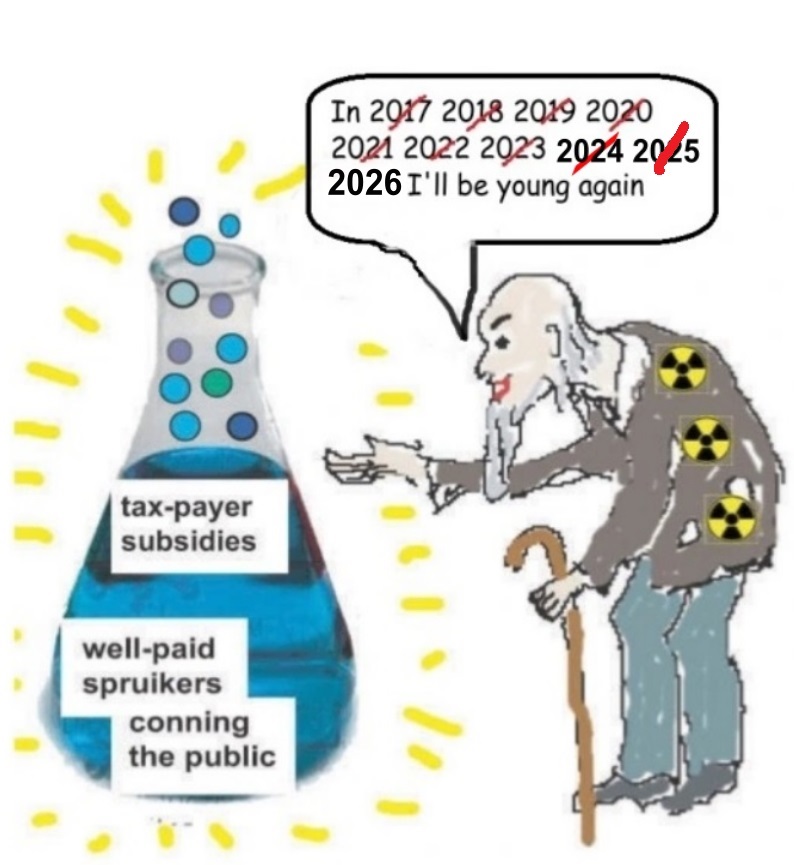
It is not the regulators or we so-called ‘blockers’ who are the main impediment to nuclear. It is the systemic failure of the nuclear industry to produce viable projects such as the much-hyped but non-existent Small Nuclear Reactors; its predictable inability to prevent cost overruns or to meet deadlines; let alone its lack of credible ideas to deal adequately with risk, safety and the management of its dangerous and interminable wastes. Nuclear is an industry that is bound to fail
7 January 2026, https://www.banng.info/news/regional-life/who-is-to-blame-for-blocking-nuclear-power/
Andrew Blowers tackles this question in the January edition of Regional Life magazine
The mantra that nuclear technology ‘is essential for achieving national security, energy security and Net Zero targets’ proclaimed by the Government’s Nuclear Regulatory Task Force has become the unequivocal, if deeply flawed, basis for government policy. The Government has pledged to ‘turbo-charge the build-out of new nuclear power stations and enter a ‘golden era’ of nuclear power.
Standing in its way are ‘gold-plated’ regulations and community groups like BANNG committed to protecting local environments, ecology and human health. The Task Force Review report just published (December) asserts, entirely without supporting evidence, that ‘The primary barrier’ to revitalising nuclear’s role is ‘systemic failure within the regulatory framework’.
So, here we have a familiar confrontation between energy and economic growth on the one side and environmental protection on the other. We have been here before. Every decade or so a new nuclear revival is promised but, after much huffing and puffing very little materialises. At the beginning of the century Tony Blair declared new nuclear was back ‘with a vengeance. In 2011 eight sites, including Bradwell, were declared ‘potentially suitable’ for new nuclear power plants.
In the event, only one, Hinkley Point, materialised and has become notorious for being too late, promised for 2017 but unlikely to power up until the next decade. Its cost overruns have become legendary. According to the Government, the culprits are environmental regulations and campaign groups who insist that previously agreed audio fish deterrents (AFDs) must be installed to help save millions of fish from becoming entrained and entrapped in the colossal intake and outflow pipes going into the Severn estuary. The developer has prevaricated, proposing cheaper but environmentally destructive methods of abatement. Politicians, including Sir Keir Starmer, have mindlessly mocked the ADF as a ‘fish disco’. It makes one wonder how they might deride oysters from the Blackwater if they stood in the way of nuclear power at Bradwell.

It is not the regulators or we so-called ‘blockers’ who are the main impediment to nuclear. It is the systemic failure of the nuclear industry to produce viable projects such as the much-hyped but non-existent Small Nuclear Reactors; its predictable inability to prevent cost overruns or to meet deadlines; let alone its lack of credible ideas to deal adequately with risk, safety and the management of its dangerous and interminable wastes. Nuclear is an industry that is bound to fail.
Meanwhile the importance of regulations imposed by independent regulators designed to protect people and the environment cannot be overstressed. And the essential role of community groups and councils in seeking to ensure the environmental protection and health and wellbeing of the places they represent is something to be cherished, not denigrated. It is a pity the Government does not see it that way.
7 January 2026
Andrew Blowers tackles this question in the January edition of Regional Life magazine
The mantra that nuclear technology ‘is essential for achieving national security, energy security and Net Zero targets’ proclaimed by the Government’s Nuclear Regulatory Task Force has become the unequivocal, if deeply flawed, basis for government policy. The Government has pledged to ‘turbo-charge the build-out of new nuclear power stations and enter a ‘golden era’ of nuclear power.
Standing in its way are ‘gold-plated’ regulations and community groups like BANNG committed to protecting local environments, ecology and human health. The Task Force Review report just published (December) asserts, entirely without supporting evidence, that ‘The primary barrier’ to revitalising nuclear’s role is ‘systemic failure within the regulatory framework’.
So, here we have a familiar confrontation between energy and economic growth on the one side and environmental protection on the other. We have been here before. Every decade or so a new nuclear revival is promised but, after much huffing and puffing very little materialises. At the beginning of the century Tony Blair declared new nuclear was back ‘with a vengeance. In 2011 eight sites, including Bradwell, were declared ‘potentially suitable’ for new nuclear power plants.
In the event, only one, Hinkley Point, materialised and has become notorious for being too late, promised for 2017 but unlikely to power up until the next decade. Its cost overruns have become legendary. According to the Government, the culprits are environmental regulations and campaign groups who insist that previously agreed audio fish deterrents (AFDs) must be installed to help save millions of fish from becoming entrained and entrapped in the colossal intake and outflow pipes going into the Severn estuary. The developer has prevaricated, proposing cheaper but environmentally destructive methods of abatement. Politicians, including Sir Keir Starmer, have mindlessly mocked the ADF as a ‘fish disco’. It makes one wonder how they might deride oysters from the Blackwater if they stood in the way of nuclear power at Bradwell.
It is not the regulators or we so-called ‘blockers’ who are the main impediment to nuclear. It is the systemic failure of the nuclear industry to produce viable projects such as the much-hyped but non-existent Small Nuclear Reactors; its predictable inability to prevent cost overruns or to meet deadlines; let alone its lack of credible ideas to deal adequately with risk, safety and the management of its dangerous and interminable wastes. Nuclear is an industry that is bound to fail.
Meanwhile the importance of regulations imposed by independent regulators designed to protect people and the environment cannot be overstressed. And the essential role of community groups and councils in seeking to ensure the environmental protection and health and wellbeing of the places they represent is something to be cherished, not denigrated. It is a pity the Government does not see it that way.
British and European leaders have shown themselves weak and complicit in the kidnapping of Maduro.
Ian Proud, Jan 08, 2026, https://thepeacemonger.substack.com/p/british-and-european-leaders-have?utm_source=post-email-title&publication_id=3221990&post_id=183823495&utm_campaign=email-post-title&isFreemail=true&r=1ise1&triedRedirect=true&utm_medium=email
The US attack on the Venezuelan capital of Caracas and kidnapping of President Maduro and his wife was illegal under international law. British and European leaders tacitly supporting US actions through silence is weak and will damage further their reputations in the developing world.
The UN Charter was agreed in 1945 to ensure that countries no longer interfered in the sovereign affairs of other countries. Of course, that legal basis was built on shaky foundations, as the outline of post-war borders was complex and in many parts of the world disputed, including in Europe. The Second World War ended at a time when Britain and other European nations were accelerating their departure from colonialism, creating wholly new sovereign states based on former colonial boundaries.
The UN charter didn’t and does not try to rewrite the map of the world. Nor does it seek to impose a template for how countries are governed. The countries of the world continue to be led by a mix of monarchies, democracies and autocracies in many shapes and sizes.
No country has a right to impose its will or preferred mode of governance on another country, however dysfunctional that country may be. In the case of Venezuela, few would argue that it is a democracy in the purest sense, despite the holding of elections. That some countries consider prior Venezuelan elections to have been rigged is immaterial under the UN Charter. No third country can interfere violently in the affairs of another state, even if that state appears a violent dictatorship.
I personally do regard Nicolas Maduro as, at the very least, an authoritarian leader who is predisposed to undemocratic and repressive means to govern his people. But I could say the same about countless other countries, not only in Latin America but in Africa, the middle east and Asia.
Europe itself, while governed by seemingly democratic systems, has stood accused by the US in this past year of being anti-democratic by stifling free speech and choreographing the appearance of democracy with the help of a compliant media. The institutions of Europe are by design anti-democratic, as citizens do not have the opportunity directly to choose any of the six so-called Presidents in charge, nor their unelected aides-de-camp, however they are called.
So, love him or, in many liberal cases, loathe him, western leaders aren’t given a say under international law about whether Nicolas Maduro is the rightful leader of Venezuela.
In the case of the US, that country has justifiable concerns about the flood of drugs channelled through Venezuela that reach its shores and ruin the lives of people addicted to substance misuse. This is undoubtedly a legitimate national security interest for the Americans and gives them the right to act to prevent these hostile acts, including, should they choose, through the use of force. Without getting into the wider debate about US attacks on alleged drug boats, those actions, nevertheless, are still governed by international human rights law.
They do not give the USA the right forcibly to depose a serving President, however unpalatable a character he may be.
That UK and European leaders have tacitly, though their silence of US actions, come out in support of the overthrow of Maduro speaks more of international relations, not international law.
They have set themselves up as judge and jury from affair, on the basis that they agree with the US assessment that Maduro is the wrong sort of leader for Venezuela. For all the pontification about letting Venezuelan people decide, Euro-elites aren’t bright enough to realise that they are aiding and abetting Donald Trump in making a choice on Venezuela’s behalf.
This theatre played out vividly at the UN Security Council on Monday 5 January in which the various European states represented at the table, one by one, refused even to mention the actions of the US in overthrowing Maduro in their statements. Echoing Prime Minister Keir Starmer’s refusal to denounce US actions, the UK’s Representative at the table, James Kariuki, who unfortunately I know of old, stuck to remarking on the undemocratic nature of Nicolas Maduro, the need for a transition to democracy and to abide by international law. And nothing else.
No mention of the fact that US actions were in breach of international law. No mention of the unilateral military attack by the US on Venezuela’s capital nor the kidnapping of Maduro. Simply, Maduro is bad, too bad, let’s find someone new to replace him, of whom, implicitly, we approve.
Every other European state at the table, including Greece, France, Latvia and Denmark, offered a slightly longer-winded version of the same position. The Danes were a little more nuanced, given their not misplaced fear, that they may be next, if America decides to make a move to annex Greenland illegally.
And therein the root cause of the British and European positioning. European foreign policy appears to rest almost entirely on a desire not to offend President Trump.
In London, Riga, Paris and Copenhagen, leaders still cling to the hope that President Trump will, through flattery, still support their efforts to maintain a proxy war in Ukraine.
That if they refuse to denounce him over Venezuela, he might eventually come round again to the idea of regime change in Moscow, through a war in Ukraine that leaders continue to fantasise is winnable when all the evidence suggests otherwise.
So, the requirements of international law have become entirely incidental to the foreign policy imperative of defeating President Putin and, hopefully, perhaps, seeing him, cuffed and blindfolded, whisked off in a US military helicopter to a kangaroo court in New York. Everything else, including the requirements of the UN Charter, is simply inconvenient detail.
Yet, ultimately, Britain and Europe remain weak and unable substantively to influence President Trump’s actions, rendering them weak and as passengers on a runaway US train as it relates to Ukraine policy.
Unfortunately, countries across the developing world – including the Latin American countries at the Security Council who to varying degrees denounced the US move – will have been shocked by the position Britain and Europe has taken. That their leaders are clinging on vicariously to a western hegemon, in which the US acts as global policemen, and they stand back, aghast, while offering obsequious applause.
The main beneficiary of this will, of course, be China and to some extent Russia who have progressively railed against western dominance through alternative global political fora for dialogue and mutually beneficial cooperation. I should think the queue of countries lining up to join BRICS will grow longer after this illegal US attack on Venezuela.
Nuclear Power: Private Sector -Question for UK government
Question for Department for Energy Security and Net Zero
UIN HL13206, tabled on 18 December 2025
Lord Spellar: To ask His Majesty’s Government when they intend to publish a new framework for a private sector route to market for advanced nuclear
technologies.
Lord Vallance: The government will provide a framework that
will set out a pathway for privately led advanced nuclear projects, this framework will be published early this year.
Hansard 6th Jan 2026 https://questions-statements.parliament.uk/written-questions/detail/2025-12-18/HL13206
Babcock to provide dock for new Dreadnought nuclear subs: will they be carrying nuclear weapons?
By Ally McRoberts, Dunfermline Press 6th Jan 2026
PREPARATIONS are underway in Rosyth for a contingent docking facility to accommodate the next generation of nuclear submarines.
Dunfermline and Dollar MP Graeme Downie had asked about the planned timescale for the work which will see the Dreadnought class berth at the yard during sea trials.
Rosyth will “bridge a gap” by offering a temporary home for the new subs, and last month the Ministry of Defence told local councillors they will not reveal if any of the boats that need repairs or maintenance will be carrying nuclear weapons……………………………………………..
“For operational security reasons further details cannot be released as to do so could be used to undermine the security and capability of our Armed Forces.”
……………………The Royal Navy’s new subs, the Dreadnought class, will be launched from Barrow-in-Furness towards the end of this decade.
The vessels will be maintained at Faslane, however the site on the Clyde won’t be ready until the mid 2030s……………………………
At last month’s South and West Fife area committee, Grant Reekie, head of radioactive waste and health physics at Babcock, had explained: “We have been asked to provide a contingent facility by the MoD to bridge a gap of submarines coming into service in late 2020s from 2029 through to mid 2030s when they will no longer be required as it will be done in Faslane.
………………At the same meeting the MoD told councillors they will not reveal if nuclear weapons will be aboard submarines being repaired at the yard.
They also confirmed that local residents would be given potassium iodate tablets to block radiation in the event of an emergency. https://www.dunfermlinepress.com/news/25743485.babcock-provide-dock-new-dreadnought-nuclear-subs/
New roads police team for major construction work
Alice Cunningham, BBC 4th Jan 2026, Suffolk
A police force is hiring a road team to escort abnormal loads heading to and from nationally significant infrastructure projects such as Sizewell C nuclear power station.
Suffolk Police said it was recruiting a designated abnormal indivisible loads (AIL) team that would consist of police motorcyclists.
It envisaged the team would work with several projects for several years, and noted that its current project with the new Sizewell C nuclear plant near Leiston was for 12 years.
Chief Constable Rachel Kearton said the “uplift required to support the policing element of the Sizewell C development has been secured through the planning process and paid for by the Sizewell C developer”……………………a “carefully co-ordinated roads policing provision” was in place to ensure safe movement of the abnormal loads to and from Sizewell.
The UK government, which is the largest shareholder in Sizewell C Limited, is building a new two-reactor nuclear power station on the coast next to the Sizewell A and B sites, that could power the equivalent of about six million homes and will generate electricity for 60 years.
Permission for the project was granted in July 2022 before the government gave its final funding approval last year…………………. https://www.bbc.com/news/articles/cddg773172jo
Chris Hedges: Decline and Fall
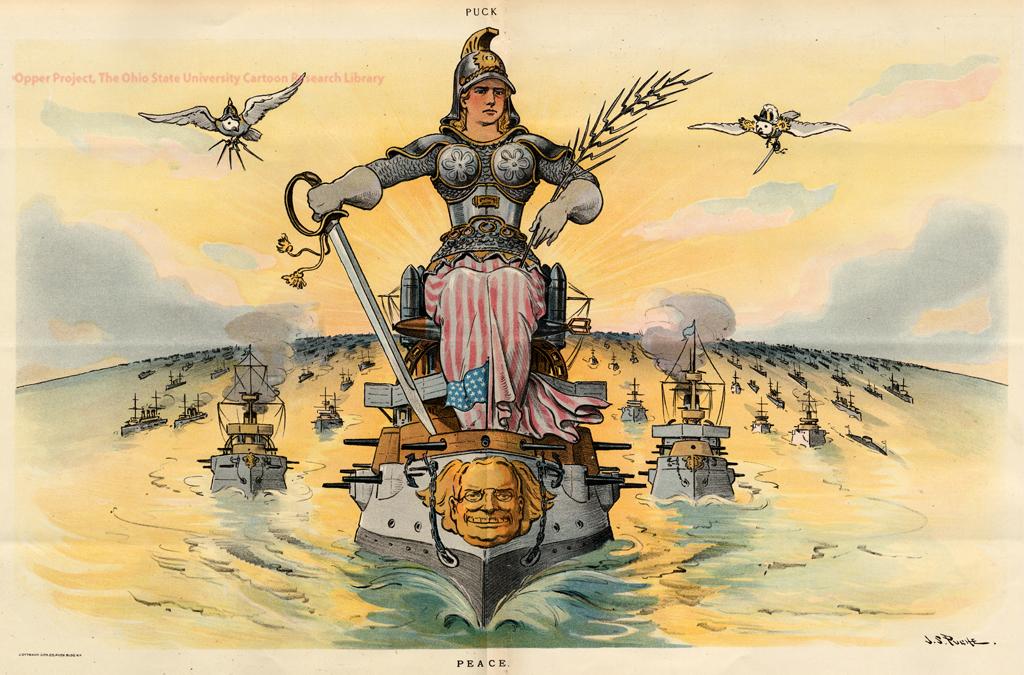
We live in an eerily similar historical moment. Britain, within 12 years of Kipling’s lament, was plunged into the collective suicide of World War I, a conflict that took the lives of over a million British and Commonwealth troops and doomed the British Empire.
Donald Trump boasts that he will be the “fertilization president.” American couples — meaning white couples — will be given incentives by his administration to have more children to counter declining birth rates.
December 29, 2025 , By Chris Hedges , ScheerPost, https://scheerpost.com/2025/12/29/chris-hedges-decline-and-fall/
At the start of the 20th century, the British Empire was, like our own, in terminal decline. Sixty percent of Englishmen were physically unfit for military service, as are 77 percent of American youth. The Liberal Party, like the Democratic Party, while it acknowledged the need for reform, did little to address the economic and social inequalities that saw the working class condemned to live in substandard housing, breathe polluted air, be denied basic sanitation and health care and forced to work in punishing and poorly paid jobs.
The Tory government, in response, formed an Inter-Departmental Committee on Physical Deterioration to examine the “deterioration of certain classes of the population,” meaning, of course, the urban poor. It became known as the report on “the degeneracy of our race.” Analogies were swiftly drawn, with much accuracy, with the decadence and degeneracy of the late Roman Empire.
Rudyard Kipling, who romanticized and mythologized the British Empire and its military, in his 1902 poem “The Islanders,” warned the British that they had grown complacent and flaccid from hubris, indolence and privilege. They were unprepared to sustain the Empire. He despaired of the loss of martial spirit by the “sons of the sheltered city — unmade, unhandled, unmeet,” and called for mandatory conscription. He excoriated the British military for its increasing reliance on mercenaries and colonial troops, “the men who could shoot and ride,” just as mercenaries and militias increasingly augment American forces overseas.
Kipling damned the British public for its preoccupation with “trinkets” and spectator sports, including “the flannel fools at the wicket or the muddied oafs at the goals,” athletes whom he believed should have been fighting in the war in South Africa. He foresaw in the succession of British military disasters during the South African Boer War, which had recently ended, the impending loss of British global dominance, much as the two decades of military fiascos in the Middle East have eroded U.S. hegemony.
The preoccupation with physical decline, also interpreted as moral decline, is what led Secretary of War Pete Hegseth to decry “fat generals,” and order women in the military to meet the “highest male standards” for physical fitness. It is what is behind his “Warrior Ethos Tasking,” plans to enhance physical fitness, grooming standards and military readiness.
We live in an eerily similar historical moment. Britain, within 12 years of Kipling’s lament, was plunged into the collective suicide of World War I, a conflict that took the lives of over a million British and Commonwealth troops and doomed the British Empire.
H.G. Wells, who anticipated trench warfare, tanks and machine guns, was one of the very few to see where Britain was headed. In 1908, he wrote “The War in the Air.” He warned that future wars would not be limited to antagonistic nation-states but would become global. These wars, as was true in the 1935 Italian invasion of Ethiopia, the Spanish Civil War and World War II, would carry out the indiscriminate aerial bombardment of civilians. He also foresaw in “The World Set Free,” the dropping of atomic bombs.
Nearly one third of the population in Edwardian England endured abject poverty. The cause, as Seebohm Rowntree noted in his study of the slums, was not, as conservatives claimed, alcoholism, laziness, a lack of initiative or responsibility by the poor, but because “the wages paid for unskilled labour in York are insufficient to provide food, shelter, and clothing adequate to maintain a family of moderate size in a state of bare physical efficiency.”
The U.S. has one of the highest rates of poverty among Western industrialized nations, estimated by many economists at far above the official figure of 10.6 percent. In real terms, some 41 percent of Americans are poor or low-income, with 67 percent living paycheck to paycheck.
British eugenicists from the Galton Laboratory for National Eugenics — which was funded by Sir Francis Galton, who coined the term “eugenics” — advocated “positive eugenics,” the “improvement” of the race by encouraging those deemed superior — always white members of the middle and upper classes — to have large families. “Negative eugenics” was advocated to limit the number of children born to those deemed “unfit.” This would be achieved through sterilization and the separation of genders.
Winston Churchill, who was home secretary in the liberal government of H.H. Asquith in 1910-11, backed the forced sterilization of the “feeble minded,” calling them a “national and race danger” and “the source from which the stream of madness is fed.”
The Trump White House, led by Stephen Miller, is intent on carrying out a similar culling of American society. Those endowed with “negative” hereditary traits — based usually on race — are condemned as human contaminants that an army of masked Immigration and Customs Enforcement agents are terrorizing, incarcerating and purging from society.
Miller, in emails leaked in 2019, lauds the 1973 novel “The Camp of the Saints,” written by Jean Raspail. It chronicles a flotilla of South Asian people who invade France and destroy Western civilization. The immigrants, who the Trump administration are now hunting down, are described as “kinky-haired, swarthy-skinned, long-despised phantoms” and “teeming ants toiling for the white man’s comfort.” The South Asian mobs are “grotesque little beggars from the streets of Calcutta,” led by a feces-eating “gigantic Hindu” known as “the turd eater.”
This, in its most scurrilous form, is the thesis of the “Great Replacement” theory, the belief that the white races in Europe and North America are being “replaced” by “lesser breeds of the earth.”
Donald Trump boasts that he will be the “fertilization president.” American couples — meaning white couples — will be given incentives by his administration to have more children to counter declining birth rates. In the vernacular of the right wing, those who promote this updated version of “positive eugenics” are known as “pronatalists.” The Trump administration will also reduce refugees admitted to the United States next year to the token level of 7,500, with most of these spots filled by white South Africans.
Trump’s allies in Big Tech are busy creating the fertility infrastructure to conceive children with “positive” hereditary traits. Sam Altman, who has been awarded a one-year military contract worth $200 million from the Trump administration, has invested in technology to allow parents to gene edit their children before conception to produce “designer babies.”
Peter Thiel, the co-founder of Palantir, which is facilitating the Trump administration’s mass deportation efforts, has backed an embryo screening company called Orchid Health. Orchid promises to help parents design “healthy” children through embryo testing and selection technology. Elon Musk, a fervent pronatalist and believer in the Great Replacement theory, is reportedly a client of the startup. The goal is to empower parents to screen embryos for IQ and select “their children’s intelligence before birth,” as the Wall Street Journal notes.
We are making the same self-defeating mistakes made by the British political class that oversaw the decline of the British Empire and orchestrated the suicidal folly of World War I. We blame the poor for their own impoverishment. We believe in the superiority of the white race over other races, crushing the plethora of voices, cultures and experiences that create a dynamic society. We seek to counter injustices, along with economic and social inequality, with hypermasculinity, militarism and force, which accelerates the internal decay and propels us toward a disastrous global war, perhaps, in our case, with China.
Wells scoffed at the idiocy of an entitled ruling class that was unable to analyze or address the social problems it had created. He excoriated the British political elite for its ignorance and ineptitude. They had vulgarized democracy, he wrote, with their racism, hypernationalism and simplistic cliché-ridden public discourse, stoked by a sensationalist tabloid press.
When a crisis came, Wells warned, these mandarins, like our own, would set the funeral pyre of empire alight.
Energy bills to rise on New Year’s Day ‘to fund nuclear in England’
31st December 2025, By Xander Elliards, Content editor
ENERGY bills are set for a slight rise on New Year’s Day as the price cap
increase comes into effect. The 0.2% uplift to Ofgem’s energy price cap
will see an average overall bill of £1758 a year for the average household in England, Wales and Scotland remaining on a standard variable tariff, up
from the current £1755.
While only a small increase, it is £190 higher
than the £1568 average bill in place in July 2024 – when Labour came to
power pledging to cut costs by £300 a year. Regulator Ofgem said
Thursday’s increase in the cap, which was announced in November, was
being driven by the funding of nuclear power projects and discounts to some
households’ winter bills. This included funding the Government’s
Sizewell C nuclear power plant in Suffolk – with an average of £1 added
to each household’s energy bills per month for the duration of the £38
billion construction.
The National 31st Dec 2025,
https://www.thenational.scot/news/25732168.energy-bills-rise-new-years-day-to-fund-nuclear-england/
Anas Sarwar silent as Scottish bill payers face UK ‘nuclear tax’
The National, 30th December 2025, By Jamie Calder
THE SNP have slammed Scottish Labour leader Anas Sarwar for his silence on Westminster’s “nuclear tax”, which could see Scottish households paying out a total of £300 million over the next decade to fund nuclear projects in England.
The new levy has been introduced to fund the spiralling costs of the Sizewell C nuclear power station in Suffolk, which is now predicted to cost £38 billion, almost doubling the previous prediction of £20bn.
Ed Miliband has also faced criticism for asking GB Energy staff to look at opportunities to develop Scottish nuclear energy, going against the policy of the Scottish Government.
The SNP have opposed the creation of new nuclear plants and are able to use planning policy to block developments, despite energy policy being largely reserved to Westminster.
The Scottish Government instead wishes to focus on renewable developments, with Scotland’s last nuclear plant, Torness, set to be decommissioned in 2030.
The party has criticised Labour for making Scots pay for a Westminster nuclear project in the south of England, instead arguing that investment from Scottish taxpayers should be targeting renewables like wind and hydro power based in Scotland, avoiding “extortionate” nuclear plants.
Anas Sarwar has also been questioned over why he has refused to fight the tax which will see Scots foot the bill for the Westminster project.
Writing to Sarwar, SNP MP Graham Leadbitter said: “A recent report found the UK is the most expensive place in the world to develop nuclear power and these massive overspends mean that Scottish taxpayers will pick up a £300m tab for the projects through a decade long ‘Nuclear Tax’.
“Meanwhile, we learned Ed Miliband has assigned GB Energy staff to work on exposing Scotland to these horrific risks. Quite frankly nobody knows what GB Energy is meant to be, but we at least understood it was created to drive forward renewables jobs in Scotland – not blasted on extortionate nuclear power plants.
“These toxic white elephants are irrelevant to Scotland where we produce far more electricity than we can hope to use and where our future is in renewables, closer ties with Europe and harnessing the existing offshore industry to deliver energy security – it certainly is not in over budget, wasteful English nuclear energy projects.
“Your support for these projects in Scotland would see us exposed to colossal financial risk and undermine our renewables future while there are serious questions as to why you support the ‘Nuclear Tax’ currently being imposed on Scottish bill payers…………………………………………………………………………….. https://www.thenational.scot/news/25728226.snp-slam-scottish-labours-anas-sarwar-nuclear-tax-acceptance/
Dungeness power station tipped for nuclear return as government ‘aware’ of interest
Dungeness power station tipped for nuclear return as government
‘aware’ of interest. The government has suggested Kent’s scrapped
nuclear power station could start generating energy again – despite being
decommissioned. Dungeness power station previously produced enough
electricity for a million homes a year before defuelling began in 2021.
But ministers say they are “aware” of interest from developers in
establishing new small modular reactors (SMRs) at the Romney Marsh site.
Last month, the government published its ‘nuclear energy generation’
policy, which outlines where nuclear reactors could be built without naming
specific locations. However, ministers have previously said Dungeness is
being considered for the new project. In September, Lord Patrick Vallance,
minister of state at the Department for Energy Security and Net Zero
(DESNZ), listed the Marsh headland as a potential location for new nuclear
power.
Kent Online 29th Dec 2025, https://www.kentonline.co.uk/romney-marsh/news/scrapped-power-station-tipped-for-nuclear-return-under-new-p-334408/
$264million scheme could transform RAF Lakenheath in Suffolk into a nuclear facility
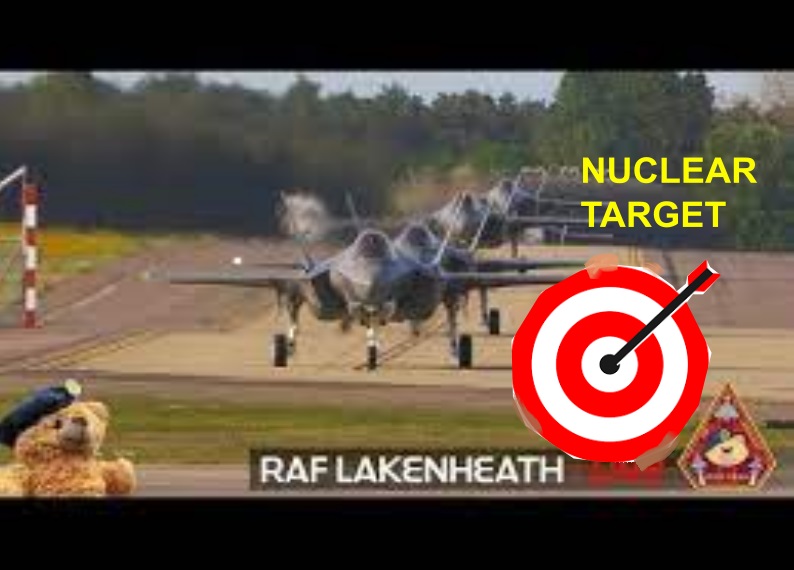
$264million scheme could transform RAF Lakenheath in Suffolk in order for
it to be capable of storing nuclear weapons. Reports claim the US Pentagon
has carried out “detailed assessments” of RAF Lakenheath’s suitability as a
nuclear facility. It follows prolonged speculation the Suffolk air base
already holds specialist weapons.
A plane from the US Air Force’s nuclear
weapon storage facility arrived at RAF Lakenheath in July, fuelling rumours
among experts. The US withdrew its warheads from RAF Lakenheath in 2008.
Eastern Daily Press 23rd Dec 2025 ,By Ben Robinson, West Suffolk & Sudbury Reporter, https://www.edp24.co.uk/news/25721309.264million-scheme-transform-raf-lakenheath-suffolk/
UK to restart nuclear submarine defuelling in 2026

By Lisa West, -UK Defence Journal 23rd Dec 2025 https://ukdefencejournal.org.uk/uk-to-restart-nuclear-submarine-defuelling-in-2026/
The Ministry of Defence has confirmed that defuelling of the UK’s decommissioned nuclear-powered submarines is set to restart in 2026, as preparations continue at specialist dock facilities in Devonport.
In a written parliamentary answer, defence minister Luke Pollard said the twelve remaining first-generation submarines powered by pressurised water reactors would be handled through a tightly regulated process overseen by the Office for Nuclear Regulation.
He said the submarines would dock in “a specialised, licensed dock in Devonport”, where “the used fuel will be removed, loaded into a qualified transport container and transported to Sellafield prior to long-term storage in the Geological Disposal Facility.”
Pollard confirmed that dismantling of each vessel would only take place once defuelling is complete, adding that “work is underway to prepare the dock facilities and associated resources in line with plans to recommence defueling in 2026.”
The update also set out progress on the UK’s first full submarine dismantling programme. HMS Swiftsure, the demonstrator vessel for the Submarine Dismantling Project, began dismantling at Rosyth in 2023.
According to Pollard, the project “will refine the disposal process and is on track to be dismantled by the end of 2026, achieving the commitment given to the Public Accounts Committee in 2019.”
He said lessons from Swiftsure and the Devonport defuelling programme would be used to firm up timelines for the remaining fleet, stating that “lessons learned from these defuel and dismantling projects will provide more certainty around the schedule for defueling and dismantling the remaining 22 decommissioned submarines.”
The UK currently has 27 decommissioned nuclear submarines awaiting defuelling or dismantling, a long-running issue highlighted repeatedly by the National Audit Office and parliamentary committees concerned about safety, cost and delay.
Keir Starmer’s attempt to send Abramovich’s billions to Ukraine is illegal

the government does not have the powers unilaterally to send those funds to Ukraine as that would amount to theft.
British law has nothing to say about how Abramovich disposes of his assets and the British Government has no role in the discussion of how they are disposed of. For now, those assets remains frozen and Keir Starmer is seeking to unfreeze them so they be sent in entirety to Ukraine without Abramovich’s consent.
Frozen assets are not a slush fund that he can dip into because he’s too weak to tell British taxpayers they have to pay for a war doesn’t want to end
Ian Proud, Dec 24, 2025, https://thepeacemonger.substack.com/p/keir-starmers-attempt-to-send-abramovichs?utm_source=post-email-title&publication_id=3221990&post_id=182490948&utm_campaign=email-post-title&isFreemail=true&r=1ise1&triedRedirect=true&utm_medium=email
I didn’t authorise the UK sanctioning of Roman Abramovich in March 2022, but I did authorise over 800 other designations of Russian individuals and firms, while I was still at the Foreign Office. I have no connection with the oligarch, nor do I support Chelsea. But I am alarmed by Keir Starmer’s threat to take him to court over the disposal of the proceeds from the Blues’ sale. This appears illegal and doomed to fail.
On 17 December, Starmer stood up in Parliament and said, “my message to Abramovich is . . . the clock is ticking, honour the commitment you made and pay up now. If you don’t, we’re prepared to go to court so every penny reaches those whose lives have been torn apart by Putin’s illegal war.’
Abramovich was sanctioned by the UK government on 10 March 2022. Under the Russia (Sanctions) (EU Exit) Regulations 2019 all of his assets in the UK were frozen and remain so to this day. He was also subject to other restrictive measures including a director disqualification (i.e. he cannot operate as a director of a UK firm such as Chelsea) and a travel ban.
The practical impact of sanctioning Abramovich was to tip Chelsea into a short-term cash crunch, because the football club’s (i.e. Abramovich’s) assets were frozen. Chelsea’s spending became tightly regulated by a licence issued by the Office for Financial Sanctions Implementation (OFSI) at the Treasury. This forced Abramovich to divest his assets which he did in May 2022 when the club was purchased by a consortium led by Todd Boehly. The proceeds of the sale have been frozen ever since.
Clearly, the sale proved the technical effectiveness of the UK sanctions regime at that time. Liz Truss as Foreign Secretary had made it her quest to close ‘Londongrad’, the catch-all term for very high net worth Russian oligarchs who had parked their money in Britain. Forcing Abramovich to sell Chelsea, which he purchased in 2003, was undoubtedly a feather in her cap in terms of how it played out in UK press coverage.
Yet sanctions policy is governed by law not spin.
With pressure to rid Britain of the taint of Russian money building after the war in Ukraine started on 24 February 2022, Abramovich no doubt saw the writing on the wall and announced his decision to sell the club on 2 March.
In doing so, he pledged to donate “all net proceeds from the sale” to the “victims of the war in Ukraine”.
It was and appears to remain Abramovich’s intention that while much of the money would go to Ukrainian victims of the war, some might also go to victims in other countries, including in Russia.
When he made this announcement, UK lobbyists immediately urged the British government to insist that the funds only go to Ukraine, expressing fears that some money may end up with Russian victims of the war, including former Russian armed forces personnel. It is this pressure which has undoubtedly led the government to take the position that it has.
Yet, Abramovich was not legally required to sell Chelsea nor to donate the proceeds to good causes. His moves appear driven, more, by a desire to insulate the Club from financial disruption and philanthropy.
That’s why Starmer’s pronouncements appear little more than virtue signalling; advancing what he sees as a moral crusade to punish a wealthy Russian under the spurious guise of upholding UK sanctions law.
Yet British law has nothing to say about how Abramovich disposes of his assets and the British Government has no role in the discussion of how they are disposed of. For now, those assets remains frozen and Keir Starmer is seeking to unfreeze them so they be sent in entirety to Ukraine without Abramovich’s consent.
While freezing Abramovich’s assets had a legal basis under the Russia Regulations 2019, attempting to strong-arm him into sending frozen assets to Ukraine is illegal.
Sanctions are not intended to be permanent. It is still far from clear when the Ukraine war will end, but should a peace agreement be sealed and held to, it is conceivable that UK sanctions would be lifted in the future. Should that happen, Abramovich would one day again have access to his capital, including the proceeds from the Chelsea sale, and be free to use it as he pleased.
Of all the oligarchs, Abramovich was most active in supporting efforts to end the Ukraine war, even attending the failed Istanbul peace talks in March and April 2022. His offer to give the Chelsea proceeds to a charitable cause was consistent with his peace efforts but was not legally binding.
It was also unique, as no other sanctioned oligarchs who were previously based in the UK have offered to do the same.
The UK has frozen over £25 bn in Russian assets since the war started; the government does not have the powers unilaterally to send those funds to Ukraine as that would amount to theft. Had the similarly sanctioned oligarch Mikhail Fridman chosen to sell Holland and Barret in 2022, which was owned by his investment firm Letter One, the government could not have insisted that the proceeds be sent to Ukraine in the form of vitamin supplements and health-improving nuts.
The government now issuing a licence to allow for the Chelsea billions to be sent to Ukraine does not impose any requirement on Abramovich to use that licence. The sanctions licencing system exists to allow designated persons to access their frozen assets to meet essential costs. Mikhail Fridman famously complained that the freezing of his assets forced him to ask the government for money ‘to use taxis and buy food’.
The licencing system isn’t designed to provide a slush fund for the government to support good causes overseas. Licences are requested by the designated person and their legal representatives.
This case boils down to two broad themes, neither of which reflect well on the embattled Starmer.
First, a tug of war between what seems right and what is legal. With Ukraine critically short of money – even after Europe’s mega-loan – sending them the Chelsea billions may feel like the right thing to do, but is illegal.
Second, this is another attempt to use sanctioned assets to cover the unsustainable cost of Ukraine’s failing war and so avoid asking British taxpayers to shoulder the burden, at a time when ordinary people are struggling to pay their bills at Christmas.
On the second, the Europeans have already died on a similar hill through their failed attempt to expropriate Russian sovereign assets held in Euroclear. Keir Starmer should ditch his performative threats as legal action against Abramovich would most likely fail if, that is, the UK still has an independent judiciary.
If Starmer wants to waste another pile of British cash in Ukraine, then he should do so and put himself before the court of public opinion. He won’t, though, as he’s weak, deeply unpopular and runs from hard choices faster even than Santa’s sleigh on Christmas Eve.
1 This Month

of the week – Shut Down Drone Warfare!


Tell the Ukrainian Government to Drop Prosecution of Peace Activist Yurii Sheliazhenko

Petition to revoke the licensing of the Near Surface Nuclear Disposal Facility (NSDF) at Chalk River. https://www.ourcommons.ca/petitions/en/Petition/Details?Petition=e-7247
To see nuclear-related stories in greater depth and intensity – go to https://nuclearinformation.wordpress.com
-
Archives
- March 2026 (251)
- February 2026 (268)
- January 2026 (308)
- December 2025 (358)
- November 2025 (359)
- October 2025 (376)
- September 2025 (257)
- August 2025 (319)
- July 2025 (230)
- June 2025 (348)
- May 2025 (261)
- April 2025 (305)
-
Categories
- 1
- 1 NUCLEAR ISSUES
- business and costs
- climate change
- culture and arts
- ENERGY
- environment
- health
- history
- indigenous issues
- Legal
- marketing of nuclear
- media
- opposition to nuclear
- PERSONAL STORIES
- politics
- politics international
- Religion and ethics
- safety
- secrets,lies and civil liberties
- spinbuster
- technology
- Uranium
- wastes
- weapons and war
- Women
- 2 WORLD
- ACTION
- AFRICA
- Atrocities
- AUSTRALIA
- Christina's notes
- Christina's themes
- culture and arts
- Events
- Fuk 2022
- Fuk 2023
- Fukushima 2017
- Fukushima 2018
- fukushima 2019
- Fukushima 2020
- Fukushima 2021
- general
- global warming
- Humour (God we need it)
- Nuclear
- RARE EARTHS
- Reference
- resources – print
- Resources -audiovicual
- Weekly Newsletter
- World
- World Nuclear
- YouTube
-
RSS
Entries RSS
Comments RSS
 nuclear-news