EDF reduces stake in Sizewell C as boss sacked
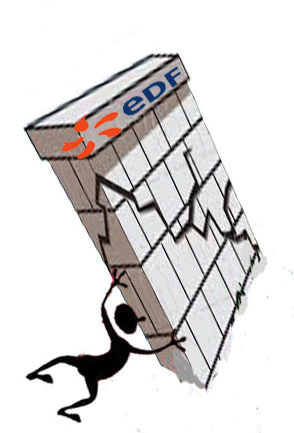
the sacking raises “further fundamental questions about the wisdom of proceeding with the Sizewell C ‘Replica’ project of Hinkley Point C in which EDF is set to be deeply involved”
“Clearly Sizewell C could not reach a Final Investment Decision without taxpayers shouldering the bulk of the project’s massive cost – a hugely controversial choice given that the Chancellor is currently scrabbling around to save as much money as possible.“
25 Mar, 2025 By To s-sacked-25-03-2025/ https://www.newcivilengineer.com/latest/edf-reduces-stake-in-sizewell-c-as-boss-sacked-25-03-2025/
EDF’s ownership of Sizewell C has decreased to 16.2% and the UK government’s stake increased to 83.8%. Meanwhile, the French company’s chief executive has been axed and its financial stability has been called into question.
The UK’s flagship gigawatt-scale new nuclear projects under construction – Hinkley Point C in Somerset and Sizewell C in Suffolk – are both subject to intense scrutiny as costs rise and timelines slip.
Hinkley Point C is late and over budget, and Sizewell C is awaiting its delayed final investment decision (FID) which is scheduled to be made at the Spending Review on 11 June. The FID will reveal the final determination of who will fund the project and how. The government has already invested several billion pounds in developing it.
Hinkley Point C’s costs rose from around £25bn in 2015 to up to £34bn in 2024, and Sizewell C is projected to cost £40bn – double what it was estimated by EDF and the UK Government to cost in 2020. However, the Treasury disputes this latter figure.
EDF Sizewell C ownership stake reduced
On 24 February 2024, NCE reported that EDF was appearing to scale back its proposed ownership ambitions of Sizewell C.
EDF’s 2024 Annual results document laid out its contribution to the power plant, which is “subject to some conditions, including […] a share in ownership of the project of 10 to 19.99%, including a cap on financial exposure in value.” It also requires “a return on capital expected by EDF as an investor in line with market return for this type of assets, risk allocation profile and its investment policy.”
It is understood that the reason for selecting 19.99% rather than 20% is because a company buying 20% would have to set up a subsidiary entity to take the ownership.
Credit ratings agency Fitch Ratings announced in a ‘Rating Action Commentary’ on 21 March 2025 that the Sizewell C’s owners – the UK Government and EDF – had changed their ownership stakes.
EDF previously confirmed in its 2024 half year results that Sizewell C is owned 76.1% by the UK Government and 23.9% by EDF.
Fitch’s announcement said: “As of end-2024, the project was owned 83.8% by the UK government and 16.2% by EDF, down from 49.4% at end-2023.”
This marks a fresh drop in EDF’s ownership by 7.7 percentage points.
The decrease comes after French public spending watchdog Cour des comptes said EDF should scale back involvement in UK nuclear projects.
Macron sacks EDF chief and funds EDF reactors
In France, where the government has political control of the entirely state-owned EDF (Électricité de France), Macron fired the company’s chief executive Luc Rémont.
The UK’s Daily Telegraph linked Rémont’s ousting to EDF’s planned electricity price hikes for French industrial customers, of which Macron had promised to “take back control”.
Adding further pressure to EDF’s leadership, French building materials company Saint-Gobain chairman and chief executive officer Benoit Bazin, speaking to French business news channel BFM Business, accused EDF of “giving the middle finger to French industry”.
It has also been reported that the French state has agreed to issue a single subsidised loan “covering at least half the construction costs of six nuclear reactors”, according to the president’s office. It is understood that the six reactors are at the pairs at Penly, Gravelines and Bugey in France.
Former energy secretary reacts to ‘extremely concerning’ developments‘.
Backbench Conservative peer Lord Howell of Guildford reacted to the news. Howell was energy secretary in Margaret Thatcher’s government which supported the construction of nuclear power plants.
He described the reduced stake in Sizewell C as “one more development in growing concern about EDF’s capacity or ability to continue with Hinkley Point C project or take a large (20%+) position in the Sizewell C proposed project.”
Reflecting on the sacking of the EDF boss, he said this is “An extremely worrying development.”
He went on to say the sacking raises “further fundamental questions about the wisdom of proceeding with the Sizewell C ‘Replica’ project of Hinkley Point C in which EDF is set to be deeply involved”
Anti-Sizewell C groups say ‘alarm bells should be ringing’
Stop Sizewell C executive director Alison Downes said: “EDF has not contributed a single penny financially to Sizewell C for well over a year now, and is under growing pressure in France, not only having lost its boss but to scale back its international commitments across the board.
“Clearly Sizewell C could not reach a Final Investment Decision without taxpayers shouldering the bulk of the project’s massive cost – a hugely controversial choice given that the Chancellor is currently scrabbling around to save as much money as possible.
“Rachel Reeves should cancel Sizewell C now and redirect those funds to the Warm Homes Plan, which would lower energy bills and create jobs in every constituency.”
Chancellor Rachel Reeves has proposed austerity measures for the welfare state, which she says are needed to fund infrastructure developments, ahead of the Spring Statement and Spending Review.
Cuts to welfare, particularly covering disability and unemployment support, are proving to be unpopular with dozens of MPs on the left of the Labour party.
A Together Against Sizewell C (TASC) spokesperson said: “Alarm bells should be ringing as the UK government stake in Sizewell C increases to 84% with only the UK taxpayer currently funding Sizewell C’s development costs.
“This begs the question, ‘Why are EDF refusing to put any further money into Sizewell C?’ EDF have decided to build no more of this reactor design in France, indicating they have no confidence in the EPR design destined for Sizewell.”
The spokesperson went on to say: “EDF are broke, as evidenced by their desperate search for cash to finish Hinkley Point C’s construction.
“This is hardly a secure basis for the UK government to continue in partnership with EDF and certainly not a good advert to encourage potential investors.”
Referencing EDF’s plans for a final stake to be as low as 10%, TASC said: “This evidences that even the developer considers the Sizewell C development to be inherently
EDF and the Department for Energy Security and Net Zero did not respond to requests for comment.
It’s time to stop Sizewell C to generate ‘Warm Homes’ jobs instead
March 24 2025, Funding th Future – Tax Research UK.
Campaigners have called on Rachel Reeves and Ed Miliband to stop Sizewell C, and redirect its funding to generate ‘Warm Homes’ jobs in every constituency by the next election.
Their report’s summary says:
There is a clear political advantage from halting Sizewell C and redirecting the billions saved into making millions of homes more energy efficient, thus reducing fuel poverty. This approach will benefit every city, town, village and hamlet in Britain.
It will generate long-term, secure jobs, particularly for young people. It will be quick to implement, so by the next election new jobs and cheaper, warmer, healthier homes will have appeared in every constituency. By contrast, continuing to build Sizewell C and, post 2030, the development of new small modular nuclear reactors, will affect a limited number of constituencies.
Should Sizewell C go ahead, it is expected to cost around £40bn between now and when it opens, potentially around 2040: an average of £2.7bn per year for the next 15 years. Deducting money already spent, if Sizewell is cancelled now, the public money saved by 2030 is £7.1bn, assuming (as seems likely) no private investors are found to share the costs.
We propose that this £7.1bn should be added to the £6.6bn to be spent over the current Parliament on home energy efficiency, as promised in Labour’s 2024 manifesto. This shift of funds would massively increase the chances of achieving the Government’s aim to ‘Make Britain a clean energy superpower to cut bills, create jobs and deliver security with cheaper, zero-carbon electricity by 2030, accelerating to net zero‘. https://www.taxresearch.org.uk/Blog/2025/03/24/its-time-to-stop-sizewell-c-to-generate-warm-homes-jobs-instead/
‘Deeply concerning’: British General’s Israeli weapons job criticised.
“That the UK’s former chief of the defence staff is now advising Israeli arms companies exemplifies the extent of the links between the British state and Israel’s arms industry. “
General Carter signed a military treaty with Israel. Now he advises Israeli arms firms.
PHIL MILLER, 20 March 2025, https://www.declassifieduk.org/deeply-concerning-british-generals-israeli-weapons-job-criticised/?utm_source=Email&utm_medium=Image&utm_campaign=ICYMI&utm_content=Image
The former head of Britain’s armed forces is providing advice to Israeli arms firms, sparking questions over his role in a country whose prime minister is wanted by the International Criminal Court (ICC).
General Sir Nick Carter was chief of the defence staff – Britain’s most senior military position – from 2018-21. Months before stepping down, he signed a military cooperation agreement with Israel.
That pact has never been published – despite freedom of information requests and questions in parliament – but it was hailed as a landmark moment in relations between the two militaries.
Carter had visited Israel earlier in his tenure, touring military bases and shaking hands with his opposite number, General Aviv Kohavi.
That experience of rubbing shoulders with the top of the IDF is likely to come in handy for his new job at Exigent Capital, a boutique financial services firm based in Jerusalem.
Carter is one of Exigent’s two “domain experts” in its “strategic advisory” wing, with his focus on “aerospace and defence”.
His role there is to “develop international growth strategies for our clients as well as identify and open doors to new business opportunities that accelerate growth”, according to the company’s website.
Or, as the Jerusalem Post put it, Carter provides “strategic consulting services to Israeli companies operating in the defense sector.”
Doing business
Carter attended a military tech summit in Tel Aviv in December 2024 – before the ceasefire had been signed in Gaza – when he told a journalist: “Israel is very significant in the world of defense tech.”
Carter added: “We appreciate the extraordinary innovation that Israeli defense companies exhibit and sometimes adopt what we see in Israel. It’s impressive to see the innovation of Israeli companies”.
The British army has bought Israeli-made drones, rifle sights and air defence systems.
More recently, he felt “privileged” to have signed the “successful” UK-Israel military deal in 2020, commenting: “It’s very important for both militaries to work together, share the best training, and understand together the complexity of the modern battlefield. This is a very good way to do business.”
General Carter: Caught in the revolving door?
However campaigners are criticising Carter’s business decisions. Dr Sara Husseini, director of the British Palestinian Committee, told Declassified: “That the UK’s former chief of the defence staff is now advising Israeli arms companies exemplifies the extent of the links between the British state and Israel’s arms industry.
“These revelations are deeply concerning, particularly at this moment in which Israel is recommencing its large-scale bombardment of Gaza, killing more than 400 Palestinians in the past two days.
“Rather than aligning with a state which is on trial for genocide and – as the Foreign Secretary acknowledged earlier this week – is in breach of international law, Keir Starmer’s government must now halt its military collaboration with Israel, including scrapping the agreement signed by Sir Nick Carter.”
Chris Doyle, director of the Council for Arab-British Understanding, said: “Serious questions arise from former defence officials working with arms companies in states that have a track record of serious violations of international law.”
Turning to Labour’s partial embargo on weapons exports to Israel, Doyle commented: “It also raises longer term questions about whether former officials should be allowed to work with arms companies in countries where there is a ban on arms exports because the government has already acknowledged a serious risk of human rights abuses.”
Arms trade expert Andrew Feinstein from Shadow World Investigations remarked: “This is an example of what used to be called the revolving door – or is now known as the open plan office – between the British state and arms companies. It raises the question of whose interests the most senior political and military figures are working in: their own material interests, or the interests of Britain?”
‘System is bust’
Under government rules supposed to prevent conflicts of interest, former Generals must inform Whitehall’s Advisory Committee on Business Appointments (ACOBA) of any job offers they receive for two years after leaving the military.
General Carter notified ACOBA of 12 jobs he had been offered since stepping down from the army in July 2022, although Exigent was not among them.
General Carter and Exigent did not respond to a request for comment on when they began working together. A LinkedIn post by the company shows they had started at least three months ago, when Exigent said: “We look forward to sharing his unparalleled expertise, insights and network with our clients.”
His other job offers encompassed unpaid roles at Harvard and Stanford universities, plus a trusteeship at the Royal United Services Institute think tank.
Paid positions included working part-time as a strategic advisor for Schroders bank, plus advisory roles at Helsing – a German AI defence start-up – and an insurance firm.
On top of this, Carter spends 30 days per year “as a thought partner for Tony Blair in his role as Executive Chairman” at the Tony Blair Institute for Global Change.
And he is chairman of Equilibrium Gulf Limited, which advises the crown prince of Bahrain on the autocratic country’s notoriously brutal interior ministry.
While he claims no military experience is required for the Bahrain role, previous Equilibrium directors include another former defence chief, General David Richards, and MI6’s one-time Middle East controller Geoffrey Tantum.
Lord Pickles, who oversees ACOBA, has acknowledged there are weaknesses in the system supposed to regulate Whitehall’s ‘revolving door’ between government positions and corporate careers.
Pickles said of ACOBA last year: “The system is bust and needs fixing.”
Redirect Sizewell C funding to the Warm Homes Plan, say campaigners.

Alison Downes, https://stopsizewellc.org/sizewellcvswarmhomes/
Campaigners call on Rachel Reeves and Ed Miliband to stop Sizewell C, redirect its funding to generate ‘Warm Homes’ jobs in every constituency by the next election.
Building Sizewell C would likely cost around £40bn over the next 15 years. Deducting money already spent, if Sizewell C is cancelled now, the public money saved by 2030 would be £7.1bn.
A paper from Stop Sizewell C and the Green New Deal Group calls for this saving to be added to the £6.6bn the government is committed to spend in the current Parliament on energy efficiency in the nation’s homes. Turbocharging this ‘Warm Homes Plan’ by more than doubling its budget will generate long term, secure jobs, particularly for young people across the UK. It will be quick to implement, so by the next election new jobs and cheaper, warmer, healthier homes will have appeared in every constituency.
Alison Downes of Stop Sizewell C said: “The taxpayers’ money being ploughed into risky, expensive Sizewell C – which will inevitably soar higher due to cost overruns and building delays – would be far better spent improving the lives of households nationwide, bringing down their bills, and helping the UK meet its net zero target”.
Colin Hines of The Green New Deal Group said: “At absolutely no extra cost to the nation’s finances Rachel Reeves and Ed Miliband could stop funding the nuclear white elephant that is Sizewell C and not only improve the living conditions for homes in every constituency, but create jobs in every constituency, thereby improving their chances of winning the next election.”
Nuclear Severnside…is this our future?
STAND (accessed) 23rd March 2025,
https://www.youtube.com/watch?v=wz9CaHbM-9o
The Severn Estuary, in Gloucestershire, is set to be a major hub for the
Government’s plans to expand nuclear power in the UK. This video, by STAND
(Severnside Together Against Nuclear Development)
https://www.nuclearsevernside.co.uk, explains the Government’s proposed
expansion of nuclear power by building the completely unproven technology
of SMRs (Small Modular Reactors. It also explains why they will be
disastrous for the economy, increase the cost for electricity bill payers,
rob renewable sources of power generation such as wind, solar and tidal of
essential resources, fail to secure energy security and come far too late
to help mitigate climate change or meet the country’s carbon emission
targets.
Dounreay learns what its share of £4bn decommissioning cash will be
Dounreay has been allocated a total spend of £221 million for the coming
financial year. Its share of the £4 billion budget overseen by the Nuclear
Decommissioning Authority (NDA) is a good outcome for the site, according
to Dave Wilson, managing director of operators NRS.
“It’s a really, really good settlement given the current financial challenges,” he said
at the latest meeting of Dounreay Stakeholder Group (DSG) on Wednesday. Mr
Wilson said it was just over £5 million up on the previous year after
taking account of inflation. He said: “It’s a very positive settlement
for Dounreay and will make sure the site is safe, secure and able to
continue to protect the environment.” The funding would underwrite the
ongoing clean-up of the site and the upgrading of its ageing
infrastructure.
John O’Groat Journal 22nd March 2025, https://www.johnogroat-journal.co.uk/news/dounreay-learns-what-its-share-of-4bn-decommissioning-cash-377633/
Ministry of Defence under fire over nuclear clean-up in Scotland

Pete Roche, a Scottish-based nuclear consultant and critic, was concerned that no money had been set aside to cover decommissioning military sites, especially given the pressures on the budget for cleaning up civil sites.
Rob Edwards, March 23, 2025, The Ferret
The Ministry of Defence has been accused of trying to avoid responsibility for cleaning up a military nuclear site on the north coast of Scotland by making it “someone else’s problem”.
The Ferret can reveal that discussions to transfer ownership of Vulcan, a former submarine reactor testing site next to Dounreay in Caithness, to the UK and Scottish governments’ Nuclear Decommissioning Authority are at an advanced stage. The aim is to complete the deal in 2027-28.
But no decision has been taken on who will pay for the site’s multi-million pound clean-up, including dismantling and disposing of two defunct, radioactive reactors. Unlike some civil nuclear sites, military sites do not have any funding set aside for decommissioning.
Campaigners are concerned that the Ministry of Defence (MoD) could escape paying for the pollution it has caused at Vulcan and other military sites. They are demanding transparency, and calling on the Scottish Government to block any “backroom transfer” that undermines Scotland’s interests.
The 26-strong UK group of nuclear-free local authorities is planning to raise the issue with UK nuclear minister, Lord Hunt, at a meeting on 31 March. It will be urging him to extract a promise from the MoD to fully fund the decommissioning of Vulcan.
The MoD promised to deliver “value for taxpayers’ money” on the Vulcan clean-up. The Nuclear Decommissioning Authority (NDA) said financing would be agreed with the UK Government “as part of the usual funding process”.
Construction work at Vulcan began in 1957, with one reactor operational from 1965 to 1984, and another from 1987 to 2015. They were used for onshore testing of five different designs of reactors to power the UK nuclear submarine fleet.
In 2012 the second Vulcan reactor suffered a mishap, and started leaking radioactivity into its cooling water. When the leak was disclosed two years later, it triggered a bitter argument between the Scottish and UK governments.
The then first minister of Scotland, Alex Salmond, accused the Conservative UK defence minister, Philip Hammond, of deception. Hammond had told MPs that there had been “no measurable change in the radiation discharge” from Vulcan.
But an investigation by the Sunday Herald revealed that there had in fact been a tenfold rise in emissions of radioactive gases. Hammond subsequently corrected the official parliamentary record……………………………………………………..
There are seven defunct nuclear submarines awaiting decommissioning at Rosyth in Fife and a further 15 at Devonport in Plymouth. Other MoD nuclear sites in Scotland that may eventually need to be cleaned up are the Faslane nuclear submarine base and the Coulport nuclear weapons depot on the Clyde near Helensburgh.
The Scottish Government reports, however, have little to say about how the Vulcan clean-up will be paid for. According to another January 2025 update, a paper on “post-transfer funding options” was “being socialised” within the NDA – though it is unclear what this means.
The costs of decommissioning the more recent civil nuclear power stations, including Hunterston B in North Ayrshire and Torness in East Lothian, will be covered by the UK Government’s Nuclear Liabilities Fund. It has secured more than £20 billion from private power companies.
But there is no equivalent fund for cleaning up military nuclear sites. Uncertainty over how Vulcan’s decommissioning will be funded has triggered widespread fears that the MoD could be seeking to wriggle out of its responsibilities.
‘Unacceptable’ for MoD to evade nuclear responsibilities
Alba, the breakaway nationalist party launched in 2021 by former SNP leader, Alex Salmond, is “deeply concerned” that the MoD may “offload” defence nuclear liabilities “without transparency or adherence to the polluter pays principle.”
The party’s national organiser, retired Royal Navy commodore Rob Thompson, said: “It is unacceptable for current and future Scottish taxpayers to bear billions in clean-up costs while the MoD evades responsibility.
“The Scottish Government must urgently clarify its due diligence processes, civil-defence cooperation policy and use its veto to oppose any backroom transfer that undermines Scotland’s interests.”………………………………………………..
The Nuclear Free Local Authorities highlighted reports in February that £2.8 billion given to the NDA by the UK Government to clean up the biggest and dirtiest nuclear site at Sellafield in Cumbria was “not enough”.
“We will be raising directly with nuclear minister, Lord Hunt, how important it is that he secures from his colleague, the defence secretary, a promise to fully finance decommissioning work at Vulcan,” said the group’s secretary, Richard Outram.
“It is our view that the principle that the polluter pays should apply equally to both the nuclear industry and the defence ministry.”
Pete Roche, a Scottish-based nuclear consultant and critic, was concerned that no money had been set aside to cover decommissioning military sites, especially given the pressures on the budget for cleaning up civil sites.
“The UK Government must increase the NDA’s budget sufficiently if it is expected to take on the MoD’s decommissioning work as well,” he said.
Tor Justad, chairperson of Highlands Against Nuclear Power (HANP), is a member of the Dounreay Stakeholder Group, which covers Vulcan. It was important that details of the transfer to the NDA were “clarified as soon as possible and that the full costs of returning the land to a brownfield site should be paid for by the MoD,” he said……………………………….
https://theferret.scot/nuclear-clean-up-vulcan-mod/
Leak is Sellafield’s ‘biggest environmental issue’

BBC 21st March 2025,
The head of the Nuclear Decommissioning Authority (NDA) called the silo “Britain’s most hazardous building” He said it was the “single biggest environmental issue” facing the nuclear plant
A longstanding leak at “Britain’s most hazardous building” is a nuclear plant’s “single biggest environmental issue”, a select committee has heard.
The leak in the Magnox Swarf Storage Silo (MSSS) – built more than 50 years ago at Sellafield in Cumbria – started in 2019 after first occurring in the 1970s.
Labour MP Luke Charters told the Public Accounts Committee (PAC) on Thursday that every three years the silo leaked enough material to fill an “Olympic-sized swimming pool”.
Sellafield head Euan Hutton said the leak did not “pose a detriment to the public”.
The silo contains Magnox fuel cladding, mostly made up of magnesium, which was removed from nuclear fuel rods.
It was built in the 1960s, with three further extensions built in the 1970s and 1980s.
The leak is being caused by a crack in the underground portion of the silo, Mr Hutton told the committee.
He said the team had “excellent ground modelling and monitoring” which showed the activity was staying in the ground beneath the facility.
The head of the Nuclear Decommissioning Authority (NDA) called the silo “Britain’s most hazardous building” and said the best way to the stop the leak was “to empty the silo as efficiently and quickly as we can”.
He said it was the “single biggest environmental issue” facing the nuclear plant
Mr Hutton said the team hoped to empty the silo by about 2059……………………………… https://www.bbc.co.uk/news/articles/ckgy77y21djo
Government ramps up nuclear threats ahead of CND Barrow protest

As CND prepares for its national demonstration at the BAE Shipyard, Barrow-in-Furness, on Saturday, 22 March, the government is ramping up nuclear threats to prop up Britain’s failing nuclear weapons programme and justify military spending hikes in next week’s budget.
The recent visit to the BAE Shipyard in Barrow and nuclear base at Faslane by Keir Starmer and John Healey, saw the Defence Secretary claim the weapons could do “untold damage” against countries like Russia in the event of a conflict.
It was also announced that the Port of Barrow, which has built submarines for Britain’s nuclear weapons programme since the 1950s, will be given royal status. This status applies to the dockland where the arms manufacturer’s shipyard is based and not the wider Barrow area.
CND’s protest comes ahead of the Chancellor’s Spring Statement, where it’s expected that billions of pounds will be added to the military budget while brutal cuts are made to overseas aid, and services helping some of the country’s most vulnerable people.
The government argues that increasing the military budget will help revitalise “left behind” industrial towns and the wider economy. But military spending has one of the lowest employment multipliers of all sectors. Towns like Barrow need sustainable and varied forms of employment that put its people and the planet first.
Britain’s nuclear weapons accounts for at least 14% of the MoD’s military expenditure but the most recent annual report by the Infrastructure and Projects Authority (IPA) found that key parts of its nuclear weapons programme are either failing or have major issues. CND is calling on the government to scrap Britain’s nuclear programme once and for all and develop an industrial strategy that generates sustainable economic growth that benefits everyone.
CND 21st March 2025
https://cnduk.org/government-ramps-up-nuclear-threats-ahead-of-cnd-barrow-protest/
Nuclear bosses quizzed by MPs over Sellafield’s £130 billion century-long clean up

by Business Crack, March 21, 2025
The Public Accounts Committee examined the decommissioning of Sellafield
at a hearing yesterday morning. In the session, which lasted over two
hours, Euan Hutton, chief executive at Sellafield Ltd and David Peattie,
group chief executive office at Nuclear Decommissioning Authority were
among those giving evidence. It also saw Lee McDonough, director general,
net zero, nuclear and international at Department for Energy Security and
Net Zero, Clive Maxwell, second permanent secretary at Department for
Energy Security and Net Zero, and Kate Bowyer, chief financial officer at
Nuclear Decommissioning Authority, appear in front of the committee.
The hearing follows a National Audit Office report that found while management
of major projects have begun to improve, four projects underway when the
office last reported in 2018 were significantly over budget and behind
schedule. It added while Sellafield has demonstrated that it can remove its
most hazardous waste, progress is not quick enough.
MPs covered several
topics at the hearing yesterday relating to the £130 billion century-long
clean up of the Sellafield and work at the site.
Topics included: How realistic targets and goals set for decommissioning are; Whistleblowing ands urrounding policies; Balancing safety with value for money; Public safety
– in particular covering the Magnox Reprocessing Plant; The select
committee heard that a leak from Magnox started in the 2019 and every three
years, it leaked enough material to fill an Olympic-sized swimming pool.
But Mr Hutton said the leak, caused by a crack in the underground section
of the silo, was not detrimental to the public. He said it was monitored
closely and that showed the leak was staying beneath the surface.
Mr Peattie said it was Britain’s most hazardous building and the best way to
stop the leak was to empty the silo as quickly as possible. It is hoped it
will be emptied by 2059. Concerns around Sellafield’s ability to meet its
long and short term targets were also raised. Milestones for substantially
emptying three of the legacy ponds and silos have been pushed back by
between six and 13 years.
Business Crack 31st March 2025 https://businesscrack.co.uk/2025/03/21/nuclear-bosses-quizzed-by-mps-over-sellafields-130-billion-century-long-clean-up/
UK nuclear deterrent could do ‘untold damage’, Healey warns
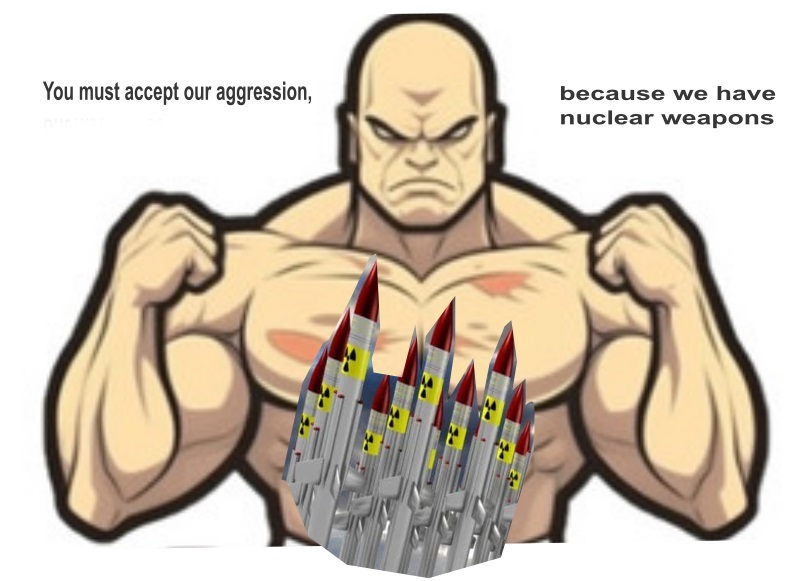
John Healey said the UK should not ‘fight shy’ of the fact it has such weapons, which are the ‘ultimate guarantor’ to any hostile state if it attacks.
The Standard 20th March 2025
Britain could do “untold damage” to adversaries with its nuclear deterrent, the Defence Secretary has said as military officials discussed plans to safeguard any ceasefire for Ukraine.
John Healey said the UK should not “fight shy” of the fact it has such weapons, which he described as the “ultimate guarantor” in a stark warning to Moscow
Meanwhile, Prime Minister Sir Keir Starmer warned Moscow would face “severe consequences” if it breached any peace deal with Kyiv amid fragile diplomatic efforts to secure a truce to end the war.
Sir Keir and Mr Healey met defence officials from 31 allied countries at the Northwood military headquarters in London on Thursday to firm up proposals for a so-called coalition of the willing to help enforce any agreement.
Mr Healey also laid the keel for Dreadnought, the first submarine being built to replace the Vanguard-class nuclear-armed submarines, in a ceremony in Barrow-in-Furness watched by Sir Keir Starmer.
In an interview with The Times newspaper afterwards, he said: “Our nuclear deterrent is there as a deterrent. It is the ultimate guarantor to any would-be adversary. We have the power to do untold damage to them if they attack us.”
He added: “We should not fight shy of the fact we are a nuclear power, that we do have an independent nuclear deterrent.”
The Prime Minister said the military planning involved offering support to Ukraine by air, sea and land if a deal were reached.
But he ruled out redeploying UK troops from countries such as Estonia to commit to Kyiv, saying: “There’s no pulling back from our commitments to other countries.
“The mood in the room – because this came up in the private briefing I had – was that this actually will help reinforce what we’re doing in Nato in other countries, so they see it as an opportunity rather than a question of moving troops around.”
Thursday’s gathering of defence allies marked a turning point in which the “political intention” among western allies to provide safeguards for Ukraine’s future becomes “reality” with discussions of how best to deter future Russian aggression.
Sir Keir said: “It is vitally important we do that work because we know one thing for certain, which is a deal without anything behind it is something that Putin will breach. “We know that because it happened before. I’m absolutely clear in my mind it will happen again.”
He added: “The point of the security arrangements is to make it clear to Russia there will be severe consequences if they are to breach any deal.
“That’s why we need a forward-leaning European element, which is what I’ve been working on intensely – obviously with the French – that brings these allied countries together, and beyond.”
Calls this week between US President Donald Trump, Mr Putin and Ukrainian President Volodymyr Zelensky have failed to produce the 30-day ceasefire envisaged by the White House……………………………………………. https://www.standard.co.uk/news/politics/john-healey-keir-starmer-volodymyr-zelensky-ukraine-donald-trump-b1218001.html
Labour ‘utterly wrong’ to double down on costly and immoral nuclear weapons, Scottish Greens say

Chris Jarvis Bright Green 19th March 2025, https://bright-green.org/2025/03/19/labour-utterly-wrong-to-double-down-on-costly-and-immoral-nuclear-weapons-scottish-greens-say/
Scottish Labour is utterly wrong to be doubling down in its support for costly and immoral nuclear weapons that tie us even closer to the extremist Trump administration, the Scottish Greens Co-leader Patrick Harvie has said.
Harvie’s comments followed Scottish Labour leader Anas Sarwar’s support for Trident at last week’s First Minister’s Questions in Holyrood.
Harvie said: “Nuclear weapons have always been a moral abomination. It is utterly wrong for Labour to be doubling down in their support.
“But now, even those who have supported Trident in the past must surely realise that the US is not a reliable ally, and it is simply unsafe to continue nuclear cooperation with them.
“We urgently need to move away from the extremist Trump administration, but maintaining these weapons of mass destruction would leave us tied to him and his dangerous foreign policy.
“Nuclear weapons are incapable of discriminating between military and civilian targets. Their use would cause mass murder and environmental damage on a scale never seen before.
“They are an extortionate and destructive money pit that has already soaked up hundreds of billions of pounds that could have been spent addressing the genuine security needs we have, or, better still, on tackling the cost of living crisis that is plunging thousands of families into totally avoidable poverty.”
BAE: Barrow MP hits out at planned nuclear protest
The MP for Barrow and Furness has hit back at plans for an anti-nuclear
protest outside BAE Systems this weekend. The Cumbria and Lancashire
district of the Campaign for Nuclear Disarmament (CND) will begin their
national ‘Peace Not Weapons’ tour on Saturday, March 22. This will involve
leafletting across Barrow’s town centre, with the main rally coming
together on the High Level Bridge over the Devonshire Dock. Michelle
Scrogham, however, has voiced her opposition to the demonstration,
particularly given the global climate.
NW Evening Mail 19th March 2025, https://www.nwemail.co.uk/news/25016245.michelle-scrogham-utterly-barrow-nuclear-protest/
Whistleblowers at nuclear sites may face bullying and threats, MPs warn
Members of public accounts committee raise concerns about culture and call for greater examination
Anna Isaac, Guardian 20th March 2025 https://www.theguardian.com/business/2025/mar/20/whistleblowers-at-nuclear-sites-may-face-bullying-and-threats-mps-warn
Nuclear whistleblowers who try to draw attention to cultural and safety issues face bullying, MPs have warned.
Members of parliament’s public accounts committee have said they are concerned about the way people who raise concerns about culture and safety on nuclear sites are treated.
“There is generally a problem with whistleblowing and a safety culture,” said Rachel Gilmour, a Liberal Democrat MP, when quizzing nuclear bosses on Thursday.
“That relation between bullying and safety within a nuclear context” needs greater examination, Gilmour said, adding that her office was seeking to raise the issue further with regulators.
The Guardian’s Nuclear Leaks investigation has revealed claims of bullying, sexual harassment and drug use at the nuclear waste dump, Sellafield, which could put safety at risk.
Gilmour’s interjection followed a refusal by Euan Hutton, the chief executive of the Sellafield site, to apologise for its treatment of an HR consultant, Alison McDermott, when asked to by Anna Dixon, a Labour MP. Hutton also refused to say whether he considered the cost of the case against McDermott to be a good use of public funds.
Sellafield, in Cumbria, spent about £750,000 in its pursuit of McDermott’s claim that she was wrongfully dismissed after raising concerns of a “toxic culture” at the Sellafield site.
McDermott was found by a judge to have blown the whistle by raising reports of harassment. The judgment was made in 2023, after an appeal over the findings of an employment tribunal.
However, her wrongful dismissal claim was not upheld. Sellafield, along with the oversight body the Nuclear Decommissioning Authority (NDA), sought to recoup costs of £40,000. A judge reduced these to £5,000. McDermott told the Guardian she intends to appeal against this decision.
Dixon said she was “disappointed” by Hutton’s response. She said it was “critical for a safety culture” that people feel able to speak up.
Hutton acknowledged there had been problems faced by staff but that there had been progress in recent years.
Hutton also acknowledged major cybersecurity failings at the site, which were also first revealed by the Guardian.
He said that “as an organisation we let ourselves down”, by failing to meet standards, but he repeated denials that the world’s largest plutonium store had been subject to “successful” cyber-attacks.
Sellafield was ordered to pay nearly £400,000 after pleading guilty to leaving data that could threaten national security exposed for four security.
House Of Commons Public Accounts Committee: Decommissioning Sellafield – Seafield is the most dangerous place in the U.K
House Of Commons Public Accounts Committee: Decommissioning Sellafield.
Admissions that Seafield is the most dangerous place in the U.K. and an
accident involving the high activity waste storage tanks would be
catastrophic. Witness(es): Clive Maxwell, Second Permanent Secretary,
Department for Energy Security and Net Zero; Lee McDonough, Director
General, Net Zero, Nuclear and International, Department for Energy
Security and Net Zero; David Peattie, Group Chief Executive Officer,
Nuclear Decommissioning Authority; Kate Bowyer, Chief Financial Officer,
Nuclear Decommissioning Authority; Euan Hutton, Chief Executive, Sellafield
Ltd
Parliament TV 20th March 2025 https://parliamentlive.tv/Event/Index/7f124fa5-c2e2-4c68-bce8-557763429471
1 This Month



26 September – International Day for the Total Elimination of Nuclear Weapons


PLEASE OPPOSE HR 8255 AND S.3639 – bills would accelerate satellite deployment, with no environmental review or safeguards – https://ncstd5li.quorum.us/campaign/169331/
To see nuclear-related stories in greater depth and intensity – go to https://nuclearinformation.wordpress.com
-
Archives
- September 2026 (245)
- August 2026 (330)
- July 2026 (355)
- June 2026 (287)
- May 2026 (306)
- April 2026 (356)
- March 2026 (251)
- February 2026 (267)
- January 2026 (308)
- December 2025 (358)
- November 2025 (359)
- October 2025 (375)
-
Categories
- 1
- 1 NUCLEAR ISSUES
- business and costs
- climate change
- culture and arts
- ENERGY
- environment
- health
- history
- indigenous issues
- Legal
- marketing of nuclear
- media
- opposition to nuclear
- PERSONAL STORIES
- politics
- politics international
- Religion and ethics
- safety
- secrets,lies and civil liberties
- spinbuster
- technology
- Uranium
- wastes
- weapons and war
- Women
- 2 WORLD
- ACTION
- AFRICA
- Atrocities
- AUSTRALIA
- Christina's notes
- Christina's themes
- culture and arts
- Events
- Fuk 2022
- Fuk 2023
- Fukushima 2017
- Fukushima 2018
- fukushima 2019
- Fukushima 2020
- Fukushima 2021
- general
- global warming
- Humour (God we need it)
- Nuclear
- RARE EARTHS
- Reference
- resources – print
- Resources -audiovicual
- Weekly Newsletter
- World
- World Nuclear
- YouTube
-
RSS
Entries RSS
Comments RSS
 nuclear-news