UK’s Astute nuclear submarine timeline is very unlikely to be met.

Brief Update on the SSN Programme
17.03.2026, https://www.nuclearinfo.org/article/brief-update-on-the-ssn-programme/
The Astute project has the objective of delivering conventionally armed, nuclear-powered submarines for the Royal Navy, otherwise acronymised as SSNs. Seven submarines are planned to be delivered, with five currently operational: HMS Astute, HMS Ambush, HMS Artful, HMS Audacious, and HMS Anson. During February, HMS Anson arrived in Australia at HMAS Stirling. This visit was intended to be for maintenance and a symbolic demonstration of the trilateral AUKUS partnership between the UK, US, and Australia, which aims to develop nuclear-powered submarines with advanced conventional capabilities. AUKUS submarines are planned to succeed the Astute class. The sixth Astute-class submarine, HMS Agamemnon, was commissioned into the Royal Navy and completed its first dive last year, while HMS Achilles is currently under construction. The seven Astute submarines were once hoped to be delivered by the end of this year, but this timeline is very unlikely to be met.
This reflects the persistent challenges that have long bedevilled submarine construction in the UK, including delays, technical issues, accidents, and rising costs. HMS Anson itself for instance was delayed (among other factors) due to setbacks with HMS Audacious, while the 2024 fire in Barrow, the main shipyard for manufacturing the UK’s nuclear submarines, will further delay progress on the final Astute submarine. Also, AUKUS may generate geopolitical tensions among its partners. A US Congressional report earlier from this year has raised the possibility of withholding submarines from Australia due to concerns that the sale may divert US submarine capacity from a potential conflict with China. Meanwhile, some analysts question the strategic trade-offs of deploying HMS Anson to the Indo-Pacific, given the UK’s defence commitments in Europe and the Atlantic. These issues point to dual risks facing the SSN programme: first, achieving successful and timely delivery, and second, achieving agreement among allies over its strategic objectives and operational use.
Trump ready to put boots on the ground in Iran
Pentagon draws up plans to seize strategic Kharg Island after US president calls Nato allies ‘cowards’
Benedict Smith US Reporter, in Washington. Henry Bodkin Jerusalem Correspondent, 21 Mar 26
Donald Trump is considering putting American troops on the ground in Iran.
The Pentagon has drawn up plans that could involve seizing Kharg Island,
Iran’s key oil terminal in the Persian Gulf. Mr Trump’s top spokeswoman
confirmed the details to The Telegraph but cautioned that the president had
not made a final decision.
Telegraph 21st March 2026,
https://www.telegraph.co.uk/world-news/2026/03/20/us-launch-offensive-reopen-strait-of-hormuz-iran-war-drones/
A MAN and woman have been arrested after attempting to enter Faslane naval base.
20th March, https://www.thenational.scot/news/25954299.man-woman-arrested-attempting-enter-faslane-naval-base/
The incident, which took place at around 5pm on Thursday, saw the pair reportedly ask if they could enter.
They were refused permission and were then arrested shortly after. It is understood the pair did not try to force their way into the base.
According to the PA news agency, the man is understood to be Iranian.
The Faslane naval base, also known as HM Naval Base Clyde, is located on the eastern shore of Gare Loch in Argyll and Bute.
It is home to the core of the UK’s submarine fleet and the Trident nuclear deterrent.
A Police Scotland spokesman said: “Around 5pm on Thursday, 19 March, 2026, we were made aware of two people attempting to enter HM Naval Base Clyde.
“A 34-year-old man and 31-year-old woman have been arrested in connection and enquiries are ongoing.”
A Navy spokesperson said: “Police Scotland have arrested two people who unsuccessfully attempted to enter HM Naval Base Clyde on Thursday 19 March.
“As the matter is subject to an ongoing investigation, we will not comment further.”
Deader than a doornail -UK’s new nuclear
Several days after announcing the new cost hikes at Hinkley, news broke about similarly soaring electricity prices predicted for the Sizewell C nuclear power plant, another French twin EPR plant targeted for the steadily eroding and submerging UK Suffolk coast.
by beyondnuclearinternational, https://beyondnuclearinternational.org/2026/03/15/deader-than-a-doornail/
Electricity prices from new nuclear plants will be sky high with more delays to completion while jobs don’t materialize.
If you wanted to sum up the most compelling reasons not to build new nuclear power plants, Hinkley Point C, the two-reactor project under construction in Somerset in the UK, encapsulates almost all of them.
When the UK government, still miraculously led by the clinging-by-his-fingernails beleaguered Labour prime minister, Keir Starmer, announced its Golden Age of nuclear last September, obediently gliding in Trump’s gilded wake, it claimed that the new nuclear power plants planned for Britain “will drive down household bills in the long run.” Nothing could be further from the truth.
Far from driving down consumer costs, the Hinkley Point C project, consisting of two 1,630 MW French Evolutionary Power Reactors (EPR), could see the original agreed strike price of $123.50 per megawatt — already considerably higher than the price Britons were paying at the time it was set in 2012 — soar even higher by the time the plant is finished, since prices are designed to increase annually in line with the Consumer Price Index.
The original estimated cost of $24 billion for the two Hinkley C EPRs has now almost tripled, having sky-rocketed to almost $67 billion as announced last week, along with new delays.
In 2007, when EDF first proposed its Hinkley Point C scheme, an officer with the company predicted locals would be cooking their turkeys using electricity from Hinkley C by Christmas 2017. That’s the same year — in March — that construction eventually began.
The Hinkley C completion date has now been pushed to at least 2030, another deadline extension it probably won’t meet. If the plant does show up in 2030, it will have taken 22 years, 13 longer than planned.
That’s a long time to wait for those new jobs the UK government’s ‘Golden Age’ promised. “Working people will benefit from jobs and growth as companies in the UK and United States sign major new deals that will turbocharge the build-out of new nuclear power stations in both countries,” said that September announcement, embracing yet more hyperbolic rhetoric.
Several days after announcing the new cost hikes at Hinkley, news broke about similarly soaring electricity prices predicted for the Sizewell C nuclear power plant, another French twin EPR plant targeted for the steadily eroding and submerging UK Suffolk coast.
The Sizewell C project was first proposed in 2010 but there are still no shovels in the ground for the plant itself, only site preparation (for that, read tearing up countryside and precious habitat.)
As revealed in an article in the Daily Telegraph, electricity generated from Sizewell C is likely to cost “almost double today’s prices”. The prediction is a staggering $160 per megawatt hour, and that’s according to the government’s own new report.
Incredibly, despite the track record at Hinkley C, with identical reactor designs to Sizewell, this same government report “assumed no escalation in costs” for the Suffolk project. Such an outcome is, to put it mildly, highly unlikely.
In an recent analysis for OilPrice.com, Leonard S. Hyman, an economist and financial analyst, and William I. Tilles, a senior industry advisor and speaker on energy and finance, predicted that “the prospects for new nuclear (both big and small) are deader than the proverbial doornail.”
They viewed the outlook for the so-called small modular reactors that the UK government is poised to green light as even bleaker. (At around 490MW the favored design from Rolls-Royce isn’t actually that small.) Small reactors will have “projected costs that are much higher than gigawatt-scale reactors, making them even less relevant economically,” they wrote.
And yet, the Starmer and Trump governments each press on with their false and fantastical nuclear fantasy plans regardless.
Linda Pentz Gunter is the founder of Beyond Nuclear and serves as its international specialist. Her book, No To Nuclear. Why Nuclear Power Destroys Lives, Derails Climate Progress and Provokes War, can be pre-ordered now from Pluto Press. (Use the scroll menu at the top of the page to select dollars or pounds for payment.)
Coastal erosion raises questions over protection for £40bn Sizewell C nuclear plant

The accelerating pace of coastal erosion after a damaging winter on the UK’s east coast has raised fresh questions over protection for a new £40bn nuclear plant under construction.
19 March 26, https://www.itv.com/news/anglia/2026-03-19/coastal-erosion-raises-questions-over-protection-for-40bn-nuclear-plant
Sizewell C is being built on the Suffolk coast, near the site of two previous nuclear power plants, with an operational and decomissioning timeline stretching for more than 100 years.
But a bruising winter along the coast, which has seen dozens of homes demolished before they fall into the sea, has led to concerns about the wisdom of building the plant on one of the fastest-eroding coastlines in Europe.
Sizewell C said the plant would be built on a “more stable section of the coast between two hard points” and an offshore bank of sediment known as the the Sizewell-Dunwich Bank.
Prof Sir David King, chair of the Climate Crisis Advisory Group, said a secure future for Sizewell lay in adaptable and robust defences.
“The question is no longer should it be built there, because it is being built; but rather ‘How do we protect it?’”, he said.
“I would be constructing a wall around Sizewell B and Sizewell C, and I would see the foundations for this wall going in quite soon.
“Build the foundations now so that in later years, as sea levels rise, we can build them all up to defend appropriately,” he advised.
The plans are for Sizewell C to be built on a platform approximately 7m above today’s sea level.
It will be protected by a sea defence structure more than 14m above today’s sea level, which will take the form of temporary sheet-pile sea defences during construction and will be replaced by permanent structures throughout the plant’s operational lifetime and decommissioning until 2140.
Sizewell C said the plant would be built on a stretch of coastline which had been shown by data to be “comparatively stable”, while the beach will also be enlarged and maintained to form a soft coastal defence.
It adds that it will all be adaptable, meaning if sea levels rise beyond predictions, so too can the defences.
But communities along the coast complain there is an inequality of defence.
While millions are being pumped into defences at Sizewell, others living elsewhere along the coast are being left to fend for themselves and there is a big debate on whether what happens at Sizewell will have an impact on neighbouring areas further down the line.
The campaign group Together Against Sizewell C believes planning approval should not have been granted without Sizewell C demonstrating it had a viable plan to protect the site from an extreme climate change scenario.
Chris Wilson from the group said: “Why was the modelling for flood-risk in the [development consent order] restricted to a site lifetime of 2140 when it was clearly evident that spent fuel would be on site beyond that date?”
“And why was it allowed to be based on an unchanging coastal geomorphology assuming that the protective sand bars… would remain intact throughout the full lifetime of the project?”
There have also been concerns raised about how the defence work to protect Sizewell C will impact further down the coast.
Local resident Jenny Kirtley said erosion had escalated in the past year “far more than anybody thought it would”.
“A worry will be when they start the work out at sea,” she said.
“There will be two jetties built and huge intake and outfall tunnels built under the seabed. We know what’s happened to Thorpeness already. Is this going to make to make it more difficult for Thorpeness? Will these sea defences cause more problems?”
The answers are inconclusive.
Robert Nicholls, professor of coastal adaptation at the University of East Anglia, has studied the coastline for many years.
“The effects of Sizewell become significant if we are forced to protect it”, he said.
“At the current time, Sizewell doesn’t need much protection. So probably I would argue it’s not having a huge effect on its neighbouring coasts, if it suddenly began to erode and you had to protect it, then it might start to have a big effect both on the coast to the north and the south.”
At the village of Thorpeness, 11 families have already lost their clifftop homes to erosion in the last few months.
Residents have been given permission to take matters into their own hands and are raising hundreds of thousands of pounds to place rock bags at the bottom of what is left of the sandy cliff.
But with millions being pumped into defences for Sizewell C, residents want support from the project to help secure their future too.
Dennis Skinner from the Thorpeness Community Interest Company said: “The scientists can do all the studies but, as we’ve seen in the last two months with the amount of erosion here in Thorpeness, I don’t think anyone can be certain about what impact different things are having up and down the coastline
“Sizewell C have got a budget in excess of £50bn, so contributing to Thorpeness will just be a rounding sort of figure.”
A spokesperson from Sizewell C told ITV News Anglia it was monitoring local coastal processes and the situation at Thorpeness.
“We’ve performed thousands of hours of flood risk modelling using the highest plausible estimates for sea level rise and therefore have the highest level of confidence that Sizewell C is in the right location,” they said.
“It’s located on a more stable section of the coast and […] drones are regularly producing 3D maps of changes, coastal erosion, and accretion […] If there are any unexpected developments, we will take action to address them.
“Our assessments show that the power station will be built to withstand a 1-in-10,000-year storm and 1-in-100,000-year surge”.
Roger Hawkins is desperately trying to save his house at Thorpeness from the inevitable erosion.
“We recognise that it’s impossible to defend the whole coast, and there are some areas where you’ve got areas of dense population like towns and docks and infrastructure like Sizewell C, where you can obviously need to have a hard defence.
“But at what point do you stop providing the hard defence?”
UK bets big on homegrown fusion and quantum — can it lead the world?

19 March 2026, Nature, by David Adam
UK government announces multibillion-pound science investments — but what impact will this have on the global race in these fields?
Britain is making an ambitious technological bet. It is investing £2 billion (US$2.66 billion) in quantum-computing development and £2.5 billion in nuclear-fusion energy in a bid to secure technological and energy independence and nurture homegrown scientific talent.
The changes — announced on 16 March as part of an ongoing national science and technology strategy — have been broadly welcomed by the research community. And officials say that the money and increased strategic focus will help to push the United Kingdom to the forefront of both fields globally.
However, some point out that long-term commitments and more money will be needed if Britain is to push past its competitors. Others lament that the funding is not so much a mark of heightened ambition as necessary merely to maintain aspects of the nation’s current scientific capabilities given the disruptive effects Brexit had on its science funding and access to joint European projects.
For example, the United Kingdom withdrew from ITER, a long-running international effort to build an experimental fusion reactor in France.
“You have to go back to Brexit to understand what’s going on now,” says Tony Roulstone, a nuclear-power researcher at the University of Cambridge, UK.
Boost to quantum computing
Officials say that the quantum investment will lay the foundations for the United Kingdom to become the first country to roll out the large-scale use of quantum computers and be the fastest to adopt artificial intelligence in the G7 group of nations.
The £2-billion quantum package aims to support research, infrastructure, skills and commercialization, including funding for hardware and software development, expanded facilities and support for start-ups and industry partnerships.
The government has also pledged to buy and use successful systems as they emerge — echoing the procurement mechanisms used by the United States to promote the development of satellite navigation systems and stealth aircraft.
But Britain faces stiff competition globally. Large-scale quantum computing — systems that offer consistent, practical advantages across multiple sectors — is not yet possible.
Word’s first fusion?
The £2.5-billion fusion investment is similarly ambitious — although how it will compete on a global stage is also unclear. The funds include plans to build a prototype fusion-energy plant called Spherical Tokamak for Energy Production (STEP) on the site of a former coal-fired power station in the centre of the United Kingdom. They also include £45 million for building the nation’s first AI supercomputer dedicated to accelerating fusion-energy research.
Researchers say that STEP is a ‘moonshot’ project, a high-risk initiative that might not prove successful but could still spark scientific breakthroughs. Its aim of producing significantly more power output than the total input — a key requirement for fusion energy — is extremely ambitious.
“It will build a lot of capacity in material science, in magnet engineering, all sorts of things,” says Richard Jones, an experimental physicist who retired last year from the University of Manchester, UK……………………………………………….. https://www.nature.com/articles/d41586-026-00877-2
‘Significant milestone for nuclear sector’ as Hunterston B relicensed for decommissioning
The Office for Nuclear Regulation (ONR) has approved the relicensing of
the Hunterston B nuclear power station, ushering the North Ayrshire site
into its formal decommissioning phase.
From 1 April, Nuclear Restoration
Services (NRS), a subsidiary of the Nuclear Decommissioning Authority
(NDA), will take on full responsibility as site licence holder, replacing
EDF, which operated the Advanced Gas‑Cooled Reactor (AGR) until it ceased
generation in January 2022 after 46 years in service.
This first phase of
decommissioning work at Hunterston B, on the Firth of Clyde, will involve
the removal of all buildings and plant from the site, with the exception of
the reactor buildings and some adjoining structures which will be modified
to create a Safestore structure.
This Safestore is designed to maintain the
reactor buildings in a safe state through the Quiescence phase of around 70
years. Following this, the final site clearance phase will involve the
removal of the reactors and debris vaults housed in the Safestore
structure, making the site available for future use.
New Civil Engineer 19th March 2026 https://www.newcivilengineer.com/latest/significant-milestone-for-nuclear-sector-as-hunterston-b-relicensed-for-decommissioning-19-03-2026/
Scottish National Party face an uphill battle in home of UK’s nuclear subs
FIVE years ago, the SNP fell just one seat short of an overall majority in
the Scottish Parliament, and it perhaps isn’t over-egging the hyperbole to
suggest the one seat in question was Dumbarton.
Of the 11 constituency
seats across the country that the SNP failed to win, Dumbarton was the only
one they should have taken on the basis of national trends. After the
knife-edge result in the previous election, they required less than a 0.2%
swing from Labour to gain the seat, which was below the modest swing from
Labour to SNP of just over 1% that was actually achieved Scotland-wide.
But locally voters bolted in completely the opposite direction, and Labour’s
incumbent MSP Jackie Baillie increased her margin of victory to almost four
percentage points. It can’t be denied that many businesses in Helensburgh
do extremely well out of the presence of a facility that ultimately only
exists to give the UK Government the ability to obliterate foreign cities
at the press of a button.
That very specific type of dependence on the
status quo has created a large segment of the local electorate that is
highly motivated to thwart a party that not only wants Scotland to leave
the UK, but also wants its nuclear weapons to be banished from local
shores.
The National 18th March 2026,
https://www.thenational.scot/news/25948137.snp-face-uphill-battle-home-uks-nuclear-subs/
UK universities getting more enmeshed in the nuclear lobby

Swansea University will play a key role in a new £65.6 million UK Research
and Innovation (UKRI) Doctoral Focal Award in Nuclear Skills, helping to
train specialists essential to future clean energy, national security and
advanced nuclear technologies. As part of DRIVERS (Developing Researchers
with an Interdisciplinary Vision for Engineering Reactor Systems), experts
from the School of Engineering and Applied Sciences will train more than 80
PhD researchers over the next seven years in reactor physics, thermal
hydraulics and through-life structural integrity.
Swansea University 18th March 2026, https://www.swansea.ac.uk/press-office/news-events/news/2026/03/swansea-university-part-of-major-656-million-ukri-investment-to-train-next-generation-of-nuclear-engineers-and-scientists.php
Scottish Labour donation linked to ‘astroturf’ nuclear campaign

Anas Sarwar’s party accepted over £7,000 from Stonehaven, a lobbying firm which represents the owner of Scotland’s last nuclear power station. Scottish Labour has sought to make nuclear power a battleground in the May election.
Paul Dobson, Billy Briggs, March 19 2026, https://www.theferret.scot/scottish-labour-astroturf-nuclear/
Scottish Labour accepted a donation from a lobbying firm linked to a controversial “grassroots” campaign pushing to overturn Scotland’s ban on nuclear power.
The £7,200 contribution came from Stonehaven, a London-based public relations (PR) company which counts the French state-owned energy giant EDF as a paying client. EDF owns Scotland’s last nuclear plant at Torness and could be one of the biggest beneficiaries if the ban on new nuclear plants is overturned.
This week The Ferret revealed close ties between Stonehaven and Britain Remade, which claims it is a “grassroots”, “pro-growth” campaign group, and is leading calls for the Scottish Government to reverse its opposition to nuclear energy.

We found that the private company behind Britain Remade had appointed senior Stonehaven staff as directors, as well as other overlaps between the firms. Britain Remade has denied that it has ever taken corporate money and insists its campaigning is not influenced by funders.
Scottish Labour said the donation, made in May 2025, related to a commercial sponsorship. Stonehaven previously donated to the Conservative party while it was led by Boris Johnson.
We reported on the donation in January, but it was wildlife campaigner Danica Priest who first highlighted its potential significance in relation to Britain Remade and renewed pressure to overturn the nuclear ban.
Several figures in Scottish Labour have come out strongly in support of new nuclear power over the last few years, and the issue is set to be a battleground in May’s Holyrood election.
The party’s leader north of the border, Anas Sarwar, has described the SNP’s opposition to nuclear as “irrational” and accused first minister John Swinney of being “stuck in the politics of the 1970s”.
Labour argues that investing in new nuclear energy could create and protect jobs and provide important back up to renewable energy generation. The Scottish Government says it is too expensive and investment is “better placed” in renewable energy.
Norman Hampshire – the Labour leader of East Lothian council where Torness is located – was among the speakers at a launch event for the ‘Scotland for nuclear energy’ campaign which was organised by Britain Remade in Glasgow in February. Glasgow MSP Paul Sweeney was also in attendance.
Former co-leader of the Scottish Greens, Patrick Harvie, claimed Britain Remade was a “collection of the usual corporate suspects pretending to be a grassroots campaign”. He branded the group “radioactive astroturf”.
UK’s nuclear research body consults on plans to cut about 200 jobs.
Britain’s national nuclear research body is consulting on plans to cut its
staffing by up to a fifth because of financial pressures, leading union
officials to question the government’s claims to be building a “golden
age” for the industry.
The United Kingdom National Nuclear Laboratory
(UKNNL) is looking at cutting about 200 jobs from a workforce of about
1,100 via a mixture of voluntary and compulsory redundancies. Described by
ministers as “the custodian of some of the UK’s most critical nuclear
skills and capabilities”, the public corporation’s research supports the
development of cutting-edge technologies in nuclear generation, defence and
other areas such as medicine.
The union Prospect, which represents staff at
UKNNL, said the proposed cuts appeared to be driven by funding problems
that had left the organisation unable to pursue its goals — and even, the
union claimed, to honour its own contractual redundancy terms — rather
than by any change of strategy.
FT 18th March 2026,
https://www.ft.com/content/fe8ac14a-0463-44ca-986b-a035a97b29ba
‘We deserve to know the truth’: 11 questions about US bases in Britain
From where they are exactly to the laws governing them, here’s what we need to know to hold the UK government accountable for Trump’s use of British bases
MARK CURTIS , Declassified 4th March 2026
Keir Starmer has given his approval for Donald Trump’s US to attack Iran using British military bases.
But the UK government imposes a considerable veil of secrecy over the US use of these bases, keeping the British public in the dark about how its territory is used in foreign wars.
Former Labour Party leader and independent MP Jeremy Corbyn said: “From transferring equipment to refuelling planes to surveillance flights, we deserve to know the truth about exactly what these military bases are and have been used for, whether to benefit the US or Israel or both.
“There is a reason why the government is so reluctant to tell us: they know that this information could tip British complicity in genocide and war into active participation. We will continue to push for a full, public and independent inquiry into the use of these bases.”
Here are some of the things we need to know about the US military and intelligence presence in the UK and British territories.
Where exactly are they?
We don’t know where all US military personnel in Britain are. Whenever governments answer questions about the US presence in the UK, they mention major bases which the US Air Force operate – such as at Fairford, Mildenhall and Lakenheath – but have also referenced “undisclosed locations”.
The government also says that, in addition to the major air bases with a US presence, there are six other designated Nato facilities in the UK, where US military personnel can also be located.
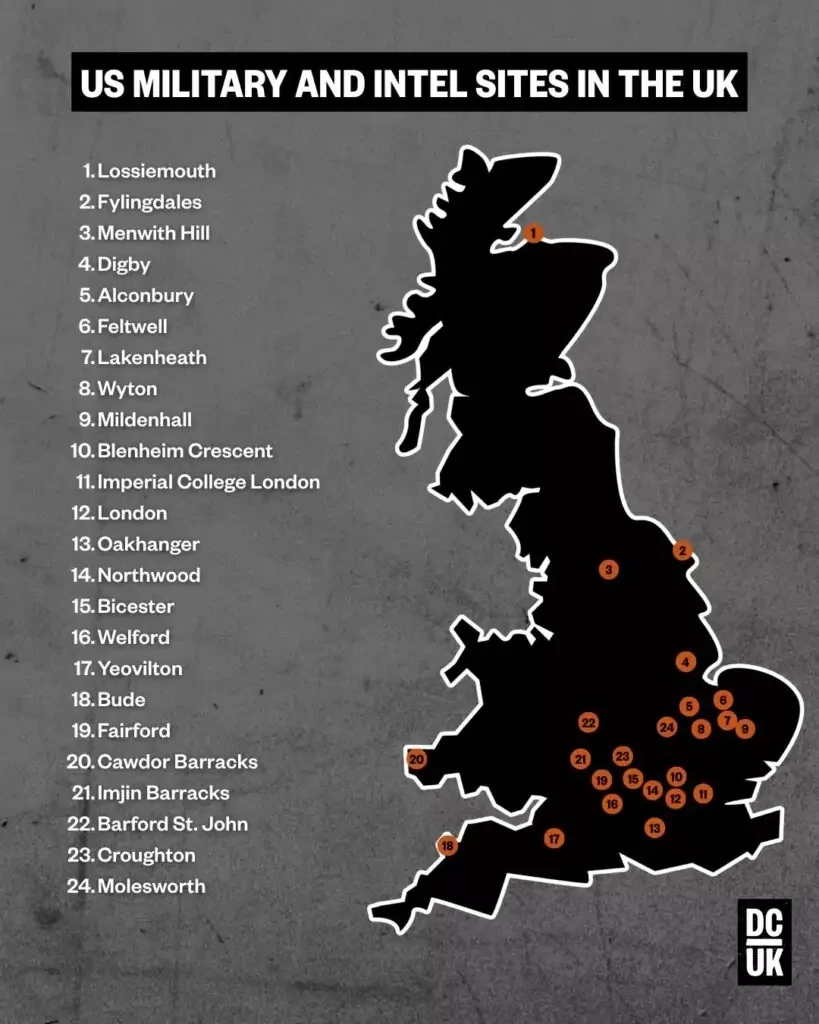
But Declassified recently found a US War Department document highlighting 22 American military sites in Britain, some of which successive UK governments have failed to mention. It is not clear how many of these 22 sites are currently hosting US military personnel.
Declassified has identified other locations in Britain that are likely to host US military or intelligence personnel, bringing the total to 24.
Even this may not cover the full scale of the US military presence in the UK, since it is believed that US military personnel are frequently, if not permanently, stationed at still more sites, such as the key Royal Navy bases at Coulport, Devonport and Faslane.
Keir Starmer’s government is also refusing to tell parliament how many US forces are located at each of its major bases in Britain. The reason it gives for not saying is that “we are in a new era of threat that remains more serious and less predictable”.
The government also refuses to say where the US has any navy, army or marine detachments in the UK. Incredibly, it says “the overall US force composition across its UK footprint is a matter for the US”.
Who really owns the US military sites in Britain?
This is also unclear. The US War Department document we found states that, as of 2024, it owned, leased or otherwise controlled 22 military sites in Britain, and that these are worth £11bn. The UK government contends that the War Department owns no facilities in Britain, making the exact terms of the US presence even more unclear.
The US document, for example, said its War Department owns 12 buildings covering over 39,000 square feet at RAF Oakhanger in Hampshire, which is a satellite ground station.
Yet in answer to a recent parliamentary question, the MoD said it owns RAF Oakhanger.
The government also says it owns MOD Bicester, which is another site where the US War Department says it holds 261 buildings. What are the terms and conditions governing these holdings?
What military operations does the US conduct from Britain?
Governments have refused to give us the full picture. The standard response is: “The Ministry of Defence does not comment on the operational activity of other nations”, even when they’re operating in Britain.
When the US bombed Iran in June last year, the MoD refused to say if US aircraft based in Britain had been involved.
The MoD also refuses to say if the US has used its British bases to transport arms to Israel.
What US military operations need UK approval?
Britain has a vague agreement with the US on the use of British bases, going back to a 1952 communiqué between prime minister Winston Churchill and president Harry Truman. …………………………………………………………………………………………………………………………. https://www.declassifieduk.org/we-deserve-to-know-the-truth-11-questions-about-us-bases-in-britain/
Pro-nuclear group faces questions over ‘links’ to major London PR firm.

BRITAIN Remade is the apparently “grassroots” group leading the push
to overturn Scotland’s ban on nuclear power. But The Ferret has found
that two of its directors come from a firm which lobbies for the UK’s
biggest nuclear company.
Britain Remade organised the recent launch of the
“Scotland for nuclear energy” campaign and has repeatedly called for
Holyrood to reverse its long-standing opposition to new atomic energy. The
“pro-growth” group campaigns to make it easier to build things in the
UK – including housing, transport links and clean energy.
It says it is
“independent” and “grassroots”. But it has been alleged that
Britain Remade has close ties to the London-based public relations firm
Stonehaven. Stonehaven represents EDF – the French energy giant that owns
Scotland’s last operational nuclear power station at Torness in East
Lothian. EDF could be one of the biggest beneficiaries of any move to lift
the ban on new nuclear plants.
A Ferret investigation into the relationship
between Stonehaven and Britain Remade uncovered that BRM Futures Ltd –
the private company behind the campaign group – recently named two senior
Stonehaven figures as directors. We also found other overlaps including
that Britain Remade had been incorporated at an address that was previously
the registered office of Stonehaven, by an individual whose name resembles
that of Stonehaven’s finance director.
Critics argued the public has “a
right to know who is behind any campaign” otherwise there was a risk of
Scottish democracy being “undermined behind closed doors”. Britain
Remade told The Ferret it had “never taken a penny of corporate money”,
sets its own priorities and campaigns “on what we think matters for the
country”. It also said any claim that funders get a veto on anything it
writes or campaigns on is “categorically untrue”.
However, despite
direct questions, it did not confirm the nature of its relationship with
Stonehaven or whether it had been set up by anyone at the firm. Stonehaven
did not respond to a request for comment. Companies House filings –
updated on February 3, just two days before the Glasgow launch of the new
nuclear campaign – show that BRM Futures Ltd appointed Pandora Lefroy and
Rachel Wolf as directors in October 2024. Lefroy has worked at Stonehaven
for more than 10 years and is now the firm’s managing partner. Wolf is
the chief executive of Public First, another consultancy firm bought by
Stonehaven last year, and now sits on the board of the wider Stonehaven
Group Holdings Limited. Filings show that BRM Futures Ltd was incorporated
in February 2022 on the first floor of an office building called Thavies
Inn House, in the Holborn area of London. Until three months previously,
that same address had been Stonehaven’s registered office.
The sole
founding director listed on the incorporation document was Henry Frank
Lewis. He resigned in November 2022 when the campaign was officially
launched and current staff members Sam Richards, Sam Dumitriu and Jeremy
Driver were appointed. Stonehaven’s finance director is Harry Lewis.
Britain Remade did not respond to a question about whether he and Henry
Frank Lewis were the same individual. Like EDF, Britain Remade is named as
a client of Stonehaven on the professional lobbying register. It has also
reportedly used technology provided through Stonehaven to launch a petition
on onshore wind that secured more than 11,000 signatures. James Mitchell, a
professor of public policy at the University of Edinburgh, said the public
should be “very wary” of any organisation which was unwilling to
provide “such basic information”.
“The public has a right to know who
is behind any campaign pursuing a policy including, crucially, who funds
the campaign and with what level of funding,” he said.
The National 15th March 2026
Starmer’s Self-Defence Fudge: The UK’s Growing Involvement in the Iran War

Healey confirmed that the US was using British bases to target Iranian missile sites from RAF Fairford in Gloucestershire and Diego Garcia in the Indian Ocean.
The dangers of closer involvement with the US in this war should be all too clear for Starmer and the Labour Party. In March 2003, as a human rights lawyer, he warned the government of Tony Blair that pre-emptive action against Iraq to disarm the regime of Saddam Hussein of alleged weapons of mass destruction would find itself, from a legal perspective, on thin ice.
10 March 2026 Dr Binoy Kampmark, https://theaimn.net/starmers-self-defence-fudge-the-uks-growing-involvement-in-the-iran-war/
Wars can distract, and for leaders in political purgatory, they can be particularly useful. It remains to be seen whether the UK’s increasing involvement in the illegal war being waged on Iran by Israel and the United States will serve that purpose. Prime Minister Sir Keir Starmer, the great saviour of the British Labour Party in taking them to victory in 2024, is finding himself in sinking desperation. Being less popular than a pandemic, he has much work to do if he is to retain his premiership till and after the next election.
This deepening involvement in the Iran War has been messy. Britain, along with France and Germany, were initially clear in their joint February 28 statement that they had not participated in the strikes on Iran but were “in close contact with our international partners, including the United States, Israel, and partners in the region.” Instead of condemning the pre-emptive attack on Tehran as a crime of aggression in breach of the United Nations Charter and international law, the statement went on to “condemn Iranian attacks on countries in the region in the strongest terms.”
Within a matter of hours, Starmer rebadged his country’s engagement in the conflict as a matter of self-defence under Article 51 of the United Nations Charter, making what can only be regarded as a spurious use of international law – or whatever was left of it. The press release on March 1 again reiterated condemnation for Iran’s “reckless and ongoing discriminate attacks against countries in the region,” taking no account as to why Tehran was engaged in such an avenging task. But international law permitted the UK and its allies “to use or support force in such circumstances where acting in self-defence is the only feasible means to deal with an ongoing armed attack and where the force used is necessary and proportionate.”
It followed from this that the UK had “military assets flying in the region to intercept drones or missiles targeting countries not previously involved in the conflict.” A request from Washington had also meant that his government would “facilitate specific and limited defensive action against missile facilities in Iran which were involved in launching strikes at regional allies.” The statement went on, weakly, to ward off suggestions of any “wider involvement in the broader ongoing conflict between the US, Israel and Iran.”
On March 9, in an oral statement to the House, the UK Secretary of State for Defence John Healey revealed the sheer scale of British involvement. The briefest of references was made to Starmer’s justification along lines of collective self-defence under international law. To put some flesh on the bone, it was important to inflate the threat posed by the Iranian regime, a force of cruel destruction that had “slaughtered protestors in its own streets,” supplied Shahed drones to Russia in its “illegal invasion of Ukraine” and conducted cyber-attacks against Britain and plotted assassinations on it streets.
Healey confirmed that the US was using British bases to target Iranian missile sites from RAF Fairford in Gloucestershire and Diego Garcia in the Indian Ocean. He also outlined various “defensive operations” that had taken place: the destruction of Iranian drones over Jordan by F-35s; the use of Typhoons to shoot “down targets heading towards Qatar”; and “counter-drone units defeating further attacks against coalition bases in Iraq.” Various “defensive air sorties in support of the UAE” were also being conducted. Given this burgeoning list, it is surely a matter of time, given the prolongation of conflict, for Starmer to join the full-blooded effort and hit sites in Iran proper. The pretence to legality will have all but collapsed by that point.
The US President Donald Trump, for his part, has been petulant, scornful of Starmer for not doing more. “This is not Winston Churchill,” he moaned to journalists over the PM’s initial tardiness in permitting the use of British bases to launch strikes on Iran. In a social media post, Trump revealed that the UK, “our once Great Ally, maybe the Greatest of them all, is finally giving serious thought to sending two aircraft carriers to the Middle East.” With a bitchy turn, the President informed the PM that “we don’t need them any longer – But we will remember.” He had “no need for people that join Wars after we’ve already won!”
The dangers of closer involvement with the US in this war should be all too clear for Starmer and the Labour Party. In March 2003, as a human rights lawyer, he warned the government of Tony Blair that pre-emptive action against Iraq to disarm the regime of Saddam Hussein of alleged weapons of mass destruction would find itself, from a legal perspective, on thin ice. “The mere fact that Iraq has a capacity to attack at some specified time in the future is not enough.” No one believed that Iraq was imminently about to attack the UK or its allies, and any claim to self-defence “would sit uncomfortably with the US position that military action is justified to destroy such weapons of mass destruction as Iraq may have, and to bring about a change of leadership.”
Despite these warnings, Blair, with a poodle’s dignity, joined President George W. Bush alongside that other servitor, Australia, to attack Iraq, finding no WMDs and inviting the deserved opprobrium of the international law community. The public inquiry into Britain’s involvement in the war, chaired by John Chilcot, noted that “the circumstances in which it was decided there was a legal basis for UK military action were far from satisfactory.” The phase of planning and preparations for a post-Saddam also proved “wholly inadequate.” But the inquiry report also made an unimpeachable observation troublingly relevant as Britain gets ever more involved in the current crime of aggression: “The US and UK are close allies, but the relationship between the two is unequal.”
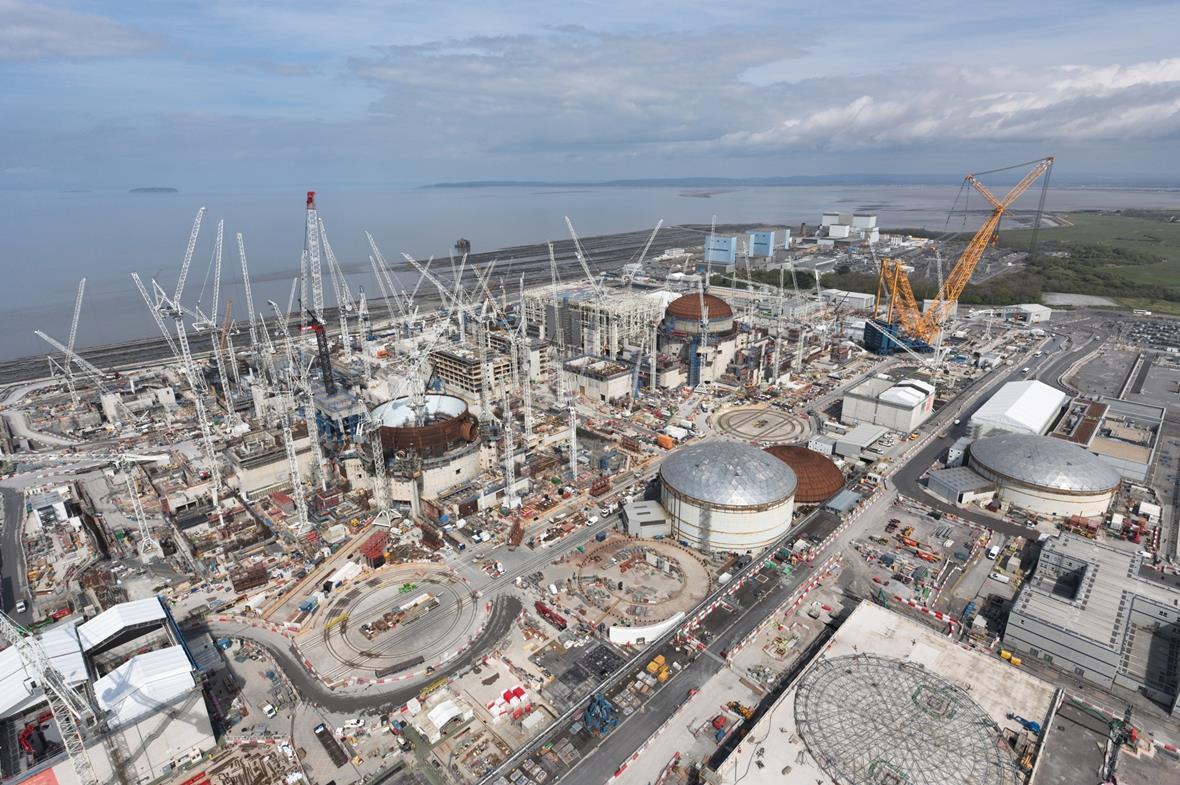
While Hinkley Nuclear Was Being Built, The UK Grid Decarbonized
Clean Technica, Michael Barnard, 6th March 2026
The latest announcement about Hinkley Point C was predictable. The first reactor at the plant in Somerset is now expected to begin generating electricity in 2030. The cost estimate has climbed again, now reaching roughly £35B in 2015 pounds or about £49B in current money according to Electricité de France. When the project received final approval in 2016, the expected construction cost was £18B and the first reactor was expected to begin operating in 2025. In the span of a decade, the expected capital cost nearly doubled while the schedule slipped by five years. The project illustrates the pattern described by Oxford megaproject scholar Bent Flyvbjerg. Large infrastructure projects tend to run over budget, over schedule, and deliver fewer benefits than originally promised. Hinkley Point C appears to be achieving the full trifecta.
To understand how the project arrived at this point it is necessary to revisit the electricity system that existed when Hinkley was first proposed……………………………Policymakers faced a looming capacity gap as aging coal plants approached retirement under European pollution rules and older nuclear reactors approached the end of their operating lives. Large baseload nuclear plants seemed like a logical replacement for retiring coal and nuclear capacity while maintaining system reliability and reducing emissions.
EDF entered the picture in 2008 when it acquired British Energy for about £12.4B. This acquisition gave the French utility access to several UK nuclear sites including Hinkley Point in Somerset……………………… T.he UK government supported the project through a Contract for Difference that guaranteed a strike price of £92.50 per MWh in 2012 pounds for 35 years. Adjusted for inflation that price is now roughly £120 to £130 per MWh in current money.
The timeline of the project reflects the slow progress typical of large nuclear builds……………………………………………………….. The most recent revision places the cost at about £35B in 2015 pounds with startup expected in 2030. If the schedule slips to 2031, EDF estimates another £1B in additional cost..
Hinkley is not an isolated example. The reactor design used at the site is the European Pressurized Reactor. Other projects using this design have experienced similar difficulties. Olkiluoto 3 in Finland began construction in 2005 and entered commercial operation in 2023. The project took roughly 18 years from start to finish and cost about €11B compared with an original estimate of about €3B. Flamanville 3 in France began construction in 2007 and only began producing electricity in 2024 after more than a decade of delays and cost escalation. These projects demonstrate that modern nuclear construction faces structural challenges including complex regulatory oversight, large supply chains, and one-off engineering work.
While Hinkley Point C progressed slowly, the electricity system around it began to change rapidly. UK grid carbon intensity fell from about 520 gCO2 per kWh in 2006 to roughly 120 gCO2 per kWh in 2025 according to National Grid data. That represents a reduction of about 77%. Coal generation collapsed during the same period. In 2012 coal still produced about 40% of UK electricity. By 2024 the last coal plant closed and coal generation fell to zero. Gas generation initially increased as coal declined, providing a bridge fuel that cut emissions roughly in half per kWh compared with coal. At the same time renewable energy expanded quickly.
Wind power became the largest contributor to this change. ……………………………………………………………………………..
The grid also evolved to accommodate the growing share of renewable energy. Market reforms played a significant role. The Contract for Difference program created long term price stability for renewable developers………………High voltage direct current interconnectors connected the UK to electricity markets in France, Norway, Belgium, and Denmark. These interconnectors allow power to flow between regions and help balance variable generation.
Grid operations also changed to manage a system with lower inertia and higher renewable penetration. Batteries began appearing in grid services markets around 2017. These batteries provide fast frequency response and reserve capacity.
The economic dynamics of electricity generation shifted during the same period. Nuclear plants represent a form of megaproject economics. Each plant is a large custom built facility that takes many years to construct. Learning effects are limited because each plant is unique. Wind turbines and solar panels follow a different model. These technologies are manufactured in large volumes. Production learning and scale economies reduce costs over time. ………………………………………………………………..
The rising cost of Hinkley also raises questions about opportunity cost. The current estimated cost of about £49B in today’s money represents a very large capital investment. Offshore wind projects in Europe commonly cost between £2M and £3M per MW of installed capacity depending on location and turbine size. At £2.5M per MW, £49B could finance roughly 20 GW of offshore wind capacity. With a typical offshore wind capacity factor of about 45%, that capacity would produce around 79 TWh of electricity annually. Hinkley Point C is expected to produce about 25 TWh annually. The comparison is not exact because nuclear provides firm generation while wind is variable. The scale difference is significant.
……………………………………………………………………………………………………………. The next UK nuclear project, Sizewell C in Suffolk, raises obvious questions about what lessons policymakers are drawing from the experience at Hinkley Point C. Sizewell C is planned as a near replica of Hinkley using the same European Pressurized Reactor design and similar capacity of about 3.2 GW. The estimated construction cost is currently around £20B to £30B depending on assumptions about financing and schedule. Unlike Hinkley, the project will be financed through a regulated asset base model that allows developers to collect revenue from electricity consumers during construction. This structure reduces financing risk for investors but shifts more cost exposure onto the public.
The core question is whether the UK energy system in the 2030s and 2040s still requires additional nuclear megaprojects built on decade long timelines when wind, solar, and storage technologies continue expanding on much shorter deployment cycles. A second question concerns opportunity cost. If Sizewell C ultimately approaches the capital intensity seen at Hinkley, the same level of investment could finance tens of gigawatts of renewable capacity or large expansions of grid infrastructure. Policymakers therefore face a strategic choice between continuing the megaproject model for firm low carbon generation or allocating capital toward technologies that can scale incrementally and rapidly across the electricity system.
The broader lesson from the Hinkley experience concerns the pace of technological change in energy systems. Large infrastructure projects require long planning and construction timelines. Energy technologies such as wind turbines, solar panels, and batteries follow faster innovation cycles driven by manufacturing scale and global deployment. Between the time Hinkley Point C was conceived and the time it will enter operation, the UK electricity system transformed itself. Coal disappeared. Wind capacity expanded more than tenfold. Carbon intensity fell by more than three quarters. The project will arrive into a grid that has already undergone much of the transition it was designed to support.
https://cleantechnica.com/2026/03/06/while-hinkley-nuclear-was-being-built-the-uk-grid-decarbonized/
1 This Month
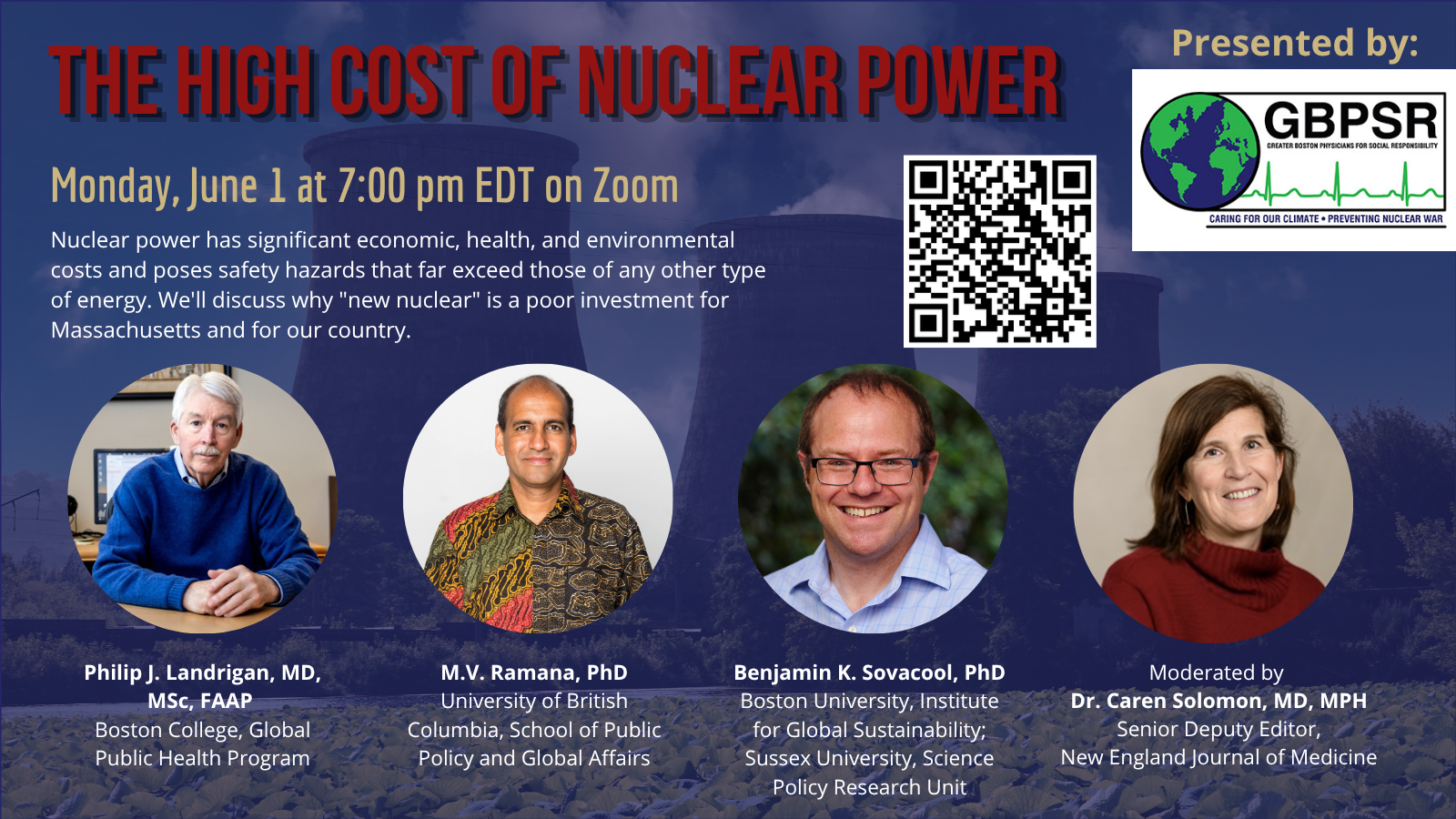
1 June Webinar – The High Cost of Nuclear Power – Register
6 June – WEBINAR- Get Inspired by Protests Against Military Bases!


Cuba Is Not a Failed State – It Is a Besieged State
PETITION: “Global Appeal to Endorse Palestinian Right of Return of Refugees”



of the week– Nuclear Reactor Information Task Force
To see nuclear-related stories in greater depth and intensity – go to https://nuclearinformation.wordpress.com
-
Archives
- June 2026 (27)
- May 2026 (306)
- April 2026 (356)
- March 2026 (251)
- February 2026 (268)
- January 2026 (308)
- December 2025 (358)
- November 2025 (359)
- October 2025 (376)
- September 2025 (257)
- August 2025 (319)
- July 2025 (230)
-
Categories
- 1
- 1 NUCLEAR ISSUES
- business and costs
- climate change
- culture and arts
- ENERGY
- environment
- health
- history
- indigenous issues
- Legal
- marketing of nuclear
- media
- opposition to nuclear
- PERSONAL STORIES
- politics
- politics international
- Religion and ethics
- safety
- secrets,lies and civil liberties
- spinbuster
- technology
- Uranium
- wastes
- weapons and war
- Women
- 2 WORLD
- ACTION
- AFRICA
- Atrocities
- AUSTRALIA
- Christina's notes
- Christina's themes
- culture and arts
- Events
- Fuk 2022
- Fuk 2023
- Fukushima 2017
- Fukushima 2018
- fukushima 2019
- Fukushima 2020
- Fukushima 2021
- general
- global warming
- Humour (God we need it)
- Nuclear
- RARE EARTHS
- Reference
- resources – print
- Resources -audiovicual
- Weekly Newsletter
- World
- World Nuclear
- YouTube
-
RSS
Entries RSS
Comments RSS
 nuclear-news