Ask the locals: NFLA Chair says it is ‘prudent and proper’ for Nuclear Waste Services to consult residents over South Copeland flooding risk
The UK/Ireland Nuclear Free Local Authorities have urged Nuclear Waste
Services and the South Copeland GDF Community Partnership to ask the
residents of Millom and Haverigg for help in identifying local sites which
have been flooded.
As part of its ongoing effort to locate a potential site
for a Geological Disposal Facility, a repository into which Britain’s
legacy and future high-level radioactive waste will be dumped, NWS intends
to identity ‘Areas of Focus’ in the South Copeland Search Area which
incorporates the communities of Drigg, Haverigg, Kirksanton, and Millom.
These ‘Areas of Focus’ will be subject to more intensive geological
investigations and in the guidance published by NWS those sites ‘with
known flood risks’ will be excluded.
Sizewell C’s future in doubt as EDF told to prioritise French nuclear power
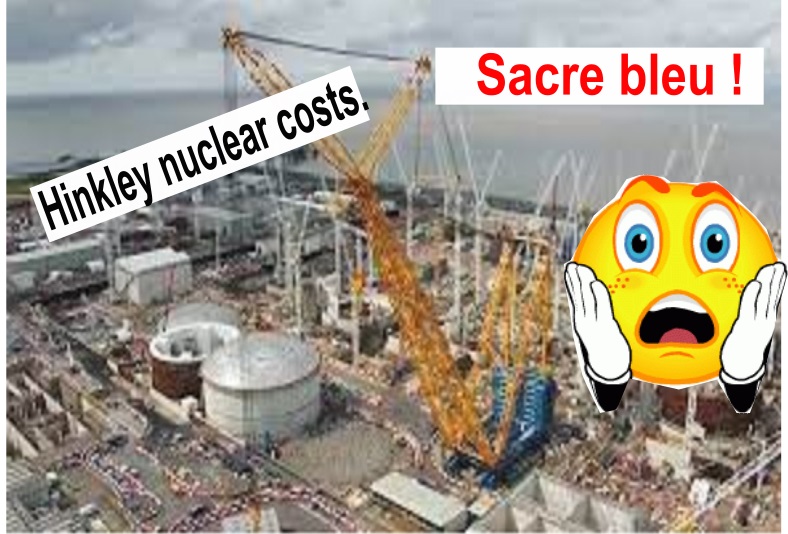
Auditor warns against costly foreign projects as energy giant considers investment decision into the plant
The future of Sizewell C has been thrown into doubt after EDF, the company
behind the project, was told to prioritise supporting nuclear power in
France. In a rare intervention, the French state auditor warned the
state-owned energy giant against backing risky new projects abroad, which
include plans to build a new nuclear power station in Suffolk.
Instead, the Cour de Comptes said EDF should focus on making a success of
multibillion-euro projects at home, ensuring they were profitable and built
on time. It comes as EDF prepares to make a final investment decision on
Sizewell C, which will increase its exposure in the UK given it is already
building Hinkley Point C in Somerset.
However, that project has been hit by
surging costs and delays, with the most recent forecasts saying it will
open after 2030 and cost around £45bn. Industry sources are also predicting
Sizewell C will cost £40bn to build, double EDF’s initial estimates in
2020.
EDF is working alongside the Government on Sizewell C, with £4bn of
taxpayer cash already spent on the project. However, the French auditor has
released a report saying EDF should not make a final investment decision on
the Sizewell project before cutting its financial exposure to Hinkley.
Telegraph 14th Jan 2025,
https://www.telegraph.co.uk/business/2025/01/14/sizewell-c-future-doubt-edf-told-prioritise-french-nuclear/
Cost of Sizewell C nuclear project expected to reach close to £40bn

“Nuclear is too expensive, too slow — and very expensive to contain at the end of its life.”
Final price tag for building new power plant is likely to be double 2020 estimate
Jim Pickard, Rachel Millard and Gill Plimmer , January 14 2025
The final price tag for building the planned Sizewell C nuclear power station in Suffolk is likely to reach close to £40bn, according to people close to the negotiations over the flagship energy scheme.
The sum is double the £20bn estimate given by developer EDF and the UK government for the project in 2020, reflecting surging construction costs as well as the implications of delays and cost overruns at sister site Hinkley Point C.
The higher estimate is likely to raise questions over the government’s strategy for a nuclear power revival, at a time of stretched government finances and cost of living concerns.
EDF says that once up and running, Sizewell C should be able to supply low carbon electricity to the equivalent of about 6mn homes for 60 years.
The Treasury is due to decide whether to go ahead with the project in this year’s multiyear spending review, according to officials.
The UK government and French energy group EDF were the initial backers of Sizewell C, but they are trying to raise billions of pounds from new investors, a process that is dragging on longer than planned.
Earlier this month the Department for Energy Security and Net Zero (Desnz) said it could not reveal the current cost estimate for the project as it was “commercially sensitive”. …………………
Alison Downes, executive director of campaign group Stop Sizewell C, urged the government to “come clean” on the “massive true cost” of the project given that households would be paying upfront for its construction via a levy on energy bills. “This secrecy around Sizewell C is inexcusable.”
Dale Vince, a big Labour party donor and founder of green energy company Ecotricity, has written to the government’s new Office for Value for Money warning that the construction of Sizewell “will saddle consumers with higher bills long before it delivers a single unit of electricity”.
But one senior government figure and two well-placed industry sources said a reasonable assumption for the cost of building Sizewell C would be about £40bn in 2025 prices.
The government has already awarded £3.7bn of state funding to the project. Ministers had planned to reach a final investment decision by the end of 2024 but were forced to delay this until spring 2025. Now there is industry speculation that any deal could slip beyond the autumn.
Speaking to the Financial Times, he added: “Nuclear is too expensive, too slow — and very expensive to contain at the end of its life”…………………………….
all but one of Britain’s current ageing fleet of plants is due to close by March 2030, potentially sooner if planned life extensions cannot go ahead.
Only one new nuclear power station, Hinkley Point C in Somerset, is at present being built in the UK but it is delayed and over budget.
The project is due to start generating in 2029 at the earliest, and cost up to £46bn. That compares with initial expectations from 2016 that it would start at the end of 2025 and cost £18bn. …………………….
there is scepticism inside government about how much lower Sizewell C’s price tag would be compared with Hinkley Point C………………………………
Destroyed Assange Files: Why Judge’s Rebuke Against Crown Prosecution Service Was So Significant.

“This is a significant victory in a long battle to get the truth out on the involvement of CPS in keeping Julian in arbitrary detention that later turned into political imprisonment, according to UN bodies and the Parliamentary Assembly of the Council of Europe.”
An unknown number of emails were apparently deleted after one of the U.K.’s lead prosecutor in the case, Paul Close, retired from the CPS. The deletions occurred despite the fact that the case against the award-winning journalist and publisher of the news and transparency website WikiLeaks was still active.
the dissenter, Mohamed Elmaazi, 14 Jan 2025,
A British judge issued an unusually critical rebuke against the Crown Prosecution Service of England and Wales.
A British judge issued an unusually critical rebuke against the Crown Prosecution Service of England and Wales (CPS) for its handling of freedom of information requests related to Sweden’s failed attempt to extradite WikiLeaks founder Julian Assange.
The decision by the United Kingdom’s information rights tribunal was made public on January 10. It followed an appeal by Italian investigative journalist Stefania Maurizi, who argued that the CPS failed in its duty to properly explain why a senior prosecutor’s emails were allegedly deleted or destroyed.
In writing the decision for the three-member tribunal, First-Tier Tribunal (FTT) Judge Penrose Foss pierced the veil of deference that is often shown to governmental bodies in England and Wales by the U.K.’s data protection regulator, the Information Commissioner’s Office (ICO). Foss was quite blunt in her criticism of the CPS’s handling of multiple Freedom of Information Act (FOIA) requests that Maurizi had submitted as early as 2015.
It is uncommon for the CPS to be a respondent in FOIA appeals. A review of FTT decisions regarding information rights cases since 2009 shows the CPS as a respondent in 16 out of 3,167 cases (0.5 percent). This includes two appeals filed by Maurizi.
The decision establishes a precedent that may make it easier for future FOIA requests to be successful in the long run, according to Estelle Dehon KC of London’s Cornerstone Barristers, who represented Maurizi.
When the information rights tribunal comes across instances of a public authority’s failure to comply with FOIA obligations it “has been known to be quite trenchant in its criticism,” Dehon, told The Dissenter. But it is “unusual in the run of cases that are specific to Stefania’s FOIA requests” for the tribunal to be as critical as it was last week, she added.
“What we can do now is say to the ICO, look at the quality of the search process [conducted by a public body when a FOIA request is made]. If the search process was poor, then that is an indication that the information is being, or might be, held despite the public authority’s claims to the contrary,” Dehon said.
Kristinn Hrafnsson, WikiLeaks’ editor-in-chief, told The Dissenter, “This is a significant victory in a long battle to get the truth out on the involvement of CPS in keeping Julian in arbitrary detention that later turned into political imprisonment, according to UN bodies and the Parliamentary Assembly of the Council of Europe.”
The tribunal ordered the CPS to confirm whether it holds information as to “when, how and why” it destroyed or deleted any “hard or electronic copies of emails” with the Swedish Prosecution Authority by February 21 at 4 p.m. If they have any such information they must provide it to Maurizi or otherwise explain why they are exempt from doing so.
‘Unfounded’ Assumptions Prevented Adequate Search For Records
“Overall, based on the evidence before us, our concern is that over a number of years the CPS has not properly addressed itself at least to recording, if not undertaking, adequate searches in relation to the CPS lawyer’s emails, with the result that, in 2023, when it has purported to answer [Maurizi’s] 2019 [FOIA] Request, it has not been able to give a clear and complete account,” the Tribunal stated in its decision.
The tribunal noted that the CPS’s approach “appears to have been informed by a combination of unfounded and incorrect assumptions or speculation, flawed corporate memory, and unreliable anecdotal instruction, much, but not all, of that resting inevitably in the natural succession of employees through the organisation over time.”
“The cumulative effect of those things, taken together with what we find to be (1) imprecisely worded questions and a failure to drill down into answers, and (2) the absence of any clear and complete audit trail of enquiries and responses at each stage, has very likely prevented adequate searches and has certainly prevented a full and satisfactory account of matters.”
An unknown number of emails were apparently deleted after one of the U.K.’s lead prosecutor in the case, Paul Close, retired from the CPS. The deletions occurred despite the fact that the case against the award-winning journalist and publisher of the news and transparency website WikiLeaks was still active.
…………………………………………………………………….. Taking Aim At the UK’s Data Protection Regulator
The tribunal was quite critical of the ICO for its willingness to accept that every reasonable step had been taken by the prosecution to search for the information Maurizi requested.
…………………………………………………………………. The tribunal found that claims made by the government were contradictory and lacking in evidence to support them and even found “no evidence as to what searches were undertaken” in relation to Maurizi’s earlier FOIA requests.
……………………………………….The tribunal’s decision represents the latest victory for Maurizi who has filed multiple FOIA requests and appeals over the U.K. and Swedish governments’ handling of Assange’s extradition case. Dehon summarized the decision succinctly, “The tribunal concluded the CPS likely still holds some information explaining what took place. Hopefully that will finally be disclosed.”
“So far we have learned that the CPS overstepped and dictated how the Swedish prosecutor’s office handled the case with the obvious intent to keep Julian in limbo and maintain for years his unlawful detention,” Hrafnsson said. “The world needs to know who dictated CPS staff to handle the case in this manner both inside the U.K. establishment at its initiative and with input from other governments. It is unacceptable that government files in the U.K. are disappeared in an effort to hide the truth from the public.”
Hrafnsson believes that the missing files, or “at least their fate,” will ultimately “shed light on the real story behind the political persecution of Julian Assange.”
………………………………………………………………………………………. more https://thedissenter.org/destroyed-assange-files-why-judges-rebuke-against-crown-prosecution-service-was-so-significant/
The UK military’s secret visits to Israel
Top British officers have made at least five unpublicised trips to Tel Aviv to meet Israeli officials, one to discuss ‘future operations’ in the Middle East.
MARK CURTIS, 9 January 2025, https://www.declassifieduk.org/the-uk-militarys-secret-visits-to-israel/?utm_source=drip&utm_medium=email&utm_campaign=What+you+might+have+missed
The most senior figures in the UK military made at least five unpublicised visits to Israel in the months after it began striking Gaza in October 2023, Declassified has found.
British government data shows that Admiral Sir Tony Radakin, the chief of the defence staff and the UK’s top soldier, visited Israel on 21 January 2024.
On the trip he met the Israeli military’s chief of staff, Herzi Halevi, “to discuss future operations in the region”.
By then, Israel had already killed around 25,000 Palestinians, as international condemnation mounted.
This was Radakin’s second known visit to Israel, after he accompanied then defence secretary Grant Shapps on an official trip in December 2023. Shapps’ visit was disclosed at the time by the British government.
Radakin is also known to have visited Halevi again in Israel in August last year, while in November the Israeli soldier was invited by Britain’s Ministry of Defence (MoD) to attend a meeting in London.
Halevi was given special immunity by the UK authorities to avoid the possibility of being arrested for war crimes while in Britain.
Another senior UK figure who has visited Israel is the head of the Royal Air Force (RAF), Air Chief Marshal Sir Richard Knighton, who undertook a trip on 9 January 2024, for purposes which are undeclared in the government data.
The RAF has since flown hundreds of spy missions over Gaza, in aid of Israeli intelligence. The UK says that only information related to Hamas hostage-taking is passed to Israel from these flights, which take off from the UK’s sprawling military and intelligence base on Cyprus.
‘UK-Israel bilateral’
James Hockenhull, the head of Strategic Command – the UK military’s senior leadership body – also quietly visited Tel Aviv for a “UK-Israel bilateral” on 28 December 2023.
This was one day before the South African government filed its genocide case against Israel at the International Court of Justice.
Six weeks later, on 13 February 2024, Hockenhull hosted an Israeli general, Eliezer Toledano, in London, in a further unpublicised visit.
Toledano serves as the head of the Israeli military’s Strategy and Third-Circle Directorate, which focuses on Iran.
Also visiting Israel have been other senior MoD officials, such as General Charles Stickland, the Chief Joint Operations at the UK’s Permanent Joint Headquarters which is responsible “for the command and integration of UK global operations”.
Stickland visited Israel on 18 March 2024, described in the government documents as “MoD Directed attendance at meetings to be held in Tel Aviv”.
On the same day, Paul Wyatt, the MoD’s Director General for Security Policy, was also “meeting counterparts” in Tel Aviv.
‘Tacit approval’
The unpublicised visits by senior UK figures raise further concerns about the level of military assistance Britain is providing to Israel.
Chris Law, the SNP MP for Dundee Central said: “This new information will only fuel suspicions that successive UK governments have given tacit approval to and are complicit in what many are now considering to be a genocide in Gaza.
“The UK government must be up-front about the full extent of the British armed forces’ involvement in Gaza and detail precisely what support they have given throughout this conflict to the Israeli Defence Forces. This must include details of any further visits by senior military figures to Israel.”
He added: “The UK government may think that it is being clever by withholding this information, but ultimately it will only cede ground to misinformation and encourage guesswork. By detailing the exact involvement of British military figures, the UK government can prove once and for all that they are not complicit in this tragedy.”
In addition to the RAF’s surveillance flights over Gaza, Declassified has also documented British military training of Israeli personnel in the UK, arms supplies to the Israeli military after Britain announced limited sanctions, and the use of UK airspace to send weapons to Israel.
An MoD spokesperson said: “As part of the concerted UK effort, along with allies and partners, to reach a peaceful resolution to the ongoing conflict in Gaza, senior defence officials have visited Israel for routine diplomatic visits.”
They added: “Discussions included the UK calls for an immediate ceasefire in Gaza and the need for all parties to comply with international humanitarian law while recognising Israel’s right to security.”
The Great British Nuke Off

by beyondnuclearinternational, https://beyondnuclearinternational.org/2025/01/12/the-great-british-nuke-off/
It’s time to expose the sham plan for new nuclear power, write Andy Blowers and Stephen Thomas in their new report
The following is the introduction and the conclusion from the report, “It is time to expose the Great British Nuclear Fantasy once and for all”. Read the full report.
In April 2022, the then UK Prime Minister, Boris Johnson, set a target of 24GW (equivalent to eight stations like Hinkley Point C) of new nuclear capacity to be completed in Great Britain by 2050. At the heart of the proposal was the creation of a new government owned entity, Great British Nuclear (GBN), with a mission of ‘helping projects through every stage of the development process and developing a resilient pipeline of new builds’ designed to ensure energy security and to meet the UK’s commitment to achieving net zero.
The new Labour Government, elected in July 2024, has been emphatic about the scaling up of renewables, and has confirmed that nuclear power ‘will play an important role in helping the UK achieve energy security and clean power’. While not explicitly committing to the 24GW target, the new Government expressed its belief that a scale expansion of new nuclear projects was a necessary part of the energy mix for the transition to achieving net zero carbon by 2050.
The Government is expected to continue with GBN but in a clearly subordinate role to its new creation, Great British Energy, its vehicle for driving development and investment into projects that will enable the energy transition to achieve net zero by 2050.

There has, so far, been little government recognition of the sheer difficulty of achieving a vast expansion of nuclear energy. As so often in the past, the nuclear programme has barely got off the ground and the flagship project of the new nuclear programme, Sizewell C, had, by October 2024, yet to receive a Final Investment Decision (FID) apparently because of the lack of interested investors.
In an attempt to keep the project from collapsing while it tries to find investors, Government has chosen to invest £8bn in the project, in addition to Electricité de France’s (EDF’s) contribution of about £700m, just to get it to FID, a process budgeted by EDF in 2016 to cost only £458m. Small Modular Reactors in which much hope is vested barely exist beyond the drawing boards and by the time they could be deployed, if all goes to plan, it will be too late for SMRs and Sizewell C to make any significant contribution to achieving ‘Net Zero’.
The recipe for expanding nuclear and overcoming the problems that have meant previous large nuclear programmes came to little remains the same as that of the previous government: create a flow of large nuclear projects starting with an FID for Sizewell C; bring Small Modular Reactors to commercial availability by 2029 and start ordering them then; and streamline the planning and regulatory processes.
Achieving these objectives in whole or in part will be impossible. In addition, the nuclear programme remains encumbered by its traditional ethical and sustainability problems, if anything, more so. The prevailing fear of nuclear accidents and radiation risks has intensified as nuclear is increasingly exposed to cyber-attack and the palpable threats from terrorism and warfare.
The accidents at Chernobyl and Fukushima, and the threats to Zaporizhzhia in Ukraine and Russia’s Kursk plant at the heart of the Russo-Ukraine war provide chilling evidence of dangers that are likely to materialise sometime somewhere.
With its embedded relationship to the bomb, nuclear energy is implicated in existential catastrophe. The other existential threat comes from accelerating Climate Change which will inundate some coastal sites, create problems of cooling water and, render the legacy of wastes scattered at vulnerable sites an unmanageable problem for generations far into the future.
We may well ask why, in the face of such deficiencies and dangers and with evidence of flagging momentum, this fantastical project is still proceeding? The answer lies in a powerful combination of political ambition, nuclear industry and trade union lobbying purveying the promise of skills, jobs investment, export markets and wealth associated with nuclear development and its supply chain. A mainstream discourse of nuclear as a mainstay of base load supply, energy security and the goal of net zero has been nurtured, to which powerful interests unthinkingly subscribe. Inertia ensures the persistence of the fantasy.
Yet, all the evidence in terms of renewables competition, the opportunity costs and long term economic and security risks of a swerve to new nuclear indicates a vast gulf between rhetoric and reality. In this paper it is our purpose to address the realities and to demonstrate why new nuclear expansion is not only impossible but acts as a barrier to achieve a rapid energy transition powered by renewable technology, storage and energy efficiency.
In the face of the evidence, we consider it reasonable to conclude that any expansion of civil nuclear power in the UK beyond that already committed is unachievable.
The history of nuclear power worldwide is of ambitious programmes falling far short of plans, with huge delays and time overruns. The impact of these failures has been masked by less than expected electricity demand growth and the availability of quicker and cheaper alternatives.
However, there has been a significant opportunity cost to money wasted on these ill-fated policies. For decades UK governments have been seduced by claims from the nuclear industry that, this time, a major nuclear programme will go to plan. More than ever before, the latest programme will be dependent on huge quantities of public money with financial risks falling squarely on the public.
It strains credibility that, with a massive hole in the finances and urgent priorities in health and welfare, the justice system, education and infrastructure, the idea of plugging the nuclear black hole will be met with universal enthusiasm.
The signs are all too clear, the rhetoric has no concrete foundations and the programme will vaporise slowly, perhaps but with inevitable termination. Future demand is again being over-estimated and cheaper, quicker alternatives exist.
The real cost of nuclear power continues to rise and the delays increase, while the cost of alternatives continues to fall. The latest prices for off-shore and onshore wind, and solar photovoltaic are about half the likely price for new nuclear. The IEA reported that over the 10 years from 2013-23, battery costs fell by more than 80%.
Authoritative analysis by an Oxford University team found that UK energy demand could be halved by 2050 with substantial welfare benefits in terms of reducing fuel poverty.
While government documents on nuclear invariably speak of things moving ‘at pace’, the reality is that in the period since the 24GW programme was announced, delays have mounted. In only two years, the completion date for Hinkley Point C went back up to four years and Sizewell C’s FID has been delayed by at least three years.
By October 2024, more than two years after it was announced, GBN barely exists. It has no permanent executive, no premises and no independent budget and its staff are temporary secondees.
GBN’s first substantive task was to complete the SMR competition and award contracts. In October 2023, it expected this to happen in spring 2024. It now seems likely this will not happen until the end of 2024, so a task expected to take about 6 months will, if there are no more delays, take 15 months.
The new Labour administration has yet to say whether GBN will remain as a separate body or whether it will be absorbed into its own new creation, Great British Energy. This uncertainty could delay the decision further.
Despite the sound and fury, the GBN project is bound to fail. Its contribution to achieving net zero by 2050 will be nugatory. No amount of political commitment can overcome the lack of investors, the absence of credible builders and operators or available technologies let alone secure regulatory assessment and approval.
Moreover, in an era of climate change there will be few potentially suitable sites to host new nuclear power stations for indefinite, indeed unknowable, operating, decommissioning and waste management lifetimes.
And there are the anxieties and fears that nuclear foments, the danger of accidents and proliferation and the environmental and public health issues arising from the legacy of radioactive waste scattered on sites around the country.
Abandoning Sizewell C and the SMR competition will lead to howls of anguish from interest groups such as the nuclear industry and trade unions with a strong presence in the sector. It will also require compensation payments to be made to organisations affected. However, the scale of these payments will be tiny in comparison with the cost of not abandoning them.
It is our hope that sanity and rationality may prevail and lead to a future energy policy shorn of the burden of new nuclear and on a pathway to sustainable energy in the pursuit of net zero.
Professor Andy Blowers is a British geographer and environmentalist and Emeritus Professor of the Faculty of Arts & Social Sciences at the Open University. Professor Stephen Thomas is a professor at the University of Greenwich Business School, working in the area of energy policy.
‘Alarming’ environmental breaches at nuclear sites spark calls for tougher action

Paul Dobson, Rob Edwards, January 12, 2025
The Dounreay nuclear facility in Caithness was found to be in breach of
rules on eleven occasions in recent years, making it one of the most
frequent offenders in Scotland. Dounreay – which houses radioactive waste
– was a hub of nuclear research between the 1950s and 1990s but is now
the site of the largest nuclear clean up in Scotland.
There was also a breach at the Faslane naval base, although this did not involve
radioactivity. The findings come from data released to The Ferret by the
Scottish Government’s green watchdog, the Scottish Environment Protection
Agency (Sepa). The agency kept a further 25 sites which had broken rules
secret. The Ferret understands this is because they house radioactive
materials which governments fear could be targeted by terrorists aiming to
build a dirty bomb.
The Ferret 12th Jan 2025,
https://theferret.scot/environmental-breaches-spark-calls-tougher-action/
UK will explore nuclear power for new AI data centre plan
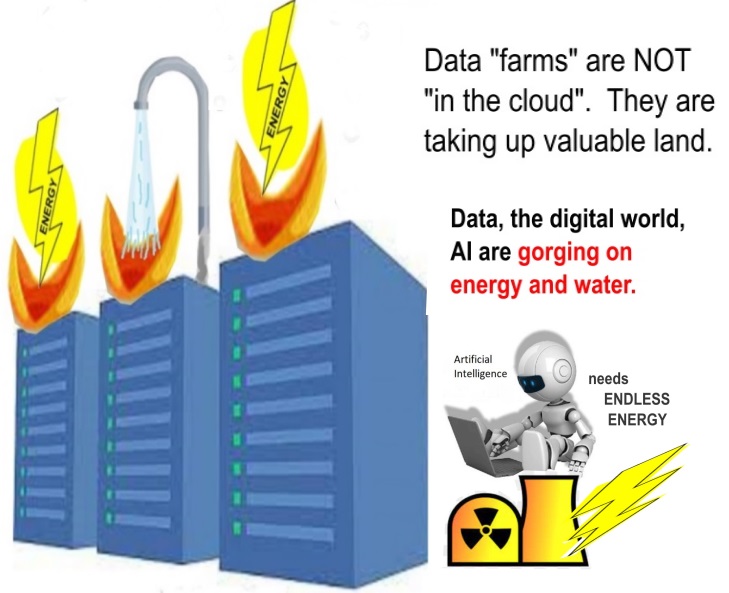
The UK is planning special districts for constructing data centers and
will explore dedicating nuclear energy to the sites as part of a Labour
government project to boost technology growth and the ecosystem for
artificial intelligence. These “AI Growth Zones” will include enhanced
access to electricity and easier planning approvals for data centers, the
government said on Sunday. It said the first such zone will be in Culham,
home of the UK Atomic Energy Authority.
Bloomberg 12th Jan 2025,
https://www.bloomberg.com/news/articles/2025-01-12/uk-will-explore-nuclear-power-for-new-ai-data-center-plan
EDF’s UK nuclear plan – salt marsh consultation delay reaction
Author: LDRS, 11th Jan 2025
EDF has been urged to “end the uncertainty” over its plans to turn part of North Somerset into a salt marsh after it announced it was delaying the plans.
The power company, which is building Hinkley Point C, wants to create 340 hectares of new salt marsh habitats along the Severn — including at Kington Seymour in North Somerset — to compensate for the 44 tonnes of fish expected to be sucked into the power plant’s cooling systems each year. Farmers and the communities who could see their land become salt marsh have expressed dismay at the plans.
A consultation on the plans had been set to launch this month — but now EDF has said it is marking sure all options are “fully explored” and is delaying the consultation until later in 2025. A letter sent to people in the areas affected on Monday said: “We have listened carefully to all views and the feedback has provided us with a great deal of insight as we consider what proposals to put forward in our public consultation.”
But the letter has not impressed locals. Local councillor Steve Bridger, who represents the Yatton ward which includes Kingston Seymour on North Somerset Council, said: “It is clear to me that EDF’s preference is to find voluntary ways to meet its planning obligations, so I would ask that they end the uncertainty for residents and businesses and just drop their proposals to create salt marsh and put their energy into a genuine and open conversation with our communities to develop a strategy that protects all our residents and funds all sorts of biodiversity gains in North Somerset that we actually want and need.”
Claire Stuckey, whose parents’ land and a business faces becoming part of the Kingston Seymour salt marsh, said: “We have unanimous community opposition and significant evidence it won’t work. It’s their decision what they are going to do.”
Farmers and landowners found out their lands were being looked at in September, when they received letters from EDF. Ms Stuckey said that EDF’s statement that they needed more time to look at their options “goes against the original excuse for their heavy handed approach.”
EDF is also looking at Littleton-upon-Severn in South Gloucestershire, and Rodley and Arlingham in Gloucestershire — where the plans have also met with outrage — as potential locations for salt marsh. The controversial plans were debated in Parliament in October, and North Somerset Council resolved in November to write to the government to urge it to block the plans.
But EDF says it has to find a way to compensate for the deaths of fish in its cooling system as it draws in water from the Severn Estuary. Although it does have a fish return mechanism to reduce the numbers of fish killed — the first British nuclear power station to have one — it is predicted that 44 tonnes of fish a year will slip through the mechanism.
The planning permission for Hinkley Point C originally stipulated that it would use loudspeakers by the water intakes on the sea floor to scare off fish, but EDF has warned it would be dangerous for divers to install the speakers and instead proposed creating salt marshes to compensate for the dead fish………….
Rayo 11th Jan 2025,
https://hellorayo.co.uk/greatest-hits/bristol/news/edf-consultation-delay/
How to dismantle the deadly arms trade

The devastating human impact of the arms industry is clear, but war is good news for industry shareholders. The market value of military equipment manufacturers in the US and Europe increased by nearly 60 per cent between February 2022 and March 2024, thanks to the wars in Ukraine and Palestine.
Activists forced Canadian Bank of Nova Scotia to halve its stake in Elbit Systems, Israel’s biggest arms company. In October 2024, Elbit shut down its promotional booth at the Japan International Aerospace Exhibition in Tokyo after protests.
New Internationalist, Amy Hall, 6 Jan 25
People across the world are standing up to the power of the arms trade. Amy Hall explores its threat to life and democracy.
It’s a cold, bright morning on a narrow street in Brighton, on the south coast of England. Neighbours are peering through windows, or coming out onto the pavement, to see why around 15 protesters are standing outside the business premises at the end of the road with a banner declaring: ‘Genocide in Gaza made in Brighton’.
The answer is that the campaigners say they saw this company, London & Brighton Plating – which specializes in metal coating and plating used in a range of industries, including aerospace – delivering to L3Harris. The latter is one of the world’s biggest arms companies, and makes bomb release mechanisms for fighter jets used by Israel at its site on the outskirts of the city.
At least here in Brighton we have a strong protest movement,’ says Gummy Bear, one of the protesters. They point to the number of Palestinians who have been killed in Gaza. On 14 November 2024, the day of the protest, the death toll stood at well over 43,000. ‘We’re calling on supplier companies to divest from L3Harris and to stop working with them. We want L&B Plating to end their contract.’
Before they decided to form this picket, the Stop L3Harris group says it tried to contact L&B Plating in other ways but not had any response; they did not respond to New Internationalist’s request for comment either. The campaigners have drawn up a list of companies that they believe are working with L3Harris. While the group has held several protests and actions at the factory itself, it is also working along the supply chain to try and make it harder for L3Harris to stay open in their city.
The trading of arms and military equipment has always faced opposition, but since 7 October 2023, when Israel began its genocidal assault on Gaza, there has been an explosion of activism against the arms industry. In neighbourhoods across the world, people are taking action – from shutting down shipyards or destroying equipment, to encampments at universities and divestment campaigns.
The devastating human impact of the arms industry is clear, but war is good news for industry shareholders. The market value of military equipment manufacturers in the US and Europe increased by nearly 60 per cent between February 2022 and March 2024, thanks to the wars in Ukraine and Palestine.
But despite the might of the industry, many ordinary people around the world have been winning where they have acted against it. Activists forced Canadian Bank of Nova Scotia to halve its stake in Elbit Systems, Israel’s biggest arms company. In October 2024, Elbit shut down its promotional booth at the Japan International Aerospace Exhibition in Tokyo after protests. And in November, Palestine Action – a group which has been taking direct action against Elbit Systems since 2020 – announced that Hydrafeed, which had been supplying equipment to Elbit, had cut ties with the arms company ‘as a direct result’ of the group’s actions.
‘I’ve never see this level of activism against the arms trade,’ says Emily Apple of Campaign Against Arms Trade (CAAT).
People are not just taking action over Palestine. There has been a growing campaign against the United Arab Emirates (UAE) for its complicity in the war in Sudan, which has killed up to 150,000 people. In England, activists have protested outside Arsenal football club’s Emirates Stadium in north London, due to its sponsorship from the airline Emirates, which is owned by the UAE state. There have also been demonstrations in a number of cities calling on the British government to take action.
Some of the most inspiring solidarity has come from workers normally key to the arms trade’s operation. After Israel’s latest assault on Gaza began, Palestinian trade unions called for support from fellow workers – and many answered. In November 2024 dockers in the Moroccan port of Tangiers refused to load a ship belonging to the logistics company Maersk, after the vessel was found to have received a number of US military shipments bound for Israel. The month before, members of a Greek dock-workers’ union in Athens Pireaus port blocked the loading of a container of ammunition on its way for use in Gaza.
Nor is Palestine the only cause that provokes such practical solidarity. Since 2019 workers in Genoa, Italy have declared a ‘war against the war’ in Yemen, refusing to load ships with weapons or other military equipment that could be used to kill civilians.
A global industry
Another frontier of the movement is the legal system, as campaigning lawyers push governments to stop arming the violence of states such as Israel. Palestinian human rights organization Al-Haq and the Global Legal Action Network (GLAN) have been fighting the British state over its arms exports to Israel……………………………………………………………………………………….. more https://newint.org/arms/2025/how-dismantle-deadly-arms-trade?utm_source=ni-email-whatcounts%20&utm_medium=1%20NI%20Main%20List1%20-%20enews%20-%20International%20AND%20North%20America&utm_campaign=2025-01-10%20enews
Judge Orders Britain’s Crown Prosecution Service (CPS) to Come Clean on Deleted Assange Docs

A judge in London has ruled that Britain’s Crown Prosecution Service (CPS) must explain what happened to certain documents in the Julian Assange case that it claims no longer exist, reports Joe Lauria.
By Joe Lauria, Consortium News, January 10, 2025, https://consortiumnews.com/2025/01/10/judge-orders-cps-to-come-clean-on-deleted-assange-docs/
Italian journalist Stefania Maurizi has been waging a legal battle for seven years against the Crown Prosecution Service to discover the truth about a CPS claim that it deleted a number of documents Maurizi has sought in a Freedom of Information request about the case of Julian Assange.
Now a judge on the London First-tier Tribunal has ruled that the CPS must explain to Maurizi what it knows about when, why and how the documents were allegedly destroyed. The Jan. 2 ruling was first reported by Maurizi’s newspaper il Fatto Quotidiano on Friday.
Judge Penrose Foss has given the CPS until Feb. 21 to respond or it could be held in contempt of court.
The ruling says:
The Crown Prosecution Service must, by no later than 4.00 p.m. on 21 February 2025:
- (1) Confirm to the Appellant whether it held recorded information as to when, how and why any hard or electronic copies of emails referred to in the Appellant’s request to the Crown Prosecution Service of 12 December 2019 were deleted;
- (2) If it did hold such information, either supply the information to the Appellant by 4.00 p.m. on 21 February 2025 or serve a refusal notice under section 17 of the Freedom of Information Act 2000, identifying the grounds on which the Crown Prosecution Service relies.A failure to comply with this Substituted Decision Notice could lead to contempt proceedings.”
Swedish Case
The documents Maurizi seeks were in relation to Sweden’s request to the U.K. for Assange’s extradition.
Her argument was heard before the three judges of the tribunal on Sept. 24, 2024. The allegedly deleted emails involved a CPS exchange with Sweden about a Swedish prosecutor’s attempt, beginning in 2010, to extradite the WikiLeaks publisher from Britain.
Assange was wanted at the time in Sweden for questioning during a preliminary investigation into allegations of sexual assault, which was dropped three times, definitively in 2017. He was never charged. After losing his battle against extradition to Sweden at the U.K. Supreme Court, Assange took refuge in the Ecuadorian embassy in June 2012, fearing that Sweden would send him to the United States.
Assange spent seven years in the embassy protecting himself from arrest until April 2019, when British police dragged him from the diplomatic mission and threw him into London’s maximum security Belmarsh prison.
It was only when the U.S. realized it would lose on appeal after a four-year extradition battle that the Department of Justice cut a plea deal with Assange who was released on June 24, 2024 and returned to his native Australia.
Assange had been charged in the United States under the Espionage Act for possessing and publishing defense information, which revealed evidence of U.S. war crimes. Britain took an active role in Assange’s prosecution.
In the earlier Swedish case, the CPS sought to stop Sweden from going to the embassy to question him.
Seeking to learn more about Britain’s role, Maurizi first made a Freedom of Information Act (FOIA) request in 2015 for all emails between the British and Swedish governments concerning Assange.
Some of the emails she obtained showed political motivation on the part of the lead British prosecutor, Paul Close.
One email Maurizi obtained from the Swedish Prosecution Authority (SPA) revealed that Close appeared to be pressuring Swedish prosecutors to continue seeking Assange’s extradition instead of dropping the case or questioning him at the Ecuadorian embassy, where Assange had been granted asylum.
“My earlier advice remains, that in my view it would not be prudent for the Swedish authorities to try to interview the defendant [Julian Assange] in the UK,” Close wrote to the SPA, in 2011, according to one of the emails obtained by Maurizi.
Keir Starmer, the British prime minister, was head of the CPS at this time. He led the service from 2008 to 2013, though it is unknown what role Starmer may have played in this correspondence.
“Don’t you dare get cold feet!!!,” he wrote to Marianne Ny, Sweden’s director of public prosecutions, in 2012. A year after that, Close wrote, “Please do not think this case is being dealt with as just another extradition.”
After Maurizi noticed a sizeable gap in the emails released to her she filed another FIOA seeking to obtain the missing emails.
The CPS first claimed that it had destroyed the emails. It said that when Close retired, his account along with his emails, were automatically destroyed.
But Maurizi did not buy it. She asked the court at the hearing last month to order the CPS to turn over “metadata” — data about data, such as file creation and modification dates, email sender and recipient addresses, timestamps, email routing information, keywords, and subject lines — proving the emails really were deleted and when.
“We have NO certainty whatsoever” that the emails were destroyed, Maurizi wrote in a message to Consortium News. Maurizi went to court because she believes the allegedly deleted emails could provide additional evidence of a politically motivated prosecution of Assange.
She also wants metadata on a CPS document that it says is from 2012 explaining the CPS’ email deletion policy, which was only sent to her in 2023.
The supposed 2012 policy document says that 30 days after an email account is disabled, the “email data” associated with it “will be automatically deleted and no longer accessible.”
“How is it possible that they provided this document only in 2023, after multiple requests, multiple appeals, no-one ever mentioned it or knew about it?” Maurizi told CN.
Such a policy does not explain why thousands of emails related to an ongoing case would be deleted.
Denied on the Metadata
In order to figure out whether the 2012 policy document on deletions is genuine, Maurizi requested the relevant metadata of the file. She wanted to make sure it was not created years later as an attempt at retroactively justifying the deletion of Close’s emails.
Judge Foss for the Tribunal, however, ruled against Maurizi on the release of the metadata. Foss ruled
“In our view there was nothing in the letter or spirit of the 2019 Request as to when, how and why the emails of the CPS lawyer were deleted, which required the CPS to disclose the metadata of any document which substantiated the information it provided in response to that request. […]
It would be extraordinary, in our view, if every time a public authority was presented with a request for information recorded in such a way as to have meant that the creation of that record generated metadata, the request should be taken inevitably to require the metadata behind the form of record.”
Unsatisfactory Explanations
It is simply “not credible” Maurizi’s lawyer argued during the September hearing that Close neither sent nor received emails to Swedish prosecutors when Sweden issued the arrest warrant for Assange; when Assange took refuge in the embassy; and when he was granted asylum by Ecuador.
“[I]t has never been established that there was anything untoward in those gaps, that there were emails that weren’t published,” argued Rory Dunlop KC, on behalf of the prosecution authority, during his closing remarks.
“The CPS are keen to make clear that it has never been accepted and [it has] never been established one way or another,” he insisted. Over the years, in response to FOIA requests and appeals, the CPS’ position on the deletion of Close’s account has varied.
For example, in 2017, after Maurizi challenged the gap in the emails, a CPS employee said in a witness statement that, “If there ever existed further emails they were not printed off and filed” and therefore “are no longer in the possession of the CPS.”
According to an article by Maurizi in il Fatto Quotidiano, five years later, the CPS said in response to a separate FOIA request from Labour MP John McDonnell that “deletion of an email account of a former member of staff at the time would not have led to the deletion of emails held on the case file.”
The CPS also admitted to McDonnell that they are only aware of one other case in the last decade which resulted in the premature destruction of case materials, according to Maurizi’s article.
The Sept. 24 tribunal also heard that the CPS’ Records Management Manual states that general correspondence “should be retained in the case file within five years from the date of the most recent correspondence,” which would not allow for deletion upon retirement by the prosecutor on the case.
Mohamed Elmaazi contributed to this article.
Trident nuclear submarines leave UK reliant on the US, in lockstep with the US.
By Lynn Jamieson and Samuel Rafanell-Williams
The special relationship has meant that UK leaders typically fall in lockstep with US superpower logic, most catastrophically in Iraq, no matter how devastating the consequences.
An important and easily overlooked reason why Westminster is so willing to
do Washington’s bidding is the reliance of our supposedly
“independent” nuclear weapons capability on US military infrastructure
and technology.
The nuclear weapons based on the west coast of Scotland,
are arguably more of a US technology than British. The submarines, whilst
built in Barrow-in-Furness in England, are assembled according to US
blueprints and with US components. The Trident missiles fired by the
submarines are built, supplied and maintained in the US.
The National 10th Jan 2025,
https://www.thenational.scot/politics/24846637.trident-nuclear-submarines-leave-uk-reliant-us/
Together Against Sizewell C letter to National Audit Office SZC Value for Money concerns 06.01.25

Assessment of the true costs of the project could lead to Sizewell C failing the value for money assessment
TASC 6th Jan 2025
Dear Mr Davies,
SIZEWELL C
Whilst acknowledging your previous comments regarding TASC’s concerns for the UK taxpayer in relation to the Sizewell C project, TASC wishes to make further representations regarding more recent developments which highlight a risky project proceeding by stealth with no transparency regarding Value for Money (VfM). The Sizewell C DCO was approved based on an estimated capital cost of £20 billion, but with announcements that the sister project at Hinkley Point C is estimated to cost (at current prices) £46 billion and in the knowledge that the Sizewell site is a more difficult site to develop, it is not credible to suggest, as one of the developer’s joint managing directors did in 2024[1], the cost to build Sizewell C remains at £20 billion.
With reference to your letter of 17th June, TASC fully appreciates that it is a government decision whether to proceed with Sizewell C and we advise that we are not expecting the NAO, at the current time, to pre-judge the final decision or to review the current negotiations with potential investors. However, what is clear from recent developments is that the growing and already substantial government financial support for the project has been split into two separate funding streams, the first being for the period leading to the potential Final Investment Decision (FID), and the other being part of the FID should it be agreed. TASC has considerable concerns about the decision-making at this pre-FID stage of the project due to the risk to public finances and the lack of transparency regarding the VfM assessment which is being used to justify the current funding.
On 30th August 2024, DESNZ published details of the Sizewell C Development Expenditure
(Devex) Subsidy Scheme no. SC11179 (the ‘Devex’ scheme) which authorises a total subsidy of £5.5 billion, up to the date of a potential FID, the first tranche of which, amounting to £1.2 billion, was allocated without any transparency or announcement on 20th September 2024 (details of this payment were first disclosed to the public on the subsidy scheme website on 5th
December)[2]. Combined with the £2.5 billion granted through the ‘SZC Investment Funding Scheme (SC10655)’, this will take total taxpayer exposure to £8 billion. If we then add the £2.7 billion allocated to the project in the recent budget which, if not part of the Devex scheme, the exposure of public funds would extend to £10.7 billion – for a project that is not guaranteed to go ahead should there be no FID or satisfactory resolution of the many other key matters relating to the project. The Devex scheme states that allocations will be supported by VfM assessments.
In your letter of 15th May 2024, you advised that you were anticipating that FID would occur during the period of the previous Parliament. According to the Devex scheme, FID may not happen till June 2026. It is worth recalling that when EDF first proposed Sizewell C, they budgeted the costs to get to FID to be £458 million. With a £2.5 billion spend by the previous Tory government, £5.5 billion authorised by this government under the Devex Scheme and an estimated £700 million invested by EDF, the cost of getting to FID is approximately 1,900% of the original budget. Even by EDF’s previous underbudgeting history, this uplift is quite staggering, yet there has been no explanation as to why these costs are so astronomically higher than the original estimate, how such increases have been justified and how much more public funding is likely to be assigned to what many observers are calling ‘Labour’s HS2’.
TASC call on the NAO to carry out a review of the Value for Money assessment supporting the government decision to use up to £10.7 billion of public funding without any guarantee that the project will go ahead. There are many facets to the Sizewell C project that will have an impact on its viability and TASC take this opportunity to remind you of some of the risks why the project may not proceed:-
- Insufficient external funding, perhaps due to the many cost uncertainties raised in our letter of 29th April 2024, meaning that a final investment decision cannot be made.
2. Assessment of the true costs of the project could lead to Sizewell C failing the value for money assessment, particularly as the government has advised that by 2030, the UK will be a net exporter of electricity[3] meaning that if and when Sizewell C ever becomes operational in the late 2030’s, it is likely to be surplus to the UK’s needs: even though Sizewell C’s DCO approval was justified on the grounds of ‘Imperative Reasons of Overriding Public Interest’.
3. Sizewell C is proposed to be sited on one of Europe’s fastest eroding coastlines, yet there is still no final design of the sea defences required to keep it safe from the effects of climate change, so there is no guarantee that the Office for Nuclear Regulation (ONR) will be satisfied that the site can be kept safe for its full lifetime i.e. until the late 2100s. The future need for a final design of the sea defences, including the flood risk implications of the 20-year extension to the site lifetime (to that approved in the DCO) and the need to justify the proposed nuclear platform height, was recognised by the ONR when they issued a Nuclear Site Licence to Sizewell C in May 2024. If the ONR are not satisfied with the outstanding proposals, they will not licence Sizewell C’s operations.
4. The project’s safety case currently being assessed by the ONR is materially different from the project that was approved in the DCO i.e. in respect of the commitment Sizewell C Ltd have made to install ‘Overland Flood Barriers’ and the 20-year extension to the site’s lifetime, meaning that the Secretary of State should review the updated project before opining whether the changes are acceptable.
5. Sizewell C Ltd have still not completed investigations into the ground conditions beneath the nuclear site, much of which was originally marshland, to determine how and if the cut-off wall – essential to enable the dewatering of the whole nuclear site – can be constructed. Without the cut-off wall, Sizewell C cannot be built. TASC are not aware that ground testing has even started for the area that will be covered by the hard coast sea defences.
6. Despite being located in the UK’s driest region, there is still no guaranteed sustainable source or agreement for the provision of the 2.2 million litres of potable water per day essential for Sizewell C’s sixty years of operation, meaning that the nuclear plant could be built but unable to operate.
TASC draw your attention to the evidence given by GBN’s interim CEO, Simon Bowen, at the 20th November 2024 meeting of the ESNZ Parliamentary committee[4], at which he indicated that one of the reasons for the delay in Sizewell C achieving a FID is, quote, “technical issues in getting the design to the stage where you can take it to final investment decision” and following a discussion about nuclear projects achieving value for money and how projects can be de-risked he said, quote, “How do you de-risk in the way that you do across all infrastructure projects? Well, you do not dig a hole until you have completed the design. It is as basic as that.” He then went on to say “If we can get to that stage, first, it makes it more investable for the private sector…”
In the light of Simon Bowen’s evidence and in recognition that the Sizewell C project is already digging a significant number of large holes throughout East Suffolk building or preparing projects which without Sizewell C would not be justified and are totally unnecessary. Such potentially redundant projects include:-………………………………………………………………………..
Is the Haverigg wind project once more under a nuclear threat?
NFLA 8th Jan 2025
Standing alongside the perimeter of the old RAF Millom are eight wind turbines generating clean energy for the nation, and the UK/Ireland Nuclear Free Local Authorities fear they may be threatened by the latest plans to bring a nuclear waste dump to Haverigg and Millom.
A private company with fifty shareholders, Windcluster, owns and operates four of the turbines, whilst the remainder are run by Thrive Renewables, which has over seven thousand investors.
Windcluster was established in 1988 as a private company. The company first installed five 225 Kw Vestas V27 turbines near the abandoned airfield. This Haverigg I project was a groundbreaker being only the second commercial wind project in the UK. Commissioned on 5 August 1992, it was formally opened that December by Environment Minister, David Maclean MP, at a ceremony hosted by the Haverigg Primary School. Windcluster has continued its relationship with the school, having established a community fund to sponsor its activities.
The V27 turbines were dismantled in 2004 and replaced in 2005 by four larger V52 turbines, with a total rating of 3.4 MW, as the Haverigg III project. This had an expected generating lifespan of 20 years; however, after 15 years, the company secured permission from the landlord, the Craghill family, and from the planning authority, Copeland Council, to continue operations until 2040.
8th January 2025
Is the Haverigg wind project once more under a nuclear threat?
Standing alongside the perimeter of the old RAF Millom are eight wind turbines generating clean energy for the nation, and the UK/Ireland Nuclear Free Local Authorities fear they may be threatened by the latest plans to bring a nuclear waste dump to Haverigg and Millom.
A private company with fifty shareholders, Windcluster, owns and operates four of the turbines, whilst the remainder are run by Thrive Renewables, which has over seven thousand investors.
Windcluster was established in 1988 as a private company. The company first installed five 225 Kw Vestas V27 turbines near the abandoned airfield. This Haverigg I project was a groundbreaker being only the second commercial wind project in the UK. Commissioned on 5 August 1992, it was formally opened that December by Environment Minister, David Maclean MP, at a ceremony hosted by the Haverigg Primary School. Windcluster has continued its relationship with the school, having established a community fund to sponsor its activities.
The V27 turbines were dismantled in 2004 and replaced in 2005 by four larger V52 turbines, with a total rating of 3.4 MW, as the Haverigg III project. This had an expected generating lifespan of 20 years; however, after 15 years, the company secured permission from the landlord, the Craghill family, and from the planning authority, Copeland Council, to continue operations until 2040.
Alongside Haverigg I, Windcluster secured consents to install four more wind turbines on the airfield. Initially financed and developed by The Wind Company UK Ltd and The Wind Fund, this Haverigg II project was brought online by the end of July 1998. This is now owned outright by Thrive Renewables. Haverigg II is equipped with four Wind World W4200 turbines, with a generating capacity of 2.4 GW. Thrive has also developed a Community Benefit Programme which has awarded energy-efficiency grants to the Millom Baptist Church and Kirksanton Village Hall. Like the Windcluster project, Thrive has secured permissions to extend its operations to 2032.
Together the two wind projects generate enough renewable electricity, approximately 16 GW annually, to power around 4,100 homes. Windcluster has published an estimate that Haverigg II saves 4,430 tons of CO2 per year, equivalent to the carbon footprint of 443 people in the UK. The smaller Thrive project will save an additional two-thirds of that.
Nuclear Waste Services are now looking to identify ‘Areas of Focus’ in each of the three Search Areas where investigations are ongoing to find a prospective site for a surface facility for the Geological Disposal Facility that would receive regular shipments of high-level radioactive waste from Sellafield.
In each ‘Area of Focus’ NWS will conduct ‘further investigative and technical studies’. The NFLAs have been advised by Simon Hughes, NWS Siting and Communities Director, that ‘NWS will publish an update on Areas of Focus early next year, and the community engagement teams will be out in the community to explain our findings, listen to their feedback, and consider next steps’.
The NFLAs have already written to NWS to request that the major local employer, HMP Haverigg, and tourist and heritage sites be excluded from consideration in the South Copeland Search Area.
As supporters of renewable energy generation, we are also worried that the future of these wind turbines might also be jeopardised if the site is selected as an ‘Area of Focus’, and becomes subject to intrusive borehole investigations in the future.
This is not the first time the turbines have been threatened by a nuclear project………………………………………….. https://www.nuclearpolicy.info/news/is-the-haverigg-wind-project-once-more-under-a-nuclear-threat/
Campaigners accuse government of ‘lack of transparency’ over Sizewell C value.
A campaign group has urged the NAO to review the UK government’s
spending assessment for the nuclear power project in Suffolk. A campaign
group has written to the National Audit Office (NAO) calling for a review
of the government’s value assessment for the controversial Sizewell C
nuclear power station.
Campaign group Together Against Sizewell C (TASC)
has written to the audit office calling for a review of the government’s
value-for-money assessment, which underpinned £8bn of public spending on
the nuclear power station. It claims there has been a lack of transparency
over the government’s audit of spending on the nuclear project, which
unlocked billions of pounds of subsidies before a final investment decision
(FID) has been made.
“It is worth recalling that when EDF first proposed
Sizewell C, they budgeted the costs to get to FID to be £458 million,”
the campaign group said in its latest letter to the NAO. “With a £2.5
billion spend by the previous Tory government, £5.5 billion authorised by
this government under the Devex Scheme and an estimated £700 million
invested by EDF, the cost of getting to FID is approximately 1,900% of the
original budget.”
TASC called the underbudgeting by French energy
supplier EDF “staggering”. According to its registration document in
2020, EDF had “planned to pre-finance the development up to its share of
an initial budget of £458 million”. “There has been no explanation as
to why these costs are so astronomically higher than the original estimate,
how such increases have been justified and how much more public funding is
likely to be assigned to what many observers are calling ‘Labour’s
HS2’,” it said in the letter.
Energy Voice 8th Jan 2025 https://www.energyvoice.com/renewables-energy-transition/565210/campaigners-accuse-government-of-lack-of-transparency-over-sizewell-c-value/
1 This Month
Chernobyl: The Lost Tapes – A good documentary on Chernobyl on SBS available On Demand for the next 3 weeks– https://www.sbs.com.au/ondemand/tv-program/chernobyl-the-lost-tapes/2352741955560

of the week–London Campaign for Nuclear Disarmament

Tell the Ukrainian Government to Drop Prosecution of Peace Activist Yurii Sheliazhenko
To see nuclear-related stories in greater depth and intensity – go to https://nuclearinformation.wordpress.com
-
Archives
- April 2026 (127)
- March 2026 (251)
- February 2026 (268)
- January 2026 (308)
- December 2025 (358)
- November 2025 (359)
- October 2025 (376)
- September 2025 (257)
- August 2025 (319)
- July 2025 (230)
- June 2025 (348)
- May 2025 (261)
-
Categories
- 1
- 1 NUCLEAR ISSUES
- business and costs
- climate change
- culture and arts
- ENERGY
- environment
- health
- history
- indigenous issues
- Legal
- marketing of nuclear
- media
- opposition to nuclear
- PERSONAL STORIES
- politics
- politics international
- Religion and ethics
- safety
- secrets,lies and civil liberties
- spinbuster
- technology
- Uranium
- wastes
- weapons and war
- Women
- 2 WORLD
- ACTION
- AFRICA
- Atrocities
- AUSTRALIA
- Christina's notes
- Christina's themes
- culture and arts
- Events
- Fuk 2022
- Fuk 2023
- Fukushima 2017
- Fukushima 2018
- fukushima 2019
- Fukushima 2020
- Fukushima 2021
- general
- global warming
- Humour (God we need it)
- Nuclear
- RARE EARTHS
- Reference
- resources – print
- Resources -audiovicual
- Weekly Newsletter
- World
- World Nuclear
- YouTube
-
RSS
Entries RSS
Comments RSS
 nuclear-news