Campaigner hits out at ‘PR trick’ nuclear energy poll of SNP members

By Laura Pollock, Multimedia Journalist, 1 May 25, https://www.thenational.scot/news/25131226.campaigner-hits-pr-trick-nuclear-energy-poll-snp-members/
A LEADING independence activist has hit out at a recent poll suggesting roughly half of the SNP’s voters believe nuclear power should be part of Scotland’s mix of clean energy generation.
Robin McAlpine, founder of pro-independence think tank Common Weal, has branded the polling a “PR trick based on deliberately withholding crucial information”, claiming people who responded were not given “the basic facts”.
Polling for the campaign group Britain Remade, founded by a former energy adviser to Boris Johnson, found 52% of those who voted for the party in 2021 believe nuclear power should be included in Scotland’s energy mix to meet the 2045 net zero target.
Meanwhile, 57% of those who voted for the party in last year’s general election felt the same way, the poll found. A total of 56% of Scots thought nuclear power should be part of Scotland’s clean energy mix to meet the targets, while 23% disagreed, and 21% said they did not know.
Opinium surveyed 1000 Scottish adults between April 22 and 25.
However, McAlpine argues those quizzed on the topic were not aware of key points as laid out in a blog post for pro-independence Common Weal Common Weal.
He highlights the price of hydrogen electricity being cheaper than nuclear, as well as the hidden costs of building and decommissioning nuclear infrastructure.
“Would SNP voters back nuclear if it was explained that it will cost them three times as much as renewables and then also cost nearly £5000 per household just to clean them up?” McAlpine told The National.
He further questioned: “Do people know that it is much cheaper to run a renewable system with battery storage for short-term load balancing and hydrogen storage for long term battery storage? Are they aware that you can’t turn nuclear power on and off and that it has to run at full power all the time? So it can’t balance renewables when the wind isn’t blowing, it can only displace renewables from the grid.
“The only conceivable purpose of nuclear in Britain is to power the south of England. Look at Fukushima, look at the power stations in Ukraine, how much risk do you want to take when you have absolutely no need to do it?
“If people are told ‘more expensive, much more dangerous, can’t be switched up or down or turned off, costs an absolute fortune to decommission at the end’, I think you’ll find they answer differently.”
Britain Remade has been approached for comment.
The SNP have argued nuclear power projects remain too expensive to be a viable alternative to renewable power.
Responding to the polling, SNP MSP Bill Kidd said: “Our focus is delivering a just transition that supports communities and creates long-term economic opportunities to build a truly sustainable future.
“Nuclear remains one of the most costly forms of energy with projects like Hinkley Point C running billions over budget and years behind schedule.
“In contrast, Scotland’s net zero transition is already delivering thousands of green jobs across energy, construction, innovation, and engineering. This number will continue to grow.
“Simply, renewables are cheaper to produce and develop, create more jobs, and are safer than nuclear as they don’t leave behind radioactive waste that will be deadly for generations.
“While Labour funnels billions into slow, centralised projects, the SNP is focused on creating real, sustainable jobs in Scotland now.”
Sellafield plan for new building to store radioactive waste
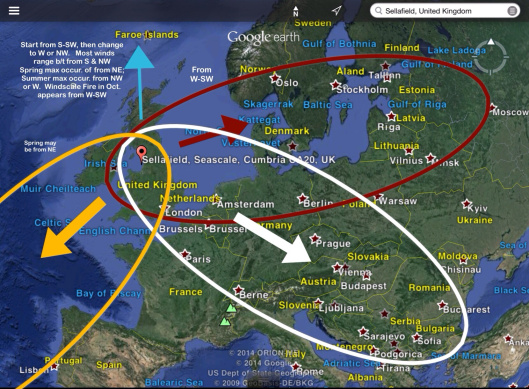
Federica Bedendo, BBC News, North East and Cumbria, 2 May 25, https://www.bbc.com/news/articles/cg724n91gp4o?fbclid=IwY2xjawKA7DdleHRuA2FlbQIxMQBicmlkETFISGV5ZEdSZW16a2ZnQzh3AR5Wx_HKBbiK0umY8fOSOzw2Hzv5_AeeAjFPGDgbc4VxAi7joZ7-0jA4qr0Bzg_aem_nd6f3waC2WX_bFb_0pWkhw
Work to build a storage facility to keep radioactive waste for up to 100 years is set to take a step forward.
Sellafield, in Cumbria, wants to build the second of four new units to store intermediate level waste, as the company works to decommission ageing buildings at its Seascale plant.
The site manages more radioactive waste in one place than any other nuclear facility in the world, according to planning documents.
The project was approved in 2023 and an application has now been submitted to the Environment Agency (EA) seeking permission to abstract water from the site.
The water would have to be extracted as the ground is dug up to build the new facility, a Sellafield spokesman said.
It was needed as part of the building phase, they said, adding there were no risks of contamination from radioactive waste.
Documents show the building storing the nuclear waste would be about the size of a football pitch and as tall as about six double-decker buses.
The walls of the store which has already been built are about 5ft (1.5m) thick, with a 6.5ft (2m) thick floor.
Sellafield said it planned to start building work this year, with the second store becoming operational in 2032.
The waste would be kept there for up to 100 years, papers show, and then moved to a Geological Disposal Facility (GDF) – an underground storage facility which could be built in Cumbria.
A consultation on the plans to abstract water from the Sellafield site by the EA closes on 2 May.
The Great British nuclear expansion is a project bound to fail.
With the government committed to a huge expansion of nuclear power to meet
our energy needs, Andrew Blowers and Stephen Thomas contend that this is an
uneconomic, unachievable and undesirable solution that is doomed to fail.
In 2022, the then Conservative government set a target of having 24GW
(gigawatts) of new nuclear capacity up and running by 2050, despite the
dismal history of cost and time over-runs experienced in developing the
existing plans. If achieved, this would be the equivalent of having eight
more Hinkley Point Cs.
The succeeding Labour government reaffirmed its
commitment to nuclear power in its manifesto, proclaiming that a scale
expansion ‘will play an important role in helping the UK achieve energy
security and clean power’ Neither government was prepared to recognise that
the Great British nuclear expansion is a project bound to fail.
TCPA (accessed) 28th April 2025,
https://www.tcpa.org.uk/sample-journal-content/
Scrapping Britain’s nuclear power plans would lead to lower energy bills
Letters, John French, and Dr David Lowry 29 Apr 25, https://www.theguardian.com/money/2025/apr/28/scrapping-britains-nuclear-power-plans-would-lead-to-lower-energy-bills
You report that experts have warned that adding levies to electricity bills to support low-carbon projects will make it more difficult for people to reduce their reliance on fossil fuels (Why the UK’s electricity costs are so high – and what can be done about it, 20 April).
One way to reduce those levies dramatically would be to scrap all planned nuclear power stations. These include the crazily expensive Sizewell C, which has already received nearly 2.5bn in subsidies before it has even started construction and which will cost the bill payer dear, even without the inevitable huge cost overruns that the French-state-owned EDF always incurs (think Flamanville and Hinkley C); and the four, possibly six, new reactors to be built on a flood plain on the River Severn at Oldbury in Gloucestershire.
Scrapping Britain’s nuclear power plans would lead to lower energy bills
New nuclear power stations will cost billions to build and run, and cost taxpayers and energy customers dear, says John French. Plus a letter from Dr David LowryTue 29 Apr 2025 01.52 AESTShare
You report that experts have warned that adding levies to electricity bills to support low-carbon projects will make it more difficult for people to reduce their reliance on fossil fuels (Why the UK’s electricity costs are so high – and what can be done about it, 20 April).
One way to reduce those levies dramatically would be to scrap all planned nuclear power stations. These include the crazily expensive Sizewell C, which has already received nearly 2.5bn in subsidies before it has even started construction and which will cost the bill payer dear, even without the inevitable huge cost overruns that the French-state-owned EDF always incurs (think Flamanville and Hinkley C); and the four, possibly six, new reactors to be built on a flood plain on the River Severn at Oldbury in Gloucestershire.
These latter reactors are still at an early design stage, will have to go through years of safety approval before construction can start, and, being of an uncertain and novel design, will end up costing the bill payer a fortune in subsidies. And then there’s the unquantifiable cost of decommissioning and trying to deal with the highly radioactive waste.
The energy minister, Ed Miliband, has publicly expressed doubts in the past about the wisdom of subsidising nuclear power at the expense of renewables. Now is the time for him to scrap all plans for this unaffordable and dangerous way to boil water, and invest in renewables, including tidal power.
John French
Stand (Severnside Together Against Nuclear Development)
Your report says that “by generating more electricity from renewable energy and nuclear reactors, electricity costs would begin to fall”. All reliable recent studies demonstrate this is so for renewables, but not so for nuclear, if the full costs of uranium mining, milling, enrichment, fuel fabrication, radioactive waste management and nuclear facility decommissioning are taken into account.
To illustrate this, a very recent report from the US Department of Energy projects to final clean-up costs of Hanford, the US equivalent of Sellafield, but bigger, is an extraordinary $589bn. These huge sums need to be factored into nuclear power’s costs to give the real price of power from splitting the atom.
Dr David Lowry
Co-author, The International Politics of Nuclear Waste
NUCLEAR STATION = WAR TARGET
26 April 2025 marked the 39th anniversary of the catastrophic nuclear
explosion in Chernobyl, Ukraine – which, at the time, was part of the
Soviet Union. It’s worth reminding people of the effects of that horrific
event.
Tens of thousands of children and adolescents developed thyroid
cancer in Ukraine, Belarus and Russia. Genetic problems have been observed
in the wildlife of the area. The area around the nuclear plant is still
uninhabited. Moreover, the rain that fell in Wales following the explosion
caused radioactive pollution, even though we were 1,600 miles away.
As a result, there has been a serious impact on the agricultural industry, with
upland lamb being banned from entering the food chain until tests show that
the level of Caesium-137 radiation has been adequately reduced. Bans were
issued on 9,800 farms, most of them in Wales and Cumbria. The final bans
were not lifted until 2012 – 26 years after the explosion.
Why mention this now?
Because Chernobyl is in a country that is in the middle of war; a
country that contains other nuclear reactors such as Zaporizhzhia, the
largest nuclear complex in Europe.
Because a shell built over the reactor
at Chernobyl in order to prevent radiation from escaping was hit by a
Russian drone on the 14th of February this year.
Because it is the first war that is being fought on the land of a country where there are active
nuclear reactors.
And because this nightmare could happen to us.
NUCLEAR STATION = WAR TARGET. With all the talk of preparing for war by political
parties in Westminster, the British State’s obsession with nuclear energy
and nuclear weapons is extremely dangerous. Consider that Starmer wants to
see nuclear plants all over the State! All would be a target in war. And
all need to be protected by special police.
All of this is another reason for opposing nuclear, though there are enough already – the radioactive waste without a long-term solution; the fact that waste would be on site
for over a century; the dangers of fire; the fact that it will not be
possible to build enough nuclear to have an impact on climate change; the
diversion of funds and resources from renewable energy; the environmental
mess associated with uranium mining; the threat to the Welsh language by
thousands of workers for a large station; the likelihood that relatively
few workers would be needed for a Modular Reactor (SMR); the extreme cost.
PAWB 25th April 2025
Terrifying report warns UK’s nuclear facilities face rising military threat

RUSI also points to the likelihood of increased targeting as more countries adopt nuclear power.
The use of military force near or against nuclear facilities represents an under-addressed threat to international peace and civilian safety, the report warns.
By Ciaran McGrath, Senior News Reporter,
https://www.express.co.uk/news/uk/2046553/terrifying-report-warns-uks-nuclear
Britain’s nuclear infrastructure is increasingly vulnerable to military attack as global tensions rise, a worrying new report has warned. The Royal United Services Institute (RUSI) study, published on Friday, highlights the growing risk of nuclear power plants being targeted deliberately or incidentally during armed conflict.
While the threat is not new, Russia’s occupation of Ukraine’s Zaporizhzhia Nuclear Power Plant (ZNPP) has shown how such facilities can become strategic objectives in modern warfare, with devastating consequences for civilian populations. Written by RUSI research fellow Darya Dolzikova, the report examines the “strategic and operational logic” behind targeting nuclear installations and urges military and political leaders to prepare for scenarios in which nuclear infrastructure comes under direct threat. It further warns that the use of military force near or against nuclear facilities represents an under-addressed threat to international peace and civilian safety.
Key motivations for attacks include disrupting an enemy’s energy supply, generating public fear, denying access to contested territory through radioactive contamination and halting nuclear weapons programmes.
In each case, the consequences for civilian safety, the environment and regional stability are severe.
RUSI also points to the likelihood of increased targeting as more countries adopt nuclear power.
Ms Dolzikova explains: “The expected growth of nuclear power in the global energy mix may increase the likelihood that future armed conflict will see greater targeting of nuclear energy infrastructure.”
The report outlines several recent examples of nuclear facilities being exposed to military activity, with Zaporizhzhia cited as the most significant.
It warns that even where nuclear plants are not the primary objective, they may lie on key axes of advance and become flashpoints by default.
In response, the think tank calls for urgent measures to improve such sites’ physical protection and operational resilience.
Recommendations include reinforcing legal prohibitions on attacks, integrating counter-CBRN (chemical, biological, radiological and nuclear) and air defence capabilities, and decentralising energy systems through smaller, modular reactors.
Crucially, the report highlights the psychological impact of nuclear threats.
t points out: “Such threats may be used as a ‘half-step’ between conventional and nuclear weapons – despite key differences in their normative and operational significance.”
The UK operates several nuclear power stations, including Sizewell B and Hinkley Point B, with new projects under development.
While no specific intelligence suggests they are under imminent threat, the report stresses the need for military planners to take the risks seriously and integrate safeguards into all aspects of defence strategy.
RUSI also urges governments to engage the public, building trust and preparing communities for possible emergencies without causing panic.
The report concludes: “Efforts must prioritise the establishment of trust between the population and authorities, and offer clear information and instructions.”
UK in talks to buy back nuclear sites from French firm EDF
Politico 25th April 2025
“Discussions are continuing” between the two governments on the U.K. acquiring three sites, an official told POLITICO.
LONDON — The U.K. government is in talks with its French counterparts about purchasing back three nuclear sites from state-owned energy giant EDF, as Whitehall looks to take control of the upcoming expansion of nuclear power.
U.K. ministers are discussing buying up Bradwell B, Heysham and Hartlepool, a French government official confirmed to POLITICO.
“There have been discussions. For the moment, no decision has been taken and discussions are continuing,” the official said.
Two senior industry figures based in the U.K., familiar with government planning and granted anonymity to discuss sensitive plans, also said negotiations over the purchase of the three sites were ongoing.
Energy Secretary Ed Miliband and French Minister for Industry and Energy Marc Ferracci discussed the negotiations on the margins of the International Energy Agency Summit in London earlier this week, the official added.
The account was disputed by the British government, with a post-publication statement from the Department for Energy Security and Net Zero saying: “We categorically do not recognise these claims.”
The next key moment could come in July as part of a proposed French-U.K. summit.
Any move to bring the sites into state ownership would come as the U.K. mulls the most ambitious revival of nuclear power in a generation.
At a conference last December, Miliband insisted nuclear was essential for an an “all of the above approach” to energy security and low-carbon power, and told investors “my door is open” for future nuclear projects, as the U.K. bids to hit its legally-binding target of net zero carbon emissions by 2050.
………………..The ‘obvious’ sites
All three sites are owned by French firm EDF, a company in which the French state is the sole shareholder, handed over in a deal struck in 2023.
An EDF spokesperson declined to comment on any discussions but said: “EDF would welcome developments that enable ongoing employment opportunities at our sites, once existing stations close.
…………….. The U.K. has not built a new nuclear power plant since Sizewell B was opened in 1995. The much-delayed Hinkley Point C is at risk of not being completed until 2031, and the government is still weighing up a final investment decision for sister plant Sizewell C.
Meanwhile Great British Nuclear (GBN), the arms-length body set up under the last Conservative government, is overseeing the final stages of the late-running competition to build mini-nukes in the U.K., known as small modular reactors (SMRs).
GBN owns two sites — Oldbury and Wylfa — which were brought into state ownership by former Chancellor Jeremy Hunt last year.
A decision on awarding SMR contracts is now expected this summer. If the government goes ahead with its plans to boost nuclear capacity and award SMR contracts to multiple bidding companies, it will need more than two sites to host the work.
“If the government are going to expand gigawatts [capacity] as well as SMRs, they’ll need more sites, and those [three sites] are the obvious ones left over from EN-6 [the U.K.’s shortlist for projects],” a third industry figure said.
Heysham and Hartlepool both include operating nuclear power plants, which are set for decommissioning in stages across 2027 and 2030 respectively.
By contrast, Bradwell B, once earmarked for new nuclear, is a now vacant plot of land. The site is still owned by EDF but is currently being leased by China General Nuclear (CGN) Power, which stopped advancing their mooted project in 2022.
This means any takeover of the site could include a payout to the Chinese state-backed company, in line with £100 million-plus buyout of CGN’s stake in Sizewell C in 2022.
The developments could also pave the way for Wylfa to be reserved for a third gigawatt scale power plant, alongside Hinkley Point C and Sizewell C.
https://www.politico.eu/article/uk-nuclear-sites-edf-energy-bradwell-b-heysham-hartlepool/
US nuclear giant Westinghouse pulls out of race to build Britain’s first mini-nukes

There are growing fears that the economics of SMRs could prove even harder to justify – because they have many of the same problems as large reactors – meaning security and waste disposal – but produce far less electricity and so make less money.
There are growing fears that the economics of SMRs could prove even harder to justify – because they have many of the same problems as large reactors – meaning security and waste disposal – but produce far less electricity and so make less money.
Westinghouse has not submitted its final bid for the UK’s SMR design competition
Matt Oliver, Industry Editor, https://www.telegraph.co.uk/business/2025/04/26/us-company-pulls-out-race-build-britains-first-mini-nuke/
US nuclear giant Westinghouse has pulled out of the UK’s small modular reactor (SMR) design competition.
The four companies remaining in the contest were given a deadline of mid-April to make their final bids, but The Telegraph understands that Westinghouse did not submit one following a negotiation process.
It means only three finalists – Rolls-Royce, GE-Hitachi and Holtec – remain in the running.
Great British Nuclear (GBN), the quango responsible for the SMR programme, was expected to announce two winners this summer with bidders told to prepare to build three to four mini reactors each.
Westinghouse did not deny it had withdrawn on Friday but declined to give its reasons.
One industry source suggested the company had baulked at the commercial offer made by the Government.
GBN previously advertised contracts worth £20bn in total for SMR “technology partners”, a figure that is understood to be based on the assumption two winners would be chosen.
However, The Telegraph revealed in February that the Government was considering awarding a contract to only one company as Rachel Reeves, the Chancellor, looks to make savings in her cross-departmental spending review.
The Chancellor is struggling to balance the books as weak economic growth makes it harder to meet her self-imposed “fiscal rules” for borrowing.
SMR supporters claim they could be a breakthrough in nuclear power because they would be made predominantly in factories and then assembled on site, cutting building times from around a decade to a few years. In theory this could cut costs – as would-be builders of SMRS have repeatedly promised..
Many politicians have snapped up that bait. When he opened the latest stage of the SMR competition, Mr Miliband said: “Small modular reactors will support our mission to become a clean energy superpower.”
However, the nuclear industry has a mixed record on bringing in key projects on time and on budget.
The biggest current example is the UK’s Hinkley Point C power station in Somerset which EDF originally said would cost under £20bn and be operating by now. Current costs estimates are for a final price approaching £50bn and a start-up after 2030.
There are growing fears that the economics of SMRs could prove even harder to justify – because they have many of the same problems as large reactors – meaning security and waste disposal – but produce far less electricity and so make less money.
A spokesman from the UK Energy Department said: “Great British Nuclear is driving forward its SMR competition for UK deployment. It has now received final tenders, which it will evaluate ahead of taking final decisions this spring.”
On Friday, a GBN spokesman declined to comment on Westinghouse’s position as did Westinghouse itself.
Campaigners tell Government to drop Bradwell nuclear site
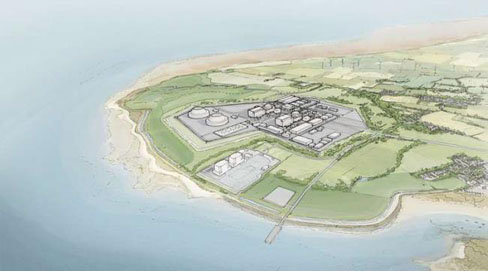
27th April, By Sophie England, AI Champion for the South East, https://www.maldonandburnhamstandard.co.uk/news/25110689.campaigners-tell-government-drop-bradwell-nuclear-site/
A campaign group has told the Government to “drop the Bradwell site” for the development of nuclear energy.
The Blackwater Against New Nuclear Group (BANNG) has urged the Government to end all interest in the Bradwell site for future nuclear power station development.
In their response to the Government’s National Policy Statement for Nuclear Energy, BANNG stated: “In the specific case of Bradwell, the site should be removed from further consideration on the grounds that it is unsuitable and unacceptable.”
The Bradwell site was considered “potentially suitable” for nuclear power by Chinese company CGN from 2015.
However, a pre-application for development in 2020 was met with strong opposition from the Blackwater communities and councils.
This led to CGN pausing its investigations and leaving the site.
It has now been confirmed by the Government and industry that they no longer expect planning applications to be submitted.
BANNG claims this confirms the end of the CGN Bradwell project.
Despite this, the site is still considered to have potential for energy transmission and nuclear infrastructure.
However, BANNG argues that the site does not have widespread public support, with “overwhelming opposition from local councils, stakeholders, community groups led by BANNG over many years”.
BANNG also points out the site’s vulnerability due to its exposed and low-lying coastal location.
They argue that this makes it susceptible to “accidental or malevolent interference and to the increasing impacts of climate change, sea level rise, inundation and storm surges capable of ultimately overwhelming the power station and its long-term highly active waste stores.”
BANNG also criticises the idea of using the site for Small Modular Reactors (SMRs), stating that these are “not small and do not yet exist”.
In their consultation response, BANNG urges the Government “to provide a more balanced, less hysterical, account of the virtues and failings of nuclear energy”.
Remembering Chernobyl: Why not developing Wylfa B is a no-brainer.
26 Apr 2025, Robat Idris, https://nation.cymru/opinion/remembering-chernobyl-why-not-developing-wylfa-b-is-a-no-brainer/
26th April 2025 marks the 39th anniversary of the catastrophic nuclear explosion in Chernobyl, Ukraine – which, at the time, was part of the Soviet Union.
It’s worth reminding people of the effects of that horrific event. Tens of thousands of children and adolescents developed thyroid cancer in Ukraine, Belarus and Russia, and children from affected areas have been welcomed here for respite holidays.
Genetic problems have been observed in the wildlife of the area. The area around the nuclear plant is still uninhabited.
Moreover, the rain that fell in Wales following the explosion caused radioactive pollution, even though we were 1,600 miles away. As a result, there was a serious impact on the agricultural industry, with upland lamb being banned from entering the food chain until tests showed that the level of Caesium-137 radiation had been adequately reduced.
Restrictions were placed on 9,800 farms, most of them in Wales and Cumbria. The final restrictions were not lifted until 2012 – 26 years after the explosion.
Why mention this now?
Because Chernobyl is in a country that is in the middle of war; a country that contains other nuclear reactors such as Zaporizhzhia, the largest nuclear complex in Europe. Because a shell built over the reactor at Chernobyl in order to prevent radiation from escaping was hit by a drone on the 14th of February this year. Because it is the first war that is being fought in a country where there are active nuclear reactors.
And because this nightmare could happen to us.
War target
With all the talk of preparing for war by political parties in Westminster, the British State’s obsession with nuclear energy and nuclear weapons is extremely dangerous. Consider that Starmer wants to see nuclear plants all over the State! All would be a target in war. And all need to be protected by special police.
All of this is another reason for opposing nuclear, though there are enough already – the radioactive waste without a long-term solution; the fact that waste would be on site for over a century; the dangers of fire; the fact that it will not be possible to build enough nuclear to have an impact on climate change; the diversion of funds and resources from renewable energy; the environmental mess associated with uranium mining; the threat to the Welsh language by thousands of workers for a large station; the likelihood that relatively few workers would be needed for operating a Modular Reactor (SMR); the extreme cost.
No-brainer
Yet as reported in Nation Cymru, Llinos Medi, the Member of Parliament for Ynys Môn at Westminster, has claimed in the House of Commons on 8 April 2025 that the development of a site at Wylfa is a ‘no-brainer’.
We respectfully ask her to reconsider this statement, and see why NOT building Wylfa B is a ‘no-brainer’. Here are, in short, 10 additional reasons.
The people of Anglesey need work – Llinos and PAWB at least agree on this! Nevertheless, since Tony Blair’s Energy Review in 2006, the main political emphasis of all levels of government has been on supporting Wylfa B. Where is the evidence that nuclear work is what the people want? The portraying of nuclear power over so many years as essential is economic recklessness.
In a world where there is uncertainty about the relationship with the United States, shouldn’t we be as wary of American investment in infrastructure as we are with investments from China?
As there are no licensed Modular Reactors (SMR’s), wouldn’t it be foolish for Ynys Môn to be a laboratory for this untested technology? And where are the reliable figures for how many permanent jobs would be needed?
The link between civil and military nuclear is undeniable, and is recognized by none other than Rolls-Royce, which is in the race to build SMR’s. As a representative of Plaid Cymru, a party that opposes nuclear weapons, this should be an essential consideration. Llinos, to her credit, is in the Welsh tradition of raising a voice against war, as she has done for Gaza.
A nuclear power station at Wylfa would create more dependence on the Westminster government, as huge public funding would be required, not only for construction, but for eventual decommissioning for tens of years.
On the other hand, sustainable energy could not only create jobs, but also generate income. The marine energy project, Morlais, shows what is possible.
Energy ownership
Energy ownership is crucial – the profit from nuclear would be exported. Similarly, sustainable energy must be in our hands, or we will export the profits that we generate. Green energy in the right place, not on hundreds of agricultural acres for the benefit of multinational companies.
It must be asked in whose interests the Starmer Government is working. Large American companies such as BlackRock are favored to invest in infrastructure. It intends to undermine the right of local communities to oppose major plans. What democracy is this?
Why do companies like Microsoft, Amazon and Google have investments in nuclear energy? The reason is data centers, which use electricity on an enormous scale, and moreover require a large amount of water to keep them from overheating. 21% of Ireland’s electricity goes to data centres (2023). Water demand is at its peak when the weather is hot and dry – which is exactly when water is scarce in reservoirs. A warning to Ynys Môn!
The growth agenda – represented in Ynys Môn by Wylfa B – runs counter to the needs of the planet, and the needs of Ynys Môn and Wales. Sooner or later, politicians will have to recognize how dire the situation is before it’s too late.
Prosperous future
The challenge for Llinos Medi is to find a way to make a reality of what we ALL would fully support – a prosperous future for Ynys Môn and its people – but without a nuclear power station. After almost two decades of supporting Wylfa B, our economic situation is desperate. The legacy she wishes the children of the island to inherit are good and sustainable jobs, with the ability to afford to live here instead of having to leave. That’s our hope too.
PAWB (People Against Wylfa B), as ever, is ready to offer constructive ideas, as it did with the ‘Maniffesto Môn’ written by the late Dr Carl Clowes back in 2012. How about it, Llinos?
UK to scrap plans for Ukraine troop deployment – The Times
RT.com 25 Apr 25
London and Paris had previously lead an effort to send a European contingent if a ceasefire is reached.
The UK has ditched plans to deploy a military contingent to Ukraine in the event of a ceasefire, The Times has reported, citing anonymous sources.
The defense chiefs from a number of European NATO states had in recent weeks been discussing sending military personnel to Ukraine, under a so-called “coalition of the willing.” Russia has strongly objected to the prospect of Western troops appearing in the neighboring country under any pretext.
In an article on Thursday, The Times quoted an unnamed source as saying that the “risks are too high and the forces inadequate for” a deployment that had been previously under consideration. According to the publication, “it was France who wanted a more muscular approach.”
Instead of coalition forces guarding key Ukrainian cities, ports, and nuclear power plants, the grouping now envisages more emphasis on Western military instructors training Ukrainian troops in the west of the country, who would “‘reassure’ by being there but aren’t a deterrence or protection force,” The Times reported, citing an anonymous source.
The softened vision for a Western military presence in Ukraine does, however, reportedly include the coalition’s aircraft patrolling Ukraine’s airspace and Türkiye providing maritime cover…………………………………..https://www.rt.com/news/616330-uk-scraps-ukraine-troop-deployment/
Weatherwatch: sage advice 50-odd years ago on UK nuclear power still relevant
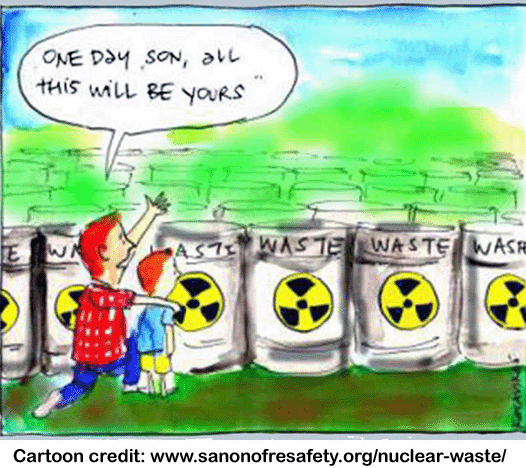
Ministers might care to heed conclusions of 1976 Flowers report before they go ahead with latest energy policy plans
Paul Brown, 25 Apr 25, https://www.theguardian.com/news/2025/apr/25/weatherwatch-sage-advice-50-odd-years-ago-on-uk-nuclear-power-still-relevant
Gathering dust somewhere in Whitehall is the 1976 royal commission’s sixth report on environmental pollution, known afterwards as the Flowers report after its chair, Sir Brian Flowers. It dealt with the future of the nuclear industry, warning about the dangers of producing large quantities of plutonium amid fears of potential threats from terrorists. The report particularly emphasised the pressing need to find a way of disposing of nuclear waste and recommended there should be no great expansion of nuclear power until a satisfactory way had been found of disposing of it.
The report was written before climate change and the current extremes of weather were of public concern, but the commission was exercised by the pressing need to increase the electricity supply. The report did not rule out the expansion of nuclear power but urged the government to look at wave power and other renewables as much more desirable alternatives.
Fast-forward almost half a century and the UK is still no nearer to dealing with its ever increasing pile of nuclear waste, costing billions every year just to keep safe. However, the Flowers commission would be delighted that wind, solar and other renewables have largely replaced nuclear power, and be puzzled that the government seems poised to ignore sage advice and expand nuclear energy again.
Tankers travel from Alton Water to Sizewell C every day

Tankers full of water are travelling 30 miles up the A12 and B1122 to keep Sizewell C’s offices topped up because the local water company cannot cope with demand.
Essex and Suffolk Water is the company that supplies the north
east of the county – and it has long been known that it has problems in
coping with increasing demand. The company is operating at near capacity –
and this problem has forced some development or expansion plans in the area
to be cancelled or postponed. It is not able to supply water to the offices
that have been built at Sizewell so a temporary deal has been signed with
Anglian Water to bring in supplies.
Ipswich Star 25th April 2025,
https://www.ipswichstar.co.uk/news/25110191.tankers-travel-alton-water-sizewell-c-every-day/
Scottish nuclear plant emptied of fuel as UK winds down ageing gas-cooled reactors.
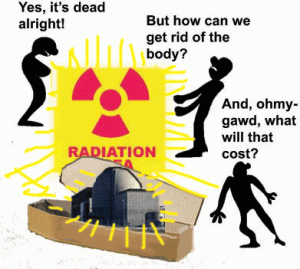
the cost of decommissioning should be taken into
account when the government decided on new nuclear plants as “no scheme can be guaranteed to meet a cost more than a century into the future”.
The first of the UK’s seven advanced gas-cooled reactor nuclear power
stations has been emptied of fuel, kick-starting a decommissioning process
that will cost at least £27bn in total and take almost a century.
EDF said on Thursday it had defuelled Hunterston B, on the west coast of Scotland,
paving the way for the transfer of the site and 250 staff from the French
power company to the UK Nuclear Decommissioning Authority next April. The
site provided most of Scotland’s energy for more than 40 years from its
launch in 1976 until its final closure in 2022.
EDF owns seven advanced gas-cooled reactors (AGRs) plants in the UK, which were built between the 1960s and 1980s and differ from newer nuclear plants that use water for
cooling. Just four are still operating.
The uranium fuel has been packaged
into 350 large flasks, which will be stored by the NDA at the Sellafield
nuclear site in Cumbria for at least 50 years until a longer-term
underground facility has been built.
Although the process took just three
years and £400mn, it will take almost a century to eradicate the radiation
from the land and buildings, EDF has said. The decommissioning of the seven
AGRs is separate to a much wider £105bn decommissioning programme, which
will cover an additional 17 closed nuclear sites over the next 120 years,
according to the NDA.
The closures will leave the UK with just one nuclear
power plant still running by 2030 — Sizewell B in Suffolk, which is also
managed by EDF and uses a pressurised water reactor. The NDA said it was
“acutely aware of the costs associated with delivering our mission”.
The cost of decommissioning nuclear power plants is under scrutiny as the
UK presses ahead with new nuclear projects, including the £40bn Sizewell
C, which is expected to get government go-ahead this spring, and the £46bn
Hinkley Point C, which is still under construction and will open by 2030 at
the earliest.
Steve Thomas, emeritus professor of energy policy at
Greenwich university, said the cost of decommissioning should be taken into
account when the government decided on new nuclear plants as “no scheme
can be guaranteed to meet a cost more than a century into the future”.
Although EDF has owned Hunterston B and the seven other AGR nuclear plants
since 2009, the cost of decommissioning is being paid for through the
ringfenced Nuclear Liabilities Fund (NLF), which was set up in 1996 after
privatisation and is valued at £20.6bn. Decommissioning costs have soared
over the past three decades, with the fund requiring cash injections from
the Treasury, including £5bn in July 2020 and a further £5.6bn in March
2022, according to the NLF.
FT 24th April 2025, https://www.ft.com/content/c31af2d6-eeaa-4a3d-a2c0-81c63b29cb1d
EDF’s two nuclear plants in Britain should be negotiated as one, French minister says.

Guy Taylor, Transport Reporter, 25 April 2025
EDF’s two nuclear construction schemes at Hinkley Point and Sizewell C should be treated as one financial venture in negotiations, according to France’s energy minister.
Marc Ferracci told the FT he had held discussions with the UK’s energy minister Ed Miliband at the sidelines of a conference in London on Thursday.
“France and EDF are very committed to deliver the projects but we have to find a way to accelerate them and we have to find a way to consolidate the financial schemes of both projects,” he said.
The French government has been pushing ministers in the UK to lend a hand with Hinkley Point’s floundering finances over the last year.
Costs on the nuclear project have risen to as high as £46bn and it argues EDF, the French state-owned energy firm, should not be forced to cover the overruns.
EDF’s equity stake in Sizewell C, a 3.2 gigawatt nuclear station on the Suffolk Coast, is smaller than Hinkley Point.
Ferracci denied that the French government was looking to use Sizewell as “leverage” against the financial troubles at Hinkley………………….. https://www.cityam.com/edfs-two-nuclear-plants-should-be-negotiated-as-one-french-minister-says/
1 This Month



26 September – International Day for the Total Elimination of Nuclear Weapons


PLEASE OPPOSE HR 8255 AND S.3639 – bills would accelerate satellite deployment, with no environmental review or safeguards – https://ncstd5li.quorum.us/campaign/169331/
To see nuclear-related stories in greater depth and intensity – go to https://nuclearinformation.wordpress.com
-
Archives
- September 2026 (245)
- August 2026 (330)
- July 2026 (355)
- June 2026 (287)
- May 2026 (306)
- April 2026 (356)
- March 2026 (251)
- February 2026 (267)
- January 2026 (308)
- December 2025 (358)
- November 2025 (359)
- October 2025 (375)
-
Categories
- 1
- 1 NUCLEAR ISSUES
- business and costs
- climate change
- culture and arts
- ENERGY
- environment
- health
- history
- indigenous issues
- Legal
- marketing of nuclear
- media
- opposition to nuclear
- PERSONAL STORIES
- politics
- politics international
- Religion and ethics
- safety
- secrets,lies and civil liberties
- spinbuster
- technology
- Uranium
- wastes
- weapons and war
- Women
- 2 WORLD
- ACTION
- AFRICA
- Atrocities
- AUSTRALIA
- Christina's notes
- Christina's themes
- culture and arts
- Events
- Fuk 2022
- Fuk 2023
- Fukushima 2017
- Fukushima 2018
- fukushima 2019
- Fukushima 2020
- Fukushima 2021
- general
- global warming
- Humour (God we need it)
- Nuclear
- RARE EARTHS
- Reference
- resources – print
- Resources -audiovicual
- Weekly Newsletter
- World
- World Nuclear
- YouTube
-
RSS
Entries RSS
Comments RSS
 nuclear-news