Btitain’s dilemma of its massive stockpile of plutonium at Sellafield
Sellafield is where all storage of radioactive materials and nuclear reprocessing in the UK takes place. It was once at the heart of plutonium manufacturing for the British atomic weapons program. Despite the controversy that surrounds the plant, there are plans to build new reactors at Sellafield. The government has approved initial plans to build a fast PRISM reactor on the site. Most locals are against it. They want the UK government to commission a safety study into Sellafield’s effects on the health of the local population.
A study in the 1980’s found that over ten times the national average of childhood Leukaemia’s occurred near Sellafield. Thirty families tried to take the company who then ran the site to court and lost. “There has never been a proper investigation into the environmental impact of the plant and there should be.”
Sellafield: The dangers of Britain’s nuclear dustbin RT, 10 July, 2012 Britain’s nuclear industry is again the center of controversy. The UK has the biggest stockpile of Plutonium in the world, but there are no definite plans for how to get rid of it – and the delays are costing the UK taxpayer billions.
A record number of radioactive particles have been found on beaches near the Sellafield nuclear plant, in North West England. The authorities who run it admit it’s the most radioactive place in Western Europe but insist it’s safe. Continue reading
“Community owned nuclear power stations” suggested to solve problem of public distrust
Perhaps the government simply accepts no-one will ever trust it on nuclear power.

 How not to solve nuclear power’s trust problem http://www.guardian.co.uk/environment/damian-carrington-blog/2012/jul/09/nuclear-power-energy-secrecy?newsfeed=true Continued secrecy, shown in stupidly brief minutes of official meetings, and entrenched attitudes lead to daft ideas like community-owned reactors The public does not trust the government to be objective on nuclear power, a committee of MPs conclude today .
This is hardly surprising, as the MPs note: “The government’s position as an advocate for nuclear power makes it difficult for the public to trust it as an impartial source of information . Continue reading
266 fires on UK’s nuclear submarines
“Any one of these fires could have had catastrophic consequences and the frequency 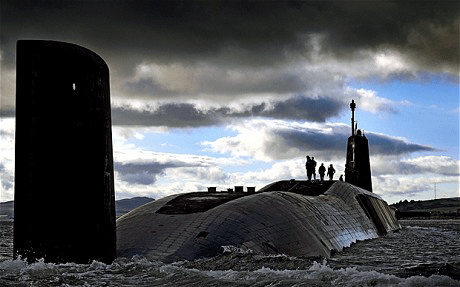 of these incidents raises the most serious safety concerns.”
Nuclear submarine fire figures revealed BBC News 9 July 12, There have been 266 fires on nuclear submarines in the past 25 years, the Ministry of Defence has revealed. The incidents included 74 on ballistic missile submarines. Three happened while the vessels were in naval bases; one of these was on a ballistic missile submarine. Continue reading
AREVA and others scramble to sell nuclear technology to Britain

Areva confirms joint bid with China’s CGNPC for UK’s Horizon AIX-EN-PROVENCE, France, July 7 | Sat Jul 7, 2012 (Reuters) – French nuclear group Areva will make a joint bid with China Guangdong Nuclear Power Corporation Holding (CGNPC) for the UK’s 6-gigawatt Horizon project, its chief executive Luc Oursel said on Saturday.
“We will participate in the British government’s plan to make this project a reality, and we will probably do it with Chinese power companies and other players,” Oursel said on the sidelines of a conference in Aix-en-Provence, southern France. “Probably by the end of the year, the sellers will make public their choice for the team that will take over the project,” Oursel told
reporters.
Reuters reported on June 18 that Westinghouse teamed up with SNPTC to make a bid, while Areva picked China Guangdong to put forward a bid…. http://www.reuters.com/article/2012/07/07/areva-horizon-idUSL6E8I72CS20120707
Opposition in UK Labour Party to Trident nuclear submarine programme
Labour AM Mark Drakeford opposes Trident fleet in Wales BBC News Wales, 4 July 12, First Minister Carwyn Jones has been rebuked by a Labour backbencher after suggesting the UK’s nuclear submarine fleet would be welcome in Wales.
Cardiff West AM Mark Drakeford said he was “utterly opposed” to the siting of nuclear missiles in Wales.
It comes after Mr Jones raised the prospect of the Trident weapons system leaving its Scottish base and coming to Milford Haven….
.. Mark Drakeford was proud to align himself with the thousands of people “within my own party and beyond” who called for an immediate decommissioning of the Trident nuclear programme…. http://www.bbc.co.uk/news/uk-wales-politics-18707465
“Fast nuclear reactors” not the solution to plutonium wastes
Ultimately, however, the core problem may be that such new reactors don’t eliminate the  nuclear waste that has piled up so much as transmute it. Even with a fleet of such fast reactors, nations would nonetheless require an ultimate home for radioactive waste, one reason that a 2010 M.I.T. report on spent nuclear fuel dismissed such fast reactors.
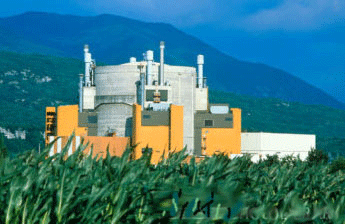 Can Fast Reactors Speedily Solve Plutonium Problems? The U.K. is grappling with how to get rid of weapons-grade plutonium and may employ a novel reactor design to consume it Scientific American By David Biello | March 21, 2012 The U.K. has nearly 100 metric tons of plutonium—dubbed “the element from hell” by some—that it doesn’t know what to do with. The island nation does not need the potent powder to construct more nuclear weapons, and spends billions of British pounds to ensure that others don’t steal it for that purpose. The unstable element, which will remain radioactive for millennia, is the residue of ill-fated efforts to recycle used nuclear fuel.
One solution under consideration is to recycle the plutonium yet further—by using it as fuel in a pair of new, so-called “fast” reactors. Such nuclear reactors can actually “consume” plutonium via fission (transforming it into other forms of nuclear waste that are not as useful for weapons). The U.K. is considering a plan to build two of General Electric’s PRISM fast reactors, the latest in a series of fast-reactor designs that for several decades have attempted with mixed success to handle plutonium and other radioactive waste from nuclear power. The idea remains that fast reactors, which get their name because the neutrons that initiate fission in the reactor are zipping about faster than those in a conventional reactor, could offer a speedy solution to cleaning some nasty nuclear waste, which fissions better with fast neutrons, while also providing electricity as a by-product.
The U.K. is hardly alone in struggling to cope with nuclear waste, whether plutonium or otherwise. Continue reading
Growing interest in UK for farming the wind and the sunlight
 UK: Concern about energy security ‘sparks rise in interest in developing renewable schemes’ EADT 24, UK , June 24, 2012 Growing concern about climate change and energy security has sparked the country-wide development of renewable energy facilities and commercial interest from landowners and developers, says surveyors’ organisation RICS. Continue reading
“Contracts For Difference” – the UK’s sneaky way to publicly subsidise nuclear power
‘Contracts for Difference’ are intended to provide support to low carbon technologies to aid their development and market viability. However, any subsidies that go towards nuclear energy from this source will lead to a corresponding reduction in the funds available for
developing new renewables technologies.
 “It would be pure sophistry to try and claim that because the funds go directly from the customer to energy companies without entering the Treasury bank account, it is not a public subsidy.
Committee must be recalled over nuclear subsidies, 20/06/2012 Following evidence from Secretary of State for Energy and Climate Change Ed Davey MP, SNP members of the Scottish Parliament Economy, Energy and Tourism Committee have written to the rest of the committee calling for it to be recalled.
New nuclear power stations planned by the UK Government could cost Scottish consumers billions of pounds. Concern has been expressed by industry figures such as in evidence to the House of Commons Energy & Climate Change Committee from Ian Marchant of SSE. Renewables industry representatives have expressed concern that the Department for Energy and Climate Change intends to use ‘contracts for difference’ to subsidise a new generation of nuclear energy. Continue reading
UK Labor not all welcoming nuclear submarines for Wales
Labour split on nuclear policy for Wales? Wales Online, By David Williamson Jun 21, 12 Labour MPs Martin Caton (Gower) and Paul Flynn (Newport West) have signed a Plaid Cymru-sponsored Early Day Motion attacking First Minister Carwyn Jones’ statement that nuclear submarines would be “more than welcome” in Wales….
http://blogs.walesonline.co.uk/devolution/2012/06/labour-split-on-nuclear-policy.html
UK nuclear test veterans take their legal battle to European Court of Human Rights.
Right to the top: Britain’s nuclear test veterans take battle for justice to Europe
http://www.mirror.co.uk/news/uk-news/british-nuclear-test-victims-to-take-887711
Victims of Britain’s nuclear tests are to take their fight for justice to the European Court of Human Rights.
More than 1,000 veterans of the atomic bomb tests carried out in the South Pacific in the 1950s are to ask judges in Strasbourg to rule on their demand for a trial accusing the Ministry of Defence of exposing them to radiation.
The veterans and their families claim they have since suffered from a catalogue of rare medical conditions, as well as miscarriages and birth defects, but courts here have banned hearings into most of their cases.
But now, as Prime Minister David Cameron comes under repeated fire for ignoring the terms of the Military Covenant which pledges to look after our servicemen, the vets are asking Europe to intervene. Continue reading
Scotland rejects Trident nuclear submarine plans
Scotland says no to nuclear weapons http://www.snp.org/media centre/news/2012/jun/scotland-says-no-nuclear-weapons 17/06/2012 The SNP has criticised the UK Government for its plans to spend £1 billion on a contract renewing the UK’s nuclear-armed submarines for Faslane, despite Scottish public opinion consistently being against Trident. Continue reading
Trident nuclear submarine program a political minefield for UK’s coalition govt
Coalition faces split over Trident nuclear replacement As defence secretary confirms £1bn contract for plant, Lib Dems confirm campaign for alternative to Tory plans for 2016 Nicholas Watt, chief political correspondent guardian.co.uk, 17 June 2012 A replacement for Britain’s Trident nuclear deterrent will become highly contentious at the next general election after the Liberal Democrats confirmed that they will campaign for an alternative and the SNP rejected the presence of “weapons of mass destruction in our waters”. Continue reading
East Sussex County Council says No to UK’s nuclear waste dump plan for Romney Marsh
Romney Marsh nuclear plan opposed by East Sussex County Council BBC News 13 June 12, Proposals for a nuclear research and disposal facility at Romney Marsh in Kent have been opposed by East Sussex County Council. Continue reading
Childhood leukaemia risk from very low exposure to ionising radiation

 Natural gamma rays linked to childhood leukaemia, University of Oxford, 12 June 12, A small but statistically significant link between risk of childhood leukaemia and the gamma rays we are all exposed to from our natural environment has been detected in a very large study led by Oxford University researchers.
Exposure to gamma rays from natural sources in the environment isn’t something that can readily be altered, but the study adds to our understanding of the small cancer risks associated with other low doses of radiation, such as from medical X-rays and CT scans. The findings demonstrate that there are small effects of radiation at very low doses.
Guidelines on exposure to low doses of radiation have largely been based on estimated risks from models using data from Japanese survivors of the atomic bombs, where radiation exposures were brief and very much higher. As a result, there have been some long-standing uncertainties about the extrapolation of these risks to low radiation doses.
The researchers conclude that the size of the increased risk of childhood leukaemia with natural gamma-ray exposure is consistent with these models and supports their continued use in radiation protection. The results of the study contradict the idea that there are no adverse radiation effects, or might even be beneficial effects, at these very low doses and dose rates. Continue reading
UK public kept in the dark on negotiations for nuclear power subsidy
SSE attacks secrecy of nuclear subsidy talks, Government negotiations with French energy giant EDF over subsidies for new nuclear power are being conducted in “a smoke-filled room”, the chief executive of rival company SSE claimed yesterday. Telegraph UK, By Emily Gosden 12 Jun 20122 Ian Marchant attacked the lack of transparency in the talks as he warned MPs on the energy select committee that ministers’ plans to reform the energy sector were so complex and risky as to leave consumers “paying a higher price”.
Under the proposals, companies building nuclear and renewable power generation would be guaranteed a return on their investment through contracts setting the price they will be paid for electricity…… in evidence to the committee, Mr Marchant said the Energy Secretary would
be agreeing long-term contracts “without any level of public scrutiny of what is being paid for, how much is being paid or why it is being paid at a particular level”.
“Consumers will be liable to pay for contracts, potentially for up to 40 years, which they have no visibility of, and no input into,” he warned….. http://www.telegraph.co.uk/finance/newsbysector/energy/9327801/SSE-attacks-secrecy-of-nuclear-subsidy-talks.html
1 This Month


Read the Public Inquiry Report, the Commissioners’ report, Surrendering Australia: The AUKUS Deception is available to download for free at aukuspublicinquiry.com. Or just watch the replay of the National Press Club Luncheon.



19 November – Webinar – The Reality of Reprocessing
Time: 11:00 AM Pacific Time (US & Canada) / 2:00 PM Eastern / 7:00 PM UK / 8:00 PM CET
Register for the Zoom Event Here



Shut down the radiation-damaged Heysham nuclear reactors now
To see nuclear-related stories in greater depth and intensity – go to https://nuclearinformation.wordpress.com

Say No to NASA’s Reckless Nuclear Reactor on the Moon
Say No to NASA’s Reckless Nuclear Reactor on the Moon
-
Archives
- November 2026 (119)
- October 2026 (302)
- September 2026 (339)
- August 2026 (330)
- July 2026 (355)
- June 2026 (287)
- May 2026 (306)
- April 2026 (356)
- March 2026 (251)
- February 2026 (267)
- January 2026 (308)
- December 2025 (358)
-
Categories
- 1
- 1 NUCLEAR ISSUES
- business and costs
- climate change
- culture and arts
- ENERGY
- environment
- health
- history
- indigenous issues
- Legal
- marketing of nuclear
- media
- opposition to nuclear
- PERSONAL STORIES
- politics
- politics international
- Religion and ethics
- safety
- secrets,lies and civil liberties
- spinbuster
- technology
- Uranium
- wastes
- weapons and war
- Women
- 2 WORLD
- ACTION
- AFRICA
- Atrocities
- AUSTRALIA
- Christina's notes
- Christina's themes
- culture and arts
- Events
- Fuk 2022
- Fuk 2023
- Fukushima 2017
- Fukushima 2018
- fukushima 2019
- Fukushima 2020
- Fukushima 2021
- general
- global warming
- Humour (God we need it)
- Nuclear
- RARE EARTHS
- Reference
- resources – print
- Resources -audiovicual
- Weekly Newsletter
- World
- World Nuclear
- YouTube
-
RSS
Entries RSS
Comments RSS

