UK awards lucrative nuclear clean-up job to Babcock and Fluor
 Babcock wins UK nuclear clean-up deal, Guardian UK, British engineering contractors and US group Fluor given £7bn contract covering sites such as Hinkley, Sizewell and Dungeness Britain has awarded a 14-year, £7bn contract to manage the decommissioning of its nuclear sites to engineering contractors Babcock and US group Fluor. The deal covers some of Britain’s oldest nuclear power sites, including Hinkley, Sizewell and Dungeness, and is one of the largest contracts the country has put out to tender.,,,,,,,,
Aside from EnergySolutions and Bechtel, Babcock beat two other consortiums: Serco, Areva and CH2M Hill; and Amec, Atkins and Rolls-Royce in a two-year-long bidding process.
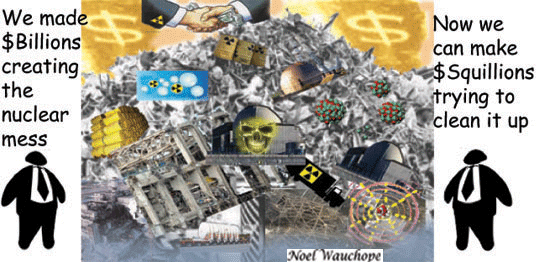
Cavendish Fluor, the joint venture between Babcock-owned subsidiary Cavendish Nuclear and Fluor, will be formally awarded the contract – pending legal approval – on 1 September , after a ten-day mandatory standstill and a five-month transition period.
“Cavendish Fluor Partnership bring a successful track record and extensive nuclear experience that will bring enormous benefits to the decommissioning and clean-up programme,” NDA chief executive John Clarke said………http://www.theguardian.com/business/2014/mar/31/babcock-uk-nuclear-clean-up-contract
Decommissioning – a bonanza for nuclear firms
Government set to award £7bn nuclear decommissioning contract http://www.ft.com/intl/cms/s/0/7a4ee910-b7fa-11e3-92f9-00144feabdc0.html By Gill Plimmer 31 March 14, A private sector consortium will be told on Monday it has won the £7bn job of decommissioning Britain’s oldest nuclear power plants.
The work is one of the largest and most sensitive public sector contracts to be awarded in the UK so far. The reactors, built in the 1960s originally to produce plutonium to make nuclear weapons, include those at Sizewell, Hinkley and Dungeness. They are now at the end of their lives and the government is preparing to decommission them this year. The overall contract is worth about £7bn over 14 years.
The Nuclear Decommissioning Authority, the government-funded body responsible for Britain’s state-owned nuclear sites, started the competition two years ago, and work is expected to start in September.
Currently the sites are being run by Magnox, a company owned by Salt Lake City-based EnergySolutions. It is bidding for the new work in partnership with Bechtel. The only Magnox station still in use is in Wylfa in Anglesey, though this is due to stop producing electricity in the next two years.
The contract covers Britain’s 10 reactors as well two old nuclear research sites in Oxfordshire and Dorset. The oldest nuclear power plant, Calder Hall in Cumbria, was the world’s first commercial scale nuclear reactor and was opened by the Queen in 1959 before it closed a decade ago.
The incumbent Magnox is competing against consortiums made up of Amec, Atkins and Rolls-Royce; CH2M Hill, Areva and Serco; and Babcock and Fluor. The clean-up contract that the companies hope to take over employs about 3,000 workers on the 12 ageing nuclear sites across the country.
Unions are concerned that awarding the company to an overseas consortium willerode Britain’s nuclear expertise.
“The reality is the way we are breaking up our nuclear industry will go down as another Great British missed opportunity,” Gary Smith, a GMB spokesman said. “Britain was a world leader in nuclear. Successive governments have hived off our nuclear industry piecemeal. There is absolutely no strategy around nuclear which reflects the fact that wider energy policy is a mess.”
Defence Committee foresees non nuclear defence system
 CND welcomes Defence Committee’s vision of a post-nuclear future http://www.cnduk.org/cnd-media/item/1886-cnd-welcomes-defence-committee%E2%80%99s-vision-of-a-post-nuclear-future 27 March 2014
The Campaign for Nuclear Disarmament (CND) has welcomed a report by the House of Commons Defence Committee which highlights the decreasing salience of nuclear weapons in UK defence policy.
The report, Deterrence in the twenty-first century, states:
‘It is possible to foresee an environment in which the core role of nuclear deterrence – to protect a state from attack – is achieved by the deployment of advanced conventional weapons… This will be a matter which our successor Committee may wish to examine further.’
The paper explores issues around the UK’s possession of nuclear weapons in a shifting security landscape: emphasising ‘the greater significance of asymmetric threats compared to the Cold War strategic context’.
CND’s General Secretary, Kate Hudson, said:
‘It’s good to see the Defence Committee taking a dispassionate and evidence-based approach to nuclear weapons policy: the Ministry of Defence should follow suit.’
‘While the report does not challenge government plans to replace Trident, it presents a stark analysis of a changing security landscape in which it sees nuclear weapons as increasingly irrelevant.’
‘Most tellingly, the report emphasises the difficulty in identifying or retaliating against “asymmetric threats”, as well as concerns amongst senior military figures over the impact of Trident spending on cuts to the Armed Forces.’
‘As we approach a parliamentary vote in 2016 on whether or not to spend £100bn on a new generation of nuclear weapons, greater public and parliamentary debate about this crucial issue is needed: and this report is a step in the right direction.’
Britain’s contradictory nuclear policies
the problem is that while the Home Office pursues various ways to minimise the dangers from and impact of failures in nuclear security, the Department for Energy and Climate Change is promoting the indigenous development of a new nuclear programme, with the attendant plutonium-based nuclear fuel cycle.
Britain’s Flawed Nuclear Policy http://www.morningstaronline.co.uk/a-9771-Britains-flawed-nuclear-policy#.UzNRm_2gHDZ Under-informed ministers don’t seem to understand the impact of their twin-track policies of nuclear promotion and nuclear controls, writes DAVID LOWRY
At the biennial Global Nuclear Summit in The Hague this week ministers did not see their own policies as promoting nuclear proliferation.
But proliferators they are, just as ministers in the predecessor Labour government were.
It is part of the problem that underinformed ministers do not always recognise the the impact of their policies. But they urgently need to.
Perhaps they suffer from acute cognitive dissonance when pursuing their twin-track policies of nuclear promotion and nuclear controls. This is a term used by social psychologists when “incongruent relations among cognitions (thought and understanding)… result in excessive mental stress and discomfort.
“Individuals who hold two or more contradictory beliefs frequently experience cognitive dissonance.”
That’s a rather dangerous condition for senior decision-makers dealing with a technology that carries the twin dread threats of major accidents and malevolent misuse by determined terrorists.
In January at Lancaster House in London the Home Office, supported by the Ministry of Defence, Foreign Office and Atomic Weapons Establishment, hosted a major international conference of the Global Initiative to Combat Nuclear Terrorism, which Britain co-chairs.
Home Office Minister James Brokenshaw noted that “the impact of a terrorist attack involving chemical, biological, radiological or nuclear materials would be potentially catastrophic. Our focus is to ensure that the UK remains a hard target for any terrorist.
“National security is the first priority of this government,” he stressed.
Is it really? Brokenshaw said that the likelihood of terrorists obtaining a “functioning radiological or nuclear device” to attack Britain is “low,” though he provided no evidence of this.
And he did warn that “the International Atomic Energy Agency’s incident-tracking database records incidents of radiological and nuclear materials being found outside of regulatory control – and between 1993 and 2012 the trafficking database recorded 419 incidents of unauthorised possession and criminal activity relating to radiological or nuclear material. “The availability of nuclear material could increase as more nations adopt nuclear energy.”
The Global Initiative to Combat Nuclear Terrorism aimed to “strengthen global capacity to prevent, detect and respond to nuclear terrorism by conducting multilateral activities that strengthen the plans, policies, procedures and interoperability of partner nations,” the minister said.
Eighty-five nations are signed up to the Global Initiative, alongside four official observers – the EU, IAEA, Interpol and UNODC.
Britain had now developed a nuclear forensics capability which would allow it to investigate criminal acts involving nuclear materials, Brokenshaw claimed.
And he pointed out that nuclear forensics is just part of an interconnected picture.
Expertise had to be embedded and integrated into existing enforcement systems “to provide a seamless end-to-end capability for managing nuclear security incidents.”
Keeping us safe from nuclear accidents would require co-ordinated efforts across government, from the Foreign Office “leading counter-proliferation work overseas” and the Department for Energy and Climate Change ensuring that “robust security architecture exists at our civil nuclear sites.”
He went on to describe the Home Office’s Cyclamen programme, which aims to detect the illicit import of radioactive material.
It sounds impressive – using a combination of fixed and mobile equipment to screen vehicles, containers, freight and pedestrians for the presence of nuclear materials and operating at points of entry to the country 24 hours a day.
But the problem is that while the Home Office pursues various ways to minimise the dangers from and impact of failures in nuclear security, the Department for Energy and Climate Change is promoting the indigenous development of a new nuclear programme, with the attendant plutonium-based nuclear fuel cycle.
At the same time the Department for Business, Innovation and Skills (BIS) is pursuing the export of nuclear explosive materials in new nuclear fuels.
In so doing they are following the strategy initiated by the Labour government, which in 2009 published a document which claimed to “lay out a credible road map to further disarmament” but also proposed increasing the civilian nuclear trade across the world.
A year ago BIS published a suite of documents supporting the expansion of civil nuclear power in Britain and the nuclear export trade abroad.
The 128-page Nuclear Energy Research and Development Roadmap: Future Pathways document “assesses the needs and opportunities for nuclear energy R&D in the context of new build of nuclear generation capacity to levels required.”
It sets out “R&D pathways” to getting nuclear contributions to electricity generation up to 75 gigawatts by the middle of the century – “equivalent to approximately seven times the current level of installed nuclear power capacity.”
The perfect pro-proliferation model for would-be proliferators. At the start of the year the Washington DC-based Nuclear Threat Initiative (NTI) published its latest annual report.
The NTI is a non-profit, non-partisan organisation dedicated to strengthening global security by reducing the risk of nuclear weapons being used and by preventing the spread of nuclear, biological and chemical weapons.
NTI published a table in its report that ought to set alarm bells ringing in Whitehall, whatever Brokenshaw’s claims.
It assessed the nuclear materials security provisions of the 25 countries identified as having the technologies and materials necessary to produce nuclear weapons of mass destruction.
It placed Britain bottom. That should worry ministers. But they are fixated on promoting the growth of nuclear – and thus the risk of proliferation.
That way insanity and disaster lies.
UK socialises nuclear risk, privatises nuclear profits
 UK’s nuclear obsession will add costs to bills http://www.snp.org/media-centre/news/2014/mar/uks-nuclear-obsession-will-add-costs-bills Westminster’s damaging obsession with nuclear power will add “considerable costs” to consumer energy bills for decades to come – according to a leading energy firm.
A report by Scottish and Southern Energy (SSE) has said that the UK Government’s deal for the construction of two reactors at the Hinkley Point nuclear power station will see increased energy bills for the next 35 years.
The report also states: “One leading analyst, Peter Atherton, described it as “the most expensive conventional power station in the world” and a ‘clear case of socialising risk and privatising profits’.”
The new SSE report echoes warnings in a December report led by Dr David Toke from the University of Aberdeen – which also pointed to the increased costs to consumer bills from new nuclear power.
Scotland’s Future makes clear that after a Yes vote, the Scottish Government proposes to permanently transfer the responsibility for the Energy Company Obligation and the Warm Homes Discount from consumer bills to the government – reducing energy bills by around £70 per year on an ongoing basis, but also ensuring that vital energy efficiency measures go ahead – unlike under UK Government policy.
The taxpayer subsidy that the new Hinkley Point nuclear power station could receive dwarfs the amount offered to renewables. Hinkley Point could receive an estimated £35bn subsidy – over four times the cost of support to all renewable development across the UK over the last ten years.
The SNP has previously called upon the UK Government to provide appropriate investment and support for the renewables industry – rather than continuing to direct support at nuclear energy.
Commenting, SNP MSP Mike Mackenzie said:
“SSE has confirmed that the UK Government’s investment in nuclear will add costs to energy bills for the next 35 years– people in Scotland will be lumbered with the bill for Westminster’s obsession with nuclear power.
“As SSE points out, energy experts have highlighted the risks and costs associated with nuclear energy – and last year the European Commission has also warned that nuclear power could push up energy prices for consumers.
“Scotland has the potential to be the renewables powerhouse of Europe – a Yes vote will allow Scotland to take action to prioritise our incredible renewable resources, and cut energy bills by around £70 a year on a permanent basis.”
SSE’s report can be found here: http://sse.com/media/204699/SSE-RESPONSE-TO-LABOUR-PARTY-GREEN-PAPER-MARCH-2014.pdf
The paper states: “the deal which the UK government has reached with EdF over the construction of two reactors at Hinkley Point, which will add considerable costs to consumer energy bills for 35 years. One leading analyst, Peter Atherton, described it as “the most expensive conventional power station in the world” and a ‘clear case of socialising risk and privatising profits’.”
The Scottish Government’s plans to reduce energy bills by 5% are set out on Page 516 of Scotland’s Future.
Previous SNP calls for the UK Government to support renewables rather than nuclear can be found here:http://www.snp.org/media-centre/news/2014/jan/uk-government-urged-support-offshore-renewables
On 18 December 2013, the European Commission stated that new nuclear costs will likely push up consumer bills, stating Hinkley C “could hardly be argued to contribute to affordability – at least at current prices, when it will instead and most likely contribute to an increase in retail prices.”
Report: “Is an Independent Scottish Electricity System now a good solution for renewable energy?” Led By David Toke (University of Aberdeen), 4 December 2013
“We previously argued that, relative to remaining with the Union, Scottish Independence could substantially increase the cost to Scottish consumers of achieving its renewable energy targets. However, having reviewed the impact of the [UK] Government’s recent decisions on nuclear power and incentives for renewables, we believe that this is no longer the case.
UK Chancellor’s deceitful war against renewable energy
 George Osborne is preparing to kill off Britain’s renewable energy revolution http://www.theguardian.com/business/economics-blog/2014/mar/20/george-osborne-budget-kill-renewable-energy-revolution-tax-break Ashley Seager 21 March 14,
UK’s new nuclear plant may endanger Ireland, Netherlands, Belgium, Spain and Norway.
 UN warning over planned British nuclear plant 240km from Irish coast http://www.independent.ie/irish-news/un-warning-over-planned-british-nuclear-plant-240km-from-irish-coast-30110525.html 21 Mar 14, THE United Nations has accused the UK Government of suspicious actions over plans to develop its first nuclear power station in a generation. Environmental inspectors have warned there are concerns about a lack of talks with neighbouring countries, including Ireland, over potential risks posed by the Hinkley Point C plant on the Bristol Channel.
The £16 billion nuclear facility could supply 5% of the UK’s energy needs and would be 150 miles from the Irish coast if built.
A special UN environmental committee has written to the Government warning that it failed to notify countries which could potentially be affected by fallout or pollution from Hinkley, regardless of how unlikely an accident is.
“The committee found that there was a profound suspicion of non-compliance,” the UN states.
Vesna Kolar Planinsic, chair of the implementation committee on the Convention on Environmental Impact Assessment in a Transboundary Context, said UK representatives will be called before a hearing in December to explain their actions.
The committee said concerns have been raised over Hinkley by the Netherlands, Belgium, Spain and Norway. Continue reading
Climate change bad for nuclear industry? Britain will get more floods
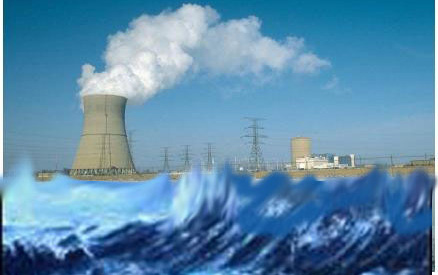 Britain had to close down its Dungeness nuclear power plant for 5 months, for fear of flooding.
Floods in Britain: a sign of things to come? http://www.enn.com/ecosystems/article/47190 21 Mar 14, A new investigation of long-term weather records suggests that the recent flooding in the south of England could signal the onset of climate change. The research, from UWE Bristol, Loughborough University and the University of East Anglia has produced a new index of flooding trends called the Fluvial Flood Indices. This enables widespread flooding and weather patterns to be viewed in the context of the last 150 years, revealing that four of the six most severe flood episodes since 1871 have occurred in the last 30 years. The new index was developed by Professor Rob Wilby from Loughborough University and Associate Professor Nevil Quinn from UWE Bristol, and was published in the Journal of Hydrology last year. With the collaboration of Dr. Colin Harpham from the University of East Anglia, the index has been updated to cover the most recent flooding.
The indices match weather patterns and river flow data collected over the last 60 years to reconstruct the likelihood of widespread flooding in Britain back as far as the 1870s. The index is broken down by British region and updated weekly from atmospheric pressure data.
Professor Quinn, who is a hydrologist and specialist in flood risk management, said, “One of the greatest difficulties in flood estimation is that recorded flood data are rare — very few stations were operating prior to 1950. The index is based on the association between the atmospheric pressure patterns at the time and the concurrent recorded flood events. Since we have a classification of atmospheric pressure patterns called Lamb Weather Types going back to 1871 we can contextualize floods in relation to a much longer period.”
The indices reveal that the sequences of weather leading to the recent floods in southern England occur on average once every 25 years. The worst flooding suggested by the series happened in 1872, with later flood-rich episodes in the 1950s, 1980s and 2000s. Professor Wilby said, “The extraordinary events in 1872 show the extent to which flood severity varies from one decade to the next. This flooding was so significant it was even captured in a painting by Monet. However, to experience four of the six most severe episodes in the last 30 years is disconcerting. Such a flood-rich period in the context of a 144-year record is very unusual and linked to the large number of cyclones passing over the country.”
It is envisaged researchers and agencies interested in tracking long-term changes in weather patterns linked to widespread flooding could use the indices.
Read more at ENN affiliate Click Green.
Shhh don’t let on – fear of flood shuts UK nuclear plant for 5 months
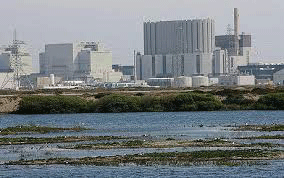 Dungeness nuclear power station quietly taken offline for five months over fears of Fukushima-style flood disaster, The Independent 19 Mar 14, The energy giant EDF has been accused of playing down the threat of flooding at Dungeness after it emerged that one of the nuclear power plant’s reactors was quietly shut down for five months last year after experts identified risk of a Fukushima-style disaster.
EDF closed the reactor on the Kent coast on 22 May to allow work on a new flood protection wall, after alerting the Office of Nuclear Regulation that without urgent work the site was at risk of being inundated by sea water.
The reactor – which should provide power for about 750,000 homes – did not reopen again until 15 October.
The closure of the 550-megawatt reactor – one of two at Dungeness – followed an internal EDF report which found that the shingle bank sea defences were “not as robust as previously thought”, raising fears that they could be overwhelmed in extreme weather, according to the ClickGreen website, which first reported the closure……..
There was no clear explanation of the remarkable length of the outage, which was not widely reported.
Stephen Thomas, professor of energy policy at the University of Greenwich, said: “EDF should have made more of an announcement. If a plant closes for five months it is not just fiddling about, it is something serious and EDF can’t pretend it’s not.
“I think there is a bad attitude in this country that we must not frighten the horses. But playing it down is the wrong way – we need to be told the truth,” Professor Thomas added. He calculates that the five-month closure could have cost EDF around £100m in lost electricity revenue, while the group would have saved very little in the way of expenses, still having to pay wages and maintain the reactor.
Friends of the Earth climate campaigner Guy Shrubsole added: “It’s astounding that the shutdown of EDF’s reactor wasn’t better publicised and calls into question the transparency of the nuclear industry.”……… http://www.independent.co.uk/news/uk/home-news/exclusive-dungeness-nuclear-power-station-quietly-taken-offline-for-five-months-over-fears-of-fukushimastyle-flood-disaster-9200494.html
EDF and others set to make big profits from Britain’s tax-payer subsidised nuclear power
 Returns on EDF’s UK nuclear deal much higher than usual: report BY KAROLIN SCHAPS LONDON Mon Mar 17 (Reuters) – Returns for French utility EDF (EDF.PA) and other investors in Britain’s first new nuclear plant in two decades, supported by the government, are much higher than for other projects, according to a report by a cross-party think-tank.
EDF plans to start operating the first new nuclear reactor at the Hinkley Point C site in southern England in 2023. The British government will guarantee a loan to finance the project as well as a fixed minimum price for the electricity it generates for 35 years.
The investors could earn a return of up to 21 percent over the lifetime of the project, Carbon Connect analysts said in a report, which was chaired by a former British conservative energy minister, Charles Hendry.
“Expected equity returns on Hinkley Point C are around 19 to 21 percent, substantially higher than expected equity returns on Private Finance Initiative (PFI) projects and regulated electricity network assets,” the report said on Tuesday.
By comparison, returns are typically 12 to 15 percent for PFI projects and 8 to 10 percent on regulated networks, it said.
The European Commission is investigating whether Britain’s support for nuclear complies with European Union state aid rules. Continue reading
Like Japan, UK seems to be developing an academic ‘Nuclear Village’
The nuclear industry has control of policy in Japan. That’s for sure. I’m just wondering how many other countries are falling under the spell of nuclear industry’s money and influence. Looks as if Britain is well on the way

Closer collaboration announced between the University of Bristol and the National Nuclear Laboratory , University of Bristol 12 Mar 14 The University of Bristol and the UK’s National Nuclear Laboratory have signed a statement of intent to work more closely to explore opportunities in joint research, R&D and training, which will provide support to industry aligned with the Government’s Nuclear Industrial Strategy……..
The Nuclear Research Centre (NRC), formed by the University in partnership with Oxford University in 2011, aims to strengthen nuclear energy related research and teaching in the region to support the delivery of the Government’s strategy on low-carbon, secure energy.
Recently the University has been re-establishing its existing relationships with a number of strategic industrial partners, and this includes the recent signing of a ‘Statement of Intent’ with NNL to support the growing need for a physical research hub in the South West…….http://www.bristol.ac.uk/news/2014/march/national-nuclear-laboratory.html
Bad timing to let Russia be in control of Britain’s nuclear reactors
 Russian nuclear power in the UK? We might want to think about that Terry Macalister theguardian.com, 13 Mar 14,
We should beware Russia’s politicisation of gas supplies to Ukraine as we contemplate a deal with it to build an atomic plant in Britain
Clearly there is something jarring about the Department of Energy and Climate Change (Decc) boasting about its positive negotiations with the Russians over building a nuclear power station in Britain just as a summit is due to begin in London about what sanctions can be taken against Moscow over its involvement in the Crimea.
If Vladimir Putin is threatening to once again use energy as a political weapon in the Ukraine by cutting off the country’s gas exports, then this is a bad moment to talk about state-owned Rosatom taking a critical stake in UK power infrastructure through the construction of an atomic plant.
Western Europe is already 30% (and in past years 50%) dependent on Russian gas, while London now hosts the headquarters of Gazprom’s global gas trading operation. But surely Britain does not want to open itself up to further dependence on Moscow by allowing its electricity to be generated by Rosatom? Well, few people five years back would have believed state-ownedChinese firms would form key partners in the project to commission the UK’s first new nuclear plant in 27 years at Hinkley Point in Somerset, and yet that is now settled.
So why not the Russians too, the little question of sanctions aside? After all, Rosatom has already signed a memorandum of understanding with the Decc and with nuclear and aerospace-contractor Rolls Royce……..
But the current biggest roadblock to any new nuclear facilities is financial. China and perhaps Russia may be willing to sink billions of pounds into Britain’s nuclear industry as a showcase for exports to the rest of the world, but even they will need help from the UK state like that being offered at Hinkley. The European commission may yet rule that the Decc “strike price” of £89.50 per megawatt hour is an illegal subsidy, which would leave any wider new nuclear programme by the Russians or anyone else dead in the water. http://www.theguardian.com/commentisfree/2014/mar/12/russian-nuclear-power-uk-gas-ukraine-britain
England’s queen has substantial investments in depleted uranium weapons
The Queen of England Deals Extensively in $17 Trillion Depleted Uranium Trade Nation of Change, : Friday 28 February The truth of the matter is that the Queen is sitting on enough money to end world hunger, fuel the world’s energy needs with non-nuclear, clean sources and definitely stop the poverty in her own country.
Uranium can be mined for some medical purposes and to make electricity, but its main purpose was and is to fuel nuclear warfare against the world. Just six mines provide 85 percent of the world’s uranium and guess who owns the mineral rights to that land?
It may be surprising to realize it is none other than the Queen of England. Continue reading
Nuclear Management Partners (NMP)’s expensive botch at Sellafield
Politicians and the deal’s numerous critics were shocked when the NDA awarded NMP the extension in October, despite a disastrous tenure during which Sellafield’s clean-up bill soared to over £70bn. The letters warn that a “re-baselining” of budgets will cause cost estimates to further spiral in April this year: “However presented, the extent of change was going to be extremely uncomfortable and difficult to sell.”
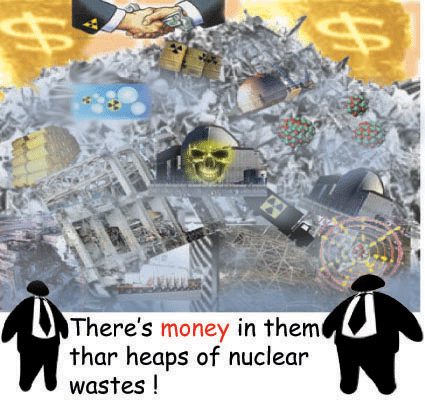
Nuclear chief’s despair over Sellafield firm NMP revealed in letters written by UK nuclear decommissioning boss The Independent, 26 Jan 14, Damning criticism of the consortium overseeing the expensive clean-up of the Sellafield nuclear reprocessing plant has been revealed in a series of hostile letters written by John Clarke, head of the UK’s Nuclear Decommissioning Authority.
Mr Clarke accused Nuclear Management Partners (NMP) of undermining confidence and damaging the entire project’s reputation, as well as criticising Tom Zarges, the consortium chairman, of setting “unduly conservative” targets. In one letter, written in November 2012, Mr Clarke attached slides that outlined the NDA’s frustrations with NMP’s decontamination work at the Cumbrian facility, including concerns about the “quality of leadership” and the “pace of change”, which it said “feels too slow”.
The content of the letters has added to the confusion over why NMP was recently asked to continue overseeing the clean-up of one of the world’s most hazardous nuclear sites until 2019. The correspondence, which was obtained under a Freedom of Information request, covers a 21-month period to November 2013. During this time NMP and the NDA were locked in discussions over a five-year extension to a contract that was originally awarded in 2008.
Politicians and the deal’s numerous critics were shocked when the NDA awarded NMP the extension in October, despite a disastrous tenure during which Sellafield’s clean-up bill soared to over £70bn. The letters warn that a “re-baselining” of budgets will cause cost estimates to further spiral in April this year: “However presented, the extent of change was going to be extremely uncomfortable and difficult to sell.”
The harsh tenor of the letters – one of which demanded “improved performance in a number of key areas, including schedule delivery” – adds weight to suggestions that Mr Clarke did not want NMP to continue at Sellafield. The NDA looked at bringing the decontamination back under the management of the public sector.
A critical 292-page report by the accountancy firm KPMG last year showed that nine of the 11 biggest projects on the site, including the construction of a storage facility for radioactive sludge, were a combined £2bn overbudget.
Seven were also behind schedule, while KPMG argued that the structure of NMP’s contract was “inappropriate” and was designed in a way that sought to “maximise shareholder returns”. NMP is a consortium of California-based URS, France’s Areva and British engineer Amec.
Dr David Lowry, an independent environmental policy and research consultant and a member of Nuclear Waste Advisory Associates, obtained the letters. He said: “This is a massive indictment of NMP’s failure to deliver – and then to give them an extension is almost inexplicable…….http://www.independent.co.uk/news/uk/home-news/nuclear-chiefs-despair-over-sellafield-firm-nmp-revealed-in-letters-written-by-uk-nuclear-decommissioning-boss-9085512.html
London gets world’s largest solar-powered bridge
World’s largest solar-powered bridge opens in London, Guardian, 24 Jan 14 Blackfriars rail station secures half its power from 4,400 roof-mounted solar panels, reports BusinessGreenAfter nearly five years in the making, Network Rail has today cut the ribbon on the world’s largest solar-powered bridge at Blackfriars Bridge across the River Thames.
As part of a project with solar installation firm Solarcentury, the roof of the bridge has been covered with 4,400 photovoltaic panels, providing up to half of the energy for London Blackfriars station.
First Capital Connect, which runs Blackfriars, expects the panels to cut the stations’ carbon emissions by an estimated 511 tonnes a year, further reducing the carbon footprint of its train routes to the south east of England.
“Electric trains are already the greenest form of public transport – this roof gives our passengers an even more sustainable journey,” said David Statham, managing director of First Capital Connect. “The distinctive roof has also turned our station into an iconic landmark visible for miles along the River Thames.”
The bridge will also act as a major advertisement for London’s efforts to become a sustainable city, with tourists and workers viewing the panels as they enter the capital……http://www.theguardian.com/environment/2014/jan/22/worlds-largest-solar-powered-bridge-opens-in-london
1 This Month


Read the Public Inquiry Report, the Commissioners’ report, Surrendering Australia: The AUKUS Deception is available to download for free at aukuspublicinquiry.com. Or just watch the replay of the National Press Club Luncheon.



19 November – Webinar – The Reality of Reprocessing
Time: 11:00 AM Pacific Time (US & Canada) / 2:00 PM Eastern / 7:00 PM UK / 8:00 PM CET
Register for the Zoom Event Here



Shut down the radiation-damaged Heysham nuclear reactors now
To see nuclear-related stories in greater depth and intensity – go to https://nuclearinformation.wordpress.com

Say No to NASA’s Reckless Nuclear Reactor on the Moon
Say No to NASA’s Reckless Nuclear Reactor on the Moon
-
Archives
- November 2026 (109)
- October 2026 (302)
- September 2026 (339)
- August 2026 (330)
- July 2026 (355)
- June 2026 (287)
- May 2026 (306)
- April 2026 (356)
- March 2026 (251)
- February 2026 (267)
- January 2026 (308)
- December 2025 (358)
-
Categories
- 1
- 1 NUCLEAR ISSUES
- business and costs
- climate change
- culture and arts
- ENERGY
- environment
- health
- history
- indigenous issues
- Legal
- marketing of nuclear
- media
- opposition to nuclear
- PERSONAL STORIES
- politics
- politics international
- Religion and ethics
- safety
- secrets,lies and civil liberties
- spinbuster
- technology
- Uranium
- wastes
- weapons and war
- Women
- 2 WORLD
- ACTION
- AFRICA
- Atrocities
- AUSTRALIA
- Christina's notes
- Christina's themes
- culture and arts
- Events
- Fuk 2022
- Fuk 2023
- Fukushima 2017
- Fukushima 2018
- fukushima 2019
- Fukushima 2020
- Fukushima 2021
- general
- global warming
- Humour (God we need it)
- Nuclear
- RARE EARTHS
- Reference
- resources – print
- Resources -audiovicual
- Weekly Newsletter
- World
- World Nuclear
- YouTube
-
RSS
Entries RSS
Comments RSS

