Nuclear power discourages local business: UK local councils consider renewable energy
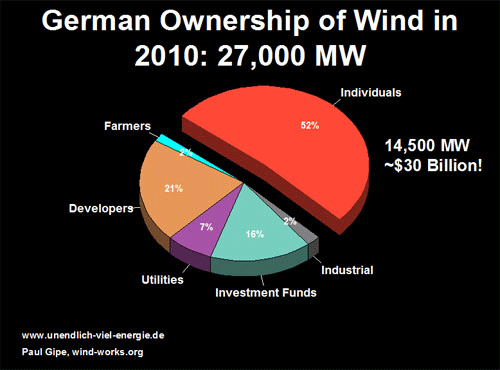
Lives saved by renewable-energy powered vehicles
 Renewable energy-powered vehicles can save lives http://economictimes.indiatimes.com/industry/auto/news/auto-technology/renewable-energy-powered-vehicles-can-save-lives/articleshow/45533794.cmsBy IANS | 16 Dec, 2014,NEW YORK: Driving vehicles that use electricity from renewable energy instead of gasoline could reduce the resulting deaths due to air pollution by 70 percent, says a study.
Switching from gasoline to those fuels would increase the number of resulting deaths due to air pollution by 80 percent or more.
“These findings demonstrate the importance of clean electricity, such as from natural gas or renewable sources of energy, in substantially reducing the negative health impacts of transportation,” said study co-author Chris Tessum from University of Minnesota, US.
Air pollution increases rates of heart attack, stroke, and respiratory disease.
The researchers estimated how concentrations of two important pollutants – particulate matter and ground-level ozone – change as a result of using various options for powering vehicles. They looked at liquid biofuels, diesel, compressed natural gas, and electricity from a range of conventional and renewable sources.
“Our work highlights the importance of looking at the full life cycle of energy production and use, not just at what comes out of tail pipes,” co-author of the study Jason Hill pointed out.
The study was published in the journal Proceedings of the National Academy of Sciences.
UK farmers could generate renewable energy better and sooner than nuclear power could
 Hinkley Point C – A Review of the Year, nuClear News Dec 14 “……..Meanwhile a new report from Forum for the Future, Nottingham Trent University and Farmers’ Weekly estimates that UK farms could have a generating capacity of 20GW by 2020 compared with Hinkley’s 3.2GW capacity which won’t be available until 2023 at the very earliest. (30)
Nuclear too slow to be effective, and will soak up all the UK climate change funds
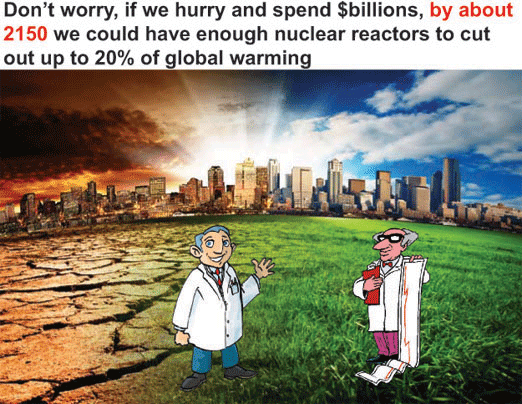 Nuclear damages attempts to tackle climate change nuClear News Dec 14
China getting control of UK’s wind industry, as well as its nuclear?
 Chinese nuclear group to buy UK wind farms, Ft.com Chris Adams, Energy Editor 14 Dec 14 China’s biggest nuclear power generator is preparing to enter Europe’s renewable energy market, snapping up three UK wind farms from French utility EDF in a signal of its intent to build a global generating business.
The move by state-owned China General Nuclear Corporation (CGN), set to be announced on Monday, would be its first big acquisition of onshore wind generating capacity in the west………
The agreement with EDF could help smooth talks on a bigger deal to build Britain’s first nuclear power plant in a generation, at Hinkley Point in Somerset………
The Chinese group will pay EDF more than £100m, analysts estimate, for an 80 per cent stake in the sites. Together, the sites generate more than 70 megawatts of electricity — enough to serve nearly 40,000 homes.
EDF will retain a 20 per cent stake in the three wind farms and continue to operate the turbines. It will also buy the electricity generated……….
The deal’s timing is significant: it comes as EDF, one of the Britain’s “big six” energy suppliers, looks to finalise agreement with possible investors, including CGN and China National Nuclear Corporation, on the financing of Hinkley Point C, the new nuclear power plant expected to cost £24.5bn.
The Chinese companies have been pushing for a bigger role in the plant’s construction and want a substantial share of the supply contracts, a demand that has complicated negotiations.
They also want ownership of another nuclear site, at Bradwell in Essex, with the aim of building their own reactor. Discussions over that have been a stumbling block. EDF is aiming to make a final investment decision early next year.http://www.ft.com/intl/cms/s/0/db8c9540-838f-11e4-9a9a-00144feabdc0.html#axzz3LzcYrpGa
Torness nuclear power station needs safety probe: too many faults in UK nuclear reactors
 Calls for nuclear safety probe over station faults http://www.edinburghnews.scotsman.com/news/calls-for-nuclear-safety-probe-over-station-faults-1-3634131 14 Dec 14, Torness is one of 15 nuclear power stations across the UK that have been forced to shut down due to faults over the last three years – with campaigners calling for an urgent review into the reliability of nuclear energy.
Analysis for local councils revealed that 15 reactors have had 62 unplanned shut-downs since 2011, with Torness near Dunbar forced to close twice last year due to the build-up of seaweed clogging the plant’s filters.
The research – which was carried out by Edinburgh-based nuclear consultant Pete Roche – found plants hit by a range of faults including cracks and electrical, boiler and valve defects.
And now the 50-strong group of local authorities who commissioned the report are raising fears over safety and the UK’s future energy supply.
Manchester councillor Mark Hackett, who chairs the group, said: “I call upon the UK Government, the National Grid and the nuclear regulators to urgently review the safety issues around such a large number of unplanned shutdowns.
“The Government also has to prioritise alternatives over the next 12 months to ensure the unreliability of nuclear power does not lead to the lights going off around the country.”
Dungeness nuclear power station in Kent had to be shut down 21 times between 2012 and 2014.
Radioactive waste storage ponds in a shocking state of neglect at the UK’s Sellafield
One of the main ways of covering up the true cost to society of nuclear power has been downplaying the difficulty, danger and cost of nuclear reprocessing and safe storage of the unwanted byproducts. In Britain, this was made the responsibility of private companies with a strong motivation to cut corners in order to maximize profits.
The results of such behind-the-scenes agreements between governments and private companies are now visible in these photographs. Far from having a coherent plan for dealing with the medium-and high-level radioactive waste, the authorities have allowed the site to become a ticking time bomb.
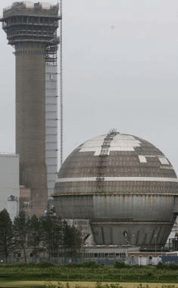 Leaked Photos Show UK Nuclear Plant Poses Public Safety Threat By Trevor Johnson Global Research, December 10, 2014 World Socialist Web Site Photos of radioactive waste storage ponds in a shocking state of neglect at the UK’s Sellafield (previously Windscale) nuclear reprocessing plant reveal that they have been severely neglected for decades.
Cracked concrete tanks—the largest measuring 20m by 150m with a depth of 6m—have been left open to the elements since the mid-1970s despite high levels of radioactivity.
After being left derelict for nearly 40 years, the radioactive material from hundreds of tons of spent fuel rods left in the ponds is now in danger of being exposed to the air, which could set off a nuclear explosion. This poses a major threat to public safety at the plant in Cumbria, northwest England.
The photos were published on the web site of the Ecologist magazine. Continue reading
Scotland got 107% of its electricity needs from wind power, in November

 Wind Power Provided 107% of Scotland’s Home Electricity Needs In November http://sustainnovate.ae/en/industry-news/detail/wind-power-provided-107-of-scotlands-home-electricity-needs-in-november 10 December 2014 | Posted by Zachary Scotland is an amazing leader in the renewable energy space. As I wrote last month,renewable energy provided more electricity than either nuclear energy, coal, or natural gas in the first half of 2014 in Scotland. It aims to get 100% of its electricity from renewable resources by 2025, one of the most ambitious targets in the developed world.
In October, wind energy provided 126% of home electricity demand. While that was a great month for wind energy, it wasn’t a wild fluke. WWF Scotland reports that, in November, wind power again provided over 100% of the country’s residential electricity needs, 107% this time. Producing 812 TWh of electricity, that’s enough for 2.6 million Scottish homes.
Scotland has excellent wind resources, but it also has great political leadership and is attractive to industry leaders.
“While Torness nuclear power station had to be shutdown unexpectedly, November turned out to be another big month for wind power in Scotland, with enough pollution-free electricity generated to supply 107 per cent of Scottish households with the electricity they need,” said WWF Scotland’s director Lang Banks. “Even on calmer days, when wind wasn’t at its strongest, wind still supplied the equivalent of almost a third of electricity needs of every home. It’s clear that wind is now a critical and growing part of our current power sector.”
The highest wind power output during the month was on November 11, when 55,611 MWh of electricity were produced by wind turbines. That was enough to supply 5.34 million homes with electricity, or 221% of Scottish homes.
The data above was provided by WeatherEnergy and analysed by WWF Scotland.
Communities back wind power as UK gets record levels of electricity from wind energy
Record wind power levels as new research shows clear majority back wind energy projects near them, Renewable UK, 9 December 2014
RenewableUK was today celebrating a new daily record amount of electricity generated from wind. Official National Grid figures showed that on Sunday 7th December an average of 7.315GW of power was produced by wind farms. The previous record was 7.234GW. This means that the equivalent of 43% of all GB homes were powered by wind on Sunday.
RenewableUK also commented on research carried out by Accent for the Energy Institute and New Power Magazine which showed that 61% of people would accept a wind turbine, or several turbines, within five miles of their home. The research, which was carried out in November, among householders throughout the UK, found that only 24% of people would welcome a gas extraction site with possible fracking near them, and just 18% backed local nuclear. The only technology with more popular support than wind was solar PV.
The survey also showed that 54% of UKIP voters, and 57% of Conservative voters support wind energy within 5 miles of their home, despite the leaders of their parties opposing onshore wind.
: http://www.renewableuk.com/en/news/press-releases.cfm/2014-12-09-record-wind-power-levels-as-new-research-shows-clear-majority-back-wind-energy-projects-near-them#sthash.PmKPUfot.dpuf
Anglesey Council worried about lack of information on planned Wylfa Newydd power plant plant
 Anglesey nuclear plant plans lack detail, council boss says, BBC News 8 December 2014
Concerns about the lack of detail and impact a nuclear power station could have on Anglesey have been raised by the island council’s chief executive.
Richard Parry Jones has sent a 10-page letter to Horizon bosses calling for more detailed information about their Wylfa Newydd power plant proposals.
Horizon – a subsidiary of Hitachi which bought the site in 2012 for about £700m – put its plans on show this autumn.
It said it was disappointed by the concerns raised by Anglesey council……..
Mr Jones said the “lack of detail” within the public consultationinformation is “concerning given the sheer scale of Wylfa Newydd and its potential impacts on Anglesey and its communities”.
Councillors agreed that the chief executive send a “frank, but constructive” letter outlining the concerns, including:A lack of detail surrounding workforce numbers – essential from a skills, training and education perspective
A lack of detail on estimated numbers and profiles of employees from outside Anglesey – to gauge the project’s impact from a social, community and Welsh language perspective
A lack of explicit commitment shown to promoting local employment opportunities and local supply chain
Little or no recognition of potential effects Wylfa Newydd will have on existing jobs, bed spaces, facilities and services
A need for considerable more work to establish the impacts on Anglesey communities, especially those within a 5km radius of the main site, and how to mitigate them http://www.bbc.com/news/uk-wales-north-west-wales-30385097
The Professor of Dodgy Pro Nuclear Arguments – Wade Allison
 Oxford Professor in Japan: Well so what if Fukushima had triple meltdown? People enjoy effects of radioactive contamination; Sunshine is much more dangerous; Effect of radiation same as oxygen — Former WHO Official: “The man is dangerous… He’s a crank” (VIDEOS)
Wade Allison, Emeritus Professor of Physics at Oxford University, Foreign Correspondents Club of Japan, Dec 3, 2014 (emphasis added):
- 7:30 — Nuclear protestors have no good arguments for saying that nuclear is dangerous, this is demonstrated by what happened at Fukushima.
- 19:30 – The scientific question is, ‘Why is radiation so safe?‘ Because it is very powerful and so that’s very surprising… That’s the job biology does… Any life form that did not look after the effects of radiation and oxygen, which does the same kind of thing, would fail.
- 27:30 — On holiday… we should take [children] around a nuclear power station.
- 31:00 — What can we do to explain… to people and shove under their noses?
- 39:15 – That excellent film Pandora’s Promise, anybody who hasn’t seen that should.
- 45:00 — [Bury the used nuclear fuel] anywhere, anywhere… Fission products [have a] half-life is 30 years or so… it quickly becomes the same activity as the stuff that you dig out of the ground. You need a mine or a hole in the ground which is going to contain stuff for 500 years — but it doesn’t have to be perfect. Here in Japan, people go to Onsen, and enjoy the effects of radioactive contamination of groundwater…everybody’s very happy to do that. That’s what they do on holiday.
- 47:30 — Triple meltdown? Where did you get those words from? Hollywood? What do you mean by a triple meltdown? So what? I’m telling you — so nothing, very much…Triple meltdown, well so what?… It wasn’t a tragedy.
- 52:45 — The sunshine… that’s much more dangerous… than nuclear radiation.
- 1:01:45 — We need people’s confidence. We need to talk to children in school.
- 1:04:45 — The idea that special precautions have to be taken just doesn’t wash,nuclear is not especially dangerous. It’s not as dangerous as fire.
Allison at the Institute of Physics: New safety levels for human radiation exposure are suggested… 100 mSv in total in any month; 5,000 mSv as a total of whole-of-life exposure.
Keith Baverstock, head of the World Health Organization’s Radiation Protection Program for Europe (1991-2003), Foreign Correspondents Club of Japan, Nov 20, 2014:
- 20:00 — Question: My name is Hiroyuki Fujita, [inaudible] Shimbun editor/writer… According to [Dr. Wade Allison], so called low dose radiation, 100 mSv or less, not so bad for human health… all the scientific knowledge is rooted on the experience of the fruit fly.
- 21:00 – Wade Allison, do you know what his scientific expertise is? Physics… not public health, not medicine, not biology… I did a review of [his] book… I said his book is highly entertaining… it is fiction… We don’t have to rely on fruit flies to know what the effects of radiation are. We know what they are on human health. We have a lot of epidemiological information — which he ignores. I think the man is dangerous, I think you are putting yourself in a dangerous position if you believe him… He’s a crank.
Watch Allison’s FCCJ presentation here | Watch Baverstock’s FCCJ presentation here
Scotland could use planning powers to reject new nuclear build
George Osborne’s latest nuclear deal is another step in the wrong direction The Conversation, Peter Strachan Strategy and Policy Group Lead and Professor of Energy Policy, Department of Management at Robert Gordon University Alex Russell Head of Department of Management and Professor of Petroleum Accounting at Aberdeen Business School at Robert Gordon University 5 Dec 14
The EU challenge
Westminster’s claim that Hinkley Point C would cost £16 billion has been countered by experts at the EU who have placed the cost at nearer £25 billion (and note the original estimate was £10 billion). The deal involves paying twice the current price for electricity, with UK taxpayers and electricity consumers locked into a binding contract for an extraordinary 35 years.
The European Commission raised concerns that Westminster had breached state aid rules in the subsidies being offered to finance the project. Energy secretary Ed Davey’s huge sigh of relief in October, when the EC controversially gave the green light for the project, may be premature: it will be challenged by the Austrian government in the EU courts.
Money pits
Even if these obstacles can be surmounted, the financial risks to these kinds of projects are simply huge……….
Whose projects should they be anyway?
Another issue is who should provide these projects. With Areva and EDF both under French state control, critics have said that the project amounts to the UK treasury writing a “blank cheque” to the French government. The same could be said of China General Nuclear Corporation and China National Nuclear Corporation, who came onboard last year.
EDF is also reputedly planning to hand over an additional and significant financial stake in Hinkley Point to other foreign corporations. Saudi Electric is reportedly in talks, while the Qataris have confirmed an interest too. British involvement in the project has been non-existent since the UK’s Centrica left a cavernous hole in the project by ceasing involvement in early 2013. Should de facto control of such an important element of our national electricity security be placed in the hands of foreign corporations?
Taken together, these sets of very deep concerns mean that nuclear can only be an option of last resort. To the astonishment of many, the Telegraph recently reported that the former UK chief scientist and nuclear “salesman”, has arrived at the same conclusion.
Given this analysis, the Scottish government would appear more than justified in using its extensive planning powers to reject new nuclear build. In light this and the fragility of future fracking prospects, Westminster would be wise to rethink its national energy policy and give more and not less support to onshore and offshore wind and other marine renewables. https://theconversation.com/george-osbornes-latest-nuclear-deal-is-another-step-in-the-wrong-direction-35054
“Stop uranium mining, transportation, enrichment and nuclear fuel production”
 “Stop uranium mining, transportation, enrichment and nuclear fuel production”, Indymedia Submitted by Anonymous (not verified) on Thu, 04/12/2014 Münster, Germany, 30 November 2014 – – At a two-day meeting here around 50 anti-nuclear activists from Russia, France, The Netherlands and from across Germany demanded an immediate end to the countless transports of uranium which ensure nuclear operations in Europe and elsewhere round the world.
They also demanded an end to uranium mining and processing everywhere. They demanded that the German government close down uranium enrichment in Gronau and production of nuclear fuel in Lingen.
Both factories are not included in the shutdown of nuclear power production planned for Germany and supply power stations around the world.
The conference participants intensively discussed the considerable dangers created by the mostly secret uranium transports.
They tracked them from mining in Kazakhstan and Uzbekistan through Russia across the Baltic Sea through the Kiel Canal to the central uranium transportation hub in the port of Hamburg.
From there the uranium concentrate rolls by train through Lower Saxony, Bremen, North-Rhine Westphalia and the Mosel/Saar region for processing in Narbonne-Malvési and Pierrelatte in southern France.
As uranium hexafluoride it then moves back to Germany for enrichment in Gronau or not far into The Netherlands at the same kind of plant at Almelo.
The next step is the Areva fuel production in Lingen, before the final products often move again through Hamburg or also Rotterdem to all over the world.
The conference condemned as unacceptable that in many ways France, Germany, Russia and The Netherlands continue to enable a future for the nuclear industry.
The activists also demand determined action from the German state governments to stop the growing number of uranium transports which endanger countless people……………
The conference ended on 30 November with protests outside the Gronau and Lingen plants.
In Lingen a woman representing the French anti-nuclear umbrella organisation, Réseau “Sortir du nucléaire” called for immediate closure of the Areva fuel factory. Areva is a globally operating French corporation.
Areva currently has big financial problems and the Lingen operations had to be downsized some weeks ago because of serious technical problems.
The activists announced more joint protects against uranium transportation and the uranium industry as a whole.
More information in German at www.urantransport.de, www.sofa-ms.de, www.robinwood.de, www.wise-uranium.org,www.umweltfairaendern.de
Pictures of the conference at
http://www.anti-atom-aktuell.de/fotos/20141129-internationales-urantrans… https://indymedia.org.au/2014/12/04/stop-uranium-mining-transportation-enrichment-and-nuclear-fuel-production
Britain’s aging nuclear reactors getting near to closing time
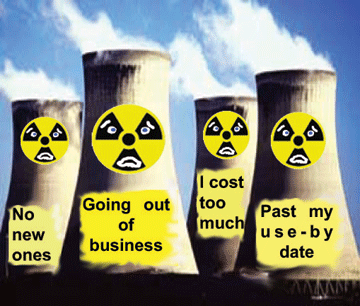 The coming nuclear crisis: All but one of Britain’s ageing reactors ‘will need to close in 15 years’ , The Independent, 5 Dec 14 All but one of Britain’s ageing fleet of nuclear reactors will have to be closed down within 15 years due to concerns over their economic viability or safety, a panel of experts has warned…….. Professor Williams warned that there will be a point when either it will be uneconomic to continue operating a given nuclear reactor, due to the additional maintenance work needed, or if it becomes too unsafe……http://www.independent.co.uk/news/uk/politics/the-coming-nuclear-crisis-all-but-one-of-britains-ageing-reactors-will-need-to-close-in-15-years-9896597.html
UK government provides financial guarantee for giant Moorside nuclear project
 UK agrees finance guarantee deal for nuclear project http://uk.reuters.com/article/2014/12/02/uk-britain-politics-nuclear-idUKKCN0JG00320141202 LONDON Tue Dec 2, 2014 (Reuters) – Britain said on Tuesday it had agreed a preliminary deal to provide a financial guarantee to help fund the development of Europe’s largest nuclear power project, in northwest England.
The 3.4-gigawatt Moorside project, a joint venture between Japan’s Toshiba and France‘s GDF Suez, could provide nearly 7 percent of Britain’s projected electricity needs and create up to 21,000 jobs, the companies say.
“The Guarantee Scheme is another way in which we can help companies to make the huge investment that building new nuclear power involves,” Finance Minister George Osborne said in a statement.
The scheme, which was introduced in 2012, is set to help the Moorside developers gain external project finance to cover the upfront costs of building a nuclear plant.
NuGen, the name of the Toshiba/GDF Suez joint venture, welcomed the agreement. he Moorside plant will be powered by three nuclear reactors by the end of 2026 to be provided by Toshiba’s Westinghouse unit, with the first reactor expected to start operating by the end of 2024.
NuGen said it plans to make a final investment decision for the Moorside project in 2018.
Britain is counting on replacing its ageing fleet of nuclear reactors with new stations. The government is already providing loan guarantees to France’s EDF for a 16 billion-pound nuclear plant due to be built in southern England.
(Reporting by William James and Karolin Schaps; editing by Robin Pomeroy and Jason Neely)
1 This Month


Read the Public Inquiry Report, the Commissioners’ report, Surrendering Australia: The AUKUS Deception is available to download for free at aukuspublicinquiry.com. Or just watch the replay of the National Press Club Luncheon.



19 November – Webinar – The Reality of Reprocessing
Time: 11:00 AM Pacific Time (US & Canada) / 2:00 PM Eastern / 7:00 PM UK / 8:00 PM CET
Register for the Zoom Event Here



Shut down the radiation-damaged Heysham nuclear reactors now
To see nuclear-related stories in greater depth and intensity – go to https://nuclearinformation.wordpress.com

Say No to NASA’s Reckless Nuclear Reactor on the Moon
Say No to NASA’s Reckless Nuclear Reactor on the Moon
-
Archives
- November 2026 (109)
- October 2026 (302)
- September 2026 (339)
- August 2026 (330)
- July 2026 (355)
- June 2026 (287)
- May 2026 (306)
- April 2026 (356)
- March 2026 (251)
- February 2026 (267)
- January 2026 (308)
- December 2025 (358)
-
Categories
- 1
- 1 NUCLEAR ISSUES
- business and costs
- climate change
- culture and arts
- ENERGY
- environment
- health
- history
- indigenous issues
- Legal
- marketing of nuclear
- media
- opposition to nuclear
- PERSONAL STORIES
- politics
- politics international
- Religion and ethics
- safety
- secrets,lies and civil liberties
- spinbuster
- technology
- Uranium
- wastes
- weapons and war
- Women
- 2 WORLD
- ACTION
- AFRICA
- Atrocities
- AUSTRALIA
- Christina's notes
- Christina's themes
- culture and arts
- Events
- Fuk 2022
- Fuk 2023
- Fukushima 2017
- Fukushima 2018
- fukushima 2019
- Fukushima 2020
- Fukushima 2021
- general
- global warming
- Humour (God we need it)
- Nuclear
- RARE EARTHS
- Reference
- resources – print
- Resources -audiovicual
- Weekly Newsletter
- World
- World Nuclear
- YouTube
-
RSS
Entries RSS
Comments RSS

