Fears for Moorside as Toshiba ‘lining up’ $500m bankruptcy backstop for Westinghouse nuclear arm,Telegraph UK Jillian Ambrose21 MARCH 2017 Fears that Toshiba’s struggling nuclear business Westinghouse could be on the brink of going under have been reignited following reports that it is lining up a US bankruptcy protection finance package.
The company is reportedly reviewing proposals from financial institutions and investment firms for a so-called debtor-in-possession loan to keep the company afloat while it undertakes a bankruptcy process.
According to Reuters, people familiar with the matter have said the loan is likely to be over $500m to enable the heavily indebted company to pay employees and complete the work on four nuclear power plants in the US. The projects are the first nuclear reactors to be built in the US for thirty years, but heavy delays have saddled Toshiba with writedowns of 712.5bn yen (£5bn).
The sources warned that the talks are at an early stage and that no final decision has been made to wind down the company. A UK spokesman for the company was not immediately able to comment.
A potential bankruptcy procedure raises serious questions over the future of a key £10bn nuclear project which plans to use the AP1000 nuclear reactor designed by Westinghouse.
Toshiba is a 60pc shareholder in the NuGeneration consortium, which plans to develop the Moorside project alongside France’s Engie, formerly known as GDF Suez.An early exit from Toshiba could heavily delay the start up of the 3.2GW Moorside project while NuGen scrambles to find new investment and approve a new nuclear reactor design to use in the project……
The company said it will deliver its full year results on April 11, its third scheduled date after failing to disclose the full impact of its Westinghouse woes twice before. http://www.telegraph.co.uk/business/2017/03/21/toshiba-lining-500m-bankruptcy-backstop-say-reports/
In 2011 the Government revealed a list of eight sites deemed “potentially suitable” for new nuclear stations, including Bradwell.
But Blackwater Against New Nuclear Group (BANNG), which has campaigned against a new power station, believes the list should be reviewed. It comes as the group, along with other campaigners, submitted their response to a pre-application consultation for Sizewell C in Suffolk.
Andy Blowers, chairman of BANNG, said: “The policy for new nuclear power stations is out of time and out of order and safer, less expensive and environmentally-sustainable alternatives need to be put in place.”
In January, it was announced the Government had asked nuclear regulators to begin the process of approving a Chinese-designed reactor for a new power plant.
EDF Energy signed a deal with China General Nuclear Power Corporation for Bradwell B, a greenfield site next to the former station.
The Chinese company will provide two thirds of the development costs of Bradwell B and hopes to begin construction by 2023..Up to 25,000 jobs will be created during construction, although it is unclear how many vacancies will be filled by residents.
Mr Blowers added: “In the coming months BANNG will continue its campaign to oppose the Chinese nuclear project at Bradwell, which threatens to destroy a precious environment and inflict harm on present and future generations.
“At the local level we will work with the communities around the Blackwater to thwart the project in its early stages.
“At regional level we will back Together Against Sizewell C’s legal challenge to the Government’s nuclear policy.
“And, at the national level, with other protest group leaders, we shall fight to have both Bradwell and Sizewell removed from the list of nominated sites for new nuclear power stations. The Government’s policy is misguided and in need of urgent review.”Harwich and North Essex MP Bernard Jenkin has said a new power station could threaten the eco-system of the Blackwater estuary at Mersea.
UN committee calls for halt to allow environmental studies
EDF won approval to build 18 billion-pound plant in September
A United Nations committee asked the U.K. to suspend work on the Hinkley Point nuclear power plant pending assessment of the environmental impact.
The UN Economic Commission for Europe requested the pause, it said in a document on its website. Electricite de France SA, the French state-controlled utility, won approval to build an 18 billion-pound ($22.3 billion) nuclear plant on England’s western coast in September. To help shoulder the construction costs, EDF convinced China General Nuclear Power Corp. to take 33.5 percent of the project.
The UN committee recommended the halt until it established whether “a notification under the Espoo Convention” was useful, according to the statement. The Espoo Convention sets out the obligations of countries to “assess the environmental impact of certain activities,” according to the commission’s website.
Bechtel pulls out of mini-nuclear development, Construction News, 17 MARCH, 2017Bechtel is to pull out of small modular reactor development, the US engineering giant has confirmed. The company said it would no longer be attempting to create its own SMR reactor after it was unable to find investment for its programme, or a utility company that would provide a site.
Bechtel’s SMR aspirations were as part of mPower, a joint venture with energy giant Babcock & Wilcox…..
Bechtel will take itself out of the government’s SMR reactor design competition.
The competition has stalled ever since, with sources telling Construction News that they have been largely left in the dark by the government over the next steps……
UN nuclear disarmament talks: UK Government not attending discussions labelled ‘reckless and irresponsible’ ‘I don’t think it’s taking nuclear disarmament seriously,’ Green Party leader Caroline Lucas tells The Independent Harriet Agerholm@HarrietAgerholm 15 Mar 17The Government has been called “reckless and irresponsible” after it refused to send a single representative to United Nations (UN) talks about a ban on nuclear weapons.
The Foreign Office revealed that no one from the UK attended a February meeting ahead of the negotiations and no one would go to the discussions when they take place later this month.
It was responding to a parliamentary question by Green Party co-leader Caroline Lucas, who told The Independent that it showed the Government was being “massively hypocritical” and failing in its commitment to working towards a world without nuclear weapons. …..
“The Government has said it’s committed to multilateral nuclear disarmament,” Ms Lucas said, adding that whenever ministers are asked to get rid of Trident – the UK’s nuclear weapons system – they “always say we’re not going to because it’s unilateral.”
The Brighton MP said: “Now there’s opportunity to have a multinational set of negotiations and they’re not even bothering to turn up. I just think it’s mind blowing.”
Although the talks may not immediately agree on an outright ban, Ms Lucas said they were an important step towards reducing nuclear weapons internationally.
“Essentially what such a major global moment does is to help delegitimize the weapons,” she said, “that can’t be underestimated.
“So although clearly we’re not going to have the nuclear weapons states signing up by June, the very existence of that treaty will make it more likely that those countries that have them will begin to negotiate to get rid of them.”
It would kill millions (perhaps billions) of people, leave many more seriously injured, coat the planet in radioactive fallout and destroy the ecosystem. The Doomsday clock, which measures how close we are to apocalypse, has been moved from five to three minutes to midnight. Time is short – but the UK is not ready.
The reason the UK is so poorly prepared can be traced back to fairly recent times. In May 1980, the government created a series of public information films, radio broadcasts and the booklet Protect and Survive, which has now been reissued by The Imperial War museum. (The museum has said this is not in response to the current political situation, but as part of the first major exhibition on the anti-war movement.)
Protect and Survive was widely mocked for its advice, which included painting windows with white emulsion to reflect the heat flash from a nuclear explosion, storing water in toilet cisterns, and guidance on how to bury and label the dead. In response, the BBC showed a bleak film called Threads which showed how useless the advice would have been for most city dwellers. The Campaign for Nuclear Disarmament produced a version called Protest and Survive.
Protect & Survive – 1970’s UK Public infommercials On Nuclear War Preparation
The failure of Protect and Survive is the reason the UK doesn’t have public information on how to prepare for a nuclear war today.
My research reveals that the Home Office repeatedly attempted to resurrect Protect and Survive throughout the 1980s. It was hoped that a new and improved public information campaign would include the use of deep nuclear shelters, make provision for vulnerable people, and promote collective planning for a nuclear attack. The Home Office even employed an advertising agency which surreptitiously attended CND meetings to keep an eye on the opposition.
The planned new version of Protect and Survive would also cover advice on preparing for a chemical or biological attack. The Home Office’s failed aim was to produce a fresh public information package, including as many as 20 new television films to be produced by 1987.
But there are three reasons why it never happened. First, other government departments, particularly the Foreign Office and the Ministry of Defence, did not want the population to be reminded that Britain was the base for a new range of US nuclear weapons. In 1982, the Home Defence committee considered that fear of embarrassing the US military would be a good reason not to issue new guidance on protection against nuclear attack. It stated in a secret memo:
In the light of experience at Greenham Common, the United States might be concerned about the further focusing of public attention on their UK installations.
Second, new psychological studies had appeared which suggested that people might not be willing to follow any government advice in the event of a nuclear war. A Home Office report, “Population response to war”, written in 1982, decided that the social and economic burden on the UK might be such that the country would never recover.
Faced with social collapse on such a massive scale, it was predicted that the population would simply not follow official advice. People would try and escape rather than staying at home and hoarding food, in line with government guidelines. It was also predicted that the majority of the population would suffer from clinical depression after a nuclear attack and be mentally unable to follow instructions.
Finally, there was deep and vocal opposition to civil defence in the United Kingdom. The advertising agency commissioned by the Home Office considered the general public to be apathetic and fatalistic with regard to their prospects for survival. Some local authorities declared themselves “nuclear free zones” and refused to consider civil defence measures. Even though a proportion of the population would have welcomed some form of advice, the critics made it difficult to produce any information that would not be immediately rejected in the media.
Ignorance is bliss
In 1989, the Berlin Wall fell and the pressing need to create a civil defence campaign disappeared along with the Cold War. Apart from some generic information on national emergencies, it is currently almost impossible to find out what we should do in the event of a nuclear attack. In some ways, this is what the government intended even before Protect and Survive, which was originally supposed to be released only if the prospect of a nuclear war looked likely.
Indeed there are good reasons for keeping us unaware. Releasing guidance may cause anxiety and even make other countries suspicious that our preparations are a sign that we intend to strike first.
On the other hand, if the government does intend to issue information at the last minute then it is taking a huge risk as to whether it can get the advice out in time. If an accidental launch, or an unexpected first strike, occurs then there may be no time. Maybe now is the right time to buy that reprinted copy of Protect and Survive – just in case.
Draw the curtains, bury the dead: Cold War advice for nuclear attack, By Judith Vonberg, CNN March 16, 2017
Story highlights
Don’t forget can opener and toilet paper, booklet recommends, and cover dead bodies securely
The guide was satirized by anti-nuclear campaigners who called the advice futile
A stark guide to surviving a nuclear blast that was first published during the dark days of the Cold War is being reissued by the Imperial War Museum in London.
The 1980 pamphlet opens with this warning: “Read this booklet with care. Your life and the lives of your family may depend on it.” Its republication coincides with a new exhibition exploring 100 years of the anti-war movement, the first of its kind at the museum.
“Even the safest room in your house is not safe enough,” the “Protect and Survive” guide warns in the opening pages, before explaining how to create a fall-out room and inner refuge using bricks, boxes or bags of earth, pieces of furniture and even books and clothing…….
As Matt Brosnan, senior curator at the Imperial War Museum, explains in the foreword to the reissued booklet, in 1980 “the possibility of a nuclear war was as high as at any time since the Cuban missile crisis in 1962.”….
the UK government produced “Protect and Survive.” Officials intended to distribute it publicly only in the event of a crisis, Brosnan told CNN, but the guide was leaked to the press, forcing the government to make it available to the public.
“That sort of information could have a big impact on the country’s mood,” said Brosnan, suggesting this as a reason why the pamphlet wasn’t made public immediately. “The advice in it was very similar to that given in the 1950s and 1960s, but the relative strength of nuclear weapons had increased.”……http://edition.cnn.com/2017/03/16/europe/cold-war-nuclear-guide/
Toshiba delay causes further Moorside uncertainty, ITV, 14 Mar 17,Toshiba has delayed reporting its third quarter earnings for the second time, leading to further uncertainty over the future of a major nuclear development in Cumbria.
The Japanese company owns a 60 percent stake in NuGen, the company behind the proposed Moorside nuclear project in west Cumbria.
However, Toshiba is expected to announce huge losses for 2016, and that it will pull out of nuclear projects outside Japan.
This is to do with its US nuclear unit Westinghouse, which is reported to have overpaid for another nuclear company by billions of dollars.
Westinghouse would supply three nuclear reactors to the Moorside nuclear plant in Cumbria. Toshiba first delayed announcing its third quarter financial results in February, after which the company’s chairman stepped down, and the further postponement was revealed this morning……..http://www.itv.com/news/border/2017-03-14/toshiba-delay-causes-further-moorside-uncertainty/
John McDonnell’s vow to end nuclear power and weapons in first 100 days of a Labour government Laura Hughes, political correspondent Telegraph UK9 MARCH 2017
John McDonnell, the shadow chancellor, has promised that Labour would bring an end to nuclear power and nuclear weapons in the first 100 days of a Labour government.
In footage uncovered by The Telegraph, Mr McDonnell said that he wanted to build on the early success of Gordon Brown, who mapped his first days in power shortly after becoming prime minister.
The shadow chancellor also said that Labour would introduce a wealth tax and a land tax, renationalise the railways and pull out of Afghanistan.
Speaking at a Labour meeting in July 2012, Mr McDonnell said: “From the Left now […] we should now be mapping out not in manifesto form but in a manual form the first 100 days of a Labour government going into power.
Offshore windfarms set to become cheaper source of electricity than nuclear power stations
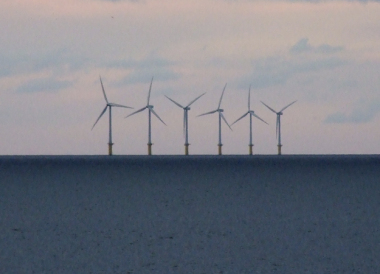
Government’s plan to turn UK into world leader in offshore wind energy receives boost as electricity price halves in five years The Independent, Ian Johnston Environment Correspondent @montaukian 9 Mar 17 Offshore windfarms are set to become a cheaper source of electricity than the Hinkley Point nuclear power plant and are also on track to undercut coal-fired power stations.
The Government, which has been trying to support offshore in the hope of turning the UK into a world-leader in the sector, plans to hold an auction next month in which generators will bid for a guaranteed price for their electricity, with the lowest offer declared the winner…….
Offshore wind in Europe cost about £190/mwh in 2012, according to Bloomberg New Energy Finance, but this figure has nearly halved in the last five years to just over £100/mwh.
And now the industry is now predicting the UK will see offshore wind become cheaper than some of the more traditional sources of power generation.
While the Government has an official policy against onshore wind, it has sought to promote the more expensive offshore turbines, partly because of the chance to establish a new industry in the UK based on the expertise developed by the North Sea oil and gas industry. It appears this may be starting to pay off years earlier than anyone expected…….
The UK auction to be held next month is open to technologies considered to be “less established”, such as offshore wind, biomass, wave and tidal schemes.
No2NuclearPower, No.93 March 2017 Toshiba’s announcement that it will not be involved in the construction of new nuclear reactors at the Sellafield ‘Moorside’ site in Cumbria has thrown into sharp relief the sorry state of the UK’s new nuclear policy which is clearly failing to deliver. It is obvious now that it can only be delivered with huge public subsidies the country can ill afford at a time when public services are under intense strain.
Toshiba announced on 14th February that it expects to book a €5.9bn write-down on Westinghouse ‒ more than it paid to buy a majority stake in the Company from the British government’s BNFL in 2006 ‒ and it expects to report a net loss of €3.2bn in the fiscal year to March 2017.Audited figures are now due on March 14.
The mess has been caused mainly by the delayed and over-budget AP1000 reactors being built in the US. The cost to complete four AP1000 reactors ‒ two each in South Carolina and Georgia ‒ will “far surpass the original estimates”. Combined, the cost overruns exceed US$10 billion. And since there is still a long way to go before construction of the four reactors is complete, there is plenty of scope for further cost overruns. (1) There is now even talk of the possibility of bankruptcy for Toshiba. Former Westinghouse boss Shigenori Shiga, appointed as chair of Toshiba following a US$1.3 billion accounting scandal in 2015, stood down from his position on February 14.
Toshiba says it would like to sell Westinghouse if that was an option ‒ but there is no prospect of a buyer. The nuclear unit is, as Bloomberg noted, “too much of a mess” to sell. And since that isn’t an option, Toshiba must sell profitable businesses instead to stave off bankruptcy. The company plans to sell most ‒ perhaps all ‒ of its profitable microchip business to prop up the nuclear carcass and avoid bankruptcy. The company might get €12.3‒16.1bn by selling its entire stake in its microchip business, said Joel Hruska from ExtremeTech. “That would pay off the company’s immediate debts,” Hruska said, “but would leave it holding the bag on an incredibly expensive, underwhelming nuclear business with no prospects for near-term improvement.” (2)
The ripple-effects of Toshiba’s latest problems will be many and varied. Japan’s ambitions to develop a large nuclear export business are in tatters. As recently as last year, Toshiba said it hoped to win 50 contracts to build new nuclear plants in India and China over the next decade. As well as Moorside reactor construction projects being planned in Turkey and elsewhere are up in the air.
But it is not just Toshiba that is in crisis. Over the past decade, international energy utilities Eon, RWE Npower, Iberdrola, SSE and Centrica have all confidently announced their commitment to building new nuclear power stations, whether at Hinkley Point, Wylfa or Moorside, but then had to pull out as they realise they cannot afford the huge levels of investment that such projects require. (3) In Europe, energy giants EDF, Engie (France), E.ON, RWE (Germany) and Vattenfall (Sweden), as well as utilities TVO (Finland) and CEZ (Czech Republic), have all been downgraded by credit rating agencies over the past year. All of the utilities registered severe losses on the stock market http://www.no2nuclearpower.org.uk/nuclearnews/NuClearNewsNo93.pdf
Failing New Nuclear Programme should be Scrapped No2NuclearPower, No.93 March 2017
GMB national secretary for energy Justin Bowden reiterated his call for the government to bankroll the project. “It is time for government to show leadership and take over the reins at Moorside,” said Bowden. “The fiasco with Toshiba shows exactly why relying on foreign companies for our energy needs is just plain stupid.” Tim Yeo, a former minister and chairman of New Nuclear Watch Europe, a pro-nuclear group, said Moorside provided a “prime opportunity” for Theresa May’s administration to demonstrate its industrial strategy with support for the UK nuclear supply chain. He said that with lingering doubts over the viability of Hinkley Point and Wylfa “the only way forward is if the government is willing to participate”. This could involve the government taking a minority stake, or providing loans that would be repaid after construction was complete, added Mr Yeo. (17) The GMB says Moorside is vital as Sellafield’s workforce starts shrinking. By 2020 up to 3,000 jobs could be lost as the Thorp nuclear fuel facility closes and reprocessing of Magnox fuel ends. (18)
Ministers should also actively encourage investment from nuclear companies in China, South Korea and Russia where the industry is relatively insulated from the challenges faced by European companies thanks to strong state backing, says Yeo – there is a real danger that the pipeline of nuclear projects will fail to come on stream before 2030 unless Government agrees to intervene. The existing support regime, which guarantees a fixed price for each megawatt of power produced, does not go far enough to help investors who face billions in construction costs before the nuclear plant begins producing power. The Government should offer loans to developers which can be paid back once the plant comes on stream, or take an equity stake in the project which could be sold off to investors when construction is complete. “In neither case would the Government’s support constitute a permanent subsidy. It would directly cut the cost of electricity produced by the new plant because the Government’s borrowing costs will be lower than those of any private investor,” says Yeo. (19)
Right on cue, says Greenpeace Policy Director, Doug Parr, stories have begun to appear in the press saying that government is thinking about or even “under pressure” to inject huge amounts of taxpayers cash into new reactors in order to get them built. “Neither proposed plant (Moorside and Wylfa) is crying out as a good bet for a private investor” says Parr. “So why would it be a better investment for a government? Or for British taxpayers?” If the UK government takes stakes in these projects, it would be expensive. A 25% share in both Moorside and Wylfa on Anglesey could cost over £7 billion – and that’s before taking into account the cost overruns synonymous with nuclear projects. That would still leave over £20bn to find from other investors, but is a substantial commitment of public money. So it is worth spending a few No2NuclearPower nuClear news No.93, March 2017 6 moments to consider why direct government funding of these nuclear stations is such an eccentric and ill-conceived idea. (20)
First, why do these projects need public funding? The obvious answer is that private investors think they are too risky and too poor a return, even at the high price of £92.50 (2012 prices) that EDF got for their Hinkley Point plant. So why are they risky? Well, one of key reasons Toshiba is in such deep financial trouble is that its reactor design, the AP1000, has never been completed and operated, and is actually more costly and difficult to build than it thought. Its four AP1000 reactors now under construction in the US are ruinously late and over-budget.
Tens of billions of taxpayers’ money are at risk as pressure mounts to spend billions more on new nuclear, according to Dr Dave Toke, reader in energy politics at Aberdeen University. Giant portions of the public spending could be poured down a nuclear black hole as calls for the Government to make direct investments into new nuclear power plant intensify. Ultimately the sums at risk would be much larger than the Government’s own estimates of the cost of Trident. There has been a flurry of demands for government investment in new nuclear projects in the wake of the near bankruptcy of Toshiba. In fact nuclear power is proving to be virtually undeliverable and ruinously expensive in western countries. Despite the manifest bankruptcy of the technology, rather than question whether it is right to continue with the new nuclear programme, its supporters are in effect wanting us all to bet the British economy on it. If the Treasury are forced against their will to sanction ‘equity’ stakes in new nuclear reactors, the losses and., eventually, all the liabilities will fall on the taxpayer. (21)
Companies vying to build nuclear power stations in the UK have been told they must offer a price for their electricity sharply lower than the £92.50/MWh approved for Hinkley Point C, according to the FT. Prices 15-20% lower are seen as crucial to maintaining political support for new nuclear plants. “One of the biggest factors pushing up the strike price is the cost of capital. If government wants a low strike price, it is pretty clear that government has to think about a different kind of [financing] solution,” said one of the industry leaders. The FT says the government remains cautious about the idea of investing taxpayers’ money in nuclear power. One source told the FT there were signs the government wanted to pit NuGen and Horizon against each other in a competitive process, with no guarantee that both would go ahead. (22)
The Sunday Times said ministers are poised to admit that taxpayer cash will be used to fund a new fleet of nuclear power stations – reversing years of government opposition to direct public subsidy. Industry sources claim the business and energy secretary, Greg Clark, accepts that the hands-off approach cannot persist if the plants are to be built. They say Whitehall is preparing to launch a consultation, possibly this summer, on the government taking minority equity stakes in new nuclear projects to kick-start their construction. British taxpayer cash will probably be matched with funds from the Japanese government, possibly via the Japan Bank for International Co-operation and Nippon Export and Investment Insurance. Japan’s Hitachi, which is behind the Wylfa project, is locked in talks with the British and Japanese governments over how to fund the 2.7-gigawatt station. The consultation on state equity is likely to be launched alongside an outline deal on funding Wylfa. Sources said the deal and the consultation are not certain and could yet collapse. (23)
Treasury officials are still hostile to the direct state subsidy idea but Chancellor Philip Hammond, and business secretary, Greg Clark, have both taken part in talks over support for Wylfa and Moorside. Any deal would have to overcome opposition from parts of the Treasury, which has for decades
NIA’s SMR conference: great discussion, now we need action, The Alvin Weinberg Foundation. March 3rd, 2017 by Suzanna Hinson
On Monday, the Nuclear Industry Association held its Small Modular Reactor conference. Weinberg Next Nuclear were delighted to attend and our director Stephen Tindale was one of the many speakers.
The conference was opened by Tom Wintle, deputy director of SMRs, decommissioning and waste at the department of Business, Energy and Industrial Strategy. Though he spoke very eloquently about the importance of nuclear, and SMRs to the government, particularly in regards to the Industrial Strategy’s aims of home grown industries, developing skills, regional rejuvenation and a stronger economy for the growth areas of tomorrow, he would not be drawn on the real issues the audience clearly wanted to hear about: the much delayed SMR competition and the question of public funding at Moorside.
Instead, he highlighted changing priorities of the government, with a renewed focus on energy security, consumer bills and the potential for driving exports and capturing a global SMR market in a post Brexit UK. He would also not be drawn on the future relationship with Euratom, saying it was too early to speculate but repeating it was a non-negotiable aspect of exiting the EU, a decision many we spoke to think is premature and will lead to huge hurdles for British nuclear in the future………
When asked about government plans he said the Government have spent enough time building a vision; now, we need action. The action we need to see, Stephen recommended, was the Government telling the Nuclear Decommissioning Authority to release sites for advanced nuclear and instructing the Office for Nuclear Regulation to undertake Generic Design Assessments for advanced reactors, expanding their capacity to do so if necessary. …….
This panel, comprising Fiona Reilly from Atlantic Superconnection LLP, Anurag Gupta from KPMG LLP and Gareth Price from Allan & Overy LLP, also argued that BEIS were putting too much hope into an export market as with bigger contributors emerging like China and the US, it is unlikely that the UK will be able to compete…….
they made a strong statement for state-led nuclear power incorporating the private sector at a later stage of development if possible…..
the clear mood is that talking and discussion are not being paralleled with policy progress. The sector desperately needs to see some action from government, to progress with the SMR review, provide certainty for Moorisde and clarify the terms of Euratom membership. http://www.the-weinberg-foundation.org/
Moorside Failing New Nuclear Programme should be Scrapped No2NuclearPower, No.93 March 2017
Doubts Plans for three new AP1000 reactors to be built at Moorside in Cumbria next to Sellafield are now at risk from the financial crisis engulfing Toshiba. Toshiba owns 60% of Nugen, the consortium working on the plans. Nugen has said it wants to take a final investment decision by the end of 2018 in order to generate the first power in about 2025. However, it already faces an uphill battle to secure financing in time. Toshiba and France’s Engie, which owns the remaining 40% of NuGen, are believed to have been in talks for months with South Korea’s Kepco and are also understood to be talking to the UK and Japanese governments about potential financial support. (11)
But Kepco told the FT that it was not in talks with Toshiba about participation in NuGen, although several people involved in the process said South Korean investment was the best chance of keeping the project alive. “It’s hard to see how Moorside can go ahead without Kepco,” said one senior nuclear industry figure. It is thought that if Kepco were to get involved it would prefer to use its own reactor design, the APR-1400, rather than Westinghouse’s AP1000. This would set the project back at least four years because the Korean technology would need approval from UK regulators, while Westinghouse’s has nearly completed the clearance process. (12)
Cumbrians may be glad to see the back of corruption-plagued Toshiba ‒ but corruption-plagued South Korean utility KEPCO wouldn’t be much of an improvement. Cumbrians Opposed to a Radioactive Environment (CORE) commented:“KEPCO is itself still emerging from a major scandal that surfaced in 2012 involving bribery, corruption and faked safety tests for critical nuclear plant equipment which resulted in a prolonged shut-down of a number of nuclear power stations and the jailing of power engineers and parts suppliers.” (13)
Engie has also sounded increasingly lukewarm about Nugen, with Isabelle Kocher, chief executive, saying last year that there was “a place for nuclear new-build in the world, but less than before”. In December it was reported that Engie would like to abandon its 40% share of Nugen. (14)
US nuclear firms can only deal with overseas companies if the countries have a nuclear cooperation agreement. The US holds such an agreement with Euratom but not with the UK, raising the possibility that Westinghouse could be unable to continue working on the project once Britain leaves Euratom until a new bilateral deal is signed.
After much speculation that Toshiba would withdraw from the NuGen consortium, it now says it will “consider” a continued role in the development, so long as it can avoid any involvement in construction. Having completed a review of overseas nuclear operations, the company said it will seek to “exclude risk inherent on construction work and focus on equipment supply and engineering” in future. (15)
If NuGen is to make a final investment decision in 2018 and get the reactors up and running by 2025 there are huge challenges still to be overcome – a timescale many in the industry already think is highly unrealistic. The fact that Toshiba will no longer take on any of the financial risk of construction means Moorside is only likely to go ahead if new investors can be found to build the plant. (16)http://www.no2nuclearpower.org.uk/nuclearnews/NuClearNewsNo93.pdf
Hitachi NO2NuclearPower, March 2 017Meanwhile the Japanese company Hitachi which is planning to build the proposed plant at Wylfa on Anglesey, is set to lose tens of billions of yen this financial year after withdrawing from a uranium enrichment joint venture in the US. Hitachi is expected to report a 70 billion yen ($620 million) non-operating loss by the time books are closed at the end of March. The deficit is largely attributed to the joint venture GE Hitachi Nuclear Energy Inc. withdrawing from the uranium enrichment project. Hitachi no longer expects any profits from the North Carolinabased company, of which it owns 40% and the rest by General Electric. Hitachi and GE were expecting more nuclear power plants to be built when they launched the joint fuel enrichment business, but orders have been sluggish across the globe, forcing the project to be shelved. Nevertheless, Hitachi says it will be sticking with its nuclear power business. The company said No2NuclearPower nuClear news No.93, March 2017 4 that it plans to proceed with its project to build a plant in Britain by ensuring costs are thoroughly managed. (8)
In its favour is the fact that four ABWR reactors – the type of reactor it wants to build at Wylfa – have actually been built, in Japan. But their reliability has been poor. (9) The 2011 accident at Fukushima closed down all Japanese reactors, but according to IAEA the load factor – the proportion of time the reactors were generating power – for those ABWRs in the period between 2007-11 had been below 50%. (10 http://www.no2nuclearpower.org.uk/nuclearnews/NuClearNewsNo93.pdf