From Scotland to Cumbria – Not All Waste Is Equal.
Next week Cumberland Councillors will be asking questions about the
“unacceptable” transport of wastes from Scotland to Cumbrian landfill.
Meanwhile the transport of thousands of tonnes of radioactive wastes from
Scotland to Cumbrian landfill continues entirely unchallenged.
Letter belowto Cumberland councillors and Scotland’s First Minister John Swinney.
Dear Councillor Dobson, Councillor Rollo and First Minister John Swinney,
Radiation Free Lakeland agree completely with the reported statement by
Scotland’s First Minister, that the situation of landfill waste arriving
from Scotland into England and specifically Cumbria is “not
acceptable..” A related issue of great concern is that so called High
Volume Very Low Level and Exempt Radioactive wastes from Scotland are being
increasingly diverted to landfill. We note that the Low Level Waste
Repository (LLWR) at Drigg, Cumbria, now only accepts less than 5% of waste
with the remainder being diverted to recycling (radioactive scrap metal),
landfills or via incineration.
Radiation Free Lakeland 6th July 2025, https://radiationfreelakeland.substack.com/p/from-scotland-to-cumbria-not-all
Nuclear Reliability- an uncertain route
July 05, 2025, https://renewextraweekly.blogspot.com/2025/07/nuclear-reliability-uncertain-route.html
uclear energy provides reliable, baseload, low-carbon electricity that complements the variability of wind and solar’. That, boiled down, is the UK governments view, as relayed in a response by the Department of Energy Security and New Zero to a critique by Prof Steve Thomas and Paul Dorfman. Well, none if it holds up to examination.
Low carbon? Not if you include uranium mining, waste handling and plant decommissioning. Baseload? A dodgy idea! A Department of Energy minister had previously admitted that ‘although some power plants are referred to as baseload generators, there is no formal definition of this term’ and the Department ‘does not place requirements on generation from particular technologies’.
A key point is that nuclear plants are not that reliable- if nothing else, they have to be shut down occasionally for maintenance and refuelling. Add to that unplanned outages, and nuclear plants are not very sensible as backup – especially given their high capital cost and lack of flexible operation. There are easier ways to provide the necessary grid balancing e.g. via flexible demand and supply management, smart grid transfer/green power trading, and via short and long duration energy storage, including green hydrogen storage.
All in all, as I’ve noted in earlier posts, it’s hard to see why the UK is pushing ahead with nuclear. As a recent US study found, the investment risk is high for nuclear compared to renewables. And as one of the authors put it ‘low-carbon sources of energy such as wind and solar not only have huge climatic and energy security benefits, but also financial advantages related to less construction risk and less chance of delays’
In which case it seems very strange that the UK Treasury seems happy to devote most of its new energy funding in the next few years to nuclear, with over £16bn evidently being earmarked for planned nuclear spending in 2025-2030, compared to under £6bn for renewables- see David Toke’s summary chart. It’s actually all a bit up the air at present since no one knows when Hinkley will be running- Toke even said it might not be until 2035! And no one knows for sure if Sizewell C will really go ahead and if so when – it’s still awaiting a final go-ahead decision. But some of the presumed nuclear spend is for Sizewell and some also possibly for SMRs, the latter getting £2.5bn diverted from renewables. And that’s not the end of it- consumers will also be shelling out to support Sizewell, if it goes ahead, paying an advanced surcharge on their bills to reduce construction risks under the RAB subsidy system.
To be fair, consumers do have to meet a range of green levies, including the Renewables Obligation, although that one may be phased out soon – with renewable technology support costs falling very well under its replacement, the Contract for Difference system. CfD strike prices were agreed in 2024 for wind at £54-59/MWh and solar PV at £50MWh, whereas Hinkley Point C got a £92.5 strike price in 2016, inflation index linked, so it would be over £128/MWh now and likely more by the time its running- in maybe 2030.
The next round of the CfD auctions for new renewable projects should be opening up soon, with the Clean Industry Bonus providing extra support for some key projects, including not just offshore wind as at present, but also possibly onshore wind and hydrogen systems. The next CfD round should also in indicate how tidal stream technology is getting on. However, it will be while before all the final strike prices are agreed for the various options – possibly not until early next year. But, by then, maybe the details of the Sizewell funding and SMR costs will have been revealed. So, we might then be able to see what makes economic sense for the future. It will be interesting to see what the Energy Security and Net Zero Select Committee has to say on all this in its updated nuclear roadmap review, which ought be out around then- if not before.
It certainly has felt like an uphill struggle over the years. But now at least there seems to be some progress, with, for example, the new Solar Roadmap setting out the steps needed for the government and industry to deliver 45-47 GW of solar by 2030, which it is claimed will support up to 35,000 jobs and use less than half a percent of total UK land area. It will be aided by governments aim to increase solar deployment on new build homes through the new Future Homes Standard requirements. In addition, the government says it has ‘taken action to deploy the technology at scale, approving nearly 3 GW of nationally significant solar – more than in the last 14 years combined’. It does seem more serious on solar now….certainly than the preceding Tories. And on wind too, including onshore wind, with, in all, the current wind industry workforce put at 55,000 and likely to double by 2030.
Of course this sort of expansion will face problems, for example leading to more wasteful curtailment of excess wind generation, unless transmission capacity is significantly expanded. Adding more inflexible nuclear to the system would of course not help – it would make it all harder to balance. But, oddly, that seems to be the plan with Sizewell C. And the proposed development of SMRs also has issues. For example, a recent review of nuclear options noted that ‘about 65% of Britain’s data centre capacity is concentrated in the London region’, and it suggested suggest that co-locating SMRs with data centre clusters could ‘assist in alleviating capacity constraints in areas of high data centre concentration like London.’ But would people in London, or indeed, other big cities, welcome SMRs, given the safety and security issues? And is this really the way to go?
Spying on Iran: How MI6 infiltrated the IAEA
The Iranian government has alleged that the IAEA supplied the identities of its top nuclear scientists to Israeli intelligence, enabling their assassinations, and provided critical intelligence to the US and Israel on the nuclear facilities they bombed during their military assault this June.
Leaked confidential files indicate the International Atomic Energy Agency was infiltrated by a veteran British spy who has claimed credit for sanctions on Iran.
The Grayzone, Jul 02, 2025, By Kit Klarenberg, https://thegrayzone.substack.com/p/spying-on-iran-how-mi6-infiltrated?utm_source=post-email-title&publication_id=474765&post_id=167288793&utm_campaign=email-post-title&isFreemail=true&r=n09ij&triedRedirect=true&utm_medium=email
A notorious British MI6 agent infiltrated the International Atomic Energy Agency (IAEA) on London’s behalf, according to leaked documents reviewed by The Grayzone. The agent, Nicholas Langman, is a veteran intelligence operative who claims credit for helping engineer the West’s economic war on Iran.
Langman’s identity first surfaced in journalistic accounts of his role in deflecting accusations that British intelligence played a role in the death of Princess Diana. He was later accused by Greek authorities of overseeing the abduction and torture of Pakistani migrants in Athens.
In both cases, UK authorities issued censorship orders forbidding the press from publishing his name. But Greek media, which was under no such obligation, confirmed that Langman was one of the MI6 assets withdrawn from Britain’s embassy in Athens.
The Grayzone discovered the résumé of the journeyman British operative in a trove of leaked papers detailing the activities of Torchlight, a prolific British intelligence cutout. The bio of the longtime MI6 officer reveals he “led large, inter-agency teams to identify and defeat the spread of nuclear, chemical and biological weapons technology, including by innovative technical means and sanctions.”
In particular, the MI6 agent says he provided “support for the [IAEA] and Organization for the Prohibition of Chemical Weapons [OPCW] and through high level international partnerships.”
Langman’s CV credits him with playing a major role in organizing the sanctions regime on Iran by “[building] highly effective and mutually supportive relations across government and with senior US, European, Middle and Far Eastern colleagues for strategy” between 2010 and 2012. He boasts in his bio that this achievement “enabled [the] major diplomatic success of [the] Iranian nuclear and sanctions agreement.”
The influence Langman claimed to have exerted on the IAEA adds weight to Iranian allegations that the international nuclear regulation body colluded with the West and Israel to undermine its sovereignty. The Iranian government has alleged that the IAEA supplied the identities of its top nuclear scientists to Israeli intelligence, enabling their assassinations, and provided critical intelligence to the US and Israel on the nuclear facilities they bombed during their military assault this June.
This June 12, under the direction of its Secretary General Rafael Grossi, the IAEA issued a clearly politicized report recycling questionable past allegations to accuse Iran of violating the Non-Proliferation Treaty. Three days later, Israel attacked the country, assassinating nine nuclear scientists as well as numerous top military officials and hundreds of civilians.
Iranian former Vice President for Strategic Affairs Javad Zarif has since called for the IAEA’s Grossi to be sacked, accusing him of having “abetted the slaughter of innocents in the country.” This June 28, the Iranian government broke ties with the IAEA, refusing to allow its inspectors into the country.
While Iranian officials may have had no idea about the involvement of a shadowy figure like Langman in IAEA business, it would likely come as little surprise to Tehran that the supposedly multilateral agency had been compromised by a Western intelligence agency.
Langman’s name placed under official UK censorship order
In 2016, Langman was named a Companion of the Order of St Michael and St George, the same title bestowed on fictional British spy James Bond. By that point, the supposed secret agent held the dubious distinction of being publicly ‘burned’ as an MI6 operative on two separate occasions.
First, in 2001, journalist Stephen Dorril revealed that Langman had arrived in Paris weeks prior to Princess Diana’s fatal car crash in the city on August 31 1997, and was subsequently charged with conducting “information operations” to deflect widespread public speculation British intelligence was responsible for her death.
Then, in 2005, he was formally accused by Greek authorities of complicity in the abduction and torture of 28 Pakistanis in Athens. The Pakistanis, all migrant workers, were suspected of having had contact with individuals accused of perpetrating the 7/7 bombings in London, July 2005.
Brutally beaten and threatened with guns in their mouths, the victims “were convinced their interrogators were British.” When Greek media named Langman as the MI6 operative who oversaw the migrants’ torture, British news outlets universally complied with a government D-notice – an official censorship order – and kept his identity under wraps when reporting on the scandal.
London vehemently denied any British involvement in torturing the migrants, with then-Foreign Secretary Jack Straw dismissing the charge as “utter nonsense.” In January 2006 though, London admitted MI6 officers were indeed present during the Pakistanis’ torture, although officials insisted the operatives played no active part in their arrests, questioning or abuse.
Following his withdrawal from Athens, Langman returned to London to head the UK Foreign Office’s Iran Department, a shift which highlights his importance to MI6 and suggests the British government had no qualms about his allegedly brutal evidence gathering methods.
Britain’s Foreign Office collaborates closely with MI6, whose agents use it as cover just as the CIA does with State Department diplomatic postings.
MI6’s man on Iran takes credit for “maximum pressure” strategy
While leading the Foreign Office’s Iran Department from 2006 – 2008, Langman oversaw a team seeking to “develop understanding” of the Iranian government’s “nuclear program.”
It’s unclear exactly what that “understanding” entailed. But the document makes clear that Langman then “generated confidence” in that assessment among “European, US and Middle Eastern agencies” in order to “delay programme [sic] and pressurise Iran to negotiate.” The reference to “Middle Eastern agencies” strongly implied MI6 cooperation with Israel’s Mossad intelligence services.
In April 2006, Tehran announced it had successfully enriched uranium for the first time, although officials denied any intention to do so for military purposes. This development may have triggered Langman’s intervention.
The Islamic Republic has rejected any suggestion it harbors ambitions to possess nuclear weapons. Its denials were corroborated by a November 2007 US National Intelligence Estimate expressing “high confidence that in fall 2003, Tehran halted” any and all research into nuclear weapons. This assessment remained unchanged for several years, and was reportedly shared by the Mossad, despite Benjamin Netanyhau’s constant declarations that Iran was on the brink of developing a nuclear weapon.
Langman’s IAEA support work overlaps with Iran sanctions blitz
International governmental attitudes towards Iran changed abruptly between 2010 and ‘12. During this period, Western states and intergovernmental institutions initiated an array of harshly punitive measures against the country, while Israel ramped up its deadly covert operations against Iran’s nuclear scientists.
This period precisely overlapped with Langman’s tenure at the Counter-Proliferation Centre of the UK Foreign Office. His bio implies he used this position to influence the IAEA and other UN-affiliated organizations to foment a campaign of global hostility towards Iran.
In June 2010, the UN Security Council adopted Resolution 1929, which froze the Iranian Revolutionary Guard Corps’ assets, and banned overseas financial institutions from opening offices in Tehran. A month later, the Obama administration adopted the Comprehensive Iran Sanctions, Accountability, and Divestment Act. This set off a global chain of copycat sanctions by Washington’s vassals, who often imposed even more stringent measures than those levied by the UN and US.
In March 2012, the EU voted unanimously to cut Iranian banks out of the SWIFT international banking network. That October, the bloc imposed the harshest sanctions to date, restricting trade, financial services, energy and technology, along with bans on the provision of insurance to Iranian companies by European firms.
BBC reporting on the sanctions acknowledged European officials merely suspected Tehran of seeking to develop nuclear weapons, but lacked concrete proof. And behind the scenes, the MI6 operative Langman was claiming credit for helping legitimize the allegations against Iran.
Following the Western-led campaign isolation of Iran from 2010 – 2012, over its purported nuclear weapon program, the Obama administration negotiated a July 2015 agreement known as the Joint Comprehensive Plan of Action (JCPOA). Under the JCPOA’s terms, the Islamic Republic agreed to limit its nuclear research activities in return for sanctions relief. In the years that followed, the IAEA was granted virtually unlimited access to Tehran’s nuclear complexes, ostensibly to ensure the facilities were not used to develop nuclear weapons.
Along the way, IAEA inspectors collected vast amounts of information on the sites, including surveillance camera photos, measurement data, and documents. The Iranian government has since accused the Agency of furnishing the top secret profiles of its nuclear scientists to Israel. These include the godfather of Iran’s nuclear program, Mohsen Fakrizadeh, who was first publicly named in a menacing 2019 powerpoint presentation by Israeli Prime Minister Benjamin Netanyahu. The following year, the Mossad assassinated Fakrizadeh in broad daylight with a remote-controlled machine gun.
Internal IAEA documents leaked this June indicated that IAEA Secretary General Rafael Grossi has enjoyed a much closer relationship with Israeli officials than was previously known, and suggested he leveraged his cozy ties with Tel Aviv to secure his current position.
During a June 24 interview with Fox News’ war-crazed anchor Martha MacCallum, Grossi did not deny making the inflammatory claim that “900 pounds of potentially enriched uranium was taken to an ancient site near Isfahan.” Instead the IAEA director asserted, “We do not have any information on the whereabouts of this material.”
Well before Grossi rose to the top of the IAEA with Western and Israeli backing, the agency appears to have been penetrated by a British intelligence agent who took responsibility in his bio for engineering the West’s economic attack on Iran.
The IAEA has not responded to an email from The Grayzone seeking clarification on its relationship with Langman and the MI6.
Sellafield supporting Whitehaven Science Fair -(nuclear lobby infiltrates education)

We were pleased to support Whitehaven Town Council in hosting the 5th
Annual Whitehaven Science Fair, working in partnership with Nuclear Waste
Services to plan and deliver a two-day programme focused on innovation,
scientific curiosity and community engagement. The first day welcomed
primary school pupils to experience an engaging theatre-style science
demonstration, followed by interactive exhibits located in the robotics and
technology marquees. Local employers, including ourselves and Nuclear Waste
Services, presented a range of technologies and provided hands-on
activities. These included opportunities to operate robots, participate in
educational games, test coordination skills, and meet Spot-the-dog.
Sellafield Ltd 30th June 2025 https://www.gov.uk/government/news/sellafield-supporting-whitehaven-science-fair
Nuclear waste near nature reserve plan ongoing
Residents and politicians have hit out at plans to allow radioactive waste
to be disposed of at a landfill site near a nature reserve and town. The
site, on Huntsman Drive in Port Clarence, Stockton, run by Augean, already
disposes of a range of hazardous waste but requires permission to deal with
nuclear material.
Tees Valley Mayor Ben Houchen said the plans were wrong
in 2019 when they were first put to the Environment Agency (EA) and were
“still wrong now”. But Augean said risk assessments demonstrated the
proposals “would not harm people in the local area or the environment”. The
EA previously asked for more information about the plan in September 2020
and it has now opened a public consultation, which will close on 4 August.
Lord Houchen said: “We absolutely want new nuclear power and we are working
hard to deliver this – but I will not allow Teesside to be seen as a
dumping ground for the country’s waste. “I will continue to stand firmly
against any plan, and I urge everyone to make their voices heard loud and
clear in this consultation.”
BBC 1st July 2025,
https://www.bbc.co.uk/news/articles/c80pp5vl49yo
Israel ‘not an ally’, says former British ambassador
Sir Richard Dalton tells Declassified the US and Israel pose greater threat to Middle East peace than Iran.
MARK CURTIS, 26 June 2025, Declassified UK,
- Keir Starmer’s flouting of international law over Gaza and Iran does a “disservice” to Britain
- “Intense” lobbying by Israel exerts undue influence over UK foreign policy
- “Majority” of Iranians may support their country acquiring nuclear arms after Israeli/US attacks
“Israel is not an ally” of Britain, former UK ambassador Sir Richard Dalton has told Declassified in a wide-ranging interview.
He also warns that Britain’s Israel lobby is getting “stronger” and exerts “a very powerful force in our society” including over politicians and political parties.
In a discussion on the current conflicts in the Middle East, Dalton, who served as Britain’s top official in Tehran from 2003-06, said that the United States and Israel together constituted “a greater threat to the stability of the region than Iran”.
He added that prime minister Keir Starmer’s backing of Israeli and American air strikes on Iran this month does “a disservice to Britain, and a disservice to the cause of preserving international law as guidance for nations in their interactions with each other”.
Dalton told Declassified that the contention that Iran was on the verge of developing nuclear arms is “false” and that “no such threat existed”.
The seasoned diplomat, who served as Britain’s Consul-General in Jerusalem from 1993-7, observed, “I think that Israel cannot be regarded as an ally because their objectives in resolving the central problems of the Near East are so different from ours”.
“We believe in the self-determination of the Palestinian people. The Israelis do not. We believe in a two state solution. The Israelis, not all of them, but the dominant ones, do not.
“We believe that the state of Israel should be based on its 1948 borders. The Israelis do not. We believe that settlements across the Green Line are illegal and an obstacle to peace, the Israelis are bent on expanding them and, we believe that the Palestinians have a right to a peaceful existence on their own land”.
Dalton acknowledged that Israel does provide intelligence cooperation with Britain about extremist movements.
But he felt the idea that Israel is an ally because it is “the only democracy in the Middle East” is undermined since it “constantly oppresses its neighbouring people and subjects them to inhuman circumstances” such as in Gaza.
“It’s forfeited its right to be regarded as an ally just because it has an internal democracy”, Dalton said.
Condemning the “appalling and grossly illegal” Hamas attacks of 7 October 2023, the former ambassador added that “the balance indicates that this [Israel] is not a country with a similar set of values to us”.
‘Pro-Israel lobby in British foreign policy making’
Dalton, who held a range of positions in the Foreign Office until leaving in 2006, believes the UK has not taken a clear position on international legal issues over Gaza due to “the desire not to open up a wide gulf with the United States as a matter of principle”.
“I find it shocking”, he says. “There are European countries that have taken a much more robust and intelligent and humane and legal stance.”
Dalton added: “The reason we have never developed an independent policy on the turmoils and travails of the Middle East is because we are always looking over our shoulders at what the Americans want, what the Americans are saying”.
The second reason explaining UK support for Israel over Gaza is the Israel lobby, the former ambassador reasoned.
The “balance of opinion in parliament” is such that “those willing to uphold the Palestinian right to self-determination and to be free from gross human rights abuses are relatively weak”.
There’s also “the effect of intense Israeli lobbying and the linkage of Israeli lobbying to financial interests. It is a very powerful force in our society. Those who support the Israeli government through thick and thin, have traditionally been very influential”, Dalton added.
‘Powerful allies’
The Israel lobby has “powerful political allies in some political parties, and in some sections of the media. So a desire for a quiet life and a good career, means that many politicians swallow potential dislike of aspects of Israeli policy in order to toe the Israeli line”.
Asked if he sees evidence of the strength of the pro-Israel lobby in Britain’s Foreign Office and Ministry of Defence, Dalton replied: “Oh, yes. There’s no doubt that the Israeli public have a right to be proud of their diplomatic service and the ability of the State of Israel to leverage sources of influence within British society”………………………………………………………………………………………………………………………………………………………………………………………………………………………. https://www.declassifieduk.org/israel-not-an-ally-says-former-british-ambassador/
In Gaza, survivors accuse Britain of complicity

“This massacre was not random. Everything was calculated precisely, as if they were tracking every move.
“When I learned that the US and Britain provided Israel with intelligence from reconnaissance planes, I felt betrayed from above.
Eye witnesses to an Israeli massacre believe British intelligence contributed to the slaughter.
SHAIMAA EID, 29 June 2025, https://www.declassifieduk.org/in-gaza-survivors-accuse-britain-of-complicity/
The smell of blood and smoke still lingers in the memory of those who lived through the Nuseirat massacre in the heart of the Gaza Strip.
One year has passed since the slaughter on 8 June 2024, when Israeli forces launched a “hostage rescue” operation against Hamas.
However, that military raid – which killed more than 270 Palestinians, the vast majority of them civilians – left behind nothing in Nuseirat but devastation and collective loss.
As families continue to mourn, media reports, including by the New York Times, have added another layer of pain.
They revealed that Western countries, including the US and UK, provided intelligence ahead of the operation through surveillance flights and advanced monitoring technology.
Today, survivors of the massacre hold those countries responsible, saying that surveillance planes which filled the skies over the camp in the days leading up to the operation may have been “British and American eyes directing the fire from above.”
‘Unforgivable’
Raed Abdel Fattah, 38, is still unable to return to normal life after what he experienced that bloody morning.
“I was with my wife and our three children in the market when the airstrikes began. We ran aimlessly through the street, just trying to survive.
“We tried to take cover in a parked car on the side of the road. We passed it just seconds before it was struck by a missile and went up in flames. Had we been a moment later, we would have been buried under the rubble.”
Raed pauses, then continues in a tense voice: “We ran into the Nuseirat market as bullets rained down around us, with bodies and the wounded filling the streets.
“There was no safe place. In front of us was a young man selling sweets – suddenly, a quadcopter drone shot him in the head.
“His brain spilled out before my eyes. I couldn’t hold myself together. It was a moment of human collapse I haven’t recovered from to this day.”
He adds: “This massacre was not random. Everything was calculated precisely, as if they were tracking every move.
“When I learned that the US and Britain provided Israel with intelligence from reconnaissance planes, I felt betrayed from above.
“These planes were not only Israeli. If they supplied images or data, they are part of the decision – and partners in the outcome.”
Raed is not seeking sympathy: “We do not want diplomatic apologies. Whoever provided the information opened the door to the massacre, even from afar. This is unforgivable and cannot be forgotten.”
Britain has sent more than 500 surveillance flights over Gaza since the war began, supposedly to help Israel locate hostages.
The raid on Nuseirat is one of the only examples where Israel freed captives through military force, increasing the likelihood that British intelligence contributed in some way.
British pilots conducted 24 flights over Gaza in the two weeks leading up to and including the day of the massacre.
‘Are we safe, if nuclear weapons are here?’: trepidation in Norfolk village over new jets
Some in Marham are troubled by news that its airbase could host nuclear warplanes, but others are relaxed
Matthew Weaver, Guardian, Sat 28 Jun 2025
The genteel west Norfolk village of Marham does not seem to be at the forefront of Britain’s military might. A dance class is about to start in the village hall, a game of crown green bowls is under way and swallows are swooping around the medieval church tower as wood pigeons coo.
“It’s a lovely, quiet little village,” says Nona Bourne as she watches another end of bowls in a match between Marham and nearby Massingham.
Like many, Bourne is troubled by the news that this week thrust Marham to the frontline of UK’s nuclear arsenal, in the biggest expansion of the programme for a generation.
Without consultation, RAF Marham is to be equipped with new F-35A jets capable of carrying warheads with three times the explosive power of the bomb dropped on Hiroshima.
Bourne said: “When they spread it all over the news that these planes are going to come here from America with these bombs, it makes you think we’re going to be targeted. My bungalow is five minutes from the base.”
The Campaign for Nuclear Disarmament is planning a protest in Marham on Saturday. Bourne, whose son-in-law used to work at the base, is tempted to take part. “I might join in,” she says. “My daughter says we’ve always been a target here, but I am concerned. If I was younger I’d think about moving, but I’m 83, I’m not going anywhere.”
Sisters Becky, 29, and Katherine Blakie, 31, are heading to a friend’s house for a plunge in their hot tub. “I read about the weapons on Facebook,” says Becky. “It’s strange to think they’ll be here in little old Marham.”
Becky, who works in fundraising, is annoyed that the village was not consulted about the decision. She says: “Marham and the RAF base are intertwined so we should definitely have had a say.”
Katherine, a medical student, says: “It makes you think, ‘Are we safe, if people know nuclear weapons are here?’”
At this stage it is unclear where the nuclear warheads will be housed, but new jets to be based at Marham have the capacity to drop them. Wherever they are stored, the fear Marham will be a target is widespread in the village.
“Look what happened at Pearl Harbor,” says Patricia Gordon after finishing her bowls match. “We’d be obliterated here.”
She adds: “And with Donald Trump’s finger on the button, does it matter that we’ve got nuclear weapons or not?”…………………………………………………………https://www.theguardian.com/uk-news/2025/jun/28/are-we-safe-nuclear-weapons-trepidation-norfolk-village-jets-marham
Nuclear- a viable UK option? There are alternatives..

June 28, 2025, https://renewextraweekly.blogspot.com/2025/06/nuclear-viable-uk-option-there-are.html
ll of the expert advice says nuclear has a really important role to play in the energy system. So said UK Energy Secretary Ed Milliband, announcing an extra £14.2bn allocation for the proposed new Sizewell C reactor. Putting it charitably, he seems to have been poorly informed.
As I noted in an earlier post, there are many expert studies suggesting that there is no need for nuclear and that, in fact, it is a poor choice compared with renewables – which are cheaper as a way to respond to climate change. At least one of the submissions that I have seen to the ongoing Nuclear Roadmap Inquiry, run by the energy security and net zero Select Committee, takes a similar line- nuclear is too costly, slow and unreliable, with offshore wind being a better option.
However, it seems that the Select Committee will not start work on its report until later in the year, so it may be a while before we can see the results of its deliberations and all the submissions. And, meanwhile, the ground has certainly shifted. For good or ill, the UK is now heading for nuclear expansion, with Carbon Brief laying out a timeline chart showing what is expected. Of course, renewables are also expanding, and more rapidly. And the nuclear plans may come unstuck. For example the Times noted that ‘the government has commissioned just three SMR reactors, none expected before 2035. Rolls Royce said in 2015 that to make building a modular factory worthwhile, you would need an order book of 50 to 70’. So the £2.5bn diverted from Great British Energy’s renewable funding to SMRs, may not be enough, although it may still damage confidence in the progress of green power.
It also didn’t help that there was very little said about renewables in the spending review. That may have been understandable in terms of investment, since it was about major new capital/infrastructure projects like Sizewell, although the tidal energy lobby have complained about the Spending Review’s omission of tidal range energy commitments, warning that the government’s energy strategy dangerously over-relies on high-risk technologies. In a new report, the Tidal Range Alliance points to the quite large (~500MW) successful tidal barrages in France and S Korea, and says ‘Tidal Range is a proven, low-risk, high-reward technology’ adding that ‘it is time to mobilise it proactively as a resilient cornerstone of the clean energy system – not as a fall-back when other technologies falter.’ It claims that the UK’s tidal range potential, including tidal lagoons, could yield up to 30TW/h annually, and also offered additional benefits like coastal protection and local regeneration, with a levelised costs of energy put at £90–123/MWh. Hinkley Point C may end up with an inflation index linked CfD strike price well over that, maybe £130/MWh or more, by the time it finally gets to work, and who knows what Sizewell will really cost.
There are some CfD backed tidal stream projects already running in Scotland and more planned elsewhere, but the most advanced UK tidal range proposal is the 700MW Mersey barrage, although there is also a proposal for a huge 2.5GW tidal lagoon off Somerset, not far from Hinkley… There can be environmental problems with large tidal range systems, which is one reason why the 7GW Severn Barrage met with opposition, but smaller barrages and lagoons may have fewer impact issues. That’s also true tidal stream turbines, which can also be deployed in a modular way in large numbers, distributed around the coast, so that their peak outputs occur at different times of day, rather than just in two large bursts each day, as with individual tidal range systems.
While the Tidal Range Alliance is trying to move barrages and lagoons on, a Marine Energy Taskforce, has been launched aimed at developing a roadmap to realise the UK’s wave and tidal stream energy potential, which has been put at 25 GW for wave and 11 GW for tidal stream. Energy Minister, Michael Shanks said ‘With a coastline that stretches among the longest in Europe, it’s time we finally deliver on our marine energy potential and put our waves and tides to work. We will work closely with industry in breaking down barriers, unlocking investment, and kickstarting growth in our coastal communities, as we deliver clean homegrown power that we control.’
For the moment though, new areas like this await serious attention, and as far as renewables go, the focus is on PV solar and wind, on and offshore. They have been very successfully developed, in fact massively so since the early days. In 1986, with an election pending in 1987, Labours than leader Neil Kinnock gave an ‘unequivocal guarantee that the next Labour government will not sanction the ordering of another nuclear power station’, and added that ‘I am sure the advocates of alternative energy will not shirk the test the next Labour government will offer them’. But Labour lost…
Things have certainly changed since then, with the Tories, under Margaret Thatcher, backing nuclear. David Cameron too, later on. But renewables have nevertheless continued to live up to their promise – and are now supplying over 50% of UK power. Though we seem to keep going round the same cycle. Last time Labour was in power, in the 2000’s, it initially came up with a ‘no nuclear’ policy, but then changed its mind, with Tony Blair famously saying ‘nuclear is back with a vengeance.’ There was even talk of a 35-40% nuclear contribution ‘after 2030’. That came to nothing. But, now we are facing a big new Labour nuclear programme again….
However, at least this time around, although, if it goes ahead as planned, some resources will be diverted to nuclear, there is still over £6bn allocated to Great British Energy’s green power programme and renewable expansion, based on wind and solar, seems pretty unstoppable, with hydrogen also being part of that – now given £500m more. In addition, the Spending Review confirmed that the Warm Homes Plan would go ahead, with £13.2 billion helping to accelerate the uptake insulation and other domestic energy efficiency measures, as well as heat pumps and other low-carbon technologies, such as solar panels and batteries. So, one or two nuclear steps backwards maybe, but a lot of green steps forward, with a very welcome £1.2bn per year also earmarked for training and apprenticeships.
British billpayers saved £300m through energy flexibility in 2024, figures show
Savings were driven by lower contributions to infrastructure costs, reduced connection charges and the increased use of low-carbon energy sources.

Rebecca Speare-Cole, Independent 26th June 2025
.Many customers reduced their bills by changing the time or
day that they used electricity. British billpayers saved more than £300
million by switching the time at which they turned on their washing
machines or ovens, according to figures released by the industry body for
network operators.
The data shows households and businesses reduced their
bills by changing the time or day they used electricity – such as by
cooking or washing earlier or later in the day, or setting electric cars to
charge at specific times. In the past when most of the UK’s electricity
generators were fossil-fuel power plants, supply of electricity adapted to
demand.
Today as the wind and the sun influence when renewables are being
produced, incentivising users to adapt their demand to when there is a lot
of supply can help take pressure off the grid. Flexibility can also be a
valuable tool to optimise capacity while longer-term infrastructure
upgrades are planned and delivered.
https://www.independent.co.uk/news/business/british-ofgem-mps-b2777498.html
Independent 26th June 2025
Greenham Common women urge new generation to ‘rise up’ against nuclear threat

Those who set up protest camp in 1980s hope its spirit can be revived to oppose UK’s plan to buy nuclear-carrying jets
Alexandra Topping, https://www.theguardian.com/uk-news/2025/jun/27/greenham-common-women-urge-new-generation-rise-up-nuclear-threat
In August 1981, 36 people, mainly women, walked from Wales to RAF Greenham Common in Berkshire to protest against the storing of US cruise missiles in the UK. They were alarmed about the imminent threat the weapons posed for themselves and for their children, they later said.
More than 40 years on, the prospect of American nuclear weapons stationed on British soil has returned with urgent focus. And for some of the women who were at the Greenham Common women’s peace camp, it is time for dissenting UK citizens to rise up again.
In the wake of the UK government’s announcement this week that it plans to significantly expand its nuclear arsenal by buying a squadron of American fighter jets capable of carrying US tactical warheads, key figures at Greenham hope a new generation of campaigners will take up the baton.
Ann Pettitt, now 78, devised the original idea for a march that led to the formation of the camp. At its height, more than 70,000 women were there and it became the biggest female-led protest since women’s suffrage. It was, as Pettitt says, “actually successful” in managing to hugely raise awareness of the presence of US nuclear warheads in the UK – the last of which left RAF Lakenheath in 2008. The camp went on after the Greenham Common missiles had gone in 1991 and the base was closed in 1992. The remaining campaigners left Greenham Common after exactly 19 years.
Pettitt said this week’s news had left her “disillusioned” but she was hopeful that a younger generation would protest. “It certainly calls for protest, because it’s so stupid,” she said. “Nuclear weapons are like the emperor’s new clothes, they can’t be used and if they are they backfire because of radiation spreads and they target civilians. We should simply not have them.”
The decision to buy 12 F-35A jets, which are capable of carrying conventional arms and also the US B61-12 gravity bomb, a variant of which has more than three times the explosive power of the Hiroshima bomb, has energised the anti-nuclear movement, said Sophie Bolt, the general secretary of the Campaign for Nuclear Disarmament.
The group has organised a protest on Saturday at RAF Marham in Norfolk, and Bolt said Greenham women – many of whom are in their 70s – still form the “backbone” of the resistance.
“These are women who have got a huge history and totally understand how high the stakes are,” she said. “Their determination, creativity and strategic thinking is just really incredible. They are a massive inspiration and so enriching to the campaign.”
One of those women, Angie Zelter, 74, went on to found the civil disobedience campaign Snowball and the anti-nuclear weapons group Trident Ploughshares. In 2019, aged 68, she was found guilty of a minor public order offence for protesting with Extinction Rebellion. “We had a saying, ‘carry Greenham home’, and from the moment I was there that’s what I’ve done,” she said.
But Zelter said it was also time for a new generation of Greenham women. “I think we need a new women’s movement, but I think actually we need everybody to rise up, quite frankly. All we can do as elders is support younger activists and give advice, solidarity and support.”
There was no time for squabbles in despondency, she added. “I hope it is a moment of mass realisation when we come together now and say, look, enough is enough … It is a moment of hope that people will realise that they’ve got to come together and protest loud and clearly.”
Pettitt said those not ready to man the barricades could still join the struggle – by the simple act of writing a letter to MPs to protest about the “outrageous” decision to buy the jets without parliamentary debate. “The way to get it discussed in parliament is to write your MP a letter,” she said. “Parliament is still very archaic … the humble letter is part of that kind of archaic functioning that is surprisingly effective.”
Another original walker, Sue Lent, now 73 and a councillor on Cardiff council, said the general public had lost sight of the anti-nuclear movement, but she hoped that a silver lining from the news this week was that younger and older activists would start “joining the dots”.
“1981 is a long time ago,” she said. “But hopefully the spirit still lives on and can be revived.”
UK schools and offices not equipped for impact of global heating, report warns

The UK’s schools, care homes and offices are not equipped for the
effects of global heating and face lengthy heatwaves even in optimistic
scenarios, according to a groundbreaking report that calls for climate
resilience to be declared a national emergency.
The report by the UK Green
Building Council also predicts that towns including Peterborough and
Fairbourne will be uninhabitable by the end of the century because of
flooding.
Produced over two years, the roadmap sets out a blueprint for
action and warns that without the adaptation of millions of buildings,
there will be increased injury, health impacts, deaths and untold economic
damage. Five key threats are examined by the roadmap: overheating,
wildfires, flooding, drought and storms. Detailed thermodynamic modelling
on school buildings reveals that schools across London and the south-east
will face 10 weeks of extreme heat a year – defined as 28C and above –
in a low-warming scenario, defined as 2C above preindustrial levels. The
world is on track for 2.7C of heating.
Guardian 26th June 2025, https://www.theguardian.com/environment/2025/jun/26/uk-care-homes-schools-and-offices-not-equipped-to-deal-with-global-heating
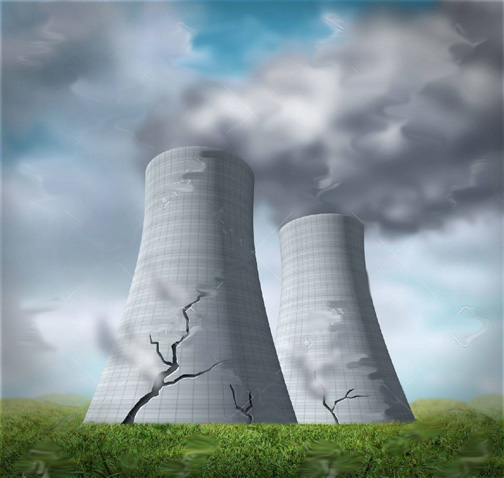
Revealed: 585 cracks in Torness nuclear reactor
Rob Edwards, The Ferret 26th June 2025
The estimated number of cracks in the graphite core of a nuclear reactor at Torness in East Lothian has risen to 585 – the highest so far – prompting fears of a nuclear “meltdown” and calls for its early closure.
In documents released under freedom of information law, the UK Government’s safety watchdog, the Office for Nuclear Regulation (ONR), said that the state of the graphite core posed a “significant challenge” to plans to keep Torness and other ageing nuclear stations running over the next five years.
In November 2024 ONR advised the French operator, EDF Energy, to “pause for thought” before deciding to extend the lives of Torness and other nuclear stations in England. Less than a week later EDF decided to extend the life of Torness from 2028 to 2030.
Campaigners accused EDF of putting profits before safety, and warned that keeping “clapped out reactors” running would endanger the public. It was “time for these ageing reactors to be closed”, they said.
EDF, however, insisted that nuclear safety was its “overriding priority” and that it would not consider operating Torness unless it was “confident it was safe”. Planned closure dates for reactors were “kept under review”, it said.
ONR said that cracking was “a well known phenomenon”, and that the number of cracks was “acceptable”. It stressed that the risks were “tolerable”, and that it would not allow any nuclear plant to operate “unless we are satisfied that it is safe.”
The Ferret previously reported that 46 cracks had been detected in April 2024 in the graphite bricks that surround the highly radioactive uranium fuel powering one of the two reactors at Torness. The first three cracks were found in February 2022.
But only a small proportion of the bricks were actually inspected, and no estimate has previously been given for the total number of cracks across the core. Following a freedom of information request by The Ferret, ONR has now disclosed that 59 cracks were found in a similarly limited inspection in March 2025.
In its response, ONR said that this “equated to around 585 cracks when forecast across the central area of the core where cracking is expected”. The high number of cracks did not “challenge safety margins” at Torness, it said.
EDF confirmed that it had found 59 cracks in the graphite bricks it sampled in March 2025. This suggested that in total around a third of the central part of the core had cracking, equivalent to about 585 cracks, it said.
ONR also revealed that another inspection in May 2025 discovered the first crack in the second reactor at Torness. It started generating electricity later than the first reactor.
Torness nuclear power station, near Dunbar, was officially opened in May 1989 by the then Conservative prime minister, Margaret Thatcher. The site had been the target of anti-nuclear protests since 1978.
Scotland’s other nuclear power station at Hunterston in North Ayrshire was closed down in January 2022, more than a year earlier than planned. This followed the discovery of an estimated 586 cracks in its two reactors.
‘Pause for thought’ on Torness
ONR also released to The Ferret the results of its assessment of EDF’s 2024 review of extending the lives of Torness, and other advanced gas-cooled reactors (AGRs) at Heysham, near Lancaster, and Hartlepool, on the north east coast of England.
Three scenarios were reviewed. One assumed Torness closed as planned in 2028, a second assumed its operation was extended to 2030, and a third envisaged keeping it going until 2032.
ONR concluded that because of cracking and other issues, “graphite represents one of EDF’s significant challenges for lifetime extension”. It also highlighted a series of other potential ageing problems with AGRs, including risks from leaking boilers, failing equipment, and corrosion.
“It is possible that safe operation of certain components might be undermined due to life extension,” ONR said. There were a number of issues which had not been fully covered in EDF’s review, it argued.
“Although these are not considered a blocker to potential life extensions, ONR expects EDF to manage and resolve these issues as part of its lifetime management of the AGRs,” ONR added.
“Moreover, coupled with the aspects identified by EDF in the submissions, this should give EDF pause for thought when reaching a decision on AGR lifetime extensions.”
ONR wrote to EDF with its advice on 27 November 2024. On 3 December – less than a week later – EDF decided to extend the life of Torness from 2028 to 2030, and to extend the lives of its English AGR stations.
Another document released by ONR was a June 2024 assessment of the “structural integrity” of the graphite core of the more badly cracked reactor at Torness. The majority of the 35-page document was redacted “for the purposes of safeguarding national security”.
The ONR assessment found “shortfalls” in the crack predictions made by EDF, and concluded that this “raises a question” over the company’s “ability to predict the future core state”. At the time ONR nevertheless gave EDF permission to keep running Torness on the grounds that the risks were “tolerable”.
The nuclear critic and consultant, Peter Roche, argued that there was “a significant design difference” which could make cracking at Torness worse than at Hunterston. “Graphite debris in the fuel channels or misshapen bricks could compromise the operator’s ability to keep the fuel cool and in a worst case lead to a meltdown,” he claimed.
This risked releasing radioactivity into the environment. “Clearly it’s time for these ageing reactors to be closed,” Roche said. “Keeping them open would be gambling with public safety.”
The veteran environmental campaigner, Dr Richard Dixon, accused EDF of trying to cover the costs of building new nuclear plants. “It cannot be a coincidence that running Torness for an extra two years would ease EDF’s major financial woes caused by the massive delays to its reactor projects elsewhere,” he said
“EDF’s inability to complete reactor projects anything remotely like on time or on budget should not mean that the public in Scotland face the extra risk of running clapped out reactors ever further past their sell-by date.”
The Scottish Greens described the Torness cracks as “potentially dangerous”. It was “deeply concerning” that EDF was planning to keep the station going until 2030, according to the party’s energy spokesperson and retiring co-leader, Patrick Harvie MSP.
“It appears that the profits of a giant energy company are being put ahead of safety here in Scotland,” he told The Ferret. EDF is owned by the French government, and earnt £15.6bn (€18.3bn) before interest and taxes in 2024…………………………………………………………..
https://theferret.scot/nuclear-reactor-torness-585-cracks/
Torness ideal for small modular nuclear reactor, says Britain Remade.

a recent analysis of the technology in the United States said that SMR are projected
to be the most expensive of all electricity technologies per KW. The report
by management consultancy firm ICF found that they would cost more than any
other source of electricity, including battery energy storage systems,
solar, wind, combustion turbines and gas.
A UK campaign for accelerated infrastructure-building has said that
Torness is “a prime site” for the next generation of small nuclear
reactors. Britain Remade, a group co-founded by a former energy and climate
advisor to Boris Johnson, says Torness as an ideal target for small modular
reactors of the type the UK Government recently backed. ………………………………….
Britain Remade, which is strongly focussed on campaigning
for “nuclear power alongside the rapid roll-out of renewables” and
infrastructure-building to drive growth, hosted a public meeting in Dunbar
in April. The campaign also conducted a poll which found that half of the
SNP’s voters believe nuclear power should be part of Scotland’s mix of
clean energy generation.
But many in Scotland still maintain a strong objection to nuclear.
Pete Roche, who campaigned against Torness in the
1970s, founding the Scottish Campaign to Resist the Atomic Menace, said:
“The last thing Scotland needs at Torness is more reactors, whether large
or small. Incidentally Rolls Royce’s so-called small reactors at 470MW are
only slightly smaller than Torness’s two 660MW reactors.”
Earlier this month, the UK Government announced its selection of Rolls-Royce SMR as the
preferred bidder “to develop small modular reactors, subject to final
government approvals and contract signature – marking a new golden age of
nuclear in the UK”. Dumitriu said: “SMRs are already being deployed in
Canada. The idea behind them is that because you build them in a factory
and 90% of the construction of them is done in a factory, you’re rolling
them off a production line and because of that you get all of the cost
reductions of economies of scale, of learning by doing and you’re able to
build them a lot cheaper than the current design.”
However a recent analysis of the technology in the United States said that SMR are projected
to be the most expensive of all electricity technologies per KW. The report
by management consultancy firm ICF found that they would cost more than any
other source of electricity, including battery energy storage systems,
solar, wind, combustion turbines and gas.
Campaigner Pete Roche said:
“There is no evidence that small modular reactors will be cheaper,
because almost none have ever been built. In fact it is beginning to look
like small reactors will be even more expensive than large reactors because
they won’t benefit from economies of scale.”
Energy Secretary Gillian Martin said: “Decommissioning Scotland’s nuclear sites will take
decades and will require the retention of a highly skilled workforce.
Meanwhile, the significant growth in renewables, storage hydrogen, carbon
capture and decommissioning are key opportunities for our future energy
workforce in Scotland – with independent scenarios from Ernst and Young
(EY), showing that with the right support, Scotland’s low carbon and
renewable energy sector could support nearly 80,000 jobs by 2050.“
Herald 28th June 2025,
https://www.heraldscotland.com/news/25261384.torness-ideal-small-modular-reactor-says-britain-remade/
Centrica set to take 15% stake in Sizewell C nuclear project.
All sides are keen to reach an investment decision in July after years of delay and
months of negotiations. Centrica is set to take a 15 per cent stake in the
UK’s Sizewell C nuclear project after years of delay and months of drawn
out negotiations. All sides are keen to reach a final investment decision
on the project before parliament’s recess on July 21, according to people
familiar with the discussions.
The final cost of Sizewell — set to be
only the second new nuclear plant built in a generation in Britain —
could be close to £40bn, the Financial Times reported in January based on
assumptions from industry experts. Sizewell’s management has rejected
that figure although no new estimate has been given.
The planned investment
by Centrica means that the FTSE 100 energy company behind British Gas would
have the same size stake in Sizewell C as French state-owned energy group
EDF, which has progressively reduced its position in the Suffolk project to
15 per cent.
Centrica already holds a 20 per cent stake in the parent
company of the entity that operates EDF’s existing nuclear assets in the
UK. The investment in Sizewell could still come in time for French
President Emmanuel Macron’s visit to London for an Anglo-French summit on
July 8. However, timetables have slipped, according to the people familiar
with the situation, putting that goal in doubt.
FT 27th June 2025 , https://www.ft.com/content/5e107953-7f93-4a0d-ba73-6f28213e943c
1 This Month

of the week – Shut Down Drone Warfare!


Tell the Ukrainian Government to Drop Prosecution of Peace Activist Yurii Sheliazhenko

Petition to revoke the licensing of the Near Surface Nuclear Disposal Facility (NSDF) at Chalk River. https://www.ourcommons.ca/petitions/en/Petition/Details?Petition=e-7247
To see nuclear-related stories in greater depth and intensity – go to https://nuclearinformation.wordpress.com
-
Archives
- April 2026 (68)
- March 2026 (251)
- February 2026 (268)
- January 2026 (308)
- December 2025 (358)
- November 2025 (359)
- October 2025 (376)
- September 2025 (257)
- August 2025 (319)
- July 2025 (230)
- June 2025 (348)
- May 2025 (261)
-
Categories
- 1
- 1 NUCLEAR ISSUES
- business and costs
- climate change
- culture and arts
- ENERGY
- environment
- health
- history
- indigenous issues
- Legal
- marketing of nuclear
- media
- opposition to nuclear
- PERSONAL STORIES
- politics
- politics international
- Religion and ethics
- safety
- secrets,lies and civil liberties
- spinbuster
- technology
- Uranium
- wastes
- weapons and war
- Women
- 2 WORLD
- ACTION
- AFRICA
- Atrocities
- AUSTRALIA
- Christina's notes
- Christina's themes
- culture and arts
- Events
- Fuk 2022
- Fuk 2023
- Fukushima 2017
- Fukushima 2018
- fukushima 2019
- Fukushima 2020
- Fukushima 2021
- general
- global warming
- Humour (God we need it)
- Nuclear
- RARE EARTHS
- Reference
- resources – print
- Resources -audiovicual
- Weekly Newsletter
- World
- World Nuclear
- YouTube
-
RSS
Entries RSS
Comments RSS
 nuclear-news