Nuclear company NuGen is now strangely silent, as China and South Korea moanouvre around funding Moorside project

 CORE 5th Nov 2017, NuGen’s updates on progress with its Moorside new-build project are an
extremely rare commodity these days in the UK. The last update, made six
months ago, reported CEO Tom Samson as saying that ‘a universe of
options’ remained available to NuGen – even with the bankrupt
Westinghouse and its AP1000 reactors apparently kicked into the long grass.
This starry-eyed view of available options must, in reality, be limited to
the current interest expressed in NuGen’s project by Chinese and South
Korean investors, both of whom are likely to insist on the deployment of
their own ‘in house’ reactors.
With little information on progress by the traditionally inscrutable Chinese Government and its state-backed China
General Nuclear (CGN) seeing the light of day recently, South Korea has
been busy number-crunching behind the scenes to work out how the $18Bn
(around £14Bn at today’s exchange rate) might be raised to buy out
Toshiba’s stake in the moribund West Cumbrian project.
A little reported article by Business Korea on 17th October states that a Nuclear Power Plant
Export Strategy meeting in Seoul on 10th October had devised a plan to
raise the $18Bn (around £14Bn at today’s exchange rate) required to take
control of Moorside. Under the plan – and through a ‘project financing
structure’ overseen by the South Korean Government – $7Bn in primary
financial arrangement would be provided by three export financial
institutions – the Export-Import Bank of Korea, the Korea Development
Bank and the Korea Trade Insurance Corporation. An additional $2.2Bn would
come from KEPCO itself and a further $5.6Bn raised jointly from the UK
Government (Infrastructure and Project Authority), the Japan Bank for
International Cooperation and the US Export/Import Bank.
The balance of $3.2Bn would be raised by ‘project operators’. Whether or not these
plans are turned into reality, they provide at least some clue as to what
is happening behind the scenes.
This is more than can be said for NuGen for, despite CEO Tom Samson’s astrological ‘110% certainty’
(curiously upgraded later to 120%) that Moorside would go ahead, its last
public pronouncement on 16th May 2017 advised that it had been forced to
hit the pause button on the project because of investor uncertainty, and
that a strategic review had been initiated on Moorside’s future.
Since then, having virtually disappeared as an entity from the Cumbrian radar
screen and consigned its local stakeholders and consultees to the darkest
black hole, NuGen’s sole website contributions have been confined to the
opening of a memorial beach garden north of Whitehaven and a cycle ride
around Moorside by students from NuGen’s ‘Bright Sparks’ educational
programme. http://corecumbria.co.uk/briefings/south-korea-number-crunching-its-way-to-moorside/
UK public being asked for views on Wylfa nuclear waste management
 Wales Online 6th Nov 2017, The public are being asked for the views on how the radioactive waste from
the new nuclear power station at Wylfa is managed and disposed of. Natural
Resources Wales (NRW) is asking people for their views on Horizon Nuclear
Power’s application for an environmental permit.
The application is for a radioactive substances regulation permit which details how Horizon will
manage, discharge, transfer and dispose of radioactive material and waste
from the power station. As part of the process NRW is holding a public
consultation on the content of application. It’s the first in a series of
permits that the company needs to operate its planned Wylfa Newydd power
station at Tregele, Anglesey. To be granted this permit Horizon must
demonstrate how it will minimise the amount of radioactive waste it
generates and discharges.
http://www.walesonline.co.uk/business/business-news/youre-worried-nuclear-waste-your-13863171
UK energy experts recognise that renewable technologies are far cheaper than nuclear
University of Manchester 7th Nov 2017, ‘Business as usual’ is not an option for the UK’s nuclear energy
sector; our energy companies’ ‘regressive and unjust funding
approach’ is causing fuel poverty, and the Northern Powerhouse could play
a key role in shaping the UK’s climate change future. These are just some
of the opinions in a new publication, ‘On Energy: How can evidence inform
future energy policy?’, by The University of Manchester.
It is being launched on Wednesday 8th November at the House of Commons. The report
brings together some of the country’s leading energy, policy, and climate
change scientists, academics and experts to offer their opinions and
solutions for the UK’s most pressing energy issues. The publication draws
on expertise from across The University of Manchester and external
collaborators, including Lord Jim O’Neill, Director of the Dalton Nuclear
Institute, Professor Francis Livens, leading climate change researcher,
Professor Alice Larkin and SUPERGEN Bioenergy HubDirector, Professor
Patricia Thornley.
On the UK’s nuclear policy, Professor Livens and his
co-authors from DNI, Professors Tim Abram, Juan Matthews and Richard
Taylor, say the industry needs to recognise that its competitors in the
renewable sector, such as wind, solar and wave, are substantially cheaper.
To combat this he says more innovation is needed to reduce the cost if it
is to be taken seriously as an alternative to fossil fuels.
http://www.manchester.ac.uk/discover/news/is-the-uks-energy-policy-fit-for-purpose/
Negativity around the China-UK nuclear power deal, as China gambles on a nuclear export industry
 China’s nuclear power play falters in Britain http://www.atimes.com/article/chinas-nuclear-power-play-falters-britain/ Beijing’s planned investment in UK’s civil nuclear program, part of its One Belt One Road initiative, is on increasingly shaky ground, NOVEMBER 4, 2017 When it recently emerged that China General Nuclear Power Corporation (CNG) had refused to give a visiting team of UK government inspectors the security details for one its reactors, a slew of negative headlines followed in UK media about Chinese involvement in Britain’s power supply.
The inspectors, from the UK’s Office for Nuclear Regulation, had traveled to China to examine Fangchenggang’s Unit 3 nuclear power plant and its Hualong One third-generation pressurized reactor.
The Hualong One design is earmarked for a planned Chinese-built nuclear power plant at Bradwell on England’s east coast and the inspectors were in China to start a complex four-year Generic Design Assessment [GDA] process that will end, the Chinese hope, with the reactor’s approval for use in Britain.
China is the world’s fastest expanding nuclear power producer and has been clear about its desire to be a leading exporter, too. Exporting nuclear power is an objective of Xi Jinping’s Belt and Road initiative and nuclear is included as a core energy component in the country’s latest Five-Year Plan. At the center of this ambition is the Hualong One.
Developed though a state-led agglomeration of China’s main industry players and initially adapted in the 1990s from a French design, the Hualong One has since 2014 been packaged — along with a package of enticements comprising construction expertise, training support, competitive pricing and financing options — as China’s flagship power brand.
CNG says more than 20 countries have shown interest in the nuclear plant. While the first working Hualong One reactors will be in China, in what are revealingly described as “demonstration units,” two are currently under construction in Pakistan while an Argentinian one reported to be worth US$9 billion is due in 2020. After that should come Bradwell.
The UK has not commissioned a nuclear power station for almost 30 years, but now has plans for six sites. China currently has involvement in three, but that could become four after the bankruptcy of Toshiba’s nuclear arm.
The first two, Hinkley Point C and Sizewell, only saw Chinese involvement after the French state-owned Électricité de France (EDF) voiced concern about growing costs. China agreed to help with finance as long as it got to build a Hualong One at Bradwell, which will be the first wholly Chinese-designed reactor to be built in a western country.
Is this a good investment for China?” asks nuclear risk expert Jerzy Grynblat. “It is very hard to say because, as it comes from the Chinese government, some of the sums will remain hidden. But what is perhaps more important to ask is why the Chinese state wants to invest when no western government will?”
For Grynblat – who, before retiring in early 2017, was Nuclear Business Director at safety assurance consultancy Lloyd’s Register – it is “purely an expansion of political power.”
Grynblat explains that the UK is currently the only western country with a nuclear power program. “They needed to add capacity and replace existing capacity… In terms of power security, the UK was in a bad position and they had to do something.” That gave China an opportunity, says Grynblat. “Bradwell presented the Hualong One with an important foothold in the West.”
The design of the Hualong One, Grynblat believes, is reminiscent of a Swedish reactor from the 1980s. “It surprised me a little,” he says. “It really is quite old fashioned. I am not saying this makes it unsafe, certainly not, but what it does is make use of well known technology. And this makes approvals more straightforward… And the GDA process that they are starting now in the UK is crucial to them. They will be able use this all over the world.”
Antony Froggatt, senior research fellow at think-tank Chatham House and co-author of The World Nuclear Industry Status Reports, agrees. “It’s a first” says Froggatt. “It creates an important benchmark for China and it’s an important sales pitch. The GDA process alone brings kudos.”
Yet Froggatt is not convinced that Bradwell itself will be built. “The industry is changing rapidly. Even since China first got involved in the UK in 2015, the price of offshore wind and solar has got much cheaper. There is also recognition in the UK government that the Hinkley contract cannot be repeated at Sizewell because it has made the cost of the power so expensive… Hinkley is happening but very slowly. They originally said it would be built by 2018. Now they are saying 2025… As such, I am now thinking that Sizewell will not happen.”
“And Bradwell,” says Froggatt, “is a different story again…. It is a new reactor, it’s Chinese and there are the security issues.” He asks: “Will the Chinese ever be able to open up the design specifications?”
The UK’s inspectors were quick to brush off their access issues in China and instead praised CNG’s “high level of expertise and commitment.” But it is not the first time there has been negativity around the China-UK power deal.
Last year, amid rising public opposition, Prime Minister Teresa May felt compelled to suspend the Hinkley project while a “security review” was carried out. Nick Timothy, May’s joint chief of staff at the time, had bluntly warned that the Chinese might be able to “build weaknesses into computer systems which will allow them to shut down Britain’s energy production at will.”
There is a lot at stake here, for both China and the UK. And, much like a nuclear reactor, it looks like this story will run and run.
Wind power from Denmark to supply UK, by underwater cable

State of Green 31st Oct 2017, The Danish Minister for Energy, Utilities and Climate has given the green light to a 750-kilometre-long cable (Viking Link) that will connect Denmark with the United Kingdom. The cable, which will be the world’s longest direct current cable, will help provide Denmark with a highly secure supply and better potential for selling its wind-produced power.
The cable will run from Vejen in southern Jutland to Bicker Fen in Lincolnshire, around 170 kilometres north of London. At 1400 megawatts, its transmission capacity will be the equivalent to one third of Denmark’s total consumption. Strong electricity connections abroad are crucial for a small nation like Denmark.
We will be able to sell our power in a larger market when we have a surplus of renewable energy. At the same time, we get a larger supply of power to Denmark when the wind does not blow and the sun does not shine. Strong electricity connections to our neighbors thus contribute to ensuring cheap and reliable power for consumers and to keep the value of the wind power high. It is for the benefit of all Danes and companies in Denmark, says Minister for Energy, Utilities and Climate, Lars Christian Lilleholt.
https://stateofgreen.com/en/profiles/state-of-green/news/world-s-longest-power-cable-to-connect-denmark-with-uk
Britain’s BBC again fails to address false and misleading information; this time about Moorside nuclear

Radiation Free Lakeland 2nd Nov 2017, There is so much wrong with the BBC’s File on 4 programme that it is
difficult to know where to begin.
The narrrator takes us to “Moorside” which is described a a “barren agricultural land”. What nonsense! – this
land, ancient hedgerows, river, floodplain and what would be affected coast line/sea has several special designations (including international ones) Marine Conservation Zone, RAMSAR, SSSI, Habitats Directive, All of no
consequence apparently when it comes to nuclear who can override such piffling considerations with ‘Imperative Reasons of Overriding Public Interest’.
According to the nuclear industry spokesman Moorside would produce 20% of the UKs electricity – WHAT!!! This went unchallenged by the BBC.
Moorside would produce a mere 7% of the UKs electricity and that is a stretch. The only downside of new build according to the BBC is the finance – what utter nonsense – the profligate finance is the least of it …what about the fact that it is killing us with not only routine releases from reactors but now accelerating “decommissioning” projects which are finding ever more novel ways to dump radioactive waste into the environment.
https://mariannewildart.wordpress.com/2017/11/02/bbc-on-nuclear-decommissioning-dumping-what-a-clever-piece-of-misdirection/
Britain’s Brexit nuclear headache -leaving Euratom – will have to get its own nuclear inspectors
The UK’s race to get its own nuclear inspectors BBC News, 3 Nov 17, The government cannot guarantee  Britain will have enough nuclear inspectors when it leaves the EU, MPs on the business committee were told.
The Office of Nuclear Regulation has recruited four new safeguards inspectors but says it needs more time to fill the specialised roles.
Nuclear minister Richard Harrington said there was “plenty of time” to recruit the staff needed.
But he stopped short of offering a firm guarantee.
The government has stressed that nuclear safeguards – the processes by which the UK shows its civil nuclear material is not diverted into weapons programmes – are different from nuclear safety – the prevention of nuclear accidents.
Mr Harrington said the UK was committed to leaving Euratom, the agency which has regulated the nuclear industry across Europe since 1957, at the same time as it left the EU in March 2019.
Industry figures have warned about significant disruption to energy production in the UK if there is not a new inspection regime ready to go to, to replace the one currently overseen by Euratom.
The four senior figures who gave evidence to the business committee on Wednesday said there was no benefit to the UK from leaving Euratom………
Mr Harrington was also quizzed by the MPs about feared shortages of less skilled workers needed to build new nuclear plants, such as steel workers and welders.
Ben Russell, of Horizon Nuclear, the Japanese-owned firm planning to build a new nuclear reactor at Wylfa Newydd, on Anglesey, called for a special visa for infrastructure workers post-Brexit so they could continue to be recruited from EU countries.
He said projects like HS2 and the third runway at Heathrow meant the demand for staff would outstrip supply and there was not enough time to train up British workers.
David Wagstaff, the civil servant leading talks for the UK on the withdrawal from Euratom, said it would be up to the British government to decide on a post-Brexit visa regime.
‘No relationship’
There was also concern about the future of the world-leading nuclear fusion laboratory based in Oxfordshire, the Joint European Torus (JET), which is mostly funded by the EU……. http://www.bbc.com/news/uk-politics-41836855
Britain’s Foreign Secretary Boris Johnson to USA in bid to save the Iran nuclear agreement
Boris Johnson to travel to US in bid to save Iran nuclear deal
Foreign secretary will try to convince senators to back deal he has labelled ‘an amazing triumph of diplomacy’, which Donald Trump is threatening to repeal, Guardian, Patrick Wintour, 2 Nov 17, Boris Johnson will travel to Washington next week in a bid to persuade US senators not to abandon the Iran nuclear deal or to impose fresh sanctions against Tehran that could jeopardise the deal…….
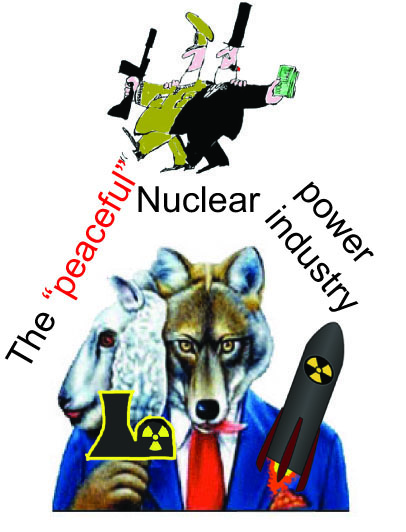
Evidence that Britain’s nuclear power industry subsidises nuclear weapons
channelling revenues ultimately funded by electricity consumers towards a joint civil-military national nuclear industry base
Evidence from Andy Stirling and Philip Johnstone: As the early part of the process of the BEIS Committee Brexit Inquiry has unfolded, the salience of this civil/military link is being further underscored in statements in which a number of relevant senior civil servants and ministers are confirming that the priority attached to UK military submarine capabilities is deeply entangled in strategic commitments to civil nuclear industry strategy 6 . Several possibly serious implications therefore arise in relation to the particular circumstances of Brexit.
 Parliament 27th Oct 2017 http://data.parliament.uk/writtenevidence/committeeevidence.svc/evidencedocument/business-energy-and-industrial-strategy-committee/leaving-the-eu-implications-for-the-nuclear-industry/written/71514.pdf
Written evidence from the University of Sussex, Science Policy Research Unit (BRN0015)
- We submit this evidence to the inquiry on Brexit and the Implications for UK Business.s. The content draws on a detailed submission by the same authors to the Public Accounts Committee (PAC), discussed at the PAC witness session on Monday 9 th October 2017, which informed illuminating exchanges with senior civil service witnesses to that Committee and was subsequently published by PAC 1 . A number of potentially important implications arise in relation to issues under discussion around Brexit.
2: This earlier evidence to PAC addressed the otherwise difficult-to-explain intensity of Government commitments to civil nuclear power in the face of growing recognition of the relative competitiveness of alternative UK low carbon energy investments. Multiple grounds were found for inferring that this persistent Government attachment is due, at least in part (and with no public discussion), to perceived needs to engineer a cross-subsidy from electricity consumers to help cover costs of a national nuclear industrial base that is deemed to be essential for maintaining UK military nuclear infrastructures 2 .
3: The issues that arise are central to the general remit of the BEIS Committee. For instance, this recent evidence to the PAC documents significant statements by the National Audit Office, which suggest that UK military nuclear infrastructures are being bolstered by revenue flows to UK industry strategy in other sectors 3 . Many statements in support of this interpretation are cited from defence policy discussions, acknowledging incentives to “mask” costs of military industrial strategy behind civil energy programmes 4 . As a result, it is evident that Government-negotiated, high-price, guaranteed long-term contracts for civil nuclear power, are channelling revenues ultimately funded by electricity consumers towards a joint civil-military national nuclear industry base, whose full costs probably could not otherwise feasibly be covered by defence budgets alone. Resulting implications for wider industry strategy and energy policy have received effectively zero Parliamentary or other policy scrutiny.
4: Much other evidence was presented in submission to PAC, concerning this evidently significant-buthidden influence on civil industry policy by military nuclear considerations 5 . As a result, it seems that undetermined but likely large cross-subsidies are being engineered from UK electricity consumers, in order to cover otherwise insupportable costs of military nuclear industry strategies. In the present evidence we outline key implications for the BEIS Committee inquiry on nuclear implications of Brexit
5: As the early part of the process of the BEIS Committee Brexit Inquiry has unfolded, the salience of this civil/military link is being further underscored in statements in which a number of relevant senior civil servants and ministers are confirming that the priority attached to UK military submarine capabilities is deeply entangled in strategic commitments to civil nuclear industry strategy 6 . Several possibly serious implications therefore arise in relation to the particular circumstances of Brexit.
6: First, there are well-documented general concerns that Brexit-related pressures on the UK industrial base are likely to have a particular impact on large infrastructure projects, specifically including new nuclear build. If these developments unfold, then pressures are likely to intensify around the interlinkages between UK civil and military nuclear infrastructures. With foregone opportunities for industry strategy in other sectors (like offshore wind), the these Brexit-related implications for UK industrial strategy are central issues for the BEIS Committee, which remain unexplored elsewhere 7 .
7: Second, there are concerns that the economic effects of Brexit may include current and possible continuing future depreciation of Sterling. If these effects transpire as variously predicted, then economic pressures will likely intensify to find ways to cross-subsidise growing military nuclear costs in some fashion that mitigates the impact on public spending. Brexit may thus exacerbate incentives to ‘mask’ otherwise-unbearable wider industrial costs of military nuclear submarine infrastructures behind strategic support for civil nuclear supply chains ultimately funded by electricity consumers 8 .
8: Third, there are prospects that demand for UK access to overseas specialist nuclear skills may be aggravated by Brexit-related constraints on labour movement. If this occurs, then competition can be expected to accentuate between recruitment needs for national civil and military nuclear industries. Since key military nuclear skills in particular must for obvious reasons be disproportionately UKbased, so Brexit may reinforce upward pressures on costs of military nuclear infrastructures and so help further increase the pressures for cross-subsidy documented in the earlier PAC evidence 9
9: Fourth, there is the likely effect of Brexit in reinforcing pressures towards Scottish independence. If this transpires, then strong opposition in Scotland to continued associations with the current UK nuclear weapons infrastructure, mean that Brexit will make it more probable that a move will be required of key military nuclear facilities away from Scotland. The result will be a very large Brexitrelated increase in military nuclear costs, further exacerbating pressures for cross-subsidies 10 . 10: We hope it is useful to draw these emerging issues to the attention of the BEIS Committee – both in relation to the above specific repercussions around Brexit and to their wider implications for UK energy strategies, industrial policy and more general qualities of national democratic accountability 11 . October 2017
Extensive references are given on the original document .
UK Labour government would sign global anti-nuclear weapons treaty
Jeremy Corbyn’s shadow minister for peace has said a Labour government would sign a global anti-nuclear weapons treaty that would effectively confine the Royal Navy’s Trident submarines to port. Fabian Hamilton MP, in comments that risk reigniting the party’s internal divisions over the future of the UK’s nuclear deterrent, told i that while the issue of
Trident was “dead in the water” as it had been approved by Parliament,
a future Corbyn government would sign a UN treaty that bans nuclear weapons
and prohibits their use.
Labour included a promise to renew Trident in its
election manifesto, but Hamilton said that Corbyn’s leadership of the
Labour party presented a “golden opportunity” for opponents of nuclear
weapons, admitting the issue was still a “thorn in the side” of the
party.
https://inews.co.uk/essentials/news/trident-labour-sign-un-treaty-banning-nuclear-weapons/
Drug use by British navy sailors on nuclear Trident submarine
British navy sailors on nuclear Trident submarine fired after failing drug tests, ABC News, 29 Oct 17, Britain’s navy has fired nine sailors serving on a nuclear-armed submarine after they tested positive for cocaine, the country’s defence ministry says.
The crew were from HMS Vigilant, one of four Royal Navy submarines which operate the Trident nuclear missile system.
“We do not tolerate drugs misuse by service personnel. Those found to have fallen short of our high standards face being discharged from service,” a Royal Navy spokesman said.
The Daily Mail newspaper reported that the sailors had failed drugs tests while the submarine was docked in the United States to pick up nuclear warheads and undergo work, and the sailors had been accommodated in hotels on shore……http://www.abc.net.au/news/2017-10-28/british-navy-sacks-nuclear-submariners-over-cocaine-use/9096396
Extreme caution needed, as controlled explosions of chemicals are continued at Sellafield nuclear facility
Bomb disposal experts are continuing controlled explosions of chemicals at
the Sellafield nuclear reprocessing plant. It follows a routine audit of
chemicals stored in a laboratory. The Army’s explosive ordnance disposal
team have been on-site since last weekend dealing with a canisters of
solvents present since 1992.
Sellafield Ltd said there were concerns they
could become hazardous if exposed to oxygen. A spokeswoman said the
solvents are “widely used in industry” but “extreme caution” is being
exercised. The disposal will continue over the weekend with the site
operating as normal with the exception of the laboratory.
http://www.bbc.co.uk/news/uk-england-cumbria-41783748
WEST Somerset Council concerned about EDF’s £19.6 billion for huge stranded waste nuclear storage
 WEST Somerset Council’s cabinet is being asked to challenge Hinkley Point
C power station’s plans to change the way it will deal with waste nuclear
fuel until the council gets more information.
At its meeting next Wednesday, the cabinet committee will be recommended to object to EDF
Energy’s application to the Government’s planning inspectorate for
“non-material changes” to the £19.6 billion project. This would allow
an interim spent nuclear fuel store with a life of 120 years to be
increased in size – up in length from 150 to 229 metres, eight metres wider
and five metres higher, making it one of the biggest buildings on the site.
EDF claims a larger building is needed because it has been decided to keep
the nuclear waste dry in concrete and steel cannisters rather than, as
originally planned, in wet storage in a pool.
http://www.wsfp.co.uk/article.cfm?id=108485&headline=Concern%20over%20bigger%20Hinkley%20waste%20fuel%20building§ionIs=news&searchyear=2017
Prof Dieter Helm recommends a carbon price to reduce UK’s energy costs
Environmental Research Web 28th Oct 2017, In his wide ranging review of energy costs for the UK government, Prof.Dieter Helm says ‘the cost of energy is too high, and higher than
necessary to meet the Climate Change Act (CCA) target and the carbon
budgets. Households and businesses have not fully benefited from the
falling costs of gas and coal, the rapidly falling costs of renewables, or
from the efficiency gains to network and supply costs which come from smart
technologies. Prices should be falling, and they should go on falling into
the medium and longer terms’. And he sets out his ideas for enabling that
to happen.
To simplify things, he wants to combine support systems and
taxes into a universal carbon price and a unified equivalent firm power
auction process. http://blog.environmentalresearchweb.org/2017/10/28/the-helm-energy-cost-review/
Nearly 60,000 people petition to stop radioactive mud being dumped off Cardiff.
 Wales Online 26th Oct 2017, Nearly 60,000 people sign petitions to stop radioactive mud being dumped
off Cardiff. Campaigners say not enough research has been done on the
dangers of the mud from the decommissioned Hinkley A nuclear reactor.
http://www.walesonline.co.uk/news/wales-news/nearly-60000-people-sign-petitions-13817765
Somerset Live 25th Oct 2017, Concerns have been raised after more than 200,000 tonnes of ‘radioactive’
mud from Hinkley Point power station will be dumped in the Bristol Channel.
EDF Energy, the company behind Hinkley Point C development in Bridgwater,
has obtained a marine licence to dump up to 200,000 cubic metres of dredged
material in the Bristol Channel – just a mile off Cardiff Bay. The
dredging licence was granted to the French energy giant in 2013 and it
gives them the right to discharge materials at Cardiff Grounds, a sandbank
in the Bristol Channel.
http://www.somersetlive.co.uk/news/somerset-news/radioactive-mud-hinkley-point-dumped-672554
1 This Month





PLEASE OPPOSE HR 8255 AND S.3639 – bills would accelerate satellite deployment, with no environmental review or safeguards – https://ncstd5li.quorum.us/campaign/169331/
To see nuclear-related stories in greater depth and intensity – go to https://nuclearinformation.wordpress.com
-
Archives
- October 2026 (29)
- September 2026 (339)
- August 2026 (330)
- July 2026 (355)
- June 2026 (287)
- May 2026 (306)
- April 2026 (356)
- March 2026 (251)
- February 2026 (267)
- January 2026 (308)
- December 2025 (358)
- November 2025 (359)
-
Categories
- 1
- 1 NUCLEAR ISSUES
- business and costs
- climate change
- culture and arts
- ENERGY
- environment
- health
- history
- indigenous issues
- Legal
- marketing of nuclear
- media
- opposition to nuclear
- PERSONAL STORIES
- politics
- politics international
- Religion and ethics
- safety
- secrets,lies and civil liberties
- spinbuster
- technology
- Uranium
- wastes
- weapons and war
- Women
- 2 WORLD
- ACTION
- AFRICA
- Atrocities
- AUSTRALIA
- Christina's notes
- Christina's themes
- culture and arts
- Events
- Fuk 2022
- Fuk 2023
- Fukushima 2017
- Fukushima 2018
- fukushima 2019
- Fukushima 2020
- Fukushima 2021
- general
- global warming
- Humour (God we need it)
- Nuclear
- RARE EARTHS
- Reference
- resources – print
- Resources -audiovicual
- Weekly Newsletter
- World
- World Nuclear
- YouTube
-
RSS
Entries RSS
Comments RSS

