EDF’s Heysham 1 and Hartlepool nuclear plants to operate for further 12 months
New Civil Engineer, 02 Sep, 2025 By Tom Pashby
The operational lives of the Heysham 1 and Hartlepool nuclear power plants have been extended by 12 months by their operator EDF………………
Hartlepool, Heysham 1, Heysham 2 and Torness all underwent reviews by EDF in December 2024 to assess how long they can continue to generate electricity. Heysham 1 and Hartlepool were scheduled to stop producing power in March 2027.
At the time, an EDF spokesperson explained to NCE that the best-case scenario for the Heysham 1 and Hartlepool power stations was that they could justify a one-year extension. However, that was caveated with a need to await the outcomes of “important inspection and safety case milestones”, which were due to be completed in 2025.
Those milestones have now passed and the results were positive for the power stations. When EDF’s executive and licensee boards met yesterday, 1 September, they gave approval to extend the lives of the nuclear stations, so Heysham 1 and Hartlepool will now likely operate through to at least March 2028.
A statement from EDF on 2 September said: “Heysham 2 and Torness, which are both scheduled to generate until March 2030, were not in scope for this review after a two-year extension was granted last year.”
EDF still hopes to see all four AGRs continue producing electricity for as long as possible, so it can be expected to conduct further reviews down the line, but these reviews do not have set dates for completion, the spokesperson told NCE……………………………………………………………………………………………………………………………
AGRs now well past their sell-by date’ – anti-nuclear campaigner
Nuclear Free Local Authorities secretary Richard Outram told NCE that the extension of the plants’ operating lives raises concerns about the possibility of graphite cracking.
“The EDF announcement is unsurprising. Although company bosses may crow a lot about the preservation of local jobs, the NFLAs suspect this is actually about the preservation of EDF’s bottom line,” he said.
“Given the parlous state of the French parent company’s finances, the intermittent output of the domestic fleet, and the vast overspend on Hinkley Point C, EDF has a clear incentive to keep open for as long as possible any nuclear plant in the portfolio which actually operates and generates profits.
“The NFLAs have previously expressed our concerns with the Office for Nuclear Regulation that these ageing AGRs are now well past their sell-by date, with graphite cracking being a real worry, as seen recently at the sister AGR plant at Torness.
“We shall continue to monitor the situation and ask challenging questions of regulators and the industry because public safety and environmental harm must never be compromised in favour of company profit.”………………………………………………. https://www.newcivilengineer.com/latest/edfs-heysham-1-and-hartlepool-nuclear-plants-to-operate-for-further-12-months-02-09-2025/
The lunacy of Britain’s Sizewell C nuclear project

Tom Burke:
All of these problems have been pointed out to the Government
very often, by many energy experts for several years. Even so this only
tells you part of the lunacy of this project. Britain’s electricity
consumers will start paying for Sizewell C now and will go on doing so
without receiving any electricity from it for the next 12-15 years.
They are in effect compulsory investors. However, unlike the private sector
investors in the project they will not receive a handsome double digit
returned on their forced capital investment. Instead they will then be
forced, as the Bloomberg diagram shows, to pay about three times as much
for Sizewell C’s electricity than would otherwise be available to them from
other sources as cheaper electricity will be forced off the grid in order
to preferentially take that from Sizewell C. It is truly said that those
whom the Gods destroy they first make mad.
FT 27th Aug 2025,
https://www.ft.com/content/ee89bce2-a3e9-48ed-82eb-85916eb24777#comments-anchor
East Lothian Council calls for a study into new nuclear at Torness
EAST Lothian Council will ask the UK Government to carry out a study into
the possibility of creating a new nuclear power station at Torness. The
Council will ask the UK Government to fund the study. The Tories and Labour
supported the motion; SNP and Greens opposed it.
Musselburgh Courier 28th Aug 2025, https://www.pressreader.com/uk/musselburgh-courier-SAXC/20250828/281548002004589
An Elbit-Bain Consortium is Nightmare Fuel: the UK Government Must Not Award £2bn Contract to These Corporate Horrors
Why are Israel’s largest arms firm and a company mired in a corruption scandal even being considered for training British troops?
ANDREW FEINSTEIN, PAUL HOLDEN and JACK CINAMON, DECLASSIFIED UK.
28 August 2025
Britain’s Ministry of Defence might imminently award a 15 year contract, worth £2.5bn, to a consortium headed by the British subsidiary of the Israeli arms firm Elbit Systems and including the US management consultancy firm, Bain and Company.
If successful, Elbit’s consortium would be responsible for training as many as 60,000 members of the UK military.
The consortium seems well-placed to win the contract; it is, in fact, one of only two shortlisted and preferred bidders.
The Ministry of Defence has already given the consortium a £2m contract so that it can develop its proposals further.
This is unacceptable. And it is frankly unbelievable that this consortium is even in the running considering its track record.
Elbit Systems UK is the fully-owned subsidiary of Elbit Systems Limited. Elbit Systems Limited is headquartered in Tel Aviv and is listed on both the Israeli and US stock exchanges.
Elbit is one of the two largest Israeli weapons manufacturers and is central to the IDF’s operations, providing 85% of its drones. Elbit International is also a major contributor to the F-35 fighter jet program, bragging that it plays a ‘critical role’ in the ‘success of the world’s most advanced fighter jet.’
In July 2025, Francesca Albanese, the UN Special Rapporteur for the Occupied Palestine Territories, published an excoriating report setting out corporate complicity in Israel’s “plausibly” genocidal conduct in Gaza – for which she was subsequently sanctioned by Donald Trump.
Her report is clear that Elbit forms a central part of Israel’s military-industrial complex, which has become “the economic backbone of [Israel].”
“Elbit has cooperated closely on Israeli military operations, embedding key staff in the Ministry of Defence,” Albanese points out, further noting that Elbit provides “a critical domestic supply of weaponry.”
Bain
But we’re also deeply concerned about Elbit’s partner, Bain and Company. Bain and Company (not to be confused with the mega hedge fund Bain Capital, which confirmed to us that it is not involved in the Elbit consortium) is a US-based management consultancy firm. …………………………………………………………………….. https://www.declassifieduk.org/labour-must-not-award-elbit-a-2-billion-military-deal/
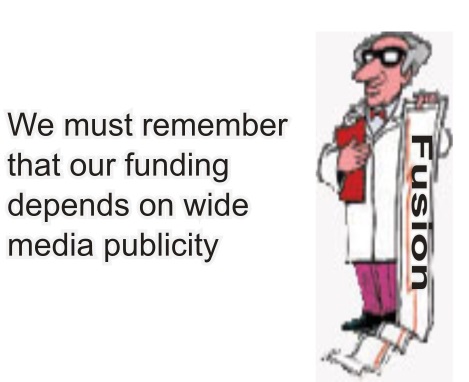
On fusion liability, Energy Minister completely sidelines the issue.
NFLA 27th Aug 2025
NFLA Secretary Richard Outram is disappointed that the new Energy Minister has completely missed the point that taxpayers should not be on the hook for unlimited liabilities to the nuclear fusion industry ‘resulting from incidents involving nuclear matter or emissions of ionising radiation arising from fusion activities relating to the STEP programme’.
On July 21, Climate Minister Kerry McCarthy issued a Departmental Minute to Parliament indicating that the Government will assume these liabilities for STEP (the Spherical Tokamak for Energy Production) project, the fusion experimental plant being built on a former power station site in West Burton with taxpayer money.
Richard wrote to his MP, Debbie Abrahams protesting that ‘As a citizen, I do not want my future taxes in hoc to a private company whose insurance risk for its nuclear activities would reside 100% with the future taxpayer. The procedure is certainly experimental; it may also be risky’. He asked that a request be placed with the Minister ‘with a full published risk analysis for STEP’ prior to a Parliamentary debate and vote.
In response, Ms Abrahams advised Richard that she had written to ‘the Department for Energy Security and Net Zero to make further enquiries about the STEP programme and make representations about your concerns’.
Ms McCarthy has now written back with a standard response in which she waxes lyrical about the supposed benefits that will be delivered through nuclear fusion, yet this is a technology described in the minister’s response as ‘nascent’, a euphemism for currently non-functioning.
The Minister makes a summary assessment that the risk presented by fusion is low, yet concedes ‘there is no private insurance market to provide cover to UKIFS (UK Industrial Fusion Limited) or their industry partners for liabilities in the unlikely event that radiological material or radiation is released from STEP outside of permit conditions‘.
This could suggest that the private sector might not want to insure any emerging nuclear fusion market because of the risk it presents, and if this is the case His Majesty’s Government might ultimately also have to indemnify nuclear fusion operators other than STEP in the future.
The Ministerial Direction effectively saddles the British taxpayer with responsibility to indemnify UKIFS ‘for an unlimited amount of money, for an unlimited time’.
And there is ambiguity in the timescale as some sources suggest STEP will be operational by 2040, whilst the Minister’s statement of 21 July says ‘by the 2040s’. This could mean 2049.
Finally, Richard was gratified to hear that the Minister’s letter was made in response to ‘a number of constituents’ suggesting some level of public disquiet with the Government’s decision………………………………………………………………………………………………………………………. https://www.nuclearpolicy.info/news/on-fusion-liability-energy-minister-completely-sidelines-the-issue/
The nuclear fusion delusion -Government proposals re Nuclear Fusion Siting Policy

Twelve months after a consultation on a proposed new siting policy for
nuclear fusion concluded in July 2024, the Department for Energy Security
and Net Zero finally published the government’s response to the
submissions received. This new policy (EN-8) mirrors that under development
for nuclear fission (EN-7). Consequently, the NFLAs submitted a response to
both consultations which shared many similarities.
It is clear from the
flavour of the government response that the new Climate Minister Kerry
McCarthy MP has like her predecessors been drinking from the fusion ‘Kool
Aid’, continuing to believe that fusion technology will be deployable on
time and at scale to provide a remedy to climate change.
NFLA 26th Aug 2025, https://www.nuclearpolicy.info/wp/wp-content/uploads/2025/08/A438-NB324-Govt-proposals-over-nuclear-fusion-siting-policy-Aug-2025.pdf
Is the UK’s giant new nuclear power station “unbuildable”?

The design of the UK’s latest nuclear power station is “terrifying”,
“phenomenally complex” and “almost unbuildable”, according to Henri
Proglio, a former head of EDF, the French state-owned utility behind the
project.
One month after the final green light for Sizewell C, 1,700
workers are on site in Suffolk, on the UK’s east coast, preparing the
sandy marshland for two enormous reactors that will eventually generate
enough electricity for 6mn homes. The plant will be a replica of the
European Pressurised Reactor (EPR) design that is running four to six years
late and 2.5 times over budget at Hinkley Point C in Somerset, which has
had problems wherever it has been built, in France, Finland and China.
But unlike at Hinkley, where EDF was responsible for spiralling costs and took
a hit of nearly €13bn after running late and over budget, the UK
government and bill payers are on the hook for Sizewell. The state will
provide £36.5bn of debt to fund the estimated £38bn price tag and be
responsible if costs go beyond £47bn
“Being able to build an EPR in the
timeframe, with the planned costs? I don’t think so,” Proglio, a critic
of the design, told the Financial Times. “The EPR is a machine that is
phenomenally complex to build, with more rebar than concrete, it is
terrifying . . . it’s almost unbuildable. As long as the design has
not changed, the difficulty of building will not have changed either.”
FT 27th Aug 2025,
https://www.ft.com/content/ee89bce2-a3e9-48ed-82eb-85916eb24777
Government allocates £154m for plutonium disposal.

Jason Arunn Murugesu, BBC News, North East and Cumbria, 28 Aug 25, https://www.bbc.com/news/articles/czjmzdj7l7wo
More than £150m will be spent by the government to investigate how best to dispose of the 140 tonnes of radioactive plutonium it currently stores at a nuclear plant.
Sellafield in Cumbria holds the world’s largest stockpile of the hazardous material.
Earlier this year, the government announced the material would not be reused and instead would be made ready for permanent disposal deep underground and put “beyond reach”.
The Department for Energy Security and Net Zero (DESNZ) said the money would be used to “test and prove” two technologies currently being explored to “immobilise” the highly radioactive material.
Plutonium has been kept at Sellafield for decades and successive governments have kept it to leave open the option to recycle it into new nuclear fuel.
Storing it in its current form is expensive and difficult as it frequently needs to be repackaged because radiation damages storage containers.
In January the government said the safest, most economically viable solution was to “immobilise” its entire plutonium stockpile.
DESNZ said it would spend £154m over five years to allow the Nuclear Decommissioning Authority to build specialist lab facilities at Sellafield which would be used to test two emerging immobilisation technologies – Disposal Mox and Hot Isostatic Pressing.
Dr Lewis Blackburn from the University of Sheffield said the two methods involved converting the plutonium into a “mechanically and chemically stable ceramic material” which could then be disposed of.
Mid Copeland and South Copeland in Cumbria are the only two sites in the UK currently being considered by the government to host a nuclear waste disposal site.
It follows a possible site in Lincolnshire earmarked by the government body Nuclear Waste Services pulling out in June.
OUR NUCLEAR WORLD: PICK YOUR TARGET
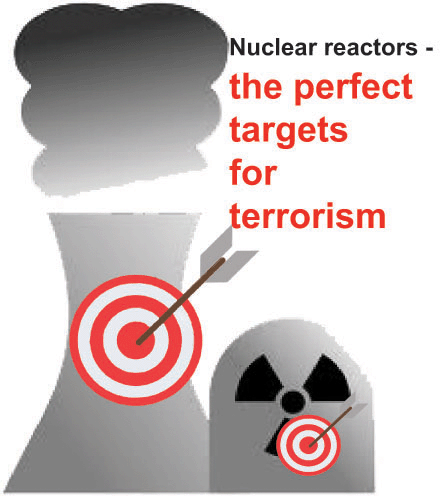
Why use your own nuclear weapons (with all the risks of escalation that this entails) when you can just take out your enemy’s nuclear power stations or nuclear waste facilities?
Jonathon Porritt 27th Aug 2025
I’ve reluctantly come to the conclusion that the only way the nuclear industry’s hype-machine is going to be stopped in its tracks is a Russian cyber-attack on the nine nuclear reactors still operating here in the UK, causing them all to close down and leading to the grid temporarily collapsing. That should do it.
I jest – sort of. But nothing else has worked. In just the last few weeks:
1 The Treasury’s financial modelling for the new power station at Sizewell C (seen by the Financial Times) gives a range of roughly £80 billion to £100 billion, far higher than the official estimate of £47 billion from the Department of Net Zero and Energy Security – which in itself was already nearly double the original cost of £20 billion!
2 The Treasury recently described the Government’s proposals for a new Geological Disposal Facility to deal with the 700,000 cubic metres of spent nuclear fuel as ‘unachievable’. This is a truly extraordinary development – confirming that the UK still has NO idea what to do about its legacy nuclear waste, let alone the waste that will be produced by any new reactors. Yet this got hardly a mention in the media.
3 The Government confirmed that it will be splurging a further £17 billion of taxpayers’ money between now and 2030 on Sizewell C, Small Modular Reactors and fusion energy – even as it continues to ignore the scourge of chronic poverty here in the UK, with 4.5 million children living in poverty – the highest number ever recorded.
On top of which, the industry’s hype-machine is now being turbocharged by the even more powerful hype-machine of AI. Never forget that the nuclear industry is supremely well-equipped to leap onto any and every boondoggle coming down the track – the Bitcoin/Crypto boom a decade ago (which never quite happened), and then green hydrogen. With every hard-to-abate sector queueing up for its share of vanishingly small volumes of green hydrogen, the Knights of Nuclear were up into their saddles just as fast as enough hobby horses could be corralled together to claim that it is only nuclear power that can provide the electricity required.
And now it’s AI. We’ve all read the growth projections for AI-enabled markets – from billions of dollars today to trillions tomorrow. I won’t weary you with the extrapolated increases in electricity consumption for all the new data centres that this entails – but it’s going to be a lot. On a par with the electricity consumption of small countries. New data centres are being built right now, ever bigger, already gobbling up more and more electricity. Nor will I invite you to ask why this AI boom must not – ever, on any terms – be subjected to much deeper scrutiny as to the balance of costs and benefits that will emerge. AI represents the apogee of latter-day technological determinism: if it can be done, then it must and will be done. So suck it up.
I’m not making light of this. The AI-driven nuclear boom in the USA is for real. Donald Trump is getting rid of most regulatory oversight of the nuclear industry, to speed things up, and stock prices of all the publicly traded nuclear companies are up by huge percentages. And it doesn’t seem to matter what kind of nuclear we’re talking about: 40-year-old decommissioned reactors to be given a new lease of life; plans for new big reactors, even in blue states like New York, being fast-tracked; Big Tech applying for construction permits for Small Modular Reactors that are still on the drawing board; and more than $500 billion apparently raised for new fusion reactors – seriously!
It’s not (yet) quite so insane here in the UK, but the signals are worrying. Strenuous efforts are being made by Ministers to force the Office for Nuclear Regulation to fast track any old nuclear proposal. Sweetheart deals with the private sector are being sorted out – regardless of the costs to taxpayers. Rational, evidence-based decision-making is a long-gone memory.
What exactly lies behind this mania? In the timeless words of Sherlock Holmes: ”once you have eliminated the impossible, whatever remains, no matter how improbable, must be the truth”.
So, let’s try that out for size in the context of nuclear power. It would surely be completely impossible for any responsible government pursuing a Net Zero energy strategy to prioritise nuclear power over all other options, given that:
- Large-scale nuclear reactors are now by far the most expensive option (on a Levelised Cost of Energy basis). UK Government figures in July this year showed new nuclear at £109 per MWh, offshore wind at £44MWh, large-scale solar at £41MWh and onshore wind at £38MWh.
- Small Modular Reactors (SMRs) don’t yet exist, but all experts agree their electricity will be even more expensive than that of large reactors – precisely because they can’t achieve the same economies of scale.
- The contribution of both big and small new reactors to a Net Zero electricity system in the UK will be literally ZERO before 2035 at the very earliest.
- Both big and small reactors will continue to produce significant levels of nuclear waste, adding to a waste crisis to which (as already mentioned) we have no long-term solution.
- ALL nuclear facilities pose a significant security risk, both from the point of view of cybersecurity (more later) and the very real possibility of physical attacks through ‘hostile third parties’.
Which brings us to the extraordinarily improbable truth of it: these days, nuclear power has little to do with electricity generation, and a whole lot more to do with the maintenance of the UK’s nuclear weapons capability……………………………………………………………………
It took a while for the UK Government to catch up, but in its latest Nuclear Roadmap it no longer beats around the bush. There are multiple references to the synergies between nuclear power and nuclear weapons: “this Government will proactively look for opportunities to align delivery of the civil and nuclear defence enterprises….it acknowledges the crucial importance of the nuclear industry to our national security, both in terms of energy supply and the defence nuclear enterprise”, and so on.
Big corporations are loving the fact that this is now out in the open. Bechtel, Babcock and Wilcox, AECOM, Rolls Royce – they’ve all spent decades feeding at the trough of either overt or hidden cross-subsidies between nuclear power and nuclear weapons. Rolls-Royce has been one of the most outspoken advocates for Small Modular Reactors, arguing their importance back in 2017 “to relieve the Ministry of Defence of the burden of retaining the skills and capability”………………………………………………………………….
As nuclear nations double down on nuclear power, it’s blindingly obvious that they are ramping up serious threats to national security. Nowhere is this clearer than with the drive to develop SMRs. Most designs currently on the drawing board (that are not light water reactors) will be using as their fuel high-assay, low-enriched uranium – or HALEU, to use the jargon. When it’s first extracted from the earth, uranium concentrations are usually around 1% of the total volume of the ore. HALEU fuel has to be enriched up to around 19% – just below the 20% threshold for the kind of highly-enriched uranium judged to be viable for the manufacture of nuclear bombs. And almost all HALEU fuel comes from Russia!
Beyond that, every nuclear facility (old and new) becomes a target for hostile third parties. Welcome back to the inconceivably scary world of nuclear cyberwarfare. Despite the highest grade of propaganda promoted by the Ministry of Defence – that all nuclear facilities are ‘bomb-proof’ (I kid you not!) – most cyber-experts grudgingly acknowledge that this is just bullshit when it comes to cyber-defence.
And we have no finer example of that than Sellafield, one of the most hazardous nuclear waste and decommissioning sites in the world, sprawling across 2 square miles on the Cumbrian coast. Back in December 2023, a Guardian exclusive revealed that Sellafield had been hacked into ‘by cyber groups closely linked to Russia and China’ since 2015 – despite years of cover-ups by senior staff. “The full extent of any data loss and any continuing risks to systems was made harder to quantify by Sellafield’s failure to alert nuclear regulators for several years”. The denials didn’t last long. The Guardian’s painstaking research over 18 months had got Sellafield bang to rights. In October 2024, it was fined £400,000 by the Office For Nuclear Regulation after it pleaded guilty to criminal charges over years of cyber-security breaches. Astonishingly, the ONR also found that 75% of its computer servers were vulnerable to cyber-attack.
…………………..Why use your own nuclear weapons (with all the risks of escalation that this entails) when you can just take out your enemy’s nuclear power stations or nuclear waste facilities?
…………………… https://jonathonporritt.com/uk-nuclear-policy-risks/
Podcast | The 30-year journey to an underground facility for long-term nuclear waste storage
This month’s podcast discusses the UK’s long-term plan for a vast
underground storage facility for nuclear waste – known as a geological
disposal facility (GDF) – with Nuclear Waste Services (NWS).
NWS chief
scientific adviser Neil Hyatt and NWS head of major permissions Malcolm
Orford join host Rob Hakimian to discuss the need for a GDF, especially in
the context of the UK ramping up its nuclear power intentions. They discuss
examples of similar facilities being developed elsewhere in the world and
how the UK’s will compare.
Malcolm and Neil also talk about the long
process to getting to build a GDF, including the extensive dialogue and
collaboration with the communities that could potentially host it, the
in-depth siting process and what NWS is looking for to determine its final
location. Looking even further into the future, the guests tell Rob about
the potential construction and engineering that would be required to
undertake an infrastructure of this scale and when we might see work begin.
New Civil Engineer 28th Aug 2025, https://www.newcivilengineer.com/podcast/podcast-the-30-year-journey-to-an-underground-facility-for-long-term-nuclear-waste-storage-28-08-2025/
UK aware of Israel’s ‘terror’ for over 20 years
Declassified files show Britain has long known of Israel’s criminality against Palestinians, as Whitehall has deepened its military, trade and diplomatic support.
MARK CURTIS, 15 August 2025, https://www.declassifieduk.org/uk-aware-of-israels-terror-for-over-20-years/
The parallels are remarkable.
There were “numerous reports that the Israeli authorities have prevented medical and other humanitarian assistance from reaching those in need”.
The Red Cross was saying “that their staff have been threatened at gunpoint, warning shots have been fired at their vehicles and two ICRC [Red Cross] vehicles have been damaged by tanks”.
There were “media reports of people dying for lack of treatment” and on the “humanitarian impact of curfews affecting over 1 million people”.
There were Israeli soldiers indulging in “theft and looting from homes and shops and the vandalism of people’s homes”.
And “many reports of the killing of unarmed Palestinians”.
Sound familiar?
But this is not Gaza in 2025. It was the occupied West Bank in 2002, described in an internal Foreign Office report revealed in the British archives.
‘Defensive shield’
Then as now, Israel claimed to be acting “defensively”.
In April 2002, it launched “Operation Defensive Shield”, a large-scale military intervention in the major cities and surrounding areas of the West Bank.
Ordered by then prime minister Ariel Sharon in response to numerous suicide bombings against Israelis by Palestinian militant groups, including Hamas, the Israeli military killed nearly 500 Palestinians within a month.
An official in the Foreign Office’s Middle East Peace Process Section wrote that the intervention in the West Bank involved a “pattern” of “human rights abuses” by the Israeli military.
Some British officials protested at the nature of those Israeli military operations. Sherard Cowper-Coles, Britain’s ambassador to Israel, privately told Sharon’s foreign policy adviser, Danny Ayalon, that he was “appalled at the military assault on the Palestinian areas”.
“The IDF’s behaviour was worthy more of the Russian army than that of a supposedly civilised country”, he told him. “There was no doubt that individual soldiers were out of control, and committing acts which were outraging international opinion”.
Lord Michael Levy, prime minister Tony Blair’s special envoy to the Middle East, was just as blunt. He told Israeli defence minister Binyamin Ben-Eliezer in another private meeting that “There was no military solution to this kind of problem. We condemned terror from either side, Palestinian or the IDF”.
Ben-Eliezer responded by repeating that Israel sought to “destroy all terrorist infrastructure”.
Indeed, as in Gaza today, the onslaught in 2002 was supposedly meant to end terrorism against Israel.
Two weeks before major operations began, Ayalon told Cowper-Coles that “the plan was to mount long-term, large-scale military operations in the Territories, which would dismantle once and for all the terrorist infrastructures there”.
‘Routine excessive force’
The files, released last year, contain an extraordinary report by an unnamed senior British army officer, who wrote that the Israel Defense Forces (IDF) were a “second rate, ill disciplined, swaggering and bullying force”.
“They routinely use excessive force such as firing at the ‘legs’ of stone throwers or at ‘car tyres’ with the inevitable stream of ambulances ferrying youths to hospital with fatal bullet wounds to the head and body”, he wrote.
The officer added, in another echo of the present: “The only area where individuals have been held accountable is where IDF actions have resulted in deaths of their own as opposed to the deaths of Palestinians”.
He believed the IDF “look down on the Arabs and despise them… It needs to be said that the average Israeli does not value an Arab life as equal to a Jewish one.”
Then as now, Israeli actions involved war crimes. The files contain a report from Oxfam lamenting that in April 2002 the Israeli military used its tanks and bulldozers to cut the main water supply pipelines at 24 different places in Ramallah and other towns in the West Bank.
When Israel cut off water supplies in Gaza in October 2023 Keir Starmer notoriously supported it. When asked on LBC, he said Israel had the “right” to do that.
Indeed, Oxfam’s 2002 report could virtually have been written at any time during Israel’s latest onslaught against Gaza.
It noted “grave breaches of humanitarian law, including the targeting of medical personnel, denial of medical care to the injured and chronically ill, actual and threatened violence against clearly-identified staff of the ICRC, Palestinian Red Crescent Society and the UN, wanton destruction of civilian infrastructure for water and electricity, and a basic lack of respect for civilian life and welfare”.
20 years of support
What has the UK been doing in the 23 years since officials were privately horrified by Israeli war crimes during Operation Defensive Shield?
The answer is that it has been deepening relations with Israel across the board.
In April 2002, the UK was supplying less than £1m a year in arms to Israel, the files state. Even since 2008, the UK has exported no less than £590m worth of military equipment to Israel.
At times, during other episodes in Israel’s criminality, Britain has temporarily halted some arms exports, as it has today. But then they always resume, supplying the same army known to have committed war crimes.
Then there’s the military training and exercises, across all branches of the UK and Israeli services, ongoing over the decades, again benefitting the forces promoting “terror” against Palestinians.
There’s the secret military agreement the UK signed with Israel in December 2020 and the strategic ‘Roadmap’ accord agreed between Britain and Israel in 2023.
Not to mention the 2022 “strategic approach” to securing a new trade agreement and a host of further financial and diplomatic backing emanating from Whitehall, in Westminster and at the UN and globally.
Over the past 20 years, Britain has been one of the leading world forces aiding Israel, helping to prevent international action against it as the brutal occupation and illegal settling of Palestine have intensified.
Promoting terrorism
All this has been done in the knowledge that Israel’s repressive policies and “routine excessive force” have inspired the terrorism that Israel says it is fighting. The 2002 files are explicit on this point.
Levy told Ben-Eliezer in April 2002, referring to Israel’s military activities, that “all it would do was produce more suicide bombers”.
Indeed, Levy wrote to Blair and foreign secretary Jack Straw on 1 April 2002 stating: “Dreadful suicide bombs almost daily and motivation only increased by current IDF operations”.
He added: “My experience in the region is that it is just not possible to keep 3½ million Palestinians under formal occupation against their will. If a 16 year old girl is prepared to join the ranks of suicide bombers something is fundamentally wrong”.
But still helping Israel
Yet these officials, while coldly recognising the reality of Israel’s actions, still couldn’t bring themselves to make Britain seriously challenge it.
The write–up of Levy’s meeting with Ben-Eliezer states: “Lord Levy ended the meeting by underlining our wish to help Israel get out of the mess into which it has got itself by launching the campaign into Palestinian areas.”
On 9 April, Blair’s private secretary Matthew Rycroft suggested that his boss “reaffirm my own commitment to Israel” in being awarded an honorary doctorate from Haifa University.
Neither could those officials bring themselves to unequivocally recognise Palestine as a state.
The 2002 files contain a ten-page report by the Cabinet Office called “Making a Palestinian State”. Twenty three years on, the conditions for the emergence of a viable Palestinian state are far worse, with hundreds of thousands of illegal Israeli settlers now living in the West Bank.
British officials knew then of Israel’s effective opposition to a Palestinian state. David Manning, Blair’s foreign policy adviser, wrote on 2 April that Sharon’s government offered only “some extremely vague idea of a Palestinian state that might at some point acquire the attributes of true statehood, but only when it suited Israel”.
Two years later, Blair even considered establishing a “privileged Israeli partnership” with Nato and the European Union in the event of a peace deal with the Palestinians, the British files also show.
There were no red lines, there are no red lines. British ministers, in both 2002 and in 2025, remain knee-deep in aiding and abetting what they know is Israel’s brutal criminality.
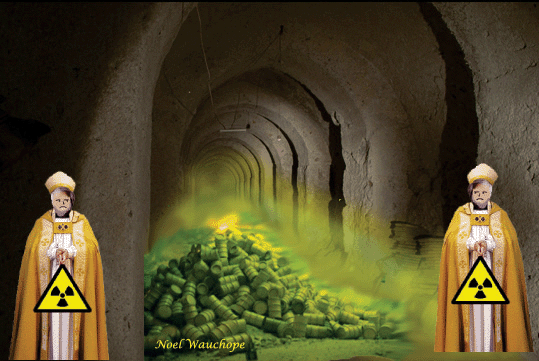
‘Nuclear Priests’ could warn future people about wastes under the Irish Sea
When Sir Keir Starmer entered No 10 last summer, it did not take long for
him to pick up where his predecessors left off on delivering more nuclear
power stations with a promise to “build, baby, build”. The Prime
Minister has vowed to “fast forward on nuclear” and so far has stuck
true to his word, with the Government taking up a larger stake in the
Sizewell C power plant in Suffolk, while loosening planning rules to allow
new small modular reactors to be built across the country.
But with the push for more nuclear power, bringing with it a steady supply of low-carbon energy, the question is inevitably asked: what do you do with all the
nuclear waste?
The answer is to dig a hole nearly the size of Wembley
Stadium 1km down beneath the Irish Sea, that could one day see the rise of
a new “atomic priesthood” and even, some have jokingly claimed, the
creation of glow in the dark cats.
But policymakers are aware that to push
ahead with this new nuclear drive, they will need to develop a stable,
long-term storage facility in which to hold not just future nuclear waste,
but all the nuclear waste the country has produced since the dawn of the
nuclear energy age in the 1950s. This is what the proposed Geological
Disposal Facility will provide.
And when they say long term, they mean long
term. “The purpose of the facility is to keep the radioactivity away from
humans and the environment so that it can’t cause harm for a sufficient
period of time – and that’s of the order of a few hundred thousand
years,” Neil Hyatt, Chief Scientific Adviser at the Nuclear Waste
Services, tells The i Paper.
iNews 24th Aug 2025, https://inews.co.uk/news/politics/nuclear-priests-glowing-cats-how-warn-future-generations-atomic-danger-3875319
Revealed: The KGB plot to poison loch with radioactive waste… then blame it on American nuclear subs CND peaceniks were campaigning to ban from Britain

Daily Mail, By MARK HOOKHAM, 24 August 2025
The KGB secretly plotted to attack the UK at the height of the Cold War by polluting Scotland’s coastline with radioactive waste, it was revealed this weekend.
Masterminded by a Soviet spy based in London, the plan involved dumping nuclear waste into Holy Loch on the Clyde, which was a crucial base for US nuclear-armed submarines.
The proposed attack was designed to fracture the UK’s ‘special relationship’ with America, by falsely implicating the US military in a devastating radioactive incident, and to stoke Britain’s anti-nuclear movement.
Details of the shocking plot have been unearthed from declassified FBI files by security expert Richard Kerbaj and are revealed in an explosive book about the extraordinary life of Oleg Lyalin, a Soviet agent who defected from the KGB in 1971.
Lyalin claimed to be a ‘knitwear’ specialist with Russia’s trade delegation in London. But in reality he was a spy attached to Department V, a top secret KGB unit tasked with assassinations, kidnappings and sabotage.
A heavy-drinking partygoer engaged in a string of extramarital affairs, Lyalin defected, aged 33, after his wife secretly told his Soviet colleagues that he was a liar and a cheat and that he was dissatisfied with his work for the KGB.
During his debriefing by MI5 he revealed how he had been tasked by Moscow with drawing up plans for a series of attacks to destabilise the UK and spread panic if a war looked imminent.
Lyalin’s bombshell revelations led to the UK’s expulsion of 105 suspected Soviet intelligence officers from Britain – the largest ever such expulsion by a single country and a turning point in MI5’s fight against Soviet spy networks during the Cold War.
The KGB agent’s dramatic defection came at the height of the Cold War, with the West and the Soviet Union locked in an arms race amid fears of nuclear conflict.
Official MI5 files on Lyalin remain under lock and key in Britain. However, information the Security Service passed to the FBI has now been unearthed by Kerbaj after painstaking research.
A file with hundreds of pages of intelligence reports and memos related to Lyalin’s defection gathered dust in an FBI warehouse until it was declassified in 2018.
One three-page FBI report, written in September 1971 and stamped ‘Secret’, revealed how ‘Lyalin revealed that on one occasion a proposal was submitted to headquarters for an operation to contaminate Holy Loch with radioactive material with a view to implicating US Naval forces’.
Holy Loch, a sea loch 25 miles from Glasgow, was used by the US Navy as a ballistic missile submarine base between 1961 and 1992.
Home to up to ten submarines carrying Polaris nuclear missiles, a floating dry dock and a depot ship, it was the epicentre of protests by the Campaign for Nuclear Disarmament (CND).
Crucially, unlike other KGB plans designed to sow chaos after the outbreak of war, the plot to poison Scottish waters would have been launched during peacetime.
The Kremlin had already targeted the base, obtaining a secret submarine manual in 1967, which led to the arrest and jailing of three KGB agents.
In his book, entitled The Defector, Kerbaj writes that the KGB ‘believed they could stoke the ongoing fears held by anti-nuclear protesters, who had been warning for years about the potential release of radioactive debris from the nuclear submarines in the Firth of Clyde’.
CND and other anti-nuclear protesters had established a camp on Holy Loch and tried to intercept US support ships using kayaks.
In May 1961, Michael Foot, one of the founders of the CND who later became Labour Party leader, led 2,000 people in a huge protest against the submarines in nearby Dunoon. Around 350 protesters were arrested later that year during another big demonstration.
The declassified FBI documents reveal how Lyalin’s audacious proposal required approval from the Central Committee of the Communist Party in Moscow…………………………………………………………………………………………………………………………… https://www.dailymail.co.uk/news/article-15027913/KGB-plot-poison-loch-radiation-blame-American-nuclear-subs-CND-peaceniks-campaigning-ban-Britain.html
Albion Stupidities: Palestine Action and Anti-Terrorism Laws

24 August 2025, Dr Binoy Kampmark, https://theaimn.net/albion-stupidities-palestine-action-and-anti-terrorism-laws/
Protest in Britain has become dangerous of late. Shaky lawmakers minding their elected positions, displaying decorative ignorance, have been criminalising protests against the war in Gaza, branding certain groups “terrorist” in inclination. While the laws dealing with criminal damage to property and such are already more than adequate, the government of Sir Keir Starmer thought it wise to enlarge them. There are people dying in large numbers in Gaza, and those protesting that situation have become a nuisance.
The keen obsession of this government – and a majority of the cerebrally softened legislators in the House of Commons – is that a group called Palestine Action is somehow worthy of being bracketed as a terrorist group under the Terrorist Act 2000. On June 20, members of the outfit broke into a Royal Airforce base at Brize Norton, Oxfordshire and spray painted two military aircraft alleged to be aiding US and Israel in refuelling tasks. This seemingly minor display of indignation by the organisation was enough to warrant its proscription by Home Secretary Yvette Cooper three days later under section 3 of the Terrorism Act.
United Nations experts linked to the UN Human Rights Office of the High Commissioner, among them Francesca Albanese, Ben Saul and Irene Khan, issued a press release on July 1 calling the labelling of a protest movement as “terrorist” an unjustified measure. “According to international standards, acts of protest that damage property, but are not intended to kill or injure people, should not be treated as terrorism.” Despite there being no binding definition of terrorism in international law, the experts were of the view that it would be limited to such acts as would cause death, serious personal injury, or involve the taking of hostages “in order to intimidate a population or compel a government or an international organisation to do or to abstain from doing any act.”
Were a national law to criminalise property damage in democracies, it would have to exclude acts of advocacy, protest, dissent or industrial action not causing death or serious injury, an approach approved by the UN Security Council’s Counter-Terrorism Executive Directorate. In the case of banning Palestine Action, individuals would be needlessly “prosecuted for peacefully exercising their rights to freedom of expression and opinion, assembly, association and participation in political life.”
A leaked report by the Joint Terrorism Analysis Centre (JTAC), obtained by human rights activist and former diplomat Craig Murray, further showed the decision to proscribe Palestine Action under the Terrorism Act as one marked by mendacity and panic on the part of the Starmer government. While JTAC is not sympathetic to Palestine Action, it did note that “The majority of the group’s activity would not be classified as terrorism under Section 1 of the Terrorism Act 2000.” While it assesses the group as having “promoted terrorism”, the primary focus of the direct action, according to the sanitised version of the report, is on inflicting property damage. Serious damage to property could bring the group within the legislation, but even then, as the UN experts have noted, that would not meet necessary international standards to warrant the label of terrorism.
According to Murray, had Palestine Action, as claimed or implied by the government, deliberately attacked individuals, received foreign funding from Iran or any hostile power, attacked Jewish-owned businesses based on racism, or planned a “future unspecified appalling terrorist acts”, then JTAC’s report would have made mention of it. “Palestine Action,” insists Murray, “is what it says it is: a non-violent direct action group which targets the Israeli weapons industry and its support and supply line.”
The High Court has granted Palestine Action co-founder Huda Ammori judicial review regarding the proscription of the organisation on two grounds: that it arguably amounts to a disproportionate interference with Article 10 and 11 rights of the claimants, which guarantee free speech and peaceful assembly under the European Convention on Human Rights; and that the proscription was made in breach or natural justice and/or contrary to article 6 the ECHR, which entitles all to a fair and public hearing within a reasonable time by an independent and impartial tribunal established by law. The Home Secretary, it was noted, had failed to even consult PA in making the decision.
The decision by the Starmer government was astonishing and, as with all bad laws, the foundry of astonishingly stupid results. It has made the police imbecilic enforcers; it has turned prosecutions into a dismal circus. Protesters otherwise regarded as very English and very middle class have found themselves facing arrests and charges. Over the course of one weekend this month, section 13 of the Terrorism Act 2000 was used to arrest over 500 people, most of them carrying a placard supporting PA. That provision criminalises the wearing of clothing items or the wearing, carrying or displaying of any article, and the publishing of an image of an item of clothing or any other article “in such way or in such circumstances as to arouse reasonable suspicion that he is a member or supporter of a proscribed organisation.” Sentences range from six-month imprisonment to a fine.
One particularly absurd arrest was that of retired head teacher John Farley, who was carrying a placard making reference to Palestine Action. Farley was eventually released on bail pending charges, which were never pressed. The incident last month did not even involve the proscribed organisation but was connected with another organised protest group.
The protest held in Leeds began as a solemn, silent march. Two police caught sight of Farley holding the placard. They proceeded to drag Harley away, and, typical of those types of recruits, refused to listen to any explanation: that the cartoon on the placard was a replica from the satirical magazine Private Eye, commenting on the banning of Palestine Action. The Private Eye piece, brutal, grim, and apposite, sought to explain what “Palestine Action”entailed: “Unacceptable Palestine Action” involved “spraying military planes with paint”;“Acceptable Palestine Action” entailed “shooting Palestinians queuing for food.”
Private Eye’s editor, Ian Hislop, roundly condemned the arrest as “mind-boggling” and “ludicrous”. The cartoon had been “a very neat and funny little encapsulation about what is and isn’t acceptable, and it’s a joke about – I mean, it’s quite a black joke – but about the hypocrisies of government approach to any sort of action in Gaza.”
A spokesman for West Yorkshire Police expressed some contrition for Farley’s consternation, and went on to express a view in tortured middle management speak. “As this is a new proscribed organisation, West Yorkshire Police is considering any individual or organisational learning from this incident.” That ship would seem to have sailed into the waters of sheer lunacy, leaving the judges to decide in November whether the proscription order for Palestine Action struck a proportionate balance. Till then, this egregious application of the law will continue to make pro-Palestinian protests in Britain a perilous affair.
Call for investigation into serious nuclear leak at Faslane
By James Walker, Political Reporter
THE SNP have demanded urgent answers in a letter to the Ministry of
Defence (MoD) after the UK Government confirmed a serious nuclear incident
took place at Faslane earlier this year. Figures released to The Herald
last week revealed that a Category A event – the most serious category
– took place between January 1 and April 22 this year.
The MoD have since
claimed it posed no risk to the public. It came a week after it was also
forced to admit that Loch Long, which is next to the UK’s nuclear bomb
store at Coulport, is now contaminated with radioactive tritium following
years of infrastructure decay. Bill Kidd, a longtime campaigner against
nuclear weapons and SNP MSP (below), has condemned these revelations as a
“damning indictment of Westminster’s disregard for Scotland’s safety
and environment” and said it was proof that nuclear weapons are
“dangerous, immoral, and completely incompatible with the values of the
people of Scotland”.
The National 18th Aug 2025,
https://www.thenational.scot/news/25397459.call-investigation-serious-nuclear-leak-faslane/
1 This Month
6 June – WEBINAR- Get Inspired by Protests Against Military Bases!


Cuba Is Not a Failed State – It Is a Besieged State
PETITION: “Global Appeal to Endorse Palestinian Right of Return of Refugees”


of the week– Nuclear Reactor Information Task Force
To see nuclear-related stories in greater depth and intensity – go to https://nuclearinformation.wordpress.com
-
Archives
- June 2026 (34)
- May 2026 (306)
- April 2026 (356)
- March 2026 (251)
- February 2026 (268)
- January 2026 (308)
- December 2025 (358)
- November 2025 (359)
- October 2025 (376)
- September 2025 (257)
- August 2025 (319)
- July 2025 (230)
-
Categories
- 1
- 1 NUCLEAR ISSUES
- business and costs
- climate change
- culture and arts
- ENERGY
- environment
- health
- history
- indigenous issues
- Legal
- marketing of nuclear
- media
- opposition to nuclear
- PERSONAL STORIES
- politics
- politics international
- Religion and ethics
- safety
- secrets,lies and civil liberties
- spinbuster
- technology
- Uranium
- wastes
- weapons and war
- Women
- 2 WORLD
- ACTION
- AFRICA
- Atrocities
- AUSTRALIA
- Christina's notes
- Christina's themes
- culture and arts
- Events
- Fuk 2022
- Fuk 2023
- Fukushima 2017
- Fukushima 2018
- fukushima 2019
- Fukushima 2020
- Fukushima 2021
- general
- global warming
- Humour (God we need it)
- Nuclear
- RARE EARTHS
- Reference
- resources – print
- Resources -audiovicual
- Weekly Newsletter
- World
- World Nuclear
- YouTube
-
RSS
Entries RSS
Comments RSS
 nuclear-news