Group protest against Sizewell C ahead of Spending Review
Campaigners gathered to further protest against Sizewell C just days
before the conclusion of the Spending Review. Supporters of Stop Sizewell C
and Together Against Sizewell C (TASC) met for an ‘Outrage’ rally at
Sizewell Beach on Saturday, June 7. The weekend rally also paid tribute to
former TASC chair and campaigner Pete Wilkinson who died in January of this
year. His daughters Emily and Amy spoke at the protest and tied yellow
ribbons onto the fence. The protest came ahead of the conclusion of the
Spending Review on Wednesday, June 11 where it is believed the government
will set out its plans for future investment in Sizewell C.
East Anglian Daily Times 8th June 2025,
https://www.eadt.co.uk/news/25222586.group-protest-sizewell-c-ahead-spending-review/
£127M wasted on failed UK nuclear cleanup plan

Don’t worry, only 100 more years of Sellafield nuclear site cleansing to go
Lindsay Clark, Sat 7 Jun 2025,
https://www.theregister.com/2025/06/07/mps_find_127_million_wasted_sellafield/
The center for the UK’s nuclear industry wasted £127 million ($172 million) during delays and replanning as it scrambled to find alternatives for facilities which treat and repackage plutonium, a Parliamentary report found.
In the face of a 2028 deadline to replace its 70-year-old analytical lab, Sellafield Limited, part of a group of companies and government bodies on the northwest England Sellafield site, has abandoned plans for its Replacement Analytical Project (RAP). Ditching RAP was chalked up to multiple expected delays from 2028 until at least 2034 and a half-a-billion-pounds cost increase to £1.5 billion ($1.93 billion).
A new report from the Parliament’s public spending watchdog says RAP “has been managed very poorly indeed.”
Sellafield, formerly known as Windscale, has been the center of the UK’s nuclear industry since the 1950s. While the site is home to a number of companies, and the government’s Nuclear Decommissioning Authority, Sellafield Limited, is a British nuclear decommissioning Site Licence Company controlled by the NDA.
In October last year, the UK’s public spending watchdog said Sellafield depends on an on-site laboratory that is “over 70 years old, does not meet modern construction standards and is in extremely poor (and deteriorating) condition.”
The National Audit Office said [PDF] the laboratory is “not technically capable of carrying out the analysis required to commission the Sellafield Product and Residue Store Retreatment Plant (SRP)” to treat and repackage plutonium.
Sellafield’s plan in 2016 was to convert a 25-year-old laboratory on the site, which would replace the 70-year-old lab, under the “Replacement Analytical Project.” The outline business case was approved in 2019 with an estimated cost of between £486 million and £1 billion ($626 million – $1.3 billion).
It later emerged that it could take until December 2034 to deliver the full capability, while cost could reach £1.5 billion ($1.93 billion). Sellafield “strategically paused” RAP in February 2024.
In a report this week, the House of Commons’ Public Accounts Committee said: “Sellafield Ltd’s performance in delivering major projects (such as new buildings to store waste or make it safe) has historically been very poor, with large cost increases and delays occurring all too frequently.
“There are signs of improvement – however, given Sellafield’s track record, we are yet to be fully convinced that this is not another false dawn. Another reason to be skeptical is Sellafield’s poor management of the RAP. At the point it paused work, the forecast cost had risen by £820 million, and the project was five years delayed,” the PAC report said.
After abandoning the RAP, Sellafield plans to convert a different building to support a Store Retreatment Plant, which re-treats and repackages existing plutonium material, making it more suitable for durable, long-term storage. It also plans to refurbish the 70-year-old existing building — including replacing the roof — so it can carry on using it until 2040. The alternative plan would provide a service until 2040, whereas the RAP was expected to remain in use until 2070.
However, the Nuclear Decommissioning Authority told PMs the new plan would cost between £420 million and £840 million ($570 million – $1.1 billion), much less than the RAP. Although some of the costs from the early projects could be recouped in the new plan, the PAC said £127 million ($172 million) spent on RAP will have been wasted.
The NDA expects the clean-up of the Sellafield site to go on until 2125 and cost £136 billion ($184 billion), an estimate which has increased nearly 19 percent since March 2019. ®
Nuclear power: a dream not worth having
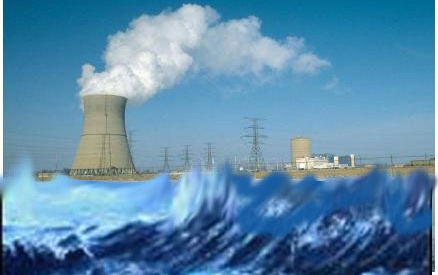
The Government wants more nuclear power stations, but renewable energy is cheaper, safer, and more sustainable.
by Steve Dawe, 7 June 2025, https://westenglandbylines.co.uk/business/energy/nuclear-power-a-dream-not-worth-having/
Labour is committed to building new nuclear power stations on eight coastal sites. Margaret Thatcher was also an enthusiast for nuclear power. She wanted one new nuclear power station built each year in the UK during the 1980s. Only one, Sizewell B, was built. Why? Because it cost too much, as was obvious in 1990:
Mr Illsley: “The Secretary of State must be aware that recent estimates have put the final cost of Sizewell B at about £3.8 bn, taking into account the cost overruns, delays and lack of economies of scale… £2bn can be saved by cancelling the project now. Does the Secretary of State agree that the time to cancel Sizewell B is right now?”
(House of Commons Debates, 25 June 1990).
Renewables are cheaper
Sizewell B did not come online until 1995. The Government admitted in 2020 that renewables can be cheaper than they thought. Given decades of nuclear industry propaganda intended to obscure the deficiencies of this sector, support for nuclear appears less about stating a technology preference than an indirect political statement in favour of nuclear weapons.
We need electricity; we don’t need it to come from nuclear. But successive UK governments have used public money to subsidise the industries involved, instead of using it for things actually sustainable, cost-effective, and with minimal pollution. Keir Starmer has even ignored the nuclear watchdog when he blamed regulations for implementation delays.
The extensive range of reasons to oppose nuclear power
Here is a short list of some of the reasons to oppose new nuclear power stations, and phase out existing ones:
- Nuclear power is too slow to implement to be relevant to the climate emergency. Construction times are an average of 10 years per nuclear power station.
- Nuclear power stations are at risk of terrorist sabotage or attack in war, as has been demonstrated in Ukraine.
There are comprehensive reasons to oppose nuclear power, based partly on the British experience and that of other states recently. These also include:
The radioactive waste that needs storage for at least 100,000 years makes the true costs of nuclear power incalculable.- Part of the reason for this storage is the known health effects of radiation.
- Since major nuclear accidents have continued to occur and spread radioactive material into the environment, preference for other means of generating electricity and for radically improving insulation in buildings to reduce energy needs is unarguable.
- This is especially the case when the water implications are considered: nuclear power stations require water for cooling, on a planet with increasing droughts and extreme weather events. Nuclear power stations using water from watercourses have had to shut down during periods of drought, emphasising the desirability of solar and wind power which do not require water to operate.
- Making it easier to build more nuclear power stations on the eight coastal sites the Government prefers completely ignores the risk of sea level rise discussed below. It is extraordinary that these sites have been chosen.
Hence, to quote from one of the recent critical analyses, new nuclear power is “doomed to fail“. It is certainly prone to extreme weather events such as storms, if the proposed sites are used.
Nuclear power supports nuclear weapons
Most countries in the world do not have nuclear weapons. Today, 120 countries belong to the Non-Aligned Movement, committing themselves not to belong to alliances which perpetuate long-term confrontations between states.
The UK Government admits part of its support for existing and new nuclear power stations is to maintain essential supplies to its nuclear weapons programme. What is true for the UK clearly applies to other states with nuclear weapons.
Since nuclear weapons proliferation is against the general interest of all species on the planet, phasing out both nuclear power and nuclear weapons would be rational when alternatives exist, are becoming cheaper, and are expanding in use year after year.
New nuclear is too expensive to consider
Nuclear power is notoriously expensive. The International Energy Agency reported in 2023 that new solar and on-shore wind are cheaper than fossil fuels. Greenpeace has summarised the current situation, comparing renewables to nuclear, as follows:
“The cost of generating solar power ranges from $36 to $44 per megawatt-hour (MWh), the World Nuclear Industry Status Report said, while onshore wind power comes in at $29–$56 per MWh. Nuclear energy costs between $112 and $189 per MWh. Over the past decade, the World Nuclear Industry Status Report estimates levelised costs… for utility-scale solar have dropped by 88% and for wind by 69%. According to the same report, these costs have increased by 23% for nuclear.”
Worse for the British Government, an authoritative report asserts that the new nuclear power in the UK would actually be the world’s most expensive. Support by political parties in the UK for nuclear power is therefore a choice of the most expensive of options under consideration.
Jonathon Porritt, former head of the Government’s Sustainable Development Commission, has indicated that the cost of Hinkley C and Sizewell C are both likely to rise to about £75bn each. Others have argued that nuclear power may simply not be cost-effective in relation to realistic cost assessments including paying for very long-term radioactive waste storage.
The toxic twins: Hinkley C and Sizewell C
“Hinkley C in Somerset will cost the energy bill payer up to £17.6bn in subsidies. The agreed price of £92.50 per MW/hour is over double the current wholesale price at just over £41 per MW/hour.” (People Against Wylfa-B)
The construction costs were already predicted to rise by a third in early 2024, illustrating the general problem of high-cost infrastructure in the UK. Sizewell C costs were also predicted to double in early 2025.
Nuclear is never ‘clean’
The UK is going ‘all out’ to be a clean energy superpower, said Keir Starmer. But nuclear power has never been a ‘clean’ technology. Essentially, many alleged solutions to the problem of radioactive nuclear waste need to rely on perfect storage for 100,000 years.
This is a conception worthy of science fiction. Uranium mining is known to cause health problems in proximate populations, often to indigenous peoples.
Small modular nuclear reactors – why bother?
The nuclear industry has problems with scaling up to reduce costs. Nuclear power construction and related expense means reduced costs do not materialise.
The small modular reactor (SMR) is allegedly going to change this. However, a US Department of Energy report of September 2024 suggested a cost per megawatt more than 50% higher than for large reactors.
There are only three operating SMRs: one in China, with a 300% cost overrun, and two in Russia, with 400% cost overrun. In March, a Financial Times analysis labelled such small reactors “the most expensive energy source.” Others concur that SMRs are very expensive, and slow to construct, with negative environmental implications.
Sea level rise and nuclear sites
All eight of the Government’s preferred sites for new nuclear power development are coastal. There are concerns about the impact of sea-level rises for all the sites. There should also be concerns about storms increasing in power and frequency too as the climate changes.
Hinkley and Sizewell are already in development. Will an island be created to protect the proposed Sizewell C site from the sea? Does the Government privately think this might be necessary for all eight sites?
The Intergovernmental Panel on Climate Change(IPCC) may have under-estimated sea level rise up to 2100. Scientific papers have been predicting higher sea level rises than the IPCC since at least 2012. It has been suggested that: “All energy-related infrastructure is at risk from the impacts of climate change, especially due to the changing frequency and intensity of surface water and coastal flooding.”
And the rate of sea level rise has been increasing. Very low-lying sites like that of Sizewell C should be abandoned. And back in 1981, the Hinkley Point site was flooded, forcing closure of a nuclear power station there for a week.
Communities with nuclear legacies need alternatives
Communities with declining nuclear industry work would need alternative jobs. This is a general need for all localities experiencing employment transitions.
Each district and unitary council should have its own Green New Deal to promote and directly support just transitions. This would involve re-introducing a version of the Community Programme of the 1980s to employ people in projects and programmes, in cooperation with local voluntary bodies where possible. This should both support existing sustainability initiatives and help introduce new ones.
Training on the job should feature, to provide a better range of local skills appropriate to a just transition in areas like construction, forestry and nature, gardening, agriculture, energy efficiency, installing heat pumps in homes and more.
Just transition or another failure to future-proof the UK?
The colossal financial impact of nuclear power in the past and future in the UK is difficult to calculate, especially when radioactive waste storage is considered. The repercussions of public spending on this technology and its aftermath include inadequate spending on sustainable retrofitting of the existing built environment.
We certainly need electricity. We have never needed it to be specifically from nuclear power. The scale and diversity of energy alternatives are more than enough to meet future needs, including by increasing battery storage to address any potential problems in maintaining baseload supply.
Political will is absent. The long shadow of nuclear power remains in place over the major political parties, at public expense and with zero long-term vision.
Defence review dodges Britain’s nuclear blind spot.

THE UK’s nuclear enterprise is in crisis. Not just because of cost
overruns or ageing submarines, but because of the deepening secrecy and
silence that surrounds it. That silence should have been broken by the
Labour Government’s new Strategic Defence Review 2025.
Instead, it was quietly reinforced. Presented as a roadmap to “Make Britain Safer”, the
review promised clarity and accountability, but it fails to confront the
most pressing truths: that the UK’s nuclear programme is financially
unsustainable, strategically unbalanced, increasingly unaccountable and a
real and present danger to us all.
These concerns are not hypothetical. In
the final months of the last Parliament, I raised them on the floor of the
House of Commons, not out of party dogma, but in response to serious and
public allegations from Dominic Cummings, former chief adviser to the then
prime minister, remember him? He described Britain’s nuclear
infrastructure as a “dangerous disaster”, responsible for the secret
“cannibalisation” of other national security budgets and shielded from
meaningful scrutiny. Instead of confronting the truth, the review restates
familiar platitudes and leaves the public and Parliament no wiser about the
scale cost, or consequences of the UK’s nuclear commitment. The Defence
Secretary, who heard these warnings first-hand from the opposition bench,
is now in a position to act – he has chosen not to.
The National 8th June 2025,
https://www.thenational.scot/politics/25222635.defence-review-dodges-britains-nuclear-blind-spot/
Protesters raise environmental fears as wait continues for Sizewell C funding announcement
ITV 8 June 2025
Hundreds of people voiced their concerns over the multi-billion pound Sizewell C nuclear power station on the Suffolk coastline ahead of an expected announcement from the Government.
The rally on Sizewell Beach on Saturday, organised by Stop Sizewell C and Together Against Sizewell C, included speeches from campaigners against the major project including Greenpeace members, and musical performances.
The peaceful protest ended with the 300-strong crowd walking to the Sizewell complex and tying ribbons with messages, emphasising people’s concerns, to the gates.
Plans for Sizewell C were given the go ahead by the then Chancellor in November 2022 but the funding is yet to be approved by the Government, although an announcement on the project is expected in Labour’s Spending Review on Wednesday 11 June.
Construction has already started for the nuclear site and surrounding infrastructure on the Suffolk coast which will sit next to the Sizewell B plant, and has already been given £250m in local funding……………….
many people fear the environmental impact of Sizewell C and believe it will destroy the area.
Jenny Kirtley, from Together Against Sizewell C, said: “You’ve only got to look around the area and see the devastation that’s happened. I’ve been fighting this for 12 years. We knew it would be bad, but we didn’t know it would be so devastating. A whole area is changing before our very eyes and it’s heartbreaking.
“There are a huge mountains of earth everywhere and of course the wildlife is suffering. The deers don’t know where to go. They’re rambling around everywhere. The birds are leaving their nests.
“It’s all very well saying it’s going to create thousands of jobs but who’s going to work in the supermarkets, the care homes, the restaurants? This is a small area.
“We’ve got 6,000 people living around here so where are people going to live? We know rents are going sky-high so it’s going to get worse. It’s going to be a real problem.”
Alison Downes, from Stop Sizewell C, also believed the project would be a waste of tax-payers money and said there were better options to provide renewable energy.
She said: “We’ve always had people behind us in the local area. I think a lot of new people have woken up and seen the destruction that’s been caused by the project. They are now feeling the same sense of outrage that we do.
“Sizewell C is too slow, risky and expensive to be the solution to our climate emergency. This is the wrong type of reactor. It’s in the wrong place on an eroding coastline so we are here to express our outrage about Sizewell C.”
The outrage rally, which was the third of it’s kind, was also a tribute to Pete Wilkinson – a former chairman of campaign group, Together Against Sizewell C, who died in January 2025
His daughters Emily and Amy Wilkinson were at the event and spoke about their father.
Emily Wilkinson, 29, said: “Dad was such a fantastic human being. He was a passionate and courageous man who spent his entire life fighting whatever he saw is wrong. That’s what drove him in life. He saw the beauty in the planet and fought for it every single time.”…………………………………………………………….. https://www.itv.com/news/anglia/2025-06-07/protesters-take-to-suffolk-beach-against-sizewell-c-plans
Opposition to Sizewell C Nuclear Power Station sea defence plans lodged
Campaign group Together Against Sizewell C (TASC) has filed a legal claim
over plans for additional coastal flood defences at Sizewell C Nuclear
Power Station, which were omitted from the original planning application
and which the group says could negatively impact local wildlife. The claim
comes after it emerged that developer Sizewell C Ltd had committed to
potentially building additional flood barriers which weren’t included in
the power station’s development consent order. TASC has raised concerns
that the construction of the additional barriers could disrupt nearby
protected areas of wildlife and says other less invasive flood defence
options were not pursued.
Leigh Day 5th June 2025, https://www.leighday.co.uk/news/news/2025-news/opposition-to-sizewell-c-nuclear-power-station-sea-defence-plans-lodged/
Let’s not pretend nuclear works

Funding the Future, Richard Murphy, June 6 2025, https://www.taxresearch.org.uk/Blog/2025/06/06/lets-not-pretend-nuclear-works/
As the Public Accounts Committee has reported this week:
The retrieval of waste from ageing buildings at the most hazardous nuclear site in the UK is not happening quickly enough.
In its report on decommissioning Sellafield, the Public Accounts Committee (PAC) warns that the estimated £136bn cost of the project would rise even more if work is further delayed, while expressing scepticism as to whether or not recent signs of improvement in performance could represent another false dawn.
The PAC found in 2018 that government needed a firmer grip on Sellafield’s nuclear challenges, and now warns that not enough progress has been made in addressing its most significant hazards.
One building, the Magnox Swarf Storage Silo (MSSS), has been leaking radioactive water into the ground since 2018 – the PAC calculates, at current rates, enough to fill an Olympic swimming pool roughly every three years. The Nuclear Decommissioning Authority (NDA) accepts this leak is its “single biggest environmental issue”, but that the radioactive particles are “contained” in the soil and do not pose a risk to the public.
The PAC’s report finds that Sellafield Ltd has missed most of its annual targets for retrieving waste from several buildings on the site, including the MSSS. The PAC’s inquiry heard that the MSSS is the most hazardous building in the UK, and as a result of Sellafield Ltd’s underperformance will likely remain extremely hazardous for longer. The report seeks answers from Government on how it will hold the NDA and Sellafield Ltd to account in ameliorating the site’s greatest hazards.
Nuclear power created the most hazardous building in the UK.
The cost of nuclear cleanups is staggering.
And still, we pretend that nuclear power is a cost-effective way of generating power.
Who do those making this claim think are fooled by it?
The true cost of the nuclear weapons industry
The CND responds to Starmer’s growing militarism with a ‘Tour of the bases’ protest. TONY STAUNTON reports from Plymouth
Morning Star 6th June 2025 https://www.morningstaronline.co.uk/article/true-cost-nuclear-weapons-industry
NE of the most outrageous elements of Starmer’s offensive Strategic Defence Review is the suggestion of a “Defence Dividend.” Our demand for “Welfare not Warfare” is acutely illustrated by the reality of life for working-class communities surrounding military nuclear sites.
Plymouth Devonport, with the Trident nuclear submarine base situated at its heart, is one of the poorest electoral wards in southern England.
The Devonport nuclear naval base is managed by Babcock International plc, the arms manufacturer with an annual turnover of £4.5 billion, profits mostly contrived out of taxpayers’ hefty payments.
That the nuclear weapons are in the hands of private corporations for profit surely undermines the concept of national security — Babcock is the main benefactor of the local freeport, deregulating its secret nuclear enterprise.
Plymouth’s Establishment constantly reminds the population that the nuclear facility is responsible for 10 per cent of the city’s economy. This alone is a fabrication. The highly paid nuclear engineers and scientists at the base live outside the infrastructure-poor city and take their incomes with them.
It’s been like this for 40 years. There has been no “Plymouth dividend.” One in three children in Devonport and neighbouring wards live in poverty, surely impossible were the dockyard to really be a “jobs magnet.”
In fact, a total of 5,500 people work there, half as naval service personnel with little local connection. The wages of many of the rest are nothing to shout about.
Meanwhile Devonport’s local index of social deprivation according to the Public Health Service is 44, twice the annual average. Nuclear weaponry does not produce social wealth and prosperity.
Investment in arms industries take the money away from social infrastructure. Plymouth has the huge regional hospital, Derriford, now in a financial meltdown, making cuts to the 11,000 staff and standards of service.
The hospital is reliant upon the addition of medical staff from the Royal Navy, offering a false-propaganda device for Babcock as the city’s benefactor.
Plymouth University is in financial crisis, with over 5,000 staff easily competing with the dockyard as an income generator for the city (students live in the city centre), now making 200 redundancies.
Babcock funds nuclear research and training at the Uni and FE College, making them beholden, uncritical, and pro-nuclear across the curriculum.
Plymouth’s Labour Council, combating potential bankruptcy and absurd debt levels, has always supported the nuclear dockyard, championing the military nuclear cause, the status of nuclear weaponry, and the nationalism it projects.
The council has half the workforce of 20 years ago. Our schools are crumbling, all “academised’ with the continuous shedding of staff.
Meanwhile, there have been at least 10 serious accidents at the dockyard including spills of radioactive waste in the past 30 years, Babcock was fined over £600,000 in 2022 for breaches in health and safety regulations (H&S). Human-made toxic radioactive elements are identifiable in our sea, rivers, soil and air.
Plymouth is the decommissioning centre for nuclear vessels, 15 rotting nuclear submarines bobbing at anchor and costing £30 million a year to “keep safe,” their nuclear cores needing constant cooling and the rusting hulks routinely patched to prevent leaks.
The subs are the subject of stalled decommissioning, the authorities not sure what to do with these hulks of radioactive waste. Were the UK’s nuclear weapons to be cancelled tomorrow, there is at least 100 years of work here, just to decommission and clean up the contamination.
Yet now they’re going to build more. Plymouth Devonport nuclear dockyard is receiving £1 billion to refit the dry docks in order to service the Dreadnought super-submarines carrying nuclear warheads up to 300 times the power of the bomb dropped on Hiroshima in 1945. The contract will suck-up 600 construction workers much needed for house building and home-retrofitting, the city is littered with half-finished buildings lost to skill shortages.
We all can list what £1 billion could do for the city if invested in social infrastructure and climate jobs.
Plymouth, our coastline dramatic and beautiful, could long have been a centre for construction of wind and wave electricity generators, our geography predisposed, but those industries are not nearly as profitable as the tax-funded nuclear blank-cheque cash cow.
Nuclear weapons are not just illegal weapons of mass destruction, they represent the impoverishment of working-class lives.
Join us on Saturday to send a powerful message to the government to shift its disastrous direction and invest in Peace not Nukes! March and rally. Meet at 12 noon at the Guildhall Square, Armada Way, Plymouth and from 2pm at Devonport MoD Naval Base, Camels Head.
Tony Staunton is CND vice-chair and Plymouth resident.
TASC’s new legal challenge against Sizewell C’s secret flood defences
by Together Against Sizewell C (TASC
ASC urgently need your help in our battle against the environmentally
damaging Sizewell C project. We have discovered that the project now
includes a stated commitment by Sizewell C Ltd to the Office for Nuclear
Regulation (ONR) to install additional sea defences in a ‘credible maximum’
climate change scenario. These defences in the form of two huge 10 metre
high ‘overland flood barriers’ were not included in the approved DCO
project. In our opinion, these flood barriers, if installed, will likely
have additional adverse impacts on the neighbouring designated wildlife
sites including RSPB Minsmere as well as the Heritage Coast and Suffolk
Coast & Heaths National Landscape. We need to ensure that the original
promotor EDF and the now UK government controlled Sizewell C Ltd are not
allowed to use climate change uncertainties as an excuse to delay
assessment and avoid public scrutiny of these additional structures for
decades. The full impact of the whole project should be assessed now.
Crowd Justice 5th June 2025,
https://www.crowdjustice.com/case/sizewell-c-legal-challenge/
Sellafield failing to address ‘intolerable risks’, damning parliamentary report warns
Sam Baker, Staff reporter, The Chemical Engineer, 6 June 25
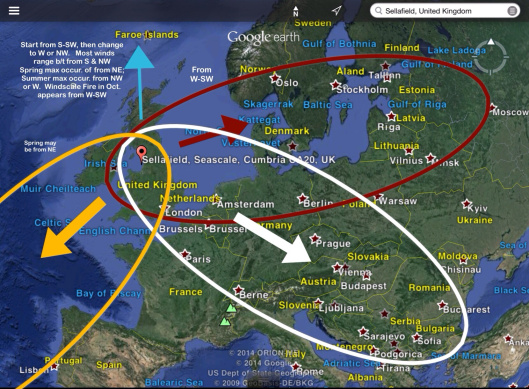
MANAGEMENT of the Sellafield nuclear facility in Cumbria, UK is not responding quickly enough to “intolerable risks” at the site posed by ageing assets, a damning new report has warned.
In the report published yesterday, the UK Public Accounts Committee (PAC), a group of MPs tasked with evaluating the cost-effectiveness of public spending projects, said that deteriorating assets are making the site “increasingly unsafe”.
Sellafield, the UK’s oldest nuclear site, has been in the long process of decommissioning since it stopped generating power in 2003, overseen by wholly state-owned Sellafield Ltd, and now works primarily in processing spent nuclear fuel.
The PAC’s report found that sluggish progress in decommissioning Sellafield has meant Sellafield Ltd has missed most of its annual targets in retrieving waste. This includes radioactive waste currently stored in Sellafield’s Magnox Swarf Storage Silo (MSSS), the UK’s most hazardous building.
After setting a target to have emptied the MSSS of waste by 2046, Sellafield Ltd now does not expect to achieve this until between 2054 and 2059. Problems at the MSSS are also behind the plant’s “single biggest environmental issue” – radioactive water has been leaking into the ground since 2018. Sellafield Ltd has confirmed that radioactive particles are “contained” in the soil and that there is no risk to the public…………………………………………………………………………………………………………………………..
Money not well spent
The current estimate for the total cost to the public of decommissioning Sellafield is £136bn (US$184bn), with completion expected no earlier than 2125, although problems identified by the PAC are likely to see the cost rise and the completion delayed.
One example of overspend highlighted in the report was the water sample lab refurbishment, which the PAC said was “very poorly managed” leading to a “waste” of £127m.
The report also resurfaced past issues of bullying and harassment at Sellafield, which the NDA settled in 2023-24 for £377,200. The PAC pointed out that Sellafield Ltd has signed 16 non-disclosure agreements in the last three years. These are separate from the Official Secrets Act which most staff routinely sign when joining Sellafield.
Clifton-Brown acknowledged the “early indications of some improvement” at Sellafield but said that the “government must do far more to hold all involved immediately accountable to ensure these do not represent a false dawn, and to better safeguard both the public purse and the public itself”………………………………………………………………………………………………………………………………………………………………
Not going underground
Sellafield’s troubles this week do not end with the PAC report. On Tuesday, Lincolnshire County Council withdrew its candidacy to host a geological disposal facility (GDF) that could store radioactive plutonium for thousands of years once retrieved from stockpiles at Sellafield.
As recently as July 2024, a site in Theddlethorpe in Lincolnshire was a leading candidate to build the GDF. However, the newly elected council, led since May 2025 by Reform UK, this week revoked its membership of the nuclear waste community partnership, which council leader Sean Matthews described as a “nuclear nightmare”.
Announcing the results of the vote to withdraw membership, Matthews, a former London police officer, said: “Now, Lincolnshire people can get back to living their lives, assured that this nuclear nonsense is over.” https://www.thechemicalengineer.com/news/sellafield-failing-to-address-intolerable-risks-damning-parliamentary-report-warns/
Nuclear-powered submarines, F35A fighter jets, a ‘more lethal’ army by 2035, and AI: How Starmer will spend billions to beef up Britain’s defences to make country ‘war-ready’
By MARK NICOL DEFENCE AND DIPLOMACY EDITOR, 3 June 2025 , https://www.dailymail.co.uk/news/article-14773857/Nuclear-powered-submarines-fighter-army-2035-Starmer.html
More submarines, soldiers and drones, along with an airborne nuclear strike capability and the exploration of technologies such as lasers, AI and robotics, are among the proposals in the Strategic Defence Review.
These are the key ambitions outlined in the SDR:
Army to be ‘ten times more lethal’
This ambition relies on the harnessing of new technologies and weapon systems, particularly drones. Lethality is difficult to measure and the claim is strong on political rhetoric.
Only a couple of months ago, the Chief of the Defence Staff, Admiral Sir Tony Radakin, said the ambition was to double lethality by 2027 and triple it by 2030.
The new Archer artillery system, the belated introduction of the Ajax vehicle and Challenger 3 tanks will increase lethality… but to what extent?
Three forces to be integrated into one
The Integrated Force, unveiled as part of the SDR, is not a merger of the Armed Forces, but they will lose much of the traditional
independence as they are moulded into a centralised Integrated Force. The SDR suggested the services were ‘siloed’. The need for them to train together and prepare for war shoulder to shoulder was essential in the months and years ahead.
£15billion boost for nuclear warheads
Britain’s nuclear deterrent has long been in need of recapitalisation. The £15billion will pay for these weapons to be upgraded or replaced.
It will also see the significant modernisation of infrastructure at the Atomic Weapons Establishment at Aldermaston, supporting more than 9,000 jobs at the Berkshire site
Up to 12 new nuclear attack submarines
The as yet uncosted pledge to develop ‘up to’ 12 new attack submarines has been welcomed by military observers but the first boat is not expected to enter service before the late 2030s.
The submarines will support the AUKUS security alliance between the UK, Australia and the United States and will be used to protect the Pacific from Chinese aggression.
Over the decades ahead, the boats will replace the Royal Navy’s current fleet of seven Astute-class submarines. They will be built at key sites such as BAE in Barrow-in-Furness.
Over the decades ahead, the boats will replace the Royal Navy’s current fleet of seven Astute-class submarines. They will be built at key sites such as BAE in Barrow-in-Furness.
Six new factories to make munitions
The SDR proposes at least six factories making munitions and energetics such as explosives and propellants for weapons.
The SDR recommends creating an ‘always on’ munitions production capacity in the UK, allowing production to be scaled up at speed if needed.
Britain’s military warehouses are bare after £5billion in weaponry and munitions was provided for Ukraine since the start of the conflict in 2022. The programme will create more than 1,000 skilled jobs, according to the SDR.
Robotics, cyber warfare and AI
The review says AI will improve the quality and speed of decision-making and operational effectiveness for Britain’s military, its allies… and its enemies.
It should be an immediate priority to ‘shift towards greater use of autonomy and AI within the UK’s conventional forces’. This has shown to be transformational in Ukraine. Chiefs will launch a Defence AI Investment Fund by February 2026.
The report warns cyber threats will become harder to mitigate as technology evolves, with government departments, military hardware, communications, increasingly vulnerable.
Hardening critical defence functions to cyber-attack is crucial. Directed Energy Weapon systems, such as the UK’s DragonFire, a world-leading laser ground to air system being developed at Porton Down, Wiltshire, can save millions of pounds in expenditure on ordnance systems.
The review also calls for the MoD to seize the opportunities presented by technologies such as robots and lasers.
£4billion expansion of the drone force
The Government unveiled a £4billion investment package for drones and autonomous systems. Drones are dominating the conflict in Ukraine and in Russia, following the audacious Ukrainian attack on Russian airfields in Siberia just days ago.
Hardening critical defence functions to cyber-attack is crucial. Directed Energy Weapon systems, such as the UK’s DragonFire, a world-leading laser ground to air system being developed at Porton Down, Wiltshire, can save millions of pounds in expenditure on ordnance systems.
The review also calls for the MoD to seize the opportunities presented by technologies such as robots and lasers.
£4billion expansion of the drone force
The Government unveiled a £4billion investment package for drones and autonomous systems. Drones are dominating the conflict in Ukraine and in Russia, following the audacious Ukrainian attack on Russian airfields in Siberia just days ago.
Fighter jets to carry nuclear bombs
Britain is exploring the potential return of air-delivered nuclear weapons in collaboration with the United States. America’s F-35A Lightning II aircraft is capable of carrying tactical gravity nuclear bombs.
The proposal marks the most significant shift in UK nuclear posture since the Cold War. Currently, this country’s nuclear deterrent is carried by the Royal Navy’s ‘bomber’ submarines.
The air-launched nuclear weapons would carry a much smaller payload. The lower yield B61 munitions are already integrated into US aircraft stationed on continental Europe and could be brought to Britain.
Thousands of new long-range weapons
At least 7,000 long-range weapons will be made to restock UK military warehouses and to prepare for an extended conflict against an adversary such as Russia.
Children taught value of the military
Defence chiefs will work with the Department for Education to develop understanding of the Armed Forces among young people in schools, by means of a two-year series of public outreach events across the UK, explaining current threats and future trends.
Schools and community-based cadet forces will also be expanded, with an ambition of a 30 per cent rise by 2030 with a view to the UK having 250,000 cadets, many of whom will then go on to join the armed forces.
More reservists and investment in them
To meet the challenge of engaging in a lengthy conflict, the report identified the need to boost the number of reservists.
These part-time personnel, many of whom are former regulars with operational experience, would join full-time troops on the frontline.
The report identified the need to increase the size of the UK’s Active Reserve forces by at least 20 per cent ‘when funding allows, most likely in the 2030s’.
The UK has around 25,000 Army reservists, 3,500 Royal Navy and Royal Marines reservists and 3,200 RAF reservists.
Sellafield nuclear clean-up too slow and too costly, say MPs

Alex Lawson, 4 June 25 https://www.theguardian.com/business/2025/jun/04/sellafield-nuclear-clean-up-mps-public-accounts-committee
Parliamentary committee raises concerns over ‘suboptimal’ workplace culture at ageing waste dump.
MPs have warned about the speed and cost of cleaning up the Sellafield nuclear waste dump and raised concerns over a “suboptimal” workplace culture at the site.
Members of parliament’s public accounts committee (PAC) urged the government and bosses at the sprawling collection of crumbling buildings in Cumbria to get a grasp on the “intolerable risks” presented by its ageing infrastructure.
In a detailed report into the site, the PAC said Sellafield was not moving quickly enough to tackle its biggest hazards; raised the alarm over its culture; and said the government was not ensuring value for money was being achieved from taxpayer funds.
In 2023, the Guardian’s Nuclear Leaks investigation revealed a string of safety concerns at the site – including escalating fears over a leak of radioactive liquid from a decaying building known as the Magnox swarf storage silo (MSSS) – as well as cybersecurity failings and allegations of a poor workplace culture.
The PAC – which heard evidence in March from Sellafield and its oversight body, the Nuclear Decommissioning Authority (NDA) – found that the state-owned company had missed most of its annual targets to retrieve waste from several buildings, including the MSSS.
“As a result of Sellafield’s underperformance [the MSSS] will likely remain extremely hazardous for longer,” the MPs said.
The ultimate cost of cleaning up Sellafield, which contains waste from weapons programmes and atomic power generation, has been estimated at £136bn and could take more than 100 years.
Geoffrey Clifton-Brown, the chair of the PAC, said: “Unfortunately, our latest report is interleaved with a number of examples of failure, cost overruns, and continuing safety concerns. Given the tens of billions at stake, and the dangers on site to both the environment and human life, this is simply not good enough.”
He added: “As with the fight against climate change, the sheer scale of the hundred-year timeframe of the decommissioning project makes it hard to grasp the immediacy of safety hazards and cost overruns that delays can have.
“Every day at Sellafield is a race against time to complete works before buildings reach the end of their life. Our report contains too many signs that this is a race that Sellafield risks losing.”
MPs noted that one project, a now-paused replacement of an on-site lab, had resulted in “£127m wasted”.
The cost of cleaning up Sellafield has caused tensions with the Treasury as the chancellor, Rachel Reeves, attempts to tighten public spending and spur growth. Sellafield, which is home to the world’s largest store of plutonium, said in February that nearly £3bn in new funding was “not enough”.
Last year, Sellafield apologised and was fined £332,500 after it pleaded guilty to criminal charges over years of cybersecurity failings.
The PAC noted that the timeline for a government project to create a long-term deep underground store for nuclear waste, including that held at Sellafield, had slipped from 2040 to the late 2050s. The government is considering sites in Cumbria and Lincolnshire, although Lincolnshire county council is expected to withdraw the latter from the process after vocal local opposition.
The MPs said they had found “indications of a suboptimal culture” at Sellafield, and noted that the NDA paid £377,200 in 2023-24 to settle employment-related claims. Alison McDermott, a former HR consultant who raised concerns over bullying and a “toxic culture” at the site, said she felt “vindicated” by the report.
The PAC urged the government to set out how it would hold the NDA and Sellafield to account over its performance. It said Sellafield should report annually on progress against targets and explain how it is addressing the deteriorating condition of its assets. The NDA should publish data on the prevalence of bullying and harassment at nuclear sites, it said.
Clifton-Brown said there were “early indications of some improvements in Sellafield’s delivery” but said the government needed to do “far more” to ensure bosses safeguard the public and taxpayer funds.
The NDA’s chief executive, David Peattie, responding on behalf of Sellafield, said: “We welcome the scrutiny of the committee and their report. We will now look in more detail at the recommendations and consider how best to address them.
“We take the findings seriously, and the safety of the site and the wellbeing of our people will always be our highest priorities.”
A spokesperson for the Department for Energy Security and Net Zero said: “We expect the highest standards of safety and security as former nuclear sites are dismantled, and the regulator is clear that public safety is not compromised at Sellafield.
“We continue to support the Nuclear Decommissioning Authority in its oversight of Sellafield, while driving value for money. This is underpinned by monthly performance reviews and increased responsibility for overseeing major project performance, enabling more direct scrutiny and intervention.
“We have zero-tolerance of bullying, harassment and offensive behaviour in the workplace – we expect Sellafield and the NDA to operate on this basis, investigate allegations and take robust action when needed.”
Sizewell C nuclear power plant ‘could get go-ahead within weeks’

Keir Starmer expected to confirm result of 15-year search for investment at UK-France summit next month
Jillian Ambrose, 3 June 25, https://www.theguardian.com/business/2025/jun/03/sizewell-c-nuclear-power-plant-keir-starmer-uk-france-edf
UK ministers could give the go-ahead to the new Sizewell C nuclear power plant in Suffolk within weeks, according to reports.
Keir Starmer is expected to give the final nod to begin construction of Britain’s second new nuclear power project in a generation, alongside the French nuclear developer EDF, at a Franco-British summit next month.
The final approval for Sizewell C, first reported by the Financial Times, would mark the end of a 15-year journey to secure investment for the plant since the site was first earmarked for new nuclear development in 2010.
The government is understood to be in the final stages of securing billions of pounds of investment from the private sector to back the project, which follows the Hinkley Point C nuclear plant, which is under construction in Somerset.
Ministers are expected to use the government’s spending review, scheduled for 11 June, to set out the UK’s investment in the project, which will ultimately rely on a mix of funding from taxpayers and via energy bills.
The final go-ahead from Starmer and the French president, Emmanuel Macron, will then follow during the Anglo-French summit due to take place in London on 8-10 July, according to the Financial Times.
The UK government’s stake in the project stood at 84% at the end of last year compared with EDF’s 16% share of the project. The French state’s cash-strapped utilities company is understood to be eager to reduce its stake in the project even further.
Potential investors in the project according to the report include Schroders Greencoat, Equitix, the Canadian pension fund CDPQ, Amber Infrastructure Partners, Brookfield Asset Management, the UK pension fund USS and the insurer Rothesay, backed by the Singaporean infrastructure fund GIC.
EDF had originally planned to build the nuclear plant alongside China’s state nuclear developer China General Nuclear Power Corp, which also holds a stake in the Hinkley Point C project, but its partner was forced to step back from the project by the UK government on security grounds.
The project has secured £6.4bn of government funding to support its development to date, of which £2.5bn was granted by the Conservative government under Rishi Sunak and a further £3.9bn has come from the current Labour administration.
Stop Sizewell C carries out bold projection on Sizewell B dome a week before the Spending Review, highlighting alternatives for Sizewell C’s £40 billion cost.

Stop Sizewell C tonight projected a series of messages to the Prime Minister onto Sizewell B’s dome, stating that the £40 billion Sizewell C project is a Nuclear Waste of Money. [1] The messages urge him to make alternative choices for spending taxpayers’ money on ways to generate cheaper electricity and to reduce household bills.
In one week, on 11 June, the Chancellor is expected to set out taxpayers’ commitment to Sizewell C at the conclusion of the Spending Review. Sizewell C has already swallowed £6.4 billion of taxpayers’ money [2] and the entire project is bogging down the government balance sheet. The two-year equity raise process remains ongoing with an uncertain outcome, meaning the much-delayed Final Investment Decision is unlikely before next month at the earliest. The Financial Times says this could take place at an Anglo French Summit between 8-10 July. [3]
Alison Downes of Stop Sizewell C said: “Every pound sunk into risky, expensive Sizewell C is a pound lost to alternative energy sources and critical social funding that the voting public cares deeply about. It’s not too late to redirect money to offshore wind, or warm homes – creating thousands of jobs – or to restoring the most unpopular and unjust cuts. Sizewell C, given the terrible track record of Hinkley Point C, would be £40 billion badly spent.”
Stop Sizewell C 4th June 2025,
https://docs.google.com/document/d/1IugTc5hAy7N9SlPrdvbfevH5USEfIsjJKw-jIDoo74c/edit?tab=t.0
Britain considering fleet of nuclear strike aircraft

The UK may acquire F-35A fighter jets as part of a broader effort to
deepen its contribution to NATO’s nuclear sharing arrangements, following
a key recommendation in the newly published Strategic Defence Review (SDR).
The document states:
“More F-35s will be required over the next decade.
This could comprise a mix of F-35A and B models according to military
requirements to provide greater value for money.”
This reference to a
potential F-35A acquisition has been interpreted by experts and
parliamentarians as linked to the UK’s possible future role in NATO’s
nuclear sharing mission—an arrangement under which non-nuclear states
host US nuclear weapons and are capable of delivering them in wartime.
While the UK already possesses its own independent nuclear deterrent via
the submarine-based Trident system, participation in NATO’s air-delivered
nuclear mission would mark a significant evolution in its commitment to
Alliance nuclear burden-sharing.
UK Defence Journal 3rd June 2025,
https://ukdefencejournal.org.uk/britain-considering-fleet-of-nuclear-strike-aircraft/
1 This Month
29 Jan. Thursday 7-8 p.m. Webinar – World’s Largest Nuclear Station in Port Hope, ON?
To see nuclear-related stories in greater depth and intensity – go to https://nuclearinformation.wordpress.com/



31st January – Challenging the War Machine – a DECLASSIFIED UK SUMMIT


Website of the Week
Now until to February 10, 2026 Radioactive waste storage in France: the debate is finally open! How to participate?
-
Archives
- January 2026 (288)
- December 2025 (358)
- November 2025 (359)
- October 2025 (376)
- September 2025 (258)
- August 2025 (319)
- July 2025 (230)
- June 2025 (348)
- May 2025 (261)
- April 2025 (305)
- March 2025 (319)
- February 2025 (234)
-
Categories
- 1
- 1 NUCLEAR ISSUES
- business and costs
- climate change
- culture and arts
- ENERGY
- environment
- health
- history
- indigenous issues
- Legal
- marketing of nuclear
- media
- opposition to nuclear
- PERSONAL STORIES
- politics
- politics international
- Religion and ethics
- safety
- secrets,lies and civil liberties
- spinbuster
- technology
- Uranium
- wastes
- weapons and war
- Women
- 2 WORLD
- ACTION
- AFRICA
- Atrocities
- AUSTRALIA
- Christina's notes
- Christina's themes
- culture and arts
- Events
- Fuk 2022
- Fuk 2023
- Fukushima 2017
- Fukushima 2018
- fukushima 2019
- Fukushima 2020
- Fukushima 2021
- general
- global warming
- Humour (God we need it)
- Nuclear
- RARE EARTHS
- Reference
- resources – print
- Resources -audiovicual
- Weekly Newsletter
- World
- World Nuclear
- YouTube
-
RSS
Entries RSS
Comments RSS
 nuclear-news