Britain’s secret nuclear weapons tests the spark to nuclear Armageddon – claims veteran
WW3: Britain ‘sparked ARMAGEDDON’ by running SECRET nuclear weapons tests, claims veteran https://www.express.co.uk/news/world/1083026/ww3-britain-sparked-armageddon-secret-nuclear-test-spt– 6 Feb 19
A VETERAN claims Britain sparked an “Armageddon” for the future after running secret nuclear weapons tests between 1957 and 1958. By CALLUM HOARE
Operation Grapple was the name given to a series of four nuclear weapons tests of atomic and hydrogen bombs carried out at Malden Island and Christmas Island. Nine nuclear explosions were initiated, making Britain the third recognised possessor of thermonuclear weapons, and restoring the Nuclear Special Relationship with the US. However, veteran Dave Whyte, 82, who worked on the project, claimed they made a mistake by testing the weapons of mass destruction.
Mr Whyte said he suffered sterility and genetic damage through radiation exposure at the cost of the technology being leaked to other countries.
He exclaimed in 2017: “I witnessed the hydrogen bombs Grapple Y, Flagpole and Halliard and atomic bombs Pennant and Burgee in 1958.
“I found the bombs very interesting, it was wonderful to view two suns shining in the sky at the same time, our usual golden sun and the red glow of fire from the nuclear bombs.
“Great Britain has a nuclear arsenal, but at what cost?”
Mr Whyte went on to claim: “The veterans who helped in the nuclear experiments are cast aside, and are still waiting for a court to hear their case.
“There is a blood test which shows the level of radiation a person has received.
“Nuclear veterans are denied this test, even the offer of paying for the test is denied.
“Documents showing the true levels of radiation individuals received are hidden from view, and directions given by the judge to release them are ignored.”
Mr Whyte also claimed the action of Britain over 60 years ago could now be to blame for the end of the world – should nuclear war break out. He continued: “It is said, by many, that nuclear bombs should be abandoned.
“Unfortunately, the technology is now available, and any rogue state can develop their own nuclear weapons.
“North Korea is a good example, they have the weapons now, and will be prepared to use them.
“Sadly, we have nuclear weapons and we cannot dispose of them now. I foresee an Armageddon in the future.”
UK: The Nuclear Free Local Authorities (NFLA) calls for a more thorough plan for nuclear wastes and phaseout of nuclear power
NFLA 5th Feb 2019 The Nuclear Free Local Authorities (NFLA) publishes today its views on the proposed Scottish Nuclear Sector Plan document being consulted on by the Scottish Environmental Protection Agency (SEPA).
SEPA has been consulting
on its draft Nuclear Sector Plan with ‘considerable input’ from the
nuclear industry. The plan is SEPA’s vision of how regulations will be
enforced to ensure that the nuclear industry is fully compliant with its
environmental obligations and is encouraged to go beyond compliance with
environmental regulations to ensure that environmental impacts are
minimised. SEPA has asked for public comments on its draft plan. SEPA says
its draft plan is ‘ambitious’.
The Nuclear Free Local Authorities
(NFLA) rather thinks it should be much more ambitious, recognising that
nuclear power has no medium or long-term place in a sustainable economy,
and that the ‘nuclear waste hierarchy’ should be re-thought to maximise
the protection of the public. The NFLA Scottish Forum has also decided to
respond to SEPA’s consultation by publishing within it its own vision of
a Scotland where nuclear power generation is phased out and the wastes
remaining are managed according to a clear set of environmental principles.
ttp://www.nuclearpolicy.info/news/nfla-views-sepa-scottish-nuclear-sector-plan-decommissioning-nuclear-phase-out-alternative-energy-vision/
Ireland will not be a dumping ground for Britain’s nuclear and chemical waste. -Sinn Féin
Newry Times 6th Feb 2019 Sinn Féin MLA Cathal Boylan has said Ireland will not be a dumping groundfor Britain’s nuclear and chemical waste. The Newry/Armagh MLA said, “I welcome that earlier British government plans to use parts of counties
Armagh and Down as sites to dispose of nuclear waste have now been ruled
out. “Britain cannot use the north as a dumping ground for this hazardous
and toxic material. “Sinn Féin are totally against the use of nuclear
power, the British Government should be looking at ways to phase out their
use of nuclear power, not planning for more.
http://newrytimes.com/2019/02/06/ireland-will-not-be-britains-nuclear-dumping-ground-local-mla/
How the utilities financial system is rigged to give the nuclear industry the advantage
|
UK Turns Away From Nuclear As Poland Prepares To Embrace It, Clean Technica, February 4th, 2019 by Steve Hanley
…… Nuclear advocates insist atom-powered generating plants are safe in much the same way fossil fuel advocates insist pipelines and supertankers are safe. What they mean is that when things go wrong, the damage can be easily contained and the amount of human suffering is a small price to pay for the enormous profits to be made in the meantime. …….Spent fuel remains dangerously radioactive for thousands of years and nuclear facilities require massive amounts of water to keep things cool inside the containment area. One of the primary reasons nuclear power is beloved by utility companies is because they are guaranteed a certain rate of return on their investments. In order to make more money, spend more money. The way the electric utility game is rigged, customers are automatically saddled with the cost of paying for all new investments made by the companies, often for decades. Once the decision to build a nuclear power plant is made, the cost to pay for it goes on for 30, 40, or more years, even if new, less expensive technology becomes available in the meantime. Nuclear Projects Abandoned In UKHitachi has been planning to build a new nuke on the Welsh island of Anglesey on the site of a previous power plant decommissioned in 2015. However, it has now notified the UK government that it will abandon that project unless the government commits major new financial resources to bring the $26 billion facility to completion. Hitachi has already sunk nearly $3 billion into the proposed Wylfa Newydd project. Last November, another UK nuclear power project in Cunbria, to be built by Toshiba, was abandoned, leaving UK utility customers on the hook for hundreds of millions of dollars already invested by National Grid to build the transmission lines needed to connect that facility to the grid. According to the The Times of London, ratepayers will be paying for those losses for decades via surcharges added to their energy bills. Another Japanese company — Mitsubishi — has also withdrawn recently from a proposal to build a nuclear power plant in Turkey according to Nikkei Asian Review. What is the reason for so many abandonments of nuclear power projects? Money. Investors are looking down the road and seeing renewables getting less expensive. If it takes 30 years or more to recover the cost of a nuclear plant, what are the odds that it will still be making a profit in 2050? If you said somewhere between zero and none, go to the head of the class. Renewables To Blame For Nuclear WoesForbes reports on a rather startling announcement. Greg Clark, the government minister in charge of the UK energy board, told Parliament recently, “The cost of renewable technologies such as offshore wind has fallen dramatically, to the point where they now require very little public subsidy and will soon require none. We have also seen a strengthening in the pipeline of projects coming forward, meaning that renewable energy may now not just be cheap, but also readily available.” In all, three new nuclear plants in the UK are now likely to be abandoned. Together, they were expected to provide up to 15% of the nation’s energy needs in the future. How will the country make up for the loss of that capacity? Forbes says an analysis by the UK Energy and Climate Intelligence Unit shows renewables will do the heavy lifting needed to keep all British tea pots boiling happily for decades to come. Jonathan Marshall, head of analysis at the ECIU says, “In recent years, government has quietly cut back its expectations for nuclear new-build and that’s looking more and more realistic as the price of renewable generation falls and the benefits of the flexible smart grid become more apparent. Filling the nuclear gap with renewables would indeed require an increase in rollout, but one that is well within UK capabilities. With enough focus on smart low-carbon energy, there’s no reason why Britain shouldn’t achieve all its energy objectives despite the cancellation of these nuclear stations.” In particular, the ECIU analysis found a combination of an additional 11.3 GW of onshore wind, 5.7 GW of offshore wind, and 20.8 GW of new solar capacity would be sufficient to fill the nuclear gap. Hitting those targets should be easy, given the acceleration of installed renewable energy capacity taking place today. Poland Set To Move Forward With Its First NukeDespite the hoopla about renewables in the rest of the world, Poland, which currently gets 80% of its electricity from burning coal, expects to move forward with plans to build its first nuclear power plant. The 1.5 GW facility, which could go online by 2033, will be the first of several nukes the country expects to build as it prepares to increase its installed power portfolio to 73 GW as compared to 40 GW today. It expects nuclear power to provide about 10% of that total………. The Polish plan will still see about 60% of the nation’s energy come from burning coal in 2030 with most of the lignite burning facilities being shut down around 2040 or so. Which raises this question. If solar and wind installations can be designed, built, and brought online within a matter of years, why spend $20 billion on last century technology that will take a decade or more before it begins contributing to the nation’s energy supply? A Timid Response To An Urgent ProblemThe answer to that question reveals everything that is wrong with the way most nations are tiptoeing around the global warming emergency. Make lots of flowery promises. Give the people huge helpings of pie in the sky pronouncements. But go as slowly and timidly as possible into the future while funneling profits into well connected pockets all the while. The truth is, the utility industry is used to thinking in terms of 30 to 40 year timelines. It is widely seen as the most risk averse industry in the world. “What was good enough for our grandfathers is good enough for us. Stick with what has worked in the past. Don’t take a chance on new technology that might upset the apple cart.” The problem is, the world can’t wait for the utility industry to dither and dawdle its way to tomorrow. We need bold, decisive action now to slash carbon emissions today, not in 2040. By then it will be too late. Poland may be proud that it is about to get its first nuke. But by celebrating that move, it is admitting it has no realistic plan for protecting its citizens — or the rest of the global community — from the ravages of a warming planet. Just as the UK can obtain all the energy it needs from renewables instead of nuclear facilities, so can Poland, if it only could find the political will to do so. Tepid responses to a global emergency are the things that will doom us all to a planet incapable of supporting human life for many. Poland’s epitaph may well be, “Too little, too late.” https://cleantechnica.com/2019/02/04/uk-turns-away-from-nuclear-as-poland-prepares-to-embrace-it/
|
|
UK’s ageing nuclear power stations are likely to close early
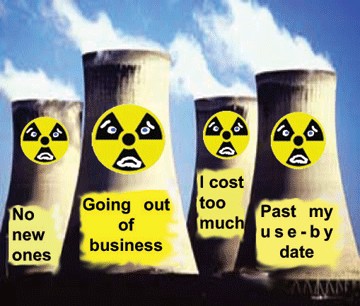
After 12% drop in generation, experts say existing nuclear plants are likely to close early Britain’s nuclear power stations recorded a 12% decline in their contributions to the country’s energy system over the past month, as outages raised concerns over how long the ageing plants will be able to keep operating.
Prospects for new nuclear projects have commanded headlines and government attention in recent weeks, with Hitachi and Toshiba scrapping their plans for major new plants.
But the fate of the existing plants, which usually provide about a fifth of the UK’s electricity supplies, has been pulled into focus by outages due to safety checks and engineering works running over schedule. Nuclear outages also push up carbon emissions because any capacity shortfall will typically be replaced by fossil fuel power stations
Seven of the power stations use an advanced gas reactor (AGR) design, the oldest of which is 43 years old and the youngest 30 years .
Most were built with a lifetime of about 35 years in mind. All are due to be closed in the 2020s after owner EDF Energy extended their lives, but there are now fears that ageing infrastructure may reduce their output or even lead them to shut early.
Iain Staffell, lecturer in sustainable energy at Imperial College, which compiled the nuclear output data, said: “Just as Toshiba and Hitachi have pulled out of building new reactors, we have one third of the existing nuclear capacity unavailable either for maintenance or because their maximum power has been reduced as they get older.
“Many of our reactors were built in the late 70s, and like your typical 40-year-old they aren’t in peak physical condition any more.”……… https://www.theguardian.com/environment/2019/feb/03/fate-of-uks-nuclear-power-stations-in-doubt-over-ageing-infrastructure
UK’s Energy and Climate Intelligence Unit’s under-reported analysis – renewables cheaper than new nuclear
 Forbes 31st Jan 2019 , Under-reported analysis by the UK’s Energy and Climate Intelligence Unit
(ECIU) has shown that filling the gap left by the abandoned nuclear projects is not just feasible but better value. The government’s own National Infrastructure Commission (NIC) is minded to agree. Jonathan Marshall, head of analysis at the ECIU said: “In recent years Governmenthas quietly cut back its expectations for nuclear new-build, and that’s
looking more and more realistic as the price of renewable generation falls and the benefits of the flexible smart grid become more apparent.
Filling the nuclear gap with renewables would indeed require an increase in rollout, but one that is well within UK capabilities. “With enough focus on smart low-carbon energy, there’s no reason why Britain shouldn’t achieve all its energy objectives despite the cancellation of these nuclear stations,” added Marshall.
The ECIU analysis found that an additional 11.3GW of onshore wind, 5.7GW of offshore wind and 20.8GW of new solar capacity would be sufficient to fill the nuclear gap. Those figures are eminently achievable.
https://www.forbes.com/sites/johnparnell/2019/01/31/mind-the-gap-as-new-uk-nuclear-projects-fold-renewables-can-fill-the-void/
Anniversary of the momentous Cumbria County Council “no to a GDF” decisio
Council halted the search for a site to bury the nation’s nuclear waste
in Cumbria. In a impassioned speech, Council Leader, and now Cumbria Trust
Director, Eddie Martin refused to let the Managing Radioactive Waste (MRWS)
search process continue, recognising the overwhelming level of local
opposition and Cumbria’s unsuitable geology, amongst a number of other
reasons.
have already started to hold meetings behind closed doors to discuss
joining the new process. As well as sidelining the county council, the new
process also ignores public opinion. The first and only opportunity the
public will have to stop the undemocratic process is after 20 years, during
which time the area will be subjected to intrusive investigations and
significant blight.
https://cumbriatrust.wordpress.com/2019/01/30/anniversary-of-the-momentous-cumbria-county-council-no-to-a-gdf-decision/
UK Chancellor Philip Hammond looks to ‘ alternative financing model’to save Wylfa nuclear project
It had been in talks with the UK government since June about funding for the project, which was being built by its Horizon subsidiary.
Mr Hammond said an alternative model was being worked on.
“Obviously we are disappointed by the decision of Hitachi to suspend work on the Wylfa project, but we haven’t given up hope,” he told the House of Commons.
“They retain the site and we hope that the work that we’re doing on a possible alternative financing model may yet allow the project to go ahead.”………
If the Wylfa Newydd project is scrapped, it leaves the Hinkley Point power station in Somerset as the only new UK reactor still being built.
There are plans for new plants at Bradwell and Sizewell, but neither is currently under construction……https://www.bbc.com/news/business-47041043
Time for UK to stop the welfare payments to the collapsing nuclear industry
 Stop Hinkley 29th Jan 2019 UK Energy Policy is at a tipping point. Following the withdrawal of two
Japanese giants – Toshiba and Hitachi – from nuclear projects at Moorside
in Cumbria and Wylfa on Anglesey – it is now clearer than ever that it
would be cheaper to build new renewable capacity rather than continue
building Hinkley Point C.
It’s now time to cut our losses and abandon the
Hinkley Point C project altogether. Even Business Secretary, Greg Clark has
recognised that “The cost of renewable technologies such as offshore wind
has fallen dramatically, to the point where they now require very little
public subsidy and will soon require none.” And the cost reductions for
offshore wind are far from over.
Stop Hinkley spokesperson Roy Pumfrey
said: “It is time to scrap the welfare scheme for the dying nuclear
industry called Hinkley Point C. Business Secretary Greg Clark has
virtually admitted that nuclear power is past its sell-by-date. If Hitachi
can’t make a profit with ‘significant and generous’ financial support
from the Government, – its share price went up by 10% when Wylfa was
suspended – and even EDF is getting cold feet despite the prospect of a
£50bn bung from consumers – it must be time to get out of nuclear, cancel
Hinkley and stop coming up with new ways of fleecing taxpayers and
consumers to fund new reactors.”
http://www.stophinkley.org/PressReleases/pr190129.pdf
Scotland kow tows to UK and Australian govts – rejects courageous Aboriginal appeal against nuclear waste transport
Last ditch aborigine appeal to Scotland to stop nuclear waste transfers to Australia, https://www.heraldscotland.com/news/17391290.last-ditch-aborigine-appeal-to-scotland-to-stop-nuclear-waste-transfers-to-australia/?ref=fbshr&fbclid=IwAR3r2Lqdv0V66rc7I8PrKJme4mkAsIx2Wtd5bv-Vy_XeT1i3GOgi_Mr By Martin Williams @MWilliamsHT 29 Jan 19, SOME of the Aborigines who live in and around a sacred burial place in South Australia can still remember the clouds of poison that were the result of Britain’s nuclear bomb tests in the 1950s.
Genetic effects of radiation, and other pollutants, in children of Gulf War veterans
|
Veterans with debilitating Gulf War Syndrome may have passed it on to children
EXCLUSIVE: Stricken families say they want the Ministry of Defence to recognise the condition as the British Legion says it believes 30,000 may be suffering, Grace Macaskill, Mirror UK 27 JAN 2019 British forces veterans suffering Gulf War Syndrome may have given it to their children. New medical research has revealed troops who served in Iraq are more likely to have damage to DNA that could be passed on during reproduction. Almost 75 per cent of the 53,000 UK soldiers there were given an anthrax vaccine. Many were also exposed to depleted uranium in some weapons. Thousands reported a raft of disorders on their return home, including extreme fatigue, dizziness, strange rashes, nerve pain and memory loss – and the British Legion believes 30,000 may be suffering from the syndrome. And more and more affected families are reporting that their children have developed terrifying symptoms of conditions that can be passed on genetically . Now they are demanding the Ministry of Defence acts on the latest research and recognises Gulf War Syndrome. One devastated ex-serviceman, Roger Needham, told us: “Gulf War Syndrome is being passed to our kids and I have to watch my daughter struggle every day.” The daughter of another sick Iraq veteran – diagnosed with arthritis at 11 – said: “My immune system is on the floor and I’ve had a life of bad health. There’s no one in the wider family with this.” And the wife of an ill soldier whose son and daughter have battled chronic illnesses told us: “We want answers.” An ex-Government advisor on Gulf War illnesses, Prof Malcolm Hooper, backed the US findings. “Our soldiers were poisoned,” he said. Their immune systems suffered a massive assault, along with the endocrine system which controls reproduction. “Many of the immune-type symptoms they suffer now can be passed to children through germ cells. The Government must take this seriously.” The American study, funded by the US Veterans Affairs department, will step up the pressure. Dr Michael Falvo, lead researcher at the War Related Illness and Injury Study Center, said the findings were the “first direct biological evidence” Gulf War illness causes harm to the body. “If DNA that is damaged or mutated comes from the sperm or eggs then it is possible for it to be passed on to children,” he said. “We found veterans with Gulf War illness had greater mitochondrial DNA damage than those without. Mitochondria are the ‘power generators’ of cells, passed to offspring primarily via a fertilised egg.” Roger, 51 – an ex-lance corporal with the Royal Army Ordnance Corps who developed chronic fatigue shortly after the conflict – said he welcomed the US findings and wants research done to force the Government to recognise the syndrome. “Every day I have extreme fatigue and unexplained aches and pains,” said Roger, of Doncaster, who worked in ammo dumps. “But seeing my daughter Emma sick with it is awful. Nothing like this has run in my family.” Emma, 26, also suffers from chronic fatigue and struggles in her retail job. Her mum Sue, 51, said: “She was conceived shortly after the war. She was always tired as she grew up. We took her to a paediatrician at 15. ……..“But seeing my daughter Emma sick with it is awful. Nothing like this has run in my family.” Emma, 26, also suffers from chronic fatigue and struggles in her retail job. Her mum Sue, 51, said: “She was conceived shortly after the war. She was always tired as she grew up. We took her to a paediatrician at 15. When I said her dad served in the Gulf and had chronic fatigue he said it made sense to him. That’s when we started to think about the connection to Gulf War Syndrome.” Roger added: “The Americans have recognised Gulf War illness so why can’t the MoD? I don’t think they will because of what it might cost them in payouts.”……. Charities and ex- Army top brass are joining hundreds of families to demand a probe into the health of the 30,000 troops thought to be suffering. Col Richard Kemp, an ex-chair of the COBRA Intelligence Group, said: “If soldiers feel children have developed signs of illness due to their service, it is the Government’s duty to investigate.” Maria Rusling, of the National Gulf Veterans and Families Association, said: “Veterans are worried what legacy they are leaving their children. We need a full investigation.” A King’s College London study in 1999 found Gulf troops two to three times more likely to report 53 different symptoms compared to soldiers sent to Bosnia. But the MoD has never officially recognised the condition. An MoD spokesman said: “We have already sponsored significant research into the effects of this conflict on veterans and have no plans to conduct further studies.” https://www.mirror.co.uk/news/uk-news/veterans-debilitating-gulf-war-syndrome-13911872 |
|
Aldermaston – Britain’s bomb factory – it’s a slow motion train crash
https://www.thetimes.co.uk/article/the-awe-bomb-factory-starts-to-implode-lg6vlc55b
French nuclear company EDF considering retreating from operations in UK
year”, according to one senior figure, but it is being approached with caution by EDF’s Paris head office amid concern over the political implications.
another two nuclear power projects with support from China. EDF is locked in negotiations with the Government over plans to fund its plans for a reactor at Sizewell C. Discussions about a step back from the energy-supply
market began after the departure of long-serving boss Vincent De Rivaz in 2017.
Gas has confirmed plans to sell its 20pc stake in the reactors and industry sources say EDF hopes to sell another 29pc from its share within the same transaction. The deal is understood to have caught the eye of a consortium
of pension funds which would hold a minority share of the business while EDF remains the operator of the nuclear reactors.
https://www.telegraph.co.uk/business/2019/01/26/edf-weighing-retreat-energy-market-uk/
Tax-payer funding for yet another nuclear folly? Rolls Royce’s Small Modular Reactors
 Rolls-Royce seeks government funds for nuclear power project https://www.ft.com/content/1bbfefb0-20bf-11e9-b2f7-97e4dbd3580d Group wants £200m to develop small-scale plants after failure of big schemes Sylvia Pfeifer and David Sheppard– 27 Jan 19
A consortium led by Rolls-Royce has asked for more than £200m in government funding to help develop its project for small nuclear reactors, as ministers scramble to recast Britain’s energy policy after the collapse of plans to build several large reactors. The engineering group and its partners, which include Laing O’Rourke and Arup, want to secure a sum “in the low hundreds of millions”, confirmed one person with knowledge of the request. Any amount would be match-funded by the consortium and be used to develop Rolls-Royce’s technology through to the later stages of the licensing process in order to be able to attract private investment.
The consortium has applied for funding from the government’s industrial strategy challenge fund under UK Research and Innovation. The money would enable the group to develop its design through to the later stages of the “generic design assessment” by the industry regulator. Industry sources with knowledge of the bid said the consortium “entered detailed negotiations” with UKRI before Christmas. Rolls-Royce has previously said it believes its reactor would cost about £2.5bn to build.
As a nuclear power project collapses, leading utility chief calls on UK government to increase targets for offshore wind energy
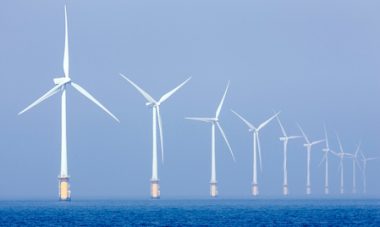 Forget nuclear woes and increase offshore wind targets, says boss of leading utility, Owjonline 25 Jan 2019 by David Foxwell The chief executive of one of the UK’s leading utility companies has called on the government to increase targets for offshore wind energy after plans for another nuclear power station were put on hold.SSE chief executive Alistair Phillips-Davies said the UK should be grateful that in offshore wind it has an ‘off the shelf’ answer to the problem of how the country can decarbonise energy cost-effectively while securing jobs and growth for the UK economy.
He is well-qualified to comment on energy policy in the country, having become chief executive of SSE in 2013 after working in the energy industry since 1997, when he joined Southern Electric.
“Later this year our Beatrice offshore windfarm, the largest project in Scotland, will be completed, and will begin exporting low carbon electricity to the grid,” he said. “It is one of many projects delivered to time and budget, which have helped bring the costs down substantially.
“Last year UK Energy Minister Claire Perry set out an ambition of an additional 1-2 GW of offshore wind per year during the 2020s taking the UK to a total of between 20 and 30 GW, meaning it could be the generation technology with the largest installed capacity in the UK.
“The sector has responded, and an Offshore Wind Sector Deal will be finalised later this year setting out the industry’s substantial commitments to the UK’s industrial strategy. The question now is whether 30 GW by 2030 is ambitious enough,” Mr Phillips-Davies said.
“In the coming months, the government will receive advice from the Committee on Climate Change on the implications of increasing its decarbonisation target from an 80% reduction in emissions by 2050 to net zero.
“In light of the IPCC report last year, SSE supports the adoption of a net zero target, and the implications will be a need to go faster and harder on decarbonising electricity as the driver for decarbonising heat and transport.”
Mr Phillips-Davies went on to say, “With the news that Hitachi has pulled out of the Wylfa project, the new nuclear programme looks in real trouble and was due to come in well above the costs of offshore wind anyway…….https://www.owjonline.com/news/view,forget-nuclear-woes-and-increase-offshore-wind-targets-says-boss-of-leading-utility_56566.htm
1 This Month





PLEASE OPPOSE HR 8255 AND S.3639 – bills would accelerate satellite deployment, with no environmental review or safeguards – https://ncstd5li.quorum.us/campaign/169331/
To see nuclear-related stories in greater depth and intensity – go to https://nuclearinformation.wordpress.com
-
Archives
- October 2026 (10)
- September 2026 (339)
- August 2026 (330)
- July 2026 (355)
- June 2026 (287)
- May 2026 (306)
- April 2026 (356)
- March 2026 (251)
- February 2026 (267)
- January 2026 (308)
- December 2025 (358)
- November 2025 (359)
-
Categories
- 1
- 1 NUCLEAR ISSUES
- business and costs
- climate change
- culture and arts
- ENERGY
- environment
- health
- history
- indigenous issues
- Legal
- marketing of nuclear
- media
- opposition to nuclear
- PERSONAL STORIES
- politics
- politics international
- Religion and ethics
- safety
- secrets,lies and civil liberties
- spinbuster
- technology
- Uranium
- wastes
- weapons and war
- Women
- 2 WORLD
- ACTION
- AFRICA
- Atrocities
- AUSTRALIA
- Christina's notes
- Christina's themes
- culture and arts
- Events
- Fuk 2022
- Fuk 2023
- Fukushima 2017
- Fukushima 2018
- fukushima 2019
- Fukushima 2020
- Fukushima 2021
- general
- global warming
- Humour (God we need it)
- Nuclear
- RARE EARTHS
- Reference
- resources – print
- Resources -audiovicual
- Weekly Newsletter
- World
- World Nuclear
- YouTube
-
RSS
Entries RSS
Comments RSS

