Inside Britain’s top nuclear bunker.

Secure vaults containing decades-old enriched uranium and plutonium are
dotted across Britain’s sprawling atomic weapons establishment site in
the Berkshire countryside. Some are underground, inside 1960s-era
buildings, guarded by police on the roof tops armed with C8 Carbine assault
rifles used by the Special Air Service (SAS).
Cameras keep watch and
security guards patrol the perimeter — lined by a fence and razor wire,
like a prison — and 56 dogs are on hand to sniff out any sign of toxic
chemicals. “The guards and guns are not here to protect us, they are here
to protect the material,” said one of the scientists giving a tour of the
grounds. “You can’t get anywhere near them [the vaults] even if you
tried,” added another.
Times 19th June 2025,
https://www.thetimes.com/uk/defence/article/uk-nuclear-uranium-bunker-fr6szg6tn
Stop Sizewell C campaigner slams Labour lies over nuclear power

Alison Downes from the Stop Sizewell C campaign group spoke to Socialist Worker
Thursday 19 June 2025, https://socialistworker.co.uk/environment/stop-sizewell-c-campaigner-slams-labour-lies-over-nuclear-power/
Labour energy secretary Ed Miliband claims Britain needs new nuclear power plants “to deliver a golden age of clean energy abundance”.
But Alison Downes from the Stop Sizewell C campaign group says it’s the last thing we need to stop climate breakdown.
The Labour government pledged over £14 billion last week towards building a new nuclear power station on the Suffolk coast. Construction of Sizewell C began last year, next to the live Sizewell B plant.
Alison told Socialist Worker she opposes it because of “the climate emergency and the need for quick, cost effective action to reduce our carbon emissions”.
“This type of reactor has got such a bad track record in the other places where it’s been built, or attempted to be built,” she explained.
“And the slowness of completion all count against it as a solution for a climate emergency.”
The new nuclear plant would cost billions at a time when Labour is pushing austerity. Alison said, “In 2020 the cost was estimated at £20 billion and I think very credibly is now predicted at around £40 billion.
“Our assumption is that at least 50 percent of Sizewell C would be paid for by the taxpayer.”
She added, “A lot of this information is not in the public domain. Every time we ask, we get batted away with reasons of commercial confidentiality.
“But our understanding is that the government still intends to be a majority owner in the project.”
Sizewell C, which will be built by French state-owned company EDF, is expected to be operational some time in the 2030s.
It will be funded using a Regulated Asset Base model. This will guarantee EDF a return on its investments and means that electricity suppliers will contribute to the cost of building the plant.
“And that comes from consumer bills,” says Alison. “Consumers just have to keep paying for as long as the project is under construction.”
Radioactive waste disposal underlines that nuclear power is not an environmentally-friendly option.
In the long term, it would need to be stored deep underground.
Alison explained, “A disposal facility for all of Britain’s waste is under consideration. But they still haven’t found a willing host community in a place where the geology is suitable.
“We don’t really know when it would be available and how much it would cost. Sizewell B waste is here and is going to be here for decades to come.
“And, of course, you have big question marks about the impacts of climate change. Every time new studies are released they suggest that those impacts are bigger and faster than previously thought.
“So you have to factor in the cost of keeping this site safe from flooding for a century or more.”
The leaderships of the Unite and GMB unions have enthusiastically welcomed the Sizewell C announcement.
Alison said, “Well, of course, major infrastructure projects bring jobs. We definitely agree that opportunities for young people are very important. But they’re not necessarily very long term jobs.
“There was a major boom and bust in this area when Sizewell B was built. A lot of people feel that the area has really struggled in the aftermath as a result of the crash once construction was finished.
“The thing that really frustrates us about this is that the number of permanent long term jobs at Sizewell C is relatively small. It’s about 700 with a couple of hundred contractors.”
Alison said that home insulation would make people’s energy bills go down and create thousands of new jobs.
Stop Sizewell C has run advertising campaigns on the London Underground, lobbied county councils, met with ministers and stopped pension funds from investing in the project.
“Keir Starmer was due to come here last week and he cancelled at short notice,” said Alison. “I think he probably thought that it might be wise to stay away.”
Unions should fight for investment in green energy and a just transition for workers in nuclear.
Sizing up Sizewell C

The British approach to nuclear power has been a disaster of nuclear proportion
The Critic Artillery Row By Matthew Kirtley, 19 June, 2025
s part of last week’s spending review, the government announced a further investment of £14.2bn for the Sizewell C nuclear power station. This puts the state’s total commitment into the project at £17.8bn.
Despite the scale of these numbers, the government’s pledges for Sizewell C seem to only cover a minority of the plant’s construction costs. That’s because, per leaks to the FT, Sizewell C’s construction budget is likely to balloon to over £40bn.
Government spokespeople have defended these costs by pointing out that Sizewell C is set to be significantly cheaper than the Hinkley Point C plant — conservatively, using CPI inflation, the latter’s construction costs are set to run up to £46.8bn in 2025 prices. The lessons from Hinkley Point C, which is a virtually identical facility that also uses the European Pressurised Reactor (EPR) architecture, are apparently being realised into cost savings.
However, this does conceal the big point: the EPR plants are both grossly expensive, relative to Britain’s historic plants. Sizewell B, the last new nuclear plant built in Britain, came online in 1995 and cost £2,030mn in 1987 prices — £5.85bn in 2025, using CPI inflation.
Even accounting for the fact that Sizewell B’s nameplate capacity is 1,250MW compared to the 3,260 MW of the two EPRs, the capital costs per MW are far more expensive. The construction costs of the cheaper EPR, Sizewell C, are set to stand at £12.3mn per MW. By comparison, Sizewell B’s construction costs amount to £4.7mn per MW. So even adjusting for inflation and plant size — which should nominally reduce the cost per MW via economies of scale — the EPR reactors are nearly three times more expensive than their predecessors.
So why has nuclear become so much more expensive?
One elephant in the room is the EPR architecture. The system was designed with the ethos of risk minimisation at all costs, employing countless redundancies. Whereas many contemporary pressurised water reactors minimise risk through passive safety systems, EPRs build in countless new pumps and active countermeasures to avert a disaster. The result is an orders of magnitude increase in plant complexity, and thus cost.
However, while there’s much to be said about the faults of EPR, it probably takes a backseat to a more pressing structural problem: the way that Britain funds nuclear projects……………………………………………………….
These heightened costs are felt by consumers — Hinkley Point C’s energy via exceptionally high energy prices through a pre-agreed Contract for Difference (CfD) price, and Sizewell C’s via increased energy bills during construction via a Regulated Asset Base (RAB) price hike. While in the long-run RAB is a better model than CfD for cost-minimisation, both still push up energy prices by forcing consumers to cover the far more expensive private debts of investors………….. https://thecritic.co.uk/sizing-up-sizewell-c/
Apollo to finance UK Hinkley Point nuclear plant with £4.5bn loan.
Funding for electricity group EDF, the UK’s largest ever private credit
deal, eases pressure on the troubled project. US private capital group
Apollo will provide £4.5bn in debt financing to support the UK’s Hinkley
Point C nuclear power station, easing mounting financial pressure on the
delayed and over-budget project. The investment-grade package will be
provided as unsecured debt at an interest rate just below 7 per cent,
according to people familiar with the matter. EDF, which is building two
new nuclear reactors at the site in Somerset, said it will be able to
borrow £1.5bn each year over three years as part of the package. The debt
has a maximum maturity of 12 years. The debt package addresses a
significant gap in the finances of the project, which has struggled with a
shortfall since China General Nuclear Power Group (CGN), which was supposed
to provide a third of the cost of the project, stopped providing further
financing in 2023.
FT 20th June 2025, https://www.ft.com/content/d4e6b540-ae57-434f-9eea-9d96431980e9
Westinghouse lobbies for site in Wales as Starmer backs nuclear renaissance
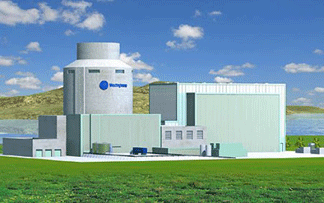
Westinghouse lobbies for site in Wales as Starmer backs nuclear renaissance US nuclear giant plans to build major nuclear power plant in Wales
Matt Oliver, Industry Editor
A US energy giant is in talks with Downing Street to build a major power plant off the
coast of Wales as Sir Keir Starmer throws his support behind a nuclear
renaissance in Britain. Westinghouse, which is also pursuing a US nuclear
expansion under Donald Trump, is understood to have presented plans for at
least two large reactors at Wylfa, in the Isle of Anglesey. It is lobbying
for the Welsh site to be kept in reserve for the project – which could
power several million homes – as the Government considers whether to put
mini nuclear plants there instead.
State-owned South Korean energy giant
Kepco was previously interested in the site but is said to have dropped the
plans after settling a global legal dispute with Westinghouse. Wylfa, where
a now decommissioned nuclear plant generated power until 2015, is seen as
attractive thanks to its ample space and favourable geology. The
Westinghouse plant would be similar in size to Hinkley Point C, in
Somerset, and Sizewell C, in Suffolk, which will use technology provided by
French nuclear giant EDF and come online in the 2030s.
In discussions with government officials, Westinghouse has claimed that a plant at Wylfa using its AP1000 reactors could also come online by the mid-2030s and for just a
fraction of the cost. An offer submitted by the company in February, which
was revised just weeks before Rachel Reeves unveiled her spending review,
proposes two reactors initially, with an option for another two later.
The discussions have surfaced as officials are separately negotiating a final
deal with Rolls-Royce to build the first small modular reactors (SMRs)
after the Derby-based company won a design competition. A location has not
been chosen but Wylfa is seen as one potential site alongside
Oldbury-on-Severn in Gloucestershire. Both are government-owned and Rolls
has said either would be suitable for its needs. But Westinghouse has
argued that Wylfa – regarded by the nuclear industry as the best site in
the country – is more suited to a large project.
The company is also understood to be interested in building SMRs elsewhere in the UK including at Moorside, Cumbria, which was recently made available for development by
the Government.
Telegraph 18th June 2025, https://www.telegraph.co.uk/business/2025/06/18/us-nuclear-giant-in-talks-with-no10-build-major-power-plant/
Alternative Defence Review

CND 23rd May 2025, https://cnduk.org/ADR/
The UK’s 2025 Strategic Defence Review comes at a moment of intensifying global conflict, escalating climate crisis and soaring UK inequality. Yet, rather than rethinking the country’s militarised foreign policy in response to these pressures, the Government proposes to dramatically increase defence spending, a move that risks worsening each of these crises.
This Alternative Defence Review challenges the dominant war narrative—cultivated by political elites, the military-industrial complex, and the mainstream media—and offers a new vision for peace, justice, and security.
It was proposed by CND in response to the RMT union’s decision to ‘… campaign with other trade unions and peace organisations to convene a labour and peace movement summit to work out the basis of a new foreign policy with the promotion of peace and social justice at its heart’. The Alternative Defence Review is intended to be a contribution towards this.
It examines how militarisation has distorted national priorities, fuelled global instability, undermined international law, harmed the environment, and diverted investment from public services and social infrastructure. It shows that increased military expenditure will be economically inefficient, environmentally destructive, and socially regressive, offering limited job creation while stifling a more sustainable and just economy. The review calls for a shift toward a significantly demilitarised defence strategy rooted in human security and common security—prioritising diplomacy, global cooperation, conflict prevention, and investment in health, education, climate resilience, social care, and the creation of well-paid, secure, unionised and socially useful jobs. It advocates for a significant reduction in military spending, an immediate halt to arms exports to countries involved in active conflict or human rights abuses (including Israel and Gulf states), and a Just Transition for defence-dependent workers and communities. This report offers a credible, democratic alternative to militarism: a sustainable economy grounded in social justice, global solidarity, and the urgent need to build peace—not war—for the 21st century.
You can download the report here.
You can order a copy of the report here.
Government holds no record of taxpayer funding arrangements for UK’s historic nuclear stations

17 Jun, 2025 By Tom Pashby, https://www.newcivilengineer.com/latest/government-holds-no-record-of-taxpayer-funding-arrangements-for-uks-historic-nuclear-stations-17-06-2025/
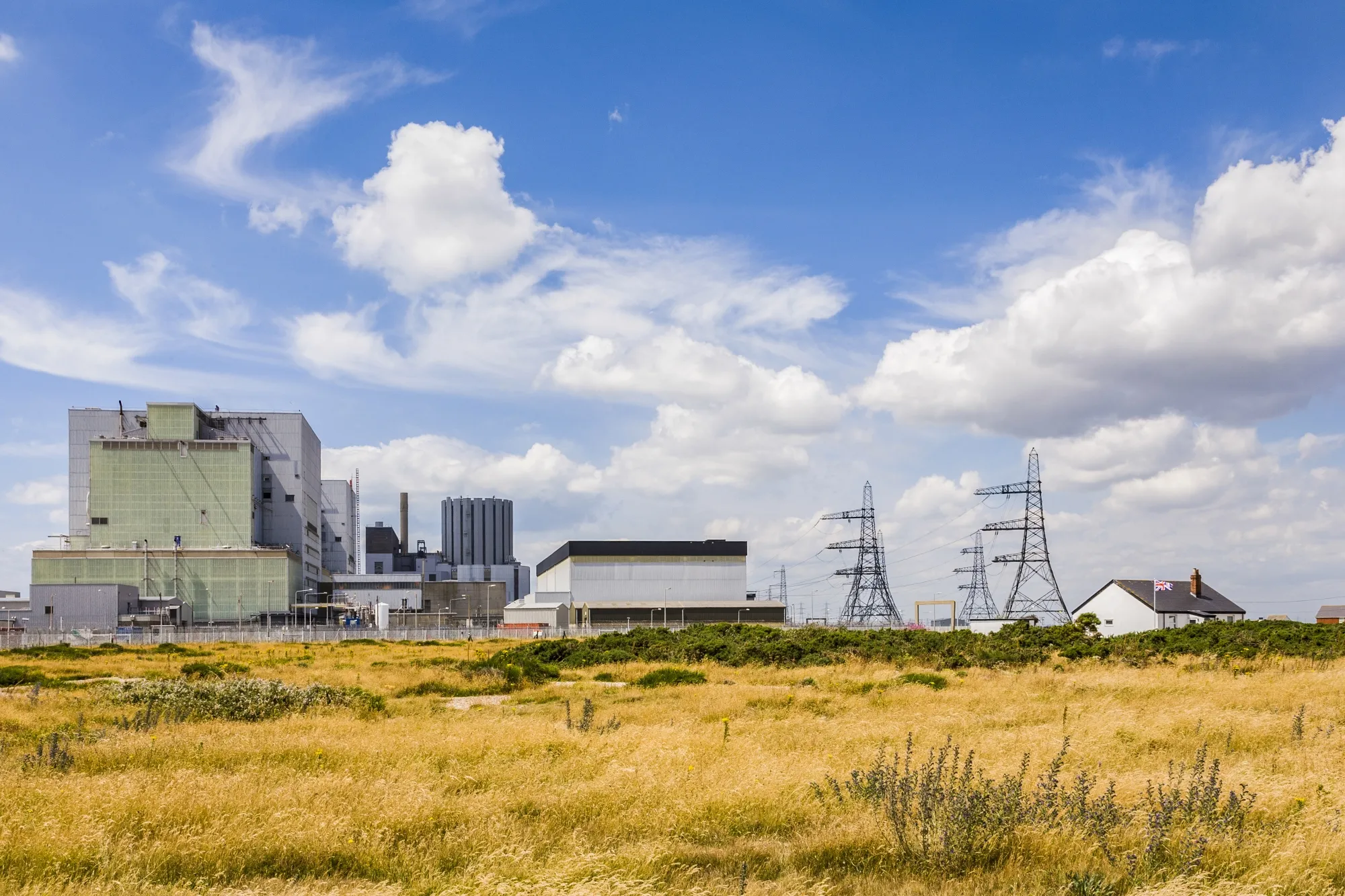
The government has revealed that it doesn’t know how much public money was spent on any of the country’s 19 historic nuclear power plants ahead of their respective final investment decisions (FIDs).
The FID is the agreement between public and private parties on how a major project will be funded, paving the way for the main construction to commence.
Pre-FID financing has risen up the agenda because of the £18bn of public money spent on Sizewell C despite its FID not having been confirmed. This means that the project is not yet guaranteed to go ahead and presents huge risks for taxpayers if the scheme falls through.
- You are here:Latest
Government holds no record of taxpayer funding arrangements for UK’s historic nuclear stations
17 Jun, 2025 By Tom Pashby
The government has revealed that it doesn’t know how much public money was spent on any of the country’s 19 historic nuclear power plants ahead of their respective final investment decisions (FIDs).
The FID is the agreement between public and private parties on how a major project will be funded, paving the way for the main construction to commence.
Pre-FID financing has risen up the agenda because of the £18bn of public money spent on Sizewell C despite its FID not having been confirmed. This means that the project is not yet guaranteed to go ahead and presents huge risks for taxpayers if the scheme falls through.
The rhetoric from the government about Sizewell C is centred on its confidence about the future of the project, but potential private sector investors including Centrica have aired concerns about the viability of the power station.
NCE submitted a request using the Freedom of Information Act (FOI) to the Department for Energy Security and Net Zero (DESNZ) for information on how much public money was committed to the UK’s 19 historic nuclear energy projects ahead of their respective FIDs or equivalent project milestones.
The 19 projects were Calder Hall, Chapelcross, Berkeley, Hunterston A, Hinkley Point A, Bradwell, Trawsfynydd, Dungeness A, Sizewell A, Oldbury, Wylfa, Dungeness B, Hunterston B, Hinkley Point B, Hartlepool, Heysham 1, Heysham 2, Torness and Sizewell B.
All are either operating or in the decommissioning phase of their lifecycles.
In response to the FOI request, DESNZ said: “The department does not hold the historic information requested relating to the UK’s current operational fleet, and projects which have been or are being decommissioned.”
DESNZ added that “the government did not make any funds available” to Hinkley Point C ahead of its FID.
“For Sizewell C, details of the subsidy schemes made by the government and the funds made available can be found on the subsidy transparency database,” it added.
“The DEVEX Scheme has been made for £5.5bn for the SZC company. Under this scheme to date £3.9bn has been awarded to the company – which would be available for them to draw down. Other future awards may be made up to the maximum amount of the scheme.”
The statements from DESNZ on Sizewell C were made ahead of the Spending Review (SR). The day before the SR, the chancellor of the exchequer committed additional public money to the project, bringing total pre-FID public support for the plant to £18bn.
Sizewell C facing scrutiny of its total costs
Campaigners and politicians have spent years trying to get the UK Government to reveal the estimated total costs of Sizewell C, including by calling for the National Audit Office and Office for Value for Money to review the project.
The total final cost estimate has not been officially revealed, with the government citing concerns about commercial sensitivity. The Financial Times reported in January 2025 that costs are expected to reach £40bn, though the government has said it does not recognise this figure.
In a letter dated 10 June 2025, the Office for Value for Money confirmed to the National Audit Office that it would not be looking at the project.
Office for Value for Money independent chair David Goldstone said: “In line with our principle not to duplicate the work of others we did not review HS2, Sizewell C and Dreadnought, as they are already subject to extensive review processes.”
Stop Sizewell C executive director Alison Downes told NCE: “The government continues to stonewall questions about Sizewell C’s cost, and how £6.4bn of taxpayers’ money ahead of a final investment decision is being used, an amount that is double what was spent by EDF at Hinkley Point C to get to the same point.
“Given the further £11.5bn allocated to Sizewell C over the next few years, and the fact that consumers could soon begin to pay a Sizewell tax on their bills, it is woeful that the independent chair of the Office of Value for Money decided not to scrutinise this monster of a project.”
DESNZ was approached for comment but did not provide one.
EDF scaled back financial interest in Sizewell C
- You are here:Latest
Government holds no record of taxpayer funding arrangements for UK’s historic nuclear stations
17 Jun, 2025 By Tom Pashby
The government has revealed that it doesn’t know how much public money was spent on any of the country’s 19 historic nuclear power plants ahead of their respective final investment decisions (FIDs).
The FID is the agreement between public and private parties on how a major project will be funded, paving the way for the main construction to commence.
Pre-FID financing has risen up the agenda because of the £18bn of public money spent on Sizewell C despite its FID not having been confirmed. This means that the project is not yet guaranteed to go ahead and presents huge risks for taxpayers if the scheme falls through.
The rhetoric from the government about Sizewell C is centred on its confidence about the future of the project, but potential private sector investors including Centrica have aired concerns about the viability of the power station.
NCE submitted a request using the Freedom of Information Act (FOI) to the Department for Energy Security and Net Zero (DESNZ) for information on how much public money was committed to the UK’s 19 historic nuclear energy projects ahead of their respective FIDs or equivalent project milestones.
The 19 projects were Calder Hall, Chapelcross, Berkeley, Hunterston A, Hinkley Point A, Bradwell, Trawsfynydd, Dungeness A, Sizewell A, Oldbury, Wylfa, Dungeness B, Hunterston B, Hinkley Point B, Hartlepool, Heysham 1, Heysham 2, Torness and Sizewell B.
All are either operating or in the decommissioning phase of their lifecycles.
Related questions you can explore with Ask NCE, our new AI search engine.

- What is Centrica’s potential investment in Sizewell C?
- What is the Sizewell C Devex Scheme’s total value?
- Why is Sizewell C’s value for money facing scrutiny?
- How could Sizewell C funding affect my energy bills?
- What is the UK’s strategy for increasing nuclear power capacity?
If you would like to ask your own question you just need to login, register or subscribe.
In response to the FOI request, DESNZ said: “The department does not hold the historic information requested relating to the UK’s current operational fleet, and projects which have been or are being decommissioned.”
DESNZ added that “the government did not make any funds available” to Hinkley Point C ahead of its FID.
“For Sizewell C, details of the subsidy schemes made by the government and the funds made available can be found on the subsidy transparency database,” it added.
“The DEVEX Scheme has been made for £5.5bn for the SZC company. Under this scheme to date £3.9bn has been awarded to the company – which would be available for them to draw down. Other future awards may be made up to the maximum amount of the scheme.”
The statements from DESNZ on Sizewell C were made ahead of the Spending Review (SR). The day before the SR, the chancellor of the exchequer committed additional public money to the project, bringing total pre-FID public support for the plant to £18bn.
Sizewell C facing scrutiny of its total costs
Campaigners and politicians have spent years trying to get the UK Government to reveal the estimated total costs of Sizewell C, including by calling for the National Audit Office and Office for Value for Money to review the project.
The total final cost estimate has not been officially revealed, with the government citing concerns about commercial sensitivity. The Financial Times reported in January 2025 that costs are expected to reach £40bn, though the government has said it does not recognise this figure.
In a letter dated 10 June 2025, the Office for Value for Money confirmed to the National Audit Office that it would not be looking at the project.
Office for Value for Money independent chair David Goldstone said: “In line with our principle not to duplicate the work of others we did not review HS2, Sizewell C and Dreadnought, as they are already subject to extensive review processes.”
Stop Sizewell C executive director Alison Downes told NCE: “The government continues to stonewall questions about Sizewell C’s cost, and how £6.4bn of taxpayers’ money ahead of a final investment decision is being used, an amount that is double what was spent by EDF at Hinkley Point C to get to the same point.
“Given the further £11.5bn allocated to Sizewell C over the next few years, and the fact that consumers could soon begin to pay a Sizewell tax on their bills, it is woeful that the independent chair of the Office of Value for Money decided not to scrutinise this monster of a project.”
DESNZ was approached for comment but did not provide one.
EDF scaled back financial interest in Sizewell C
EDF is the minority (14.6%) owner of Sizewell C, while the UK Government is the majority (85.4%) owner. This ownership split was accurate as of March 2025.
EDF is a French state-owned energy giant, and the French public auditor Cour des comptes # said in January 2025 that EDF should scale back its involvement in UK nuclear projects.
The auditor said “a final investment decision on [Sizewell C] should not be approved until a significant reduction in EDF’s financial exposure to the Hinkley Point project has been achieved.
“[Cour des comptes] also recommends ensuring that any new international nuclear project generates quantified gains and does not delay the timetable for the EPR 2 programme in France.”
Labour’s nuclear dream has destroyed my home: inside the Sizewell C planning row.

As the Government pledges £14.2 billion for the new power
station on the Suffolk coast, it faces fierce opposition from residents.
Eastbridge, a small Suffolk village two miles inland from the coast,
surrounded by marshland, has looked much the same for centuries.
Over the past year, however, it has been transformed. Huge swathes of the
surrounding countryside have been dug into a strange lunar landscape of
sand and soil to make way for construction associated with Sizewell C,
including a vast accommodation campus for workers on the outskirts of the
village. The scale of the site is only really clear from aerial
photographs, which shows a patchwork of grey, orange and brown where there
once was lush green. And this is just the beginning.
Last week, the Government pledged £14.2 billion for the project at Sizewell, which will
eventually provide low-carbon electricity for six million homes for a
lifespan of 60 years. The only published overall cost for the scheme was
£20 billion in 2020, but it has reportedly now ballooned to over £40
billion. Still a fair price, many argue, for a source of “clean,
homegrown power” – as Ed Miliband says – to future-proof Britain’s
energy security.
Inevitably, however, it has faced fierce opposition from
residents in the surrounding area, with some locals arguing the Government
hasn’t counted the true cost of the lengthy construction period and the
damage to the natural landscape and neighbouring communities.
Alison Downes, the director of Stop Sizewell C, began campaigning against the
project in 2013 on the grounds of the impact on the local area. “In the
early days we were trying to persuade the project to amend its proposal,
including the location of the [accommodation] campus at Eastbridge,” she
says. “It was of grave concern that it was proposed for 3,000 people –
it’s gone down a little bit, but not much.” Then, she says, as she
learnt more about the project, “all these other issues [came] to the
fore.” Downes, a career campaigner, has wisely focused on scrutinising
Sizewell on issues of national, rather than localised, importance.
Stop Sizewell C argues that the project is bad value for money, will be too slow
to address climate change (it will take at least 10-12 years to build,
according to the EDF), and will ultimately load too much risk onto the
taxpayer.
Telegraph 18th June 2025,
https://www.telegraph.co.uk/news/2025/06/18/labours-nuclear-dream-has-destroyed-my-home-inside-the-size/
UK’s Bakers’ union rejects new nuclear reactors, calls for socialist Green New Deal
Bakers’ union rejects new nuclear reactors, calls for socialist Green New
Deal. Tens of thousands of energy jobs could be created with a socialist
Green New Deal without the need of new nuclear reactors, the bakers’
union said today. Delegates from the Bakers, Food and Allied Workers Union
(BFAWU) passed a motion calling for the democratic public ownership of all
forms of energy. They condemned the loss of skilled jobs in North Sea
industry and Grangemouth oil refinery, saying they have “no faith” in
private firms to tackle the climate crisis “nor do we accept that nuclear
power is a clean form of energy production.”
Morning Star 16th June 2025
https://morningstaronline.co.uk/article/bakers-union-rejects-new-nuclear-reactors-calls-socialist-green-new-deal
The Office of Value for Money did NOT assess Sizewell C nuclear project
Correspondence published today from the independent Chair of the Office of
Value for Money, David Goldstone, to the National Audit Office’s
Comptroller General, Gareth Davies, confirms that the Office of Value for
Money did NOT assess Sizewell C (page 4 of link). We have sent out a
response expressing our disappointment and frustration, and would like to
thank everyone who signed our petition, as well as Dale Vince who also
wrote to David Goldstone.
Office for Value for Money 10th June 2025, https://assets.publishing.service.gov.uk/media/684bfd5ebd35d2f88bcba2b8/DG_to_GD_-_OVfM_progress_to_SR2025_-_100625.pdf
Why I can’t trust carbon capture or nuclear power to save us.
Tommy Shepherd (Former SNP MP) Sometimes I wonder if it’s the lack of a
scientific background among the country’s lawmakers which allows them to
be so easily bamboozled by technical experts. Could this be why energy
policy so blatantly disregards the obvious solution in pursuit of more
elaborate, costly and difficult answers?
Look no further than last week’s
announcements by the UK Government on nuclear and carbon capture to see
what I mean. Let’s start with carbon capture and storage. This has a ring
of plausibility and common sense to it. If you want to reduce CO₂ levels
in the atmosphere, why not find a way to remove it, compress it, pump it
underground and wait for time to literally turn it to stone? The thing is,
though, we already have things for taking carbon out of the atmosphere.
They’re very good at it. We call them trees. Photosynthesis is what has
always kept carbon in balance, ensuring not only that levels are reduced
but that oxygen, that vital component of life, is produced. You could build
very expensive industrial plants to augment the capacity of trees. Or you
could just plant more trees!
As the bill for Sizewell C grows towards £20
billion, remember that we will be paying for that too – even though
Scotland is self-sufficient in renewables. That is why control of our
energy is the greatest argument we can deploy to illustrate the benefits of
becoming an independent country.
The National 16th June 2025, https://www.thenational.scot/comment/25240560.cant-trust-carbon-capture-nuclear-power-save-us/
A golden nuclear age
‘the last thing variable renewables need is inflexible nuclear plants: they are incompatible.’
June 14, 2025, Renew Extra Weekly
Nuclear power will help take us into a ‘golden age of clean energy abundance’. So said UK Energy Secretary Ed Milliband, in the run up to the public spending review. He announced an extra £14.2 billion in state support for EdFs proposed 3.2GW Sizewell C European Pressurised-water Reactor (EPR) and also £2.5bn for small modular reactor support, with Rolls Royce having won the UK Small Modular Reactor (SMR) competition. There would also be £2.5bn to support fusion.
Whereas there has been a lot a concern about the cost of Sizewell, given the delays and over-runs with its sister EPR plant at Hinkley, it was argued that the second plant would benefit from the lessons learnt, and certainly Miliband was very single-minded about it: ‘all of the expert advice says nuclear has a really important role to play in the energy system. In any sensible reckoning, this is essential to get to our clean power and net zero ambitions.’
Not everyone agreed with that, and, in any case, as the Stop Sizewell C campaign said, ‘there still appears to be no final investment decision for Sizewell C’, with agreements on the remaining substantial private funding still being negotiated. And it noted that ‘every pound sunk into risky, expensive Sizewell C is a pound lost to alternative energy sources and critical social funding that the voting public cares deeply about. It’s not too late to redirect money to offshore wind, or warm homes – creating thousands of jobs – or to restoring the most unpopular and unjust cuts. Sizewell C, given the terrible track record of Hinkley Point C, would be £40 billion badly spent.’
However, Labour seems totally committed to it, although there was some wry media commentary that this might be what sinks Millband’s career- and also about the dubiousness of the nuclear investments and associated fiscal rule changes. There certainly is plenty of potential for things to go awry, and, despite what Milliband claimed, plenty of experts who have warned about the risks and uncertainties of new nuclear, including SMRs. And on costs, the Royal Society had earlier concluded that, even with storage back up, renewables were likely to be cheaper than nuclear. Interestingly, Scotland is still sticking to its no nuclear approach. And there was plenty of opposition from the rest of the UK.
The large-scale new reactor funding (nearly £20bn in all) was the only significant energy-related allocation in the Spending Review, unless you include the £15bn for trams and local transport outside London. The £15bn allocated specifically to nuclear weapons upgrading, for the delightfully named sovereign warhead programme, was unrelated, but, as CND noted, there are some links between civil and military nuclear technology development, including reactors for submarines. There had been hopes from devotees that Carbon Capture would get a lot more funding. It already had £22bn, and so ought to be more than content with the £9.4 bn extra allocation. It did seem to go down well.
As for renewables, there’s just £300m (actually already announced), for Great British Energy to upgrade Offshore wind supply chains. Although to be fair, there will also be support for some renewable projects from the Research Councils and from the Department of Energy Security and Net Zero (DESNZ), which of course also supports the private sector CfD based renewable auction market system. The Spending Review also says the government is supporting ‘the development of home-grown clean power’, including ‘by confirming up to £80 million over the SR period for port investment to support floating offshore wind deployment in Port Talbot, subject to final due diligence’, while ‘Great British Energy and Great British Energy – Nuclear will invest more than £8.3 billion over this Parliament in homegrown clean power’. Make that what you will- it’s been suggested that it means more for SMRs, less for renewables! But Carbon Brief notes that, overall, there’s a 16% rise (to £12.6bn) in DESNZ spending- not including the nuclear investment.
The spending review isn’t about policy formulation, but of course it does reflect policy, so what we are seeing is the triumphant renewal of nuclear, although renewables are still seen as all import, very little new public money in being allocated to them. Even AI got £2bn! But perhaps you can’t read too much into that. Milliband is clearly still keen on net zero with renewables being central (aiming for around 60GW by 2030), with CCUS, and now nuclear, playing smaller bit parts, along with some residual fossil gas.
So renewables will continue to lead. They are now supplying over 50% of UK power and are still expanding fast. Nuclear has fallen to 15% and will fall further as the old AGR plants are closed, before picking up again when Hinkley finally gets going and then some more if Sizewell really does get built, along possibly with some SMRs, in the 2030s. So maybe 25% of power by then?
There will no doubt continue to be objections to each of the energy options. Certainly to nuclear, but also to CCUS and to fossil gas. And inevitably also to renewables – as well as to the whole ‘net zero’ idea. For example, predictably, the Global Warming Policy Foundation has produced a new report which claims that ‘net zero will bankrupt Britain.’ For example, it says ‘the Government’s plans ensure that bills are likely to go up, rather than fall as claimed’, with new subsidies for variable renewable energy locking in further price rises for consumers. It also warns about the increasing cost of grid balancing.
Instead of this, the GWPF report seems to favour a return to fossil fuel. It says ‘the potential of the UK’s shale gas resources has also gone unexplored. A new discovery in Lincolnshire, known as the Gainsborough Trough, could add £112 billion to UK GDP, according to a study by Deloitte’. Farage seems to be saying the same sort of thing – even calling for a return to coal mining in Wales. So, they both seem to be saying let’s not worry too much about emissions – let’s go backwards. Labour is not doing that, although some might think its conversion from an anti-nuclear party in the 1980s to a militantly pro-nuclear one now, has involved a bit of backtracking, and a lack of consistent vision.
Personally, as I said in response to the Labour Party’s invitation to submit comments to its National Policy Forum consultation on energy policy, I do not think we need renewables and nuclear, not least since ‘the last thing variable renewables need is inflexible nuclear plants: they are incompatible.’ Quite apart from the costs and the safety and security risks, which I have looked at elsewhere, I think it’s foolish to build large expensive plants that are only used occasionally for backup. The same is true for an isolated fleet of SMRs- trying to make them flexible enough to provide grid balancing is likely to make them even more costly. Instead, I pointed out that ‘there are UK scenarios in which renewables expand to supply almost all energy needs by 2050 led by wind and solar’, with full short and long term storage and flexible system balancing, at reasonable costs, although I did warn that ‘ dealing with interannual cycles may require import/grid trading options to be explored. But having inflexible nuclear plants doesn’t help at all- they just get in the way’.
It’s fascinating stuff trying to ensure zero carbon green energy system flexibility and sustainability at low cost, as I have reported in Renew over the years, but Labour now seems to see nuclear as a key option. As a result, although there are some good things (e.g. on warm housing) in the new spending review, I’m not sure, given also their stance on some other key issues, how much longer I can stay being a member.
Labour’s £14bn ‘fixation’ with new nuclear power ‘won’t cut bills or help climate’
It’s almost like a mass psychosis because if they really investigated properly what the best use of public funds would be, nuclear wouldn’t get a look-in.”
“It’s almost like a mass psychosis because if they really investigated properly what the best use of public funds would be, nuclear wouldn’t get a look-in.”
The UK Government last week announced a new ‘golden age’ of nuclear but academics and campaigners warn it will be a costly energy fail.
Dan Vevers Sunday Mail Chief Reporter, Daily Record, 15 Jun 2025
Labour’s £14billion “fixation” with new nuclear power will be a costly flop and do nothing to lower Scots’ bills or hit climate targets, experts have warned.
It comes after Keir Starmer’s goverment last week announced a “golden age” of nuclear energy with a £14.2billion investment to finally build the delayed Sizewell C plant in Suffolk which it claimed will create 10,000 jobs.
Ministers say the move is vital to prevent future blackouts and to help the shift to a low carbon economy.
Now campaigners and academics warned nuclear energy is too expensive and plants take too long to build to make any dent in net zero efforts or prevent future blackouts.
And they said the result of “inevitable” cost overruns on nuclear projects would lead to a “nuclear tax” on consumer bills.
It follows pressure on the SNP to end its block on nuclear projects, with Labour saying it could open Scotland up to small modular reactors (SMR) if it wins at Holyrood next year.
But Pete Roche, an Edinburgh energy consultant and anti-nuclear campaigner, said: “It’s too late for nuclear. It takes too long to build.
“We’re trying to tackle a climate crisis here, we need to be fast – the faster, the better.
“You can insulate people’s homes and put up wind farms quite quickly in comparison to how long it takes to build a nuclear power station.
“And the worry is when you’re putting all your eggs in the nuclear basket, the money is getting diverted, civil servants’ attention is getting diverted.
“We’re not focused enough on getting the energy transition based on renewables off the ground.
“It’s a fixation and the UK is not on its own. There’s all sorts of talk in other countries of building nuclear power stations again.
“It’s almost like a mass psychosis because if they really investigated properly what the best use of public funds would be, nuclear wouldn’t get a look-in.”
Dr Paul Dorfman, of the Bennett Institute at the University of Sussex, said more than £20billion had now been committed to Sizewell C but the final bill could easily be double that and likely more.
He told the Sunday Mail: “The vast majority of that money comes from public subsidy – in other words, the public will have to pay for all the inevitable over-costs and overruns, which is basically a nuclear tax.”
Dr Dorfman continued: “In Scotland, given the country’s vast renewable power capacity, one wonders what would be the reason to burden Scotland with new nuclear.
“New nuclear builds, wherever they’re built, are always vastly over cost and over time.
“Hinkley Point C [in Somerset] is already 90 per cent over budget and seven years late, with at least seven years of construction remaining.
“And the form of reactor that is doomed to be constructed at Sizewell C is the same reactor being built at Hinkley C.”
He added: “It is possible to sustain a reliable power system by expanding renewables on all levels, whether that’s solar, wind, geothermal, hydrogen, storage and all the rest of it…
“But nuclear risks eating all of the cake.
“The time lost may prove catastrophic, because according to the UK Government, it takes up to 17 years to build just one nuclear power plant.
“Meanwhile all SMRs are in the design phase.
“In terms of the climate, we are running out of time now.” And because of the time it takes to build a nuclear station, he declared: “Nuclear cannot keep the lights on.”
Tor Justad, chair of Highlands Against Nuclear Power (HANP), highlighted the continuing issues related to the old Dounreay plant which shut down in 1985 around radioactive waste.
He said: “For me, investing in nuclear makes no sense, whether economically or in terms of safety or benefit to the wider community.
“We don’t need these massive white elephants which always end up costing twice what they started with and take twice the length of time to build than they predicted.
“And this argument about base load doesn’t take into account the storage possibilities for renewables that we’re developing at a rapid pace, including here in the Highlands.
“We can store electricity now in ways that we never could do ten years ago, and that will continue to improve.”
He added Labour’s pro-nuclear stance is “a real danger” in Scotland…………………………. https://www.dailyrecord.co.uk/news/politics/labours-14bn-fixation-new-nuclear-35393729
Sizewell C and Britain’s nuclear renaissance

Is ‘the most announced nuclear power station in history’ finally about to get off the ground?
14 June 25, https://theweek.com/politics/sizewell-c-and-britains-nuclear-renaissance
After years of setbacks, Britain has finally ended the uncertainty “over the future of its nuclear industry”, said the FT. Chancellor Rachel Reeves has pledged a game-changing £11.5 billion of new state funding for the Sizewell C nuclear plant in Suffolk – in addition to a £2.7 billion commitment previously made in the autumn Budget.
Although Reeves has had to make tough decisions on day-to-day departmental budgets in the Spending Review, she was able “to find the extra billions for Sizewell C through a change to her fiscal rules”, which has made £113 billion available for extra capital spending across government, funded by borrowing. In two further nuclear-boosting moves, Rolls-Royce has been chosen as preferred bidder to build Britain’s first “small modular nuclear reactors”; and more than £2.5 billion is being invested in “the nascent technology of nuclear fusion“.
“Sizewell C must be the most announced nuclear power station in history,” said Nils Pratley in The Guardian. “It feels as if every energy secretary in the last half-decade, facing up to the reality that most of the existing nuclear fleet will be going offline by the early 2030s, has endorsed the Suffolk plant.” The difference this time is that Ed Miliband‘s promise of “a golden age for clean energy abundance” is being backed by “serious government money”.
The move is a recognition that we cannot rely on the private sector alone to finance and build nuclear projects, as the last project attempted – at Hinkley Point C in Somerset, which is heavily delayed and over budget – has shown. Sizewell C is effectively “a replica of Hinkley”, and both projects are being built jointly by the UK government and EDF, the French government-owned energy company. But the hope is that lessons have been learnt and that it can be built a lot more cheaply. “The game now is about rounding up private-sector investors to play a supporting financing role.”
“Rinse and repeat” is one way of looking at things, said Eleanor Steafel in The Daily Telegraph. But it rather overlooks the fact that Hinkley Point has been “beset with problems” from the moment that EDF broke ground there in 2017 – and is currently £28 billion over budget, and counting. Indeed, the biggest hole in this week’s announcement is the government’s reluctance to spell out how much Sizewell C is expected to cost, let alone how much consumers will be paying for the electricity it eventually generates, said Alistair Osborne in The Times. The promise of Sizewell is that it may one day bring us “baseload power”, complementing wind and solar. But taxpayers have a right to know “if the costs of delivering it will be radioactive”.
UK Nuclear power is not a done deal.
Sophie Bolt, CND General Secretary, CND 13th June 2025 https://cnduk.org/nuclear-power-is-not-a-done-deal/
This week has seen the Government’s latest attempt to foist a nuclear future on Britain. But despite its increased promised financial support, the nuclear issue is clearly not a done deal, writes Vice President Dr Ian Fairlie.
The media’s response to the Government’s nuclear push has been decidedly unenthusiastic as can be seen from the selection below of UK newspaper comments. Most are cool or unenthusiastic: some are downright critical.
“Sizewell C nuclear cost doubled to £40bn – UK govt to shoulder half upfront cost, will ultimately be paid for by households and businesses via electricity bills.” https://www.telegraph.co.uk/business/2025/06/11/cost-of-milibands-nuclear-plant-doubles-to-more-than-40bn/
“£14bn investment in a new mega nuclear power station, Sizewell C, is not being classified as a financial asset. So all £14bn of the finance will be added to the value of national debt, rather than the zero net figure. This is what would have happened under the old fiscal definitions, so what on earth was the point of Reeves’s controversial fiscal-rule change? In serious practical terms, it means there is £14bn less to invest in other projects – which is the opposite of what the fiscal rule change was supposed to achieve. In other words Reeves’s changes to the fiscal rules now seem totally pointless – because if investing in a cutting-edge power plant does not create a valuable and sellable financial asset, then goodness alone knows what would.”
https://www.itv.com/news/2025-06-10/peston-why-arent-treasury-and-reeves-investing-more
“The government has commissioned just three SMR reactors, none expected before 2035. Rolls Royce said in 2015 that to make building a modular factory worthwhile, you would need an order book of 50 to 70.”
https://www.thetimes.com/comment/columnists/article/spending-review-miliband-nuclear-reeves-grpp5l8d5
“GB Energy handed £2.5bn bill for funding small modular reactors. Financing nuclear projects will leave state-owned company less cash for backing wind and solar technology.”
https://www.ft.com/content/a8e3a775-33c9-4ad6-b01a-bfb212dfdcbe
“Imagine this – one morning you’ll be strolling down to the park to give the dog some exercise, and ka-boom! The roof’s blown off the local baby nuke, and glowing hot radioactive ash is showering the surrounding streets. A small armageddon, but an armageddon all the same. Widespread use of nuclear power is the kind of thing that, among other things, such as leaving a toxic legacy for thousands of years and an upsurge in deformities and cancers, could end political careers.”
https://www.independent.co.uk/voices/ed-miliband-sizewell-c-nuclear-power-energy-b2767052.html
“The Scottish Government has a long-standing objection to nuclear power mainly on environmental grounds. Those objections are not daft – to this day, governments around the world are vexed by the question of how to dispose safely of highly dangerous radioactive waste. Accidents at nuclear power plants can be catastrophic. More immediately, building new nuclear capacity is also infamously expensive and costs are prone to rise, often astronomically.”https://www.heraldscotland.com/politics/viewpoint/25232597.scotland-blindly-follow-england-nuclear-power-path/
Will the Government really push ahead with its new nuclear proposals given this chorus of doubts? It’s a moot point. It would surprise no-one if we were to see quiet retrenchments or delays….much like we are seeing with another Government mega-project – HS2.
More to the point, we need to address the whopping elephant in the room here which is …why is the Government pressing ahead with these unpopular ill-advised proposals? In fact, the previous Sunak government admitted the real reasons for supporting nuclear….the military ones. That is, the MOD’s perceived needs to maintain nuclear technology and know-how for its nuclear weapons programme – both for the warheads and the submarine reactors.
We think this Government should own up to these reasons and stop pretending that its civil nuclear proposals are about satisfying our energy needs. They, most decidedly, are not. If the Government were to retire its ageing nuclear weapons, it would also free up its way to intelligent energy policies as well. A two-fold bonus for Britain.
1 This Month
29 Jan. Thursday 7-8 p.m. Webinar – World’s Largest Nuclear Station in Port Hope, ON?
To see nuclear-related stories in greater depth and intensity – go to https://nuclearinformation.wordpress.com/



31st January – Challenging the War Machine – a DECLASSIFIED UK SUMMIT


Website of the Week
Now until to February 10, 2026 Radioactive waste storage in France: the debate is finally open! How to participate?
-
Archives
- January 2026 (288)
- December 2025 (358)
- November 2025 (359)
- October 2025 (376)
- September 2025 (258)
- August 2025 (319)
- July 2025 (230)
- June 2025 (348)
- May 2025 (261)
- April 2025 (305)
- March 2025 (319)
- February 2025 (234)
-
Categories
- 1
- 1 NUCLEAR ISSUES
- business and costs
- climate change
- culture and arts
- ENERGY
- environment
- health
- history
- indigenous issues
- Legal
- marketing of nuclear
- media
- opposition to nuclear
- PERSONAL STORIES
- politics
- politics international
- Religion and ethics
- safety
- secrets,lies and civil liberties
- spinbuster
- technology
- Uranium
- wastes
- weapons and war
- Women
- 2 WORLD
- ACTION
- AFRICA
- Atrocities
- AUSTRALIA
- Christina's notes
- Christina's themes
- culture and arts
- Events
- Fuk 2022
- Fuk 2023
- Fukushima 2017
- Fukushima 2018
- fukushima 2019
- Fukushima 2020
- Fukushima 2021
- general
- global warming
- Humour (God we need it)
- Nuclear
- RARE EARTHS
- Reference
- resources – print
- Resources -audiovicual
- Weekly Newsletter
- World
- World Nuclear
- YouTube
-
RSS
Entries RSS
Comments RSS
 nuclear-news