While Hinkley Nuclear Was Being Built, The UK Grid Decarbonized
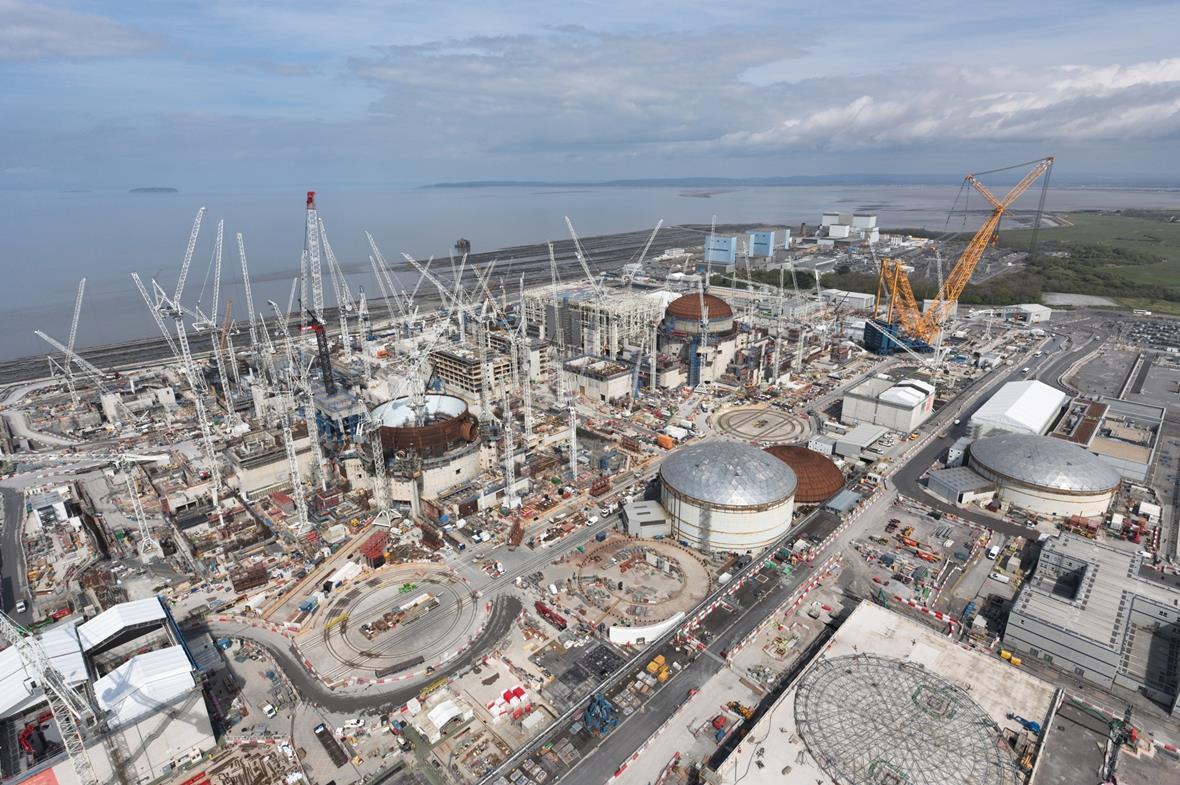
Clean Technica, Michael Barnard, 6th March 2026
The latest announcement about Hinkley Point C was predictable. The first reactor at the plant in Somerset is now expected to begin generating electricity in 2030. The cost estimate has climbed again, now reaching roughly £35B in 2015 pounds or about £49B in current money according to Electricité de France. When the project received final approval in 2016, the expected construction cost was £18B and the first reactor was expected to begin operating in 2025. In the span of a decade, the expected capital cost nearly doubled while the schedule slipped by five years. The project illustrates the pattern described by Oxford megaproject scholar Bent Flyvbjerg. Large infrastructure projects tend to run over budget, over schedule, and deliver fewer benefits than originally promised. Hinkley Point C appears to be achieving the full trifecta.
To understand how the project arrived at this point it is necessary to revisit the electricity system that existed when Hinkley was first proposed……………………………Policymakers faced a looming capacity gap as aging coal plants approached retirement under European pollution rules and older nuclear reactors approached the end of their operating lives. Large baseload nuclear plants seemed like a logical replacement for retiring coal and nuclear capacity while maintaining system reliability and reducing emissions.
EDF entered the picture in 2008 when it acquired British Energy for about £12.4B. This acquisition gave the French utility access to several UK nuclear sites including Hinkley Point in Somerset……………………… T.he UK government supported the project through a Contract for Difference that guaranteed a strike price of £92.50 per MWh in 2012 pounds for 35 years. Adjusted for inflation that price is now roughly £120 to £130 per MWh in current money.
The timeline of the project reflects the slow progress typical of large nuclear builds……………………………………………………….. The most recent revision places the cost at about £35B in 2015 pounds with startup expected in 2030. If the schedule slips to 2031, EDF estimates another £1B in additional cost..
Hinkley is not an isolated example. The reactor design used at the site is the European Pressurized Reactor. Other projects using this design have experienced similar difficulties. Olkiluoto 3 in Finland began construction in 2005 and entered commercial operation in 2023. The project took roughly 18 years from start to finish and cost about €11B compared with an original estimate of about €3B. Flamanville 3 in France began construction in 2007 and only began producing electricity in 2024 after more than a decade of delays and cost escalation. These projects demonstrate that modern nuclear construction faces structural challenges including complex regulatory oversight, large supply chains, and one-off engineering work.
While Hinkley Point C progressed slowly, the electricity system around it began to change rapidly. UK grid carbon intensity fell from about 520 gCO2 per kWh in 2006 to roughly 120 gCO2 per kWh in 2025 according to National Grid data. That represents a reduction of about 77%. Coal generation collapsed during the same period. In 2012 coal still produced about 40% of UK electricity. By 2024 the last coal plant closed and coal generation fell to zero. Gas generation initially increased as coal declined, providing a bridge fuel that cut emissions roughly in half per kWh compared with coal. At the same time renewable energy expanded quickly.
Wind power became the largest contributor to this change. ……………………………………………………………………………..
The grid also evolved to accommodate the growing share of renewable energy. Market reforms played a significant role. The Contract for Difference program created long term price stability for renewable developers………………High voltage direct current interconnectors connected the UK to electricity markets in France, Norway, Belgium, and Denmark. These interconnectors allow power to flow between regions and help balance variable generation.
Grid operations also changed to manage a system with lower inertia and higher renewable penetration. Batteries began appearing in grid services markets around 2017. These batteries provide fast frequency response and reserve capacity.
The economic dynamics of electricity generation shifted during the same period. Nuclear plants represent a form of megaproject economics. Each plant is a large custom built facility that takes many years to construct. Learning effects are limited because each plant is unique. Wind turbines and solar panels follow a different model. These technologies are manufactured in large volumes. Production learning and scale economies reduce costs over time. ………………………………………………………………..
The rising cost of Hinkley also raises questions about opportunity cost. The current estimated cost of about £49B in today’s money represents a very large capital investment. Offshore wind projects in Europe commonly cost between £2M and £3M per MW of installed capacity depending on location and turbine size. At £2.5M per MW, £49B could finance roughly 20 GW of offshore wind capacity. With a typical offshore wind capacity factor of about 45%, that capacity would produce around 79 TWh of electricity annually. Hinkley Point C is expected to produce about 25 TWh annually. The comparison is not exact because nuclear provides firm generation while wind is variable. The scale difference is significant.
……………………………………………………………………………………………………………. The next UK nuclear project, Sizewell C in Suffolk, raises obvious questions about what lessons policymakers are drawing from the experience at Hinkley Point C. Sizewell C is planned as a near replica of Hinkley using the same European Pressurized Reactor design and similar capacity of about 3.2 GW. The estimated construction cost is currently around £20B to £30B depending on assumptions about financing and schedule. Unlike Hinkley, the project will be financed through a regulated asset base model that allows developers to collect revenue from electricity consumers during construction. This structure reduces financing risk for investors but shifts more cost exposure onto the public.
The core question is whether the UK energy system in the 2030s and 2040s still requires additional nuclear megaprojects built on decade long timelines when wind, solar, and storage technologies continue expanding on much shorter deployment cycles. A second question concerns opportunity cost. If Sizewell C ultimately approaches the capital intensity seen at Hinkley, the same level of investment could finance tens of gigawatts of renewable capacity or large expansions of grid infrastructure. Policymakers therefore face a strategic choice between continuing the megaproject model for firm low carbon generation or allocating capital toward technologies that can scale incrementally and rapidly across the electricity system.
The broader lesson from the Hinkley experience concerns the pace of technological change in energy systems. Large infrastructure projects require long planning and construction timelines. Energy technologies such as wind turbines, solar panels, and batteries follow faster innovation cycles driven by manufacturing scale and global deployment. Between the time Hinkley Point C was conceived and the time it will enter operation, the UK electricity system transformed itself. Coal disappeared. Wind capacity expanded more than tenfold. Carbon intensity fell by more than three quarters. The project will arrive into a grid that has already undergone much of the transition it was designed to support.
https://cleantechnica.com/2026/03/06/while-hinkley-nuclear-was-being-built-the-uk-grid-decarbonized/
A chilling reminder of the deceit & violence of Iraq war
March 09, 2026, by Bruce K. Gagnon
This film ‘Official Secrets’ is a true story. It’s now airing on Netflix and I urge folks to watch it.
‘Official Secrets,’ which opened in 2019, is the best movie ever made about how the Iraq War happened. It’s startlingly accurate, and because of that, it’s equally inspiring, demoralizing, hopeful, and enraging.
It’s been mostly forgotten now, but the Iraq War and its abominable consequences — the hundreds of thousands of deaths, the rise of ISIS terrorism, the nightmare oozing into Syria, arguably the presidency of Donald Trump — almost didn’t happen.
In 2003, as politicians in Britain and the US scheme to invade Iraq, GCHQ translator Katharine Gun leaks a classified e-mail that urges spying on members of the UN Security Council to force through the resolution to go to war.
Charged with breaking the Official Secrets Act, and facing imprisonment, Katharine and her lawyers set out to defend her actions. With her life, liberty and marriage threatened, she must stand up for what she believes in…
During this present Iran war – packed with lies, distortions and evil boasts of killing by the US and Israel – this 2019 film reveals the kind of ugly twists and turns that are regularly used to pull the wool over the public’s eyes.
Now and then a principled person stands against the dark wall of endless war.
The Welsh dragon is getting ready to roar.
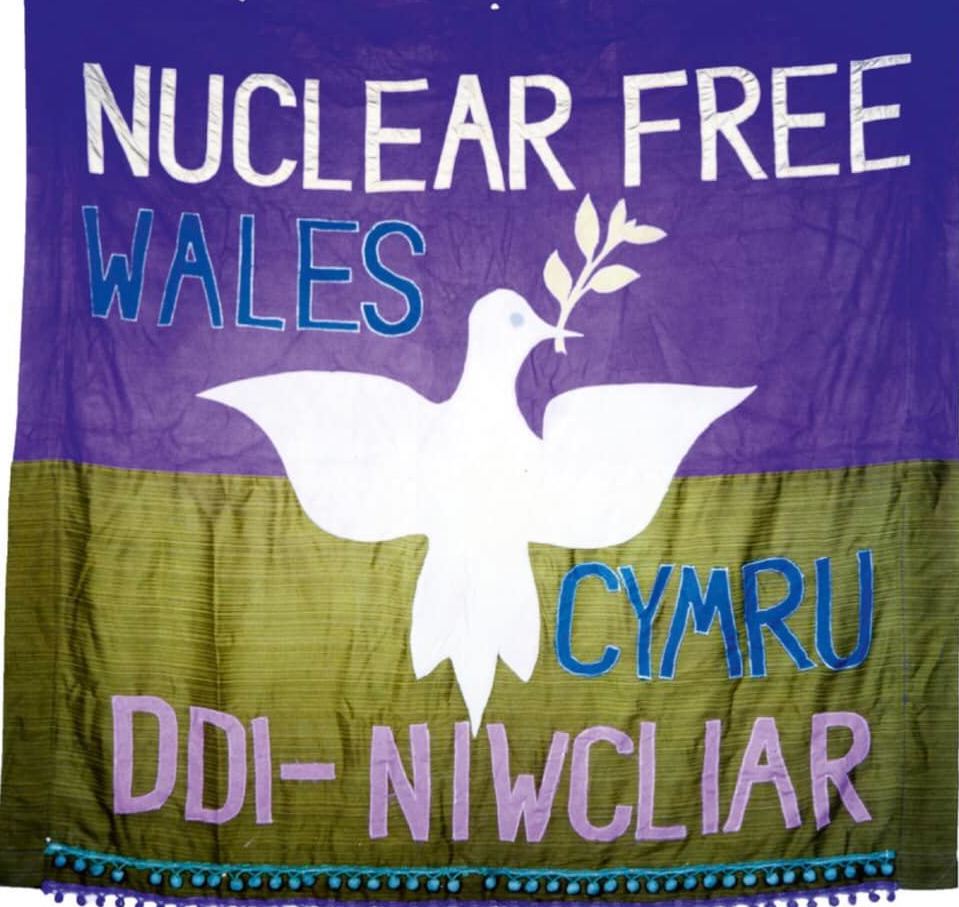
Citizens of Wales are gearing up for another assault on their right to a safe, clean and healthy environment
Anti-nuclear campaigners meeting in Wrexham last October issued a declaration calling on politicians representing Welsh constituencies in parliaments in Cardiff and Westminster to work for a nuclear-free, renewables-powered Wales.
Welsh campaigners are working with US, Canadian and other UK activists to establish a Transatlantic Nuclear-Free Alliance to campaign on issues of common concern. The new initiative came in conjunction with a screening of the award-winning film SOS: The San Onofre Syndrome, which highlights the impact of the decommissioning and the legacy of managing deadly radioactive waste faced by the neighbors of the San Onofre nuclear power plant in California.
The film’s messages resonate with international audiences faced with identical threats and challenges. At the screening, the audience heard from the filmmakers Marybeth Brangan and the now sadly late Jim Heddle as well as from Professor Stephen Thomas, Emeritus Professor in Energy Policy at Greenwich University and Richard Outram, Secretary of the Welsh Nuclear Free Local Authorities.
“The nuclear industry tries to assure us the radioactive waste disposal and reactor decommissioning are established processes with easily affordable costs,” Thomas said. “The truth is that we are three or more decades away from permanent disposal of waste and of carrying out the most challenging stages of decommissioning. The cost will be high, and the failure of previous funding schemes means the burden will fall on future taxpayers, generations ahead”.
Despite this, the UK Government will introduce developer-led siting plans, permitting nuclear operators to apply to locate new plants in sites throughout Wales, and intends to reduce regulation in the nuclear industry.
A recent Memorandum of Understanding was also signed with the United States that could lead to British regulators being obliged to accept US reactor designs not currently approved for deployment in the UK. Great British Energy – Nuclear has also acquired land at Wylfa in Anglesey (Ynys Môn) as a potential site for the deployment of one or more so-called Small Modular Reactors being commissioned from Rolls-Royce and the US company Westinghouse has also expressed interest in constructing a larger nuclear plant there.
The Welsh Government specifically created Cwmni Egino to develop a new nuclear plant on the Trawsfynydd site at the heart of the beautiful Eryri National Park. And in South Wales, US newcomer Last Energy is seeking permission to deploy multiple micro reactors on a former coal power station site at Llynfi outside Bridgend.
Eight leading campaign groups have backed the Wrexham Declaration which denounces the continued political obsession with the pursuit of nuclear power as a ‘fool’s errand’. NFLA Secretary Richard Outram explains why:
“Nuclear is too slow, too costly, too risky, contaminates the natural environment compromising human health, and leaves a legacy of nuclear plant decontamination and radioactive waste management lasting millennia that is ruinously expensive and uncertain. And nuclear plants represent obvious targets to terrorists and, as we have seen in Ukraine, to hostile powers in times of war”.
Campaigners are also convinced that nuclear power will worsen fuel poverty and climate change. As Welsh people face spiraling energy costs, with many in fuel poverty, while a new nuclear levy is to be added to all customers’ energy bills to help pay for the construction of the eye-wateringly expensive Sizewell C nuclear plant in Suffolk. Further, nuclear generation costs much more than generation from renewables, meaning more expensive electricity for consumers……………………………………………………………………………………………………………………………………………………………………………………………………………………… Read the Declaration. https://beyondnuclearinternational.org/2026/03/08/the-dragon-is-getting-ready-to-roar/
Trident workers to strike in row over nuclear job cuts.
Union says staff have been ‘pushed to the brink’ and warns walkout could cost millions of pounds
The workers who build and maintain Britain’s Trident nuclear arsenal are
to go on strike in a row over hundreds of job cuts at the Ministry of
Defence’s atomic weapons factories. Members of the Prospect union voted
81pc in favour of strike action at the Atomic Weapons Establishment (AWE),
which is responsible for manufacturing warheads intended for use on the
UK’s nuclear submarines.
The ballot covered sites including the AWE’s
plants in Aldermaston and Burghfield. Strikes are expected to take place on
March 12 and March 26. Union leaders accused the agency of a “litany of
errors” in a dispute over a restructuring that is expected to see as many
as 800 jobs cut.
Telegraph 6th March 2026,
https://www.telegraph.co.uk/business/2026/03/06/trident-workers-to-strike-in-row-over-nuclear-job-cuts/
14 March – Protesters to rally at Faslane base in anti-nuclear demonstration

PROTESTERS are set to rally at the Faslane naval base to protest against
the UK’s nuclear arsenal. The rally, organised by the Scottish Campaign for
Nuclear Disarmament (CND), will be held at HMNB Clyde’s north gate on March
14. The Scottish CND told The National that “nuclear weapons are a threat
to Scotland and the whole world”, saying the presence of the UK’s nuclear
submarines in Scotland is putting “a target on our backs”.
The National 3rd March 2026,
https://www.thenational.scot/news/25903195.protesters-rally-faslane-base-anti-nuclear-rally/
Coastal erosion risks to planned Sizewell C nuclear power station
Letter Nicholas Malins-Smith: : The comment by Sir David King, the former
chief scientific adviser, about how the eastern side of Britain is
“tilting into the sea”, particularly around Norfolk and Suffolk, is the
result of more than just aggressive coastal erosion caused by climate
change (“Residents lambast ‘nuts’ location of Sizewell C as coastal
erosion gains pace”, Report, February 24).
Britain is still experiencing
land mass movement where the north and western parts are slowly rising,
while the south and eastern parts are sinking. This phenomenon is a very
gradual geological process known as “glacial isostatic adjustment”
(GIA). During the last ice age, the weight of massive ice sheets pressed
down on Scotland and northern Britain, forcing the land to subside.
Meanwhile, the southern part of Britain acted as a counterweight and was
raised slightly. The melting of the ice sheets resulted in the land that
was pressed down to begin slowly rising, causing a “see-saw” effect
that lowers the south by an approximate equal amount.
The “tilting”
effect of GIA has been going on quite independently of more recent concerns
about sea-level rise caused by climate change, although the combination
exacerbates the likely impact on certain coastal areas.
The Suffolk
shoreline has long known about the effects of coastal erosion. Most of the
original town of Dunwich was lost to the sea in storms a very long time
ago. The little that is left of Dunwich is about 3.5 miles north of where
the Sizewell C nuclear power station will be built.
FT 4th March 2026, https://www.ft.com/content/bb9265e4-a235-4830-8c4b-49b6953cf753
Capenhust-based nuclear facility faces prosecution after uranium leak
A WIRRAL company that transports uranium overseas will be prosecuted for
health and safety offences following an incident involving a leak at its
facility. The Office for Nuclear Regulation (ONR) has notified
Capenhurst-based Urenco ChemPlants Ltd that it faces prosecution
alongside contractor Babcock Critical Services Ltd after the incident in
2024. According to the ONR in February 2024 at the Tails
Management Facility on the Urenco UK Ltd. nuclear licensed
site in Capenhurst, a metal container holding almost 11
tonnes of uranium oxide powder fell from a forklift
truck, striking surrounding equipment within the facility.
Wirral Globe 4th March 2026, https://www.wirralglobe.co.uk/news/25905939.capenhust-based-nuclear-facility-faces-prosecution-uranium-leak/
Residents invited to have say on Hunterston nuclear forum
By Calum Corral, Ardrossan Herald 3rd March 2026, https://www.ardrossanherald.com/news/25903086.residents-invited-say-hunterston-nuclear-forum/
A PUBLIC meeting of the Hunterston Site Stakeholder Group will take place at Seamill Hydro on Thursday, March 5, to discuss the ongoing decommissioning of the former Hunterston A and B nuclear power stations
EDF is handing Hunterston B over to Nuclear Restoration Services (NRS), the decommissioning subsidiary of the Nuclear Decommissioning Authority, which will take ownership of the site and manage the long‑term clean‑up programme.
The event begins at 1.30pm
Sellafield recruitment opens for Authorised Firearms Officers

The CNC has opened AFO recruitment at Sellafield as part of a rolling programme to sustain armed protection at one of the UK’s most sensitive nuclear sites.
The Civil Nuclear Constabulary (CNC) has opened recruitment for Authorised Firearms Officers (AFO) at Sellafield as part of a rolling national programme to sustain continuous armed protection at one of the UK’s most sensitive nuclear sites.
The CNC provides 24/7 armed policing to protect civil nuclear sites, materials and facilities across England and Scotland. Maintaining that capability requires ongoing recruitment and training to ensure operational resilience and a deterrent to those who would threaten critical national infrastructure………
Civil Nuclear Constabulary 3rd March 2026,
https://www.gov.uk/government/news/sellafield-recruitment-opens-for-authorised-firearms-officers
Macron plans to deploy nuclear weapons to Britain
French president announces dramatic increase in arsenal and says allies could host its aircraft.
Henry Samuel in Paris. James Crisp, 02 March 2026
French nuclear-armed jets could be stationed in Britain and other allied European countries after Emmanuel Macron unveiled a dramatic expansion of France’s deterrence doctrine…
The French president also used the symbolic
setting of Île Longue, the country’s Atlantic nuclear fortress in
Brittany, to announce the first increase in its nuclear warhead stockpile
since the 1990s.
Telegraph 2nd March 2026,
https://www.telegraph.co.uk/news/2026/03/02/macron-plan-nuclear-weapons-britain/
Could a huge data centre revitalise Ayrshire – or ruin it?
Jonathan Geddes,BBC Glasgow and West reporter, 1 Mar 26
It is currently a large, unassuming patch of farmland in East Ayrshire – but within years it could be one of the largest artificial intelligence data centres on Earth.
About 100 hectares (250 acres) of land near HMP Kilmarnock has been earmarked for a technology hub by energy firm ILI Group.
ILI says the development would be similar in size to the prison, while the “vast majority” of the land would be set aside for “biodiversity and landscaping”.
Supporters talk of it revitalising the region, bringing new jobs and investment that would be ploughed back into the community. But the plans have met strong opposition from locals concerned about the impact on the wider area.
Some of those opposed have contacted BBC Your Voice, and say the firm has not provided concrete details about a building that would dominate Hurlford for decades to come.
In recent years, a string of applications for data centres have been made across Scotland. The group Action to Protect Rural Scotland estimate 17 are at various stages of the planning process.
It comes during a worldwide rush to develop data centres. Estimates in 2025 suggested about $3tn (£2.2tn) will be spent on data centres that support AI between now and 2029.
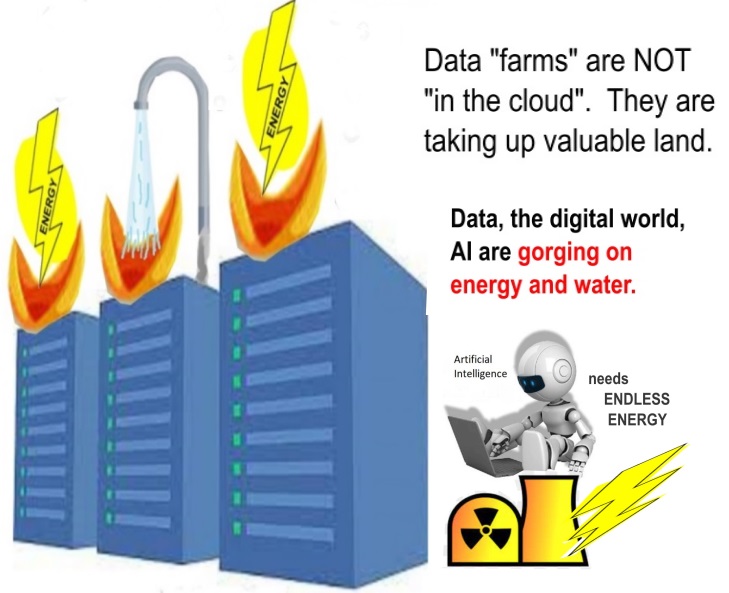
That surge has been accompanied by growing concern about the knock-on effects of the facilities, especially the large amounts of energy and water they consume……………….
For some Hurlford residents though, the announcement of the facility – called Rufus – prompted questions, and a lot of them.
Lisa Beacham became aware of the proposal – which ILI stress is still at a very early stage – shortly after the initial announcement.
A student from Hurlford, she then went down a rabbit hole looking at the amount of water that would be needed for coolant, the process which stops the computer chips there from overheating.
“The site proposal is that it would be powered at 540MW, which would require millions of litres of water a day,” she said.
“Water is a global commodity and we are currently facing global water bankruptcy, according to the UN. Yet we’ll have a site that is using up a huge amount, and due to residue [from the centre] the water used there cannot easily be recirculated.”
Last year the BBC told of people who lived near a data centre in Georgia in the USA who were struggling with an excessive build-up of sediment in water supplies………………………….
Alex De Vries, who runs the Digiconomist blog and website, said he estimated a 540MW facility “could result in almost 6bn litres of annual fresh water consumption” to generate the power needed.
He told BBC Scotland News: “The relatively cooler climate in Scotland isn’t going to do much to mitigate this.”…………………………………..
Cheryl Rowland, an admin assistant at a construction company, who lives in Hurlford, is sceptical.
Speaking at the consultation event, she said: “They are talking about something that will be here for 40 or 50 years.
“Would they arrange education upskilling, to bring local people through and help them grow into jobs here, or will the jobs all be people coming into the area?”……………………
Rowland says it is a worry such a large site will be built by a company who will not be there long term.
https://www.bbc.co.uk/news/articles/c2d1ny161yyo
Golden pipedreams – UK Advanced Nuclear plan
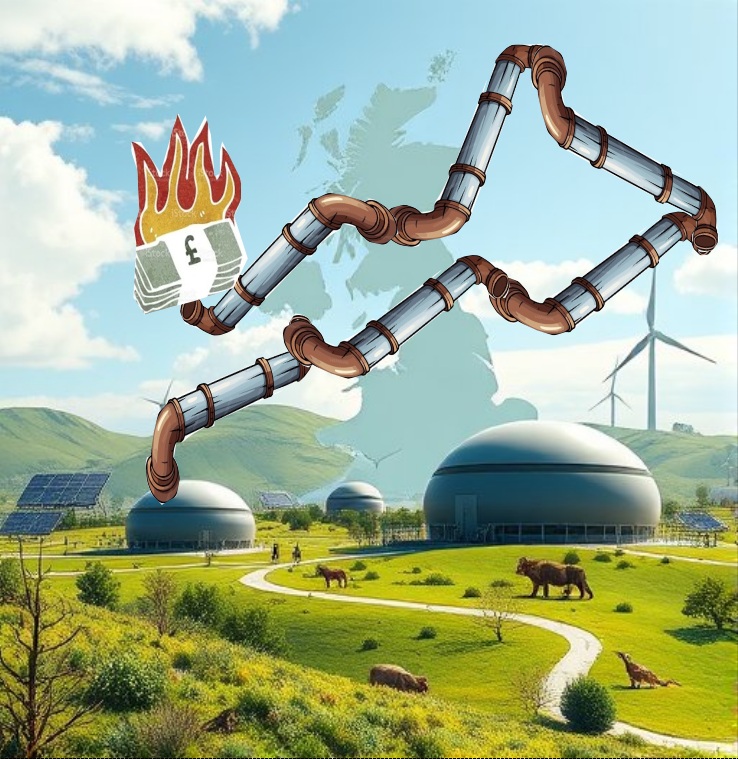
Not everyone is convinced that these new SMR/AMR/MMR projects will be viable technologically or economically,
To progress all this, the Department for Energy Security and Net Zero says it is setting up a ‘UK Advanced Nuclear Pipeline’, a new government managed process through which private sector projects submit detailed plans across 5 core areas: technology & supply chain; developer capability; finance/funding/investment; siting; and operator/end user arrangements. DESNZ and GBE N will conduct eligibility checks /Project Readiness Assessment, with successful projects then being invited to join the Pipeline, subject to ministerial approval.
February 28, 2026, https://renewextraweekly.blogspot.com/2026/02/golden-dreams-uk-advanced-nuclear-plan.html
The UK government is looking to ‘a new golden age of nuclear’, committing £17 billion to ‘the most ambitious programme of new plants for a generation’. As its new Advanced Nuclear Frameworks plan says, in the 2025 Spending Review, it committed £14.2 billion to Sizewell C and over £2.5 billion to the Great British Energy – Nuclear (GBE N) Small Modular Reactor (SMR) project at Wylfa. And it says ‘together with Hinkley Point C, these projects will add almost 8 GW of capacity in the 2030s’.
However, it also wants to do more, with plans for advanced nuclear, some based on US Advanced Modular Reactor (AMR) developments. As it notes, some major commercial deals have been concluded between UK and US companies, including ‘plans for X-Energy and Centrica to build 12 advanced modular reactors in Hartlepool, supporting 2,500 jobs, as well as plans for Holtec, EDF, and Tritax to build small modular reactors at the former coal-fired power station Cottam in Nottinghamshire, providing clean, secure power to data centres on the site’.
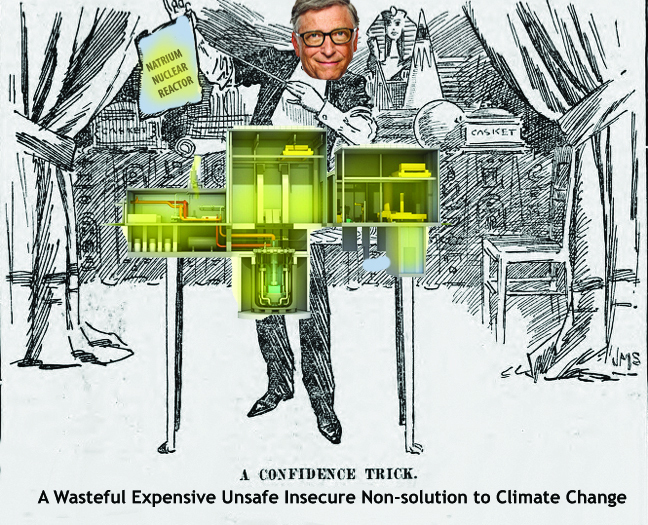
Meanwhile it says ‘TerraPower is working with engineering firm KBR to explore the potential deployment of its Natrium advanced reactor technology in the UK & beyond’. It also noted that ‘Last Energy & DP World intend to create one of the world’s first micro modular nuclear plants at London Gateway, backed by £80m in private money’. These MMRs are meant to be under 20MW.
Not everyone is convinced that these new SMR/AMR/MMR projects will be viable technologically or economically, but DESNZ is optimistic: ‘Britain could see some of the world’s first advanced nuclear power stations powering factories and AI data centres, as part of the government’s “golden age” of nuclear to support jobs, drive growth & protect billpayers with homegrown clean energy’.
To help with that, it is investing in ‘fuel cycle capabilities such as High Assay Low Enriched Uranium (HALEU)’ which some of the new plants will need- if they go forward. HALEU is enriched to below 20%, compared to under 5% for the uranium used in most conventional plants and DESNZ says that it ‘is essential for fuelling AMRs’. But the UK doesn’t have a plant for making it. £300m has been allocated for one, with the aim being to establish a UK domestic HALEU capability that ‘reduces global reliance on Russian supply chains, which currently dominate the global market, and mitigates strategic vulnerabilities for the UK and its allies. By investing early, the UK is ready to be a trusted supplier of HALEU to international partners’ this also ensuring ‘uninterrupted fuel supply for domestic AMR deployment’.
To progress all this, the Department for Energy Security and Net Zero says it is setting up a ‘UK Advanced Nuclear Pipeline’, a new government managed process through which private sector projects submit detailed plans across 5 core areas: technology & supply chain; developer capability; finance/funding/investment; siting; and operator/end user arrangements. DESNZ and GBE N will conduct eligibility checks /Project Readiness Assessment, with successful projects then being invited to join the Pipeline, subject to ministerial approval.
DESNZ says ‘Pipeline projects may engage with DESNZ on potential revenue support, e.g., a Contracts for Difference (CfD) style mechanism that stabilises future revenues, and High Impact, Low Probability (HILP) risk protections where private markets cannot efficiently bear residual risks.’ It adds ‘In parallel, all companies can approach the National Wealth Fund (NWF), who bring £27.8 billion of capital, a dedicated nuclear team, and a full suite of debt, equity and hybrid instruments, to explore investment opportunities aligned with strategic priorities’. DESNZ also look at the ‘wider enablers that the government is putting in place to support nuclear deployment, reforming the planning system, grid connection process, and regulatory process, to ease and accelerate deployment of new plants’.
DESNZ says that while ‘the Framework aims to support private projects that use advanced nuclear technologies for civil energy purposes,’ with the focus on electricity, it also includes ‘projects that supply energy as heat and/or electricity & where the energy is supplied to the National Grid and/or to private energy users.’ But it adds, given possibly unique regulatory, legal, safety, and/or strategic challenges, the new framework ‘specifically excludes offshore or floating nuclear platforms, civil nuclear propulsion, space based reactors and transportable nuclear solutions.’
Even so, it still feels quite breath-takingly pro-nuclear, a very big shift from earlier Labour and indeed Tory views on nuclear as economically unattractive. And the government seems keen to go even further, with revamps to basic regulatory approaches to nuclear safety – to speed thing up and, presumably, try to improve its economics. The new approach could have significant undesirable impacts and has not gone unopposed. But the nuclear lobby is clearly keen to press ahead, with a new perspective on risks being pushed: ‘Routine reactor emissions, both activated material (made radioactive by neutron bombardment) and fission by-products, pose no meaningful health risk.

Even if some vanishingly small effect existed, it would be statistically indistinguishable from the background cancer rate and would be lost in the noise of lifestyle, environmental, and biological risk factors.’ So said two pro-nuclear Breakthrough campaign members in a recent edition of the usually very critical Bulletin of the Atomic Scientists. No risk? Really? There is no shortage of contrary evidence on human health impacts, both occupational and residential, including a recent US national study, although there are still debates on their overall significance and implications.
However, while debates like that, and also on waste costs, continue, DESNZ seems keen to press ahead with nuclear expansion. And they are pretty ‘gung ho’ about that, backing a ‘Destination Nuclear’ staff recruitment campaign, part of their Nuclear Skills plan, which aims to support both civil and defence related nuclear jobs. DESNZ says that nearly 3,500 early careers starters entered the sector in 24/25, with ‘73 new nuclear fission PhDs added in academic years 24/25 and 25/26’.
Is all this wise? Can we really have a golden nuclear future? Well, the latest update from the World Nuclear Industry Status team says that, in Jan 2026 ‘404 nuclear power reactors were operating in the world – 5 units less than one year earlier – maintaining however a stable combined operating capacity. Construction of new nuclear plants was underway in 11countries, five fewer host nations than just two years earlier’. It noted that 2025 saw the lowest number of new start-ups since 2017, while 7 plants totalling 2.8 GW were closed – 3 each in Belgium & Russia, and 1 in Taiwan, completing its nuclear phaseout. So it doesn’t sound too sure about overall nuclear growth- indeed some portray nuclear as fizzling out .
That may be overstating the case, depending on location, but the renewables by contrast are really booming globally – led by China. Indeed Stanford University’s Prof Mark Jacobson says China could reach 100% renewable energy (nearly all power, heat & transport) by 2050. While, he notes that sadly, at the current rate of progress, the USA would only reach that point roughly 100 years later. China may still end having a little fossil and nuclear by 2050/60, but mostly, DNV suggests, it will be green energy. Is the USA’s big fossil and nuclear emphasis really the way to go for anyone? The UK is doing well on replacing fossil with low cost renewables, but, after having its financial fingers burnt by EDF’s high cost EPRs, it still seems strangely locked into uncertain and likely to be high cost new nuclear, increasingly from the USA.…
Nuclear flashpoints to fallout
Devonport doesn’t just work on operational nuclear submarines, it is also a ‘graveyard’ for retired ones. Twelve out of the 16 decommissioned submarines at Devonport are still carrying their fuel – effectively a stockpile of nuclear waste.
New Internationalist 1st Jan 2026
Could the threat of nuclear war be closer than ever? Amy Hall explores how we got here and the pathways out of the crisis.
If you want to get a nuclear-powered submarine refitted, repaired or refuelled in Britain, there is only one place to go – Devonport dockyard in Plymouth, the biggest naval base in Western Europe.
Running across more than six kilometres of waterfront, the dockyard has been part of the landscape for generations. It dominates the western edge of the South West England city, encased by high fenced walls, security cameras and warning signs about police dogs and potential arrest for ‘unauthorized activity’.
The main refit and maintenance area is owned and operated by British defence company Babcock International, which in 2024 made $1,273 million in revenue from nuclear weapons work. In 2025, it celebrated a 51 per cent surge in profit.
But Plymouth itself has not seen the same boost. ‘Most of the money generated goes out of the city,’ says local campaigner Tony Staunton, who is also the vice chair of the Campaign For Nuclear Disarmament (CND). Authorities say that Devonport generates around 10 per cent of Plymouth’s income, but neighbourhoods next to the dockyard remain among the poorest five per cent in the country.
Devonport doesn’t just work on operational nuclear submarines, it is also a ‘graveyard’ for retired ones. Twelve out of the 16 decommissioned submarines at Devonport are still carrying their fuel – effectively a stockpile of nuclear waste.
Over the last 30 years, at least 10 serious radioactive leaks have been documented at Devonport, and chemicals like plutonium, americium and tritium have been found on the Plymouth coastline, including at a wildlife reserve close to the dockyard. Staunton says he has met former dockworkers with cancer who are convinced that their illnesses date back to the time they worked at Devonport, but a ‘culture of secrecy’ about any negative impact of the docks pervades over this military city.
Local authorities have taken steps to prepare for a serious radiation leak at the dockyard, which is within a residential area. An investigation by Declassified UK found that in 2018 the Ministry of Defence distributed 60,900 iodine tablets to schools, emergency services and healthcare settings in local areas.
Nuclear-powered submarines are not only able to carry warheads; they are an essential part of the nuclear warfare infrastructure. And, as the British government jumps with both feet into the nuclear arms race, Devonport is key. The facility is set to receive £4.4 billion (just over $5 billion) in government investment over the next 10 years.
In 2024 the UK spent a larger percentage of its military budget (13 per cent) on nuclear weapons than any other country. The 2025 Strategic Defence Review described them as ‘the bedrock of the UK’s defence and the cornerstone of its commitment to NATO and global security’.
The race is on
As the world becomes more insecure, nuclear-armed states are reaffirming commitments to the most destructive weapons humans have developed. During the first six months of 2025, five nuclear-armed countries were engaged in military hostilities or outright war. And, after decades of decline, the trend of more retired nuclear warheads being dismantled than new ones being deployed looks set to be reversed.
Nearly all of the nine nuclear-armed states (US, Russia, Britain, France, China, Israel, India, Pakistan, North Korea) have been busy modernizing and growing their arsenal. Over the past five years global spending on nuclear weapons increased by just over 32 per cent, with the US and UK’s spending rising by 45 and 43 per cent respectively between 2019 and 2023. One year of global nuclear weapons spending could feed 45 million people in danger of famine for 13 years…………………………………………………………………………………………………………………………………………………..
The bombs dropped on Hiroshima and Nagasaki are considered ‘low-yield’ by modern standards. International Campaign to Abolish Nuclear Weapons (ICAN) estimates that casualties from a major nuclear war between the US and Russia would reach hundreds of millions. The use of less than one per cent of the world’s nuclear arsenal could disrupt the climate and threaten two billion people with starvation.
Escalations in global conflict continue despite the existence of nuclear weapons. ‘This concept of nuclear deterrence is really a faith belief system – that having nuclear weapons is necessary to make sure they’re not used,’ says Alicia Sanders-Zakre, policy and research coordinator at ICAN. ‘As long as this theory continues to hold value within the political establishment of nuclear armed states, it’s not possible to get rid of nuclear weapons.’……………………………………………………………………………………………………………………………………………………………
Today, as the British government itself admits, ‘the future of strategic arms control … does not look promising’. But civil society has got behind the Treaty on the Prohibition of Nuclear Weapons (TPNW) which makes acquiring, proliferating, deploying, testing, transferring, using and threatening to use nukes illegal.
‘TPNW is really significant,’ explains Sanders-Zakre. A nuclear-armed state joining it must agree to a time-bound programme for eliminating its arsenal https://newint.org/arms/2026/nuclear-flashpoints-fallout
Labour panned as nuclear project ‘to cost more than Scotland’s block grant’
THE SNP have hit out at the projected costs for the Labour Government’s
flagship nuclear project. It comes after EDF pushed back the start-up of
the Hinkley Point C nuclear plant again, pushing up the final bill.
The French state energy company said the plant was now expected to cost £35bn
in 2015 prices — or almost £49bn at today’s prices. The project was
costed in 2016 at £18bn at the then-current prices. The SNP have now hit
out at Labour and the party’s push for more nuclear, highlighting that
the Scottish Government’s block grant from Westminster was £47.6 billion
in 2025/2026 – less than the new projected cost.
The SNP have opposed the
creation of new nuclear plants and are able to use planning policy to block
developments, despite energy policy being largely reserved to Westminster.
The Scottish Government instead wishes to focus on renewable developments,
with Scotland’s last nuclear plant, Torness, set to be decommissioned in
2030.
The National 2nd March 2026, https://www.thenational.scot/news/25900166.labour-nuclear-project-to-cost-scotlands-block-grant/
Welsh Anti-Nuclear Alliance relaunched amid concerns over new projects planned for Wales
02 Mar 2026, https://nation.cymru/news/welsh-anti-nuclear-alliance-relaunched-amid-concerns-over-new-projects-planned-for-wales/
A coalition of peace, environmental and social justice organisations has relaunched the Welsh Anti-Nuclear Alliance (WANA), calling for what it describes as energy sovereignty and a democratic, community-led debate on the future of Welsh energy.
The relaunch took place on March 1, with WANA bringing together groups including CADNO (Cymdeithas Niwclear Oesel), CND Cymru, the Low-Level Radiation Campaign, the Low-Level Radiation and Health Conference, No Nuclear Llynfi, PAWB (People Against Wylfa-B), Stop Hinkley and Welsh Nuclear Free Local Authorities.
First established in 1980 by a broad coalition that included former MP Paul Flynn, CND Cymru, the Central Wales Energy Group, farmers and environmentalists, WANA served as a vehicle for anti-nuclear campaigning for decades. Its work was later dispersed among individual organisations during a period of relative calm. With nuclear energy and defence projects once again high on the political agenda, campaigners say the time is right to revive the alliance.
ADVERT – CONTINUE READING BELOW

WANA says it will focus on promoting what it calls “true renewable” energy generation while highlighting concerns around nuclear power and its links to military infrastructure.
A number of nuclear-related projects are currently proposed or under development in Wales. In November, the UK Government announced that Wylfa had been selected as a pilot site for Small Modular Nuclear Reactors (SMRs). Texas-based firm Last Energy has also set out plans for SMRs at the former Llynfi Power Station site between Maesteg and Bridgend. Other projects linked to the AUKUS alliance, including radar capability and submarine development, are expected to involve sites in Pembrokeshire and Cardiff. Nuclear development has also been suggested at locations including Aberthaw and Trawsfynydd.
WANA argues that decisions around these projects have often proceeded without sufficient input from Welsh communities. It says Wales has a long history of industrial exploitation, citing the decline of coal mining and heavy industry and more recent job losses in Port Talbot as examples of communities left behind after economic extracti
The alliance has published a manifesto calling for a “nuclear power and weapons free, sustainably powered, and peaceful Wales”. It raises concerns about public spending, the cost-of-living crisis, the climate emergency and what it describes as a lack of energy sovereignty. It also calls for greater debate around the links between civil and military nuclear programmes and for the devolution of the Crown Estate to Wales.
A WANA spokesperson said the alliance aims to bring campaigners together to challenge what it sees as the risks and costs of nuclear development.
“The cost of nuclear is too high, the build-times too long, and the waste question remains unanswered,” they said. “Wales must engage in a debate about our energy future, including community control and benefits.”
1 This Month



Shut down the radiation-damaged Heysham nuclear reactors now
To see nuclear-related stories in greater depth and intensity – go to https://nuclearinformation.wordpress.com

Say No to NASA’s Reckless Nuclear Reactor on the Moon
Say No to NASA’s Reckless Nuclear Reactor on the Moon
-
Archives
- October 2026 (256)
- September 2026 (339)
- August 2026 (330)
- July 2026 (355)
- June 2026 (287)
- May 2026 (306)
- April 2026 (356)
- March 2026 (251)
- February 2026 (267)
- January 2026 (308)
- December 2025 (358)
- November 2025 (359)
-
Categories
- 1
- 1 NUCLEAR ISSUES
- business and costs
- climate change
- culture and arts
- ENERGY
- environment
- health
- history
- indigenous issues
- Legal
- marketing of nuclear
- media
- opposition to nuclear
- PERSONAL STORIES
- politics
- politics international
- Religion and ethics
- safety
- secrets,lies and civil liberties
- spinbuster
- technology
- Uranium
- wastes
- weapons and war
- Women
- 2 WORLD
- ACTION
- AFRICA
- Atrocities
- AUSTRALIA
- Christina's notes
- Christina's themes
- culture and arts
- Events
- Fuk 2022
- Fuk 2023
- Fukushima 2017
- Fukushima 2018
- fukushima 2019
- Fukushima 2020
- Fukushima 2021
- general
- global warming
- Humour (God we need it)
- Nuclear
- RARE EARTHS
- Reference
- resources – print
- Resources -audiovicual
- Weekly Newsletter
- World
- World Nuclear
- YouTube
-
RSS
Entries RSS
Comments RSS

