Call to British govt to not allow restart of Hinkley Point B nuclear reactors, with cracks in their cores

 Stop Hinkley 29th Sept 2020, EDF Energy has just announced that it intends to submit new safety cases to the Office for Nuclear Regulation (ONR) to re-open Reactors 3 and 4 at Hinkley Point B. It currently expects reactor 4 to return to service on 26 February 2021 and reactor 3 on 12 March 2021.
The Stop Hinkley Campaign is calling for both reactors to remain closed. Stop Hinkley spokesperson Roy Pumfrey said: “Nuclear engineer, the late John Large said more than a decade ago that it was gambling with public safety to allow reactors with cracks in their core to keep operating. (3) Every minute these reactors operate that gamble become riskier.
We call upon the UK Government to intervene and request the ONR to re-consider their unwise decisions at Hunterston B and to refuse to accept EDF’s safety cases for Hinkley Point B. It is EDF in Paris, France which will benefit from the restart of these reactors, but it is those of us who live in Somerset and middle England who are being exposed to these involuntary risks”
UK govt to give EDF a blank cheque for building Sizewell C nuclear power plant.
 Dave Toke’s Blog 29th Sept 2020, It is looking increasingly likely that the British Government is about to cave-in to EDF’s demand that the British energy consumers should pay what could be massive cost overruns for building Sizewell C nuclear power plant.
http://realfeed-intariffs.blogspot.com/2020/09/is-treasury-about-to-cave-in-over-edfs.html
Plans for Bradwell B nuclear power station could collapse
 Campaigners claim plans for Bradwell B nuclear power station could collapse, Clacton Gazette , By Alex Gidden Reporter 28 Sept 20, CAMPAIGNERS claim plans to build a nuclear power station off the coast of Essex could collapse before the end of the year.
Group chairman Prof Andy Blowers made the bold claim after seeing Japanese firm Hitachi pull out of plans to build its own nuclear power station in north Wales.
He says Hitachi’s decision underlines the “huge expense” associated with building nuclear power stations and believes the Bradwell B project will be binned because of the costs and scale of opposition.
Both Colchester and Maldon councils have rejected planning applications for the power station in the past month.
The applications were jointly submitted by the China General Nuclear Power Group, also known as CGN, and energy firm EDF.
A spokesman for the Blackwater Against New Nuclear Group said: “CGN is now fully aware of the mountain it has to climb to get anywhere near planning permission for its massive nuclear juggernaut, which will utterly destroy the environment and wellbeing of the Blackwater region.
“Widespread public protest and influential councils have produced a powerful coalition of outright opposition to the proposals.
Its progress will not be straightforward and will take years to complete.
“By the time it could start operating, it will be a white elephant, unnecessary, uneconomic and redundant……… https://www.clactonandfrintongazette.co.uk/news/north_essex_news/18749213.campaigners-claim-plans-bradwell-b-nuclear-power-station-collapse/
UK to return high-level nuclear waste to Germany
|
UK to return high-level nuclear waste to Germany https://www.energylivenews.com/2020/09/28/uk-to-return-high-level-nuclear-waste-to-germany/
28 Sept 20, Preparations are underway for the first of the three shipments in late 2020, The UK will be returning high-level nuclear waste in the form of vitrified residues to Germany over the coming years.The waste results from the reprocessing and recycling of spent nuclear fuel at the Sellafield site in West Cumbria, which had previously been used to produce electricity by utilities in Germany. Preparations are underway for the first shipment in late 2020 under the Vitrified Residue Returns programme, which is a key component of the UK’s Nuclear Decommissioning Authority (NDA) strategy to repatriate high-level waste from the UK. A total of three shipments will be made to storage facilities in Germany, with the returns involving Sellafield Ltd working with International Nuclear Services (INS), a subsidiary of the NDA. INS will transport the waste by sea on a specialised vessel to a German port, followed by rail to the final destinations. Daher Nuclear Technologies has been contracted to safely manage the overland transport in Germany. |
|
A Sellafield nuclear disaster would spread across Cumbria – new map shows
|
Sellafield nuclear disaster would spread across Cumbria – new map shows, The Mail, By Staff Reporter 27 Sept 20, THE majority of south Cumbria could be affected if there was a major nuclear incident at Sellafield, a new report has revealed…….
Part of the new strategy means Outline Planning Zone’s must be put in place. These are areas outside of the immediate vacinity which could be affected by a disaster. A report from Steve Healey, the chief fire officer for Cumbria, revealed the affected area covers a 50-kilometre circular zone from an epicentre at Sellafield. The area includes as far south as Walney, east as Bowness and north almost to the Scottish border. Cumbria County Council has accepted the report at a meeting of the cabinet, which was chaired by Cllr Stewart Young….. This new concept of an Outlying Planning Zone is new. The zone is determined by kilometres from the centre of the Sellafield site. It takes you way beyond the boundaries of Copeland, showing that other areas of Cumbria would also be affected by a serious incident. “It includes BAE and the docks at Barrow. So, the implications of an accident are so significant for the whole county. It is a responsibility that sits then with Cumbria County Council as well as Barrow, Copeland and Allerdale. This is an important piece of work.” The new regulations allow for a transitional period of 12 months and all changes required to have been made by this May. The authority was on track to meet the deadlines until resources were diverted to respond to Covid-19. A plan has been agreed with the Office for Nuclear Regulation allowing the council to prepare the plans before November 21 this year. The report said Sellafield’s OPZ was the largest in the United Kingdom and whilst only outline planning is required there is a substantial amount of work being undertaken to identify vulnerable premises and infrastructure in the zone. ……… https://www.nwemail.co.uk/news/18752191.sellafield-nuclear-disaster-spread-across-cumbria—new-map-shows/ |
|
French taxpayers don’t want to pay for Sizewell nuclear station, neither do British.
 France’s EDF demands clarity on British nuclear power plans Times John Collingridge 27 Sept 20, French energy giant EDF is set for a showdown with the Treasury over state funding for nuclear power stations as Britain’s atomic future faces a make-or-break moment.Jean-Bernard Lévy, chairman and chief executive of Électricité de France, will speak to chancellor Rishi Sunak via video link on Wednesday to demand clarity over Britain’s plans for funding nuclear power.
The industry was left reeling this month when Japan’s Hitachi quit its Horizon project to build a £20bn plant on Anglesey.
That shock retreat, after years of prevarication by Westminster over state support for nuclear power and turmoil in the Japanese nuclear industry, left only EDF and China General Nuclear with plans for atomic power stations in the UK.
EDF and China are building the delayed and over-budget £22.5bn Hinkley Point C power station in Somerset, but Paris has balked at
the prospect of French taxpayers funding the next nuclear project in Britain.
Instead, EDF, which is 84% owned by the French state, wants British taxpayers to underwrite a new plant at Sizewell in Suffolk. A
proposed new financial structure, the regulated asset base, would levy a tax on UK household energy bills to help pay for the project.
Other options include the British government taking a stake — although that has worried the Treasury, which is anxious about adding to its debt mountain.
EDF declined to comment. With most of Britain’s ageing reactors due to close by the end of the decade, Sunak and Boris Johnson face the dilemma of whether to fund more big nuclear plants, or rely on wind, solar, gas, small reactors and imported power to keep the lights on.
The American government has warned Hitachi against selling the Anglesey site to China, and is understood to be considering bankrolling US companies to take it over. Westinghouse, which makes the AP1000 nuclear plant, and NuScale Power,
which is developing small, modular reactors, are both believed to be
exploring options for the site. South Korea’s Kepco is also understood to
be interested, as is EDF.
Former UK Energy Minister Sir Ed Davey says new Sizewell nuclear station is too expensive
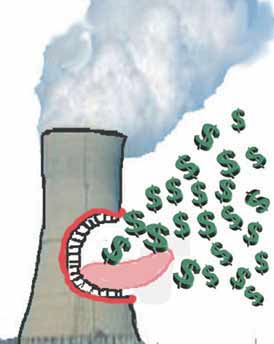 Suffolk’s Sizewell C too expensive, says Sir Ed Davey, BBC, By Vikki Irwin & Chris Bond
28 Sept 20, Former energy secretary Sir Ed Davey has said building a new nuclear power station at Sizewell is “too expensive”.
Suffolk businesses oppose the building of Sizewell nuclear power station
 More than 100 rural Suffolk businesses have written to the Government to
oppose the building of a twin reactor nuclear power station. The letter,
which was addressed to Prime Minister and the Secretary of State for
Business, Energy and Industrial Strategy Alok Sharma amongst others, raised
concerns about the site.
It has attracted signatures from almost 150
individual businesses, farms and landowners in the area. In the letter they
describe the nuclear power station as a “threat” which had been hanging
over their heads for at least eight years. “This would be tolerable if
the Sizewell C project was for the ‘greater good’,” read the letter.
“But we have concluded that it is not necessary to meet the UK’s
commitment to net zero, and would be a slow, risky and expensive waste of
taxpayers’ money that removes opportunities to make use of alternative,
green, deliverable and cost-effective energy solutions. “Meanwhile, many
of our plans are on hold at a time when farming faces the biggest changes
to the policy framework governing our industry in over 50 years.” The
letter also raised concerns about the impact on farm production which
owners say could “render productive land commercially and logistically
unviable”.
https://www.eadt.co.uk/news/sizewell-c-construction-opposed-by-suffolk-businesses-1-685656
Media avoids covering the Assange extradition – despite it being the media “trial of the century”
 Julian Assange: Press Shows Little Interest in Media ‘Trial of Century’ https://fair.org/home/julian-assange-press-shows-little-interest-in-media-trial-of-century/, ALAN MACLEOD 25 Sept 20,
Labeled the media “trial of the century,” WikiLeaks founder Julian Assange’s extradition hearing is currently taking place in London—although you might not have heard if you’re relying solely on corporate media for news. If extradited, Assange faces 175 years in a Colorado supermax prison, often described as a “black site” on US soil.
The United States government is asking Britain to send the Australian publisher to the US to face charges under the 1917 Espionage Act. He is accused of aiding and encouraging Chelsea Manning to hack a US government computer in order to publish hundreds of thousands of documents detailing American war crimes, particularly in Afghanistan and Iraq. The extradition, widely viewed as politically motivated, has profound consequences for journalists worldwide, as the ruling could effectively criminalize the possession of leaked documents, which are an indispensable part of investigative reporting.
WikiLeaks has entered into partnership with five high-profile outlets around the world: the New York Times, Guardian (UK), Le Monde (France), Der Spiegel (Germany) and El País (Spain). Yet those publications have provided relatively little coverage of the hearing.
Since the hearing began on September 7, the Times, for instance, has published only two bland news articles (9/7/20, 9/16/20)—one of them purely about the technical difficulties in the courtroom—along with a short rehosted AP video (9/7/20). There have been no editorials and no commentary on what the case means for journalism. The Times also appears to be distancing itself from Assange, with neither article noting that it was one of WikiLeaks’ five major partners in leaking information that became known as the CableGate scandal.
The Guardian, whose headquarters are less than two miles from the Old Bailey courthouse where Assange’s hearing is being held, fared slightly better in terms of quantity, publishing eight articles since September 7.However, perhaps the most notable content came from columnist Hadley Freedman (9/9/20).
When asked in an advice article: “We live in a time of so much insecurity. But is there anything we can expect from this increasingly ominous-looking winter with any certainty?” she went on a bizarre tangential rant ridiculing the idea that Assange’s trial could possibly be “politicized,” also crassly brushing off the idea that his young children would never see their father again, and never answering anything like the question she was asked. Holding people to account “for a mess they could have avoided,” she notes, “is not ‘weaponizing’ anything — it is just asking them to do their jobs properly.” She also claimed that believing Assange’s trial was politicized was as ridiculous as thinking antisemitism claims were cynically weaponized against Labour leader Jeremy Corbyn, which, she meant to suggest, was a preposterous idea. This was not an off-the-cuff remark transcribed and published, but a written piece that somehow made it past at least one editor.
Like the Times, the Guardian appeared to be hoping to let people forget the fact it built its worldwide brand off its partnership with WikiLeaks; it was only mentioned in a forthright op-ed by former Brazilian president Lula da Silva (9/21/20), an outlier piece.
The Guardian should be taking a particularly keen role in the affair, seeing that two of its journalists are alleged by WikiLeaks to have recklessly and knowingly disclosed the password to an encrypted file containing a quarter-million unredacted WikiLeaks documents, allowing anyone—including every security agency in the world—to see an unredacted iteration of the leak. In 2018, the Guardian also falsely reported that Trump campaign chief Paul Manafort had conducted a meeting with Assange and unnamed “Russians” at the Ecuadorian embassy (FAIR.org, 12/3/18). And, as former employee Jonathan Cook noted, the newspaper is continually being cited by the prosecution inside the courtroom.
There were only two articles in the English or French versions of Le Monde (9/7/20, 9/18/20) and only one in either of Der Spiegel’s English or German websites (9/7/20), although the German paper did at least acknowledge its own partnership with Assange. There was no coverage of the hearings in El País, in English or Spanish, though there was a piece (9/10/20) about the US government thwarting a Spanish investigation into the CIA spying on Assange at the Ecuadorian embassy in London—accompanied by a photo of a protester against his extradition.
The rest of corporate media showed as little interest in covering a defining moment in press freedom. There was nothing at all from CNN. CBS’s two articles (9/7/20, 9/22/20) were copied and pasted from news agencies AP and AFP, respectively. Meanwhile, the entire sum of MSNBC’s coverage amounted to one unclear sentence in a mini news roundup article (9/18/20).
Virtually every relevant human rights and press freedom organization is sounding the alarm about the incendiary precedent this case sets for the media. The Columbia Journalism Review (4/18/19), Human Rights Watch and the Electronic Frontier Foundation note that the government includes in its indictment regular journalistic procedures, such as protecting sources’ names and using encrypted files—meaning that this “hacking” charge could easily be extended to other journalists. Trevor Timm, founder of the Freedom of the Press Foundation, told the court this week that if the US prosecutes Assange, every journalist who has possessed a secret file can be criminalized. Thus, it essentially gives a carte blanche to those in power to prosecute whomever they want, whenever they want, even foreigners living halfway around the world.
The United Nations has condemned his persecution, with Amnesty International describing the case as a “full-scale assault on the right to freedom of expression.” Virtually every story of national significance includes secret or leaked material; they could all be in jeopardy under this new prosecutorial theory.
President Donald Trump has continually fanned the flames, demonizing the media as the “enemy of the people.” Already 26% of the country (including 43% of Republicans) believe the president should have the power to shut down outlets engaging in “bad behavior.” A successful Assange prosecution could be the legal spark for future anti-journalistic actions.
Yet the case has been met with indifference from the corporate press. Even as their house is burning down, media are insisting it is just the Northern Lights.
EDF wants cash-strapped UK government to subsidise costly Sizewell nuclear plan
Ministers urged to support new nuclear at a critical time for the industry
The energy giant is pressing the case for a plant at Sizewell but backing from a cash-strapped government could be limited, Sky News, Ian King 23 Sept 20, This is a critical time for the UK’s nuclear energy industry.
The construction of the UK’s first new nuclear power station for a generation, Hinkley Point C in Somerset, is well advanced and EDF Energy, the French-owned energy giant building the plant, is keen to pick up the pace on its next big infrastructure project.
Medical experts testify to court on Julian Assange’s precarious mental health
Medical evidence was produced in Julian Assange’s extradition hearing yesterday detailing the terrible harm done to the heroic journalist by a decade of state-orchestrated persecution.
The day was given over to the examination of Professor Michael Kopelman who testified to Assange’s mental health. Kopelman is a psychiatrist and Emeritus Professor of Neuropsychiatry at Kings College London. He has given expert evidence in multiple extradition cases on behalf of both the defence and the prosecution. In assessing Assange, he conducted seventeen visits in 2019 and additional visits in 2020, constructed a “full family history” and a “full personal psychiatric history,” and carried out “interviews with his family and lifelong friends.”
His findings constitute a clear bar to Assange’s extradition to the United States. Under Section 91 of the UK Extradition Act (2003), extradition is prohibited if “the physical or mental condition of the person is such that it would be unjust or oppressive to extradite him.”
Under Section 87, extradition is prohibited if it is incompatible with the European Convention on Human Rights (ECHR). Article 3 of the ECHR states, “No one shall be subjected to torture or to inhuman or degrading treatment or punishment.”
Medical evidence speaking to these bars has played a critical role in previous US-UK extradition hearings, for example in the case of Lauri Love. The risk of notoriously poor conditions in US prisons exacerbating mental illness is an important factor.
Assange’s case meets these criteria. The details in today’s WSWS coverage are being reported consistent with the “sensitivity” called for by defence lawyer Edward Fitzgerald QC, on behalf of his client. Nonetheless they make overwhelmingly clear the “unjust and oppressive” treatment to which Assange has already been subjected.
Assange, Kopelman told the court, has experienced periods of serious mental illness in his earlier life. Since being confined to the Ecuadorian Embassy and then Belmarsh maximum security prison, these issues have resurfaced and worsened. Assange has suffered symptoms of severe and recurrent depression. Those symptoms have included “loss of sleep, loss of weight, a sense of pre-occupation and helplessness” and auditory hallucinations which Kopelman summarised as “derogatory and persecutory.”
They have also included “suicidal preoccupations.” Kopelman told the court, “There are… an abundance of known risk factors in Mr Assange’s case” and that Assange has “made various plans and undergone various preparations.” He gave his opinion that there was a “very high risk of suicide.”
These symptoms and risks, Kopelman explained, are exacerbated by an anxiety disorder and Post Traumatic Stress Disorder (PTSD) and by a diagnosis of Asperger’s syndrome. Kopelman cited a paper by world-leading autism expert Dr Simon Baron-Cohen which found that the lifetime experience of suicidal thoughts in those with Asperger’s “was more than nine times higher than in the general population in England.”
Explaining the impact of the US government’s persecution, Kopelman said, “The risk of suicide arises out of the clinical factors of depression and the other diagnoses, but it is the imminence of extradition and/or an actual extradition that will trigger the attempt, in my opinion.”
If Assange were to be incarcerated in the US and segregated from other prisoners, Kopelman gave his opinion that the WikiLeaks founder would “deteriorate substantially” and see an “exacerbation” of his “suicidal ideas.” This would “amount to psychological harm and severe psychological suffering.”
Kopelman’s evidence confirms the warnings made since November 2019 by Doctors for Assange, representing hundreds of medical professionals from around the world, that Assange is suffering “psychological torture” and “could die in prison.” It underlines in distressing detail UN Special Rapporteur on Torture Nils Melzer’s comment regarding Assange’s treatment that “psychological torture is not torture-lite. Psychological torture aims to wreck and destroy the person’s personality and identity… to make them break.”
Assange’s year-and-a-half long incarceration at Belmarsh has been designed to achieve this objective. It has profoundly undermined, in numerous ways, his legal right to prepare his defence against extradition. Kopelman reported yesterday that Assange has repeatedly complained that the medication taken for his mental health has caused him “difficulty in thinking, in memorising [and] in concentration.”
During the morning’s cross examination, Kopelman forcefully rebuffed prosecution lawyer James Lewis QC’s challenge to his credentials. He said solicitors had called him several times in recent years saying that Lewis himself was “keen to have your services” in an extradition case.
In the afternoon, cross-examination continued, with Lewis challenging the veracity of Kopelman’s diagnosis, and claiming that Assange’s appearance was “wholly inconsistent with someone who is severely or moderately-severely depressed and with psychotic symptoms.”
Kopelman replied, “Could we go back a step?” Having seen Assange between May 30 and December [2019], “I thought he was severely depressed, suicidal and was experiencing hallucinations.”………….. https://www.wsws.org/en/articles/2020/09/23/assa-s23.html
Julian Assange dragged from embassy “on the orders of the president”
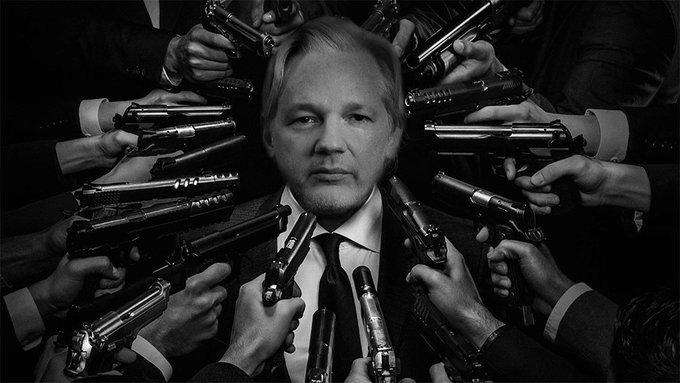 Explosive evidence from Trump insider,Assange dragged from embassy “on the orders of the president”, WSWS, By Laura Tiernan and Thomas Scripps, 22 September 2020
Alt-right media personality Cassandra Fairbanks’ witness testimony was read out in court yesterday, providing evidence that Julian Assange’s April 2019 arrest at the Ecuadorian Embassy in London was politically motivated and directed by United States President Donald Trump.
Fairbanks testified that Arthur Schwartz, a wealthy Republican Party donor and key Trump ally, had told her that Assange was taken from the Ecuadorian Embassy “on orders from the president.” The conversation between Schwartz and Fairbanks occurred in September 2019 and was recorded by Fairbanks.
Schwartz, a frequent visitor to the White House and “informal adviser” or “fixer” to Donald Trump Jr., told Fairbanks the president’s orders were conveyed via US Ambassador to Germany Richard Grenell, who brokered a deal with the Ecuadorian government for Assange’s removal. Grenell was appointed acting director of national intelligence by Trump in February this year, holding the position until May.
Assange’s lawyer, Edward Fitzgerald QC, spelled out the significance of Fairbanks’ disclosures, telling Judge Vanessa Baraitser they were, “evidence of the declared intentions of those at the top who planned the prosecution and the eviction from the embassy.”
Fairbanks, who writes for the pro-Trump Gateway Pundit, is a prominent Assange supporter who visited the WikiLeaks founder at the Embassy on two key occasions. Her evidence was read into proceedings yesterday afternoon unopposed, with Fitzgerald explaining, “My learned friend [James Lewis QC for the prosecution] reserves the right to say ‘because she’s a supporter of Julian Assange you must take that into account in weighing her evidence.’ But we say [her evidence] is true.”
Given her close connections to leading figures in the Trump administration’s fascistic entourage, Fairbanks is uniquely positioned to expose key aspects of the politically motivated vendetta against the WikiLeaks founder. Throughout the extradition hearing, lawyers for the US government have repeatedly claimed the charges against Assange under the Espionage Act are motivated by “criminal justice concerns” and are “not political.”
Fairbanks’ evidence shreds the official narrative of the Department of Justice (DoJ) that Assange was arrested on April 11, 2019 in relation to “hacking.” In a phone call with Schwartz on October 30, 2018, he made clear that Assange would be arrested as political payback for his role in “the Manning case,” i.e., the disclosure by US Army whistle-blower Chelsea Manning of US war crimes in Afghanistan and Iraq……………
Speaking outside the court, Assange’s father, John Shipton, said, “Today we had the prosecution trying to prove that water runs uphill and up is down. … The defence replied and conclusively demonstrated that it was David Leigh [who caused the unredacted cables to be released]. We can only conclude from the amount of time that the prosecution spent defending David Leigh that David Leigh is a state asset.”
At the end of the hearing’s morning session, an exchange between District Judge Vanessa Baraitser and the legal teams pointed to further restrictions being imposed on the defence’s ability to present its case.
Seizing on the delays caused by a potential COVID-19 outbreak in the first week of the hearing, Baraitser insisted that the defence prepare a timetable that allowed the hearing to “finish within two weeks.” When the defence replied that this would leave no time for closing submissions, she reacted enthusiastically to the suggestion of prosecution lawyer James Lewis QC that these could be submitted in written form and summarised in just half a day each for the prosecution and the defence. A final decision is forthcoming.
The hearing continues today……… https://www.wsws.org/en/articles/2020/09/22/assa-s22.html
Britain’s nuclear power plans in tatters
Climate News Network 23rd Sept 2020, The decision by the Japanese company Hitachi to abandon its plan to buildtwo large nuclear plants in the United Kingdom leaves the British government’s energy plans in tatters, and the UK nuclear industry
reeling.
The UK’s official plan is still to build ten nuclear stations in
Britain, but only three schemes remain. Most have now been cancelled by the
companies that planned to build them, principally because they cannot raise
the capital to do so.
This leaves only the debt-laden French giant EdF and
the Chinese state-owned industry still in the field. At the same time,
Britain’s existing nuclear plants are in trouble. They are not ageing
gracefully, cracks in their graphite cores and rust in their pipework
causing ever-lengthening shutdowns and retirement dates to be brought
forward.
The plants at Hunterston B in Scotland, Hinkley Point B in
Somerset in the West of England, and Dungeness B in Kent on the south-east
coast, are all struggling to survive.
https://climatenewsnetwork.net/uk-nuclear-industry-seeks-subsidies-for-survival/
Britain’s nuclear power dreams melting away – with soaring costs, and political problems
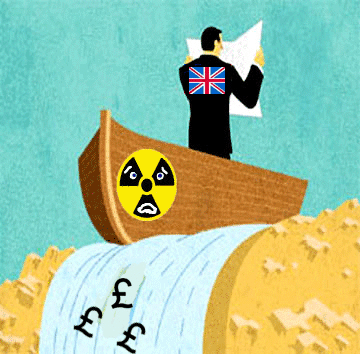 U.K. Nuclear Fleet Plans Evaporating Amid Economic, Political Problems, https://www.enr.com/articles/50109-uk-nuclear-fleet-plans-evaporating-amid-economic-political-problems September 20, 2020, Peter Reina
The U.K.’s hopes for a fleet of new nuclear plants, potentially exceeding 13,000 MW, took another hit when Japan’s Hitachi Ltd. recently pulled out of a major project in Wales. With Chinese investment in two other projects alsolmore doubtful, only the 3,300MW Hinkley Point C project in Somerset, England, has so far progressed to construction
Having suspended development work on the Welsh two-unit plant at Wylfa Newydd in January 2019, Hitachi earlier this month announced that the already difficult investment environment had “become increasingly severe due to the impact of COVID-19.” The company wrote off $2.8 billion of investment in the Welsh plant last year.
Hitachi’s departure followed the Toshiba Corp.’s decision in late 2018 to quit the 3,400-MW Moorside plant, in Cumbria. It had failed to find co-investors for its Westinghouse powered project.
With uncertainty growing, Hinkley Point C is the only U.K. nuclear project o have started work, which is so far largely on schedule, according to Electricité de France (EdF), which controls 66.5% of the deal. China General Nuclear Corp. owns 33.5% of project, which will be powered by two French EPR pressurized water reactors.
Hitachi’s withdrawal from the U.K. market has alarmed supporters of the nuclear industry, since it also casts a cloud over the planned 3,340-MW Sizewell C project in Cumbria.
“For the first time in a generation the U.K has developed a world class nuclear construction and engineering supply chain. Without Sizewell C, we will not sustain it,” says Cameron Gilmour, spokesperson for the Sizewell C Consortium lobby group of key companies in the sector.
The Sizewell C plant would replicate Hinkley Point C and is “shovel ready” according to Gilmour. The U.K. Planning Inspectorate is considering an application for the project submitted this May. The agency’s recommendations will end up on the government’s desk for a final decision at some point.
However, general investment uncertainties and increasingly frosty relations between the U.K and Chinese governments bode ill for the deal, says Stephen Thomas, an energy policy specialist at the University of Greenwich, London.
Set up under a previous conservative administration, the Hinkley Point C deal included CGNC’s participation as a junior partner in Sizewell C. Also, CGNC would have full responsibility for a proposed 2,300 MW Bradwell plant in Essex.
Bradwell would be a global showcase for the technology as it would be the first plant in an industrialized country to use the Chinese Hualong One reactors, Thomas says.
However, the Chinese government was angered over the U.K.’s rejection this July of Huawei technology for the cell phone networks. At the same time, criticism by the country’s lawmakers of China’s participation in critical infrastructure is increasing.
Both developments make the Bradwell deal uncertain. And if Bradwell falls, the Chinese are unlikely to remain merely as passive, junior investors in Sizewell C, potentially scuppering the whole deal, says Thomas.
Investment uncertainties lie at the heart of the U.K.’s fading nuclear hopes. The government offered the Hitachi team a far less generous deal than the one secured by EdF for Hinkley Point C.
While the Hinkley deal protects U.K. electricity consumers from cost escalations, it comes at a high price, according to Thomas. The deal is based on a “contract for differences” which sets an index linked energy price of $120 per MWh at 2012 prices for 35 years. That is hugely more than the $51 per MWh now being bid for offshore wind contracts, he says.
For subsequent deals, the government last year turned to the Regulatory Asset Base (RAB) form of funding used by water and types of utilities. Rather than having a target energy price, electricity tariffs would be controlled by the regulator, which would consider factors such as need for investment and a fair rate of return on capital.
The government completed a review of the system this January but has yet to make a decision, adding to investment uncertainty, says Thomas.
Meanwhile, in the west of England, contractors recently placed the 170-tonne base of the second reactor’s steel containment liner at Hinkley Point on time, despite pandemic working restrictions.
EdF claims to have met critical path goals during the pandemic, but it has yet to reveal the extent of delays on other parts of the job. The site’s workforce is now back to its pre-pandemic level of 4,500 having fallen to 2,000 after February.
Civil and building work is being handled by a joint venture of Paris-based Bouygues Travaux Publics and the U.K.’s Laing O’Rourke Plc. in a contract signed in late 2017, then valued at around $3.6 billion.
However, “challenging ground conditions” and additional design effort have contributed to an overall project cost rise to $29 billion from around $23 billion in 2016, reports EdF. The company still plans to commission the first unit in 2025, but the project has yet to enter its trickier nuclear component phase, officials concede.
Europe’s only two other projects using the same reactor design and involving Bouygues are hugely over schedule. Finland’s Olkiluoto 3 plant and EdF’s flagship French project at Flamanvile are both running about a decade late.
With this track record and future financing doubts, prospects for new projects around the world look bleak, says Thomas.
But nuclear power “has had a history of climbing out of the coffin,” he adds.
Julian Assange case: Witnesses recall Collateral Murder attack: “Look at those dead bastards,” shooters said
|
Witnesses recall Collateral Murder attack: “Look at those dead bastards,” shooters said, WSWS, By Thomas Scripps and Laura Tiernan, 19 September 2020New Zealand investigative journalist Nicky Hager testified in Julian Assange’s extradition hearing yesterday morning. Hager has extensive experience in reporting imperialist violence and intrigue. In 2017, he released the book Hit and Run with co-author Jon Stephenson exposing the killing of civilians by New Zealand and United States forces in Afghanistan. He worked with WikiLeaks in the release of US diplomatic cables from November 2010 and made use of other releases in his writing. Hager explained that serious journalists routinely make use of classified materials when reporting on conflicts and potential state crimes. This, he said, was “generally impossible … without access to sources that the authorities concerned regard as sensitive and out of bounds. Consequently, information marked as classified is essential to allow journalism to perform its role in informing people about war, enabling democratic decision making and deterring wrongdoing.” The Iraq and Afghanistan war logs and US embassy cables obtained by WikiLeaks, Hager said, were documents “of the highest public interest—some of the most important material I have ever used in my life.” Referring to the “Collateral Murder” video, which District Judge Vanessa Baraitser intervened to stop him describing in full, he said, “After the shooting, the pilot and the co-pilot were heard saying ‘Look at those dead bastards,’ with the other replying ‘Nice’ … My belief is … the publication of that video and those words was the equivalent of the death of George Floyd and his words ‘I can’t breathe.’ They had a profound effect on public opinion in the world.” The Iraq and Afghanistan war logs and US embassy cables obtained by WikiLeaks, Hager said, were documents “of the highest public interest—some of the most important material I have ever used in my life.” Referring to the “Collateral Murder” video, which District Judge Vanessa Baraitser intervened to stop him describing in full, he said, “After the shooting, the pilot and the co-pilot were heard saying ‘Look at those dead bastards,’ with the other replying ‘Nice’ … My belief is … the publication of that video and those words was the equivalent of the death of George Floyd and his words ‘I can’t breathe.’ They had a profound effect on public opinion in the world.”……………. Yesterday’s cross-examination centred on the scope of the Espionage Act, with US prosecutors making clear that journalists and media outlets are now a legitimate target—especially those which are deemed “non-conventional.” …….. Throughout the hearing, US prosecutors have claimed the “Collateral Murder” video is not part of their case against Assange. But as Fitzgerald argued, after taking instruction from his client, the “Collateral Murder” video is connected “indivisibly” from the Iraq Rules of Engagement published by WikiLeaks and named in the US indictment. It was on the basis of these Rules of Engagement that Apache’s crew member “Crazy Horse 1-8” fired on civilians, leaving 18 dead and horrifically injuring two children. The hearing continues on Monday. https://www.wsws.org/en/articles/2020/09/19/assa-s19.html |
|
1 This Month




PLEASE OPPOSE HR 8255 AND S.3639 – bills would accelerate satellite deployment, with no environmental review or safeguards – https://ncstd5li.quorum.us/campaign/169331/
To see nuclear-related stories in greater depth and intensity – go to https://nuclearinformation.wordpress.com
-
Archives
- September 2026 (330)
- August 2026 (330)
- July 2026 (355)
- June 2026 (287)
- May 2026 (306)
- April 2026 (356)
- March 2026 (251)
- February 2026 (267)
- January 2026 (308)
- December 2025 (358)
- November 2025 (359)
- October 2025 (375)
-
Categories
- 1
- 1 NUCLEAR ISSUES
- business and costs
- climate change
- culture and arts
- ENERGY
- environment
- health
- history
- indigenous issues
- Legal
- marketing of nuclear
- media
- opposition to nuclear
- PERSONAL STORIES
- politics
- politics international
- Religion and ethics
- safety
- secrets,lies and civil liberties
- spinbuster
- technology
- Uranium
- wastes
- weapons and war
- Women
- 2 WORLD
- ACTION
- AFRICA
- Atrocities
- AUSTRALIA
- Christina's notes
- Christina's themes
- culture and arts
- Events
- Fuk 2022
- Fuk 2023
- Fukushima 2017
- Fukushima 2018
- fukushima 2019
- Fukushima 2020
- Fukushima 2021
- general
- global warming
- Humour (God we need it)
- Nuclear
- RARE EARTHS
- Reference
- resources – print
- Resources -audiovicual
- Weekly Newsletter
- World
- World Nuclear
- YouTube
-
RSS
Entries RSS
Comments RSS

