Chinese-French nuclear power station planned for Bradwell UK – issues raised that might prevent its construction

Maldon Nub News 10th April 2021, Bradwell B: The public consultation on the reactor design is over – but there is still a chance to find out more and make comments. Both the company behind the proposals for Bradwell B new nuclear power station and a campaign group against the development have given their response to the end of the Environment Agency’s (EA) public consultation on the design of the nuclear reactor. The public consultation on the Generic Design Assessment (GDA) of the ‘UK HPR1000’ reactor, which is planned for use at Bradwell B, closed on Sunday, 4 April. The EA’s 12-week consultation asked the public’s views on its preliminary conclusions and assessment reports for the reactor design. The design has been put forward by General Nuclear System Limited, a joint venture between CGN (China General Nuclear Power Group) and the French power company EDF. “The EA raised a total of six “issues” which if not resolved would prevent the reactor design from being constructed here in the UK. It’s interesting to note that the HPR1000 design is not yet operational anywhere in the world, with four units currently under construction in China including the reference design unit for the Bradwell B reactors.” https://maldon.nub.news/n/bradwell-b-the-public-consultation-on-the-reactor-design-is-over—but-there-is-still-a-chance-to-find-out-more-and-make-comments |
Sleekit’ increase in Trident nuclear warheads on the Clyde
Sleekit’ increase in Trident nuclear warheads on the Clyde, The Ferret Rob Edwards, April 11, 2021 The UK Government has secretly boosted the number of Trident nuclear warheads stored on the Clyde over the last five years, according to an analysis of bomb convoys.
| Nukewatch, which monitors the transport of nuclear weapons, estimated that 37 new warheads were delivered from England to Scotland between 2015 and 2020. Nine were added in 2019 and 13 in 2020, it said. In March the Ministry of Defence (MoD) reversed a ten-year-old disarmament plan by announcing the “ceiling” on the UK’s nuclear weapons stockpile would increase from 225 to 260 because of “technological and doctrinal threats”. But Nukewatch argued this increase has already happened without the public being told. It accused Westminster of failing to provide a “fully accurate picture” and of risking “catastrophic consequences”. The Scottish National Party (SNP) warned of a “moral and democratic outrage”. Campaigners lambasted UK ministers for being “sleekit” and treating parliaments and public with “utter contempt”. The MoD did not deny that more warheads had been sent to Scotland. It declined to comment on nuclear transports, and stressed that warhead numbers were “kept under review”. The MoD’s “integrated review” of nuclear weapons policy on 17 March 2021 abandoned a pledge made in 2010 “to reduce our overall nuclear warhead stockpile ceiling from not more than 225 to not more than 180 by the mid-2020s.”It said: “In recognition of the evolving security environment, including the developing range of technological and doctrinal threats, this is no longer possible, and the UK will move to an overall nuclear weapon stockpile of no more than 260 warheads.”.. https://theferret.scot/sleekit-increase-trident-nuclear-warheads/ This prompted Nukewatch to examine its recorded sightings of 78 nuclear bomb convoys between 2010 and 2020. There were 43 trips from the nuclear weapons factory at Burghfield, Berkshire, to the Royal Naval Armaments Depot at Coulport on Loch Loch, and 35 in the other direction………………. The Scottish Campaign for Nuclear Disarmament blamed a series of “sleekit” prime ministers for misrepresenting nuclear realities. “It is now clear that a succession of UK governments have treated parliaments and the public with utter contempt,” said campaign chair, Lynn Jamieson.“They have deceived their own people by this covert escalation and they have attempted to hoodwink the world at large with a show of compliance with the requirements of the Non-Proliferation Treaty.”The suggestion that nuclear weapons brought security was an “arrogant delusional absurdity”, Jamieson argued. Instead they meant “more capacity for mass extinction, life-extinguishing climate change, genocide and risk of irrecoverable accidental https://theferret.scot/sleekit-increase-trident-nuclear-warheads/ |
Uncertain future for EDF’s Dungeness nuclear power station. It may have to shut down early.
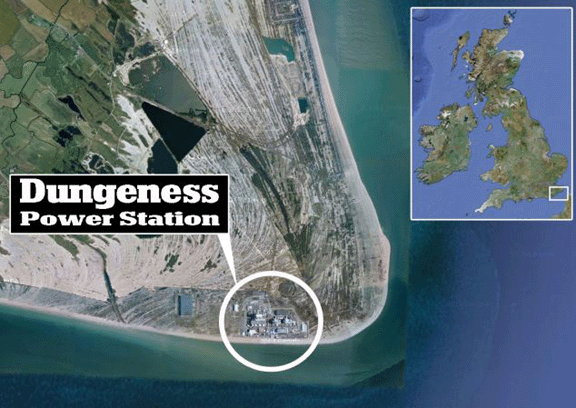
Reuters 8th April 2021, DF Energy, owned by French utility EDF, is exploring a range of scenarios for its Dungeness B nuclear plant in Britain, including bringing forward its decommissioning date of 2028, it said on Thursday. The 1.1 gigawatt Dungeness B plant, in Kent on the south coast of England, has been offline since 2018 as the company has been carrying out inspections and maintenance of pipes carrying steam to the turbine. EDF Energy has also been trying to complete repair work on corrosion identified during inspections of safety back-up systems.
The plant is currently forecast to return to service in August. It was designed in the 1960s and first started generating
electricity in 1983. EDF Energy said it has spent more than 100 million pounds ($138 million) on the plant during its current outage and it has a number of ongoing technical challenges that make its future uncertain.
UK losing credibility with its new, ambiguous, nuclear weapons policy.
U.K. NUCLEAR WEAPONS: BEYOND THE NUMBERS, War On The Rocks, HEATHER WILLIAMS, APRIL 6, 2021, Sometimes numbers only tell part of the story, even when talking about nuclear weapons. For instance, the United Kingdom recently announced that it was increasing the cap on its nuclear stockpile from 225 to 260 warheads. The move — outlined in its government’s highly anticipated review of security and defense policy, Global Britain in a Competitive Age: The Integrated Review of Security, Defence, Development and Foreign Policy — largely took nuclear policy experts by surprise and reversed decades of British reductions. The government explained that the decision to increase its nuclear stockpile for the first time in decades was due to a worsening strategic landscape and technological threats, particularly Russian advances in missile defense and hypersonic weapons. The fact that the United Kingdom decided to make this decision now should be a wakeup call to those concerned about the security of the West and the global nuclear order.
The decision to boost the number of warheads in its arsenal wasn’t the only major nuclear policy change that the United Kingdom included in the Integrated Review. The document explained that the United Kingdom would no longer provide specifics about its nuclear stockpile or the conditions under which it would consider nuclear weapons use. In other words, the United Kingdom has now fully committed to a doctrine of strategic ambiguity. This approach is similar in some respects to what the United States, NATO, Russia, and China have done. But the increase in the warhead stockpile and reliance on strategic ambiguity come at a cost to nuclear diplomacy, and it will be difficult for the United Kingdom to balance these changes with its commitment to being a responsible nuclear power.
The announcement of an increase in the warhead stockpile, in particular, could not have come at a worse time for nuclear diplomacy. In August 2021, the United Kingdom and 190 other states will gather for a meeting of the parties to the Nuclear Non-Proliferation Treaty, which includes a commitment to the “cessation of the nuclear arms race” and “general and complete disarmament.” It will be a challenge for the United Kingdom to demonstrate progress towards nuclear disarmament five months after it has announced an increase in its stockpile cap. The reliance on strategic ambiguity also potentially undermines the country’s efforts to promote nuclear transparency among the treaty’s signatories. Obviously there are other considerations for the United Kingdom’s nuclear doctrine than the Nuclear Non-Proliferation Treaty, but these changes could damage its credibility on disarmament matters. The United Kingdom, therefore, should take additional steps to demonstrate its commitment to transparency, including providing more information on its nuclear modernization plans and leading on risk reduction efforts in the context of the Nuclear Non-Proliferation Treaty.
Reasons for a Larger Stockpile: Security and Technology
In its strategic reviews published in 2010 and 2015, the United Kingdom set a cap of 225 warheads and committed to reducing its stockpile ceiling to 180 warheads by the mid-2020s. The new Integrated Review increases the country’s nuclear stockpile ceiling to 260 warheads, a potential increase of approximately 15 percent from the current stockpile and 45 percent from the previous target.
The U.K. decision reverses decades of progress towards nuclear disarmament. …………
The Price of Ambiguity
Alas, the increased nuclear stockpile and the doctrine of strategic ambiguity will undermine the United Kingdom’s nuclear diplomacy. The move will open the country up to charges of hypocrisy. Future British delegations to international nonproliferation and disarmament negotiations should expect to be asked why other countries should make progress on these issues when the United Kingdom is building up its own nuclear arsenal. While this may seem relatively inconsequential compared to deterring Russian nuclear forces, it will make it harder for the United Kingdom to advance its interests in other areas that it cares about, especially within the Nuclear Non-Proliferation Treaty…………………….. https://warontherocks.com/2021/04/u-k-nuclear-weapons-beyond-the-numbers/
Scottish government firmly opposed to nuclear weapons and demands complete withdrawal of all nuclear weapons from Scotland
Scottish government firmly opposed to nuclear weapons and demands complete withdrawal of all nuclear weapons from Scotland https://www.helsinkitimes.fi/world-int/18924-scottish-government-firmly-opposed-to-nuclear-weapons-and-demands-complete-withdrawal-of-all-nuclear-weapons-from-scotland.html“Following the publication of the UK Government’s Integrated Review of Security, Defence, Development and Foreign Policy, the Scottish Government reaffirms that it is firmly opposed to the possession, threat and use of nuclear weapons – and it is committed to pursuing the safe and complete withdrawal of all nuclear weapons from Scotland,” the Scottish government said in a statement released today.
Britain is lifting the cap on the number of Trident nuclear warheads it can stockpile by more than 40% – from 180 to 260 warheads, Boris Johnson announced on Tuesday last week. This will end 30 years of gradual disarmament since the collapse of the Soviet Union. This would require a £24 billion (€27 billion) investment in response to “perceived” threats from Russia and China.
Ironically, Johnson criticised Iran for increasing its enriched Uranium stockpile in the same speech. Iran has signed the nuclear non-proliferation agreement and does not have any nuclear weapons.
Britain stockpiles its nuclear weapons at Coulport in the Clyde Area in Scotland. The depot consists of sixteen nuclear weapon storage bunkers. Trident missile warheads and conventional torpedoes are stored at the weapons depot, where they are installed and removed from submarines.
The United Kingdom is one of the five “official” nuclear weapon states and has been estimated to have a stockpile of 120 active nuclear warheads and 215 nuclear warheads in total.
The Scottish Parliament, in a meeting on Tuesday 3 November 2015, voted in favour of a motion calling on the UK government to drop plans to renew Trident nuclear weapons.
A review, ‘Scotland: A Good Global Citizen A Scottish Perspective on Climate, Defence, Security and External Affairs’, was published today. The publication outlines the Scottish Government’s position on a range of key international issues including a desire to engage proactively and energetically with the European Union, resolute support for international development, and a commitment to being a good global citizen.
Cabinet Secretary for Justice Humza Yousaf said:
“Scotland is an open, welcoming nation, internationalist in outlook and committed to working in partnership to tackle global challenges. We are steadfastly European, and do not want to turn our backs on our closest friends and partners.
“We are determined to enhance and develop this approach. This document – an important restatement of our approach to security, defence, development and foreign policy, which also outlines our strengths such as science, technology and shipbuilding – reflects that commitment, and indeed our values as a nation.
“The UK Government’s plans to expand the stockpile of nuclear weapons, spending billions on weapons that must never be used, is a lamentable and deeply disturbing response to the rapidly changing challenges of the modern age.
“Indeed the decision to increase the nuclear weapon stockpile is completely at odds with two thirds of the international community who signed the United Nation’s Treaty on the Prohibition of Nuclear Weapons.”
The Scottish government reiterated its position that only independence can give Scottish people the possibility of deciding on their own affairs, including removal of all nuclear weapons from Scotland.
“A steadfast opposition to nuclear weapons is underlined in the Scottish Government’s new assessment of security, defence, development and foreign policy,”
The review also emphasises that Scotland is committed to working with others to tackle global challenges including the climate crisis, migration and human rights.
Alarming safety lapse at Hunterston nuclear site
|
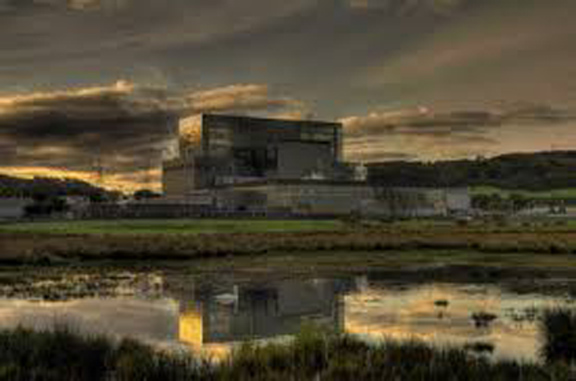
Concerns over nuclear safety ‘lapse’ at Hunterston, The Ferret , Rob Edwards-March 22, 2021
The discovery of a highly radioactive nuclear fuel element at Hunterston in North Ayrshire has sparked concerns about an “alarming safety lapse”. The site’s local stakeholder group says this is “something that should not have happened” and is demanding answers from nuclear safety regulators. Campaigners claim it’s a “dangerous situation”………. The UK Government company that runs the site promises the fuel element is “in a safe and controlled environment”. Its discovery was “completely expected” and more old fuel may be found, it says. A fuel element is a long, thin metallic tube containing pellets of uranium. When burnt — or irradiated – in a reactor, it produces dozens of different radioactive materials, including plutonium, and becomes intensely radioactive. Fuel elements burnt in the now defunct Hunterson A nuclear power station should have been sent to the Sellafield nuclear complex in Cumbria. There, they would have been processed and separated into low-level, medium-level and high-level radioactive waste, as well as plutonium. But on 3 March 2021 workers emptying an old storage vault at Hunterston discovered an entire 64-centimetre fuel element amongst other radioactive waste. The find was reported to the UK Office for Nuclear Regulation, the Scottish Environment Protection Agency, and the local site stakeholder group. Hunterston A was a first generation Magnox nuclear station with two reactors that operated from 1964 to 1990 and is currently being decommissioned. It is on the Firth of Clyde adjacent to the Hunterston B nuclear station, whose two reactors are due to close down by January 2022 after the discovery of hundreds of cracks in their graphite cores. The Hunterston site stakeholders group, which represents local community interests, said it had been informed of the find on 8 March. The fuel element was discovered in the last of five old vaults being emptied of medium-level radioactive waste, it said. “For a complete fuel rod to have found its way there, instead of into the cooling pond and on to Sellafield, is something, that should not have happened,” said a joint statement from the group’s chair, Rita Holmes, and vice-chair, Stuart McGhie. “We have contacted the Office of Nuclear Regulation and asked several questions. They have assured us that they will be in touch by the 13 April. Till then, one can only speculate.”………… The 50-strong group of UK nuclear-free authorities called for a full investigation. “This incident appears to be an alarming safety lapse that has not been resolved in the way it should have been,” said the group Scottish convenor, Glasgow SNP councillor, Feargal Dalton. “Highly radioactive spent fuel, containing the likes of plutonium, should not be dumped in a vault at Hunterston A, but rather be sent to Sellafield where the appropriate waste management processes are in place.” Dalton pointed out that The Ferret reported in 2020 that radioactive waste had been detected in a supposed empty fuel flask sent from Sellafield to the Hunterston B plant. “The Office for Nuclear Regulation needs to fully investigate this concerning safety breach,” he added. The Edinburgh based nuclear consultant and critic, Pete Roche, said: “This dangerous situation illustrates that, when it comes to dealing with nuclear waste, human error is always going to be a potential problem. “Thank goodness successive Scottish governments have decided to eschew building new reactors and make the most of our plentiful renewable resources instead. Dealing with our legacy nuclear waste is going to be difficult enough without creating yet more as the Westminster government is doing.”………… According to the UK Office for Nuclear Regulation (ONR), the fuel element was likely to date back many years and was classed as “higher activity waste”. ONR had also been notified of the find by Magnox……….. https://theferret.scot/concerns-nuclear-safety-lapse-hunterston/ |
|
UK nuclear announcement ‘shocking and alarming’ warn the Elders
UK nuclear announcement ‘shocking and alarming’ warn the Elders https://theelders.org/news/uk-nuclear-announcement-shocking-and-alarming-warn-elders MARY ROBINSONNUCLEAR DISARMAMENT-22 Mar 21,
The Elders say UK proposals risk contributing to a dangerous new nuclear arms race.
Following the release by the UK government of its Integrated Review of Security, Defence, Development and Foreign Policy, Mary Robinson, Chair of The Elders, said:
“The announcement today by the UK Government of its intention to increase by over 40% the cap on its nuclear warhead numbers is surprising and deeply alarming. This would be incompatible with the UK’s international obligations to pursue disarmament under the Non-Proliferation Treaty (NPT), and risks contributing to a dangerous new nuclear arms race. It also risks undermining the NPT Review Conference due to take place in August this year.
It is particularly shocking that a permanent member of the UN Security Council should make such an announcement at a time when other countries have been taking positive steps to reverse the deterioration in nuclear arms controls, following the extension of New START between the US and Russia, and the entry into force of the Treaty on the Prohibition of Nuclear Weapons earlier this year.
While the UK cites increased security threats as justification for this move, the appropriate response to these challenges should be to work multilaterally to strengthen international arms control agreements and to reduce – not increase – the number of nuclear weapons in existence.
The Elders call on all nuclear states to demonstrate their commitment to nuclear disarmament, and to make concrete reductions to their stockpiles in line with the minimisation agenda put forward by The Elders.
As decision-makers take stock of the UK government’s announcement, we urge all world leaders to recall the spirit of Ronald Reagan and Mikhail Gorbachev’s declaration in 1985 that “a nuclear war can never be won and must never be fought”, and redouble their efforts to make progress towards achieving a world wholly free from nuclear weapons.”
For media inquiries, please contact Luke Upchurch, Director of Communications at The Elders (+44 7741 742 064) or email:media@theElders.org
Boris Johnson joins Britain up to a perilous, uncontrollable, nuclear weapons race
  Boris Johnson is playing a dangerous nuclear game Boris Johnson is playing a dangerous nuclear gameSerhii Plokhy, Guardian, 19 Mar 21,Britain has joined an uncontrolled arms race in a world more unstable and unpredictable than even during the cold war
Boris Johnson’s decision to increase the cap on British nuclear stockpiles by more than 40%, from 180 to 260 Trident nuclear warheads, might easily be interpreted as a manoeuvre inspired by domestic politics, rooted in the Conservative party’s longstanding love affair with nuclear power and the recent politics of Brexit. But the decision has broader significance. It reflects the rapidly changing international nuclear environment, and will make it significantly worse. The world entered a new and dangerous era on 2 August 2019. On that day, the planet’s strongest nuclear powers, the US and Russia, declared their withdrawal from the Intermediate-range Nuclear Forces treaty signed by Ronald Reagan and Mikhail Gorbachev in 1987. The treaty was the last cold war-era arms control agreement remaining in force. We are now officially at the start of an uncontrolled nuclear arms race. What this meant became clear on 8 August, less than a week after the Reagan-Gorbachev agreement was abandoned. The reactor of a nuclear-powered and nuclear-armed Russian cruise missile, codenamed Skyfall, exploded in the Barents Sea, killing five Russian scientists and naval officers and contaminating the atmosphere and waters in the Arkhangelsk region of Russia. The ultimate target of Skyfall, as President Putin demonstrated in a public video a year earlier, is the US. Today, we are back to a situation that resembles the period preceding the Cuban missile crisis, when there were no mutually binding arms control agreements and various countries, the UK among them, were competing to outspend one another in building nuclear arsenals. In October 1962, only luck and the fear of nuclear confrontation shared by John Kennedy and Nikita Khrushchev saved the world from nuclear war. The shock of the crisis led the two superpowers to negotiate a number of arms control deals, ranging from the Partial Nuclear Test Ban treaty to arms control and limitation agreements. MAD, or mutually assured destruction, a concept strongly associated in the public imagination with Dr Strangelove’s “Doomsday Machine”, miraculously kept the nuclear powers at bay, maintaining what Churchill called the “balance of terror”………………….. While we face new challenges, we lack the fear of nuclear war developed by previous generations of political leaders and societies. Kennedy and Khrushchev considered nuclear war unwinnable. This is now changing with the scrapping of the old arms control treaties, the renewal of the nuclear arms race, and the development of new technologies making possible the execution of extremely accurate nuclear strikes. These factors have lowered the psychological barrier for using nuclear arms and brought back the illusion of the pre-hydrogen bomb age that wars conducted with limited use of nuclear weapons can be fought and won. That in turn feeds the new nuclear arms race, which the US and Russia have already started by abandoning cold war-era limitations. Hence the true importance of Johnson’s announcement, which opens the door for the UK and other countries to join the race. Even if the government decides not to limit itself to lifting the cap on Trident nuclear warheads and in fact acquires all 80 warheads over a short period of time, the world nuclear balance will hardly change. Despite all the changes around the globe since the end of the cold war, there are still two nuclear superpowers: Russia, with approximately 4,300 warheads, and the US, with an estimated 3,800 warheads. Eighty additional Trident warheads will not make much of a difference, nor will they make the UK safer if it comes to the worst. But by deciding to increase the cap, the UK – the world’s third country to develop its own nuclear capability – is sending the wrong signal: rearm. Instead, the world should be heading to the negotiating table to breathe new life into the arms control talks that all but ceased with the end of the cold war. That is no easy task, as negotiations will now have to go beyond the two nuclear superpowers and include the rest of the nuclear “haves” – first and foremost, China. The UK could play an important role in stopping the new nuclear arms race, instead of restarting it.
|
|
UK govt – cutting costs on troops as it expands nuclear missile numbers?
|
Labour question ‘baffling decision’ to expand nuclear missile numbers as Defence Secretary hints at army numbers cutsLabour have questioned the “baffling decision” to expand the nuclear missile numbers and demanded answers after the UK Defence Secretary refused to rule out cuts to the armed forces. The Scotsman By Alexander BrownSunday, 21st March 2021, ”…………. The Government last week published details of its major review of foreign and defence policy, known as the Integrated Review.
It stated the UK could consider deploying its nuclear arsenal against non-nuclear countries if they possess equivalent weapons of mass destruction – including new “emerging technologies”. However, UK Defence Secretary Ben Wallace refused to deny Army Numbers will be cut by up to 10,000. Asked if he could guarantee to maintain troop numbers, Mr Wallace told Sky’s Sophie Ridge: “I am not going to reveal on the media before Parliament, the details of the numbers of men and women of our armed forces. Labour’s Shadow Defence Secretary John Healey MP called for more support for military numbers, and accused the Government of repeating it’s mistakes. He said: “After weeks of trying to hide their true intentions, the cat is out the bag – the threats Britain faces are increasing but Conservative ministers are cutting the Army yet again. “Over the last decade the Conservatives have broken their pledges on full-time Forces numbers and run down our Armed Forces……… https://www.scotsman.com/news/politics/labour-question-baffling-decision-to-expand-nuclear-missile-numbers-as-defence-secretary-hints-at-army-numbers-cuts-3173345 |
|
How the British government reacted to the Fukushima catastrophe – with propaganda promoting the nuclear industry
 Revealed: British government’s plan to play down Fukushima Revealed: British government’s plan to play down Fukushima
https://www.theguardian.com/environment/2011/jun/30/british-government-plan-play-down-fukushima
Internal emails seen by Guardian show PR campaign was launched to protect UK nuclear plans after tsunami in Japan Rob Edwards Fri 1 Jul 2011
British government officials approached nuclear companies to draw up a co-ordinated public relations strategy to play down the Fukushima nuclear accident just two days after the earthquake and tsunami in Japan and before the extent of the radiation leak was known.
Internal emails seen by the Guardian show how the business and energy departments worked closely behind the scenes with the multinational companies EDF Energy, Areva and Westinghouse to try to ensure the accident did not derail their plans for a new generation of nuclear stations in the UK. “This has the potential to set the nuclear industry back globally,” wrote one official at the Department for Business, Innovation and Skills (BIS), whose name has been redacted. “We need to ensure the anti-nuclear chaps and chapesses do not gain ground on this. We need to occupy the territory and hold it. We really need to show the safety of nuclear.” Officials stressed the importance of preventing the incident from undermining public support for nuclear power. The Conservative MP Zac Goldsmith, who sits on the Commons environmental audit committee, condemned the extent of co-ordination between the government and nuclear companies that the emails appear to reveal. “The government has no business doing PR for the industry and it would be appalling if its departments have played down the impact of Fukushima,” he said. Louise Hutchins, a spokeswoman for Greenpeace, said the emails looked like “scandalous collusion”. “This highlights the government’s blind obsession with nuclear power and shows neither they, nor the industry, can be trusted when it comes to nuclear,” she said. The Fukushima accident, triggered by the Japan earthquake and tsunami on 11 March, has forced 80,000 people from their homes. Opinion polls suggest it has dented public support for nuclear power in Britain and around the world, with the governments of Germany, Italy, Switzerland, Thailand and Malaysia cancelling planned nuclear power stations in the wake of the accident. The business department emailed the nuclear firms and their representative body, the Nuclear Industry Association (NIA), on 13 March, two days after the disaster knocked out nuclear plants and their backup safety systems at Fukushima. The department argued it was not as bad as the “dramatic” TV pictures made it look, even though the consequences of the accident were still unfolding and two major explosions at reactors on the site were yet to happen. “Radiation released has been controlled – the reactor has been protected,” said the BIS official, whose name has been blacked out. “It is all part of the safety systems to control and manage a situation like this.”
The official suggested that if companies sent in their comments, they could be incorporated into briefs to ministers and government statements. “We need to all be working from the same material to get the message through to the media and the public. Anti-nuclear people across Europe have wasted no time blurring this all into Chernobyl and the works,” the official told Areva. “We need to quash any stories trying to compare this to Chernobyl.” Japanese officials initially rated the Fukushima accident as level four on the international nuclear event scale, meaning it had “local consequences”. But it was raised to level seven on 11 April, officially making it a major accident” and putting it on a par with Chernobyl in 1986. The Department for Energy and Climate Change (DECC) has released more than 80 emails sent in the weeks after Fukushima in response to requests under freedom of information legislation. They also show: Westinghouse said reported remarks on the cost of new nuclear power stations by the deputy prime minister, Nick Clegg, were “unhelpful and a little premature”. The company admitted its new reactor, AP1000, “was not designed for earthquakes [of] the magnitude of the earthquake in Japan”, and would need to be modified for seismic areas such as Japan and California. The head of the DECC’s office for nuclear development, Mark Higson, asked EDF to welcome the expected announcement of a safety review by the energy secretary, Chris Huhne, and added: “Not sure if EDF unilaterally asking for a review is wise. Might set off a bidding war.” EDF promised to be “sensitive” to how remediation work at a UK nuclear site “might be seen in the light of events in Japan”. It also requested that ministers did not delay approval for a new radioactive waste store at the Sizewell nuclear site in Suffolk, but accepting there was a “potential risk of judicial review”. The BIS warned it needed “a good industry response showing the safety of nuclear – otherwise it could have adverse consequences on the market”. On 7 April, the office for nuclear development invited companies to attend a meeting at the NIA’s headquarters in London. The aim was “to discuss a joint communications and engagement strategy aimed at ensuring we maintain confidence among the British public on the safety of nuclear power stations and nuclear new-build policy in light of recent events at the Fukushima nuclear power plant”. Other documents released by the government’s safety watchdog, the office for nuclear regulation, reveal that the text of an announcement on 5 April about the impact of Fukushima on the new nuclear programme was privately cleared with nuclear industry representatives at a meeting the previous week. According to one former regulator, who preferred not to be named, the degree of collusion was “truly shocking”. A spokesman for the DECC and BIS said: “Given the unprecedented events unfolding in Japan, it was appropriate to share information with key stakeholders, particularly those involved in operating nuclear sites. The government was very clear from the outset that it was important not to rush to judgment and that a response should be based on hard evidence. This is why we called on the chief nuclear inspector, Dr Mike Weightman, to provide a robust and evidence-based report.” A DECC source played down the significance of the emails from the unnamed BIS official, saying: “The junior BIS official was not responsible for nuclear policy and his views were irrelevant to ministers’ decisions in the aftermath of the Japanese earthquake.”
“I would be much more reassured if DECC had been worrying about how the government would cope with the $200bn-$300bn of liabilities from a catastrophic nuclear accident in Britain.” The government last week confirmed plans for eight new nuclear stations in England and Wales. “If acceptable proposals come forward in appropriate places, they will not face unnecessary holdups,” said the energy minister, Charles Hendry. The NIA did not comment directly on the emails. “We are funded by our member companies to represent their commercial interests and further the compelling case for new nuclear build in the UK,” said the association’s spokesman. “We welcome the interim findings of the independent regulator, Dr Mike Weightman, who has reported back to government that UK nuclear reactors are safe.” This article is more than 9 years old
Internal emails seen by Guardian show PR campaign was launched to protect UK nuclear plans after tsunami in Japan |
|
Hinkley Point C nuclear power station ‘could suck up 182 million fish a year’ from Severn Estuary
the power station is subject to requires an acoustic fish deterrent to be installed at the site, but EDF is trying to have this part of the DCO changed so the deterrent is no longer required. The reason the deterrent was part of the original DCO is because due to the cooling operation required, the design features two vast tunnels capable of sucking up 120,000 litres of cooling water per second from the sea and circulating it through the system to cool the nuclear reactor.
Hinkley Point nuclear reactors with cracks are allowed to resume limited operations
Reuters 17th March 2021, Britain will allow two nuclear reactors at Hinkley Point where cracks were
found to resume limited operations ahead of their scheduled closure in 2022, the sector’s regulator said on Wednesday.
UN expresses concern over UK’s move to increase nuclear weapons arsenal
|
UN expresses concern over UK’s move to increase nuclear weapons arsenal https://www.business-standard.com/article/international/un-expresses-concern-over-uk-s-move-to-increase-nuclear-weapons-arsenal-121031800241_1.html
The UN has expressed concerns over the UK’s decision to increase its nuclear weapons arsenal, as part of the country’s foreign policy overhaulThe UN has expressed concerns over the UK’s decision to increase its nuclear weapons arsenal, as part of the country’s foreign policy overhaul. The UK’s decision is contrary to its obligations under Article VI of the Nuclear Non-Proliferation Treaty (NPT), Xinhua news agency quoted Stephane Dujarric, spokesman for UN Secretary-General Antonio Guterres, as saying at a briefing on Wednesday. It could have a damaging impact on global stability and efforts to pursue a world free of nuclear weapons, he said.
“At a time when nuclear weapon risks are higher than they have been since the Cold War, investments in disarmament and arms control is the best way to strengthen the stability and reduce nuclear danger,” Dujarric was quoted as further saying. The UK government on Tuesday announced its plan to increase the number of nuclear warheads to not more than 260, reversing its previous policy of reducing its overall nuclear warhead stockpile ceiling to not more than 180 warheads by the mid-2020s. Outlining the strategy to MPs, Prime Minister Boris Johnson said the UK would have to “re-learn the art” of competing against countries with “opposing values”. But he added the UK would remain “unswervingly committed” to the NATO defence alliance and preserving peace and security in Europe. Speaking to the BBC on Tuesday, Beatrice Fihn, head of the International Campaign to Abolish Nuclear Weapons, described the UK’s decision to change its nuclear provision as “outrageous, irresponsible and very dangerous”. She said it went against international law and did not address the real security threats faced by the UK such as climate change and disinformation. |
|
‘Toxic masculinity’ – Britain to build more nuclear weapons

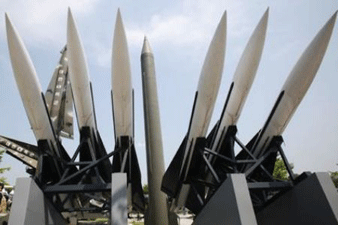
Boris Johnson ‘violating international law’ with plan to build more nuclear weapons, Defence review appears to breach Article 6 of nuclear non-proliferation treaty, Independent, Jon Stone Policy Correspondent, 16 Mar 21,
”………..Reacting to the new policy, Beatrice Fihn, executive director of the International Campaign to Abolish Nuclear Weapons (ICAN), said: “A decision by the United Kingdom to increase its stockpile of weapons of mass destruction in the middle of a pandemic is irresponsible, dangerous and violates international law.
“While the British people are struggling to cope with the pandemic, an economic crisis, violence against women, and racism, the government choses to increase insecurity and threats in the world. This is toxic masculinity on display.
“While the majority of the world’s nations are leading the way to a safer future without nuclear weapons by joining the Treaty on the Prohibition of Nuclear Weapons, the United Kingdom is pushing for a dangerous new nuclear arms race.”
In a further statement, the organisation suggested the UK would face censure at the next NPT review conference, which is due to take place in August at the United Nations.
“The United Kingdom is legally obligated under the nuclear non-proliferation treaty to pursue disarmament. States will meet soon to review the NPT’s success and when they do, the UK will have to answer for its actions,” the statement said.
ICAN won the Nobel Peace Prize in 2017 for its “ground-breaking efforts to achieve a treaty-based prohibition” of nuclear weapons.
Article 6 of the NPT, to which Britain is a signatory, commits countries to “pursue negotiations in good faith on effective measures relating to cessation of the nuclear arms race at an early date and to nuclear disarmament”.
Kate Hudson, general secretary of the UK’s Campaign for Nuclear Disarmament, said: “A decision to increase Britain’s nuclear arsenal absolutely goes against our legal obligations under the nuclear non-proliferation treaty.
“Not only is the UK failing to take the required steps towards disarmament, it is willfully and actively embarking on a new nuclear arms race – at a time when presidents Biden and Putin have renewed their bilateral nuclear reductions treaty. Britain must not be responsible for pushing the world towards nuclear war. This is a dangerous and irresponsible move, and must be reversed.”….. https://www.independent.co.uk/news/uk/politics/boris-johnson-uk-nuclear-weapons-international-law-b1817827.html
UK should build foreig policy on aid, conflict resolution, not on reversing nuclear disarmament
 Tax Research UK 16th March 2021. Billions will be wasted, nuclear waste will be created, a dangerous precedent of reversing disarmament will have been set, and the world will be more unsafe, all for no gain. If the UK was wise now (and but isn’t) it would be pursuing a very different foreign policy, based on that of
Norway.
That country does punch above its weight. It has a strong foreign policy based on aid. It uses that to build strong diplomatic links around the world. And in the process it works, quietly, on conflict resolution.
That’s the way foreign policy should be done. We are just aggressively waving colonial flags. And that’s a disaster as well as being nuclear insanity.
https://www.taxresearch.org.uk/Blog/2021/03/16/nuclear-insanity/
1 This Month




PLEASE OPPOSE HR 8255 AND S.3639 – bills would accelerate satellite deployment, with no environmental review or safeguards – https://ncstd5li.quorum.us/campaign/169331/
To see nuclear-related stories in greater depth and intensity – go to https://nuclearinformation.wordpress.com
-
Archives
- September 2026 (323)
- August 2026 (330)
- July 2026 (355)
- June 2026 (287)
- May 2026 (306)
- April 2026 (356)
- March 2026 (251)
- February 2026 (267)
- January 2026 (308)
- December 2025 (358)
- November 2025 (359)
- October 2025 (375)
-
Categories
- 1
- 1 NUCLEAR ISSUES
- business and costs
- climate change
- culture and arts
- ENERGY
- environment
- health
- history
- indigenous issues
- Legal
- marketing of nuclear
- media
- opposition to nuclear
- PERSONAL STORIES
- politics
- politics international
- Religion and ethics
- safety
- secrets,lies and civil liberties
- spinbuster
- technology
- Uranium
- wastes
- weapons and war
- Women
- 2 WORLD
- ACTION
- AFRICA
- Atrocities
- AUSTRALIA
- Christina's notes
- Christina's themes
- culture and arts
- Events
- Fuk 2022
- Fuk 2023
- Fukushima 2017
- Fukushima 2018
- fukushima 2019
- Fukushima 2020
- Fukushima 2021
- general
- global warming
- Humour (God we need it)
- Nuclear
- RARE EARTHS
- Reference
- resources – print
- Resources -audiovicual
- Weekly Newsletter
- World
- World Nuclear
- YouTube
-
RSS
Entries RSS
Comments RSS

