The Green Jobs Taskforce
Just Transition**
The UK is currently not on track to deliver a commitment to host two
million green-collar jobs by 2030. But the economic recovery from Covid-19
presents a window to accelerate investment and build a robust skills
pipeline, according to the Green Jobs Taskforce report published this week.
The Taskforce was set up by the Government late last year, following
pressure from trade bodies, businesses and NGOs. Its purpose is to develop
recommendations for helping unemployed people into skilled jobs that
contribute to the net-zero transition and supporting those currently
working in high-carbon businesses to upskill and reskill.
Under an overarching call to ensure that the Net-Zero Strategy is published to time
ahead of COP26 and includes significant commitments on jobs and skills,
three themes are covered in the report: Scaling up investment in the
net-zero transition, building pathways into good green careers and
supporting a just transition for workers in the high-carbon economy.
Edie 16th July 2021
https://www.edie.net/news/11/Six-UK-green-policy-stories-you-need-to-know-about-this-week/
Green energy suppliers protest at UK government’s funding plan to promote nuclear power, with residents exposed to nuclear cost overruns.
Green energy suppliers oppose bills surcharge for new nuclear plants, Critics warn the UK government’s plans could expose households to cost overruns.
Ft.com Nathalie Thomas in Edinburgh Green energy suppliers are protesting at the prospect of having to add a surcharge to household bills to pay for new nuclear plants in Britain when their customers purposely choose not to support the divisive technology.
UK ministers are aiming to introduce legislation in the autumn that would allow for a large nuclear power plant proposed for Sizewell on England’s east coast to be financed via a “regulated asset base” model. The scheme would see households help fund the construction of the £20bn plant via a surcharge on their energy bills, regardless of their supplier.
Households already pay for a number of policy costs via their energy bills, such as subsidies for wind and solar schemes, yet a nuclear surcharge would prove particularly difficult to stomach for companies that offer their customers “100 per cent renewable energy” deals, which do not include nuclear power.
Dale Vince, the founder of Ecotricity, the first company in Britain to have offered customers green electricity, told the Financial Times: “It’s bonkers we would all have to pay this subsidy for at least a decade of construction and not for power generated.”
“The government is reluctant to fund nuclear projects itself, so allowing Sizewell [C] to access the RAB [regulated asset base] system is simply dumping the cost on consumers — even those who have gone renewable, and that’s just unfair,” added Vince.
Kit Dixon, policy manager at Good Energy, the UK’s first supplier to offer customers 100 per cent renewable electricity, said that “we should be deeply concerned” by the nuclear industry potentially being offered such a deal to build expensive new plants “with little incentive to deliver on time or within budget”.
“We’ve got to stop seeing customers’ bills as a sort of cash machine for folly projects,” said another energy chief executive who asked not to be named.
…………………….Critics of the regulated asset base model warn that it would expose households to cost-overruns, which have proved common in the nuclear industry.
Environment groups oppose nuclear on the grounds that it is more expensive than technologies such as offshore wind and leaves a legacy of highly toxic waste that takes more than 100,000 years to decay.
Bulb, Britain’s seventh biggest supplier by market share, also warned in a response to a consultation on the regulated asset base model that using the financing mechanism for nuclear plants “doesn’t protect customers who choose to be on a renewable tariff but adds costs to their bills for a technology they won’t directly benefit from”……….. https://www.ft.com/content/a12bc937-a91f-4341-ba3e-25d7f7edc6d2
UK government’s pointless pursuit ofnuclear power, as renewable energy proving to be cheaper and faster.

Renewable energy, mainly wind and solar, is rising on the back of rapidly falling costs. So much so that the International Energy Agency, which has in the past been rather guarded about their potential, has switched over to seeing them as the main way ahead, supplying 90% of global electric power by 2050.
| Dave Elliott: No room for nuclear. As noted in an article in Regional Life, a local conservation e-magazine linked to a local anti nuclear group, the flat landscape of the Dengie peninsula in Essex is punctuated by a line of tall wind turbines, slowly turning and the massive grey-blue hulk of the former Bradwell ‘A’ nuclear power station. These two features it says graphically express the contrast between rise of renewable energy and the demise of nuclear power, the past and the future of electricity generation. Renewable energy, mainly wind and solar, is rising on the back of rapidly falling costs. So much so that the International Energy Agency, which has in the past been rather guarded about their potential, has switched over to seeing them as the main way ahead, supplying 90% of global electric power by 2050. That is actually quite conservative compared to some projections for the UK: renewables are supplying over 43% of UK power at present and the Renewable Energy Association says that reaching 100% is possible by 2032 – indeed Scotland is already almost there. All of which raises thequestion of why we are still pursuing nuclear power- which just about everyone agrees is very much more expensive than wind and solar. The recent BBC TV documentary series on construction work at Hinkley Point C in Somerset made stunningly clear the massive scale and environmental footprint of nuclear projects like this. Especially notable was the vast amount of concrete that had to be poured- the production of which involves significant release of carbon dioxide gas. That is one reason why nuclear plants are not zero carbon options, another being the fact that mining and processing uranium fuel are energy and carbon intensive activities. By contrast, renewable energy systems like solar cells and wind turbines need no fuel to run, and, although energy is needed to make the materials used in their construction, the net carbon/energy lifetime debt is less than for nuclear- one study suggested nuclear produces on average 23 times more emissions than onshore wind per unit electricity generated. The Government’s stated aim is to generate ‘enough electricity from offshore wind to power every home by 2030’. That means many more offshore wind farms, off the East coast and also elsewhere around the UK. With the other renewables also added in and more of them planned (we have 14 GW of solar capacity so far) it is hard to see what the nuclear plants are for – the 9 GW or so of old plants and the new 3.2 GW Hinkley Point C plant, much less any other proposed new ones. The nuclear lobby sometimes argues we need more nuclear to replace nuclear plants that are being closed and also to back up renewables. It is hard to see how that could work, unless the new plants were flexible, and able to compensate for the variable output of the 30GW or so of wind and solar capacity we have at present. As yet there are no plans to run the Hinkley Point C plant that way, or for that matter, the proposed 3.2 GW Sizewell C. In which case, adding more nuclear will mean that, at times of low demand, some cheap renewable output, or some low cost flexible gas plant output, would have to be curtailed. What a waste! All of this to keep the £22bn Hinkley Point, and any that follow, financially viable. Renew Extra 17th July 2021 https://renewextraweekly.blogspot.com/2021/07/no-room-for-nuclear.html |

Nuclear colonialism
An Australian artist has accused a group of Conservative councillors of
using “bullying strategies” to silence and censor her work after an
installation she created to highlight Britain’s “identity as a colonial
nuclear state” was removed from a park in Essex. The councillors
threatened to “take action against the work” if it was not removed,
according to Metal, the arts organisation that commissioned and then
removed the installation from Gunners Park in Southend.
Guardian 17th July 2021
21
UK government plan – residents on the hook in advance for costly Sizewell nuclear plan that will be useless to combat climate change
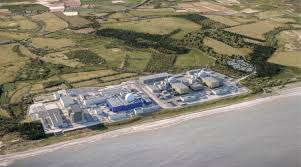
A remote area on England’s east coast, halfway between the seaside towns of Felixstowe and Lowestoft, is set to become the centre of debate about Britain’s future energy security. UK ministers are aiming to bring
forward legislation in the autumn to support the financing of a 3.2 gigawatt nuclear power station in Sizewell, East Suffolk….
Ministers have been in formal negotiations with EDF about how to fund the proposed £20bn Sizewell C
plant since December, and the government and the French state-backed utility have had discussions about replacing Britain’s ageing nuclear reactors for years.
However, the question of whether Britain should build more large plants took on added urgency last month, when EDF closed the 1.1GW Dungeness B station in Kent seven years early. It also raised the prospect that other reactors may also be decommissioned ahead of schedule, owing to problems with their graphite cores……….

“If there was [a capacity issue], what good is Sizewell going to do given it won’t come on line until 2034
according to EDF?” asks Stephen Thomas, emeritus professor of energy policy at the University of Greenwich. Nuclear sceptics have long argued that money would be better spent on clean energy technologies, such as
offshore wind, and reducing electricity demand through measures including insulation.
Under a RAB model, consumers would pay towards a new plant through their energy bills long before any electricity is generated. Opponents of the model warn that consumers would also be on the hook for
cost overruns.
FT 14th July 2021
https://www.ft.com/content/3f2bfc76-5b74-437c-8b18-67f9cde991af
British court ruling heightens danger of Assange extradition to the US
British court ruling heightens danger of Assange extradition to the US, WSWS, Oscar Grenfell, 12 July 21, Last week’s ruling by the British High Court allowing prosecutors to appeal an earlier judgment blocking Julian Assange’s extradition, poses the very real danger that the WikiLeaks publisher will be dispatched to his American persecutors in the not-too-distant future.
The ruling is a microcosm of the Assange case as a whole. As they have for the past decade, the British courts have thrown aside the WikiLeaks founder’s legal and democratic rights. They have granted a US appeal that is both duplicitous and irregular under conditions in which the entire attempt by the American state to prosecute Assange has been exposed as an illegal frame-up.
The US appeal is a damning refutation of those, including among Assange’s own supporters, who have peddled dangerous illusions that the US administration of President Joe Biden may drop the prosecution if a sufficient number of moral pleas are addressed to the new occupant of the White House.
The appeal was first issued in the dying days of the Trump administration but it was continued, honed and argued for by Biden’s Justice Department. Assange remains in London’s maximum-security Belmarsh Prison and faces the prospect of lifetime incarceration in the US because Biden is determined to press ahead with the prosecution of a journalist and publisher for exposing American war crimes, human rights violations and illegal spying operations.
That is because the Assange prosecution is viewed as a crucial precedent by the imperialist powers for the suppression of dissent and anti-war opposition amid a ratcheting up of the preparations for military conflict, including the Biden administration’s threats and provocations against China, and the first signs of a resurgence of working-class struggle.
The appeal also confirms the warnings made by the World Socialist Web Site about January’s British District Court decision that barred extradition.
Judge Vanessa Baraitser accepted all the substantive arguments of the US prosecutors, including their right to try a publisher under the Espionage Act. Her ruling, prohibiting extradition, was framed in the narrowest terms. Its purpose was to defuse a groundswell of opposition to the prospect of Assange’s extradition and to provide the US with ample scope for appeal.
Baraitser ruled that extradition would be “oppressive.” Assange’s compromised health and the conditions of his imprisonment in the US would likely result in his suicide.
The deliberate consequence of that judgment was that there was only a legal sliver between Assange and extradition.
The US has exploited this with its appeal claiming that the conditions of imprisonment would not be so oppressive. It has proposed worthless assurances that Assange would not be held under Special Administrative Measures (SAM), regulations that impose almost total isolation on a prisoner, and that he could serve out his sentence in Australia.
The extradition hearing had heard harrowing testimony about the dire psychological consequences of SAMs and conditions at the supermax ADX Florence prison where they are frequently imposed.
The US arguments, accepted as a legitimate basis of appeal by the British court, were demolished by Stella Moris, Assange’s partner and an international human rights lawyer.
In a statement issued on Friday, Moris wrote: “Reports about US undertakings are grossly misleading. On any given day 80,000 prisoners in US prisons are held in solitary confinement. Only a handful are in ADX/under special administrative measures. ADX is just one of dozens of self-described supermax prisons in the United States. The US government also says it may change its mind if the head of the CIA advises it to do so once Julian Assange is held in US custody.
“With regard to the supposed concession of allowing Julian to serve jail time in Australia, it was always his right to request a prisoner transfer to Australia to finish serving his sentence because he is an Australian. It is no concession at all. There are existing agreements between the US and Australian authorities. What is crucial to understand is that prisoner transfers are eligible only after all appeals have been exhausted. For the case to reach the US Supreme Court could easily take a decade, even two.
“What the US is proposing is a formula to keep Julian in prison effectively for the rest of his life. The only assurance that would be acceptable would be for the Biden Administration to drop this shameful case altogether, once and for all. He should not be in prison for a single day, not in the UK, not in the United States, not in Australia—because journalism is not a crime.”
As Moris noted, the US appeal itself reserved the “right” to impose SAMs once Assange is on US soil. Testimony at the extradition hearing, including from a former US prison warden, established that the imposition of SAMs is essentially extra-judicial, often being introduced at the say-so of the intelligence agencies, and with no genuine means of appeal.
“What the US is proposing is a formula to keep Julian in prison effectively for the rest of his life. The only assurance that would be acceptable would be for the Biden Administration to drop this shameful case altogether, once and for all. He should not be in prison for a single day, not in the UK, not in the United States, not in Australia—because journalism is not a crime.”
As Moris noted, the US appeal itself reserved the “right” to impose SAMs once Assange is on US soil. Testimony at the extradition hearing, including from a former US prison warden, established that the imposition of SAMs is essentially extra-judicial, often being introduced at the say-so of the intelligence agencies, and with no genuine means of appeal.
The hearings, moreover, heard evidence of a case in which similar assurances were immediately thrown out the door once extradition was secured……………
Thordarson has now admitted, however, that almost all his testimony consisted of lies proffered in exchange for immunity from US prosecution. The American government thus submitted a false indictment to the British courts……….https://www.wsws.org/en/articles/2021/07/12/assa-j12.html?pk_campaign=assange-newsletter&pk_kwd=wsws
Green party makes gains in East Suffolk Council by-election – area that includes planned Sizewell nuclear station
The Green Party has taken one of two seats up for grabs in the Aldeburgh and Leiston ward in Thursday’s East Suffolk Council by-election – and came within two votes of winning the other.
Tom Daly is the first Green councillor elected in the area which includes much of the site of the proposed new Sizewell C power station. He will be joined on the council by Conservative Russ Rainger – who was a county councillor for the area before standing down in May.
The second Green candidate, Matt Oakley, came only two votes behind Mr Rainger. Suffolk Coastal Green Party chairman Julian Cusak said on Facebook: “Great result for the Green Party last night.
Aldeburgh and Leiston now has its first Green councillor on East Suffolk Council.
East Anglian Daily Times 9th July 2021
UK residents face higher electricity bills, paying in advance, for the construction of new nuclear reactors
Consumers face higher energy bills to pay for new nuclear power. EDF wants to recoup some of the £20bn cost of the new Sizewell C plant in Suffolk before it starts producing electricity. Households face higher energy bills to help pay for the planned £20bn Sizewell C plant in Suffolk as the Government seeks to replace the UK’s ageing nuclear power stations.
Ministers are preparing to introduce legislation so that nuclear developers can recoup some of their costs through energy bills while a new plant is being built, rather than having to wait until it has been developed, the Financial Times reported. Supporters stress the so-called regulated asset base model can help cut the huge costs of nuclear power because it reduces risk for developers, although critics argue it unfairly heaps risk onto consumers. EDF has been in negotiations with the Government since December over a funding deal for its proposed Sizewell C plant amid public debate about the role nuclear power should play in the energy ecosystem.
It was estimated in 2019 that energy bills could rise by about £6 a year if the regulated asset base model is used for Sizewell. The financing model is used for other infrastructure projects such as the Thames Tideway Tunnel
but not yet for power generation, meaning new legislation is needed. The nuclear industry has been increasingly vocal in recent months about the importance of replacing the UK’s nuclear plants, most of which are due to close by the end of the decade.
Telegraph 7th July 2021
Investors won’t back the nuclear ”white elephant”, neither should the UK taxpayers

The City won’t back new nuclear power stations – so why should we? The nuclear industry has a wretched track record when it comes to building new reactors. Giant cost overruns are practically a given; so too extraordinary delays.
Take EDF, the French state-backed outfit. Its nuke in Flamanville, Normandy was originally meant to come on line in 2009. Instead it won’t be ready until next year, 14 years later than originally planned and £10bn over budget.
Then there’s Hinkley Point C, Britain’s first new nuclear plant in three decades. Initially pencilled in for completion in 2017, it is now not expected until 2026 with a £23bn bill instead of £16bn.
No wonder, then, that the City has baulked at helping to finance Sizewell C, a project so radioactive that Sir Iain Duncan Smith has dubbed it “the next Huawei” because of the involvement of Beijing-backed CGN. The politics of
that are enough to put off most investors, but there are plenty of other risks that traditional fund managers will struggle to square with the environmental, social and governance (ESG) guidelines they are increasingly governed by.
But is this really the way to go about it? It is eight years since the influential Energy and Climate Change Committee called for the Government to come up with a plan B because of repeated problems with building new nuclear power. Yet we seem no closer to having one.
T elegraph 7th July 2021
https://www.telegraph.co.uk/business/2021/07/07/city-wont-back-new-nuclear-power-stations-should/
As wind power becomes half the price of nuclear, nuclear power may not be an election winner.

this is not a time to invest in nuclear technology, but offshore wind looks increasingly attractive.
The problem seems to be that getting the Hinkley Point C reactors off the ground brought out into the open how expensive and delay-prone building a new nuclear plant has become.
Nuclear Resurgence Fades In The UK; Huge Expectations For Offshore Wind, Seeking Alpha 4th July 2021
Approximately, 16% of UK power comes from nuclear reactors, which are almost all due to close soon. The UK Government has gone quiet about nuclear renewal.
In late June, the UK All-Party Parliamentary Group (APPG) on Nuclear Energy has called for urgent action to revitalise the industry, a call which seems too late to be viable.
New UK report suggests massive expansion of offshore wind to 108 GW; this will drive new power needs in the UK. Investors might consider the risks of investing in nuclear technology now and instead consider the rise of companies involved with offshore wind. Four years ago, I wrote about the struggling global nuclear industry and specifically nuclear power in the UK.
I updated the UK situation earlier this year. Very recent developments suggest that a further update is timely because what happens in the UK will impact the global nuclear industry.
Here I suggest that this is not a time to invest in nuclear technology, but that offshore wind looks increasingly
attractive. It takes a long time to get nuclear permitting sorted out and construction commissioned. The clock is ticking for the renewal of the UK nuclear fleet which currently provides ~16% of UK power requirements, but all but one of the existing fleet of 15 reactors plans to close by 2030.
The problem seems to be that getting the Hinkley Point C reactors off the ground brought out into the open how expensive and delay-prone building a new nuclear plant has become.
Probably focusing the Government’s mind is the fact that financing Hinkley Point C has left the public with a “strike price” of 92 pounds/MWh and 35 year inflation adjusted bill, which is already more than double the cost of a major wind farm (e.g. Dogger Bank wind farm has a strike price of 40 pounds/MWh, IRR of 5.6% and payback time 17 years).
No doubt the recently updated 100+ year program to decontaminate the UK’s 17 old nuclear facilities is another confronting fact that may not be an election winner.
British households will pay for nuclear construction long before it supplies any electricity, under the govt’s new plan
the model is deeply unpopular with nuclear sceptics, who have said it would expose consumers to construction risks, notably any cost overruns.
EDF and its junior partner in Hinkley Point C, the Chinese state-owned company CGN, are financing the plant in return for a generous electricity price of £92.50 per megawatt hour guaranteed by the government.
The price… was agreed in 2012 and rises in line with inflation.
UK households face energy bills surcharge to fund nuclear plants
Ministers plan legislation for new financing model to underpin building of £20bn Sizewell C reactor, Ft.com
Nathalie Thomas in Edinburgh and Jim Pickard in London, 7 jul 21,
British households face paying a surcharge on their energy bills to pay for new nuclear power stations in the UK as the government draws up legislation to underpin the new financing plan. Ministers aim to unveil legislation in the autumn that would enable Sizewell C, a £20bn nuclear power plant proposed by France’s EDF for England’s east coast, to go ahead through a financing model called the regulated asset base, said several people briefed on the government’s thinking. This model would mean that energy bill payers start contributing towards the cost of the plant at Sizewell in Suffolk long before it generates any electricity.
Boris Johnson has said he wants the government to reach a final investment decision on “at least one” new nuclear power station before the next general election ……….
Under the model, owners of a power station could add chunks of the value of a partly built plant to what would be its regulated asset base in stages during the risky construction phase. They could then charge an agreed regulatory return on this value to UK households through their energy bills, in a move designed to cover financing costs. State-backed EDF has said the steady returns guaranteed by the regulated asset base model would allow it to attract low-risk investors such as pension funds and would lead to overall savings for consumers.
But the model is deeply unpopular with nuclear sceptics, who have said it would expose consumers to construction risks, notably any cost overruns.
EDF is planning to use a design called the European Pressurised Reactor at Sizewell C, but budgets have spiralled at other projects deploying similar technology, including the Hinkley Point C plant under construction in Somerset. The Treasury is supportive of the regulated asset base model, said several people briefed on the department’s stance…..
EDF and its junior partner in Hinkley Point C, the Chinese state-owned company CGN, are financing the plant in return for a generous electricity price of £92.50 per megawatt hour guaranteed by the government.
The price, which was controversial with environmental groups, was agreed in 2012 and rises in line with inflation. UK ministers entered formal negotiations with EDF over the financing of Sizewell C in December. The government said at the time that consideration would be given “to the potential role of government finance in construction, provided there is clear value for money for consumers and taxpayers”.
Stephen Thomas, emeritus professor of energy policy at the University of Greenwich, said he imagined that the government would have to take a “strategic stake” in Sizewell C “as a signal to investors that this won’t be allowed to collapse, and ditto EDF”. It is not yet clear what role CGN will play in Sizewell C. CGN is financing 20 per cent of the development costs of the Suffolk plant alongside EDF but some Conservative MPs are opposed to Chinese involvement in critical UK infrastructure. CGN declined to comment. https://www.ft.com/content/d115c0bd-da17-4bbf-a070-b62b525c7fa1
Nuclear fusion – a very unlikely development for Bradwell, UK
Bradwell is no soft touch for Nuclear Fusion’s fantasy. Bradwell looks
an unlikely bet for fusion whoever is behind the scheme. And it will not
happen anytime soon – the 2040s at the very earliest – far too late to
save the planet. Even if the experiment goes ahead it is far more likely to
go to a more welcoming site.
Maylands Mayl July Edition 7th July 2021
UK’s Ministry of Defence kept ‘devastating’ nuclear accident risks under wraps
‘Devastating’ nuclear accident risks kept under wraps, The Ferret, Rob Edwards, July 4, 2021,
A ruling allowing the Ministry of Defence (MoD) to keep nuclear safety problems secret has been condemned as a threat to democracy, with “devastating” accident risks.
An information tribunal in London has rejected a bid to release reports about Trident nuclear bomb and submarine hazards on the Clyde because of fears about leaks to an increasingly “aggressive” Russia.
But the secrecy has come under fierce fire from a former nuclear submarine commander and campaigners. They criticised the MoD for hiding its nuclear blunders, putting people in danger, and edging the UK towards a “closed and dictatorial state”.
The Scottish National Party attacked the MoD’s secrecy as “absolutely untenable”. The idea that withholding information would keep the UK safe was “a very dangerous delusion”, the party argued.
The MoD, however, insisted that nuclear information had to be protected “for reasons of national security”. The defence nuclear programme was “fully accountable” to ministers, it said.
Annual reports by the MoD’s internal watchdog, the Defence Nuclear Safety Regulator (DNSR), were published for ten years under freedom of information law. But this ceased in 2017.
The Ferret revealed that the reports for 2005 to 2015 highlighted “regulatory risks” 86 times, including 13 rated as high priority. One issue repeatedly seen as a high risk was a growing shortage of suitably qualified and experienced nuclear engineers.
The DNSR report for 2014-15 warned that the lack of skilled staff was “the principal threat to the delivery of nuclear safety”. It also cautioned that “attention is required to ensure maintenance of adequate safety performance” for ageing nuclear submarines at the Faslane naval dockyard near Helensburgh.
The Ferret reported in 2019 that a belatedly released extract from the 2015-16 report showed that the Defence Nuclear Safety Regulator was itself struggling with staff shortages. It could not complete all the “essential tasks” to ensure nuclear safety.
The MoD’s decision to stop publishing DNSR reports was appealed to the First Tier Tribunal on information rights by researcher and campaigner, Peter Burt. Hearings were held in London in December 2019, but the verdict was delayed by the coronavirus pandemic.
The ruling, which has now been made available, dismissed his appeal and endorsed the MoD arguments for secrecy. Key parts of the tribunal proceedings were conducted in private, with Burt banned from taking part……………….. https://theferret.scot/nuclear-accident-risks-under-wraps/
UK Treasury’s new green savings bonds says YES to wind energy, NO to nuclear

the nuclear energy aspect had been scrapped in the process of working out suitable investments.
Yes to wind, no to nuclear: the green bonds investment planSavers can be part of £15bn scheme with just £100m
Sunday July 04 2021, The Sunday Times The money raised through the Treasury’s new green savings bonds will not be used to fund any nuclear energy projects, despite the power source being a crucial part of the government’s ten-point plan towards net zero.
The term net zero means achieving a balance between the carbon emitted into the atmosphere and the carbon removed from it.
Investors might be able to help fund the government’s plans to “build back better and greener” as early as September, when it is expected that the first tranche of bonds will be launched.
Farnam Bidgoli, the head of environmental, social and governance (ESG) solutions at HSBC, said that the nuclear energy aspect had been scrapped in the process of working out suitable investments. “When doing our market research,……….. (subscribers only) https://www.thetimes.co.uk/article/yes-to-wind-no-to-nuclear-the-green-bonds-investment-plan-9pcrz6rsw
United Kingdom will not finance any nuclear-energy related expenditures under its Green Financing Framework

Nuclear energy has been excluded from the UK government’s Green Financing Framework, while several EU Member States have written to the European Commission to oppose nuclear’s inclusion in the bloc’s green taxonomy.
The UK’s Green Financing Framework describes how the government plans to finance expenditures through the issuance of green gilts and the retail Green Savings Bonds that it says will be critical in tackling climate change and other environmental challenges. The framework, which was produced and published yesterday by the Treasury, sets out the basis for identification, selection, verification and reporting of the green projects that are eligible for such financing.
Under ‘exclusions’, the document says: “Recognising that many sustainable investors have exclusionary criteria in place around nuclear energy, the UK government will not finance any nuclear energy-related expenditures under the Framework.”
World Nuclear News 2nd July 2021
https://www.world-nuclear-news.org/Articles/UK-excludes-nuclear-from-green-taxonomy
1 This Month
26 September – International Day for the Total Elimination of Nuclear Weapons





PLEASE OPPOSE HR 8255 AND S.3639 – bills would accelerate satellite deployment, with no environmental review or safeguards – https://ncstd5li.quorum.us/campaign/169331/
To see nuclear-related stories in greater depth and intensity – go to https://nuclearinformation.wordpress.com
-
Archives
- September 2026 (323)
- August 2026 (330)
- July 2026 (355)
- June 2026 (287)
- May 2026 (306)
- April 2026 (356)
- March 2026 (251)
- February 2026 (267)
- January 2026 (308)
- December 2025 (358)
- November 2025 (359)
- October 2025 (375)
-
Categories
- 1
- 1 NUCLEAR ISSUES
- business and costs
- climate change
- culture and arts
- ENERGY
- environment
- health
- history
- indigenous issues
- Legal
- marketing of nuclear
- media
- opposition to nuclear
- PERSONAL STORIES
- politics
- politics international
- Religion and ethics
- safety
- secrets,lies and civil liberties
- spinbuster
- technology
- Uranium
- wastes
- weapons and war
- Women
- 2 WORLD
- ACTION
- AFRICA
- Atrocities
- AUSTRALIA
- Christina's notes
- Christina's themes
- culture and arts
- Events
- Fuk 2022
- Fuk 2023
- Fukushima 2017
- Fukushima 2018
- fukushima 2019
- Fukushima 2020
- Fukushima 2021
- general
- global warming
- Humour (God we need it)
- Nuclear
- RARE EARTHS
- Reference
- resources – print
- Resources -audiovicual
- Weekly Newsletter
- World
- World Nuclear
- YouTube
-
RSS
Entries RSS
Comments RSS

