UK’s new nuclear financing plan is a nightmare

Tax-and-spend budgets can be dispiriting. But at least Kwasi Kwarteng
squirrelled out a “£30 billion” consumer windfall this week.
Apparently, we’re going to be that much better off on “each new
large-scale” nuclear power plant he’s planning for Blighty.
And all
thanks to “a new funding model” — the regulated asset base, or RAB.
Where the business secretary has plucked his figure from is not exactly
clear. But it’s all part of his conversion to a new nuclear nirvana —
one all the more crucial, too, “in light of rising global gas prices”.
Yes, it’s debatable whether gas prices will still be on the up in, say,
2035 when a new Kwasi nuke might actually be built. But who cares about
that? Buried in the budget was the news ministers have set aside “£1.7
billion to enable a final investment decision” this parliament on a new
reactor (who else spends that sort of sum making a decision?) and is in
talks with EDF over Sizewell C in Suffolk.
On top, Kwarteng has dusted off
Wylfa on Anglesey, the project Hitachi spent four years trying to fire up
before jacking it in and writing off £2.1 billion. Apart from the
decade-long delays in getting built, construction cost overruns are
nuclear’s forte: France’s Flamanville, up from the initial €3.3
billion to €19.1 billion; Finland’s Olkiluoto, up from €3 billion to
€11 billion; and our very own Hinkley Point C, up from £18 billion to
£23 billion.
Kwarteng knows all that. But he’s calculated that the RAB
model, where consumers “contribute to the cost of new nuclear power
projects during the construction phase”, can not only attract private
investors but also allow lower electricity prices in the long run: his
so-called “£30 billion” saving.
For him, it beats the
“contracts-for-difference” template of Hinkley Point C. Both models are
deeply flawed. But the RAB is worse. First, because developers, and their
backers, have no incentive to keep costs down. Sure, there’d be an
independent regulator to rule on cost overruns.
But with investors making
their return on the size of the RAB, the more cost they can get past the
regulator, the better. And, second, because if the project keels over,
consumers are still left with the bill. “Nukegate” in America is proof
of that: two reactors in South Carolina built by Westinghouse that blew up
the company after costs ballooned from $9.8 billion to $25 billion. The
plants were never completed: a scandal leading to criminal lawsuits. But
consumers are still paying for the nukes: billions of dollars of costs,
making up 18 per cent of their electricity bills.
Guess what, too? Fresh
from Chapter 11 bankruptcy, it’s Westinghouse that Kwarteng fancies for
another go at Wylfa.
Times 30th Oct 2021
https://www.thetimes.co.uk/article/new-nuclear-plan-is-a-nightmare-63schq6ks
| R |
UK public kept in the dark on household costs in paying for nuclear reactors before they’re built

it is somewhat dubious to replace a very expensive form of subsidy with one that promises to be merely expensive — and then claim that you have ‘saved’ money.
| How much longer is the government going to suppress the cost to households of achieving net zero carbon emissions, or try to imply, as business secretary Kwasi Kwarteng recently seemed to imply on the Today programme, that it won’t cost us at all? Even as he spoke Kwarteng was working on a new model for the funding of nuclear power stations that was unveiled yesterday in the form of the Nuclear Energy Finance Bill. The proposed legislation will impose levies on energy bills in order to subsidise the construction of new nuclear power stations. The new model of funding — called Regulated Asset Base — will replace the model by which Hinkley C is being constructed: the contracts for difference, or CfD, model which was used to entice EDF to undertake the project. The carrot is a guaranteed ‘strike’ price for electricity generated by the plant as soon as it starts generating electricity. Funding plants upfront may have the agreeable effect of cutting out Chinese finance. Moreover, the CfD model was failing to attract investors for other projects, such as the proposed new nuclear reactor at Wylfa, which Hitachi abandoned a year ago. But it will inevitably transfer risk to the consumer — should, say, the proposed new plant at Sizewell in Suffolk end up being abandoned before it begins generating power, taxpayers will already have paid towards the plant through their bills. Transferring that risk to the private sector was the whole reason for introducing the Hinkley form of funding in the first place. We don’t yet know how big the sting will be to energy consumers to finance Sizewell C through the new funding model — the Department for Business insists it will be ‘a few pounds a year’ per household during the early construction phases, followed by ‘less than £1 a month’ during the full construction phase. But it is somewhat dubious to replace a very expensive form of subsidy with one that promises to be merely expensive — and then claim that you have ‘saved’ money. Spectator 27th Oct 2021 https://www.spectator.co.uk/article/who-should-pay-for-nuclear- |
Sellafield workers told to return home due to flood warning – (climate change hitting nuclear again?)
NUCLEAR power plant workers are being told to return home due to heavy
rainfall flooding parts of Cumbria. A spokesman for the West Cumbrian power
plant Sellafield issued a statement online advising people to only travel
if strictly necessary.
The warning comes after the county was battered with
heavy rainfall and flooding. A spokesman for Sellafield said: “Cumbria
Police say the threat of flooding in Cumbria remains high and are advising
people to only travel if strictly necessary and to take pre-emptive action
to protect themselves.
Whitehaven News 28th Oct 2021
Who should take on the costs and risks of nuclear power?
There are, of course, other alternatives that may or may not turn out to be cheaper: gas (with or without carbon capture), renewables (assuming some form of affordable energy storage can be found) or letting the market itself decide how our electricity should be generated. If nuclear really is the future you might expect investors to be more interested in it without subsidies. And of course, you don’t get something for nowt: if consumers do end up paying less for Sizewell than they will for Hinkley it will be because they have taken on more risk.
Who should pay for nuclear? Spectator, Ross Clark, 29 Oct 21, ”……………… the funding of nuclear power stations that was unveiled yesterday in the form of the Nuclear Energy Finance Bill. The proposed legislation will impose levies on energy bills in order to subsidise the construction of new nuclear power stations. The new model of funding — called Regulated Asset Base — will replace the model by which Hinkley C is being constructed: the contracts for difference, or CfD, model which was used to entice EDF to undertake the project. The carrot is a guaranteed ‘strike’ price for electricity generated by the plant as soon as it starts generating electricity.
………… it will inevitably transfer risk to the consumer — should, say, the proposed new plant at Sizewell in Suffolk end up being abandoned before it begins generating power, taxpayers will already have paid towards the plant through their bills.
With his characteristic optimism, Kwarteng claims that the new funding model will ‘save’ energy consumers £30 billion on each nuclear project. Can that really be true? It rather depends on your definition of saving money.
Kwarteng’s claim is based on the presumption that the only alternative to new nuclear power stations funded by the new model is for nuclear power stations to be funded like Hinkley by the CfD model. But Hinkley was itself horrendously expensive: EDF has been guaranteed a minimum price of £92.50 per MWh (at 2012 prices) over 35 years, the expected lifetime of the power station — around twice as high as wholesale electricity prices at the time the deal was signed.
……… it is somewhat dubious to replace a very expensive form of subsidy with one that promises to be merely expensive — and then claim that you have ‘saved’ money.
There are, of course, other alternatives that may or may not turn out to be cheaper: gas (with or without carbon capture), renewables (assuming some form of affordable energy storage can be found) or letting the market itself decide how our electricity should be generated. If nuclear really is the future you might expect investors to be more interested in it without subsidies. And of course, you don’t get something for nowt: if consumers do end up paying less for Sizewell than they will for Hinkley it will be because they have taken on more risk…………. https://www.spectator.com.au/2021/10/who-should-pay-for-nuclear/
UK pension funds and other investors not keen to invest in Sizewell nuclear power project?
UK government to invest £1.7bn in Sizewell C nuclear power station. British taxpayers will make a final investment in the planned Sizewell C nuclear power plant project over the next three years as the government is resuming its struggling efforts to replace the country’s aging reactors. Funding is included in Wednesday’s budget, following the minister’sannouncement this week to review the new nuclear power plant funding model.
Prime Minister Rishi Sunak did not mention Sizewell C in his budget speech Wednesday. However, an accompanying Treasury document has “active negotiations” with EDF on the plant and “up to £ 1.7 billion in direct government funding to help reach a final investment decision before the next election. State funding accounts for a significant proportion of the estimated £ 20 billion.
The government hopes that its financial involvement in Sizewell C will help encourage outside investors to provide
additional funding as expected. The minister wants to attract investors from the UK, the United States, etc. to help finance nuclear reconstruction before the existing reactors retire by 2035, but analysts are questioning how pension funds and others are enthusiastic about investing.
FT 27th Oct 2021
https://www.ft.com/content/73ec90ad-8942-4daf-af01-429d7b3aa948
Electricite de France (EDF) will not proceed with Sizewell nuclear project unless the UK govt institutes tax – the Regulated Asset Base
Stop Sizewell C denounces the government’s announcement today of legislation for a new tax on consumer energy bills to help build nuclear power stations such as Sizewell C. The Regulated Asset Base (RAB) model would transfer substantial upfront costs, and considerable risk, onto consumers already struggling with rising energy bills and other tax
increases.
Developer EDF Energy estimates Sizewell C – which does not have planning consent and may never get it – would cost at least £20 billion and has made no secret that the project could not proceed without a RAB. The announcement is clearly earmarked for large-scale nuclear projects, as Rolls Royce says it doesn’t anticipate using RAB for Small
Modular Reactors. The government is moving with extreme haste, with the second reading of the bill tomorrow.
Stop Sizewell C 26th Oct 2021
https://stopsizewellc.org/category/news/
UK government pledges Government pledges £1.7bn of public money to new nuclear plant

By making a direct investment in a nuclear plant through the new financial framework, known as a Regulated Asset Base (RAB) model, the government could effectively put both taxpayers and energy bill payers on the hook for costly construction delays.………
Government pledges £1.7bn of public money to new nuclear plant
The Guardian understands the funding is likely to be used to back the planned £20bn Sizewell C, Guardian, Jillian Ambrose Energy correspondentThu 28 Oct 2021 The government will make its first direct investment in a large-scale nuclear reactor since 1995 after pledging to plough up to £1.7bn of taxpayers’ money into a new power plant.
Treasury documents published alongside the autumn statement did not name which nuclear project would be in line for the public funds, but the Guardian understands it is most likely to be the planned £20bn Sizewell C plant in Suffolk.
Government officials are locked in talks with Sizewell C’s developer, the French state-backed energy company EDF, about how to finance its successor to the Hinkley Point C plant in Somerset………..
The government set out new legislation earlier this week for a financial support framework for nuclear plants which would make the projects more attractive to investors by piling part of the upfront cost on to household energy bills before the plants start generating electricity.
By making a direct investment in a nuclear plant through the new financial framework, known as a Regulated Asset Base (RAB) model, the government could effectively put both taxpayers and energy bill payers on the hook for costly construction delays……….
A spokesperson for the Treasury was not immediately available to comment.
The government’s nuclear ambitions are also backed by £385m for research and development of ‘advanced nuclear’ technologies, and it has set aside £120m to address the nuclear industry’s barriers to entry….. https://www.theguardian.com/environment/2021/oct/27/government-pledges-17bn-of-public-money-to-new-nuclear-plant
UK government could take a direct stake in risky Sizewell C nuclear development
The government plans to resuscitate the UK’s nuclear energy ambitions by
creating a financing model that could pile part of the upfront cost of the
£20bn Sizewell C power plant on to householders’ energy bills before it
starts generating electricity.
The energy secretary, Kwasi Kwarteng, set
out legislation on Tuesday that would share the early construction costs
with consumers, with the aim of reducing the UK’s reliance on overseas
funding for nuclear projects by making them more attractive to domestic
investors.
The long-awaited legislation could also pave the way for the
government to take a direct stake in the Sizewell C nuclear plant by using
tens of millions of pounds of public money during its risky development
phase – replacing the China General Nuclear Power Group (CGN), which has
a 20% share of the project.
Guardian 26th Oct 2021
UK govt slow to commit to Sizewell nuclear project in the long-awaited net zero strategy paper
| The government’s long-awaited net zero carbon strategy paper published within weeks of the COP 26 summit in Glasgow once again fails to give the Sizewell C project the sort of definitive support predicted by its French initiators, Électricité de France (EdF). In a statement which has drawn much criticism for being unambitious and unrealistic in its attempt to provide finance for the decarbonisation of the housing sector, the government could not even bring itself to do more than commit £120 million towards the development of nuclear projects through the Future Nuclear Enabling Fund, announcing that ‘There remain a number of optimal sites, including the Wylfa site in Anglesey.’ The only crumb of comfort for the beleaguered nuclear industry is the intention to support ‘one large scale nuclear project by the end of this Parliament’, but even this is conditional on the need to demonstrate ‘value for money’ and the ‘relevant approvals’, the first of which is a condition that is impossible to comply with from a UK consumer perspective and the second of which is subject to planning inspectorate and Secretary of State approval in the case of Sizewell. Pete Wilkinson, Chairman of Together Against Sizewell C, said today, ‘While the government has not ruled out Sizewell, its omission from the statement today as well as the absence of any funding decision beyond the tiny by comparison £120m future nuclear fund, gives us hope that the government recognises the Sizewell project as one of significant risk, of huge environmental cost and in a place which could not be more unsuited to such a massive development. Essex Magazine 20th Oct 2021 https://www.essexmagazine.co.uk/2021/10/boris-johnsons-net-zero-strategy-leaves-edf-and-the-nuclear-industry-in-limbo/ |
Nuclear power, as well as nuclear weapons, must be opposed: George Monbiot gets it wrong
Nuclear power, as well as nuclear weapons, should be opposed, https://www.thenational.scot/community/19674158.nuclear-power-well-nuclear-weapons-opposed/ Tor Justad, Chair, HANT (Highlands Against Nuclear Weapons), 27 Oct 21,
I REFER to two recent items in the Sunday National – an interview with environmentalist George Monbiot headed “A chance to lead” (Oct 17) and an item headed “Pressure Grows on Scottish Government to oppose nuclear fusion site” on Oct 24.
HANT (Highlands Against Nuclear Transport) is a campaigning group opposing both nuclear weapons and nuclear power, which aligns with current SNP/Scottish Greens government policy.
There is much to commend in George Monbiot’s article, in which he states his belief that the Scottish Government could show the world a way out of the climate crisis and in particular the idea of pursuing “public luxury” with more public facilities, transport, health services and public land ownership as opposed to increasing private wealth and inequality.
However, he fails to mention his support for nuclear power, which he described in an article in The Guardian in 2011 headed “Why Fukushima made me stop worrying and love nuclear power” in which he argued that nuclear was safer than coal and should be supported together with renewables, which he also has doubts about.
He claimed the effect of Fukushima was small for people and planet – clearly untrue, as 150,000 people had to be evacuated from the area and radiation spread over a wide area. 18,000 people were killed by the tsunami which caused the disaster – the clean-up by thousands of workers will continue for 30 years.
In relation to nuclear fusion, HANT stated its opposition to a pilot project proposed for Dounreay in Caithness and it has recently been announced that the bid for the project was unsuccessful.
HANT supports Scottish CND’s opposition to the nuclear fusion project proposed for Ardeer in Ayrshire and urges the Scottish Government to oppose this project.
Attempts to harness nuclear fusion have been made in several countries for the last 70 years costing millions of pounds without success, and as Scottish CND points out there are concerns about safety, the production of waste and the potential link to nuclear weapons production.
Both support for new nuclear and support for nuclear fusion projects, along with proposals for small modular reactors, are all desperate attempts by the nuclear industry to revive nuclear at a time when it is in decline worldwide.
HANT would urge the Scottish Government to maintain its policy of opposition to nuclear weapons and to nuclear power of any kind.
China squeezed out of Sizewell C nuclear, in UK’s new funding plan.
Ministers moved yesterday to cut China out of involvement in Britain’s
nuclear power sector with a new funding model that will place the risk of
future projects on to consumers. Under plans announced by Kwasi Kwarteng,
the business secretary, investors in new nuclear power stations will see a
return on their money before the plants are even built.
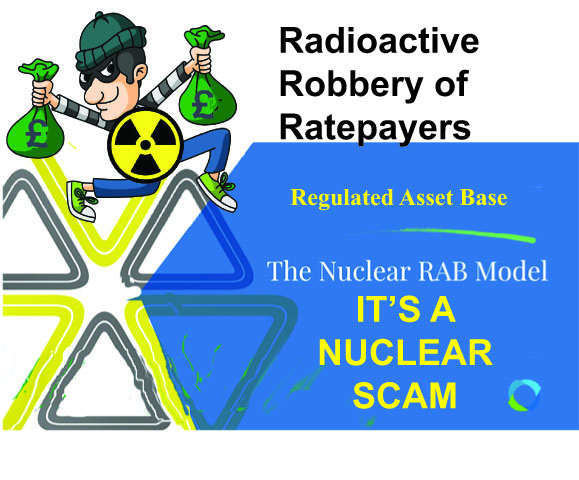
The move will effectively mean that consumers take on the risk of delays and cost
overruns to projects and will start paying for the new plants through their
bills before the reactors are built.
Times 27th Oct 2021
Britain’s expensive problem of marine animals clogging up cooling systems on nuclear reactors – drones might monitor this
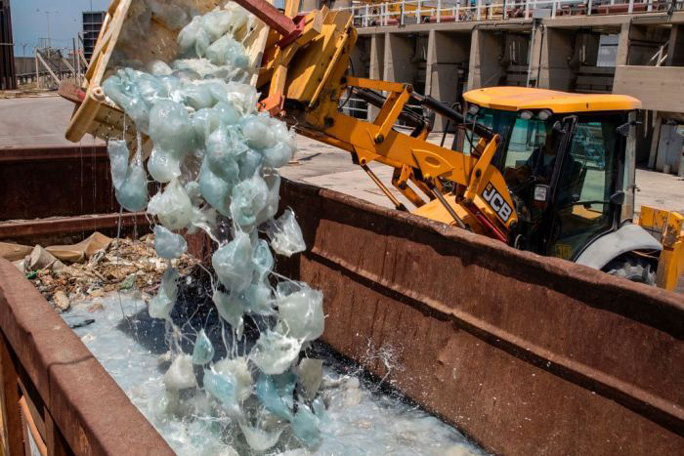
UK ponders drone monitoring of coastal nuclear plant cooling intake systems, Drone DJ, Bruce Crumley – Oct. 25th 2021 Authorities in the UK are examining a request to take a test UAV project live. It would involve extending experimental drone use monitoring coastal nuclear power plants for marine life that risks getting sucked into their cooling tubes to a real, increasingly troubling example of that in Scotland.
The problem centers on the Torness nuclear power facility to the east of Edinburgh. Its ocean-sucking intake vents have been getting clogged by recurring blossoms of marine life like jellyfish and kelp. In addition to that being fatal to the life forms involved, the incidents can cause the station’s temperature to increase to the point where temporary – but very expensive – closure is required. In response, drone industrial services company RUAS has requested authorities to allow it to fly regular drone missions around the nuclear plant to keep watch for amassing sea creatures so preventive measures can be taken to usher them away.
“The issue is, on a regular basis, they are affected by either jellyfish blooms or marine ingress including microalgae, that are blocking the intake of the nuclear power plant,” says the RUAS in a report by the Herald Scotland. “As a result, the reactor overheats due to the lack of water intake which cools the reactor, creating the need for the reactor to be shut down entirely as an emergency procedure. This has implications when they need to reactivate the reactor, which is costly and time consuming.”
It’s unclear thus far just how officials will respond to that obviously business-generating RUAS proposal. But it would certainly fall within the logic of an almost identical project the UK has been testing since July.
The nuclear plant-specific effort was launched as part of the UK’s broader Drone Pathfinder Programme promoting the use of UAV technologies. Under that, researchers have begun assessing “the feasibility of using unmanned aerial systems for the early detection of marine hazards near to coastal industries, such as nuclear power stations.”
That includes testing beyond visual line of sight (BVLOS) missions to permit near-constant monitoring – a mode RUAS is also hoping to employ at Torness. ……………… https://dronedj.com/2021/10/25/uk-ponders-drone-monitoring-of-coastal-nuclear-plant-cooling-intake-systems/
ULEZ expansion will improve Londoners’ health, but it will also reduce climate risks for all of us — Inside track

This post is by Varya Clark, co-founder of the Climate Acceptance Studios. Today, the London Ultra Low Emission Zone (ULEZ) expands dramatically. It will be eighteen times the size of the previous ULEZ, stretching all the way from the North to the South Circular roads. As Auto Express says: “If you’re unfamiliar with London, that’s most […]
ULEZ expansion will improve Londoners’ health, but it will also reduce climate risks for all of us — Inside track
UK High Court Should Deny Extradition Because CIA Planned to Assassinate Assange

UK High Court Should Deny Extradition Because CIA Planned to Assassinate Assange, BYMarjorie Cohn, Truthout October 24, 2021
Why is Joe Biden’s Department of Justice continuing Donald Trump’s persecution of WikiLeaks founder, publisher and journalist Julian Assange?
Barack Obama, concerned about threats to the First Amendment freedom of the press, decided against indicting Assange for exposing U.S. war crimes. Trump did indict Assange, under Espionage Act charges that could garner him 175 years in prison. A district judge denied Trump’s request for Assange’s extradition from the U.K. to the United States because of the extremely high likelihood that it would lead Assange to commit suicide. Trump appealed the denial of extradition.
Instead of dropping Trump’s extradition request, Biden is vigorously pursuing his predecessor’s appeal against Assange, which the U.K. High Court will hear on October 27 and 28. At that hearing, the High Court should determine what effect the CIA’s recently revealed plan to kidnap and assassinate Assange will have on his fragile mental state in the event he is extradited to the United States.
Judge Baraitser’s Denial of Extradition
On January 6, U.K. District Judge Vanessa Baraitser issued a 132-page decision denying extradition. “Faced with conditions of near total isolation and without the protective factors which moderate his risk at HMP Belmarsh [where Assange is currently imprisoned],” she wrote, “I am satisfied that the procedures described by Dr. [Leukefeld] will not prevent Mr. Assange from finding a way to commit suicide.”…………………………..
The United States will be allowed to present “assurances” that if Assange is extradited, tried, convicted and imprisoned, he will not be subject to special administrative measures (SAMs) — onerous conditions that would keep him in virtual isolation — or be held at the ADX maximum security prison in Florence, Colorado. The U.S. intends to provide an additional assurance that it would not object to
Assange serving any custodial sentence he may receive in Australia. These so-called assurances, however, are conditional. The U.S. reserves the right to impose SAMs or hold Assange at ADX if his future behavior warrants it. Moreover, the U.S. cannot guarantee that Australia would consent to hosting Assange’s incarceration.
The High Court should give considerable weight to the way in which explosive new revelations of the Trump administration’s plot to kidnap and assassinate Assange will affect his mental health if he is extradited.
High Court Should Consider U.S. Plans to Kidnap and Assassinate Assange
The indictment against Assange stems from WikiLeaks’ 2010-2011 revelations of U.S. war crimes in Iraq, Afghanistan and Guantánamo. They included 400,000 field reports about the Iraq War, 15,000 unreported deaths of Iraqi civilians, and evidence of systematic torture, rape and murder after U.S. forces “handed over detainees to a notorious Iraqi torture squad,” the documents reveal. They included the Afghan War Logs, 90,000 reports revealing more civilian casualties by coalition forces than the U.S. military had reported. And the Guantánamo Files contained 779 secret reports revealing that 150 innocent people had been imprisoned there for years and documenting the torture and abuse of 800 men and boys, in violation of the Geneva Conventions and the Convention Against Torture and Other Cruel, Inhuman or Degrading Treatment or Punishment.
Perhaps the most notable release by WikiLeaks was the 2007 “Collateral Murder” video, in which a U.S. Army Apache helicopter gunship in Baghdad targets and fires on unarmed civilians. At least 18 civilians were killed, including two Reuters journalists and a man trying to rescue the wounded. Two children were injured. A U.S. Army tank then drives over one of the bodies, cutting it in half. The video depicts three separate war crimes prohibited by the Geneva Conventions and the U.S. Army Field Manual.
It was WikiLeaks’ publication of CIA hacking tools known as “Vault 7,” which the agency called “the largest data loss in CIA history,” that incurred the wrath of Trump’s CIA Director Mike Pompeo. Vault 7 materials revealed electronic surveillance and cyber-warfare by the CIA.
In 2017, Pompeo called WikiLeaks a “non-state hostile intelligence service” and CIA and government officials hatched “secret war plans” to abduct and kill Assange, according to a stunning Yahoo! News report. Some senior CIA and Trump administration officials requested “sketches” or “options” for ways to assassinate Assange. Trump “asked whether the CIA could assassinate Assange and provide him ‘options’ for how to do so,” according to the report.
Pompeo advocated “extraordinary rendition,” which the CIA used in the “war on terror” to illegally seize suspects and send them to its “black sites” where they were tortured. The scenario was that the CIA would break into the Ecuadorian Embassy in which Assange was staying under a grant of asylum and clandestinely fly him to the United States to stand trial. Others in the agency wanted to assassinate Assange outright by poisoning or shooting him to avoid the hassle of kidnapping him.
The CIA spied on WikiLeaks, and it aimed to sow discord among the group’s members and steal their electronic devices, according to the Yahoo! News report. The CIA also conducted illegal surveillance inside the Ecuadorian Embassy and spied on privileged attorney-client communications between Assange and his lawyers.
Concerned that the CIA might kidnap or kill Assange, which could jeopardize a potential criminal prosecution, the Department of Justice (DOJ) filed a secret indictment against him in 2018. To bolster the DOJ’s case for extradition, the FBI collaborated with informant Siggi Thordarson to paint Assange as a hacker instead of a journalist. Thordarson later admitted to the Icelandic newspaper Stundin that he lied about Assange being a hacker in return for immunity from prosecution by the FBI.
In 2019, after a new pro-U.S. president came to power in Ecuador, in order to facilitate the U.S.’s attempted extradition, London police dragged Assange from the embassy and arrested him for violating bail conditions. Assange remains in custody in London’s maximum security Belmarsh Prison pending Biden’s appeal of the extradition denial.
The High Court should give great weight to the U.S. plans to kidnap and assassinate Assange. The knowledge of those revelations will put even more mental stress on Assange, whom former UN Special Rapporteur on Torture Nils Melzer described as having suffered “prolonged exposure to psychological torture” during his confinement. The High Court should affirm the district court’s denial of extradition.
A Window Into U.S. War Crimes and Threats to Investigative Journalism
“When Assange published hundreds of thousands of classified military and diplomatic documents in 2010, the public was given an unprecedented window into the lack of justification and the futility of the wars in Afghanistan and Iraq,” Assange Defense co-chairs Daniel Ellsberg, Alice Walker and Noam Chomsky wrote at Newsweek. “The truth was hidden by a generation of governmental lies. Assange’s efforts helped show the American public what their government was doing in their name.”
Recent revelations of Pompeo’s threats against Assange that appeared in Yahoo! News have shed light on the dangers the national security state poses to investigative journalism and the public’s right to know. In light of these new disclosures, a coalition of 25 press freedom, civil liberties and international human rights organizations have intensified their call for dismissal of the DOJ’s charges against Assange.
Adam Schiff, chairman of the House Intelligence Committee, said his committee has asked the CIA for information about plans to kidnap or assassinate Assange.
The High Court will decide whether to affirm or overturn district judge Baraitser’s decision denying extradition. If they affirm Baraitser’s ruling, the Biden administration could ask the U.K. Supreme Court to review the case. If the High Court overturns Baraitser’s decision, Assange could appeal to the U.K. Supreme Court and then to the European Court of Human Rights if the Supreme Court ruling goes against him.
Biden’s appeal of the denial of extradition should be dismissed. Julian Assange should be released and celebrated for his courage. https://truthout.org/articles/uk-high-court-should-deny-extradition-because-cia-planned-to-assassinate-assange/?eType=EmailBlastContent&eId=d08c3b6b-b92d-4b47-92cb-3c964bf0bab4
Campaign to get NatWest bank to stop investing in nuclear weapons

Campaign criticises Natwest nuclear arms firms’ investments, The National, By Greg Russell @National_Greg 24 Oct 21, WITH the eyes of the world on Glasgow for the COP26 climate conference, a campaign group aimed at raising the profile of the health and humanitarian impacts of the use of nuclear weapons has highlighted a major sponsor’s investment in firms that produce nuclear weapons.
Scotland’s biggest bank, Natwest, is a major sponsor of the event, which will bring together representatives of almost 200 countries aimed at agreeing measures to address the global climate emergency.
However, Medact Scotland said the bank’s ongoing investments in companies that make nuclear weapons contradicts its climate and environmental commitments.
“The detonation of just one nuclear bomb would generate a fireball and shockwave that would destroy everything within the blast zone and spread radioactive contamination far beyond it”, said retired GP Dr Guy Johnson, of Medact Scotland.
“A nuclear exchange using less than 1% of the world’s nuclear weapons would alter the Earth’s climate, leading to widespread famine, while the climate impacts of a full-scale nuclear war could make human existence impossible.”
According to pressure group Don’t Bank on the Bomb Scotland, NatWest Group held investments worth £2 billion in 15 nuclear weapons producers over a two-year period, which included investments in major arms companies BAE Systems, Thales and General Dynamics.
Linda Pearson, from the campaign group, said: “NatWest Group cannot claim to be a leader in addressing climate change while continuing to finance the nuclear weapons industry.
“Nuclear weapons production is energy intensive and environmentally damaging.
“Ultimately, any efforts to address the climate crisis will be in vain if the world is destroyed by nuclear war.”
In March this year, Don’t Bank on the Bomb Scotland and its partners sent an open letter to NatWest CEO, Alison Rose, calling on the bank to comprehensively exclude nuclear weapons producers from investment.
The letter was co-signed by 42 organisations including the International Campaign to Abolish Nuclear Weapons, Church of Scotland, Unison Scotland and Friends of the Earth Scotland.
Don’t Bank on the Bomb Scotland is also encouraging individuals to contact the bank directly.
“We want NatWest to live up to its climate commitments”, Johnson said.
“That means the bank must recognise the catastrophic consequences of nuclear weapons and cut all financial ties with the companies that make them.”………. https://www.thenational.scot/news/19669192.campaign-criticises-natwest-nuclear-arms-firms-investments/
1 This Month
26 September – International Day for the Total Elimination of Nuclear Weapons





PLEASE OPPOSE HR 8255 AND S.3639 – bills would accelerate satellite deployment, with no environmental review or safeguards – https://ncstd5li.quorum.us/campaign/169331/
To see nuclear-related stories in greater depth and intensity – go to https://nuclearinformation.wordpress.com
-
Archives
- September 2026 (323)
- August 2026 (330)
- July 2026 (355)
- June 2026 (287)
- May 2026 (306)
- April 2026 (356)
- March 2026 (251)
- February 2026 (267)
- January 2026 (308)
- December 2025 (358)
- November 2025 (359)
- October 2025 (375)
-
Categories
- 1
- 1 NUCLEAR ISSUES
- business and costs
- climate change
- culture and arts
- ENERGY
- environment
- health
- history
- indigenous issues
- Legal
- marketing of nuclear
- media
- opposition to nuclear
- PERSONAL STORIES
- politics
- politics international
- Religion and ethics
- safety
- secrets,lies and civil liberties
- spinbuster
- technology
- Uranium
- wastes
- weapons and war
- Women
- 2 WORLD
- ACTION
- AFRICA
- Atrocities
- AUSTRALIA
- Christina's notes
- Christina's themes
- culture and arts
- Events
- Fuk 2022
- Fuk 2023
- Fukushima 2017
- Fukushima 2018
- fukushima 2019
- Fukushima 2020
- Fukushima 2021
- general
- global warming
- Humour (God we need it)
- Nuclear
- RARE EARTHS
- Reference
- resources – print
- Resources -audiovicual
- Weekly Newsletter
- World
- World Nuclear
- YouTube
-
RSS
Entries RSS
Comments RSS

