New nuclear for Scotland- would be a tragic mistake?
SafeEnergy E Journal No.92. December 21, New Nuclear in Scotland Leader of the Scottish Labour Party, Anas Sarwar, says nuclear power should be part of the mix on energy. He has also called for a statutory “just transition commission” to be established to help workers move out of the oil and gas industry. He said: “I think we have to be honest about future opportunities and I think nuclear power has to be part of the mix. “I’m not saying nuclear power has to be the priority, or the lead. But it has to be part of the mix to have a diverse energy supply.” Sarwar insisted nuclear power could mean lower fuel bills for consumers at a time of rising inflation.
In September Sarwar announced plans for a Scottish Energy Transition Commission to outline how Scotland can protect and create highly skilled jobs in the transition to a net-zero economy. The commission will be chaired by pro-nuclear former Labour Energy Minister Brian Wilson. It will support the development of Scottish Labour energy policy and advise on how the transition to netzero can deliver for the working people of Scotland. It will also look at the failures of the current energy market, which has led to spiking prices this winter, the role of public energy companies and Scotland’s energy mix. (2)

The Bella Caledonia website described Wilson as “a devout nuclear enthusiast”. Sarwar told the BBC that “I think we should consider potential new (nuclear power) plants” (3) and certainly with a nuclear lobbyist chairing this is where they’ll end up. Journalist Dominic Hinde points out: “This is a little odd in that Scotland already meets almost a hundred per cent of its electricity needs from renewables and is set to surpass this. Most emissions now come from heating, agriculture and transport.” (4)
Dr Richard Dixon, Director of Friends of the Earth Scotland, called Scottish Labour’s drift towards nuclear power “a tragic mistake”. Nuclear is slow to build, eye-wateringly expensive and dangerous. There is still no agreed solution for nuclear waste, which will need monitoring for many thousands of years. It is neither a solution to short-term energy needs nor to the climate crisis.
Dixon said the Scottish Energy Transition Commission is Scottish Labour’s plan to keep the pressure up on the Scottish government’s official Just Transition Commission, and should have been welcome, but giving it to the former ‘Minister for Hunterston’ devalues it. Anas Sarwar was quoted saying he supports a “diverse energy supply”, which is standard union code for more nuclear – and thinks “nuclear is a key part of that and it’s something that I think we should fundamentally explore”. For many years the Scottish Conservative manifesto for every election said we should have two new nuclear power stations in Scotland. It became a running joke because they knew it was never going to happen and they quietly dropped any mention of nuclear a couple of elections ago. The tragedy of Labour finding a new enthusiasm for the ultimate unsustainable form of energy is that it was a Labour First Minister who put a stop to the nuclear industry’s ambitions in Scotland. Jack McConnell, despite massive pressure from Tony Blair’s government, said in 2005 that Scotland would use planning powers to block any proposals for new reactors in Scotland unless there was an answer to the question of permanent storage of radioactive waste, something that is no closer today than it was then. Scottish Labour’s drift into being pro-nuclear will please no-one but the GMB union and Brian Wilson. It is a betrayal of one of their greatest achievements in government in Scotland. (5)
Meanwhile, North Ayrshire Conservative councillor Tom Marshall has called for a new state-of-theart ‘mini’ nuclear reactor to be built at Hunterston. (6)
According to a Panelbase survey for The Times 37% of Scots asked about the idea of building nuclear power stations in Scotland as fossil-fuel use is cut back expressed support, while only 32% were opposed. When asked if they supported nuclear power to replace energy currently produced by fossil fuels, 57% of respondents felt it was probably or definitely necessary while 26% indicated it was not or probably not necessary. A further 17% were undecided. Liam Kerr, net-zero and energy spokesman for the Scottish Conservatives, called on the SNP to abandon its opposition to nuclear energy. (7)
Others joining a pro-nuclear clamour include Magnus Linklater who complains that “Without Torness, in a wind-free summer like this year’s, Scotland will have to rely on oil and gas courtesy of Vladimir Putin, imports from Norway or — irony of ironies — nuclear power from France.” (8)
And Lord Bird, co-founder of The Big Issue, has somehow got the misconceived idea that nuclear power can help to solve fuel poverty. Brian Wilson, the former UK energy minister, has supported his call. (9)
Unsurprisingly, the GMB union is also demanding the Scottish Government thinks again on nuclear power. (10)
See 1 page briefing on why nuclear power isn’t a solution to climate change here: https://www.no2nuclearpower.org.uk/wp/wpcontent/uploads/2021/11/Nuclear_no_solution_to_Climate-October-2021.pdfhttps://www.no2nuclearpower.org.uk/wp/wp-content/uploads/2021/11/SafeEnergy_No92.pdf
UK’s Ministry of Defence makes unprecedented attempt to dismantle dead nuclear submarines
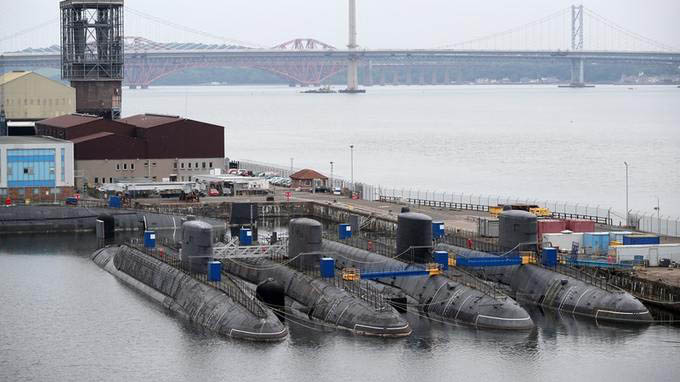
SafeEnergy E Journal No.92. December 21 , Submarine Dismantling The UK’s Submarine Dismantling Project hopes to dismantle 27 of the UK’s de-fuelled, nuclearpowered submarines after they have left service with the Royal Navy.
A demonstrator submarine is being used to define and refine the dismantling process. At Rosyth, the removal of low-level radioactive waste from the first two submarines, Swiftsure and Resolution, has been successfully and safely completed. As the unique approach is developed, work continues with the removal of low-level radioactive waste from a third submarine, Revenge. A fully developed process for steady state submarine dismantling should be ready by 2026. As the demonstrator programme progresses, the outcomes will provide more certainty in the future costs to dismantle the Devonport-based submarines. It is not MoD policy to pre-announce the funding of its projects for reasons of protecting commercial interests.”
REVENGE, entered the dry dock in Rosyth in late March 2020 to commence its LLW removal. The intent is to remove all LLW including large components such as steam generators and pressurisers. No nation has yet attempted this complex and challenging undertaking, so the MoD is currently putting in place the techniques necessary to remove all LLW for the first time to comply with safety and sustainability standards. https://www.no2nuclearpower.org.uk/wp/wp-content/uploads/2021/11/SafeEnergy_No92.pdf
UK government tries to save its nuclear skin by turning to dubious Regulated Asset Base funding

At a time of rising energy bills in the UK, it certainly seems risky of the government to commit to increasing them further and opening themselves up to a downside risk that could prove very costly.
The National Infrastructure Commission, a body designed to give impartial advice to the government, said in March 2020 that a “renewable-based system looks like a safer bet” and a “substantially cheaper” option than the construction of multiple new nuclear power plants.
The UK’s nuclear plan is a financial, environmental and political risk, Investment Monitor, Jon Whiteaker , 16 Nov 21,” …………..The problem with financing nuclear power
…… Hinkley Point C has been a bit of a nightmare for the UK government. It is already seven years behind schedule, has controversial Chinese investors that the government is understood to be trying to get rid of, and is widely agreed to be far too expensive.
It was financed under the contracts for difference (CfD) model used for offshore wind. This guarantees a ‘strike price’ for the power plant owner, allowing them to raise capital for construction by having certainty of revenues.
Using the same funding model as offshore wind has, however, allowed for simple comparisons of the costs of the two power types. While the latest round of offshore wind projects saw strike prices of about £40 per megawatt-hour (MWh) over a 15-year contract, the owners of Hinkley are guaranteed at least £89.5/MWh over 35 years.
The reasons the Hinkley strike price is so much higher is because the capital costs are much higher, but also because the risks involved in developing them are much greater.
At least Hinkley Point C is being built. A number of planned projects, including the Moorside power station in West Cumbria and Wylfa Newydd plant on Anglesey, have been cancelled or shelved in recent years.
With the need to develop the UK’s next generation of nuclear plants increasingly urgent, the government has turned to the RAB model to save its skin.
UK government turns to the RAB model
The RAB model is known mostly for its successful use on the Thames Tideway Tunnel (TTT), the new super sewer in London that is helping to clean up the Thames River. The government says that like that project, nuclear power plants are complex, have high capital costs and long operating lives.
The RAB model allows developers of infrastructure to earn immediate revenues by adding charges to consumers’ utility bills during the construction. Bill payers will have to buy before they try their lovely new nuclear power.
This in theory widens the pool of potential investors, making the government less beholden to a small group of companies who typically invest in and build nuclear plants, lowering the cost of financing, and ultimately saving money for bill payers.
The government predicts that using the RAB model to build a new nuclear plant will save energy bill payers £10 per year compared with the CfD model.
Legislation allowing the introduction of the RAB model for new nuclear was introduced in October 2021 and is moving through the House of Commons. The government has pledged to reach a final investment decision on at least one new nuclear plant by the end of this parliament in 2024.
It is hoped by government that the previously stalled 3.2GW Sizewell C, owned by EDF Energy, will be the first nuclear project to use the RAB model.https://www.investmentmonitor.ai/business-activities/energy/uk-nuclear-rab-energy-renewable
The problems with RAB for nuclear
While this all sounds like a perfect panacea for the government’s problems, there are several downsides to using the RAB model.
The depth of investor interest in new nuclear power stations is yet unknown. As the UK government should be painfully aware, having just hosted COP26, the conversation about what does and does not meet different investors ESG standards is a live one. Whether nuclear power is seen as a sustainable investment is debatable.
Trying to get any of the investors in TTT to make clear their stance on nuclear power is not easy, and I have tried. For the government to achieve its goals, institutional investors, like those that supported TTT, should want to invest in new nuclear too.
Asset manager Aviva Investors, a major investor in UK infrastructure, has called on the government to present a robust ESG case for new nuclear, which it says is lacking at present.
Many investors will be concerned over whether nuclear meets the criteria of an environmentally sustainable activity. Institutional investors are incredibly cautious by nature and the shadow cast by the Fukushima disaster in Japan in 2011 is still long.
All energy suppliers will have to contribute to the costs of RAB nuclear plants, whether they want to or not, before passing those costs on to bill payers. That seems a retrograde step for an energy market that has been diversifying to provide customers with ‘green only’ options in recent years. Whether you have ethical objections to nuclear power or not, you will have to use a supplier that helps fund that technology.
Hinkley Point C is seven years behind schedule. You would be brave to bet against any delays to the first RAB model nuclear plant too.
The government says that there would be a cap on how much extra investors could charge consumers but that this cap could be increased by the government if deemed necessary. If the costs became excessive, the government would have the option of covering the costs itself, although this is ultimately taxpayer money too.
At a time of rising energy bills in the UK, it certainly seems risky of the government to commit to increasing them further and opening themselves up to a downside risk that could prove very costly. Perhaps the government thinks these are all costs worth shouldering to ensure its net-zero plans stay on track.
The National Infrastructure Commission, a body designed to give impartial advice to the government, said in March 2020 that a “renewable-based system looks like a safer bet” and a “substantially cheaper” option than the construction of multiple new nuclear power plants.
That sounds like advice worth considering again. https://www.investmentmonitor.ai/business-activities/energy/uk-nuclear-rab-energy-renewable
Powerful greenhouse gases emitted from Hunterston A nuclear station

| THE release of a refrigerant gas during the ongoing decommissioning of Hunterston A has been revealed at a recent nuclear summit. Hunterston ‘A’ bosses reported two environmental incidents at the station during its decommissioning phase linked to their air conditioning units. Earlier this year, the release of fluorinated gases was noticed. These are powerful man-made gases that can stay in the atmosphere for centuries and contribute to a global greenhouse effect. The incidents formed part of a report to the recent Hunterston site stakeholders meeting. Largs & Millport News 22nd Nov 2021 https://www.largsandmillportnews.com/news/19720653.gas-leak-hunterston-reported-sepa/ |
The UK’s nuclear plan is a financial, environmental and political risk
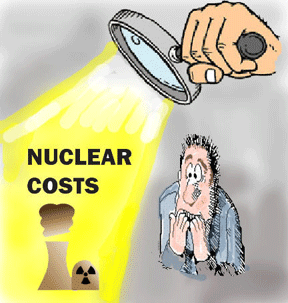
The UK’s nuclear plan is a financial, environmental and political risk, Investment Monitor, Jon Whiteaker , 16 Nov 21, If the UK government thinks the RAB model will solve all its nuclear power problems, it may have a nasty surprise coming its way.
As the dust settles on COP26, the UK government will turn its attention away from global discussions and towards what it is doing domestically to help mitigate the climate crisis.
The government’s Net Zero Strategy sets aside £120m towards developing new nuclear power plants, which it says “could support our path to decarbonising the UK’s electricity system” by 2035.
Could’ is doing a lot of work in that sentence, because although nuclear power plays a prominent role in the government’s decarbonising strategy, bringing additional nuclear capacity online is far from straightforward.
The government says nuclear is a continuous, reliable and low-carbon form of energy that has been part of the UK electricity system for 65 years. Nuclear is also controversial, hugely expensive in comparison to other fossil fuel alternatives, and often proves challenging to develop.
According to the latest World Nuclear Industry Status Report, between 1951 and 2021, of the 783 nuclear reactor projects launched, 12% have been cancelled. Delays and cost overruns are also very common when constructing nuclear plants.
The UK government is hoping to kickstart development of new nuclear in the UK through the introduction of the regulated asset base (RAB) funding model. This model is intended to widen the investor pool for nuclear power, reduce financing costs, and ultimately save bill payers money.
While the RAB model has proved successful for other large UK infrastructure projects, it comes with risks for the government. It is unclear which investors will be happy to support new nuclear projects, and there are potential political costs if UK citizens are made to pick up at least part of the tab if things go wrong.
The government expects electricity usage to increase by 40–60% by 2035. It has mapped out several scenarios for how this demand can be met solely by renewables, all of them dependant on building new nuclear power capacity.
Yet in 2020, while generation from all other renewable energy sources increased, generation from nuclear power actually declined in the UK due to a decision not to restart operations at the Dungeness B plant in Kent, which had been suffering a prolonged outage since 2018.
The UK nuclear fleet is old, suffering performance issues and largely due to be decommissioned. By 2035, the UK will lose almost 8GW of nuclear power plants to decommissioning.
The only new nuclear plant under construction is the 3.26GW Hinkley Point C plant, which is now due to be completed in 2026.
All this means the government needs to quickly develop new nuclear capacity. It seems very taken by new small modular reactors, particularly if they are developed by UK companies such as Rolls-Royce.Yet this and another new technology, advanced modular reactors, are not due to reach the demonstration phase until the early 2030s.
So, the government has been seeking a way to deliver several new Hinkley Point Cs…………………
The National Infrastructure Commission, a body designed to give impartial advice to the government, said in March 2020 that a “renewable-based system looks like a safer bet” and a “substantially cheaper” option than the construction of multiple new nuclear power plants.
That sounds like advice worth considering again. https://www.investmentmonitor.ai/business-activities/energy/uk-nuclear-rab-energy-renewable
Boris Johnson quizzed over future of Bradwell, (Essex) nuclear plant
Boris Johnson quizzed over future of Essex nuclear plant https://www.maldonandburnhamstandard.co.uk/news/19738655.boris-johnson-quizzed-future-essex-nuclear-plant/
By Jessica Day-ParkerTrainee Reporter PRIME Minister Boris Johnson told MPs he does not want to “pitchfork away” all investment from China in response to a question about Bradwell B.
Matthew Pennycook, Labour MP for Greenwich and Woolwich, pressed the Prime Minister on Bradwell B – the proposed nuclear power station at Bradwell-on-Sea put forward by China General Nuclear Power Group (CGN) – in the House of Commons.
Mr Pennycook said: “The Government’s Integrated Review concluded the Chinese state poses a systemic challenge to our national security and the Prime Minister has made clear that when it comes to China we must remain vigilant about our critical national infrastructure.
General Nuclear to own and operate its own plant in Bradwell in Essex have been abandoned?”
Mr Johnson confirmed the Government doesn’t want to see “undue influence by potentially adversarial countries in our critical national infrastructure” and insisted “there will be more information” coming on Bradwell.
But he added: “What I don’t want to do is pitchfork away wantonly all Chinese investment in this country or minimise the importance in this country of having a trading relationship with China.”
New film: The ‘Mothers of the Revolution’ Who Stared Down Nuclear Weapons
The ‘Mothers of the Revolution’ Who Stared Down Nuclear Weapons, The doc ‘Mothers of the Revolution’ chronicles the women who spent years protesting the nukes at RAF Greenham Common. One of those brave women, Rebecca Johnson, tells their story. Daily Beast, Rebecca Johnson Nov. 21, 2021 In September 1981, a ten-day walk from Wales under the banner of Women for Life on Earth arrived at the main gate of RAF Greenham Common, sixty miles west of London. Home to the 501st Tactical Missile Wing of the U.S. Air Force, this nuclear base was designated by NATO to deploy nuclear-armed cruise missiles in Europe. We called for this decision to be publicly debated.
When ignored, Women for Life on Earth grew into the Greenham Common Women’s Peace Camp. I began living there in 1982 and stayed until the 1987 U.S.-Soviet Intermediate-Range Nuclear Forces (INF) Treaty banned and eliminated all land-based medium-range nuclear weapons from Europe, including Cruise, Pershing and SS20s.
After years of being airbrushed out of histories of the Cold War, Greenham’s actions, struggles and legacy are being spotlighted in a new film, Mothers of the Revolution, from acclaimed New Zealand director Briar March. Showing contemporaneous news footage from the 1980s along with dramatized vignettes and reflections from women who got involved with the Greenham Women’s Peace Camp in the 1980s, the film weaves an illustrative narrative from the experiences of a small cross section of activists—not only from Britain, but Russia, East and West Europe, the United States, and the Pacific.
Though it’s taken a long time for our contribution to the INF Treaty to be publicly recognized, other treaties have been influenced by Greenham’s feminist-humanitarian activism and strategies, most notably the U.N. Treaty on the Prohibition of Nuclear Weapons, which entered into international law in January 2021.
While living at Greenham for five years I came to understand what we really need: Not weapons and power over others, but communities that are empowered to love, question and create. We took forward new theories and practices of nonviolence that were feminist and assertive. We didn’t suppress deep human emotions like fear, love and anger, but channelled them into power for change. We needed to be activist and analytical, passionate and diplomatic, stubborn and flexible, courageous and truthful—no matter who tried to silence us.
The cruise missiles arrived in November 1983, which felt like a bitter defeat at first. Yet we refused to give up. …………….
Were we mothers of a revolution? If anything, I think we were part of a long continuum of struggles for women’s rights and safety, following in the footsteps of the women who fought so hard to vote and live free from oppression, slavery, and misogyny. Not mothers but daughters—of all those brave feminist revolutionaries.
I’m so glad Mothers of the Revolution ends with such an inspiring call to action showing the faces and voices of a new generation of fierce Daughters who are campaigning for girls’ education, climate justice, peace, and women’s rights to live free of patriarchal perpetrators and their greedy, oppressive systems of violence. Together we can stop the destroyers and strengthen the naturally diverse, interdependent lives that share and protect our beautiful Mother Earth. That’s our revolution, and we are not finished yet. https://www.thedailybeast.com/the-mothers-of-the-revolution-who-stared-down-nuclear-weapons?ref=scroll
“Rather than contributing to net zero, Bradwell B nuclear plant would be ‘ideally placed’ to become the casualty of climate change.”
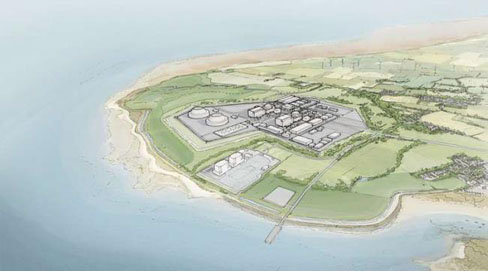
CAMPAIGNERS fighting against plans for a new nuclear power station have hit out at claims it is a key asset in the fight against climate change. The Blackwater Against New Nuclear Group (BANNG) has refuted a statement saying the Bradwell B power station would be Essex’s “biggest contribution to climate action”. The statement from Bradwell B Power Station came in relation to the COP26 climate discussions in Glasgow and said the project was “ideally placed” to play a “major part” in achieving net zero by 2050 emission goals.
But BANNG has claimed, due to the nuclear power station being on a low-lying site, rising global
temperatures would see it become vulnerable to rising sea levels and other weather events by the end of the century. BANNG’s secretary Varrie Blowers added: “Rather than contributing to net zero, Bradwell B would be ‘ideally placed’ to become the casualty of climate change.”
Braintree & Witham Times 17th Nov 2021
The British public wants NATO to renounce the “first use” of nuclear weapons
The British public wants NATO to renounce the “first use” of nuclear weapons, Bulletin 19 Nov 21,
A recent survey of British public opinion revealed a two-thirds opposition to NATO retaining the first-use option for nuclear weapons. These responses are in direct opposition to official UK policy…………..https://thebulletin.org/2021/11/the-british-public-wants-nato-to-renounce-the-first-use-of-nuclear-weapons/?utm_source=Newsletter&utm_medium=Email&utm_campaign=ThursdayNewsletter11182021&utm_content=NuclearRisk_NATOrenounce_11182021
Hinkley Point C nuclear station could ‘wipe out’ 11 billion fish, Bristol Channel campaigners say
“The new post-Brexit Environment Act requires the Secretary of State to set a long-term legally binding target on biodiversity by late next year”
Hinkley Point C could ‘wipe out’ 11 billion fish, Bristol Channel
campaigners say Activist groups are campaigning against EDF’s decision to
remove Acoustic Fish Deterrents on the cooling water intakes at the nuclear
power station.
Bristol Channel campaigners have warned that EDF‘s
decision to remove the Acoustic Fish Deterrents (AFDs) on the cooling water
intakes at Hinkley Point C nuclear power station could put massive fish
stocks at risk. An AFD is a system that guides fish away from water
intakes.
A public inquiry was held into this issue by the Planning
Inspectorate from 8th to 24th June. Activist groups that had previously
launched a campaign named Stop Hinkley wrote a letter to the Secretary of
State for Environment, Food and Rural Affairs George Eustice on 7th October
asking him to refuse EDF’s appeal.
Since then, campaigners claim they
have not received a reply. A spokesperson from Stop Hinkley said: “The
new post-Brexit Environment Act requires the Secretary of State to set a
long-term legally binding target on biodiversity by late next year.“On paper,
George Eustice is committed to halting the decline in nature in England,
and beginning the restoration of our marine environment, but on current
evidence, he is failing to do so.
“He needs to set an example in tackling
the global biodiversity crisis by refusing EDF’s application to remove
the Acoustic Fish Deterrents, against Environment Agency advice,
threatening to wipe out 11 billion fish and decimate stocks in Severn
Estuary for 60 years.” Sources told ELN that the department is giving
careful consideration to all recovered appeals and the length of time taken
to decide a case depends on the complexity of each case. Chris Fayers, Head
of Environment at Hinkley Point C, said: “We are committed to reducing
environmental impact from a project which will play a key role in fighting
climate change. Hinkley Point C is the first power station in the Severn
Estuary to include fish protection measures in its design.
Energy Live News 17th Nov 2021
Bradwell nuclear project is likely to be scrapped, despite the Planning Inspectorate having supported the project.
The Blackwater Against New Nuclear Group (BANNG) is naturally disappointed
that BRB’s Appeal to the Planning Inspectorate against the refusal by
Maldon District Council of Planning Permission for further land
investigations at Bradwell was successful.
But this does not give a greenlight to a future nuclear power station at Bradwell. BANNG has always made
clear that its objections to land investigations were on the grounds that
they were unnecessary since the site is wholly unsuitable, unsustainable
and unacceptable for the development of a mega nuclear power station and
spent fuel stores.
The Planning Inspector chose to uphold the Appeal on the
narrow grounds that the works would be temporary and would create little
disruption and disturbance to the environment and human welfare. The
Inspector declined to take into account the question of need for new
nuclear, relying on a Government policy from 2011 that deems Bradwell a
‘potentially suitable’ site.
In its latest policy statements the Government is silent on Bradwell and the project seems likely to be dropped altogether on geopolitical grounds.
BANNG 15th Nov 2021
Regulated Asset Base model may save Hitachi’s Wylfa Newydd nuclear project.

RAB model may have saved Wylfa Newydd nuclear project. Access to the
regulated asset base (RAB) financing model may have helped to save
Hitachi’s plans to build a new nuclear plant in north Wales, an executive
who worked on the project has told MPs. Last year, the Hitachi-backed
Horizon consortium announced it had withdrawn from the Wylfa Newydd project
after ploughing more than £2 billion into its development.
Utility Week 18th Nov 2021
Despite the frantic nuclear lobbying at COP26, Rolls Royce’s small nuclear reactors will be of zero use against greenhouse emissions – Jonathon Porritt

Rolls-Royce talks of the first plant ‘coming online by 2031’ – do please do the maths yourself. So let’s say 2035, to be generous, at the earliest. And therefore of zero benefit in terms of meeting the Government’s own target of a 78% reduction in greenhouse gas emissions by 2035.
It’s all such a pathetic waste of time – and of taxpayers’ money. Whatever the timescale, SMRs will never compete with renewables plus storage.
COP6 ‘Nuclear Sidebar, http://www.jonathonporritt.com/cop26s-nuclear-sidebar/ Jonathon Porrit, 6 Nov 21, The fact that COP26 was crawling with huge numbers of delegates from Big Oil and Gas got a lot of attention from the media. Less attention was paid to the large number of pro-nuclear delegates parasitically inserting themselves into as many events as they could engineer access to – facilitated at every turn by BEIS Secretary of State Kwasi Kwarteng and Booster Boris himself..
The nuclear industry had its own short-lived moment in the sun, on 9th November. For what is now reckoned to be the fourth time, Kwasi Kwarteng went over the top to re-re-re-confirm the Government’s enthusiasm for Small Modular Reactors, re-re-re-promising (a rather miserly) £210m of Government money for Rolls-Royce, described by Kwasi Kwarteng as ‘a once in a lifetime opportunity’.
Rolls-Royce duly obliged, conjuring up another £250m of private sector investment to deliver a new fleet of at least five SMRs (and possibly as many as 16) at around £2.2bn a pop. The company’s share price duly went up by around 4%. Job done.
It doesn’t matter how many times Ministers bang this particular drum, or how many times deplorably gullible journalists in the BBC, FT, Times and the Telegraph suck it all up, moonshine is still moonshine.
In and of itself, that £460m buys practically nothing. It will allow Rolls-Royce to take whatever design they finally settle on through the Generic Design Assessment process. This will take no less than four years, and probably more than five. Even if (and it’s a big IF) regulatory approval is secured, private sector investors will still have to be found, sites identified and planning permission for each site secured – a process which can take years.
Rolls-Royce talks of the first plant ‘coming online by 2031’ – do please do the maths yourself. So let’s say 2035, to be generous, at the earliest. And therefore of zero benefit in terms of meeting the Government’s own target of a 78% reduction in greenhouse gas emissions by 2035.
It’s all such a pathetic waste of time – and of taxpayers’ money. Whatever the timescale, SMRs will never compete with renewables plus storage.
To be fair, it would be wrong to underestimate the importance here of energy security – meeting our energy needs from home-based, ‘indigenous’ capacity. Boris Johnson keeps banging on about ‘British wind and sunshine’ – mindful perhaps of a recent poll of Daily Express readers, of whom 97.5% said that Boris ‘should pledge to make Britain self-sufficient in energy production by 2050’.
On that basis, British nuclear electrons are therefore much more desirable than those unreliable French electrons, regardless of the fact that we wouldn’t have any new nuclear electrons coming on-stream were it not for Electricité de France.
COP26 was of course a global gathering. UK energy security was therefore less of an issue. But it got a bit of an airing on 12th November, when the two big tidal stream companies here in the UK (Nova Innovation and Atlantis Energy) made a big splash about the huge potential for tidal stream technology in Scotland – with a potential capacity of more than 500 MW. This is a proven technology (with turbines anchored to the sea floor to capture the power of tidal currents) – already delivering suitably ‘indigenous’ electrons – with no moonshine to be seen anywhere.
The potential for tidal stream is indeed significant – not just in the UK, but internationally.
However, for me personally, it’s still relatively small beer in comparison to tidal range – harnessing the power of the tides to generate huge amounts of electricity from either tidal lagoons or barrages, predictably, cost-effectively, over many decades.
If our Government was genuinely serious about energy security (instead of finding ways of propping up Rolls-Royce to support our nuclear weapons programme), tidal power would be top of its list.
But is it heck! So please check out my blog about tidal energy which follows shortly.
UK’s small nuclear reactor consortium indicates that it will be relying on tax-payer funding if it is to go ahead
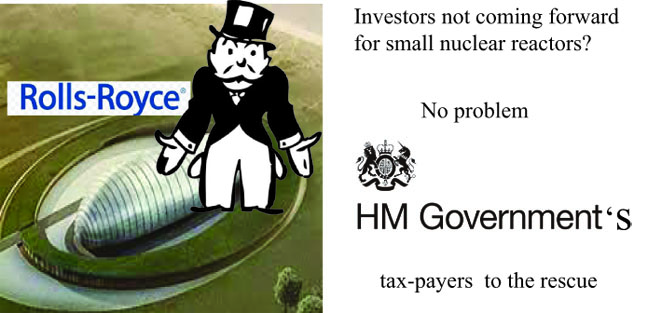
State support a fallback option for UK’s mini-nuclear plants rollout.
The head of the consortium, which is developing a £ 30 billion fleet of
mini-nuclear power stations, has indicated that it will have to rely on UK
taxpayers to help fund the construction of the first of the new designs if
there is not enough investor interest.
FT 10th Nov 2021
https://www.ft.com/content/869279aa-f771-4025-8719-c3b8bdf1f375
Scottish earthquake was nuclear waste ‘wake-up call’
 | |||
Scottish earthquake was nuclear waste ‘wake-up call’, Ronnie Cowan MP says, The National, By Greg Russell 17 Nov 21 A SCOTS MP has said the 3.1 magnitude earthquake off the West of Scotland was a “wake-up call” over the “dig a hole and bury it” approach to nuclear waste.
Ronnie Cowan was speaking after Tuesday’s early-morning quake – recorded just 10km beneath its epicentre – was felt on the west coast and in Ireland.
The SNP MP for Inverclyde wrote on social media: “Hopefully too small and too far away from the nuclear waste dump and weapons storage to be concerning.”
He later told The National that when it comes to nuclear powered submarines and their payload, safety had to be paramount.
Cowan said: “Likewise our nuclear energy industry isn’t just about the crucial day to day safety, it is about the long term security of the sites and the waste.
“Currently the ‘dig a hole and bury it’ attitude to nuclear waste is concerning. It feels very much like we passing on a problem to future generations, which given the heightened awareness of environmental damage and climate change seems like a deliberate dereliction of duty.
“It therefore came as a wake-up call when I read that an earthquake had taken place just off the west coast of Scotland.”
Cowan stressed he was not claiming that the incident was a threat, but wondered if it was a warning shot given the “very unforgiving” nature of nuclear energy and waste.
“One mistake and the outcome could be catastrophic and as we see the climate change and weather patterns change, we are seeing more and more extreme weather episodes, and to future-proof our existing nuclear waste dumps we must consider the state of the planet thousands of years into the future,” he said.
Scottish earthquake was nuclear waste ‘wake-up call’, Ronnie Cowan MP says, The National,
By Greg Russell @National_GregJournalist A SCOTS MP has said the 3.1 magnitude earthquake off the West of Scotland was a “wake-up call” over the “dig a hole and bury it” approach to nuclear waste.
Ronnie Cowan was speaking after Tuesday’s early-morning quake – recorded just 10km beneath its epicentre – was felt on the west coast and in Ireland.
The SNP MP for Inverclyde wrote on social media: “Hopefully too small and too far away from the nuclear waste dump and weapons storage to be concerning.”
He later told The National that when it comes to nuclear powered submarines and their payload, safety had to be paramount.
Cowan said: “Likewise our nuclear energy industry isn’t just about the crucial day to day safety, it is about the long term security of the sites and the waste.
“Currently the ‘dig a hole and bury it’ attitude to nuclear waste is concerning. It feels very much like we passing on a problem to future generations, which given the heightened awareness of environmental damage and climate change seems like a deliberate dereliction of duty.
“It therefore came as a wake-up call when I read that an earthquake had taken place just off the west coast of Scotland.”
Cowan stressed he was not claiming that the incident was a threat, but wondered if it was a warning shot given the “very unforgiving” nature of nuclear energy and waste.
“One mistake and the outcome could be catastrophic and as we see the climate change and weather patterns change, we are seeing more and more extreme weather episodes, and to future-proof our existing nuclear waste dumps we must consider the state of the planet thousands of years into the future,” he said.
“And secondly, the earthquake bothered me because for some time now I have been concerned about the amount of unexploded ordnance (UXO) in the Clyde and beyond.
“My concerns are around the safety of those working on the river and those who enjoy it recreationally.”
The MP said he wanted to see a massive clean-up of the munitions dump in the River Clyde, but it had to be disposed of thoughtfully……… https://www.thenational.scot/news/19722624.scottish-earthquake-nuclear-waste-wake-up-call-ronnie-cowan-mp-says/
1 This Month
26 September – International Day for the Total Elimination of Nuclear Weapons





PLEASE OPPOSE HR 8255 AND S.3639 – bills would accelerate satellite deployment, with no environmental review or safeguards – https://ncstd5li.quorum.us/campaign/169331/
To see nuclear-related stories in greater depth and intensity – go to https://nuclearinformation.wordpress.com
-
Archives
- September 2026 (313)
- August 2026 (330)
- July 2026 (355)
- June 2026 (287)
- May 2026 (306)
- April 2026 (356)
- March 2026 (251)
- February 2026 (267)
- January 2026 (308)
- December 2025 (358)
- November 2025 (359)
- October 2025 (375)
-
Categories
- 1
- 1 NUCLEAR ISSUES
- business and costs
- climate change
- culture and arts
- ENERGY
- environment
- health
- history
- indigenous issues
- Legal
- marketing of nuclear
- media
- opposition to nuclear
- PERSONAL STORIES
- politics
- politics international
- Religion and ethics
- safety
- secrets,lies and civil liberties
- spinbuster
- technology
- Uranium
- wastes
- weapons and war
- Women
- 2 WORLD
- ACTION
- AFRICA
- Atrocities
- AUSTRALIA
- Christina's notes
- Christina's themes
- culture and arts
- Events
- Fuk 2022
- Fuk 2023
- Fukushima 2017
- Fukushima 2018
- fukushima 2019
- Fukushima 2020
- Fukushima 2021
- general
- global warming
- Humour (God we need it)
- Nuclear
- RARE EARTHS
- Reference
- resources – print
- Resources -audiovicual
- Weekly Newsletter
- World
- World Nuclear
- YouTube
-
RSS
Entries RSS
Comments RSS

