Protest against plan for nuclear waste dump in West Cumbria, close to National Park
NEW NUCLEAR DUMP FOR HIGHER ACTIVITY WASTES AT DRIGG LOW LEVEL WASTE REPOSITORY? NIREX REBRANDED? From Lakes Against Nuclear Dump to the Lake District National Park Authority. 28 Nov 21, A letter of alarm regarding plans for an Intermediate Level Nuclear Waste Dump for the UK’s Low Level Waste Repository at the village of Drigg. The UKs LLWR is 250 metres from the National Park Boundary at the nearest point. The following letter has been sent to local and national media and mainstream NGOs have been alerted.
Dear Member of the Lake District National Park Authority,
Congratulations on the 70th anniversary of the Lake District National Park. In the original Lake Counties is another 70th anniversary. The Windscale Piles. Which from 1951 produced plutonium for Britain to make its own atomic and hydrogen bombs until the Windscale Fire of 1957. Unfortunately lessons were not learnt. The nuclear experiment continues despite no final solution to the problem of what to do with the escalating wastes from 70 years of military and civil nuclear reactors. Our own view as a nuclear safety group is that the wastes should not be buried out of sight and out of mind but should be closely monitored and repackaged when necessary.
NIREX REBORN AT DRIGG? – Intermediate Level Nuclear Wastes for Burial approximately 250 metres from the National Park?
We have been alerted by locals in the Drigg area to a plan which is running in tandem with that for a deep Geological Disposal Facility which Government say: “will be available to receive the first waste in the 2040s” However the plan for Near Surface Disposal (10s of metres below ground) “could be available within the next 10 years.” This plan, for which the Low Level Radioactive Waste Repository at Drigg is under active consideration, is for the disposal/dumping of Intermediate Level Wastes of the type that were rejected by the NIREX inquiry for deep GDF disposal at Longlands Farm, Gosforth in 1997. Exploratory boreholes have already been drilled at Drigg for the Near Surface Disposal of Intermediate Level Nuclear Wastes, presumably under “permitted development.”
Just like the early days of the Windscale Piles this plan has been put in motion under the radar of public attention. There has not been any debate or vote at Local, Borough or County Council level nor, we assume, any discussion by the Lake District National Park despite the Low Level Waste Repository being only 250 metres from the Lake District National Park boundary. Intermediate Level Nuclear Wastes, according to the Nuclear Decommissioning Authority, “exceeds the upper boundaries for Low Level Waste but does not generate a significant amount of heat. ..The major components of ILW are nuclear reactor components, graphite from reactor cores and sludges from the treatment of radioactive liquid effluents.”
The NIREX dump entrance proposal for Intermediate Level Wastes was rejected in the 1990s because the nuclear industry had no idea how much and how fast the planned dump would leak. They still have no idea. Furthermore for a shallow dump the leaks would be even faster…………
The fundamental conclusion of the expert Assessor and myself was that the Proposed Repository Zone had been chosen for these studies in an arbitrary manner, without conforming to internationally agreed, geological criteria
Earlier in a letter to “The Guardian” of June 28,’07 the NIREX Inquiry Inspector had stated : “The relevant geology in west Cumbria is apparently now claimed to be ‘stable, although imperfect’.…the imperfection consists of simply failing to meet the internationally agreed criteria on the suitability of rocks for nuclear waste deposit. The site should be in a region of low groundwater flow, and the geology should be readily characterisable and predictable, whereas the rocks there are actually of a complex volcanic nature, with significant faulting. Also, the industry was relying on an overlying layer of sedimentary strata to dilute and disperse any groundwater leakage, when the international criteria require such a layer to act instead as a barrier…The site is not suitable and investigations should be moved elsewhere…”.
And: “The site selection process was flawed, not treating safety as the most important factor, and irrationally affected by a strong desire to locate close to Sellafield.”
https://www.theguardian.com/world/2007/jun/28/nuclear.uk
The latest process to deliver a GDF (with Cumbria STILL in the frame), Radioactive Waste Management, is now in partnership with the LLWR at Drigg. These bodies along with the Nuclear Decommissioning Authority are all advised by the Committee on Radioactive Waste Management which is in turn taking “invaluable” advice on construction and delivery of deep (GDF) and not so deep (NSD) dumping/disposal from West Cumbria Mining’s CEO Mark Kirkbride. Kirkbride compiled CoRWMs Annual Report No 3724 which details the push for Near Surface Disposal: “advice in the last year have been in relation to the concept of Near Surface Disposal (NSD) for intermediate level waste which is being explored by NDA as a potential solution for the disposal of specific intermediate level waste materials, reducing the volume of certain elements of the inventory into a GDF.
The Lake District National Park Authority surely cannot ignore this. If Intermediate and heat generating High Level nuclear waste is brushed under the Lake District fringes and abandoned, then the World’s Nuclear Heritage Site will soon become the World’s Nuclear Sacrifice Zone. This could happen within a decade for the Intermediate Level Wastes at Drigg. Please protect the Lake District and its fringes, tomorrow is too late to say “This Far and No Further.”
yours sincerely
Marianne Birkby
Lakes Against Nuclear Dump – a Radiation Free Lakeland campaign
https://www.lakesagainstnucleardump.com/ https://www.lakesagainstnucleardump.com/post/new-nuclear-dump-for-higher-activity-wastes-at-drigg-low-level-waste-repository-nirex-rebranded
Newly released Government documents reveal safety, terrorist, dangers of Scotland’s nuclear power stations
Leaks from Scotland’s nuclear power plants had the potential to be as
dangerous as terrorist attacks, ministers in Jack McConnell’s
administration were warned.
Newly released government documents reveal that
concerns were raised about the possibility of accidents at atomic
facilities. There are currently two nuclear power stations north of the
border: Hunterston B, which is due to cease operation early next year, and
Torness, which is scheduled to close in 2030.
Both are operated by the French energy company EDF. Minutes from the Scottish ministerial group on
civil contingencies from March 2005 have been released and posted online.
They contained gloomy forecasts, stating: “The threat from terrorism, in
terms of conventional and Chemical Biological Radiological Nuclear (CBRN)
attacks, remains at a historically high level. ”
The Scottish Conservatives and Scottish Labour have both backed nuclear power to play a role in easing
the country’s reliance on fossil fuels. Last week Anas Sarwar, the Labour
leader, said nuclear should be “part of the mix” of a “diverse energy
supply”. Stuart McMillan, the SNP MSP for Greenock and Inverclyde, said:
“We have been absolutely clear about our opposition to building new
nuclear power plants under current technology.
Times 28th Nov 2021
https://www.thetimes.co.uk/article/warning-over-leaks-scared-scottish-labour-off-nuclear-mb7r2ctc8
Environmental Social and Governance investors have upset polluting and tobacco industries – now they’re coming for nuclear.

Something curious happened this time last year when Serco lost its deal to run the Atomic Weapons Establishment, which manages Britain’s nuclear warheads. The outsourcer’s shares crashed. But after the news, its rating on several ESG indices — which measure compliance with environmental, social and governance metrics — shot up. The message was clear.
While financial investors were worried about the loss of some £17 million a year in underlying trading profits, ESG analysts were delighted that Serco would no longer have anything to do with making the missiles carried on the Royal Navy’s four Vanguard-class submarines. ESG investors have shaken up the
oil and gas and tobacco industries, and now they’re coming for defence.
Concerns that weapons manufacturing could become unpalatable for a broad swathe of shareholders are weighing on share prices. In April, analysts at BNP Paribas pointed out that defence valuations had fallen in line with those for tobacco companies since 2018 — even though, unlike with cigarettes, victims of war are unlikely to sue for damages, and sales of planes and tanks aren’t going to end.
Times 28th Nov 2021
British military moving closer and closer to, nuclear bombers 12 miles from Russian border: envoy — Anti-bellum
Deployment of British troops in Germany doesn’t alleviate tension with Moscow – ambassador The deployment of British Armed Forces in Germany won’t reduce tension between NATO countries and Russia, Russian Ambassador to the UK Andrey Kelin said in an interview with the Times Radio station. “NATO is stepping up its presence along the borders of […]
British military moving closer and closer to, nuclear bombers 12 miles from Russian border: envoy — Anti-bellum
Hurdles ahead for Rolls Royce small nuclear reactor development.

“SMR proponents argue that they can make up for the lost economies of scale by savings through mass manufacture in factories and resultant learning. But, to achieve such savings, these reactors have to be manufactured by the thousands, even under very optimistic assumptions about rates of learning.”
The Rolls Royce SMR design is not exactly small at 470 MWe.
SafeEnergy E Journal No.92. December 21 Rolls Royce’s Small Modular Reactors On 9th November the Government announced that it would back the Rolls-Royce Small Modular Reactor with £210m in funding. Matched by private sector funding of over £250 million, this investment will be used to further develop SMR design and start the Generic Design Assessment (GDA) process
The Government claims that SMRs have the potential to be less expensive to build than traditional nuclear power plants because of their smaller size, and because the modular nature of the components offers the potential for parts to be produced in dedicated factories and shipped by road to site – reducing construction time and cost.
But the reason why existing reactors are large is precisely to derive economies of scale: why smaller reactors should be more economic is problematic. Nuclear proponents allege that assembly-line technology will be used in reactor construction but this has yet to be shown in practice anywhere in the world.
Some say that SMRs are little more than wishful thinking. For example, Professor MV Ramana ‒ Simons Chair in Disarmament, Global and Human Security at the School of Public Policy and Global Affairs at the University of British Columbia – states:
“SMR proponents argue that they can make up for the lost economies of scale by savings through mass manufacture in factories and resultant learning. But, to achieve such savings, these reactors have to be manufactured by the thousands, even under very optimistic assumptions about rates of learning.” (1)
The Rolls Royce SMR design is not exactly small at 470 MWe. It is proposing to build 16 reactors at an expected cost around £1.8bn – £2.2bn and producing power at £40-60/MWh over 60 yrs. (2)

As well as the Government funding, Rolls-Royce has been backed by a consortium of private investors. The creation of the Rolls-Royce Small Modular Reactor (SMR) business was announced following a £195m cash injection from BNF Resources, and Exelon Generation to fund the plans over the next three years.(3)
Rolls Royce has submitted the SMR design to the GDA regulatory process, in a bid to secure clearance from the Department for Business, Energy and Industrial Strategy (BEIS) and the UK’s nuclear and environmental regulatory bodies. It expects the process to take around four to five years, during which time it plans to “engage in a range of parallel activities” including the SMR factory development, potential siting for future nuclear plants, and “commercial discussions”. (4)
Before the ONR approval process begins, the company must first get clearance from the government to submit its designs, which is expected by around March next year. (5)
As expected, Moorside, Wylfa and Trawsfynydd have all been mentioned as potential sites for an SMR. Tees Valley mayor Ben Houchen also wants Hartlepool to be on the list. (6) https://www.no2nuclearpower.org.uk/wp/wp-content/uploads/2021/11/SafeEnergy_No92.pdf
UK govt’s budget – £1.7 billion direct government funding to enable Regulated Asset Base funding for new nuclear
Buying out Chinese state owned CGN’s 20% stake in EDF’s Sizewell C development is likely to be dwarfed by the sum the UK government earmarked to smooth the nuclear project’s progress to financial close, an academic has estimated.
The Budget, published last month, included a new allocation of £1.7 billion direct government funding to enable a final investment decision on one large-scale nuclear project to be achieved during the current Parliament. Giving evidence to the Parliamentary committee which has been set up to scrutinise the government’s bill to allow the regulated asset base (RAB) model to be applied to nuclear projects, Professor Stephen Thomas of Greenwich University estimated that EDF and CGN had so far spent about £500 million on developing the Sizewell C project – buying out CGN’s minority stake in Sizewell C is likely to be a “tiny fraction” of the £1.7 billion allocated to nuclear in the Budget.
Utility Week 22nd Nov 2021
UK Parliament debates Nuclear Energy (Financing) Bill, with anxiety over the Government’s big nuclear plans.

“…successive Governments seem to have developed a groupthink, following lobbying from the nuclear industry, that somehow nuclear is a prerequisite for our future.”
…… … there is currently no economic or environmental case for the construction of any further nuclear stations in the UK.”
Of course, consumers who have signed up to buy 100% renewable electricity could quite rightly feel aggrieved at having to pay the “nuclear tax” as well.
SafeEnergy E Journal No.92. December 21, Large New Nuclear Update The UK Government has said it wants to secure a final investment decision on at least one largescale nuclear plant by the end of this Parliament. It is also supporting the development of Small Modular Reactors.
The Government is putting nuclear power at heart of its net zero strategy. Kwasi Kwarteng, business secretary, unveiled the “Net Zero Strategy”, as well as a “Heat and Buildings Strategy” in October. The creation of a “regulated asset base” (RAB) model will be the key to the delivery of a future fleet of large nuclear power plants. The RAB funding model is already being used for other infrastructure projects, such as London’s Thames Tideway super sewer. Under this program, GB electricity consumers, including those in Scotland (but not Northern Ireland) will be billed for the cost of the plant via a “nuclear tax” long before it starts producing electricity, which could take a decade or more from the time the final investment decision is made.
On Wednesday 3rd November, MPs debated the second reading of the Nuclear Energy (Financing) Bill. The Liberal Democrats and the SNP, both put forward amendments, but neither was accepted for debate by the Speaker
The Lib Dem Motion said the Bill does nothing to address concerns about costs around nuclear waste disposal and decommissioning and fails to bring forward meaningful reforms to accelerate the deployment of renewable power. The SNP Motion said there is no longer a justification for large nuclear power stations to provide baseload energy, because large scale nuclear is too inflexible to counter to the intermittency of renewables. It called on the Government to spend more money on energy efficiency measures and targeted support for those who suffering from fuel poverty.
During the debate in the House of Commons (1), the Minister of State for Business, Energy and Industrial Strategy, Gregg Hands, said that we need a new funding model to support the financing of large-scale and advanced nuclear technologies. He said the lack of alternatives to the funding model used for Hinkley Point C has led to the cancellation of recent potential projects, at Wylfa Newydd and Moorside in Cumbria. He said the Bill was intended to get new projects off the ground, including, potentially, Sizewell C, which is the subject of ongoing negotiations between EDF and the Government, as well as further projects, such as on Wylfa.
He said the Bill would add, on average less than £1 per month to consumers’ bills during the construction phase of a nuclear project. But compared with the CfD model used to fund Hinkley Point C this could produce a cost saving for consumers of more than £30 billion.
Regarding Scottish Consumers being forced to pay for new reactors he said:
“…the Scottish Government have a different position with regard to new nuclear projects. To be clear: this Bill will not alter the current approval process for new nuclear, nor the responsibilities of the devolved Governments. Nothing in this Bill will change the fact that Scottish Ministers are responsible for approving applications for large-scale onshore electricity-generating stations in Scotland. The steps taken in this Bill will mean that Scottish consumers will benefit from a cheaper, more resilient and lower-carbon electricity system, so it is right that Scottish consumers should contribute towards the construction of new projects.”
Labour’s Alan Whitehead disappointed many when he said: “We need to support the need to finance new nuclear.”
The SNPs Energy Spokesperson Alan Brown said: “…successive Governments seem to have developed a groupthink, following lobbying from the nuclear industry, that somehow nuclear is a prerequisite for our future.”
He went on to say: “…it was stated … the new funding model could potentially save the taxpayer £30 billion to £80 billion. How much money do the Government estimate has been wasted on Hinkley?”
For the Liberal Democrats, Sarah Olney said “our position is very much that there should not be new nuclear power stations … there is currently no economic or environmental case for the construction of any further nuclear stations in the UK.”
On the £30 billion savings the NFLA UK & Ireland Steering Committee Chair Councillor David Blackburn said:
“The Minister is comparing one expensive environmentally unsustainable project with another expensive environmentally unsustainable project. If he really wanted to save consumers money he would introduce a National Homes Retrofit Scheme as quickly as possible having learned the lessons from its failed Green Homes Scheme, and introduce a scheme to support flexibility, demand management and smart grids so that we can use more of our cheap, sustainable renewable electricity.”
On Scottish Consumers paying this “nuclear tax” because they “will benefit from a cheaper, more resilient and lower-carbon electricity system,” Scottish NFLA Chair, Cllr. Feargal Dalton said:
“Renewables met 97% of Scotland’s electricity demand in 2020. The Scottish electorate has consistently voted for Governments opposed to building new nuclear power stations. With wind and solar now the cheapest forms of electricity Scottish consumers shouldn’t have to pay for the Tories’ failed energy policies.” (2)
Of course, consumers who have signed up to buy 100% renewable electricity could quite rightly feel aggrieved at having to pay the “nuclear tax” as well. https://www.no2nuclearpower.org.uk/wp/wp-content/uploads/2021/11/SafeEnergy_No92.pdf
Question hangs over Bradwell nuclear project – Bradwell B (BRB) a partnership 66.5% China’s CGN and 35% France’s EDF.

SafeEnergy E Journal No.92. December 21 Bradwell Bradwell B (BRB), which is a partnership between the Chinese Company, CGN – with a 66.5% share and EDF Energy with a 33.5% share is hoping to build a Chinese reactor – the UKHPR100 at Bradwell in Essex. BRB appealed to the Planning Inspectorate against the refusal by Maldon District Council of Planning Permission for further land investigations at Bradwell. The Appeal was successful.
But this does not give a green light to a future nuclear power station at Bradwell, and given the current hostility to Chinese involvement in UK Infrastructure seems unlikely to progress much further. The Blackwater Against New Nuclear Group (BANNG) objected to land investigations on the grounds that they were unnecessary since the site is wholly unsuitable, unsustainable and unacceptable for the development of a mega nuclear power station and spent fuel stores.
The Planning Inspector chose to uphold the Appeal on the narrow grounds that the works would be temporary and would create little disruption and disturbance to the environment and human welfare. The Inspector declined to take into account the question of need for new nuclear, relying on the 2011 National Policy Statement on Nuclear (EN6) which deemed Bradwell a ‘potentially suitable’ site. In its latest policy statements the Government is silent on Bradwell and the project seems likely to be dropped altogether on geopolitical grounds.
On 25th November The Times reported that China would be cut out of future involvement in developing new nuclear power stations. Boris Johnson said that a potential adversary could have no role in Britain’s “critical national infrastructure”. The Prime Minister, asked by Labour spokesperson, Matthew Pennycook if he could “confirm unequivocally today that plans for China General Nuclear to own and operate its own plant at Bradwell in Essex have been abandoned”, said:
“Clearly, one of the consequences of our approach on critical national infrastructure in the National Security and Investment Bill is that we do not want to see undue influence by potentially adversarial countries in our critical national infrastructure. That is why we have taken the decisions that we have. On Bradwell, there will be more information forthcoming. What I do not want to do is pitchfork away wantonly all Chinese investment in this country, or minimise the importance to this country of having a trading relationship with China.” (3) https://www.no2nuclearpower.org.uk/wp/wp-content/uploads/2021/11/SafeEnergy_No92.pdf
Despite the USA’s V.C. Summer nuclear fiasco, a consortium plans to build the same type of reactor, with same funding model, at Wylfa, UK
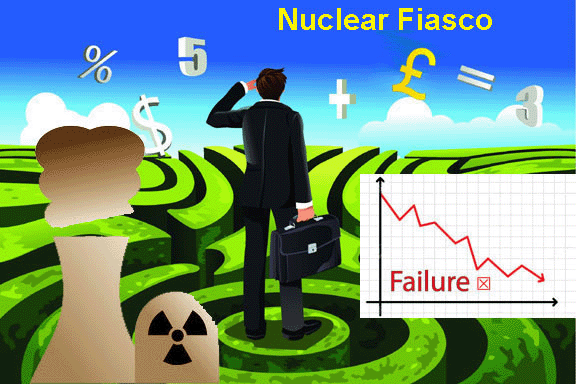
SafeEnergy E Journal No.92. December 21, Wylfa. In October it was reported that two groups had been speaking to the Department for Business, Energy and Industrial Strategy about the possibility of building at Wylfa on the island of Anglesey. A consortium involving US engineering firm Bechtel has proposed building a large Westinghouse AP1000 reactor. Talks have also taken place with UK-based Shearwater Energy, which has hybrid plans for small nuclear reactors and a wind farm. (1)
The AP1000 is the very reactor that was being built at V.C.Summer in South Carolina and which bankrupted Toshiba Westinghouse in 2017. After huge overspending the project was abandoned 40% of the way into construction.
Under legislation passed by the South Carolina Public Services Commissioners in 2008—but strongly opposed by civil society groups—construction costs for the V.C. Summer reactors were to be paid by state ratepayers. On 31 July 2017, Santee Cooper and SCANA Corporation (the parent company of South Carolina Electric & Gas or SCG&E) decided to terminate construction of the V.C. Summer reactor project. At the time of cancellation, the total costs for completion of the two AP-1000 reactors at V.C. Summer was projected to exceed US$25 billion—a 75 percent increase over initial estimates. Dominion, which took over SCANA in January 2019, will be charging South Carolina ratepayers an additional US$2.3billion over the next two decades, having already paid $4billion, for the collapsed V.C. Summer project. (2)
On 16th November, Steve Thomas, Emeritus Professor of Energy Policy at Greenwich University, told the House of Commons Nuclear Energy Finance Bill Committee that the V.C. Summer experience shows the folly of the RAB model. The plant has added 18% to bills in South Carolina.
Since October there has been more of a focus on the fact that Rolls Royce is considering Wylfa and Trawsfynydd as possible locations to build small nuclear power stations. (3) https://www.no2nuclearpower.org.uk/wp/wp-content/uploads/2021/11/SafeEnergy_No92.pdf
Guest Post from Gordon Frederick Coggon – a Nuclear Test Veteran’s Experience — RADIATION FREE LAKELAND

Gordon Frederick Coggon ·26 Nov 21,
Guest Post from Gordon Frederick Coggon – a Nuclear Test Veteran’s Experience — RADIATION FREE LAKELAND
https://wordpress.com/read/feeds/331643/posts/3682558618 During 1957 and 1958 I was one of 20,000 British serviceman sent to the central Pacific testing ground of British Hydrogen bomb tests which in my own case involved being at Christmas Island.(now named Kiritimati). During my year there I was subjected to radiation contamination. I witnessed two hydrogen bombs, the first being Operation Grapple X with a 1.8 megaton yield on Nov 8th. 1957 and the second bomb being on 28th. April 1958. Which had a yield of 3 megatons.( Both these devices were dropped by a Valient ‘V’ bomber about 20 miles off the southern tip of the Island.)
After the Grapple X test I was sent to hand wash a Canberra Aircraft,s engine nacelles after it had flown through the cloud of the hydrogen bomb collecting samples. I was set to work using a small bore hosepipe and a scrubbing brush, (the Aircraft had been hosed down with high pressure jets of water before I was employed on a gantry cleaning where the jets of water were not directed at the intakes of the engines.) Initially, I was given a pair of denims, wellingtons, rubber gloves and a remote breathing apparatus (which consisted of a face mask attached to 38 feet of corrugated rubber hose and connected to a fresh air filter which was fastened down as far away as possible from the aircraft. The face mask head straps were broken so the man in the white suit and gas mask said it was useless for the job in hand so I was given a crude homemade mask made from cotton wool sandwiched between a silver paper foil.
Whilst working on the gantry the mask got wet through and I wasnt able to breathe, so I had to move it from my mouth and nose to enable myself to breathe. I continued to work for between 20 to 30 minutes before I was replaced by someone else and I was then sent to the decontamination tent where I showered several times until the man in the white suit and Geiger counter said I was ok to get dressed in the clean side of the tent and was given a new set of kd shorts and shirt. This showering and decontamination took at least one and a half hours, My contaminated clothing was put in a yellow barrel marked with radiation signs in the dirty side of the facility. I have to say also that some of us were given other dangerous tasks like picking up dead fish and birds after the tests and some guys had to dump contaminated equipment in the ocean or bulldoze contaminated earth. After the Grapple Y bomb on 28th.April 1958, there was a massive downpour of rain, which came from the bomb cloud, a lot of the young innocent troops stood outside bathing in it like one normally did during the rain showers, but unlike the normal rain this was said to be contaminated because there was no other clouds in the sky at the time.
At that time I was 18 years old (picture of me above whilst there) and most of us had no idea what radiation was. Nor was I told anything about it until later in my career when I remustered into the Fire, Crash and rescue trade, where I was trained up to an advanced stage about radiation and biological warfare and every Monday I was teaching an induction course to new arrivals on the station that I was posted too. That was when I began to worry about my own health. Had I been put at an high risk of radiation whilst on Christmas Island ??. The Aircraft that I had helped to decontaminate was still emitting Gamma radiation, to what extent?? Also, did I swallow, inhale Alpha particles.?? ( Alpha radiation cannot penetrate human skin but they can be swallowed in water droplets, eaten if on food, or more commonly inhaled.)
These Alpha particles may remain inside your body for your whole life, attacking cells of your body for decades and could take many years before irrepairable damage becomes apparent. Recently it has been associated with radiation caused diseases and malformities in new born descendants of nuclear test veterans. I have had Cancer and several other illnesses which most lightly have been caused by atomic radiation, so far, even after seventy years, the successive British Governments have continued to deny that their troops were subjected to radiation during their atomic and hydrogen tests in the fifties and sixties. And yet, many of the nuclear armed countries have acknowledged the troops that was sent to take part in their experiments with nuclear fission and have been recognised by being given a medal and/or compensation.
I have only mentioned my own experience at Christmas Island (Kiritimati) but during a period 1952 – 1968 there have been many such tests in Australia, other testing areas of the Pacific where a lot of fellow veterans were irradiated by atomic fallout and nuclear poisoning from various clean-up operations after the tests, many of these young men never got to grow old because of their contamination from the tests. Many test sites were carried out where local people lived, these same people have since lost their homes and way of life by the poisoning effects of radiation . Since; atomic radiation contamination illnesses have continually been killing test veterans and clean-up veterans nothing has been done so far to help the families of these brave innocent troops and civilians by the British Government, who were subjected to experiments during the trials.
It is now becoming more alarming by the number of offspring who have also inherited their veteran father’ s damaged cells genetically. * reference to these tests are also available in two books that I have published on Amazon. The first one is titled :- ‘ Christmas Island 1957-1958 ‘ an Ebook on Kindle. The other is a paperback, titled:-‘ The Life of a Yorkshire Lad’ on Amazon and an ebook on kindle.
All royalties for the (latter paperback/ebook have been donated to LABRATS INTERNATIONAL for their continued valuable work in helping test veterans and their descendants come together from all over the world in their fight for justice.
Hunterston nuclear reactor 3 closed, but there will be decades from defuelling through dismantling
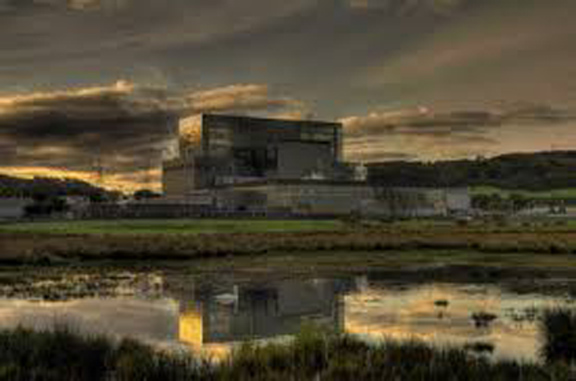
SafeEnergy E Journal No.92. December 2 Hunterston Reactor 3 is expected to come off line at the end of November and Reactor 4 before 7th January 2022. There would then be 2 months of statutory outage and then defueling would commence. EDF is hoping to despatch 4 rather than 2 spent fuel flasks every week to Sellafield during defueling.
Defueling will take around three years and will continue to draw on the skills of EDF’s specialist staff and contractors. It will then take around 5 or 6 years to prepare the plant for a period of 40 to 50 years of care and maintenance. Final dismantling could begin around 2070. https://www.no2nuclearpower.org.uk/wp/wp-content/uploads/2021/11/SafeEnergy_No92.pdf
What might trip up the Rolls Royce plan for small nuclear reactors?

Fix the Planet newsletter: Can small nuclear power go big? Small modular reactors are being pitched as an affordable and fast way to decarbonise power grids but questions about the technology abound, New Scientist EARTH, 25 November 2021, By Adam Vaughan
”……… nuclear power did have a showing in Glasgow, at official events in the conference, deals on the sidelines and cropping up as a subject during press briefings.
One new technology popped up a few times: small modular reactors (SMRs), mini nuclear plants that would be built in a factory and transported to a site for assembly. A UK consortium led by Rolls-Royce wants to build a fleet in the country to export around the world as a low carbon complement to renewables. During COP26 the consortium received £210 million from the UK government. More private investment is expected soon.
Yet questions abound. Why should this technology succeed where large nuclear plants have failed to take off in recent years, beyond China? If they are small, will they make a sizeable enough dent in emissions? And will they arrive in time to make a difference to a rapidly warming world?……
What exactly is planned?
The reactors that Rolls-Royce SMR wants to build have been six years in development, with their roots in ones the company previously built for nuclear submarines. Despite being billed as small, the new reactor design is fairly large. Each would have 470 megawatts of capacity, a good deal bigger than the 300 MW usually seen as the ceiling for an SMR.
The consortium hopes to initially build four plants on existing nuclear sites around the UK. Ultimately it wants a fleet of 16 , enough to replace the amount of nuclear capacity expected to be lost in the UK this decade as ageing atomic plants retire. Later down the line, the SMRs could be exported around the world too.
Alastair Evans at Rolls-Royce SMR. says the first SMR would cost about £2.3 billion and could be operational by 2031. Later versions may fall to £1.8 billion, he claims. That may seem cheap compared to Hinkley, but an offshore wind farm with twice the capacity costs about £1 billion today, and that figure will be even lower in a decade’s time………….
What might trip them up?
SMRs have been in development for years but have made little inroads to date. The UK government has been talking about them for much of the past decade, with nothing to show. Progress elsewhere around the world has been slow, too. Outside of Russia there are no commercial SMRs connected to power grids. Even China, one of the few countries that has built new nuclear plants in recent years, only started construction of a demo SMR earlier this year, four years late. It wasn’t until last year that leading US firm NuScale had its design licensed by US authorities.
Paul Dorfman at the non-profit Nuclear Consulting Group, a body of academics critical of nuclear power, says the nuclear industry has always argued economies of scale will bring down costs so it is hard to see why going small will work. He says modularisation – making the reactors in factories – will only bring down costs if those factories have a full order book, which may not materialise. “It’s chicken and egg on the supply chain,” he says. He also notes the plants will still create radioactive waste (something another potential next gen nuclear technology, fusion, does not). And he fears nuclear sites near coasts and rivers will be increasingly vulnerable to the impacts of climate change, such as storm surges as seas rise.
What’s next? The Rolls-Royce SMR group this month submitted its reactor design for approval by the UK nuclear regulator, a process that could take around five years. It now needs to pick three locations for factories and start constructing them. The group also needs to win a Contract for Difference from the UK government, a guaranteed floor price for the electricity generated by the SMRs…….. https://www.newscientist.com/article/2299113-fix-the-planet-newsletter-can-small-nuclear-power-go-big/
Nuclear fusion for UK – to save the dying nuclear industry, and UK as a nuclear weapons state?
SafeEnergy E Journal No.92. December 21, Fusion Four sites in England and one in Scotland are on the final shortlist of sites to be the home of the UK’s prototype fusion energy plant. The government is backing plans for the Spherical Tokamak for Energy Production (Step) with a final decision on its location expected at the end of 2022. The UK Atomic Energy Authority (UKAEA) hope the plant will be operational by the early 2040s. The five shortlisted sites are: Ardeer, North Ayrshire; Goole, East Riding of Yorkshire; Moorside, Cumbria; Ratcliffe-on-Soar, Nottinghamshire; Severn Edge, Gloucestershire; They were whittled down from a longlist of 15 sites, which included Chapelcross near Annan and Dounreay. (1 …………
The Scottish Campaign for Nuclear Disarmament (CND) has said that this latest effort to extol the virtues of nuclear fusion as a “low carbon” source of energy is to keep the industry “alive” due to the UK being a “nuclear weapon state”. (5)………https://www.no2nuclearpower.org.uk/wp/wp-content/uploads/2021/11/SafeEnergy_No92.pdf
Nicola Sturgeon reaffirms the Scottish Government’s opposition to nuclear power

Nicola Sturgeon has renewed the Scottish Government’s opposition to
nuclear power as part of the country’s drive towards net zero. The First
Minister ruled out any new nuclear power stations in Scotland in direct
opposition to calls from trade unions, backed by Labour’s Anas Sarwar,
for nuclear to be considered as a replacement to fossil fuels.
At First Minister’s Questions in Holyrood Sturgeon insisted it was was an
expensive option for taxpayers. She told SNP MSP Bill Kidd: “Renewables,
hydrogen and carbon capture and storage provides the best pathway to net
zero by 2045 and will deliver the decarbonisation we need to see across
industry, heat and transport. “We believe that nuclear power represents
poor value for consumers.”
Daily Record 25th Nov 2021
https://www.dailyrecord.co.uk/news/politics/nicola-sturgeon-rules-out-nuclear-25544965@ChristinaMac1
Boris Johnson avoids detail on how China will be removed from Sizewell C deal.
Boris Johnson avoided details when specifically asked about China’s
state-owned energy company’s role in Sizewell C – and how they will be
removed from the nuclear project amid concerns over national security. EDF
and China General Nuclear (CGN) are joint developers of Sizewell C taking
80% and 20% shares respectively, though the Financial Times has previously
reported that Whitehall is looking to push out CGN.
At Prime Minister’s Questions, shadow business secretary Matthew Pennycook told Mr Johnson that
“the Government’s Integrated Review concluded the Chinese state poses a
systemic challenge to our national security” and asked him to explain
“precisely how and when his Government intends to remove the CGN’s
interest from the Sizewell C nuclear project?”
Mr Johnson responded: “We
don’t want to see undue influence by potentially adversarial countries in
our critical national infrastructure and so that’s why we have taken the
decisions we have.” The National Security and Investment Bill, currently
going through parliament, is looking to give the government further powers
to screen and potentially block sensitive foreign investments.
Mr Pennycook later responded on Twitter: “We need certainty on the future of China’s
involvement in UK nuclear power and clarity about how and when the
Government intends to remove China’s state-controlled nuclear energy
company from involvement in any future UK project.”
East Anglian Daily Times 25th Nov 2021
https://www.eadt.co.uk/news/boris-johnson-sizewell-c-china-removal-8516062
1 This Month
26 September – International Day for the Total Elimination of Nuclear Weapons





PLEASE OPPOSE HR 8255 AND S.3639 – bills would accelerate satellite deployment, with no environmental review or safeguards – https://ncstd5li.quorum.us/campaign/169331/
To see nuclear-related stories in greater depth and intensity – go to https://nuclearinformation.wordpress.com
-
Archives
- September 2026 (313)
- August 2026 (330)
- July 2026 (355)
- June 2026 (287)
- May 2026 (306)
- April 2026 (356)
- March 2026 (251)
- February 2026 (267)
- January 2026 (308)
- December 2025 (358)
- November 2025 (359)
- October 2025 (375)
-
Categories
- 1
- 1 NUCLEAR ISSUES
- business and costs
- climate change
- culture and arts
- ENERGY
- environment
- health
- history
- indigenous issues
- Legal
- marketing of nuclear
- media
- opposition to nuclear
- PERSONAL STORIES
- politics
- politics international
- Religion and ethics
- safety
- secrets,lies and civil liberties
- spinbuster
- technology
- Uranium
- wastes
- weapons and war
- Women
- 2 WORLD
- ACTION
- AFRICA
- Atrocities
- AUSTRALIA
- Christina's notes
- Christina's themes
- culture and arts
- Events
- Fuk 2022
- Fuk 2023
- Fukushima 2017
- Fukushima 2018
- fukushima 2019
- Fukushima 2020
- Fukushima 2021
- general
- global warming
- Humour (God we need it)
- Nuclear
- RARE EARTHS
- Reference
- resources – print
- Resources -audiovicual
- Weekly Newsletter
- World
- World Nuclear
- YouTube
-
RSS
Entries RSS
Comments RSS

