UK’s Tory leaders oppose policies that would encourage people to conserve energy
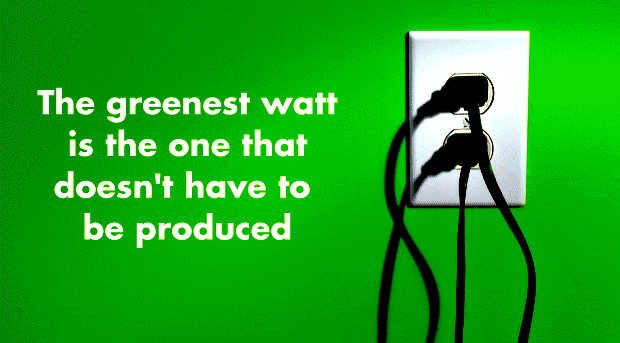
The government has again rejected calls for it to launch a campaign to
encourage households and businesses to save energy, insisting that energy
use remains a “decision for individuals”. Speaking this morning, a
spokesperson for Number 10 declined to be drawn on whether the government
should advise people to save energy, given soaring energy bills and
concerns over energy supplies this winter.
“These decisions, in terms of
energy consumption, remain decisions for individuals,” they said.
“Households, businesses and industry can be confident that they will have
the electricity and gas that they need.” The Guardian also reported this
morning that Business Secretary Kwasi Kwarteng, who is hotly tipped to
become Chancellor if polls prove accurate and Liz Truss is elected Prime
Minister next month, is opposed to proposals that would see the government
call directly on households and businesses to change behaviour to curb
energy demand.
Business Green 23rd Aug 2022
https://www.businessgreen.com/news/4055138/government-rejects-calls-energy-saving-drive
Boris Johnson has secretly committed Britain to costly tax-payer funding for Sizewell nuclear plant
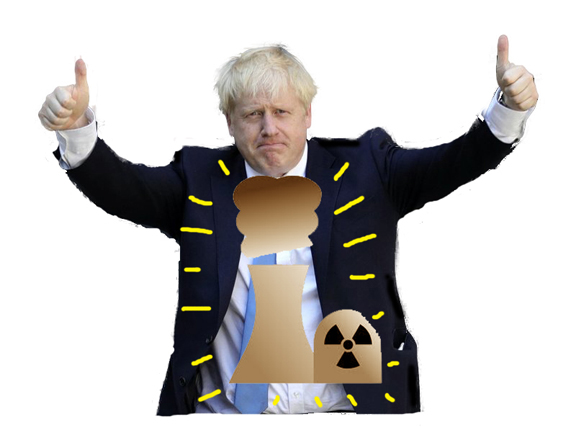
Boris Johnson commits to Sizewell on the quiet. The prime minister’s decision to part-fund a new nuclear plant will ‘tie Liz Truss’shands’ in tackling the cost of living. Boris Johnson has secretly given the green light for a £30 billion nuclear power station — sparking concerns within Liz Truss’s team that the cost will limit her ability to cut taxes and help the public with the cost of living.
The government is proposing to buy a 20 per cent stake in the plant, at a cost to the taxpayer of around £6 billion. But experts believe the plans are at risk of cost overruns and delays. One of Truss’s senior aides complained that Johnson’s decision to take a taxpayer-funded stake in the project would eat into the headroom available to her.
Johnson and Zahawi, lame ducks both, are understood to see the new power station as vital to Britain’s
future energy security and to want to make the announcement themselves to burnish their legacies in office. An ally of Zahawi stressed that the decision was made with Kwasi Kwarteng, the business and energy secretary, who is set to become Truss’s chancellor and that “no one is more enthusiastic than Kwasi”.
In an interview with The Mail on Sunday, Kwarteng told voters that “help is on the way” but also stressed the need to raise domestic energy production. “We need to crack on with more nuclear power stations,” Kwarteng said, “back British-made small modular reactors, invest in cheap renewable energy like offshore wind, and lift the ban on shale gas extraction in England where there is local consent.”
Times 21st Aug 2022
https://www.thetimes.co.uk/article/boris-johnson-commits-to-sizewell-on-the-quiet-xdv79rrpf
Sizewell C nuclear plant funding approved despite Tory split.

“Our next prime minister should call Sizewell C in. There are so many better ways to spend billions of pounds of taxpayers’ money than on a project that won’t light a single lightbulb for at least a decade.”
Boris Johnson gives financing go-ahead after warnings decision could limit incoming government,
https://www.theguardian.com/environment/2022/aug/21/sizewell-c-nuclear-plant-funding-approved-despite-tory-split. Rowena Mason Deputy political editor Mon 22 Aug 2022
Boris Johnson has approved funding for a new nuclear power station at Sizewell in Suffolk in the final weeks of his premiership, but some of Liz Truss’s senior allies are split over the decision.
The prime minister and the chancellor, Nadhim Zahawi, approved financing for the construction of two new reactors known as Sizewell C, enabling private funding of about £20-30bn to be raised.
However, Simon Clarke, another key Truss ally and a Treasury minister, warned in a letter leaked to the Sunday Times that the decision could limit Truss’s economic vision.
In the letter, he said the costs of Sizewell C were “sufficient to materially affect spending and fiscal choices for an incoming government, especially in the context of wider pressures on the public finances”.
In an article for the Mail on Sunday, Kwasi Kwarteng stressed the need to “crack on with more nuclear power stations” in order to increase Britain’s energy security.
He gave development consent for Sizewell C in July, but negotiations over the government’s investment decision had been ongoing.
A Whitehall source said Boris Johnson had taken the decision to press ahead with Sizewell several weeks ago. However, he dismissed the idea that the move would tie the hands of the next prime minister, following reports that the Truss campaign was worried that it was irreversible.
“In the next few weeks, we will announce a government investment decision on Sizewell C where the government formally commits to the project’s financing. It allows the project to raise private capital in the markets. But it’s only at the point of the final investment decision in early 2023 that the government would formalise any equity share.”
Johnson’s decision over Sizewell was challenged by a campaign to stop the nuclear reactor being built.
A spokesperson for the campaign, Stop Sizewell C, said: “Whatever way you look at it, this is a very dodgy decision. Has it been made by a lame duck PM who is not supposed to tie the hands of his successor, or was it in fact made before Sizewell C was granted planning consent, lending serious weight to our conviction that this was a prejudiced, political decision?
“Our next prime minister should call Sizewell C in. There are so many better ways to spend billions of pounds of taxpayers’ money than on a project that won’t light a single lightbulb for at least a decade.”
Truss has not stated a clear position on Sizewell C, but hinted last year at concerns about the involvement of China’s state-owned energy company, CGN, as part of a consortium providing funding for the preparatory work at the nuclear plant. She told the Telegraph at the time: “I think it’s very important that we don’t become strategically dependent and I think it’s important that we make sure that we’re working, particularly in areas of critical national infrastructure, with reliable partners.”
EDF, the French state energy firm, worked with CGN on the first phase of the project for a new nuclear power station to sit alongside Sizewell B, which is operational, and Sizewell A, which is being decommissioned. The UK government is keen to ease CGN out, however, over concerns about Chinese involvement in sensitive assets.
Johnson’s government has already put up £100m of funding this year to support the development of Sizewell C.
The £billions cost of the Sizewell nuclear plan becomes an issue in the fight for the role of Prime Minister
In a move that has caused great irritation in Team Truss, Nadhim Zahawi, Chancellor of the Exchequer, and Johnson are set to approve the financing of the Sizewell C nuclear plant in Suffolk. It received planning consent last month and the government signalled that it would buy a 20 per cent stake in the project, which is being run by the French company EDF and is expected to cost between £20 billion and £30 billion after inflation. The final investment decision has not been announced.
Simon Clarke, the chief secretary to the Treasury who backs Truss and who sources say will have a “top half of the cabinet job” under her leadership, wrote to Johnson and Zahawi warning that a signoff for Sizewell would compromise the new prime minister’s ability to cut taxes or spend more on the cost of living. In his letter, Clarke wrote:
“The quantum is sufficient to materially affect spending and fiscal choices for an incoming government, especially in the context of wider pressures on the public finances.” While the cost to government is likely
to be about £6 billion, rather than £30 billion, that will give Truss far less room for manoeuvre.
Times 20th Aug 2022
Expert forum Claverton Energy Group concludes that renewable energy +battery storage can meet UK’s needs – nuclear is not needed.
Open University Professor Bill Nuttall’s updated version of his 2005 ‘Nuclear Renaissance’ book makes a case for nuclear power as low carbon and reliable, although, as the promotional blurb says, it accepts that
‘in recent years it has struggled to play a strong role in global plans for electricity generation in the 21st century’.
The new book also accepts that the much-hyped renaissance didn’t in the event happen- with Fukushima blowing it off course. Do we really want to build new nuclear plants to be ready on standby to provide spinning reserve backup and/or to provide rotational grid stability? Hydro can do that, and wind too to some extent, and virtual inertia can be provided by battery systems fed by PV solar.
Claverton Energy Group (CEG), a UK energy expert forum, has recently summarised some of the key conclusions of current research on energy system mixes and say they show that renewables can supply all our needs, with grid balancing provided in part by battery and heat storage.
Nuclear is not needed. The newly revised and updated 100% renewables global energy scenario produced by Prof Mark Jacobson and his team at Stanford University has come to similar conclusions, with 4 hour battery storage playing major balancing roles. All at competitive costs.
Renew Extra 20th Aug 2022
https://renewextraweekly.blogspot.com/2022/08/nuclear-renaissance-revisited.html
We must never forget the risks nuclear stations pose to us all in conflict situations
The Herald, Isobel Lindsay, 19 Aug 22, CURRENTLY there are two different discourses going on in relation to nuclear power with no cross-over (“If Russia turns up the heat, could a nuclear winter follow?”, The Herald, August 17).
There is a cosy consensus among UK politicians and commentators that we should have more nuclear power stations and that this is supposed to be environmentally friendly. This message is, of course, actively promoted by commercial interests. Never mind the huge cost of both the build and the decommissioning, the legacy of radioactive waste we are leaving for future generations, the impact of rising water levels and drought on these plants and the long build time.
But the other discourse playing out is the huge vulnerability of nuclear power plants in conflict situations. Both Russia and Ukraine are playing “dare you” in relation to the Zaporizhzhia power plant. The Russians are using it as a base that is too dangerous to attack and Ukraine has been having a few shots at it to frighten the Russians and the rest of Europe in order to get more help. If the worst happens, it is the wind that will determine who suffers most, not state boundaries.
The threat is not just from war situations. While we have careful security measures, risk is always there. In 2017 a member of a far-right apocalyptic group in the US was arrested with weapons on his way to a nuclear power plant. One of those killed in the January 2021 storming of the US Capitol was an employee of a nuclear plant. In 2014 an insider at a Belgium reactor sabotaged one of the plant’s turbines, leading to months of shut-down. There are plants on earthquake and tsunami vulnerable areas.
We are not short of low-risk methods for the radical reduction in carbon emissions. We need to challenge those who are promoting high-risk choices, https://www.heraldscotland.com/news/20672345.letters-must-never-forget-risks-nuclear-stations-pose-us-conflict-situations/
Twelve months, one meeting – the complete lack of accountability on nuclear in Copeland

In fact, the Rolls-Royce fronted consortium developing a 470-MW so-called ‘Small’ Modular Nuclear Reactor still faces considerable challenges in bringing a design to market. The design still needs to be approved by the Office of Nuclear Regulation after a comprehensive Generic Design Assessment. If approved, the consortium would need to build and test an actual working prototype; establish facilities to fabricate the parts; master the fabrication and on-site assembly process; secure funding; navigate the siting, planning and Development Consent process; and actually build the first plant. So hardly a rose in fragrant bloom!
https://www.nuclearpolicy.info/news/twelve-months-one-meeting-the-complete-lack-of-accountability-on-nuclear-in-copeland/ 19 Aug 22, Despite Copeland Council being at the heart of plans to develop a new nuclear plant and a nuclear waste dump in the borough, the Nuclear Free Local Authorities were surprised to see that the Council’s Strategic Nuclear and Energy Board has only met once in the last twelve months.[1]
Only last month, Copeland Borough Council’s Portfolio Holder for Nuclear and Commercial Services Councillor David Moore described how “the future looks rosy” for new nuclear in Copeland as talks progress on Small Modular Nuclear Reactors.[2]
Unfortunately, for the members of the Board, there was no opportunity to explore how ‘rosy’ the future was as the scheduled 9 August meeting was subsequently cancelled. Since the last meeting of the Board on 6 October 2021, meetings have been cancelled on 9 December; 10 February; 28 April; 7 June; and latterly on 9 August 2022.
In fact, the Rolls-Royce fronted consortium developing a 470-MW so-called ‘Small’ Modular Nuclear Reactor still faces considerable challenges in bringing a design to market. The design still needs to be approved by the Office of Nuclear Regulation after a comprehensive Generic Design Assessment. If approved, the consortium would need to build and test an actual working prototype; establish facilities to fabricate the parts; master the fabrication and on-site assembly process; secure funding; navigate the siting, planning and Development Consent process; and actually build the first plant. So hardly a rose in fragrant bloom!
Perhaps the infrequency of the meetings of the Board can be related to the disquiet expressed by some members over the lack of accountability over plans for Copeland Borough Council to partner with Nuclear Waste Services to bring a nuclear waste dump (a so-called Geological Disposal Facility or GDF) to Copeland. The Board minutes for 9 October 2021 record that three Councillors wanted the final decision taken by a meeting of the Full Council rather than reserved to the Executive; with a tied vote, this proposal was defeated only on the Chair’s casting vote. To placate the objectors, Councillor Moore promised that ‘this committee and full Council would be updated on a regular basis’.[3] The Board has since never met.
Commenting, Councillor David Blackburn said: “At a cost of up to £53 billion, the GDF would be the biggest engineering undertaking to take place in Copeland, since the creation of the Sellafield complex. It would be a repository for Britain’s high-level nuclear waste from seven decades of civil nuclear operations, and also take waste from future generation. Taking up to 150 years to build, fill and seal, it would have massive implications for, and be completely disruptive to, any host community in Copeland for generations.
“The GDF process is fast moving on apace. Since October 2021, first a Working Group and then a Community Partnership have been formed with Copeland’s involvement. In the last month, seismic testing has been taking place off the coast of West Cumbria, an activity which has rightly been hugely controversial for its adverse impact on marine life. Yet during this whole time, this Board, the very body charged by Copeland Council to provide oversight on the GDF and nuclear projects, has not met; no reports on these and other important issues have been brought before this Board for debate; and there has been no opportunity for members of the public to sit in on deliberations. Hardly democracy at its finest.”
For more information, please contact NFLA Secretary Richard Outram by email on richard.outram@manchester.gov.uk or telephone 07583 097793
Commenting, Councillor David Blackburn said: “At a cost of up to £53 billion, the GDF would be the biggest engineering undertaking to take place in Copeland, since the creation of the Sellafield complex. It would be a repository for Britain’s high-level nuclear waste from seven decades of civil nuclear operations, and also take waste from future generation. Taking up to 150 years to build, fill and seal, it would have massive implications for, and be completely disruptive to, any host community in Copeland for generations.
“The GDF process is fast moving on apace. Since October 2021, first a Working Group and then a Community Partnership have been formed with Copeland’s involvement. In the last month, seismic testing has been taking place off the coast of West Cumbria, an activity which has rightly been hugely controversial for its adverse impact on marine life. Yet during this whole time, this Board, the very body charged by Copeland Council to provide oversight on the GDF and nuclear projects, has not met; no reports on these and other important issues have been brought before this Board for debate; and there has been no opportunity for members of the public to sit in on deliberations. Hardly democracy at its finest.”
For more information, please contact NFLA Secretary Richard Outram by email on richard.outram@manchester.gov.uk or telephone 07583 097793
Nuclear Free Local Authorities support dry storage for safety at Hinkley plant
In a rare example of synergy, the Nuclear Free Local Authorities has
written in support of a proposal by the developer of Hinkley Point C, EDF
Energy, to change the storage of spent fuel at the new plant from wet to
dry.
The NFLA was responding to a consultation called by the Environment
Agency when EDF submitted a request to change one of its agreed operational
conditions relating to storage. The NFLA has always been concerned at the
dangers attendant to storing spent nuclear fuel in cooling ponds and feels
that dry storage is better.
Fuel stored in ponds at nuclear plants in
Ukraine have come under threat in recent months, with fears that
bombardment could release radioactivity. Speaking about the NFLA
submission, Chair Councillor David Blackburn said: “The NFLA remains
opposed to new civil nuclear plants, including Hinkley Point C, but the
reality is that nuclear plants produce waste, and our practical concern is
to ensure that this is stored as safely as possible.
“Our policy on the
storage of nuclear waste differs from that of the UK Government. We favour
the ongoing near-site, near-surface storage of waste, to eliminate the need
for rail transportation and to ensure that waste can be actively monitored,
rather than the government’s preferred ‘dispose and disregard’ approach
of depositing waste in an underground or undersea dump and forgetting about
it.
“The situation at Hinkley Point C may remain unclear for some time.
EDF Energy has announced that the plant will not now be completed until the
summer of 2027 at the earliest, and very possibly later, and the company
will now be required to carry out a redesign of its reactor for safety
reasons following the accident at Taishan-1 in China last year.”
NFLA 17th Aug 2022
UK nuclear to be branded green to lure investors
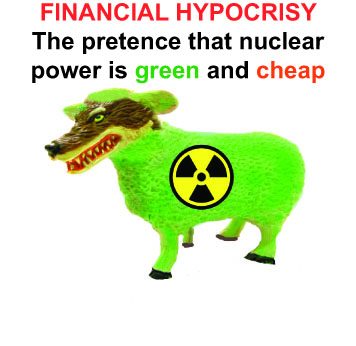
Treasury may classify reactors as eco-friendly to win pension fund backing for Sizewell C. The Government is set to rebrand nuclear power as green energy to lure reluctant investors to get behind Sizewell C.
Nuclear power is included in a draft report from the Treasury laying out which energy sources are classed as eco-friendly, a sources told The Mail on Sunday. This may clear the way for big City investors, including pension funds, to invest in nuclear power, such as the planned £20billion power station on the Suffolk
coast.
Mail on Sunday 14th Aug 2022
Rishi Sunak, UK Tory leader a keen supporter of the nuclear industry
Tory leader and Prime Minister contender Rishi Sunak says he is looking
forward to seeing plans for Wylfa Newydd if he’s elected and said he is a
strong supporter of nuclear. Former Chancellor Mr Sunak is going head to
head with Foreign Secretary Liz Truss to replace Boris Johnson. The UK
Government has earmarked Wylfa Newydd as a key site for new nuclear
although as yet no developer has been confirmed for the location after the
collapse of the previous plans following the withdrawal of Hitachi.
“Heunderstands that the Wylfa project is eligible for support as part of the
£120m Future Nuclear Enabling Fund, which was approved during his time as
Chancellor. He looks forward to seeing the proposals for the Wylfa Newydd
project if he is elected Prime Minister.” Wylfa and Trawsfynydd in
Gwynedd have also been tipped as potential sites for Small Modular
Reactors. Ms Truss’s campaign team have been asked to comment.
Daily Post 15th Aug 2022
https://www.dailypost.co.uk/news/north-wales-news/rishi-sunak-wylfa-newydd-nuclear-24756725
Britain’s electricity needs for winter cannot depend on France’s unreliable nuclear power
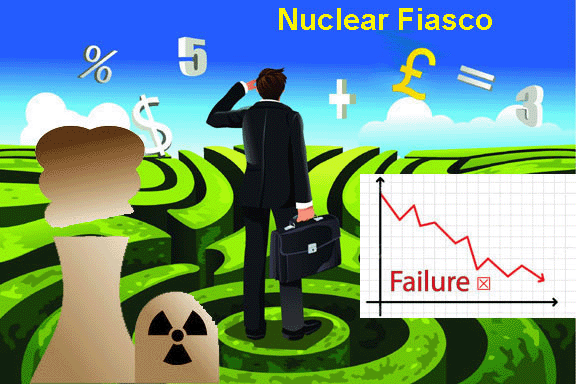
Dave Toke: Oliver Wright writes that National Grid planning “assumes that Britain will be able to import 5.7GW of electricity via interconnectors, including from France” (“Ministers vow to keep lights
on as winter power squeeze looms”, Aug 9).
However, the French electricity system is in crisis owing to the fact that about half of France’s nuclear power station fleet is offline because of corrosion and other problems. Ageing reactors need urgent repair. There seems little prospect that these problems will be fully resolved by this winter.
Indeed these problems are exacerbating European power problems, already severe because of the war in Ukraine. Apart from the fact that this causes potentially serious issues for the UK, it emphasises that nuclear power is by no means as reliable as may otherwise be assumed.
Times 10th Aug 2022
https://www.thetimes.co.uk/article/times-letters-conserving-energy-and-saving-money-wjrh0kcxn
Legal challenge to Sizewell C nuclear project
Campaign group Together Against Sizewell C (TASC) has now sent a
pre-action protocol letter, signalling the start of judicial review process
challenging the decision, which it contends is “unlawful”. The Planning
Inspectorate’s report to the business secretary stated that “unless the
outstanding water supply strategy can be resolved”, the case for granting
consent was “not made out”.
Building 9th Aug 2022
https://www.building.co.uk/news/sizewell-c-approval-faces-legal-challenge/5118719.article
Sizewell C nuclear station approval faces legal challenge
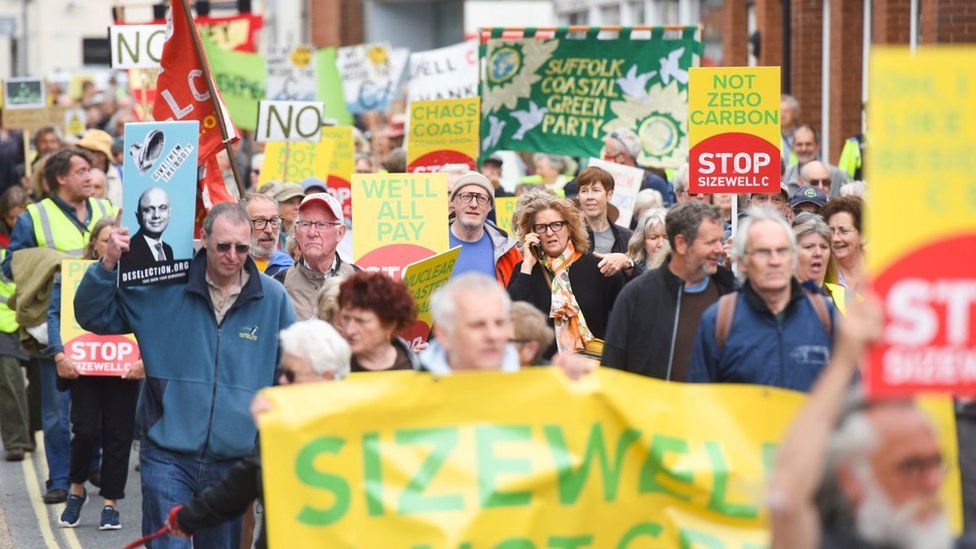
Campaigners have begun a legal challenge against the government’s decision to give the Sizewell C nuclear power station the go-ahead amid warnings that UK nuclear plants will be on the frontline of climate breakdown.

Citing the threat to water supplies in an area officially designated as seriously water stressed, the threats to coastal areas from climate change and environmental damage, the challenge is the first step in a judicial review of the planning consent.
The business secretary, Kwasi Kwarteng, overruled the independent Planning Inspectorate to grant permission for the new nuclear reactor in Suffolk in July. Kwarteng is pushing ahead with
government plans to approve one new nuclear reactor a year as part of an energy strategy that aims to bolster the UK’s nuclear capacity, with the hope that by 2050 up to 25% of projected energy demand will come from it.
But Sizewell C has faced stiff opposition from local campaigners, and environmental groups both for its cost and the environmental impact. In a letter to Kwarteng outlining their legal challenge Together Against Sizewell C (TASC) argues that the permission by the government for the plant was given unlawfully. Represented by Leigh Day solicitors and supported by Friends of the Earth, the group says there was a failure to assess the implications of the project as a whole, by ignoring the issue of whether a permanent water supply could be secured, a failure to assess the environmental impact of that project and the suggestion that the site would be clear of nuclear material by 2140, which was not upheld by evidence showing highly radioactive waste would have to be stored on site until a much later date.
The Planning Inspectorate had rejected the scheme saying “unless the outstanding water supply strategy can be resolved and sufficient information provided to enable the secretary of state to carry out his obligations under the Habitats Regulations, the case for an order granting development consent for the application is not made out”.
Pete Wilkinson, chair of TASC, said: “The case against Sizewell C is overwhelming, as has been carefully documented throughout the inquiry stage and was found by the planning inspector to have merit. “Even to consider building a £20bn-plus nuclear power plant without first securing a water supply is a measure of the fixation this government has for nuclear power and its panic in making progress towards an energy policy which is as unachievable as it is inappropriate for the 21st-century challenges we
face.”
Guardian 8th Aug 2022
UK tax-payers face £billions of costs for the indefinite future in the clean-up of closed Hinkley Point B nuclear power station
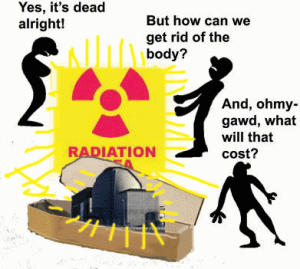
‘End of an error’, say protesters as nuclear plant is shut down. LAST
week’s closure of Hinkley Point B after 46 years was described by
anti-nuclear campaign group Stop Hinkley as ‘the end of an error’. Stop
Hinkley spokesman Roy Pumfrey said Monday (August 1) was not a day to
celebrate the life of Hinkley Point B.
He said Monday was a day to mourn
the production of radioactive waste that would need to be carefully and
expensively managed and monitored for many generations to come. Mr Pumfrey
said: “Some of these timescales for managing the legacy of waste left
over by Hinkley B are truly staggering. EDF’s jamboree on Monday
conveniently ignores the nuclear waste which has been generated over the
past 46 years.
“Under current plans it will be at least another 100 years
before all this dangerous waste is under the ground. “And the costs are
staggering, too. “EDF’s most recent £23.5 billion estimate for
decommissioning advanced gas-cooled reactors (AGRs) suggests it could cost
around £3-4 billion to decommission Hinkley B.
“The taxpayer has been
asked to top up the decommissioning fund by over £10 billion. “Past
experience suggests these costs will continue rising.” Mr Pumfrey said
the UK was left with Hinkley’s legacy of nuclear waste for thousands of
years and even after 46 years, nobody yet knew for sure what would happen
to it other than a ‘vague promise’ to bury it in a geological disposal
facility – a site for which had still not been found.
West Somerset Free Press 7th Aug 2022
Nuclear Free Local Authorities Briefing to Local Councils – Energy Minister responds to NFLA concerns over Nuclear Liabilities Fund.
Richard Outram, 8 Aug 22. In response to Parliamentary concerns that the cost of decommissioning redundant nuclear power stations was out of control, and after hearing news that a further £10.7 billion of public money has been made available by the UK Government to bolster the finances of the Nuclear Liabilities Fund, the public – private sector body responsible for managing finances of approximately £15 billion to meet the long-term cost of decommissioning (https://www.nlf.uk.net/), in early June the Chair of the NFLA Cllr David Blackburn wrote to the Energy Minister Greg Hands to urge him to give the NLF Board more latitude to invest in green energy to make the fund sustainable. On 25 July, Minister Hands replied. This briefing includes our initial media release, Cllr Blackburn’s letter to Minister Greg Hands and the Minister’s response.
1 This Month
26 September – International Day for the Total Elimination of Nuclear Weapons





PLEASE OPPOSE HR 8255 AND S.3639 – bills would accelerate satellite deployment, with no environmental review or safeguards – https://ncstd5li.quorum.us/campaign/169331/
To see nuclear-related stories in greater depth and intensity – go to https://nuclearinformation.wordpress.com
-
Archives
- September 2026 (305)
- August 2026 (330)
- July 2026 (355)
- June 2026 (287)
- May 2026 (306)
- April 2026 (356)
- March 2026 (251)
- February 2026 (267)
- January 2026 (308)
- December 2025 (358)
- November 2025 (359)
- October 2025 (375)
-
Categories
- 1
- 1 NUCLEAR ISSUES
- business and costs
- climate change
- culture and arts
- ENERGY
- environment
- health
- history
- indigenous issues
- Legal
- marketing of nuclear
- media
- opposition to nuclear
- PERSONAL STORIES
- politics
- politics international
- Religion and ethics
- safety
- secrets,lies and civil liberties
- spinbuster
- technology
- Uranium
- wastes
- weapons and war
- Women
- 2 WORLD
- ACTION
- AFRICA
- Atrocities
- AUSTRALIA
- Christina's notes
- Christina's themes
- culture and arts
- Events
- Fuk 2022
- Fuk 2023
- Fukushima 2017
- Fukushima 2018
- fukushima 2019
- Fukushima 2020
- Fukushima 2021
- general
- global warming
- Humour (God we need it)
- Nuclear
- RARE EARTHS
- Reference
- resources – print
- Resources -audiovicual
- Weekly Newsletter
- World
- World Nuclear
- YouTube
-
RSS
Entries RSS
Comments RSS

