Boris Johnson’s legacy of the nuclear fantasy

In response to the Prime Minister pledging £700 million of public money to
build a nuclear power station at Sizewell, Dr Doug Parr, Chief Scientist
for Greenpeace UK, said – “This money could insulate huge numbers of
draughty homes, and cut next year’s bills, instead of being thrown onto the
slow-burning financial bonfire that is EDF, to increase our bills for
decades.
Construction of this reactor type has gone massively over budget
and over schedule whenever they try to build it in Europe, and isn’t
operating as advertised anywhere. The funding model adopted to pay for it
was tried in the USA, and North Carolina households are still paying for a
nuclear reactor that was never built as the company went bust.
The contrast between these lumbering white elephants and the dynamic, cost cutting,
innovative technologies in the renewables sector could barely be more
striking. While this down payment on failure shows the government hasn’t
noticed, the market has, and investors have fled the nuclear sector.
To get Sizewell done, the government would have to step in and add the enormous
costs of building reactors to the enormous costs consumers are already
paying for their electricity. While Boris Island and the Boris Bridge
remain in the land of fantasy where they belong, Johnson will have his
legacy, the Boris Bill, and it will be very real for a very long time.”
Greenpeace 1st Sept 2022 https://www.greenpeace.org.uk/press-centre/
Stop Sizewell C urges Boris Johnson’s successor to totally review this costly nuclear project

Stop Sizewell C condemns Boris Johnson’s visit and support for Sizewell C,
speculating that the blessings of an outgoing Prime Minister may be the
kiss of death. Stop Sizewell said: “Like multiple vanity projects such as
the Bridge to Northern Ireland and “Boris Island” airport, Sizewell C
is another Boris Johnson infrastructure blowout that his successor should
consign to the bin.
When every penny matters, it’s totally wrong to shackle
the next Prime Minister and billions in taxpayers’ money to this damaging
project, whose ballooning cost, lengthy construction, failure-prone
technology and long term water supply are so uncertain.”
“Sizewell C would not be British, nor secure. It would be developed by an arm of a
foreign government, probably with considerable foreign ownership and be
reliant on overseas uranium.” Stop Sizewell C urges Boris Johnson’s
successor to totally review the Sizewell C project. Candidate Liz Truss has
said she plans to cancel green levies on bills, but if she were to continue
to support Sizewell C, it can only be financed if a nuclear levy is added
to household bills.
Stop Sizewell C 1st Sept 2022
Boris Johnson locking the next Prime Minister into unsustainable nuclear debt

So long and thanks for all the nukes: Boris Johnson is marking his last week in No 10 by signing a £30 billion cheque that makes some allies of Liz Truss feel distinctly queasy.
With just five days until his successor takes office, this morning’s Times reveals that the prime minister is pressing ahead with plans to approve the Sizewell C nuclear power station in Suffolk.
It’s a decision some Truss allies would rather he had left to the next inhabitant of No 10. Earlier this month Simon Clarke, the chief secretary to the Treasury set for a senior role in the next cabinet, warned in a leaked letter that the costs of the project were “sufficient to materially affect spending and fiscal choices for an incoming government,
especially in the context of wider pressures on the public finances”. But Johnson looks set to bind the next PM’s hands anyway.
Times 31st Aug 2022
https://www.thetimes.co.uk/article/nuclear-option-spells-fallout-for-johnsons-successor-b68c9gh5w
Boris Johnson’s parting gift – a £30 billion nuclear debt.
Boris Johnson is poised to give approval this week for a nuclear power station costing up to £30 billion as ministers close in on a deal to reopen Britain’s biggest gas storage facility. The prime minister is preparing to announce an in-principle agreement to offer funding to the Sizewell C reactor in Suffolk before he leaves office, despite concerns about creating a multibillion-pound spending commitment for Liz Truss, the frontrunner to succeed him.
Johnson acknowledged yesterday that “it is going to be tough through to next year” because of the rising energy bills but said his successor would “provide a further package of support for helping people with the cost of energy”.
Johnson is thought to have privately decided to go ahead with Sizewell C earlier in the summer, but said yesterday that a public announcement was imminent. “We are going to have a long-term British energy security strategy, and we are putting in more nuclear — you’re going to be hearing more about that later this week,” he said on a visit to Dorset.
Johnson also promised “absolutely shedloads of wind
power” as he sought to pin the blame for high gas prices on Russia’s
invasion of Ukraine. “Be in absolutely no doubt that the gas price is
being driven by what Putin did in Ukraine,” he said. “I’m not going to
shrink from this — it is going to be tough in the months to come, it’s
going to be tough through to next year, and that’s because of Putin’s war
in Ukraine. But we’re going to get through it.” Kwarteng is also said to
be in the final stages of agreeing a deal with Centrica to reopen the Rough
gas storage facility under the North Sea, in an about-turn that could leave
taxpayers on the hook for hundreds of millions of pounds if the company
does not make as much as expected.
Times 31st Aug 2022
Boris Johnson unveils £1.45billion nuclear submarine

Boris Johnson’s farewell tour continues today as the outgoing Prime
Minister attends the unveiling of Britain’s latest nuclear submarine. The
£1.45billion nuke-powered HMS Anson – part of the long-delayed and
over-budget Astute-class programme – took nine-and-a-half years to build.
Mirror 31st Aug 2022
https://www.mirror.co.uk/news/politics/boris-johnson-visit-submarine-yard-27869239
Compulsory purchase orders of land for Sizewell C nuclear project
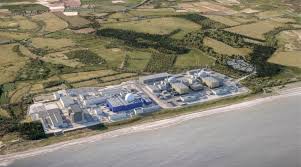
The majority of the compulsory purchase orders necessary for Sizewell C
have already been agreed, a spokesman has said. As part of the nuclear
power project, land is being purchased to build link roads, railways,
sports pitches and park and ride terminals. The full details of all the
properties affected is set out in a 1,000-page planning document.
East Anglian Daily Times 30th Aug 2022
https://www.eadt.co.uk/news/business/sizewell-c-compulsory-purchase-orders-suffolk-9236698
You can’t trust Liz Truss (oil and gas devotee) on energy policy for Britain
a frenzied building of eye-wateringly expensive new nuclear power plants.
the ramping up of nuclear power will add billions to UK consumers’ bills
Liz Truss’s energy plans will be disastrous for our bills and the planet.
Truss will oversee the greatest transfer of wealth in history, from UK
families to oil and gas executives she used to work for.
The celebratory champagne corks must have popped in the headquarters of the oil and gas
corporations on the day Ofgem announced the devastating rise in energy
prices for poverty-stricken British consumers. Especially after they read
Liz Truss’s disastrous “response” in the Daily Mail addressing the
lifting of the home energy price cap.
Truss, the former commercial manager
for the oil giant Shell, proposes a massive ramping up of commercial
projects by the oil corporations, including expansion of North Sea oil and
gas, a resumption of fracking on the UK mainland and a frenzied building of
eye-wateringly expensive new nuclear power plants.
The proposed explosion of oil and gas projects will not knock a single penny from fuel bills, as
the UK’s fossil fuel industry is fully integrated into global markets, and
so production will remain priced at inflated global prices for UK
consumers.
And the ramping up of nuclear power will add billions to UK
consumers’ bills, as nuclear energy is already over twice the cost of wind
and solar and it will take decades before any new plants could reduce
consumer addiction to fossil fuels.
Truss’s statement was silent on
insulation or energy efficiency investments that would actually bring down
bills for consumers, by reducing dependency on fossil fuels. After the
Mail’s 2011 successful “anti-green-crap” campaign – according to Carbon
Brief reportedly at the instigation of the then Lord Lawson’s Global
Warming Policy Foundation – destroyed the home insulation programme that
was then successfully insulating 2.4 million homes a year. If that
programme had been implemented, up to 18 million UK families would have
enjoyed lower bills this winter and the pressure on the UK’s electricity
and gas markets would have been far lower.
Truss has not committed to
lifting her government’s de-facto ban on onshore wind, the cheapest source
of energy in the UK, but has promised a crackdown on solar farms. Blocking onshore wind and solar increases consumer bills and keeps us enslaved to nuclear and oil corporations.
Further thrilling the oil executives, she
ruled out expanding windfall taxes on the huge profits pouring into their
coffers. She also opposes “handouts” for consumers. Nuclear electricity
is now also over twice the price of renewables. The Tory government
recently overrode the planning inspector’s refusal of planning permission
for the proposed new Sizewell C nuclear power plant, over uncertainty on
where the water required to run the plant would come from.
Ministers are proposing that a nuclear levy be added to bills to fund its construction –
before it produces a single kWh of electricity. And they still have nowhere
to safely secure its toxic radioactive waste for the thousands of years
required.
Independent 30th Aug 2022
Navy officer opposed to nuclear weapons sues UK Ministry of Defence
BBC News 1 Sept 22, A former Royal Navy weapons officer who was removed from a submarine because he opposed nuclear weapons is suing the Ministry of Defence for religious discrimination.
Sub Lt Antonio Jardim, a Christian with joint British-Portuguese nationality, was assigned to HMS Vanguard.
He was given the nickname “Trigger” because of his “reluctance to pull the trigger”, according to tribunal papers.
Mr Jardim was later moved to an onshore role in Portsmouth.
HMS Vanguard is one of the UK’s nuclear deterrent submarines based at Faslane, Scotland.
In a statement ahead of an employment tribunal in Southampton, Mr Jardim said: “I wanted to leave the service after the treatment I received when making my moral views known.
“I believe I have been subjected to a series of connected acts of discriminatory treatment based upon my religious beliefs.”
He added: “Due to the stress from the entire process, along with an unbearable workload and lack of progress with my voluntary withdrawal from training and service complaint, I was sent sick on shore.”
Mr Jardim decided to leave the service in May 2021……………………….
documents also state that on the Trident officers general course in June 2020, having told the course officer about his concerns, he was “removed from the course and told to wait in his cabin”.
Then for the next two weeks he had “interviews and phone calls and he was told not to return to the boat, and his name was written in the quartermaster’s book stating that he was not to be let on board”.
A full hearing will take place on 13 March 2023. https://www.bbc.com/news/uk-england-hampshire-62744226
New nuclear bases and nuclear submarines in Scotland deemed “unachievable” by a UK Government watchdog
Two projects vital for renewing the Trident nuclear weapons system on the Clyde have been damned as “unachievable” by a UK Government watchdog. The building of new facilities at the Faslane and Coulport nuclear bases in Argyll, as well as the manufacturing of new submarine reactors, both had
“major issues” which didn’t seem to be “resolvable”, according to the Infrastructure and Projects Authority (IPA).
The IPA has given the two projects its lowest rating of “red” for 2021-22, the worst in four years. The problems were attributed to “shortage of suitably experienced personnel”, “supply chain issues” and delays.
Campaigners have attacked the UK nuclear weapons programme as a “shambles”, warning that
it has repeatedly failed to deliver. Replacing Trident was “murderous”, “reckless” and “insanely expensive”, they said.
The Ferret 29th Aug 2022 https://theferret.scot/nuclear-trident-projects-unachievable
WikiLeaks founder Julian Assange files latest appeal in bid to stop extradition to United States

Julian Assange’s legal team has filed an appeal to Britain’s High Court in an effort to thwart his extradition to the United States to face espionage charges.
Key points:
- The appeal argues that Julian Assange is being prosecuted and punished for his political opinions and for protected speech
- Assange has been in custody since his was arrested in April 2019 and dragged out of the Ecuadorian embassy in London
- He is facing 17 espionage charges and one charge of computer misuse in the United States
British Home Secretary Priti Patel approved the extradition of the WikiLeaks founder in June after he was denied an appeal in the Supreme Court appeal back in March.
A public relations firm representing Assange said in a statement that the respondents to the appeal were Ms Patel and the government of the United States.
Lawyers for Assange will argue that he is being prosecuted and punished for his political opinions and for protected speech, and that the extradition request violates the US-UK Extradition Treaty and international law as it relates to what it calls political offences.
His lawyers will also argue that the US Government “misrepresented the core facts of the case” to the British courts and that the extradition request “constitute an abuse of process”.
“The Perfected Grounds of Appeal contain the arguments on which Julian Assange intends to challenge District Judge Vanessa Baraitser’s decision of 4 January 2021 and introduces significant new evidence that has developed since that ruling,” the statement read.
That January 2021 ruling saw Judge Baraister refuse the US Government’s extradition request on the basis that of Assange’s mental condition and the risk of suicide if he were held in a maximum-security prison.
But Judge Baraister rejected nearly all of the arguments put forward by Assange’s lawyers at the time, including that the charges against him were politically motivated and that he would not receive a fair trial in the US.
In December 2021 the US Government won an appeal against that decision in the UK’s High Court, with Judge Timothy Holroyde finding that the US had given assurances to the UK about Assange’s detention, including about his treatment in the US prison system and that the US would allow him to be transferred to Australia to serve any prison sentence.
Assange’s latest appeal also argues Ms Patel “erred in her decision to approve the extradition order on grounds of specialty” because the extradition request violated the US-UK Extradition Treaty.
US authorities have accused the 51-year-old of conspiring to hack government computers and of violating an espionage law in connection with the release of confidential cables by WikiLeaks in 2010-2011.
Assange is facing up to 175 years in prison over the 17 espionage charges and one charge of computer misuse over the leaks, but the US government has said that a sentence of between three and six years was more likely.
Stella Assange, Assange’s wife, said the pursuit of her husband was “criminal abuse”.
“Since the last ruling, overwhelming evidence has emerged, proving that the United States prosecution against my husband is a criminal abuse,” she said in a statement.
“The High Court judges will now decide whether Julian is given the opportunity to put the case against the United States before open court, and in full, at the appeal.”
Stop the Extradition! #FreeAssangeNOW
Julian Assange Files his Perfected Grounds of Appeal
Crowdfunder, Today, 26 August 2022, Julian Assange is filing his Perfected Grounds of Appeal before the High Court of Justice Administrative Court. The Respondents are the Government of the United States and the Secretary of State for the Home Department, Priti Patel.
The Perfected Grounds of Appeal contain the arguments on which Julian Assange intends to challenge District Judge Vanessa Baraitser’s decision of 4 January 2021, and introduces significant new evidence that has developed since that ruling.
The Perfected Grounds of Appeal concerning the United States Government include the following points:
- Julian Assange is being prosecuted and punished for his political opinions (s.81(a) of the Extradition Act);
- Julian Assange is being prosecuted for protected speech (Article 10)
- The request itself violates the US-UK Extradition Treaty and International law because it is for political offences;
- The US Government has misrepresented the core facts of the case to the British courts; and
- The extradition request and its surrounding circumstances constitute an abuse of process.
The Perfected Grounds of Appeal concerning the Secretary of State for the Home Department (SSHD) include arguments that Home Secretary Priti Patel erred in her decision to approve the extradition order on grounds of specialty and because the request itself violates Article 4 of the US-UK Extradition Treaty.
“Since the last ruling, overwhelming evidence has emerged proving that the United States prosecution against my husband is a criminal abuse. The High Court judges will now decide whether Julian is given the opportunity to put the case against the United States before open court, and in full, at the appeal,” said Julian Assange’s wife Stella Assange.
Background:……………………………………… more https://www.crowdfunder.co.uk/p/free-assange/updates/187543#startc—
Boris Johnson plans to sign off on new £30bn nuclear plant in his final week in power.
- He is hoping to push through the planned Sizewell C nuclear power station
- The new nuclear power station is expected to cost up to £30billion to build
By JASON GROVES POLITICAL EDITOR FOR THE DAILY MAIL, 29 August 2022
Boris Johnson will call for a massive increase in Britain’s domestic energy production this week, as he signs off on funding for a new nuclear power station.
The Prime Minister is expected to use his final speech in office to insist that a lasting solution to the current energy crisis must include a massive scaling up of the UK’s domestic energy resources.
He is also hoping to push through a decision on funding for the planned new Sizewell C nuclear power station in Suffolk, which would help guarantee Britain’s energy security.
Ministers have agreed in principle to sign off on the Sizewell C plant, which is expected to cost up to £30billion to build.
Whitehall sources suggested that both Liz Truss and Rishi Sunak have been consulted on the deal, which is expected to involve the Government taking a 20 per cent stake costing up to £6billion.
Final negotiations are continuing with French power firm EDF, which will operate the plant.
But Mr Johnson hopes to give the green light this week as a statement of intent on his plan to build one nuclear power station a year…………………………………………….
The result of the Tory leadership contest will be announced on 5 September and Mr Johnson is expected to leave office the following day. https://www.dailymail.co.uk/news/article-11155317/Boris-Johnson-plans-sign-new-30bn-nuclear-plant-final-week-power-sources-say.html
Liz Truss commits to keeping Trident nuclear weapons on the Clyde, despite Scottish opposition to them
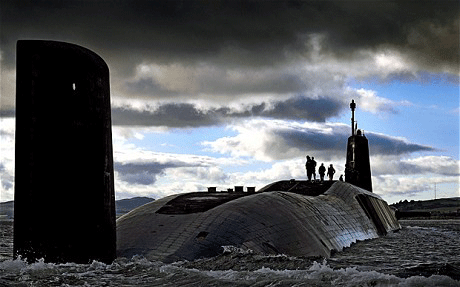
The National, By Judith Duffy 28 Aug 22,
TORY leadership frontrunner Liz Truss has vowed to push ahead with renewing Trident if she wins the keys to Downing Street, as part of plans to “protect the UK”.
The Foreign Secretary has already pledged to boost defence spending to 3% of GDP by 2030 – a promise her rival Rishi Sunak has refused to match because he says he does not believe in “arbitrary targets” when it comes to security.
The Truss campaign has now set out her plan to “protect the UK”, including a “full renewal” of the nuclear deterrent, an update to the Government’s Integrated Review, and strengthened support for intelligence services………………………………..
The SNP have long committed to the removal of Trident nuclear missiles after independence.
The White Paper on independence published ahead of the 2014 independence referendum, promised the “speediest safe withdrawal of nuclear weapons from Scotland”.
In May, Nicola Sturgeon said it was her “expectation and hope” that Trident would be removed from the Faslane naval base on the Clyde in the first Holyrood term after a Yes vote. https://www.thenational.scot/news/20800761.liz-truss-commits-keeping-trident-nuclear-weapons-clyde/
Emotionless Liz Truss says she would unleash nuclear annihilation if necessary
Emotionless Liz Truss says she would unleash nuclear annihilation if
necessary. The Tory frontrunner told a hustings event in Birmingham that
ordering the use of nuclear weapons is an “important part of being Prime
Minister”.
Mirror 23rd Aug 2022
https://www.mirror.co.uk/news/politics/emotionless-liz-truss-says-would-27816744
Sacre Bleu: EDF Energy talk of lower bills, whilst planning to generate Britain’s most expensive electricity
Last week, EDF Energy called for the incoming British Prime Minister to work with the French-owned energy generator to reduce customer bills, whilst at the same time conspiring in the longer-term to put them up.
EDF Energy, operator of the UK’s nuclear power stations, is building a new power plant at Hinkley Point C that is already many years behind schedule and way over budget. At a whopping estimated cost of £26 billion (based on 2015 prices; actually, with inflation £29 billion today), EDF Energy plans to make a return on its investment for its backers, the French Government, by making its electricity the most expensive ever generated in Britain.
An agreement signed off with the UK Government in 2016 made EDF Energy responsible for meeting the upfront costs of building the 3.2 GW plant but granted them the concession to recoup costs by charging up to an astronomical £92.50 per MW/hour for the electricity Hinkley Point C eventually produces. If electricity does not retail at that price upon commission, British electricity customers will make up the difference with a surcharge on their bills, whether they are customers of EDF or not.
Provision was also made to make this figure index-linked to inflation, meaning the price if generation were taking place today would be an incredible £106 and this can only rise.
Not surprisingly, energy experts derided the deal at the time as outrageously favourable to the generator.
Contrast this with the recent Contracts for Difference round conducted by civil servants with renewable energy generators, where some providers contracted to generate electricity through offshore wind projects for less than £40 per MW/hour.
Nuclear fission is now the most expensive means to generate electricity, is never viable without huge government subsidies, and is fraught with operational and financial risk – and so is not an attractive proposition for private investors.

That is why the UK Government is introducing the RAB (the Regulated Asset Base) model by which to pass on the costs of developing future nuclear projects onto the shoulders of the already-overburdened British electricity customer through the imposition of a new nuclear tax on bills.
The most immediate beneficiary of this arrangement will be, unsurprisingly, EDF Energy which is the government’s approved partner to build the next large-scale nuclear power plant, at Sizewell C in Suffolk.
RAB means no more financial worries for EDF Energy as the Sizewell project invariably ratchets up massive cost overruns, like its forerunner at Hinkley, as the poor suffering consumer will be made to pay them. For the customer, it represents an ever-greater burden at a time when energy bills will continue to go ever higher, and, with colder days and darker nights on the horizon, many will struggle to heat their homes.
Even customers in receipt of the lowest means-tested benefits, or older customers who will not live long enough to see the Sizewell plant built, will currently be expected to pay their share of the nuclear tax – that is why the Nuclear Free Local Authorities call it ROB, a means to fleece the poor to renumerate industry fat-cats and want to see both it and plans for new nuclear scrapped.
Councillor David Blackburn, Chair of the NFLA Steering Committee said:
The Government’s nuclear ROB tax is an outrageous additional burden on the British people who have already seen their bills go through the roof. Rather than wasting a single penny more on the over-expensive and ridiculously-slow nuclear sector, we want to see government ministers invest billions in an emergency programme to retrofit Britain’s cold and damp homes to make them affordable and efficient to light and heat and we want to see investment in a range of renewable technologies to produce the cheaper, greener energy we so desperately need at a fraction of the price and much more-quicker than any nuclear delusion.”
Councillor Blackburn also had a sideswipe at EDF Energy’s senior management, adding:
“Whilst it is commendable that Monsieur Philippe Commaret, Managing Director of Customers at EDF, has called on government for urgent action over energy pricing, can I suggest that this appears to amount to ‘bill-washing’ as it offers nothing practical to reduce customers’ pain? Rather I suggest his company follow the example show by its French parent by introducing an absolute energy price cap on the bills of British EDF customers as they have in France. There bills only went up by 4%, on the direction of the principal shareholder of the company, French President Emanuel Macron. It is time for EDF Energy to do the same by its UK customers.”
1 This Month
26 September – International Day for the Total Elimination of Nuclear Weapons





PLEASE OPPOSE HR 8255 AND S.3639 – bills would accelerate satellite deployment, with no environmental review or safeguards – https://ncstd5li.quorum.us/campaign/169331/
To see nuclear-related stories in greater depth and intensity – go to https://nuclearinformation.wordpress.com
-
Archives
- September 2026 (305)
- August 2026 (330)
- July 2026 (355)
- June 2026 (287)
- May 2026 (306)
- April 2026 (356)
- March 2026 (251)
- February 2026 (267)
- January 2026 (308)
- December 2025 (358)
- November 2025 (359)
- October 2025 (375)
-
Categories
- 1
- 1 NUCLEAR ISSUES
- business and costs
- climate change
- culture and arts
- ENERGY
- environment
- health
- history
- indigenous issues
- Legal
- marketing of nuclear
- media
- opposition to nuclear
- PERSONAL STORIES
- politics
- politics international
- Religion and ethics
- safety
- secrets,lies and civil liberties
- spinbuster
- technology
- Uranium
- wastes
- weapons and war
- Women
- 2 WORLD
- ACTION
- AFRICA
- Atrocities
- AUSTRALIA
- Christina's notes
- Christina's themes
- culture and arts
- Events
- Fuk 2022
- Fuk 2023
- Fukushima 2017
- Fukushima 2018
- fukushima 2019
- Fukushima 2020
- Fukushima 2021
- general
- global warming
- Humour (God we need it)
- Nuclear
- RARE EARTHS
- Reference
- resources – print
- Resources -audiovicual
- Weekly Newsletter
- World
- World Nuclear
- YouTube
-
RSS
Entries RSS
Comments RSS

